
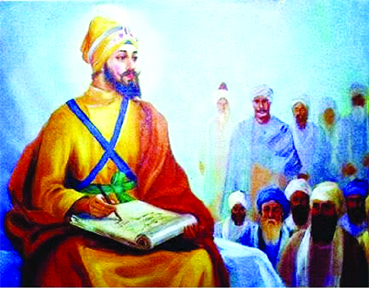

Guru Gobind Singh Ji, the tenth Sikh Guru, stands as one of history’s rare figures who seamlessly combined saintliness, poetic brilliance, and fearless leadership. While he is widely celebrated for founding the Khalsa and leading Sikhs in defense of righteousness, his literary genius as a poet remains equally remarkable. His poetry reflects a fusion of devotion, heroism, philosophy, and moral guidance, offering inspiration not only to Sikhs but to readers across faiths and generations.
Early Literary Genius
From a young age, Guru Gobind Singh demonstrated an extraordinary aptitude for language and literature. Fluent in Persian, Sanskrit, Braj, and Punjabi, he composed verses that were both sophisticated and accessible, conveying spiritual depth and ethical guidance. Even as a child, he combined creative expression with philosophical insight, laying the foundation for a body of work that would inspire courage, devotion, and moral clarity throughout his life. His early exposure to sacred texts, history, and martial training shaped a literary style that merged intellectual rigor with spiritual sensitivity.
Major Literary Works
Guru Gobind Singh’s poetic oeuvre is vast and diverse, encompassing hymns, epic poetry, philosophical treatises, and letters. Each work reflects his unique ability to communicate profound truths through lyrical expression.
– Jaap Sahib is a hymn of divine praise, composed in 199 stanzas, celebrating God’s omnipotence, omnipresence, and justice. It combines metaphysical depth with devotional fervor and is recited daily by Sikhs worldwide to cultivate courage and faith.
– Akal Ustat focuses on the eternal and all-encompassing nature of God, integrating mystical insight with poetic beauty. It encourages humility and devotion while emphasizing that spiritual realization is inseparable from righteous action.
– Bachittar Natak blends autobiography, epic narrative, and philosophical reflection. Through this work, Guru Gobind Singh recounts his life, spiritual visions, and heroic endeavors, providing moral and ethical lessons alongside accounts of bravery.
– The Zafarnama, a poetic letter addressed to Emperor Aurangzeb, exemplifies his ability to use poetry as a tool of moral persuasion and diplomacy. Written in elegant Persian verse, it challenges tyranny with reasoned courage, blending rhetorical brilliance with philosophical depth.
Other works, such as Chandi di Var, celebrate divine heroism and courage, while selections from Shabad Hazare and Charitropakhyan explore human psychology, ethics, and spirituality. Together, these writings form a rich tapestry of devotion, courage, and wisdom.
Themes in His Poetry
Several recurring themes define Guru Gobind Singh’s poetic vision. Devotion and spirituality permeate his work, emphasizing remembrance of God and ethical living. Courage and valor are central, celebrating heroism while reinforcing the moral imperative to act against injustice. Equality and social justice appear throughout, rejecting caste discrimination and advocating for human dignity. Guru Gobind Singh also explores moral philosophy, addressing virtue, honesty, and righteousness, and demonstrates that art can serve as a medium for teaching, inspiring, and guiding communities.
Literary Style and Craftsmanship
Guru Gobind Singh’s poetry is remarkable for its multilingual richness, vivid imagery, and rhetorical brilliance. He blends Persian sophistication with Sanskrit and Punjabi clarity, creating verses that are both lyrically beautiful and philosophically profound. His use of metaphor, allegory, and narrative storytelling makes complex spiritual and ethical concepts accessible. Many works, such as Chandi di Var, were intended to be recited or sung, giving them a musical and devotional quality that reinforces their spiritual and motivational impact.
Influence and Legacy
The influence of Guru Gobind Singh’s poetry is profound. His compositions provide spiritual inspiration, guiding Sikhs in daily devotion, ethical conduct, and courageous action. They also offer cultural and literary significance, shaping Sikh literature, music, and identity. Beyond Sikhism, his poetry communicates universal values: fearlessness, devotion, equality, self-discipline, and service, offering lessons for leaders, poets, and ordinary individuals alike.
Famous Quotes from His Poetry
“In the midst of darkness, be the flame of courage.”
“Those who have no faith in their words have no faith in their soul.”
“Through devotion, discipline, and courage, one can conquer fear and live with honor.”
“Righteous action is the highest form of devotion.”
These lines encapsulate the fusion of spiritual depth, moral guidance, and heroic inspiration that characterizes his literary legacy.
Poetry as Leadership
Guru Gobind Singh used poetry not just for devotion but as a tool of leadership and education. His heroic verses motivated warriors before battle, his philosophical passages guided moral conduct, and his letters, like the Zafarnama, challenged injustice with reasoned argument and poetic elegance. In doing so, he demonstrated that literature can inspire courage, cultivate ethics, and unite communities.
Guru Gobind Singh Ji, as a poet, exemplifies the integration of art, spirituality, and action. His literary genius complements his roles as a saint and warrior, offering timeless guidance for living with courage, devotion, and ethical integrity. Through his poetry, he continues to inspire generations to be fearless, righteous, and devoted, securing his place not only in Sikh history but in the broader canon of spiritual and literary achievement.
Legacy – Eternal Light of the Tenth Guru
Guru Gobind Singh’s life continues to shape Sikh identity and philosophy. He left the Sikhs a spiritual and martial framework, with the Guru Granth Sahib as the eternal Guru and the Khalsa as living embodiment of his ideals.
Today, Anandpur Sahib, Patna Sahib, and Nanded remain sacred pilgrimage sites, and his writings continue to guide millions toward courage, equality, and devotion. His vision of a fearless, just, and spiritually grounded society remains relevant across generations, making him not only a Sikh leader but a global symbol of integrity, valor, and wisdom.


Be the first to comment