Tag: FIFA

  • Deepika Padukone scripts history, to get a star on Hollywood Walk of Fame in 2026

    Deepika Padukone scripts history, to get a star on Hollywood Walk of Fame in 2026

    Deepika Padukone has created history by becoming the first Indian actor to be named one of the honourees for the Hollywood Walk of Fame Class of 2026 in the Motion Pictures category. The Hollywood Chamber of Commerce revealed the list live, placing Padukone alongside international stars like Demi Moore, Rachel McAdams, Emily Blunt, Timothe Chalamet, Rami Malek, and Stanley Tucci.

    The honourees were chosen from hundreds of nominations by a panel during a meeting held on June 20. The selection was later approved by the Chamber’s board of directors. At the event, which was streamed live, Peter Roth, former CEO of Warner Bros, Television and chairman of the Walk of Fame selection committee, said, “We are excited to announce the newest selections of 35 esteemed individuals who will be enshrined on the Walk of Fame as part of the prestigious Class of 2026.”

    He further added, “These talented individuals have made significant contributions to the world of entertainment, and we are thrilled to honour them with this well-deserved recognition.”

    Deepika has long been regarded as a trendsetting figure beyond India. In 2018, she was included in TIME magazine’s list of the 100 most influential people in the world. She also received the TIME100 Impact Award for her work on mental health awareness and film campaigns.

    Her unveiling of the FIFA World Cup trophy at the 2022 final in Qatar was yet another major milestone in her international career. Beyond acting, Padukone has redefined Indian celebrity visibility on the world fashion scene. She was the first Indian face endorsed by high-end brands Cartier and Louis Vuitton, paving the way for others on the world fashion platform.

    While her international stature continues to rise, Deepika is still among the strongest and best-paid female actors in Indian cinema. With a string of successful movies and even more big projects in the line, including one with director Atlee, Deepika is all set to be back at work, after a break to embrace motherhood.

  • Trump creates task force to prepare for 2026 World Cup

    Trump creates task force to prepare for 2026 World Cup

    WASHINGTON, D.C. (TIP): President Donald Trump created a task force on Friday to prepare for the 2026 World Cup, which will bring the globe’s premier soccer tournament to North America at a time when his on-again, off-again tariffs have ratcheted up tensions across the continent.

    “I think it’s going to make it more exciting,” Trump said about playing the World Cup amid sharp rhetoric between leaders of the host nations. “Tension’s a good thing.” The task force, which Trump will chair, will coordinate the federal government’s security and planning for the tournament, which is expected to draw millions of tourists to the United States, Canada and Mexico.

    “It’s a great honor for our country to have it,” Trump said about the World Cup after meeting officials from FIFA, the international soccer governing body. He said he’d like to attend multiple games.

    Preparations are ramping up across the continent alongside tensions between the United States and its neighbors as Trump has repeatedly threatened to impose tariffs before backing off, spooking markets and leading to fears of a trade war and economic downturn. He also speaks pejoratively of Canadian Prime Minister Justin Trudeau and muses about Canada becoming a US state, which has boosted national pride north of the border.

    For 2026, the World Cup will expand to 48 teams playing 104 matches across three nations, the first time the tournament will be split between countries. Seventy-eight of 104 matches will be played in the US, with 13 games each in Mexico and Canada, and as many as six matches a day. The final will be played July 19 at MetLife Stadium in New Jersey.

    FIFA President Gianni Infantino said the task force would ensure that each of the visitors who will travel from around the world “feels safe, feels happy and feels that we are doing something special.”

    “So we’re here to create and to make the best show on the planet ever,” Infantino said.

    He gave Trump a personalized game ball and unveiled an elaborate trophy that will go to the winner of the 2025 FIFA Club World Cup, which will pit top soccer clubs against each other this summer ahead of next year’s matchup of national teams.

    Trump later brought Infantino to show off the trophy at the start of a White House cryptocurrency summit. The United States, where soccer has grown in popularity but remains a niche sport, represents a major growth area for soccer, he said.

    Infantino likened producing the World Cup to holding three Super Bowls daily for a month, a dizzying security and logistical challenge for the host governments.

    The Trump administration will face a second test on the global sports stage in 2028, when the summer Olympics will be held in California, the first time the Games will have been in the US since Salt Lake City hosted in 2002.
    (Source: AP)

  • FIFA chief’s statement on Rubiales’ forceful kiss could mean curtains for Spain football boss

    12 days after Spanish football federation head Luis Rubiales kissed footballer Jenni Hermoso on the lips during the post-match victory celebrations of Spain’s World Cup-winning women’s football team, FIFA president Gianni Infantino has ended his silence with a hard-hitting statement. Though FIFA launched disciplinary proceedings against Rubiales on August 24 — four days after the FIFA World Cup final in Sydney – Infantino had not made any official comment on the incident that shook the sporting world, sending more than 80 Spain footballers on an indefinite strike and sparked a nation-wide protest.
    Infantino said Rubiales’ act “spoiled” the night of the FIFA Women’s World Cup final and what followed should “never have happened”. “The well-deserved celebrations for these magnificent champions were spoiled by what happened after the final whistle,” Infantino wrote on Instagram. “And what continued to happen in the following days. This should never have happened.”
    Rubiales, who was a part of the presentation party in the FIFA Women’s World Cup final, was seen grabbing Hermoso’s face and kissing her on the lips before patting her on the back. While Rubiales kissed almost every Spanish female footballer on the cheek as they came for their medals that day, for Hermoso he went a too far.
    FIFA provisionally suspended Rubiales from all football activities at the national and international level for 90 days, while the investigation continues.
    “FIFA’s disciplinary bodies immediately assumed their responsibility and took the necessary actions. The disciplinary proceedings will continue their legitimate course,” added Infantino who was at the trophy presentation after the final.
    “On our side, we should continue to focus on how to further support women and women’s football in future, both on and off the pitch. Upholding true values and respecting the players as persons as well as for their fantastic performances.”
    Hermoso, on her part, denied that it consensual and slammed Rubiales for making her feel molested. “I want to clarify that at no time did I consent to the kiss that he gave me and in no case did I seek to lift up the president,” Hermoso said in the Futpro statement.

  • Argentina back on top of Fifa rankings after six-year gap

    Argentina back on top of Fifa rankings after six-year gap

    World champions Argentina dethroned Brazil and returned to the top of the FIFA rankings on Thursday, April 6,  after a six-year gap. Argentina, who won last year’s World Cup in Qatar by beating France in the final, achieved the No. 1 spot after Lionel Scaloni’s side beat Panama 2-0 and Curacao 7-0 in friendlies. France moved up one place to second after a 4-0 win over the Netherlands and 1-0 victory in Ireland in Euro 2024 qualifiers, while Brazil slipped to third after losing 2-1 away to Morocco in a friendly. Belgium remained fourth, England were fifth followed by the Netherlands in sixth, Croatia seventh and Italy eighth. Portugal and Spain completed the top 10. The Central African Republic were the biggest movers in the latest rankings, jumping 10 places to 122nd.

  • Deepika Padukone to unveil FIFA trophy at the final

    Deepika Padukone to unveil FIFA trophy at the final

    Bollywood star Deepika Padukone has added another feather to her cap, as she will be unveiling the FIFA World Cup trophy at the final match. She would be the first Indian actor to achieve this feat. Earlier this year, she had the opportunity to become the member of Cannes Film Festival jury. Deepika is the only Indian in the list of the World’s Top 10 most beautiful women. From being chosen as the global face of luxury brands to now heading to Qatar for the final match to unveil the FIFA trophy, she has come a long way.

  • Canada, India Out of FIFA U-17 Women’s World Cup

    Canada, India Out of FIFA U-17 Women’s World Cup

    By Prabhjot Singh

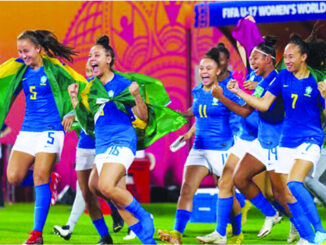
    TORONTO (TIP)- The hosts and debutants India and Canada have made their exit from the FIFA U-17 Women’s World Cup. Columbia, Spain (defending champions), Japan and African debutants Tanzania have qualified for the last eight rounds. In the last round of the pool matches, Spain edged out China by a solitary goal while Columbia got the better of Mexico 2-1 in an all-American encounter. Canada played a 1-1 draw with Tanzania to bow out of the competition while Japan, the only Asian team left in the contest recorded an impressive 2-0 win over  France.

    Led by Ruiqi Qiao, China pushed Spain back in the early stages, though the reigning FIFA U-17 Women’s World Cup champions created better chances as the first half wore on. First, Chen Liu parried Lucia Corrales’s cross-shot, with the rebound falling to Carla Camacho, who fired the ball against the bar. Vicky Lopez then engineered an opportunity from the edge of the box, the keeper again doing well to keep her fierce drive out. The second half began how the first ended, as Spain retained the initiative. The only goal of the game came just after the hour mark, when Marina Artero headed home a corner from the left. China later celebrated an equalizer, only for Video umpire (VAR) to rule it out. The win kept Spain’s hopes of defending its title alive, while China fell once again in the group phase, beyond which it has never advanced.

    With all four sides in the section tied on three points at the start of the day, it was no surprise to see a cagey start to the game between the two American teams. Mexico had more of the ball but failed to create any clear-cut chances. It paid the price when Juana Ortegon’s fine strike from outside the box put the Colombians ahead four minutes from half-time. Linda Caicedo made it 2-0 with another long-range effort after the break, and though Mexico pulled one back when the Colombian star put through her own goal, Mexico could not find an equalizer, despite applying some late pressure.

    The three points took Colombia into the quarterfinals for the first time in its history, while the 2018 runners-up Mexico went out.

    “I’m so happy,” said Caicedo. “Luck didn’t come into it. It was a process and a job really well done. We hope to keep going and do more than make history. We want to fulfil this big dream that we have.” Japan wasted no time showing why it had won their first two matches, creating two excellent chances in the opening minute. The pressure eventually told on the French, as Momoko Tanikawa fired home from outside the box to give the Japanese the lead in the 29th minutes. Fiona Liaigre did her best to unsettle the Asians down the left flank and haul her team level, but the half ended with the French trailing to that Tanikawa strike.

    After missing a succession of chances, Japan was eventually rewarded for its second-half pressure when Sayami Kusunoki scored in injury time to seal top spot for her side and ensure France’s elimination.

    “I think we did well against Japan, but we have a lot of regrets after the games against Canada and Tanzania,” said France midfielder Lucie Calba. “Like our coach said, we should have been playing for first place in the group today, not for qualification. “We’ve experienced other cultures here, other styles of football, and we’ve learned a lot. We’ve learned that when it comes to World Cups you need to play every match with intensity.”

    Having already broken new ground by becoming the first side from their country to contest a FIFA competition in any age category, Tanzania began the game intent on achieving even greater things and struck the bar from a corner. It was the Canadians who opened the scoring with Amanda Allen converting a penalty after 14 minutes.

    Tanzania pulled level thanks to another corner, with Veronica Mapunda popping up inside the box to force home an opportunistic equalizer.

    Canada did all it could after the restart to score the goal that would have taken it into the next round. The pioneering Africans had other ideas and held on to check into the quarterfinals against all odds.

  • England smash 498 against Netherlands to break ODI record

    England smash 498 against Netherlands to break ODI record

    FIFA President Gianni Infantino warned Canada, Mexico, and the United States to prepare for a football “invasion” on Thursday, June 16,  as the host cities for the 2026 World Cup were revealed. The first-ever World Cup co-hosted by three different countries will also see a record number of teams taking part, increasing by 16 from 32 to 48 as the tournament returns to North America for the first time since the 1994 finals.The 16 venues named on Thursday include 11 in the United States, three in Mexico, and two in Canada.All of the US games will be held in venues that are home to NFL teams, with the likes of the $5 billion SoFi Stadium in Los Angeles and the New York Giants’ 82,000-seater MetLife Stadium in East Rutherford tipped to host the final. A total of 60 of the 80 games in the tournament — including all knockout games from the quarter-finals onwards — will take place at US venues.Mexico City’s iconic Azteca Stadium — host of the 1970 and 1986 World Cup finals — was included among three Mexican venues along with the cities of Monterrey and Guadalajara.Vancouver and Toronto will stage the Canadian games in the tournament. Infantino meanwhile said 2026 would eclipse the 1994 finals in the United States — which holds the record for the highest total attendance — in every respect.”2026 will be much, much bigger,” Infantino said. “I think this part of the world doesn’t realise what will happen in 2026.

    “These three countries will be turned upside down and then flipped again. The world will be invading Canada, Mexico and the United States. “They will be invaded by a big wave of joy and happiness.”Infantino said he hoped the World Cup would spur the development of football in the region further.”In this part of the world you are leading the world in many areas. But in the number one sport in the world, soccer or football, you are not, yet,” he said. “The objective must be that you are leading the world in the world’s number one sport.”A decision on which venues would host marquee matches such as the World Cup final and opening game had not yet been taken.”We still have to discuss that, we still have to analyse that,” Infantino said.

    “We will take a decision in due course.”However Infantino revealed that given the vast geographical spread of staging the tournament across North America, FIFA was looking at basing teams in regional “clusters” to minimise travel.”When you’re dealing with such a large region as North America we need to care about the fans and make sure that teams are playing in clusters, that fans and teams don’t have to travel crazy distances,” Infantino said.Super Bowl pedigree The list of US venues stretch from coast to coast, featuring several cities that hosted games in the 1994 World Cup finals. However no actual stadium venues from the 1994 tournament will repeat in 2026.Other venues include the Dallas Cowboys giant AT&T Stadium in Arlington and the Miami Dolphins’ Hard Rock Stadium. Seven of the 11 venues named Thursday have hosted the Super Bowl.The Kansas City Chiefs’ Arrowhead Stadium — the loudest stadium in the world according to the Guinness Book of World Records — also made the cut.

    NFL venues in Seattle, San Francisco, Atlanta, Houston, Boston and Philadelphia were also on the list.However there was no place for Washington D.C. on the venues list. It means the 2026 tournament will be the first World Cup since the 1974 finals in the then West Germany not to feature a host’s capital city.Colin Smith, FIFA’s chief competitions and events officer, acknowledged Washington’s absence after an “incredibly competitive” bid process.

    “This was a very very difficult choice,” Smith said. “It’s hard to imagine a World Cup coming to the US and the capital city not taking a major role.”Smith meanwhile said some of the NFL venues would require slight modifications to widen “pinch points” but said stadium capacity would not be affected.”The number of fans who are going to be able to experience this World Cup will probably be double than what we’ve previously had,” he said. “World Cup 1994 holds the record for attendance — and that’s going to be blown out of the water.”

  • The world in 2022: Another year of living dangerously

    The world in 2022: Another year of living dangerously

    On the brink of a new year, the world faces a daunting array of challenges: the resurgent Covid-19 pandemic, the climate emergency, the struggle between democracy and authoritarianism, humanitarian crises, mass migration, and trans-national terrorism. There is the risk of new inter-state conflicts, exacerbated by the breakdown of the rules-based international order, and the spread of lethal autonomous weapons. All in all, for most people on Earth – and a handful in space – 2022 will be another year of living dangerously.

    Middle East

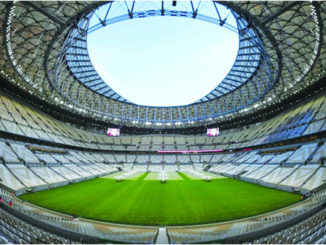
    Events in the Middle East will make global headlines again in 2022 – but for positive as well as negative reasons. A cause for optimism is football’s World Cup, which kicks off in Qatar in November. It’s the first time an Arab or a Muslim country has hosted the tournament. It is expected to provide a major fillip for the Gulf region in terms of future business and tourism – and, possibly, more open, progressive forms of governance.

    But the choice of Qatar, overshadowed by allegations of corruption, was controversial from the start. Its human rights record will come under increased scrutiny. Its treatment of low-paid migrant workers is another flashpoint. The Guardian revealed that at least 6,500 workers have died since Qatar got the nod from Fifa in 2010, killed while building seven new stadiums, roads and hotels, and a new airport.

    Concerns will also persist about Qatar’s illiberal attitude to free speech and women’s and LGBTQ+ rights in a country where it remains dangerous to openly criticise the government and where homosexuality is illegal. But analysts suggest most fans will not focus on these issues, which could make Qatar 2022 the most successful example of “sports-washing” to date.

    More familiar subjects will otherwise dominate the regional agenda. Foremost is the question of whether Israel and/or the US will take new military and/or economic steps to curb Iran’s attempts, which Tehran denies, to acquire capability to build nuclear weapons. Israel has been threatening air strikes if slow-moving talks to revive the 2015 nuclear deal fail. Even football fans could not ignore a war in the Gulf.

    Attention will focus on Turkey’s authoritarian president, Recep Tayyip Erdogan, whose neo-Islamist AKP party will mark 20 years in power in 2022. Erdogan’s rule has grown increasingly oppressive at home, while his aggressive foreign policy, rows with the EU and US, on-off collusion with Russia over Syria and chronic economic mismanagement could have unpredictable consequences.

    Other hotspots are likely to be Lebanon – tottering on the verge of becoming a failed state like war-torn Yemen – and ever-chaotic Libya. Close attention should also be paid to Palestine, where the unpopular president, Mahmoud Abbas’s postponement of elections, Israeli settler violence and West Bank land-grabs, and the lack of an active peace process all loom large.

    Asia Pacific

    The eyes of the world will be on China at the beginning and the end of the year, and quite possibly in the intervening period as well. The Winter Olympics open in Beijing in February. But the crucial question, for sports fans, of who tops the medals table may be overshadowed by diplomatic boycotts by the US, UK and other countries in protest at China’s serial human rights abuses. They fear the Games may become a Chinese Communist party propaganda exercise.

    The CCP’s 20th national congress, due towards the end of the year, will be the other headline-grabber. President Xi Jinping is hoping to secure an unprecedented third five-year term, which, if achieved, would confirm his position as China’s most powerful leader since Mao Zedong. There will also be jostling for senior positions in the Politburo and Politburo standing committee. It will not necessarily all go Xi’s way.

    Western analysts differ sharply over how secure Xi’s position truly is. A slowing economy, a debt crisis, an ageing population, huge environmental and climate-related challenges, and US-led attempts to “contain” China by signing up neighbouring countries are all putting pressure on Xi. Yet, as matters stand, 2022 is likely to see ongoing, bullish attempts to expand China’s global economic and geopolitical influence. A military attack on Taiwan, which Xi has vowed to re-conquer by any or all means, could change everything.

    India, China’s biggest regional competitor, may continue to punch below its weight on the world stage. In what could be a symbolically important moment, its total population could soon match or exceed China’s 1.41 billion, according to some estimates. Yet at the same time, Indian birth rates and average family sizes are falling. Not so symbolic, and more dangerous, are unresolved Himalayan border disputes between these two giant neighbours, which led to violence in 2020-21 and reflect a broader deterioration in bilateral relations.

    The popularity of Narendra Modi, India’s authoritarian prime minister, has taken a dive of late, due to the pandemic and a sluggish economy. He was forced into an embarrassing U-turn on farm “reform” and is accused of using terrorism laws to silence critics. His BJP party will try to regain lost ground in a string of state elections in 2022. Modi’s policy of stronger ties with the west, exemplified by the Quad alliance (India, the US, Japan, Australia), will likely be reinforced, adding to China’s discomfort.

    Elsewhere in Asia, violent repression in Myanmar and the desperate plight of the Afghan people following the Taliban takeover will likely provoke more western hand-wringing than concrete action. Afghanistan totters on the brink of disaster. “We’re looking at 23 million people marching towards starvation,” says David Beasley of the World Food Programme. “The next six months are going to be catastrophic.”

    North Korea’s nuclear brinkmanship may bring a showdown as Kim Jong-un’s paranoid regime sends mixed signals about war and peace. The Philippines will elect a new president; the foul-mouthed incumbent, Rodrigo Duterte, is limited to a single term. Unfortunately this is not the case with Scott Morrison, who will seek re-election as Australia’s prime minister.

    Europe

    It will be a critical year for Europe as the EU and national leaders grapple with tense internal and external divisions, the social and economic impact of the unending pandemic, migration and the newly reinforced challenges, post-Cop26, posed by net zero emissions targets.

    More fundamentally, Europe must decide whether it wants to be taken seriously as a global actor, or will surrender its international influence to China, the US and malign regimes such as Vladimir Putin’s Russia.

    The tone may be set by spring elections in France and Hungary, where rightwing populist forces are again pushing divisive agendas. Viktor Orbán, the authoritarian Hungarian leader who has made a mockery of the EU over rule of law, democracy and free speech issues, will face a united opposition for the first time. His fate will be watched closely in Poland, the Czech Republic, Slovenia and other EU member states where reactionary far-right parties flourish.

    Emmanuel Macron, the neo-Gaullist centrist who came from nowhere in 2017, will ask French voters for a second term in preference to his avowedly racist, Islamophobic rivals, Marine Le Pen and Éric Zemmour. Polls put him ahead, although he also faces what could be a strong challenge from the centre-right Republicans, whose candidate, Valérie Pécresse, is the first woman to lead the conservatives. With the left in disarray, the election could radicalise France in reactionary ways. Elections are also due in Sweden, Serbia and Austria.

    Germany’s new SPD-led coalition government will come under close scrutiny as it attempts to do things differently after the long years of Angela Merkel’s reign. Despite some conciliatory pledges, friction will be hard to avoid with the European Commission, led by Merkel ally Ursula von der Leyen, and with France and other southern EU members over budgetary policy and debt. France assumes the EU presidency in January and Macron will try to advance his ideas about common defence and security policy – what he calls “strategic autonomy”.

    Macron’s belief that Europe must stand up for itself in a hostile world will be put to the test on a range of fronts, notably Ukraine. Analysts suggest rising Russian military pressure, including a large border troop build-up and a threat to deploy nuclear missiles, could lead to renewed conflict early in the year as Nato hangs back.

    Other trigger issues include Belarus’s weaponising of migration (and the continuing absence of a humane pan-European migration policy) and brewing separatist trouble in Bosnia-Herzegovina and the Balkans. The EU is planning a China summit, but there is no consensus over how to balance business and human rights. In isolated, increasingly impoverished Britain, Brexit buyers’ remorse looks certain to intensify.

    Relations with the US, which takes a dim view of European autonomy but appears ambivalent over Ukraine, may prove tense at times. Nato, its credibility damaged post-Afghanistan, faces a difficult year as it seeks a new secretary-general. Smart money says a woman could get the top job for the first time. The former UK prime minister Theresa May has been mentioned – but the French will not want a Brit.

    South America

    The struggle to defeat Jair Bolsonaro, Brazil’s notorious rightwing president, in national elections due in October looks set to produce an epic battle with international ramifications. Inside Brazil, Bolsonaro has been widely condemned for his lethally negligent handling of the Covid pandemic. Over half a million Brazilians have died, more than in any country bar the US. Beyond Brazil, Bolsonaro is reviled for his climate change denial and the accelerated destruction of the Amazon rainforest.

    Opinion polls show that, should he stand, Luiz Inácio Lula da Silva, the former president who was jailed and then cleared on corruption charges, would easily beat Bolsonaro. But that assumes a fair fight. Concern is growing that American supporters of Donald Trump are coaching the Bolsonaro camp on how to steal an election or mount a coup to overturn the result, as Trump tried and failed to do in Washington a year ago. Fears grow that Trump-style electoral subversion may find more emulators around the world.

    Surveys in Europe suggest support for rightwing populist-nationalist politicians is waning, but that may not be the case in South America, outside Brazil, and other parts of the developing world in 2022. Populism feeds off the gap between corrupt “elites” and so-called “ordinary people”, and in many poorer countries, that gap, measured in wealth and power, is growing. In Cuba, Nicaragua, Haiti and Venezuela, supposed champions of the people have become their oppressors, and this phenomenon looks set to continue. In Chile, the presidential election’s first round produced strong support for José Antonio Kast, a hard-right Pinochet apologist, though he was ultimately defeated by Gabriel Boric, a leftist former student leader, who will become the country’s youngest leader after storming to a resounding victory in a run-off.

    Argentina’s president, Alberto Fernández, faces a different kind of problem in what looks like a tough year ahead, after elections in which his Peronists, one of the world’s oldest populist parties, lost their majority in Congress for the first time in nearly 40 years. Mexico’s president, Andrés Manuel López Obrador, will face ongoing tensions with the US over trade, drugs and migration from Central America. But at least he no longer has to put up with Trump’s insults – for now.

    North America

    All eyes will be on the campaign for November’s mid-term elections when the Democrats will attempt to fend off a Republican bid to re-take control of the Senate and House of Representatives. The results will inevitably be viewed as a referendum on Joe Biden’s presidency. If the GOP does well in the battleground states, Donald Trump – who still falsely claims to have won the 2020 election – will almost certainly decide to run for a second term in 2024.

    Certain issues will have nationwide resonance: in particular, progress (or otherwise) in stemming the pandemic and ongoing anti-vax resistance; the economy, with prices and interest rates set to rise; and divisive social issues such as migration, race and abortion rights, with the supreme court predicted to overrule or seriously weaken provisions of the landmark 1973 Roe v Wade decision.

    The Democrats’ biggest problem in 2022 may be internal party divisions. The split between so-called progressives and moderates, especially in the Senate, undermined Biden’s signature social care and infrastructure spending bills, which were watered down. Some of the focus will be on Biden himself: whether he will run again in 2024, his age (he will be 80 in November), his mental agility and his ability to deliver his agenda. His mid-December minus-7 approval rating may prove hard to turn around.

    Also under the microscope is Kamala Harris, the vice-president, who is said to be unsettled and under-performing – at least by those with an interest is destabilising the White House. Pete Buttigieg, the transportation secretary who sought the Democratic nomination in 2020, is a man to watch, as a possible replacement for Harris or even for Biden, should the president settle for one term.

    Concern has grown, meanwhile, over whether the mid-terms will be free and fair, given extraordinary efforts by Republican state legislators to make it harder to vote and even harder for opponents to win gerrymandered congressional districts and precincts with in-built GOP majorities. One survey estimates Republicans will flip at least five House seats thanks to redrawn, absurdly distorted voting maps. This could be enough to assure a Republican House majority before voting even begins.

    Pressure from would-be Central American migrants on the southern US border will likely be a running story in 2022 – a problem Harris, who was tasked with dealing with it, has fumbled so far. She and Biden are accused of continuing Trump’s harsh policies. Belief in Biden’s competence has also been undermined by the chaotic Afghan withdrawal, which felt to many like a Vietnam-scale humiliation.

    Another big foreign policy setback or overseas conflagration – such as a Russian land-grab in Ukraine, direct Chinese aggression against Taiwan or an Israel-Iran conflict – has potential to suck in US forces and wreck Biden’s presidency.

    In Canada, Prime Minister Justin Trudeau is expected to push new policy initiatives on affordable childcare and housing after winning re-election in September. But in 2021’s snap election his Liberals attracted the smallest share of the popular vote of any winning party in history, suggesting the Trudeau magic is wearing thin. Disputes swirl over alleged corruption, pandemic management, trade with the US and carbon reduction policy.

    Africa

    As befits this giant continent, some of 2022’s biggest themes will play out across Africa. Among the most striking is the fraught question of whether Africans, still largely unvaccinated, will pay a huge, avoidable price for the developed world’s monopolising of vaccines, its reluctance to distribute surpluses and share patents – and from the pandemic’s myriad, knock-on health and economic impacts.

    This question in turn raises another: will such selfishness rebound on the wealthy north, as former UK prime minister Gordon Brown has repeatedly warned? The sudden spread of Omicron, first identified in South Africa, suggests more Covid variants could emerge in 2022. Yet once again, the response of developed countries may be to focus on domestic protection, not international cooperation. The course of the global pandemic in 2022 – both in terms of the threat to health and economic prosperity – is ultimately unknowable. But in many African countries, with relatively young populations less vulnerable to severe Covid harms, the bigger problem may be the negative impact on management of other diseases.

    It’s estimated 25 million people in Africa will live with HIV-Aids in 2022. Malaria claims almost 400,000 lives in a typical year. Treatment of these diseases, and others such as TB and diabetes, may deteriorate further as a result of Covid-related strains on healthcare systems.

    Replacing the Middle East, Africa has become the new ground zero for international terrorism, at least in the view of many analysts. This trend looks set to continue in 2022. The countries of the Sahel, in particular, have seen an upsurge of radical Islamist groups, mostly home-grown, yet often professing allegiance to global networks such as al-Qaida and Islamic State.

                    Source: Theguardian.com

  • FIFA to trial concussion subs at next month’s Club World Cup

    FIFA will let teams use concussion substitutes at next month’s Club World Cup in an effort to better protect players with head injuries. The seven-team tournament in Qatar will be “the first international competition to test” improved concussion protocols in soccer, FIFA said Friday, January 8.
    FIFA cited a key aim of “reducing the pressure on medical personnel to make a quick assessment” of an injured player on the field. Players with suspected head injuries can be replaced permanently in Club World Cup games in addition to the team’s five substitutes.
    The Club World Cup features title holders from each of the six continental confederations, plus the domestic champion of host Qatar. The tournament draw will be made on Jan. 19 in Zurich.
    BWF bans three Indonesian players for life for match-fixing
    The Badminton World Federation (BWF) on Friday, January 8, handed life bans to three Indonesian shuttlers for involvement in match-fixing, match manipulation and betting.
    The sport’s governing body said “eight Indonesian players who knew each other, and competed in lower-level international competitions mostly in Asia up until 2019, breached BWF Integrity Regulations related to match fixing, match manipulation and/or betting on badminton.”
    “Three of them were found to have coordinated and organised others into being complicit in the behaviour and have been suspended from all badminton related activities for life,” BWF said in a statement.
    “Five others were suspended for between six to 12 years and fined between USD 3,000 and USD 12,000 each.” The BWF said it was a report by a whistleblower which allowed its integrity unit to start a probe and interview a number of players about the matter, following which all eight players were provisionally suspended in January last year. The apex body said the players can appeal the decision to the Court of Arbitration for Sport (CAS) within 21 days. The BWF also suspended a Malaysian citizen, who is a representative of an equipment brand that sponsors international badminton players., from all badminton-related activities for life.

  • Unique start to unique Olympics!!!

    Unique start to unique Olympics!!!

    Special Report by
    Prabhjot Singh


    Have you ever heard or imagined opening ceremony of Olympic Games being held outside a stadium! Buenos Aires is all set to create history by holding the opening ceremony of the 3rd Youth Olympic Games on Saturday. The ceremonial start to the World Youth Games organised by the International Olympic Committee on the pattern of summer and winter Olympic games will be a celebration like no other. Downtown of Buenos Aires, the second Olympic city of South America – after Rio that hosted the 2016 summer Olympic Games – will have its streets bursting into life with a display to complement gender equality, inclusiveness and Argentina’s Latin spirit.
    On Saturday, October 6, the ceremony will begin outside the confines of any Olympic Stadium Instead the organisers are throwing an enormous street party. The festivities will take place in downtown Buenos Aires at the famous Obelisk landmard, with all members of the public welcome.Believe me the event is free and all are welcome.The opening ceremony will involve 2000 people, including 350 performers, technicians and musicians from Argentine theatre company Fuerza Bruta. More than half a million spectators are expected to line the Avenida 9 de Julio, with millions more following on TV and online.
    Incidentally, Buenos Aires will be the first Olympic event ever to feature equal number of male and female participants.This equality will be reflected in the opening ceremony, where a man and a woman will light the cauldron together. Nearly 4000 athletes have already arrived in Buenos Aires  who will compete in the city’s venues over the following 12 days.
    The innovative event is designed to capture the audiences’ imagination with displays that awaken the senses.

    Once all 241 events in 32 sports have been completed, the closing ceremony will then be held on October 18 in the Youth Olympic Village.

    The 2018 Games in Buenos Aires will be so much more than a festival of first-class sport.The Argentine capital is also known as the Paris of South America due to its diverse culture, culinary delight and European history..
    You must have heard a lot about Tango.In Buenos Aries it is seen as a lifestyle, not a hobby. African and gaucho styles Fast-forward to modern times and the seductive dance enjoys global popularity with every race and class.The original areas have stayed true to their routes and tango dancers can be seen entertaining and taking photos with tourists on the streets today.For something a little more authentic, you can visit a milonga and enjoy some live music while watching or partaking in the tango with a local dancer.
    You cannot think of Buenos Aires or Argentina without football. The city has produced one of the game’s greatest ever players in Diego Mardona , who wore the famous blue and yellow of Boca Juniors  and led Argentina to FIFA World Cup glory in 1986. Boca’s iconic La Bombonera stadium is famous for its electric atmosphere, especially when arch rivals  Plate are in town for the Superclásico. Intense football rivalries are a mainstay of the Argentinian top division, where 8 of the top 20 teams hail from the capital.Despite not being as popular as football,polo is also a highly-revered sport in Buenos Aires with a rich history – demonstrating perfectly the cosmopolitan nature of the city. Fun fact: Argentina won polo Olympic gold at Paris 1924 and Berlin 1936.  Eva Peron’s story was given worldwide recognition when Madonna played her character in the Hollywood film Evita. The Argentinian First Lady was the nation’s spiritual leader,  working tirelessly for women’s rights and helping sick and poor Argentinians.Maybe this is part of the reason why the streets and monuments of Buenos Aires. Puerto Madira neighbourhood are almost exclusively named after women.She famously addressed the nation from the presidential headquarters in Buenos Aires, the Casa Rosada  which still retains its distinct pink colour today.Her grave can be seen in the opulent La Recoleta Cemetery, which features hundreds of hand-carved mansion tombs. Parillas or Barbeque grill restaurants are everywhere in Buenos Aires  where cooking steak is an art form.If you like your beef slow cooked in coals, served with minimal seasoning and washed down with affordable, first-class red wine… you’re in luck.If steak is too much for your pallet, why not try a tasty empanada or two. These are small, baked pastries with a variety of different fillings and are available on most street corners.And for pudding? Buenos Aires shows its strong Italian influence with his many gelatos serving delicious ice cream by the kiloBuenos Aires has more book stores per capita than any other city in the world.There are at least 734 shops, providing the ideal escape from the city’s bright lights.Elsewhere there are approximately 300 theatres catering to every taste: From popular musicals to independent underground shows.Buenos Aires has also become a global hub for some of the world’s best street art. A mix of international and local artists have turned the streets of Palremo, Colegiales, Barracas, Montserrat and La Boca into colourful open-air galleries.

    (The author is executive editor with PTC TV )
  • FIFA was Russia’s coming out party

    FIFA was Russia’s coming out party

    By Prabhjot Singh

    Moscow splurged over $11 bn to make the FIFA World Cup an event to make the ‘planet’ change its outlook about Russia. It worked, leading the FIFA chief to say, “ the whole world fell in love with Russia.’’

    FIFA World Cup 2018 was an all-European show. If France won the Cup, Russia, the hosts, won the hearts. The Americas — north, south and central — were all cut to size not only on the playfields of Russia but also in politics. It turned out to be a wonderful carnival of fun, sport and politics that witnessed many upheavals, besides showcasing Russia as a modern, dynamic and “normal” nation, ready for inclusion in the global economic, political, and sporting landscapes.

    Not only did all 32 nations that qualified laud the event as the “best ever”, a certificate of appreciation also came from FIFA president Gianni Infantino when he commented “the whole world fell in love with Russia” for hosting the best World Cup ever.

    FIFA World Cup 2018 was no different from the 2008 Beijing Olympic Games and 2016 Rio Olympic Games for grabbing criticism on corruption, organizational lapses and failure to provide “clean, healthy and sporting environs for free and fair competitions”. Intriguingly, at the end of these events, this criticism was changed to praise.

    The allotment of FIFA World Cup 2018 to Russia was not without a controversy. FIFA itself was dogged by allegations of corruption and impropriety. Sepp Blatter, the infamous suspended FIFA chief, was a special guest of Russian President Vladimir Putin.

    Allotment was made in 2011 and Putin had promised that the event would change the way the planet saw his “nation”. He had put in place a mechanism to keep the showcase event of FIFA free from threats of hooliganism, terrorist attacks or disruptions by political activists.

    Russia, an offshoot of the erstwhile Soviet Union, got the World Cup at a time when its relationship with both Europe and the US had touched the lowest ebb in decades. Its recent actions in Syria and Ukraine fractured further these ties.

    But unlike the 1980 Moscow Olympic Games held a year after the invasion of Afghanistan, this FIFA World Cup witnessed no boycotts. It was all the more credible to have a full FIFA house in Russia, especially when the hosts remain on the “suspension list” of the International Olympic Committee. In the last Olympic Winter Games in PyeongChang, Russia was not allowed, though its athletes participated under the banner of Olympic Athletes Russia. The World Cup provided a pleasant change. Between June 14 and July 15, the 64 games played in 11 cities not only saw Iceland making an impressive debut, but also defending champions Germany making an exit after the group matches.

    For Asia, it was Japan that carried the flag to the pre-quarterfinals, as other Asian contenders — Iran, Saudi Arabia and Korea —could not cross the group matches hurdle.

    Though India has seldom qualified for the prestigious FIFA event, it had its nominal representation through Rishi Tej (10) and John K Nathania (11) who were chosen to carry the ball for the games on June 18 and 23 in the Russia World Cup. Besides there were 100-odd football fans from India, including Amitabh Bachchan. There were also some volunteers from India.

    The FIFA World Cup is an event that is as prestigious, if not more, as the summer Olympic Games are. Russia spent more than $11.6 billion on infrastructure for the FIFA World Cup. Four years earlier, it had put in a huge amount for the Winter Olympic Games, an event that at the end soiled its credibility for conspiring to “drug” the games, with critics calling the 2014 Sochi Winter Olympics as “chemist” games.

    Besides the Russian Government’s expenditure on making the World Cup an event to make the “planet” change its outlook about Russia, FIFA’s budget for the just-concluded World Cup was a whopping $1,943 million.

    Compared to it, when Bhubaneswar holds the World Cup Hockey Tournament later this year, the total cost is estimated at about $19 million. The event will be spread over 19 days and feature 16 teams and 36 matches. FIFA World Cup, a 35-day event, witnessed 64 games played in 11 different cities.

    There were nearly half a million football fans, including several thousand from Peru alone, drinking on the streets of Russia, through the World Cup days.

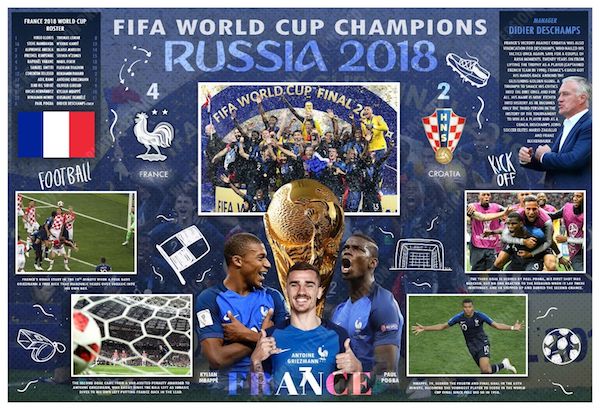
    As the event progressed to its knockout rounds, some icons like Argentina, Spain, Portugal, Brazil and Uruguay made unceremonious exits, losing by results facilitated either by late goals, penalties, own goals or penalty shootouts. There were 29 penalties awarded in the tournament besides “own” goals, including the first goal of the final between France and Croatia. And then, the second goal came from a penalty.

    By the time the tournament reached the semi-final stage, the challenge of Asia, Africa and the Americas had ended. The semi-finals and final were an all-European affair. Though Croatia made it to its first final of a World Cup, it could not stand up to the experience of the French, who won their second World Cup title in 20 years, and thus became only the sixth nation to win the elite soccer tournament two or more times.

    Harry Kane (England), Luka Modric (Croatia), Kylian Mbappe (France) and Thibaut Courtois (Belgium) were adjudged among the best players of this World Cup that also saw the fading away of Lionel Messi (Argentina), even as Cristiano Ronaldo (Portugal) and Neymar (Brazil) may continue to hawk headlines for some more time.

    And who can forget the Croatian President, Kolinda Grabbar-Kitarovic, who spent her own money to travel to Russia, sported the team jersey to watch the “silver team” play the final, from the stands, and greeted and consoled each member of the losing finalist team with a warm hug?

    (The author is a senior journalist. He is executive editor with the PTC TV Channel)

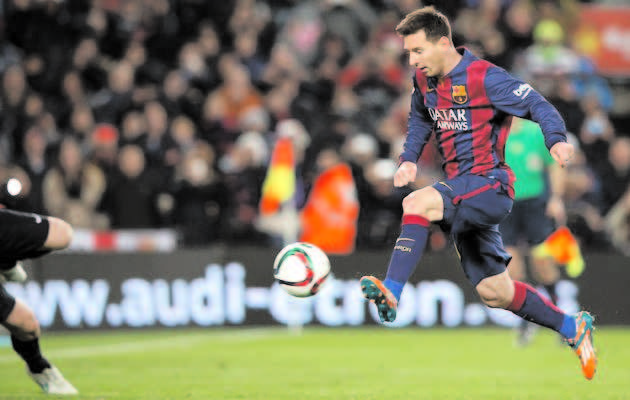
  • Messi returns as Barcelona, Madrid battle ‘FIFA virus’

    Messi returns as Barcelona, Madrid battle ‘FIFA virus’

    MADRID (TIP): Argentina’s pain is Barcelona’s gain as Lionel Messi returns for the Spanish champions when Deportivo la Coruna visit the Camp Nou on Oct 10 after being sidelined for three weeks with a groin injury.

    Messi missed Argentina’s World Cup qualifiers against Peru and Paraguay as La Albiceleste’s struggles without the five-time World Player of the Year continued, putting at risk their place at the 2018 World Cup.

    However, international breaks have traditionally caused Barca trouble too with lethargic performances on their return to La Liga action coming to be known as the “FIFA virus.”

    Barca boss Luis Enrique paid a heavy price for leaving Messi and Luis Suarez on the bench for a shock 2-1 home defeat to Alaves after September’s international break.

    However, with a blockbuster Champions League clash against former Barca coach Pep Guardiola’s Manchester City to come on Wednesday, Enrique could roll the dice with his selection once more.

    Messi is expected to be eased back into action as a second-half substitute. Meanwhile, Suarez could make way for Paco Alcacer having played twice for Uruguay in the past week.

    Neymar will definitely start as he returned to the Catalan capital early due to his suspension for Brazil’s 2-0 win at Venezuela on Tuesday.

    A 4-3 defeat to Celta Vigo two weeks ago leaves Barca only fourth in the table.

    However, they trail leaders Atletico Madrid and Real Madrid by just two points and can go temporarily at least to the top of the table with victory before the sides from the capital kick-off later on Saturday.

    Real face the toughest task on paper of the title contenders as they travel to Real Betis aiming to snap a streak of four consecutive draws.

    Zinedine Zidane’s men also having a mounting injury crisis as captain Sergio Ramos is set to be sidelined for up to six weeks by a knee sprain suffered in Spain’s 2-0 win at Albania in midweek.

    Luka Modric is also out for the rest of the month due to knee surgery, whilst influential holding midfielder Casemiro is missing due to a fractured fibia.

    “This match is very important for us to say – ‘we’re still there’,” said midfielder Toni Kroos after penning a new contract until 2022 on Thursday.

    “Having a string of draws is not a good thing.

    “Maybe during the second half against Eibar (1-1) we didn’t play well and the criticisms were justified.

    “But in Dortmund (2-2) or Las Palmas (2-2) we clearly played well, even better perhaps than certain matches which we won.”

    Atletico were the form team before the international break with six wins and a draw at the Camp Nou in their last seven games taking Diego Simeone’s men to the top of the table on goal difference.

    By contrast, winless Granada travel to the capital with just two points so far this season and having already sacked coach Paco Jemez.

    The Andalusians have turned to Lucas Alcaraz for his third spell in charge of the club to lead them to safety.

    However, anything other than defeat would be a huge surprise at the Vicente Calderon as Atletico have kept seven clean sheets in their last eight games and boast La Liga’s top scorer in Antoine Griezmann up front. Third-placed Sevilla also have the chance to go top for at least a few hours when they visit Leganes on Saturday lunchtime. To do so, though, Sevilla need to end a 22-game streak stretching back 17 months without a La Liga win away from home.


  • End Discriminatory Policy Against Sikh Basketball Players, Say US lawmakers

    End Discriminatory Policy Against Sikh Basketball Players, Say US lawmakers

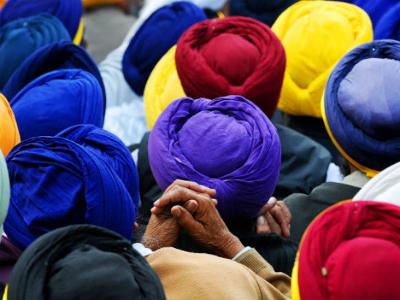
    A bipartisan group of more than 40 US lawmakers have appealed to the International Basketball Federation to end an “outdated and discriminatory” policy against Sikh players over turbans.

    “Sikhs participate in a wide variety of sports around the globe, and there has never been a single instance of someone being harmed or injured by a turban, or of a turban interfering with the sport,” Congressmen said in a letter to Horacio Muratori, President of the Federation Internationale de Basketball (FIBA) or International Basketball Federation.

    Led by Congressman Joe Crowley, who is Vice Chair of the Democratic Caucus, and Ami Bera, the only Indian-American Member of Congress, Tuesday’s letter signed by over 40 lawmakers comes ahead of the expected decision by the international body.

    “Every day that FIBA has delayed this decision is another day that Sikhs can’t play,” said Mr Crowley and Mr Bera in a joint statement.

    “This is a policy that can only be described as outdated, discriminatory, and totally inconsistent with the ideals of team sports, and it is long past time it change. That’s why we have continued to push for action, including with this latest letter, and we thank all those who have raised their voices with us. Our message to FIBA is simple: let them play!”.

    FIBA’s discriminatory policy came to light in 2014 when two Sikh players who were told by referees that they must remove their turbans if they were to play in FIBA’s Asia Cup.

    The players, who have always played in turbans, were told that they were in violation of one of FIBA’s official rules, which states, “players shall not wear equipment (objects) that may cause injury to other players”.

    However, there is no evidence that a Sikh turban poses a threat to cause injury, and other sports leagues, such as Federation Internationale de Football Association (FIFA) and the National Collegiate Athletic Association (NCAA), allow athletes wearing turbans to participate, the lawmakers argued.

  • Hong Kong top, London second, Rio climbs but Kiev falls

    Hong Kong top, London second, Rio climbs but Kiev falls

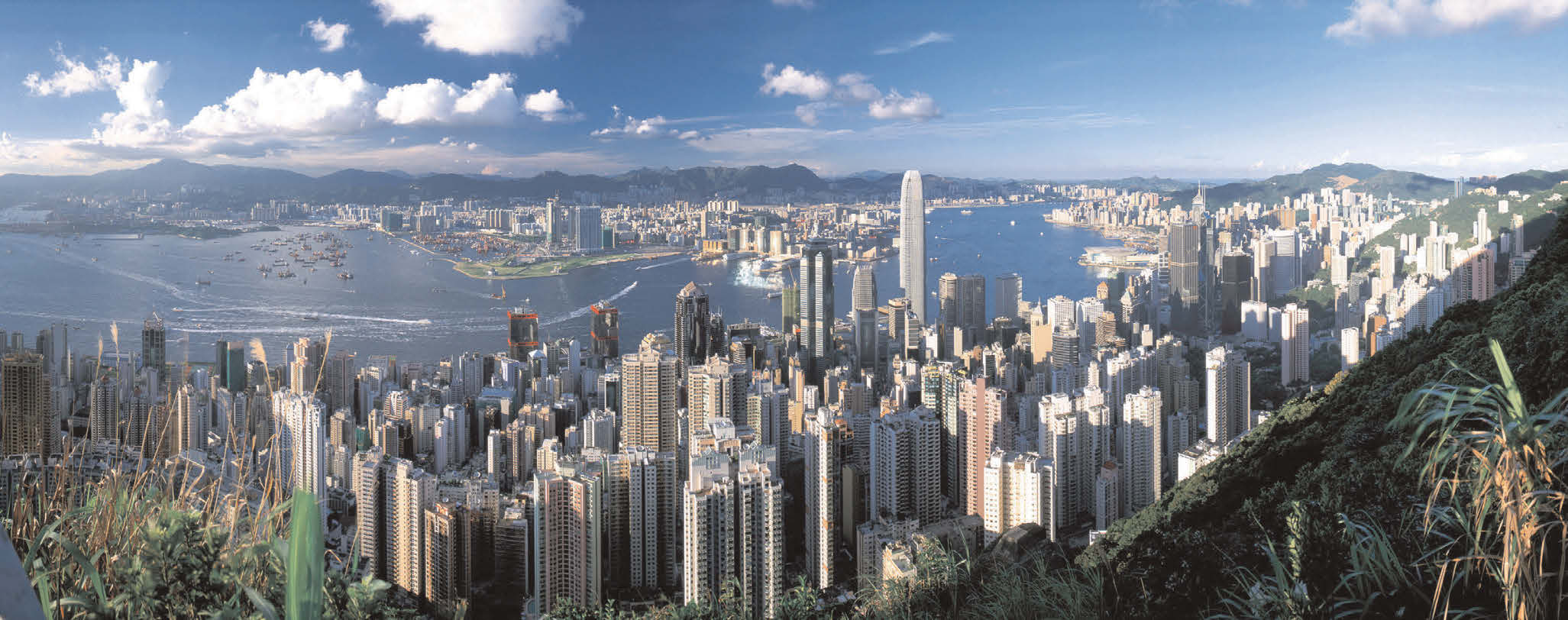
    LONDON (TIP): London has leap-frogged Bangkok and Singapore to be named the second most visited city in the world.

    Nearly 17.4 million foreigners visited the UK capital in 2014, an increase of 3.6 per cent on the previous year, according to research by travel analysts Euromonito.

    Hong Kong however, which hosted 27.7 million visitors in 2014, representing an increase of 8.2 per cent, retained top spot in the 100-strong list for the sixth consecutive year.

    Euromonito travel analyst Wouter Geerts said: “London is one of the most iconic cities in the world. The resounding success of the London Olympics in 2012 has boosted visibility and popularity even further.

    “However, with London airports nearing capacity, the capital risks losing out to European rivals. To remain competitive in the international city destinations landscape, ensuring connectivity and innovation is key.”

    Rio de Janeiro was the biggest climber among the top 100 by shifting 12 places to 80th, attracting 47 per cent more travellers, and largely thanks to the FIFA World Cup – according to Euromonito.

    Cancun in Mexico follows not far behind, with a rise of 42.1 per cent thanks to four million visitors, as jetsetters flocked to its famous white sands. Kiev meanwhile dropped off the list amid a deadly conflict in Ukraine, while St Petersburg and Russia each saw a double-digit decline.

    (The Independent)

  • FIFA red cards Sepp Blatter, Michel Platini; Issa Hayatou gets interim charge

    FIFA red cards Sepp Blatter, Michel Platini; Issa Hayatou gets interim charge

    ZURICH (TIP): The leadership of world football’s governing body plunged into chaos on Thursday, as three of the game’s most powerful figures, including FIFA president, Sepp Blatter were suspended amid an investigation by the Swiss authorities into suspected corruption.

    In addition to Blatter, Michel Platini, who is a FIFA vice president and the head of European soccer’s governing body, and FIFA’s secretary general, Jerome Valcke, who was already on disciplinary leave, were “provisionally banned” from the sport. The suspensions take effect immediately.

    “The grounds for these decisions are the investigations that are being carried out by the investigatory chamber of the ethics committee,” FIFA said in a statement.

    FIFA will now be run by an interim president, Issa Hayatou, who is the Cameroonian leader of African soccer’s governing body and the most senior FIFA vice president. Hayatou, however, was reprimanded in 2011 by the International Olympics Committee’s ethics commission after he admitted to receiving payments from a marketing company, which was, in the commission’s view, a conflict of interest. Hayatou said that
    “extraordinary circumstances” led to his elevation in power and promised that he would not seek the FIFA presidency permanently in February. “I myself will not be a candidate for that position,” he said.

    It was not immediately clear how Thursday’s suspensions will affect the upcoming special presidential election. Prince Ali bin al Hussein of Jordan, who lost to Blatter in May’s election, replaced Platini as the odds-on favourite to be the next president by several bookmakers.

    A fourth executive, the former FIFA vice president Chung Mong-joon, was barred for six years and fined 100,000 Swiss francs, or about $103,000, on Thursday. Chung, a South Korean billionaire whose family heads the Hyundai conglomerate, had, like Platini, been a candidate to replace Blatter. But he has been found guilty of infringing FIFA’s ethics code in connection with the bidding process for the 2018 and 2022 World Cups.

    Platini, who had been seen as the favourite to replace Blatter, filed his paperwork to officially become a candidate earlier Thursday but it is unclear whether he will be permitted to stand. The sanctions for all four men were imposed by FIFA’s independent ethics committee. Richard Cullen and Lorenz Erni, lawyers for Blatter, released a statement shortly after the punishments were announced criticizing the process by which the ethics committee reached its decision and promising to contest it.

    The suspensions for Blatter, Platini and Valcke can be renewed for an additional 45 days after the initial 90, and it is believed that they will require a complete separation from FIFA, where Blatter has worked in various roles since 1975. In a statement, FIFA said that Blatter “is not allowed to represent FIFA in any capacity, act on the organization’s behalf, or communicate to media or other stakeholders as a FIFA representative.” According to a person close to Mr. Blatter, the president may dispute whether that prohibits him from going to his office each day.

    The suspensions leave FIFA and UEFA in disarray. David Gill and Wolfgang Niersbach, members of FIFA’s executive committee, called for an emergency meeting. All 54 member nations of UEFA are also expected to have their own summit possibly next week.

  • There will never be another Pele or a Maradona: Roberto Carlos

    There will never be another Pele or a Maradona: Roberto Carlos

    NEW DELHI (TIP): His 100 mile-plus free-kicks earned him the title of the ‘Bullet Man’. The scorer of some of the most spectacular goals in the history of the game, Brazilian star Roberto Carlos was announced as the marquee player cum manager of Delhi Dynamos on July 9. One of the most recognisable football stars in the world, Carlos spoke to TOI in an exclusive interview on Thursday.

    Excerpts:

    Brazil seem to be surviving on reputation alone these days. The team is not the same it used to be. Where do you think lies the problem? 

    Thank God for that (laughs). At least people will remember me for the next four years. The last good side was 2002. Our group was very good.

    Ronaldo, Rivaldo, Ronaldinho, you… Your generation seems to be the last of the greats. Do you see Brazil reaching that level and unearth such players in foreseeable future? 

    There will never be another Pele. There will never be another Maradona. There will always be new players but not at the same level.

    Recently, Dani Alves claimed Pep Guardiola wanted to coach Brazil before the World Cup but Brazilian Football Confederation failed to appoint him. Your thoughts…

    I believe it’s better if the Brazilian national team has a Brazilian coach. Brazil has a lot of quality coaches. We have a culture of football. It’s important to have a home-grown coach. I think we need to stick to our people.

    Romario said corruption and not just poor play is to blame for the country’s humiliating exit from the World Cup a year ago. Would you agree? 

    It has to stop now. We need to have young people with a modern mindset managing affairs. They need to have full knowledge about the game. The coach and the Brazilian Football Confederation (CBF) officials need to understand the game and the culture of our country.

    Wednesday marked the first anniversary of Brazil’s 7-1 defeat at the hands of Germany. Will Brazil ever recover from the result? If yes, then what is the way to recovery? 

    We need to start playing the way we used to during my playing days. We need to play without fear and play quality football. We have the support of 200 million people. That support needs to be turned into performance. There is nothing else we can do.

    Did criticism from the fans and media play a part in your decision to stop playing for Brazil and Real? Do you believe you were made a scapegoat of others’ mistakes?

    No. I played for Brazil for 18 years. I won the World Cup and Copa America with them. There is a time when a person wants to stop. It’s better to stop playing when you are at your best. I did that. I was happy when I decided to stop playing. There was nothing else. If there was, I would have said so. There is a time when a person has to think about when to stop. One has to think about his family. A footballer does not have time to enjoy life in his playing days. Now I am able to spend time with my family.

    How did you react to the whole FIFA corruption fiasco? Who would you like to see as FIFA president? 

    So many bad things have happened in the past. Those who were arrested were at pretty high positions. It was shameful for the sport. Justice has to prevail. Zico, Luis Figo, Prince Ali of Jordan are some of the people I would like to see as president. They understand football and are serious about the sport. Bringing such people at the helm will ensure that such things do not happen in the future. Zico can be the perfect choice. He is one of the great coaches I have had in my career.

    Word on Brazil coach Dunga and Real coach Rafa Benitez…I know Dunga both as a player and a coach. He has won many trophies with the national team. I think at this moment, the responsibility has to be on the players and not on the coach. The players are doing what the coach wants and not what they want. Benitez understands Real Madrid very well. He has been associated with Real Madrid for a long time. I wish him all the best.

  • Mexico held by minnows Bolivia at Copa America

    VINA DEL MAR (CHILE) (TIP): Mexico coach Miguel Herrera watched in frustration and anger as his side failed to break down minnows Bolivia in a Copa America encounter on June 12 that ended in a goalless draw.

    Herrera was lucky his side did not concede a killer goal in game that left hosts Chile in charge of Group A after their 2-0 win over Ecuador on the opening day of the South American championship.

    He chided his side — weakened by the absence of star players such as Javier ‘Chicharito’ Hernandez, Carlos Vela and Giovani dos Santos — from the touchline as they failed to break down the world 89th ranked Bolivians.

    But Herrera erupted at Paraguayan referee Enrique Caceres for not awarding a penalty when Javier Aquino, Mexico’s most effective player, appeared to be brought down in the 79th minute.

    Herrera brought a weakened squad to the Copa America as he is saving his main players for the Gold Cup in the United States next month. But he still insists that Mexico, 29th in the Fifa rankings, are in Chile to win games.

    Bolivia always looked vulnerable when under pressure but surprised their stronger opponents on the counter attack and had three outstanding first half chances.

    In the 14th minute, Ricard Pedriel flicked a low cross by Swedish based defender Marti Smedberg-Dalence onto the post. Just before the break, Jhasmani Campos fired a left foot shot that Mexico goalkeeper Jose Jesus Corona just tipped over the crossbar. From the resulting corner, veteran Bolivian defender Ronald Raldes just headed wide. Herrera started to show his frustration as Mexico failed to get a grip on the game in the second half.

    Mexico midfielder Jesus Corona blasted the ball wide of the goal from close range when Matias Vuoso was well placed in the goal area. Juan Carlos Medina also wasted a shot from the edge of the penalty area. Mexico had their best chance when winger Jesus ‘Tecatico’ Corona put in a perfect cross for Vicente Vuoso.

  • Sepp Blatter resigned as FIFA president on Tuesday, four days after being re-elected

    Sepp Blatter resigned as FIFA president on Tuesday, four days after being re-elected

    Sepp Blatter resigned as FIFA president on Tuesday, four days after being re-elected to a fifth term.

    Blatter, 79, announced the decision at a news conference in Zurich, six days after the FBI raided a hotel in Zurich and arrested several FIFA officials.

    He was re-elected after his only rival, Jordan’s Prince Ali bin Al Hussein withdrew after losing heavily in the first round of voting.

    “FIFA has been my life…what counts most for me is FIFA and football around the world,” Blatter said.

    “An extraordinary congress is to be called to elect my successor as soon as possible.”


  • England FA chairman says World Cup boycott possible

    England FA chairman says World Cup boycott possible

    LONDON (TIP): English FA chairman Greg Dyke said England would support a possible boycott of the 2018 World Cup if Sepp Blatter was re-elected president of FIFA.

    However, his Dutch counterpart Michael van Praag said his federation had never discussed a boycott.

    Dyke, speaking to BBC radio before Friday’s presidential vote in Zurich, said England would not go it alone but would consider joining a wider European boycott.

    “If the whole of UEFA said that, and all of the countries were willing to do it I think that is right,” Dyke said.

    “There is no point in one or two countries saying we are not going to take part because they will carry on with the tournament without them and that is then pretty unfair on the fans.

    “But if UEFA as a group said ‘look unless we get this sorted we are not going to be in the World Cup’ then I think we would join them.”

    Dyke’s comments followed a similarly veiled threat from UEFA president Michel Platini after the Frenchman revealed that he personally asked Blatter to stand down for the good of football.

    Europe has overwhelmingly spoken out in favour of change and while Platini stopped short of saying a World Cup boycott was inevitable, he did say “all options were open” if Blatter retained power.

    But Blatter has refused to withdraw from the ballot, saying he would stand for a fifth term and pledging to introduce reforms in the wake of the latest corruption allegations that have engulfed FIFA.

    “The events of this week are significant,” Dyke said.

    “Mr Blatter’s statement yesterday in which he basically said ‘look, leave it to me I will clean this up’, nobody is going to believe that.

    “And I think that it is quite ominous for him when the attorney general in America says this is only the beginning not the end.”

    Blatter is strongly favoured to win Friday’s vote against Jordanian Prince Ali bin Al Hussein but Dyke said change was now inevitable regardless of the outcome.

    “I think the odds are still on him (Blatter) winning but they are nowhere near where they were. There has certainly been a shift during this week,” Dyke said.

    “I think it is all over for Blatter anyway, I don’t think it matters if he wins or not.

    “I hope he doesn’t win but if he does I think the events of this week have turned him into a diminished figure and I can’t see him lasting more than a year or two.”

    Van Praag, who pulled out of the presidential race last week and put his support behind Prince Ali, played down the possibility of a boycott as he arrived at the FIFA Congress in Zurich.

    “We never talked about pulling out of the World Cup, and we are part of UEFA and we agreed yesterday that if Sepp Blatter wins, we have a new situation,” he told reporters.

    “We happen to come together in Berlin for the Champions League final (June 6) so that is good opportunity to sit and look at the new situation, it’s absolutely no use speculating on that.

    “We can do a lot (without boycotting the World Cup).”

  • India advance to 2018 Fifa World Cup qualifiers after draw with Nepal

    India advance to 2018 Fifa World Cup qualifiers after draw with Nepal

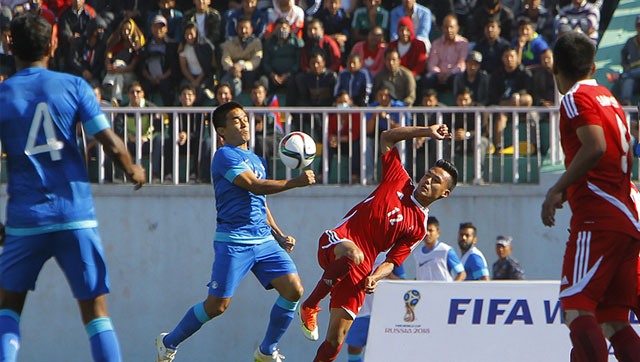
    India advanced to the qualifiers of the 2018 Fifa World Cup and the 2019 Asian Cup with a goalless draw against Nepal in the second leg of the pre-qualifiers in Kathmandu on Tuesday. India had won the first leg in Guwahati 2-0 on March 12.

    Although India’s performance left a lot to be desired, the match had its thrilling moments as a disallowed goal for the visitors and an off-the-post strike from Nepal kept the spectators on the edge of their seats at the Dashrath Rangasala Stadium.

    The first few chances fell for India but striker Sunil Chhetri’s long ranger was off target and then Robin Singh’s shot fizzed over the bar five minutes into the game.

    Playing on their home turf, Nepal then pushed on the offensive. Forward Shantosh Sahukala created a chance in the 18th minute as he headed the ball inside the box. But the ball was collected by India custodian Subrata Paul before it could find its way to a red Nepali shirt.

    Bikram Lama and Shahukhala stitched together some superb balls for striker Bimal Gharti Magar but the Indian rear-guard stood strong as defender Arnab Mondal lunged in for a few strong challenges.

    India coach Stephen Constantine fielded the same 11 as in the first leg but the tourists time and again held on to the ball for too long, allowing the opponents to regroup.

    Magar came close to a breakthrough a minute before half-time but could not beat Paul from close range.

    After the change of ends, both sides stepped on the gas as India started planting in crosses from the flanks and into the opponent’s defensive third while Shahukhala continued to torment the visiting defenders.

    In the 64th minute, Robin put the ball into the net but the referee disallowed the goal, leaving India dumbstruck. Chhetri next tried a right-footer after dribbling past a maze of defenders but his shot was wide off-target.

    At the other end of the pitch, Paul was left stranded as Sandip Rai chipped his free-kick over the wall to Bharat Khawas who only managed to find the post, much to the Indians’ relief.

    Eight minutes from time, Paul had to pull off a brilliant save to thwart Rai’s attempt, thus ensuring a passage to the Asian and World Cup qualifiers.

  • SPAIN FALLS FROM TOP 10 OF FIFA RANKINGS; GERMANY STILL 1ST

    ZURICH (TIP): European champion Spain have fallen out of the top 10 in FIFA’s rankings for the first time since 2007.

    World Cup winner Germany are still No. 1 ahead of Argentina, Colombia, Belgium and the Netherlands.

    The only change in the top 10 is that Italy have rose two places into 10th, while Spain drop one spot to 11th.

    None of the elite teams played in the last month, but games played earlier in the four-year cycle of results lost ranking value.

    Romania rose two places at No. 14 and could be seeded in July when European qualifying groups for the 2018 World Cup are drawn.

    Costa Rica remain No. 13 to lead CONCACAF nations. The United States fell one spot to No. 32.

    Algeria at No. 18 lead African nations. Iran are Asia’s best at No. 42.

  • Fifa red card for Rosberg World Cup helmet

    Fifa red card for Rosberg World Cup helmet

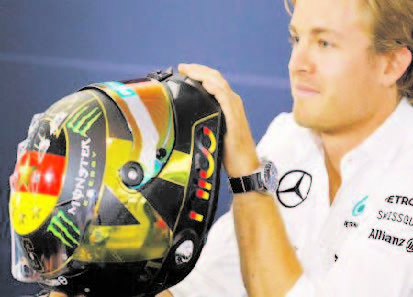
    HOCKENHEIM (GERMANY) (TIP): Formula One championship leader Nico Rosberg has had to abandon plans to wear a special helmet decorated with the World Cup trophy at his home German Grand Prix due to copyright issues after Fifa intervened. Rosberg, who drives for German Football Association sponsors Mercedes, had shown his 712,000 followers on Twitter a picture of the planned helmet in the German colours with four stars and the golden trophy on top. “This will be my Hockenheim World Cup special edition helmet with the Fifa trophy.

    How do you like it?,” the German had asked fans still celebrating Germany’s 1-0 triumph over Argentina in the final in Brazil last weekend. The helmet infringed world soccer body Fifa’s copyright however and Rosberg’s spokesman Georg Nolte confirmed that the image of the trophy would not now appear.

    A new version, shown to reporters, featured one big star with a 14 inside it and three smaller stars denoting Germany’s four world championships. “All the things you have to think about, It’s amazing,” commented Rosberg. “Even a trophy has its trade mark or whatever. this will be my Hockenheim World Cup special edition helmet with the FIFA trophy.

    How do you like it??? @DFB_Team pic.twitter.com/ZKE4gh5EpA — Nico Rosberg (@nico_rosberg) July 15, 2014 “That was a surprise but of course I fully understand,” said the German. “It was a pity because it looked really cool with the trophy on top. Now it has a big star and nobody can take that away. The star is ours.” Rosberg, who signed a contract extension with Mercedes earlier this week, leads British team mate Lewis Hamilton by four points ahead of Sunday’s race – which marks the halfway point in the season.

  • MESSI, MUELLER, RODRIGUEZ AMONG CONTENDERS FOR WORLD CUP’S BEST

    MESSI, MUELLER, RODRIGUEZ AMONG CONTENDERS FOR WORLD CUP’S BEST

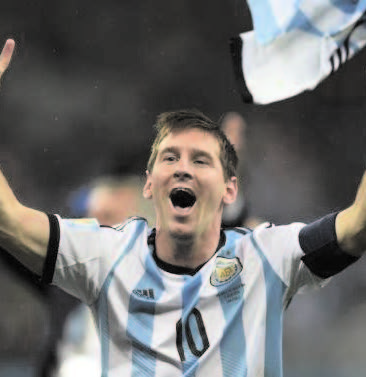
    RIO DE JANEIRO: Four Germans, three Argentines, and one player each from Brazil, Colombia and the Netherlands were shortlisted for the “Golden Ball” award to the World Cup’s best player. The top ten list included World Cup finalists Germany’s defender Mats Hummels, right back Philipp Lahm, midfielder Toni Kroos and forward Thomas Mueller who has scored five goals. For their opponents in Sunday’s final, Argentina, winger Angel Di Maria, midfielder Javier Mascherano and – inevitably – four-goal striker and captain Lionel Messi made the list.

    Also included was Colombia’s attacking midfielder James Rodriguez, widely considered to be the revelation of the tournament and top scorer so far with six goals in his team’s run to the quarterfinal where they were beaten by Brazil. The other two players short-listed were Dutch forward Arjen Robben who tormented defences throughout and scored three in the Netherlands’ progress to the semifinal, and Brazil’s Neymar who had played superbly and bagged four goals before being injured.

    World governing body Fifa will announce the winner after Sunday’s final. Uruguay striker Diego Forlan was named best player of the South African tournament four years ago. Up for the “Golden Glove” award for best goalkeeper are Germany’s Manuel Neuer, Argentina’s Sergio Romero and Costa Rica’s Keylor Navas who underpinned the Central Americans’ fairy-tale run into a first ever World Cup quarterfinal. The award for best young player is between France’s Paul Pogba and Raphael Varane, and the Netherlands’ Memphis Depay.

  • SCOLARI HAILS ROBBEN AS STAR OF WORLD CUP

    SCOLARI HAILS ROBBEN AS STAR OF WORLD CUP

    BRASiLIA (TIP): Netherlands winger Arjen Robben has been the standout performer of this year’s World Cup in the eyes of Brazil coach Luiz Felipe Scolari. Brazil and the Netherlands meet in Saturday’s third-place play-off in Brasilia and Scolari indicated that he will be making a special effort to stop Robben from hurting his side as they try to end the tournament on a high.

    “I think Robben has been the best player of the World Cup,” said Scolari on Friday as he confirmed that Brazil have trained with the focus on stopping the Bayern Munich winger from causing havoc with his favoured move of cutting in from the right wing onto his left foot.

    Earlier on Friday, Robben was included on a 10-man shortlist by Fifa for the Golden Ball, the prize given to the player of the tournament. A total of seven players from finalists Germany and Argentina, including Lionel Messi, are also on the shortlist along with Neymar of Brazil and James Rodriguez of Colombia.

  • Sex is good for footballers, at least in this Fifa World Cup

    Sex is good for footballers, at least in this Fifa World Cup

    SAO PAULO (TIP): It might be hard to stand up in court but evidence is mounting that sex is good for footballers – at least in this World Cup. All eight of the teams through to the quarterfinals allowed their players to have sexual relations with partners during down time, according to Brazil’s Lance! newspaper.

    All of the teams that banned it have been knocked out, the paper added. Studies suggest sexual intercourse up to two hours before an event does not adversely affect the performance of high level athletes but not all 32 squads had a clear policy on whether to allow their players conjugal visits during the tournament, which is being held in Brazil for the first time since 1950.

    Some teams, such as Bosnia, Chile, and Mexico, who have all gone home, slapped a ban on sexual relations. Others, like the Netherlands and Germany, who are in the last eight, set aside time for their players to see wives and girlfriends. Brazil’s squad have been given days off after some games and manager Luiz Felipe Scolari said he did not mind if they had “normal sex” but warned them off anything too “acrobatic”.

    Scolari’s strategy seems to be working, with Brazil through to face Colombia on Friday as they attempt to lift a record sixth World Cup, and is in keeping with the hosts’ love of love. Former Brazil forward Romario said having sex before a game helped him relax and play better while the late Socrates, who had six children, wrote that results were “exceptional” when he had sex the night before and the morning after a game. “Sex isn’t bad for you before or after games,” said ex-Corinthians and Porto striker Casagrande. “Only during.”