Tag: Finance

  • Indian-origin entrepreneur Manish Tiwari conferred Freedom of the City of London Honor

    Indian-origin entrepreneur Manish Tiwari conferred Freedom of the City of London Honor

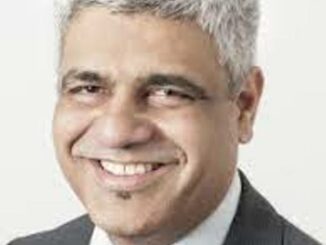
    LONDON (TIP): A British-Indian entrepreneur and founder of an ethnic minority-focused marketing agency has been conferred the Freedom of the City of London honor for his contributions to the financial hub of the UK capital. Manish Tiwari, founder of Here and Now 365, read the “Declaration of a Freeman” and signed the Freeman’s Declaration Book recently, when he was presented with the Copy of the Freedom—a parchment document inscribed by a calligrapher, along with a copy of the “Rules for the Conduct of Life” which date from the mid-eighteenth century. The honor is steeped in history and traditionally the recognition gave a “Freeman” the right to trade in the Square Mile or financial heart of London.

    “On the strength of its multi-cultural legacy, the City of London continues to grow and prosper. It remains at the forefront of global finance by leveraging its past and embracing change and I am honored to be a part of this legacy,” said Tiwari. As one of the oldest surviving traditional ceremonies of the British capital still in existence today, the tradition of conferring the title is believed to have started in 1237. The title of Freeman is more symbolic today and comes with certain corresponding duties associated with the Lord Mayor’s office.

    A previous Indian recipient of the honor is Jawaharlal Nehru, the first Prime Minister of India, and other prominent recipients include South African leader Nelson Mandela and Microsoft founder Bill Gates.

    Tiwari became the latest to join the ranks at a solemn admission ceremony at the Chamberlain’s Court in the iconic Guildhall in London earlier this month.

  • Indian- Origin Rishi Sunak next in line as UK PM deputy after foreign minister


    Given the rapid spread of COVID-19 in the UK, where the death toll has crossed 6,000, and its impact on frontline ministers, questions around leadership have been increasingly doing the rounds

    LONDON (TIP): The UK’s Indian-origin finance minister, Rishi Sunak, is next in line to deputize for British Prime Minister Boris Johnson while he is in hospital with coronavirus and in case UK Foreign Secretary Dominic Raab is unable to carry on amid the pandemic, Downing Street has said. Sunak, who has been leading the UK government’s economic response during the COVID-19 lockdown as the Chancellor of the Exchequer, will automatically step in as part of an established order of precedence in the UK –  which does not have a written constitution.

    “There is an established order of precedence. The Prime Minister has appointed the Foreign Secretary [Raab] as his First Secretary of State. In line with the order of precedence, the Chancellor [Sunak] would follow from the Foreign Secretary,” Johnson’s spokesperson at Downing Street told reporters in response to a question about the chain of command at the top of the British government. 

    Given the rapid spread of COVID-19 in the UK, where the death toll has crossed 6,000, and its impact on frontline ministers, questions around leadership have been increasingly doing the rounds. 

    Sunak, 39, has had to table his maiden Budget as well as a series of mini budgets over the past few weeks to try and address the crisis faced by UK businesses as a result of the lockdown. 

    Johnson, 55, is said to be stable and responding to treatment after he was admitted to St. Thomas’ Hospital in London with persistent coronavirus symptoms and later moved to its intensive care unit (ICU) to be close to a ventilator. 

    “The Prime Minister’s condition is stable and he remains in intensive care for close monitoring. He is in good spirits,” a Downing Street spokesperson said earlier on Wednesday. 

  • NPAs continue to bite: Banks have lost Rs 1.76 lakh crore in the last three years

    NPAs continue to bite: Banks have lost Rs 1.76 lakh crore in the last three years

    The RTI replies demonstrate a constant surge in the amount written off by the scheduled commercial banks, which include public sector banks and private banks in the country, since 2014-15.

    While banks claim that the recovery measures continue even after write-offs, sources say not more than 15-20 per cent is recovered.

    In the last three years, Indian banking system has lost Rs 1.76 lakh crore on account of writing off  non-performing loans of 416 defaulters — each owing Rs 100 crore or more.

    On an average, the amount declared as bad loans turns out to be around Rs 424 crore per borrower.

    This the first time data relating to big loans and biggest defaulters –owing at least Rs 100 crore – has come to light.

    The statistics showed that 109 unique borrowers had their loans to the tune of Rs 40,798 crore written off.

    Following a norm issued by the RBI to all the scheduled commercial banks to come clear on the amount to be prudentially written off and set the accounts right, the data has been exclusively accessed by the CNN-News18 by filing a series of RTI applications.

    The RTI replies demonstrate a constant surge in the amount written off by the scheduled commercial banks, which include public sector banks and private banks in the country, since 2014-15.

    Between 2015 and 2018, a total of Rs 2.17 lakh crore were written off as bad debts by the scheduled commercial banks.

    The statistics showed that 109 unique borrowers had their loans to the tune of Rs 40,798 crore written off.

    This number grew to 199 unique borrowers as on March 31, 2016 with a total of Rs 69,976 crore as amount written off.

    The next two years – post demonetization, however, witnessed the sharpest increase in the amount being written off for the borrowers.

    The RBI collects credit information of large borrowers with exposure of Rs 5 crore and above, which contain data on borrowers with amount technically/prudentially written off.

    The number of unique borrowers grew to 343 – an addition of 144 more, i.e. a 72 percent rise in number of such loanees.

    For this period, the amount written off also jumped from Rs 69,926 to Rs 1, 27, 797 crore.

    This amounted to a rise by Rs 57,821 crore as compared to Rs 29,178 of the preceding financial year. It also meant a whopping hike by almost 83 percent in the total amount written off by the scheduled commercial banks in the year immediately following the demonetization.

    The story remained the same for the next financial year.

    As on March 31, 2018, there happened to be 525 unique borrowers – this was an addition of 182 borrowers whose big loans were written off.

    The total amount written off as bad debts shot up from 1.27 lakh crore to Rs 2.17 lakh crore – an increase of Rs 89,324 crore – another huge jump by almost 70 percent.

    The RTI reply pointed out that the data prior to September 2014 for number of write-offs to the tune of at least Rs 100 crore is not available.

    The constant spurt in bad loans has prodded the government into stepping in time and again to bail out banks by recapitalizing them.

    While banks claim that the recovery measures continue even after write-offs, sources say not more than 15-20 per cent is recovered.

    The RBI collects credit information of large borrowers with exposure of Rs 5 crore and above, which contain data on borrowers with amount technically/prudentially written off.

    The information accessed by the CNN-News18 is a first in getting the exact number of unique borrowers in respect of which an amount of Rs 100 crore and above were written off.

    The information also uniquely depicts the pattern between 2014 and 2018 when such numbers grew, especially post demonetization.

    SBI writes off Rs 76,600 crore of 220 defaulters, RTI query reveals

    Similarly, Central Bank of India and Indian Overseas Bank had 4 defaulters each, owing more than Rs 500 crore when their loans were written off.

    The data has been accessed by the CNN-News18 through a series of RTI applications, following the Supreme Court judgments that directed the RBI to disclose relevant information on the NPAs and bad debts under the RTI Act.

     India’s largest bank, State Bank of India (SBI) has written off bad loans worth Rs 76,600 crore of 220 defaulters, who owed more than Rs 100 crore each.

    As on March 31, 2019, the SBI has declared as unrecoverable outstanding worth Rs 37,700 crore that 33 borrowers, with loans of Rs 500 crore and more, owed to it.

    In a first, the latest information, furnished by the RBI to CNN-News18 under the Right To Information Act, has disclosed the bank-wise break up where loans more than Rs 100 crore and Rs 500 crore were written off by the banks as on March 31, 2019.

    A total of Rs 2.75 lakh crore has been written off for entities that borrowed Rs 100 crore or more from scheduled commercial banks. The latest statistics divulge that Rs 67,600 crore were declared as bad debts for those given loans of Rs 500 crore and more.

     As on March 31, 2019, the SBI has declared as unrecoverable outstanding worth Rs 37,700 crore that 33 borrowers, with loans of Rs 500 crore and more, owed to it.

    As many as 980 borrowers have been enlisted by the RBI whose debts of more than Rs 100 crore each had to be written off by the banks. Out of these, 220 accounts – more than one-fifth of the total number – belonged to SBI. An average of Rs 348 crore was waived off in respect of each such account.

    Out of 71 total accounts reported as having defaulted in loans of over and above Rs 500 crore each, SBI’s share turned out to be 33 to 46 per cent of the total.

    Similarly, as on March 31, Punjab National Bank (PNB) had waived off debts of at least Rs 100 crore each in respect of 94 borrowers. The gross amount came out to be Rs 27,024 crore, with an average of Rs 287 crore per account.

    PNB also wrote off loans of Rs 500 crore or more for 12 biggest defaulters, totaling Rs 9,037 crore.

    While SBI and PNB topped the list among the public sector banks, IDBI stood at the top among the private banks. IDBI also came third among all the scheduled commercial banks in declaring bad debts of Rs 100 crore or more.

    IDBI had 71 borrowers of Rs 100 crore and more, with a total outstanding of Rs 26,219 crore written off.

    Canara Bank too had 63 accounts with outstanding of Rs 100 crore and more, and another 7 accounts with borrowings of Rs 500 crore and more, in respect of which loans worth Rs 27,382 crore.

    The list of borrowers with Rs 100 crore and more as outstanding having been declared as bad loans is followed by Bank of India with 56 accounts, Corporation Bank with 50 accounts, Bank of Baroda with 46 accounts and Central Bank of India with 45 accounts.

    Among the private banks, Axis Bank had 43 such borrowers, followed by ICICI Bank having 37 such accounts.

    Similarly, Central Bank of India and Indian Overseas Bank had 4 defaulters each, owing more than Rs 500 crore when their loans were written off.

    The data has been accessed by the CNN-News18 through a series of RTI applications, following the Supreme Court judgments that directed the RBI to disclose relevant information on the NPAs and bad debts under the RTI Act.

    (Source; CNN -News 18)

  • In 41 trips to 52 countries in 4 years, PM Narendra Modi spent Rs 355 crore: RTI

    In 41 trips to 52 countries in 4 years, PM Narendra Modi spent Rs 355 crore: RTI

    NEW YORK(TIP): Of the 41 trips by Modi to 52 countries, the highest amount was spent on his nine-day tri-nation visit to France, Germany and Canada.

    In his 48 months as Prime Minister, Narendra Modi made 41 trips to over 50 countries, at a total cost of Rs 355 crore.  He was abroad for a cumulative 165 days. The figures are up to Mid-June 2018.

    This was revealed through replies to Right to Information (RTI) queries submitted to the Prime Minister’s Office (PMO) by RTI activist Bhimappa Gadad, who shared these replies with the media.

    Of these 41 trips by PM Modi to 52 countries, the highest amount was spent on his nine-day tri-nation visit to France, Germany and Canada between April 9 and 15, 2015, which incurred expenses to the tune of Rs 31,25,78,000; and the least expensive trip was his very first one as Prime Minister, to Bhutan on June 15-16, 2014 at a cost of Rs 2,45,27,465.

    Gadad, who filed the RTI petition seeking details about expenses on PM’s foreign trips, said he filed it out of curiosity. “A few years ago, I had applied for details of foreign visits by chief ministers of Karnataka. Recently, I was going through news reports wherein Prime Minister’s foreign visits were heavily criticized. Then I applied under RTI seeking details of PM’s foreign visits and I was really shocked to know the details,” he said.

    He is bitter about the PMO not providing information on domestic travels of the Prime Minister. “They have not furnished details of domestic visits and expenses for security provided during the visits. I did not ask for details of security measures. I just asked for the expenses, but they refused, saying the SPG security organization, which takes care of PM security, is exempted from the purview of RTI,” he said.

    “Though I got the information out of curiosity, I want it to reach the public. Everyone should know about it,” he said, adding that the Centre should also release reports on the benefits to the country emerging from these visits.

  • Federal deficit jumps 20 percent after tax cuts, spending bill

    Federal deficit jumps 20 percent after tax cuts, spending bill

    WASHINGTON(TIP): The federal deficit jumped 20 percent in the first 10 months of the 2018 fiscal year, the Congressional Budget Office (CBO) reported Wednesday, August 8.

    Spending outpaced revenue between the beginning of the fiscal year, on Oct. 1, and July by $682 billion, $116 billion more than over the same period in the last fiscal year.

    The rising deficit is largely the result of the tax cuts President Trump signed into law at the end of last year, as well as a bipartisan agreement to boost spending, according to CBO.

    Tax revenues from individuals rose, even as revenues from corporate taxes dropped.

    The Trump administration has argued that the tax cuts would bring down the deficit, as economic growth led to higher tax revenue. The economy did expand in the second quarter by 4.1 percent.

    But economists have argued the growth would have to be much larger to reduce the deficit.

    The CBO projects that the deficit will reach $793 billion by the end of the year and approach $1 trillion next year. White House estimates have the deficit surpassing $1 trillion in 2019.

    Budget watchers have warned that interest payments — the amount the Treasury has to pay just to service the debt — are slated to become the fastest-growing annual expenditure.

    The CBO projects that in 30 years, the government will spend more on servicing debt than on Social Security or defense.

  • BITCOIN SINKS 15% IN ASIA

    BITCOIN SINKS 15% IN ASIA

    TOKYO (TIP): Bitcoin prices plunged about 15% in Asian trade today before recouping some of the losses as investors apparently took fright at news that a South Korean exchange had been hacked. The unit, which hit a record $19,500 at the start of the week, took a hit as it emerged that South Korean exchange Youbit had been hacked, leading the firm to say it will close and start bankruptcy proceedings, according to Bloomberg News. The US on December 19 suspended trading in a Bitcoin-related stock, citing concerns about market manipulation. Source: AFP