Tag: Flipkart

  • Delhi acid attack: Centre issues notice to Flipkart

    The Union consumer affairs ministry on Friday, December 16,  issued a notice to e-commerce giant Flipkart following the Delhi acid attack, wherein a teen was attacked with acid purchased from Flipkart.

    Meanwhile, the Central Consumer Protection Authority, or CCPA, has asked Flipkart to submit a detained response along with necessary documents addressing the concern over the availability of acids on e-commerce platforms. The report has to be submitted within the next seven days. The CCPA, a department part of the consumer affairs ministry, has sent notices to Flipkart for “gross violations” relating to the sale of acid reported on their platform.

    This comes days after an acid attack on a 17-year-old girl in Delhi using acid sold on an e-commerce site.

    The CCPA, being the watchdog of consumer interests in India, has come across the sale of highly corrosive acids on these e-commerce platforms. The availability of hazardous acids in such an accessible manner can be dangerous and unsafe for consumers and the public at large.

    The Ministry of Home Affairs issued an advisory on “measures to be taken to prevent acid attacks on people and for treatment and rehabilitation of survivors” on August 30, 2013, wherein all the states and UTs were advised to take immediate steps to implement the measures mentioned therein for reduction of acid attacks and treatment and rehabilitation of acid attack survivors, as well as any other measure as may be deemed fit.

  • ED sends notice to Flipkart over forex violations

    India’s financial-crime agency has asked Walmart’s Flipkart and its founders to explain why they shouldn’t face a penalty of $1.35 billion for alleged violation of foreign investment laws, three sources and an agency official told Reuters. The Enforcement Directorate agency has been investigating e-commerce giants Flipkart and Amazon.com Inc for years for allegedly bypassing foreign investment laws that strictly regulate multi-brand retail and restrict such companies to operating a marketplace for sellers. The ED official, who declined to be named, said the case concerned an investigation into allegations that Flipkart attracted foreign investment and a related party, WS Retail, then sold goods to consumers on its shopping website, which was prohibited under law. A so-called “show cause notice” was issued in early July by the agency’s office in the southern city of Chennai to Flipkart, its founders Sachin Bansal and Binny Bansal as well as current investor Tiger Global, to explain why they should not face a fine of 100 billion rupees ($1.35 billion) for the lapses, said the agency.

  • SOFTBANK PUTS $2.5 BN INTO FLIPKART’S WALLET

    NEW DELHI (TIP): Flipkart has raised an estimated $2.5 billion from SoftBank Vision Fund, making the fund created by Japanese conglomerate SoftBank one of the biggest shareholders of India’s largest ecommerce player.

    “This is the biggest ever private investment in an Indian technology company,” Flipkart said without disclosing the sum invested. The investment will make the $100 billion Vision Fund one of the largest shareholders in Flipkart, the e-tailer said.

    People familiar with the deal said the investment is worth $2.5 billion, with about $1.5 billion being directly funneled into Flipkart and $1 billion for part of Tiger Global Management’s stake. The SoftBank Vision Fund, the world’s largest technology-focused fund, will get about 20% stake in Flipkart, they said.

    The investment, which comes less than two weeks after Snapdeal dropped merger talks with its bigger rival, will swell Flipkart’s cash holdings to more than $4 billion. Snapdeal is backed by SoftBank.

    The investment is part of the financing round announced in April this year where Tiger Global-backed Flipkart had raised $1.4 billion from Tencent, Microsoft and eBay. At that time, Flipkart was valued at $11.6 billion. With the latest funding, Flipkart is estimated to have raised well over $5 billion to date.

    For Flipkart, the funding provides it with more arsenal to compete with Amazon. The two companies have been locked in an intense battle for leadership in the burgeoning Indian e-commerce market.

    “India has a thriving internet market with close to 500 million internet users and as per market research, the Indian ecommerce market is expected to grow at a five-year CAGR in excess of 30%,” the statement said.

    The funding round further solidifies Flipkart’s balance sheet and will help accelerate investment in driving continued market leadership, it added. Amazon and Flipkart have been pumping in millions of dollars to strengthen infrastructure as well as bring more sellers and buyers online.

    While Flipkart has now raised close to $4 billion this year, Amazon pumped in about $600 million across various units in India since January this year.

    “This is a monumental deal for Flipkart and India. Very few economies globally attract such overwhelming interest from top-tier investors,” Flipkart co-founders Binny Bansal and Sachin Bansal said.

    Masayoshi Son, founder, Chairman and CEO of SoftBank Group Corp, said India is a land of vast opportunity. “We want to support innovative companies that are clear winners in India because they are best positioned to leverage technology and help people lead better lives. As the pioneers in Indian e-commerce, Flipkart is doing that every day,” he added. Source: PTI

  • FLIPKART COULD OFFER $900 to 950 MILLION FOR SNAPDEAL

    FLIPKART COULD OFFER $900 to 950 MILLION FOR SNAPDEAL

    NEW DELHI (TIP): E-commerce major Flipkart is expected to make a revised offer of USD 900-950 million for buying rival Snapdeal, according to sources.

    The new offer almost matches the initial asking price of USD 1 billion for acquisition of the beleaguered e-commerce marketplace, sources privy to the development said.

    They did not wish to be identified as discussions are still on and the deal has not been signed yet.

    One of the sources said a new offer of USD 900-950 million is likely to be made by early next week.

    When contacted, Snapdeal, SoftBank and Flipkart declined to comment. Snapdeal’s board has already rejected a takeover offer of USD 800-850 million (around Rs 5,500 crore) from Flipkart as it felt the amount undervalued the company given that the due diligence report was clean.

    SoftBank, Snapdeal’s largest investor, has been proactively mediating the sale for the past few months. The board of Snapdeal also has representation from its founders (Kunal Bahl and Rohit Bansal), Nexus Venture Partners and Kalaari Capital.

    Snapdeal is also engaged in separate discussions for selling Freecharge (mobile wallet operations) and Vulcan Express (logistics arm).

    These deals are also likely to be closed over the next few weeks. The deal between Snapdeal and Flipkart, if completed, would mark the biggest acquisition in the Indian e-commerce space.

    One of the leading contenders in the Indian e-tailing segment, Snapdeal has seen its fortunes failing amid strong competition from Amazon and Flipkart.

    Snapdeal’s valuations have also plummeted from about USD 6.5 billion in February 2016. SoftBank has already written off over USD 1 billion on valuation of its investment in Snapdeal.

  • AMAZON INVESTS OVER RS 2,000 CR IN INDIA BIZ

    AMAZON INVESTS OVER RS 2,000 CR IN INDIA BIZ

    NEW DELHI (TIP): Global e-tailing giant Amazon has invested over Rs 2,000 crore (over $310 million) in India in the past two months as it looks to consolidate its position in the country and fend off local rivals like Flipkart.

    The US-based firm pumped in Rs 1,680 crore in June into its online marketplace business in India, while Rs 341 crore was invested in the preceding month in the wholesale business. As per regulatory filings with the Corporate Affairs Ministry, Amazon Corporate Holdings and Amazon.com.incs has made these investments in the two Indian entities.

    The capital infusion will also provide more arsenal to the Indian entity that has been aggressively investing in expanding infrastructure and adding solutions to enhance consumer and seller experience. Last year, Amazon founder Jeff Bezos had committed investments to the tune of $5 billion into the Indian market. Estimates suggest that the company has already invested over $2 billion in the last few quarters in the Indian market.

    Amazon India, which has recently completed four years of operations, has been directing its investments towards building warehouses, strengthening logistics and increasing product assortment.

    Besides, money is also being invested in marketing and promotions as the company looks to bring more consumers into shopping online on its platform. Bezos, as part of investor calls, has highlighted the importance of the Indian market to its operations on multiple occasions and has assured that the company will continue to invest in India. When contacted, an Amazon India spokesperson said: “We remain committed to our India business with a long-term perspective to make e commerce a habit for Indian customers and invest in the necessary technology and infrastructure to grow the entire ecosystem.”

    With Tiger Global-backed Flipkart raising $1.4 billion earlier this year, the competition is intense and the rivals are already believed to be gearing up for the festive season. Amazon has invested Rs 341 crore in Amazon Wholesale India, the wholesale B2B arm of Amazon India.

    The company has also made an additional investment of Rs 1,680 crore in its India unit as it looks to further strengthen operations in the booming e commerce market. Source: PTI

  • SNAPDEAL SEARCHES FOR FUNDS, TAKEOVER SPECULATION GROWS

    SNAPDEAL SEARCHES FOR FUNDS, TAKEOVER SPECULATION GROWS

    HONK KONG/MUMBAI (TIP): Indian online retailer Snapdeal is seeking investment to shore up its finances after unsuccessful talks with Chinese funds and Alibaba Group Holding Ltd as it battles to remain competitive, sources with direct knowledge of the matter said.

    Faced with the prospect of falling cash reserves and little interest from existing investors such as Japan’s Softbank and U.S. hedge funds, Snapdeal is now increasingly being seen as an acquisition target, they said.

    “Snapdeal has been desperately looking to raise money in China for the last few months,” said a source with direct knowledge of Snapdeal’s plans.

    “It had multiple rounds of talks with some Chinese funds and was also hoping to get some fresh money from Alibaba. But those talks were not going anywhere and Alibaba made it clear to them they would not write a new cheque for them given the dim outlook for making money any time soon.”

    Both Alibaba, which already has a small stake in Snapdeal, and Softbank declined to comment.

  • Snapdeal, Truecaller tie up for better shopping experience

    Snapdeal, Truecaller tie up for better shopping experience

    NEW DELHI (TIP): Online marketplace Snapdeal, which is also the third largest e-commerce company of India, said on Thursday that it has partnered with Truecaller to enhance consumer experience by integrating Truecaller Priority in the company’s IVR and order confirmation numbers. Customers with Truecaller application installed on their mobiles will be able to easily identify and filter IVR or delivery verification calls when shopping on Snapdeal, the company said in a statement.

    “It will help reduce a key friction point in the delivery process; ensuring that our customers don’t miss out on any important calls from Snapdeal, and also increase the daily rate of deliveries for us by increasing the call completion rate,” said Jayant Sood, Chief Customer Experience Officer, at Snapdeal.

    In an e-commerce war, Snapdeal has been facing tough competition from Amazon and Flipkart. It has recently decided to lay off 500-600 people in a cost-cutting measure. Its founders Kunal Bahl and Rohit Bansal have also taken 100% salary cut. Bahl said in a letter to Snapdeal employees that the company had expanded into doing too many things without getting the first things right.

    Meanwhile, there have been rumours of a three-way merger with Alibaba (its investor) and Paytm, which is the country’s largest mobile wallet, and also had a marketplace.

  • How to fast track your IT Career – You don’t have to be an IITian to get to Google

    How to fast track your IT Career – You don’t have to be an IITian to get to Google

    The IIT tag has helped many a student in India bag coveted jobs at Google, but many non-IITians too have made it to the company straight out of college on the back of their skills rather than campus placements.

    Vishwas Tripathi, a student of Motilal Nehru National Institute of Technology, went on to join Google not via campus placements but on his own, by focusing on the basics as well as treading the path less followed.

    Tripathi posted an answer on popular Q&A website Quora detailing how he prepared, along with the most important things any student should follow while gearing up for such an interview. Below is his account:

    Appeared for APAC Round A: Got a call for anti-abuse profile from Google; could not go for interview as it clashed with mid semester exams.

    Appeared for APAC Round B: Got a call for software engineer profile.

    Researched little bit about Google interview process. Found out you have to explain answers on a whiteboard; bought a whiteboard for practice.

    Re-read first five chapters of “Cracking The Coding Interview.” This is most important thing I have ever read about interview process. It has helped me crack the interview of Flipkart, DirectI, Codenation, and Google. These chapters are about interview process and how to handle it.

    Always read from good sources. Do not read from websites offering codes for standard problems. Understand the algorithm and code it yourself. If you want to read something new first try to find it on:

    • “Introduction to Algorithms” by Cormen, Leiserson, Rivest, Stein
    • Data Science tutorials
    • Or blogs on Topcoder, Codeforces, CodeChef
    • Original research paper of algorithm

    I love participating in CodeChef long contest, and would recommend it. It gives you ample amount of time to learn something new. Most of the algorithms I know are because of this contest. Spend days in understanding, coding and testing them. You will at least learn one new algorithm every month by giving CodeChef long contest.

    Most of us give many coding contests but do not pay attention to most important part of coding contest, the part after contest ends.

    Up-solving: Make it a point to solve at-least one more question, after the contest.

    Editorials: People give in lot of time to make editorials (CodeChef have best editorials). Read Them. They often have multiple approaches to solve, and links to best sources to read more.

    Read codes of red coders, you will find how beautifully and easily can something be coded which took you so long. You will get inspiration to write better code.

    Ask: If you have any doubts, ask them. Ask them in relevant threads. Ask them to your friends or seniors who have solved it. This is the fastest way to learn.

    Most of all love what you do, and do what you love.

    Disclaimer: I got in because of my interest of competitive programming and algorithms, though this is not the only way to get a job. But this answer is focused on entry through competitive programming.

  • Amazon commits $3 billion more for India

    Amazon commits $3 billion more for India

    BENGALURU/MUMBAI (TIP): As the Seattle-based e-commerce juggernaut Amazon closes in on the pole position of the Indian e-commerce market, its founder & CEO Jeff Bezos has announced that his company will pump in an additional$3 billion investment into India, taking its total capital commitment here to $5 billion. Amazon, which recently completed three years of operations in India, has been rapidly gaining market share as it fights out home-grown players like Flipkart and Snapdeal, whose growth has plateaued in contrast.

    Amazon’s intent to invest a blockbuster $3 billion in India puts more pressure on the two local incumbents to raise new financing rounds and gear up with ammunition for a long-haul battle with the world’s largest online retailer. Amazon has taken over the number two slot from Snapdeal in terms of shipments and gross sales, but Flipkart is still the largest e-tailer in the country.

    “Our Amazon.in team is surpassing even our most ambitious planned milestones, and I’m pleased to announce today that we’ll invest an additional $3 billion on top of the$2 billion that we announced in 2014, bringing our total investment in India to over $5 billion,” Bezos, 52, who founded Amazon in 1994, said.

    This investment has no time frame for deployment, a company executive said, but is expected to be ploughed in quick time as the e-tailer builds infrastructure to push its growth in India.

    To put things into perspective, Amazon’s nearest rival, the eight-year-old Bengaluru-based Flipkart has till date raised $3.2 billion from financial investors while online marketplace Snapdeal has racked up around $1.5 billion in risk capital.

    In July 2014, Amazon had allocated $2 billion for India in the e-tailer’s first aggressive move, which kick-started the fierce e-commerce war in India. That had come a day after Flipkart said it had scooped up an eye-popping $1 billion from investors.

    Almost all of that $2 billion has already been used up by Amazon as it’s been discounting heavily, investing in logistics, and weaning away sellers from other players with lucrative programmes.

    Bezos made the latest investment announcement while receiving the US India Business Council’s global leadership award at an event attended by Indian PM Narendra Modi, who is currently visiting the US. “I can assure you, it’s only the beginning and as we say in Amazon, it’s only day one,” he said. He said Amazon has already created about 45,000 jobs in India.

  • Flipkart Revises 30-Day Return Policy To 10 Days | eCommerce war stiffens

    Flipkart Revises 30-Day Return Policy To 10 Days | eCommerce war stiffens

    E-commerce website Flipkart has revised its returns policy and cut down their 30-days returns window to just 10-days.

    Also Read: FLIPKART HITS $1 BILLION IN SALES | Flipkart Posts Over Rs 2,000-Crore Loss In Discount War & Big…

    So, in case you don’t like a product, you just have 10 days to return the products bought from the website to get the refund.

    Flipkart, Amazon are engaged in a fierce war for dominance of India’s booming online retail market

    According to a report in Economic Times, India’s leading online store has also told sellers on the platform that they will have to pay higher commissions from June 20.

    The 10-day return policy will be applicable to all the selling products, including books, mobile phones and electronics. While the 30-day window will be available for footwear, watches, clothing, jewellery, fashion accessories and large appliances.

    “The revised structure across shipping, commission and returns will enable sellers to have predictability and better manage their online business,” ET quoted a Flipkart spokesperson as saying.

    These changes are expected to come into effect from July 2016.

  • ‘Life Mantras’ by Sahara’s Jailed Boss Subrata Roy tops in Nielsen BookScan

    ‘Life Mantras’ by Sahara’s Jailed Boss Subrata Roy tops in Nielsen BookScan

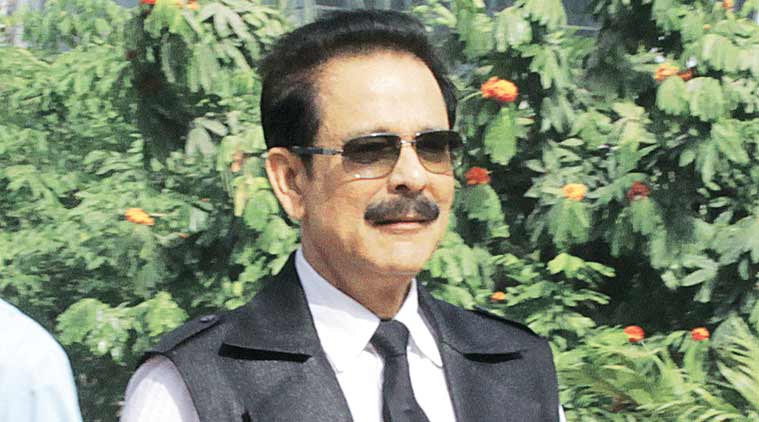
    NEW DELHI: ‘Life Mantras’ a book by Sahara Group chief Subrata Roy has topped the non-fiction category of Nielsen BookScan.

    According to Nielsen best-seller list, the recently unveiled book brought out by Rupa Publication, has topped the non-fiction book list this week, pushing into second spot the popular Manorama Yearbook 2016.

    The Nielsen BookScan service is the world’s largest continuous book sales tracking service operating in India, the UK, Ireland, Australia, US, South Africa, New Zealand, Italy, Brazil and Spain.

    It collects total transaction data at the point of sale directly from the tills and dispatch systems of all major book retailers. Nielsen BookScan collects data from online and offline booksellers, including Bookadda, Crosswords, Connexion, DC Books, Flipkart, Indiatimes, Infibeam, Landmark, Landmarketail, Capital Book Depot, Rediff, Odyssey, Pageturners, TV18 Homeshopping, WH Smith India, ebay, Mahindra
    Retail, Reliance Timeout, and Snapdeal etc.

    In his book, Roy puts forth the “various psychological and emotional aspects of life, vis-a-vis the basic instincts inherent in all human beings.”

    The book, is the first in the “Thoughts from Tihar” trilogy penned by Roy while in judicial custody in Tihar Jail in connection with a long-running investor refund case, running into thousands of crores of rupees, with the markets regulator Sebi.

    The forthcoming books of the said trilogy are “Think with Me – How to make our country ideal”, and “Reflections from Tihar – A book on Tihar Jail”.

  • FOREIGN FIRMS RUSH TO INDIA’S ONLINE MARKETPLACE

    FOREIGN FIRMS RUSH TO INDIA’S ONLINE MARKETPLACE

    NEW DELHI (TIP): India’s booming online marketplace business has attracted a new wave of merchants and sellers from countries such as China, South Korea, Japan, Singapore and the US. In fact, thousands of sellers are getting into tie-ups with Indian e-commerce players to kick-start operations in the country.

    According to industry insiders, around 50,000 sellers from China, South Korea and Singapore are planning to enter India through online marketplace players.

    “In business-to-business (B2B) segment, there is no online organised player in the country right now. The market is being created for the online businesses,” said Sanjay Sethi, co-founder and CEO of Shopclues. The company has brought in DHgate, the second largest player in China after Alibaba, on to its platform. It’s also getting 25,000 South Korean merchants on board. Tie-ups are also in process with Singapore Traders Association to enable them to sell on Shopclues.

    WINDS OF CHANGE
    Around 50,000 sellers from China, South Korea and Singapore want to enter India through online marketplace players
    American retail major Walmart is also exploring ways to tie up with leading e-commerce companies in India, including Flipkart, Snapdeal and others
    Metro Cash and Carry is also in talks with e-commerce marketplace players to sell its products online
    E-commerce giant Alibaba is looking to make a big bang entry into India’s marketplace via One97 Communications-owned Paytm

    American retail major Walmart is also exploring ways to tie up with leading e-commerce companies in India, including Flipkart, Snapdeal, ShopClues, Grofers and Bigbasket. It is learnt that German wholesale giant Metro Cash and Carry is also in talks with e-commerce marketplace players to sell its products online.

    Meanwhile, e-commerce giant Alibaba is looking to make a big bang entry into India’s marketplace via One97 Communications-owned Paytm.

    Alibaba is expected to be the support behind Paytm’s China product portfolio. With that in place, Paytm will aim to become the biggest Indian player insofar as the number of sellers on the platform is concerned. With eight million sellers, Alibaba has the widest seller range as well as product portfolio.

    This is not for the first time that Paytm is planning to sell Alibaba’s product range. During Diwali last year, Paytm had the whole product catalogue sourced from Alibaba and merchants from China were directly shipping products to customers in India, saving Paytm the hassle of finding warehouses.

    As for the second top player in China, DHgate, online B2B would be a gateway into India and an opportunity to get connected to 350,000 sellers through the Shopclues portal.

    DHgate plans to list its products across categories, including electronics, accessories, beauty products and sports. “From China we are getting around 10,000 SKUs (stock keeping units) listed. It is not a retail business and the target audience for this business are other businesses in India,” said Sethi.

    The foreign investment rules vary across retail platforms and companies often resort to complex structuring to bypass policy. While foreign direct investment (FDI) is capped at 51 per cent in multi-brand retail with states having the last say on whether international players would be permitted to operate or not, there’s no limit of foreign investment in single-brand and business-to-business or cash and carry.

    In e-commerce, however, FDI is not permitted. But, e-commerce players are mostly run with foreign money by operating marketplace platforms, where rules have not been framed yet.

  • Prabhu Dayal serves hot Karachi Halwa

    Prabhu Dayal serves hot Karachi Halwa

    NEW YORK (TIP): Why would Zia want to climb five floors of a hotel? Why did someone think Zia could fix his TV? Was Zia practicing Urine therapy? What did Christopher Lee and Alyque Padamsee have in common?

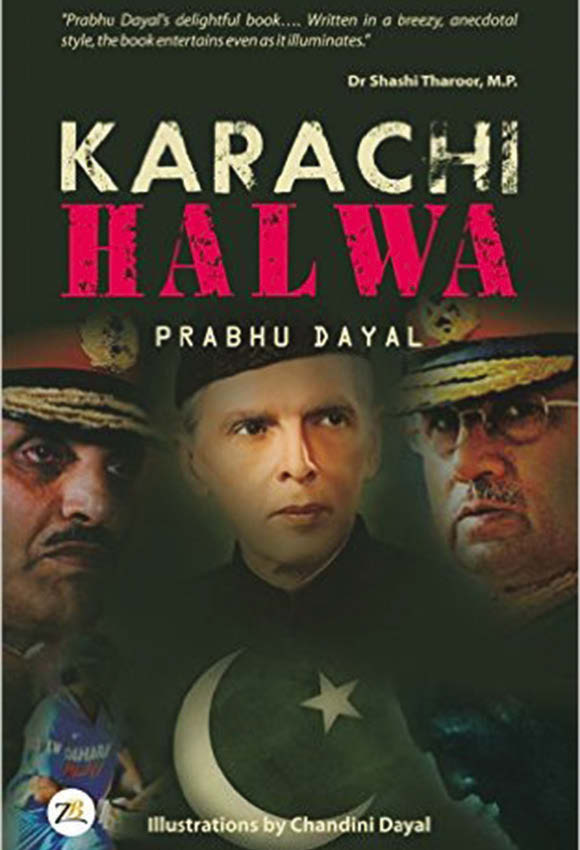
    Prabhu DayalAmbassador Prabhu Dayal who had a very highly successful diplomatic career as Indian Consul General in New York for five years has penned all his memories of his posting in Pakistan and aptly named the book “Karachi Halwa”.

    Karachi Halwa is witty and insightful portrayal of Zia ul Haq’s rule in Pakistan. Ambassador Prabhu Dayal shares his recollections of that period and keeps you laughing throughout his account of the bumpy ride of Pakistan’s domestic politics and its relationship with India. He tells you how a Sahiwal cow was brought into the equation, and where an elephant comes in.

    Karachi HalwaHe says, ‘The past, the present and the future are in one continuous motion. Whatever I witnessed in Pakistan during Zia’s rule extends its long shadow not only over the present times but will do so well into the future also’. He poses the ultimate question whether the two South Asian giants can live as friends, offering his own suggestions.’

    Ambassador Prabhu Dayal is an illustrious officer of the Indian Foreign Service with a career spanning 37 years. He served in various diplomatic positions in Egypt, Pakistan, Iran and the Permanent Mission to the UN at Geneva before being appointed as Consul General, Dubai in 1994. This was followed by his appointment as Ambassador to Kuwait (1998-2001) and to Morocco
    (2004-2008). He also served as Deputy Secretary (Pakistan) and later as Joint Secretary (SAARC).

    He was Consul General, New York from 2008 until his retirement in 2013-ranking next in seniority to the Ambassador. From the magnificent heritage building in Manhattan which houses the Consulate General of India, he handled matters relating to 10 US States–New York , New Jersey, Pennsylvania, Ohio, Connecticut, Rhode Island, Massachusetts, Vermont, Maine, New Hampshire. His jurisdiction also included Puerto Rico and the US Virgin Islands.

    Having been a student of International Relations at the University of Allahabad, it was perhaps natural for him to opt for the Foreign Service when he stood second in the Order of Merit in the Civil Services Examination. “Nation states have always engaged in warfare and diplomacy” he says, adding “the world needs skillful diplomats more than ever before in history”. He puts his rich experience and intellectual abilities to good use in his first book- ‘Karachi Halwa’. His wife Chandini Dayal has provided illustrations with her deft pen for all the chapters.

    ‘Karachi Halwa’ is published in India by Zorba Books and kindle books are available online at Amazon. The hard copy version is being sold at a moderate price of Rs.199 on Amazon.in and Flipkart. It is also available on uRead.com, which will deliver worldwide.

    Karachi HalwaIn his prologue, Prabhu Dayal says: “My diplomatic career has taken me to several continents, but I must admit that in no country did I feel such an overpowering sense of a common heritage as I did in Pakistan. In both countries, the issues in focus are the ones which divide us. This is of course unfortunate since present day India and Pakistan have existed under similar influences for millennia and have remarkable similarities in a number of areas such as language, literature, art and architecture.

    “I found that there was something rather unique about the experience of living amidst my colonial cousins. The warmth and affection which I often received was very moving, and many occasions remain etched in my memory”.

    Dayal recalls in his book: “One occasion that I remember fondly was when I wanted to buy a camel-skin lamp and found a shop which had just what I wanted. As I was paying the bill, the elderly shop keeper somehow figured out that I was from India, and asked me as to which city did I hail from. When I told him that I was from Allahabad, he refused to take any money from me as his wife was also from there! Finally, he agreed to let me pay, as long as I would accept two lamps for the price of one”.

    “During my stay in Karachi, I met several people who were the very embodiment of sophistication and refinement. Remnants of the legendary ‘Nawabi’ era, they were a charming blend of wealth and culture– poignant reminders of an age that was fast receding into the past, he said.

    “Again, there were also many enchanting evenings which I spent at spell-binding concerts of Pakistani maestros or attending mushairas (Urdu poetic symposia) graced by the participation of renowned Pakistani poets. I felt truly enriched by such cultural fiestas.

    “Then there were those equally enjoyable evenings which I spent just relaxing in the company of a few close Pakistani friends. These occasions gave me the opportunity to savor the best of Karachi humor, always original though at times, somewhat cynical.

    “These and many other memories fill me with sweetness even today. On the other hand, I was often witness to that unabashed lying and duplicity which Pakistani leaders have developed into a fine art. Their pronouncements were often at such variance with ground realities that they were difficult to digest. “Though I embarked on my stint in Karachi with no hint of enthusiasm, the three and a half years which I spent turned out to be unforgettable in several respects and fill me with nostalgia even today after the passage of three decades, he recollects with nostalgia.

  • Flipkart posts over Rs 2,000-crore loss in discount war & Big Billion Day Sale

    Flipkart posts over Rs 2,000-crore loss in discount war & Big Billion Day Sale

    MUMBAI: Flipkart posted a loss of about Rs 2,000 crore in the year ended March 2015, amounting to a fifth of its rapidly rising sales, as the country’s largest online retailer spent heavily to fund discounts to win customers and stay ahead of rivals Snapdeal and Amazon India while investing in back-end operations.

    Flipkart Internet, which runs the consumer-facing portal, registered a net loss of Rs 1,096.4 crore, while that of Flipkart India, the wholesale arm, was Rs 836.5 crore, according to a Registrar of Companies filing on Monday. A year ago, the units had a combined loss of Rs 715 crore. Combined sales trebled to Rs 10,390 crore as reported last month. A Flipkart spokesperson declined to comment on the company’s financials. Last month’s numbers came from its annual MGT-07 return that lists sales and net worth. The latest data is from the complete standalone financial statement that Flipkart has filed.

    India’s leading online marketplace may need to keep sustaining losses as it seeks to win market share by offering the best prices. “Flipkart could post between 35-50% of its sales as operating loss due to its high logistics cost and discounting,” said Ruchi Sally, director at retail consultancy Elargir Solutions. “The only way to reduce (this) is to diversify in higher-margin product categories such as apparel and home.”

    “The current model of Flipkart doesn’t make any economic sense as any company selling goods below manufacturing cost without any margin will always attract customers. But a sustainable business can’t run like this and Flipkart needs to look for alternate revenue models such as advertising and data selling to make money,” said the CEO of a leading retail group.

    “Flush with cash, firms could so easily develop expensive habits such as embarking on costly and perhaps undifferentiated customer acquisition strategies and too quickly elevating their fixed-cost structures, which may be difficult to wind back when circumstances change,” said Viju George of JP Morgan. India’s ecommerce market is set to rise to $103 billion by FY20 from $26 billion now, according to Goldman Sachs.

  • It’s Flipkart, Snapdeal vs Amazon, eBay

    It’s Flipkart, Snapdeal vs Amazon, eBay

    NEW DELHI (TIP): The government on Thursday began consultations on FDI in B2C e-commerce amid a sharp divide between Indian and foreign players. While domestic companies such as FLIPKART and Snapdeal opposed FDI during a meeting by commerce and industry minister Nirmala Sitharaman, foreign players such as Amazon and eBay made a strong case for it.

    “We have always maintained that opening up this sector to FDI will be good for consumers and Indian businesses as it will allow us to partner with local manufacturers to source products not carried by other sellers on the marketplace, and support the Make in India vision,” said an Amazon India spokesperson.

    Around 60 players from the industry, including representatives of Amazon India, Snapdeal, Ikea, Japan Plus, eBay and FLIPKARTattended the meet.

    Domestic e-tailing companies fear it will allow global giants such as Amazon to bring its inventory-based model here, which works on the principle of buying goods in bulk at a low price from small businesses and selling them at a discount to consumers. Currently, e-tailers operate through a marketplace model where independent sellers use their websites to reach out to customers.

    “FDI in e-commerce will not have a good impact on the Make in India model. It will allow Amazon to squeeze and manipulate small businesses and flood the mar mar Chinese goods. The e-commerce industry has already received around $9 billion FDI. It has created thousands of jobs. What is the point of changing the policy now,” said an executive with a large Indian e-tailing company.

    At present, 100% FDI is allowed in B2B e-commerce space, which helps global retailers such as Walmart operate cash-and-carry business. A Snapdeal spokesperson said, “The government must tread this issue with caution to ensure that there is no adverse impact on the growth of MSMEs in the country.”

    A CII spokesperson said, “E-commerce in India is at relatively nascent stage and the market is yet to attain full maturity level. While CII is favourably inclined towards 100% FDI in B2C route, the sector should be given some time to come to a level where it can compete globally.”

    FLIPKART also flagged tax issues at the meeting, where Sitharaman said it was only the first in a series of consultations and it will take more such meetings to come to a conclusion about FDI in B2C e-commerce.

  • Indian tech start-ups woo talent back from America – Offer massive perks

    Indian tech start-ups woo talent back from America – Offer massive perks

    India’s IT industry has long been seen as a back-office backwater, even by its own engineers who started moving abroad in their droves in the 1970s. After losing top engineering talent for years to America’s tech heartland of Silicon Valley, India is luring them back as an e-commerce boom sparks a thriving start-up culture, unprecedented pay, and perks including free healthcare for in-laws.

    The e-commerce sector, led by companies such as Flipkart and Snapdeal, attracted more than $5 billion of investment last year, Morgan Stanley says, compared with less than $2 billion in 2013.

    That growth is fuelling the hunt for talent to drive the next stage of expansion – for many, an initial public offering or a push into overseas markets.

    “The appetite for finding engineering talent … is great,” said George Kaszacs of Silicon Valley-based headhunters Riviera Partners, who helps Indian startups scout for potential hires.

    India’s biggest e-commerce company, Flipkart (IPO-FLPK.N), recently hired two senior executives from Google Inc (GOOGL.O) in California, both engineers of Indian origin, for its headquarters in Bengaluru in southern India.

    Flipkart did not disclose their pay, but headhunters say remuneration packages can reach $1 million over 3-4 years.

    Headhunter Kaszacs said several factors are drawing Indians back home, including the chance to join a fast-growing start-up. Joining bonuses, stock options and other perks were also helping.

  • OLA RAISES $400M, LED BY DST GLOBAL

    MUMBAI (TIP): In one of the largest financing rounds for an Indian internet startup, taxi-hailing service Ola said it has raised $400 million – or around Rs 2,500 crore – led by Russian tech billionaire Yuri Milner’s investment firm DST Global. With this, the four-year-old company is now valued at $2.5 billion, or more than Rs 15,000 crore.

    Ola has mopped up about $675 million across five rounds of funding in the backdrop of an all-time high investor sentiment around Indian consumer-facing tech companies.

    DST, known for its bets on Facebook and Twitter, is joined in the new round by Singapore’s sovereign wealth fund GIC, hedge fund Falcon Edge, Japan’s SoftBank, Tiger Global, Steadview Capital and Accel Partners US.

    A company statement said on Thursday the capital raised will be used to strengthen Ola’s leadership, expand into smaller markets by adding another 100 cities and pump$100 million into growing TaxiForSure (TFS), which it acquired recently. With this fund-raise, Ola becomes the third most valued domestic consumer internet company after Flipkart and Snapdeal, valued at $11 billion and $5 billion respectively. Just six months back, the taxi service venture was valued at $650 million when it raised funds from Softbank, making it a four-fold jump in its valuation.

    People familiar with the fund-raise said Milner’s DST will own 9% in Ola, having put $225 million. SoftBank, which is expected to have shelled out $90 million, will see its stake trim down to 25% from about 32%. Milner had personally invested in Ola last year.

    Founded by Bhavish Aggarwal and Ankit Bhati, batchmates at IIT-Bombay, Ola operates across 100 cities at present and, along with TFS, is a clear leader in the taxi aggregation market. The TFS buyout and now this massive raise are expected to give it a huge leg up over Uber which entered India in 2013. Aggarwal said Ola’s vision is that people shouldn’t find the need to own a car.

    “We have been able to make this possible for millions of customers in the past four years by creating over a hundred thousand driver entrepreneurs on the platform. With increasing smartphone penetration and immense growth in smaller cities and towns, we will be able to drive the benefits of this on-demand platform deeper into the lives of our customers and partners.” 

    Recently, Ola launched an on-demand cafe service and is also said to be toying with the idea of entering the highly competitive grocery delivery space. In the US, Uber has also been experimenting with other lines of businesses based on the delivery platform like Uber Movers for shifting house, UberRush, a courier service, and Uber Corner Store for grocery deliveries.

    India’s taxi market, estimated at over $10 billion in size, is largely unorganized but is fast changing with the advent of asset-light, aggregator services backed by heavy technology. Over the past year, the three players (Ola, Uber, TFS) have slugged it out with cut-throat competition, guzzling millions in investor money and throwing discounts to get larger market shares. Ola is said to be losing $30 million every month. It claims to be clocking 2 lakh average monthly rides.

    DST has been bullish about Asian tech-backed taxi companies as it picked up a stake in China’s largest taxi-hailing app Didi Dache, which recently merged with its closest competitor Kuaidi Dache, to form a $6-billion transportation behemoth. Buoyed by increased smartphone penetration, the 300-million strong internet user base in India is the next big opportunity for investors after China. Having come to the Silicon Valley as a relative unknown, Milner bulked up the DST portfolio by sinking in millions of dollars behind fast-growing internet firms like Airbnb, Spotify and Zynga, and is today one of the most sought after investors globally. Last year, it led a $210-million financing round in Flipkart, signalling the Russian investor’s interest in domestic tech firms.

  • Motorola Moto E 2nd gen 4G for $128 available for pre-order through Flipkart In India

    Motorola Moto E 2nd gen 4G for $128 available for pre-order through Flipkart In India

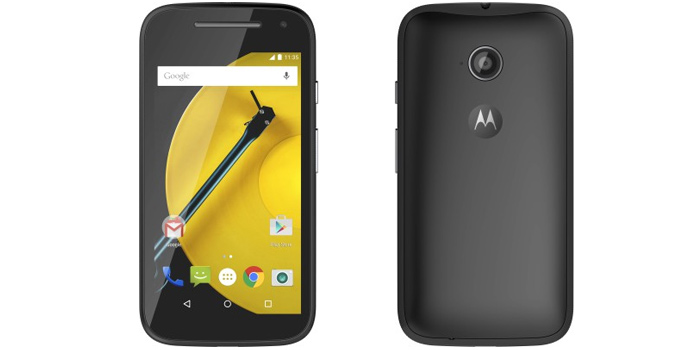
    The Motorola Moto E 2nd gen smartphone with 4G LTE has finally been launched in India with a budget-friendly price tag of Rs 7999 attached to it. It’s available for pre-order through Flipkart and shows a tentative release date of April 23, though a PR person we spoke to said that it could be out in the market within a week’s time.

    The 4G LTE version of the Motorola Moto E gen 2will arrive earlier than expected if it does land this week. Since network operators across India are still trying to catch up to the times, we’d say that the currently available 3G variant of the phone will end up being more popular. But it’s always nice to have choice, of course.

    The 2015 version of the Moto E carries a few improvements over its predecessor. While its 3G model embeds the same old Qualcomm chip, the 4G-capable handset integrates a quad core Snapdragon 410 processor. It has a bigger touchscreen of 4.5 inches instead of 4.3 inches, but disappoints by sticking to the same 960 x 540p resolution panel.

    NETWORK Technology  
    GSM / HSPA / LTE    
    LAUNCH Announced 2015, February
    Status Available. Released 2015, February  
    BODY Dimensions 129.9 x 66.8 x 12.3 mm (5.11 x 2.63 x 0.48 in)
    Weight 145 g (5.11 oz)  
    SIM Micro-SIM  
    DISPLAY Type IPS LCD capacitive touchscreen, 16M colors
    Size 4.5 inches (~64.3% screen-to-body ratio)  
    Resolution 540 x 960 pixels (~245 ppi pixel density)  
    Multitouch Yes  
    Protection Corning Gorilla Glass 3, oleophobic coating  
    PLATFORM OS Android OS, v5.0.x (Lollipop)
    Chipset Qualcomm Snapdragon 200 – 3G model  
    Qualcomm Snapdragon 410 – LTE model    
    CPU Quad-core 1.2 GHz Cortex-A7 – 3G model  
    Quad-core 1.2 GHz Cortex-A53 – LTE model    
    GPU Adreno 302 – 3G model  
    Adreno 306 – LTE model    
    MEMORY Card slot microSD, up to 32 GB
    Internal 8 GB, 1 GB RAM  
    CAMERA Primary 5 MP, 2592 х 1944 pixels, autofocus
    Features Geo-tagging, panorama, HDR  
    Video 720p@30fps  
    Secondary VGA  
    SOUND Alert types Vibration; MP3, WAV ringtones
    Loudspeaker Yes  
    3.5mm jack Yes  
    COMMS WLAN Wi-Fi 802.11 b/g/n, hotspot
    Bluetooth v4.0, LE  
    GPS Yes, with A-GPS, GLONASS  
    Radio FM radio with RDS  
    USB microUSB v2.0  
    FEATURES Sensors Accelerometer, proximity
    Messaging SMS(threaded view), MMS, Email, Push Email, IM
    Browser HTML5  
    Java Yes, via Java MIDP emulator  
  • BENGALURU STANDS TALL WITH $2.6-BILLION VENTURE CAPITAL

    BENGALURU STANDS TALL WITH $2.6-BILLION VENTURE CAPITAL

    BENGALURU (TIP): India’s IT hub, Bengaluru, came in fifth in a list of cities globally that received the most venture capital in 2014, an indication of the growing vibrancy of its startup ecosystem.

    San Francisco led the list with $13 billion of VC investments, followed by Beijing ($6.4 billion), New York ($5.7 billion), Palo Alto ($3.2 billion) and Bengaluru ($2.6 billion). The list has been put together by Crunchbase, a global startup ecosystem database.

    Among countries, India received the third highest VC funding ($4.6 billion) after the US ($58.9 billion) and China ($8.9 billion).

    Ravi Gururaj, chairman of the Nasscom Product Council, says India enjoyed record VC investments in the second half of 2014, and the wave shows no sign of slowing down. “This was kicked off by the historic election results which boosted investor confidence tremendously. Additionally, private equity investors worldwide, particularly those that missed out on the meteoric rise in Chinese startup valuations, flocked to high performing Indian consumer startups determined not to miss out on a fast ride on the India Startup Express.”

    Sanjeev Aggarwal, co-founder of Helion Venture Partners, says Bengaluru’s lead position is because of its ability to attract tech talent. “The cycle kicked in with Infosys and Wipro, followed by global companies coming in large numbers. Engineers employed with companies like Google and Yahoo wanted to experiment with new ideas, and that has spawned a startup culture. Mobile apps and cloud have reduced entry barriers to build companies,” he told TOI.

    CrunchBase does not give a breakup of the investments in each city. In Bengaluru’s case, a significant portion of the $2.6 billion would likely be on account of Flipkart’s two rounds of funding that happened last year. The e-commerce company received an estimated $1.7 billion.

    Parag Dhol, MD of Inventus Advisors India, believes Bengaluru’s startup ecosystem is beginning to have a multiplier effect. “You have an ecosystem where companies have gone public, there are good product startups, and new-age entrepreneurs are turning into angels. In that sense, success begets success. Venture capitalists are looking at India with a fresh set of eyes,” he adds.

    Aggarwal notes that capital is going particularly to the leaders who are building companies in large under-served markets, and to companies like Flipkart, Snapdeal and Ola. “Investors are paying a leadership premium,” he says.

    Japanese internet giant Softbank invested $627 million in Snapdeal and $210 million in Ola Cabs last year.

  • Samsung goes offline with mobile phones

    Samsung goes offline with mobile phones

    NEW DELHI (TIP): In a move that might change the dynamics of India’s booming mobile phone market, Samsung Electronics, one of the country’s largest phone makers, has decided to take the offline retail route even as the rest of the world is moving online.

    While its peers like Xiaomi and Motorola are busy selling millions of handsets online, the Korean giant has given in to mounting pressure from thousands of brick-and-mortar retailers over predatory online pricing and has decided to extend exclusivity on selling rights of 48 models, including its muchawaited Galaxy Alpha and Note 4, to offline retailers. Offline handset retailers have been facing the heat from their online counterparts due to heavy discounts offered online, which they couldn’t match.

    This has led to the formation of All India Mobile Retailers Association (AIMRA), a body that has vowed to work for the mutual benefits of brickand- mortar retailers and maintain price hygiene across trade channels. TOI had reported in August that Samsung was facing dealer unrest due to predatory pricing by online retailers. While addressing a large gathering of retailers from AIMRA in the capital recently, a senior executive with Samsung Electronics said: “We have taken action against many rogue distributors, who were dumping their stocks online and beating down the price of our handsets.

    We are working hard to bring back price hygiene in the market. Our revenues from online sales have come down from 30% to single digit. We also have plans to stop billing WS Retail, the largest reseller on Flipkart.” The executive said that Samsung has struck a deal with various e-tailers, wherein the company would give them exclusive rights to sell one or two models in return for the promise that they are going to maintain the price sanctity of Samsung handsets.

    Earlier this month, Samsung made Flipkart the exclusive launch partner for the Galaxy S5 Mini. Interestingly, according to retailers, the difference in prices between Samsung handsets sold online and offline has narrowed considerably since August when a Galaxy S5 that was being sold for Rs 38,000 at retail stores was being offered for Rs 36,000 online. “Now, there is hardly any difference,” an AIMRA spokesperson said. An emailed questionnaire to Samsung did not elicit any response. Retail experts have taken its move with a pinch of salt.

    “It’s a regressive move, especially before the festive season when you are going to see a lot of discounts online,” said Arvind Singhal, founder and chairman of retail consultancy, Technopak. “Perhaps the fact that around 80% of India’s Rs 60,000-crore handset business is still done through offline retail might be reason for the company to shy away from online trade. But, Samsung needs to wake up to the fact that it’s not the future since Chinese manufacturers are offering same spec handsets at one third of the price.”

  • Flipkart, ‘India’s Amazon,’ launches low-cost phones before Mozilla and Google

    Flipkart, ‘India’s Amazon,’ launches low-cost phones before Mozilla and Google

    BANGALORE (TIP): Amazon announced its first smartphone June end and not to be outdone, online retailer Flipkart, “India’s Amazon,” is now launching a smartphone line of its own. Unlike Amazon’s higherend Fire, which sports multiple cameras for a 3D effect and a bevy of other features, Flipkart’s is aimed at the Indian market and is a budget smartphone, Tech In Asia reports. While Mozilla and Google have also announced low-end smartphone plans, Flipkart seems to be beating them to the market. Flipkart’s phones will start at about $45, will sport dual SIM and will support Android Jelly Bean and KitKat as operating systems. Interestingly, both Flipkart and Google have partnered with smartphone manufacturer Karbonn for their India-focused phones.

    Google is also working with other manufacturers such as Micromax and Spice, which, like Karbonn, have significant market share. In early June, Mozilla announced that it’s gearing up to launch low-cost smartphones in India and Indonesia in the second half of 2014. They will likely be priced under $60, as Mozilla chief operating officer Gong Li said at the time that phones over that price “are still too expensive for most consumers in India and other Southeast Asian countries.”

    Flipkart unveiled a new tablet, the Flipkart Digiflip Pro XT712, which it seems to have designed with online shopping in mind – shopping through its online store, that is. The purchase of the tablet comes with special offers, such as Flipkart shopping credits, if used through the tablet’s Flipkart app. Amazon’s Fire phone is also meant to help users purchase more on Amazon, thanks to its product identification feature, Firefly.

  • FLIPKART BUYS OUT MYNTRA FOR $300 M

    FLIPKART BUYS OUT MYNTRA FOR $300 M

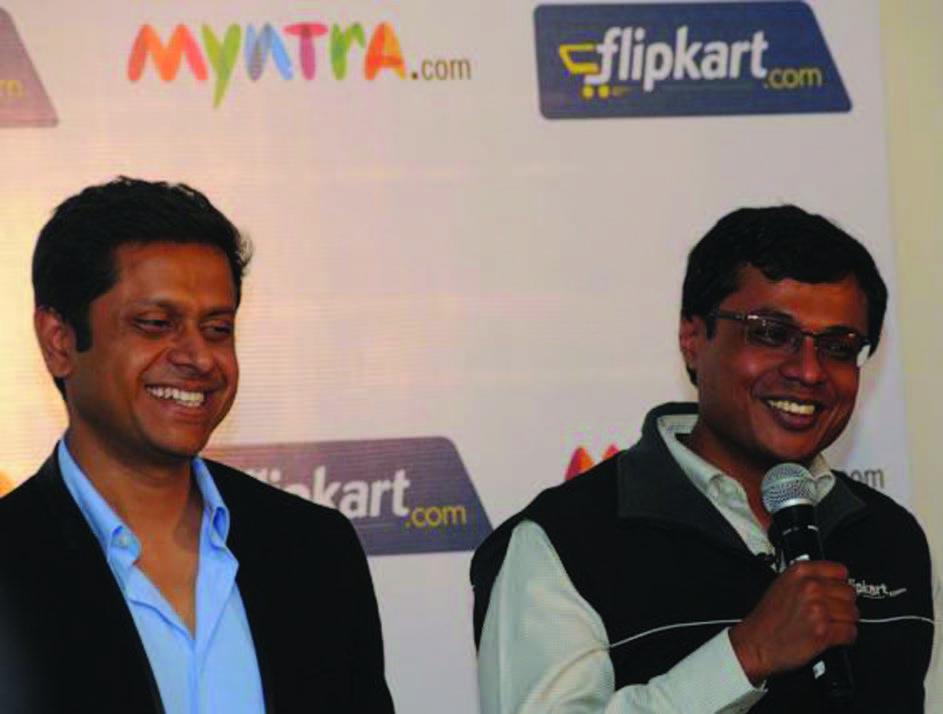
    BANGALORE (TIP): Putting an end to months of speculation about what is being termed as the biggest acquisition in the Indian e-commerce business, domestic e-retailer Flipkart announced that it has acquired rival and leading fashion e-tailer Myntra.com.

    The move is widely being read as a response to global e-commerce leader Amazon’s ramp up of its year-old India operations, and the narrowing gap between Flipkart’s sales and that of fast-growing rival Snapdeal. No details on the deal size or structure were shared, and analyst speculation pegging the buy out at over $300 million remained unconfirmed by both companies.

    Both companies will be run independently, with no immediate plans to merge the fashion business on the two portals or even join forces in terms of content or go-to market. Myntra CEO Mukesh Bansal joins Flipkart’s board, and will head the fashion vertical at Flipkart and Myntra. They also announced that while Myntra employees would “remain in current positions”, they would be offered stock options in Flipkart.

    Flipkart co-founder Sachin Bansal insisted that this was a “completely different acquisition story” as it was not “driven by distress”, alluding to a plethora of small e-commerce players either having wound up or been bought over in the past two years.

    Together, both company heads claimed, they were scripting “one of the largest ecommerce stories”. $100 m investment in fashion vertical Mukesh Bansal said that on its own Myntra.com held 30 per cent of the market share, but together the two companies would account for 50 per cent of the online fashion market. “We hope to take this figure to about 60-70 per cent in the long-term,” he said. Mr. Sachin Bansal added that Flipkart would invest $100 million in its own fashion vertical in the near-term.

    While the electronics vertical is the largest revenue generator at Flipkart (and will continue to be even after the acquisition), Mr. Bansal hoped that in the near-term fashion would be the “largest sales category for Flipkart”. Flipkart started fashion as a shopping category on its site two years ago.

  • MOTOROLA MAY RIDE LENOVO’S NETWORK FOR SALES PUSH

    MOTOROLA MAY RIDE LENOVO’S NETWORK FOR SALES PUSH

    NEW DELHI (TIP):Will Motorola ride the on-ground network of new parent Lenovo for a deeper push into the Indian smartphone market? Soon to be part of Lenovo’s business after the Chinese company bagged it from tech giant Google, Motorola does not plan to enter the mainline retail market on its own for the moment, rather relying on its exclusive partnership with Indian e-retail giant Flipkart for sale of its devices.

    Flipkart has been the exclusive partner for selling Motorola’s phones — the Moto G and Moto X — and the company plans to continue with the arrangement in future. “We are happy with the current set-up and will continue to maintain the exclusive relationship with Flipkart,” Marcus Frost, senior marketing director for Motorola Mobility’s Europe, the Middle East and Africa (EMEA) as well as Asia-Pacific (APAC) regions, said.

    He said Motorola Mobility does not intend to move out of the e-retail format. “We have no plans for that,” Frost said when asked whether Motorola plans to sell its phones through the numerous multi-brand handset retail shops spread across the length and breadth of the country. Asked whether the company can ride on the retail channel of Lenovo (that is already selling phones and tablets in India through a variety of multi-brand shops) as part of striking synergies between the two brands, he said, “It is still to be decided… We look at all the possibilities all the time.”

    Pressed further on the possibility of a tie-up, Frost said, “Anything can happen.” Hints of a wider synergistic play between the two companies were given by none other than Yang Yuanqing, chairman and CEO of Lenovo immediately after he announced the deal with Google. “Motorola and Lenovo are competitive in different areas.

  • FLIPKART HITS $1 BILLION IN SALES

    FLIPKART HITS $1 BILLION IN SALES

    NEW DELHI (TIP): Indian e-tailer Flipkart has hit the $1 billion in sales– a feat that it has managed to achieve before its own target and in roughly the same time it took online giant Amazon to do the same in the U.S. “In March 2011, we announced that we wanted to hit $1 billion in gross merchandise value by 2015. At that point, our run rate was $10 million,” said Sachin Bansal, co-founder, Flipkart, in a message. “Today we are proud to announce we have hit a run rate of $1 billion GMV, which means we have grown 100 X in the last three years,” he added.

  • August sees highest PE deal value of year at $1.8 b

    August sees highest PE deal value of year at $1.8 b

    Private equity activity in India witnessed an uptick in August with a combined deal value ofhighlight, accounting for over half the cumulative deal value, according to research and consultancy firm Grant Thornton’s latest ‘Dealtracker’ report.

    IT, ITeS lead The Bain-Genpact deal enabled the part-exit of Genpact’s existing investors, General Atlantic Partners and Oak Hill Partners. Two other large PE deals that took place during the month were SBI Macquire Private Equity’s $150 million investment in Ashok Concessions and Nasper and Tiger Global’s $150 million investment in Flipkart, which contributed over 16 per cent of the total deal value.

    A break-up of the deal activity indicates that 68 per cent of PE investments were focused on the IT and ITeS sector, while eight per cent went to infrastructure management and another eight per cent on travel and tourism. While four per cent of the deal tally was accounted for by the pharma, healthcare and biotech sector, two per cent of the deals were in the manufacturing space.

    The PE deal value in August 2012 was three times higher than in the corresponding month of the previous year and nearly six times higher than the level seen in 2010. In contrast, merger and acquisition activity was muted during the month. The total value of inbound M&A during August 2012 was $0.3 billion from 11 deals, compared to $1.5 billion from 11 deals in August 2011 and $1.15 billion from seven deals in August 2010.

    Indian companies were also cautious on outbound M&A during the period, with just nine deals valued at $40 million recorded during the period under review. In comparison, 11 deals worth $0.8 billion and 15 deals worth $140 million were inked during the same month of 2011 and 2010, respectively. Domestic deal activity involving Indian companies stood at $0.6 billion from 17 deals in August.

    This was a 33 per cent decline from $0.9 billion in the corresponding month of the previous year, but a significant improvement from $90 million from 15 deals in 2010. The top sector for M&A was real estate, accounting for 49 per cent of the deal value, followed by pharma, healthcare and biotech with a 20 per cent share. While 11 per cent of the M&A deal value was enjoyed by the IT and ITeS sector, the shipping and ports and manufacturing sector cornered four per cent each