Tag: Flying Sikh

  • Milkha Singh – The man who beat life’s odds with class and precision

    Milkha Singh – The man who beat life’s odds with class and precision

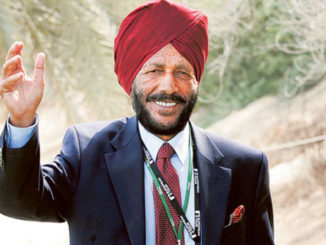
    Legends never die! This is why Milkha Singh will always be alive in the memories of those who look up to him, he will be alive in all those priceless medals he won for the country and he will stay alive in all those budding athletes whom the ‘Flying Sikh’ inspired.

    The track, to him, was like an open book in which Milkha Singh found the “meaning and purpose of life”. And what a life he made for himself.

    Born on 20 November 1929 into a Sikh family in Govindpura, which is now a part of Pakistan, Milkha Singh was introduced to the sport only after he had fled to India post the partition and joined the Indian Army. It was in the army where he sharpened his running skills. After he finished sixth in a cross-country race that had around 400 more soldiers running, he was handpicked for further training. That laid the foundation for what would be an impressive career.

    Before his 91-year-old body lost to COVID-19 on June 18 after fighting it for a month, Milkha won the kind of battles that not many would have survived, forget about living long enough to tell the world about them.

    Early life

    From beginnings that saw him orphaned and displaced during the Partition of India, Milkha has become a sporting icon in his country.Escaping the troubles in Punjab, where killings of Hindus and Sikhs were continuing, by moving to Delhi in 1947, Milkha lived for a short time with the family of his married sister and was briefly imprisoned at Tihar jail for travelling on a train without a ticket. His sister, Ishvar, sold some jewelry to obtain his release. He spent some time at a refugee camp in Purana Qila and at a resettlement colony in Shahdara, both in Delhi.

    Milkha became disenchanted with his life and considered becoming a dacoit but was instead persuaded by one of his brothers, Malkhan, to attempt recruitment to the Indian Army. He successfully gained entrance on his fourth attempt, in 1951, and while stationed at the Electrical Mechanical Engineering Centre in Secunderabad he was introduced to athletics.

    He had run the 10 km distance to and from school as a child and was selected by the army for special training in athletics after finishing sixth in a compulsory cross-country run for new recruits. Singh has acknowledged how the army introduced him to sport, saying that “I came from a remote village, I didn’t know what running was, or the Olympics”. Milkha conquered the world of athletics with his grit, determination and resolve to rise from every setback like a phoenix. Thanks to his performances across the globe, Milkha dominated the field of sprinting for more than 10 years, scripting numerous records and winning multiple laurels for the country.

    It is safe to say that the legend introduced India to ‘track and field’ and to date, there has been no one who matches Milkha’s achievements in the country in this field. With his demise on June 18, it undoubtedly is the end of an era that saw none come even close to his achievements, let alone match them.

    A glimpse into the stupendous athletics career of legendary Milkha Singh can be had from this mind boggling fact: his 400 metres Indian national record stood for 38 years and the 400m Asian record for 26 years. In 1960 in Rome, he came closest to winning an individual Olympic Games medal as an Indian, in 400m, eventually finishing fourth in a photo finish.

    Milkha was one of the favourites to win the 400m gold in Rome. It was probably natural, too, as going into the Olympics, he is said to have won 77 out of 80 races, including the 1958 Commonwealth Games gold in 440 yards.

    But one shortcoming probably cost Milkha an Olympic medal. He had a habit of looking at his opponents over his shoulder while running races, and when he did the same in Rome it was decisive, though he had led the race until 200m. Later he admitted that he had paid a heavy price for his habit. He lost the race of his life in the Rome Olympics, finishing the 400m final in 45.6 seconds, 0.1 second short of the bronze medal mark.

    He remained tormented by that miss, one of the only two incidents in his life, which he described as unforgettable — the other being the killing of his parents in Pakistan.

    Interestingly, Milkha broke the existing world record of 45.9 sec in Rome, and so the three who finished ahead of him. He finished fourth with a time of 45.6 seconds, as per a hand-held device, while an unofficial electronic timer at the games clocked him at 45.73 sec. This has been a point of contention, though.

    The emergence of the ‘Flying Sikh’

    Young Milkha first hogged the limelight when he outperformed 394 soldiers in a race and was selected for further grooming and training. That eventually laid the base for him to become a legendary sprinter.

    Milkha represented India at the 1956 Olympics in Melbourne, the 1960 Olympics in Rome, and the 1964 Olympics in Tokyo. He was the first Indian athlete to claim a gold medal in the individual athletics category at the Commonwealth Games before the sprinter’s record was broken in 2010.

    Milkha, who is regarded as one of the world’s greatest athletes, defeated Pakistan sprinter Abdul Khaliq in a 200-Metres race to win a gold medal in Tokyo Asian Games. Khaliq was the fastest man in Asia in 1958 and after Milkha defeated him, the Indian sprinter was given the title of “The Flying Sikh”.

    Prior to that race, Milkha had won the gold in 400 metres while Khaliq had clinched the gold medal in 100 metres and with the Indian sprinter winning the 200 Metres race, he took the honour of then “Asia’s best Athlete”.

    Overcoming the hurdles

    One of independent India’s biggest sporting icons was a tormented man but refused to let that come in the way of accomplishments that were unheard of in his era.

    He saw his parents being butchered during partition, indulged in petty crimes to survive in the refugee camps of Delhi, went to jail for those, and failed three attempts at joining the Army.

    Who could have thought a man like that would get the sobriquet of ‘The Flying Sikh’? But Milkha earned it and earned it with a master class on how to be bigger and better than one’s circumstances.

    He “revered” the track like “the sanctum sanctorum in a temple where the deity resided.”

    To him running was both his God and beloved as he created his own little fairytale out of what could have easily been a tale of horrors.

    His love for athletics began after he enrolled himself with the Corps of Electronics and Mechanical Engineers (EME) of the Indian Army in Delhi.

    His talent blossomed while being with the Army. Fortunately for him, his officers encouraged him, and that would have played a role in him winning the 200m and 400m races at a Services Athletics Meet in 1955.

    Milkha practiced on his own while with the Army and clinched gold medals in both 200m and 400m at the 1956 National Games in Patiala, and two years later at the Cuttack Nationals, setting national records in both races.

    His sporting achievements won him kudos from the Army, and the Indian government awarded him the Padma Shri in 1959. The same year, he was awarded the prestigious Helms Award.

    Milkha took premature retirement from the Army and took up the post of Deputy Director of Sports with the Punjab government.

    In 1991, he introduced a compulsory games period in schools and also set up sports wings in schools in the districts to tap talent at the grassroot level.

    He got married to Nirmal Kaur, captain of the Indian volleyball team, in 1963. They met for the first time in 1956 in Sri Lanka when they were there for their respective national duties.

    The couple was blessed with three daughters and a son, golfer Jeev Milkha Singh.It was quite stunning that an athlete of Milkha’s stature was offered the Arjuna award, instituted in 1961, only in 2001. He famously turned it down, saying the honour was not of the “stature of the services he rendered to the nation”.

    In fact, Milkha was a sum total of way more than his several races and medals. He was also much more than that near-miss in Rome.

    He was India’s love affair with the track, the one that this country can never get over.

    Bhaag Milkha Bhaag

    In 2013, Bhaag Milkha Bhaag, a film on the legendary sprinter was made to showcase his incredible struggle from being an orphan to becoming one of the greatest athletes of all time.

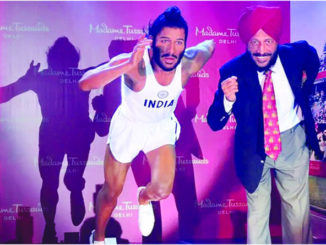
    Bollywood actor Farhan Akhtar essayed the role of ‘The Flying Sikh’ in the biographical drama. It was through this movie that the sprinter attracted more fans and the young audience got to know about the legend of the man.

    Tributes pour in

    Tributes poured in on social media for the sporting icon.

    Young Indian sprinter Hima Das recalled Milkha Singh’s congratulatory message when she won the 400m gold at the 2018 world under-20 championships.

    “After winning world championship U-20 title and medal in Asian Games, I still remember a call from Milkha Singh sir that ‘Hima just keep on working hard, you have ample time and you can win a gold medal for our country at a global level,’ I will try to fulfil your dream sir,” Hima Das tweeted.

    Bollywood actor Farhan Akhtar, who played the role of Milkha Singh in his biopic Bhaag Milkha Bhaag, penned a heartfelt note for the running great.

    “A part of me is still refusing to accept that you are no more. Maybe it’s the stubborn side I inherited from you.. the side that when it sets its mind on something, just never gives up,” the actor said.

    Farhan Akhtar called him a ‘constant inspiration and a reminder of humility in success’.

    “And the truth is that you will always be alive,” Farhan Akhtar added. “Because you were more than a large-hearted, loving, warm, down to earth man.

    Sprinter Dutee Chand touched upon how relatable Milkha Singh was and hailed his achievements during a time when sports rarely headlined in the country.

    “His life was also full of struggles,” Dutee Chand told the News18 website. “His biopic Bhaag Milkha Bhaag I have seen it five-six times. I can see some similarities between his struggles and mine. Didn’t have proper diet, no track to run. Whatever hurdles I faced, he has faced them too. Can only imagine the hardships he had to go through and overcome to become what he did eventually. His life has been an inspiration to me.”

    Milkha Singh achievements include being the first Indian to win a Commonwealth Games gold medal. He also came within a photo finish of clinching a medal at the 1960 Olympics in Rome, missing out on a bronze medal by just 0.1 seconds.

    “His performance in (Rome) Olympics is the stuff of legends,” Dutee pointed out. “We keep on complaining about unavailability of coaches, tracks and what not but at a time when it was hard to find proper running shoes and one used to practice barefoot, Milkha made it to the Olympics. That’s the biggest thing.”

    Indian football team captain Sunil Chhetri also paid respect. “We may not have seen you compete, but every time we ran fast as kids, we ran ‘like Milkha Singh’. And for me, that will always be the legend you leave behind. You didn’t just run, you inspired. Rest in peace, sir,” the footballer wrote on Twitter.

    Indian boxing queen MC Mary Kom, Abhinav Bindra, the only Indian to win an individual Olympic gold, and 2012 London Games bronze medallist Saina Nehwal also paid homage to the running great.

  • After Nirmal, now Flying Sikh Milkha Singh takes the final holiday

    After Nirmal, now Flying Sikh Milkha Singh takes the final holiday

    By Prabhjot Singh

    In 1958 when the then Prime Minister Pt Jawahar Lal Nehru asked Milkha Singh what he wanted for becoming the first Indian to win an individual gold medal in athletics in the Cardiff Commonwealth Games, the ace sprinter requested a “national holiday” in the country. And 63 years later, on Friday night, he himself embarked upon a long holiday leaving not only the entire nation but the whole sporting world sobbing and grieving.

    He was christened “Flying Sikh” by the Martial Law Administrator of Pakistan, General Ayub Khan, after he set the stands of a Lahore stadium ablaze by defeating the local hero, Akhlaq, who was better known as “Ghorra” (horse), in a great sprint contest.

    A victim of the 1947 partition, Milkha Singh, was successful in joining Indian Army at a recruitment rally in Srinagar. Running was his passion, and he would work hard to be the best. And true to himself, his training and his ambition, he remained the best to make sure that there could be no two “Milkhas”.

    After winning a gold at Cardiff, Milkha went on to win a double in the 1958 Asian Games before his memorable record-smashing run at the 1960 Rome Olympic Games where he missed a medal by a whisker. And that remained his greatest regret. Ahead of all his competitors, Milkha, close to the finish line, made a mistake of looking back. And that cost him heavily. Instead of a podium finish, he was placed fourth.

     When the then Punjab Chief Minister Partap Singh Kairon asked him to come out of Indian Army and join the State Government in its Sports Department, he reluctantly accepted the offer. Initially, he would travel between Delhi and Chandigarh every day before making the City Beautiful his permanent home.

    In between he had met Nirmal Saini, an outstanding volleyball player, who was working as a Physical Education teacher in a Punjab college. Ultimately, they married.

    Milkha Singh, who by then had become world famous as “Flying Sikh” took control of school sports in the Education Department of the State while Hockey Olympian Balbir Singh was in the State sports department.

    It may be a mere coincidence that the three greats of Punjab Sports – Balbir Singh Sr, Flying Sikh Milkha Singh and Nirmal Milkha Singh – had worked together.

    As luck would have it, Milkha Singh could not attend the cremation of his life partner as at that time he was fighting for his own life at the PGI. The end came five days after his wife had breathed her last at a private hospital in Mohali.

    Known for their robust health and fitness, both great stalwarts were lost to Corona, sad indeed. While Milkha Singh was 91, Nirmal was 85.

    Milkha Singh as Additional Director, Youth Services and Sports in the Education Department, used to take hundreds of schoolboys and girls to Srinagar every year for the summer (off season) coaching camps. That was the reason that Punjab remained at top in school sports.

    A born runner, Milkha Singh was always a sportsman. After retiring from athletics, he took to golf and was an accomplished golfer. His son, Jeev, too, is a star golfer.

    Besides Jeev, Milkha and Nirmal leave behind three daughters – Aleeza (she was with Air India), Dr Mona and Sonia – and their families.

    (Prabhjot Singh is a senior journalist)

  • End of an Era: Legendary Indian sprinter Milkha Singh aka Flying Sikh dies after month-long battle with COVID-19

    End of an Era: Legendary Indian sprinter Milkha Singh aka Flying Sikh dies after month-long battle with COVID-19

    Tributes pour in. PM Modi describes him as a “colossal sportsperson”

     I.S. Saluja

    CHANDIGARH/ NEW YORK (TIP): The Flying Sikh Milkha Singh died on Friday, June 18, after a month-long battle with COVID-19. The Padma Shri awardee was 91 and is survived by his golfer son Jeev Milkha Singh and three daughters.  “He breathed his last at 11.30 p.m.,” a family spokesperson told PTI.

    Milkha Singh’s condition deteriorated as he developed complications, including fever and dipping oxygen saturation levels, after a bout with COVID-19, in the Intensive Care Unit of the PGIMER hospital.

    He had contracted COVID-19 last month and tested negative for the virus on Wednesday when he was shifted to general ICU in another block of the hospital. Milkha had been “stable” before Thursday evening.

    Milkha’s 85-year-old wife Nirmal, who had also been infected by the virus, passed away at a private hospital in Mohali on Sunday, June 13.

    Milkha was admitted to PGIMER on June 3 after his oxygen levels dipped at home following treatment at the Fortis hospital in Mohali for a week.

    The legendary athlete is a four-time Asian Games gold medalist and the 1958 Commonwealth Games champion but his greatest performance remains the fourth-place finish in the 400m final of the 1960 Rome Olympics.

    He also represented India in the 1956 and 1964 Olympics and was bestowed the Padma Shri in 1959.

    The entire country paid glowing tribute to Indian sprint legend Milkha Singh, with the Prime Minister Narendra Modi describing him as a “colossal sportsperson who captured the nation’s imagination”.

    Prime Minister Narendra Modi, condoling his death described him as a “colossal sportsman”.

    “In the passing away of Shri Milkha Singh Ji, we have lost a colossal sportsperson, who captured the nation’s imagination and had a special place in the hearts of countless Indians,” Mr. Modi said in a tweet.

    “His inspiring personality endeared himself to millions. Anguished by his passing away.” Olympic bound star javelin throwers Neeraj Copra tweeted “We lost a Gem. He will always remain as an inspiration for every Indian. May his soul Rest in peace.”

    Condoling the death, Home Minster Amit Shah said the country lost one of the brightest stars of Indian sports. “India mourns the sad demise of legendary sprinter Shri Milkha Singh Ji, The Flying Sikh. He has left an indelible mark on world athletics. Nation will always remember him as one of the brightest stars of Indian sports. My deepest condolences to his family and countless followers.”

    Sports Minister Kiren Rijiju said in Milkha’s demise, the country has lost a star. “India has lost its star. Milkha Singh Ji has left us but he will continue to inspire every Indian to shine for India. My deepest condolences to the family. I pray for his soul to rest in peace,” the Minister tweeted.

    Sports Authority of India (SAI) expressed “immense sadness at the demise of one of India’s greatest ever sportspersons ‘The Flying Sikh’ Milkha Singh.

    “A gold medalist at the CWG & Asian Games, he held the 400m National record for 38 years. Condolences to his family & the millions whom he inspired,” the SAI said in a tweet.

    Athletics Federation of India said in a tweet: “Very sad news for all #Indians, legend Shri Milkha Singh Ji passed away.” “A huge loss for the sport of athletics today. Rest well #MilkhaSingh ji,” Olympica Anju Bobby George tweeted.

    “Really shocked by the demise of the legend Milkha sir. You will forever have a very special place in my heart. The Flying Sikh will live forever. RIP” Indian sprinter Mohamad Anas Yahiya.

    Former India off-spinner Harbhajan Singh also expressed also expressed his condolences on the micro-blogging site.

    “Very sad, heartbreaking to hear flying sikh Sardar Milkha singh ji is no more… waheguru RIPMilkhaSinghji.” Indian tennis star Sania Mirza said: “Had the honour of meeting you and you blessed me so many times .. the kindest and warmest Palms up together RIP Milkha Singh sir .. the world will miss a legend like you ..MilkhaSingh.”

    “Really shocked and sad to learn about the passing away of the legend Milkha Singh ji. Om Shanti,” Javelin thrower Devendra Jhajharia said.

    Decorated doubles badminton player Jwala Gutta also joined in expressing his sadness.

    “What an inspiration you were to the millions like us…. There will be none like you sir Rest in peace legend MilkhaSingh Flag of India Woman bowing deeply,” she posted.

    The official handle of the Indian football team also mourned Milkha’s death.

    “We join the nation in mourning the loss of the iconic ‘Flying Sikh’ Milkha Singh. His incredible achievements will continue to inspire future generations. May his soul rest in peace RIP.”

    Assam Chief Minister Himanata Biswa Sarma said: “Saddened at the demise of ‘Flying Sikh’ Captain Milkha Singh. His laurels had not only made India swell with pride but also inspired generations of sports enthusiasts. My condolences to his family. Om Shanti!”

    The news of Milkha Singh’s death shocked the Indian American community in the US.

    Paul Sihota from California called the offices of The Indian Panorama to convey his condolences as did many Punjabi sports lovers who held him in great esteem. Milkha Singh has always been a role model and an inspiration to budding sportspersons in the Diaspora.

    To me, who had known him for years and sought his guidance in organizing two Punjab State level sports events, his going away is a painful personal loss.  The void created by his passing away will not be filled. I pray for peace to his departed soul even as I mourn the loss a few days earlier of his beloved wife Nirmal Milkha Singh. I pray for strength enough to the bereaved son Jeev Milkha Singh and the three daughters to bear the irreparable loss.

    (With inputs from PTI)

  • Indian- origin Sikh fighter pilot memorial in UK to honor Indians who fought in World Wars

    Indian- origin Sikh fighter pilot memorial in UK to honor Indians who fought in World Wars

    Nirpal Singh Shergill

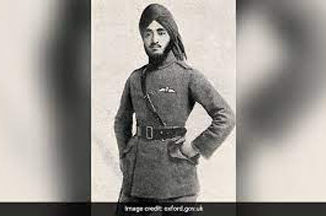
    LONDON (TIP): The design for a sculpture of an early 20th century Sikh fighter pilot, cricketer and golfer from Oxford University has been approved for a new memorial to be erected in the England port city of Southampton in memory of all Indians who fought in the World Wars. Hardit Singh Malik first arrived in the UK in 1908 as a 14-year-old to Balliol College at the University of Oxford and went on to become a member of the Royal Flying Corps during World War I. As the first Indian and turbaned pilot with a specialized helmet, he became famous as the “Flying Sikh”.

    “As such the statue to the legendary World War I hero, Hardit Singh Malik, the world’s first Royal Flying Corps (now the Royal Air Force) Sikh, turbaned fighter pilot will be emblematic for the broader Sikh contributions in the British armed forces of World War I and II, with Malik’s extraordinary accomplishments as a ‘touchstone’ for the whole Sikh community and other of its lesser-known heroes,” notes the One Community Hampshire & Dorset (OCHD) organization behind the campaign for the memorial, which was approved by the Southampton City Council last year.

    Malik also played cricket for Sussex and was also the Indian Ambassador to France after a long and distinguished career in the Indian Civil Service. But it is as a fighter pilot during 1917-19 that he is best known.

    “I am truly overwhelmed by the striking beauty and power of the exceptional design of the memorial, which captures the spirit and endeavor of this great RAF fighter pilot, Hardit Singh Malik, so well. It gives me great happiness to learn that the design is approved by the community,” said Lord Rami Ranger, Chairman of the British Sikh Association and Chief Patron of OCHD. “This project certainly speaks for itself; strongly furthering community cohesion and integration, and testifying to the major contribution our Sikh and broader ethnic minority communities make to our country, as we live in such a vibrant multicultural society here in Southampton,” said Pritheepal Singh, OCHD CEO and Director. The memorial will be created by English sculptor Luke Perry, who is associated with other memorials such as the “Lions of the Great War” monument in Smethwick in the West Midlands region of England, which depicts a turbaned Sikh soldier to honor the sacrifices made by millions of South Asian service personnel who fought for Britain in the World Wars. His design for the latest memorial was finalized earlier this month and also received the backing of the Council of Southampton Gurdwaras. “Monuments such as this are a vital part of the fight for equal representation. These artworks are long overdue thanks and recognition to the communities from around the world who have supported Britain in its past and continue to do so in vital roles, not just in the armed forces but our health care and every aspect of modern life,” said Perry. “The public statue of Hardit Singh Malik embodies the spirit of inclusivity — representing the will to ‘breaking the glass ceiling’ at the intersection of two World Wars and minority enrolment in the RAF: a significant feat for an Indian at the time,” added Dr Sanjukta Ghosh, Artistic Director at the School of Oriental and African Studies (SOAS) South Asia Institute and OCHD Advisor. An online Go Fund Me fundraiser is also inviting funds for the memorial, the unveiling of which is expected to be accompanied by educational resources, a book and a documentary covering several educational themes.