Tag: Michael Flynn

  • California Democrat files article of impeachment against US President and accuses him of obstruction of justice

    California Democrat files article of impeachment against US President and accuses him of obstruction of justice

    WASHINGTON (TIP): A Democratic Congressman has filed the first article of impeachment against President Donald Trump charging him with obstruction of justice in the probe into alleged Russian meddling in the US polls.

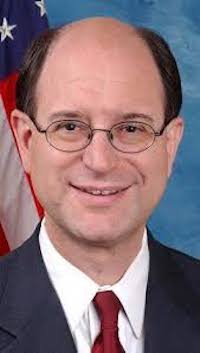
    Democratic Congressman from California Brad Sherman introduced the article of impeachment against Trump for high crimes and misdemeanors. Democrat Al Green has signed on to the resolution introduced by Sherman.

    This is for the first time that a US lawmaker has introduced an article of impeachment against Trump, who was sworn in as the 45th US President on January 20. However, the move is likely to be stalled in the Republican-controlled Congress.

    The House of Representatives needs to pass it by a majority vote for the article to move forward. Trump’s Republican party has an advantage of 46 votes in the current House of Representatives and it is unlikely that the Republican lawmakers would vote on such an impeachment move.

    The White House dismissed Sherman’s move with spokeswoman Sarah Huckabee Sanders saying: “I think that is utterly and completely ridiculous and a political game at its worst.”

    “Recent disclosures by Donald Trump Jr indicate that Trump’s campaign was eager to receive assistance from Russia. It now seems likely that the President had something to hide when he tried to curtail the investigation of National Security Advisor Michael Flynn and the wider Russian probe,” Sherman said after introducing the article of impeachment against Trump.

    “I believe his conversations with, and subsequent firing of, FBI Director James Comey constitute Obstruction of Justice,” he said.

    Everyday Democrats, Republicans, and the entire world are shocked by the latest example of America’s “amateur President”, he said.

    “Lack of impulse control, accompanied by a refusal to have his staff control his impulses. We’re no longer surprised by any action, no matter how far below the dignity of the office—and no matter how dangerous to the country,” Sherman said.

    “But the Constitution does not provide for the removal of a President for impulsive, ignorant incompetence. It does provide for the removal of a President for High Crimes and Misdemeanors,” he asserted.

    As the investigations move forward, additional evidence supporting additional articles of impeachment may emerge, he noted. “However, as to the Obstruction of Justice…the evidence we have is sufficient to move forward now. And the national interest requires that we do so,” the Democratic lawmaker said.

    (Source: PTI)

  • Russian Interference in US Elections 2016: Probe Tentacles Grow

    Russian Interference in US Elections 2016: Probe Tentacles Grow

    Jared Kushner Under Scrutiny in Russia Probe, Say Officials

    WASHINGTON (TIP): An NBC News report said, May 25, quoting “multiple US officials” that Jared Kushner, the president’s son-in-law and one of his senior advisers, has come under FBI scrutiny in the Russia investigation. “Investigators believe Kushner has significant information relevant to their inquiry, officials said. That does not mean they suspect him of a crime or intend to charge him”, says the NBC News. CNN said in a report on May 25, “The FBI’s criminal probe of Russian meddling in the 2016 presidential election is increasingly touching on the multiple roles of senior White House adviser

    Jared Kushner on both the Trump campaign and the Trump transition team. “Points of focus that pertain to Kushner include: the Trump campaign’s 2016 data analytics operation; his relationship with former national security adviser Michael Flynn; and Kushner’s own contacts with Russians, according to US officials briefed on the probe”. CNN report says further:”Federal investigators have been taking a  closer look at the Trump campaign’s data analytics operation, which was supervised by Kushner, officials say, and are examining whether Russian operatives used people associated with the campaign — wittingly or unwittingly — to try to help Russia’s own data targeting.

    “Kushner, the president’s son-in-law, worked with and helped oversee the campaign’s data operation contractors based in San Antonio, Texas. “Kushner has described how, beginning last June, he began testing the use of data targeting to sell Trump merchandise.

    Eventually, according to a November Forbes magazine profile, the data operation helped the Trump campaign figure out where the candidate’s message was resonating in states like Michigan and Wisconsin, places where conventional political wisdom suggested they would be wasting time and money. “I called somebody who works for one of the technology companies that I work with, and I had them give me a tutorial on how to use Facebook micro-targeting,” Kushner told Forbes.

    A source connected to the data analytics group said the team has not been contacted about any Russia related probe. “We have not been contacted by anyone and don’t know anything formally about an investigation,” the source said.

    The FBI focus on Flynn also touches on Kushner because he led the presidential transition’s foreign policy efforts. Kushner’s impact grew during the transition, which one source says he effectively ran — along with another campaign aide Rick Dearborn — once New Jersey Gov Chris Christie was removed. This source says both Kushner and his wife Ivanka Trump wanted Flynn in as national security adviser. A source close to Kushner denied that he pushed for Flynn. Kushner has acknowledged meeting during the transition with Russia’s ambassador and separately with the head of a Russian bank.

    According to a source familiar with what transpired, neither meeting discussed sanctions but instead focused on establishing a backchannel to Russia’s president. Those meetings are of interest to the FBI.

    The FBI’s scrutiny of Kushner places the bureau’s sprawling counterintelligence and criminal investigation not only on the doorstep of the White House, but the Trump family circle. The Washington Post first reported last week that a senior White House official close to Trump was a “person of interest,” but did not name the person. The term “person of interest” has no legal meaning. The officials said Kushner is in a different category from former Trump aides Paul Manafort and Michael Flynn, who are formally considered subjects of the investigation.

    According to the Justice Department’s U.S. Attorneys’ Manual, “A ‘subject’ of an investigation is a person whose conduct is within the scope of the grand jury’s investigation.”

    Records of both Manafort and Flynn have been demanded by grand jury subpoenas, NBC News has reported. It is not known whether Kushner has received any records requests from federal investigators. Also unclear is what precisely about Kushner’s activities has drawn the FBI’s interest as it investigates whether Trump associates coordinated with the Russian campaign to interfere in the election. Former

    FBI Director Robert Mueller is now leading the probe as a special counsel. Kushner met at least once in December with the Russian ambassador, Sergey Kislyak, and he also met last year with a Russian banker, Sergey Gorkov.

    “Mr. Kushner previously volunteered to share with Congress what he knows about these meetings,” Kushner’s lawyer, Jamie Gorelick, told NBC News. “He will do the same if he is contacted in connection with any other inquiry.”

    Congressional aides have said they would like to question Kushner about that meeting, and Kushner has said he would voluntarily appear before the Senate intelligence committee as part of its Russia investigation.

    Gorkov is chairman of VneshEconomBank, a Russian governmentowned institution that has been under U.S. sanctions since July 2014. Gorkov studied at the training school for the FSB, one of Russia’s intelligence services.

    Kushner, whose family’s real estate empire is worth $1.8 billion, according to Forbes, wields significant power in the White House. He is married to Trump’s daughter, Ivanka.

  • Donald Trump claims witch hunt, says he’s most hounded leader ever

    Donald Trump claims witch hunt, says he’s most hounded leader ever

    WASHINGTON (TIP): Brimming with resentment, President Donald Trump fervently denied on May 18 that his campaign had collaborated with Russia or that he’d tried to kill an FBI probe of the issue, contending that “even my enemies” recognize his innocence and declaring himself the most unfairly hounded president in history.

    Asked point-blank if he’d done anything that might merit prosecution or even impeachment, he said no and then added concerning the allegations and questions that have mounted as he nears the four-month mark of his presidency: “I think it’s totally ridiculous. Everybody thinks so.”

    Not quite everybody. While Trump tweeted and voiced his indignation at the White House, Deputy Attorney General Rod Rosenstein, who appointed an independent special counsel to lead a heightened federal Trump-Russia investigation the day before, briefed the entire Senate behind closed doors at the Capitol. By several senators’ accounts, he contradicted Trump’s statements that Rosenstein’s written criticism of FBI Director James Comey had been a factor in Comey’s recent firing by the president.

    Trump is leaving Friday for his first foreign trip, to the Mideast and beyond, and aides had hoped the disarray at home would have been calmed if not resolved, allowing the White House to refocus and move ahead. Republicans on Capitol Hill hoped the same, reasoning that the appointment of a special counsel could free them to work on a major tax overhaul and other matters without constant distractions.

    Trump said he was about to name a replacement for Comey, another move to settle the waters. Former Connecticut Senator Joe Lieberman was seen as the front-runner.

    But calmness seemed far off. Trump clearly knew what he wanted to say as he took a few questions at a news briefing with visiting Colombian  President Juan Manuel Santos.

    Did he urge Comey at a February meeting to drop his probe of the Russia connections of Trump’s national security adviser, Michael Flynn?

    “No. No. Next question.”

    Did he in fact collude with Russia in his campaign to defeat Democrat Hillary Clinton?

    “Everybody, even my enemies, have said there is no collusion,” he maintained.

    However another answer on that subject seemed both more specific and perhaps ambiguous.

    “There is no collusion between certainly myself and my campaign — but I can only speak for myself — and the Russians. Zero.”

    “The entire thing has been a witch hunt,” he declared, echoing one of the tweets he’d sent out just after dawn: “This is the single greatest witch hunt of a politician in American history!”

    He said he respected the special counsel appointment but also said it “hurts our country terribly.”

    At the other end of Pennsylvania Avenue, Rosenstein was briefing the Senate about his decision to appoint former FBI Director Robert Mueller to lead the independent Trump-Russia probe.

    Senators said that Rosenstein steered clear of specifics while making clear that Mueller has wide latitude to pursue the investigation wherever it leads, including potentially criminal charges. Despite the president’s furious reaction, some fellow Republicans welcomed Mueller’s appointment and expressed hopes it would restore some composure to a capital plunged in chaos.

    “We’ll get rid of the smoke and see where the actual issues lie,” said Sen. Tim Scott, R-S.C. “I do think that the special prosecutor provides a sense of calm and confidence perhaps for the American people, which is incredibly important.”

    One striking piece of news emerged from Rosenstein’s briefing: He told senators that he had already known Comey was getting fired even as he wrote the memo that Trump cited as a significant justification for the FBI director’s dismissal. Trump himself had already contradicted that explanation, telling interviewers earlier that he had already decided to dismiss Comey.

    He offered new justifications for his decision Thursday, even while referring to the Rosenstein memo as “a very, very strong recommendation.

    Trump referred to Comey’s testimony at a recent Capitol Hill hearing after which the Justice Department ended up having to amend part of his testimony regarding last year’s probe of Hillary Clinton’s email practices.

    “That was a poor, poor performance,” Trump said. “And then on top of that, after the Wednesday performance by Director Comey, you had a person come and have to readjust the record, which many people have never seen before, because there were misstatements made.”(AP)

  • ‘Obama warned Trump against Flynn as national security adviser’

    ‘Obama warned Trump against Flynn as national security adviser’

    ‘Obama warned Trump against Flynn as national security adviser’


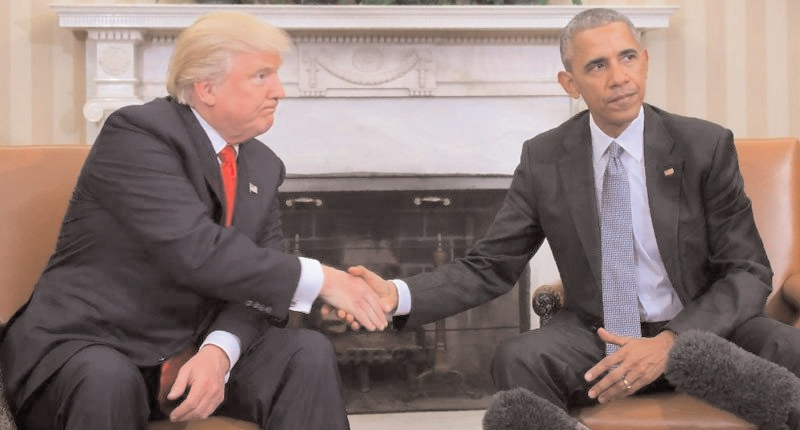
    WASHINGTON (TIP): Former U.S. President Barack Obama warned then- President-elect Donald Trump not to give the post of national security adviser in his administration to Michael Flynn who was eventually fired in a controversy about ties to Russia, a former Obama aide said. Obama gave the warning in an Oval Office meeting with Trump just days after the Republican’s surprise election win last Nov. 8. The warning, first reported by NBC News, came up during a discussion of White House personnel.

    White House spokesman Sean Spicer, responding to the reports, told a news briefing: “It’s true that the president, President Obama, made it known that he wasn’t exactly a fan of General Flynn’s” during a one-hour meeting on Nov. 10 with Trump.

    An Obama spokesman initially declined to comment.

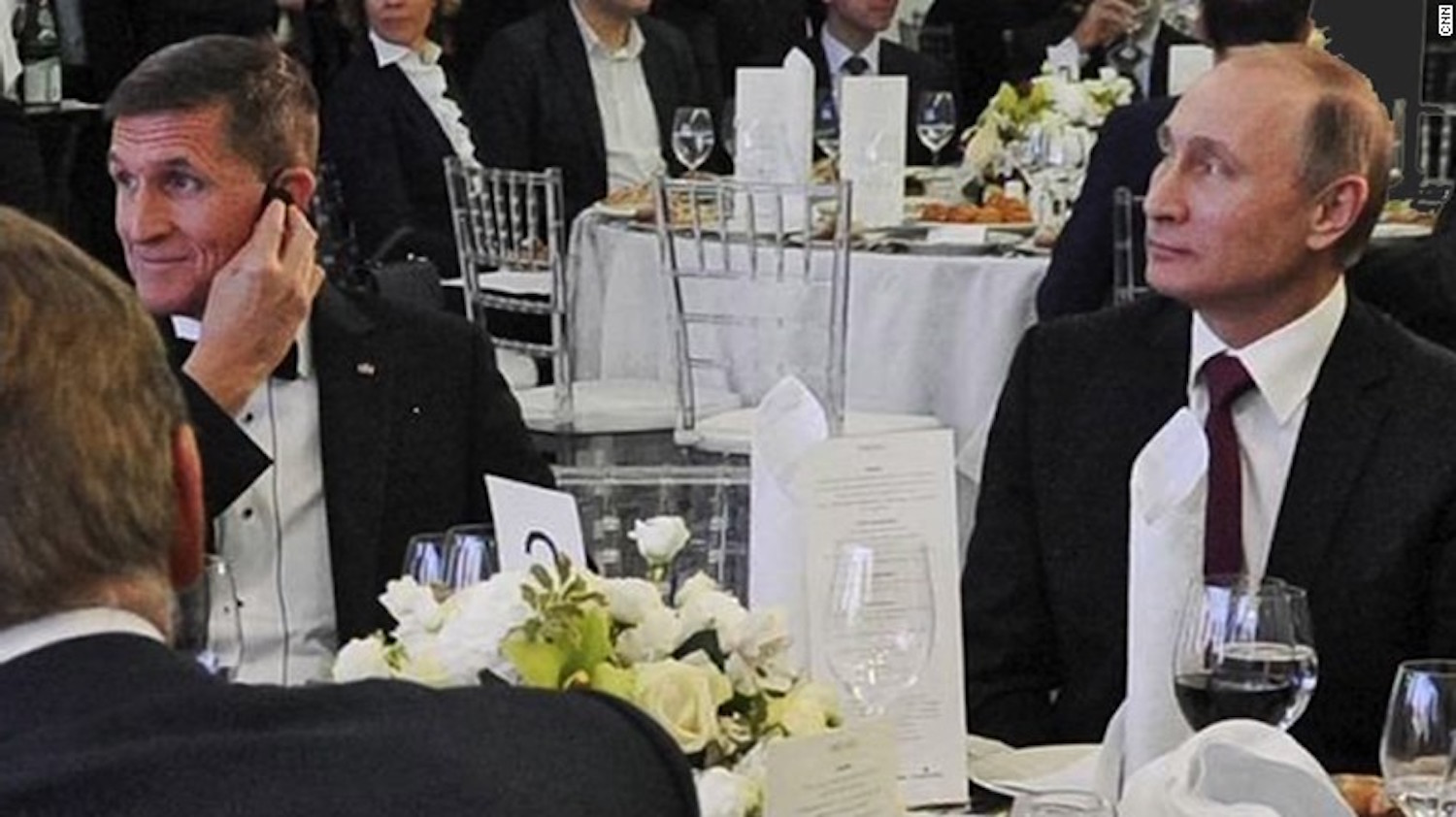
    Flynn has emerged as a central figure in probes into allegations of Russian meddling in. the 2016 U.S. election and possible collusion between Trump’s campaign and Moscow.

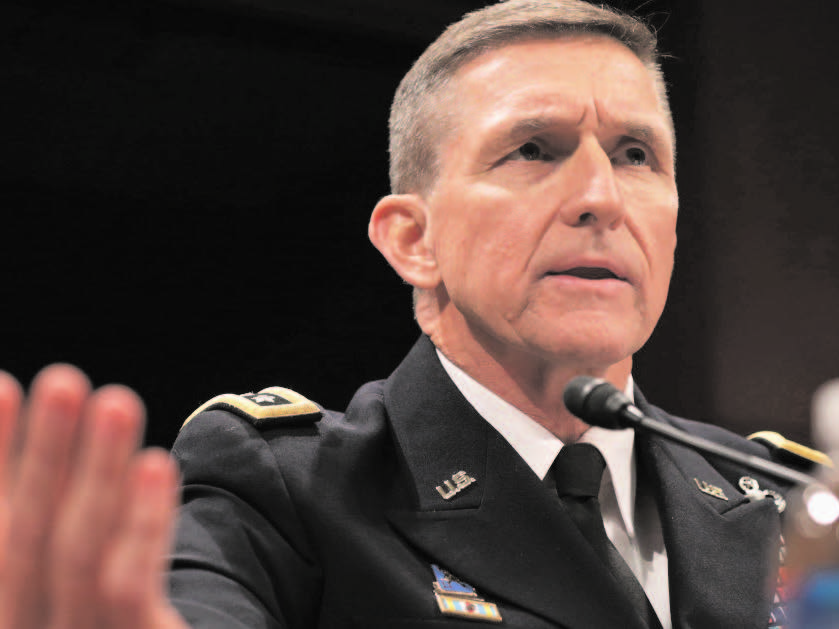
    He had been pushed out by Obama in 2014 from his job as director of the Defense Intelligence Agency, or DIA, during the Democratic president’s term in office.

    A former U.S. deputy attorney general, Sally Yates, is expected to tell a Senate Judiciary subcommittee later Monday that she had warned the White House counsel after Trump took office that Flynn had not told the truth about conversations he had held with Russia’s ambassador to Washington.

    Trump fired Flynn, a retired general, in February for failing to disclose talks with Ambassador Sergei Kislyak about U.S. sanctions on Moscow and then misleading Vice President Mike Pence about the conversations.

    Congressional committees began investigating after U.S. intelligence agencies concluded that Russian President Vladimir Putin had ordered hacking of Democratic political groups to try to sway the election toward Trump. Moscow has denied any such meddling.

    Trump has also dismissed the allegations, suggesting instead that Obama might have wiretapped Trump Tower in New York or that China may have been behind the cyber attacks. He has provided no evidence and neither scenario has been supported by intelligence agencies.

    Hours before Monday’s Senate hearing, Trump insinuated that Yates, an Obama administration appointment, had leaked information on Flynn to the media. “Ask Sally Yates, under oath, if she knows how classified information got into the newspapers soon after she explained it to W.H. Council,” Trump wrote on Twitter, apparently mis-spelling the word counsel.

    In another Twitter post, Trump noted that Flynn had been granted top security clearance while working in the Obama administration. Flynn was fired from the DIA in 2014 for what officials familiar with the issue said was a disruptive management style that included instructing analysts to find intelligence substantiating improbable theories that some subordinates came to call “Flynn facts.” He also advocated an overhaul of the DIA that ignited resistance from veteran intelligence officials, the officials said.

    James Clapper, Obama’s former Director of National Intelligence, will also testify to the Senate panel on May 9. (TOI)


  • Trump’s Nixon moment?

    Trump’s Nixon moment?

    Trump’s Nixon moment?


    By Stanly Johny

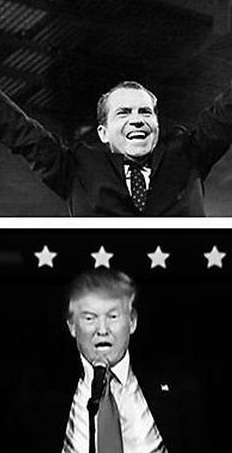
    U.S. President Donald Trump’s dramatic decision to sack Federal Bureau of Investigation (FBI) chief James Comey hardly escapes comparisons with the 1973 “Saturday Night Massacre”. On October 20 that year, Richard Nixon fired Archibald Cox, the special prosecutor investigating Watergate, after he subpoenaed the President for copies of White House tapes. The decision triggered immediate storm inside his own Cabinet as two top law enforcement officials – Attorney-General Elliot Richardson and his deputy William Ruckelshaus – quit the government instead of obeying their boss.

    Nixon may have thought then that he could save his presidency by removing a defiant prosecutor, but his action actually deepened the Watergate crisis which led to his eventual impeachment a year later. Since then, no American President has dismissed a top law enforcement official conducting an investigation which has a direct bearing on him, until Mr. Trump’s decision. Mr. Comey had been heading an investigation to find if there was collusion between Mr. Trump’s campaign team and the Russian government. Unlike Nixon, Mr. Trump appears to have the support of his Cabinet members. The Justice Department, headed by his close ally Jeff Sessions, stands firmly behind him. Further, unlike Cox, Mr. Comey is not a special prosecutor designated to probe any scandal involving the President. The White House says his dismissal was over Mr. Comey’s handling of the Clinton e-mail leaks, and has nothing to do with the Russia probe. Still, Mr. Trump’s decision could have far-reaching consequences both on the ongoing investigation and his presidency.

    LINKED TO ‘RUSSIAGATE’: The order comes at a time when ‘Russiagate’ is widening – just hours before Mr. Comey was fired, former Acting Attorney-General Sally Yates testified before a Senate Committee that she had warned Mr. Trump that the credentials of Michael Flynn, his initial pick for National Security Advisor, may have been compromised by his links with Russia. This only reinforces the theory that Mr. Trump is wary of the FBI probe, and it is not a secret that Mr. Comey is beyond his direct control. Further, in a short dismissal letter, Mr. Trump said: “…I greatly appreciate you informing me, on three separate occasions, that I am not under investigation…” The “investigation” Mr. Trump here refers to is the same ‘Russia connection’ his administration officials are trying to de-link from the dismissal decision, showing how entangled they are in ‘Russiagate’.

    Nixon and Trump. Trump’s
    firing of the FBI head is
    reminiscent of the 1973
    ‘Saturday Night Massacre”
    Photo courtesy Odyssey
    Online


    Also, Mr. Trump may have thought that his decision could get support from sections of the Democrats particularly upset with Mr. Comey’s handling of the Clinton e-mails, which they think cost her the presidency. However, the Democrats were the first to blast the “Nixonian” decision, and asked for setting up of a special prosecutor to probe the Russia link. If Mr. Trump doesn’t agree to that, suspicions about the real reason behind Mr. Comey’s ouster will only increase. If he does, ‘Russiagate’ will continue to haunt him. Either way, Mr. Trump has just made the crisis worse, like Nixon did by firing Cox.


  • Donald Trump removes Steve Bannon from National Security Council

    Donald Trump removes Steve Bannon from National Security Council

    WASHINGTON (TIP): President Donald Trump has removed chief strategist Steve Bannon from the National Security Council, reversing an earlier, controversial decision to give Bannon access to the high-level meetings.

    A new memorandum about the council’s composition was published Wednesday in the Federal Register. The memo no longer lists the chief strategist as a member of the Principals Committee, a group of high-ranking officials who meet to discuss pressing national security priorities.

    Tom Bossert, the assistant to the president for Homeland Security and Counterterrorism, also had his role downgraded as part of the changes.

    A senior White House official said Wednesday that Bannon was initially placed on the national security council after Trump’s inauguration as a measure to ensure implementation of the president’s vision, including efforts to downsize and streamline operations at the NSC.

    Trump’s first national security adviser, Michael Flynn, was at the helm of the NSC at the time, but the official says Bannon’s role on the committee had nothing to do with the troubles facing Flynn, who was later asked to resign for misleading the administration about his communication with Russian officials.

    The senior White House official was not authorized to discuss changes that have not been formally announced and spoke on condition of anonymity.

    The new memo also restores the director of national intelligence and the Joint Chiefs chairman to the principals committee.

    Bannon’s addition to the NSC sparked concerns from Trump critics, who said it was inappropriate for the political adviser to play a role in national security matters. (AP)

  • Trump’s discredited NSA Michael Flynn offers to testify in exchange for immunity

    Trump’s discredited NSA Michael Flynn offers to testify in exchange for immunity

    Flynn resigned in February, barely a month after he was appointed NSA, after it was reported that he misled White House staff on his interactions with Russia

    Not entirely unexpectedly,President Trump’s former National Security Adviser Michael Flynn has reportedly told the FBI that he is willing to testify about the Trump campaign’s potential ties to Russia, in exchange for immunity from prosecution, the Wall Street Journal reported.

    Flynn resigned in February, after it was reported that he misled White House staff on his interactions with Russia and had discussed sanctions with Russian ambassador Sergey Kislyak ahead of President Trump’s inauguration.

    The Journal reported, citing officials familiar with the matter, that the FBI and the House and Senate Intelligence committees that are investigating Russia’s attempts to interfere in the U.S. election have not taken Flynn’s lawyers up on the offer.

    Flynn’s lawyer said in a statement that “General Flynn certainly has a story to tell, and he very much wants to tell it, should the circumstances permit.”

    “Notwithstanding his life of national service, the media are awash with unfounded allegations, outrageous claims of treason, and vicious innuendo directed against him. He is now the target of unsubstantiated public demands by Members of Congress and other political critics that he be criminally investigated,” Flynn’s lawyer Robert Kelner said in a statement.

    “No reasonable person, who has the benefit of advice from counsel, would submit to questioning in such a highly politicized, witch hunt environment without assurances against unfair prosecution,” he added.

    Kelner said there have been discussions with the House and Senate Intelligence panels.

    Flynn spoke with Kislyak multiple times during the transition, including on Dec. 29, the day then-President Obama retaliated against Moscow for its hacking of Democratic political groups and individuals, which intelligence agencies say was done to aid Trump’s campaign.

    Trump’s former campaign chairman Paul Manafort, whose ties to Russia have been under scrutiny, and son-in-law Jared Kushner earlier this week volunteered to be interviewed by the House Intelligence Committee. Former aides Roger Stone and Carter Page, who have also been in the spotlight in the Russian investigations, have also offered to talk with the committees -but none with any conditions of immunity.

  • Early setback for Mr. Trump

    Early setback for Mr. Trump

    President Donald Trump suffered a big political blow on Monday, barely a month into office, when his National Security Adviser, Michael Flynn, resigned over his Russia contacts.

    Mr. Flynn, a close aide of Mr. Trump, admitted that he had “inadvertently” briefed Vice-President Mike Pence with “incomplete information” about his phone conversation with the Russian ambassador in Washington, Sergey Kislyak.

    The allegation is that Mr. Flynn discussed American sanctions on Russia with Mr. Kislyak in the waning days of the Obama presidency and told him that Russia should wait till Mr. Trump’s inauguration.

    He later denied speaking of the sanctions, and based on his brief, Mr. Pence publicly defended him. But after the media reported that they had sources vouching that Mr. Flynn had discussed the sanctions with the envoy, it became impossible for the White House to defend him.

    Technically, Mr. Flynn’s calls with the Russian ambassador before he became part of the government are a breach of an 18th century law, the Logan Act, that makes it illegal for private individuals to conduct foreign policy. The context is grave for the Trump administration.

    There are already allegations that Moscow interfered in the presidential elections in favor of Mr. Trump and that the Russians have some compromising personal information about Mr. Trump.

    The resignation, however, is unlikely to contain the scandal. It raises even more questions about administration officials’ dealings with Russia and the way the government functions. Mr. Flynn, for example, already faces allegations that he acted with the knowledge of others in Mr. Trump’s transition team, and his past Russian links are being probed. If the scandal widens, it could derail Mr. Trump’s Russia reset plans. He could have avoided this early embarrassment had he paid more heed to those who questioned his picks for top jobs in the administration. Mr. Flynn, who was fired by President Barack Obama in 2014 as head of the Defense Intelligence Agency, was particularly unpopular in Washington. Mr. Trump’s other picks, be it Attorney General Jeff Sessions who faces allegations of racism, or Education Secretary Betsy DeVos who needed the Vice-President to cast a tie-breaking vote in the Senate for confirmation, are other cases in point. Such decisions cannot be unmade now. But Mr. Trump could learn some lessons from the Flynn episode. He could use better judgment when he chooses his next NSA. He should set his house in order and formulate a cohesive approach towards domestic and foreign policy issues, including stating clearly what his Russia policy is. If not, his administration could well be trapped in crisis mode.