Tag: Football

  • Thanksgiving Day

    Thanksgiving Day

    Thanksgiving Day is annual national holiday in the United States and Canada celebrating the harvest and other blessings of the past year. This year, the day falls on Thursday, November 23. Americans generally believe that their Thanksgiving is modeled on a 1621 harvest feast shared by the English colonists (Pilgrims) of Plymouth and the Wampanoag people. The American holiday is particularly rich in legend and symbolism, and the traditional fare of the Thanksgiving meal typically includes turkey, bread stuffing, potatoes, cranberries, and pumpkin pie. With respect to vehicular travel, the holiday is often the busiest of the year, as family members gather with one another.
    Plymouth’s Thanksgiving began with a few colonists going out “fowling,” possibly for turkeys but more probably for the easier prey of geese and ducks, since they “in one day killed as much as…served the company almost a week.” Next, 90 or so Wampanoag made a surprise appearance at the settlement’s gate, doubtlessly unnerving the 50 or so colonists. Nevertheless, over the next few days the two groups socialized without incident. The Wampanoag contributed venison to the feast, which included the fowl and probably fish, eels, shellfish, stews, vegetables, and beer. Since Plymouth had few buildings and manufactured goods, most people ate outside while sitting on the ground or on barrels with plates on their laps. The men fired guns, ran races, and drank liquor, struggling to speak in broken English and Wampanoag. This was a rather disorderly affair, but it sealed a treaty between the two groups that lasted until King Philip’s War (1675–76), in which hundreds of colonists and thousands of Native Americans lost their lives.
    The New England colonists were accustomed to regularly celebrating “Thanksgivings,” days of prayer thanking God for blessings such as military victory or the end of a drought. The U.S. Continental Congress proclaimed a national Thanksgiving upon the enactment of the Constitution, for example. Yet, after 1798, the new U.S. Congress left Thanksgiving declarations to the states; some objected to the national government’s involvement in a religious observance, Southerners were slow to adopt a New England custom, and others took offense over the day’s being used to hold partisan speeches and parades. A national Thanksgiving Day seemed more like a lightning rod for controversy than a unifying force.
    Thanksgiving Day did not become an official holiday until Northerners dominated the federal government. While sectional tensions prevailed in the mid-19th century, the editor of the popular magazine Godey’s Lady’s Book, Sarah Josepha Hale, campaigned for a national Thanksgiving Day to promote unity. She finally won the support of President Abraham Lincoln. On October 3, 1863, during the Civil War, Lincoln proclaimed a national day of thanksgiving to be celebrated on Thursday, November 26.
    The holiday was annually proclaimed by every president thereafter, and the date chosen, with few exceptions, was the last Thursday in November. President Franklin D. Roosevelt, however, attempted to extend the Christmas shopping season, which generally begins with the Thanksgiving holiday, and to boost the economy by moving the date back a week, to the third week in November. But not all states complied, and, after a joint resolution of Congress in 1941, Roosevelt issued a proclamation in 1942 designating the fourth Thursday in November (which is not always the last Thursday) as Thanksgiving Day.
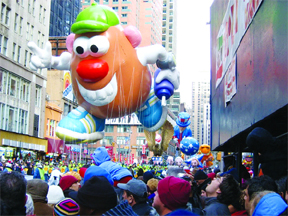
    As the country became more urban and family members began to live farther apart, Thanksgiving became a time to gather together. The holiday moved away from its religious roots to allow immigrants of every background to participate in a common tradition. Thanksgiving Day football games, beginning with Yale versus Princeton in 1876, enabled fans to add some rowdiness to the holiday. In the late 1800s parades of costumed revelers became common. In 1920 Gimbel’s department store in Philadelphia staged a parade of about 50 people with Santa Claus at the rear of the procession. Since 1924 the annual Macy’s parade in New York City has continued the tradition, with huge balloons since 1927. The holiday associated with Pilgrims and Native Americans has come to symbolize intercultural peace, America’s opportunity for newcomers, and the sanctity of home and family.
    Days of thanksgiving in Canada also originated in the colonial period, arising from the same European traditions, in gratitude for safe journeys, peace, and bountiful harvests. The earliest celebration was held in 1578, when an expedition led by Martin Frobisher held a ceremony in present-day Nunavut to give thanks for the safety of its fleet. In 1879 Parliament established a national Thanksgiving Day on November 6; the date has varied over the years. Since 1957 Thanksgiving Day has been celebrated in Canada on the second Monday in
    October.
    Thanksgiving is the most popular and well-known American holiday. Each year on the fourth Thursday of November, Americans gather to eat a traditional meal of turkey and pies, and spend time with family and friends. In fact, the Wednesday before Thanksgiving is the biggest travel day of the year in the country, as Americans drive and fly to go meet family.
    The holiday has become so much more than a simple day of thanks. With parades, TV specials, and more, Thanksgiving is seen as the kickoff of the holiday season. The Friday following the holiday has been dubbed “Black Friday” – a day that shoppers lineup early in the morning to get the best sales and discounts for their holiday shopping.
    Thanksgiving Day food
    Turkey has become all but synonymous with the holiday. According to the National Turkey Federation, nearly 90 per cent of Americans eat the bird — whether roasted, baked or deep-fried — on Thanksgiving Day. Other traditional foods include stuffing, mashed potatoes, cranberry sauce and pumpkin pie.
    Pardoning of turkey ceremony
    Since the beginning of the mid-20th century, the president of the United States has “pardoned” one or two Thanksgiving turkeys each year, sparing the birds from slaughter and sending them to a farm for retirement.
    Other countries that celebrate Thanksgiving Day holiday
    Canada has its own Thanksgiving Day, on the second Monday in October, and Liberia celebrates Thanksgiving on the first Thursday of November.
    Black Friday sale
    A month-long shopping season for the winter holidays begin after Thanksgiving, with Black Friday kicking off the season.

  • Premier League teams must aspire to Man City’s standards says Lampard

    Interim Chelsea manager Frank Lampard described Manchester City as currently the greatest team in the world and said the rest of the Premier League have to aspire to the high standards set by Pep Guardiola’s title-chasing side. City are poised to wrap up their fifth league crown in six years and are also in contention to complete the treble this season, having reached the Champions League and FA Cup finals.
    Guardiola’s side have a four-point lead and a game in hand over Arsenal, who must win at Nottingham Forest on Saturday to realistically stay in the title race at least until City host Chelsea a day later.
    “I don’t know about the greatest ever but they are clearly a fantastic team and they have been for a good while now,” Lampard told reporters on Friday before Chelsea’s trip to the Etihad Stadium.
    “Huge credit for that consistency. They’re coming very close to becoming the greatest team, especially if they win the Champions League… In their form, you wouldn’t want to bet against them on anything.
    “I think they are the best team in world football. Is it good for English football? Yeah, why not? You’ve got to push the standard. The rest of the league have to try to aspire to that.”
    Lampard said he wanted to bring City striker Erling Haaland to Stamford Bridge during his first stint in charge of Chelsea between 2009-21 when he was the permanent head coach.
    The Norwegian international, who joined City from Borussia Dortmund at the start of the season, has scored 36 league goals so far this term – as many as Chelsea.
    “I think he’s special, I thought he’d adapt straight away and show his level,” Lampard said. “I don’t know whether he would have decided to come here anyway but I was a big fan.

  • Canada, India Out of FIFA U-17 Women’s World Cup

    Canada, India Out of FIFA U-17 Women’s World Cup

    By Prabhjot Singh

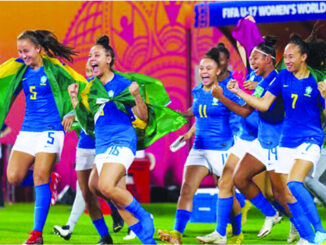
    TORONTO (TIP)- The hosts and debutants India and Canada have made their exit from the FIFA U-17 Women’s World Cup. Columbia, Spain (defending champions), Japan and African debutants Tanzania have qualified for the last eight rounds. In the last round of the pool matches, Spain edged out China by a solitary goal while Columbia got the better of Mexico 2-1 in an all-American encounter. Canada played a 1-1 draw with Tanzania to bow out of the competition while Japan, the only Asian team left in the contest recorded an impressive 2-0 win over  France.

    Led by Ruiqi Qiao, China pushed Spain back in the early stages, though the reigning FIFA U-17 Women’s World Cup champions created better chances as the first half wore on. First, Chen Liu parried Lucia Corrales’s cross-shot, with the rebound falling to Carla Camacho, who fired the ball against the bar. Vicky Lopez then engineered an opportunity from the edge of the box, the keeper again doing well to keep her fierce drive out. The second half began how the first ended, as Spain retained the initiative. The only goal of the game came just after the hour mark, when Marina Artero headed home a corner from the left. China later celebrated an equalizer, only for Video umpire (VAR) to rule it out. The win kept Spain’s hopes of defending its title alive, while China fell once again in the group phase, beyond which it has never advanced.

    With all four sides in the section tied on three points at the start of the day, it was no surprise to see a cagey start to the game between the two American teams. Mexico had more of the ball but failed to create any clear-cut chances. It paid the price when Juana Ortegon’s fine strike from outside the box put the Colombians ahead four minutes from half-time. Linda Caicedo made it 2-0 with another long-range effort after the break, and though Mexico pulled one back when the Colombian star put through her own goal, Mexico could not find an equalizer, despite applying some late pressure.

    The three points took Colombia into the quarterfinals for the first time in its history, while the 2018 runners-up Mexico went out.

    “I’m so happy,” said Caicedo. “Luck didn’t come into it. It was a process and a job really well done. We hope to keep going and do more than make history. We want to fulfil this big dream that we have.” Japan wasted no time showing why it had won their first two matches, creating two excellent chances in the opening minute. The pressure eventually told on the French, as Momoko Tanikawa fired home from outside the box to give the Japanese the lead in the 29th minutes. Fiona Liaigre did her best to unsettle the Asians down the left flank and haul her team level, but the half ended with the French trailing to that Tanikawa strike.

    After missing a succession of chances, Japan was eventually rewarded for its second-half pressure when Sayami Kusunoki scored in injury time to seal top spot for her side and ensure France’s elimination.

    “I think we did well against Japan, but we have a lot of regrets after the games against Canada and Tanzania,” said France midfielder Lucie Calba. “Like our coach said, we should have been playing for first place in the group today, not for qualification. “We’ve experienced other cultures here, other styles of football, and we’ve learned a lot. We’ve learned that when it comes to World Cups you need to play every match with intensity.”

    Having already broken new ground by becoming the first side from their country to contest a FIFA competition in any age category, Tanzania began the game intent on achieving even greater things and struck the bar from a corner. It was the Canadians who opened the scoring with Amanda Allen converting a penalty after 14 minutes.

    Tanzania pulled level thanks to another corner, with Veronica Mapunda popping up inside the box to force home an opportunistic equalizer.

    Canada did all it could after the restart to score the goal that would have taken it into the next round. The pioneering Africans had other ideas and held on to check into the quarterfinals against all odds.

  • Chinese factory churns out British flags after queen’s death

    Chinese factory churns out British flags after queen’s death

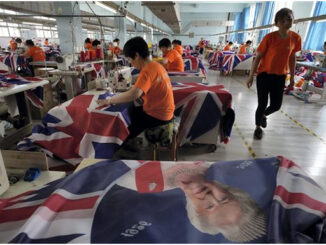
    Shaoxing (China) (TIP): Ninety minutes after Queen Elizabeth II died, orders for thousands of British flags started to flood into a factory south of Shanghai. More than 100 employees at Shaoxing Chuangdong Tour Articles Co set aside other work and put in 14-hour days starting at 7:30 am making nothing but British-themed flags.

    They turned out at least 500,000 the first week, according to general manager Fan Aiping.

    Some are British flags to be carried by mourners or hung outside homes. Others show Elizabeth’s portrait and the years of her birth and death. They range in size from 21 to 150 cm (8 to 59 inches) wide and sell for 7 yuan ($1).

    The first customer sent an order at 3 am Chinese time for tens of thousands, according to Fan. She said 20,000 the factory had in stock were sent out that morning. “The customer came to our factory directly to grab the products,” Fan said. “Many of the flags weren’t even packaged. They were put in a box and shipped away.”

    The factory had been making flags for the football World Cup before Elizabeth’s death. Chuangdong has been in the industry since 2005 and produces flags for the World Cup and other sports events or national day celebrations. It also makes sports-themed scarves and banners. Employees pay attention to news for events that might bring in orders. “There is a business opportunity behind every news event,” Fan said.

    Ni Guozhen, an employee since 2005, said she has learned about the world through her work. “I’ve learned a lot about current events,” said Ni, who was sewing flags with the queen’s portrait. “My knowledge has grown. Therefore I’m proud and happy that I’m making flags.” Ni remembers filling orders for British-themed flags for a royal wedding.

    “There is a story behind each flag,” Fan said. “This time it’s about the queen in the United Kingdom. They are buying these flags to mourn the queen deeply.” AP

  • Meet the 2022 Class of Asia 21 Young Leaders

    Meet the 2022 Class of Asia 21 Young Leaders

    Forty young leaders from across the world to join the venerable Asia Society network

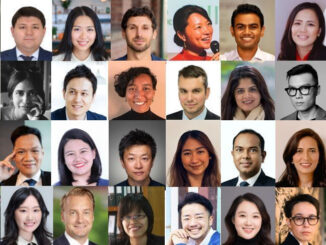
    NEW YORK (TIP): Asia Society  announced on July 13 that 40 young leaders from across the world will form the newest class of the Asia 21 Young Leaders Network, joining an unparalleled network of over 1,000 individuals in politics, business, arts, education, sustainability, and technology. The Class of 2022 features a diverse mix of leaders representing 26 different countries and includes journalists, human rights advocates, entrepreneurs, fiction writers, politicians, and more. Together, they will form an integral part of the Asia Society family as the newest cohort of its signature young leaders initiative, embodying the organization’s mission to navigate shared futures, and actively contributing to taking the network to new heights. “Drawing on their personal expertise and leveraging the collective power of the Asia 21 network, the class of 2022 will actively contribute to shaping a more peaceful, prosperous, and secure future for all,” said Asia Society President and CEO Kevin Rudd. “We are delighted to play our part in connecting individuals who share common values and desire to make this world a better place.”

    About Asia 21

    Established in 2006, the Asia Society Asia 21 Young Leaders Initiative is the Asia-Pacific’s foremost young leaders’ network of diverse change-makers under the age of 40, united by a shared commitment to making their communities and the world a better place. Created to promote mutual understanding and effective collaboration among the next generation of leaders, the Asia 21 network comprises nearly 1,000 influential individuals from a wide variety of professions including politics, business, arts, media, and the nonprofit sector, representing over 40 countries and regions. Asia 21 provides a catalytic platform where young leaders form lasting relationships and enrich each other’s endeavors through mutual learning, collaboration, and a shared commitment to values-based leadership and public service. The annual Asia 21 Young Leaders Summit brings together these dynamic young professionals to generate creative, multidisciplinary approaches to problem-solving. Through workshops, special Asia 21 “Action Labs,” and leadership masterclasses, they develop imaginative ways to address Asia’s most pressing issues and innovative approaches to solving global challenges. For more information, follow @Asia21Leaders on Twitter and Asia 21 Young Leaders on Facebook, or contact asia21@asiasociety.org.

    Asia Society Communications | 725 Park Ave, New York, NY 10021 | Tel 212-327-9271 | Email pr@asiasociety.org

    Members of the incoming class include Hajra Khan, captain of Pakistan’s national football team and founder of the Fortis Sports Academy; Fumino Sugiyama, a restaurateur and LGBTQ activist and co-representative of Tokyo Rainbow Pride; Si Thura, executive director of Myanmar’s Community Partners International; Mandovi Menon, a creative director, writer, and media entrepreneur from India; Sopheak Chak, executive director of the Cambodian Center for Human Rights; Alexandre Chenesseau, managing director at Evercore; Guo Dong, associate director of the Research Program on Sustainability and Management at Columbia University; and James Griffin, minister of the environment, New South Wales, Australia. You can access biographies of all 40 members of the Class of 2022 at AsiaSociety.org/Asia21.

    After a two-year hiatus caused by the coronavirus pandemic, the annual Asia 21 Young Leaders Summit will resume this year with an in-person convening hosted by Asia Society Japan from December 2 to December 4, 2022. The conference, centered around the theme of “leading in a world of competing values,” will include panel discussions, lectures, and special events in Tokyo, and will feature members of the new class as well as Asia 21 alumni. They will share best practices in leadership and explore opportunities to work collaboratively across borders and sectors to create positive impact. The sessions will also address diversity, equity, and inclusion through art, education, policy, leadership opportunities, and entrepreneurship.

    For more information about the Asia 21 Young Leaders Summit, please reach out to Matt Schiavenza at pr@asiasociety.org

    (Based on a press release)

  • The world in 2022: Another year of living dangerously

    The world in 2022: Another year of living dangerously

    On the brink of a new year, the world faces a daunting array of challenges: the resurgent Covid-19 pandemic, the climate emergency, the struggle between democracy and authoritarianism, humanitarian crises, mass migration, and trans-national terrorism. There is the risk of new inter-state conflicts, exacerbated by the breakdown of the rules-based international order, and the spread of lethal autonomous weapons. All in all, for most people on Earth – and a handful in space – 2022 will be another year of living dangerously.

    Middle East

    Events in the Middle East will make global headlines again in 2022 – but for positive as well as negative reasons. A cause for optimism is football’s World Cup, which kicks off in Qatar in November. It’s the first time an Arab or a Muslim country has hosted the tournament. It is expected to provide a major fillip for the Gulf region in terms of future business and tourism – and, possibly, more open, progressive forms of governance.

    But the choice of Qatar, overshadowed by allegations of corruption, was controversial from the start. Its human rights record will come under increased scrutiny. Its treatment of low-paid migrant workers is another flashpoint. The Guardian revealed that at least 6,500 workers have died since Qatar got the nod from Fifa in 2010, killed while building seven new stadiums, roads and hotels, and a new airport.

    Concerns will also persist about Qatar’s illiberal attitude to free speech and women’s and LGBTQ+ rights in a country where it remains dangerous to openly criticise the government and where homosexuality is illegal. But analysts suggest most fans will not focus on these issues, which could make Qatar 2022 the most successful example of “sports-washing” to date.

    More familiar subjects will otherwise dominate the regional agenda. Foremost is the question of whether Israel and/or the US will take new military and/or economic steps to curb Iran’s attempts, which Tehran denies, to acquire capability to build nuclear weapons. Israel has been threatening air strikes if slow-moving talks to revive the 2015 nuclear deal fail. Even football fans could not ignore a war in the Gulf.

    Attention will focus on Turkey’s authoritarian president, Recep Tayyip Erdogan, whose neo-Islamist AKP party will mark 20 years in power in 2022. Erdogan’s rule has grown increasingly oppressive at home, while his aggressive foreign policy, rows with the EU and US, on-off collusion with Russia over Syria and chronic economic mismanagement could have unpredictable consequences.

    Other hotspots are likely to be Lebanon – tottering on the verge of becoming a failed state like war-torn Yemen – and ever-chaotic Libya. Close attention should also be paid to Palestine, where the unpopular president, Mahmoud Abbas’s postponement of elections, Israeli settler violence and West Bank land-grabs, and the lack of an active peace process all loom large.

    Asia Pacific

    The eyes of the world will be on China at the beginning and the end of the year, and quite possibly in the intervening period as well. The Winter Olympics open in Beijing in February. But the crucial question, for sports fans, of who tops the medals table may be overshadowed by diplomatic boycotts by the US, UK and other countries in protest at China’s serial human rights abuses. They fear the Games may become a Chinese Communist party propaganda exercise.

    The CCP’s 20th national congress, due towards the end of the year, will be the other headline-grabber. President Xi Jinping is hoping to secure an unprecedented third five-year term, which, if achieved, would confirm his position as China’s most powerful leader since Mao Zedong. There will also be jostling for senior positions in the Politburo and Politburo standing committee. It will not necessarily all go Xi’s way.

    Western analysts differ sharply over how secure Xi’s position truly is. A slowing economy, a debt crisis, an ageing population, huge environmental and climate-related challenges, and US-led attempts to “contain” China by signing up neighbouring countries are all putting pressure on Xi. Yet, as matters stand, 2022 is likely to see ongoing, bullish attempts to expand China’s global economic and geopolitical influence. A military attack on Taiwan, which Xi has vowed to re-conquer by any or all means, could change everything.

    India, China’s biggest regional competitor, may continue to punch below its weight on the world stage. In what could be a symbolically important moment, its total population could soon match or exceed China’s 1.41 billion, according to some estimates. Yet at the same time, Indian birth rates and average family sizes are falling. Not so symbolic, and more dangerous, are unresolved Himalayan border disputes between these two giant neighbours, which led to violence in 2020-21 and reflect a broader deterioration in bilateral relations.

    The popularity of Narendra Modi, India’s authoritarian prime minister, has taken a dive of late, due to the pandemic and a sluggish economy. He was forced into an embarrassing U-turn on farm “reform” and is accused of using terrorism laws to silence critics. His BJP party will try to regain lost ground in a string of state elections in 2022. Modi’s policy of stronger ties with the west, exemplified by the Quad alliance (India, the US, Japan, Australia), will likely be reinforced, adding to China’s discomfort.

    Elsewhere in Asia, violent repression in Myanmar and the desperate plight of the Afghan people following the Taliban takeover will likely provoke more western hand-wringing than concrete action. Afghanistan totters on the brink of disaster. “We’re looking at 23 million people marching towards starvation,” says David Beasley of the World Food Programme. “The next six months are going to be catastrophic.”

    North Korea’s nuclear brinkmanship may bring a showdown as Kim Jong-un’s paranoid regime sends mixed signals about war and peace. The Philippines will elect a new president; the foul-mouthed incumbent, Rodrigo Duterte, is limited to a single term. Unfortunately this is not the case with Scott Morrison, who will seek re-election as Australia’s prime minister.

    Europe

    It will be a critical year for Europe as the EU and national leaders grapple with tense internal and external divisions, the social and economic impact of the unending pandemic, migration and the newly reinforced challenges, post-Cop26, posed by net zero emissions targets.

    More fundamentally, Europe must decide whether it wants to be taken seriously as a global actor, or will surrender its international influence to China, the US and malign regimes such as Vladimir Putin’s Russia.

    The tone may be set by spring elections in France and Hungary, where rightwing populist forces are again pushing divisive agendas. Viktor Orbán, the authoritarian Hungarian leader who has made a mockery of the EU over rule of law, democracy and free speech issues, will face a united opposition for the first time. His fate will be watched closely in Poland, the Czech Republic, Slovenia and other EU member states where reactionary far-right parties flourish.

    Emmanuel Macron, the neo-Gaullist centrist who came from nowhere in 2017, will ask French voters for a second term in preference to his avowedly racist, Islamophobic rivals, Marine Le Pen and Éric Zemmour. Polls put him ahead, although he also faces what could be a strong challenge from the centre-right Republicans, whose candidate, Valérie Pécresse, is the first woman to lead the conservatives. With the left in disarray, the election could radicalise France in reactionary ways. Elections are also due in Sweden, Serbia and Austria.

    Germany’s new SPD-led coalition government will come under close scrutiny as it attempts to do things differently after the long years of Angela Merkel’s reign. Despite some conciliatory pledges, friction will be hard to avoid with the European Commission, led by Merkel ally Ursula von der Leyen, and with France and other southern EU members over budgetary policy and debt. France assumes the EU presidency in January and Macron will try to advance his ideas about common defence and security policy – what he calls “strategic autonomy”.

    Macron’s belief that Europe must stand up for itself in a hostile world will be put to the test on a range of fronts, notably Ukraine. Analysts suggest rising Russian military pressure, including a large border troop build-up and a threat to deploy nuclear missiles, could lead to renewed conflict early in the year as Nato hangs back.

    Other trigger issues include Belarus’s weaponising of migration (and the continuing absence of a humane pan-European migration policy) and brewing separatist trouble in Bosnia-Herzegovina and the Balkans. The EU is planning a China summit, but there is no consensus over how to balance business and human rights. In isolated, increasingly impoverished Britain, Brexit buyers’ remorse looks certain to intensify.

    Relations with the US, which takes a dim view of European autonomy but appears ambivalent over Ukraine, may prove tense at times. Nato, its credibility damaged post-Afghanistan, faces a difficult year as it seeks a new secretary-general. Smart money says a woman could get the top job for the first time. The former UK prime minister Theresa May has been mentioned – but the French will not want a Brit.

    South America

    The struggle to defeat Jair Bolsonaro, Brazil’s notorious rightwing president, in national elections due in October looks set to produce an epic battle with international ramifications. Inside Brazil, Bolsonaro has been widely condemned for his lethally negligent handling of the Covid pandemic. Over half a million Brazilians have died, more than in any country bar the US. Beyond Brazil, Bolsonaro is reviled for his climate change denial and the accelerated destruction of the Amazon rainforest.

    Opinion polls show that, should he stand, Luiz Inácio Lula da Silva, the former president who was jailed and then cleared on corruption charges, would easily beat Bolsonaro. But that assumes a fair fight. Concern is growing that American supporters of Donald Trump are coaching the Bolsonaro camp on how to steal an election or mount a coup to overturn the result, as Trump tried and failed to do in Washington a year ago. Fears grow that Trump-style electoral subversion may find more emulators around the world.

    Surveys in Europe suggest support for rightwing populist-nationalist politicians is waning, but that may not be the case in South America, outside Brazil, and other parts of the developing world in 2022. Populism feeds off the gap between corrupt “elites” and so-called “ordinary people”, and in many poorer countries, that gap, measured in wealth and power, is growing. In Cuba, Nicaragua, Haiti and Venezuela, supposed champions of the people have become their oppressors, and this phenomenon looks set to continue. In Chile, the presidential election’s first round produced strong support for José Antonio Kast, a hard-right Pinochet apologist, though he was ultimately defeated by Gabriel Boric, a leftist former student leader, who will become the country’s youngest leader after storming to a resounding victory in a run-off.

    Argentina’s president, Alberto Fernández, faces a different kind of problem in what looks like a tough year ahead, after elections in which his Peronists, one of the world’s oldest populist parties, lost their majority in Congress for the first time in nearly 40 years. Mexico’s president, Andrés Manuel López Obrador, will face ongoing tensions with the US over trade, drugs and migration from Central America. But at least he no longer has to put up with Trump’s insults – for now.

    North America

    All eyes will be on the campaign for November’s mid-term elections when the Democrats will attempt to fend off a Republican bid to re-take control of the Senate and House of Representatives. The results will inevitably be viewed as a referendum on Joe Biden’s presidency. If the GOP does well in the battleground states, Donald Trump – who still falsely claims to have won the 2020 election – will almost certainly decide to run for a second term in 2024.

    Certain issues will have nationwide resonance: in particular, progress (or otherwise) in stemming the pandemic and ongoing anti-vax resistance; the economy, with prices and interest rates set to rise; and divisive social issues such as migration, race and abortion rights, with the supreme court predicted to overrule or seriously weaken provisions of the landmark 1973 Roe v Wade decision.

    The Democrats’ biggest problem in 2022 may be internal party divisions. The split between so-called progressives and moderates, especially in the Senate, undermined Biden’s signature social care and infrastructure spending bills, which were watered down. Some of the focus will be on Biden himself: whether he will run again in 2024, his age (he will be 80 in November), his mental agility and his ability to deliver his agenda. His mid-December minus-7 approval rating may prove hard to turn around.

    Also under the microscope is Kamala Harris, the vice-president, who is said to be unsettled and under-performing – at least by those with an interest is destabilising the White House. Pete Buttigieg, the transportation secretary who sought the Democratic nomination in 2020, is a man to watch, as a possible replacement for Harris or even for Biden, should the president settle for one term.

    Concern has grown, meanwhile, over whether the mid-terms will be free and fair, given extraordinary efforts by Republican state legislators to make it harder to vote and even harder for opponents to win gerrymandered congressional districts and precincts with in-built GOP majorities. One survey estimates Republicans will flip at least five House seats thanks to redrawn, absurdly distorted voting maps. This could be enough to assure a Republican House majority before voting even begins.

    Pressure from would-be Central American migrants on the southern US border will likely be a running story in 2022 – a problem Harris, who was tasked with dealing with it, has fumbled so far. She and Biden are accused of continuing Trump’s harsh policies. Belief in Biden’s competence has also been undermined by the chaotic Afghan withdrawal, which felt to many like a Vietnam-scale humiliation.

    Another big foreign policy setback or overseas conflagration – such as a Russian land-grab in Ukraine, direct Chinese aggression against Taiwan or an Israel-Iran conflict – has potential to suck in US forces and wreck Biden’s presidency.

    In Canada, Prime Minister Justin Trudeau is expected to push new policy initiatives on affordable childcare and housing after winning re-election in September. But in 2021’s snap election his Liberals attracted the smallest share of the popular vote of any winning party in history, suggesting the Trudeau magic is wearing thin. Disputes swirl over alleged corruption, pandemic management, trade with the US and carbon reduction policy.

    Africa

    As befits this giant continent, some of 2022’s biggest themes will play out across Africa. Among the most striking is the fraught question of whether Africans, still largely unvaccinated, will pay a huge, avoidable price for the developed world’s monopolising of vaccines, its reluctance to distribute surpluses and share patents – and from the pandemic’s myriad, knock-on health and economic impacts.

    This question in turn raises another: will such selfishness rebound on the wealthy north, as former UK prime minister Gordon Brown has repeatedly warned? The sudden spread of Omicron, first identified in South Africa, suggests more Covid variants could emerge in 2022. Yet once again, the response of developed countries may be to focus on domestic protection, not international cooperation. The course of the global pandemic in 2022 – both in terms of the threat to health and economic prosperity – is ultimately unknowable. But in many African countries, with relatively young populations less vulnerable to severe Covid harms, the bigger problem may be the negative impact on management of other diseases.

    It’s estimated 25 million people in Africa will live with HIV-Aids in 2022. Malaria claims almost 400,000 lives in a typical year. Treatment of these diseases, and others such as TB and diabetes, may deteriorate further as a result of Covid-related strains on healthcare systems.

    Replacing the Middle East, Africa has become the new ground zero for international terrorism, at least in the view of many analysts. This trend looks set to continue in 2022. The countries of the Sahel, in particular, have seen an upsurge of radical Islamist groups, mostly home-grown, yet often professing allegiance to global networks such as al-Qaida and Islamic State.

                    Source: Theguardian.com

  • Disasters that rocked India

    Disasters that rocked India

    While India was already battling with the COVID-19 pandemic this year, climate change-induced natural disasters like floods, cyclones have also been making lives miserable for people in India and sometimes even life-threatening. A flashback at the natural disasters that hit different parts of India this year.

    Tamil Nadu floods

    The Indian Meteorological Department (IMD) had predicted heavy rainfall in parts of Tamil Nadu, and it came true from November 1. The flooding was caused by extremely heavy downpours, killing at least 41 people.

    Several red alerts were issued for many areas in Tamil Nadu, including Cuddalore, Sivaganga, Ramanathapuram, Karaikal, Tiruvallur, Chennai, Kanchipuram, Chengalpattu, Viluppuram, and Tiruvannamalai for November 10-11. Over 11,000 were displaced due to the incessant rainfall.

    Maharashtra floods

    Starting on 22 July, Maharashtra saw heavy rainfall in many of its western districts and recorded the highest rainfall in the month of July in 40 years.

    Around 251 people died and over 100 were missing due to floods and landslides in Maharashtra.

    Its neighbouring state Goa also witnessed the worst floods in decades.

    Kerala floods

    Between October 12 and 20, after heavy rains caused rivers to overflow, cutting off towns and villages, 42 people died and 217 houses were destroyed. Out of the 42 people who lost their lives in the floods, five were children.

    Kottayam and Idukki were two of the worst affected districts in the state, where days of heavy rainfall had caused deadly landslides.

    Cyclone Tauktae

    It was a powerful, deadly and damaging tropical cyclone in the Arabian Sea that became the strongest tropical cyclone to make landfall in the Indian state of Gujarat since the 1998 Gujarat cyclone and one of the strongest tropical cyclones to ever affect the west coast of India.

    Started on May 14, the storm displaced over 200,000 people in Gujarat and killed 174 people with 80 people still missing.

    Tauktae brought heavy rainfall and flash floods to areas along the coast of Kerala and Lakshadweep. There were reports of heavy rain in the states of Goa, Karnataka and Maharashtra as well.

    Cyclone Yaas

    It was a relatively strong and very damaging tropical cyclone that made landfall in Odisha and brought significant impact to West Bengal in May. Yaas formed from a tropical disturbance that the Indian Meteorological Department first monitored on May 23.

    Around 20 people across India and Bangladesh died due to the cyclone and West Bengal was one of the most impacted states in India due to Yaas, with a loss of approximately $2.76 billion, according to several media reports.

    Cyclone Gulab

    The third storm in India that impacted eastern India, was formed on September 24 in Bay of Bengal. On September 26, Gulab made landfall in India’s Andhra Pradesh, but weakened over land. The storm overall brought heavy rains and strong winds throughout India and the Middle East, killing at least 39 people.

    Over 30,000 individuals were evacuated into safety as a result of the cyclone. This number further increased to 46,075 people as the storm further moved inland.

    Assam earthquake

    On April 28, a 6.4 magnitude earthquake jolted Assam. The quake resulted in two fatalities and at least 12 people were injured. The quake struck at a depth of 34 kilometres and 140 kilometres north of Guwahati.

    The earthquake occurred as a result of oblique-slip faulting at a shallow depth just at the foothills of the Himalayas. Analysis by India’s National Centre for Seismology revealed that the earthquake involved a slip along the Kopili Fault, near the Main Frontal Thrust.

    Uttarakhand floods

    At least 54 people died in various incidents triggered by heavy rains and subsequent flash floods in Uttarakhand in October this year.

    Melting glaciers

    In February, a ferocious flash flood hurtled down a remote Himalayan valley, sweeping away homes, a hydro plant and around 200 people. Only 60 bodies have been found.

    The flash floods in Uttarakhand was due to the collapse of a hanging glacier, initial observations by scientists at the Wadia Institute of Himalayan Geology suggests. A hanging glacier is a body of ice that breaks off abruptly at the edge of a precipice or steep slope.

    Experts believe the cause was a massive chunk of a glacier — 15 football fields long and five across — breaking off high in the mountains.

    In the Himalayas, about 10,000 glaciers are receding at a rate of 30 to 60 metres (100 to 200 feet) per decade as global temperatures rise. In 2013, a flash flood in the same area killed 6,000 people.

  • Unique start to unique Olympics!!!

    Unique start to unique Olympics!!!

    Special Report by
    Prabhjot Singh


    Have you ever heard or imagined opening ceremony of Olympic Games being held outside a stadium! Buenos Aires is all set to create history by holding the opening ceremony of the 3rd Youth Olympic Games on Saturday. The ceremonial start to the World Youth Games organised by the International Olympic Committee on the pattern of summer and winter Olympic games will be a celebration like no other. Downtown of Buenos Aires, the second Olympic city of South America – after Rio that hosted the 2016 summer Olympic Games – will have its streets bursting into life with a display to complement gender equality, inclusiveness and Argentina’s Latin spirit.
    On Saturday, October 6, the ceremony will begin outside the confines of any Olympic Stadium Instead the organisers are throwing an enormous street party. The festivities will take place in downtown Buenos Aires at the famous Obelisk landmard, with all members of the public welcome.Believe me the event is free and all are welcome.The opening ceremony will involve 2000 people, including 350 performers, technicians and musicians from Argentine theatre company Fuerza Bruta. More than half a million spectators are expected to line the Avenida 9 de Julio, with millions more following on TV and online.
    Incidentally, Buenos Aires will be the first Olympic event ever to feature equal number of male and female participants.This equality will be reflected in the opening ceremony, where a man and a woman will light the cauldron together. Nearly 4000 athletes have already arrived in Buenos Aires  who will compete in the city’s venues over the following 12 days.
    The innovative event is designed to capture the audiences’ imagination with displays that awaken the senses.

    Once all 241 events in 32 sports have been completed, the closing ceremony will then be held on October 18 in the Youth Olympic Village.

    The 2018 Games in Buenos Aires will be so much more than a festival of first-class sport.The Argentine capital is also known as the Paris of South America due to its diverse culture, culinary delight and European history..
    You must have heard a lot about Tango.In Buenos Aries it is seen as a lifestyle, not a hobby. African and gaucho styles Fast-forward to modern times and the seductive dance enjoys global popularity with every race and class.The original areas have stayed true to their routes and tango dancers can be seen entertaining and taking photos with tourists on the streets today.For something a little more authentic, you can visit a milonga and enjoy some live music while watching or partaking in the tango with a local dancer.
    You cannot think of Buenos Aires or Argentina without football. The city has produced one of the game’s greatest ever players in Diego Mardona , who wore the famous blue and yellow of Boca Juniors  and led Argentina to FIFA World Cup glory in 1986. Boca’s iconic La Bombonera stadium is famous for its electric atmosphere, especially when arch rivals  Plate are in town for the Superclásico. Intense football rivalries are a mainstay of the Argentinian top division, where 8 of the top 20 teams hail from the capital.Despite not being as popular as football,polo is also a highly-revered sport in Buenos Aires with a rich history – demonstrating perfectly the cosmopolitan nature of the city. Fun fact: Argentina won polo Olympic gold at Paris 1924 and Berlin 1936.  Eva Peron’s story was given worldwide recognition when Madonna played her character in the Hollywood film Evita. The Argentinian First Lady was the nation’s spiritual leader,  working tirelessly for women’s rights and helping sick and poor Argentinians.Maybe this is part of the reason why the streets and monuments of Buenos Aires. Puerto Madira neighbourhood are almost exclusively named after women.She famously addressed the nation from the presidential headquarters in Buenos Aires, the Casa Rosada  which still retains its distinct pink colour today.Her grave can be seen in the opulent La Recoleta Cemetery, which features hundreds of hand-carved mansion tombs. Parillas or Barbeque grill restaurants are everywhere in Buenos Aires  where cooking steak is an art form.If you like your beef slow cooked in coals, served with minimal seasoning and washed down with affordable, first-class red wine… you’re in luck.If steak is too much for your pallet, why not try a tasty empanada or two. These are small, baked pastries with a variety of different fillings and are available on most street corners.And for pudding? Buenos Aires shows its strong Italian influence with his many gelatos serving delicious ice cream by the kiloBuenos Aires has more book stores per capita than any other city in the world.There are at least 734 shops, providing the ideal escape from the city’s bright lights.Elsewhere there are approximately 300 theatres catering to every taste: From popular musicals to independent underground shows.Buenos Aires has also become a global hub for some of the world’s best street art. A mix of international and local artists have turned the streets of Palremo, Colegiales, Barracas, Montserrat and La Boca into colourful open-air galleries.

    (The author is executive editor with PTC TV )
  • OJ Simpson Granted Parole

    OJ Simpson Granted Parole

    Early release from Prison in early October likely

    NEVADA (TIP): A Nevada parole board, on July 20, unanimously granted O.J. Simpson early release from the Lovelock Correctional Center. The former football star could be free as soon as October 1.

    Simpson, 70, has served nine years of a nine-to-33-year prison sentence for the 2007 armed robbery and kidnapping in Las Vegas.

    “Are you humbled by this incarceration?” Simpson was asked by a member of the parole board.

    “I wish this never would have happened,” he replied, adding later: “I am sorry that things turned out the way they did.”

    The board told Simpson  his 1995 acquittal wouldn’t be a factor in its decision.

    On Thursday, he told the parole board: “I’ve done my time. I’ve done it as well and as respectfully as I think anybody can … I want to get back to my kids.”

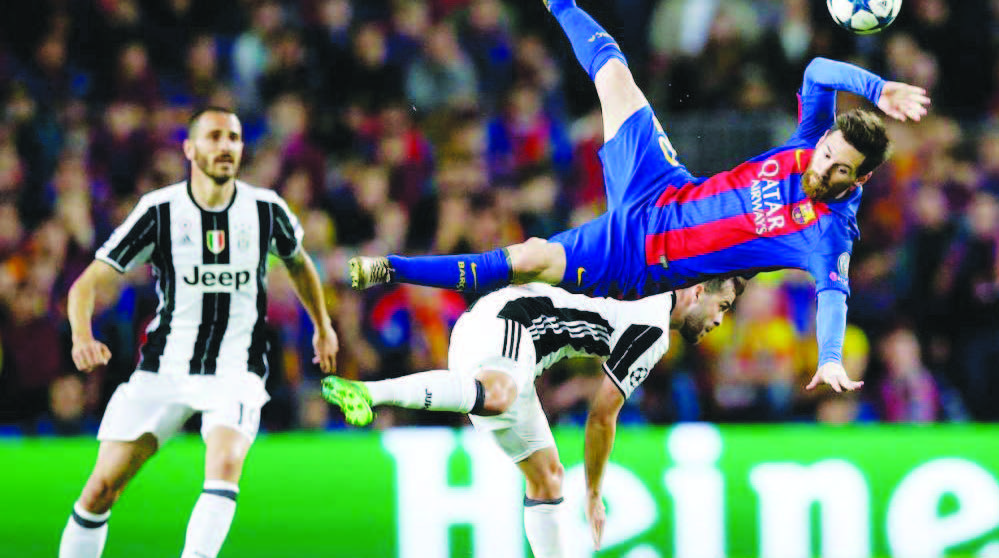
  • TOPPLED Steely Juventus shut down Barcelona to hold hosts 0-0 and go through to the semifinals

    TOPPLED Steely Juventus shut down Barcelona to hold hosts 0-0 and go through to the semifinals

    BARCELONA (TIP): Barcelona’s hopes of staging another sensational Champions League comeback fell flat against a hardened Juventus side who held the Catalans to a 0-0 draw at the Nou Camp on Wednesday to reach the semifinals 3-0 on aggregate.

    The Italian champions barely gave Barca a glimmer of hope of repeating their historic turnaround against Paris St Germain in the last 16 and protected their healthy advantage from the first leg by starving the hosts of space and clear sights of goal.

    Lionel Messi came closest to giving Barca a route back into the contest with four strikes at goal but failed to hit the target with any of them and frequently came up short against Juve’s intimidating centre-back pairing of Giorgio Chiellini and Leonardo Bonucci.

    “Juventus are a great team and they were better than us in the tie and overall they deserved to go through. I wish them the best and I think they could win the trophy,” Barca defender Gerard Pique said.

    “It was a very difficult result to come back from although we tried until the end. They’reItalian and they defended very well. They knew how they wanted to play and got their objective. We created chances but little by little we realised we had a mountain to climb.”

    Twice European champions Juve lacked the spark and power of their thrilling first-leg victory in Turin, but there was rarely any doubt they would exact revenge for their defeat by Barca in the 2015 Champions League final by reaching the semis for a 12th time.

    Barca coach Luis Enrique had said before the game that if hia team managed to strike early then the noise of the Nou Camp would suck the other goals in.

    Juventus, however, showed in the opening stages that they are made of sterner stuff than PSG, who gave up a 4-0 first-leg advantage.

    Massimiliano Allegri’s side pressed Barca in their own half and limited the supply to the front three.

    Messi almost managed to pick out Jordi Alba with a hooked pass and later played a one-two with the Spaniard before dragging narrowly wide of the far post.

    Ivan Rakitic and Neymar also missed the target with hopeful efforts but Juventus’ aggressive gameplan limited how much attacking Barca could do without leaving themselves exposed.

    Gonzalo Higuain cracked a shot over the bar before the break while the probing Juan Cuadrado almost picked out the Argentine striker in the middle, but was thwarted by a brilliant block from Pique.

    Barca increased their grip on possession after the break and spent most of the remainder of the game in their opponents’ half trying to carve out chances, but Juve were always ready for them. Messi whipped a free kick on to the roof of the net and slammed another shot wide before spurning his best chance, a volley which fizzed over the bar.

    Barca right back Sergi Roberto attempted a repeat of his heroic strike against PSG, but also missed the target, unable to prevent his side’s second successive elimination at the quarter-final stage, which will provoke much soul-searching at the five-time European champions. Source: Reuters

  • Manchester United beat Rostov to reach Europa League quarter-finals

    Manchester United beat Rostov to reach Europa League quarter-finals

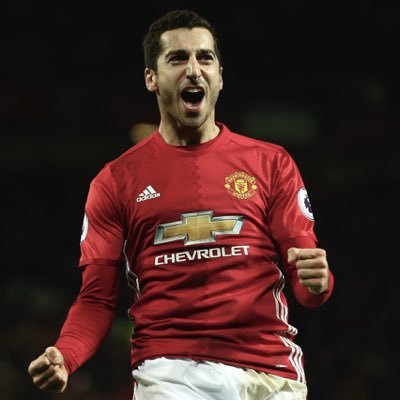
    MANCHESTER (TIP): Juan Mata scored the only goal as Manchester United recorded an underwhelming 1-0 victory over FC Rostov on March 16 to reach the Europa League quarter-finals.

    Mata struck 20 minutes from the end of a subdued game, completing a 2-1 aggregate win that sent United into the last eight of Europe’s second-tier club competition for the first time since 1985.

    But victory came at the cost of an injury to world-record signing Paul Pogba, who left the fray with an apparent hamstring injury early in the second half at an unseasonably cold Old Trafford.

    United manager Jose Mourinho said Pogba’s injury was due to “fatigue” and hit out at unnamed “enemies” in an apparent reference to his side’s jam-packed fixture schedule.

    “Normally the enemies should be Rostov, but we have a lot of enemies,” Mourinho told BT Sport.

    “It’s difficult to play Monday with 10 men (against Chelsea). It’s difficult to play now. It’s difficult to play 12 o’clock on Sunday (against Middlesbrough). We have a lot of enemies.”

    United, who have never previously won the Europa League, will discover their last-eight opponents in Friday’s draw in Nyon.

    Mourinho’s men are seeking to add the trophy to the League Cup they won last month and have the extra incentive of knowing it will yield a place in next season’s Champions League.

    Mourinho kept faith with the back three he had deployed in Monday’s 1-0 FA Cup defeat at Chelsea, but whereas it was a defensive tactic at Stamford Bridge, there was very little defending to do against Rostov.

    Decried for a below-par display at Chelsea, Pogba was able to spray diagonal passes around to his heart’s content, such was the Russian side’s stubborn determination to defend the edge of their own box.

    Marcos Rojo had an early header swatted away by visiting goalkeeper Nikita Medvedev, with Zlatan Ibrahimovic putting the rebound against the post from a tight angle.

    Henrikh Mkhitaryan ran through and chipped wide from Mata’s pass and might have won a penalty in the 27th minute following a push by Medvedev, but Lithuanian referee Gediminas Mazeika said no.

    Ibrahimovic also saw a shot deflected over by Medvedev and later left the right-hand post quaking with a thunderous shot, while Pogba’s left-foot curler drew a full-length save from Medvedev.

    Pogba departed in the 47th minute, Marouane Fellaini taking his place, and Rostov briefly threatened to take the upper hand, Sergio Romero saving from Sardar Azmoun and Christian Noboa.

    United also lost Daley Blind after he took a bang to the head, which resulted in the curious sight of Phil Jones coming on as a jobbing left wing-back.

    The hosts finally made the breakthrough in the 70th minute after Mata intercepted a loose pass in midfield and spread the ball wide to Mkhitaryan on the United right.

    The Armenian’s low cross was back-heeled towards goal by Ibrahimovic and Mata charged in at the back post to slam home from close range.

    Aleksandr Bukharov, Rostov’s scorer in the first leg, threatened to peg United back in the 79th minute, but Romero was equal to both his glancing header and Noboa’s dangerous stoppage-time free-kick.

    A major threat to United in the next round could be Schalke, who grabbed a 2-2 draw at fellow German side Borussia Moenchengladbach to sneak through 3-3 on away goals.

    Also narrowly through are in-form Lyon, who went down 2-1 at Roma on the night but held on to progress 5-4 over the two legs.

    “Roma are one of the best teams in the tournament so this is an achievement,” said Lyon coach Bruno Genesio.

    “We were brave and showed a lot of solidarity, virtues which are indispensable against such opposition.”

    Genk advanced to the quarter-finals as expected after they held Belgian compatriots Gent 1-1 at home, easing through 6-3 on aggregate.

    Completing the last-eight line-up are Celta Vigo, Anderlecht, Ajax and Besiktas, who had Cameroon striker and goal-scorer Vincent Aboubakar sent off in the first half but still smashed Olympiakos 4-1 at home. (AFP)

  • Mkhitaryan helps Manchester United to draw in Russia

    Mkhitaryan helps Manchester United to draw in Russia

    ROSTOV-ON-DON (TIP): Henrikh Mkhitaryan bagged a precious away goal as Manchester United came away from their trip to Russia with a 1-1 draw in the first leg of their Europa League last-16 tie against Rostov on March 8.

    On an awful pitch, the state of which had United manager Jose Mourinho fuming on the eve of the game, Mkhitaryan turned in the opener 10 minutes before half-time.

    But Aleksandr Bukharov levelled for the home side in the 53rd minute at the Olimp 2 stadium, keeping Rostov hopes alive ahead of next week’s return at Old Trafford.

    The build-up to the match had been overshadowed by United’s complaints about the playing surface and about concerns travelling fans could be targeted by Russian hooligans.

    However, the evening passed off without incident inside the ground, where a little over 200 United supporters were in attendance along with ex-United assistant boss Carlos Queiroz.

    “It was a very good performance in relation to the conditions. It was impossible to play better, impossible to play a passing game,” Mourinho told BT Sport.

    “We played what the game demanded and we played well. We made one defensive mistake.

    “I remember as a kid some matches like this in Portugal — non-league and amateur pitches. To see my players coping with it and the humility to fight for every ball is a good feeling for me.

    “We have an open result for the second leg with a little advantage for us. There are no injuries.”

    The result saw the visitors extend their recent unbeaten run in all competitions to 10 games as Mourinho made seven changes to the team held by Bournemouth last weekend.

    One of those brought back into the starting line-up was Mkhitaryan, and it was he who swept United in front in the 35th minute from close range after good build-up play involving Marouane Fellaini and Zlatan Ibrahimovic.

    Nevertheless Rostov, who are seventh in the Russian Premier League but had already won at home to Ajax and Bayern Munich in Europe this season, drew level thanks to a fine goal shortly after the break.

    Timofei Kalachev delivered a ball over the top that was controlled on the chest inside the box and then fired home by Bukharov to secure the draw.


  • Guardiola wants Messi to stay at Barcelona

    Guardiola wants Messi to stay at Barcelona

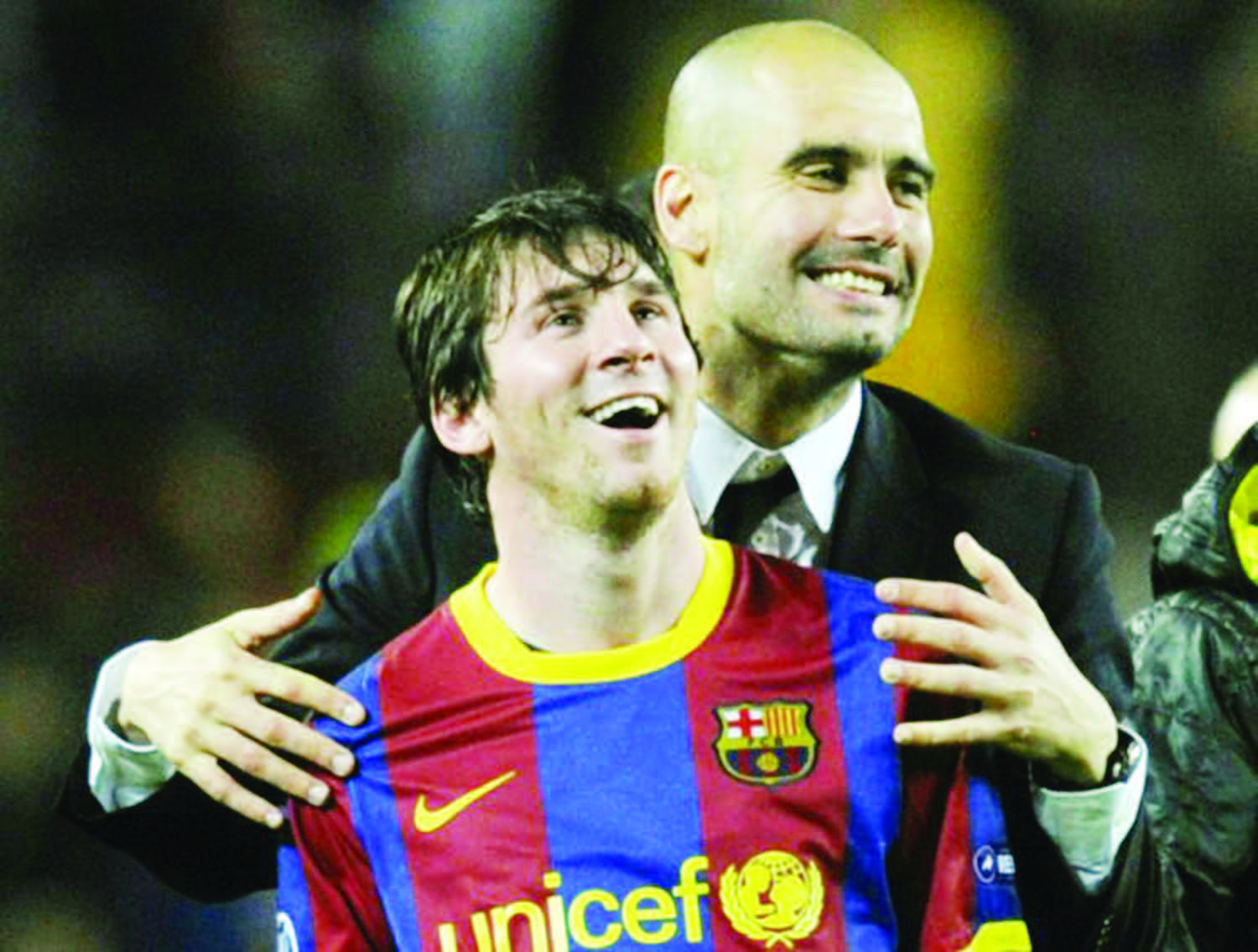
    MANCHESTER (TIP): Pep Guardiola insisted Nov 25 he had no intention of signing Lionel Messi, saying he wants the Barcelona star to see out his career at the Nou Camp.

    Manchester City manager Guardiola has been linked repeatedly with a move for the reigning world footballer of the year.

    Speculation has intensified because Argentina international Messi’s contract with Barcelona expires at the end of next season, and he has so far declined to agree an extension.

    Guardiola knows Messi well, having managed him for four years at the Nou Camp between 2008 and 2012, during which time Barcelona won the Champions League twice and La Liga three times.

    However, the City manager believes the forward would be better served by staying at Barcelona, where he has been since the age of 13.

    “I told you more than once that Messi will stay at Barcelona and will finish his career at Barcelona,” Guardiola said. “It’s my wish. I wish that he goes from the beginning to the end at Barcelona.”

    Reports last weekend suggested City were considering a colossal £200 million ($249 million, 235 million euros) move for Messi, and a contract of £500,000 a week.

    Luis Enrique, the current Barcelona manager gave a sharp answer when that speculation was put to him before the Spanish giants’ Champions League win at Celtic on Wednesday. “I don’t know — I have no idea,” he said. Guardiola is monitoring the fitness of Messi’s Argentina team-mate Sergio Aguero as he prepares his team for a Premier League visit to Burnley on Saturday.

    Aguero suffered a foot problem during Wednesday’s 1-1 Champions League draw against Borussia Moenchengladbach, but it is not thought to be serious.

    Guardiola, meanwhile, believes he has enough cover in central defence despite losing captain Vincent Kompany for around six weeks with knee ligament damage.

    Kompany suffered the 35th injury of his City career as he was forced to come off during last Saturday’s 2-1 victory at Crystal Palace, raising the possibility of Guardiola entering the transfer market in January to sign another defender.

    Guardiola, though, can play midfielder Fernandinho or full-back Bacary Sagna in central defence if necessary, and even has the option to move Yaya Toure there.

    Toure, recalled to the City team to face Palace for his first appearance since August after resolving a dispute with the manager, famously played as an emergency centre-back for Guardiola in the 2009 Champions League final, when Barcelona beat Manchester United 2-0 in Rome.

    Guardiola said: “Yaya can play in many positions but I think we have other options to play as central defenders.

    “What happened with Yaya at Barcelona happened once in the final of the Champions League against Manchester United because we had a lot of problems there. We didn’t have players – and he played amazing

    “Now Yaya is going to play in more offensive terms and can decide the last terms, to score goals, in our build-up in the last third of the pitch.

    “We have other options. Fernandinho can play there, Sagna can play there. At Crystal Palace, after one and a half months injured, Bacary played the first game and he played central defender for many minutes. He was awesome. So we have other options to solve that problem.”

    (AFP)

  • Wayne Rooney defended after drinking apology

    Wayne Rooney defended after drinking apology

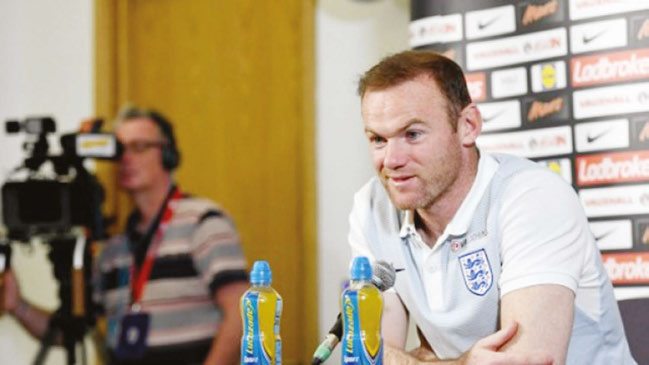
    LONDON (TIP): Wayne Rooney has apologised after “inappropriate” photos of him at a hotel party were released but the England captain has been defended by Liverpool boss Jurgen Klopp who said all the games greats “drank like devils”.

    Rooney was thrown into the spotlight after The Sun tabloid alleged the Manchester United forward drunkenly gatecrashed a wedding at England’s hotel in Watford, north of London, on Saturday.

    Media reports said up to 10 other England players who separately went to a London nightclub have also been spoken to.

    Rooney started England’s 3-0 World Cup qualifying win over Scotland on Friday, but suffered a knee injury that ruled him out of Tuesday’s 2-2 friendly draw at home to Spain.

    A statement issued on Rooney’s behalf, said: “Naturally Wayne is sorry that pictures taken with fans have been published today.

    “Although it was a day off for the whole squad and staff, he fully recognises that the images are inappropriate for someone in his position.”

    The statement said Rooney had spoken to Southgate and FA technical director Dan Ashworth “to unreservedly apologise”.

    “He would like to further extend that apology to any young fans who have seen these pictures.”

    An FA spokesperson said:” All England personnel have a responsibility to behave appropriately at all times. We will be reviewing our policy around free time whilst on international duty.”

    Rooney’s representatives have indicated that he believes he has been an unfair victim of the incessant media glare around top footballers.

    A Rooney spokesman said: “As he has always been, Wayne was happy to sign (autographs), pose for photos and chat with guests.

    “It is sad that one or two of them have now sought to turn Wayne’s friendly good nature to their advantage.”

    And Liverpool boss Klopp also said the episode was not serious.

    “I know we’re all on the sunny side of life, we earn a lot of money and do the job we love, but at the end maybe it comes as a surprise that we are also human beings too,” Klopp told a team press conference.

    “These boys, this generation, is the most professional generation of footballers – not only in England, but England, too, that there has ever been.

    “All the guys, all the legends we love and admire they drank like devils and smoked like crazy, but they were still good players. No one does it any more. I don’t know anyone now.”

    England’s interim manager Gareth Southgate was adamant that Rooney had not been left out of the Spain game as a disciplinary measure.

    “Wayne picked up an injury in the game (against Scotland) on Friday,” said Southgate. “He couldn’t train on Sunday and that’s it.”

    Southgate, who is still waiting to hear whether he will get the England job full time, said he would review players’ free time.

    “Over the last few years, the players have been allowed to go home during a period of time,” Southgate told reporters after England’s 2-2 friendly draw with Spain at Wembley.

    “They trained Saturday morning and they trained again on Sunday afternoon, and I gave the players a period of time off (in between). I’m not aware of anything else.

    “There were lots of changes we made to routines. Some things we thought we should keep the same and I’ll have to review (it) — or maybe I won’t have to review! Someone will have to review it.”

    Rooney was recalled by Southgate for the win over Scotland, having been dropped for England’s goalless draw in Slovenia, after winning back his place in the United first team.

    His status with both club and country appears uncertain as concerns grow over the 31-year-old’s waning powers.


  • End Discriminatory Policy Against Sikh Basketball Players, Say US lawmakers

    End Discriminatory Policy Against Sikh Basketball Players, Say US lawmakers

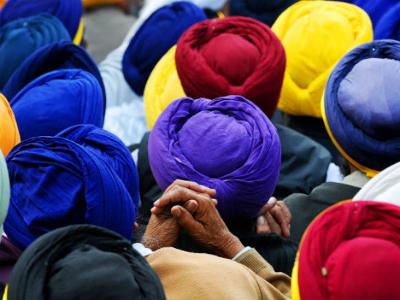
    A bipartisan group of more than 40 US lawmakers have appealed to the International Basketball Federation to end an “outdated and discriminatory” policy against Sikh players over turbans.

    “Sikhs participate in a wide variety of sports around the globe, and there has never been a single instance of someone being harmed or injured by a turban, or of a turban interfering with the sport,” Congressmen said in a letter to Horacio Muratori, President of the Federation Internationale de Basketball (FIBA) or International Basketball Federation.

    Led by Congressman Joe Crowley, who is Vice Chair of the Democratic Caucus, and Ami Bera, the only Indian-American Member of Congress, Tuesday’s letter signed by over 40 lawmakers comes ahead of the expected decision by the international body.

    “Every day that FIBA has delayed this decision is another day that Sikhs can’t play,” said Mr Crowley and Mr Bera in a joint statement.

    “This is a policy that can only be described as outdated, discriminatory, and totally inconsistent with the ideals of team sports, and it is long past time it change. That’s why we have continued to push for action, including with this latest letter, and we thank all those who have raised their voices with us. Our message to FIBA is simple: let them play!”.

    FIBA’s discriminatory policy came to light in 2014 when two Sikh players who were told by referees that they must remove their turbans if they were to play in FIBA’s Asia Cup.

    The players, who have always played in turbans, were told that they were in violation of one of FIBA’s official rules, which states, “players shall not wear equipment (objects) that may cause injury to other players”.

    However, there is no evidence that a Sikh turban poses a threat to cause injury, and other sports leagues, such as Federation Internationale de Football Association (FIFA) and the National Collegiate Athletic Association (NCAA), allow athletes wearing turbans to participate, the lawmakers argued.

  • Euro 2016 boots Adidas sales higher

    Euro 2016 boots Adidas sales higher

    BERLIN (TIP): A year of high-profile sports sponsorship has so far paid off for Adidas, with sales at its core brand up 25 percent thanks to events including the Euro 2016 football tournament.

    Higher sales of items branded with the Bavarian firm’s famous three stripes were “mostly due to two-digit increases in the important categories of running, football and training, as well as Adidas Originals and Adidas neo,” two fashion branches, the firm said in a statement.

    “We’re inspiring our consumers with one-of-a-kind experiences,” chief executive Herbert Hainer said, “and that will continue onwards.”

    While the final in Paris pitted two Nike-sponsored teams, France and Portugal, against one another, Adidas markings were visible on other strong performers including the German Mannschaft and the Spanish national team.

    Following the boost from Euro 2016, Adidas-sponsored athletes and teams will be in the spotlight again at the Rio Olympics from August 6.

    Adidas saw double-digit sales increases in several global markets in the second quarter, with a 32 percent gain in north America and 30 percent each in western Europe and China.

    Sales grew more slowly in Russia and the Commonwealth of Independent States at just five percent — slightly allaying fears of a blow to the brand from Russia’s economic slowdown.

    Across the whole group, revenues increased between April and June by 13 percent to 4.4 billion euros ($4.9 billion), Adidas reported in preliminary results released at the end of July.

    Adidas doubled its net profits over the same period in 2015 to 291 million euros.

    The strong result in the second quarter was partly down to Adidas breaking off its sponsorship of London football club Chelsea, bringing in estimated savings of between 50 and 100 million euros.

    Two of the Adidas group’s other brands, Reebok and golf supplier TaylorMade, each reported seven percent growth in the second quarter.

    Adidas announced in May that it would “actively seek a buyer” for TaylorMade as it suffered poor performance —preferring instead to focus on its own Adidas Golf marque.

  • Why Use the Terror Tag Arbitrarily?

    Why Use the Terror Tag Arbitrarily?

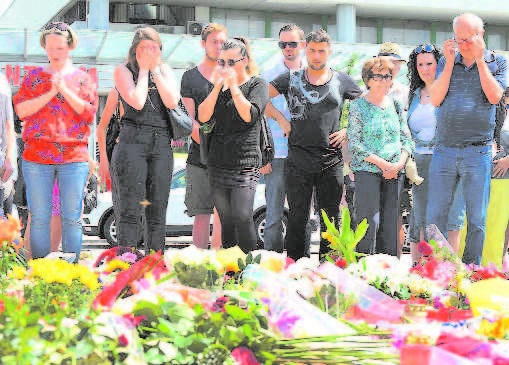
    The frightful and bloody hours of Friday night (July 22) and Saturday morning in Munich and Kabul – despite the 3,000 miles that separate the two cities – provided a highly instructive lesson in the semantics of horror and hypocrisy. I despair of that generic old hate-word, “terror”. It long ago became the punctuation mark and signature tune of every facile politician, policeman, journalist and think tank crank in the world.

    Terror, terror, terror, terror, terror. Or terrorist, terrorist, terrorist, terrorist, terrorist.

    But from time to time, we trip up on this killer cliché, just as we did at the weekend. Here’s how it went. When first we heard that three armed men had gone on a “shooting spree” in Munich, the German cops and the lads and lassies of the BBC, CNN and Fox News fingered the “terror” lever. The Munich constabulary, we were informed, feared this was a “terrorist act”. The local police, the BBC told us, were engaged in an “anti-terror manhunt”.

    And we knew what that meant: the three men were believed to be Muslims and therefore “terrorists”, and thus suspected of being members of (or at least inspired by) Isis. Then it turned out that the three men were in fact only one man – a man who was obsessed with mass killing. He was born in Germany (albeit partly Iranian in origin). And all of a sudden, in every British media and on CNN, the “anti-terror manhunt” became a hunt for a lone “shooter”.

    One UK newspaper used the word “shooter” 14 times in a few paragraphs. Somehow, “shooter” doesn’t sound as dangerous as “terrorist”, though the effect of his actions was most assuredly the same. “Shooter” is a code word. It meant: this particular mass killer is not a Muslim. Now to Kabul, where Isis – yes, the real horrific Sunni Muslim Isis of fearful legend – sent suicide bombers into thousands of Shia Muslims, who were protesting on Saturday morning at what appears to have been a pretty routine bit of official discrimination.

    The Afghan government had declined to route a new power line through the minority Hazara (Shia) district of the country – a smaller electric cable connection had failed to satisfy the crowds – and had warned the Shia men and women to cancel their protest. The crowds, many of them middle-class young men and women from the capital, ignored this ominous warning and turned up near the presidential palace to pitch tents upon which they had written in Dari “justice and light” and “death to discrimination”.

    But death came to them instead, in the form of two Isis men – one of them apparently pushing an ice-cream cart – whose explosives literally blew apart 80 of the Shia Muslims and wounded at another 260. In a city in which elements of the Afghan government are sometimes called the Taliban government, and in which an Afghan version of the Sunni Muslim Islamic State is popularly supposed to reside like a bacillus within those same factions, it wasn’t long before the activists who organized the demonstration began to suspect that the authorities themselves were behind the massacre. Of course, we in the West did not hear this version of events. Reports from Kabul concentrated instead on those who denied or claimed the atrocity. The horrid Islamist Taliban denied it. The horrid Islamist Isis said they did it. And thus all reports centered on the Isis claim of responsibility. But wait. Not a single report, not one newscast, referred to the Kabul slaughter as an act of “terror”. The Afghan government did. But we did not. We referred to the “suicide bombers” and the “attackers” in much the same way that we referred to the “shooter” in Munich.

    Now this is very odd. How come a Muslim can be a terrorist in Europe but a mere “attacker” in South-west Asia? Because in Kabul the killers were not attacking Westerners? Or because they were attacking their fellow Muslims, albeit of the Shia Muslim variety?

    I suspect both answers are correct. I can find no other reason for this weird semantic game. For just as the terrorist identity faded away in Munich the moment Ali Sonboly turned out to have more interest in the Norwegian mass murderer Anders Breivik than the Caliph Abu Bakr al-Baghdadi of Mosul, so the real Isis murderers in Kabul completely avoided the stigma of being called terrorists in any shape or form.

    This nonsensical nomenclature is going to be further warped – be sure of this – as more and more of the European victims of the attacks in EU nations turn out to be Muslims themselves. The large number of Muslims killed by Isis in Nice was noticed, but scarcely headlined. The four young Turks shot down by Ali Sonboly were subsumed into the story as an almost routine part of what is now, alas, the routine of mass killing in Europe as well as in the Middle-East and Afghanistan. The identity of Muslims in Europe is therefore fudged if they are victims but of vital political importance if they are killers. But in Kabul, where both victims and murderers were Muslim, their mutual crisis of religious identity is of no interest in the West; the bloodbath is described in anemic terms. The two attackers “attacked” and the “attacked” were left with 80 dead – more like a football match than a war of terror. It all comes down to the same thing in the end. If Muslims attack us, they are terrorists. If non-Muslims attack us, they are shooters. If Muslims attack other Muslims, they are attackers. Scissor out this paragraph and keep it beside you when the killers next let loose – and you’ll be able to work out who the bad guys are before the cops tell you.

    (The author, an English writer and journalist from Maidstone, Kent is currently Beirut correspondent of The Independent)

  • Yoga for Health & Fitness

    Yoga for Health & Fitness

    Yoga and Stress Yoga minimizes the impact of stress on the individual. Yogic science believes that the regular practice of asanas and pranayama strengthens the nervous system and helps people face stressful situations positively.

    We have all experienced the way unrelieved tension results in both mental disorders and physical ill-health. This is not a modern phenomenon. In the centuries-old Yoga Sutras, the sage Patanjali attributed the causes of mental affliction to the ego, spiritual ignorance, desire, hatred of others, and attachment to life. He called these kleshas or “sorrows”.

    Origins of stress Through advances in science and technology, modern civilization has been able to conquer ignorance in many fields, but its pride in technological achievement is excessive and misplaced. It has triggered widespread feelings of competitiveness and envy. Financial tensions, emotional upheavals, environmental pollution and, above all, a sense of being overtaken by the speed of events have all increased the stress of daily life.

    All these factors strain the body, causing nervous tension, and adversely affecting the mind. This is when feelings of isolation and loneliness take over.

    To deal with this, people turn to artificial solutions to cope with the pressures of daily life. Substance abuse, eating disorders, and destructive relationships are some of the substitutes people grasp at in their desperate search for consolation. But while these measures may provide temporary distraction or oblivion, the root cause of unhappiness – stress -remains unresolved.

    Yoga is not a miracle cure that can free a person from all stress, but it can help to minimize it. The worries of modern life deplete our reserves of bioenergy, because we draw on our vital energy from the storehouse – the nerve cells. This can, ultimately, exhaust our energy reserves and lead to the collapse of mental and physical equilibrium. Yogic science believes that the nerves control the unconscious mind, and that when the nervous system is strong, a person faces stressful situations more positively. Asanas improve blood flow to all the cells of the body, revitalizing the nerve cells. This flow strengthens the nervous system and its capacity for enduring stress.

    Relieving stress  The diaphragm, according to yogic science, is the seat of the intelligence of the heart and the window to the soul. During stressful situations, however, when you inhale and exhale, the diaphragm becomes too taut to alter its shape. Yogic exercises address this problem by developing elasticity in the diaphragm, so that, when stretched, it can handle any amount of stress, whether intellectual, emotional, or physical.

    The practice of asanas and pranayama helps to integrate the body, breath, mind, and intellect. Slow, effortless exhalation during the practice of an asana brings serenity to the body cells, relaxes the facial muscles, and releases all tension from the organs of perception: the eyes, ears, nose, tongue, and skin.

    When this happens, the brain, which is in constant communication with the organs of action, becomes shunya, or void, and all thoughts are stilled. Then, invading fears and anxieties cannot penetrate the brain. When you develop this ability, you perform your daily activities with efficiency and economy. You do not dissipate your valuable bioenergy. You enter the state of true clarity of intellect. Your mind is free of stress and is filled with calm and tranquility.

    Yoga and Fitness Most types of exercise are competitive. Yoga, although non-competitive, is nevertheless challenging. The challenge is to one’s own willpower. It is a competition between one’s self and one’s body.

    Exercise usually involves quick and forceful body movements. It has repeated actions that often lead to exertion, tension, and fatigue. Yoga asanas, on the other hand, involve movements that bring stability to the body, the senses, the mind, the intellect, the consciousness, and finally, to the conscience. The very essence of an asana is steady movement, a process that does not simply end, but finds fulfilment in tranquility.

    Most diseases are caused by the fluctuations in the brain and in the behavioral pattern of the body. In yogic practice, the brain is quietened, the senses are stilled, and perceptions are altered, all generating a calm feeling of detachment. With practice, the student of yoga learns to treat the brain as an object and the body as a subject. Energy is diffused from the brain to the other parts of the body. The brain and the body then work together and energy is evenly balanced between the two. Yoga is thus termed sarvanga sadhana or “holistic practice”. No other form of exercise so completely involves the mind and self with the body, resulting in all-round development and harmony. Other forms of exercise address only particular parts of the body. Such forms are termed angabhaga sadhana or “physical exercise”.

    Stimulative exercise  Yoga asanas are stimulative exercises, while other endurance exercises are irritative. For instance, medical experts claim that jogging stimulates the heart. In fact, though the heartbeat of the jogger increases, the heart is not stimulated in the yogic sense of being energized and invigorated. In yoga, back bends, for example, are more physically demanding than jogging, but the heart beats at a steady, rhythmic pace.

    Asanas do not lead to breathlessness. When practicing yoga, strength and power play separate roles to achieve a perfect balance in every part of the body as well as the mind. After such stimulating exercise, a sense of rejuvenation and a fresh surge of energy follow.

    Exercise can also be exhausting. Many forms of exercise require physical strength and endurance, and can lead to a feeling of fatigue after 10-15 minutes of practice. Many such exercises improve energy levels by boosting nerve function, but ultimately, this exhausts the cellular reserves and the endocrine glands. Cellular toxins increase, and though circulation is enhanced, it is at the cost of irritating the other body systems and increasing the pulse rate and blood pressure. Ultimately, the heart is taxed and overworked.

    An athlete’s strong lung capacity is achieved by hard and forceful usage, which is not conducive to preserving the health of the lungs. Furthermore, ordinary physical exercise, such as jogging, tennis, or football, lends itself to repetitive injuries of the bones, joints, and ligaments.

    Such forms of exercise work with – and for – the skeletal and muscular systems. They cannot penetrate beyond these limits. But asanas penetrate each layer of the body and, ultimately, the consciousness itself. Only in yoga can you keep both the body and the mind relaxed, even as you stretch, extend, rotate, and flex your body.

    Yoga, unlike other forms of exercise, keeps the nervous system elastic and capable of bearing stress. Although all forms of exercise bring about a feeling of well-being, they also stress the body. Yoga refreshes the body, while other systems exhaust it. Yoga involves the equal exertion of all parts of the body and does not overstrain any one part.

    In other forms of exercise, the movements are restricted to a part or parts. They are reflex actions, which do not involve the intelligence in their execution. There is little space for precision and perfection, without extra expenditure of energy.

    Yoga can be practiced at any age  With advancing age, physically vigorous exercises cannot be performed easily because of stiffening joints and muscles that have lost tone. Isometric exercises, for example, cannot be practiced with increasing age, as they lead to sprained muscles, painful joints, strained body systems, and the degeneration of organs. The great advantage of yoga is that it can be practiced by anyone, irrespective of age, sex, and physical condition.

    In fact, yoga is particularly beneficial in middle age and after. Yoga is a gift to older people when the recuperative power of the body is declining and resistance to illness is weakened. Yoga generates energy and does not dissipate it. With yoga one can look forward to a satisfying, healthier future, rather than reflecting on one’s youthful past.

    Unlike other exercises, yoga results in the concentration of immunity cells in areas affected by disease, and thus improves immunity. That is why the ancient sages called yoga a therapeutic as well as a preventive science.

  • Taliban couldn’t erase Pak man’s sense of humor

    Taliban couldn’t erase Pak man’s sense of humor

    ISLAMABAD (TIP): A Pakistani man, Shahbaz Taseer, who was held by the Taliban for nearly five years before being abruptly freed this month, is lighting up Twitter with his frank and often-humourous account of his captivity.

    Taseer is a son of Salman Taseer, the liberal Punjab governor assassinated in 2011. He was taken hostage a few months after his father was murdered.

    Taseer has turned down interview requests but this week he took to Twitter — his late father was also a prolific user and early adopter — to share his story in his own words.

    Pakistanis have been riveted as Taseer and his wife Maheen light up the Internet with their funny, loving and often heart-stopping account of his captivity and release.

    When asked what he said to his wife the first time he saw her, he replied: “i told you id come back”.

    She also described the moment of their reunion: “I was crying with happiness, could hardly speak but hugged him and told him I love him”.

    Using the hashtag #AskST, he invited questions from fans eager to find out more about his detention, where according to militant sources, he was shuffled between various extremist groups in Pakistan’s tribal areas.

    Asked whether he remained loyal to his favourite football team Manchester United, he replied: “U can’t be a united fan it’s a family”.

    His wife later chirped in asking “who is number one, me or @ManUtd?”, with Taseer responding: “You… but they are a VERY close second :)”

    Some responses, while light-hearted, hinted at darker times.

    “How the heck did you rewire your brain to not be overwhelmed with the negativity?” one user asked.

    He responded: “just press delete :)”

    Asked whether he was asked to formally join the Taliban he said: “no, they didn’t like my sense of style”, adding that his only friend “was a spider called peter”.

    Some details remain confusing, such as when he was asked if he ever thought of trying to run away from his kidnappers. He responded: “only in my dreams which was good enough.”

    Taseer also recalled phoning his mother from the restaurant he was recovered from in southwest Balochistan province earlier this month.

    He wrote: “i said ‘hey ami i ran away btw the mountain dew is great at saleem hotel kuchlak baluchistan’ she said ‘whose this?’”

    Many of the questions centred around how life had changed during his half decade away from civilisation.

    Earlier in the week he joked that his wife had compared him to Nicholas Brody, the character played by actor Damien Lewis in US drama “Homeland” — a US Marine turned would-be terrorist after eight years in captivity.

    It was a powerful respite to the grim news many Pakistanis have grown accustomed to in the country’s more than decade-long fight against an Islamist insurgency, including Sunday’s bombing of a park in Lahore targeting Christians celebrating Easter that killed dozens of children.

    Pakistani users have responded warmly.

  • GHOSTS OF A GLORIOUS PAST KOLKATA’S MOST HAUNTED

    GHOSTS OF A GLORIOUS PAST KOLKATA’S MOST HAUNTED

    Amention of the most haunted places in Kolkata brings alive its fascinating past as well. A city that was much loved by the Mughals, French, British and Dutch, almost every lane has a tale to tell, some with a twist of horror. If you have some ghost-chasing on your mind, there is the supposed ghost of Warren Hastings who comes riding a horse to Hastings House and the spirit of Lady Metcalfe that you might find sashaying down the corridors of the National Library of India. A more creepy experience, going by the legends, awaits you at Putulbari (the House of Dolls), the South Park Cemetery, Writer’s Building and more.

    National Library of India 

    The largest library in India is much more than a haunt for just book lovers. This treasure trove for bibliophiles attracts the lovers of ghost stories in equal numbers. The story of Lady Metcalfe’s ghost haunting its corridors has been there for quite some time; a lot of testimonies support the story with people reporting the presence of someone simply watching them. Add to it the mystery of the hidden chamber that was discovered by the Archeological Survey of India (ASI) in 2010, a chamber that is rumoured to have served as a torture chamber during the British rule in India. As per witness accounts, such paranormal experiences increased all the more after 12 labourers lost their lives in an accident during some renovation work at the site. Sounds like some grist for the rumour mill.

    Putulbari or the House of Dolls 

    With a name like that, there is little doubt about the spooky quotient of this one. An old, dilapidated building with just a few residents on the lower floors and a terrace that is adorned with dolls made in archaic Roman style, it has a good number of horror stories about it. Nobody is allowed to visit the upper floors of the building even during daytime since the place is supposedly haunted by spirits of courtesans, who were abused by wealthy landlords during and before the British rule in India. People confess to hearing both women’s wails and hysterical laughter from the upper floor of Putulbari at night. While the story might or might not be true, the very sight of the building is enough to send chills down the spine.

    South Park Street Cemetery 

    Well, haunted or not, visiting a cemetery is an unusual experience. Kolkata’s South Park Cemetery too has its claim to fame when it comes to a spooky tale or two. Opened in 1767, it houses more than 1600 graves, most of those covered in creepers and moss now. The cemetery, its dilapidated appearance notwithstanding, has been labelled as haunted ever since a group of tourists caught a vague white figure on their cameras. The tourist from the group who saw the apparition suffered an asthma attack right there though he had no history of asthma. Going by the stories, the rest of the group members too fell ill soon after visiting the cemetery. While the graves look creepy enough in daytime, shadows sure make the place look out of this world once the Sun goes down.

    Rabindra Sarobar Metro Station 

    A regular-looking metro station in the City of Joy, this one is infamous for being the place that sees more than 50% of city’s suicides. With a high-voltage power line in place inside the station for smooth running of metro trains, the station has become the suicide point of the city. Now, the air is rife with eyewitness accounts from people who confess of having seen a number of white figures and apparitions inside the station during late hours. Some years back, there were instances of drivers halting the train owing to strange figures, clad in white, darting across the train tracks. People attribute these occurrences to the suicides that have happened here, assuming that the ghosts of people who died at the station haunt the place now. No taking the last metro here.

    GHOSTS OF A GLORIOUS PAST1Writer’s Building

    This old building serves as an office to administrative employees but such is the reputation that no employee stays back after sunset. Some of the rooms in the building are vacant and have not been opened for decades. As per the many stories that make for this place’s reputation, these closed rooms are haunted and evenings bring about strange occurrences like high-pitched giggles, screams and whispers. Investigations have revealed no specific reasons for any of these happenings, making the place quite spooky.

    Hastings House 

    GHOSTS OF A GLORIOUS PAST2Hastings House, which also serves as the Institute Of Education For Women, is reported as another haunted place in Kolkata. This building served as the house of Warren Hastings, India’s Governor General under the British Rule. Going by what some of the students have to say, they have seen a white man riding a horse and entering the campus many a times. A man, which they believe, is the ghost of Warren Hastings himself ! A majority also believes the place to be haunted by the spirit of a boy who died on the field while playing football. None of the students dare to stay in the campus around evening, leaving the place right after their afternoon lectures. Call it spooky or just another fragment of imagination.

    A few other places that are believed to be some of the most haunted places in Kolkata are the Ganga ghats near Howrah Bridge, the Royal Calcutta Turf Club (where, as per the legends, people can see a ghost horse running across the tracks) and the Nimtala burning ghats, which is said to be a popular haunt of aghoris!

    Source: HappyTrips

  • Zinedine Zidane is the new Coach for Real Madrid FC

    Zinedine Zidane is the new Coach for Real Madrid FC

    Real Madrid FC promoted France legend Zinedine Zidane as the Coach and sacked Rafael Benitez on Monday, January 4.

    Club president Florentino Perez announced the news after a club board meeting on Monday afternoon.

    He called Zidane “one of the greatest figures in football history” and told him: “This is your stadium, your club, you have all our confidence. Madridismo is at your side. As president, I am proud to have you by my side. I know for you, the word ‘impossible’ does not exist.”

    The Frenchman is loved at the Santiago Bernabeu thanks to his five stellar years to end his playing career in the Spanish capital, most memorably scoring a stunning winning goal in the 2002 Champions League final.

    Yet, his coaching experience is limited to a season-and-a-half in charge of Madrid’s feeder team Castilla where he failed to secure promotion from Spanish football’s third tier last season.

    However, Madrid hope to recreate the magic formula enjoyed by Pep Guardiola and Barcelona during his glorious 14-trophy haul with the Catalans between 2008 and 2012.

    Like Zidane, Guardiola was a club legend as a player who graduated from a season in charge of Barca’s B team to become the most successful coach in the club’s history.

    Moreover, unlike Benitez, Zidane is at least sure to have the respect of Madrid’s star-studded dressing room, who constantly clashed with the former Liverpool and Chelsea manager.

    Zidane doesn’t just have the kudos of being a former Ballon d’Or winner, but he was Carlo Ancelotti’s assistant as Madrid won their long-awaited 10th Champions League crown in 2014.

    “We have the best club in the world, the best fans and what we have to do now, and what I will try my best to do, is ensure the team wins at the end of the season,” said the normally ice-cool Zidane, who admitted to feeling more emotional than the day he joined Madrid for a then world-record fee from Juventus in 2001.

    “It is an important day for me and like all coaches I am a bit emotional, more emotion that when I signed as a player, but that is normal and from tomorrow I will put my heart into doing all I can for this club.”

    It will take more than heart for Zidane to arrest a year-long slump that has seen Madrid burn through two Champions League winning coaches, see eternal rivals Barcelona win the treble and become embarrassed in numerous off-field scandals.

    “The best man for the job,” said Zidane’s ex-Madrid teammate David Beckham on Instagram.

    “A man that has been the best at a game we all love, taking over a club that myself and many more people love. Someone with drive, passion and also doesn’t accept failure on any level.”

    Despite being thrown out of the Copa del Rey for fielding an ineligible player last month, there is still plenty of time for Madrid to turn their season around.

    They trail La Liga leaders Atletico Madrid by just four points with over half the season to play and are strong favourites to see off Roma in the last 16 of the Champions League.

    Blind faith that Zidane can recreate his playing success as a coach is all club president Florentino Perez has left with his credit running low as Barca have dominated in Spain over the past decade despite Perez’s lavish spending on transfer fees.

    Should Zidane’s managerial stock slump as quickly as it has risen, then it may finally be Perez and not the coach who takes the fall.

  • DDCA row: AAP, Kirti Azad intensify attack on Jaitley

    DDCA row: AAP, Kirti Azad intensify attack on Jaitley

    NEW DELHI (TIP): Finance Minister Arun Jaitley, December 30, came under fresh attack over DDCA affairs with AAP accusing him of pressuring the then Police Commissioner to
    “close” investigation involving a cricket club of a bank in 2011 while suspended BJP MP Kirti Azad claimed the SFIO probe report had recommended his “prosecution”.

    In a related development, the DDCA said it has decided to file defamation case against Delhi Chief Minister Arvind Kejriwal and Azad besides other top AAP functionaries for making “wild and baseless” allegations of corruption against the cricket body.

    Continuing its offensive against him, AAP released two letters, purportedly written by Jaitley, to then Delhi Police Commissioner BK Gupta and then Special Commissioner Ranjit Narayan, requesting them to “fairly” deal with the matter and “close” the case since “DDCA has done no wrong”.

    The party also renewed its demand for Jaitley’s resignation in the wake of the “fresh disclosures”. The letter to Gupta is dated October 27, 2011 while the one written to Narayan is dated May 5, 2012.

    Senior AAP leader Ashutosh claimed that the letters “punctured” the Finance Minister’s repeated assertions that he was in no way connected with any wrongdoing in the Delhi and District Cricket Association, which he headed for 13 years till 2013.

    BJP dismisses allegations

    Reacting to the allegations, BJP spokesperson GVL Narsimha Rao asked as to what was wrong in Jaitley writing a letter to the police commissioner. “He was not even in power so the charge does not stick.”

    In the letter to Narayan, Jaitley is quoted as writing that “some persons have been repeatedly approaching Delhi Police with complaints in relation to the identity of the Syndicate Bank Cricket Club.

    “The complaints are completely unsubstantiated and do not disclose any offence. Certain office-bearers of the DDCA are feeling harassed by repeated questioning in this regard. I would request you to look into this matter so that it can be fairly dealt with and closed since the DDCA has done no wrong.”

    When contacted, DDCA said the club is under them and that it currently falls in the “institutional” category.

    “There are two types of clubs – institutional and private. While a private club receives a subsidy, an institutional does not and that is the broad difference between the two,” a DDCA official said.

    Azad, suspended by BJP for anti-party activities, claimed the Serious Fraud Investigation Office (SFIO) probe report had recommended “prosecution” of Jaitley in the DDCA affairs even as he targeted more politicians, including party MP and BCCI secretary Anurag Thakur.

    Azad also appeared to support Kejriwal’s allegation that a DDCA official had sought sexual favors from a woman if she wanted her son to be part of its cricket team, saying it was not a new thing and he had raised a similar issue in 2007.

    DDCA row-arunSFIO recommended ‘prosecution’ of Jaitley, claims Azad  

    At a press conference here, Azad quoted from the report of SFIO, which had gone into the Delhi cricket body affairs, to claim that it had recommended “prosecution” of Jaitley among others but it has not been done in the last three years.

    “Under the Companies Act, 1956, all the directors were to be assigned particular roles and if they are not, then the term (for action against them) is compounding. As many as 27 executive members, including Jaitley, were not assigned any role. Twenty-four of them, including Jaitley, did not compound.

    “So SFIO recommended that under Section 5 G of the Companies Act, the Registrar of Companies should prosecute them for not compounding. It shows the BCCI is above law. It has been three years since the recommendation but they have not been prosecuted,” he said.

    Hitting back at Jaitley who had called him a “Trojan horse”, Azad said, “these were the Trojan horses who did not let it come. Trojan horses in and outside the Cabinet. I hope it does come”.

    Asked to identify the politicians, he named Jaitley, Thakur, Rajeev Shukla, Jyotiraditya Scindia, Farooq Abdullah and Praful Patel. All of them were then, and most still are, involved in cricket administration except Patel, who is All India Football Federation president.

    Referring to Thakur, the three-time MP from Darbhagna said, “You cannot wear two caps. This is a conflict of interest. Either you are in Parliament or you are associated with a sports association.”

    Refuting the fresh allegations by Azad and AAP leaders, DDCA said it will sue them having “defamed” the organization.

    Addressing a press conference where all top DDCA officials were present, acting president Chetan Chauhan said that a lot of “false” charges have been leveled against the state cricket body and it was forced to take legal recourse against those spreading such disinformation.

    Treasurer Ravinder Manchanda said DDCA will file a defamation case against Kejriwal, Azad and others who made the allegations of corruption and financial embezzlement in the DDCA.

    Chauhan said three agencies were already probing the cases against the DDCA and there was no need for a fresh probe to be initiated by the AAP government which has appointed a one-member Commission of Inquiry for the purpose. (Source: PTI)


  • Brazil mine mudslide kills at least 17

    RIO DE JANEIRO (TIP): A dam burst at a mining waste site in Brazil, unleashing a deluge of thick, red toxic mud that engulfed a village and killed at least 17 people, an official said.

    More than 50 more were injured in the disaster in southeastern Minas Gerais state on Thursday, said Adao Severino Junior, fire chief in the city of Mariana.

    The number of missing looks set to surpass 40 but this is not official yet, he added.

    Television footage showed a torrent of muck several hundred metres long that had swamped houses and ripped off their roofs.

    The mud reached the intact roofs of some houses, atop of which stranded people waited to be rescued. Some homes seemed to have been swept hundreds of meters by the rushing wall of mud.

    The village of Bento Rodrigues near the dam is practically buried, the fire chief said.

    “The situation is grim. It is dark. There is a lot of mud,” Severino said. “There is no way to survive under that material.”

    The nearby area is sparsely populated, mainly by people who work for the mining company.

    Civil defense teams have been dispatched but it hard to reach the affected area because of all the mud, Minas Gerais governor Fernando Pimentel said.

    The mining company Samarco, which operates the site, had yet to confirm whether there were fatalities or injured.

    Samarco is jointly owned by two mining giants, Vale of Brazil and BHP Billiton of Australia.

    “We flew over the area. All access roads are blocked by the stream of mining waste,” a police officer from the nearby town of Mariana told AFP. He did not give his name.

    The surface area of mud held back by the dam that gave way is equivalent to 10 football fields. Twenty-five people worked there, said local mining union leader Ronaldo Bentro said. He earlier gave the death toll as just one person.

    The dam broke about 4:20pm (local time) between the old colonial towns of Ouro Preto and Mariana, in a major mining region.

    Firefighters and other emergency teams rushed to the scene and residents were ordered to evacuate.

    Minas Gerais has been the main mining hub of Brazil since the 16th century. First came gold, then mining of iron ore, other minerals and semi-precious stones.
    (Source: AFP)

  • Six Indian American Malayalees to be honored by Kerala Center, NY

    Six Indian American Malayalees to be honored by Kerala Center, NY

    The Indian American Kerala Cultural and Civic Center will honor six Indian Americans for outstanding achievement in their field of specialization or for their service to the society.

    The awardees were selected by a committee consisting of four members headed by Kerala Center Board Member and Trustee Dr. Thomas Abraham, according to a press release.

    “Every year we invite nominations and the committee has to make a unanimous choice for a candidate in a category to be selected to receive the award and this year is no different from previous years in terms of their achievements,” said Dr. Abraham, in a statement.

    “For the last 23 years, the Kerala Center has recognized the most outstanding achievers among the Indian American Kerala Community and they are role models for our community,” said Kerala Center President Thambi Thalappillil.

    Kerala-Center-press-releaseThe awardees will be honored at the Kerala Center’s 23rd Annual Awards Banquet on Saturday, November 7th starting at 6.30 p.m. at World’s Fair Marina in Flushing (Queens, New York City, address: 1 World’s Fair Marina, Flushing).  The chief guest is Ambassador Dnyaneshwar Mulay, Consul General of India in New York and the keynote speaker is Mr. K. Mohandas, former Secretary of the Ministry of Overseas Indian affairs and Shipping, Govt. of India.

    This year’s honorees are: 
    Recognition for Outstanding Contribution in Engineering – Dr. Navin Manjooran 

    Dr. Navin Manjooran ​is ​the Global Director (Energy) for Siemens AG ​ and ​​is responsible for the​  entire Siemens energy portfolio. He also serves as an engineering professor at Virginia Tech. Navin graduated with a BE degree from NIT (Warangal), a MS from University of Florida (Gainesville, USA), Ph.D. from Virginia Tech (Blacksburg, USA), all with the highest honors and later on completed MBA from University of Chicago. Navin has 11 patents/ disclosures, 9 books, 37 publications and 51 presentations at national/international conferences. He has received several awards including TMS Young Leader, ASM International Leadership Award ​and ​Siemens Performance Award. ​Navin is a Member of the US Technology Advisory Board and ​Virginia Tech Univ. Board  and the Board of Trustees of Univ. of Chicago.

    Recognition for Outstanding Contribution in Information Technology – Dr. Sasi K. Pillay

    Dr. Sasi K, Pillay serves as the CIO of the University of Wisconsin System comprising 26 campuses where he has started several initiatives such as the Innovation Program and Business Intelligence,  while managing a portfolio of shared services totaling $45million.  In his prior roles at NASA, Dr. Pillay oversaw the IT innovation program consisting of global crowd sourcing and the launch of the innovation program which have won several national awards.  He is the recipient of the NASA Outstanding Leadership Medal, NASA Exceptional Service Medal and the U.S. President’s Rank Award as a Meritorious Executive.

    Recognition for Outstanding Contribution in Medicine – Dr. Prem Soman

    Dr. Prem Soman MD, PhD, FRCP (UK), FACC is Director of Nuclear Cardiology, and Associate Professor of Medicine, and Clinical and Translation Science at the University of Pittsburgh Medical Center. He is internationally recognized for his research contributions to the field of nuclear cardiology, with more than 100 publications  and text book chapters. He has coauthored national guidelines on imaging and Appropriate Use Criteria. Dr. Soman is the current chair of the Imaging Council of the American College of Cardiology, Vice-President elect of the American Society of Nuclear Cardiology, and Immediate Past President of the Cardiovascular Council of the Society of Nuclear Medicine and Molecular Imaging.

    Recognition in Journalism and for Community Service – Dr. George M. Kakkanatt

    Dr. George Kakkanatt, a former US Air Force Captain is a professional psychotherapist. George is one of the founding members and former Global General Secretary of the World Malayalee Council (WMC), Green Kerala Foundation, and ALTIUS youth program. He is the President of the South Indian US Chamber of Commerce and also the President of the Houston Chapter of India Press Club of NA.  George is the Managing Director and Editor in Chief of Azchavattom Malayalam News weekly published from Houston. George received several awards for his creative commitment to serve the global community.

    Recognition for Community Service  Leela Maret


    Leela Maret has been doing superb job as a volunteer in many community organization for the last three decades. Working as a scientist for last 29 years at New York City’s Environmental Protection, Leela is also adjunct lecturer in Bronx Community College. Leela serves as Recording Secretary of Local Employees Union 375 for the city, delegate for Central Labor Council, FOKANA National Women’s Forum Chair, Vice President of South Asians for Labor and Vice President of INOC. She had served as the President of Kerala Samajam and in other capacities of several other organizations including FOKANA. She has helped to organize Asian Heritage, Diwali function at New York City Hall, Kerala Piravi and other events in Indian Consulate, actively participated in Voter Registration, taught Malayalam at St. John’s University, and took part in the testimony of redistricting of Richmond Hill to unite South Asians. She is the recipient of various Community awards such as NYC Comptroller’s Community Service award, and two Pravasi awards.

    Recognition for Service to the Nation – Captain Jophiel Philips – Service to the Nation

    Capt. Jophiel Philips was born in Queens, New York, were he developed a passion for football leading him to earn a football scholarship at St. Francis Prep High School.  He went on to play four years of college football, where he started at Wide Receiver.  After coaching football at the University level, Capt Philips went to law school where he won numerous academic awards and was chosen to give the commencement speech.  Capt Philips is a Judge Advocate General in the U.S. Air Force.  During his recent deployment, he was awarded the Purple Heart, as well as the Bronze Star, for his actions in protecting service members from harm, after an insurgent attack- where eight of his comrades died.

  • FIFA red cards Sepp Blatter, Michel Platini; Issa Hayatou gets interim charge

    FIFA red cards Sepp Blatter, Michel Platini; Issa Hayatou gets interim charge

    ZURICH (TIP): The leadership of world football’s governing body plunged into chaos on Thursday, as three of the game’s most powerful figures, including FIFA president, Sepp Blatter were suspended amid an investigation by the Swiss authorities into suspected corruption.

    In addition to Blatter, Michel Platini, who is a FIFA vice president and the head of European soccer’s governing body, and FIFA’s secretary general, Jerome Valcke, who was already on disciplinary leave, were “provisionally banned” from the sport. The suspensions take effect immediately.

    “The grounds for these decisions are the investigations that are being carried out by the investigatory chamber of the ethics committee,” FIFA said in a statement.

    FIFA will now be run by an interim president, Issa Hayatou, who is the Cameroonian leader of African soccer’s governing body and the most senior FIFA vice president. Hayatou, however, was reprimanded in 2011 by the International Olympics Committee’s ethics commission after he admitted to receiving payments from a marketing company, which was, in the commission’s view, a conflict of interest. Hayatou said that
    “extraordinary circumstances” led to his elevation in power and promised that he would not seek the FIFA presidency permanently in February. “I myself will not be a candidate for that position,” he said.

    It was not immediately clear how Thursday’s suspensions will affect the upcoming special presidential election. Prince Ali bin al Hussein of Jordan, who lost to Blatter in May’s election, replaced Platini as the odds-on favourite to be the next president by several bookmakers.

    A fourth executive, the former FIFA vice president Chung Mong-joon, was barred for six years and fined 100,000 Swiss francs, or about $103,000, on Thursday. Chung, a South Korean billionaire whose family heads the Hyundai conglomerate, had, like Platini, been a candidate to replace Blatter. But he has been found guilty of infringing FIFA’s ethics code in connection with the bidding process for the 2018 and 2022 World Cups.

    Platini, who had been seen as the favourite to replace Blatter, filed his paperwork to officially become a candidate earlier Thursday but it is unclear whether he will be permitted to stand. The sanctions for all four men were imposed by FIFA’s independent ethics committee. Richard Cullen and Lorenz Erni, lawyers for Blatter, released a statement shortly after the punishments were announced criticizing the process by which the ethics committee reached its decision and promising to contest it.

    The suspensions for Blatter, Platini and Valcke can be renewed for an additional 45 days after the initial 90, and it is believed that they will require a complete separation from FIFA, where Blatter has worked in various roles since 1975. In a statement, FIFA said that Blatter “is not allowed to represent FIFA in any capacity, act on the organization’s behalf, or communicate to media or other stakeholders as a FIFA representative.” According to a person close to Mr. Blatter, the president may dispute whether that prohibits him from going to his office each day.

    The suspensions leave FIFA and UEFA in disarray. David Gill and Wolfgang Niersbach, members of FIFA’s executive committee, called for an emergency meeting. All 54 member nations of UEFA are also expected to have their own summit possibly next week.