Tag: Football

  • Police: Student with gun who took school hostages in custody

    PHILIPPI (TIP): A 14-year-old boy held 29 students and a teacher at gunpoint in a West Virginia high school classroom before he released them after negotiations and surrendered, authorities said. No injuries were reported.

    The student took a pistol into a second-floor classroom Tuesday afternoon at Philip Barbour High School in the north-central part of the state, State Police Lt Michael Baylous said in a statement.

    It was the ninth day of the new school year in Philippi, a town of some 3,000 residents located about 115 miles south of Pittsburgh, Pennsylvania.

    Barbour County Schools Superintendent Jeffrey Woofter credited the teacher for maintaining control when classes were about to change and praised the Philippi police chief for talking the suspect into giving up.

    Woofter said the teacher talked the boy into not allowing the next group of students to enter the classroom.

    “The teacher did a miraculous job, calming the student, maintaining order in the class,” Woofter said, declining to identify the teacher by name.

    Students who opened the door to enter for the next class were asked to leave. Those students went across the hall to alert another teacher, who then alerted school officials. An assistant principal raced to the hallway outside the classroom, then called the office asking that police be alerted, Woofter said.

    Kayla Smith, a 17-year-old senior, said initially no one in her classroom in another area of the school took a “code red” warning seriously.

    “Then we all held hands and said a prayer,” she said. Local authorities got first reports about 1:30 pm yesterday of someone with a gun in the building. Students who weren’t in the classroom with the suspect were sent to a football field before they were accounted for and sent home by bus.

    Woofter said Philippi Police Chief Jeff Walters negotiated the release of the students from the classroom and eventually got the suspect to surrender a few hours after it began. Walters “did an awesome job negotiating with this very troubled young man,” Woofter said.

    Barbour County Prosecutor Leckta Poling said she plans to pursue unspecified charges against the suspect, who was taken to a hospital for evaluation. Poling said that because the case involves a juvenile, the court process would be closed. Police haven’t identified the student.

    State Police Captain Dave Reider said there will be an increased law enforcement presence at the school on Wednesday when classes resume.

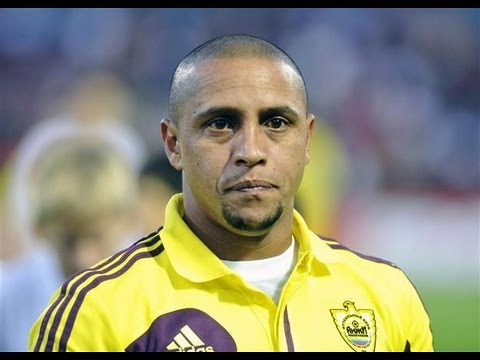
  • There will never be another Pele or a Maradona: Roberto Carlos

    There will never be another Pele or a Maradona: Roberto Carlos

    NEW DELHI (TIP): His 100 mile-plus free-kicks earned him the title of the ‘Bullet Man’. The scorer of some of the most spectacular goals in the history of the game, Brazilian star Roberto Carlos was announced as the marquee player cum manager of Delhi Dynamos on July 9. One of the most recognisable football stars in the world, Carlos spoke to TOI in an exclusive interview on Thursday.

    Excerpts:

    Brazil seem to be surviving on reputation alone these days. The team is not the same it used to be. Where do you think lies the problem? 

    Thank God for that (laughs). At least people will remember me for the next four years. The last good side was 2002. Our group was very good.

    Ronaldo, Rivaldo, Ronaldinho, you… Your generation seems to be the last of the greats. Do you see Brazil reaching that level and unearth such players in foreseeable future? 

    There will never be another Pele. There will never be another Maradona. There will always be new players but not at the same level.

    Recently, Dani Alves claimed Pep Guardiola wanted to coach Brazil before the World Cup but Brazilian Football Confederation failed to appoint him. Your thoughts…

    I believe it’s better if the Brazilian national team has a Brazilian coach. Brazil has a lot of quality coaches. We have a culture of football. It’s important to have a home-grown coach. I think we need to stick to our people.

    Romario said corruption and not just poor play is to blame for the country’s humiliating exit from the World Cup a year ago. Would you agree? 

    It has to stop now. We need to have young people with a modern mindset managing affairs. They need to have full knowledge about the game. The coach and the Brazilian Football Confederation (CBF) officials need to understand the game and the culture of our country.

    Wednesday marked the first anniversary of Brazil’s 7-1 defeat at the hands of Germany. Will Brazil ever recover from the result? If yes, then what is the way to recovery? 

    We need to start playing the way we used to during my playing days. We need to play without fear and play quality football. We have the support of 200 million people. That support needs to be turned into performance. There is nothing else we can do.

    Did criticism from the fans and media play a part in your decision to stop playing for Brazil and Real? Do you believe you were made a scapegoat of others’ mistakes?

    No. I played for Brazil for 18 years. I won the World Cup and Copa America with them. There is a time when a person wants to stop. It’s better to stop playing when you are at your best. I did that. I was happy when I decided to stop playing. There was nothing else. If there was, I would have said so. There is a time when a person has to think about when to stop. One has to think about his family. A footballer does not have time to enjoy life in his playing days. Now I am able to spend time with my family.

    How did you react to the whole FIFA corruption fiasco? Who would you like to see as FIFA president? 

    So many bad things have happened in the past. Those who were arrested were at pretty high positions. It was shameful for the sport. Justice has to prevail. Zico, Luis Figo, Prince Ali of Jordan are some of the people I would like to see as president. They understand football and are serious about the sport. Bringing such people at the helm will ensure that such things do not happen in the future. Zico can be the perfect choice. He is one of the great coaches I have had in my career.

    Word on Brazil coach Dunga and Real coach Rafa Benitez…I know Dunga both as a player and a coach. He has won many trophies with the national team. I think at this moment, the responsibility has to be on the players and not on the coach. The players are doing what the coach wants and not what they want. Benitez understands Real Madrid very well. He has been associated with Real Madrid for a long time. I wish him all the best.

  • Vijay Mallya trying to cling on to Royal Challengers Bangalore

    Vijay Mallya trying to cling on to Royal Challengers Bangalore

    MUMBAI (TIP): The fate of Indian Premier League (IPL) franchise Royal Challengers Bangalore now lies in the hands of multinational alcoholic beverages company Diageo Plc, who are the new owners of United Spirits Ltd, India’s largest liquor company which Vijay Mallya sold three years ago.

    As things stand, it is at Diageo’s discretion that RCB will remain with Mallya. It could also be sold to a new owner soon. RCB is a property JSW Steel is eyeing keenly, a development first reported by TOI in March this year. JSW chairman Sajjan Jindal went public on Wednesday saying he was interested in owning an IPL franchise.

    Sources said Mallya, who holds the RCB “very close to his heart”, is pulling all stops to keep the franchise. As part of a possible settlement deal, which would also include some marquee residential assets on the company’s books, Mallya is looking to keep RCB in an exit deal with Diageo.

    Two months back, a public stand-off erupted after United Spirits board asked Mallya to step down as chairman following a PwC investigation into the company’s accounts which found improprieties and violations. Mallya has slammed the investigation report for “twisting facts”. UK-based Diageo, which owns 54% stake and controls USL boardroom, is studying the developments and is yet to make public its views on the crisis. Mallya has had meetings with Diageo top brass in London as both parties search for an amicable end, which could see Mallya exit with a negotiated deal.

    RCB’s future assumes significance in this context. Diageo could allow Mallya to retain the team after paying a reasonable amount. Mallya also owns an expensive F1 team, Sahara Force India. In the past, he has spoken about building a company with multiple sports franchises.

    Currently in London, Mallya said he would not comment on speculation.

    Sajjan Jindal’s son Parth has acknowledged interest in RCB which boasts of some of Twenty20’s most exciting cricketers. JSW owns a Bangalore-based football team in I-League, All India Football Federation’s premier domestic tournament, and has been desperate to add a high-profile franchise to the list given its business interests in Bangalore. Its attempt to bid for a franchise in the Reliance-IMG owned Indian Super League (ISL) did not materialize last year and the Jindals now see RCB as the only option available.

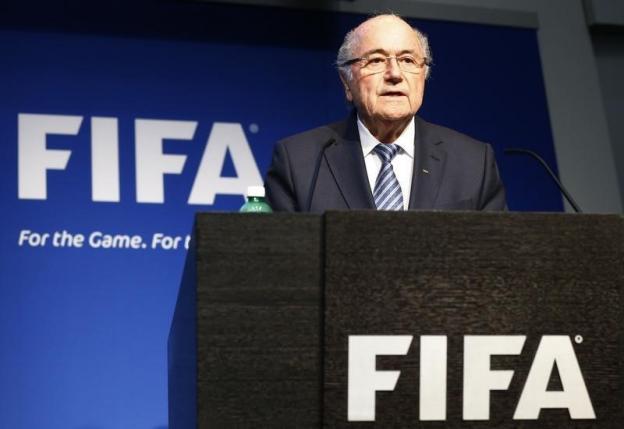
  • Sepp Blatter resigned as FIFA president on Tuesday, four days after being re-elected

    Sepp Blatter resigned as FIFA president on Tuesday, four days after being re-elected

    Sepp Blatter resigned as FIFA president on Tuesday, four days after being re-elected to a fifth term.

    Blatter, 79, announced the decision at a news conference in Zurich, six days after the FBI raided a hotel in Zurich and arrested several FIFA officials.

    He was re-elected after his only rival, Jordan’s Prince Ali bin Al Hussein withdrew after losing heavily in the first round of voting.

    “FIFA has been my life…what counts most for me is FIFA and football around the world,” Blatter said.

    “An extraordinary congress is to be called to elect my successor as soon as possible.”


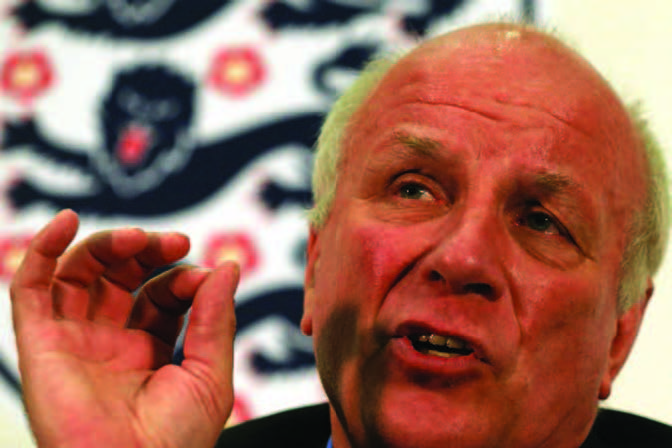
  • England FA chairman says World Cup boycott possible

    England FA chairman says World Cup boycott possible

    LONDON (TIP): English FA chairman Greg Dyke said England would support a possible boycott of the 2018 World Cup if Sepp Blatter was re-elected president of FIFA.

    However, his Dutch counterpart Michael van Praag said his federation had never discussed a boycott.

    Dyke, speaking to BBC radio before Friday’s presidential vote in Zurich, said England would not go it alone but would consider joining a wider European boycott.

    “If the whole of UEFA said that, and all of the countries were willing to do it I think that is right,” Dyke said.

    “There is no point in one or two countries saying we are not going to take part because they will carry on with the tournament without them and that is then pretty unfair on the fans.

    “But if UEFA as a group said ‘look unless we get this sorted we are not going to be in the World Cup’ then I think we would join them.”

    Dyke’s comments followed a similarly veiled threat from UEFA president Michel Platini after the Frenchman revealed that he personally asked Blatter to stand down for the good of football.

    Europe has overwhelmingly spoken out in favour of change and while Platini stopped short of saying a World Cup boycott was inevitable, he did say “all options were open” if Blatter retained power.

    But Blatter has refused to withdraw from the ballot, saying he would stand for a fifth term and pledging to introduce reforms in the wake of the latest corruption allegations that have engulfed FIFA.

    “The events of this week are significant,” Dyke said.

    “Mr Blatter’s statement yesterday in which he basically said ‘look, leave it to me I will clean this up’, nobody is going to believe that.

    “And I think that it is quite ominous for him when the attorney general in America says this is only the beginning not the end.”

    Blatter is strongly favoured to win Friday’s vote against Jordanian Prince Ali bin Al Hussein but Dyke said change was now inevitable regardless of the outcome.

    “I think the odds are still on him (Blatter) winning but they are nowhere near where they were. There has certainly been a shift during this week,” Dyke said.

    “I think it is all over for Blatter anyway, I don’t think it matters if he wins or not.

    “I hope he doesn’t win but if he does I think the events of this week have turned him into a diminished figure and I can’t see him lasting more than a year or two.”

    Van Praag, who pulled out of the presidential race last week and put his support behind Prince Ali, played down the possibility of a boycott as he arrived at the FIFA Congress in Zurich.

    “We never talked about pulling out of the World Cup, and we are part of UEFA and we agreed yesterday that if Sepp Blatter wins, we have a new situation,” he told reporters.

    “We happen to come together in Berlin for the Champions League final (June 6) so that is good opportunity to sit and look at the new situation, it’s absolutely no use speculating on that.

    “We can do a lot (without boycotting the World Cup).”

  • Ana Ivanovic eases into French Open fourth round

    Ana Ivanovic eases into French Open fourth round

    PARIS (TIP): Former champion Ana Ivanovic reached the French Open fourth round on May 28 with a 6-0, 6-3 win over Croatia’s Donna Vekic.

    Serbian seventh seed Ivanovic, the 2008 champion at Roland Garros, won the first seven games of the match before her 18-year-old opponent got on the board.

    Vekic, the world number 165 and playing in the third round of a major for the first time, stopped the rot and broke for 2-1 in the second set.

    But that was as good as it got for the teenager as Ivanovic, watched by German football star boyfriend Bastian Schweinsteiger, swept into a fourth round clash against either ninth seed Ekaterina Makarova or Elena Vesnina.

    “It’s my best match on clay this season,” said the Serb who had to come back from losing the opening set in her first two rounds in Paris.

    “I don’t have a great record on this court (Suzanne Lenglen) so I am trying to correct that.”

  • Belgian footballer Mertens dies after collapsing on pitch

    Belgian footballer Mertens dies after collapsing on pitch

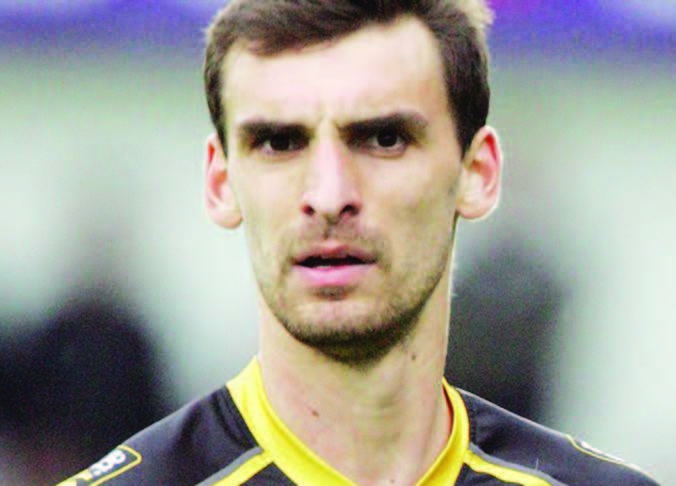
    BRUSSELS (TIP): Belgium under-21 international Gregory Mertens died on April 30, three days after collapsing with heart failure during a match, a spokesman for his club, Lokeren, said.

    The 24-year-old defender had been in a coma since going into cardiac arrest early in a reserve team game on Monday.

    Club spokesman Herman Van De Putte said that his condition continued to worsen and the player’s family had agreed with doctors to switch off the life support system.

    “Much too soon must we bid farewell to Gregory Mertens,” the club said in a statement. “We are a football club. Everyone in and around the club breathes football. But suddenly something happens where we realise football is just football.

    “Today is such a time … The medical team did all they could to save Gregory but in the end had to recognise their impotence. Gregory passed away today about 4:30 PM (1430 GMT).

    “His family were able to say their farewells.”

    Mertens, who joined top-flight Lokeren last summer after nearly 100 appearances for Cercle Bruges, collapsed 15 minutes into the game at Racing Genk and despite lengthy efforts to bring him round doctors quickly said his survival needed a “miracle”.

    The death of a young man his club described as making himself “indispensable” while never losing his “quiet modesty” shocked many leading figures across European soccer.

    Chelsea’s Belgium international goalkeeper Thibaut Courtois tweeted in Dutch: “RIP Gregory Mertens! Much strength to family and friends.”

    Fabrice Muamba, who as a 23-year-old nearly died during an FA Cup match in England three years ago, tweeted:
    “Horrible news that Gregory Mertens has passed away, only 24 years old. #RIP.”

    A former England Under-21 international, Muamba’s heart stopped for over an hour during a televised quarter-final for Bolton Wanderers at Tottenham Hotspur.

    He survived and retired from the game, drawing attention to the health risks young players can face.

    “Shockingly sad,” former England striker and television presenter Gary Lineker tweeted after news of Mertens’ death.

    Manchester City said: “Our thoughts are with the friends and family of
    @KSCLokeren’s Gregory Mertens at this sad time.”

  • Mexico’s ‘New Generation’ cartel takes police head-on

    Mexico’s ‘New Generation’ cartel takes police head-on

    OCOTLAN, MEXICO (TIP): The town still bears the scars from the unprecedented offensive launched by a powerful Mexican drug cartel against government forces: bullet-pocked buildings and blood stains on the street.

    The March 19 ambush that killed five federal gendarmerie officers, three gang suspects and three bystanders in Ocotlan signaled the start of a conflict between the authorities and the Jalisco New Generation Drug Cartel.

    The well-armed gang took its operation to a new level on April 6 when it surprised a Jalisco state police convoy, gunning down 15 officers in the deadliest single day for Mexico’s security forces in years of a bloody drug war.

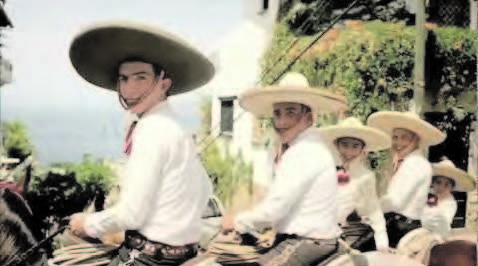
    The western state of Jalisco is known as the birthplace of tequila, mariachis and the country’s most popular football team, the Chivas of Guadalajara.

    But now it is also known as the home of the New Generation, a rising power of Mexico’s underworld that had been overshadowed until now by other groups such as the Sinaloa, Zetas, Gulf and Knights Templar cartels.

    Officials say the Jalisco cartel has grown so powerful that it has produced its own assault rifles in makeshift gun assembly shops. The gang has even recruited military deserters, including foreign ones. “They were waiting for the moment when they felt strong to start this escalation,” Luis Carlos Najera, the chief prosecutor of Jalisco state, told AFP. Last year, authorities discovered a clandestine workshop with sophisticated equipment to build M16 and R15 rifles. Some of the homemade weapons were found following the recent attacks. The cartel has drawn the attention of the US government, which has funded Mexico’s battle against drug cartels by providing equipment, training and intelligence. Last week, the US Treasury Department slapped financial sanctions against the New Generation and its shadowy boss, Nemesio Oseguera, alias “El Mencho,” as well as its allies, the Los Cuinis cartel.

    The gang has expanded beyond Jalisco into neighboring Michoacan and Colima while forging ties with other criminal organizations in the United States, Latin America, Africa, Europe and Asia, according to the US Treasury.

    The growing power of the cartel is evident in the destruction it has left behind in Ocotlan, near Mexico’s second biggest city, Guadalajara.

    “My house was hit by 138 bullets,” said an Ocotlan resident who asked to remain anonymous due to safety concerns. The woman said she and her husband laid on the floor during the March 19 shootout, which lasted nearly two hours. That night, some 40 gunmen waited inside 12 pick-up trucks for the arrival of the convoy carrying the gendarmerie, a new elite police force launched last year by President Enrique Pena Nieto.

    The gangsters fired from several sides and rooftops, according to local residents. Soldiers rushed to the scene and burst into homes to find the shooters. People spent the night without light or telephone service because utility poles were hit in the firefight.

    Two weeks later, a new ambush was launched against the state police convoy, this time on a rural, curvy road in a mountain between Guadalajara and the Pacific resort town of Puerto Vallarta.

  • 2 University of Oklahoma students expelled over racist video

    2 University of Oklahoma students expelled over racist video

    NORMAN, OKLAHOMA (TIP): The University of Oklahoma’s president expelled two students on March 11 after he said they were identified as leaders of a racist chant captured on video during a fraternity event.

    University president David Boren said in a statement the two students were dismissed for creating a “hostile learning environment for others.” Their names were not released.

    The video posted online shows several people on a bus participating in a chant that included a racial slur, referenced lynching and indicated black students would never be admitted to the university’s chapter of Sigma Alpha Epsilon. A fraternity is an organization of male college students in the US.

    Boren acted swiftly after the video surfaced on late Sunday, severing ties with the fraternity and ordering its house shuttered Monday and announcing the expulsions on Tuesday.

    “I hope that students involved in this incident will learn from this experience and realize that it is wrong to use words to hurt, threaten, and exclude other people,” he said.

    Boren said the university is working to identify other students involved in the chant, who may also face disciplinary action.

    The video was taken on a bus going to an event at a country club. The person who recorded it has cooperated with the investigation, Boren said Tuesday ahead of a Board of Regents meeting.

    On Tuesday, one fraternity member seen on the video and the parents of another issued statements apologizing.

    In a statement emailed by his father, Parker Rice said the incident “likely was fueled by alcohol,” but “that’s not an excuse.” He said he was “deeply sorry” for the performance, calling it “wrong and reckless,” `’a horrible mistake” and “a devastating lesson” for which he is “seeking guidance.”

    He said he withdrew from the university Monday and that threatening calls to his family prompted them to leave their North Dallas home.

    The parents of Levi Pettit posted a statement online saying they were shocked by their son’s actions, that he “made a horrible mistake, and will live with the consequences forever.”

    Also on Tuesday, Beauton Gilbow, the fraternity’s “house mom,” issued a statement that addressed a second online video from 2013 that had surfaced, showing her repeating a racial slur against blacks as music plays in the background.Gilbow said she was singing along to a song. She said she was “heartbroken” by the portrayal that she was racist but understood how the video must appear in the context of the week’s events.A “house mom” is a housing director who might oversee staff and finances at a sorority or fraternity house.

    Windows at the fraternity were boarded up and moving vans were parked outside Tuesday. Members have until midnight to remove their belongings. The Greek letters have already been removed from the side of the sprawling, sand-colored brick house on a street lined with fraternity and sorority houses just west of the center of campus.

    Markeshia Lyon, one of about 1,400 black students who attend the university’s Norman location, said the mostly segregated Greek culture on campus is partly to blame for creating an environment where racism can thrive.

    “That’s something that’s passed down, and that’s something that needs to change,” Lyon said.

    She also said the video has sparked intense interest in addressing racial tensions on campus.The university, located in the southern Oklahoma City suburb of Norman, has about 27,000 students, about 5 percent of whom are black.On Monday, a top high school football recruit withdrew his commitment to attend the university after seeing the video.

    National leaders of Sigma Alpha Epsilon said an investigation confirmed members took part in the chant and announced they would close the local chapter. The national group said it was “embarrassed” by the
    “unacceptable and racist” behavior.

    Boren said members of the fraternity were “not totally forthcoming.” It’s unclear who recorded the video, when it was recorded and who initially posted it online. Boren suggested it was likely taken by another student who didn’t agree with what was being chanted.

  • TOO MANY HOLES IN 2015 ODI WORLD CUP FORMAT

    TOO MANY HOLES IN 2015 ODI WORLD CUP FORMAT

    NEW DELHI (TIP): A close look at the format of the 2015 ODI World Cup shows a series of lacunae. Much of the tournament will be played for largely inconsequential games. That apart, the teams playing the last group games will enjoy unfair advantage over their rivals.

    Here’s a more detailed analysis of the format:.
    How and why the pool stage is of little importance

    The teams are divided into two groups of seven countries each. In Pool A, there’s Australia, England, Sri Lanka, New Zealand, Bangladesh, Afghanistan and Scotland. In Pool B, we have South Africa, India, Pakistan, West Indies, Zimbabwe, Ireland and UAE. All teams play each other in their respective groups. Four teams from both pools proceed to the quarters.

    Obviously, the tournament has been designed to ensure that the big guns don’t get knocked out early.

    Take India, for instance. Even if the Men in Blue lose three of the six group games to South Africa, Pakistan and West Indies, they can still qualify for the quarters by defeating the minnows: Zimbabwe, UAE and Ireland. The same is true for the other three biggies. An upset can never be ruled out in ODI cricket but can you imagine any of the four minnows totalling more points at the end of the group stage than the Big Boys?

    It’s a similar story in Pool A too. Bangladesh might pull off the odd upset butlack the muscle to finish among the top four. Few would wager a bet on Australia, England, Sri Lanka and New Zealand not making to the next stage. One wonders if the early exit of cash-cow India and Pakistan in 2007 has something to do with this format. The truth is that for the top eight teams, the real tournament begins only at the knock-out stage starting on March 18. That’s almost five weeks after the 2015 ODI World Cup commences on Feb 14. Wow!

    What’s the incentive to win a game or top the group?

    There is one motivation, though, for every team to win every match at the group stage. As per rules, “If a quarterfinal is tied, abandoned or if the match is a no result, then the team that finished in the higher position in the Pool stage shall proceed to the semifinals.” Similarly, “if a semifinal is tied, abandoned or if the match is a no result, then the team that finished higher in the Pool stage shall proceed to the final.”

    The possibility of an abandoned tie cannot be entirely ruled out. In 1992, rain played a key role in South Africa’s tragic exit. A Super Six format after the group stage, as in 1999 and 2003, could have created a far more competitive event.

    Unfair advantage to teams playing last game at the group stage

    Since all teams are not playing the last group game on the same day, it is entirely possible that those playing the last group match can plan who they are going to face. For example, Pakistan are scheduled to play the last match in Group B (Match No. 42) against Ireland. The 1992 champions will know the number of points and run rates of their rivals before they step on the field. It is possible for them to play the game accordingly and choose a rival of their choice in the next stage. At the moment, this seems to be a trivial point. On March 17, it could become a major talking point, if the points tally and run rates of top teams in Group B run close. Football has eliminated such a possibility by playing all last group games together. Cricket is yet to learn.

    The real World Cup begins only in the knock-out stage

    That’s when the first two quarterfinalists meet on March 18 in Sydney. The seven games – four quarters, two semis and one final – played over the next 12 days is all that really matters in terms of consequence. This is a format dark horses will love. The larger question, therefore, is: why such an elaborate tamasha over six weeks?

    Even the football World Cup involving 32 countries and 64 games is held over a month. Why does a World Cup involving just 14 countries and 49 games need six weeks?

  • ISL kicked off a revolution in India: Nita Ambani

    ISL kicked off a revolution in India: Nita Ambani

    As the 70-day long Indian Super League gets ready for its biggest match yet, TOI speaks to Nita Ambani, the inspiration behind the initiative. She promises that the league will only become bigger and better in the coming years, even help the country showcase its talent to the world. Excerpts

    Has the ISL achieved its primary aim of revolutionising Indian football, or indeed turning it into a football nation?

    I am overwhelmed by the response and by the way India has embraced football. It was really satisfying to see the kind of fan support we got at each of the stadiums; the competitiveness of the league and the enthusiasm among franchise owners also were truly amazing. The fact that every team was in contention for a semifinal slot till the last leg exhibits how passionate the teams were, and how hungry they were to be the first champions. On October 12, 2014, we kicked off a footballing revolution in the country. We want to build on this now, strength by strength in the years to come. Fans have welcomed the innovation and it is heart-warming to see that football has regained eminence in our daily discussions – be it at offices, on social media or at dinner tables.

    A lot of IMG-Reliance officials speak of your hands-on involvement. How much of a challenge was it for you to ensure that the tournament did not get derailed?

    I have the pleasure of being part of the strong IMG, Reliance and Star team. Personally, I like to get into the minutiae of every task, be it at my school, our newly launched hospital, my foundation work or in sports at Mumbai Indians. The opportunities for discovering and learning come from getting into the details. The biggest challenge was to create pitches and infrastructure in many cities. But we overcame it, working as a team and putting in our best efforts. Having said that, we have a long way to go before basking in the glory of success. We are mindful that it’s only the beginning of a long journey, and we need to take small steps to achieve what we aimed for.

    Do you think there is scope for improvement?

    It has been a huge learning experience since we conceptualized the ISL, even more so during the last 10 weeks. We are benchmarking ourselves every day, learning and trying to improve. We will review the first edition after the final on December 20 and work towards enhancing the overall experience for everybody.

    Bangalore and Hyderabad were initially among the shortlisted cities for franchisees. Does ISL plan to extend its base to include these two cities?

    We have received unprecedented interest from many who want to have their own ISL clubs. Even though we want to extend to other cities, I feel at present it’s important for the eight clubs to consolidate and stabilize.

  • MEXICANS MARCH AGAIN FOR 43 MISSING STUDENTS

    MEXICANS MARCH AGAIN FOR 43 MISSING STUDENTS

    MEXICO CITY (TIP): Tens of thousands of people angry at the presumed massacre of 43 students marched in Mexico City on Nov 20, many chanting for President Enrique Pena Nieto’s resignation in another day of nationwide protests. Protesters waved blackened flags of Mexico and chanted “He will fall, he will fall, Pena Nieto will fall!” Parents of the 43 male college students, who reject claims their sons are dead, led the march along the capital’s main boulevard toward the historic Zocalo square.

    It was the latest protest over the government’s handling of a crime that has infuriated Mexicans fed up with corruption, impunity and a drug war that has left more than 100,000 people dead or missing since 2006. The case has turned into the biggest challenge of Pena Nieto’s nearly two-yearold presidency, on top of another scandal over a mansion his wife bought from a government contractor. “Mexico is used to tragedy, robberies and corruption, and we need to begin to exercise our rights as citizens to get the government working,” said Lili Correa, 46, wearing the black color of the protest. The demonstration coincided with the anniversary of the start of the 1910 Mexican revolution.

    The government canceled the annual parade. Before the march, masked protesters threw firebombs and used tubes like makeshift bazookas to launch firecrackers at riot police, who hit back with tear gas to disperse the group on a street near the airport. The clash came after hundreds of protesters blocked the main road to the airport for an hour, while police vehicles picked up passengers walking with their suitcases along the road. Thousands of people also marched in the cities of Ciudad Juarez, Puebla and Chilpancingo, the capital of Guerrero, the violence-plagued southern state where the students vanished nearly two months ago. Thousands more marched in Bolivia and some 200 took to the streets in El Salvador.

    Mexico and Real Madrid football star Javier “Chicharito” Hernandez tweeted a picture of himself wearing a black hoodie and the hashtag #WeAreAllAyotzinapa, referring to the young men’s Ayotzinapa teacher-training college. “The goal is to unite and mobilize the country, to lead it toward change,” said Omar Garcia, who attends the college. With the annual parade called off, Pena Nieto led a ceremony with top officials at the Campo Marte military field, where he and the defense minister denounced violent protests. “Mexico is hurting, but the only path to soothe this pain is through peace and justice,” he said, hours after making his personal assets public to quell conflict of interest allegations over his wife’s mansion.

    Defense minister Salvador Cienfuegos said violence “only leads to national failure, social backwardness, ungovernability, instability.” The crisis erupted after the mayor of the city of Iguala ordered police to confront students on September 26, sparking a night of violence that left six people dead and 43 missing, authorities say. Prosecutors say corrupt police delivered the 43 young men to members of the Guerreros Unidos drug gang, who confessed to killing and incinerating the students. Officials stopped short of declaring the students dead pending DNA tests. Federal police teams continue to search for them in Guerrero.

  • NEED FOR A LONG-TERM PLAN NOW

    NEED FOR A LONG-TERM PLAN NOW

    It can be considered the biggest strategic failure of Indian diplomacy that even after more than six decades, India has not found a way to neutralize the malevolence of a neighbor one-eighth its size”, says the London based author.

    Pakistan has a way of making its presence felt in India’s foreign policy and national security matrix that, much to New Delhi’s chagrin tends to steal India’s diplomatic thunder. At a time when Prime Minister Modi was trying to project himself as a global statesman with a successful visit to Japan, a visit to Gujarat and then Delhi by the Chinese President, and a ‘rock-star’ reception in the US, Pakistan decided it must get some attention.

    So the Pakistani Army did what it does best. It escalated tensions along the border in an attempt to ratchet up pressure on India. It started with unprovoked mortar shelling on forward Indian positions along the Line of Control (LoC) and over the next few days, the firing spread to the international border and intensified.

    Accusing India of “deliberate and unprovoked violations of the ceasefire agreement and cross-border firing,” Pakistan promptly shot off a letter to the UN Secretary General asking for an intervention by the United Nations Military Observer Group in India and Pakistan, a body for which India sees little role after the signing of the 1972 Simla Pact.

    The UN decided to ignore Pakistani shenanigans and has merely reiterated that India and Pakistan need to resolve all differences through dialogue to find a long-term solution to the dispute. Pakistan is facing multiple crises. Its global isolation is increasing by the day. US forces are withdrawing from Afghanistan starting December 2014 and Beijing is increasingly dissatisfied with Islamabad’s attempts at controlling the flow of Islamist extremists into its restless Xinjiang province.

    Tensions are rising also on Pakistan’s borders with Iran where Pakistani Sunni extremists are targeting Iranian border posts, forcing Iranian policymakers to suggest that if Pakistani authorities “cannot control the common border, they should tell us so that we ourselves can take action.” And the new government in Afghanistan under Ashraf Ghani is likely to go even further in developing close ties with New Delhi.

    Domestically, the Kashmir issue is once again becoming a political football with Bilawal Bhutto Zardari bombastically declaring that Pakistan People’s Party (PPP) would get back entire Kashmir from India. Imran Khan is breathing down Nawaz Sharif’s neck and the Pakistan Army’s struggle against domestic Taliban seems to be going nowhere. All this is happening at a time when there is renewed confidence in India about its future as a major global player under the Modi government and when the world is ready to look at the Indian story afresh.

    No wonder, the Pakistani security establishment is nervous about its growing irrelevance – and what better way to come into global prominence once again than to try to create a crisis in Kashmir! Despite the election season in India in the last fortnight, the Modi government’s reaction has been creditable so far. Rahul Gandhi came out of hibernation to attack the Prime Minister for ceasefire violations by Pakistan. The government, however, ignored the opposition’s many taunts and confidently made clear to Pakistan that Indian forces would “make the costs of this adventurism unaffordable.”

    This gave the Indian military much-needed operational space to carve out a response which was swift, sharp and effective. Together, the Indian government and the nation’s military have underlined the costs of Pakistan’s dangerous escalatory tactics by massive targeted attacks on Pakistani Ranger posts along the border. Now the Modi government needs a long-term plan to handle Pakistan. It can be considered the biggest strategic failure of Indian diplomacy that even after more than six decades, India has not found a way to neutralize the malevolence of a neighbor one-eighth its size.

    Business-as-usual has never been an option for India, and yet India’s Pakistan policy in recent years has struggled to move beyond cultural exchanges and cross-border trade. Pakistan has continued to train its guns at India and drain India’s diplomatic capital and military strength, while India has continued to debate whether Pakistani musicians should be allowed to enter India. This disconnect between Pakistan’s clear strategic priority and India’s magnificently shortsighted approach will continue to exact its toll on India unless Delhi makes it a priority to think outside the box on Pakistan.

    Pakistan has a revisionist agenda and would like to change the status quo in Kashmir while India would like the very opposite. India hopes that the negotiations with Pakistan would ratify the existing territorial status quo in Kashmir. At its foundation, these are irreconcilable differences and no confidencebuilding measure is likely to alter this situation. India’s premise largely has been that the peace process will persuade Pakistan to cease supporting and sending extremists into India and start building good neighborly ties. Pakistan, in contrast, has viewed the process as a means to nudge India to make progress on Kashmir, a euphemism for Indian concessions. The debate in India on Pakistan has long ceased to be substantive.

    The choice that India has is not between talking and sulking. Pakistan has continued to manage the façade of talks with India even as its support for separatism and extremism in India continues unabated. India should also continue to talk (there is nothing to lose in having a low-level diplomatic engagement after all) even as it needs to unleash other arrows in its quiver to manage Pakistan. Smart policy for India means not being stuck between the talking/not talking binary.

    It’s not talking that matters but under whose terms and after years of ceding the initiative to Pakistan, it is now for India to dictate the terms for negotiations. If Pakistan manages to put its own house in order and refrain from using terrorism as a policy instrument against India, then India should certainly show some magnanimity. Indian policy makers had long forgotten poet Dinkar’s immortal lines: kshama shobhti us bhujang ko, jiske paas garal hai, uska kya jo dantheen, vishrahit vineet saral hai. (When a serpent that has venom, teeth and strength forgives, there is grace and magnanimity in its forgiveness.

    But when a serpent that has no venom and no bite claims to forgive, it sounds like hypocrisy and amounts to hiding its defeat with noble words.) Modi has done well to remind Pakistan that India can impose serious costs in response to Pakistan’s irrational behavior and he should now build on that. Pakistan’s India obsession is not about Kashmir. The very manner in which Pakistan defines its identity makes it almost impossible that India will ever be able to find a modus vivendi with Islamabad. New Delhi should be ready to face this hard reality. The Modi government has made a good start and now it should follow through with a long-term strategy vis-à-vis its immediate neighbor.

    (The author teaches at King’s College London in the Department of Defence Studies. He is also an associate with the King’s Centre for Science and Security Studies and an affiliate with the King’s India Institute. His current research is focused on Asia-Pacific security and defence issues).

  • BATTLE RAGES FOR UKRAINE’S MAIN EASTERN AIRPORT

    BATTLE RAGES FOR UKRAINE’S MAIN EASTERN AIRPORT

    DONETSK, UKRAINE (TIP): Ukrainian forces clashed with pro-Russian insurgents for control of a strategic airport in the restive east on Friday and traded blame over the death of a Swiss aid worker, four weeks into their shaky truce.

    Heavy fighting engulfed the flashpoint transport hub north of Donetsk, with blasts echoing across the largest rebel-held city throughout the day, but its status remained in dispute.

    Separatist fighters said they were in control of almost the entire facility, which includes an old terminal and a brand new one built at a cost of nearly $1 billion for the 2012 football European Championship.

    The Ukrainian military confirmed that gunmen had briefly seized the first floor of the old building, but said they had since been pushed out, even though fighting continued.

    The weeks-long battle for the prized but no longer operating airport, whose long runway could let the separatists land large planes, has been one of many violations of a Russia-backed ceasefire signed on September 5.

    Since then, 71 Ukrainian soldiers and civilians — and an undisclosed number of separatists — have been killed across the Russian-speaking rustbelt, including a staff member of the Red Cross, whose office in Donetsk was hit on Thursday.

    Both Moscow and the separatist command pinned the blame on Ukrainian forces, which in turn accused the insurgents. Both sides have pelted Donetsk with long-range missiles that were developed in the Soviet era and are notoriously imprecise. The five-month conflict has killed more than 3,200 people and despite repeated violations of the truce, Western leaders still view it as the only viable option for ending Europe’s worst crisis in decades.

    Pro-Western President Petro Poroshenko assured the weary nation Friday that he had “enough energy to stop this war,” adding that “the enemy has made us stronger” despite the loss of 946 Ukrainian soldiers and volunteers since the start of hostilities in April.

    In Donetsk, a half-deserted city that once had nearly a million residents and is all but completely controlled by the self-proclaimed Donetsk People’s Republic, Kiev’s forces seemed to be hanging on by a thread after spending weeks holed up at the airport.

    Separatist “prime minister” Alexander Zakharchenko told Russia’s RIA Novosti news agency that his men controlled 95 percent of the sprawling structure — all but one building.A female rebel at a checkpoint about two kilometres east of the airport told AFP that clashes around the field had gone on uninterrupted since 7:00 am.

    “We are controlling the main part of the airport, the Ukrainians are still in one building,” she said.
    “They (the Ukrainians) still hold two bunkers, we are fighting to take those,” said another rebel.

    The Ukrainian military argued Friday evening that its forces had repelled the attacks and were still “in control,” also accusing Russia of supplying the militias with reinforcements.”Our reconnaissance observed the arrival of considerable armour, heavy artillery and soldiers into this area,” defence spokesman Andriy Lysenko said.

    “Russian forces have moved a unit of unmanned aerial vehicles to the airport area for reconnaissance, which are operated by Russian specialists.” Kiev and the rebels, who agreed on September 19 to withdraw heavy weapons from a 30-kilometre (18.6 miles) buffer zone along the eastern front line, have blamed each other for violating the deal.

  • SCOTLAND READY TO MAKE HISTORY: INDEPENDENCE LEADER

    SCOTLAND READY TO MAKE HISTORY: INDEPENDENCE LEADER

    EDINBURGH (TIP): Scotland’s proindependence leader Alex Salmond said the “eyes of the world” were on a momentous referendum next week as officials reported record numbers registering to vote on breaking away from the United Kingdom. Salmond said the September 18 vote would be “a process of national empowerment”, as new figures came out showing a record 4.3 million people had registered to vote — higher than for any previous elections in Scotland. “Scotland is on the cusp of making history.

    The eyes of the world are upon Scotland,” Salmond, Scottish First Minister and the head of Scotland’s current devolved government, said in an Edinburgh speech. “On September 18, we the people hold our destiny in our own hands.” British media said new figures meant 97 percent of the electorate had now registered to vote, including many 16- and 17-year-olds who are allowed to take part under referendum rules.

    Polls show Scottish voters are almost evenly divided between the “Yes” and the “No” sides although one survey so far has put the pro-independence camp just ahead of the unionists. The most recent, published on Wednesday by Scotland’s Daily Record newspaper, showed 53 percent against independence and 47 percent in favour, without counting undecided.

    The vote would bring to an abrupt end a 307-year-old union between England and Scotland and create the newest state in Europe since the disintegration of Yugoslavia. – ‘Huge pressure on Madrid’ – 100 journalists from around the world were present at Thursday’s press conference, with many asking about what Scotland’s relation to their country would be. Many nations with separatist movements are following the campaign closely, including Spain where the government has ruled out a referendum for Catalan independence or devolution. On Thursday hundreds of thousands of Catalan nationalist demonstrators, some waving the blue and white Scottish flag, filled the streets of Barcelona in a mass rally to demand a vote like Scotland’s. “People in Catalonia don’t necessarily want independence but they want to have the right to vote.

    And they see that here it’s possible,” said Carles Costa from TV3 public television in Catalonia, who was at Salmond’s press conference. “A ‘Yes’ vote would put a huge pressure on Madrid. Scotland is not a remote country somewhere in the world. It’s just next door,” he said. “Even with a ‘No’, people in Catalonia will say, ‘Why is this not possible in Spain?’” But Shuhei Nakayama from Japanese broadcaster NHK said most people in Japan had “a confused idea of the situation”.

    “Most don’t know Scotland is already a region with many powers. Some think it’s a country already as they have a football team,” he said. “It’s very interesting to see a nation that might break away without any violence,” he said. The campaign — and the promise of greater devolution if the “No” camp wins the vote — has also bolstered demands from local authorities for greater powers within England and Wales. Deputy Prime Minister Nick Clegg is on Friday expected to launch a report calling for a major programme of devolution within England after the next general election in May 2015. – ‘Responsible and prudent’ – International Monetary Fund on Thursday warned that a vote for independence would raise “complicated issues” and could upset financial markets.

    “While this uncertainty could lead to negative market reactions in the short term, the longer term will depend on the decisions being made during the transition,” IMF spokesman Bill Murray said. The Royal Bank of Scotland has said it would relocate its registered offices in case of a “Yes” vote, saying this was the “responsible and prudent thing to do,” but underlining it would not mean moving jobs south. RBS was bailed out by the British government following the 2008 financial crisis and its announcement came after London-based Lloyds Banking Group also said it had plans on possibly switching key operations from Scotland to England.

    Edinburgh-based RBS is 81-percent owned by the British state, which also retains a 25-percent stake in bailed-out Lloyds. Big business leaders have mostly lined up against independence, although the chief executive of Scotland’s largest fund manager, Aberdeen Asset Management, has said that an independent Scotland would be “a big success

  • Fifa red card for Rosberg World Cup helmet

    Fifa red card for Rosberg World Cup helmet

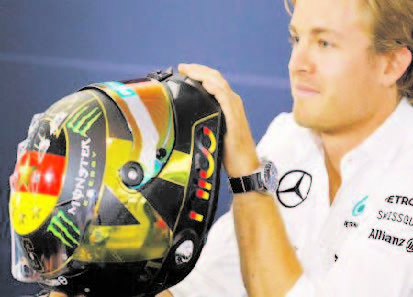
    HOCKENHEIM (GERMANY) (TIP): Formula One championship leader Nico Rosberg has had to abandon plans to wear a special helmet decorated with the World Cup trophy at his home German Grand Prix due to copyright issues after Fifa intervened. Rosberg, who drives for German Football Association sponsors Mercedes, had shown his 712,000 followers on Twitter a picture of the planned helmet in the German colours with four stars and the golden trophy on top. “This will be my Hockenheim World Cup special edition helmet with the Fifa trophy.

    How do you like it?,” the German had asked fans still celebrating Germany’s 1-0 triumph over Argentina in the final in Brazil last weekend. The helmet infringed world soccer body Fifa’s copyright however and Rosberg’s spokesman Georg Nolte confirmed that the image of the trophy would not now appear.

    A new version, shown to reporters, featured one big star with a 14 inside it and three smaller stars denoting Germany’s four world championships. “All the things you have to think about, It’s amazing,” commented Rosberg. “Even a trophy has its trade mark or whatever. this will be my Hockenheim World Cup special edition helmet with the FIFA trophy.

    How do you like it??? @DFB_Team pic.twitter.com/ZKE4gh5EpA — Nico Rosberg (@nico_rosberg) July 15, 2014 “That was a surprise but of course I fully understand,” said the German. “It was a pity because it looked really cool with the trophy on top. Now it has a big star and nobody can take that away. The star is ours.” Rosberg, who signed a contract extension with Mercedes earlier this week, leads British team mate Lewis Hamilton by four points ahead of Sunday’s race – which marks the halfway point in the season.

  • Team Germany vs Lionel Messi

    Team Germany vs Lionel Messi

    Whatever happens at the Maracana in Rio de Janeiro on Sunday (early Monday morning for the bleary-eyed in India), history will have been made. Either the World Cup will have its first European champion on South American soil, or world football will have a new king to place beside Pele, Diego Maradona and Zinedine Zidane. Team Germany versus Lionel Messi: the narrative writes itself, a rematch 24 years in the making. While it isn’t without truth, it suffers from a reduction in nuance.

    German football has evolved since 1990, when an Andreas Brehme penalty won the Cup. Efficiency and collective play remain the substance, but there has been a refinement of style. Under Jurgen Klinsmann and then Joachim Low, a new German generation has showcased skilful, tactically fluid football while continuing the tradition of going deep in tournaments. But without a trophy, patience has begun to wear thin in Germany. Argentina, on the other hand, appears not to have escaped the personality cult.

    It was Maradona in 1990 when he nearly managed a repeat of 1986; it’s Messi now. Much as with Maradona, the opposition’s extra-defensive attention limits Messi, but it extracts a cost: the other team can’t commit to attack without risking a match-turning moment of Messi magic. It can only work, however, if the rest of Argentina privileges an individual for its greater good.

    The finalists could not have taken more contrasting routes. Argentina has managed eight goals in six matches, often leaving it very late; Germany nearly scored that number against Brazil, and has 17 in total. Argentina and the Netherlands set out not to lose their semifinal, two cautious, disciplined sides cancelling each other out.

    Neither could seize the initiative over 120 minutes. Germany and Brazil, in the other semifinal, went out to win, even if the host did it with absurd recklessness, “running into an open knife” as a German writer described it. In a sense it was surprising to see Brazil play thus.

    It had led the tournament in fouls, yellow cards, and tackles per game: this was a pragmatic unit, which despite the gaps at the back was capable of churning out results. But without Neymar, its creative force, and Thiago Silva, its leader and defensive organiser, the five-time champion crumbled.

    Despite inflicting such a heavy defeat, Low’s men can count on Brazil’s support in the final; not only has Germany’s football captivated the spiritual home of the game, Brazilians will rather see anyone win it but Argentina. Alejandro Sabella has sought to lessen the pressure on his side by portraying Argentina as the underdog. But big finals know no favourites. All one can hope for is a contest that a thoroughly enjoyable World Cup can be remembered by.

  • REASONS TO VISIT KERALA IN MONSOON

    REASONS TO VISIT KERALA IN MONSOON

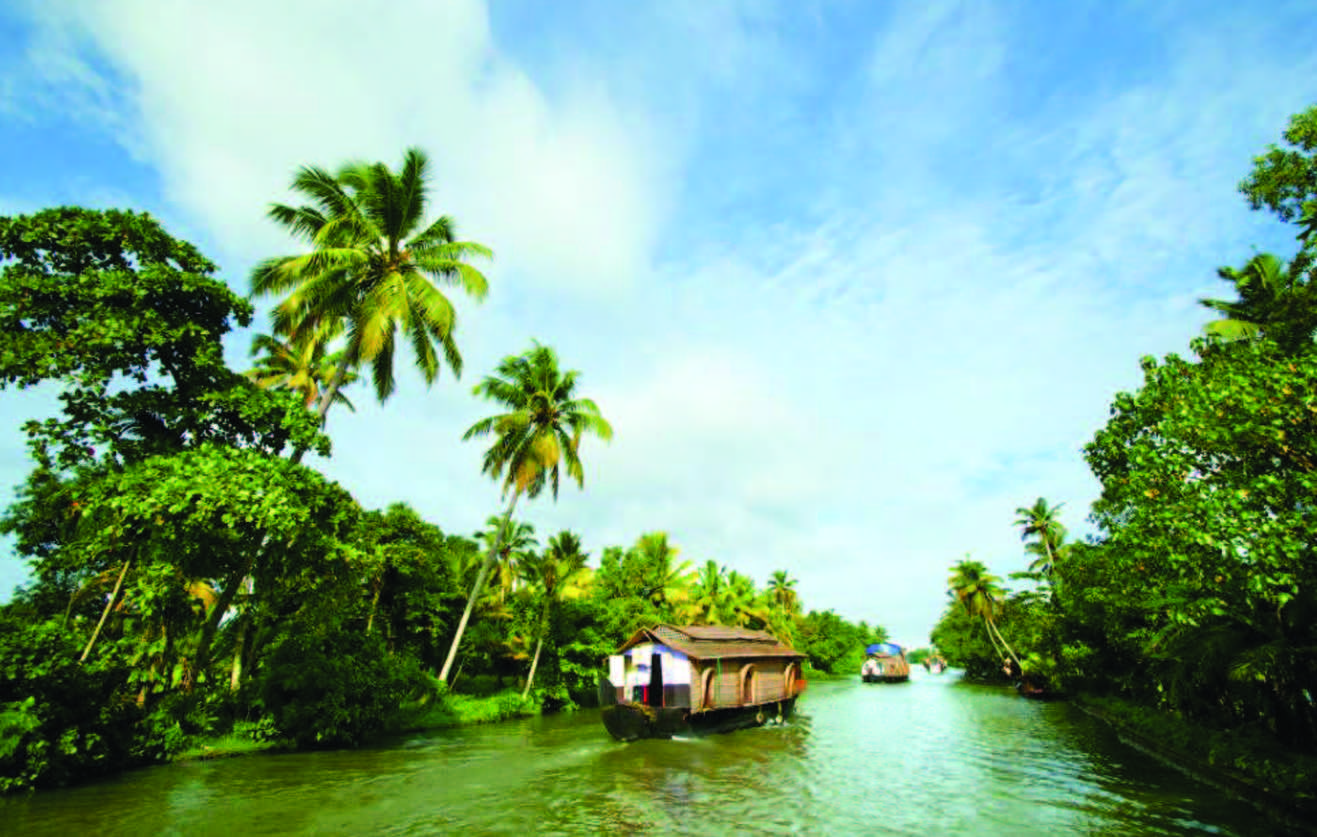
    During the rains, god’s own country transforms into a veritable paradise with lush greenery gracing its backwaters and hills, cloudy sunsets, cool breeze and the cheerful fervour of an array of festivals. Intermittent showers heighten the romance of the season. It might not be the best time to hit the beaches, but here are five reasons why Kerala in the monsoon will leave you singin’ in the rain.

    Snake boat races
    The months between July and September are water sports season, with the backwaters around Alappuzha playing host to a series of snake boat races. The most famous of the lot is the Nehru Trophy Boat Race, generally held on the second Saturday of August every year. The regatta takes place on the Punnamada Lake, and features ceremonial processions and magnificent floats. Its star attraction is the synchronised rowing of traditional 30-metre-long snake-boats or chudan valloms, which have a raised prow resembling a snake.


    10

    The Onam sadya feast
    This ten-day harvest festival celebrates the homecoming of the mythical king Mahabali, but it’s also a good excuse to feast on some of Kerala’s most lip-smacking vegetarian fare. Traditionally served on palm leaves, the ninecourse banquet is held on the last or tenth day. It’s best savoured at a local home, but you don’t manage to get an invite then most local restaurants also offer these meals. The preceding days are filled with costume parades, boat races and shopping discounts.

    Great hotel deals
    Sandwiched between Kerala’s sweltering summers and its peak tourist season (November to March), the monsoon is a great time to snag deals at otherwise expensive hotels and resorts. If you’ve ever fantasised about an indulgent houseboat trawl through the backwaters, then this is the time to get the best bargains. To avail the best discounts, make sure you plan your visit before the end of September, after which tariffs being climbing up again.


    11

    Ayurvedic therapies
    Kerala is home to several excellent spas and wellness resorts, and there’s no better time to pamper yourself than the monsoon season. According to Ayurveda, the cool, pleasant weather is ideal for rejuvenation. Sign up for a week-long retreat at top-notch stays such as the Kairali Ayurvedic Healing Village Health Resort in Palakkad or Somatheeram Ayurvedic Health Resort in Kovalam with relaxing oil-based therapies, massages, yoga and a balanced diet that’ll cleanse your mind, body and soul.

    Wayanad’s natural splendour
    With virescent hills carpeted with plantations, rainforests and tumbling waterfalls, Wayanad is a photographer’s delight. After you’ve had your fill of its misty coffee, tea and spice plantations, head to the Wayanad Wildlife Sanctuary that hosts numerous migrating birds in this period. Wayanad’s tourism department also holds an annual monsoon carnival in July with village excursions, rain treks as well as local sports such as mud football and archery.

  • Brazil vs Netherlands: Battle of bruised ego

    Brazil vs Netherlands: Battle of bruised ego

    RIO DE JANEIRO (TIP): In the battle between Louis and Luiz, an otherwise irrelevant football fixture has assumed a strange but different meaning for the teams involved. It is called the Losers Final, but for the losing semifinalists, Brazil and the Netherlands, Saturday’s third place playoff game in Brasilia becomes one where damaged reputations can be repaired and hurt egos soothed. Still, all this is just humbug for the hurting Dutch. “This match should never be played, I’ve been saying that for 10 years,” thundered the Netherlands coach Louis van Gaal after his team had been bundled out by Argentinian goalkeeper Sergio Romero in the semifinal in Sao Paulo. In charge of his last match as the Dutch coach before he takes up the job at Manchester United in the coming season, this consolation prize is not what he was looking for as a farewell.

    “There is only one award that counts and that is becoming world champions. The worst thing is that there is a chance you are going to lose twice in a row, and in a tournament in which you have played so well, you go home as a loser. This has got nothing to do whatsoever with sport… not in my view,” he said, mincing no words. His opposite number, Luiz Felipe Scolari, may share the same view in private but at the moment he will clutch at even this Brasil ia straw after what he and his team were made to go through in their semifinal against Germany in Belo Horizinte. Scolari will be forever be known as the Brazil manager under whom the Selecao plunged to its worst-ever defeat in its football history.

    “I know my career will be marked by this defeat,” he said after the 7-1 mauling, but still offered a forwardlooking approach when he said, “We have an obligation to move on, thinking about the next goal, which in this case is the match for third place in Brasilia.” Up until then, nobody had given the thirdplace match any thought, but Scolari saw that as an opening for a belated shot at redemption. “I know it’s a much smaller dream than what we all wanted but we have to honour the shirt of the national team,” he said, attempting to sound sage-like about the freefall of his team.

    Brazil had played before the Argentina- Netherlands semifinal a day earlier, and immediately the wily Scolari had caused a tizzy, briefly deflecting from the larger issue of the 7-1 humiliation and having the uncomfortable glare of the spotlight away from him. The irrepressible Brazilian fan suddenly saw another ‘final’ looming with their bitter, old rivals Argentina in the event of Leo Messi and mates failing against the Dutch.

    All of Brazil’s eyes were firmly trained on Argentina, and Scolari could breathe easy. Later, a triumphant Argentine coach Alejandro Sabella was even asked – in jest – whether he was relieved to avoid a meeting with Brazil in the ‘real final’. Was he scared? Sabella broke into a rare smile, and nodded that it would have been a disaster for Argentina had they been forced to play the Third Place game. “That ‘final’ would have been very tough for us,” he said, but was clever to bring the real issue back into the frame -that Argentina and not Brazil were going to the Maracana on Sunday.

    Recent third-place play-off winners
    2010: Germany 3-2 Uruguay
    2006: Germany 3-1 Portugal
    2002: Turkey 3-2 South Korea
    1998: Croatia 2-1 Netherlands
    1994: Sweden 4-0 Bulgaria
    1990: Italy 2-1 England
    1986: France 4-2 Belgium
    1982: Poland 3-2 France

    NUMBERS GAME
    171 – The 1998 World Cup saw more goals than any other tournament. So far, there have been 167 in 2014

    10 – There have been fewer red cards in the tournament than any other edition since 1986 (8)

    10 – of theNetherlands’12 goals in themeet have come after half-time.

    4 – Second half substitute Ramires had more shots than Bernard, Willian, Hulk and Fred put together (3) against Germany

    0 – Robin Van Persie is yet to score a goal in the knockout stages in his WC career.

  • WORLD CUP FIRST ROUND LEAVES EUROPE ALL AT SEA

    WORLD CUP FIRST ROUND LEAVES EUROPE ALL AT SEA

    RIO DE JANEIRO (TIP): Cristiano Ronaldo, Wayne Rooney, Andrea Pirlo and Xavi have left Brazil with their tails between their legs highlighting the hard times for Europe at the World Cup. Having provided seven of the last eight World Cup semifinalists, Europe’s dominance appears to be on the wane after a brutal group phase for the continent’s teams.

    Where Latin American sides such as Chile and Costa Rica created sensations, Europe’s powerhouses flopped, with Italy, England, Portugal and defending champions Spain among seven teams from the UEFA zone eliminated in the first round. European superstars disappointed. In sharp contrast, World Cup crowds have thrilled to the virtuoso performances of Neymar and Lionel Messi, the swashbuckling football of Chile and Colombia, and the daring displays of giant-killing Costa Rica.

    While France, Netherlands, Germany, Belgium, Switzerland and Greece remain in contention for glory, the tournament has done little to encourage hope of a first European World Cup success in the Americas. “It cannot be a coincidence that a European team couldn’t win a World Cup held in South America,” declared Switzerland’s decorated German coach Ottmar Hitzfeld before the tournament. “Not in Uruguay, not in Mexico, not in Argentina, and for sure not in Brazil.”

    Europe’s World Cup difficulties may be part of an emerging trend. Whereas European teams filled 10 of the last-16 places in five of the first six tournaments after the round was introduced in 1986 (with nine getting there in 2002), only six made it in 2010 and this year. With tens of thousands of fans from neighbouring countries flooding into Brazil, the South American teams have clearly benefited from home advantage.

    Supporters from Argentina and Chile took over Rio de Janeiro’s Maracana when their sides played there in the group phase and France coach Didier Deschamps believes such mass support can make a difference. “We are in Brazil, so the South American teams certainly acclimatise better, and maybe the fact that they are playing so close to home and have so many supporters with them gives them added strength and energy,” he said on June 14. Developing Deschamps’s theme, Brazil striker Fred said: “I think the climate can make a bit of a difference, because we are better adapted to it.

    “The tactical aspect makes a difference, too. We see Colombia, Ecuador, Uruguay, Chile all playing technically good football. And as they are used to the very hot climate, it can end up helping a bit.” England manager Roy Hodgson feels that European sides are hindered by the strengths of their respective domestic championships. Citing the examples of Costa Rica and Iran, who almost held Argentina to a goalless draw in Group F, he said that it is easier for the tournament’s supposed weaker sides to gather together for pre-competition training camps, making them more well-drilled and tactically flexible. “Iran and Costa Rica have been together for months, so they’ve really had a chance to do the type of work that we’ve been happy to do for three or four weeks with our players,” he said after his side’s groupphase exit.

    “We’ll never get the access to our players that an Iran or a Costa Rica get.” One consolation for the Europeans is that only one of Brazil, Chile, Colombia and Uruguay can reach the semi-finals due to the configuration of the draw.

    And although only six teams from Europe reached the last 16 in 2010, three of those went on to reach the semi-finals, while the final between Spain and Holland was the second all-European affair in a row after France and Italy in 2006. France, Germany and the Dutch are again looking strong and confident. While it has been a chastening first fortnight for the old continent, the cream of European football can still rise to the top.

  • Fifa bites back: Suarez gets nine-match ban

    Fifa bites back: Suarez gets nine-match ban

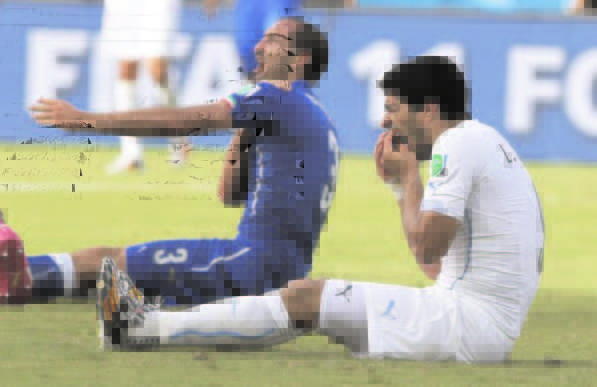
    BRASILIA (TIP): Even before the knockout rounds have kicked off, a key South American figure is out of the World Cup. Uruguay striker Luiz Suarez was handed a nine-game ban by FIFA’s Disciplinary Committee following his bite on Italian defender Giorgio Chiellini’s shoulder during the final Group D match in Natal on Tuesday.

    He has also been debarred from taking part in any football-related activity for a period of four months, a sentence which includes a stadium ban whenever Uruguay is playing. He was also ordered to pay a fine of 100,000 Swiss francs ($111,000). Already there is talk of how much this latest ‘bite’ will cost Suarez. Experts reckon a hit of £1 million with Adidas and 888poker both reviewing their relationship with the star.

    This is the heaviest sanction against a player in the tournament’s history. It surpasses the eight-match ban against Italy’s Mauro Tassotti in 1994 for an elbowing which broke the nose of Luis Enrique. This is the third time Suarez has been banned for biting a player during a match. “Such behaviour cannot be tolerated on any football pitch, and in particular not at a FIFA World Cup when the eyes of millions of people are on the stars on the field.

    The Disciplinary Committee took into account all the factors of the case and the degree of Mr Suarez’s guilt in accordance with the relevant provisions of the code. The decision comes into force as soon as it is communicated,” said Claudio Sulser, chairman of the committee. Uruguay will appeal against this decision, the media in Montevideo reported. “The punishment is too strong for the foul,” the country’s football federation’s president Wilmer Valdez told local TV, which reported that the appeal would be filed later on Thursday. The ban prevents Suarez from even entering the stadium for Uruguay’s Saturday’s game against Colombia.

    It will also hit his club career with Liverpool as he cannot play until the end of October. In Natal on Tuesday, Suarez rushed into the rival penalty area looking for a pass and appeared to have collided with Chiellini in the process. As they two men clashed, the Uruguayan was seen sinking his teeth into the Italian’s shoulder. Immediately both fell to the ground and while Suarez was seen holding his teeth, Chiellini kept calling for the attention of the referee, Mexican Marco Rodriguez. Rodriguez saw nothing in the plea and waved on play.

    Uruguay took the lead through a Diego Godin header a minute later to qualify for the Round of 16. Italy were knocked out. This is the second censure for Suarez at the World Cup. In the 2010 quarterfinal match against Ghana, he stopped Asamoah Gyan’s goal-bound attempt with his hand. He was shown a red card and later defended the act by calling it ‘the real Hand of God’. “Stopping a goal with my hand, I believe I did nothing evil to anyone – it was just stopping a goal,” he said later.

    Ghana failed to score off the resulting penalty and Uruguay eventually advanced to the semifinals after winning the penalty shootout. In Brazil here, however, in addition to his brilliant goal-scoring ability and form for Liverpool, Suarez had also arrived on the back of a reputation that bordered on the unpredictable and at times, violent. A favourite of the Kop – the Liverpool faithful – Suarez enjoyed an ambivalent relationship with rest of the Premiership fans who slowly warmed to his goal-scoring abilities but never forgot his other escapades.

    In April last year, he appeared to bite Branislav Ivanovic, Chelsea’s Serbian defender, during a similar goalmouth melee. He was handed a 10-match band and many said it was nothing new, since he arrived in England after having bitten PSV Eindhoven’s Otman Bakkal during his Ajax days in the Netherlands. He was also involved in a racial slur controversy with Manchester United’s French defender Patrice Evra.

  • Thank you, Spain, and goodbye

    Thank you, Spain, and goodbye

    SAO PAULO (TIP): Nothing lasts forever – empires, dynasties, life itself. That’s what makes the passing of one of the greatest sides in the history of any sport so poignant – and so human, because time takes its toll on the best of us. There was a certain inexorable inevitability about the end of Spain’s reign. It’s not that we did not see it coming. It’s the brutal suddenness with which it happened that has left the world in such a daze.

    The 1-5 humiliation by the Netherlands wasn’t about just another defending champion stumbling and falling; it was as if a hammer and nail had been employed to serve eviction notice. No one expected Spain to return to its magical best in their next game, against Chile; that’s what fairy tales are for. But we had hoped for at least a determined fight-back, a few flashes of the old self.

    What we witnessed instead was a dejected and directionless team (barring Iniesta, who stood like the boy on the burning deck), a pale shadow of the team that had won two successive European championships and a World Cup in between – and along the way, had redefined football with their tiki-taka style. Long before the final whistle was blown, the obituaries had begun to flow. An era had ended.

    It was a lump-in-the-throat moment, and not just for Spain. Sports fans (and the media) tend to be fickle, swinging from one extreme to another – heaping praise one moment, and ridicule, the other. But when you see true greatness finally laid to rest, the overwhelming emotion is one of sadness. So when Spain’s captain and once-vaunted goalkeeper, Iker Casillas – who let in seven goals in two games after having conceded none in the 10 games before – said, “We are sorry”, one of the country’s leading newspapers graciously responded saying, “Don’t be, you have given us so much. It was lovely while it lasted.” We couldn’t have said it better. To Xavi, Iniesta and the team, we say, thank you for the music.

  • IT’S SAMBA TIME! Football World Cup kicks-off

    IT’S SAMBA TIME! Football World Cup kicks-off

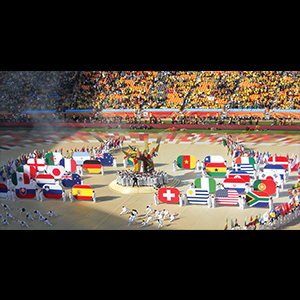
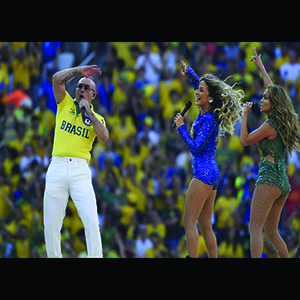
    SAO PAULO (TIP): The 2014 Fifa World Cup got under way with a colourful opening ceremony before hosts Brazil kicked off against Croatia. A cast of 660 dancers paid tribute to the country’s nature, people and football with a show around a “living” ball on the Arena de Sao Paulo pitch. The final act saw a performance of official World Cup song “We Are One” by Jennifer Lopez and rapper Pitbull.

  • Goa MLAs to ‘Study’ World Cup in Brazil, Congress Cries Foul

    Goa MLAs to ‘Study’ World Cup in Brazil, Congress Cries Foul

    PANAJI (TIP): Football fever is running high and the BJP government in Goa has scripted a controversy by sanctioning a Rs. 90 lakh junket for six MLAs, including the sports minister, to Brazil, where the FIFA World Cup began on June 12 night. It has been pegged as a “study tour.” The Congress has alleged that Chief Minister Manohar Parrikar is misusing public funds and has demanded that the trip be scrapped.

    “Yesterday Narendra Modi spoke in Parliament about sanitation, house, water for poor people and today his own government in Goa is investing 89 lakhs so that his MLAs can go and watch a football match,” said the party’s Rashid Alvi. A livid Goa Congress leader Durgadas Kamat called it an “utter loot of the state treasury.” Sources in the Goa government argued that the trip is a “study tour” for politicians of a state that regularly holds sporting events. They pointed out that no bureaucrats were being sent. Only politicians who “bring the vision.”

    “The decision has been taken in the interest of Goa, football is our state sport. Some MLAs on the team are exfootballers,” explained Chief Minister Manohar Parrikar. The delegation has no sportsman or anyone connected with football either, though the tiny state has given India some of its leading national football stars. Two of Goa’s former footballers, Bruno Coutinho, and Brahmanand Shankhwalkar, both Arjuna award winners, had reportedly asked if they could be sent to Brazil to watch the tournament.

    Bruno Coutinho a former India captain, said, “I am hurt, if MLAs can go, why not a sportsman. I am not just any footballer, am an Arjuna Awardee. I have captained the Indian football team.” Sources said Mr Coutinho’s name was on an initial list for the trip but was dropped. Apart from Goa sports minister Ramesh Tawadkar, two other ministers and three MLAs will now watch matches to be held at the end of this month. The final of the tournament will be played in Rio on July 13. India is ranked a poor 154 in world football, but lakhs of fans eagerly await the World Cup held every four years. The first match was played between Brazil and Croatia.

  • BRAZILIAN RIOT OF COLOURS

    BRAZILIAN RIOT OF COLOURS

    SAO PAULO (TIP): The 2014 Fifa World Cup got under way with a colourful opening ceremony before hosts Brazil kicked off against Croatia. A cast of 660 dancers paid tribute to the country’s nature, people and football with a show around a “living” ball on the Arena de Sao Paulo pitch. The final act saw a performance of official World Cup song “We Are One” by Jennifer Lopez and rapper Pitbull.

    Many fans took to the streets to sing and chant their support for Brazil as excitement built in the hours before the tournament began. Performers dressed as trees, flowers and various musical instruments all performed in three acts before the central ball opened to reveal singers Claudia Leitte, Jennifer Lopez and rapper Pitbull as they sang the official World Cup song as the finale.


    2

    The 65,000-seater Arena de Sao Paulo chanted the official anthem during the opening There were also demonstrations from those unhappy with the expense of hosting the tournament. Police in Sao Paulo had to use tear gas to break up one protest, which involved about 50 people, while striking airport workers in Rio de Janeiro blocked a road outside the airport, demanding a wage increase and a World Cup bonus.

    No host nation have ever lost their opening World Cup game, with the previous 20 producing 14 victories and six draws for the hosts. Hosts Brazil start as favourites, while holders Spain are aiming to win a fourth major tournament in a row after winning the European Championship two years ago.