Tag: Ford

  • Chattanooga shooting: 1 shooter, 3 crime scenes, 7 victims

    Chattanooga shooting: 1 shooter, 3 crime scenes, 7 victims

    CHATTANOOGA, TENNESSEE (TIP): Four Marines were killed during what’s being called a “brutal and brazen attack” at a Naval recruiting station Thursday, July 16 morning in Chattanooga.

    A Chattanooga police officer responding to the shooting was shot in the ankle and is in stable condition at Erlanger Medical Center. He was identified as veteran officer Dennis Pedigo. His family is reportedly with him at the hospital.

    NBC News quoted a defense official as saying a Navy sailor was also shot multiple times and was “critically injured.”

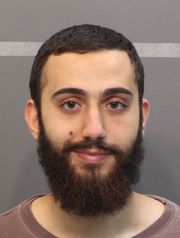
    The shooter was also killed, though authorities will not say how he died. A Senior Federal Official confirmed to NBC NEWS that the suspect was Muhammad Youssef Abdulazeez, a naturalized U.S. citizen from Kuwait. He is from Hixson, which is just a few miles across the river from Chattanooga.

    The suspected gunman, Mohammad Youssuf Abdulazeez, first opened fire at a military recruitment office, located in a strip mall off Lee Highway in Chattanooga. Witnesses saw Abdulazeez spray a hail of bullets at the glass doors of a military recruiting center in a strip mall .Then the gunman, who according to a law enforcement official was driving in a rented silver Ford Mustang convertible, moved on to his next target more than seven miles away: a Naval reserve center. There, he rammed into a gate at some point during his shooting rampage and was eventually killed by police, a U.S. official said.

    The shooting resulted in the death of four Marines.

    Mohammad Youssuf Abdulazeez was carrying 30-round magazines when he opened fire, according to a source briefed by law enforcement. Abdulazeez kept police at bay for some time with the amount of ammunition he had, according to the source.

    The shooting suspect was armed with an AK-47 style weapon‎ at the time of the attack according to two law enforcement officials briefed on the investigation.

    Suspected shooter Mohammad Youssuf Abdulazeez, 24, is dead, the FBI said. But — publicly, at least — investigators haven’t said much more about him.

    Now, with the FBI in the lead, a terrorism task force is investigating, a law enforcement source said.

    Authorities “have not determined whether it was an act of terrorism or whether it was a criminal act,” Ed Reinhold, FBI special agent in charge, told reporters. “We are looking at every possible avenue, whether it was terrorism — whether it was domestic, international — or whether it was a simple, criminal act.”

    A key detail will help them make that determination: finding out the suspect’s motive.

  • Man turns self in 29 hours after murdering wife

    Man turns self in 29 hours after murdering wife

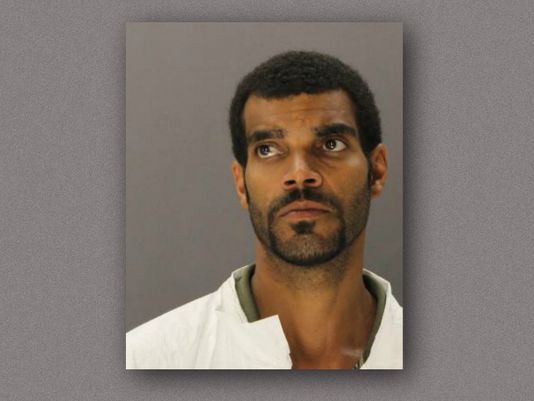
    DALLAS (TIP): An internal investigation will be conducted into how Dallas Police handled a disturbance this week. Officers may have arrived at the scene of a murder Monday, June 22 night without taking immediate action, police said.

    A man called police to tell them he had suffocated his wife over 24 hours after the murder.

    Jonathan Edelen, 34, admitted early Wednesday, June 24 morning to suffocating his wife after a fight late Monday night at a Dallas apartment, police said.

    Police said Edelen “gave a voluntary statement” to officers, saying he had killed his wife, 28-year-old Ceaira Ford on June 22. Edelen admitted to killing Ford by holding a pillow over her head.

    “Put the cuffs on me and take me to jail, I killed my wife,” Edelen said, according to the arrest affidavit released by Dallas Police.

    Officers were first sent to the scene when a neighbor, a woman in her 90s, called to report a disturbance Monday night at 10:45 p.m., according to Randy Blankenbaker of Dallas PD. The woman didn’t answer her door when officers arrived, he said.

    A man who police believe is a close friend of Edelen’s answered the door at the unit where Ford was killed, Blankenbaker said. Blankenbaker said that, when officers arrived just after 11 p.m., Edelen may have been in another room with a deceased Ford. The man who answered the door told officers he was home alone.

    Police were working Thursday to determine whether that close friend played a role in the homicide.

    Blankenbaker said Edelen’s mother and two children, ages 4 and 6, were at the apartment with them Monday night. Police left the scene thinking no disturbance had occurred, Blankenbaker said.

    Edelen called police just before 4 a.m. Wednesday, roughly 29 hours after suffocating Ford, to report that his wife had stopped breathing.

    The arrest affidavit indicates that Edelen told police his wife “wouldn’t stop talking” after she called Edelen to come home from work Monday night. Edelen’s account of the fight included him taking a TV out to the patio to destroy it in order to keep Ford from talking, the affidavit reads.

    The couple left the patio and continued to fight in the bedroom, where Edelen told police he placed a pillow over Ford’s head until she stopped moving.

    Edelen was charged with murder and placed in Dallas County’s Lew Sterrett Justice Center, according to police. Records show he was being held on $500,000 bond.

    An investigation was ongoing.


  • HARRISON FORD BADLY HURT IN PLANE CRASH

    HARRISON FORD BADLY HURT IN PLANE CRASH

    LOS ANGELES (TIP): “Indiana Jones” star Harrison Ford was critically injured March 05 when his small plane crash-landed on a golf course outside Los Angeles, media reports and officials said. The 72-year-old suffered multiple gashes to his head and was left bleeding after the crash of a vintage two-seater plane, according to the TMZ celebrity website, publishing a picture of the downed plane, its nose cone ripped open.A Los Angeles Fire Department spokesman, who did not identify Harrison, said the pilot of a single-engine plane was critically injured in the crash. “We cannot disclose any of our patients’ names,” spokesman Erik Scott told AFP, recounting the early afternoon crash at the Penmar Golf Course in Venice, southwest of Los Angeles.

    “When we arrived on scene we had a small aircraft that was down on Penmar Golf Course, near the Santa Monica airport. We had a solo occupant, an adult male, who was transported to a local hospital in critical condition.

    “Fortunately no one (else) was injured and the NTSB will perform an investigation,” he said, referring to the National Transportation Safety Board. The KTLA television station cited witnesses as saying Ford was helped out of the plane, and that he could use his legs.

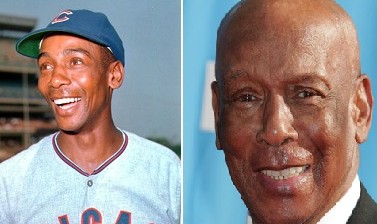
  • Ernie Banks nicknamed  ‘Mr. Cub’ & and “Mr. Sunshine” dies at 83

    Ernie Banks nicknamed ‘Mr. Cub’ & and “Mr. Sunshine” dies at 83

    Ernie Banks nicknamed  ‘Mr. Cub’ & and “Mr. Sunshine” dies at 83

    Ernie Banks nicknamed  ‘Mr. Cub’ & and “Mr. Sunshine died of a heart attack at a Chicago hospital on January 23, 2015, seven days before his 84th birthday.

    Tributes for Banks were widespread throughout Chicago & Dallas. Banks born in Dallas on January 31, 1931 was an professional baseball player in Major League Baseball (MLB) and played his entire MLB career with the Chicago Cubs. He was a National League All-Star for 11 seasons, playing in 14 All-Star Games. Banks entered Baseball sports through Negro league baseball in 1950, played for the Kansas City Monarchs. He also served in the US military for two years and before returning  to the Monarchs before beginning his major league career in September 1953.

    Banks actively took part in the Chicago community during and after his tenure with the Cubs. He also founded a charitable organization, became the first black Ford Motor Company dealer in the United States.

    He was inducted into the National Baseball Hall of Fame in 1977 and was awarded the Presidential Medal of Freedom for his contribution to sports in 2013.

     President Barack Obama and his wife, Michelle, called Banks “an incredible ambassador for baseball, and for the city of Chicago.”

    Chicago Mayor Rahm Emanuel said in a statement: “Ernie Banks was more than a baseball player. He was one of Chicago’s greatest ambassadors. He loved this city as much as he loved — and lived for — the game of baseball.”

  • RIL to sell 49.9% stake in US joint venture

    RIL to sell 49.9% stake in US joint venture

    NEW DELHI: Reliance Industries is looking to sell its 49.9% stake in a US joint venture that owns a 460 miles pipeline network for transportation of shale oil and gas. RIL, as well as its partner Pioneer Natural Resources Co, are seeking a buyer for their stakes in Eagle Ford Midstream venture as they focus on shale oil production. “Pioneer Natural Resources today announced that the company is pursuing the divestment of its 50.1% share of the Eagle Ford Shale Midstream business. “Reliance Holding USA, Inc owns the remaining 49.9% of the EFS Midstream business and also plans to pursue the divestment of its share in a joint process with Pioneer,” the Dallas-based independent oil and gas producer said in a statement. RIL, through its subsidiary Reliance Holding USA Inc. had acquired 49.9% stake in EFS Midstream LLC in June 2010. Current investments in EFS Midstream LLC is $208 million.

  • MAJOR CAR COMPANIES CONTINUE TO SEE REVIVAL

    MAJOR CAR COMPANIES CONTINUE TO SEE REVIVAL

    NEW DELHI (TIP): With auto industry continuing on the revival mode, major car makers including Maruti Suzuki, Hyundai, Honda, Toyota and M&M reported good domestic sales growth in September ahead of the festive season.

    Others like Tata Motors, General Motors and Ford India, however, reported decline in sales in September during which the 15-day ‘shraadh’ period, considered inauspicious by some Hindus for new purchases, was observed.

    Maruti Suzuki said its domestic sales during the month stood at 99,290 units, up 9.8 % from 90,399 units in September last year. The company’s sales were driven by its compact cars, comprising Swift, Estilo, Celerio, Ritz and Dzire, which clocked 43,304 units as against 36,679 units in the year-ago month, up 18.1 %.

    Sales of mini passenger cars, including Alto, A-Star and WagonR, were down 13.4 % at 35,547 units as against 41,061 units in the same month previous year. Rival Hyundai Motor India sold 35,041 units last month in the domestic market as compared to 30,601 units in September 2013, up 14.5 %.

    HMIL senior vice-president (sales and marketing) Rakesh Srivastava said the domestic growth was on the back of strong performance of new models, including the new Elite i20, that clocked 8,902 units. “In this festive season, we are seeing a significant increase in first time buyers and exchange buyers which is very encouraging as it will accelerate the positive momentum already being experienced in the last few months,” he added.

    Honda Cars India also reported 45 % increase in domestic sales in September 2014 at 15,015 units as against 10,354 units in the same month last year. “We continue to perform strongly with strong demand for all our models during this festival period,” HCIL senior vice-president
    (marketing and sales) Jnaneswar Sen said. He added that the company has resumed production of its flagship model Honda City during September 2014 and in coming months, the firm would be able to ensure better availability and timely deliveries to fulfil the huge demand.

    Toyota Kirloskar Motor (TKM) said its sales in domestic market stood at 12,552 units during the month, up 4.46 % as compared to 12,015 units in the same month last year.

    TKM Senior Vice President (Sales and Marketing) N Raja said: “We have registered growth this month. The industry is beginning to gradually turnaround. Positive market sentiments combined with the festive season is expected to boost sales in the coming months as well.”

  • US mobilizes allies to widen assault on ISIS

    US mobilizes allies to widen assault on ISIS

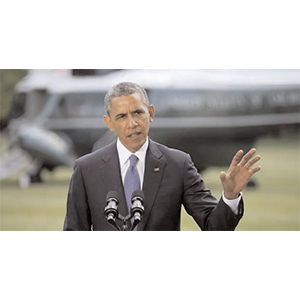
    WASHINGTON (TIP): The United States has begun to mobilize a broad coalition of allies behind potential American military action in Syria and is moving toward expanded airstrikes in northern Iraq, administration officials said on August 26. President Obama, the officials said, was broadening his campaign against the Sunni militants of the Islamic State in Iraq and Syria and nearing a decision to authorize airstrikes and airdrops of food and water around the northern Iraqi town of Amerli, home to members of Iraq’s Turkmen minority.

    The town of 12,000 has been under siege for more than two months by the militants. “Rooting out a cancer like ISIL won’t be easy, and it won’t be quick,” Obama said in a speech on Tuesday to the American Legion in Charlotte, NC, using an alternative name for ISIS. He said that the United States was building a coalition to “take the fight to these barbaric terrorists,” and that the militants would be “no match” for a united international community.

    Administration officials characterized the dangers facing the Turkmen, who are Shiite Muslims considered infidels by ISIS, as similar to the threat faced by thousands of Yazidis, who were driven to Mount Sinjar in Iraq after attacks by the militants.

    The United Nations special representative for Iraq, Nickolay Mladenov, said in a statement three days ago that the situation in Amerli “demands immediate action to prevent the possible massacre of its citizens.” As Obama considered new strikes, the White House began its diplomatic campaign to enlist allies and neighbors in the region to increase their support for Syria’s moderate opposition and, in some cases, to provide support for possible American military operations.

    The countries likely to be enlisted include Australia, Britain, Jordan, Qatar, Saudi Arabia, Turkey and the United Arab Emirates, officials said. The officials, who asked not to be named discussing sensitive internal deliberations, said they expected that Britain and Australia would be willing to join the United States in an air campaign. The officials said they also wanted help from Turkey, which has military bases that could be used to support an effort in Syria.

    Turkey is a transit route for foreign fighters, including those from the United States and Europe who have traveled to Syria to join ISIS. Administration officials said they are now asking officials in Ankara to help tighten the border. The administration is also seeking intelligence and surveillance help from Jordan as well as financial help from Saudi Arabia, which bankrolls groups in Syria that are fighting President Bashar al-Assad.

    On Monday the Pentagon began surveillance flights over Syria in an effort to collect information on possible ISIS targets as a precursor to airstrikes, a senior official said. The Syrian Observatory for Human Rights, an organization that monitors the humanitarian consequences of the conflict in Syria, reported that “non-Syrian spy planes” on Monday carried out surveillance of ISIS positions in the eastern province of Deir Ezzor.

    Although America’s allies in the region have plenty of reasons to support an intensified effort against ISIS, analysts said, the United States will have to navigate tensions among them. “One of the problems is that different countries have different clients among the fighting groups in Syria,” said Robert S. Ford, a former American ambassador to Syria. “To get them all to work together, the best thing would be for them to pick one client and funnel all the funds through that client. You’ve got to pick one command structure.”

  • ROBIN WILLIAMS: THE SADNESS OF A CLOWN THAT COULDN’T BE FIXED

    ROBIN WILLIAMS: THE SADNESS OF A CLOWN THAT COULDN’T BE FIXED

    Robin Williams, the versatile actor whose madcap comic style made him one of television and film’s biggest stars, was found dead on Monday from an apparent suicide at his home in Northern California. He was 63. Robin McLaurin Williams was born in Chicago. His father, Robert, was an executive for the Ford Motor Company, while his mother, Laurie, was a fashion model.

    The comedian and actor came into the world on 21 July 1951 in Chicago, Ilinois to former model Laura and Ford Motor executive Robert. Williams was bullied badly during childhood for being chubby and would often spend much of his time playing alone in the family’s large home to avoid his tormentors. Eventually, he conquered his overweight label though by joining the wrestling and tracks teams, and realised he could make the other children laugh as a way of gaining respect from them.

    Williams’ father took early retirement when he was 16 and they moved to California where he finished his education at Redwood High School. After graduation in 1969, Williams attended Claremont Men’s College, studying political science and playing soccer. He ended up taking lessons in improvisation, which perfectly suited his sharp wit and he was soon hooked.

    After leaving Claremont, Williams enrolled at the College of Marin to study acting and quickly won a full scholarship to the renowned Juilliard School in New York City where he studied with Christopher Reeve. The pair became great friends – a friendship that would last until Reeve’s death in 2004. He also met dancer Valerie Velardi while at Juilliard and the couple wed in 1978 and had a son, Zachary.

    Williams practiced stand-up in his spare time and he soon realised, after taking advice from a friend, that comedy rather than acting was his best way forward. He promptly left Juilliard for Los Angeles and ended up working his act on the West Coast comedy circuit. In 1977, Williams won a spot on ‘The Richard Pryor Show’ but his big break was just around the corner. Garry Marshall, creator of the hugely popular ‘Happy Days’ TV programme, was planning an ‘out-there’ episode where the Fonz would be abducted by aliens.

    At the auditions, Marshall asked Williams to sit down but he instead sat on his head and was instantly employed. Playing Mork from the planet Ork, Robin was a sensation so much so that a new show was created for him – ‘Mork And Mindy’. The show was a hit, earning Williams his first Golden Globe win in 1979 – Mork’s greeting, ‘Nanu-nanu’, became a worldwide catch-phrase. In 1980, Hollywood finally came knocking and Williams took the title role in Robert Altman’s ‘Popeye’.

    The critics and audience alike panned the film though and Williams was forced to seek solace in the comfort of Mork and Mindy for a further two years, until he starred in the film ‘The World According To Garp’. 1982 marked a downfall in Williams’ personal life as his battle with alcohol and drugs, specifically cocaine, had a destructive effect on his marriage, despite Valerie’s attempts to curb his addictions. 1983’s ‘The Survivors’ was another relative flop and it wasn’t until 1987 and five films later, that Williams finally hit the jackpot with ‘Good Morning Vietnam’.

    Playing real-life military DJ Adrian Cronauer, Williams earned himself his first Academy Award nomination and his second Golden Globe win. The following year, Valerie hired Marsha Garces to be nanny to Zachary. By 1987, Valerie and Williams had separated and Marsha became his assistant, travelling with him before the pair eventually fell in love and married in 1989, going on to have two children together – Zelda Rae and Cody Alan. Three films were released starring Williams in 1988, ‘The Adventures of Baron Munchausen’, ‘Rabbit Ears: Pecos Bill’ and ‘Portrait of a White Marriage’. However, it wasn’t until the following year that he would firmly grab the critic’s attention once more with his star turn as a maverick teacher in ‘Dead Poet’s Society’, a role which notched him his second Oscar nomination.

    1990 saw Williams star in ‘Cadillac Man’, ‘Back to Neverland’ and ‘Awakenings’ – his performance as doctor Oliver Sacks alongside Robert De Niro was celebrated as being one of his most moving and heartfelt to date. Terry Gilliam’s ‘The Fisher King’ (1991) is often classed as Williams’ best film and his role as a down-and-out who saves Jeff Bridges’ life saw him nominated for an Academy Award for the third time.

    Steven Spielberg’s ‘Hook’ in the same year was the total opposite theme of The Fisher King with its action-packed plot, yet despite breaking the $100 million barrier, the film was deemed to be overly sentimental and Spielberg’s first flop. Disney’s ‘Aladdin’ in 1992 was a landmark in establishing the talents of Williams as a voice actor in his role of the Genie, the majority of which he improvised and ad-libbed. His performance as one the film’s most notable A-list stars carried the box office receipts past $200 million.

    Following on from the less successful ‘Toys’ (1992) and ‘’Being Human’ (1993), it was Williams’ wife Marsha who stumbled upon the script for ‘Mrs Doubtfire’ in 1993 and in turn, she went on to produce the film. The film was a huge international hit and won Williams a Golden Globe, plus the achievement of once again making a $200 million taking. Williams was reunited with director Chris Columbus (Mrs Doubtfire) in the film ‘Nine Months’ (1995) which was far less of a success by comparison. He then received an Emmy nomination for a brief role in the TV programme ‘Homicide: Life On The Streets’, before returning to the children’s market with the fantasy film ‘Jumanji’. ‘The Birdcage’ (1996) saw Williams play the part of a gay club-owner whose son wants to bring his girlfriend (Calista Flockheart) and her strict conservative parents (Gene Hackman and Dianne Wiest) to stay and was yet another $100 million hit.

    Williams followed this flamboyant part with the lead in ‘Jack’, directed by Francis Ford Coppola. He played a child with an ageing disorder that saw him in a 40-year-old body at the age of 10 and while he gave an endearing performance, the premise of the film failed to attract a wide audience.

    Williams diversified his work throughout 1996 and 1997, taking small parts in ‘Hamlet’ (1996) and ‘The Secret Agent’ (1996) as well as Woody Allen’s ‘Deconstructing Harry’ (1997). 1997 was set to be a great year, first marking success with the release of Disney’s ‘Flubber’ – a box office triumph. Yet it was to be the collaboration with newcomers Matt Damon and Ben Affleck that would raise the stakes in Williams’ career. ‘Good Will Hunting’ saw Williams play Sean Maguire, psychiatrist to Damon’s troubled genius, and his performance earned him his first Academy Award for Best Actor in a Supporting Role.

    A series of less impacting films between 1999 and 2001 followed, until Williams played a ‘baddie’ for the first time in his career in the film ‘One Hour Photo’ (2002). He won rave reviews as a photo lab worker who becomes devoted to a young local family, but gradually starts to become more strange and sinister. ‘Death To Smoochy’ in 2002 failed to rake in the box office big bucks despite having a great script and cast including Ed Norton, with Danny De Vito in the director’s chair.

    That year, as ‘Death to Smoochy’ and ‘Insomnia’ were released, Williams returned to his roots, selling-out on Broadway with another impressive stand-up show. Despite not being seen on screen again for another two years, he was in fact extremely busy and his stock of alreadycomplete films were being released in slow droves. These included 2004 movies ‘Noel’, a Christmas-themed drama, David Duchovny’s directorial debut ‘House of D’ and ‘The Final Cut’, which also co-starred James Caviezel and Mira Sorvino. He went on to star in ‘The Aristocrats’ and ‘Robots’ in 2005 and picked up a nomination for a Blimp Award for Favourite Voice from an Animated Feature. Six movie releases in 2006 highlighted Williams’ versatility as an actor.

    In ‘Man of the Year’, he played the role of Tom Dobbs, the host of a comedy/political talk show. He then took on a different character in computer animated feature film ‘Everyone’s Hero’ in which he had a voice role. ‘Runaway Vacation’ saw him portray a California beverage company executive struggling with a dysfunctional family on a holiday full of mishaps. ‘The Night Listener’, based on the novel by Armistead Maupin, saw Williams as a gay radio show host who, on air, befriends a 14-year-old abuse victim – a role which he accepted for only $65,000. This was followed by the rather more cheerful animation ‘Happy Feet’, which was a global hit.

    ‘Night At The Museum’, with Ben Stiller, followed suit, with Williams playing a comic version of the former president Theodore Roosevelt. In 2007, Williams entertained fans in romantic comedy ‘License to Wed’ and drama ‘August Rush’, which were followed by roles in ‘Shrink’ and ‘World’s Greatest Dad’ in 2009. During this period his marital status changed again as Marsha filed for divorce citing irreconcilable differences in 2008. Reprising his role as President Roosevelt, Williams teamed up with Ben Stiller and Owen Wilson once more in ‘Night at the Museum: Battle of the Smithsonian’.

    Despite mixed reviews from critics, the movie was a commercial success like its predecessor. ‘Old Dogs’ (2009), a collaboration with John Travolta, Kelly Preston and Matt Dillon, also performed well at the box office. Since then he has reprised his voice roles in animated ‘Happy Feet Two’ in 2011, which was his only project that year. Williams married his third wife, graphic designer Susan Schneider, on 23 October 2011 in St Helena, California. In 2012, he appeared in the TV comedy ‘Wilfred’, which stars Elijah Wood who is the only man that can see his neighbour’s dog as a full-grown man.

    This was followed by an appearance in ‘The Big Wedding’, which was released in November 2012, as well as ‘The Face of Love’, ‘The Butler’ in 2013 and ‘The Angriest Man In Brooklyn’, in 2014. With a career spanning 30 years, during which he has received over 40 awards, including an Oscar, and been nominated nearly 50 times, Williams’ appeal will no doubt span many more generations to come. Robin died on 11 August 2014 at his home in California in an apparent suicide. His spokesperson released a statement stating that Robin had recently been struggling with depression.

  • BILLIONS SPENT, BUT VISION FOR FAST TRAINS IN US IS UNREALIZED

    BILLIONS SPENT, BUT VISION FOR FAST TRAINS IN US IS UNREALIZED

    WASHINGTON (TIP) :
    High-speed rail was supposed to be President Obama’s signature transportation project, but despite the administration spending nearly $11 billion since 2009 to develop faster passenger trains, the projects have gone mostly nowhere and the United States still lags far behind Europe and China. While Republican opposition and community protests have slowed the projects here, transportation policy experts and members of both parties also place blame for the failures on missteps by the Obama administration – which in July asked Congress for nearly $10 billion more for highspeed initiatives.

    Instead of putting the $11 billion directly into those projects, critics say, the administration made the mistake of parceling out the money to upgrade existing Amtrak service, which will allow trains to go no faster than 110 miles per hour. None of the money originally went to service in the Northeast Corridor, the most likely place for high-speed rail. On a 30-mile stretch of railroad between Westerly and Cranston, RI, Amtrak’s 150mph.

    Acela hits its top speed — for five or 10 minutes. On the crowded New York to Washington corridor, the Acela averages only 80mph, and a plan to bring it up to the speed of Japanese bullet-trains, which can top 220mph, will take $150 billion and 26 years, if it ever happens. Florida, Ohio and Wisconsin, all led by Republican governors, canceled high-speed rail projects and returned federal funds after deeming the projects too expensive and unnecessary.

    “The Obama administration’s management of previously appropriated high-speed rail funding has been as clumsy as its superintending of the Affordable Care Act’s rollout,” said Frank N Wilner, a former chief of staff at the Surface Transportation Board, a bipartisan body with oversight of the nation’s railroads. When Obama first presented his vision for high-speed rail nearly four years ago, he described a future of sleek bullet trains hurtling passengers between far-flung American cities at more than 200mph.

    “Within 25 years, our goal is to give 80 per cent of Americans access to high-speed rail,” Obama said in his 2011 State of the Union address. “This could allow you to go places in half the time it takes to travel by car. For some trips, it will be faster than flying — without the pat-down.” But as Obama’s second term nears an end, some experts say the president’s words were a fantasy.

    “The idea that we would have a high-speed system that 80 per cent of Americans could access in that short period of time was unadulterated hype, and it didn’t take an expert to see through it,” said Kenneth Orski, the editor and publisher of an influential transportation newsletter who served in the Nixon and Ford administrations. “And scattering money all around the country rather than focusing it on areas ripe for highspeed rail didn’t help.” The Acela, introduced by Amtrak in 2000, was America’s first successful high-speed train, and most days its cars are full.

    The train has reduced the time it takes to travel between Washington, New York and Boston, but aging tracks and bridges – including Baltimore’s 100-year-old tunnel where trains come to a crawl – have slowed it down. It takes two hours and 45 minutes to travel from New York to Washington on the Acela. If the Acela were a bullet train traveling on new tracks, it would take 90 minutes. Another problem is that Amtrak’s funding is tied to annual appropriations from Congress, leaving it without a long-term source of money. “I do what I can do,” said Joseph Boardman, Amtrak’s president. “But I don’t sit back and wait for $15 billion to rebuild the Northeast Corridor.” For now, Amtrak is rebuilding a stretch of track in central New Jersey that will permit travel at 160mph for 23 miles.

    But advocates say they are hopeful. “Once something gets built, then we’re going to see more projects get going,” said Ray LaHood, Obama’s first transportation secretary. LaHood said it took the Interstate System of highways decades to be completed, and he predicts that high-speed rail will be the same. LaHood said California seemed the most likely candidate for success with high-speed rail, even though plans for a 520-mile train route between Los Angeles and San Francisco have been mired in controversy.

    Despite strong backing from Gov. Jerry Brown, a court ruling had tied up state bond funding for the $68 billion project. An appeals court on July 31 threw out that ruling, which had been based on a lawsuit. But opponents are still increasing calls to kill the project, and polls show waning public support for it. Still, California has begun construction of the tracks and put out bids for a vendor to build the trains. And the new rail project will get an infusion of funds from the state’s cap-and-trade program, which requires business to pay for excess pollution.

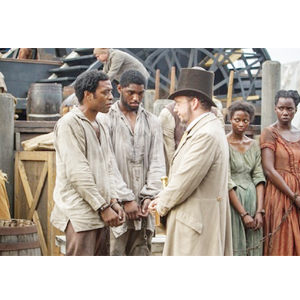
  • A scene from the movie 12 Years

    A scene from the movie 12 Years

    supervision of voter registration in states and individual voting districts where such tests were being used. The act had an immediate and positive effect for African Americans. In 1965, Mississippi had the highest black voter turnout at 74% and led the nation in the number of black public officials elected. Atlanta elected its First black mayor, Andrew Young, as did Jackson, Mississippi, with Harvey Johnson, Jr., and New Orleans, with Ernest Morial. Black politicians on the state level included first Southern woman Barbara Jordan, elected to the Texas house of as Representatives.

    Julian Bond was elected to the Georgia State Legislature in 1965. On April 4, 1968 Dr King was assassinated in Memphis, Tennessee, and Riots broke out in black neighborhoods in more than 110 cities across the United States in the days that followed, notably in Chicago, Baltimore, and in Washington, D.C. The damage done in many cities destroyed black businesses and homes, and slowed economic development for a generation. But Americans were not deterred. America ushered into an era of real vibrant Democracy with participation of all. But it took America nearly two hundred years to let all enjoy the fruit of freedom and liberty, with real equality still eluding the nation. Economic inequality was destroying the American Dream. The deindustrialization of the late 1960s and early 1970s manipulated by American Bankers and Multinational companies to enhance their own fortunes, forced income inequality to increase dramatically to levels never seen before.


    25
    On August 28, 1963, Martin Luther King Jr., prominent figure of the Civil Rights Movement, stood before the Lincoln Memorial in Washington, DC and delivered his iconic “I Have A Dream” speech. Here was a turning point in the history of America.

    Supporters of this illconceived deindustrialization wrote death warrants for American Dream, domestic Industry and the Middle Class; the economists and most policy makers across the isles pointed to the fact that consumers could buy so many goods, even with the inflation of the 1970s, as evidence that the general shift away from manufacturing and into services was creating widespread prosperity. In 2008 economic disasters hit the country and indeed the entire world. 8.8 million jobs were lost and many for forever by July 2010, according to the Bureau of Labor Statistics. The worst recession since the great depression began with the collapse of housing prices and the construction industries all around USA.


    24
    Wall Street in New York: Symbol of America’s economic power

    Millions of mortgages mostly averaging about $200,000 each had been bundled into exotic financial instruments/securities called collateralized debt obligations that were resold worldwide. Many banks and hedge funds had borrowed hundreds of billions of dollars to buy these securities, which were now “toxic” because their value was unknown and no one wanted to buy them. Number of largest US and European banks collapsed; some went bankrupt, such as Lehman Brothers with $690 billion in assets; others such as the leading insurance company AIG, the leading bank Citigroup, and the two largest mortgage companies were bailed out by the government.

    Congress voted $700 billion in bailout money ($418 billion actual disbursement) under the program, and the Treasury and Federal Reserve committed trillions of dollars to shoring up the financial system, but the measures did not reverse the declines. Banks drastically tightened their lending policies, despite infusions of federal money. The government for the first time took major ownership positions in the largest banks. The stock market plunged 40%, wiping out tens of trillions of dollars in wealth; housing prices fell 20% -30% nationwide wiping out trillions more. By late 2008 distress was spreading beyond the financial and housing sectors, especially as the “Big Three” of the automobile industry; General Motors, Ford and Chrysler were on the verge of bankruptcy, and the retail sector showed major weaknesses.

    The Critics of the $700 billion Troubled Assets Relief Program (TARP) expressed anger that much of the TARP money that has been distributed to the rich at Wall Street rather then saving the common people who lost their jobs, houses and life savings. In an international study, Americans ranked 11th in happiness and a discouraging 24th in economy. Another study of 8th graders found only 7 percent of American students rated advanced in mathematics compared to 47 and 48 percent in Singapore and South Korea. Our President, according to a Forbes power rating, comes in second behind Vladimir Putin. Yet, the United States is the world leader and likely to remain there for decades. It has the greatest soft power in the world by far.

    The United States still receives far more immigrants each year (1 million) than any other country in the world. The United States leads the world in high technology (Silicon Valley), finance and business (Wall Street), the movies (Hollywood) and higher education (17 of the top 20 universities in the world in Shanghai’s Jaotong University survey). The United States has a First World trade profile (massive exports of consumer and technology goods and imports of natural resources).

    It is still the world’s leader for FDI at 180 billion dollars, almost twice its nearest competitor. The United States, spending 560 billion dollars a year, has the most powerful military in the world. Its GDP (16 trillion dollars) is more than twice the size of China’s GDP. As the first new nation, it has the world’s longest functioning democracy in a world filled with semidemocratic or non-democratic countries. Its stock market, at an all time high, still reflects American leadership of the global economy.

    For the past 80 years, the United States is the leader in fundamental advances in telecommunications and technology. AT&T’s Bell Laboratories spearheaded the American technological revolution with a series of inventions including the light emitted diode (LED), the transistor, the C programming language, and the UNIX computer operating system. SRI International and Xerox PARC in Silicon Valley helped give birth to the personal computer industry, while ARPA and NASA funded the development of the ARPANET and the Internet. In Physics and Chemistry, Americans have dominated the Nobel Prize for physiology or medicine since World War II. US biomedical research has played a key role in the advancement of diagnosis, medicines, cure and patient care in the world. America’s Walmart is the world’s largest public corporation.

    According to the Fortune Global 500 list in 2014, Walmart is the biggest private employer in the world with over two million employees with 11,000 stores in 27 countries, and the largest retailer in the world with a revenue of US $ 476.294 billion. US Entertainment Industry is world leader and generated $522 billion dollars in revenue in 2013. The United States with over $ 48 Billion Dollars; is the world’s leading donor of government aid to other countries, distributing twice as much as any other nation. Besides, another $30 Billion was given by US foundations, Corporations, religious organizations, Universities, Private and voluntary organization.

    As the old political saying goes, you can’t beat someone with no one. And, right now, there is no one on the horizon that will overtake or even seriously challenge the United States, however ailing, for at least the next decade or two. I salute the great nation, its vibrant democracy and its people, as we celebrate Independence of America.

  • Harrison Ford injured on ‘Star Wars’ set

    Harrison Ford injured on ‘Star Wars’ set

    LONDON (TIP): Veteran actor Harrison Ford was airlifted to hospital on June 12 after suffering an ankle injury on the set of the new “Star Wars” movie in Britain. The 71-year-old was hurt when a garage door fell and hit him at Pinewood Studios outside London, according to emergency services. “We were called just after 5:00 pm to reports of a 71-yearold man being injured in an incident believed to involve a garage door,” said a spokesman for Thames Valley police.

    “The man was airlifted to John Radcliffe Hospital with injuries which are not believed to be life threatening.” A Disney studios spokeswoman confirmed that Ford sustained the injury during filming on the set of “Star Wars: Episode VII.” “He was taken to a local hospital and is receiving care. Shooting will continue as planned while he recuperates,” she added in a statement. Filming began in May on the new episode of the iconic franchise, directed by blockbuster filmmaker J J Abrams.

    Original cast members Ford, Carrie Fisher, Mark Hamill, Anthony Daniels, Peter Mayhew and Kenny Baker star in the new film, due for worldwide release on December 18, 2015. Ford is back as smuggler Han Solo, 62-year-old Hamill will return as Jedi Knight Luke Skywalker and Fisher, 57, reprises the role of Princess Leia. Disney recruited “Star Trek” and “Mission: Impossible III” director Abrams in a bid to re-create the magic from the original trilogy: “Star Wars,” “The Empire Strikes Back” and “Return of the Jedi.”

  • Japan pushes plan to stockpile plutonium, despite proliferation risks

    Japan pushes plan to stockpile plutonium, despite proliferation risks

    TOKYO (TIP): Just weeks after Japan agreed to give up a cache of weapons-grade plutonium, the country is set to push ahead with a program that would produce new stockpiles of the material, creating a proliferation risk for decades to come. Though that additional plutonium would not be the grade that is most desirable for bombs, and is therefore less of a threat, it could — in knowledgeable hands and with some work and time — be used to make a weapon.

    The newly created stockpiles would add to tons of other plutonium already being stored in Japan. “The government made a big deal out of returning several hundred kilograms of plutonium, but it brushes over the fact that Japan has so much more,” said Sumio Mabuchi, an opposition lawmaker who served as adviser to the government in the early days of the 2011 Fukushima disaster. “It’s hypocritical.” Plutonium staying in Japan would be used for a nuclear recycling program that has become one of the most contentious parts of the nation’s first comprehensive energy plan since the Fukushima nuclear disaster.

    The plan is expected to be approved by the cabinet as early as Friday.The recycling program, which seeks to separate plutonium from used nuclear fuel so it can be reused to power reactors, is seen by supporters as a way of ensuring resource-poor Japan more energy independence. The program has helped delay the energy plan’s approval, with even some members of the governing party worried by its cost and by criticism from proliferation experts at home and abroad. Those experts fear the plutonium produced by recycling would create an inviting target for terrorists to steal or attack, and American officials have been quietly pressing Japan not to build up larger stocks of the material.

    The plutonium is far easier to use in weapons than the uranium that has been used to power most of Japan’s nuclear reactors. For the many Japanese frightened of atomic power after the Fukushima Daiichi disaster, the government’s continued push for recycling after years of missteps is a worrisome sign that the government plans a robust nuclear energy program in the future despite promises to eventually reduce the nation’s use of atomic power. (The country’s functioning nuclear reactors have been idled while they undergo more stringent safety checks introduced after the accident.) The plans also mean Japan is committed to using a mixed plutoniumuranium fuel for reactors that is considered somewhat more dangerous than uranium fuel if there is an accident.

    The mixture, called mixed oxide fuel, is necessary because plutonium produced by recycling cannot be used alone in the reactors. Japan’s intent to grow its plutonium inventory is also becoming a new irritant in Tokyo’s relations with its Asian neighbors, threatening to further destabilize a region already mired in disputes over territory and wartime history. This month, China accused Japan of stockpiling plutonium and uranium “far exceeding its normal needs.”

    The implication is that Japan wants to retain the plutonium in case it decided to pursue its own nuclear weapons program. For Prime Minister Shinzo Abe and other proponents of recycling, the risks are outweighed by the benefit of more energy independence — a goal of Japanese leaders for decades. While uranium remains widely available, and cheap, the Abe administration says Japan’s nuclear program should not be vulnerable to disruptions of supply or a possible rise in costs. “Japan must continue with the nuclear fuel cycle,” said Kazuo Ishikawa, a former Trade Ministry official who worked on energy policy.

    “Japan’s energy security depends on it.” Anxiety over Japan’s planned recycling program stretches back decades. As some countries, including Britain and Russia, have opted to reprocess plutonium for nuclear fuel, the United States under Presidents Gerald R. Ford and Jimmy Carter turned away from the idea in good part because it was considered a possible new path to a bomb. The fear was that other countries would be more inclined to start the programs if the United States did so, creating stocks of plutonium around the world.

  • ‘My sons were babies when I left. Now they’re grown men with babies’: Innocent man released after 26 years on death row

    ‘My sons were babies when I left. Now they’re grown men with babies’: Innocent man released after 26 years on death row

    How do you eloquently illustrate the impact of losing nearly 30 years of your life?
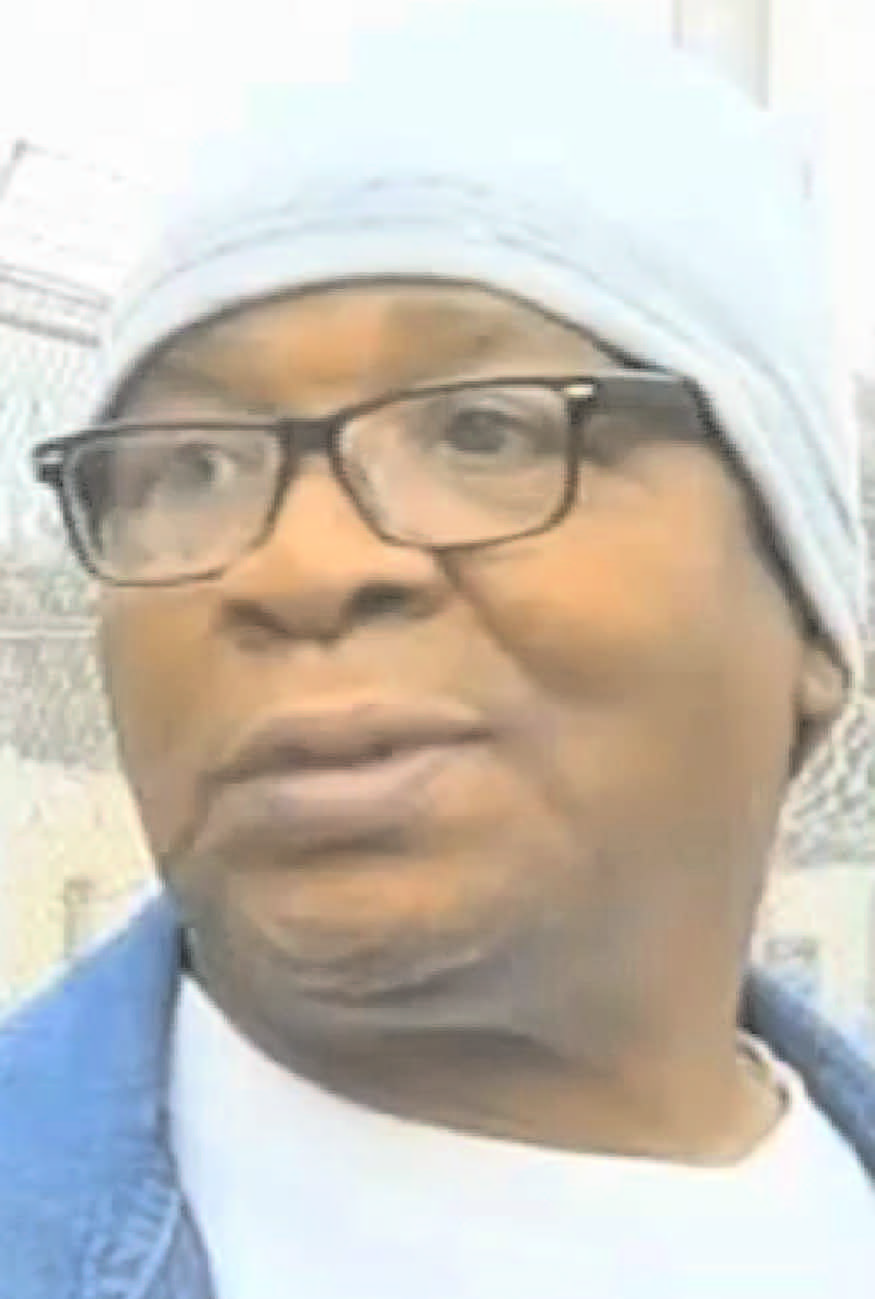
    Glenn Ford, Louisiana’s longestserving death row prisoner, released today after spending nearly 30 years behind bars for a murder he did not commit, managed to neatly encapsulated his loss in a single quote: “My sons, when I left, was babies. Now they grown men with babies.”

    Interviewed by mediaperson directly after his release, dressed in a denim shirt, hat and dark-rimmed glasses, Ford, now 64, responds with remarkable good grace when asked by a reporter whether he harbors any resentment: “Yeah, because I was locked up almost 30 years for something I didn’t do.”

    “It’s resentment, not feeling bitter”.
    When asked by the same reporter what he’s lost he replies: “thirty years of my life, if not all of it. I can’t go back and do anything I should have been doing when I was 35, 38, 40 stuff like that.” Asked how it feels to be released: “My mind’s going all kinds of directions, but it feels good,” he says.

    Ford is now a free man after being on Louisiana’s death row since August 23, 1988 for the murder of Isadore Rozeman, a Shreveport jeweller and watchmaker for whom Ford did occasional yard work. Convicted by an all-white jury Ford has always denied killing Rozeman and always disputed the verdict. For decades Ford maintained his innocence and filed multiple appeals. State District Judge Ramona Emanuel on Monday took the step of voiding Ford’s conviction and sentence based on new information that corroborated his claim that he was not present or involved in Rozeman’s death, Ford’s attorneys said.

    “We are very pleased to see Glenn Ford finally exonerated, and we are particularly grateful that the prosecution and the court moved ahead so decisively to set Mr Ford free,” Gary Clements and Aaron Novod, attorneys for Ford from the Capital Post Conviction Project of Louisiana, said in a statement prior to his release. The attorneys said the trial had been “profoundly compromised by inexperienced counsel and by the unconstitutional suppression of evidence, including information from an informant.”

    Last Thursday, prosecutors filed a motion to void Ford’s conviction, saying that in late 2013 “credible evidence” came to their attention “supporting a finding that Ford was neither present at, nor a participant in, the robbery and murder of Isadore Rozeman.” There were also claims that a police report related to the time of the crime and evidence involving the murder weapon, had been suppressed. Under Louisiana law Mr Ford is now entitled to claim compensation for his time served. The state allows for an award of $25,000 (£15,000) for every year a wrongly convicted person spends in prison – up to a limit of $250,000 (£150,000), and $80,000 (£48,000) for ‘lost life opportunities’. In Mr Ford’s case this means he will receive around £7,600 for every year he spent in prison.

  • Tata Nano, other Indian small cars fail independent crash tests

    Tata Nano, other Indian small cars fail independent crash tests

    NEW DELHI (TIP): Some of India’s best-selling small cars have failed independent crash tests conducted by a global car safety watchdog. All five small cars popular on the Indian market last year, including the famous Tata Nano and the Hyundai i10, failed the crash tests performed by London car-safety watchdog Global NCAP (New Car Assessment Programme).

    The cars that were tested were the Tata Nano, Maruti Suzuki Alto 800, Hyundai i10, Ford Figo and Volkswagen Polo. All cars had to be made-in-India models only, and the most basic or entry-level version available in the market was selected for testing. This meant none of them had airbags – one of the most basic prerequisites globally to pass a safety test.

    There were two tests carried out on identical cars of the same make – meaning two of each car were procured by Global NCAP from Indian showrooms, and shipped to Germany for the tests. One crash test was performed at 56 kmph, the other at 64 kmph. All five cars failed the test, landing a zero on a scale of 1-5. Representatives from each manufacturer were invited to witness the test, and the results have been shared with them all too.

    Automakers said the issue of car safety is complex, involving not just passenger safety, but also the safety of those outside the car. That means cars need to handle well and drivers must be educated about the rules of the road, and roads should be in good condition. As NDTV’s Automobiles Editor, I was consulted on which cars should be tested. Of the five cars, only the Figo and Polo showed good structural rigidity and therefore a safer cabin, while the smaller cars performed rather poorly.

    What is rather surprising to me is that a car like the Hyundai i10 – which is only made in India for global markets – also did badly. The made-in-India for export to Europe i10 has a good rating in its Euro NCAP test for instance, which begs the question – are the cars for Indian buyers made differently? India’s growing middle class has helped fuel a booming auto industry, making the country the world’s sixth-largest car market.

    But nearly 140,000 people die on Indian roads every year in nearly five lakh accidents. That’s the worst road safety record in the world. Given those grizzly statistics, it is staggering to think India is the only country in the world’s top ten car markets that does not have a comprehensive testing programme that measures the safety of cars.

  • AGREEMENT BETWEEN ENNORE PORT AND FORD INDIA TO BOOST AUTO EXPORTS

    AGREEMENT BETWEEN ENNORE PORT AND FORD INDIA TO BOOST AUTO EXPORTS

    NEW DELHI (TIP): Ennore Port Limited (EPL), Chennai and Ford India Private Limited have signed an agreement for export of Ford cars though the Ennore port for a period of 10 years.

    Speaking on the occasion the Union Minister for Shipping Shri G.K. Vasan said that this is a part of series of initiatives by the UPA government for attracting investments in the infrastructure sector, particularly in ports and automobile sectors. The agreement provides for various volume based discounts on wharfage by EPL ranging from 5% to 30% to encourage more exports through EPL. Ford India Private Limited has set up a modern integrated manufacturing facility at Maraimalai Nagar, near Chennai, for export of their automobile products.

    In the last few years, Chennai has emerged as the hub of automobile manufacturing sector with all global auto majors having their manufacturing plants in the city. Besides, Chennai has also emerged as a major centre for export of automobiles. Ennore Port has played a key role in facilitating these exports. Between September 2010 and December 2013 about 4,49,720 automobile units have been exported from Ennore Port, including those of manufacturers like Nissan, Ford & Ashok Leyland from Chennai, Toyota from Bangalore and Honda from Delhi. Ennore Port has developed a General Cargo-cum-Car Terminal at a cost of Rs.140 crore, which includes a car parking yard of 35 acres for parking of 10000 cars at a time, the biggest amongst the Major Ports.

    Giving details of the future projects of the port, the minister said that the Ennore Port has planned to set up an LNG storage and regasification terminal with IOCL for import of LNG at an estimated investment of Rs.4500 crores having capacity of 5 Million Metric Tonnes Per Annum. The IOCL plans to commission the project by 2016-17. The Port has also commenced preproject activities for the construction of the third coal berth to handle additional 9 million tonnes of coal required by Tamil Nadu Generation and Distribution Corporation (TANGEDCO).

    In keeping with the global trend of containerised transportation of cargo, Ennore Port has also come up with a proposal to develop a container terminal at an estimated cost of Rs. 1,270 crore with a capacity of 1.4 million TEUs. This project is targeted for award during 2013-14 along with Multi Cargo Terminal. The Port is expected to handle 24 MMT during 2013-14 as against 17.89 MMT during 2012-13. During the 12th five year plan, Ennore port has plans to increase the Port capacity from present 30 MTPA to 66.8 MTPA. All these measures are expected to generate more employment opportunities, promote the growth of Indian exports as well as boost the domestic economy.

  • US drivers return to the road as fuel prices fall

    US drivers return to the road as fuel prices fall

    NEW YORK: A recovering economy and cheaper prices at the pump have boosted US gasoline demand in recent months, following five years of decline, a change that some experts say could continue into 2014. The economic slowdown and expensive gasoline had forced motorists to drive less or buy smaller, more efficient cars since 2007, but consumption in the second half of this year has been back on the rise. People are driving further, tempted back behind the wheel by a 40-cent per gallon fall in gasoline prices since September.

    Pump prices on Thursday’s Thanksgiving holiday were the lowest in three years, the Energy Information Administration (EIA) said last week. From July to October, demand outstripped monthly government forecasts. Sales by refiners and other suppliers have shown year-on-year increases in six of the first nine months of 2013, the most monthly gains since 2010. The increase cannot be found in all regions – gasoline demand in the East Coast continues to slump – but analysts say that in most of the nation there are signs of life. “The slowdown in demand coincided with the slowdown in the global economy, and now that we are moving the other way we are going to see demand pick up,” said Mark Vitner, senior economist at Wells Fargo, who expects demand to rise in 2014.

    Much stands in the way of a sustained boost in gasoline consumption. Fuel efficiency continues to slice away at demand, and an aging population is expected to drive less in the long run. Gasoline demand had been steadily declining since 2007 as motorists drove less and car fuel efficiency improved. The US government still forecasts a 0.4 per cent fall in gasoline demand in 2014.

    But demand is expected to rise 0.5 per cent this year, after declining by 0.8 per cent to 10.5 million barrels per day in 2012, according to the EIA, the statistical arm of the Department of Energy. In July, August and September of 2013, the distance driven per driver was higher than 2012, according to the latest data from the University of Michigan’s Transportation Research Institute. Fuel efficiency That increase has counteracted improvements in fuel economy over the past year, said Michael Sivak, research professor at the University of Michigan.

    “The wild card here is the price of gasoline. If it drops substantially, the amount of driving would increase and the demand for fuel-efficient vehicles would decrease,” Sivak said, acknowledging that if prices rose the opposite would happen. In the longer term, however, gasoline demand is widely expected to continue to be dented by improving fuel efficiency. Even pickup trucks have become more efficient in recent years, shadowing a steady improvement in cars and SUVs over the past decade.

    New US vehicles available in showrooms are on average 20 per cent more fuel-efficient than vehicles introduced five years ago, according to AutoNation Chief Executive Mike Jackson. Full-sized pickup trucks like the Ford F-150, the General Motors Co Chevrolet Silverado and the Chrysler Group LLC Ram 1500 pickup trucks have tightened fuel efficiency greatly in the last five years, according to Ford Motor Co sales analyst Erich Merkle. “Gasoline prices have a short-term impact on consumer choices, but, long-term, a lot of it has more to do with the demographics of drivers and their needs,” said Merkle

  • Narayan Sai caught after two-month cross-country run

    Narayan Sai caught after two-month cross-country run

    NEW DELHI/CHANDIGARH (TIP): After dodging police for nearly two months, godman Asaram Bapu’s son Narayan Sai, accused of rape by two Surat-based sisters, was arrested on Delhi-Chandigarh National Highway-1 after a 72-hour cat-andmouse chase by Delhi Police crime branch. Sai, police said, was disguised as a Sikh when he was caught. He had also stocked utensils and ration in his Ford Eco Sport and a juvenile cook to prepare him food. Sai, who mistook the cops as kidnappers, first tried negotiating a ransom saying he was going to Delhi to sign some legal documents.

    Sai, police said, was hoping to evade cops busy with Delhi elections, which was why he was so close to the national capital. Sai is wanted in connection with a complaint lodged by two sisters of sexual assault,unnatural sex, criminal intimidation and criminal conspiracy at a police station in Surat, Gujarat. He was taken on transit remand to Surat after being produced at Rohini court. Asaram is in Jodhpur jail since his arrest in September for allegedly sexually assaulting a teenager who lodged an FIR with Delhi Police.

    “A team led by DCP Kumar Gyanesh and ACP KPS Malhtora arrested Narayan Sai and two of his associates… Six mobile phones used by all the accused were also recovered along with the Eco Sport in which they were travelling,” said SBK Singh, joint commissioner of police, crime branch. Apart from Sai, his PSO Kaushal Thakur and driver Ramesh Malhotra were also arrested. Sai carried a reward of Rs 5 lakh on information leading to his arrest and his staff Rs 1 lakh. It’s learnt that a close associate of Sai’s driver, Ramesh, played a key role in the arrests.

    There were protests outside crime branch office and Rohini court by Sai’s supporters who lay flowers on the path inside the court and sloganeered in his favour. A team of 22 Delhi policemen camped in Ludhiana for 24 hours. Police said Sai used 32 SIM cards and six cell phones to duck cops. The first batch of 10 cops reached Ludhiana on December 2 in Sarabha Nagar. Sai was hiding in a gaushala owned by electronic goods dealer Pankaj Agnihotri in Model Town area.

    “Out of the past 70 days, he was putting up at this place for almost a month and Agnihotri was his disciple,” said ACP (crime) Ravindra Yadav. During his crosscountry run, Sai used several vehicles like Toyota Camry, Toyota Altis, Toyota Fortuner, Swift Dzire apart from Ford Eco Sport in which he was nabbed.

  • Indian-American woman dragged to death by pickup truck

    Indian-American woman dragged to death by pickup truck

    BOSTON (TIP): In a tragic incident, a 58-year-old Indian- American woman was killed when a youth struck her with a pickup vehicle and dragged her for nearly five kilometres after an altercation at a motel, police said. Kanchanben Patel and her husband, who worked at the motel, were hit by the youth who had an altercation with them about the illegal use of a room. Moses Acloque, 22, hit Kanchanben with his pickup truck and dragged her for three miles, killing her, police said.

    Acloque was arrested in Foxborough late Monday night just after a state trooper reported seeing the body of Kanchanben under his Ford F150 vehicle. Employees at Arbor Inn Motel told police that Acloque and another man had sped away from their property after refusing to pay their bill when he hit the couple, who recently celebrated becoming US citizens. After smashing one car, MyFoxBoston reports, he struck Kanchanben and her husband. Acloque was arraigned this morning in Wrentham District Court on multiple charges, including leaving the scene of an accident causing death, prosecutors said.

  • A Government shutdown in the United States

    A Government shutdown in the United States

    In U.S. politics, a government shutdown is a situation in which Congress fails to pass authorization for sufficient funds for government operations. Typically, the government stops providing all but “essential” services at first, but since Congress must authorize all expenditures, there is no law protecting any government service from stoppage. Federal services that may continue for a time after a shutdown include the National Weather Service and its parent agencies, medical services at federal facilities, armed forces, air traffic management, and corrections (the penal system). During the Ford and Carter administrations, there were 6 partial government shutdowns that affected only the departments of Labor and Health, Education, and Welfare. These partial shutdowns lasted from 8 to 18 days and the primary issue of dispute was federal funding for abortion. During the Reagan administration, there were 8 full government shutdowns that lasted only 1 to 3 days each, primarily over the issue of the United States budget deficit. There was a similar 4-day shutdown during the first Bush administration. During the Clinton administration, after conservatives made massive congressional gains in the 1994 Republican Revolution, there were two full government shutdowns lasting 5 and 21 days respectively, the second of which was by far the longest of its kind to that date. The primary issue was again the United States budget deficit. The United States federal government shutdown of 2013 is ongoing, having begun on 1 October 2013. The primary issue of dispute between the Republican-controlled House of Representatives and the Democratcontrolled Senate (the latter supported by President Obama) is the Republicans’ desire to oppose the Affordable Care Act, signed into law in 2010.

    Mechanism of a Shutdown
    Under the separation of powers created by the United States Constitution, both the Senate and House of Representatives must approve an agreed budget, which then goes to the President of the United States for signature. If the President vetoes the budget, it goes back to Congress, where the veto can be overridden by a two-thirds vote. Government shutdowns tend to occur when the President and one or both of the chambers of Congress are unable to resolve disagreements over budget allocations before the existing budget cycle ends. Shutdowns of the type experienced by the United States are nearly impossible in other democracies. Under the parliamentary system used in most European nations, the executive and legislative branch are not separate, with the parliament designating all executive officials, typically called “ministers”. In non-parliamentary democracies, a strong executive branch typically has the authority to keep the government functioning even without an approved budget. This was the case in the United States up until 1980, when the administration of Jimmy Carter interpreted the 1884 Antideficiency Act to limit the power of federal agencies in the lack of congressional approval.

    What’s Affected by a Government Shutdown?
    Below, find an overview of some of the government services and operations that will be impacted until Congress passes a budget to fund them again. * Vital services that ensure seniors and young children have access to healthy food and meals may not have sufficient Federal funds to serve all beneficiaries in an extended lapse. * Call centers, hotlines and regional offices that help veterans understand their benefits will close to the public. * Veterans’ compensation, pension, education, and other benefits could be cut off in the case of an extended shutdown. * Every one of America’s national parks and monuments, from Yosemite to the Smithsonian to the Statue of Liberty, will be immediately closed. * New applications for small business loans and loan guarantees will be immediately halted. * Research into life-threatening diseases and other areas will stop, and new patients won’t be accepted into clinical trials at the National Institutes of Health. * Work to protect consumers, ranging from child product safety to financial security to the safety of hazardous waste facilities, will cease.

    The EPA will halt non-essential inspections of chemical facilities and drinking water systems. * Permits and reviews for planned energy and transportations projects will stop, preventing companies from working on these projects. Loans to rural communities will be halted. * Hundreds of thousands of Federal employees including many charged with protecting us from terrorist threats, defending our borders, inspecting our food, and keeping our skies safe will work without pay until the shutdown ends. * Hundreds of thousands of additional federal workers will be immediately and indefinitely furloughed without pay. Shutdowns in the past have also affected the Washington, D.C., municipal government, closing schools and suspending utilities such as garbage collection. Starting in 1976, the United States Federal Government has shut down on 18 occasions. The highest number of shutdowns-8- was in the Presidency of Reagan, followed by 5 in the presidency of Carter.

  • Ford’s Project B562 To Make India A Compact Car Global Production Base

    Ford’s Project B562 To Make India A Compact Car Global Production Base

    MUMBAI (TIP): US carmaker Ford Motor Company is making India as a compact car global production base once its Sanand plant in Gujarat comes on stream in 2014, under a project codenamed B562 that may spawn three different compact cars from the same platform. The move is part of Ford’s larger global production restructuring plan which places greater responsibility on India versus its other base in Europe and across the world. Four people close to the development said, a project codenamed B562 is currently under development.

    A small hatchback, a sub-4 metre sedan and a midsize compact sedan are being considered to be rolled out over the next two three years. The development work of hatchback and mid-size compact sedan is gathering speed, however sub-4 metre sedan is still at a consideration stage, said people in the know of the development. Underlining the growing significance of India as a base Alan Mulally, Global CEO of Ford Motor Company in a recent media interaction in India said, “The demand is dramatically down for cars in Europe, like it was in United States.

    So we are moving production, consolidating our facilities, but at the same time, we are accelerating the new vehicles. Customers want value, so it is going to take us a couple of years to finish that restructuring, we are doing the right thing for the customers and right thing for Ford,” The hatchback may be placed alongside the existing Figo, the sub-4 metre sedan if given a go ahead will take on Maruti SuzukiBSE -3.00 % Dzire and Honda Amaze and the mid-size compact sedan will replace Fiesta classic.

    Globally the hatchback is expected to replace the Ka small car, people close to the company told ET. “The company plans to produce over 2,00,000 cars on B562 platform by 2015-16 and over 30-50% is planned to be exported to the overseas markets over a period of time. The company tested the overseas markets with Figo, they now plan to aggressively expand exports with the EcoSport and with the B562 cars, the company intends to make the best use of its competitive production base in India,” said one of the four people cited above on condition on anonymity.

    When contacted, Ford India’s spokesperson said, “We would not speculate about our future product strategy and business operations. Ford India’s product-led transformation continues with the introduction of the EcoSport and currently we have a laser sharp focus to deliver it for our customers.” While the company terms EcoSport as a game changer, people involved with the company believe, the B562 is a even bigger deal.

    “The cars are being developed with an aim of garnering profits quicker than some of the earlier projects. In terms of volumes, the platform will deliver largest volumes for Ford India going ahead and is expected to come with a localisation level of over 90%.” According to V G Ramakrishnan, MD, Frost & Sullivan, South Asia, a big exports push helps Ford in not only getting the pricing right for the domestic market like it did with EcoSport, but it helps the company democratize some of the high end technology at affordable price.

  • Indian Auto Components Industry May Invest Around Rs 70 Billion Over The Next Three Years: ICRA

    Indian Auto Components Industry May Invest Around Rs 70 Billion Over The Next Three Years: ICRA

    NEW DELHI (TIP): The Indian auto components industry may invest around Rs 70 billion over the next three years on new projects, according to a study by ICRA. Automobile manufacturers such as Hero MotoCorp, Maruti Suzuki and Ford, plans to establish greenfield facilities in Gujarat, encouraging auto component makers to invest around these facilities. “The above greenfield investments may entail total investments of Rs 7,000 crore to be incurred by auto component manufacturers over the next three years,” highlighted ICRA.

    “Over the near term, the trepidation of auto part makers arising from dull automobile demand is likely to remain…the profitability of auto component manufacturers may be hit harder due to their smaller scale of operations and limited operational and financial flexibility,” as per the study. However, over the medium term factors such as growing thrust on localisation and expanding business in new geographies should allow the industry to grow at a relatively faster pace than the auto OEM segment, the study added.

  • World’s First Flying Car Up For Grabs For $1 Million

    World’s First Flying Car Up For Grabs For $1 Million

    NEW YORK (TIP): World’s first flying car, developed in 1949 by an American designer, is up for sale for nearly $1 million. Developed by inventor Moulton Taylor, the unique Aerocar could not only fly, it was designed to drive on roads, too. The flight system could be removed and towed by the car, then easily reassembled. The car which cruises at a 177 kph has foldable wings to keep it a street-worthy size is now on sale for $938,340.

    The 21-feet Aerocar is a two-place aircraft with sideby- side seating, four wheels, 30-feet wingspan and a single Lycoming 0-320 engine mounted over the rear wheels. The Aerocar was set to take the world by storm but after almost 25 years of campaigning Taylor still could not strike a deal – he even lost a deal with auto giants Ford, the New York Daily News quoted Caters News agency as reporting.

  • Ford Chennai plant the first in the world to use eco-friendly 3-wet paint technology

    Ford Chennai plant the first in the world to use eco-friendly 3-wet paint technology

    CHENNAI (TIP): Car multinationals like Ford, Hyundai and Volkswagen are using cutting edge technology and practices to save power and water resources in their plants in India, where both are in serious short supply. Indeed, Ford Motor Company is expanding its 3-wet paint capacity by 50 % this year, adding the environmentally friendly paint process, which is already in use in its Maraimalainagar plant in the outskirts of Chennai, to four more plants on three continents.

    The actions will reduce CO2 emissions by an estimated 30% at those facilities. Ford India’s Chennai plant is the first Ford car plant in the world to use the 3-wet high-solids paint technology. The plant also does heat recovery by utilizing exhaust heat air to heat fresh air, and propane gas has been introduced as a fuel in its ovens instead of diesel, making for an environment-friendly paint process.

    According to Ford, the 3-wet high solids technology has resulted in VOC emission coming down by 23%, the best in the Ford Asia Pacific region. It has also reduced dock-to-dock time by 40% and CO2 emission by 21%. Water consumption has come down by 15000 KL/annum and the energy saved in the paint shop – 27.6 million kWh/annum – is enough to power almost 12,000 households in Chennai for a year, or to light up the entire Chennai street lights in night for almost 4 months. Ford, which was the first automaker to implement the 3-wet high solids solvent borne technology in 2007, currently has eight plants in North America, Asia Pacific and Europe, equipped for using the process to paint vehicles.

    That will expand to 12 plants in 2013 and then to additional facilities worldwide over the next four years. The 3-wet process derives its name because three layers of paint are applied one after the other before the prior coats have been cured. The process eliminates stand-alone primer application and a dedicated oven required in the conventional process that was used before.

    Advanced chemical composition of 3-wet paint materials allows for the three layers of paint — primer, base coat, and clear coat – to be applied while each layer is still wet without baking in between. “The 3-wet paint process is significantly more advanced than conventional technologies in applying durable paints in a highquality, environmentally sound and cost-efficient manner,” said Bruce Hettle, director of manufacturing engineering.

  • Toyota Reclaims Global Auto Sales Crown

    Toyota Reclaims Global Auto Sales Crown

    Toyota officially recaptured the title ofworld’s largest automaker Monday, January28 as its final 2012 sales total toppedGeneral Motors, which held the lead in 2011.

    NEW YORK (TIP): Earlier in January, General Motors(GM, Fortune 500) announced global sales of 9.29 millionvehicles for the year. In late December, Toyota Motor(TM) said it expected that global sales for 2012 hit 9.7million vehicles, and it confirmed that Monday, January28 when it reported global sales of 9.75 million.Volkswagen Group (VLKAY), which includes the VW,Audi and Porsche brands, came in at No. 3 with 9.09 millionvehicles, the first time the company has topped 9 million.

    GM is the leading automaker in the world’s two largestmarkets, China and the United States. But Toyota is aclear leader in its home market of Japan, where non-Japanese automakers have had trouble competing due tolimited dealerships. And Toyota enjoyed a bounce-backyear in Japan, with sales rebounding 35% from 2011,when they were hurt by the earthquake and tsunami.Toyota’s sales totals also were helped by the fact thatit made more than 600,000 heavy-duty trucks and busesduring the year, a vehicle segment GM essentially shedin its home market.Toyota is No. 3 in terms of sales in the U.S., a keymarket where Ford Motor (F, Fortune 500) is No. 2.

    Fordtook back that ranking back from Toyota in 2010 whenthe Japanese automaker was hit with recall problemsthat forced it to stop selling its most popular models fora period of time.GM topped global sales for 77 years through 2007,when it finished just barely ahead of Toyota. Bothautomakers’ sales suffered in 2008 as the bottom fell outof the U.S. economy, but high gas prices and a loomingbankruptcy at GM ultimately nudged Toyota into thelead, where it stayed for the next two years.

    The federal bailout of GM in 2009, and the problems atToyota the next two years allowed the U.S. company torecapture the lead much quicker than most expected.Neither GM nor Toyota had a comment on therankings earlier this month when GM’s sales figuresessentially insured Toyota would move back into theglobal sales lead.Mike Wall, auto analyst for IHS Global Insight, saidit’s possible GM could come out on top in 2013. Aterritorial dispute between China and Japan couldadversely affect Toyota, while the recession in Europecould be a drag on Volkswagen’s sales growth.”In terms of GM returning to the lead, I certainlywouldn’t count them out, especially with the productthey’re set to introduce this year,” he said.

    “I actuallythink all three will be huddled close together for thenext few years.”Wall says GM is a much healthier company today atNo. 2 than when it held the sales lead but posted hugefinancial losses in the previous decade.”The sales lead makes for bragging rights, but GM is astronger company than it was then,” he said.

  • The Mother of All Insider Trading Cases – Mathew Martoma

    The Mother of All Insider Trading Cases – Mathew Martoma

    Unlike Rajat Gupta, who worked his way into positions of trust and received material nonpublic information, Mathew Martoma stands accused to being smart enough to target Dr. Sidney Gilman, an 80 year old neurologist chairing the experimental medicine’s trials committee, and then to successfully financially “seduce” Dr. Gilman to disgorge valuable confidential information. Anyone who has seen the captivating movie, The Fugitive, with Harrison Ford knows how stock-valuable new medicine trials are. Guess Mathew Martoma may be an inspired movie-goer. That Dr. Gilman is cooperating with USA Preet Bharara’s Office and has signed a Non- Prosecution Agreement and will pay almost $250,000 means Mathew Martoma’s constitutional presumptive innocence may not be of the durable variety.

    The larger question is will Charlie Stillman, Martoma’s lawyer, mimic another great lawyer who fought the government on behalf of a nearsaint, or force Martoma to hold up an objective mirror to his facts and then find the ways and means to bring to an early end the mother of all insider trading trials to a quicker end, and have “smiles and chuckles” aborted in favor of a less painful future. One thing is for sure: the jury will be quite interested in seeing proof of Mathew Martoma personally getting $9 million extra and causing trades, as alleged, and over a quarter billion dollars profit by trading on confidential information. Lastly, Steve Cohen will surely pray that Mathew Martoma asks Rajat Gupta for advice on legal strategies. This prosecution is the most worthy of all, as it seeks to expose the alleged marriage between uncommon smarts being used for illegal greed. This case, more than Rajaratnam or Gupta trials, will enhance public confidence in our capital markets and maybe, just maybe, Wall Street will once and for all reject the false title of Master of the Universe, as even an atheist is offended to see Main Street sacrificed on the alter of illegal greed on Wall Street. What we do know is that the Sheriff of Wall Street, USA Bharara, will dethrone all self-proclaimed “masters” with the Equal Protection Clause of our Constitution.”

    Complete story
    After Raj Ratnam and Rajat Gupta, another Inside Trading story with new dramatis personae -Mathew Martoma, Dr. Gilman and Steven A. Cohen has emerged. Another bombshell dropped on Tuesday, November 20th in the sprawling insider trading investigation being run out of Preet Bharara’s office. The U.S. Attorney for the Southern District of New York unveiled an indictment against former SAC Capital portfolio manager Mathew Martoma accusing him of trading on inside information. According to the government, the illegal tips allowed SAC Capital to reap profits and avoid losses of $276 million, making it the largest insider trading case ever. The conduct alleged in the indictment is nothing short of shocking and egregious.

    It is alleged that Martoma sold massive amounts of Elan (NYSE: ELN) and Wyeth shares in the days leading up to the release of key drug data for the two companies in July 2008. The stock sales came after the trader was tipped off that the drug in question, an Alzheimer’s treatment known as bapineuzumab, was not as effective as had been expected. Even more shocking, the government alleges that the illegal information came from an octogenarian doctor who served as the chairman of the safety monitoring committee overseeing the clinical trial. Martoma, 38, who was a trader for an affiliated SAC Capital hedge fund known as CR Intrinsic, is the sixth current or former SAC employee implicated in insider trading violations. He has been charged with conspiracy and two counts of securities fraud. He allegedly cultivated a relationship with a renowned University of Michigan neurologist named Dr. Sidney Gilman, 80, who subsequently provided Martoma with highly lucrative inside information.

    The two were introduced to one another through a so-called “expert networking” firm. According to Bharara, over the course of around 42 consultations at $1,000 an hour, Martoma convinced Gilman to share information on the drug trial he was working on. Furthermore, the two reportedly became friends and Gilman treated Martoma like a colleague and pupil. On Gilman’s advice, Martoma built up a large stake in both Elan and Wyeth, which was subsequently acquired by Pfizer (NYSE: PFE). Billionaire trading legend and SAC Capital founder Steve Cohen also acquired large stakes in the companies based on Martoma’s recommendation. The pivotal drug data which would substantially effect the price of the two stocks was set to be presented by Dr. Gilman on July 29, 2008. Prior to the presentation, Dr. Gilman was provided with an encrypted 24-page PowerPoint document which revealed that the drug’s efficacy was well below expectations. In fact, the data showed that bapineuzumab failed to halt the progression of Alzheimer’s in patients in the clinical trials. According to the Feds, Gilman subsequently spoke with Martoma for around 1 hour and 45 minutes and actually sent the PowerPoint presentation to the trader along with the password needed to access it. Gilman has been charged civilly by the SEC, but has entered into a nonprosecution agreement with the government and is not named in the criminal indictment. He is cooperating with the Feds.

    At this point, Martoma and Cohen, who is referred to as “Portfolio Manager A” in the indictment held a roughly $700 million position in the two stocks. Specifically, the firm had acquired around $365 million in Elan shares and $335 million in Wyeth shares. This was a very substantial position, even for SAC Capital. Even more significant is the fact that the drug data was expected to be a binary outcome – either good or bad – with a dramatic move in the stock price in either direction. Suffice it to say, that even in the hedge fund world, this kind of bet was seen as bizarre and risky. In fact, other SAC traders had expressed concern over the size of the position given the unpredictable nature of clinical drug trials. When Martoma saw the leaked data, he realized he was in trouble. When the information became public, his and Cohen’s positions would be buried.

    Upon learning the news, Martoma allegedly emailed Cohen, asking “Is there a good time to catch up with you this morning? It’s important.” Subsequently, the two spoke for around 20 minutes on a Sunday. The following day, Cohen instructed his head trader to begin liquidating the fund’s position in Elan and Wyeth and “to do so in a way as to not alert anyone else, inside or outside of the hedge fund.” The indictment does not specify the nature of the discussion between Martoma and Cohen other than to say that Martoma expressed that he was no longer comfortable with the positions. Cohen has not been charged and it is unclear if he was aware of the nature of Martoma’s information. That certainly will be a question that the Feds will want answered and it is likely that they are pressuring Martoma to flip on his former boss if Cohen did indeed know about his inside source. In any event, after the conversation between Cohen and Martoma, SAC Capital began executing a very large liquidation order in Elan and Wyeth shares using dark pools and trading algorithms. Dark pools are trading venues where large investors can execute trades anonymously away from the exchanges.

    The platforms do not identify the brokers and institutions who are trading on the system and orders are hidden until a transaction is completed. Trading algorithms break up large orders into smaller chunks and then efficiently hunt for liquidity to execute against. The purpose of these tools is to cloak the trading activity of large investors such as SAC Capital so that other market participants cannot sniff out their orders and front-run them. “This was executed quietly and effectively over a 4-day period through algos and dark pools and booked into two firm accounts that have very limited viewing access,” the head trader wrote to Cohen on July 27, 2008. “The process clearly stopped leakage of info from either in or outside the firm and in my viewpoint clearly saved us some slippage.”

    While the liquidation of $700 million in stock just days ahead of the release of key drug data might have raised some red flags, what SAC did next was truly shocking. The firm, on the advice of Martoma, began shorting Elan and Wyeth. Portfolios managed by SAC subsequently went from being $700 million long Elan and Wyeth to around $260 million short in the matter of days. Prior to the July 29 announcement, the firm was short 4.5 million Elan shares and 3.3 million Wyeth shares. According to the government, the reasoning for the flip-flop is pretty obvious – Martoma knew exactly what was going to happen. This type of trading activity by itself is extremely suspicious. In fact, the government’s case, is the absolute best explanation for it. Selling or trimming the positions ahead of the trial data would have been understandable. Selling $700 million in shares and then going short to the tune of $260 million basically overnight, on the other hand, looks suspicious.

    Its amazing that Martoma even attempted this. When the data was released on July 29, both Elan and Wyeth plunged. Readers should pull up a chart of Elan, in particular. The stock fell 42 percent on the news and has never recovered. Wyeth lost 12 percent. SAC Capital and Mathew Martoma’s portfolio made millions off of the bearish positions that were allegedly established with insider information. In the short-term, the whole thing turned out unbelievably well for Mathew Martoma. At the age of 34, he reaped a $9.38 million bonus for the year. Subsequently, however, Martoma lost money for the firm in 2009 and 2010. In May 2010, he was terminated on the recommendation of a SAC Capital employee who called him a “one-trick pony with Elan” in an email.

    Despite losing his job, the trader was, by all accounts, living the good life prior to Tuesday morning when the FBI came knocking at 6:30 in the morning. After leaving SAC, Martoma secured a job at Boston-based hedge fund Sirios Capital, although it is unclear if he is currently still employed. The government caught up with him at his $2 million Boca Raton home which he shares with his wife, who is a pediatrician. The Mediterranean-style house is equipped with a luxurious pool and even an elevator, according to the New York Post which called it a “country club estate.” The couple even has a foundation which was funded with nearly $1 million. Basically, it seems like Martoma was living on Easy Street after his big score at SAC.

    Now, he faces a potential 20-year sentence in Federal prison and will be pondering his future while out on a rather steep $5 million bail. In the wake of the charges, Martoma’s lawyer immediately went on the defensive. “Mathew Martoma was an exceptional portfolio manager who succeeded through hard work and the dogged pursuit of information in the public domain,” his attorney, Charles Stillman, said in an emailed statement. “What happened today is only the beginning of a process that we are confident will lead to Mr. Martoma’s full exoneration.”