Tag: Foreign Policy

  • Trump rules out trade talks with India amid tariff dispute

    Trump rules out trade talks with India amid tariff dispute

    • The White House on Wednesday issued an Executive Order imposing an additional 25 percentage points in tariffs on Indian goods, raising the total levy to 50%
    • “For us, the interest of our farmers is our top priority,” PM Modi responded

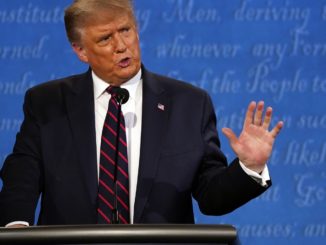
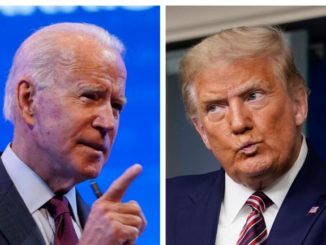
    WASHINGTON, D.C. (TIP): US President Donald Trump has said there will be no trade negotiations with India until a dispute over tariffs is resolved, following his administration’s decision to double tariffs on Indian imports.

    When pressed by ANI at the Oval Office, whether he expected talks to resume in light of the new 50% tariff, “No, not until we get it resolved,” he replied.

    The White House on Wednesday, August 6, issued an Executive Order imposing an additional 25 percentage points in tariffs on Indian goods, raising the total levy to 50%. The administration cited national security and foreign policy concerns, pointing specifically to India’s ongoing imports of Russian oil.

    The order claims that these imports, whether direct or via intermediaries, present an “unusual and extraordinary threat” to the United States and justify emergency economic measures.

    According to US officials, the initial 25% tariff came into effect on 7 August. The additional levy will take effect in 21 days and apply to all Indian goods entering US ports — with exceptions for items already in transit and certain exempt categories. The order also provides flexibility for the president to modify the measures, depending on changing geopolitical circumstances or retaliatory actions by India or other nations. India’s Prime Minister Narendra Modi responded defiantly during a speech at the MS Swaminathan Centenary International Conference in New Delhi, signaling that New Delhi would not back down in the face of economic pressure.

    “For us, the interest of our farmers is our top priority,” PM Modi said. “India will never compromise on the interests of farmers, fishermen and dairy farmers. I know we will have to pay a heavy price for it, and I am ready for it. India is ready for it.” India has consistently pushed back against opening sensitive sectors such as agriculture and dairy to international competition, citing the potential impact on millions of rural livelihoods.

    The standoff marks a sharp escalation in trade tensions between the two countries, as both sides dig in over economic policy and matters of national interest.
    (Source: ANI)

  • Brazil to join South Africa’s Gaza genocide case against Israel at ICJ

    Brazil to join South Africa’s Gaza genocide case against Israel at ICJ

    BRASILIA / NEW YORK (TIP): Brazil is finalizing its submission to join South Africa’s genocide case against Israel’s actions in Gaza at the International Court of Justice, the Foreign Ministry said in a statement on Wednesday, July 23, 2025, a Reuters report says.

    South Africa filed a case in 2023 asking the ICJ to declare that Israel was in breach of its obligations under the 1948 Genocide Convention. The case argues that in its war against Hamas militants Israel’s military actions go beyond targeting Hamas alone by attacking civilians, with strikes on schools, hospitals, camps, and shelters.

    Other countries – including Spain, Turkey, and Colombia – have also sought to join the case against Israel. In its statement, the Brazilian government accused Israel of violations of international law “such as the annexation of territories by force” and expressed “deep indignation” at violence suffered by the civilian population.

    Israel denies deliberately targeting Palestinian civilians, saying its sole interest is to annihilate Hamas. Lawyers for Israel have dismissed South Africa’s case as an abuse of the genocide convention.

    Brazil’s National Israeli association CONIB said in a statement in response to Wednesday’s decision that “the breaking of Brazil’s long-standing friendship and partnership with Israel is a misguided move that proves the extremism of our foreign policy.”

    Brazilian President Luiz Inacio Lula da Silva has long been an outspoken critic of Israel’s actions in Gaza, but Wednesday’s decision carries added significance amid heightened tensions between Brazil and Israel’s ally, the United States. The Trump administration announced 50% tariffs on all Brazilian goods this month.

    A diplomat familiar with the thinking of the Lula administration told Reuters that Brazil does not believe its decision to join South Africa’s case will impact its relationship with Washington, however.

    The United States has opposed South Africa’s genocide case under both former President Joe Biden and Trump. In February, Trump signed an executive order to cut U.S. financial assistance to South Africa, citing in part its ICJ case.

  • Pro-Palestinian Foreign Student at Cornell Ordered to Surrender Himself to ICE

    Pro-Palestinian Foreign Student at Cornell Ordered to Surrender Himself to ICE

    NEW YORK (TIP): A pro-Palestinian activist and foreign graduate student at Cornell University who sued the Trump administration to stop the deportation of those accused of anti-Semitism has been ordered to surrender to immigration authorities. The Department of Justice on Friday, March 21, forwarded a message from Immigration and Customs Enforcement (ICE) instructing the student, Momodou Taal, to report to the agency’s Syracuse, New York, office to surrender himself into custody, according to court documents.

    Taal, a dual citizen of the United Kingdom and Gambia, is one of three Cornell students who sued on March 15 to challenge a pair of presidential orders.
    Both orders were signed Jan. 29 by President Donald Trump. One mandates stricter screening and vetting procedures to prevent individuals deemed national security risks from entering the country. The other calls for, among other things, the prosecution, removal, and other legal action against both citizens and non-citizens engaged in anti-Semitic activities. Taal and his co-plaintiffs argue that the combined effect of these orders is to suppress criticism of the Israeli government and participation in pro-Palestinian advocacy, such as protests against Israel’s military operations in Gaza. In their complaint, Taal’s attorneys contend that he “lives in constant fear that he may be arrested by immigration officials or police as a result of his speech,” and is afraid to travel to London to visit his family. Taal’s activism has drawn controversy in the past. On Oct. 7, 2023—the day thousands of Hamas-led terrorists attacked Israel in a spree of killing and kidnapping—he posted “Glory to the resistance!” along with a Palestinian flag on social media platform X.

    Cornell first suspended Taal in April 2024 for his role in organizing a pro-Palestinian encampment on campus. He was suspended again in September 2024 after he and other students disrupted a career fair attended by defense contractors L3Harris and Boeing, both suppliers of military equipment to Israel. The university said the disruption involved shoving police officers, threatening recruiters, and preventing other students from participating in the fair.

    Under F-1 visa regulations, international students who receive two to three suspensions risk having their student visas revoked and being ordered to leave the country. However, Taal was ultimately allowed to continue his studies.

    The DOJ email was sent just after Taal’s attorneys filed an emergency request for a federal judge in New York to block his arrest or detention, citing concerns over the alleged presence of unidentified law enforcement officers near his residence. The judge has not yet made a decision on whether to grant a temporary restraining order.

    “[Taal’s detainment by ICE] would substantially impede counsel’s ability to directly communicate with Mr. Taal … and also constitutes an unlawful attempt to remove this Court’s jurisdiction over this case,” Taal’s attorneys told U.S. District Judge Elizabeth Coombe after receiving the DOJ email.

    Taal’s case is one of several high-profile cases of deportation efforts associated with the pro-Palestinian protests that erupted at colleges and universities.

    Last week, judges blocked the deportation of Mahmoud Khalil, a Columbia University graduate and protest leader; and Badar Khan Suri, a Georgetown University postdoctoral fellow. Federal officials have informally accused Khalil of engaging in “activities aligned with Hamas” and Suri of “spreading Hamas propaganda and promoting antisemitism on social media,” as well as having “close connections” to an unnamed Hamas advisor.

    In each case, immigration authorities have invoked a provision of U.S. immigration law that allows for the deportation of foreign nationals if the secretary of state has good reason to believe their presence or activities in the United States pose “potentially serious adverse foreign policy consequences” to the country.

  • How India flexed its global power muscles in 2024

    How India flexed its global power muscles in 2024

    India’s foreign policy in 2024 showcased a bold stance, with India asserting its influence not only in its immediate neighbourhood but also on the global stage. External Affairs Minister S. Jaishankar in December highlighted a decade-long shift toward prioritizing economic diplomacy, a trend that continued to define India’s strategic engagements this year.
    As per Jaishankar, India’s foreign policy today is based on three principles. “Active engagement with countries, nation’s interests first under any circumstance and humanitarian approach with ethics”.
    Here’s how India flexed its global power muscles in 2024:
    India stares down China
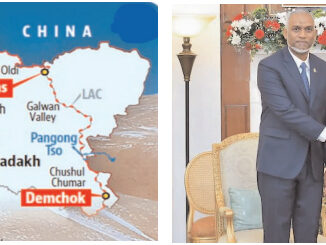
    It took India and China 21 rounds of Corp Commander-level talks on disengagement to end the military impasse that plagued the relationship for five years. While military disengagement had been achieved earlier at four points, the same remained elusive in Depsang and Demchok, the two friction points.
    China maintained that the impasse in these areas were legacy issues that predated the 2020 standoff and should not be allowed to block resumption of normal bilateral exchanges. However, India too steadfastly maintained there couldn’t be any progress in ties till the time disengagement is completed in the remaining areas, calling it an essential basis for peace in the border areas.
    Patient and persevering diplomacy helped clinch the disengagement agreement with China, Jaishankar said.
    Both the countries agreed to return to the patrolling agreements along the Line of Actual Control (LAC) in eastern Ladakh that were in place before the Galwan clashes in 2020 after several negotiations.
    Chabahar port powerplay
    India’s agreement with Iran in May to manage the strategic Chabahar Port for the next decade marked a significant milestone, as it was the first time India assumed management of a port overseas and that too amid Iran’s tensions with the US and Israel. This move underscores Prime Minister Narendra Modi’s emphasis on using strategic ports to bolster regional connectivity and influence.
    Chabahar port is a vital link in India’s efforts to enhance connectivity with Afghanistan, Central Asia, and the broader Eurasian region. It also serves as a counterbalance to Pakistan’s Gwadar Port and China’s expansive Belt and Road Initiative.
    The pact with Iran was signed despite the looming threat of US sanctions. Although the sanctions were never imposed, External Affairs Minister S. Jaishankar addressed concerns raised by the US about the “potential risk” to companies involved in the India-Iran joint venture. Jaishankar stressed that India would “work at” explaining Chabahar’s importance as a project serving the region’s broader interests.
    Maldives comes back
    India’s relationship with Maldives faced turbulence after Mohamed Muizzu, known for his pro-China and anti-India stance, assumed office as president. Mere hours after his swearing-in, Muizzu demanded the withdrawal of Indian military personnel stationed to operate three aviation platforms gifted by India. Following negotiations, the Indian military personnel were replaced with civilian operators.
    Tensions escalated further when three Maldivian deputy ministers made controversial remarks about India and Prime Minister Modi on social media. The Maldivian Foreign Ministry swiftly distanced itself from the comments, leading to the suspension of the three junior ministers.
    Amid these strained ties, President Muizzu made his first bilateral visit to India in October, as Maldives grappled with an economic crisis. The financial challenges facing his country were likely a key topic in discussions with India. Before the visit, Muizzu adopted a conciliatory tone, stating that he has never opposed India and acknowledging that New Delhi was aware of Maldives’ financial difficulties and willing to assist.
    Sri Lanka sides with India
    Sri Lankan President Anura Kumara Dissanayake on his inaugural foreign visit since taking office in September assured Prime Minister Modi that Sri Lanka would not permit its territory to be “used in any way that is detrimental to the interest of India.
    The assurance from Sri Lankan president came at a crucial point as China is intensifying its presence in the Indian Ocean region, particularly targeting Indian interests.
    China’s control over Hambantota Port, acquired through Sri Lanka’s debt default, has enabled Beijing to station vessels like the Yuan Wang 5, a 25,000-tonne satellite and missile tracking ship. This development concerns India due to Sri Lanka’s geographical proximity.
    Despite India’s initial objections in August 2022, Sri Lanka eventually permitted Chinese vessels to dock for ‘replenishment’ at Hambantota. Meanwhile, Chinese surveillance vessels keep on patrolling the Indian Ocean region and using the Hambantota port.
    China secured a 99-year lease on Hambantota port after Sri Lanka struggled with loan repayments. The $1.7 billion project, with phase one completed in 2010, required annual payments of $100 million, which Colombo failed to meet.
    The Canadian challenge
    India in October this year expelled six Canadian diplomats and announced withdrawing its high commissioner and other targeted officials from Canada after strongly dismissing Ottawa’s allegations linking the envoy to a probe into the killing of Sikh extremist Hardeep Singh Nijjar, in a major downturn in already frosty ties between the two nations. India’s decision to recall High Commissioner Sanjay Verma and some other diplomats came shortly after the Canadian Charge d’Affaires Stewart Wheelers was summoned to the Ministry of External Affairs (MEA). Wheelers was bluntly told that baseless “targeting” of the Indian envoy and other officials was “completely unacceptable”.
    India is not neutral in Russia-Ukraine war
    Despite opposition of the West, India has managed to find a middle way on the Russia-Ukraine conflict while also constantly underlining its strong relations with Russia. During the BRICS summit in October, when Prime Minister Modi visited Russia, President Vladimir Putin remarked that he believed Modi would understand his comments without translation, highlighting the strong relationship between the two nations. Modi responded with a hearty laugh. India’s approach to the Russia-Ukraine conflict has been shaped by its steadfast commitment to peace, dialogue, and diplomacy. This year, Modi visited Ukraine and met with President Volodymyr Zelenskyy, reaffirming India’s stance. During the meeting, Modi emphasized that India has never been neutral in the conflict but has consistently sided with peace.
    India’s role in the conflict has drawn international attention. Italian Prime Minister Giorgia Meloni, after her meeting with Zelenskyy, pointed out the potential roles India and China could play in resolving the crisis. Following his visit to Kyiv, Modi telephoned Putin to share his perspectives. Apart from the BRICS summit visit, Modi visited Russia in July, holding extensive talks with President Putin. While India has not proposed a peace formula like those of Brazil or China, it has maintained contact with all stakeholders, advocating for negotiations and emphasizing the importance of Russia’s involvement in peace summits for a sustainable resolution to the conflict.
    Diplomatic win in Qatar
    In a significant diplomatic win for India in February, eight former Indian Navy personnel, who were initially sentenced to death in Qatar on charges of spying, were released, marking a crucial turn of events in a case that had garnered international attention and led Modi critics to make it a test case for his global diplomatic clout.
    India’s diplomatic efforts led to the commutation of the capital punishment to extended prison terms for the eight veterans, who had been facing severe charges in Qatar. This decision came after sustained diplomatic intervention by India, showcasing the effectiveness of bilateral engagements in resolving complex legal matters. Expressing gratitude for the release of the Indian nationals, the Indian government welcomed the decision made by the Amir of the State of Qatar to facilitate their return. The swift resolution of this sensitive issue underscores the significance of diplomatic dialogue and cooperation between nations in addressing challenges faced by their citizens abroad.

  • Under Trump 2.0, the world and the India outlook

    Under Trump 2.0, the world and the India outlook

    There is every reason to believe that U.S. President-elect Donald Trump would be inclined to view India more favorably than others

    By M K Narayanan

    Confirming the adage that the victor takes all, the stunning victory achieved by Donald Trump in the 2024 United States presidential election has transformed perceptions of him across the globe. There is many a reference to him being the most consequential American President since Franklin Delano Roosevelt, and of defining a new political era for America and the world. Similar hyperbolic statements have been made to the effect that following his latest victory, ‘the world lies at Trump’s feet’.

    President-elect Trump is an enigma, and may remain so even after he takes office. Whether he would fit the description of being an iconoclast remains to be seen, but he is known to challenge ‘cherished beliefs or venerated institutions on grounds that they are erroneous or pernicious’. Having also taken control of both the House of Representatives and the Senate, the incoming President seems unstoppable.

    With few restraints remaining, speculation is rife about what he may do, including whether he could strike a deal with Russian President Vladimir Putin, over Ukraine, impose still greater burdens on Iran to bring down the temperature in West Asia, and find ways and means to rein in Israel.

    It appears almost certain that Mr. Trump’s foreign policy priorities would be Europe, West Asia and China. Mr. Trump has been openly critical of the North Atlantic Treaty Organization, and even more so of Europe’s pusillanimous attitude to defense issues, but this does not mean that he will be ready to sacrifice Ukraine to ensure peace in Europe. His approach is also unlikely to be transactional in nature and, hence, giving up on Ukraine for ensuring peace in Europe appears highly unlikely. Mr. Trump would, however, expect Europe to contribute far more towards its defense, but is again unlikely to raise the stakes still higher, to avoid Ukraine turning into a conflict that implicitly takes on the character of a third world war.

    The incoming President’s approach to the West Asia crisis is likely to be still more circumspect, notwithstanding speculation to the contrary. While both Ukraine President Volodymyr Zelenskyy and Israel’s Prime Minister Benjamin Netanyahu have sought to ingratiate themselves with him, Mr. Trump is unlikely to be taken in by such maneuvers. Anyone who is familiar with Mr. Trump’s thinking and his family business dealings, would know what his priorities are likely to be and where they lie. On what specific terms Mr. Trump would agree to a modus vivendi in West Asia is still in the realm of speculation, but prolongation of the conflict on Israel’s terms appears highly unlikely.

    There is much greater certainty in what Mr. Trump’s approach and attitude towards China would be. China heads the list of Mr. Trump’s ‘enemies’, followed by North Korea and Iran, with Russia bringing up the rear. It is certain that as President, Mr. Trump would raise the stakes as far as China is concerned on economic and trade issues, including tighter export controls, and raising tariffs on Chinese exports to unprecedented heights. He is, however, likely to avoid any rash actions, conscious of the fact that China’s Peoples’ Liberation Army has been steadily preparing to confront the U.S. for quite some time and cannot be easily trifled with. The U.S. is also aware that China is known to possess the world’s largest hypersonic arsenal, having missiles that can fly and maneuver at more than five times the speed of sound. China may be Mr. Trump’s enemy number one, but this is no reason to think that he would resort to any rash moves, that may well lead to a wider conflagration.

    Taiwan would remain a potential flash point. Nevertheless, like Sumo wrestlers, the U.S. under Mr. Trump and China under President Xi Jinping are more likely to test the ground reality, before embarking on a conflict that will not stop with Taiwan, the Pacific region or East Asia. Existing U.S. alliances with nations in Asia and Australasia are certain to be strengthened, and already established links with Australia, Japan and South Korea would be further intensified. Yet, as President, Mr. Trump is unlikely to act as a guarantor of peace across the region, and one to be paid for by the U.S. exchequer. Notwithstanding the impatience that he displays at present, there will be certain limits as far as his actions as President are concerned.

    Among the more important countries across the world, there is every reason to believe that Mr. Trump would be inclined to view India more favorably than others. There are several reasons for this. The personality of Mr. Trump and Prime Minister Narendra Modi are in many ways not dissimilar; both demonstrate a ‘no nonsense’ approach to issues and problems and also appear to see them through a common prism. Both are powerful leaders who do not allow their political aides and others to change or alter the trajectory of their beliefs under any circumstances. Their dislike for China is visceral, and people in India are not likely to forget that in the wake of the Galwan incident in June 2020 (in which India lost 20 soldiers), Mr. Trump as U.S. President at the time appeared to support India.

    Capping the relationship between Mr. Trump, then President, and Mr. Modi was the ‘Namaste Trump’ event (in February 2020) in Ahmedabad. The event which attracted over a lakh of people was, perhaps, the largest gathering for a foreign leader visiting India. On this occasion, Mr. Modi had hailed Mr. Trump as a ‘true friend of India’ and a leader who was reshaping geopolitics.

    During Mr. Trump’s previous tenure, both he and Mr. Modi seemed to arrive at a common understanding on issues and concerns affecting the Asia-Pacific region. Little has changed since. If anything, the emphasis on cooperation between the two countries in defense, trade and counter-terrorism has only increased. On his previous visit to India as President, Mr. Trump had made a specific mention of the $3 billion military deal that existed between the two countries.

    As incoming President, Mr. Trump is certain to be gratified that one of his first acts would be to sign a $1.17 billion deal for equipping MH-60R helicopters. He would also be happy that India has firmed up its relationship with the Quad (comprising Australia, Japan, the U.S. and India), which is perceived as an anti-China alliance, even though India does not per se share the view that it is a security alliance.

    Mr. Trump has also endeared himself to many Indians and the Indian establishment by making common cause with India over the plight of the Hindu minority in Bangladesh, who are facing a great deal of hostility from sectarian Islamic entities in that country, and who had forced former Bangladesh Prime Minister Sheikh Hasina to flee the country. This has further helped build an atmosphere of cordiality and friendship which will stand the two countries in good stead.

    On the economic plane, India enjoys a slight advantage in terms of balance of payments, but this is nothing compared with what exists today between China and the U.S. In the case of U.S.-India relations, technology is certain to be a cementing rather than a divisive factor. Silicon Valley, which has a sizeable contingent of Indian tech entrepreneurs, could well serve as a vanguard to cement the relationship, quite contrary to the case of China. If innovation and dynamism is expected to be the hallmark of the new Trump Administration — with Elon Musk and others driving it — then the U.S.-India technological relationship is well set to approach the take-off point. India-U.S. relations will follow suit.

    (M.K. Narayanan is a former Director, Intelligence Bureau, a former National Security Adviser, and a former Governor of West Bengal)

  • Historic Prisoner Swap with Russia brings home 3 Americans

    Historic Prisoner Swap with Russia brings home 3 Americans

    WASHINGTON, D.C. (TIP): The United States and Russia completed their biggest prisoner swap in post-Soviet history on Thursday, August 1, with Moscow releasing journalist Evan Gershkovich and fellow American Paul Whelan, along with dissidents including Vladimir Kara-Murza, in a multinational deal that set two dozen people free, says an AP report.

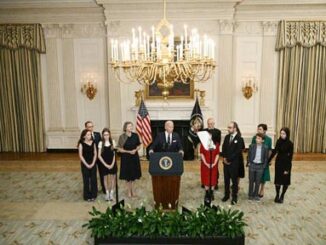
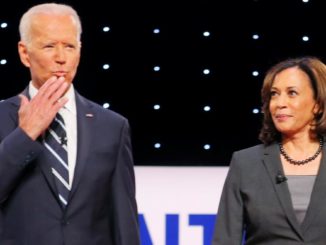
    Gershkovich, Whelan and Alsu Kurmasheva, a journalist with dual U.S.-Russia citizenship, arrived on American soil shortly before midnight for a joyful reunion with their families. President Joe Biden and Vice President Kamala Harris were also there to greet them and dispense hugs all around.

    The trade unfolded despite relations between Washington and Moscow being at their lowest point since the Cold War after Russian President Vladimir Putin’s February 2022 invasion of Ukraine. Negotiators in backchannel talks at one point explored an exchange involving Russian opposition leader Alexei Navalny, but after his death in February ultimately stitched together a 24-person deal that required significant concessions from European allies, including the release of a Russian assassin, and secured freedom for a cluster of journalists, suspected spies, political prisoners and others.

    Biden trumpeted the exchange, by far the largest in a series of swaps with Russia, as a diplomatic feat while welcoming families of the returning Americans to the White House. But the deal, like others before it, reflected an innate imbalance: The U.S. and allies gave up Russians charged or convicted of serious crimes in exchange for Russia releasing journalists, dissidents and others imprisoned by the country’s highly politicized legal system on charges seen by the West as trumped-up.
    “Deals like this one come with tough calls,” Biden said, He added: “There’s nothing that matters more to me than protecting Americans at home and abroad.”

    Under the deal, Russia released Gershkovich, a reporter for The Wall Street Journal who was jailed in 2023 and convicted in July of espionage charges that he and the U.S. government vehemently denied. His family said in a statement released by the newspaper that “we can’t wait to give him the biggest hug and see his sweet and brave smile up close.” The paper’s editor-in-chief, Emma Tucker, called it a “joyous day.”

    “While we waited for this momentous day, we were determined to be as loud as we could be on Evan’s behalf. We are so grateful for all the voices that were raised when his was silent. We can finally say, in unison, ‘Welcome home, Evan,’” she wrote in a letter posted online.

    Also released was Whelan, a Michigan corporate security executive jailed since 2018, also on espionage charges he and Washington have denied, and Kurmasheva, a Radio Free Europe/Radio Liberty journalist convicted in July of spreading false information about the Russian military, accusations her family and employer have rejected.

    The dissidents released included Kara-Murza, a Kremlin critic and Pulitzer Prize-winning writer serving 25 years on charges of treason widely seen as politically motivated, as well as multiple associates of Navalny. Freed Kremlin critics included Oleg Orlov, a veteran human rights campaigner convicted of discrediting the Russian military, and Ilya Yashin, imprisoned for criticizing the war in Ukraine.

    The Russian side got Vadim Krasikov, who was convicted in Germany in 2021 and sentenced to life in prison for killing a former Chechen rebel in a Berlin park two years earlier, apparently on the orders of Moscow’s security services. Throughout the negotiations, Moscow had been persistent in pressing for his release, with Putin himself raising it.

    At the time of Navalny’s death, officials were discussing a possible exchange involving Krasikov. But with that prospect erased, senior U.S. officials, including national security adviser Jake Sullivan, made a fresh push to encourage Germany to release Krasikov. In the end, a handful of the prisoners Russia released were either German nationals or dual German-Russian nationals.

    Russia also received two alleged sleeper agents jailed in Slovenia, as well as three men charged by federal authorities in the U.S., including Roman Seleznev, a convicted computer hacker and the son of a Russian lawmaker, and Vadim Konoshchenok, a suspected Russian intelligence operative accused of providing American-made electronics and ammunition to the Russian military. Norway returned an academic arrested on suspicions of being a Russian spy; Poland sent back a man it detained on espionage charges.

    “Today is a powerful example of why it’s vital to have friends in this world,” Biden said.

    All told, six countries released at least one prisoner and a seventh — Turkey — participated by hosting the location for the swap, in Ankara.

    Biden placed securing the release of Americans held wrongfully overseas at the top of his foreign policy agenda for the six months before he leaves office. In an Oval Office address discussing his decision to drop his bid for a second term, Biden said, “We’re also working around the clock to bring home Americans being unjustly detained all around the world.”

    The Biden administration has now brought home more than 70 Americans detained in other countries as part of deals that have required the U.S. to give up a broad array of convicted criminals, including for drug and weapons offenses. The swaps, though celebrated with fanfare, have spurred criticism that they incentivize future hostage-taking and give adversaries leverage over the U.S. and its allies.

    The U.S. government’s top hostage negotiator, Roger Carstens, has sought to defend the deals by saying the number of wrongfully detained Americans has actually gone down even as swaps have increased.

    Tucker, the Journal’s editor-in-chief, acknowledged the debate, writing in a letter: “We know the U.S. government is keenly aware, as are we, that the only way to prevent a quickening cycle of arresting innocent people as pawns in cynical geopolitical games is to remove the incentive for Russia and other nations that pursue the same detestable practice.”

    Though she called for a change to the dynamic, “for now,” she wrote, “we are celebrating the return of Evan.”

    Thursday’s swap of 24 prisoners surpassed a deal involving 14 people that was struck in 2010. In that exchange, Washington freed 10 Russians living in the U.S. as sleepers, while Moscow deported four Russians, including Sergei Skripal, a double agent working with British intelligence. He and his daughter in 2018 were nearly killed in Britain by nerve agent poisoning blamed on Russian agents.

    Speculation had mounted for weeks that a swap was near because of a confluence of unusual developments, including a startingly quick trial for Gershkovich, which Washington regarded as a sham. He was sentenced to 16 years in a maximum-security prison.

    In a trial that concluded in two days in secrecy in the same week as Gershkovich’s, Kurmasheva was convicted on charges of spreading false information about the Russian military that her family, employer and U.S. officials rejected. Also in recent days, several other figures imprisoned in Russia for speaking out against the war in Ukraine or over their work with Navalny were moved from prison to unknown locations.

    Gershkovich was arrested March 29, 2023, while on a reporting trip to the Ural Mountains city of Yekaterinburg. Authorities claimed, without offering any evidence, that he was gathering secret information for the U.S. The son of Soviet emigres who settled in New Jersey, he moved to Russia in 2017 to work for The Moscow Times newspaper before being hired by the Journal in 2022.

    Gershkovich was designated as wrongfully detained, as was Whelan, who was detained in December 2018 after traveling to Russia for a wedding.

    Whelan, who was serving a 16-year prison sentence, had been excluded from prior high-profile deals involving Russia, including the April 2022 swap by Moscow of imprisoned Marine veteran Trevor Reed for Konstantin Yaroshenko, a Russian pilot convicted in a drug trafficking conspiracy. That December, the U.S. released notorious arms trafficker Viktor Bout in exchange for WNBA star Brittney Griner, who’d been jailed on drug charges.

    “Paul Whelan is free. Our family is grateful to the United States government for making Paul’s freedom a reality,” his family said in a statement.

  • US State Department approves sale of 31 armed drones to India

    US State Department approves sale of 31 armed drones to India

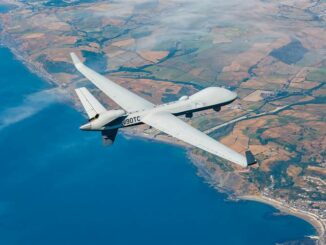
    WASHINGTON, D.C. / NEW DELHI (TIP): The US State Department has approved the sale of 31 MQ-9B armed drones to India. These are to be made by General Atomics and are in use across several forces of the world.

    The project includes ammunition, surveillance, repairs and spare engines, and will cost an estimated $3.99 billion (around Rs 32,000 crore).

    The Defiance Security Cooperation Agency (DSCA) delivered the required certification notifying US Congress of this possible sale on February 1, the DSCA said.

    These will be through the Foreign Military Sale to the Government of India.

    As per the US process, the Congress will recommend the sale to US President for final ratification.

    India had requested to buy thirty-one MQ-9B Sky Guardian aircraft. The payload sought by India are a mix and match of offensive equipment and surveillance. The long-range UAV can stay up in the air for 36 hours while tracking any threat.

    The DSCA said it has delivered the certification that includes 170 of the AGM-114R hellfire missiles; sixteen M36E9 hellfire captive air training missiles; 310 laser small diameter bombs; and eight laser guided test vehicles with live fuses.

    For surveillance India has sought 161 embedded global positioning and inertial navigation systems; 35 rio grande communications intelligence sensor suites.

    India is also looking getting spare engines; hellfire missile launchers; cryptographic appliques and other identification friend or foe (IFF) equipment

    Active Electronically Scanned Array (AESA) surveillance radars will be on board.

    The General Atomics will also work on repair, consumables, accessories, and repair and return support; secure communications, precision navigation, and cryptographic equipment.

    “This proposed sale will support the foreign policy and national security objectives of the United States by helping to strengthen the US-Indian strategic relationship and to improve the security of a major defense partner,” the DSCA said.

    India is seen as important force for political stability, peace, and economic progress in the Indo-Pacific and South Asia region.The proposed sale will improve India’s capability to meet current and future threats by enabling unmanned surveillance and reconnaissance patrols in sea lanes of operation.

    An offset agreement will be defined in negotiations between the purchaser and the contractor. Implementation of this proposed sale will not require the assignment of any additional US Government or contractor representatives to India.
    (With input from agencies)

  • An expanding Gaza war, with no endgame in sight

    An expanding Gaza war, with no endgame in sight

    As the Gaza conflict reverberates across the region, West Asia could sleepwalk into Armageddon

    “Targeted killings serve no useful purpose: while the deceased leaders are quickly replaced, the assassinations increase mutual hostility and escalate tensions. The worrying possibility is that Mr. Netanyahu might not be averse to a regional conflagration: following the political and military failures that facilitated Hamas’s October 7 attacks and with no military success to speak of so far, now, with the Supreme Court rejecting his judicial reforms proposals, the Prime Minister faces the imminent prospect of resignation, arrest and imprisonment. Could a desperate Netanyahu not wish to seize this opportunity to obliterate all Palestinian resistance, eliminate Hezbollah as a fighting force, and debilitate Iran as a threat?”

    By Talmiz Ahmad

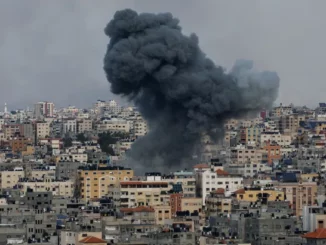
    With the Gaza war having reached its three-month mark, it has spread dangerously to Lebanon, Iraq, Yemen and even Iran. On January 2, an Israeli drone strike on a Hamas office in Beirut, killed Saleh al-Arouri, the deputy head of the Hamas leadership located abroad. The next day, two explosions in Kerman, at the mausoleum of General Qassem Soleimani, former head of the Al Quds Force, killed 95 people who had gathered at the shrine to mourn on the fourth anniversary of his assassination. Though the Islamic State has claimed responsibility, many Iranians suspect it to be Israeli’s hand.

    And, on January 4, the United States announced the targeted killing of the head of an Iran-affiliated militia in Baghdad that has been attacking American targets since the beginning of the Gaza war. These attacks have occurred amidst the ongoing skirmishes in the Red Sea’s waters over the last several weeks, with the Houthis targeting commercial shipping with drones and missiles and inviting strong U.S. retaliation. The Houthis have demanded that humanitarian assistance be provided urgently to the beleaguered Palestinians in Gaza.

    These attacks have escalated tensions in the already volatile region that is reeling from the death and destruction wreaked by Israel in Gaza since early October. Over the last three months, over 22,000 Palestinians have been killed, most of them women and children, while nearly two million have been displaced, the largest displacement of Palestinians in history. An extraordinary humanitarian catastrophe faces the two-million strong Palestinian community in Gaza.

    Netanyahu could pursue escalation

    Israeli troops have also expanded their military operations to the West Bank: nearly 300 Palestinians have been killed, several thousand taken into detention, and numerous homes destroyed. Israeli cabinet Ministers have complemented the violence of their soldiers by calling for the cleansing of Gaza of Palestinians and the resettlement of the enclave with Jewish settlers.

    The major concern at present is that a desperate Israeli Prime Minister Benjamin Netanyahu might pursue the escalation trajectory as, despite the mass killings in Gaza, Israel has very little to show for its efforts: though committed to the destruction of the Hamas war machine and of the movement itself, no prominent Hamas leader has been apprehended in Gaza, while Hamas continues to inflict damage on Israeli soldiers in the ground fighting. A few thousand women and children have been detained by Israeli security to reveal the location of Hamas leaders, with no apparent success so far.

    There are concerns that al-Arouri’s killing was carried out to proclaim some success in the war on Hamas. Saleh al-Arouri, by all accounts, was a soft target. Though he has been a prominent presence in the Hamas leadership, in recent years he had been located in Beirut and was principally liaising with Hezbollah and Iran. Most reports suggest that he had no involvement with the planning or execution of the October 7, 2023 attacks.

    Peace is distant

    Targeted killings serve no useful purpose: while the deceased leaders are quickly replaced, the assassinations increase mutual hostility and escalate tensions. The worrying possibility is that Mr. Netanyahu might not be averse to a regional conflagration: following the political and military failures that facilitated Hamas’s October 7 attacks and with no military success to speak of so far, now, with the Supreme Court rejecting his judicial reforms proposals, the Prime Minister faces the imminent prospect of resignation, arrest and imprisonment. Could a desperate Netanyahu not wish to seize this opportunity to obliterate all Palestinian resistance, eliminate Hezbollah as a fighting force, and debilitate Iran as a threat?

    The reason why this prospect is even being raised is because, through the three-month war in Gaza, no major player has exhibited a vision or a strategy regarding the endgame and the “day after” the cessation of hostilities. Beyond bellicose claims relating to the extermination of Hamas and ethnic cleansing of the occupied territories, Israel has shown no clarity about its war aims or the management of Gaza after the war. Certainly, there is no mention of a longer-term peace process. Thus, mass killings in Gaza and provocative targeted assassinations in the neighborhood have become ends in themselves.

    A role for Saudi Arabia

    The U.S. has been in search of a policy from day one. Beyond its total political and military support for Israel, the Biden administration has shed crocodile tears over humanitarian concerns, but achieved nothing on the ground. The region’s already discredited hegemon appears incapable of insisting on a peace process — obviously, the clout of Israel’s right-wing supporters in Washington have paralyzed the government and lulled it into somnolence.

    The Arab states have exhibited neither voice nor leadership so far: beyond pointless conferences and resolutions, there is no sign of a consensual and forceful approach to the broader Palestine issue or even concerns about regional security.

    The principal responsibility for ushering in peace now rests on Saudi Arabia. It alone has the regional and global standing to insist that its views be deferred to. Having shrugged off its subordination to U.S. diktat, it has been confidently pursuing an independent foreign policy that resonates positively with the world’s leading powers. Palestinian interests and regional peace require robust and pro-active Saudi initiatives, which have been missing so far.

    This is the time when West Asian rulers and their people should be on the same side to serve the region’s interests. Failing that, they will be swept away in the tidal wave of regional conflict they have done nothing to prevent.

    (The author is a former Indian diplomat)

  • Ukraine War, Chinese Protest, Imran Khan’s Ouster; top global Events in 2022

    The year 2022 has been a tumultuous one, with many uprisings, new faces coming to prominence and dictators losing hold of power. It has been a year of economic shockers, from the West to the East. Needless to say, it has been a year of clashes and of new alliances.

    This year saw a significant rise of leaders like Ukraine President Zelensky, French President Macron and Chinese leader Xi Jinping. On the other hand, prominent international leaders, considered to have clout, including former US President Trump and Brazilian President Bolsonaro lost their power.

    There were several prominent events which shaped 2022 in their own ways. To name a few, the Ukraine War, Sri Lankan Economic crisis and the unprecedented protests in China defined the year in their unusual ways.

    UKRAINE WAR

    The Russian invasion of Ukraine, which began earlier this year in February, has entered its 300th day this month, proving to be a tough challenge for both Russia and Ukraine. Russian President Vladimir Putin, who began a blitzkrieg assault on Kyiv taking over the eastern and southern part of the country, is now facing challenge to keep the war going amid reports of ailing health and internal strife.

    So far, over 100,000 Russian and 100,000 Ukrainian soldiers have been killed or injured in the war in Ukraine. For the Ukrainians, this winter is going to be tough with Russian attacks on Ukrainian power plans and consecutive Russian missile attacks. However, the war has shaped the hero out of Ukraine’s President Zelensky, who not only stood against the Russian aggression, but also managed to forge a western unity.

    SRI LANKAN CRISIS

    The Sri Lanka protests which started in April had led to the ouster of President Gotabaya Rajapaksa and two-time President and former Prime Minister Mahinda Rajapaksa. The Sri Lankan crisis, which started as a protest in Colombo, spread across the country with the people demanding reforms in the government.

    Ranil Wickremesinghe was elected President through a parliamentary vote, in which the Rajapaksas’ party backed him in July. The government blamed the Covid pandemic, which badly affected Sri Lanka’s tourist trade, and later led to a shortage of fuel and foreign dollars. However, many experts blame President Rajapaksa’s poor economic mismanagement.

    The country continues to remain under crisis with Colombo anticipating the IMF loan to secure the country’s economy.

    OUSTER OF IMRAN KHAN

    Former Pakistan Prime Minister Imran Khan, who came to power in 2018, is the only Pakistani Prime Minister to be ousted in a no-confidence vote in Parliament earlier this year.

    Khan was ousted from power in April after losing a no-confidence vote in his leadership, which he alleged was part of a US-led conspiracy targeting him because of his independent foreign policy decisions on Russia, China, and Afghanistan.

    Since he lost the vote in Parliament, Khan has mobilized mass rallies across the country, whipping up crowds with claims that he was a victim of a conspiracy by his successor, Prime Minister Shahbaz Sharif, and the United States.

    IRAN PROTESTS

    Iran has been rattled by protests over opposition to the mandatory hijab law as thousands of common citizens have taken to the streets.

    Iran has been rocked by protests since September 16, with the death of 22-year-old Mahsa Amini, who died after being detained by the morality police. The protests have since morphed into one of the most serious challenges to Iran’s theocracy installed by the 1979 Islamic Revolution.

    So far, the country’s police have arrested renowned actresses, footballers, actors and influencers for supporting the protests. It has also executed two protestors for participation in the protests.

    RARE PROTEST IN CHINA

    China saw two major developments this year- Xi Jinping becoming President for the third time and rare protests weeks after against tough anti-Covid restrictions.

    In November, thousands of people took to the streets in several major cities across China, including Beijing and Shanghai, to call for an end to lockdowns and greater political freedoms, in a wave of protests not seen since pro-democracy rallies in 1989 were crushed.

    Despite heavy crackdown, surveillance and censorship, the protests expanded into calls for broader political freedom and left a major negative impact on the reputation of Xi and the Party.

    US MIDTERM ELECTIONS

    The midterm elections in the US, which is usually seen as a mandate against the ruling government, failed to make a Republican sweep as the Democrats gained razor-thin control of the Senate, while the Republicans got a narrow margin against the dems in the House of Representatives.

    However, the misterms was special in the sense that it rained down on the ambitions of former President Donald Trump, who was looking forward to run for the second term, his “Make America Great Again” movement and the broader Republican agenda.

    A silver lining which came out of the midterm elections for the Republicans has been the victory of Florida Governor Ron DeSantis. DeSantis is seen as the possible challenger to Trump and a possible source of revival for the GOP.

    Surging inflation, ongoing strikes, economic crisis and war in Europe: the new UK Prime Minister Rishi Sunak faces these major challenges. Sunak came to Power after his predecessor Truss resigned after just 44 days in power.

    After 12 years in power, the Conservative party is more divided than ever. Earlier this year, Boris Johnson had resigned as PM in July after losing the confidence of some 60 ministers.

    Sunak has become the fifth Tory prime minister since 2016 — following David Cameron, Theresa May, Johnson and Truss. The challenges continue to mount for Sunak, who hopes to get his country out of the economic and political mess.

    BOLSONARO’S EXIT

    Brazilian President Jair Bolsonaro, lost election in October in a nail-biting presidential vote count against Luiz Inacio Lula da Silva.

    Almost from the start of his controversial mandate in 2019, Bolsonaro racked up accusations and investigations for everything from spreading disinformation to crimes against humanity. He survived more than 150 impeachment bids — a record.

    Most of these were over his flawed management of the coronavirus pandemic, which claimed the lives of more than 685,000 people in Brazil — the world’s second-highest toll after the United States.

    On January 1, 2023, Bolsonaro’s arch-rival, leftist ex-president Luiz Inacio Lula da Silva will take over the reins once more and Bolsonaro loses his presidential immunity.

    COP27 SUMMIT

    The UN COP27 climate summit in Egypt had some success and some failures. While the summit achieved a landmark deal on funding to help vulnerable countries cope with devastating climate impacts, the talks stalled on key issues and failed to secure commitments to stop greenhouse gas emissions.

    Though the participating nations agreed to contribute to the cost of the harm an overheated planet causes to developing nations, but they concluded the talks without doing anything more to address the burning of fossil fuels, which is the primary cause of these catastrophes.

  • Former top spy Lieutenant General AsimMunir appointed Pakistan Army chief

    Former top spy Lieutenant General AsimMunir appointed Pakistan Army chief

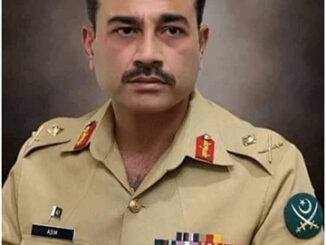
    Islamabad (TIP): Pakistan’s former spy master and senior-most Lt General AsimMunir was named as the new Army Chief by Prime Minister Shehbaz Sharif on November 24, ending speculation over the most powerful position in the coup-prone nation, where the military wields considerable power in matters of security and foreign policy.

    Lt Gen Munir has served as chief of two most powerful intelligence agencies—the Inter-Services Intelligence (ISI) and the Military Intelligence (MI) — but his stint as the spy chief at the ISI was the shortest ever as he was replaced by Lt Gen Faiz Hamid within eight months on the insistence of then-Prime Minister Imran Khan in 2019.

    He would replace Gen QamarJavedBajwa, who retires on November 29 after two consecutive three-year terms. Gen Bajwa, 61, was appointed as the army chief in 2016 for a three-year term. He was given a three-year extension by the Khan government in 2019. Information Minister Marriyum Aurangzeb announced on Twitter that Prime Minister Sharif has named Lt Gen Munir as the new army chief. Lt Gen SahirShamshad Mirza had been picked as the Chairman of the Joint Chiefs of Staff Committee (CJCSC). “The summary about (appointments) has been sent to the President,” Marriyum Aurangzeb tweeted. The CJCSC is the highest authority in the hierarchy of the armed forces but the key powers including mobilisation of troops, appointments and transfers lie with the COAS which makes the person holding the post the most powerful in the military.

    The powerful Army, which has ruled Pakistan for more than half of its 75-plus years of existence, has hitherto wielded considerable power in matters of security and foreign policy. The Pakistan Tehreek-e-Insaf party earlier quoted Imran Khan as saying that “when the summary comes, I and the President of Pakistan will act according to the constitution and laws.” The appointment coincides with a dispute between the military and Imran Khan, who blames the army for playing a role in his ouster in April this year through a no-confidence vote.

    Khan’s close aide and former information minister Fawad Chaudhry said on Wednesday that “until we see the conduct of the new army chief, we cannot say anything about it, but the role of the army in politics in the last 6 months is controversial, this role will need to be changed.” Lt Gen Munir is the senior-most general. Although he was promoted to the rank of two-star general in September 2018, he took charge two months later. As a result, his four-year tenure as Lt Gen will end on November 27. But with his appointment as COAS, he would get a three-year extension in the service. (PTI)

  • The world in 2022: Another year of living dangerously

    The world in 2022: Another year of living dangerously

    On the brink of a new year, the world faces a daunting array of challenges: the resurgent Covid-19 pandemic, the climate emergency, the struggle between democracy and authoritarianism, humanitarian crises, mass migration, and trans-national terrorism. There is the risk of new inter-state conflicts, exacerbated by the breakdown of the rules-based international order, and the spread of lethal autonomous weapons. All in all, for most people on Earth – and a handful in space – 2022 will be another year of living dangerously.

    Middle East

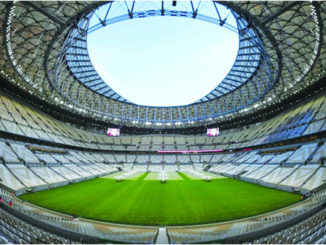
    Events in the Middle East will make global headlines again in 2022 – but for positive as well as negative reasons. A cause for optimism is football’s World Cup, which kicks off in Qatar in November. It’s the first time an Arab or a Muslim country has hosted the tournament. It is expected to provide a major fillip for the Gulf region in terms of future business and tourism – and, possibly, more open, progressive forms of governance.

    But the choice of Qatar, overshadowed by allegations of corruption, was controversial from the start. Its human rights record will come under increased scrutiny. Its treatment of low-paid migrant workers is another flashpoint. The Guardian revealed that at least 6,500 workers have died since Qatar got the nod from Fifa in 2010, killed while building seven new stadiums, roads and hotels, and a new airport.

    Concerns will also persist about Qatar’s illiberal attitude to free speech and women’s and LGBTQ+ rights in a country where it remains dangerous to openly criticise the government and where homosexuality is illegal. But analysts suggest most fans will not focus on these issues, which could make Qatar 2022 the most successful example of “sports-washing” to date.

    More familiar subjects will otherwise dominate the regional agenda. Foremost is the question of whether Israel and/or the US will take new military and/or economic steps to curb Iran’s attempts, which Tehran denies, to acquire capability to build nuclear weapons. Israel has been threatening air strikes if slow-moving talks to revive the 2015 nuclear deal fail. Even football fans could not ignore a war in the Gulf.

    Attention will focus on Turkey’s authoritarian president, Recep Tayyip Erdogan, whose neo-Islamist AKP party will mark 20 years in power in 2022. Erdogan’s rule has grown increasingly oppressive at home, while his aggressive foreign policy, rows with the EU and US, on-off collusion with Russia over Syria and chronic economic mismanagement could have unpredictable consequences.

    Other hotspots are likely to be Lebanon – tottering on the verge of becoming a failed state like war-torn Yemen – and ever-chaotic Libya. Close attention should also be paid to Palestine, where the unpopular president, Mahmoud Abbas’s postponement of elections, Israeli settler violence and West Bank land-grabs, and the lack of an active peace process all loom large.

    Asia Pacific

    The eyes of the world will be on China at the beginning and the end of the year, and quite possibly in the intervening period as well. The Winter Olympics open in Beijing in February. But the crucial question, for sports fans, of who tops the medals table may be overshadowed by diplomatic boycotts by the US, UK and other countries in protest at China’s serial human rights abuses. They fear the Games may become a Chinese Communist party propaganda exercise.

    The CCP’s 20th national congress, due towards the end of the year, will be the other headline-grabber. President Xi Jinping is hoping to secure an unprecedented third five-year term, which, if achieved, would confirm his position as China’s most powerful leader since Mao Zedong. There will also be jostling for senior positions in the Politburo and Politburo standing committee. It will not necessarily all go Xi’s way.

    Western analysts differ sharply over how secure Xi’s position truly is. A slowing economy, a debt crisis, an ageing population, huge environmental and climate-related challenges, and US-led attempts to “contain” China by signing up neighbouring countries are all putting pressure on Xi. Yet, as matters stand, 2022 is likely to see ongoing, bullish attempts to expand China’s global economic and geopolitical influence. A military attack on Taiwan, which Xi has vowed to re-conquer by any or all means, could change everything.

    India, China’s biggest regional competitor, may continue to punch below its weight on the world stage. In what could be a symbolically important moment, its total population could soon match or exceed China’s 1.41 billion, according to some estimates. Yet at the same time, Indian birth rates and average family sizes are falling. Not so symbolic, and more dangerous, are unresolved Himalayan border disputes between these two giant neighbours, which led to violence in 2020-21 and reflect a broader deterioration in bilateral relations.

    The popularity of Narendra Modi, India’s authoritarian prime minister, has taken a dive of late, due to the pandemic and a sluggish economy. He was forced into an embarrassing U-turn on farm “reform” and is accused of using terrorism laws to silence critics. His BJP party will try to regain lost ground in a string of state elections in 2022. Modi’s policy of stronger ties with the west, exemplified by the Quad alliance (India, the US, Japan, Australia), will likely be reinforced, adding to China’s discomfort.

    Elsewhere in Asia, violent repression in Myanmar and the desperate plight of the Afghan people following the Taliban takeover will likely provoke more western hand-wringing than concrete action. Afghanistan totters on the brink of disaster. “We’re looking at 23 million people marching towards starvation,” says David Beasley of the World Food Programme. “The next six months are going to be catastrophic.”

    North Korea’s nuclear brinkmanship may bring a showdown as Kim Jong-un’s paranoid regime sends mixed signals about war and peace. The Philippines will elect a new president; the foul-mouthed incumbent, Rodrigo Duterte, is limited to a single term. Unfortunately this is not the case with Scott Morrison, who will seek re-election as Australia’s prime minister.

    Europe

    It will be a critical year for Europe as the EU and national leaders grapple with tense internal and external divisions, the social and economic impact of the unending pandemic, migration and the newly reinforced challenges, post-Cop26, posed by net zero emissions targets.

    More fundamentally, Europe must decide whether it wants to be taken seriously as a global actor, or will surrender its international influence to China, the US and malign regimes such as Vladimir Putin’s Russia.

    The tone may be set by spring elections in France and Hungary, where rightwing populist forces are again pushing divisive agendas. Viktor Orbán, the authoritarian Hungarian leader who has made a mockery of the EU over rule of law, democracy and free speech issues, will face a united opposition for the first time. His fate will be watched closely in Poland, the Czech Republic, Slovenia and other EU member states where reactionary far-right parties flourish.

    Emmanuel Macron, the neo-Gaullist centrist who came from nowhere in 2017, will ask French voters for a second term in preference to his avowedly racist, Islamophobic rivals, Marine Le Pen and Éric Zemmour. Polls put him ahead, although he also faces what could be a strong challenge from the centre-right Republicans, whose candidate, Valérie Pécresse, is the first woman to lead the conservatives. With the left in disarray, the election could radicalise France in reactionary ways. Elections are also due in Sweden, Serbia and Austria.

    Germany’s new SPD-led coalition government will come under close scrutiny as it attempts to do things differently after the long years of Angela Merkel’s reign. Despite some conciliatory pledges, friction will be hard to avoid with the European Commission, led by Merkel ally Ursula von der Leyen, and with France and other southern EU members over budgetary policy and debt. France assumes the EU presidency in January and Macron will try to advance his ideas about common defence and security policy – what he calls “strategic autonomy”.

    Macron’s belief that Europe must stand up for itself in a hostile world will be put to the test on a range of fronts, notably Ukraine. Analysts suggest rising Russian military pressure, including a large border troop build-up and a threat to deploy nuclear missiles, could lead to renewed conflict early in the year as Nato hangs back.

    Other trigger issues include Belarus’s weaponising of migration (and the continuing absence of a humane pan-European migration policy) and brewing separatist trouble in Bosnia-Herzegovina and the Balkans. The EU is planning a China summit, but there is no consensus over how to balance business and human rights. In isolated, increasingly impoverished Britain, Brexit buyers’ remorse looks certain to intensify.

    Relations with the US, which takes a dim view of European autonomy but appears ambivalent over Ukraine, may prove tense at times. Nato, its credibility damaged post-Afghanistan, faces a difficult year as it seeks a new secretary-general. Smart money says a woman could get the top job for the first time. The former UK prime minister Theresa May has been mentioned – but the French will not want a Brit.

    South America

    The struggle to defeat Jair Bolsonaro, Brazil’s notorious rightwing president, in national elections due in October looks set to produce an epic battle with international ramifications. Inside Brazil, Bolsonaro has been widely condemned for his lethally negligent handling of the Covid pandemic. Over half a million Brazilians have died, more than in any country bar the US. Beyond Brazil, Bolsonaro is reviled for his climate change denial and the accelerated destruction of the Amazon rainforest.

    Opinion polls show that, should he stand, Luiz Inácio Lula da Silva, the former president who was jailed and then cleared on corruption charges, would easily beat Bolsonaro. But that assumes a fair fight. Concern is growing that American supporters of Donald Trump are coaching the Bolsonaro camp on how to steal an election or mount a coup to overturn the result, as Trump tried and failed to do in Washington a year ago. Fears grow that Trump-style electoral subversion may find more emulators around the world.

    Surveys in Europe suggest support for rightwing populist-nationalist politicians is waning, but that may not be the case in South America, outside Brazil, and other parts of the developing world in 2022. Populism feeds off the gap between corrupt “elites” and so-called “ordinary people”, and in many poorer countries, that gap, measured in wealth and power, is growing. In Cuba, Nicaragua, Haiti and Venezuela, supposed champions of the people have become their oppressors, and this phenomenon looks set to continue. In Chile, the presidential election’s first round produced strong support for José Antonio Kast, a hard-right Pinochet apologist, though he was ultimately defeated by Gabriel Boric, a leftist former student leader, who will become the country’s youngest leader after storming to a resounding victory in a run-off.

    Argentina’s president, Alberto Fernández, faces a different kind of problem in what looks like a tough year ahead, after elections in which his Peronists, one of the world’s oldest populist parties, lost their majority in Congress for the first time in nearly 40 years. Mexico’s president, Andrés Manuel López Obrador, will face ongoing tensions with the US over trade, drugs and migration from Central America. But at least he no longer has to put up with Trump’s insults – for now.

    North America

    All eyes will be on the campaign for November’s mid-term elections when the Democrats will attempt to fend off a Republican bid to re-take control of the Senate and House of Representatives. The results will inevitably be viewed as a referendum on Joe Biden’s presidency. If the GOP does well in the battleground states, Donald Trump – who still falsely claims to have won the 2020 election – will almost certainly decide to run for a second term in 2024.

    Certain issues will have nationwide resonance: in particular, progress (or otherwise) in stemming the pandemic and ongoing anti-vax resistance; the economy, with prices and interest rates set to rise; and divisive social issues such as migration, race and abortion rights, with the supreme court predicted to overrule or seriously weaken provisions of the landmark 1973 Roe v Wade decision.

    The Democrats’ biggest problem in 2022 may be internal party divisions. The split between so-called progressives and moderates, especially in the Senate, undermined Biden’s signature social care and infrastructure spending bills, which were watered down. Some of the focus will be on Biden himself: whether he will run again in 2024, his age (he will be 80 in November), his mental agility and his ability to deliver his agenda. His mid-December minus-7 approval rating may prove hard to turn around.

    Also under the microscope is Kamala Harris, the vice-president, who is said to be unsettled and under-performing – at least by those with an interest is destabilising the White House. Pete Buttigieg, the transportation secretary who sought the Democratic nomination in 2020, is a man to watch, as a possible replacement for Harris or even for Biden, should the president settle for one term.

    Concern has grown, meanwhile, over whether the mid-terms will be free and fair, given extraordinary efforts by Republican state legislators to make it harder to vote and even harder for opponents to win gerrymandered congressional districts and precincts with in-built GOP majorities. One survey estimates Republicans will flip at least five House seats thanks to redrawn, absurdly distorted voting maps. This could be enough to assure a Republican House majority before voting even begins.

    Pressure from would-be Central American migrants on the southern US border will likely be a running story in 2022 – a problem Harris, who was tasked with dealing with it, has fumbled so far. She and Biden are accused of continuing Trump’s harsh policies. Belief in Biden’s competence has also been undermined by the chaotic Afghan withdrawal, which felt to many like a Vietnam-scale humiliation.

    Another big foreign policy setback or overseas conflagration – such as a Russian land-grab in Ukraine, direct Chinese aggression against Taiwan or an Israel-Iran conflict – has potential to suck in US forces and wreck Biden’s presidency.

    In Canada, Prime Minister Justin Trudeau is expected to push new policy initiatives on affordable childcare and housing after winning re-election in September. But in 2021’s snap election his Liberals attracted the smallest share of the popular vote of any winning party in history, suggesting the Trudeau magic is wearing thin. Disputes swirl over alleged corruption, pandemic management, trade with the US and carbon reduction policy.

    Africa

    As befits this giant continent, some of 2022’s biggest themes will play out across Africa. Among the most striking is the fraught question of whether Africans, still largely unvaccinated, will pay a huge, avoidable price for the developed world’s monopolising of vaccines, its reluctance to distribute surpluses and share patents – and from the pandemic’s myriad, knock-on health and economic impacts.

    This question in turn raises another: will such selfishness rebound on the wealthy north, as former UK prime minister Gordon Brown has repeatedly warned? The sudden spread of Omicron, first identified in South Africa, suggests more Covid variants could emerge in 2022. Yet once again, the response of developed countries may be to focus on domestic protection, not international cooperation. The course of the global pandemic in 2022 – both in terms of the threat to health and economic prosperity – is ultimately unknowable. But in many African countries, with relatively young populations less vulnerable to severe Covid harms, the bigger problem may be the negative impact on management of other diseases.

    It’s estimated 25 million people in Africa will live with HIV-Aids in 2022. Malaria claims almost 400,000 lives in a typical year. Treatment of these diseases, and others such as TB and diabetes, may deteriorate further as a result of Covid-related strains on healthcare systems.

    Replacing the Middle East, Africa has become the new ground zero for international terrorism, at least in the view of many analysts. This trend looks set to continue in 2022. The countries of the Sahel, in particular, have seen an upsurge of radical Islamist groups, mostly home-grown, yet often professing allegiance to global networks such as al-Qaida and Islamic State.

                    Source: Theguardian.com

  • Time for a Healing Touch and Unity

    Time for a Healing Touch and Unity

    By Prof. Indrajit S Saluja

    I am assuming Mr. Biden has won the presidency. Mr. Biden may have to wait a little to be certified a winner; may have to wait a little longer in view of the lawsuits the Trump campaign has filed. But, unless there is a divine intervention on his behalf, Mr. Trump stands a loser.

    America has demonstrated to the world that the election system of the greatest democracy in the world is strong and fair. It was indeed a mammoth task to be handling voting and counting of votes which have outnumbered any in the past – a whopping 160 million-, up from 138 million in 2016. My friend Ven Parameswaran who has lived in this country for more than 60 years now, and has been closely studying elections, tells me it is a record percentage since 1900. On top of the numbers handled, the elections have been conducted in all fairness. It speaks of the integrity and efficiency of the huge number of officials involved in the management of elections. They deserve gratitude of the whole nation.

    However, there have ben some murmurs that all is not right with the election. Well, if at all there is something wrong, it is not with the system or the people working in that system. It is a section of people who, instead  of lauding a dynamic system, berate it just because the fairness of system has denied them their cherished dream of winning the election by hook or by crook.

    The cries of “stop counting” remind me of the cries of “stop testing” when  the rising numbers of coronavirus became a subject of concern for health officials and Americans. Mr. Trump was anguished that tests resulted in throwing up more positive cases of the disease. Similarly, when Trump found the number of votes going up in favor of Biden, he demanded a halt to counting. Between the first shout from him to now, we have seen how the number of votes for Biden have gone up in major battleground States, particularly, Georgia and Pennsylvania, leaving a bewildered Trump wondering where his lead has evaporated. It  is all the because  of mail-in votes which were counted after November 3 in person voting. And, all know, it is the Democrats who preferred to send in their votes by mail. So., there should be no surprise that Joe Biden came from behind and overtook Trump in many States. While Trump vented his frustration with the system,  and threatened to litigate, his rival on the ascendancy, Joe Biden advised calm  and patience to Americans, asking them to let the democratic process play out. But we cannot expect such restraint and patience from Mr. Trump , who until the other day, demanded from his base that they chant, not just four years more, but “twelve years more”. The egotistical sublime in him is hurt and hurt beyond words. Not to give in easily, and he has suggested it so often, Mr. Trump  must play out all cards available to him even at the cost of the great American nation, the great American people, the great American institutions, including the great American Justices of the Supreme Court who , erroneously he thinks, will do his bidding because they are there because of him. He forgets that God Himself resides within a Judge and guides his / her conscience. Unfortunately for America, there are always a few around Mr. Trump (many have since distanced themselves from him seeing his imminent defeat, and have been criticized also), who, like Iago in Shakespeare’s “OTHELLO” driven by “motiveless malignity” must goad Trump into more crimes, , to heap on himself greater insult and ignominy. The world knows them. Only Mr. Trump does not. Alas!

    And these people, I am sure, readers know them, are telling Mr. Trump to fight back the “perceived injustice” of the election system, the imagined wrong that the election  is being stolen from him, without any evidence, whatsoever. They are not Trump’s friends. They have their own agenda which they want to play out. I wish Mr. Trump could understand their designs,  show maturity, accept  there are always opportunities, and bide his time.

    And now, I am assuming Mr. Biden has won the presidency. Mr. Biden may have to wait a little to be certified a winner; may have to wait a little longer in view of the lawsuits the Trump campaign  has filed. But, unless there is a divine intervention on his behalf, Mr. Trump stands a loser.

    Let Mr. Trump accept that Americans preferred Mr. Joe Biden to him. They probably were not satisfied with what he gave them. By the way, in the long history of American democracy, Mr. Trump probably is the 4th sitting president, not to be elected for a second term, according to my friend Ven Parameswaran. Ford who was VP with Nixon , took up presidency after Nixon resigned. Technically, Ford was not an elected President. However, let us count him in. He ran for president but was defeated. Jimmy Carter was not re-elected for a second term. And, then Bush was not elected for a second term, again, according to the information provided by my friend Ven Parameswaran. Mr. Trump has certainly become a part of history.

    Mr. Trump should have shown the grace befitting the President of America, as did the Democratic Presidential candidate Al Gore in 2000. Though Al Gore was a clear winner, the Supreme Court accepted the claim of George W. Bush who became the 43rd President of the U.S. Al Gore congratulated Bush, and “offered to meet with him as soon as possible to heal the divisions of the campaign and the contest through which we have passed”.

    Almost a century and a half ago, Senator Stephen Douglas told Abraham Lincoln, who had just defeated him for the presidency, “Partisan feeling must yield to patriotism. I’m with you, Mr. President, and God bless you”.

    I am glad Joe Biden asked people to be “calm”  and “patient”  and let the “Democratic process play out”. That’s being a leader.

    President Biden faces a daunting task. He is inheritor of a divided nation. The first task for him will be to unite the people of America. It will not be easy. It is heartening to find Joe Biden pledging to be the President of all Americans. But mere words will not heal and unite. The world will keenly watch how Biden restores the exceptional  American spirit of unity and brotherhood which makes America great. The second important task for Biden is to free Americans  of the deadly  pandemic  which has been raging for months now and has claimed  2.36K American lives. As at the time of writing this comment, America has recorded 9.76 million cases, with 100,000 new cases being reported on a daily basis. The new administration must ensure the virus is contained, and Americans get back to their normal life. Still another and immediate task before President Biden is to provide economic relief to millions of people across all walks of life who have been battered by the long spell of the pandemic, rendering them unemployed, and without adequate means to sustain themselves. They need to be rehabilitated. Their dignity needs to be restored, so they take , once again, pride in being Americans.

    Yet another immediate issue of concern to President Biden should be providing jobs to millions who have during the months of pandemic lost jobs and have not had enough to support their families., with many benefits having been withdrawn by the Trump administration.

    Related to job creation is the question of wages. Even though t is the States which decide on minimum wages to workers in their State, Federal government should take initiative to persuade States to agree on a fair minimum wage, which then should be applicable across the nation. The guarantee of a uniform minimum wage across the nation  will allow people to freely migrate to the State of their choice, fulfilling a basic strength of American democracy. Business and industry are other areas which need immediate attention of the new administration. America must bring back manufacturing  to its shores, which alone can create jobs, and give to the nation self-reliance which are the crying needs of the present times.

    Nobody can deny that environment is an important part of our existence. Mr. Biden has rightly announced that America under him will immediately rejoin the Paris Climate Agreement, from which Trump had pulled out because he thinks climate change is  “a hoax”, and may be, because it has  President Obama’s stamp on it.

    November 11 is Veterans Day. It makes me unhappy to think that we do not show the veneration the veterans deserve. They need not only veneration , but also better care. Hope, President Biden will come up with some idea to give the heroes  their due. Related to Veterans are our brave soldiers. It is time to review US engagement in futile conflicts abroad.  We must bring back our soldiers who have for long been involved in conflicts which are not ours in any way and serve no legitimate American interests. Let America initiate a new era of world peace and brotherhood of entire human world. In respect of friends and foes across the world which, in other words, means foreign policy, while there is need to further strengthen ties with friendly countries, including India, there is also an urgent need to have a fresh look at US alliances.  The ruptured relationship with NATO countries must immediately be repaired.

    In this context, the Trump administration’s failures in maintaining decent relationship with the United Nations and countries of the world should not be forgotten. All nations are equal partners in managing the world. They need to be treated with respect. It is the first requirement of civility. And America is a civilized nation.

    It is my fervent hope that President Biden will keep his promise  to be “the president of all America, and all Americans”, and as Senator Stephen Douglas , a century and a half ago said, “Partisan feeling must yield to patriotism”. Hope, the US Senate and the US House of Representatives will lend their bipartisan support to President Biden to restore the glory of America  as the First and the Greatest Nation in the World.

    God bless America!

    (The author is Chief Editor of The Indian Panorama. He can be reached at salujaindra@gmail.com)


  • Indian Americans Murthy and Chetty are  among Joe Biden’s Core Advisors

    Indian Americans Murthy and Chetty are  among Joe Biden’s Core Advisors

     NEW YORK  (TIP): Two prominent Indian Americans are among Democratic Presidential nominee Joe Biden’s “core advisors” who have been guiding him on issues ranging from the coronavirus pandemic, economic recovery to foreign policy and climate change, a media report said.

    Biden, “plotting an ambitious presidency that would begin amid twin health and economic crises, is leaning on veteran advisers with high-level governmental experience rather than outsiders and ideological rivals to help guide him on subjects including the coronavirus pandemic and the country’s diminished standing in the world,” a report in The New York Times said.

    Among those advising him on the pandemic are Dr Vivek Murthy, former US Surgeon General who was appointed by President Barack Obama and Harvard economist Raj Chetty is among those who have briefed Biden on economic issues, the report said.

    Murthy and former head of the Food and Drug Administration David Kessler were among those present on a conference call convened by the Biden campaign when it learned that two people who had travelled with Senator Kamala Harris had tested positive for the coronavirus.

    “Biden has spoken often of his briefings with experts, and Dr Murthy and Dr Kessler have been two of the most prominent medical figures whose counsel Biden has sought during the public health crisis,” the NYT report said.

    The NYT report quoted Kessler as saying that in the early days of the pandemic, he and Murthy would brief Biden “every day, or four times a week.”

    “We would send in 80- to 90-page documents, take him through the epidemic from epidemiology, therapeutics, vaccines, testing. Staff would join, originally by phone but they soon shifted to Zoom,” Kessler said, according to the NYT report. “The docs,” as Biden calls Kessler and Murthy, also “pore over research and data on the virus and consult with modelers, vaccinologists and other experts so they can provide Biden with projections about the coming months.”

    The report added that Biden has signaled that the government’s top infectious disease expert Anthony Fauci will have a prominent role in a Biden administration.

    On economy, Joe Biden has cast a wide net for economic advice, soliciting input from several hundred policy experts, the report said. Among those who have briefed Biden on the economy are Chetty, “who has produced pathbreaking research on economic mobility and its roots in the last several years” and former chair of the Federal Reserve Janet Yellen.

    On the issue of foreign policy, the NYT report said Biden would come to “office with more foreign policy experience than any president in memory”.

    While some in his inner circle of foreign policy and national security advisers have worked for him through the years, Biden’s aides understand that “assumptions that governed Obama policymaking have changed, including the prospects for cooperation with China and the importance of the Middle East.”

    Among the most influential foreign policy adviser for Biden is Antony Blinken, who has previously worked for Biden on the Senate Foreign Relations Committee and served as a deputy national security adviser and deputy secretary of state under Obama.

    “Known more for his diplomatic touch than any fixed ideas, he is considered a likely candidate for national security adviser or secretary of state,” the NYT report said.

    (SOURCE: NEW YORK TIMES)


  • The India-U.S. defense partnership is deepening

    The India-U.S. defense partnership is deepening

    Blurb

    The optics around the 2+2 Dialogue

       By Rakesh Sood

    in Delhi are defining — the defense ties between the two countries have come of age

    Sidebar

    The signing, last week, of the Basic Exchange and Cooperation Agreement (BECA) providing for the sharing of geospatial data is the last of the foundational agreements. The first, General Security Of Military Information Agreement (GSOMIA), relating to security of each other’s military information was signed in 2002. The Congress-led United Progressive Alliance government signed the End Use Monitoring Agreement (EUMA) in 2009. The India-United States defense partnership received a major boost earlier this week with the visit of U.S. Secretary of State Mike Pompeo and U.S. Defense Secretary Mark Esper for the third round of the 2+2 Dialogue with their Indian counterparts, External Affairs Minister S. Jaishankar and Defense Minister Rajnath Singh. The joint statement spells out the highlights but the optics are what define the visit. At a time when most ministerial engagements and even summits are taking place virtually, the significance of two senior U.S. officials travelling to Delhi a week before the U.S. goes to the polls conveys an unambiguous political message — the defense partnership has come of age.

    A long road

    It has been a long process, with many ups and downs since the first modest steps were taken with the end of the Cold War three decades ago. The 1991 Kicklighter proposals (Lt. Gen. Claude Kicklighter was the Army commander at the U.S. Pacific Command) suggested establishing contacts between the three Services to promote exchanges and explore areas of cooperation. An Agreed Minute on Defense Cooperation was concluded in 1995 instituting a dialogue at the Defense Secretary level together with the setting up of a Technology Group.

    The end of the Cold War had helped create this opening but the overhang of the nuclear issue continued to cast a shadow on the talks. There was little appreciation of each other’s threat perceptions and the differences came to a head when India undertook a series of nuclear tests in 1998. The U.S. responded angrily by imposing a whole slew of economic sanctions and leading the international condemnation campaign. An intensive engagement followed with 18 rounds of talks between the then External Affairs Minister, the late Jaswant Singh, and then U.S. Deputy Secretary of State Strobe Talbott spanning two years that helped bring about a shift in perceptions. Sanctions were gradually lifted and in 2005, a 10-year Framework for Defense Relationship established, followed by a Joint Declaration on Defense Cooperation in 2013. The Framework agreement was renewed in 2015 for another decade.

    The Framework laid out an institutional mechanism for areas of cooperation including joint exercises, intelligence exchanges, joint training for multinational operations including disaster relief and humanitarian assistance, technology transfer and a sharing of non-proliferation best practices. Initial movement was slow; it gathered momentum once the nuclear hurdle was overcome in 2008 with the India-U.S. civil nuclear deal.

    There were other factors at play too. Equally important was the progressive opening up of the Indian economy that was registering an impressive annual growth rate of over 7%. Bilateral trade in goods and services was $20 billion in 2000 and exceeded $140 billion in 2018. The four million-strong Indian diaspora in the U.S. has come of political age and its impact can be seen in the bipartisan composition of the India Caucus (in the House) and the Senate Friends of India group. From less than $400 million of defense acquisitions till 2005, the U.S. has since signed defense contracts of $18 billion.

    A bipartisan consensus

    A bipartisan consensus supporting the steady growth in India-U.S. ties in both New Delhi and Washington has been a critical supporting factor. The first baby steps in the form of the Kicklighter proposals came in 1991 from the Bush administration (Republican) when P.V. Narasimha Rao led a Congress coalition. Following the nuclear tests, Prime Minister Atal Bihari Vajpayee (Bharatiya Janata Party) welcomed President Bill Clinton (Democrat) to Delhi. The visit, taking place after 22 years — the previous one being U.S. President Jimmy Carter’s visit in 1978 — marked a shift from “estranged democracies” to “natural allies”. A Congress coalition led by Prime Minister Manmohan Singh carried the process forward with a Republican Bush administration. Heavy political lifting was needed to conclude the historic nuclear deal in 2008, removing the biggest legacy obstacle.

    The biggest push has come from Prime Minister Narendra Modi overcoming the “hesitations of history” and taking forward the relationship, first with a Democratic Obama administration by announcing a Joint Strategic Vision for the Asia-Pacific and Indian Ocean Region in 2015, followed by elevating the India-U.S. Strategic and Commercial Dialogue (launched in 2009 and the first round held in 2010) into the 2+2 dialogue in 2018 with the (Republican) Trump administration reflecting the ‘Comprehensive Global Strategic Partnership’. Mr Modi is not constrained (at least on the strategic side) unlike Dr. Singh during his second term who faced opposition within his party, had a Defense Minister who preferred to shy away from any decision, and often had to prod a reluctant bureaucracy.

    The signing, last week, of the Basic Exchange and Cooperation Agreement (BECA) providing for the sharing of geospatial data is the last of the foundational agreements. The first, General Security Of Military Information Agreement (GSOMIA), relating to security of each other’s military information was signed in 2002. The Congress-led United Progressive Alliance government signed the End Use Monitoring Agreement (EUMA) in 2009 but then dragged its feet on the others on the grounds that it would jeopardize India’s strategic autonomy. However, it was apparent that as military exercises with the U.S. expanded, both in scale and complexity, and U.S. military platforms were inducted, not signing these agreements was perceived as an obstacle to strengthening cooperation. Nearly 60 countries have signed BECA. In 2016, Logistics Exchange Memorandum of Agreement (LEMOA) relating to exchange of logistics support had been concluded, followed by Communications Compatibility and Security Agreement (COMCASA) in 2018 permitting encryption standards of communication systems. More than 100 countries have signed these agreements with the U.S. Equivalent agreements on logistics and mutual security of military communication have also been signed with France but without the political fuss.

    Breaking away from ‘labels’

    Developing the habit of working together has been a long process of building mutual respect and trust while accepting differences. The U.S. is used to dealing with allies (invariably junior partners in a U.S.-dominated alliance structure) and adversaries. India falls into neither category. Therefore, engaging as equal partners has been a learning experience for both India and the U.S. Recognizing this, the U.S. categorized India as “a Major Defense Partner” in 2016, a position unique to India that was formalized in the National Defense Authorization Act (2017) authorizing the Secretaries of State and Defense to take necessary measures. It has helped that India also joined the export control regimes (Australia Group, Missile Technology Control Regime and Wassenaar Arrangement) and has practices consistent with the Nuclear Suppliers Group where its membership was blocked by China spuriously linking it to Pakistan. In 2018, India was placed in Category I of the Strategic Trade Authorization, easing exports of sensitive technologies.

    In every relationship, there is a push factor and a pull factor; an alignment of the two is called the convergence of interests. An idea matures when the timing is right. After all, the Quad (Australia, India, Japan and the U.S.) was first mooted in 2007 but after one meeting, it petered out till its re-emergence now. Alongside the ministerial meeting in Tokyo earlier this month, India was invited for the first time to also attend the Five Eyes (a signals intelligence grouping set up in 1941 consisting of Australia, Canada, New Zealand, the United Kingdom and the U.S.) meeting.

    The policy debate in India is often caught up in ‘labels’. When Prime Minister Jawaharlal Nehru described non-alignment as the guiding principle of Indian foreign policy, it was designed to expand India’s diplomatic space. Yet, in 1971, when the Cold War directly impinged on India’s national security, a non-aligned India balanced the threat by signing the Treaty of Peace, Friendship and Cooperation between the Government of India and the Government of the Union of Soviet Socialist Republics. However, during the 1970s and 1980s, it was often hijacked by the Non-aligned Movement tying up policy in ideological knots. Such became the hold of the label that even after the Cold War, India defined strategic autonomy as Non-alignment 2.0! The Indian strategic community needs to appreciate that policies cannot become prisoners of labels. Ultimately, the policy objective has to enhance India’s strategic space and capability. That is the real symbolism of the in-person meeting in Delhi.

    (The author  is a former diplomat and presently Distinguished Fellow at the Observer Research Foundation)

    (Source: The Hindu)

  • The Global Beat Foundation of USA organized online discussion on the  impact of US Presidential elections on South Asian communities

    Dr. Zafar Iqbal in Washington

    WASHINGTON (TIP): The Global Beat Foundation of USA (TGBF) organized an online discussion on US Presidential elections on 18th October 2020.  Using Zoom technology and Facebook, the overall discussion centered on the possible impact of the election on South Asian communities in the US and in South-Asia. The overall impression of the panelists comprising South Asian scholars, social activists, and journalists was that in Pakistan national politics seems to have pushed US elections out of focus while in India President Trump dominates the narrative as PM Modi’s friend. The participants at this debate also noted most Americans were not even discussing foreign policy issues this election season.  John Lennon, a veteran Journalist with vast experience as an international reporter at the Voice of America, observed that the Presidential election 2020 is the most contentious election in his adult life. He apprised the audience of the prevailing issues facing the nation and their possible impact on the election. He mentioned the enhanced racial tensions, concerns related to surging COVID-19 infection due to the lack of comprehensive policies of the administration, increasing unemployment and its influence on economic problems, etc. Currently, there are more than 60 million people are unemployed, he said.

    Saima Iqbal, a former BBC journalist, who now works for a French media outlet in New Delhi, said that the Indian media are currently centered around PM Modi’s ideology. “The coverage of the US election in India is influenced by Modi’s friendship with President Trump and the media continues to talk about “marrying of thoughts between Trump and Modi,” she added. The Indians, however, did take notice of Kamala Harris’s nomination because her mother was an Indian but quickly moved back to the Trump-Modi friendship, she added.

    Farrukh Pitafi, journalist, analyst, and talk show host Pakistan Television in Islamabad observed that initially the US election generated some interest in Pakistan but as “our politics heated up, the focus moved almost entirely to national politics. Most Pakistanis believed that both Trump and his Democratic rival Joe Biden had similar views on Pakistan, and so “whoever comes to power, things are going to remain the same,” he added.

    Misbah Azam, a Pakistani American scholar and  Talk4Pak news show host from San Jose, California, opined that the main difference between President Trump and Vice President Biden is that Trump likes to continue his “America First” policy, while Biden would be more inclined towards re-forming the US leadership role in the world which the US is losing during Trump presidency.

    Meriam Sabih, a Pakistani American journalist and public speaker, Philadelphia, said that a Biden-Harris White House would be more interested in strengthening democracy in Pakistan while “a Trump presidency would be more careless on this issue.”  She urged Pakistani Americans to focus more on our local issues here and not to oppose Kamala Harris just because she was an Indian.

    Fareeha Rehman, Digital editor working for a US news channel, was excited by the inclusion of a South Asian woman in this election. “A lot of South Asians are enthusiastic about someone from their own community,” she said.

    Anwar Iqbal, a veteran journalist, and correspondent, Daily Dawn was the MC, and Nadeem Hotiana, former Minister Press and Information, Embassy of Pakistan moderated the discussion. Raza Rumi of Ithaca College, Cornell University, New York gave concluding remarks.

  • Trump’s ‘filthy’ comment on India dismays strategists

    Trump’s ‘filthy’ comment on India dismays strategists

    ‘Look at India, it’s filthy,’ the US President said in the Oct 22 presidential debate

    NEW DELHI / NEW YORK (TIP): After not figuring in the first presidential debate between US President Donald Trump and former Vice President Joe Biden, India did crop up in the second edition but not in the manner proponents of a much closer Indo-US strategic relations would have wished for. “Look at China. How filthy it is. Look at Russia. Look at India, it’s filthy. The air is filthy,’’ said Trump in a remark that cut several strategic analysts to the bone. On the other hand, the US has the “lowest number in carbon emissions”, he claimed.

    Several questioned on social media the need for Trump to make an unsavory reference to India when they were expecting Indo-US ties to turn the strategic corner during the forthcoming visit of two top American cabinet ministers to India. They also wondered if Trump had this view of India why did he pay a return stadium-visit to Ahmedabad barely six months after being hosted in a Houston stadium by PM Narendra Modi.

    Biden did not mention India.

    Trump was responding to debate moderator Kristen Welker’s question on how he would simultaneously combat climate change and support job growth.The debate was expected to feature India and the wider neighborhood. During the first debate, the two candidates did not speak much on the American foreign policy, especially in the Asia Pacific, which seems to be the focus of the current administration.

    One reason for the cursory references to foreign policy is also because one debate was cancelled after Trump refused to participate in an on-line format.Welker had chosen six topics for in-depth discussions. Three of them were domestic issues while the other three – climate change, leadership and national security – had foreign policy ramifications. Trump, however, was consistent in his observations in blaming the three countries. In the first debate on September 29, he had said, “China sends up real dirt into the air. Russia does, India does — they all do.’’

    (Source: The Tribune)

  • US Election 2020

    US Election 2020

     By Ven Parameswaran 

    Biden wins, according to polls sponsored by the mainstream media; Trafalgar poll predicts Trump will win

    There are only 12 days to the Presidential election on November 3, 2020. Everyone is interested in knowing who has better chances to win – President Trump or former Vice President Biden. This discussion and speculation will keep on going till the election. All the TV networks including Fox, CBS, ABC, NBC, CNN and the mainstream media including NYT and Washington Post and the polls sponsored by them have been predicting Biden will win by a comfortable margin. How can one believe them? They predicted in 2016 that Hillary Clinton would win. But Trump defeated Clinton by 306 electoral votes, though Clinton won the popular vote by 2%.
    Therefore, the decision will be made by the voters in battleground states of Florida, North Carolina, Arizona, Pennsylvania, Ohio, Michigan, and Wisconsin. In 2016, Trump’s major victory against Clinton was in Pennsylvania, Wisconsin, Ohio, and Michigan. He won with a narrow margin of 77,000 votes combined from these four states. According to my calculations Trump has good chances to win New Hampshire, Nevada, and Minnesota this year.
    The upstart Trafalgar does not see 2020 the same way everyone else does. Trafalgar’s strategist Robert Cahaly was born in Georgia and got involved in politics going door-to-door as a kid. He started a political consulting firm with some others in the late 1990s. Around 2008, he says, they realized that the polling they were getting was not very good, so they started doing their own. He says they got good, accurate results in the races they were working.
    In the 2016 primaries, they started putting out some of their own polls. “Our polls ended up being the best ones in South Carolina and Georgia, “ Cahaly says. “So we started studying what it was that made those so different.”
    Then there was the breakthrough in the 2016 general election. “We ended up having an incredible year,” he says. “I mean, we got Pennsylvania right. We got Michigan right. We had the best poll in five of the battleground states in 2016. And I actually predicted 306 to 232 on the electoral college. And we went from doing a little bit of polling on the side to that (being) our primary business in about 24 hours. And since then, that is what we have been doing.”
    As a general matter, he discounts national polls. First, because the race for the presidency is won state by state, not on the basis of the national vote. Second, because all the methodological difficulties involved in getting a balanced, representative sample in a state poll of 1,000 people are magnified in a national survey. It is easily skewable at that point, and you start making assumptions.
    So how does he see the 2020 race? Fundamentally, as a motivation race, rather than a persuasion race, with perhaps 1.5 per cent, at most, of the electorate UNDECIDED in battleground states.
    The likeliest Trump electoral path to victory involves winning the battlegrounds of North Carolina, Georgia, Florida, Arizona, and either Michigan or Pennsylvania among the former Blue Wall states (assuming he does not lose states such as Iowa or Ohio).
    THIS IS CAHALY’S BREAKDOWN: He believes Trump will win North Carolina and Florida and discount’s Biden’s chances in Georgia because the Republican-base vote is too big there (the same is true in Texas).
    As for Arizona, “I think Trump has the lead,” Cahaly says. “I think Republican Senator Martha McSally has some ground to make up. I see her about 5 points behind Trump, but I think Trump will probably win the state. And win it by a couple of points or more. And if he wins it big enough, McSally has a shot.”
    Trump is not there yet in Pennsylvania, according to Cahaly. “Right now, we have got him down in Pennsylvania,” he says, “I think if it were held today, the Undecides would break toward Trump and there would be some hidden vote.
    In Michigan, Trafalgar has Trump ahead. “I think he will win Michigan, “ Cahaly says, citing fear of the Democratic economic agenda.
    Overall, Cahaly sees another Trump win. “If it all happened right now,” he maintains, “my best guess would be an Electoral College victory in the high to 270s, low 280s.”
    THERE IT IS. AMONG POLLSTERS, YOU HEARD IT FROM ROBERT CAHALY FIRST, AND PERHAPS EXCLUSIVELY—A POSITION HE HAS BEEN IN BEFORE.
    I must point out that the second Presidential debate scheduled for 22nd October can have an impact.
    Do not forget Trump has been most unpredictable. President Obama said Trump won’t run, won’t be nominated and cannot win against Hillary Clinton. Nobody expected Trump would defeat nine veteran governors and 5 senators in the Primaries. Trump proved everyone wrong by defeating the most popular Hillary Clinton. There are more women voters than men voters.
    Trump is generating more enthusiasm than Biden. The working class of America cannot forget Trump brought the unemployment to 3.4%, a 50-year record. Four organizations have nominated Trump for Nobel Peace Prize based on foreign policy achievements, especially peace in the Middle East.

    THE GALLUP POLL ASKED THE AMERICANS:

    Are you better off today than four years ago? 56% said they are better off. This is the most favorable poll for Trump. The question was coined by President Ronald Reagan during the Presidential debate.

    (Ven Parameswaran, Chairman, Asian American Republican Committee (founded 1988), lives in Scarsdale, NY. He can be reached at vpwaren@gmail.com)

  • Pakistan closely watching Modi’s trip to Israel

    Pakistan closely watching Modi’s trip to Israel

    ISLAMABAD (TIP): Pakistan is closely watching Prime Minister Narendra Modi’s historic trip to Israel as it can have serious implications on strategic stability in the region, a media report said on July 3.

    The Express Tribune reported that Pakistan officially does not comment on bilateral visits of other heads of governments and states, but it is closely following Modi’s trip since it can have serious implications on strategic stability in the region.

    “Israel has long been a major supplier of arms and other defence equipment to India and those deals have deliberately been kept secret by the two sides. However, the two countries are now more open and publicly talk about their deepening defence cooperation,” the daily said.

    India got access to some of the most modern defence technologies of America through Israel, defence analyst Lt-Gen (retd) Amjad Shoaib was quoted as saying by the daily. Gen Shoaib said India had greatly benefited from the defence and military ties with Israel.

    Dr Zafar Nawaz Jaspal, an international affairs expert, said growing defence cooperation between India and Israel would disturb strategic balance in the South Asian region.

    The Quaid-e-Azam University professor believes Israel assistance can propel India’s missile programme, something that would undermine Pakistan’s policy of maintaining credible deterrence, the daily reported.

    “One of the subjects on which the Indian media has created a lot of hype is the threat emanating from terrorism. It has worked hard to relate terrorism with Pakistan and blame it for virtually any terror incident occurring anywhere in India,” the daily said. PM Modi’s three-day visit to Israel is the first by an Indian Prime Minister to the Jewish nation. Israeli Prime Minister Benjamin Netanyahu along with his entire cabinet went to Tel Aviv’s Ben Gurion airport to receive Modi in a rare gesture.

    Modi, before leaving for Tel Aviv, told an Israeli newspaper that terrorism was a common challenge and said New Delhi and Tel Aviv “can cooperate even more closely” in battling it.

    Former ambassador Ali Sarwar Naqvi believes that the Indian media is too much obsessed with Pakistan, saying: “No matter where Modi goes, India always tries to drag Pakistan along.” However, Naqvi was sceptical if Israel would go too far to appease India.

    “Pakistan is not under the immediate radar of Israel. Their (Israel) priority at the moment is Middle East.” However, Naqvi said their defence and military cooperation was something that had direct bearing on Pakistan.

    For Gen Shoaib, there is a lesson for Pakistan in the ever-growing close relationship between Israel and India.

    “If India can cement ties with Israel while at the same time maintaining diplomatic ties with its enemy Iran, why can’t Pakistan also show flexibility in its foreign policy,” Gen argued.

    “Our foreign policy should not be merely aimed at appeasing any particular country. Rather we need to follow our own national interests,” he said.

    Some analysts have advocated maintaining working relationship with Israel, if not establishing full diplomatic ties, in order to further and protect Pakistan’s interests.

    In 2005, during former president Pervez Musharraf’s tenure, Pakistan and Israel established contacts and even foreign ministers of the two countries met in Turkey. However, things could not make headway further after that. (PTI)

  • The PM’s meeting with Trump gives India a chance to study its options in a changed world

    The PM’s meeting with Trump gives India a chance to study its options in a changed world

    Three years after his first visit to meet U.S. President Barack Obama, Prime Minister Narendra Modi will travel to Washington for his first meeting with the new President, Donald Trump, on June 26. His visit in 2014 was made easier by a strong Indo-U.S. relationship built steadily over the previous two decades, and grounded in Mr. Obama’s personal commitment to enhancing strategic ties. It also benefited from Mr. Modi’s willingness to let bygones be bygones, over the earlier denial to him of a visa to the U.S., in order to build a new relationship, and his show of diaspora strength in the U.S. Mr. Modi now goes to Washington as a seasoned interlocutor, not the ‘new kid on the world leadership block’ he was in previous visits. But the situation in 2017 is different. In the five months since his inauguration, Mr. Trump has made it clear that no international relationship can be taken for granted, and it will be difficult to predict which American foreign policy principles will be adhered to in the new administration, and which will be dropped without ceremony. On the partnership with India, few will be willing to hazard a guess on what Mr. Trump has in mind. As President he has spoken to Mr. Modi twice, and sent his National Security Adviser to the region. But he has also criticized India on a tough tariff regime, on immigration and professional visas, and while withdrawing from the Paris climate accord, accused India of taking “billions and billions” of U.S. aid to fund its commitments. India has not been the biggest priority on Mr. Trump’s list of meetings with world leaders; the focus has been on America’s closest alliances in Europe and Japan, and problem areas such as China and Turkey.

    Given the changed circumstances, officials in both India and the U.S. have reportedly set aside any formal agenda for the meeting on Monday, placing the emphasis on how the one-on-one meeting between the two leaders goes. Both sides have also, appropriately, toned down expectations of any big announcements. There are indications of likely agreements to be announced on counter-terror cooperation, maritime traffic facilitation and trade. However, it would be wise to put off more substantive decisions, on military cooperation, large defense purchases, Afghanistan and fighting regional terror, and the long-pending operationalization of the nuclear deal to the next bilateral meeting, and focus instead on firming up the ground rules of engagement. That will allow Mr. Modi to get a true sense of what Mr. Trump’s commitment to the relationship is, while India studies its options on how to chart its course amid the new uncertainty in world politics. That he is getting a sense of the changed U.S. administration may be clear from the decision not to hold any large gatherings of the Indian-American community this time, presumably in deference to the prevailing sentiment in Washington over immigration.

    (The Hindu)

  • Iran votes for reform

    Iran votes for reform

    “Mr. Rouhani’s decisive victory is a shot in the arm for the moderates coming after the elections in February last year for the Parliament and the Assembly of Experts where the moderates and the reformists had registered significant gains”, says the author.
    By Rakesh Sood

    After a difficult campaign, President Hassan Rouhani won a crucial second term in Iran’s presidential elections held on May 19. A high turnout of 73% helped him score a convincing victory over his principal challenger Ebrahim Raisi, a conservative cleric, in the first round itself, winning 57% of the votes compared to Mr. Raisi’s 38.5%. More than two-thirds of Iran’s voters are in urban areas and most of them are Rouhani supporters; therefore, as voting hours got extended to midnight indicating a high turnout, the mood in the Rouhani camp turned jubilant.

    A DIFFICULT CAMPAIGN:

    In 2013, Mr. Rouhani had campaigned and won on a platform that focused on bringing sanctions to an end,which he was able to achieve in July 2015 with the Joint Comprehensive Plan of Action (JCPOA), a nuclear agreement concluded with the P-5 + 1. The sanctions relief has had a positive impact on the economy with oil exports up and GDP growth hitting 6% last year though expectations were higher. In a TV debate in the run-up to the election, Mr. Raisi described the JCPOA as ‘a check that Rouhani had failed to cash’. Opinion polls had favored Mr. Rouhani, because Mr. Raisi, though close to the Supreme Leader,Ayatollah Ali Khamenei, was considered a relative newcomer to politics. However, concern grew when Mohammad Bagher Ghalibaf, a former Iranian Revolutionary Guards Corps (IRGC) pilot and the Mayor of Tehran since 2005, withdrew from the race in support of Mr. Raisi, who had spent most of his life in the judiciary before being appointed custodian of the shrine of Imam Reza in Mashhad last year. He also controls Astan-e-Quds Razavi, one of the wealthiest foundations, and is seen a possible successor to the present Supreme Leader who is 77 and in poor health.

    Therefore Mr. Rouhani’s decisive victory is a shot in the arm for the moderates coming after the elections in February last year for the Parliament and the Assembly of Experts where the moderates and the reformists had registered significant gains.

    ROUHANI’S CONSTRAINTS:

    However, given Iran’s complex governance structures, President Rouhani will have to tread carefully as his powers and those of the directly elected 290- member Parliament are constrained by the non-elected authorities. The key power center is the Supreme Leader who is appointed by the Assembly of Experts and in turn appoints the heads of radio and TV, the armed forces and the IRGC, the Supreme National Security Council, the 51-member Expediency Council and the higher judiciary. He also chooses six members of the powerful Guardian Council, with the other six nominated by the judiciary. The Guardian Council in turn vets candidates for all elections, presidential, parliamentary and the 88-member Assembly of Experts. It cleared only six candidates out of the more than 1,600 who filed nominations for the presidential contest; rejections included former President Mahmoud Ahmadinejad’s nomination. In addition, it approves all legislation passed by Parliament to ensure its consistency with Islamic jurisprudence. A dispute between Parliament and the Council is resolved by the Expediency Council. The Assembly of Experts is directly elected and its primary role is to appoint the Supreme Leader, critical during Mr. Rouhani’s second term.

    Mr. Rouhani’s principal challenge will be to sustain economic growth and nudge the reform process forward in order to tackle unemployment, currently running at over 12%, and higher among the youth. He has promised to expand individual and political rights, enlarge women’s role and ensure greater accountability.

    Some of these will be challenged. While his victory margin is a clear endorsement for reform, the Supreme Leader will play a critical balancing role. It is interesting that, in his immediate remarks, he praised the Iranian people for the impressive turnout, but did not congratulate the winner.

    In foreign policy, Mr. Rouhani will present the image of a moderate and more outward-oriented Iran. He is no stranger to Iran’s complex politics. From 1989 to 2005, he was Secretary of the Supreme National Security Council, reporting to the Supreme Leader, and handled the nuclear negotiations during 2003-05.

    During this period, he also served a term each as Deputy Speaker of Parliament and as member of the Expediency Council. Following Mr. Ahmadinejad’s election in 2005, he quit. After being elected in 2013, he persuaded the Supreme Leader to shift responsibility for the nuclear negotiations to the Foreign Ministry and let Foreign Minister Mohammad Javad Zarif take the lead.

    In addition to managing his home front, the other challenge for Mr. Rouhani will be keep the JCPOA going in the face of the U.S. Congress’s and now President Donald Trump’s declared hostility.

    DEALING WITH TRUMP:

    During the election campaign, Mr. Trump had called it the ‘worst deal ever’ and threatened to tear it up as soon as he was elected! Subsequently, he seems to have modified his position, realizing perhaps that it is not just a bilateral agreement with Iran but also includes Russia, China, the U.K., France, Germany and the European Union. In April, the Trump administration certified that Iran was abiding by its obligations but Secretary of State Rex Tillerson added that a 90- day policy review would be undertaken in view of ‘Iran’s alarming ongoing provocations’.

    More recently, on May 17, the Trump administration continued the sanctions waiver (under Section 1245 of the National Defense Authorization Act 2012), needed every 120 days even while imposing sanctions on seven Iranian and Chinese individuals and entities on account of missile proliferation activities.

    In April, a slew of human rights related sanctions were imposed. In mid- June another waiver, this time under the Iran Freedom and Counter-Proliferation Act, will need to be renewed if the JCPOA is to be sustained. These are necessary because in 2015, the Republican-dominated Congress rejected the JCPOA and U.S.

    President Barack Obama used executive authority to waive U.S. sanctions but these waivers need to be renewed periodically. The JCPOA was the outcome of protracted negotiations over more than a decade, during which Iran had steadily built up its nuclear capabilities, especially in the enrichment domain, and in 2015 was estimated to be only months away from acquiring enough Highly Enriched Uranium to produce one device (approximately 25 kg) though Iran consistently maintained that its program was exclusively for peaceful purposes. Given deep suspicions however, the JCPOA with its extensive inspection and reporting obligations was the best way to prevent Iran from developing a military nuclear capability for the next 10-15 years.

    Opponents say that while cheating is unlikely, they fear that Iran will retain its nuclear appetite after abstaining during the 10-15 year period and resume its activity once the inspection obligations expire.

    THE SAUDI FACTOR:

    Perhaps the most troubling problem is the new embrace of Saudi Arabia that was in evidence during Mr. Trump’s visit. It raises the prospects of greater U.S. involvement in the war in Yemen and can push relations with Iran into a confrontation. In 2016, there were 19 ‘incidents at sea’ between U.S. and Iranian vessels in the Persian Gulf. The most serious was in January 2016 when the IRGC held two U.S. vessels and 10 servicemen, accused of trespassing in Iranian waters. The crisis was resolved within hours, thanks to some quick phone conversations between U.S. Secretary of State John Kerry and Mr. Zarif. That link is missing today.

    It is all the more ironic because Iran is the one country that is opposed to the Islamic State. Yet the U.S. is keener to bless the Saudi-created Islamic Military Alliance to Fight Terrorism, a grouping of 41 Sunni nations, under the command of former Pakistani Army Chief, General Raheel Sharif. It remains unclear what the role of this coalition is, to fight the IS or Iran or in Yemen, or to secure the Gulf monarchies!

    For the last quarter century, the U.S. practiced dual containment of Iran and Iraq, a policy that suited both Israel and Saudi Arabia. Mr. Obama’s push for the JCPOA was driven by a desire to extricate U.S. policy from this stranglehold and expand options. If a return to the Saudi embrace creates additional tensions and a collapse of the JCPOA, it could push Iran to cross the nuclear threshold with much wider regional implications.Mr. Rouhani’s challenges are just beginning.

    (The author is a former diplomat and currently Distinguished Fellow at the Observer Research Foundation. He can be reached at rakeshsood2001@yahoo.com)

  • Russian Interference in US Elections 2016: Probe Tentacles Grow

    Russian Interference in US Elections 2016: Probe Tentacles Grow

    Jared Kushner Under Scrutiny in Russia Probe, Say Officials

    WASHINGTON (TIP): An NBC News report said, May 25, quoting “multiple US officials” that Jared Kushner, the president’s son-in-law and one of his senior advisers, has come under FBI scrutiny in the Russia investigation. “Investigators believe Kushner has significant information relevant to their inquiry, officials said. That does not mean they suspect him of a crime or intend to charge him”, says the NBC News. CNN said in a report on May 25, “The FBI’s criminal probe of Russian meddling in the 2016 presidential election is increasingly touching on the multiple roles of senior White House adviser

    Jared Kushner on both the Trump campaign and the Trump transition team. “Points of focus that pertain to Kushner include: the Trump campaign’s 2016 data analytics operation; his relationship with former national security adviser Michael Flynn; and Kushner’s own contacts with Russians, according to US officials briefed on the probe”. CNN report says further:”Federal investigators have been taking a  closer look at the Trump campaign’s data analytics operation, which was supervised by Kushner, officials say, and are examining whether Russian operatives used people associated with the campaign — wittingly or unwittingly — to try to help Russia’s own data targeting.

    “Kushner, the president’s son-in-law, worked with and helped oversee the campaign’s data operation contractors based in San Antonio, Texas. “Kushner has described how, beginning last June, he began testing the use of data targeting to sell Trump merchandise.

    Eventually, according to a November Forbes magazine profile, the data operation helped the Trump campaign figure out where the candidate’s message was resonating in states like Michigan and Wisconsin, places where conventional political wisdom suggested they would be wasting time and money. “I called somebody who works for one of the technology companies that I work with, and I had them give me a tutorial on how to use Facebook micro-targeting,” Kushner told Forbes.

    A source connected to the data analytics group said the team has not been contacted about any Russia related probe. “We have not been contacted by anyone and don’t know anything formally about an investigation,” the source said.

    The FBI focus on Flynn also touches on Kushner because he led the presidential transition’s foreign policy efforts. Kushner’s impact grew during the transition, which one source says he effectively ran — along with another campaign aide Rick Dearborn — once New Jersey Gov Chris Christie was removed. This source says both Kushner and his wife Ivanka Trump wanted Flynn in as national security adviser. A source close to Kushner denied that he pushed for Flynn. Kushner has acknowledged meeting during the transition with Russia’s ambassador and separately with the head of a Russian bank.

    According to a source familiar with what transpired, neither meeting discussed sanctions but instead focused on establishing a backchannel to Russia’s president. Those meetings are of interest to the FBI.

    The FBI’s scrutiny of Kushner places the bureau’s sprawling counterintelligence and criminal investigation not only on the doorstep of the White House, but the Trump family circle. The Washington Post first reported last week that a senior White House official close to Trump was a “person of interest,” but did not name the person. The term “person of interest” has no legal meaning. The officials said Kushner is in a different category from former Trump aides Paul Manafort and Michael Flynn, who are formally considered subjects of the investigation.

    According to the Justice Department’s U.S. Attorneys’ Manual, “A ‘subject’ of an investigation is a person whose conduct is within the scope of the grand jury’s investigation.”

    Records of both Manafort and Flynn have been demanded by grand jury subpoenas, NBC News has reported. It is not known whether Kushner has received any records requests from federal investigators. Also unclear is what precisely about Kushner’s activities has drawn the FBI’s interest as it investigates whether Trump associates coordinated with the Russian campaign to interfere in the election. Former

    FBI Director Robert Mueller is now leading the probe as a special counsel. Kushner met at least once in December with the Russian ambassador, Sergey Kislyak, and he also met last year with a Russian banker, Sergey Gorkov.

    “Mr. Kushner previously volunteered to share with Congress what he knows about these meetings,” Kushner’s lawyer, Jamie Gorelick, told NBC News. “He will do the same if he is contacted in connection with any other inquiry.”

    Congressional aides have said they would like to question Kushner about that meeting, and Kushner has said he would voluntarily appear before the Senate intelligence committee as part of its Russia investigation.

    Gorkov is chairman of VneshEconomBank, a Russian governmentowned institution that has been under U.S. sanctions since July 2014. Gorkov studied at the training school for the FSB, one of Russia’s intelligence services.

    Kushner, whose family’s real estate empire is worth $1.8 billion, according to Forbes, wields significant power in the White House. He is married to Trump’s daughter, Ivanka.

  • China’s Silk Road forum latest effort to boost Xi Jinping’s stature

    China’s Silk Road forum latest effort to boost Xi Jinping’s stature

    China’s Silk Road forum latest effort to boost Xi Jinping’s stature

    BEIJING (TIP): China will seek to burnish President Xi Jinping’s stature as a world-class statesman at an international gathering centered on his signature foreign policy effort envisioning a future world order in which all roads lead to Beijing.

    The “Belt and Road Forum” opening on Sunday is the latest in a series of high-profile appearances aimed at projecting Xi’s influence on the global stage ahead of a key congress of the ruling Communist Party later this year. All feed a fundamental yearning among ordinary Chinese: to see their country’s prestige and status rise.

    “Xi is now seen as a world leader with a lot of influence and respect internationally and that will definitely boost his domestic appeal,” said Joseph Cheng, a long-time observer of Chinese politics now retired from the City University of Hong Kong.

    Leaders from 28 countries are set to attend, including Presidents Vladimir Putin of Russia and Rodrigo Duterte of the Philippines. The most prominent attendee from the West will be Prime Minister Paolo Gentiloni of Italy.

    Other Western nations, including the United States, will be represented by officials of significantly lower standing. Washington is sending a delegation led by Eric Branstad, senior White House adviser in the Department of Commerce. Britain, Germany and France are to be represented by finance officials.

    That’s partly because of developments at home, but also is a reflection of concerns that China may be exporting its standards on human rights, the environment and government transparency, while leaving poor countries with unsustainable levels of debt.

    Yet the forum is as much about promoting Xi’s image at home as it is about pushing his vision abroad.

    Chinese state media outlets have linked Xi inextricably to the two-day gathering in Beijing, which will be centered around their president’s plan for a vast network of ports, railways and roads expanding China’s trade with Asia, Africa and Europe. Xi has even popped up in a series of English language promotional videos produced by the official China Daily called “Belt and Road Bedtime Stories.”

    “He’s showing vision. Leaders have to be visionary. He’s showing hope in their economic future by proposing a very significant economic plan,” former U.S. ambassador to China Max Baucus told The Associated Press. “I think it’s going to help him very much ahead of the next party congress.”

    The party will hold its twice-a-decade congress this fall at which Xi will oversee an infusion of fresh blood in leading bodies, most importantly the all powerful Politburo Standing Committee. Xi rose to the top of an intensely competitive system riven by factions and rivalries to take the reins of the party in 2012, and has steadily accrued powers well beyond those of his predecessors in areas such as defense, internal security and the economy.

    He’s also fallen back on the hallowed tradition of political campaigns and sloganeering, preaching the “Chinese Dream” of prosperity and national rejuvenation, pushing a sweeping anticorruption campaign and cracking down on the infiltration of “Western” democratic values that could threaten party control.

    In the international sphere, he’s presided over both the Asia-Pacific Economic Cooperation forum and the G- 20 meeting of industrialized states, both of which were attended by former President Barack Obama. In January, Xi sought to portray himself as a champion of globalization and free trade at the World Economic Forum in Davos, in contrast to President Donald Trump’s protectionist rhetoric. On an entirely different level though is his signature initiative formally known as “One Belt, One Road.”

    It aims to reassert China’s past prominence as the dominant power in Asia whose culture and economy deeply influenced its neighbors as far as Africa and Europe. It speaks deeply to Chinese pride in their country’s explosive economic growth and political clout after a century of humiliation at the hands of foreign powers that formally ended with Mao Zedong’s communist revolution in 1949.

    The initiative also furthers the Xi administration’s reputation for muscular foreign policy. Under Xi, China has strongly asserted its claim to virtually the entire strategic South China Sea and established the Asian Infrastructure Development Bank as a global institution alongside such bodies as the World Bank, Asian Development Bank and International Monetary Fund.

    And unlike APEC and Davos, it involves the disbursal of potentially trillions of dollars in contracts, expanding both China’s economic reach and Xi’s personal authority as holder of the purse strings. The Asian Development Bank says the region, home to 60 percent of the world’s people, needs more than $26 trillion of infrastructure investment by 2030 to keep economies growing. (AP)


  • Vikas Swarup is India’s new envoy to Canada

    Vikas Swarup is India’s new envoy to Canada

    NEW DELHI (TIP): The Ministry of External Affairs is all set to get a new public face with its current spokesperson Vikas Swarup headed to Canada as the High Commissioner.

    Gopal Baglay, Joint Secretary in charge of Pakistan, Iran and Afghanistan Division in the ministry, is likely to succeed Swarup. Baglay earlier served as Deputy High Commissioner in Pakistan and as Director in MEA’s External Publicity Division.

    Swarup, a 1986-batch Indian Foreign Service officer, had replaced Syed Akbaruddin as the MEA spokesperson in 2015. He shot to fame when his novel Q&A was made into a Hollywood movie, ‘Slumdog Millionaire’, which won eight Oscars. He is expected to take up his new assignment shortly.

  • In shift, Donald Trump warns Israel against new settlements

    In shift, Donald Trump warns Israel against new settlements

    WASHINGTON (TIP): President Donald Trump on Feb 2 warned Israel that constructing new settlements “may not be helpful” to Middle East peace efforts, striking a tougher line with Israeli Prime Minister Benjamin Netanyahu’s government.

    Trump has been perceived as sympathetic to the settlements, which are considered illegal by most of the international community. Shortly before taking office, he vigorously criticized the Obama administration for not vetoing a United Nations Security Council measure condemning settlements.

    But in a statement Thursday, the White House said, “While we don’t believe the existence of settlements is an impediment to peace, the construction of new settlements or the expansion of existing settlements beyond their current borders may not be helpful in achieving that goal.”

    The White House said the administration “has not taken an official position on settlement activity” and the president would discuss the issue with Netanyahu when he travels to Washington later this month. The two leaders are scheduled to meet at the White House on Feb. 15.

    The US statement came hours after Netanyahu vowed to establish the first new West Bank settlement in over two decades “as soon as possible,” promising to make up for the court-ordered demolition of an illegal settler outpost. It was his latest step to expand Israeli settlement construction in the wake of Trump’s inauguration.

    Netanyahu repeatedly clashed with President Barack Obama during the Democrat’s eight years in office, and Trump has vowed to be a better partner for Israel. Following the U.N. vote, Trump tweeted, “Stay strong Israel, January 20th is fast approaching!” _ referring to the date of his inauguration.

    Trump has already appeared to slow his promises to move the US Embassy in Israel from Tel Aviv to Jerusalem – a promise often made by presidential candidates, but never carried out in office because of fears the move would inflame tensions in the region.

    Newly sworn-in Secretary of State Rex Tillerson spoke by phone Thursday with Netanyahu.

    The prime minister’s vow to establish new West Bank settlements came as Israeli security forces were completing the evacuation of Amona, where they broke into a synagogue to remove dozens of Israeli protesters who had barricaded themselves inside. Netanyahu’s pro-settler government had unsuccessfully tried to block the evacuation of Amona, but Israel’s Supreme Court rejected all appeals after determining the outpost was built illegally two decades ago on private Palestinian land.

    Speaking at a ceremony in the West Bank settlement of Ariel, Netanyahu expressed “great pain” over the removal of Amona. (AP)

  • Pravasi Bharatiya Divas 2017: Redefining Engagement with Indian Diaspora

    Pravasi Bharatiya Divas 2017: Redefining Engagement with Indian Diaspora

    “I personally extend my warm greetings to you. Please do come. This day is being celebrated in your honor. This day is dedicated to overseas Indians who, through heroic achievements, have made a mark in the world. We also dedicate this day to all overseas Indians who through their hard work have kept India’s flag flying high”. Sushma Swaraj, External Affairs Minister.

    • Register online for participating in the 14th Pravasi Bharatiya Divas Convention
    • Last Date for Registration: 22 December, 2016.
    • Special Discounts in Registration Fees for Young Delegates and Group Registrations

    Pravasi Bharatiya Divas (PBD) is celebrated on 9 January every year to mark the contribution of Overseas Indian community in the development of India. January 9 was chosen as the day to celebrate this occasion since it was on this day in 1915 that Mahatma Gandhi, the greatest Pravasi, returned to India from South Africa, led India’s freedom struggle and changed the lives of Indians forever.

    PBD conventions are being held every year since 2003. These conventions provide a platform to the overseas Indian community to engage with the government and people of the land of their ancestors for mutually beneficial activities. These conventions are also very useful in networking among the overseas Indian community residing in various parts of the world and enable them to share their experiences in various fields.

    During the event, individuals of exceptional merit are honored with the prestigious Pravasi Bharatiya Samman Award to appreciate their role in India’s growth. The event also provides a forum for discussing key issues concerning the Indian Diaspora.

    The 14th Pravasi Bharatiya Divas Convention will be held from 7 to 9 January, 2017 at Bengaluru in Karnataka.The theme of 2017 PBD is “Redefining Engagement with Indian Diaspora”. It will see close to 3000 Non-Residential Indians (NRI) and PIO delegates from across the world.

    The PBD Convention features Plenary Sessions; an Exhibition; Cultural programs and provides an opportunity to interact with other Overseas Indians, Policy makers, Political leadership and others. The highlight of the PBD convention is the inaugural address by the Prime Minister. Chief Ministers of several states also participate and address the delegates on opportunities available in their respective states. The last day of PBD features the valedictory address by the President of India, who will also confer the Pravasi Bharatiya Samman Awards on Overseas Indian for their achievements and contribution both in India and abroad. 

    Objectives of PBD 2017:

    • PBD 2017 will focus on the theme “Redefining the engagement with the Indian Diaspora”.
    • To strengthen Diaspora engagement and provide a platform for networking with the Diaspora.
    • To recognize the Diaspora’s contribution to India and know their expectations and concerns.
    • To deepen engagement with young Diasporas, to help them know more about their roots.

    Dr. António Costa, Prime Minister of the Republic of Portugal has accepted an invitation from Prime Minister Shri Narendra Modi, to be the Chief Guest at the 14th Pravasi Bharatiya Divas Convention. He will participate in the inaugural session of the PBD Convention on 8 January and address the delegates.

    Mr. Michael Ashwin Satyandre Adhin (36 years), Vice President of the Republic of Suriname will be the Special Guest at the Youth Pravasi Bharatiya Divas (PBD) to be held on 7 January. He will address the young overseas Indian delegates at the inaugural session of the Youth PBD, along with Minister of External Affairs Smt Sushma Swaraj and Minister of State for Youth Affairs and Sports Shri Vijay Goel. Youth Pravasi Bharatiya Divas is a platform to connect with the youth, the new generation of Pravasis growing up all over the world, confident, aspirational and transcending the old boundaries of caste and class. The government is keen to enable young Diaspora to know more about their roots and the place from where their fathers or forefathers originated. They can discover many features of India, its tradition, rich art and culture and also many facets of contemporary India.

    The Government has put in place many schemes and programs to connect with the young Diaspora.

    The ‘Know India Program’, conducted every year, familiarizes Indian Diaspora youth with India and KIP provides an exclusive forum for students and young professionals of Indian origin to visit India, share their views, expectations and experiences and to bound closely with contemporary India. 35 editions of KIP have been held so far.

    In 2015 “Bharat Ko Jaano” quiz online was launched for young overseas Indians in which we saw enthusiastic participation of young NRIs and PIOs. The final round of quiz will be held in Delhi on 2nd October 2016.

    The Youth PBD is the flagship initiative for our engagement with young Diaspora and provides forum to discuss issues and concern to Young Diaspora. The delegates of the Youth PBD will have the opportunity to interact with young Indian students pursuing programs in Bengaluru, and network with them. They will visit the Exhibition at the PBD conventions which showcases the government achievements in various sector, flagship programs, state governments’ initiative and policies; Indian corporate sectors and craft and cultural bazaar. In the evening of 7th January, the young delegates will enjoy an enthralling cultural performances organized by the state government of Karnataka. Youth PBDs overseas Indian delegates can also participate in the PBD convention on 8th January.

    The Youth PBD 2017 will focus on “Redefining engagement with the Indian Diaspora”. Nearly 300-400 overseas Indian youth are expected to participate in the Youth PBD, including nearly 150 PIOs who will be visiting India for the Know India program. The Youth PBD in 2017 will include plenary sessions on:

    1. Problems faced by Indian students abroad.
    2. Problems faced by NRI students in India.
    3. Startups and Innovation which have a social impact in India.

    In a message addressing the NRIs, Minister of External affairs, MsSushmaSwaraj said, “I personally extend my warm greetings to you. Please do come. This day is being celebrated in your honor. This day is dedicated to overseas Indians who, through heroic achievements, have made a mark in the world. We also dedicate this day to all overseas Indians who through their hard work have kept India’s flag flying high.”

    Chief Minister of Karnataka Shri Siddaramaia said in a message, “Pravasi Bharatiya Divas is the largest gathering of overseas Indian Community in India. It is an important platform for the government of India to hear the views of the diaspora, have a direct dialogue with them and inform them about opportunities to contribute to their country of origin.”

    Register online for participating in the 14th Pravasi Bharatiya Divas Convention

    Last Date for Registration: 22 December, 2016.

    Special Discounts in Registration Fees for Young Delegates and Group Registrations

    For further information, please visit www.theindianpanorama.news  and www.pbdindia.gov.in