Tag: Foreign Policy

  • Pakistan is damaging itself by fighting against India: PM

    Pakistan is damaging itself by fighting against India: PM

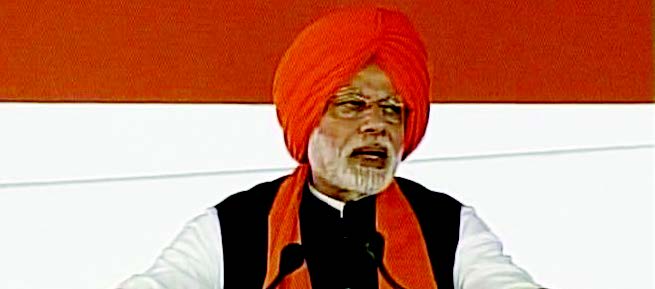
    BATHINDA (TIP): Prime Minister Narendra Modi today said Pakistan was yet to settle from the setback of surgical strikes and was damaging itself by fighting against India.

    “Earlier, soldiers were unable to show their valor despite having the strength. But now Pakistan has seen strength of our brave soldiers after they carried out surgical strikes in 250-km area across the LoC,” Modi said while addressing a public rally.

    He said there were tremors across the border after these strikes and they have not yet settled.

    Reaching out to Pakistani public, Modi said, “125 crore Indians eyes were wet with tears after killing of school kids in Peshawar. Every Indian felt the pain of Pakistani.”

    Reiterating that Pakistani public should ask their rulers that fight should be against black money and corruption rather than fighting any country, Modi said,

    “By fighting against India they (Pakistan) are damaging themselves and killing innocents also.” “Pakistani people also want freedom from poverty. For the sake of political benefits this atmosphere has been created by them,” he added. Modi was speaking at the foundation stone laying ceremony of AIIMS in Bathinda.

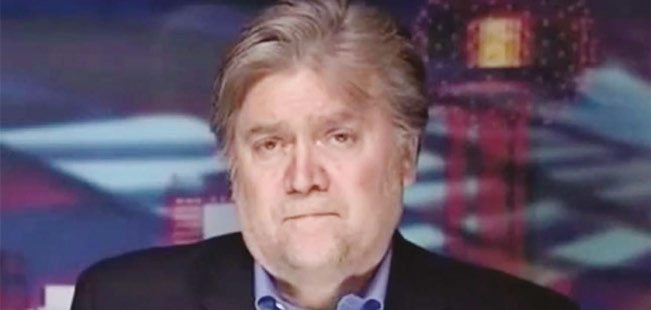
  • Donald Trump’s top aide Steve Bannon suggests there are too many Asian bosses in Silicon Valley

    Donald Trump’s top aide Steve Bannon suggests there are too many Asian bosses in Silicon Valley

    WASHINGTON (TIP): A comment by Donald Trump’s top aide that seemed resentful of the number of Asian bosses in Silicon Valley has created a new controversy in the US. And the Indian tech space has some advice to offer. “As they say in America, ‘If it ain’t broke, don’t fix it,’” Saurabh Srivastava, co-founder of the India Angels Network, a large investor in start-ups. “A third Silicon Valley start-ups are cofounded by someone of Indian origin… it is not surprising that many of the leading American Companies that operate and compete globally have CEOs who are immigrants but the best in class in the world.”

    Steve Bannon, who has been appointed Chief Strategist by US President-Elect Donald Trump, seemed critical months ago of the prominence of Asians in Silicon Valley. The interview with Mr. Bannon has resurfaced in the US media this week.

    Mr. Bannon, 62, interviewed Mr. Trump last year on radio.

    Mr. Trump noted that students attending top universities in the US were heading home after their education.

    “We’ve gotta be able to keep great people in the country. We’ve gotta create, you know, job creators,” Mr. Trump said in the interview. He added that “we have to keep our talented people in this country.”

    Mr. Bannon responded that “when two-thirds or three-quarters of the CEOs in Silicon Valley are from South Asia or from Asia, I think…”, and then went on to say, “a country is more than an economy. We’re a civic society.”

    “He seemed to hint at the idea of a white nationalist identity with the phrase ‘civic society’,” said the US tech site The Verge.

    A study in May last year showed that white men were 149 percent more likely to be CEOs than Asian men, and that the impact of race is 3.7 times more significant than gender as a negative factor in companies. According to the survey, one-third employees in Silicon Valley are Asian; Asians are under one-fifth of management; and only 14 percent are CEOs.

    Despite this, some Indians have risen to positions of great importance in the Valley. According to some estimates, Indians make up 15 percent of all Silicon Valley CEOs, and two of these are leading two of the biggest, most influential, and richest companies in the world today – Microsoft, and Google. In 2014, Microsoft appointed Hyderabad-born Satya Nadella as CEO, after he’d been at the company for 22 years.

    Last year, when Google reorganized as Alphabet, Sundar Pichai was named CEO of the new Google entity. Pichai, who hails from Tamil Nadu, has been at Google since 2004, and before becoming the CEO, he was SVP of Google Android, Chrome and Apps.

  • President-elect Trump on Immigration

    President-elect Trump on Immigration

    The 45th President-elect Donald Trump is ready to take the oval office on January 20th 2017, much to every one’s surprise! Among many firsts he holds, Donald Trump is the first President to hold anti-immigration position in contemporary history. It is speculated that his policies will not only affect the illegal immigrants but also skilled workers. We discuss some of his campaign promises below which he promises to turn into memorandums and executive orders on his first few days as the President.

    Deportations of illegal Immigrants: Trump plans to immediately deport 2-3 million undocumented immigrants with criminal backgrounds. He will then focus on deporting law abiding illegal immigrants.

    DACA: Trump could unilaterally revoke deportation protections created under the Deferred Action for Childhood Arrivals program, which was created to protect young undocumented immigrants under Obama’s executive memorandum. This will affect about 800,000 people who were brought to the U.S as children and stayed here illegally and under the order issued by President Obama were given authorizations to work in the country after approval.

    Refugee Programs: The President has a broad, unilateral discretion to admit number of refugees in to the country. The Obama administration increased the number of refugees to 110,000 in 2017 and Trump has repeatedly decried that. He could drop the total number of refugees to zero. The State Department says Syrian refugees could undergo strictest back ground checks.

    NAFTA: Trump has made it clear to renegotiate or completely scrap NAFTA, North American Free Trade Agreement. He describes this agreement as the worst trade in the US history that has caused loss of jobs and wage stagnation to the U.S. This will immediately affect people working on the TN visa and on trade deals with companies such as Ford and General Motors. He also pledges to withdraw from trans Pacific Partnership.

    H-1B visa system: Trump’s proposals on legal immigration is something that the tech industry may not have ever seen before. The most anticipated outcome will be restricted, limited and harder to get visas. The American companies may have to go through more hoops to prove that there is not an American to do the job and hence should hire foreign workers.

    Post elections, not only U.S but countries all over the world are speculating President-elect Trump’s action once he takes oath to the office.

    Read More on Ahluwalia Law Offices’s Website

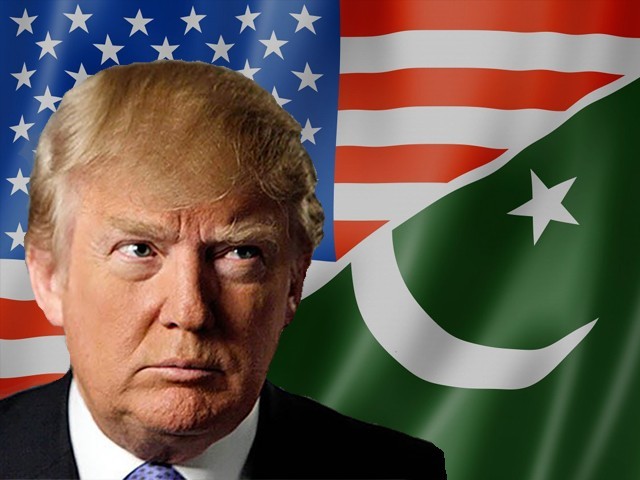
  • Donald Trump will tilt towards India: Pak observers

    Donald Trump will tilt towards India: Pak observers

    ISLAMABAD (TIP): Republican Donald Trump’s election as US President has come as cold comfort for Pakistan where many believe that he would further precipitate American tilt towards India. His anti-Muslim rhetoric and business ties to India are signs that his administration could favour New Delhi, analysts said.

    “America will not abandon Pakistan, but definitely, Trump will be a tougher president than Hillary Clinton for Pakistan. I think India will have a better and smoother interaction with the US under Trump than Pakistan,” said analyst Hasan Askari Rizvi.

    Despite working as strategic partners in the south Asian region for decades, relations between Islamabad and Washington have never been free of suspicion. The US accusations that Pakistan harbours terrorists and the killing of al Qaeda chief Osama bin Laden and Taliban chief Mullah Akhtar Mansur on Pakistani soil further increased this mistrust.

    In an interview in April this year, Trump had termed Pakistan a “vital problem” for the United States “because they have a thing called nuclear weapons”, adding, “They have to get a better hold of the situation.” Trump also reportedly hinted at seeking help from India and other nations to address the “problem” of nuclear-armed Pakistan.

    What Trump had said about Pakistan’s nuclear and strategic programme, is already the policy of US administration. President Obama had pressed Pakistan to limit its nuclear and strategic missile programme. With Trump getting into the Oval Office, this pressure is expected to increase.

    Grace Shelton, US consul general in Karachi, told a Pakistani channel that Trump’s election did not signal a drastic policy change. “Our foreign policy is based on national interest and does not change when the government changes,” Shelton told Geo News.

    Prime Minister Nawaz Sharif wasted no time in congratulating Trump. “Your election is indeed the triumph of the American people and their enduring faith in the ideals of democracy, freedom, human rights and free enterprise,” he said in a statement. (PTI)

  • “Get Out and vote for Hillary-a longtime friend of India and Indian Americans

    “Get Out and vote for Hillary-a longtime friend of India and Indian Americans

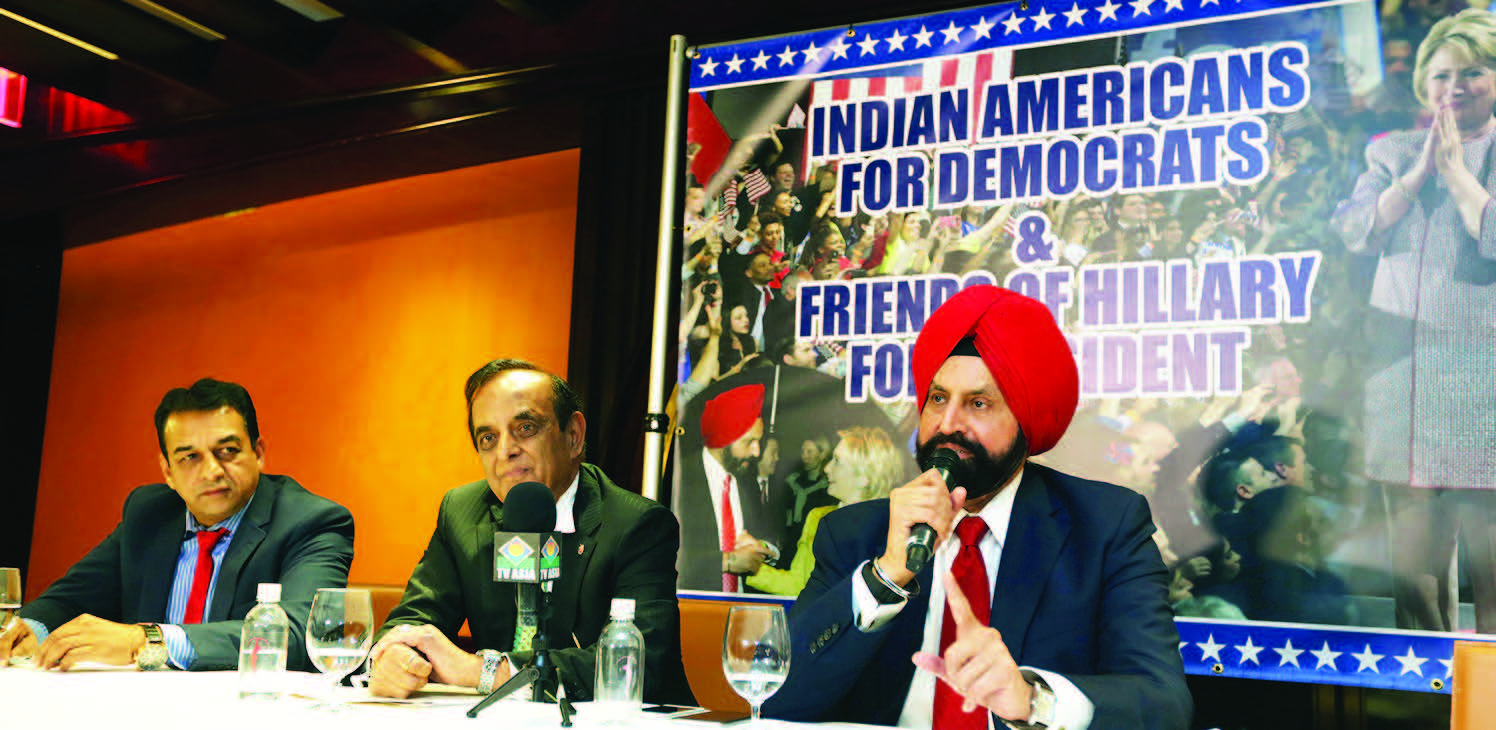
    NEW YORK CITY (TIP): Indian American supporters of Hillary Clinton strongly feel that the community should vote for her as only she can take the Indo-US relationship to a new level because she truly understands India and its culture.

    Hillary Clinton and Sant Chatwal- a firm handshake
    Hillary Clinton and Sant Chatwal- a firm handshake

    Indian Americans for Democrats and Friends of Hillary for President, an advocacy group supporting Hillary Clinton for President made a passionate plea to the Indian American community to vote for Hillary. Indian-American hotelier Sant Singh Chatwal, chairman of Indian-Americans for Democrats and Friends of Hillary for President, hosted a well-attended press conference on November 2 at the Chatwal hotel in midtown Manhattan, New York City. He was joined by former chief of medicine at Mount Sinai Hospital and community leader, Dr. Bhupi Patel, and Founder of Asian American Hotel Owners Association (AAHOA) and former commissioner in President Bill Clinton’s White House Initiative on Asian Americans and Pacific Islanders, Mike Patel.

    The Chatwal family with Hillary
    The Chatwal family with Hillary

    Chatwal, who has been a longtime friend of the Clintons, described how he convinced Bill Clinton for his India trip that ‘opened the doors for improving India-US relations.’Bill Clinton undertook a visit in March, 2000, 22 yearsafter a US President had visited India. It was in 1978 when a Democratic President Jimmy Carter had last visited India. Sant took a jibe at the Republicans for touting their love of India now but where were they earlier. He also highlighted how Bill and Hillary Clinton relentlessly worked for betterment of ties between the two countries. “She (Hillary) visited India quite a few times since 95- in 2007, 2009, 2011, 2012. She understands India, Indian culture. Indian-Americans should vote for her as she can boost India-US relations.”

    Hillary joins Daman Chatwal in a Punjabi jig
    Hillary joins Daman Chatwal in a Punjabi jig

    Getting nostalgic about his and wife, Daman’s 25 year old relationship with Clintons, Sant Chatwal described that he felt immediate positive vibes on his first ever meeting with Clintons.

    “I had good vibes when I first met the Clintons in 1991. They are good people; very fair and emotionally connected,” Chatwal recalled, adding, “Hillary’s experience as a politician; her love for India and Indian Americans and her conscious effort to do good for America, made her an ideal candidate to receive our vote.”

    Hillary poses with Sant and Daman Chatwal at a public gathering
    Hillary poses with Sant and Daman Chatwal at a public gathering

    Chatwal dwelt a length the long and distinguished career of Hillary. It began with Hillary as the First Lady of Arkansas where her husband Bill Clinton was Governor for more than a decade. It was then that she came in close contact with politics and politicians and started learning the nitty gritty of the statecraft. As First Lady of The US from 1993-2001, she got ample opportunity to meet with world leaders and leaders from the country and got to have an intimate knowledge of working of politics and diplomacy. In the White House, Hillary assumed a serious policy role and took the lead on Bill’s failed efforts to reform the American healthcare system.

    Chatwal recounted her services as Senator from New York and later as Secretary of State of the US. Over four years that she was Secretary of State she visited 112 countries and wracked up nearly 1 million miles in the air, as she carried Obama’s message of multilateralism and cautious use of American power around the world. In Washington, she became one of the President’s closest advisors working closely with the White House as the Arab Spring flared and the US moved to kill Osama bin Laden.

    If Chatwal spoke highly of Hillary Clinton, he did not hold his comments on Trump, too. He questioned Donald Trump’s ability “to run a country”.

    “Running a government is very different from running a business. One needs knowledge and experience. It’s not easy to run a country.”

    He feared that if Trump became Presidenthe will be disastrous for the country and wipe out trillions of dollars from US economy.

    “As a businessman I want to protect our economy. If Trump becomes President, the market will drop by 25 per cent, four-five trillion dollars will be lost.”

    Chatwal also slammed Trump for his remark that he is a “big fan of Hindus” and of India at an event in New Jersey last month. “India is not only for Hindus; India has Sikhs, Christians, Muslims, Buddhists and many more. Trump has to understand that. India has a large Muslim population. Muslim population is more in India than in Pakistan. Trump does not know that. Talk is cheap but it is difficult to deliver.”

    Dr Bhupi Patel highlighted how Hillary has stood with India and the Indian-American community on vital issues like immigration, education and health care. He said the community should vote for her as Clinton has strong policies in these areas that will benefit the community and future generations.

    “It’s time to reciprocate. We need somebody in White House who knows India. Trump does not know India.”

    Dr Patel said Clinton is an “inclusive” leader who has worked for the community for the last few decades while Trump is in “exclusive’ person who talks about isolating the US. “How can you have a leader who damages global relations? America cannot afford to get isolated. You cannot discriminate against minorities. It is very important for the minority communities to be involved in the political process. We have to make our presence felt.”

    Hillary addressing a convention of International Punjabi Society in New York. Sant Chatwal is seen to her right
    Hillary addressing a convention of International Punjabi Society in New York. Sant Chatwal is seen to her right

    Mike Patel recounted his experience as commissioner in President Bill Clinton’s White House Initiative on Asian Americans and Pacific Islanders. “President Clinton did what he did because he cared about new immigrants, who worked hard and paid taxes but never received full benefits. It shows the party cares for us. We have to decide what kind of America we want for our kids. Who will be inclusive of your children? That should give you the answer who should you vote for.”

    HR Shah, CEO of TV Asia and a long time supporter of Indian Americans for Democrats gave a hard-hitting note. “In 240 years America does not have a Woman president. Even India had a woman prime minister 30 years ago, who ruled for 10 years, but it’s unfortunate that America is so backward in realizing the strength of women power. We want to see the change. Make noise for the fundamental change,” he said.

    The speakers also reminded that Indian community’s voting numbers may be small but in close elections, small numbers matter more. The key states are those that are traditionally Republican and are called Red States, and the swing states where the two parties are almost evenly poised and could go either way.

    Chatwal pointed to the 2000 elections, which Democrat Al Gore lost by less than 400 votes in Florida and said, that in states like Florida votes of Indian Americans carry more weight as a deciding factor. Urging the Indian-American community to exercise their electoral right, he said each vote would count on November 8.

    Over three-million-strong Indian-American community has traditionally supported the Democratic Party and Trump has been trying to pursue the community to make a dent in its vote bank. According to a poll, over 70% of Indian Americans are Democratic supporters with only 13% backing Republicans and 14% Independents. About 67% of them support Clinton compared to only 7% for Trump.

    The panelists -Sant Chatwal, Bhupi Patel and Mike Patel-made a unanimous and passionate appeal to Indian Americans to “Get out and vote for Hillary”.

  • Barack Obama’s Best Takedowns Of Donald Trump

    Barack Obama’s Best Takedowns Of Donald Trump

    Republican presidential nominee Donald Trump has no shortage of critics. But the most outspoken – and funniest – is arguably none other than President Barack Obama, who has mastered the art of taking jabs at The Donald with barbed jokes. Here are his best takedowns of Trump so far.

    1. Conspiracy-Theoriest-in-Chief

    Obama had a lot of pep during the 2011 White House Correspondents Dinner. Earlier that week, the state of Hawaii had released his long-form birth certificate, putting an end the arguably racist ‘birther movement’ led by Donald Trump. The birthers argued that Obama wasn’t born in America, so he was ineligible to be president. But only someone who sleeps in a tinfoil bed could cling to that conspiracy after Obama’s records were released.

    And Obama wanted to share that moment with Trump.

    “No one is happier to put this birth certificate matter to rest than The Donald. And that’s because he can get back to focusing on the issues that matter. Like did we fake the moon landing? What really happened in Roswell? And where are Biggie and Tupac?”

    2. Backing Trump’s Leadership

    At that same 2011 dinner, Obama backed Trump’s leadership credentials.

    “All kidding aside, we all know about [Trump’s] credentials and breadth of experience. For example…on an episode of The Celebrity Apprentice, at the steak house, the men’s cooking team did not impress the judges…and there was a lot of blame to go around. But you, Mr. Trump, recognized that the real problem was a lack of leadership. So ultimately you didn’t blame Lil Jon or Meatloaf. You fired Gary Busey. And these are the kind of decisions that would keep me up at night.”

    3. Weighing in on the Wall

    Trump hasn’t served a day in the Oval Office, but the White House is already having to clean up his messes. Last April, President Obama revealed that he has to spend time discussing the implications of The Donald’s foreign policy with world leaders who are worried about a possible Trump presidency.

    “I am getting questions constantly from foreign leaders about some of the wackier suggestions that are being made,” Obama told the White House press corps last April.

    Those suggestions of course include building building a giant wall along the Mexican-American border wall and to preventing cross-border remittances – i.e. blocking people living in the United States from sending money to Mexico.

    “Good luck with that,” Obama quipped.

    4. The Millennial President

    When endorsing Hillary Clinton last July, Obama suggested that every millennial you know has basically the same presidential qualifications as Trump, who has mastered riling up supporters with his outrageous posts on Twitter.

    “Everybody can tweet, but nobody actually knows what it takes to do the job until you’ve sat behind the desk,” Obama told supporters at a rally in Wisconsin. “I mean, Sasha [Obama’s younger daughter] tweets, but she doesn’t thereby think that she thereby should be sitting behind the desk.”

    He also hammered Trump’s foreign policy credentials while praising Clinton’s work as secretary of state.

    “America is really great,” he told the crowd, countering Trump’s campaign slogan. “Part of the reason for that is because we had an outstanding secretary of state. Part of the reason is that Hillary understood and continues to understand that a bunch of tough talk doesn’t replace the hard work of diplomacy. A bunch of phoney bluster doesn’t keep us safe. And she understands that we can’t retreat from a world that needs American leadership.”

    5. Vetting Trump’s Business Record

    Obama has spent years criticizing Trump’s credibility. But he doesn’t expect Trump will change his ways and start taking things like foreign policy seriously.

    “The Donald is not really a plans guy,” he said at the Democratic National Convention last July. “He’s not really a facts guy either. He calls himself a business guy, which is true. But I have to say, I know plenty of businessmen and women who have achieved remarkable success without leaving a trail of lawsuits, and unpaid workers and people feeling like they got cheated. Does anyone really believe that a guy who’s spent his 70 years on this earth showing no regard for working people is suddenly going to become your champion?”

  • The alphabet soup at Goa

    The alphabet soup at Goa

    This weekend will see Prime Minister Narendra Modi and his foreign policy team undertake a complex and significant man oeuvre. This comes at a time when relations with Pakistan have discovered a new trough, the SAARC grouping is gasping for breath, the Chinese continue to demonstrate obstinate determination to hurt, harm and impede India on multiple fronts and the relationship with Russia is in dire need of resuscitation.

    The annual BRICS (Brazil, Russia, India, China and South Africa) summit in Goa on October 15-16 is undeniably the main course but hidden in the main course is a set of ingredients with an independent chemistry, the IBSA (India, Brazil and South Africa), along with the plat d’accompagnement, BIMSTEC (Bay of Bengal Initiative for Multi-Sectoral Technical and Economic Cooperation), that has as much potential as the main course. South Block will need to use this opportunity to respond to the current realities in India’s north and west, even as it consolidates India’s diplomatic push east and south, while opening new avenues for engaging its western partners in innovative ways.

    The American factor

    Even a cursory reading of India’s foreign policy under Mr. Modi reveals an unmistakable shift of its locus westward. A concrete manifestation of this shift is the vigorous engagement with the U.S. on defense, counterterrorism, as well on global-commons issues such as climate change. Both countries find themselves now (more often than not) speaking in the same voice, articulating the same objectives, and confronting similar challenges, be it the rise of Islamist terror or Chinese ambivalence towards a rules-based order.

    Arguably and beyond the ‘values’ discourse, this deep engagement with the geographical west is a lynchpin of the Indian strategy towards being a putative great power seeking to shape international norms in the 21st century. Even so, it cannot and should not disengage with other powers such as China and Russia, howsoever different their value systems may appear today. They are in one instance a large neighbor with historical antipathy, and in the other India’s only resort to strategic arsenals and high technology pursuits.

    There is also genuine convergence in certain areas – such as non-interventionism and on political-economy issues, between India and China and India and Russia. In the case of China, the tyranny of bilateral disputes (mostly on the strategic side) has prevented both countries from exploring much common ground. And with Russia, the U.S.-India entente is being understood by Moscow as a substantial shift in the intent of India towards the bilateral relationship. In fact, there seems to have been a serious underestimation in both capitals of the drift in the India-Russia relationship. Perhaps the Uri terror attack was an important moment for both to realize that extent.

    This is where BRICS comes in. Through the presence of two other actors, Brazil and South Africa, not party to complicated triangular geopolitical dynamics, India in BRICS seeks to downplay its bilateral disputes with China and engage with it on issues where there is space for beneficial cooperation. The China relationship today is heading south, and with effort, it may at best become a well-managed one. With Russia on the other hand, India needs to use this summit meet and the BRICS engagement to reclaim its traditional space and reassure the Kremlin that Moscow is India’s foremost global partner.

    The decision to invite BIMSTEC countries, in place of SAARC, to the BRICS summit is clearly a decision that relocates India’s ‘neighborhood first’ policy to its east. With this decision, Mr. Modi seeks to bring his neighborhood policy, India’s ‘act east’ policy, and its global governance goals, engaged with through the BRICS, in sync with each other. Brazil, Russia and South Africa have very limited in-roads into the Bay of Bengal littorals and may discover merit in engaging with this community. By playing the role of a ‘sincere interlocutor’ between BRICS and BIMSTEC, India stands to gain influence in both (despite China’s growing presence) as a benign transcontinental bridge.

    The IBSA potential

    This BRICS summit will also be an occasion for the three democracies in that grouping to meet on the sidelines and plot their future course. IBSA is in many ways more organic than BRICS. Beyond the shared commitment to democracy, the three countries are truly southern and developing economies and have the potential to emerge as a marquee example of south-south cooperation of emerging liberal economies across three continents. Without the presence of two military/economic behemoths, IBSA is a grouping of equals, more than BRICS can ever be. However, IBSA, it seems, struggles to excite either South Africa or Brazil, who feel sated in the presence of China and Russia at the BRICS.

    This can be changed. Going forward, IBSA should engage with both the U.S. and one European power, like Germany, to promote a true concert of democracies across each continent, bringing advanced economies alongside emerging ones. At a time when illiberal impulses are in ascendancy, IBSA in tandem with the U.S. and the sole resurgent European power, Germany, can emerge as strong defenders of the rules-based open order across political and economic spaces.

    Brazil and South Africa have had differences with China in the past over Beijing’s heavy-handed economic policies. Brazil, under its new president Michel Temer, wants to pivot back to its traditional economic partners, the U.S. in particular. This bodes well for IBSA to emerge as a liberal bridge between the north and the south. Put differently, the antidote to the common (if somewhat misplaced) perception of BRICS as a pawn in the grand strategy of China and Russia lies within BRICS itself, the IBSA. Along with BIMSTEC, IBSA points to the multiple collateral possibilities at Goa, and to a new moment that may see recalibration of Indian foreign policy.

    (The authors- Samir Saran is Vice President, and Abhijnan Rej is a Fellow, at the Observer Research Foundation, New Delhi)

  • Indian Government Is Going To Be America’s ‘Great Ally’, admits US House Speaker Paul Ryan

    Indian Government Is Going To Be America’s ‘Great Ally’, admits US House Speaker Paul Ryan

    The Indian government is going to be America’s “great ally” and there is a need to nurture
    this relationship, Speaker of the US House of Representatives Paul Ryan told the Council on Foreign Relations, where Republicans unveiled a plan to chart America’s foreign policy and national security.

    While there, Speaker Ryan and members of the Task Force on National Security talked about this new agenda. Here’s some of what Speaker Ryan covered in his conversation with Hewitt:.

    In a major foreign policy speech here in which he was highly critical of President Barack Obama’s policies, the US-India relationship was the only aspect of it which was appreciated by Ryan.

    “I think you need, and in particular, specifically under Modi’s leadership, and he and I have discussed this at great length yesterday, (US-India) have a great potential for the future particularly with the seas, in the Pacific and in the Indian Ocean, making sure that we help police the global commons and international order, namely China building, you know, runways on islands in contested areas,” Ryan said.

    He said this in the speech at the Council on Foreign Relations on Thursday, a day after Prime Minister Narendra Modi addressed a joint meeting of the US Congress at his invitation.

    Modi was the first foreign leader to be invited to address a joint sitting of the Congress under Ryan’s speakership.

    On Wednesday, Modi and Ryan had a one-on-one interaction before the Prime Minister’s address. Ryan also hosted a lunch for the visiting leader.

    A day later, Ryan was all in praise for Modi.

    “I think the Indian (government), the new Indian government, is going to be a great ally of ours and we have better security cooperation with them. That’s one thing that we need to nurture and grow,” Ryan told the audience at the Council on Foreign Relations, a top American think tank.

    “And those of us who are fans of Modi, you know, he’s a conservative who wants, who embraces free enterprise. He’s bringing needed reform to the country,” Ryan said, according to the remarks released by his office.

    “That’s the kind of an alliance that we need to forge and build upon. That stands in stark contrast, I would argue, to the Obama foreign policy of the last eight years where we have
    neglected our allies and we have basically rewarded our enemies, our adversaries,” said the Speaker of the US House of Representatives.

    Except for his comments on India, Ryan slammed Obama’s foreign policy.

    “We know that this new Obama foreign policy concept, leading from behind, can now be declared an unambiguous failure. It is making us unprepared. It is reducing our military capability and strength,” he alleged.

  • What’s at stake in Iranian elections

    What’s at stake in Iranian elections

    Q: What’s at stake?

    A: Iranians will elect a Parliament that passes laws and a clerical council, the Assembly of Experts, that is technically in charge of naming a successor to the supreme leader when he dies. But analysts say that the choice of a successor to the supreme leader, Ayatollah Ali Khamenei, 76, will in all likelihood be deemed too important to be left to the assembly — it will instead confirm preselected candidates. The assembly also monitors the supreme leader, but that function has minimal effect.

    Q: Is Iran a democracy?

    A: It’s a hybrid country with religious and civil institutions. It has an elected president and Parliament, with limited powers. It also has a supreme leader who wields civil and religious authority and a Guardian Council, which comprises six religious experts and six legal experts to interpret the constitution.

    Q: Doesn’t the supreme leader control everything?

    A: Yes, and no. The supreme leader has final say on all matters of religion and state. But he also needs to balance the demands and interests of competing power centers like the Revolutionary Guards and the judiciary. Khamenei, according to the constitution, cannot annul Friday’s vote. Parliament and the Assembly of Experts are officially independent powers, but parliaments —particularly the departing one — take their cues from him.

    Q: How do the parliamentary elections work?

    A: Parliamentary elections are held every four years. There are no parties, just individual candidates — 6,000 of them vying for 290 seats. Anyone can apply to be a candidate (men and women, clerics and laypeople), but in both elections, the Parliament and the assembly, they are then vetted by the Guardian Council to ensure they are “good Muslims” and support the Islamic republic.

    Q: What happened to Iran’s reformists?

    A: The reformists were a force during the presidential contest of 2009, but the movement was decapitated after its political leaders voiced support for the millions of people who took to the streets to challenge the fairness of the vote. Despite the election of the moderate President Hassan Rouhani in 2013 and the nuclear deal with the West, internally, virtually nothing has changed. This year, the Guardian Council disqualified almost half of the more than 12,000 candidates who signed up to participate in these elections, many — if not most — of them reformists.

    Q: The candidates have been handpicked by conservatives, and the supreme leader has the final say in all matters. Do Iranians then care about the elections?

    A: You would think not, especially after the disappointment of 2009, when the government crushed demonstrations over perceived vote-rigging. But many Iranians look upon the elections as an opportunity to cast a “revenge vote,” the only occasion they have to come back at the hard-liners many of them intensely despise. On social media, people are sharing clips of hard-liners in Parliament speaking out against the nuclear deal that Iran sealed with the Western powers this year, saying, “Let’s get rid of these guys.” They have done it before. Iran’s vast middle class feels it achieved a victory in 2013 in electing Rouhani as president over the hard-line candidates.

    Q: Speaking of the president, how critical are the elections for him going forward?

    A: Rouhani came to power promising two things: a nuclear deal and subsequent relief from crushing economic sanctions; and some increases in personal liberties, with more freedom on the Internet and other areas. He hoped to capitalize on the momentum from the nuclear deal to win the support in Parliament to carry through on the second part of his promise.

    But the best he can hope for now is a strong minority of reformists and moderates in the new Parliament — and that is if Iran’s more liberal-leaning urbanites turn out in force.

    Q: What does this mean for Iran’s relations with the West?

    A: Iran’s foreign policy, firmly controlled by the supreme leader, is unlikely to change. Khamenei has been adamant that the nuclear deal was not the first step in a broad reconciliation with the West. He was equally clear this week that he expected the new Parliament to have an anti-Western cast. A hard-line victory would not endanger the nuclear deal, since Khamenei signed off on it. But a huge turnout for the moderate and reformist factions might allow Rouhani to at least continue establishing relations with Europe with less pressure and obstacles raised by the hard-liners.

    Q: When will we know the outcome?

    A: That is hard to say. Because of the list voting system, the individual winners will be identified slowly, perhaps beginning late Saturday and into Sunday, and maybe as late as Monday. Even then, because there are no parties as such, it will still be hard to discern which faction did best.

  • Will Pakistan be able to counter expanding extremism?

    Will Pakistan be able to counter expanding extremism?

    Pakistan continues to be a major target of terrorism, most recently demonstrated by the attack on Bacha Khan University, which killed 20 people.

    Only a week before, three attacks in close succession at a UN-backed polio clinic in Quetta, a local broadcaster and the Pakistani consulate in Jalalabad killed at least 20 people and injured more than 30, which included civilians and security personnel.

    Slowly but surely, Pakistan’s terrorism crisis has morphed into an existential nightmare, one that is threatening to unravel any semblance of stability. As the country finds itself at the crossroads of prosperity and failure, its fight against terror is more important now than ever.

    Pakistan is one of the main victims of terrorism, a fact often ignored in the West. To put matters in perspective, Pakistan’s terrorism-related deaths from 2007 to 2014 numbered 1,592 – a 940 percent increase from 1998-2006, according to the 2015 Global Terrorism Index.

    The same study also ranks Pakistan fourth out of 124 in a list of countries most affected by terrorism with the tragic Peshawar army school attack in late 2014 serving as an ominous exclamation point.

    The Afghanistan connection

    Many of Pakistan’s problems stem from the political upheaval in Afghanistan. The US invasion after 9/11 turned the lawless border between the two countries into a breeding ground for terrorist activity.

    Nestled between three volatile borders, Pakistan is also situated in one of the most geopolitically sensitive areas of the world, with different players vying for competing interests.

    Ongoing US drone campaigns have radicalized segments of the local population and mobilized groups such as the Pakistani Taliban to carry out attacks against civilians and military targets. These attacks only exacerbate sectarian tensions between Pakistan’s Sunni and Shia communities and continue to bring into question the integrity of Pakistani statehood. With ISIL now in the mix, the situation can only degrade further.

    The military and … the ISI must take fundamental efforts to cease the practice of using terrorism as a foreign policy asset and avoid domestic blowback.

    External factors aside, Pakistan must also take a genuine stance against terrorism within its own borders, root out internal terrorist sympathies and take a leadership role in ending the use of proxies.

    The military and particularly Pakistan’s intelligence agency, the ISI, must make fundamental efforts to cease the practice of using terrorism as a foreign policy asset and avoid domestic blowback.

    With a projected GDP growth of over 5 percent for the next three years, an improved currency and recent consolidation of its three stock exchanges into the new Pakistan Stock Exchange, the country might be showing signs of economic progress after years of volatility.

    The $46bn China Pakistan Economic Corridor project, linking the Gwadar port to the Chinese city of Kashgar, has the potential to turn Pakistan into a strategic trading hub.

    Also given Iran’s post-sanctions reintegration into the world economy, a rekindling of the Iran-Pakistan gas pipeline to address the energy shortage also becomes a real possibility.

    Peace with India

    Indian Prime Minister Narendra Modi’s surprise visit last month also signals that peace with India, although difficult, might not be as elusive as some believe. Similarly, Afghanistan’s new President, Ashraf Ghani, has also shown signs that he is not willing to give up on improving ties with its eastern neighbor despite pressure from within his government.

    History has shown that Pakistan’s military remains the de facto power within the state. However, the head of Pakistan’s armed forces, General Raheel Sharif, has shown restraint by focusing on Operation Zarb-e-Azb in Northwest Pakistan and rooting out political mafias in Karachi rather than plotting coups.

    Nawaz Sharif’s civilian government continues to govern after what marked Pakistan’s first peaceful democratic transition in the country’s 68-year history.

    Often viewing India as a territorial threat, even the ISI might also be on board with improving relations.

    In a 2008 research report for his master’s degree at the US Army War College, the now Director-General of the ISI, Rizwan Akhtar, had argued that Pakistan should “aggressively pursue rapprochement with India”.

    Given that the recent Pathankot attack on an Indian army base is unlikely to deter ongoing dialogue, it seems that a substantial shift in the bilateral relationship based on cooperation and goodwill is under way. A similar approach with Afghanistan in the form of an inter-intelligence accord has both nations bolstering their fight against a shared threat.

    With these positive internal and external developments, it is imperative for Pakistan to capitalize on the political environment and continue to focus on the fight against terrorism in an effort to maintain economic and diplomatic momentum.

    Pakistan’s future, and its very soul, depends on it.

  • MasterCard CEO Ajay Banga named American India Foundation co-chair

    MasterCard CEO Ajay Banga named American India Foundation co-chair

    NEW YORK (TIP): MasterCard CEO Ajay Banga has been appointed as a co-chair of American India Foundation (AIF). The American India Foundation (AIF), a nonprofit organization that is devoted to accelerating social and economic change in India, is one of the leading U.S. philanthropic organization working in the U.S. and India.

    “Ajay Banga, President and Chief Executive Officer of MasterCard, has graciously accepted our invitation to join the AIF Board of Directors and has further agreed to serve as a co-chair of the Board, bringing immense experience and passion in US-India relations and business,” Lata Krishnan, co-founder and co-chair of the American India Foundation (AIF) said in a statement.

    In addition to his role at MasterCard, Banga is a member of President Obama’s Advisory Committee for Trade Policy and Negotiations. He serves on the Board of Directors of the U.S.-India Business Council (USIBC), where he recently completed his tenure as its longest-serving chairman.

    Banga is also a member of the U.S.-India CEO Forum. He is a Fellow of the Foreign Policy Association and was awarded the Foreign Policy Association Medal in 2012.

    Banga was selected for the Padma Shri this year, which was announced two days ago. “look forward to working with Lata and the entire AIF team as they continue to drive social and economic inclusion in India and build an even stronger bridge between the United States and India,” Banga said.

    “I’ve seen the impact organizations like this can have on empowering individuals to live more productive lives. With the current pace of change, it’s an exciting time to be joining this group,” he said.

    Mr. Banga serves on the Executive Committee of the Business Roundtable. He is chairman of the Financial Services Roundtable, as well as vice chairman of the Business Council. He is a member of the International Business Council of the World Economic Forum, the Council on Foreign Relations, and the Economic Club of New York.

    Prior to MasterCard, Mr. Banga was chief executive officer of Citigroup Asia Pacific. During his career at Citigroup, he held a variety of senior management roles in the United States, Asia Pacific, Europe, Middle East and Africa and oversaw its efforts in microfinance.

    Mr. Banga is a graduate of Delhi University and the Indian Institute of Management, Ahmedabad.

  • A Pluralist’s Republic Day Message to Indian Americans

    A Pluralist’s Republic Day Message to Indian Americans

    I am proud of the pluralistic ethos of my motherland, India and my homeland, America. It is a pleasure to call both the nations, “God’s own countries.” Let me explain why, and make a few suggestions that you can act upon as an individual to sustain the pluralistic ethos of India. Let’s do our bit in restoring dharma, the righteous living.

    Our nations, Democratic Republic of India and the United States of America are microcosmic representations of the universe we inhabit. We are blessed geographically with a range of topography from deserts to fertile lands, from mountains to the shining sea and the flat lands to valleys. Seasons wise, we enjoy all the four full seasons – winter, spring, summer and the fall. Indeed, we are blessed to be represented by every race, ethnicity and religion.

    Pluralistic ethos

    My interest as a social scientist is in sustaining the pluralistic ethos of India and America, which are threatened by a few short-sighted, but powerful rabble rousers among us.

    Pluralistic ethos simply means, living our life and letting others live theirs. It is accepting the God given uniqueness to each one of us. No matter what language we speak, how we look, what we eat, drink, wear, or how we worship the creator, we will accept each other’s uniqueness as legitimate, and then respect the otherness of others. You are who you are, and I am who I am.

    Hinduism talks about Vasudhaiva Kutumbukum, an idea that we are all part of one family despite our differences. Islam, Judaism and Christianity talk about having a common father and mother; Adam and Eve and we are an extended family. Sikhism blends us all under Wahe Guru and the Baha’i faith wraps all of us as many paths but one source, similarly Jainism, Buddhism, Tribalism and other traditions have richly contributed to the idea of cohesive societies.

    Cohesive Societies are communities where people mind their own business, live their own lives and let others live theirs, but yet, work together as one composite unit.

    As an example of cohesiveness, look at our own bodies, we are made up of several items like heart, brain, kidneys, lungs, liver, anus, mouth, nose, ears etc. No part can claim that his role is the most important one. Indeed, there was a battle once when the organs were arguing about their role in normal functioning of human body. The Anus claimed that he was the most important organ in the body, the other organs laughed and ridiculed him, and to show them, he decided to assert his claim and shuts down for two days causing unbelievable misery and havoc! Frustrated with the pain, the other organs acknowledged his importance, and rightfully called him an ass hole but begged him to start functioning, so others can function normally. A cohesive society is when all of us function together for common good.

    Every Indian and American has a need to feel that he or she is a part of the society, rejection will certainly create problems.

    Prime Minister Modi had surprised the nation with his inclusionary statement made on November 1, 2014. As a Pluralist, I whole heartedly welcomed that statement and congratulated him for taking that step. He said, “The BJP should be like a bouquet so that every Indian felt there was a flower in it that he or she could identify with. “And, “A poor and illiterate person living in a slum should think, ‘Yes, there is a flower for me in this bouquet’.

    At this precise juncture in our history, the Dalits do not feel like a flower in the bouquet. I do invoke the Prime Minister to act on his talk, and create an environment of inclusion. Unless he gets his party men to believe in what he has said, his leadership will remain a mere talk. A few rogue elements from his party are hell bent on throwing his bouquet into gutter; and his legacy is on the line.

    Modi can finish his term as another promiser and talker, or become the doer. The choice is clearly his, and he alone is the driver of his legacy. All he has to do is give a 3-minute speech on each major incident like Rape, farmers Suicide, Dalit Suicide, homicide of writers, and witch-hunting for beef and murder of Akhlaq, to assure the people that he does believe in the principle of Vasudhaiva Kutumbukum, and that he will not tolerate any Indian making the life of another Indian miserable. That is all it takes for Ram’s sake. We are losing the ideal of live and let live, and PM Modi can restore it far more effectively than any one in India at this time.

    As Indian Americans, most of us have cherished the values of America and have become Americanized. Being American is respecting and believing in the rights of others, and being American is to value others life liberty and pursuit of their happiness; being American is letting each faith member practice his or her faith, and build his or her place of worship; and being American is NOT drawing sadistic pleasure by denying others rights. Unfortunately, we have a few in both nations who have not imbued the great values of these nations, and it is our duty, and responsibility of each one of us to the be pracharaks of American values.

    The idea of Liberty is I don’t agree with you, but I’ll fight for your rights. Yes, if we the Indian Americans can truly call ourselves Americans, we have to speak up.

    Suggested actions for the organizations and individuals

    We have to have the following actions in building a cohesive India, where no Indian has to live in apprehension or fear of the other, and feel included in every sphere of life.

    1. Today, on this Republic Day, let India’s flag be hoisted together with fellow Indians who are Adivasis, Atheists, Bahá’ís, Bos, Buddhists, Christians, Dalits, Hindus, Jains, Jewish, Muslim, Sikhs, Tribal, Zoroastrians and every Indian representation. Let no Indian representation be left out. Reach out and bring them together at the Red Fort, and let them all proudly hoist our Tiranga, then go ahead and give them a hug, it will speak million words of our good intentions. It will generate the spirit of sab ka saath on a social basis.

    2. The Indian American Organizations can do the same, invite Indians of all hues to come together, and celebrate the Republic Day in the spirit of India. If your heart is dirty and a sewer runs through it, the people can see through you, and not come, clean it up, they will come. I will be happy to make the calls to those who are unwilling for the sake of India.

    3. Acknowledge that we see God as one, none and many; and in every form; male, female, genderless and non-existent, being and non-being, nameless and with innumerable names, and as Indians, we should not be biased towards any one.

    4. Today, proclaim that India is God’s own country, and is represented by every race, nationality, ethnicity, language, culture and religion. Announce that we are Adivasis, Native Americans, Atheists, Baha’is, Bos, Buddhists, Christians, Dalits, Hindus, and Jains, Jewish, Muslim, Pagans, Shinto, Sikhs, , Wicca, Zoroastrians and every possible grouping out there on God’s earth. We are Brown, Black, White, and Yellow and come in all the colors nature has produced us.

    5. Aspire for an India that the world can emulate; and not the other way around. India is a pluralistic democracy where everyone can eat, drink, wear or believe whatever he or she wants to in his or her pursuit of happiness.

    6. Announce that from this day forward, every Indian will have equal access to education, employment, housing, business loans, and entrepreneurial opportunities and if anyone is denied that opportunity, you will step up and stand up against the violators.

    7. Every Indian wants justice and demands a fair treatment of every one of the 1.31 billion Indians; rich or poor, connected or not, we must come to grips with the social and community life to create an exemplary India that will become a model nation in the world. Create an Equal Opportunity Commission based on US Model. Ask not what others will do, ask yourselves, are you capable of being a good Samaritan?

    Pledge to One India

    You can institute a pledge that every public office holder from the Peon to the President of India and everyone in between must take and live by it. Violation should disqualify him or her from holding the public office. Let it be monitored publicly.

    As Indians we can that pledge to both India and America on the Republic Day:

    1. I pledge allegiance to India, one nation that stands for liberty and justice for all.
    2. I pledge that I honor and treat every Indian with “full” dignity.
    3. I pledge that all individuals would be treated on par.
    4. I pledge that I will treat all religions with equal respect, equal access and equal treatment.
    5. I pledge that I will oppose any act that treats any Indian less than me.
    6. I Pledge that I will work for an India, where every individual can live with security and aspire for prosperity.
    7. I pledge that I will protect, preserve and value every inch of India and every human soul in India

    This would be the first step towards ensuring a just, peaceful and prosperous India that can sustain its progress and peace. If you can do it, then you can expect others to do it.

    I love my India.

    Jai Hind.
    Mike GhouseMike Ghouse – The author is a community consultant, social scientist, thinker, writer, news maker, and a speaker on Pluralism, Interfaith, Islam, politics, terrorism, human rights, India, Israel-Palestine and foreign policy.

  • Indian American political Star : Reverse Swing: Nikki of America

    Indian American political Star : Reverse Swing: Nikki of America

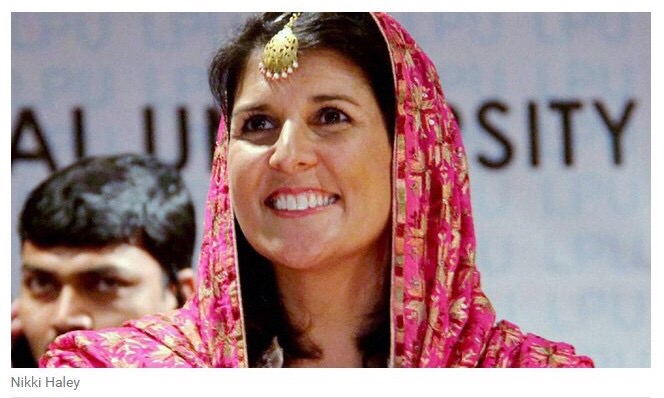
    Nikki Haley is a breath of fresh air; she is a moderate Republican representing the mainstream GOP values, that none of the current front line GOP candidates are able to articulate. I have used the word moderate because the right leaning Republicans do not value any one supporting immigration, religious freedom, liberty and freedom.
    They are usually anti-immigrants, anti-gays, bomb-every-country, and anti-anyone-who-is-not-a-Christian. They are war mongers and have destroyed America during the Bush years, the Indians may not have felt the pinch, but nearly 43 Million Americans lost their jobs, businesses were shut down, anti-Indian (job taken away) sentiment grew, homes were foreclosed… divorces were on rise. War is an enterprise of evil men.

    I sincerely hope, she gets to be nominated as VP, she will change the course of the dialogue and bring some sense on the campaign trail, to set herself up for 2020. The Hannity’s and other conservative talk show hosts like her – for only one reason – she went against Obama in relocating Boeing to her state. Once they hear “whole” of her, they may not like her as much. If you recall, Chris Christie was a star, just because, simply because he welcomed Obama to help his state during the devastating floods, he was cursed by the Republicans. Rush Limbaugh calls a good Republican is one who hates Obama.

    Way back when she was in Dallas to inaugurate Mahatma Gandhi statue, I wrote, ” Nikki Haley must be a moderate Republican like me, even though she is billed as a conservative Republican. She sounds like Obama with inclusiveness, a trait missing among the conservative Republicans and acutely deficit with regular Republicans.”

    Well, I am not a Republican anymore after 30 years of being one, but chose to go independent, because I want to support the candidates who are good for America and my loyalty is to America and American values and not any party. At one time independents were less than 10%, now it has grown to be a clear third.

    The article says, “Desis have a “Bobby and Nikki problem”, and it goes beyond the peculiar Indian-American rejection of conservatism. Their hatred of Jindal stems largely from his public statements that he is “American”, not “Indian-American”. Thin-skinned Indians misinterpret this as a rejection by Jindal of his Indian-ness, as opposed to seeing it as a pitch for an America that’s free of ethnic pigeonholes.”

    Tunku has opened a new window for Indians to consider, that is, “seeing it (Jindal’s approach) as a pitch for an America that’s free of ethnic pigeonholes.” Most of us did not see it that way, but glad to look at it in that manner. However, I am still trying to understand Jindal, here we are, proud of him as a fellow Indian and he does not want the Indian in his American descriptor and that is disappointing. He should proudly say, which most of us say, that no one can take the Indian out of me.

    Wonder if the BJP members of Indian Americans are fond of the Republican Party? As both of them have similar attitudes towards society, and those who differ with them. They are conformists and not free thinkers.

    Ms Haley is Indian-American, and Christian, and a political star.

    The article concludes, “But let’s remember that Nikki Haley is American and lives in America, and has the right to convert to any faith she fancies. It is no one else’s business but hers. Those who argue otherwise are primitive bigots who need to get a life.”

    Yes, every human should be free to believe whatever the hell he or she wants to believe, and eat, drink and wear what pleases him or her.

    Mike GhouseMike Ghouse : The author is a community consultant, social scientist, thinker, writer, news maker, and a speaker on Pluralism, Interfaith, Islam, politics, terrorism, human rights, India, Israel-Palestine and foreign policy.

  • INDIA IMPROVES ties with neighbors

    INDIA IMPROVES ties with neighbors

    Building upon Prime Minister Narendra Modi’s initiative of inviting all SAARC leaders to his swearing-in ceremony in May 2014, the neighbourhood continued to be the primary focus of India’s foreign policy in 2015. While relations with Pakistan and Nepal remained on a tricky path, there was some forward movement in the ties with Bangladesh, Afghanistan, Bhutan, Maldives and Myanmar. Relations between India and Sri Lanka more or less maintained a status quo.

    Nepal

    It began with an upswing in the ties but the relationship were strained by the time the year came to an end. Bilateral ties with Nepal took a hit after the neighbouring country promulgated a new Constitution. India argued that the new Constitution did not take into account the concerns of all sections of the population, particularly the Madhesis who enjoy close ties with India. However, Nepal did not pay heed to India’s protests and rebuked it for interfering in the country’s internal affairs.

    Earlier when Nepal was hit by a massive earthquake on April 25, India responded to the calamity and helped Nepal by launching its largest disaster response abroad, Operation Maitri. During External Affairs Minister Sushma Swaraj’s visit to Kathmandu in June, India pledged $1 billion grant for the reconstruction of the quake-hit country.

    Pakistan

    File image of Narendra Modi with Pakistan PM Nawaz Sharif
    File image of Narendra Modi with Pakistan PM Nawaz Sharif

    Ties with Pakistan did not see any forward movement in the past one year despite two meetings between Modi and his Pakistani counterpart Nawaz Sharif. While pushing for better relations, India has maintained that talks are possible only in an atmosphere that is free of terror and violence.

    Sharif and Modi first met on the sidelines of the BRICS summit in Ufa in Russia. The two sides unveiled a five-point agenda to address concerns on terrorism and to promote people-to-people contact. Despite a number of hurdles including on account of terror attacks in the aftermath of Ufa, and cancellation of initial round of NSA-level talks, a significant breakthrough was achieved in December with the NSAs meeting in Bangkok, followed by Swaraj’s visit to Islamabad for the Heart of Asia Conference.

    Bangladesh

    Prime Minister Narendra Modi and Bangladesh Prime Minister Sheikh Hasina shake hands in Dhaka, Bangladesh, Saturday, June 6, 2015.
    Prime Minister Narendra Modi and Bangladesh Prime Minister Sheikh Hasina shake hands in Dhaka, Bangladesh, Saturday, June 6, 2015.

    Modi’s visit to Bangladesh in June saw the exchange of instruments of ratification of the landmark land boundary agreement. It was a relief for over 50,000 people living in 162 enclaves across both countries as India and Bangladesh swapped enclaves, bringing to an end the 68-year-old boundary dispute. The June 6-7 visit of PM Modi also saw India-Bangladesh developmental cooperation scaling new heights, with India pledging a $2 billion Line of Credit for Bangladesh. The two countries took a host of steps to enhance trade and connectivity, including the launch of two new bus services. The two countries are a part of the sub-regional cooperation between Bangladesh, Bhutan, India and Nepal to enhance connectivity and regional integration.

    Sri Lanka

    Not much change taken place in the ties between India and Sri Lanka in the year gone by. Within months of the newly-elected Sri Lankan President Maithripala Sirisena taking charge of the island nation, two-way visits were held by the leaders and foreign ministers of the two countries. During Modi’s visit to Sri Lanka in March, India pledged $318 million Line of Credit for railway upgradation (New Delhi’s development assistance is already about $1.6 billion), unveiled a currency swap agreement of US $1.5 billion to help stabilise the Sri Lankan rupee and to develop Trincomalee as a regional petroleum hub with the cooperation of Lanka IOC (Indian Oil Corp’s subsidiary in Sri Lanka) and Ceylon Petroleum Corporation.

    Both countries also signed four pacts regarding visa exemption for official passport holders, youth exchanges, customs agreement (to address trade concerns and reduce non-tariff barriers) and the construction of the Rabindranath Tagore auditorium at the Ruhuna University with India’s aid.

    Afghanistan

    Amid the backdrop of the unfolding transition in Afghanistan, India sustained its engagement with the war-torn country. During the visit of Afghan President Ashraf Ghani in April 2015, India reiterated its commitment to the reconstruction of the strife-torn country. The two sides focused on working towards a more liberalised business visa regime. Afghanistan welcomed India’s decision to extend the 1000 scholarships per year scheme by another 5 years as part of capacity building initiatives. India continues its assistance to the construction of the India-Afghanistan Friendship (Salma) Dam in Herat, expected to be completed in the first half of 2016. The Parliament Building in Kabul constructed with Indian assistance has already been completed as well as on the Doshi and Charikar power stations. But the resurgence of Taliban and Pakistan’s continued support to the group remain a huge hindrance. Taliban has regained control of large swathes of land in Afghanistan in the last few months and is now in a position to threaten the elected government once again.

    Bhutan

    India’s all-weather friendship with Bhutan continued on an upward curve. The visit of Bhutan’s Prime Minister Tshering Tobgay to India in January focused on optimising cooperation in the field of hydropower – the centerpiece of economic cooperation between the two countries. The two sides reiterated their commitment to the 10,000 MW initiative and in this context, to the early implementation of the four JV-model projects, totaling 2120 MW.

    Maldives

    India also engaged with the Maldives leadership despite political volatility in the island country. This was reflected in the meeting between the foreign ministers of India and the Maldives on the sidelines of the UN summit in New York in September. External Affairs Minister Sushma Swaraj followed it up with a visit to the island nation from October 10-11 to reinvigorate ties.

    Myanmar

    Bilateral relations with Myanmar improved with the first India-Myanmar Joint Consultative Commission (JCC) meeting held in New Delhi on July 16, 2015. Steps were taken to further enhance the existing air connectivity, extending a$500 million Line of Credit to the Government of Myanmar for development priorities, and a commitment to enhance the regional and sub-regional cooperation under the BCIM-EC and the BIMSTEC framework. India also played an instrumental role in providing disaster relief support to Myanmar in response to widespread floods and landslides caused by Cyclone Komen.

  • Assad Can Stay, for Now | US changes stance for peace

    Assad Can Stay, for Now | US changes stance for peace

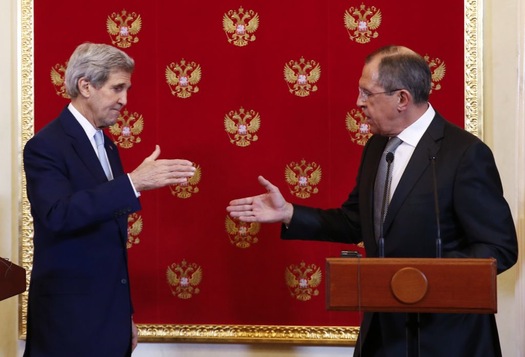
    WASHINGTON (TIP): U.S. Secretary of State John Kerry on Tuesday, December 15, accepted Russia’s long-standing demand that President Bashar Assad’s future be determined by his own people, as Washington and Moscow edged toward putting aside years of disagreement over how to end Syria’s civil war.

    Kerry announced this critical shift in Moscow where he met Russian President Vladimir Putin and Foreign Minister Sergey Lavrov to discuss the ongoing conflicts in Ukraine and Syria.

    “The United States and our partners are not seeking so-called regime change,” Kerry told reporters in the Russian capital after meeting President Vladimir Putin.

    This means Assad can stay in power for a bit longer if Russia and America cooperate together in overseeing the transition from Assad’s chaos to peace.

    A major international conference on Syria would take place later this week (Friday) in New York, Kerry announced.

    Assad is the very kind of “dictator” the US prides itself in fighting to remove. For the past four years, President Obama has called for Assad to step down. From Assad’s alleged use of chemical gas to barrel bombs to ISIS overtaking Syrian territory, Assad attracts a very diverse response from world leaders on how to achieve peace because the situation in Syria is so complex.

    But after a day of discussions with Assad’s key international backer, Kerry said the focus now is “not on our differences about what can or cannot be done immediately about Assad.” Rather, it is on facilitating a peace process in which “Syrians will be making decisions for the future of Syria.”

    Within the United States, where political debates are increasingly revolving around foreign policy — especially to do with Assad and ISIS — the presidential candidates (as well as politicians in general) find themselves equally divided on the Syrian solution. In fact, shifting positions on Assad seems to be the norm.

    The world is better off when Russia and the U.S. work together, Kerry added, calling Obama and Putin’s current cooperation a “sign of maturity.”

    “There is no policy of the United States, per se, to isolate Russia,” Kerry stressed.

    Below is a brief timeline of major American politicians on their stances regarding Assad and Syria, especially in relations to Putin and Russia.
    August 2011

    Secretary of State Hillary Clinton tells the press “it’s not going to be any news if the United States says, ‘Assad needs to go.’”

    A week later, US President Barack Obama announces for the first time — after weeks of political pressure — that Assad “must step down”.

    The American announcement happened in coordination with key allies’ announcements: Germany, France, and the UK, amongst others, also called for Assad’s departure from his presidency position around this time.

    February 2012

    Western powers reportedly ignore a Russian proposal to securely remove Assad from his position, as the US, French, and British leaders believe the Syrian president would not last much longer in power.

    September 2013

    President Obama addresses the nation, detailing the brutalities of the Assad regime and announces the US will strike Assad’s forces to deter the regime from the use of chemical weapons.
    The US and Russia then pushed for Syria to become party to the Chemical Weapons Convention, which banned the use of chemical and biological weaponry in warfare.

    November 2014

    President Obama states at the G20 press conference that “there’s no expectation that we are going to in some ways enter an alliance with Assad. He is not credible in that country.”

    The US president continues on to say that “we are looking for a political solution eventually within Syria that is inclusive of all the groups who live there — the Alawite, the Sunni, Christians. And at some point, the people of Syria and the various players involved, as well as the regional players — Turkey, Iran, Assad’s patrons like Russia — are going to have to engage in a political conversation.”

    August 2015

    Four years later, increased diplomacy between major powers — especially the US and Russia — start to cause US leaders to soften their “Assad must go” position.

    The New York Times quotes an unnamed senior American official as saying, “It’s encouraging, but we’re still a long ways off [on a solution for Assad].”

    September 2015

    Donald Trump tells Americans to let Russia take care of Assad and ISIS.

    “Let Syria and ISIS fight. Why do we care? Let ISIS and Syria fight. And let Russia, they’re in Syria already, let them fight ISIS. Look, I don’t want ISIS. ISIS is bad. They are evil. When they start doing with a head chopping … these are really bad dudes. … Let Russia take care of ISIS. How many places can we be? … Russia likes Assad seemingly a lot. Let them worry about ISIS. Let them fight it out.”

    October 2015

    Hillary Clinton, now a presidential candidate and no longer Secretary of State (since 2013), states removing Assad is America’s top priority, four years after she said it wouldn’t make US news.

    December 2015

    A month after the Paris attacks, a week after the San Bernardino attack, the day Los Angeles shut down its public schools due to a bomb threat, and the last Republican debate of the year before the holidays. Also the day Kerry meets Putin and Lavrov in Moscow.

    The Secretary of State officially reverses the position of the US on Assad, while Republican contenders for the 2016 election spar over what to do. The more memorable quotes are anti-Russian and anti-intervention.

    Donald Trump: “Spend the money [used in striking in the Middle East] in the US… It’s a tremendous disservice to humanity, and for what? [The Middle East is] a mess, [a] total and complete mess.”

    John Kasich: “In regard to Syria, understand that Assad is an ally of Iran who wants to extend that Shi’i radicalism all the way across the Middle East. He has to go. And for the Russians, frankly, it’s time to punch the Russians in the nose. They’ve gotten away with too much in this world, and we need to stand up against them, not just there, but also in Eastern Europe where they threaten some of our most precious allies.”

    Rand Paul: “We need to confront Russia from a position of strength.”

    Chris Christie: “Reckless was inviting Russia into Syria.”


    As of now, President Obama has yet to make an official statement confirming Kerry’s comments in Moscow. Kerry maintained that it is in the best interest for the world when Russia and the US cooperate, and that this cooperation is “a sign of maturity” between the two presidents.

    While it’s great for the US and Russia to be on slightly better terms again, time will only tell if this rekindling of relations will bring Assad to justice and peace to the Syrian people.

  • Reviving Indo-Pak talks

    Reviving Indo-Pak talks

    The lessons learnt from the Indo-Pak joint statement at Ufa finally produced a breakthrough in Islamabad. The clincher was the hush-hush meeting in Bangkok. It produced a joint statement clearly spelling out all issues both sides plan to discuss. As in Bangkok, the Ufa statement had all the ingredients to move the dialogue process forward. But it failed to clearly spell out that “all outstanding issues” also meant Kashmir. The Indian media, present in strength in Ufa, immediately hailed – with a gentle nudge from South Block – the statement as a victory for India. This foray into a kind of triumphalism triggered an opposite reaction in Pakistan. And that terminated the Ufa breakthrough. Two other opportunities went abegging because India drew red lines that Pakistan could not have honoured.

    This time the dialogue platter has more subjects than the comprehensive dialogue process that began in 1997. It endured despite being buffeted by the Kargil conflict in 1999, the Parliament House attack in 2001 and a change in government in 2004. But the Mumbai attacks finally killed the spirit behind it just when a breakthrough was imminent. This time, statements by leaders from both countries seem to indicate they intend staying the course. Foreign Minister Sushma Swaraj promised to move at a pace Pakistan is comfortable with and Pakistani Prime Minister Nawaz Sharif maintained that working for the achievement of a peaceful neighborhood is a “cardinal principle” of Pakistan’s foreign policy.

    On a wider geo-political plane, the gesture has travelled far and wide. At hand in Islamabad were high-ranking delegations from 18 countries, assembled to bring closure to the Afghan conflict. Thus the filling of the Indo-Pak breach raises India’s stock for responding to Pakistan’s overtures despite no movement to accelerate the trial of its citizens accused of masterminding the Mumbai attacks. If carried forward with perseverance, it will not just outflank the spoilers in India and Pakistan, but Afghanistan as well. The NSAs of both countries now need to put the rowdier elements under strict vigilance to maintain a conducive environment.

  • 4 Persons of Indian Origin Named in Foreign Policy Magazine’s List of 100 Leading Global Thinkers

    4 Persons of Indian Origin Named in Foreign Policy Magazine’s List of 100 Leading Global Thinkers

    WASHINGTON (TIP): Four persons of Indian origin are featured in Foreign Policy magazine’s list of 100 Leading Global Thinkers who have generated ideas that could promise humankind a better future.

    Featured among ‘Innovators’ whose work has advanced “progress in global health, human rights, security, and more” is Nina Tandon, co-founder of Epibone, New York City, “For healing broken bones by growing new ones.”

    Typically, to reconstruct bone, surgeons must take bone either from somewhere else in a patient’s body, necessitating a double surgery, or from an outside source, such as a prosthesis or a donor.

    But Nina Tandon has created a third way: Growing new bones. A patient’s stem cells are placed in a bone-shaped mold, which is then put into a special chamber that simulates the body’s temperature, nutrient composition, and other conditions.

    After three weeks, the cells have essentially formed a new bone. This method requires only one surgery and avoids implanting foreign materials, thereby reducing pain and complications, Foreign Policy noted.

    EpiBone has successfully replaced the jaw of a pig and is gearing up to start its first clinical trials, to be held within two years.

    Among the ‘Moguls’ who have “showed that progress is possible, whether in corner offices or on factory floors” are Rajan Anandan, managing director of Google, Southeast Asia and India, and Ayesha Khanna, founder of the Civic Accelerator, an investment fund for socially conscious enterprises.

    While Sri Lanka-born Rajan Anandan is included “For lobbying on behalf of the unconnected”, Ayesha Khanna gets in “For nudging women into the corner office”.

    Mr Anandan “has used his stewardship of Google in India to greatly improve tech access for the poor by successfully lobbying Indian manufacturers to launch low-cost phones, pushing carriers to bring down the prices of data plans, and increasing the translation of Google products into many Indian languages.”

    “Beyond that, he’s also one of the country’s most active tech investors: Between January 2014 and June 2015, he was the most prolific, according to Quartz, investing in 15 start-ups.”

    “Anandan’s work simply proves that good business doesn’t have to be at odds with good citizenry,” FP said.

    In November 2014, Ayesha Khanna and Shannon Schuyler, head of corporate responsibility at PricewaterhouseCoopers (PwC), pooled resources to help women gain access to capital.

    This spring, with PwC funding, Civic Accelerator’s cohort of 13 US start-ups -all of which had at least one female founder, and 11 of which were started entirely by women – participated in a 10-week boot camp to test ideas and connect with investors.

    Ayesha Khanna and Shannon Schuyler have pledged that at least half of future Accelerator-supported ventures will be owned by women.

    Featured among ‘Challengers’ who have “proved that even sacred cows can be toppled” is India-born Zainab Ghadiyali “For cracking the STEM ceiling.”

    In Menlo Park, California, Ghadiyali and Erin Summers, both engineers at Facebook, are running “wogrammers,” a movement to end the “brogrammer” stereotype and highlight the technical accomplishments of their peers.

    In its first year, wogrammers highlighted 50 female engineers from around the globe.

  • Intolerance Fuels Radicalisation

    Intolerance Fuels Radicalisation

    India is awash with Islamophobia and there could not be a more dangerous time for this pernicious slant in our national politics.

    Hateful vitriol was spewed upon actor Aamir Khan recently, for expressing concern over the rising anti-minority attitude, just as black ink was literally spilled on the Observer Research Foundation’s Sudheendra Kulkarni last month for organising a book release event for a former Pakistani foreign Minister.

    Even more violent and disquieting were September’s mob lynching of Mohammad Akhlaq in Dadri, Uttar Pradesh, over rumours that he had stored beef in his home, and August’s murder of notable rationalist M.M. Kalburgi, who was shot dead after being threatened for his criticism of idolatry in Hinduism.

    There will no doubt be more such displays of bigotry in the months ahead, as fringe elements of the Hindutva brigade, emboldened by Prime Minister Narendra Modi’s description of the Dadri lynching as “unfortunate” and “undesirable”, go on the rampage to correct what they perceive to be injuries to the sentiments of the majority.

    The most compelling reasons for Mr. Modi to decisively stymie this rising tide of hatred are quite obvious: respect for India’s constitutionally protected secular credentials, and the maintenance of broader societal peace and harmony between communities.

    Yet there is a third feature of the Indian political firmament that makes it urgent, nay imperative, that the country’s leadership effectively tamp down on the flames of extremism – the alarming proliferation of support for Islamic State (IS), the jihadist terror outfit that controls parts of Syria and Iraq.

    The discovery of these IS-sympathisers has had a creeping quality, starting late last year with a handful of youth travelling to West Asia from Kalyan, near Mumbai, but more recently has been gathering momentum with a much larger cohort being pulled into the net by intelligence operations.

    The fact that this trend has been coterminous with the surge in anti-minority violence ought to be a red flag for the Modi government, for there is a risk that the two developments may begin to feed off one another, leading to a perfect storm linking an ongoing foreign policy crisis to a community under siege on Indian soil.

    Consider the speed and pattern of IS proliferation on Indian soil over the past year.

    Back in January The Hindu received a response on a Freedom of Information Act request to the U.S. Department of Defence asking what information it had on Indian nationals discovered to be fighting for IS in Syria and Iraq.

    Their answer was simple: none. Clearly the few Indians that had made it into the ranks of IS at that point were either relegated to menial tasks or used as cannon fodder on the frontlines as they have generally been considered “inferior” fighters.

    Yet, as outlined in a series of reports in The Hindu (“The IS Files”), the last past year has witnessed a slew of intelligence operations that have flushed out a number of potential IS recruits, and they hail from across the breadth of India.

    For example, Haja Fakkrudeen and Gul Mohamed Maracachi Maraicar both grew up in Cuddalore district in Tamil Nadu, and while Maraicar is now lodged in an Indian prison, Fakkrudeen, who may have been radicalised by Maraicar, is likely to be fighting alongside IS in Syria.

    The case of Muhammed Abdul Ahad, a U.S.-educated computer professional from Bengaluru, reflects the diversity of backgrounds from which IS has managed to woo supporters in India. Ahad was intercepted by Turkish authorities last year on the Syrian border and deported earlier this year after authorities suspected him of seeking to enter the Syrian battlefield.

    At the opposite end of the nation, in the Kashmir Valley, Kamil Wada spoke to The Hindu about how his older brother Adil had travelled to Syria, with authorities noting that he may have got radicalised by an Australian Islamic group after a visit to that country.

    As Indian intelligence agencies continue to grapple with the “foreign fighter” question, an issue that has long been front and centre for the U.S., Canada and Western Europe, it behoves the government of Mr. Modi to more effectively address societal forces that make the isolation, demonisation and ultimate radicalisation of minority communities more likely.

    Unless there is a concerted effort to neutralise the impunity of extremist elements that regularly engage in anti-Muslim violence, there may be little to halt the drift of a few members of an overwhelmingly moderate community into the arms of IS radicals.

    In the present climate of hostility, a vicious cycle is likely, as there are groups that would happily seize upon the insidious presence of the IS in India to paint the entire Muslim community with the broad brush of negative propaganda or worse.

    To have any hope of success in this context, anti-radicalisation strategies of the government must foster a sense of physical security, democratic space and cultural sensitivity towards traditions of minority communities while adopting a no-nonsense, intelligence-based crackdown on the shadowy menace of the IS.

  • MILITANT ATTACKS ABROAD A DIPLOMATIC QUANDARY FOR CHINA’S XI

    MILITANT ATTACKS ABROAD A DIPLOMATIC QUANDARY FOR CHINA’S XI

    BEJING (TIP): The killings of Chinese citizens by Islamic militants in Syria and Mali place President Xi Jinping in a quandary: How can Beijing respond effectively without betraying its strict stance against intervention?

    The dilemma underscores the tension between China’s desire to be seen as a leading global power and its desire to maintain its own independent foreign policy while shunning the US-led Western liberal democratic political agenda.

    How Xi will square that ideological circle and what concrete actions he’ll take in response could mark an inflection point in Chinese diplomacy. More likely, analysts say, he’ll stick to China’s long-established neutrality while possibly taking limited behind-the-scenes measures to help in the global campaign against Islamic extremists.

    “For China, intervention would be a real game-changer,” said Australian National Security College expert Michael Clarke.

    “Frankly, I think Xi is in a very difficult position here.”

    Regardless of what it chooses to do, China has increasingly found itself confronted by Islamic militant groups.

    Three Chinese – all high-ranking executives with the state-owned China Railway Construction Corp.’s international group -were among the 19 victims of last week’s attack on the Radisson Blu hotel in Mali’s capital, Bamako. The al-Qaida-linked group known as Al-Mourabitoun – or The Sentinels -has claimed responsibility for the attack.

    That followed the killing of 50-year-old Beijing native Fan Jinghui by Islamic State group extremists. Xi vowed to bring Fan’s killers to justice, but China has offered no details on how it plans to do so.

    Foreign Ministry spokesman Hong Lei told reporters Monday that China was working to “increase our emergency reaction and early warning capabilities” to confront threats against overseas personnel and assets.

    Calls online from the Chinese public dismissing Beijing’s response and calling for action against militants have been suppressed by China’s Internet censors. With more Chinese than ever traveling abroad for work, study and travel, the government has been under growing pressure to identify threats and ensure their safety through its consulates and embassies.

    al-Qaida, and more recently IS leader Abu Bakr al-Baghdadi, have also threatened China over what they call the oppression of the Muslim Turkic Uighur people native to the northwestern region of Xinjiang. China says it is fighting a separatist insurgency in Xinjiang, and has been eager to equate that fight with the international struggle against extremist groups including IS and al-Qaida. Some critics see little evidence of substantial links between China’s Muslim Uighur groups and groups such as IS.

    Chinese forces, some equipped with flamethrowers, recently concluded a 56-day operation to kill or capture 30 suspects in a deadly attack on a Xinjiang coal mine. China blamed the attack on insurgents it says were directly led by an unidentified overseas group.

    A top Xinjiang official, Xi Hairong, this week warned that the continuing influence of “pan-Islamism and pan-Turkism thoughts” placed Xinjiang in “an active period for violent and terrorist activities and an acute period in the battle against separatists.”

    China says Uighur extremists have links to al-Qaida and that some have traveled to Syria to fight alongside IS, although Clarke and other outside observers question those claims.

    And while China’s campaign against Uighur extremism has been relentless, it has shown no appetite to apply such tactics when threatened abroad.

  • The enduring legacy of Nehru:  a tribute to the architect of modern India

    The enduring legacy of Nehru: a tribute to the architect of modern India

    A moment comes, but comes rarely in history, when we step out from the old to new, when an age ends, and when a soul of a nation, long suppressed, finds utterance’. Pandit Jawaharlal Nehru delivered these inspiring words in his speech, ‘Tryst of Destiny’ in1947. He is still remembered for his vision and commitment to bring India from out of oppression into freedom, modernity, and self-reliance.

    As we have celebrated the 125th birth anniversary of Jawaharlal Nehru on November 14th, 2015, we are in awe as we recollect his contribution, not only towards gaining India’s independence but also for laying a strong foundation of a pluralistic and forward looking India. Yet, half a century after his death, the current leadership of India is busy trying to downplay his legacy for political expediency, and to re-create a nation away from the democratic and secular tradition he has championed.

    Jawaharlal Nehru laid the foundation of strong institutions that helped India preserve freedom and democracy and move on to become a modern nation.
    Jawaharlal Nehru laid the foundation of strong institutions that helped India preserve freedom and democracy and move on to become a modern nation.

    When India gained Independence, there were monumental challenges resulting from the partition and the ongoing violence between Hindus and Muslims. The urgent task facing the leadership at the time was the resettlement of 6 million refugees, and arresting the spread of further violence. Nehru put together a team of dedicated patriots such as Sardar Tarlok Singh, Sarojini Naidu and S.K. Ghosh to limit the violence, as well as rescue and recover abandoned and abducted women and children.

    When the British left, the Government, headed by Nehru, faced another important task: the national integration of 562 princely states. A newly created State department under the decisive leadership of Sardar Vallabhai Patel along with Nehru ensured the integration of the country in a remarkably short period of time.

    If we look back at history for a moment, we would admire how Nehru brought together exceptional people of different ideologies such as Dr. B.R. Ambedkar, S.P. Mookerjee, John Mathai, C.H. Bhabha and Shanmukham Chetty to be reflective of India’s secular and multi-faceted character in the Constituent Assembly. The Congress party delivered on the promise that the constitution they were about to create would reflect the aspirations of the Indian people.

    The constitution of India was amongst the largest in the world with 395 Articles and 9 Schedules. The preamble spells out the basic philosophy and the solemn resolve of the people of India to secure justice, liberty, equality and fraternity for all its citizens. What Nehru has accomplished through this document with significant help and support from Ambedkar also is part of his vision to empower marginalized sections of the society.Nehru was committed to ensuring social justice and the welfare of the masses as far back as 1938 by setting up the National Planning Committee under the banner of the Congress Party for the very purpose of improving the quality of life of ordinary citizens. These efforts culminated in creating a permanent planning commission to establish a just social order to ensure the equitable distribution of income and wealth. Nehru’s actions in these matters paint him as a socialist, however, he strongly believed that planning was essential to the development needs of a poor country with scarce resources, which needed to be managed optimally.

    He was also concerned about the unequal access to land which was a big problem in rural India. After independence, the issue was prioritized, and by 1949, different states had passed land reform legislations to abolish the ‘Zamindari’ system and empowering the rural peasantry while doing away with the institutionalized exploitation by the feudal lords.

    Nehru was a strong proponent of self-reliance, clearly recognizing that underdevelopment was the result of a lack of technological progress. Consequently, a new Industrial policy was enacted to develop key industries. While Independent India was in its infancy, he identified the production of power and steel for self-sufficiency and planning. In collaboration with other countries, India built steel plants in Rourkela (Orissa), Bhilai (M.P.) and Durgapur (W. Bengal). Dam projects were undertaken in various places to produce hydro-electric power, including the flagship Dam at Bhakra Nangal, Punjab. The first oil refinery was inaugurated in Noonmati, Assam in 1962 as another leap forward towards industrialization. Nehru called them ‘the temples of modern India’.

    Nehru was determined to foster a ‘scientific temper’ as he provided leadership in establishing many new Engineering Institutes, the most important being the premier Indian Institute of Technology, 5 of which were started between 1957 and 1964. His farsightedness is also evident in granting deemed university status to the Indian Institute of Science in Bangalore, and setting up the Council of Scientific and Industrial Research, and the Defense Research and Development Organization, and laying the foundation stone for the Tata Institute of Fundamental Research. Nehru’s own words stated that these would become ‘visible symbols of building up the new India and of providing life and sustenance to our people’.

    The architects of free India- Nehru, Gandhi and Sardar Patel
    The architects of free India- Nehru, Gandhi and Sardar Patel

    Soon after independence, India embarked upon a nuclear program aimed at developing its nuclear capacity for peaceful purposes. As we know by now, Dr. Homi Bhabha’s pioneering work in this regard is widely acclaimed in enhancing India’s capabilities in this area. Dr. Vikram Sarabhai, the father of the Indian Space Program helped to establish the Indian Space Research Organization.

    Nehru recognized the importance of education as a tool for empowerment and the establishment of the University Education Commission under the Chairmanship of Dr. S. Radhakrishnan and Secondary Education Commission under the chairmanship of Dr. A. L. Mudaliar laid the foundation of education and higher education. The Indian Council of Cultural Relations was also established under Maulana Azad to promote policies pertaining to India’s external cultural relations.

    Nehru also played a crucial role as a leader of the non-aligned world, shaping India’s foreign policy for the post-independence period. His charismatic personality, along with deep understanding of the country and the world enabled him to be an effective spokesman for the developing world and an advocate for liberation movements across the globe.

    Undoubtedly, Nehru helped to build institutions that stood the test of time. The emerging nations during that period such as Yugoslavia, Egypt and Ghana failed in this regard, and results are quite evident for all of us to see. Nehru’s vision and leadership were critical in shaping India as we know it today. According to ‘Journey of a Nation’, edited by Anand Sharma, Nehru laid the foundation of a self-reliant, productive and confident India, creating many of its Institutions leaving an indelible stamp on every aspect of the country.

    Sadly, there are regressive forces at work now to undo the Nehruvian legacy and to take us back to the age when the soul of the nation was suppressed. Among reflective Indians, especially NRIs, it is time to realize that the ongoing Nehru bashing has been somewhat counterproductive. Nehru’s respect for democratic procedures and his inclusive vision will continue to remain relevant, without which a modern India might cease to exist! To revise a famous quote to fit this narrative, ‘if India is to progress, Nehru is inescapable… we may ignore him at our own risk’.

  • What can you do for the Parisians?

    First light the candle on the hour at 10:00, 11:00 and 12:00, then say a prayer for the victims and their families as well as the perpetrators.

    We have to tackle this issue head on, and cut the roots of extremism, there is no doubt about it. While we are doing that, what gives us some coherence, some lowering of blood pressure, some relief and some hope is prayers. More than adults, the children need to be with us to reassure them that God is a higher power… it will ease them. That is the only thing that comforts them. Lighting a candle is telling ourselves that I have taken the smallest step I can, and hope and pray to find larger solutions. I am writing a few solutions by 10:00 PM tonite at www.TheGhouseDiary.com

    Mike Ghouse
    Email: mikeghouse@aol.com, Washington

    Mike GhouseMike Ghouse : The author is a community consultant, social scientist, thinker, writer, news maker, and a speaker on Pluralism, Interfaith, Islam, politics, terrorism, human rights, India, Israel-Palestine and foreign policy.

  • Canada’s new PM urged to fast track free trade agreement with India

    Canada’s new PM urged to fast track free trade agreement with India

    TORONTO (TIP): Welcoming the incoming Canadian Prime Minister Justin Trudeau whose Liberal Party was swept to power October 19 major Indo-Canadian organizations have urged him to fast-track the long-pending free trade agreement with India.

    Ajit Someshawar, chairman of the Canada-India Foundation (CIF), urged Trudeau to make a state visit to India as one of his foreign policy priorities and conclude the long-pending Comprehensive Economic Partnership Agreement(CEPA) and the Foreign Investment Protection Agreement (FIPA) between the Canada and India.

    Canada and India have agreed to triple their trade to $15 billion, but the progress has been tardy even as the visit by Modi – the first by any Indian PM in 42 years – here in April and two trips to India by his Canadian counterpart have reinforced this pledge.

    “The growth in bilateral trade between the two countries has still not reached its full potential and even the modest goal of $15 billion annually is still far away,” said the chairman of the Canada-India Foundation which has honored many great Indians such as former President APJ Abdul Kalam, Ratan Tata, Narayana Murthy and Deepak Chopra with its annual CIF Chanchlani Global Indian Award of $50,000 since its inception in 2008.

    Someshawar also urged the new Canadian prime minister to reinforce the Canada-India Inter-parliamentary Friendship Group to bring parliamentarians of the two countries together. He also welcomed the new Family Class Reunification plan announced by the incoming government as it will help the 1.2-million-strong Indo-Canadian community to bring their dependents into Canada quickly.

    Canada-India Business Council (C-IBC) vice-chairman Kam Rathee also urged the new Canadian prime minister to conclude the long-pending free trade agreement with India on a priority basis.

    “The new prime minister should also set in motion a process to develop trade investment and services so that non-profit associations and organizations that promote Canada-India business get financial support,” added Rathee.

  • Indian-American  Sameer Lalwani Appointed in U.S. Think Tank

    Indian-American Sameer Lalwani Appointed in U.S. Think Tank

    WASHINGTON (TIP): The Stimson Centre announced the appointment of Sameer Lalwani as Deputy Director for its South Asia program.

    Mr Lalwani’s research will focus on crisis management, nuclear security, and national security decision making in South Asia, a press statement adding that he will help devise Stimson’s online open courses on nuclear-related issues.

    “I look forward to joining Michael and the Center’s extremely talented team,” Mr Lalwani said.

    Sameer Lalwani is Deputy Director for Stimson’s South Asia program. From 2014-15, Lalwani was a Stanton Nuclear Security Postdoctoral Fellow at the RAND Corporation. He completed his Ph.D. in political science at MIT and remains a Research Affiliate at MIT’s Center for International Studies. His research interests include grand strategy, counterinsurgency, civil-military relations, ethnic conflict, nuclear security, and the national security politics of South Asia and the Middle East. Sameer has conducted field research in Pakistan, India, Kashmir, Sri Lanka, and the British archives. His work has been published through RAND, Oxford University Press, the Journal of Strategic Studies, Foreign Affairs, Foreign Policy, The National Interest, CTC Sentinel, the Los Angeles Times, the New York Times, and a number of other outlets. Previously he was a fellow at George Washington University’s Institute for Security and Conflict Studies, a member of the CNAS Next Gen National Security Leaders Program, a participant in the CSIS Nuclear Scholars Initiative, and a policy analyst with the New America Foundation. He holds B.A. in political science from University of California, Berkeley.

    Founded in 1989, Stimson builds effective security solutions through pragmatic research and innovative analysis.

  • Does India’s nuclear doctrine need a revision?

    Does India’s nuclear doctrine need a revision?

    India’s first nuclear test in 1974 called smiling Buddha in Pokhran desert was, for tactical reasons, characterized as “Peaceful Nuclear Explosion”. The second series of five nuclear tests in 1998 (Pokhran II) was again accompanied by a statement from the then PM Vajpayee attesting to lack of aggressive intent. The 2003 Indian nuclear doctrine went a step forward and made a written unilateral concession about India’s adherence to “No First Use” Doctrine. Since then a lot of debate has gone into the rationale, the need and the necessity for India to revise her Nuclear Doctrine and posture. Some foreign policy mandarins have tried to argue that India does not need to make any changes in the 2003 version of the doctrine. Though the election manifesto of the BJP prior to May 2014 Lok Sabha election noted the need to take a relook at India’s nuclear doctrine, subsequent statements by the PM nipped it in the bud.

    Site of India's first nuclear test in 1974 called smiling Buddha in Pokhran desert
    Site of India’s first nuclear test in 1974 called smiling Buddha in Pokhran desert

    While looking at the nuclear scenario, India has to take the contemporary threat perception and other geo-political factors into account while revising her strategic nuclear policy. It will be a good idea for India to periodically revise her nuclear doctrine every 10-15 years based on the geo-political situation. A lot has already changed since 2003. There is nothing sacrosanct about revising a document that was essentially tactical in nature. Newer nuclear threats have emerged from both the nuclear neighbors, China and Pakistan that mandate that India revise her nuclear doctrine and posture in order to avoid future nuclear blackmail.

    China has significantly diluted its “No first use” nuclear doctrine over the years. China has no intention of exercising restraint in the growth of its nuclear weapons program till the other two nuclear weapons superpowers (US and Russia) have brought down their number of nuclear weapons to China’s level. China has started deploying its nuclear powered submarines in the Indian Ocean region.

    Pakistani Nuclear program was initiated in 1970s by ZA Bhutto after Pakistan’s defeat in Bangladesh war of independence in 1971. His famous statement in 1965 in UNSC was about waging a thousand years war against India. Later on he talked about eating grass and obtaining Nuclear weapons. Pakistan’s nuclear weapons program has been, is and will remain an India-centric nuclear toy in the hands of ISI/GHQ/Pakistani military as the civilians do not control the program. From the beginning Pakistani nuclear program has had Chinese footprints all over.

    While Pakistan’s economy goes south, it remains a rentier state having extorted $31 billion from the US since 9/11. Pakistan keeps on getting tranches of money from the Kingdom of Saudi Arabia under an all-weather Sunni Alliance. Pakistan and ZA Bhutto had proudly proclaimed Pakistan’s nuclear weapons as “Islamic bomb” having been financed by Islamic money from KSA. Last year, Pakistani PM was able to obtain $ one billion from Saudi Arabia at a time when Pakistan’s economy took a hit. Money will never be a problem for Pakistani nuclear establishment as it grows at a disproportionate rate.

    Pakistani ballistic missile program has also heavily borrowed from China and North Korea since the 1990s. Hate IX (Vengeance-IV) Nasr was purpose built to carry tactical nuclear weapons (sub kiloton yield) over short range of 60-90 kilometers. On March 9 2015, Pakistan successfully tested the Shaheen-III surface-to-surface ballistic missile, capable of carrying nuclear warheads to a range of 2,750 km. Shaheen III nuclear capable missiles increase the range of Pakistani nuclear missiles to include the entire Indian land mass and the Indian Eastern naval command based in Andaman & Nicobar Islands. Pakistani has recently become the beneficiary of Chinese nuclear powered submarines that definitely pose a threat to India for her second strike capabilities.

    General Khalid Kidwai who was the director of Pakistani Army’s Strategic Planning Division (SPD) for a period of 15 years, in an open meeting in March 2015 at the Carnegie Endowment for International Peace, in Washington DC aggressively articulated Pakistan’s new offensive nuclear doctrine and posture. He brazenly threatened India with the first use nuclear attack threats painting a new picture. From the initial posture of credible minimum deterrence, Pakistan has moved to the concept of “Full Spectrum Deterrence” which envisages aggressive and offensive use of nuclear weapons by Pakistan against India in a number of scenarios. Not only Pakistan has linked its full spectrum nuclear deterrence doctrine with resolution of J&K dispute in its favor, Pakistan has threatened to use nuclear weapons against India if its tentacles in Afghanistan are cut off. Extra-territorial linkage with loss of its assets in Afghanistan widens the role for nuclear weapons under the new Pakistani doctrine.

    Pakistan has already developed tactical nuclear weapons to be used in the war theater on the mechanized divisions of Indian armed forces. Ostensibly, Pakistan has justified use of tactical nuclear weapons as a policy against Indian Army’s imaginary “Cold start doctrine” which was never officially promulgated.

    Pakistan is the only country that has single-handedly blocked an international agreement on FMCT while feverishly increasing its fissile material production. While traditionally cited figure is Pakistan has 90-110 nuclear weapons, reality has changed during last few years. The Pakistani nuclear armada is the fasted growing in the entire world with production of 10-20 new nuclear weapons every year.

    Pakistani state has brazenly and repeatedly indulged in nuclear blackmail and rent collection over the last several decades. This Pakistani behavior will NOT change only the sponsors and the rent-payers will change over time.

    There is NO reason for India to remain complacent while the nuclear threat perception changes. The PM will do a yeoman’s service to long-term strategic security of Indian nation if he revisits the Indian nuclear doctrine and allows it to grow some teeth. A number of remedial steps can be taken including discarding the meaningless no-first use doctrine to safe-guard nation’s security. Victors always write the history and India has lost repeatedly in history making.

  • US-Pakistan Nuclear Deal | India is the check to Pakistan, Donald Trump declares

    US-Pakistan Nuclear Deal | India is the check to Pakistan, Donald Trump declares

    WASHINGTON: The Obama administration is exploring a possible civilian nuclear deal with Pakistan ahead of Prime Minister Nawaz Sharif’s visit to Washington later this month, if media reports are to be believed.

    One of Washington’s well-briefed columnists, David Ignatius, has revealed this week the outlines of a nuclear agreement that the US is said to be negotiating with Pakistan. These talks could be at the top of US President Barack Obama’s agenda with Pakistan.

    In a Washington Post column on Wednesday, Ignatius says the US is ready to lift international restrictions against civilian nuclear commerce with Pakistan in return for significant voluntary restraints on its nuclear weapons programme.

    According to the report, the deal centers around a civilian nuclear agreement similar to the one the United States arrived at with India, in exchange for a Pakistani commitment that would “restrict its nuclear program to weapons and delivery systems that are appropriate to its actual defense needs against India’s nuclear threat.”

    Pakistan might, for example, agree not to deploy missiles capable of reaching beyond a certain range, the report said, citing the source, who indicated that the US might support an eventual waiver for Pakistan by the 48-nation Nuclear Suppliers Group (NSG), the same way it has done for India.

    The Obama administration said it was in “regular contact” with the Government of Pakistan on “a range of issues” as it prepared for the visit on October 22 of Prime Minister Sharif, but declined comment on the specifics of the discussions.

    “The United States urges all nuclear-capable states, including Pakistan, to exercise restraint regarding nuclear weapons and missile capabilities. We encourage efforts to strengthen safety and security measures and continue to hold regular discussions with Pakistan on a range of global issues, including nuclear security, counterterrorism, and international norms,” an administration spokesperson said in a tacit acknowledgement that some sort of dialogue is taking place on the nuclear issue.

    Successive US administrations both under Presidents Bush and President Obama, have knocked down the idea of a deal for Pakistan like the one Washington arrived at with India, saying the background and circumstances surrounding the US-India civilian nuclear agreement was entirely different, and pointing to Pakistan’s record of nuclear proliferation.

    In 10 years, Pakistan will have largest N-stockpile after US and Russia, report suggests

    However, President Obama’s recent track record vis-a-vis Iran and Cuba, both regarded for a long time as outlaw nations, suggests there may be some substance to a nuclear outreach towards Pakistan. There is also less pathology about Pakistan in Washington’s official circles, where many veterans have a romanticized recall of Islamabad’s role in the Cold War when it offered its services to Washington, for a price. The strategy helped Pakistan circumvent nuclear non-proliferation roadblocks that the US all too readily winked at.

    In recent months, Pakistan has tried to project itself as a responsible nuclear power, although some of its politicians and generals reflexively brandish the country’s nuclear weapons to assure themselves and their constituents about security against India. “We are a nuclear-armed country and we know how to defend ourselves,” Pakistan’s National Security Advisor Sartaj Aziz boasted recently in a suo motu assertion although no one had talked of a nuclear war.

    While a few regional experts have floated the idea of a nuclear deal for Pakistan in the past, most analysts are aghast at the prospect. It will be “sheer madness wrapped in folly,” said Sumit Ganguly, a South Asia scholar at Indiana University, among several experts who have critiqued Washington frequent free passes to a country that has a reckless history of nuclear proliferation and home-grown terrorism.

    The WaPo report however conceded that inasmuch as Pakistan prizes its nuclear program, “negotiations would be slow and difficult, and it’s not clear that Islamabad would be willing to accept the limitations that would be required.” But, it said, the issue is being discussed quietly in the run-up to Prime Minister Nawaz Sharif’s visit to Washington on October 22.


    On an American radio show, Republican presidential hopeful Donald Trump called Pakistan “probably the most dangerous” country in the world today, adding that the only country that can “check” Pakistan is India.

    Pakistan is “a serious problem” because they have nuclear weapons that work and “a lot of them”, just like North Korea and its “mad man”, Trump explained.

    It wasn’t enough that he clubbed Pakistan with North Korea. “India is the check to Pakistan,” continued Trump, adding insult to Pakistan’s injury. “You have to get India involved … They have their own nukes and have a very powerful army. They seem to be the real check … I think we have to deal very closely with India to deal with it (Pakistan),” said Trump, about his foreign policy goals.