Tag: Foreign Policy

  • Transnationals | Tax Havens | Terrorism

    Transnationals | Tax Havens | Terrorism

    “Westphalian sovereignty is the principle of international law that each nation state has sovereignty over its territory and domestic affairs, to the exclusion of all external powers. The principle of non-interference in another country’s domestic affairs, and that each state (no matter how large or small) is equal in international law is recognized. This doctrine is named after the Peace of Westphalia, signed in 1648, which ended the Thirty Years’ War.” 

    “It is ironical that Terror organizations on one side and Tax havens on the other have completely undermined Westphalia consensus. In that context countries like India have every right to exercise its freedom to pursue terrorists who are undermining its existence whether sponsored by foreign countries or home grown. The concept of territorial jurisdictions and sovereignty are no more valid in the context of terror organizations since they damage both India and its own host countries over period of time. India must protect its national interests and institutions by challenging inimical forces wherever they are located without worrying about Westphalia consensus”.


    In the context of the strikes made against terror camps on the border of Manipur/Nagaland by the Indian Army; there has been number of discussions about national sovereignty and the role of individual States. Actually in the last few decades the activities of transnational corporations aided by tax havens on one side and terrorists on the other side have destroyed the concept of nation state and its sovereignty evolved after the 30 years’ war in 1648 in Westphalia. Westphalian sovereignty is the principle of international law that each nation state has sovereignty over its territory and domestic affairs, to the exclusion of all external powers. The principle of non-interference in another country’s domestic affairs, and that each state (no matter how large or small) is equal in international law is recognized. This doctrine is named after the Peace of Westphalia, signed in 1648, which ended the Thirty Years’ War .After that war major continental European states – the Holy Roman Empire, Spain, France, Sweden and the Dutch Republic – agreed to respect one another’s territorial integrity. As European influence spread across the globe, the Westphalian principles, especially the concept of sovereign states, became central to international law and to the prevailing world order.

    Scholars of international relations have identified the modern, Western-originated, international system of states, multinational corporations, and organizations, as having begun at the Peace of Westphalia. Henry Kissinger in his important book on “world Order” says:

    “No truly global “world order’ has ever existed. What passes for order in our time was devised in Western Europe nearly four centuries ago, at a peace conference in the German region of Westphalia, conducted without the involvement or even the awareness of most other continents or civilizations. A century of sectarian conflict and political upheaval across Central Europe had culminated in the Thirty Years’ war of 1618-48- a conflagration in which political and religious disputes commingled, combatants resorted to “total war” against population centers, and nearly a quarter of the population of Central Europe died from combat, disease, or starvation. The exhausted participants met to define a set of arrangements that world stanch the bloodletting. Religious unity had fractured with the survival and spread of Protestantism; Political diversity was inherent in the number of autonomous political units that had fought to a draw. So it was that in Europe the conditions of the contemporary world were approximated: a multiplicity of political units, none powerful enough to defeat all others, many adhering to contradictory philosophies and internal practices, in search of neutral rules to regulate their conduct and mitigate conflict.

    “The Westphalian peace reflected a practical accommodation to reality, not a unique moral insight. It relied on a system of independent states refraining from interference in each other’s domestic affairs and checking each other’s ambitions through a general equilibrium of power. No single claim to truth or universal rule had prevailed in Europe’s contests. Instead, each state was assigned the attribute of sovereign power over its territory. Each would acknowledge the domestic structures and religious vocations of its fellow states as realities and refrain from challenging their existence. With a balance of power now perceived as natural and desirable, the ambitions of rules would be set in counterpoise against each other, at least in theory curtailing the scope of conflicts. Division and multiplicity, an accident of Europe’s history, became the hallmarks of a new system of international order with its own distinct philosophical outlook. In this sense the European effort to end its conflagration shaped and prefigured the modern sensibility: it reserved judgment on the absolute in favor of the practical and ecumenical; it sought to distill order from multiplicity and restraint.

    “The seventeenth-century negotiators who crafted the peace of Westphalia did not think they were laying the foundation for a globally applicable system. They made no attempt to include neighboring Russia, which was then reconsolidating its own order after the nightmarish “Time of Troubles” by enshrining principles distinctly at odds with Westphalian balance; a single absolute ruler, a unified religious orthodoxy, and a program of territorial expansion in all directions. Nor did the other major power centers regard the Westphalian settlement (to the extent they learned of it at all) as relevant to their own regions.1

    The three core principles on which the consensus rested are:

    1. The principle of the sovereignty of states and the fundamental right of political self determination
    2. The principle of legal equality between states
    3. The principle of non-intervention of one state in the internal affairs of another state

    Interestingly, all three are questioned by contemporary leaders of West and radical Islam.

    Tony Blair the then Prime Minister of UK in his famous Chicago Address -1999-suggests

    “The most pressing foreign policy problem we face is to identify the circumstances in which we should get actively involved in other people’s conflicts. Non -interference has long been considered an important principle of international order….

    “But the principle of non-interference must be qualified in important respects. Acts of genocide can never be a purely internal matter. When oppression produces massive flows of refugees which unsettle neighboring countries then they can properly be described as “threats to international peace and security”.2

    The NATO intervention in Kosovo and Afghanistan as well as US intervention in Iraq provide recent examples of breakdown of idea of Westphalia. Similar is the humanitarian crisis faced by India regarding refugees from East Pakistan.

    Interestingly Radical Islam also considered that the world order based on Westphalian consensus will collapse. “In the aftermath of the 11 March 2004 Madrid attacks, Lewis ‘Atiyyatullah, who claims to represent the terrorist network al-Qaeda, declared that “the international system built up by the West since the Treaty of Westphalia will collapse; and a new international system will rise under the leadership of a mighty Islamic state.”3

    The spread of ISIS across countries and activities of Boko Haram based in Nigeria in Kenya and Chad re-emphasis this point. Radical Islam do not accept territorial boundaries since it works for a global regime for global Ummah.

    The recruitment by these terror organizations is also across continents and countries which does not respect territorial sovereignty. The talk about Caliphate indicates that they are trans-border organizations.

    On the other side we find global corporations transcending sovereignty in search of global profits. For this they use tax havens as a tool.

    Tax havens–numbering more than 70 jurisdictions–facilitate bank facilities with zero taxes and no-disclosure of the names and in many cases anonymous trusts holding accounts on behalf of beneficiary. Basically lawyers and Chartered accountants will deal with mattes. Sometimes a post box alone will be operative system. In the case of Bahamas one building seems to have had tens of thousands of companies registered there.

    Luxemburg (population half a million!) registered companies of various countries have evaded taxes significantly from their legal jurisdiction. The key findings of the activities of transnational companies cutting across territorial jurisdiction is given below.

    • Pepsi, IKEA, AIG, Coach, Deutsche Bank, Abbott Laboratories and nearly 340 other companies have secured secret deals from Luxembourg that allowed many of them to slash their global tax bills.
    • PricewaterhouseCoopers has helped multinational companies obtain at least 548 tax rulings in Luxembourg from 2002 to 2010. These legal secret deals feature complex financial structures designed to create drastic tax reductions. The rulings provide written assurance that companies’ tax-saving plans will be viewed favorably by Luxembourg authorities.
    • Companies have channeled hundreds of billions of dollars through Luxembourg and saved billions of dollars in taxes. Some firms have enjoyed effective tax rates of less than 1 percent on the profits they’ve shuffled into Luxembourg.
    • Many of the tax deals exploited international tax mismatches that allowed companies to avoid taxes both in Luxembourg and elsewhere through the use of so-called hybrid loans.
    • In many cases Luxembourg subsidiaries handling hundreds of millions of dollars in business maintain little presence and conduct little economic activity in Luxembourg. One popular address – 5, rue Guillaume Kroll – is home to more than 1,600 companies.
    • A separate set of documents reported on by ICIJ on Dec. 9 expanded the list of companies seeking tax rulings from Luxembourg to include American entertainment icon The Walt Disney Co., politically controversial Koch industries and 33 other firms. The new files revealed that alongside PwC tax rulings were also brokered by Ernst & Young, Deloitte and KPMG, among other accounting firms.4

    The big four accounting firms namely KPMG/E&Y/Deloitte and PwC have facilitated the movement of funds of clients across borders and territories to make tax “planning” easier for these companies. USA is literally waging war with major Giants like Amazon/Google/Microsoft etc. for not paying adequate taxes in USA in spite of being US based companies. Most of these companies have moved their profits to other Tax Havens.

    Global firms such as Starbucks, Google and Amazon have come under fire for avoiding paying tax on their British sales. There seems to be a growing culture of naming and shaming companies. But what impact does it have?5

    Royal Commission into tax loopholes a must—says a report in Australia.6

    There is an increasing clamor in USA about Congress Should Pass the Stop Tax Haven Abuse Act to Combat International Tax Avoidance. This has been highlighted by both TAX justice network as well as Global Financial Integrity.

    A simple method of trade mis-invoicing by global companies using tax-havens have impacted developing countries nearly 730Billion USD in 2012 says Global Financial integrity. Another interesting finding by GFI is about terror financing using Tax haven route.

    Because of the increasing wariness of MNCs using Tax havens for avoidance of taxes and the opaque ways of functioning of these off-shore structures, demands are growing about their activities and even closing down of these tax havens by European parliament etc.

    Due to relentless pressure from OECD as well as G20 many of these secretive jurisdictions are becoming more transparent.

    But the fact of the matter is these Trans National Companies and Tax Havens together have significantly undermined the concept of sovereignty and territorial jurisdictions.

    It is ironical that Terror organizations on one side and Tax havens on the other have completely undermined Westphalia consensus. In that context countries like India have every right to exercise its freedom to pursue terrorists who are undermining its existence whether sponsored by foreign countries or home grown. The concept of territorial jurisdictions and sovereignty are no more valid in the context of terror organizations since they damage both India and its own host countries over period of time. India must protect its national interests and institutions by challenging inimical forces wherever they are located without worrying about Westphalia consensus.

    (The author is Professor of Finance at IIM-Bangalore)

  • Iran’s Nuclear Deal

    Iran’s Nuclear Deal

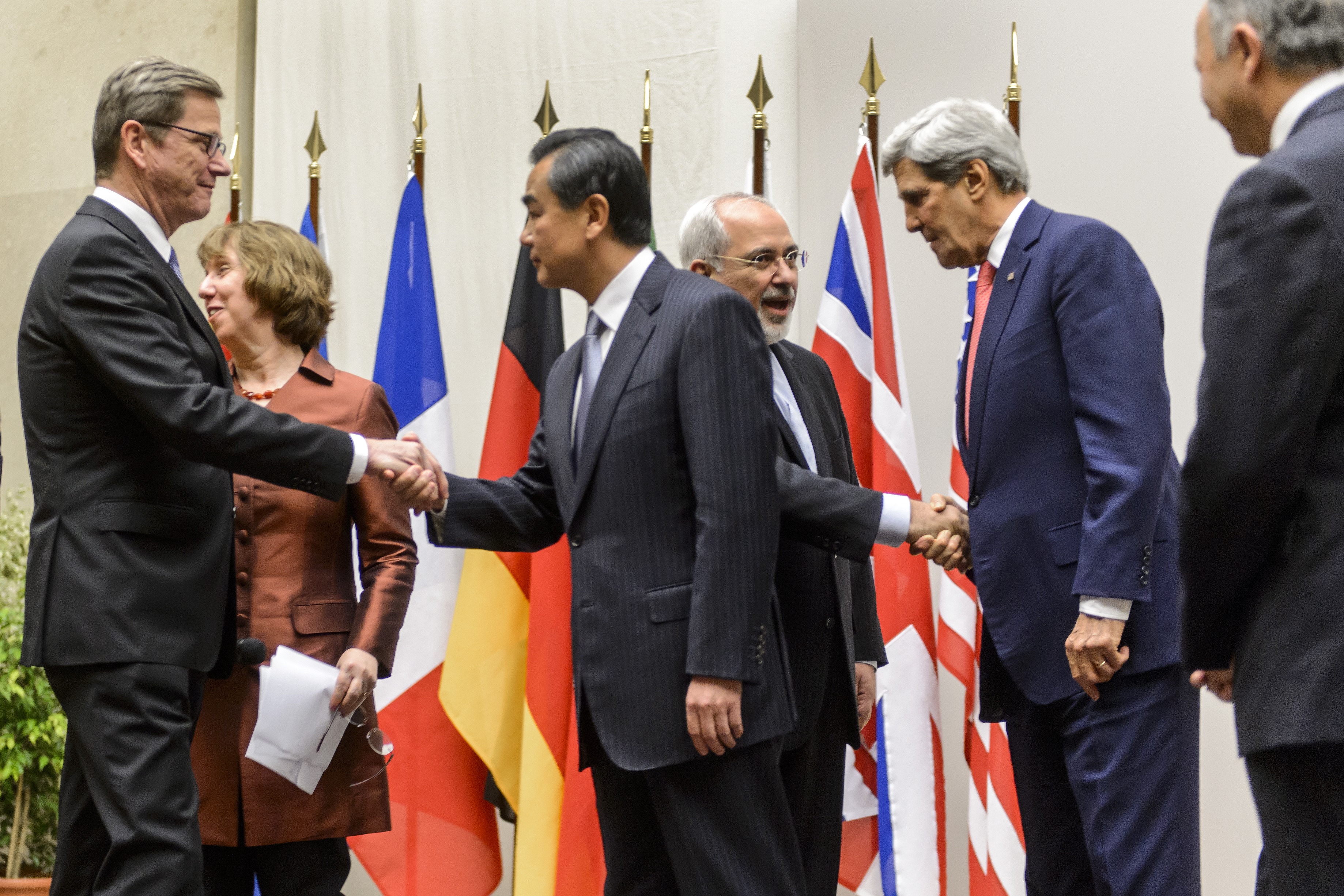
    Iran and six world powers sealed a historic accord to curb the Islamic Republic’s nuclear programme in return for ending sanctions, capping two years of tough diplomacy with the biggest breakthrough in decades.

    Diplomats reached the deal in Vienna on Tuesday, July 14, their 18th day of talks.

    US President Barack Obama said it blocks “every path to a nuclear weapon” for Iran, while Iranian foreign minister Mohammad Javad Zarif called it a “win-win”.

    Banks including Goldman Sachs Group Inc. and Barclays Plc say it would take 6-12 months for the holder of the world’s fourth largest crude reserves to revive production by about 500,000 barrels a day. Sanctions cut the country’s crude exports by more than half from a peak of more than six million barrels a day in the 1970s.

    With new oil flows expected to hit an oversupplied market, Brent, the global benchmark, fell as much as 2.1% to $56.63 a barrel in London and was trading $57.87 at 9.02pm India time. Iran’s benchmark TEDPIX Index, led by oil and gas companies, advanced 0.3% at the close, the highest since April.

    In China, Europe and Russia, the agreement will be welcomed by companies eager to access an untapped market of 77 million people. With an economy bigger than Thailand’s and oil reserves rivalling Canada’s, Iran is the most important market still closed to major equity investors, according to investment bank Renaissance Capital.

    Ending economic penalties could open Iran’s stock market to investors in early 2016, Renaissance’s Charles Robertson and Daniel Salter wrote in a report on Monday. Inflows could total $1 billion in the first year, they said.

    Oil-importing countries such as India should use the period of subdued oil prices to strengthen their monetary policy framework along with fuel pricing and taxation reforms, the International Monetary Fund (IMF) recommended in a report released, coincidentally, on Tuesday.

    Low oil prices could boost India’s gross domestic product (GDP) by 0.4-0.6 percentage point over this year and next.

    Boon for oil importers

    India follows the US, China and Russia in energy use, accounting for 4.4% of global energy consumption. Petroleum product consumption in India has been growing. According to the oil ministry, it grew 3.14% to around 163.17 million tonnes in 2014-15.

    In its report tiled Global Implications of Lower Oil Prices, IMF said: “Oil importers, in deciding how much of the windfall to save, should balance rebuilding policy space with managing domestic cyclical risks. Those with significant vulnerabilities should save much of the windfall, while those facing large output gaps should spend it.”

    It added that “countries should use this period as an opportunity to strengthen their monetary policy frameworks; evidence of second-round disinflationary effects could open space for reducing policy rates in some countries”.

    The fund said countries such as India will reap modest benefits from lower global oil prices as it does not fully pass on the benefits to consumers. While lower oil prices are expected to boost global growth by one percentage point in 2015 and 2016, the IMF said India’s GDP is expected to get a boost of between 0.4 and 0.6 percentage point in the same period.

    The multilateral agency is right to point out that governments like India may be absorbing the benefits of lower oil prices to meet their budget deficit targets and are not passing on the benefits to consumers, which could be less growth-inducing, said Madan Sabnavis, chief economist at CARE Ratings. “There is nothing wrong or correct about it. The Indian government has a huge subsidy burden and it is using the opportunity to correct it,” he said.

    Low international crude prices have helped the National Democratic Alliance (NDA) government bring retail inflation below 5%, better its fiscal deficit target of 4.1% of GDP for 2014-15, and bring the current account deficit to 1.6% of GDP in the January-March quarter, against 2% in the preceding three months.

    “Low oil prices provide a window of opportunity to undertake serious fuel pricing and taxation reform in both oil-importing and oil-exporting countries,” the report said.

    In October, the government freed diesel prices. When crude oil prices fell, it cut fuel prices but simultaneously raised excise duties. This way, the government garnered additional revenue, while resisting the temptation to fully pass on the benefit of lower crude oil prices.

    Crude oil prices in the Indian energy basket averaged at $61.75 per barrel in June, against $84.16, $105.52, $107.97 and $111.89 in 2014-15, 2013-14, 2012-13 and 2011-12, respectively.

    The fall in prices has also presented countries such as India an opportunity to revise terms of imports. India has made a pitch for price and terms correction with the Organization of the Petroleum Exporting Countries (Opec) and has asked for a concession rather than having to pay the so-called Asian premium.

    “India alone is not going to benefit. Japan, China, Korea are also going to benefit. We are talking together at many forums and will be raising it together as well. We are the largest buyers for the Opec, so we need a favourable treatment and things are on right track. There is a positive signal from the seller side also,” said oil minister Dharmendra Pradhan in a 16 June interview.

    India is one of the major consumers of Opec’s production, with the group accounting for 85% and 94% of India’s crude oil and gas imports, respectively.

    “This is a very good time to review this practice and to provide more fair conditions for all parties,” Fatih Birol, chief economist at Paris-based International Energy Agency (IEA), said in an interview published on 2 July.

    Bouyed by the subdued crude oil prices, the 2015-16 budget has estimated India’s subsidy bill at Rs.2.43 trillion, around 9% less than the revised estimate of Rs.2.66 trillion for 2014-15.

    The petroleum subsidy is estimated at Rs.30,000 crore for 2015-16, 50% less than the revised estimate of Rs.60,270 crore. The difference between market prices and retail fuel rates—to be borne by oil marketing firms this fiscal year—is estimated at Rs.42,500 crore.

    The budget has earmarked Rs.22,000 crore for subsidy on domestic cooking gas and Rs.8,000 crore for kerosene. While petrol and diesel prices are deregulated, the prices of domestic cooking gas and kerosene continue to be set by the government.

    The Iran deal

    Full implementation depends on Iran meeting obligations to curb its nuclear programme and address concerns about possible military dimensions of its work. Iran has until 15 December to answer 12-year-old questions about its weapons capabilities. Once inspectors verify compliance, the oil-rich nation will be allowed to ramp up energy exports, re-enter the global financial system, and access as much as $150 billion in frozen assets.

    “This is probably going to go down in history as one of the biggest diplomatic successes of the century,” Ellie Geranmayeh, a policy fellow at the European Council of Foreign Relations, said by phone from London.

    Congress has 60 days to review the document in Washington, where it will meet resistance from lawmakers who oppose making any nuclear compromises with Iran.

    Israel, which has threatened military action to prevent Iran from getting a nuclear bomb, said it will use “every means” possible to persuade Congress to reject it, though Obama vowed to veto such a move. The House and Senate would each need a two-thirds majority to override a veto.

    Israeli Prime Minister Benjamin Netanyahu denounced the deal as a “historic mistake”, saying in a statement that “sweeping concessions were made in all areas meant to block Iran from the ability to arm itself with nuclear weapons”.

    Should the agreement survive review, it would become one of the biggest foreign policy achievements for Obama, who kicked off the initiative with a call to Iranian President Hassan Rouhani nearly two years ago. The US cut diplomatic ties with Iran in 1980, after revolutionaries seized the American embassy in Tehran and held hostages for more than a year.

    Iran agreed to cut 98% of its stockpile of enriched uranium and eliminate two-thirds of its centrifuges, according to a copy of the accord obtained by Bloomberg.

    “This is a sign of hope for the entire world,” European Union (EU) foreign policy chief Federica Mogherini said in Vienna. “And we all know this is very much needed in these times.”

    Relief, including sales of aircraft by companies including Boeing Co., would be phased in after 15 December if Iran complies. The United Nation’s (UN) International Atomic Energy Agency will negotiate access to all suspect sites, including military bases such as Parchin.

    Once UN monitors verify Iran has taken all steps to curb its nuclear activities, the US and the EU will also lift restrictions on most of its financial institutions except those sanctioned for terrorism or human rights abuses. Iranian banks, including the central bank, will be able to process transactions once again through SWIFT, the leading global financial messaging system, US officials said.

    The US and the EU will also allow any nation to buy Iranian oil and ease curbs on trading refined products, chemicals and natural gas. Iran holds the second largest gas reserves in the world, after Russia.

    “If Iran violates the deal, all these sanctions will snap back into place,” Obama said at the White House.

    The UN ban on conventional weapons imports and exports by Iran will remain in place for five years, while the UN embargo on ballistic missiles will hold for eight years, according to the draft. The unilateral US arms embargo will stay in place.

    Utpal Bhaskar is with Mint. Bloomberg’s Stepan Kravchenko in Vienna, Nafeesa Syeed in Dubai, Gregory Viscusi in Vienna, Kambiz Foroohar in New York and Angela Greiling Keane in Washington and Mint’s Asit Ranjan Mishra in New Delhi contributed to this story.

  • The latest entrant in the Republican Presidential Field Gov. Scott Walker kicks off campaign

    The latest entrant in the Republican Presidential Field Gov. Scott Walker kicks off campaign

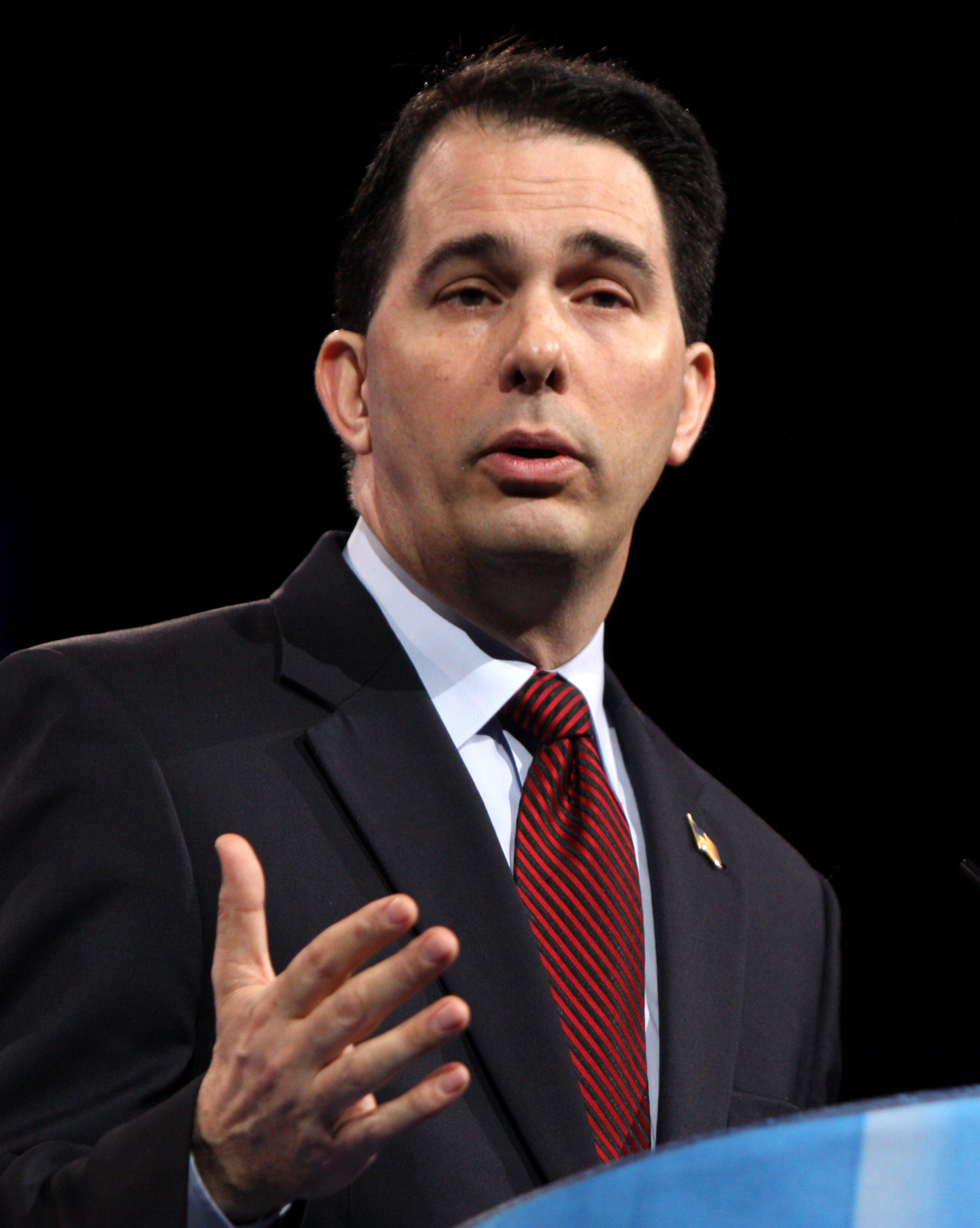
    NEW YORK (TIP): The Republican Presidential Field, already crowded with 14 hopefuls, got another in Gov. Scott Walker of Wisconsin who kicked off his campaign with a video announcement July 13. And, there are more coming in. Ohio Gov. John Kasich and former Virginia Gov. Jim Gilmore are to follow in coming weeks, bringing the total by summer’s end to at least 17.

    The New York Times commented thus on his joining the 2016 Presidential race. It’s a moment that has been in the making since 2010, when Mr. Walker emerged among a class of Republican governors elected amid a wave of Tea Party anger. He made a national name as a union-buster and was a top target of organized labor in an attempted recall election, which he survived. He has used those races and his re-election in 2014 as selling points to a coastal donor class that remains skeptical of his ability to go the distance.

    Mr. Walker has a working-class background and Midwestern appeal, combined with Tea Party credibility, and he impressed many on the right with a strong speech at an Iowa forum in January. But since then, he has stumbled, appearing out of his depth on matters of foreign policy. He infuriated proponents of same-sex marriage in the Republican donor community after the Supreme Court ruled in their favor, by calling for a constitutional amendment allowing the states to decide the issue for themselves.

    And he has drawn the most concern among establishment Republicans for his shift on overhauling immigration, from supporting to opposing a legal path to citizenship for immigrants living in the country illegally. He’s taken time over the last several months to study up on national security and foreign policy.

    He appears to have a solid position in polls in neighbor-state Iowa, where the 2016 caucuses will most likely require a low plurality for a win, given the number of candidates. But he will need to use the coming weeks to show he can expand beyond that early state.

  • Putting India Emphatically on Global Map – Part 2

    Putting India Emphatically on Global Map – Part 2

    Continued from Putting India Emphatically on Global Map – Part 1

    It defies logic that a country that is considered as our most serious adversary and whose policies in our region has done us incalculable strategic harm should have been accepted as India’s strategic partner during Manmohan Singh’s time. Such a concession that clouds realities serves China’s purpose and once given cannot be reversed. Pursuant to discussions already held during the tenure of the previous government, the Chinese announced during Xi’s visit the establishment of two industrial parks in India, one in Gujarat and the other in Maharashtra, and the “endeavour to realise” an investment of US $ 20 billion in the next five years in various industrial and infrastructure development projects in India, including in the railways sector. The Chinese Prime Minister’s statement just before Modi goes to China on May 14 that China is looking for preferential policies and investment facilitation for its businesses to make this investment suggests that the promised investment may not materialise in a hurry. While the decision during Xi’s visit to continue defence contacts is useful in order to obtain an insight into PLA’s thinking and capacities at first hand, the agreement, carried forward from Manmohan Singh’s time, to explore possibilities of civilian nuclear cooperation puzzles because this helps to legitimise China’s nuclear cooperation with Pakistan.

    Even as Modi has been making his overall interest in forging stronger ties with China clear, he has not shied away from allusions to Chinese expansionism, not only on Indian soil but also during his visit to Japan. During his own visit to US in September 2014 and President Obama’s visit to India in January 2015, the joint statements issued have language on South China Sea and Asia-Pacific which is China-directed. A stand alone US-India Joint Vision for Asia Pacific and the Indian Ocean Region issued during Obama’s Delhi visit was a departure from previous Indian reticence to show convergence with the US on China-related issues. India has now indirectly accepted a link between its Act East policy and US rebalance towards Asia. The Chinese have officially chosen to overlook these statements as they would want to wean away India from too strong a US embrace. During Sushma Swaraj’s call on Xi during her visit to China in February 2015 she seems to have pushed for an early resolution of the border issue, with out-of-the-box thinking between the two strong leaders that lead their respective countries today. Turning the Chinese formulation on its head, she called for leaving a resolved border issue for future generations.

    It is not clear what the External Affairs Minister had in mind when she advocated
    “out-of-the-box” thinking, as such an approach can recoil on us. That China has no intention to look at any out-of-the-box solution has been made clear by the unusual vehemence of its reaction to Modi’s visit to Arunachal Pradesh in February 2015 to inaugurate two development projects on the anniversary of the state’s formation in 1987. The pressure will be on us to do out-of-the-box thinking as it is we who suggested this approach. China is making clear that it considers Arunachal Pradesh not “disputed territory” but China’s sovereign territory. This intemperate Chinese reaction came despite Modi’s visit to China in May. The 18th round of talks between the Special Representatives (SRs) on the boundary question has taken place without any significant result, which is not surprising in view of China’s position on the border. The Chinese PM has recited the mantra a few days ago of settling the boundary issue “as early as possible” and has referred to “the historical responsibility that falls on both governments” to resolve the issue, which means nothing in practical terms. As against this, India has chosen to remain silent on the China-Pakistan Economic Corridor (CPEC) which will traverse territory that is legally Indian, and which even the 1963 China-Pakistan border agreement recognises as territory whose legal status has not been finally settled. The CPEC cannot be built if China were to respect its own position with regard to “disputed” territories which it applies aggressively to Arunachal Pradesh. Why we are hesitant to put China under pressure on this subject is another puzzle.

    Modi’s visit to Seychelles, Mauritius and Sri Lanka in March 2015 signified heightened attention to our critical interests in the Indian Ocean area. The bulk of our trade- 77% by value and 90% by volume- is seaborne. Modi was the first Indian Prime Minister to visit Seychelles in 34 years, which demonstrates our neglect of the Indian Ocean area at high political level and Modi’s strategic sense in making political amends. During his visit Modi focused on maritime security with agreement on a Coastal Surveillance Radar Project and the supply of another Dornier aircraft. In Mauritius, Modi signed an agreement on the development of Agalega Island and also attended the commissioning of the Barracuda, a 1300 tonne Indian-built patrol vessel ship for the country’s National Coast Guard, with more such vessels to follow. According to Sushma Swaraj, Modi’s visit to Seychelles and Mauritius was intended to integrate these two countries in our trilateral maritime cooperation with Sri Lanka and Maldives.

    In Pakistan’s case, Modi too seems unsure of the policy he should follow- whether he should wait for Pakistan to change its conduct before engaging it or engage it nevertheless in the hope that its conduct will change for the better in the future. Modi announced FS level talks with Pakistan when Nawaz Sharif visited Delhi for the swearing-in ceremony, even though Pakistan had made no moves to control the activities of Hafiz Saeed and the jihadi groups in Pakistan.

    The Pakistani argument that Nawaz Sharif was bold in visiting India for the occasion and that he has not been politically rewarded for it is a bogus one. He had a choice to attend or not attend, and it was no favour to India that he did. Indeed he did a favour to himself as Pakistan would have voluntarily isolated itself. The FS level talks were cancelled when just before they were to be held when the Pakistan High Commissioner met the Hurriyet leaders in Delhi. Pakistan’s argument that we over-reacted is again dishonest because it wanted to retrieve the ground it thought it had lost when Nawaz Sharif did not meet the Hurriyet leaders in March 2014.

    Modi ordered a robust response to Pakistani cease-fire violations across the LOC and the international border during the year, which suggested less tolerance of Pakistan’s provocative conduct. We have also been stating that talks and terrorism cannot go together. Yet, in a repetition of a wavering approach, the government sent the FS to Islamabad in March 2015 on a so-called “SAARC Yatra”. Pakistan responded by releasing the mastermind of the Mumbai attack, Lakhvi, on bail and followed it up by several provocative statements on recent demonstrations by pro-Pakistani separatists in Srinagar, without any real response from our side. Surprisingly, in an internal political document involving the BJP and the PDP in J&K, we agreed to include a reference to engaging Pakistan in a dialogue as part of a common minimum programme, undermining our diplomacy with Pakistan in the process.

    Pakistan believes that it is US intervention that spurred India to take the initiative to send the FS to Pakistan, which is why it feels it can remain intransigent. Pakistan chose to make the bilateral agenda even more contentious after the visit by the FS by raising not only the Kashmir cause, but also Indian involvement in Balochistan and FATA. On our side, we raised the issue of cross border terrorism, the Mumbai terror trial and LOC violations, with only negative statements on these issues by Pakistan. Since then the Pakistani army chief has accused India of abetting terrorism in Pakistan. The huge gulf in our respective positions will not enable us to “find common ground and narrow differences” in further rounds of dialogue, about which the Pakistani High Commissioner in Delhi is now publicly sceptical.

    Even though one is used to Pakistan’s pathological hostility towards India, the tantrums that Nawaz Sharif’s Foreign Policy Adviser, Sartaj Aziz, threw after President Obama’s successful visit to India were unconscionable. He objected to US support for India’s permanent seat in the UNSC and to its membership of the Nuclear Suppliers Group (NSG). He castigated the Indo-US nuclear deal, projecting it as directed against Pakistan and threatened to take all necessary steps to safeguard Pakistan’s security- in other words, to continue to expand its nuclear arsenal.

    Chinese President Xi’s April 2015 visit to Pakistan risks to entrench Pakistan in all its negative attitudes towards India. The huge investments China intends making through POK constitutes a major security threat to India. China is boosting a militarily dominated, terrorist infested, jihadi riven country marked by sectarian conflict and one that is fast expanding its nuclear arsenal, including the development of tactical nuclear weapons, without much reaction from the West. President Ashraf Ghani’s assumption of power in Afghanistan and his tilt towards Pakistan and China, as well as the West’s support for accommodating the Taliban in Afghanistan with Pakistan’s help will further bolster Pakistan’s negative strategic policies directed at India. Ghani’s delayed visit to India in April 2015 has not helped to clarify the scenario in Afghanistan for us, as no change of course in Ghani’s policies can be expected unless Pakistan compels him to do by overplaying its hand in his country. Modi is right in biding his time in Afghanistan and not expressing any undue anxiety about developments there while continuing our policies of assistance so that the goodwill we have earned there is nurtured.

    Prime Minister Modi, belying expectations, moved rapidly and decisively towards the US on assuming office. He blindsided political analysts by putting aside his personal feelings at having been denied a visa to visit the US for nine years for violating the US law on religious freedoms.

  • US says Iran nuclear deal deadline may ‘slip’

    US says Iran nuclear deal deadline may ‘slip’

    VIENNA (TIP): High-stakes talks to nail down a historic deal with Iran to curtail its nuclear programme may “slip” past a June 30 deadline, a top US official admitted on June 25 ahead of crunch weekend negotiations in Vienna.

    “We may not make June 30, but we will be close,” the senior official told reporters as top US diplomat John Kerry prepared to head Friday for what could be the last talks between Iran and global powers on the deal.

    The official said the target date to finalise the historic deal — the main outlines were agreed in April in Lausanne, Switzerland –would only “slip” by a few days.

    “The intent of everybody here — the P5+1, the European Union, Iran — is to stay until we get this done, or find out we can’t. And our intent is to get it done,” the official told reporters, asking not to be named.

    Others, including Iranian Foreign Minister Mohammad Javad Zarif, who is due in Vienna on Saturday, have said the deadline may be missed by a few days but until now Washington had insisted it still aimed to get a deal on schedule.

    “We can truly see a path forward that gets us to a very good agreement here. We know what the pieces of it are,” the US official said, adding that in the end, Iran was facing
    “critical choices.”

    Kerry, addressing reporters after unveiling an annual rights report, said he was “always hopeful… I’m not conferring optimism, but I’m hopeful.”

    Iran, which has engaged in something of a rapprochement with the West since the election of President Hassan Rouhani in 2013, denies wanting nuclear weapons, saying its nuclear programme is exclusively peaceful.

    Under the Lausanne framework, which was also agreed several days late, Iran will downsize its nuclear activities in order to make any attempt to make a nuclear weapon all but impossible.

    This includes Iran cutting the number of centrifuges enriching uranium, which is used in nuclear power but also for a bomb when highly purified, as well as slashing its uranium stockpiles and changing the design of a new reactor.

    In return, UN and Western sanctions that have caused Iran major economic pain would be progressively lifted, although the six powers insist they can be easily “snapped back” in place if Tehran violates the accord.-

    – Spanners in the works –

    French Foreign Minister Laurent Fabius will also arrive in Vienna on Saturday, an aide said Thursday, while a source in Brussels said EU foreign policy chief Federica Mogherini was expected “this weekend.”

    The mooted final accord between Iran and the “P5+1” — Britain, China, France, Russia and the United States plus Germany — will be a highly complex agreement 40-50 pages long, including several appendices.

    It will set out an exact timetable of sanctions relief and reciprocal steps by Iran, as well as a mechanism for handling possible violations by either side.

    Tricky issues include how UN sanctions might be re-applied, the reduction of Iran’s uranium stockpile and its future research and development on newer, faster types of centrifuges.

    Iran must also address lingering questions about the possible military dimensions of its nuclear program to the satisfaction of the UN watchdog, the IAEA.

    Amid unease in Iran’s conservative-dominated parliament that Tehran is giving too much away, the country’s supreme leader, Ayatollah Ali Khamenei, on Tuesday appeared to throw several spanners in the works.

  • Putting India Emphatically on Global Map – Part 1

    Putting India Emphatically on Global Map – Part 1

    Prime Minister Modi has surprised his own people and, no doubt, external observers, by his foreign policy activism since he took office. In his year in power he has travelled abroad 16 times- and 19 if the forthcoming visits to China, Mongolia and South Korea are included- inviting some criticism that these peregrinations have meant less attention devoted to domestic affairs. This is misplaced criticism because today, with the change in the nature of diplomacy, the heads of governments play a critical role in external affairs. Frequent personal contacts at the highest political level have now become the norm, leaders often are on first name terms and difficult knots are untied by exertions at their level, sometimes in an unorthodox manner. Modi, even if seemingly inexperienced in the foreign policy domain, has had to, therefore, wade into the deep waters of diplomacy as soon as he took over because his position has demanded this. But no one was prepared for a Modi with a natural flair for diplomacy, to which he has brought a surprising degree of imagination and self-assurance. From the start, he seemed to have a clear idea of where the interests of his country lay and the initiatives needed to advance them.

    All Indian Prime Ministers on taking over give priority to ties with neighbouring countries. The belief is that either India has neglected its neighbours or has been insensitive and overbearing, leading to their alienation and consequent opportunities for external powers to intervene at the cost of India’s interests. Modi too began by reaching out to the neighbours, but in a manner not anticipated. He invited all the SAARC leaders to his swearing-in, with the intention no doubt to signal that his elevation to power would usher in a new era of South Asian relations, that the clear victory in elections of a supposedly nationalist party did not denote a more muscular policy towards neighbours and that, on the contrary, India intended to work together with them to move the whole region forward towards peace and prosperity. This gesture had most meaning for India-Pakistan relations, and Nawaz Sharif’s decision to attend the swearing-in was “rewarded” with the announcement of FS level talks between the two countries.

    Continuing the emphasis on the neighbourhood, he chose Bhutan as the first country to visit in June 2014. This made sense as Bhutan is the only neighbour that has not played an external card against us or politically resisted building ties of mutual benefit. His August 2014 visit to Nepal made a notable impact in local political and popular thinking about India as a well-wisher. His extempore address to the Nepalese parliament was a tour de force. He handled sensitive issues during his visit with finesse and played the cultural and religious card dextrously. External Affairs Minister Sushma Swaraj visited Bangladesh in June 2014. A very notable development is the approval of the Land Boundary Agreement with Bangladesh approved by the Indian parliament in May 2015. Modi visited Myanmar in November 2014 to take part in the East Asia summit and for bilateral discussions with this strategically placed neighbour whose honeymoon with China is waning.

    SAARC figures prominently in Modi’s foreign policy vision. He invited all SAARC leaders to his swearing-in ceremony, which was unprecedented. It is true that SAARC is one of the least integrated regions economically speaking, which means that the potential of the region remains unexploited. This also means that external actors find it easier to intrude into the loose equations in the subcontinent. While in terms of aspirations for the region, Modi is right in imagining a more tightly textured SAARC, India’s capacity to do this is limited in the face of Pakistani recalcitrance. A strengthened SAARC means a stronger Indian role in it, which is anathema to a Pakistan that is obsessed with countering Indian “hegemony” in South Asia. Pakistan will be reduced to its true importance if it ceases to confront India, which is why it will continue its confrontational policies. it also means that Afghanistan will not be adequately integrated into SAARC structures as that is contingent on Pakistan’s willingness to facilitate access to this landlocked country. At the Kathmandu SAARC summit in November 2014, Modi encouraged neighbours to benefit from opportunities provided by India’s growth, promised a special funding vehicle overseen by India to finance infrastructure projects in the region and announced India’s readiness to develop a satellite specifically for the region by 2016. He warned at the Kathmandu summit that regional integration will proceed with all or without some, which suggested that if Pakistan did not cooperate, others could go ahead without it, though under the SAARC charter this is not possible and other countries may not support a strategy of isolating Pakistan.

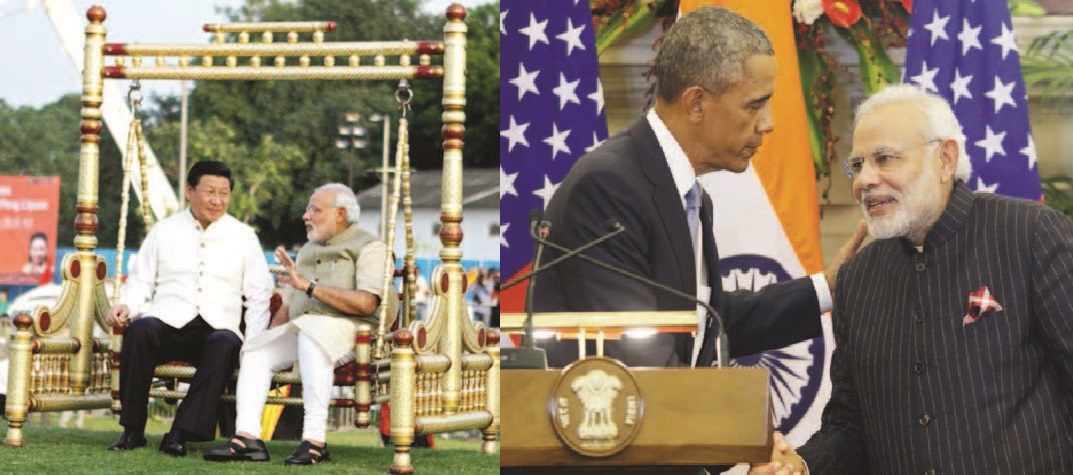
    Modi seems to admire China’s economic achievements, which would not be surprising given China’s spectacular rise. His several visits to China as Gujarat Chief Minister no doubt gave him familiarity with the country and take its pulse. His view that economic cooperation is the key driver in relations between countries and that all countries give more importance to economic growth and prosperity for their peoples than creating conditions of conflict evidently guides his thinking towards China. He was quick to court China after assuming power, with reinforcement of economic ties as the primary objective. The huge financial resources at China’s disposal, its expertise in infrastructure building, its need for external markets for off-loading the excess capacity it has built in certain sectors has made cooperation with China a theoretically win-win situation. The Chinese Foreign Minister was the first foreign dignitary to be received by Modi. He invited the Chinese President to make a state visit to India in September 2014, during which unprecedented personal gestures were made to him in an informal setting in Ahmedabad on Modi’s birthday. This imaginative courting was marred by the serious border incident in Ladakh coinciding with Xi’s visit- one more case of China reaching out to India and simultaneously staging a provocation so that India remains unsure about China’s intentions and finds it difficult to make a clear choice about what policy to pursue, and in the process has to accept faits accomplish that are to China’s advantage.

    Unlike the timidity of the previous government to treat such incidents as acne on the beautiful face of India-China relations, Modi raised the border issue frontally with XI at their joint press conference, expressing
    “our serious concern over repeated incidents along the border”. His call for resuming the stalled process of clarifying the Line of Actual Control (LAC) and mention of “India’s concerns relating to China’s visa policy and Trans Border Rivers” while standing alongside Xi Jinping at the joint press conference indicated a refreshing change from the past in terms of a more open expression of India’s concerns. With regard to Bangladesh-China-India-Myanmar Economic Corridor that China has been pushing hard, Modi was cautious. Why we accepted to discuss such a proposal in a working group in the first place is a puzzle. Engagement with China ought not to mean that we let it set the agenda when the downsides to us of what it seeks are clear. Equally importantly, he did not back another pet proposal of Xi: the Maritime Silk Road, which is a repackaged version of the notorious “string of pearls” strategy, as the joint statement omitted any mention of it. Since then China is pushing its One Belt One Road (OBOR) proposal which seeks to tie Asian and Eurasian economies to China, create opportunities for Chinese companies to bag major projects in this region financed by the Asian Infrastructure Investment Bank (AIIB) that China has floated. This ambitious concept is intended to establish China’s hegemony in Asia and outflank India strategically.

    On a more positive side, during Xi’s visit, the two sides agreed to further consolidate their Strategic and Cooperative Partnership, recognised that their developments goals are interlinked and agreed to make this developmental partnership a core component of this partnership.

    Read More : Putting India Emphatically on Global Map – Part 2

  • A way with the world

    A way with the world

    The Prime Minister, Narendra Modi, scored most in foreign policy in his first year in power. No one anticipated Modi’s natural flair for diplomacy, to which he has brought imagination and self-assurance. Modi has been more emphatic than his predecessors in giving improvement of relations with neighbors greater priority. He invited all the SAARC leaders to his swearing-in, to signal that the decisive election victory of a supposedly nationalist party did not denote a more muscular policy towards neighbors. On the contrary, India would take the lead in working for shared regional peace and prosperity.

    Bhutan, the only neighbor that has not politically resisted building ties of mutual benefit, was the first country he visited in June, 2014. He handled his August 2014 visit to Nepal with sensitivity and finesse, and followed it up with exceptional leadership in providing immediate earthquake relief to Nepal in May, 2015. In obtaining Parliament’s approval of the land boundary agreement with Bangladesh in May, 2015, Modi showed his determined leadership again.

    He did falter with Pakistan, seemingly unsure about whether he should wait for it to change its conduct before engaging it, or engage it nevertheless in the hope that its conduct will change for the better in future. He announced foreign-secretary-level talks during Nawaz Sharif’s visit to Delhi, but cancelled them precipitately. He ordered a robust response to Pakistan’s cease-fire violations, yet sent the foreign secretary to Islamabad in March, 2015, on an unproductive SAARC Yatra. Relations with Pakistan remain in flux. In Afghanistan, President Ashraf Ghani’s tilt towards Pakistan and China has challenged the viability of India’s Afghanistan policy. Ghani’s delayed visit to India in April 2015 did not materially alter the scenario for us, but India has kept its cool.

    Modi’s foreign policy premise, that countries give priority today to economics over politics, has been tested in his China policy, which received a course correction. After courting China economically, Modi had to establish a new balance between politics and economics. President Xi’s visit to India in September, 2014, was marred by the serious border incident in Ladakh. Modi showed a sterner side of his diplomacy by expressing serious concern over repeated border incidents and calling for resuming the stalled process of clarifying the Line of Actual Control. During his China visit in May, Modi was even more forthright by asking China to reconsider its policies, take a strategic and long-term view of our relations and address “the issues that lead to hesitation and doubts, even distrust, in our relationship”. He showed firmness in excluding from the joint statement any reference to China’s One Road One Belt initiative or to security in the Asia-Pacific region. The last minute decision to grant e-visas was puzzling, especially as the stapled visa issue remains unresolved. The economic results of his visit were less than expected, with no concrete progress on reducing the huge trade deficit and providing Indian products more market access in China. The 26 “agreements” signed in Shanghai were mostly non-binding MoUs involving the private sector and included the financing of private Indian companies by Chinese banks to facilitate orders for Chinese equipment.

    Modi’s visit to Seychelles, Mauritius and Sri Lanka in March, 2015, signified heightened attention to our critical interests in the Indian Ocean area. Modi was the first Indian prime minister to visit Seychelles in 33 years. His visit to countries in China’s periphery in May, 2015, was important for bilateral and geopolitical reasons. During his visit to South Korea the bilateral relationship was upgraded to a “special strategic partnership’, but Korea nevertheless did not support India’s permanent membership of the United Nations Security Council. Modi’s visit to Mongolia was the first by an Indian prime minister to a country whose position is geopolitically strategic from our point of view.

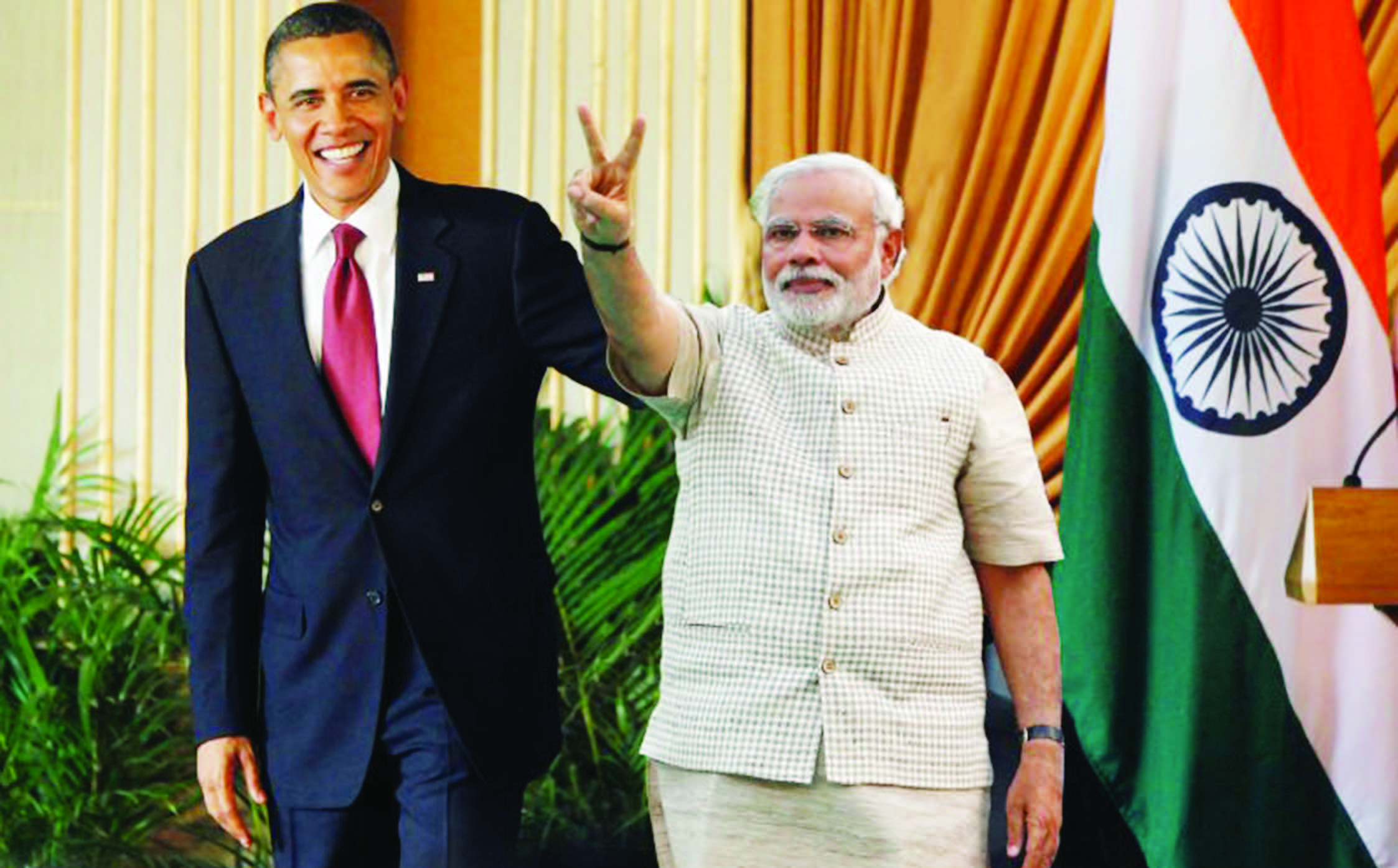
    Belying expectations, Modi moved decisively towards the United States of America on assuming office. He set an ambitious all-round agenda of boosting the relationship during his September, 2014, visit to Washington. In an imaginative move, he invited Obama to be the chief guest at our Republic Day on January 26, 2015. To boost the strategic partnership with the US, he forged a “breakthrough understanding” on the nuclear liability issue and for tracking arrangements for US-supplied nuclear material. Progress on the defense front was less than expected with four low-technology “pathfinder” projects agreed under the defense technology and trade initiative. The important US-India joint strategic vision for the Asia-Pacific and Indian Ocean region, issued as a stand-alone document, high-lighted the growing strategic convergences between the two countries, with China in view. A special feature of Modi’s September, 2014, US visit was his dramatic outreach to the Indian community, which has since then become a pattern in his visits abroad, whether in Australia, Canada or Beijing. No other prime minister has wooed the Indian communities abroad as Modi has done.

    President Putin’s visit to India in December, 2014, was used to underline politically that Russia remains India’s key strategic partner. Modi was effusive in stating that with Russia we have a “friendship of unmatched mutual confidence, trust and goodwill” and a “Strategic Partnership that is incomparable in content”. He was careful to convey the important message that even as India’s options for defense cooperation had widened today, “Russia will remain our most important defense partner”. Civilian nuclear cooperation with Russia got a boost with the agreement that Russia will build “at least” ten more reactors in India beyond the existing two at Kudankulam. All this was necessary to balance the strengthened strategic understanding with the US and its allies.

    Modi bolstered further our vital relations with Japan, which remains a partner of choice for India. Shinzo Abe announced $35 billion of public and private investment in India during Modi’s visit to Japan in September 2014, besides an agreement to upgrade defense relations.

    Modi’s visit to France and Germany in April, 2015, recognized Europe’s all-round importance to India and was timely. He rightly boosted the strategic partnership with France by ensuring concrete progress in the key areas of defense and nuclear cooperation by announcing the outright purchase of 36 Rafale jets and the MoU between AREVA and L&T for manufacturing high-technology reactor equipment in India. Modi’s bilateral visit to Canada in April, 2015, was the first by an Indian prime minister in 45 years. Bilateral relations were elevated to a strategic partnership and an important agreement signed for long-term supply of uranium to India.

    Relations with the Islamic world received less than required attention during the year, although the Qatar Emir visited India in March, 2015, and the political investment we made earlier in Saudi Arabia aided in obtaining its cooperation to extract our people from Yemen. Gadkari went to Iran in May, 2015, to sign the important agreement on Chabahar. Modi did well to avoid any entanglement in the Saudi-Iran and Shia-Sunni rivalry in West Asia. He met the prime minister of Israel, Benjamin Netanyahu, on the sidelines of the UN general assembly meeting in September, last year, to mark the strength of India-Israel ties. So, Modi’s handling of India’s foreign policy in his first year is impressive. He has put India on the map of the world with his self-confidence and his faith in the nation’s future.

  • European officials sing ‘we are the world’ at Nato meeting

    ANTALYA (TIP): In a distinctly different note for a military alliance meeting, European officials ended a Nato meeting with a spirited rendition of “we are the world.”

    Taking a break from issues such as the war in Ukraine and instability in the Middle East, Nato and other officials accepted an invitation by a Turkish band to sing a “last song for peace” at a dinner Wednesday hosted by Turkey as the alliance’s foreign ministers met near the Mediterranean city of Antalya.

    The foreign ministers of Greece and Turkey — Mevlut Cavusoglu and Nikos Kotzias — were seen singing and swaying arm-in-arm to the tune of the 1985 charity song. Nato secretary-general Jens Stoltenberg, EU foreign policy chief Federica Mogherini and others also joined in the sing-along.

  • Strategic Autonomy as an Indian Foreign Policy Option

    Strategic Autonomy as an Indian Foreign Policy Option

    [quote_right]For a large country like India, which has the potential of becoming a big power in the future, strategic autonomy is a compelling choice. By virtue of its demographic, geographic, economic and military size, India must lead, but does not have yet the comprehensive national power to do so. It cannot subordinate itself to the policies and interests of another country, however powerful, as its political tradition and the functioning of its democracy will not allow this. India may not be strong enough to lead, but it is sufficiently strong not to be led”, says the author.[/quote_right]

    In the joint statement issued during the Indian prime minister’s visit to France in April, the two sides reaffirmed “their independence and strategic autonomy” in joint efforts to tackle global challenges. In the French case, as a member of NATO it is not so clear what strategic autonomy might mean, but in our case it would essentially mean independence in making strategic foreign policy decisions, and, consequently, rejecting any alliance relationship. It would imply the freedom to choose partnerships as suits our national interest and be able to forge productive relationships with countries that may be strategic adversaries among themselves.

    In practical terms, this means that India can improve relations with the United States of America and China while maintaining close ties with Russia. It can forge stronger ties with Japan and still seek a more stable relationship with China. It can forge strong ties with Israel and maintain very productive ties with the Arab world, including backing the Palestinians in the United Nations. It means that India can have strategic partnerships with several countries, as is the case at present with the US, France, Germany, the United Kingdom, the European Union, Russia, China, Japan, Brazil, Saudi Arabia, Australia, Canada, Kazakhstan, Afghanistan, Vietnam, Iran and the like.

    It means that India can be a member of BRICS and the RIC dialogues, as well as IBSA, which exclude the West, and also forge closer political, economic and military ties with the Western countries. Our strategic autonomy is being expressed in other ways too. India is a democracy and believes that its spread favors its interests, but it is against the imposition of democracy by force on any country. If the spread of democracy is in India’s strategic interest, using force to spread it is against its strategic interest too, as is shown by the use of force to bring about democratic changes in West Asia by destroying secular authoritarian regimes and replacing them with Islamic authoritarian regimes. Likewise, India believes in respect for human rights, but is against the use of the human rights agenda to further the geo-political interests of particular countries, essentially Western, on a selective basis.

    For a large country like India, which has the potential of becoming a big power in the future, strategic autonomy is a compelling choice. By virtue of its demographic, geographic, economic and military size, India must lead, but does not have yet the comprehensive national power to do so. It cannot subordinate itself to the policies and interests of another country, however powerful, as its political tradition and the functioning of its democracy will not allow this. India may not be strong enough to lead, but it is sufficiently strong not to be led.

    India preserved its strategic autonomy even in the face of severe technology sanctions from the West on nuclear and missile issues. It preserved it by not signing the non-proliferation treaty and continuing its missile program. By going overtly nuclear in 1998, India once again exercised its strategic autonomy faced with attempts to close the doors permanently on its nuclear program by the permanent extension of the NPT and the comprehensive nuclear test ban treaty and fissile material cutoff treaty initiatives.

    In some quarters in India and abroad, the idea of strategic autonomy is contested as another manifestation of India’s non-aligned mindset, its propensity to sit on the fence, and avoid taking sides and assuming responsibility for upholding the present international order as a rising power should. These critics want India to join the US camp more firmly to realize its great power ambitions. These arguments ignore the reality that while the US has been crucial to China’s economic rise, China has been sitting on the fence for many years, even as a permanent member of the UN security council. Far from sacrificing its strategic autonomy, it has become a strategic challenger of the US.

    To be clear, the US government has officially stated its respect for India’s position on preserving its strategic autonomy, and denies any expectation that India would establish an alliance kind of relationship with it. It is looking for greater convergence in the foreign policies of the two countries, which is being realized.

    During Narendra Modi’s visit to the US in September, 2014, and Barack Obama’s visit to India in January this year, a strategic understanding on Asia Pacific and Indian Ocean issues, encapsulated in the January 2015 joint strategic vision for the Asia Pacific and the Indian Ocean has emerged. This document suggests a shift in India’s strategic thinking, with a more public position against Chinese maritime threat and a willingness to join the US in promoting partnerships in the region.

    Modi chose a striking formulation in his joint press conference with Obama in September when he said that the US was intrinsic to our Look East and Link West policies, which would suggest a growing role for the US in our foreign policy thinking. During Obama’s January visit, the joint statement noted that India’s Act East policy and the US rebalance to Asia provided opportunities for India, the US and other Asia-Pacific countries to work closely to strengthen regional ties. This was the first time that India implicitly endorsed the US rebalance towards Asia and connected our Act East policy to it.

    Rather than interpreting it as watering down our strategic autonomy, one can see it as strengthening it. So far, India has been hesitant to be seen drawing too close strategically to the US because of Chinese sensitivities. China watches closely what it sees are US efforts to rope India into its bid to contain China. At the same time, China continues its policies to strengthen its strategic posture in India’s neighborhood and in the Indian Ocean at India’s expense, besides aggressively claiming Indian territory.

    By strengthening relations with the US (which is strategically an Asian power), Japan and Vietnam, and, at the same time, seeking Chinese investments and maintaining a high-level dialogue with it, India is emulating what China does with India, which is to seek to build overall ties as much as possible on the economic front, disavow any negative anti-India element in its policies in our neighborhood, but pursue, simultaneously, strategic policies intended to contain India’s power in its neighborhood and delay its regional extension to Asia.

    In discussing the scope of our strategic autonomy, one should recognize that the strength of US-China ties, especially economic and financial, far exceeds that of India-US ties. India has to be careful, therefore, in how far it wants to go with the US with a view to improving its bargaining power with China. The other point to consider is the US-Pakistan equation. The US has just announced $1 billion of military aid to Pakistan; its position on the Taliban is against our strategic interests in Afghanistan; its stand on Pakistan’s sponsorship of terrorism against us is not robust enough.

    To conclude, strategic autonomy for India means that it would like to rely as far as possible on its own judgment on international issues, balance its relations with all major countries, forge partnerships with individual powers and take foreign-policy positions based on pragmatism and self-interest, and not any alliance or group compulsion.

    (The author is former foreign secretary of India. He can be reached at sibalkanwal@gmail.com)

  • Deepening Ties Will Shape Global Balance of Power: Indian-American Diplomat

    Deepening Ties Will Shape Global Balance of Power: Indian-American Diplomat

    NEW YORK:  The deepening India-US ties are among the most significant strategic developments of the past several years and will shape the global balance of power in the years to come, a senior Obama Administration official has said.

    “In South Asia, we’re strengthening our security, economic, and people-to-people ties with India. In my view, India’s revival and deepening US-India ties are among the most significant strategic developments of the past several years,” US Assistant Secretary, Bureau of Political-Military Affairs Puneet Talwar said yesterday.
    “They will shape the global balance of power for many years to come,” the Indian-American diplomat said while addressing a session in San Francisco on US foreign policy priorities in 2015.

     
    He said that as the oldest and largest democracies, the US and India are seeing a natural convergence not only of values, but of “our vision for the future”.

    Mr Talwar cited President Barack Obama’s historic visit to India this year as Chief Guest on the Republic Day in January and said that while India is one of the world’s oldest civilisations, it has the world’s most young people, with a median age of 27 and 600 million people under the age of 25.

  • SMART MOVES – Modi Government on US & China

    SMART MOVES – Modi Government on US & China

    [vc_row][vc_column][vc_column_text]

    “The Modi government will face the test of managing closer strategic relations with the US, which are in part directed against China, and forging closer ties with China that go against this strategic thrust, besides the reality that China has actually stronger ties with the US than it can ever have with India, though the underlying tensions between the two are of an altogether different order than between India and the US.”


    [/vc_column_text][/vc_column][/vc_row][vc_row][vc_column width=”1/2″][vc_column_text]

    [quote_box_center]China[/quote_box_center] 

    Prime Minister Modi has been quick to court both US and China. His first overtures were to China, prompted no doubt by his several visits there as Chief Minister of Gujarat, Chinese investments in his home state and his general admiration for China’s economic achievements. Beyond this personal element, many in the government and corporate sectors in India believe that our politically contentious issues with China, especially the unresolved border issue, should be held in abeyance and that economic cooperation with that country should be expanded, as India can gain much from China’s phenomenal rise and the expertise it has developed in specific sectors, especially in infrastructure. It is also believed that China, which is now sitting over $4 trillion of foreign exchange reserves, has huge surplus resources to invest and India should actively tap them for its own developmental needs. In this there is continuity in thinking and policy from the previous government, with Modi, as is his wont, giving it a strong personal imprint.

    The first foreign dignitary to be received by Modi after he became Prime Minister was the Chinese Foreign Minister, representing the Chinese President. This was followed by up by his unusually long conversation on the telephone with the Chinese Prime Minister. Our Vice-President was sent to Beijing to celebrate the 60th anniversary of the Panchsheel Agreement even though China has blatantly violated this agreement and India’s high level diplomatic endorsement of it only bolsters Chinese diplomacy, especially in the context of China-created tensions in the South China and East China Seas. Modi had occasion to meet President Xi Jinxing in July at the BRICS summit in July 2014, and this was followed up by the Chinese President’s state visit to India in September 2014, during which the Prime Minister made unprecedented personal gestures to him in an informal setting in Ahmedabad.

    The dramatics of Modi’s outreach to the Chinese aside, his objectives in strengthening economic ties with China, essentially imply a consolidation of the approach followed in the last decade or so, with some course correction here and there. In this period, China made very significant headway in our power and telecom sectors, disregarding obvious security concerns associated with China’s cyber capabilities and the links of Chinese companies to the Chinese military establishment. Many of our top companies have tapped Chinese banks and financial institutions for funds, and this has produced a pro-Chinese corporate lobby in our country. This lobby will obviously highlight the advantages of economic engagement over security concerns. The previous Prime Minister followed the approach of emphasizing shared interests with China rather than highlighting differences. The position his government took on the Depsang incident in May 2013 showed his inclination to temporize rather than confront. Externally, he took the line, which Chinese leaders repeated, that the world is big enough for India and China to grow, suggesting that he did not see potential conflict with China for access to global markets and resources. Under him, India’s participation in the triangular Russia-India-China format (RIC) and the BRICS format continued, with India-originated proposal for a BRICS Development Bank eventually materializing. Indian concerns about the imbalance in trade were voiced, but without any action by China to redress the situation. India sought more access to the Chinese domestic market for our competitive IT and pharmaceutical products, as well as agricultural commodities, without success. Concerns about cheap Chinese products flooding the India market and wiping out parts of our small-scale sector were voiced now and then, but without any notable remedial steps. The Strategic Economic Dialogue set up with China, which focused primarily on the railway sector and potential Chinese investments in India, did not produce tangible results.

    The Manmohan Singh government, despite China’s aggressive claims on Arunachal Pradesh and lack of progress in talks between the Special Representatives on the boundary issue as well as concerns about China’s strategic threats to our security flowing from its policies in our neighborhood, especially towards Pakistan and Sri Lanka, declared a strategic and cooperative partnership with that country. During Manmohan Singh’s visit to China in September 2013, we signed on to some contestable formulations, as, for example, the two sides committing themselves to taking a positive view of and supporting each other’s friendship with other countries, and even more surprisingly, to support each other enhancing friendly relations with their common neighbors for mutual benefit and win-win results. This wipes off on paper our concerns about Chinese policies in our neighborhood. We supported the BCIM (Bangladesh, China, India, Myanmar) Economic Corridor, including people to people exchanges, overlooking Chinese claims on Arunachal Pradesh and the dangers of giving the Chinese access to our northeast at people to people level. The agreement to carry out civil nuclear cooperation with China was surprising, as this makes our objections to China-Pakistan nuclear ties politically illogical. We also agreed to enhance bilateral cooperation on maritime security, which serves to legitimize China’s presence in the Indian Ocean when China’s penetration into this zone poses a strategic threat to us.

    As a mark of continuity under the Modi government, during President Xi Jinxing’s September 2014 visit to India, the two sides agreed to further consolidate their Strategic and Cooperative Partnership, recognized that their developments goals are interlinked and that their respective growth processes are mutually reinforcing. They agreed to make this developmental partnership a core component of their Strategic and Cooperative Partnership. The India-China Strategic Economic Dialogue was tasked to explore industrial investment and infrastructure development.

    To address the issue of the yawning trade imbalance, measures in the field of pharmaceuticals, IT, agro-products were identified and a Five-Year Development Program for economic and Trade Cooperation to deepen and balance bilateral trade engagement was signed. Pursuant to discussions during the tenure of the previous government, the Chinese announced the establishment of two industrial parks in India, one in Gujarat and the other in Maharashtra, and the “Endeavour to realize” an investment of US $ 20 billion in the next five years in various industrial and infrastructure development projects in India, with production and supply chain linkages also in view. In the railway sector, the two sides the two sides agreed to identify the technical inputs required to increase speed on the existing railway line from Chennai to Mysore via Bangalore, with the Chinese side agreeing to provide training in heavy haul for 100 Indian railway officials and cooperating in redevelopment of existing railway stations and establishment of a railway university in India. The Indian side agreed to actively consider cooperating with the Chinese on a High Speed Rail project. In the area of financial cooperation, the Indian side approved in principle the request of the Bank of China to open a branch in Mumbai.

    The Modi government has agreed to continue defense contacts, besides holding the first round of the maritime cooperation dialogue this year, even though by engaging India in this area it disarms our objections to its increasing presence in the Indian Ocean area, besides drawing negative attention away from its policies in the South China Sea as well as projecting itself as a country committed to maritime cooperation with reasonable partners. The joint statement issued during Xi Jinxing’s visit omitted any mention of developments in western Pacific, though it contained an anodyne formulation on Asia-Pacific. This becomes relevant in view of the statements on Asia-pacific and the Indian Ocean region issued during President Obama’s visit to India in January 2015.

    Our support, even if tepid, continues for the BCIM Economic Corridor. On our Security Council permanent membership, China continues its equivocal position, stating that it “understands and supports India’s aspiration to play a greater role in the United Nations including in the Security Council”. It is careful not to pronounce support for India’s “permanent membership”. During Foreign Minister Sushma Swaraj’s visit to China for the RIC Foreign Ministers meeting, China has maintained its equivocation, although the press has wrongly presented the formulation as an advance. China is openly opposed to Japan’s candidature in view of the sharp deterioration of their ties. In India’s case, it avoids creating a political hurdle to improved ties by openly opposing India’s candidature. “A greater role” could well mean a formula of immediately re-electable non-permanent members, of the kind being proposed by a former UN Secretary General and others.

    On counter-terrorism lip service is being paid to cooperation. On Climate Change, the two countries support the principle of “equity, common but differentiated responsibilities and respective capabilities”, although the US-China agreement on emission reduction targets has created a gap in Indian and Chinese positions, with the Modi government deciding to delink itself from China in international discussions to follow.

    In diplomacy, once concessions or mistakes are made, retrieval is very difficult unless a crisis supervenes. The Modi government, for reasons that are not too clear, repeated the intention of the two countries to carry out bilateral cooperation in civil nuclear energy in line with their respective international commitments, which has the unfortunate implication of India circumscribing its own headroom to object to the China-Pakistan nuclear nexus, besides the nuance introduced that China is observing its international commitments in engaging in such cooperation. The calculation that this might make China more amenable to support India’s NSG membership may well prove to be a mistaken one. Surprisingly, stepping back from the Manmohan government’s refusal towards the end to make one-sided statements in support of China’s sovereignty over Tibet when China continues to make claims on Indian territory, the new government yielded to the Chinese ruse in making us thank the “Tibetan Autonomous Region of the People’s Republic of China” as well as the Chinese Ministry of Foreign Affairs – as if both are independent of the Chinese government- for facilitating the Kailash Mansarovar Yatra and opening the new route through Nathu La, even though this is not the  most rational route because it involves a far longer journey, made easier of course by much better infrastructure. On receiving the flood season hydrological date the Chinese have stuck to their minimalist position.

    On the sensitive border issue, the disconnect between the joint statement which repeats the usual cliches and the serious incident in Chumar coinciding with Xi’s visit was obvious. China’s double game of reaching out to India- with greater confidence now as the gap between it and India has greatly widened and it has begun to believe that India now needs China for its growth and development goals- and staging a provocation at the time of a high level visit, continues. This is a way to remind India of its vulnerability and the likely cost of challenging China’s interests, unmindful that its conduct stokes the already high levels of India’s distrust of that country. It went to Modi’s credit that he raised the border issue frontally with XI Jinping at their joint press conference, expressing “our serious concern over repeated incidents along the border” and asking that the understanding to maintain peace and tranquility on the border “should be strictly observed”. He rightly called for resuming the stalled process of clarifying the Line of Actual Control (LAC). While this more confident approach towards China is to be lauded, we are unable to persuade China to be less obdurate on the border issue because we are signaling our willingness to embrace it nonetheless virtually in all other areas.

    That Modi mentioned “India’s concerns relating to China’s visa policy and Trans Border Rivers” while standing alongside Xi Jinping at the joint press conference indicated a refreshing change from the past in terms of a more open expression of India’s concerns. With regard to Bangladesh-China-India-Myanmar Economic Corridor that China is pushing hard, Modi rightly added a caveat by declaring that “our efforts to rebuild physical connectivity in the region would also require a peaceful, stable and cooperative environment”. He also did not back another pet proposal of Xi: the Maritime Silk Road, which is a re-packaged version of the notorious “string of pearls” strategy, as the joint statement omits any mention of it.

    Even as Modi has been making his overall interest in forging stronger ties with China clear, he has not shied away from allusions to Chinese expansionism, not only on Indian soil but also during his visit to Japan. After President Obama’s visit to India and the joint statements on South China Sea and Asia-Pacific issued on the occasion which can be construed as directed at China, Foreign Minister Sushma Swaraj’s recent visit there acquired more than normal interest in watching out for indications of China’s reaction. Her call on Xi Jinping was projected, quite wrongly, as going beyond normal protocol, when in actual fact the Chinese Foreign Minister gets access to the highest levels in India during visits. Swaraj seems to have pushed for an early resolution of the border issue, with out-of-the-box thinking between the two strong leaders that lead their respective countries today. Turning the Chinese formulation on its head, she called for leaving a resolved border issue for future generations.

    That China has no intention to look at any out-of-the-box solution- unless India is willing to make a concession under cover of “original thinking”- has been made clear by the vehemence of its reaction to Modi’s recent visit to Arunachal Pradesh to inaugurate two development projects on the anniversary of the state’s formation in 1987. It has fulminated over the Modi visit over two days, summoning the Indian Ambassador to lodge a protest, inventing Tibetan names for sub-divisions within Arunachal Pradesh to mark the point that this area has been under Tibetan administrative control historically. The Chinese Vice-Foreign Minister arrogantly told our Ambassador that Modi’s visit undermined “China’s territorial sovereignty, right and interests” and “violates the consensus to appropriately handle the border issue.” China is making clear that it considers Arunachal Pradesh not “disputed territory” but China’s sovereign territory. It is also inventing a non-existent “consensus” that Indian leaders will not visit Arunachal Pradesh to respect China’s position. There is a parallel between China’s position on the Senkakus where it accuses the Japanese government to change the status quo and inviting a Chinese reaction, and its latest broadside against India. This intemperate Chinese reaction casts a shadow on Modi’s planned visit to China in May and next round of talks between the Special Representatives (SRs) on the boundary question. If without a strong riposte these planned visits go ahead we would have allowed the Chinese to shift the ground on the outstanding border issue even more in their favor. It would be advisable for our Defense Minister to visit Tawang before Modi’s visit. A very categorical enunciation of our position that goes beyond previous formulations should be made by the Indian side. The Chinese position makes the SR talks pointless, as the terms of reference China is laying down cannot be agreed to by our side.

    [/vc_column_text][/vc_column][vc_column width=”1/2″][vc_column_text]

    [quote_box_center]UNITED STATES[/quote_box_center] 

    Prime Minister Modi, contrary to expectations, moved rapidly and decisively towards the US on assuming office. He confounded political analysts by putting aside his personal pique at having been denied a visa to visit the US for nine years for violating the US law on religious freedoms, the only individual to be sanctioned under this law. The first foreign visit by Modi to be announced was that to the US. Clearly, he believes that strong relations with the US gives India greater strategic space in foreign affairs and that its support is crucial for his developmental plans for India.

    To assess the Modi government’s policies towards the US, the results of his visit to Washington in September 2014 and that of Obama to India in January 2015 need to be analyzed, keeping in mind the approach of the previous government and the element of continuity and change that can be discerned.

    The joint statement issued during his US visit set out the future agenda of the relationship, with some goals clearly unachievable, but the ambitions of the two countries were underscored nonetheless. It was stated that both sides will facilitate actions to increase trade five-fold, implying US-China trade levels, which is not achievable in any realistic time-frame. They pledged to establish an Indo-US Investment Initiative and an Infrastructure Collaboration Platform to develop and finance infrastructure. An agreement on the Investment Initiative was signed in Washington prior to Obama’s visit to India, but bringing about capital reforms in India, which the Initiative aims at, is not something that can be realized quickly. India wants foreign investment in infrastructure and would want to tap into US capabilities in this broad sector, but the US is not in the game of developing industrial corridors like Japan or competitively building highways, ports or airports. Cooperation in the railway sector was identified, but it can only be in some specific technologies because this is the field in which Japan and China are competing for opportunities in India, whether by way of implementing high speed freight corridors or building high speed train networks in the country. India offered to the U.S. industry lead partnership in developing three smart cities, even if the concept of smart cities is not entirely clear. Some preliminary steps seem to have been taken by US companies to implement the concept. The decision to establish an annual high-level Intellectual Property (IP) Working Group with appropriate decision-making and technical-level meetings as part of this Forum was done at US insistence as IPR issues are high on the US agenda in the context of contentious issues that have arisen between the US companies and the Indian government on patent protection, compulsory licensing and local manufacturing content requirements.

    In his joint press briefing with Obama, Modi raised IT related issues, pressing Obama’s support  “for continued openness and ease of access for Indian services companies in the US market”, without obtaining a reaction from  the latter then or later when Obama visited India. On the food subsidy versus trade facilitation stand off in the WTO, Modi maintained his position firmly and compelling the US to accept a compromise. Modi’s firmness on an issue of vital political importance to India showed that he could stand up to US pressure if the country’s interest so demanded. He welcomed “the US defense companies to participate in developing the Indian defense industry”, without singling out any of the several co-development and co-production projects offered by the US as part of the Defense Technology and Trade Initiative (DTTI). Clearly, it was too early to conclude discussions on the US proposals before his September visit.

    The more broad based reference in the joint statement to India and the US intending to expand defense cooperation to bolster national, regional and global security was, on the contrary, rather bold and ambitious, the import of which became clearer during Obama’s January visit. While bolstering such cooperation for national security makes sense, regional security cannot be advanced together by both countries so long as the US continues to give military aid to Pakistan, which it is doing even now by issuing presidential waivers to overcome the provisions of the Kerry-Lugar legislation that requires Pakistan to act verifiably against terrorist groups on its soil before the aid can be released. As regards India-US defense cooperation bolstering global security, securing the sea lanes of communication in the Indian Ocean and the Asia-Pacific region is the obvious context. It was decided to renew for 10 years more the 2005 Framework for US-India Defense Relations, with defense teams of the two countries directed to “develop plans” for more ambitious programs, including enhanced technology partnerships for India’s Navy, including assessing possible areas of technology cooperation.

    The US reiterated its commitment to support India’s membership of the four technology control regimes: the Nuclear Suppliers Group (NSG), the Missile Technology Control Regime (MTCR), the Wassenaar Agreement and the Australia Group, with Obama noting that India met MTCR requirements and is ready for NSG membership, but without setting any time-tables. An actual push by the US in favor of India’s membership has been lacking because of issues of nuclear liability and administrative arrangements have remained unresolved until now and the US has wanted to use their resolution as a leverage. US support for India’s membership of these export control organizations was reiterated during Obama’s January visit, but how quickly the US will move remains unclear even after the political resolution of outstanding nuclear issues.

    The US at one time described India as a lynchpin of its pivot or rebalance towards Asia. The underlying motivation behind the pivot and US interest in drawing India into this strategy is China, though this is not stated publicly in such open terms. India has been cautious about the US pivot towards Asia as its capacity and willingness to “contain” Chinese power has been doubted because of the huge financial and commercial interdependence forged between the two countries. India seeks stable and economically productive relations with China and has wanted to avoid the risk of being used by the US to serve its China strategy that raises uncertainties in the mind of even the US allies in Asia. However, under the Modi government, India has become more affirmative in its statements about the situation in the western Pacific and the commonalities of interests between India and the US and other countries in the Indo-Pacific region. The government has decided to “Act East”, to strengthen strategic ties with Japan and Australia, as well as Vietnam, conduct more military exercises bilaterally with the US armed forces as well as naval exercises trilaterally with Japan. Modi has spoken publicly about greater India-US convergences in the Asia-Pacific region, to the point of calling the US  intrinsic to India’s Act East and Link West policies, a bold formulation in its geopolitical connotations never used before that suggested that India now viewed the US as being almost central to its foreign policy initiatives in both directions.

    On  geopolitical issues, India showed strategic boldness in the formulations that figured in the September joint statement. These laid the ground for more robust demonstration of strategic convergences between the two countries during Obama’s visit later. The reference in September to the great convergence on “peace and stability in the Asia Pacific region” was significant in terms of China’s growing assertiveness there. The joint statement spoke of a commitment to work more closely with other Asia Pacific countries, including through joint exercises, pointing implicitly to Japan and Australia, and even Vietnam. In this context, the decision to explore holding the trilateral India-US-Japan dialogue at Foreign Minister’s level- a proposition that figured also in the India-Japan joint statement during Modi’s visit there- was significant as it suggested an upgrading of the trilateral relationship at the political level, again with China in view.

    On the issue of terrorism and religious extremism, India and the US have rhetorical convergence  and some useful cooperation in specific counter-terrorism issues, but, on the whole, our concerns are  inadequately met because US regional interests are not fully aligned with those of India. The September joint statement called for the dismantling of safe havens for terrorist and criminal networks and disruption of all financial and tactical support for networks such as Al Qaeda, Lashkar-e-Taiba, Jaish-e-Mohammad, the D-company and the Haqqanis, but the Taliban were conspicuously omitted from the list. In any case, such statements against Pakistan-based terrorist groups have been made before but are ignored  by Pakistan in the absence of any real US pressure on it to curb Hafiz Saeed or credibly try Lakhvi despite repeated joint calls for bringing those responsible for the Mumbai terrorist massacre to justice.

    We had a paragraph on Iran in the joint statement in Washington, clearly at US insistence, which the Iranians would have noted with some displeasure. The Modi government is also willing to accommodate the US on Iran within acceptable limits. While the US supports India’s permanent membership of the UN Security Council, the support remains on paper as the US is not politically ready to promote the expansion of the Council.

    At Washington, India and the US agreed on an enhanced strategic partnership on climate change issues, and we committed ourselves to working with the US to make the UN Conference on Climate Change in Paris in December this year a success. This carried the risk of giving a handle to the US to ratchet up pressure to obtain some emission reduction commitments from India, encouraged  diplomatically by the US-China agreement.

    The unusually strong personal element in Modi’s diplomacy towards the US came apparent when during his Washington visit he invited Obama to be the chief guest at our Republic Day on January 26, 2015- a bold and imaginative move characteristic of his style of functioning. That this unprecedented invitation was made was surprising in itself, as was its acceptance by Obama at such short notice. Modi and Obama evidently struck a good personal equation, with the earlier alienation supplanted by empathy. Obama made the unprecedented gesture of accompanying Modi to the Martin Luther King Memorial in Washington, perhaps taking a leaf from the personal gestures made  to Modi in Japan by Prime Minister Abe.

    On the occasion of Obama’s January visit, Modi has moved decisively, if somewhat controversially, on the nuclear front, as this was the critical diplomatic moment to work for a breakthrough to underline India’s commitment to the strategic relationship with the US, which is the way that US commentators have looked at this issue. While in opposition the BJP had opposed the India-US nuclear agreement, introduced liability clauses that became a major hurdle in implementing the commitment to procure US supplied nuclear reactors for producing 10,000 MWs of power, and had even spoken of seeking a revision of the agreement whenever it came to power. During Obama’s  visit, the “breakthrough understandings” on the nuclear liability issue and that of administrative arrangements to track US supplied nuclear material or third party material passing through US supplied reactors, became the highlight of its success, with Modi himself calling nuclear cooperation issues as central to India-US ties. The supplier liability issue seems to have resolved at the level of the two governments by India’s decision to set up an insurance pool to cover supplier liability, as well as a written clarification through a Memorandum of Law on the applicability of Section 46 only to operators and not suppliers. On the national tracking issue the nature of the understanding has left some questions unanswered; it would appear that we have accepted monitoring beyond IAEA safeguards as required under the US law. However, the larger question of the commercial viability of US supplied reactors remains, a point that Modi alluded to in joint press conference. On the whole, whatever the ambiguities and shortfalls, transferring the subject away from government to company level to eliminate  the negative politics surrounding the subject is not an unwelcome development.

    For the US, defense cooperation has been another touchstone for the US to measure India’s willingness to deepen the strategic partnership. While the significant progress expected to be announced under the DTTI during Obama’s visit did not materialize, some advance was made with the announcement of four “pathfinder” projects involving minor technologies, with cooperation in the area of aircraft engines and aircraft carrier technologies to be explored later. The government has already chosen for price reasons the Israeli missile over the Javelin that was part of the several proposals made to India under the DTTI. As expected, the India-US Defense Framework Agreement of 2005 was extended for another 10 years, without disclosing the new text. It is believed  that India is now more open to discussions on the three foundational agreements that the US considers necessary for transfer of high defense technologies to India.

    The US-India Joint Strategic Vision for the Asia-Pacific and Indian Ocean Region signed during the visit is a major document which in the eyes of some reflects India’s move away from the shibboleths of the past associated with nonalignment and the obsession with strategic autonomy. Issuing a separate document was intended to highlight the growing strategic convergences between the two countries, with full awareness of how this might be interpreted by some countries, notably China. It affirms the “importance of safeguarding maritime security and ensuring freedom of navigation and overflight throughout the region , especially in the South China Sea”, while calling also on all parties to avoid the threat or use of force and pursue resolution of territorial and maritime disputes through all peaceful means in accordance with international law, including the Law of the Sea Convention. It speaks, in addition, of India and the US investing in making trilateral countries with third countries in the region, with Japan and Australia clearly in mind. This is a direct message addressed to China, reflecting less inhibition on India’s part both to pronounce on the subject and do it jointly with the US, irrespective of Chinese sensibilities. Some Chinese commentary has criticized this effort by the US to make India part of its containment strategy, without taking cognizance of how India views China’s maritime strategy in the Indian Ocean involving its strategic investments in Sri Lanka, Maldives, Pakistan and other countries. In the joint statement issued during  Obama’s visit, the two sides noted that India’s Act East Policy and the US rebalance to Asia provided opportunities to the two countries to work closely to strengthen regional ties, in what amounted to an indirect endorsement of the US pivot to Asia.

    Obama’s visit also demonstrated the consolidation of the good personal rapport established between him and Shri Modi, with embraces and first name familiarity- possibly overdone on Modi’s part- walk in the park and talk over tea, all of which boosted the prime minister’s personal stature as a man comfortable and confident in his dealings with the world’s most powerful leader on the basis of equality. This personal rapport should assist in greater White House oversight over the Administration’s policies towards India, which experience shows greatly benefits the bilateral relationship.

    Counter-terrorism is always highlighted as an expanding area of India-US cooperation because of shared threats. The joint statement in Delhi spoke dramatically of making the US-India partnership in this area a “defining” relationship for the 21st century. Does this mean that the US will share actionable intelligence on terrorist threats to us emanating from Pakistani soil? This is doubtful. The continued omission of the Afghan Taliban from the list of entities India and the US will work against is disquieting, as it indicates US determination to engage the Taliban, even when it knows that it is Pakistan’s only instrument to exert influence on developments in Afghanistan at India’s cost. The subsequent refusal of the US spokesperson to characterize the Taliban as a terrorist organization and preferring to call it an armed insurgency has only served to confirm this.

    On trade, investment and IPR issues, the two sides will continue their engagement with the impulse given to the overall relationship by the Obama-Modi exchanges. On a high standard Bilateral Investment Treaty the two sides will
    “assess the prospects for moving forward”, which indicates the hard work ahead. On the tantalization agreement the two will “hold a discussion on the elements requires in both countries to pursue” it, a language that is conspicuously non-committal. On IPRs there will be enhanced engagement in 2015 under the High Level Working Group.

    On climate change, we reiterated again the decision to work together this year to achieve a successful agreement at the UN conference in Paris, even when our respective positions are opposed on the core issue of India making specific emission reduction commitments. While stating  that neither the US nor the US-China agreement put any pressure on India, Modi spoke in his joint press conference about pressure on all countries to take steps for the sake of posterity. While  finessing the issue with high-sounding phraseology, he has left the door open for practical compromises with the US.

    As a general point, hyping-up our relations with the US is not wise as it reduces our political space to criticize its actions when we disagree. The previous government made this mistake and the Modi government is not being careful enough in this regard. Obama’s objectionable lecture to us at Siri Fort on religious freedom and his pointed reference to Article 25 of our Constitution, illustrates this. He showed unpardonable ignorance of Indian history and Hindu religious traditions in asking us to “look beyond any differences in religion” because “nowhere in the world is it going to more necessary for that foundational value to be upheld” than in India. To say that “India will succeed so long as it is not splintered around religious lines” was a wilful exaggeration of the import of some recent incidents  and amounted to playing the anti-Hindutva card by a foreign leader prompted by local Christian and “secular” lobbies. Reminding us of three national cinema and sport icons belonging only to minority religions- when their mass adulation is unconnected to their faith- was to actually encourage religiously fissured thinking in our society. On return to Washington Obama pursued his offensive line of exaggerating incidents of religious intolerance in India. On cue, a sanctimonious editorial also appeared in the New York Times. The government could not attack Obama for his insidious parting kick at Siri Fort so as not to dim the halo of a successful visit and therefore pretended that it was not directed at the Modi team. The opposition, instead of deprecating Obama’s remarks, chose to politically exploit them against Modi, as did some Obama-adoring Indians unencumbered by notions of self-respect.

    While giving gratuitous lessons on religious tolerance to the wrong country Obama announced $1 billion civil and military support to Pakistan that splintered from a united India because of religious intolerance in 1947 and has been decimating its minorities since. Obama has also invited the Chinese president to visit the US on a state visit this year, to balance his visit to India and the “strategic convergences” reached there on the Asia-Pacific region. Obama’s claim that the US can be India’s “best partner” remains to be tested as many contradictions in US policy towards India still exist.

    The Modi government will face the test of managing closer strategic relations with the US, which are in part directed against China, and forging closer ties with China that go against this strategic thrust, besides the reality that China has actually stronger ties with the US than it can ever have with India, though the underlying tensions between the two are of an altogether different order than between India and the US.

    [/vc_column_text][/vc_column][/vc_row]

  • Pakistan tried to strike a deal with Osama?

    Pakistan tried to strike a deal with Osama?

    WASHINGTON (TIP): President Obama on Wednesday nominated career diplomat David Hale as the US ambassador to Pakistan amid continuous misgivings about the country’s commitment to fight terrorism, fueled by new disclosures that Islamabad tried to strike a deal with al Qaida and Osama bin Laden even as Washington was trying to hunt him down. Revelations in the Long War Journal, based on files recovered by US forces from Osama bin Laden’s compound in Abbotabad, which were presented as evidence in a terrorism trial in New York, show the Pakistani intelligence establishment reaching out in 2010 to al Qaida through its jihadist proxies to cut a deal in which terrorists will spare Pakistan of attacks in exchange for immunity in Waziristan and other areas they are present in.

    One of Pakistani intelligence’s emissaries was Fazlur Rehman Khalil, the longtime leader of Harakat ul Mujahedin (HUM, who was used to send al Qaida a letter.

    ”We received a messenger from them bringing us a letter from the Intelligence leaders including Shuja’ Shah, and others,” a bin Laden aide writes to the “Sheikh” as he calls bin Laden. ”They said they wanted to talk to us, to al Qaida. We gave them the same message, nothing more.”

    Shuja Shah is believed to refer to Ahmed Shuja Pasha, a former ISI chief who was received in Washington around the same time in the belief that he and the Pakistani intelligence establishment were fighting al Qaida.

    Despite copious accounts of Pakistani perfidy and terrorism sponsorship that US officials often talk about in private, successive US administrations routinely issue certifications about Pakistan’s fight against terrorism for public consumption. The Long War Journal disclosures in fact indicate that Prime Minister Nawaz Sharif’s brother Shahbaz Sharif, went to the extent of seeking protection for Punjab (his home province) from terrorism without worrying too much about other provinces. Pakistan’s current foreign policy advisor Sartaj Aziz too has recently suggested Islamabad had no reason to fight with terrorist groups that were anti-American but did no harm to Pakistan.

    The Obama administration is sending Hale into this complicated scenario. Indicative perhaps of Washington’s new policy of detaching Pakistan from South Asia as seeing it as a middle-east problem, Hale’s diplomatic experience is mostly in West Asia. He is currently the US ambassador in Lebanon, and previously served as the special envoy for Middle East peace from 2011-2013 and deputy special envoy for Middle East peace from 2009-2011. He was also the U.S ambassador to Jordan and has served in Bahrain and Saudi Arabia.

  • US-Israel spat intensifies over Netanyahu speech

    US-Israel spat intensifies over Netanyahu speech

    WASHINGTON: The US and Israel escalated their increasingly public spat on February 25 over Benjamin Netanyahu’s Republican-engineered congressional speech next week, with the Israeli prime minister accusing world powers of rolling over to allow Tehran to develop nuclear weapons. Secretary of State John Kerry openly questioned Netanyahu’s judgment on the issue.

    The comments injected new tension into an already strained relationship between the close allies ahead of Netanyahu’s address to Congress next Tuesday. More Democratic lawmakers announced they would boycott the speech, which was orchestrated by Republican leaders without the Obama administration’s knowledge.

    Netanyahu hopes his speech will strengthen opposition to a potential nuclear deal with Iran, President Barack Obama’s signature foreign policy objective. US and Iranian officials reported progress in negotiations this week on a deal that would clamp down on Tehran’s nuclear activities for at least 10 years but then slowly ease restrictions.

    Netanyahu lashed out at the US and other usual staunch allies of Israel.

    “It appears that they have given up on that commitment and are accepting that Iran will gradually, within a few years, will develop capabilities to produce material for many nuclear weapons,” he said in Israel.

    “They might accept this but I am not willing to accept this,” he said in remarks delivered in Hebrew and translated. “I respect the White House, I respect the president of the United States, but in such a fateful matter that can determine if we exist or not, it is my duty to do everything to prevent this great danger to the state of Israel.” 

    Kerry, testifying in Congress, dismissed Netanyahu’s worries. He argued that a 2013 interim agreement with Iran that the prime minister also opposed had in fact made Israel safer by freezing key aspects of the Islamic republic’s nuclear program.

    “He may have a judgment that just may not be correct here,” Kerry said.

    His comments, as well as statements from other top US officials, made clear the Obama administration had no plans to mask its frustrations during Netanyahu’s visit.

    In an interview Tuesday, National Security Adviser Susan Rice said plans for Netanyahu’s speech had “injected a degree of partisanship” into a US-Israel relationship that should be above politics. “It’s destructive to the fabric of the relationship,” Rice told the Charlie Rose show. “It’s always been bipartisan. We need to keep it that way.” 

    Netanyahu’s plans to speak to Congress have irritated many Democratic members, but also have put them in a difficult spot _ fearing they will look anti-Israel if they don’t attend. Still, a number of Democrats have said they plan to skip the session.

    Senate Democrats invited Netanyahu to meet with them privately while he is in Washington, but the Israeli leader refused the invitation, saying such a meeting could “compound the misperception of partisanship” surrounding his visit.

    “I regret that the invitation to address the special joint session of Congress has been perceived by some to be political or partisan,” Netanyahu wrote in a letter to Sens. Dick Durbin of Illinois and Dianne Feinstein of California. “I can assure you that my sole intention in accepting it was to voice Israel’s grave concerns” about a nuclear deal with Iran.

    Iran insists its nuclear program is for peaceful purposes.

    The White House has been weighing ways to counter Netanyahu’s address to Congress, as well as his separate speech to the annual policy conference of the American Israel Public Affairs Committee. The administration is considering whom to send to the conference, with some officials pushing for a lower-level representative than normal.


  • Reset of a policy of equidistance

    Reset of a policy of equidistance

    Soon after Prime Minister Narendra Modi took office, an Indian TV channel held a discussion on likely foreign policy reorientation. When the doyen of South Asian Studies, Stephen Cohen, was asked in which direction Mr. Modi would tilt -the U.S. or China – without hesitation he replied, “China,” adding, “because it is the Asian century.” Mr. Modi hosted Chinese President Xi Jinping last year but despite the fanfare preceding the visit, there was little to suggest any strategic overlap. Alas, Mr. Cohen was proved wrong after the Modi-Obama Joint Vision Statement reflected a sharp, strategic congruence. Mr. Modi has reset the United Progressive Alliance (UPA) government’s policy of equidistance between the U.S. and China and dropped the political refrain that India will not contain China.


    Choosing friends and allies

    In New Delhi last year, at a seminar, the former U.S. Ambassador to India, Robert D. Blackwill, posed the question: “How can New Delhi claim strategic autonomy when it has strategic partnerships with 29 countries?” After the latest Modi-Obama vision statement, even less so. Strategic autonomy and no military alliances are two tenets of India’s foreign policy. Quietly, India has converted strategic autonomy to strategic interconnectedness or multi-vectored engagement. When the Indo-Soviet Treaty of Peace, Friendship and Cooperation 1971 was signed, Mrs Indira Gandhi had requested the Soviet Union to endorse India’s Non-Aligned status, so dear was the policy at the time. That multifaceted treaty made India a virtual ally of the Soviet Union. Russia inherited that strategic trust and has leased a nuclear submarine, provided high-tech weapons to all three Services including technology for nuclear submarines and aircraft carriers. At the BRICS meeting in Brazil last year, when asked a question, Mr. Modi said as much: “If you ask anyone among the more than one billion people living in India who is our country’s greatest friend, every person, every child knows that it is Russia.” 

    On the other hand, differences over foreign policy with the U.S. are many including over Syria, Iran, Russia, BRICS and the Shanghai Cooperation Organisation (SCO). These policy irritants will not go away. The vision statement highlights (at the U.S.’s insistence) that both countries were on the same page in ensuring that Iran did not acquire nuclear weapons. The tongue-lashing by Mr. Obama to Mr. Putin over his bullying small countries has certainly embarrassed Mr. Modi who was himself disingenuous by inviting the leader of Crimea as a part of the Putin delegation in 2014, which deeply offended the Americans.

    What Mr. Obama and Mr. Modi easily agreed on was China’s “not-peaceful rise” which could undermine the rule-based foundations of the existing international order. So, Mr. Modi became a willing ally to stand up to China. The synergisation of India’s Act East Policy and U.S. rebalancing to Asia is intended to ensure that China does not cross red lines including the code of conduct at sea. The two theatres of action where freedom of navigation and overflight have to be ensured were identified as Asia-Pacific especially the South China Sea and, for the first time, the Indian Ocean Region.

    This is a veiled riposte to Chinese assertiveness in the South China Sea. Mr. Modi had earlier mooted the revival of the Quad, an enlarged format for naval exercises between India, the U.S., Japan and Australia. When it was mooted earlier in 2006, it was shot down by China. Underlying the strategic centrality of the Indian Ocean Region is the realisation that the existing India-China military imbalance across the high Himalayas can be offset only in the maritime domain where India has the initiative. Beijing realises that teaching India a lesson in 1962 was only a tactical success because territorial claims on Arunachal Pradesh got delegitimised after the unilateral withdrawal and worse, pushed India into the U.S.’s arms.


    Defence ties

    The rise of India which will punch to its weight under a new self-confident leadership pursuing a policy of multi-engagement is a manifest U.S. strategic goal. Defence has been the pivot around which India-U.S. relations were rebuilt, starting in 1991 with the Kicklighter Plan (Lt.Gen. Kicklighter of the U.S. Pacific Command) who initiated the multilayered defence relations which fructified in 1995 into the first Defence Framework Agreement. It was renewed in 2005 and now for the second time this year, the difference though is that for the first time, the vision statement has provided political and strategic underpinnings to the agreement. What had also been lacking until now was trust and the extent to which India was prepared to be seen in the American camp. Just a decade ago, while contracting for the Hawk trainer aircraft with the U.K., India inserted a clause that “there will be no US parts in it.” This followed the Navy’s sad experience of the U.S. withholding spare parts for its Westland helicopters. Such misgivings have held up for a decade the signing of the three “alphabet- surfeit” foundational defence agreements of force-multiplication. But we have moved on and purchased $10 billion of U.S. high-tech military equipment and another $10 billion worth will soon be contracted. The most elaborate defence cooperation programme after Russia is with the U.S.


    Dealing with China

    What made Mr. Modi, who visited China four times as Chief Minister, change his mind on the choice of the country for primary orientation was the jolt he received while welcoming President Xi Jinping to Gujarat last year. Mr. Xi’s delegation was mysteriously accompanied by a People’s Liberation Army (PLA) intrusion in Ladakh which did not yield ground till well after he had left. A similar affront preceded the 2013 visit of Premier Li Keqiang, making routine the PLA’s bad habits. While the UPA government had made peace and tranquillity on the Line of Actual Control (LAC) a prerequisite for consolidation of bilateral relations, border management rather than border settlement had become the norm. Seventeen rounds of Special Representative talks on the border yielded little on the agreed three-stage border settlement mechanism. It was therefore path-breaking when Mr. Modi during the Joint Statement asked Mr. Xi for a clarification on the LAC -the process of exchanging maps that had failed in the past and led to the ongoing attempt at a political solution skipping marking the LAC. Clearly, we have moved full circle in calling for a return to that process. Foreign Minister Sushma Swaraj, who was in Beijing this month, sought an out-of-the-box solution for the border, in which category LAC clarification will not figure. Mr. Modi is determined not to leave resolution of the border question to future generations as Chinese leaders have persistently counselled. 

    Mr. Modi, in Japan last year, expressed concerns over “expansionist tendencies.” 

    Chinese scholars I met in Beijing last year said that conditions for settling the territorial dispute were not favourable because the border is a very complicated issue, entailed compromise and had to take public opinion along. And most importantly, strong governments and strong leaders were needed for its resolution.

    While Mr. Xi did promise last year investments worth $20 billion, the fact is that, so far, Chinese investments in India do not exceed $1.1 billion. Mr. Xi’s dream of constructing continental and maritime Silk Roads are intended to complement the String of Pearls in the Indian Ocean Region, bypassing choke points like the Malacca Straits as well as neutralising the U.S. rebalancing to Asia.


    Risks and opportunities

    How will India walk the tightrope between the U.S. and China, given that the U.S. is about 13,000 kilometres away and Beijing exists cheek by jowl, peering over a disputed border and with a whopping $40 billion in trade surplus? China’s reaction to the vision statement has been to warn India against U.S. entrapment. Operationalising the strategic-security portions of the vision statement will not be easy, especially as India has no independent role in the South China Sea. Once the euphoria over the Obama-Modi statement dissipates, ground reality will emerge. Instigating Beijing, especially in the South China Sea will have costs like having to deal with the full frenzy of the PLA on the LAC with most likely ally, Pakistan lighting up the Line of Control (LoC) – the worst case two-front scenario.

    Given Mr. Modi’s growth and development agenda, for which he requires the U.S., China, Japan and others, he cannot afford to antagonise Beijing. The U.S. is vital for India’s rise and a hedge to China. So, New Delhi will necessarily be on a razor edge. In any realisation of the Asian century, while China and India are likely key players, Washington will be large and looming, making a geostrategic ménage à trois.

  • Visit successful beyond expectations

    Visit successful beyond expectations

    China concerned at breakthroughs achieved and Obama-Modi chemistry


    China, by being in such a haste to downplay the visit of President Obama to India, without even waiting for the visitor to leave India’s airspace, has provided the convincing proof that the visit was a success. The Chinese are obviously concerned at the breakthroughs achieved and at the personal chemistry developed and displayed with such obvious glee by both leaders, especially Prime Minister Modi. It is politically correct, and imperative, for any two countries at the conclusion of a successful summit-level meeting to pronounce that their relationship is not aimed at third countries and is not at the expense of friendship with a third country. This is routine, but it does not always convince or satisfy the third country concerned. In this particular case, the Chinese are not completely off the mark. There is no question but that China has been an important factor in the US tilt towards India over the past decade. It was with China in mind that President G.W. Bush went so much out of the way to even amend the US laws to bring India with the fold of nuclear commerce. Commercial considerations are always present when foreign leaders visit India; this is true of the Russian President’s visits also. Mr. Obama’s enthusiasm for India has likewise something to do with the US-China rivalry. India is big enough and smart enough not to engage with America in an anti-China containment concept, but it has concerns about an assertive China which has not hesitated to flex its military muscles even during the visit of its President to India. It makes    good sense for India to welcome American embrace without being suffocated by it.

    The big picture that emerges from the visit has two aspects. There has long been a conviction in India over many decades since our independence, among officials as well as analysts, that America never wanted India to become a strong or even prosperous power, mainly due to what it perceived as India’s hostile attitude during the cold war era, and actively acted to keep India ‘down’. America had mortgaged its India policy to the British on Kashmir and other issues and was decidedly anti-India during the Bangladesh crisis. It is not incorrect to   conclude after this visit that America has finally and definitively given up this approach and is more than willing to work with India so that India progresses, firmly and reasonably fast to become economically and hence militarily strong. Here too, the China factor is an important consideration.


    On India’s    side, the big picture is that the Indian establishment has given up its reservations regarding America’s attitude and has decided to put the past anti-India actions of America behind it and to look to the future without hesitation. India became pragmatic in its foreign policy soon after the end of the cold war. Mr. Modi has taken this pragmatism to an unprecedented level, perhaps causing discomfort to some among his own constituency, but as far as the official hierarchy is concerned, there is no reservation toward the Prime Minister’s policy.


    These changes in the mindsets of the two countries towards each other have evolved gradually over a number of years and it is because of this slow and measured evolution that the enhanced relationship between India and the US promises to be reasonably long lasting.


    It is good that Foreign Minister Swaraj has visited China. China too has offered to take the bilateral relationship to a higher level. This is all to the good. If there is competition between the world’s two largest economies to help India reach a faster trajectory in developing its economy, it certainly will not hurt India. (Is there a hint in all this of what happened, or what we believe happened, during the cold war when we received assistance from both sides?). If Japan joins in this competition, India would surely welcome it; let others like Australia also join in.


    However, in this new ‘economic development’ game, we ought not to lose sight of our   ‘time-tested’ friends. The Foreign Minister ought to visit Moscow soon. The Russians have for some time been feeling that India has been taking them for granted. This may or may not be the case, but as everyone knows, perceptions often drive relationships, both personal and inter-state. It is also true that explanations and assurances do not always lead to the removal of perceptions, but the effort must be made.


    The Obama visit has achieved more than what this writer expected. While the American focus was on securing commercial deals, especially in the big ticket defense sector, it has to be acknowledged that the range of fields in which America has offered to assist us is so diverse and some of the commitments are so specific that it would be fair to conclude that the US is now willing to establish a genuinely bilaterally beneficial relationship. No relationship can be only in one direction or based on good feelings; only mutuality of interests can sustain an equal relationship. The Prime Minister has conducted himself with dignity, while at the same time displaying bonhomie.


    Indians seem obsessed about playing a global role. Visiting dignitaries are aware of this weakness of ours. We should not get flattered when they say things pleasing to our ears. If we become strong domestically, both in economic and societal terms, a bigger role will come to us without our having to plead for it.


    Personal chemistry between leaders can help a great deal in ironing out  differences. But beyond that, there are two factors: national interest and the courage to take tough decisions. A leader well tuned in to public opinion instinctively knows what will sell domestically, but he also must have the confidence to take decisions that might be controversial within the country. Dr. Manmohan Singh was able to push through the nuclear deal about a decade ago and even put his political survival on the line because he was convinced that that was in India’s interests. However, he did not feel strong enough to take the required decisions to help propel the deal towards operational sing it. Mr. Modi could do this because he is clear about his agenda, knows the people’s mood and has a huge popular mandate which gives him the necessary confidence.


    Indians swing between contrasting moods. We easily become euphoric when we believe someone is being nice to us, but become extremely critical if the same person does something we consider unfriendly. “Is he friendly to us?” is a wrong question to ask in international relations.


    By C.R. Gharekhan (The author, a former Indian Ambassador to UN, was, until recently, Prime Minister Manmohan Singh’s Special Envoy for West Asia)
  • INDIA’S RELATIONS WITH THE US MUST NOT BE ONE-SIDED

    INDIA’S RELATIONS WITH THE US MUST NOT BE ONE-SIDED

    ‘It is in the interest of both sides that the visit is seen as being successful. Both sides have invested considerable political capital in it…….This rapid exchange of visits and the decisions taken have to be justified, beyond the symbolism, which is no doubt important in itself. This opportunity to impart a fresh momentum to ties should not be missed………. What we need is a pragmatic approach by both sides. On the side this is assured by Modi. He has shown that he is essentially pragmatic. The only principle he is attached to is India First”, says the author. 


    Prime Minister Narendra Modi’s ready acceptance of United States President Barack Obama’s invitation to visit Washington in September 2014 came as a surprise against the background of the visa denial humiliation heaped on him for nine years.


    Modi’s invitation to Obama to visit India as chief guest at our 2015 Republic day celebrations came as an equal surprise, as did Obama’s acceptance at such short notice.


    The messaging from both sides is clear. Modi wants to give a fresh impetus to the India-US relationship, seen as languishing for some time now. Obama has conveyed that he is ready to respond.


    Now that Obama is coming and the two sides want to reinvigorate the relationship, the outcome of the visit will be watched closely not only in India and the US, but internationally too.


    To look ahead, we should look backwards a little bit so that the potential for the future can be seen through a better understanding of the past.


    There are no instant solutions to the issues in India-US relations. The US demands in many cases require policy, legislative and administrative responses by India, not to mention care by us that a balance in our external relations is maintained.


    Obama had said during his visit to India in 2009 that he saw the India-US relations as potentially a ‘defining partnership of the 21st century.’ It is very hard to define what a defining partnership is, but what he meant presumably is that relations between the oldest and the largest democracy, between the world’s foremost economic power and, in time, the third biggest economy will define the contours of international relations in the decades ahead.


    Our leaders say that India and the US are natural partners. This is not borne out objectively by the history of the relationship, the differences that currently exist on a whole host of issues and the inherently unequal nature of the relationship.


    The US is the world’s only superpower with global interests whose contradictory pulls and pressures they have to manage even in our region, and we are not even a credible regional power yet.


    If the argument is that it is the shared values of democracy, pluralism and respect for human rights make us natural partners, then the US relationship with Pakistan and China — often at our cost — which are not democracies, has to be explained. US interests often take precedence over its declared values.


    Even if rhetoric does not measure up to realities, the fact remains that improvement of India-US ties has been the most important development in India’s external relations in the last decade.


    It is the 2005 nuclear deal that opened the doors to a transformative change in bilateral ties. Reflecting the new intensity of bilateral engagement, about 28 dialogues were set up between the two sides covering the fields of energy, health, education, development, S&T, trade, defence, counter-terrorism, nonproliferation, high technology, innovation etc.


    The US now supports India’s permanent membership of the UN Security Council in principle. It is backing India’s membership of the four international export control organisations — the Nuclear Suppliers Group, the Missile Technology Control Regime, the Wassenaar Arrangement and the Australia Group.


    Trade in goods and services between the two countries has grown to almost $100 billion (about Rs 620,000 crore).


    A big breakthrough has been made in defence. In the last five or six years the US has bagged defence orders worth about $10 billion (about Rs 62,000 crore). These include C-130, C-17 and P-80 I aircraft and heavy lift, attack and VIP helicopters. The US has emerged as the biggest supplier of arms to India in this period.


    The US has proposed joint manufacture of several defence items in India under its Defence Trade and Technology Initiative. While India has overcome its mistrust of the US and fears that at critical moments the US may cut off spares for its equipment as part of its liberally used sanctions instrument, India has been reticent in its response to the DTTI, possibly because it is still not convinced that the US will transfer the technologies that India would want or not tag unacceptable conditions to it.


    The US proposed at one time three ‘foundational’ agreements covering the areas of logistics, interoperability and access to high technology equipment, but India has been cautious, presumably because it was concerned about slipping into the US defence orbit and losing its autonomy.


    To balance this, India and the US have been conducting a large number of military exercises, far more than with any other country. The naval exercises in the Indian Ocean to protect the sea lanes of communication are particularly important because of their geopolitical implications. Trilateral India-US-Japan naval exercises have obvious significance.


    In Obama’s second term, however, the ties lost momentum for various reasons. Economic reforms in India slowed down, its growth rates fell, India was seen as reluctant to deepen the strategic partnership, it was lukewarm to the US pivot towards Asia, US nuclear firms saw their business opportunities in India blocked because of our Nuclear Liability Act, major US corporations began campaigning against India’s trade, investment and intellectual property rights policies in the US Congress and instigated investigations into them by the US International Trade Commission and the US Trade Representative.


    The US began criticising India for being a fence sitter, a free-loader on the international system because of its reluctance to uphold it even at the cost of its interests as other Western powers were supposedly doing. This was the sense of the ‘burden sharing’ demand of the US.


    India had its own complaints against the US regarding the implications of the new US immigration legislation for India’s IT industry, the movement of its professionals, the increase in cost of H1B and L1 visas, the totalisation agreement and outsourcing.


    During his Washington visit, Modi struck an unexpectedly good rapport with Obama who accompanied him personally to the Martin Luther King Jr Memorial and later in Myanmar described him as a ‘man of action.’


    Modi clearly signalled during the visit that he intends to reinvigorate bilateral ties and that he views them as vital for his development agenda at home.


    The joint press conference by the two leaders and their joint statement set an ambitious agenda, with many positives, if all goes according to plan.


    The two leaders agreed to increase the bilateral trade five-fold to $500 billion (about Rs 36 lakh crore).


    Modi asked publicly for more openness and ease of access to the US market for Indian IT companies, even if Obama failed to give any response.


    In order to raise investment by institutional investors and corporate entities, it was agreed to establish an Indo-US Investment Initiative led by India’s finance ministry and the US department of treasury, with special focus on capital market development and financing of infrastructure.


    It was also agreed to establish an Infrastructure Collaboration Platform convened by the ministry of finance and the US department of commerce to enhance participation of US companies in infrastructure projects in India.


    Modi invited the US to send two trade missions to India in 2015 focused on India’s infrastructure needs with US technology and services.


    It was decided to activate the Trade Policy Forum that had not been convened for a long time. An empowered annual working group was approved for addressing IPR issues and it was agreed to set up a contact group for implementing the India-US civil nuclear deal.


    US involvement was sought in the railways sector and in smart city projects (Ajmer, Visakhapatnam and Allahabad).


    It was also agreed that USAID will serve as knowledge partner to support Modi’s 500 Cities National Urban Development Mission and Clean India Campaign.


    Obama offered to reinvigorate the higher education dialogue, which has languished. He welcomed India’s proposal to establish the Global Initiative of Academic Networks under which India would invite and host up to 1,000 American academics each year to teach in centrally-recognised Indian universities, at their convenience.


    The decisions and understandings reflected in the joint statement on the energy front are potentially problematic as they could give the US more handle to put pressure on India on climate change issues.


    Both leaders expressed their commitment to work towards a successful outcome in Paris in 2015 of the conference of the UN Framework Convention on Climate Change, including the creation of a new global agreement on climate change.


    The two leaders, in recognition of the critical importance of reducing greenhouse gas emissions and improving resilience in the face of climate change, agreed to ‘a new and enhanced strategic partnership’ on energy security, clean energy, and climate change, to further which a new US-India Climate Fellowship Programme to build long-term capacity to address climate change-related issues in both countries was launched.


    A MoU was concluded between the Export-Import Bank and the Indian Renewable Energy Development Agency, which would make up to $1 billion (about Rs 6,200 core) in financing available to bolster India’s transition to a low-carbon and climate-resilient energy economy, while boosting US renewable energy exports to India.


    Modi and Obama stated their intention to expand defence cooperation to bolster national, regional, and global security. This broad-based formulation has important geopolitical implications. They agreed to renew for ten more years the 2005 Framework for the US-India Defence Relationship with plans for more ambitious programs and activities.


    They welcomed the first meeting under the framework of the DTTI in September 2014 and its decision to establish a task force to expeditiously evaluate and decide on unique projects and technologies for enhancing India’s defence industry and military capabilities.


    To intensify cooperation in maritime security, the two sides considered enhancing technology partnerships for India’s Navy, besides upgrading their existing bilateral exercise Malabar.


    They committed to pursue provision of US-made mine-resistanta ambush-protected vehicles to India.


    On terrorism, they stressed the need for dismantling of safe havens for terrorist and criminal networks, to disrupt all financial and tactical support for networks such as Al Qaeda, Lashkar-e-Tayiba, Jaish-e-Mohammad, the D-Company, and the Haqqani Network.


    The two countries also expressed the intention to start a new dialogue on space situational awareness.


    Obama affirmed that India met MTCR requirements and was ready for NSG membership. Noting India’s ‘Act East’ policy and the United States’ rebalance to Asia, the leaders committed to work more closely with other Asia Pacific countries through consultations, dialogues, and joint exercises. They underlined the importance of their trilateral dialogue with Japan and decided to explore holding this dialogue among their foreign ministers.


    Modi spoke of great convergence on the issue of peace and stability in Asia-Pacific and more joint exercises with Asia-Pacific countries.


    Very significantly, he stated that the US was intrinsic to India’s Look East and Link West policies, according thus a central role for the US in India’s foreign policy.


    They agreed to continue close consultations and cooperation in support of Afghanistan’s future.


    The principal points agreed during Modi’s visit will serve as a guide to what can be realistically achieved during Obama’s visit. To assess that, we should take into account some limitations and negatives that mark the India-US relationship.


    Already, what was agreed to is mostly not capable of quick implementation or rapid results. These are largely medium term objectives and not always clear in implications. In the course of implementation, many issues will provoke internal political debates, will require detailed processing and negotiations, parliamentary approval and intensive diplomatic effort on the international front by both parties. In some cases real differences have been glossed over by use of diplomatic language.


    On IPR issues it will not be easy to reconcile US demands on IPRs and our position that our IPR policies are in conformity with the World Trade Organisation’s Trade-Related Aspects of Intellectual Property Rights agreement. Legal issues involving our courts are involved.


    The USTR decided to put unilateral pressure on India by investigating India’s IPR policies under Section 301, but this has been halted in November 2014 in view of some forward looking announcements by the Modi government. The USTR’s ‘cautiously optimistic’ statements during his Delhi visit in November suggest that the US will wait and watch what the Modi government actually delivers.


    The US Congress has extended the investigation of India’s investment, trade and IPR policies by the USITC by another year.


    On climate change issues, under cover of its ‘political’ agreement with China, the US seems determined to put pressure on India to agree to some reduction commitments. In actual fact, this is political pressure unrelated to the merits of India’s case. Climate change is a multilateral issue, but the US is making it a bilateral one, with the commercial interests of its companies in mind.


    While the US claims that what it is offering under the DTTI has the green light from all those in the US who control technology exports, it can be doubted whether the US will be as liberal in transfer of technologies as it would have us believe. The US record in this regard with even its allies and partners is not inspiring.


    The US has shown no activism in pushing for India’s membership of NSG or MTCR as a start. It is to be hoped that it is not looking


    for a resolution of the nuclear liability issue and the finalisation of the vexed question of ‘administrative arrangements’ that is needed to complete the India-US nuclear deal before


    it does the heavy lifting again to promote India’s membership of the cartels in question.


    Surprisingly, the list of terror organisations against whom US and India have agreed to work together excludes the Taliban, pointing to a crucial difference between the two countries on the issue of accommodating this extremist force with its close Pakistani links into the power structure in Afghanistan.


    In reaching out to the Taliban the US gives priority to orderly withdrawal of its forces from Afghanistan, treating India’s concerns as secondary. The language on Afghanistan in the Modi-Obama joint statement in Washington was remarkably perfunctory.


    Worse, the US wants to retain complete freedom of action in dealing with Pakistan, irrespective of India’s concerns about its continuing military aid to that country. General Raheel Sharif, the Pakistani army chief, was accorded high level treatment during his recent visit to the US, meeting Secretary John Kerry who indirectly endorsed the role of the Pakistani army in nation building and politics by terming it as a truly binding force.


    It is worth recalling that after accepting the invitation to visit India, Obama felt diplomatically obliged to phone Premier Nawaz Sharif to say he could not visit Pakistan now and would do so later.


    The US involvement in developing our inadequate infrastructure — our ports, airports, railways highways etc — seems unrealistic as its companies are hardly likely stand up to international competition in India.


    As regards our nuclear liability legislation, it appears that the US government may be moving away from its fundamentalist position that supplier liability cannot be accepted and may be open to some practical solution to the issue in terms of limiting the liability in time and costs. The lawyers at Westinghouse and General Electric will, of course, have to be convinced.


    This is a highly charged issue politically and it is doubtful whether the decks can be cleared before Obama’s visit. The larger question of the economic viability of US-supplied nuclear power plants remains, not to mention the fact that GE does not have as yet a certified reactor.


    Work on a bilateral investment treaty will take time It appears that our side wants to be able to announce a couple of projects under the DTTI during Obama’s visit. In this connection anti-tank missiles, naval guns, pilotless aircraft and magnetic catapult for our aircraft carrier are being mentioned as possibilities.


    The US would want at least one project to be announced. Defence Minister Manohar Parrikar has let it be known publicly that US proposals are being seriously examined.


    The announcement of a more ambitious Defence Cooperation Framework Agreement valid for another 10 years is a certainty.


    The government’s decision on the GST, raising the FDI ceiling in insurance, the amendment to the land acquisition law are advance signals of its commitment to reform and attracting FDI, which is a positive from the US point of view.


    The emphasis on Make in India and developing India’s manufacturing sector, coupled with a commitment to ease doing business in India, have begun to change investor sentiment towards India, and this creates a better atmosphere for Obama’s visit.


    It is in the interest of both sides that the US President’s visit is seen as being successful. Both sides have invested considerable political capital in it.


    This rapid exchange of visits between the two leaders, leaving little time to process the decisions taken in Washington in September, has to be justified, beyond the symbolism, which is no doubt important in itself. This opportunity to impart a fresh momentum to ties should not be missed.


    But there is need also to be clear-headed about the relationship that is not easy to manage given US power, expectations, impatience and constant endeavour to do things the way it wants.


    It is a bit disturbing that an atmosphere has been created in which the focus is on what we can do for the US and Obama and not what the US must do to meet our needs and concerns. The agenda has become one-sided.


    The US should not expect India to support all its demands and polices, however questionable. India does not have to prove it is a responsible country by supporting even irresponsible US policies. Of course, India too should not expect the US to always adjust its policies to suit us.


    What we need is a pragmatic approach by both sides. On the side this is assured by Modi. He has shown that he is essentially pragmatic. The only principle he is attached to is India First.


    (By Kanwal Sibal who is a former Foreign Secretary of India)
    (British English)

  • Resolving the nuclear liability deadlock

    Resolving the nuclear liability deadlock

    “By putting in place a comprehensive, fair and pragmatic legislation on civil nuclear liability, there is no reason why India cannot reap the long-term benefits of civilian nuclear energy and resolve a prickly foreign policy issue”, say the authors. 


    On January 26, Barack Obama will become the first U.S. President to attend India’s Republic Day celebrations. It will also mark nearly 10 years since the first announcement on the India-U.S. civil nuclear agreement. In contrast to those heady days when the promise of nuclear power meeting India’s gargantuan energy needs was in the air, the present situation is bleak. A target of installing 63 Gigawatts of nuclear capacity by 2032 has been reduced to 27.5 Gigawatts and none of the landmark deals envisaged has been struck. The Civil Liability for Nuclear Damage (CLND) Act, 2010 which contains a speedy compensation mechanism for victims of a nuclear accident has been deemed responsible for this deadlock. Specifically, provisions on recourse liability on suppliers (Section 17(b)) and concurrent, potentially unlimited liability under other laws (Section 46) have been viewed as major obstacles in operationalising nuclear energy in India and bilateral relations with key supplier countries.


    A question of recourse


    Under Section 17(b), a liable operator can recover compensation from suppliers of nuclear material in the event of a nuclear accident if the damage is caused by the provision of substandard services or patent or latent defects in equipment or material. This is contrary to the practice of recourse in international civil nuclear liability conventions, which channel liability exclusively to the operator. Specifically, it contradicts Article 10 of the Annex to the Convention on Supplementary Compensation for Nuclear Damage (CSC), an international treaty which India has signed.


    “U.S. President Barack Obama’s visit is an opportunity to address misgivings over the nuclear liability law and to also meet foreign governments and the supplier community halfway on the issue.”


    That Section 17(b) is contrary to the global norm is undeniable. However when the global norm itself is inequitable, there are justifiable reasons to depart from it. The inclusion of Section 17(b) recognises historical incidents such as the Bhopal gas tragedy in 1984 for which defective parts were partly responsible. The paltry compensation paid to the victims was facilitated by gaps in legislation and an extraordinarily recalcitrant state machinery. This is not a peculiarly Indian phenomenon – accidents such as Three Mile Island occurred partially due to lapses on the part of suppliers. More recently, forged quality certificates were detected for parts supplied to nuclear plants in South Korea. That Section 17(b) incentivises supplier safety and reduces the probability of a recurrence of such instances is equally undeniable.


    A step too far


    India can retain Section 17(b) while ensuring compliance with its international legal obligations in two ways. First, the CSC allows countries to make reservations to certain provisions in treaties despite being signatories to them. India could make a reservation to Article 10 of the Annex to the CSC since it satisfies the requisite criteria for making a valid reservation under the Vienna Convention on the Law of Treaties, thereby excluding its application. Second, Article XV of the CSC implies that the rights and obligations of States under general rules of public international law are exempt from the application of the CSC. One such principle of international law is the “polluter pays principle” – applicable both to the state and private entities. The principle comes into operation via the mechanism through which compensation can be recovered from a polluting entity for the environmental harm it causes. Exercising either of these options will allow India to retain Section 17(b) without violating the international treaty regime.

    However in pursuing the safety of supply, Section 17(b) goes too far in keeping liability for suppliers entirely open-ended. If liability on suppliers is unlimited in time and quantum, the possibility of getting adequate insurance cover will reduce. Even if such insurance is available, it could make  nuclear energy economically unviable. To address this, Rule 24 of the CLND Rules dilutes the right of recourse conferred by Section 17(b) by limiting compensation payable by suppliers to a specified amount and for a specified time period. Both these are made standard terms of the contract entered into between the supplier and operator.


    Though the end that Rule 24 seeks to achieve is justifiable, the means adopted are questionable. Rule 24 arguably violates Article 14 of the Constitution of India because there is no specific power in the CLND Act to limit liability in the manner that Rule 24 does. Further, the terms of the contract potentially dilute Section 17(b), which gives operators an untrammelled right to proceed against the supplier by way of recourse. It is a basic principle of law that a contract cannot violate the provision of a statute – if it does so, it is opposed to public policy. For these reasons, Rule 24 should be deleted. The limitation on time during which the supplier can be held liable should be inserted by means of a provision in the main Act. This will ensure that not just the end but also the means of limiting liability are legally tenable.


    As far as the limitation on the amount is concerned, without Rule 24, the liability for each supplier potentially extends to the general liability cap of Rs.1,500 crore. If all suppliers have to be insured up to this value, insurance costs will be unnecessarily pyramided. To address this, countries with a history of nuclear power have in place mechanisms to provide for insurance coverage through international insurance pools where insurers, operators and states share the risks of an accident, providing access to a wide pool of compensation. There are about 26 such pools in existence, which also provide reinsurance to each other. Insurance pools typically require members to be signatories to an international convention (such as CSC), and to allow reasonable inspections of their nuclear installations.


    While provisions for the creation of a domestic insurance pool for operators exist in Sections 7 and 8 of the Act and Rule 3, they need to be made explicit and amended to include suppliers in order to prevent the pyramiding of insurance premiums. This is particularly relevant to India’s domestic nuclear suppliers who would otherwise need to individually take out coverage, which would be prohibitively expensive. In order to access international reinsurance pools, the Central government could utilise the provisions in Section 43 and 44 of the CLND Act (Power to Call for Information from Operators) to establish a satisfactory inspections regime.


    Sanctity of a special mechanism


    Finally, Section 46 of the CLND Act contradicts the Act’s central purpose of serving as a special mechanism enforcing the channelling of liability to the operator to ensure prompt compensation for victims.


    Section 46 provides that nothing would prevent proceedings other than those which can be brought under the Act, to be brought against the operator. This is not uncommon, as it allows criminal liability to be pursued where applicable. However, in the absence of a comprehensive definition of the types of ‘nuclear damage’ being notified by the Central Government, Section 46 potentially also allows civil liability claims to be brought against the operator and suppliers through other civil law such as the law of tort. While liability for operators is capped by the CLND Act, this exposes suppliers to unlimited amounts of liability. Obtaining insurance coverage for any future liability costs on account of claims by victims in such a case would be next to impossible.


    Section 46 should thus be limited to criminal liability, and should clarify that victims who suffer on account of ‘nuclear damage’ can institute claims for compensation only under the CLND Act and not by recourse to other legislations or Courts. A clarification issued by the Attorney General’s office, if not an amendment to the law itself, will provide much needed assurance to suppliers while furthering national interest.


    The issue of the liability law has, for far too long, been a thorn in India’s bilateral relations especially with the United States. Mr. Obama’s visit provides a historic opportunity to address these misgivings and meet foreign governments, as well as the entire supplier community, Indian and foreign, halfway on the issue. This will signal the seriousness of the Government of India in setting its own house in order and put the ball firmly in the court of the supplier community. By putting in place such a comprehensive, fair and pragmatic legislation on civil nuclear liability, there is no reason why India cannot reap the long-term benefits of civilian nuclear energy and resolve a prickly foreign policy issue, the time for whose resolution has come.


    (Anupama Sen is Senior Research Fellow, Oxford Institute for Energy Studies and Arghya Sengupta is Research Director, Vidhi Centre for Legal Policy. They are co-authors of a report, “Operationalising India’s Nuclear Agreements: Issues and Solutions on Nuclear Liability”.) (British English) 

  • Eternal Vigilance is the Price of Liberty

    Eternal Vigilance is the Price of Liberty

    I.S. Saluja

    Prime Minister Narendra Modi addressed the nation from the ramparts of the Red Fort on the 68th Independence Day of India on 15th August, 2014. It has been almost 4 months since he spoke of his vision of India in his first address to the nation as Prime Minister. In his long speech, inter alia, he reminded the people of India that “Eternal vigilance is the price of liberty”.

    I must agree with him as would the whole world. A people need to be vigilant and constantly evaluate their leaders. Hence, we are giving below the full text of Prime Minister Narendra Modi’s address to the nation and would like our readers to evaluate India’s Prime Minister. Please send in your comments to editor@theindianpanorama.news or to salujaindra@gmail.com. We will be happy to publish your valuable evaluation and comments.

    Following is the English rendering of the Prime Minister’s address on the occasion. My dear countrymen,

    Today, all Indians in the country and also abroad are celebrating the festival of independence. On this day of sacred festival of independence, the prime servant of India extends greetings to all dear countrymen. I am present amidst you not as the Prime Minister, but as the Prime Servant. The freedom struggle was fought for so many years, so many generations laid down their lives, innumerable people sacrificed their lives and youth, spent their entire lives behind bars.

    Today, I pay my respect, greetings and homage to all those who laid their lives for the country`s independence. I also pay my respects to the crores of citizens of this country on the pious occasion of India`s independence, and recall all those martyrs who had laid down their lives in India`s struggle for freedom. The day of independence is a festival when we take a solemn pledge of working for the welfare of mother India, and also for the welfare of the poor, oppressed, dalits, the exploited & the backward people of our country.

    What he stressed on during the speech My dear countrymen, a national festival is an occasion to refine and rebuild the national character. This National festival inspires us to resolve ourselves to lead a life where our character gets refined further, to dedicate ourselves to the nation and our every activity is linked to the interest of the nation and only then this festival of freedom can be a festival of inspiration to take India to newer heights. My dear countrymen, this nation has neither been built by political leaders nor by rulers nor by governments. This nation has been built by our farmers, our workers, our mothers and sisters, our youth.

    The country has reached here today because of generation to generation rigours undertaken by our sages, our saints, our maestros, our teachers, our scientists and social workers. These great people and these great generations, who had worked for the country throughout their lives, deserve our deepest respect. This is the beauty of India’s Constitution, this is its capability which has made it possible that today a boy from small town, a poor family has got the opportunity to pay homage to the tri-colour of India at the ramparts of Lal Quila(Red Fort). This is the strength of India’s democracy. This is an invaluable legacy which we have inherited from our architects of the constitution.

    I pay my respects to those architects of the constitution of India today. Brothers and sisters, today if we have reached here after independence, it is because of the contribution of all the PrimeMinisters, all the governments and even the governments of all the States. I want to express my feelings of respect and gratitude to all those previous governments and ex-Prime Ministers who have endeavoured to take our present day India to such heights and who have added to the country’s glory. This country has been built on such foundation of ancient cultural heritage, where we were told of only onemantra during Vedic period, which is indicative of our work culture, which we have learnt, we have memorized – “Sangachchhdhvam Samvadadhvam sam wo manansi jaanataam.” We walk together, we move together, we think together, we resolve together and together we take this country forward. Having imbibed this basic mantra, 125 crores of countrymen have taken the nation forward.

    Yesterday only the first Parliamentary Session of the new Government had concluded. Today, I can proudly say that the Session of Parliament reflects our thinking and it is a reflection of our intentions. We are not for moving forward on the basis of majority, we are not interested to move forward by virtue of majority. We want to move ahead on the basis of strong consensus. “Sangachhadhwam” and, therefore, the nation has witnessed the entire Session of Parliament. Having taken all the Parties and Opposition along while working shoulder to shoulder, we achieved an unprecedented success and the credit for this does not go to the Prime Minister alone, the credit does not go to the people sitting in the Government, the credit for this goes to the Opposition also, the credit goes to all the leaders of Opposition too and also all the Members from Opposition.

    From the ramparts of Red Fort, quite proudly I salute all the Members of Parliament, I also salute all the Political Parties and by virtue of their strong support, we could take some important decisions intended to take the nation forward and yesterday the Session of Parliament had concluded. Brothers and sisters, I am an outsider for Delhi, I am not a native of Delhi. I have no idea about the administration and working of this place. I have been quite isolated from the elite class of this place but during the last two months while being an outsider, I had an insider view and I was astonished.

    It is not a political platform, rather it is a platform of a national policy and, therefore, my views should not be evaluated from a political perspective. I have already said, I salute all the ex-Prime Ministers and earlier governments who have brought the country thus far. But I am going to say something else and it may not be seen from political point of view. When I came to Delhi and noticed an insider view, I felt what it was and I was surprised to see it. It seemed as if dozens of separate governments are running at the same time in one main government.

    It appeared that everyone has its own fiefdom. I could observe disunity and conflict among them. One department is taking on the other department and taking on to the extent that two departments of the same government are fighting against each other by approaching Supreme Court.This disunity, this conflict among people of the same country! How come we can take the country forward? And that is why I have started making efforts for razing those walls; I have started making efforts at making the Government, not an assembled entity, but an organic unity, an organic entity, a harmonious whole- with one aim, one mind, one direction, one energy. Let`s resolve to steer the country to one destination. We have it in us to move in that direction. A few days back…Nowadays newspapers are full of news that Modiji`s Government has come, officers are reaching office on time, offices open in time, and people get there in time. I observed that India`s National newspapers, TV media were carrying these news items prominently.

    As the Head of the Government I could have derived pleasure in the fact that everything started going on time, cleanliness got the attention, but I was not taking pleasure, I was feeling pained. That thing, I want to tell today in public. And why, because if government officers arrive office in time, does that make a news? And if that makes news, it shows how low we have fallen. It becomes a proof of that, and that`s how, brothers and sisters, the governments have run? Today in the face of global competition, when we have to realize the dreams of millions of Indians, the country cannot run on the lines of ” it happens”, ” it goes”. In order to fulfil the aspirations of masses, we have to sharpen the tool called the Government machinery, we have to make it keen, more dynamic, and it is in this direction that we are working.

    My countrymen, it`s not long since I have come from outside Delhi, but I give you an assurance that the people in the Government are very capable – from the peon to the Cabinet Secretary, everybody is capable, everybody has a power, they have experience. I want to awaken that power, I want to unite that power and want to accelerate the pace of the welfare of nation through that power and I shall definitely do it. I want to assure the countrymen that we will achieve that, we will definitely do that. I could not say this on 16th May, but today after my experience of twotwo and half months, keeping the tricolor as witness, I am saying on 15th of August that it is possible, it will be achieved.

    Brothers and sisters, time has come to give a serious thought to the fact that whether we have a duty to create India of the dreams of those great people who gave us freedom, whether we have a national character? Brothers and sisters, can someone please tell me as to whether he or she has ever introspected in the evening after a full day`s work as to whether his or her acts have helped the poor of the country or not, whether his or her actions have resulted in safeguarding the interest of the country or not, whether the actions have been directed in country`s welfare or not? Whether it should not be the motto of one and a quarter billion countrymen that every step in life should be in the country`s interests? Unfortunately, we have an environment today wherein if you approach anyone with some work, he begins by saying “what does it mean for me?” He begins by saying “what does it involve for me?” and when he come to know that it does not entail any benefit for him, immediately he says “why should I bother?” we have to rise above the feelings of “what does it mean for me” and “why should I bother”. Everything is not for self interest only.

    There are certain things which are meant for the country and we have to refine this national character. We have to rise above the feelings of “why should I bother” and “what does it mean for me” and instead we have to think that “I am for nation`s interest and in this field, I am going to lead”. We have to inculcate this sentiment. Brothers and sisters, when we hear about the incidents of rape, we hang our heads in shame. People come out with different arguments, someone indulges in psycho analysis, but brothers and sisters, today from this platform, I want to ask those parents, I want to ask every parent that you have a daughter of 10 or 12 years age, you are always on the alert, every now and then you keep on asking where are you going, when would you come back, inform immediately after you reach.

    Parents ask their daughters hundreds of questions, but have any parents ever dared to ask their son as to where he is going, why he is going out, who his friends are. After all, a rapist is also somebody`s son. He also has parents. As parents, have we ever asked our son as to what he is doing and where he is going. If every parent decides to impose as many restrictions on the sons as have been imposed on our daughters, try to do this with your sons, try to ask such questions of them. \My dear brothers and sisters, the law will take its own course, strict action will be taken, but as a member of the society, as parents, we also have some responsibilities. If somebody tells me that those who have taken guns on their shoulders and kill innocent people are Maoists, are terrorists, but they are also somebody`s children.

    I would like to ask of such parents if they had ever asked their children as to why they were taking a wrong path. Every parent must take this responsibility, he must know that his misguided son is bent on killing innocent people. He is not able to serve himself nor his family nor the country. I want to say to those youngsters who have chosen the path of violence that whatever they are and wherever they are, it is all because of mother India only that they have got it. Whoever you are it is all because of your parents. I want to ask you to think how green, how beautiful and how beneficial this earth can become if you shoulder the plough instead of the gun which spills blood on this land.

    How long shall we have bloodshed on this land, how long shall we take the lives of the innocent people and what have we got after all this? The path of violence has not yielded anything to us. Brothers and sisters, I had gone to Nepal recently. There I said something publicly to draw the attention of the whole world. There was a time when the Emperor Ashoka who had chosen the path of wars, got converted to the path of Buddha at the sight of violence. There was a time in Nepal when their youngsters had opted for the path of violence but today I witness that the same youngsters are waiting for their constitution. The same people associated with them are framing the constitution.

    And I further said that if Nepal could present the best example of moving from the weapons to the books then it could provide inspiration to the youngsters in the world to abandon the path of violence. Brothers and sisters, If Nepal, land of Budha, can give message to the world then why can`t India too do the same? So it`s the call of the hour that we renounce the path of violence and take the path of brotherhood. Brothers and sisters, for one reason or the other, we have had communal tensions for ages. This led to the division of the country. Even after Independence, we have had to face the poison of casteism and communalism. How long these evils will continue? Whom does it benefit? We have had enough of fights, many have been killed. Friends, look behind and you will find that nobody has benefited from it.

    Except casting a slur on Mother India, we have done nothing. Therefore, I appeal to all those people that whether it is the poison of casteism, communalism, regionalism, discrimination on social and economic basis, all these are obstacles in our way forward. Let`s resolve for once in our hearts, let`s put a moratorium on all such activities for ten years, we shall march ahead to a society which will be free from all such tensions. And you will see that how much strength we get from peace, unity, goodwill and brotherhood. Let`s experiment it for once. My dear countrymen, believe in my words, I do assure you. Shun all the sins committed so far, give up that way, follow the way of goodwill and brotherhood, and let`s resolve to take the country forward.

    I believe we can do that. With advancement of science, brothers and sisters, we have a rising feeling of modernity in our mind, but what do we do? Have we ever thought what the sex ratio in the country is like? 940 girls are born against per thousand boys. Who is causing this imbalance in the society? Certainly not God. I request the doctors not to kill the girl growing in the womb of a mother just to line their own pockets. I advise mothers and sisters not to sacrifice daughters in the hope of son. Sometimes mother-father feel tempted to have son in the hope of supporting them in old age.

    I am a person who has worked in public life. I have come across families with five sons, each having bungalows, access to fleet of cars, but parents are forced to live in old-age homes, Vriddhashrams. I have seen such families. I have also seen families with only daughter as progeny, that daughter sacrifices her dreams, doesn`t get married, and spends entire life in taking care of old parents. This disparity points to female foeticide and the polluted and tainted mind the 21st century has.

    We will have to liberate from it, and that is message to us of this Freedom festival. Recently Commonwealth Games were organized. Indian sportspersons brought glory to the country. Nearly 64 of our sportspersons won. Our sportspersons brought 64 medals. But of them 29 are girls. Let`s feel proud and clap for them. Girls also contribute to India`s fame and glory. Let`s recognise it. Let`s take them along, shoulder to shoulder. This way we can get over the evils that have crept in social life. Therefore, brothers and sisters, we have to proceed in that direction as a social and national character.

    Brothers and Sisters, Development is the only way forward for the country. Good governance is the only way. There are only these two tracks to take the country forward – good governance and development, we can move forward only by taking them with us. We wish to move forward with the intent of taking them with us. When I talk of good governance, you tell me, when I ask a person in private job, he tells that he does the job; when you ask the same from a person in government job, he says that I do the service. Both earn, but for one it is job while for the other it is service. I ask a question from all brothers and sisters in government service, whether the word “Service” has not lost its strength, its identity? Persons in government service are not doing “job”, they are doing “service”. We have to revive this feeling, we have to take this feeling forward as a national character, we have to move forward in this direction.

    Brothers and Sisters, whether the citizens of the country should take steps for the welfare of the nation or not? You imagine, ifthis 125 crores of countrymen move one step forward, then the country moves 125 crore steps forward. The meaning of democracy is not just limited to electing a government, but its meaning is that 125 crore of citizens work together joining shoulder with the government to fulfill hopes and aspirations of the country, this is the meaning of democracy. We have to create partnership with the people. We have to proceed under Public-Private Partnership. We have to proceed along with the participation of the people. But, please tell me why our farmers commit suicide? A farmer takes loan from the moneylender, but fails to repay his loans. He takes loan for the wedding of his daughter, but fails to repay.

    He will have to suffer hardships during his whole life. He chooses to commit suicide. Who will save the poor families of such farmers? Brothers and sisters, I have come here with a pledge to launch a scheme on this festival of Freedom. It will be called`Pradhanmantri Jan-Dhan Yojana`. I wish to connect the poorest citizens of the country with the facility of bank accounts through this yojana. There are millions of families who have mobile phones but no bank accounts. We have to change this scenario. Economic resources of the country should be utilized for the well-being of the poor.

    The change will commence from this point. This yojana will open the window. Therefore, an account holder under `Pradhanmantri Jan-Dhan Yojana` will be given a debit card. An insurance of One Lakh Rupees will be guaranteed with that debit card for each poor family, so that such families are covered with the insurance of One Lakh Rupees in case of any crisis in their lives. My brothers and sisters, it is a country of young people. The 65 percent population of the country happens to be under the age of 35 years. Our country has the largest number of youths in the world. Have we ever thought of deriving an advantage out of it? Today, the world needs a skilled workforce. Today, India also needs a skilled workforce. At times, we look for a good driver but he is not available, we look for a plumber, but he is not available.

    If we need a good cook, he is not available. We have young people, they are unemployed but the kind of young people we seek for are not available. If we have to promote the development of our country then our mission has to be `skill development` and `skilled India`. Millions and Millions of Indian youth should go for acquisition of skills and there should be a network across the country for this and not the archaic systems. They should acquire the skills which could contribute towards making India a modern country. Whenever they go to any country in the world, their skills must be appreciated and we want to go for a two pronged development.

    I also want to create a pool of young people who are able to create jobs and the ones who are not capable of creating jobs and do not have the opportunities, they must be in a position to face their counterparts in any corner of the world while keeping their heads high by virtue of their hard work and their dexterity of hands and win the hearts of people around the world through their skills. We want to go for the capacity building of such young people. My brothers and sisters, having taken a resolve to enhance the skill development at a highly rapid pace, I want to accomplish this.

    Brothers and sisters, the world has undergone a change. My dear countrymen, the world has changed. Now India can not decide its future by remaining isolated and sitting alone in a corner. The economics of the world have changed and, therefore, we will have to act accordingly. Government have taken many decisions recently, made some announcements in the budget and I call upon the world and call upon the Indians spread world over that if we have to provide more and more employment to the youth, we will have to promote manufacturing sector. If we have to develop a balance between imports and exports, we will have to strengthen manufacturing sector. If we have to put in use the education, the capability of the youth, we will have to go for manufacturing sector and for this Hindustan also will have to lend its full strength, but we also invite world powers.

    Therefore I want to appeal all the people world over, from the ramparts of the Red Fort, “Come, make in India”, “Come, manufacture in India”. Sell in any country of the world but manufacture here. We have got skill, talent, discipline, and determination to do something. We want to give the world an favourable opportunity that come here, “Come, Make in India” and we will say to the world, from electrical to electronics, “Come, Make in India”, from automobiles to agro value addition “Come, Make in India”, paper or plastic, “Come, Make in India”, satellite or submarine “Come, Make in India”. Our country is powerful. Come, I am giving you an invitation.

    Brothers and sisters, I want to call upon the youth of the country, particularly the small people engaged in the industrial sector. I want to call upon the youth working in the field of technical education in the country. As I say to the world “Come, Make in India”, I say to the youth of the country – it should be our dream that this message reaches every corner of the world, “Made in India”. This should be our dream. Whether, to serve the country, is it necessary for the youth of the country to be hanged like Bhagat Singh? Brothers and sisters, Lal Bahadur Shastri had given the slogan “Jai Jawan, Jai Kisan”.

    A soldier sacrifices himself at the border and protects Mother India. Similarly, a farmer serves Mother India by filling the godowns with grains. This is also nation`s service. Filling the granary is the biggest nation`s service that a farmer provides. That is why Lal Bahadur Shashtri had given the slogan of “Jai Jawan, Jai Kisan”. Brothers and Sisters, I would like to pose a question to my youngsters as to why despite them, we are forced to import even the smallest of things? My country`s youth can resolve it, they should conduct research, try to find out as to what type of items are imported by India and then each one should resolve that, through may be micro or small industries only, he would manufacture atleast one such item so that we need not import the same in future. We should even advance to a situation wherein we are able to export such items.

    If each one of our millions of youngsters resolves to manufacture atleast one such item, India can become a net exporter of goods. I, therefore, urge upon the youth, in particular our small entrepreneurs that they would never compromise, atleast on two counts. First, zero defect and, second again zero effect. We should manufacture goods in such a way that they carry zero defect, that our exported goods are never returned to us. We should manufacture goods with zero effect that they should not have a negative impact on the environment. If we march ahead with the dream of zero defect in the manufacturing sector then, my brothers and sisters, I am confident that we would be able to achieve our goals.

    Brothers and sisters, the youth of India has completely transformed the identity of India in the world. Earlier, in what manner did the world know our country? Till only 25-30 years back, if not more, there were many people in the world who thought that India was a country of snake charmers, it was a country which practiced in black magic. The real identity of India had not reached the world, but my dear brothers and sisters, our youngsters, 20-22-23 years old youngsters have mesmerized the whole world with their skills in computers. Our young I.T. professionals have given a new path of making a new identity of India. If our country has this strength, can we think something about the country? Our dream is, therefore, of “Digital India”. When I talk of “Digital India”, I don`t speak of the elite, it is for the poor people. You can imagine what a quality education the children in villages will get, if all the villages of India are connected with Broadband Connectivity and if we are able to give long distance education to the schools in every remote corner of the villages.

    If we create a network oftelemedicine in the places where there is a shortage of doctors, we can have a clear guideline of the way in which health facilities have to be provided to the poor people living in those areas. The citizens of India have mobile phones in their hands, they have mobile connectivity, but can we walk in the direction of mobile governance? We have to move in a direction where every poor person is able to operate his bank account from his mobile, is able to demand various things from the government, can submit applications, can conduct all his business, while on the move, through mobile governance and if this has to be done, we have to move towards `digital India` and if we have to move towards `digital India` then we have a dream. Today we are importing electronic goods on a large scale. Friends, you will be surprised that we are bringing in these televisions, mobile phones, ipads and all these electronic goods.

    It is a necessity to import petroleum products, oil, diesel and petrol. Second to this is the import of our electronic goods. If we move ahead with the dream of `digital India` to manufacture electronic goods and become self reliant at least there, how big can be the benefit for the treasury! Therefore, e-governance is what we need to take this idea of `digital India` forward. E-governance is easy governance, effective governance and also economic governance. Egovernance paves the way for good governance. There was a time when we used to say that the railways provided connectivity to the country.

    That was it. I say that today it is IT that has the potential to connect each and every citizen of the country and that is why we want to realise the mantra of unity with the help of `digital India`. Brothers and sisters, if we move ahead with all this then I believe that a `digital India` will have the potential to stand with the world on equal footing. Our youth have that capability, it is an opportunity for them. Brothers and sisters, we want to promote tourism. Tourism provides employment to the poorest of the poor. Gram seller earns something, auto-rickshaw driver earns something, pakoda seller earns something and tea seller also earns something. When there is talk of tea seller, I feel a sense of belongingness.

    Tourism provide employment to the poorest of the poor. But there is a big obstacle in promoting tourism and in our national character and that is – the filthiness all around us. Whether after independence, after so many years of independence, when we stand at the threshold of one and half decade of 21stcentury, we still want to live in filthiness? The first work I started here after formation of Government is of cleanliness. People wondered whether it is a work of a Prime Minister? People may feel that it is a trivial work for a Prime Minister but for me this a big work. Cleanliness is very big work.

    Whether our country can not be clean? If one hundred and twenty five crore countrymen decide that they will never spread filthiness, which power in the world has ability to spread filthiness in our cities and villages? Can`t we resolve this much? Brothers and sisters it will be 150th birth anniversary of Mahatma Gandhi in 2019. How do we celebrate 150th birth anniversary of Mahatma Gandhi? Mahatma Gandhi, who gave us freedom, who brought so much honour to such a big country in the world, what do we give to Mahatma Gandhi? Brothers and Sisters, Mahatma Gandhi had cleanliness and sanitation closest to his heart.

    Whether we resolve not to leave a speck of dirt in our village, city, street, area, school, temple, hospital, and what have you, by 2019 when we celebrate 150th anniversary of Mahatma Gandhi? This happens not just with the Government, but with public participation. That`s why we have to do it together. Brother and Sisters, we are living in 21st century. Has it ever pained us that our mothers and sisters have to defecate in open? Whether dignity of women is not our collective responsibility? The poor womenfolk of the village wait for the night; until darkness descends, they can`t go out to defecate.What bodily torture they must be feeling, how many diseases that act might engender.

    Can`t we just make arrangements for toilets for the dignity of our mothers and sisters? Brothers and Sisters, somebody might feel that a big festival like 15th August is an occasion to talk big. Brothers and Sisters, talking big has its importance,making announcements too has importance, but sometimes announcements raise hopes and when the hopes are not fulfilled, the society sinks into a state of despondency. That`s why are in favour of telling those things, which we can fulfil just within our sight. Brothers and sisters, you must be getting shocked to hear the Prime Minister speaking of cleanliness and the need to build toilets from the ramparts of the Red Fort. Brothers and sisters, I do not know how my speech is going to be criticised and how will people take it. But this is my heartfelt conviction.

    I come from a poor family, I have seen poverty. The poor need respect and it begins with cleanliness. I, therefore, have to launch a `clean India` campaign from 2nd October this year and carry it forward in 4 years. I want to make a beginning today itself and that is – all schools in the country should have toilets with separate toilets for girls. Only then our daughters will not be compelled to leave schools midway. Our parliamentarians utilizing MPLAD fund are there. I appeal to them to spend it for constructing toilets in schools for a year. The government should utilise its budget on providing toilets.

    I call upon the corporate sector also to give priority to the provision of toilets in schools with your expenditure under Corporate Social Responsibility. This target should be finished within one year with the help of state governments and on the next 15th August, we should be in a firm position to announce that there is no school in India without separate toilets for boys and girls. Brothers and sisters, if we proceed with the dreams, we are in a position to realise them. Today, I wish to tell one more specific thing. It has its own importance to discuss the matters and express the views of nation`s interest. However, our Members of Parliament do not get opportunity though they are willing to do something.

    They can express themselves, write to the government, agitate, give memoranda. Still they do not get opportunity to do something on their own. Today I have come to you with a new idea. We are running so many schemes in the name of the Prime Minister in our country, there are numerous schemes in the name of various leaders. However, today I am going to announce a scheme on behalf of the Member of Parliament- `Sansad Aadarsh Gram Yojana`. We shall fix some parameters. I urge upon the Members of Parliament to select any one of the villages having population of three to five thousand in your constituency. The parameters will be according to the time, space and situation of that locality.

    It will include the conditions of health, cleanliness, atmosphere, greenery, cordiality etc. On the basis of those parameters, each of our MPs should make one village of his or her constituency a Model Village by 2016. Can`t we do at least this? Shouldn`t we do this? If we have to build a nation, we should start from the village. Make a Model Village. The reason of fixing this target for 2016 is that it is a new scheme. It takes time to formulate a scheme and then to implement it. After 2016, select two more villages for this purpose, before we go for the General Elections in 2019. And after 2019, each Member of Parliament, during his/her tenure of 5 years must establish atleast five model villages in his/her area. I also call upon the Members of Parliament from urban areas to adopt one village of their choice. I also urge upon the Members of Parliament from Rajya Sabha to adopt one of the villages. If we provide one model village in each district of India then the surrounding villages shall be automatically inspired to follow that model.

    Let us establish a model village, let us establish a village well equipped with all systems and facilities. The birth anniversary of Jai Prakash Narayan Ji happens to be on 11th October. On 11th October, the occasion of birth anniversary of Jai Prakash Narayan Ji, I will present a complete blueprint of “S?nsad Adharsh Gr?m Yojana” (Members of Parliament Model Village Scheme) before all Members of Parliament and State Governments, and I urge upon State Governments also that as per the feasibility in their respective states, all the Members of Legislative Assembly resolve to establish a model villageYou can imagine all the Members of Legislative Assembly and all the Members of Parliament in the country establishing a model village.

    All of a sudden, there would be a model village in each block of India which could inspire us to transform the amenities in rural areas and could give us a new direction and, therefore, we want to move ahead under this”S?nsad Adarsh Gr?m Yojana”. My dear brothers and sisters, ever since our government has taken charge, there has been a discussion in the newspapers, on T.V. channels as to what would happen to Planning Commission. I believe that when Planning Commission was constituted, it was done on the basis of the circumstances and the needs of those times. In recent years, Planning Commission has contributed to the growth of the country in its own way. I respect that, I am proud of that, but the prevalent situation in the country is different, global scenario has also changed, governments are no longer the centre of economic activities, the scope of such activities has broadened. State governments have been at the center of development and I consider this a good indication.

    If we have to take India forward, it can happen only by taking the states forward. India`s federal structure is more important today than in the last 60 years. To strengthen our federal structure, to make our federal structure vibrant, to take our federal structure as a heritage of development, a team of Chief Minister and Prime Minister should be there, a joint team of the Centre and the states should move forward, then to do this job, we will have to think about giving the Planning Commission a look. So, I am saying from the rampart of the Red Fort that it is a very old system and it will have to be rejuvenated, it will have to be changed a lot. Sometimes it costs more to repair the old house, but, it gives us no satisfaction.

    Thereafter, we have a feeling that it would be better to construct a new house altogether and therefore within a short period, we will replace the planning commission with a new institution having a new design and structure, a new body, a new soul, a new thinking, a new direction, a new faith towards forging a new direction to lead the country based on creative thinking, public-private partnership, optimum utilization of resources, utilization of youth power of the nation, to promote the aspirations of state governments seeking development, to empower the state governments and to empower the federal structure.

    Very shortly, we are about to move in a direction when this institute would be functioning in place of Planning Commission. Brothers and sisters, today, on 15th August, we also have the birth anniversary of Maharishi Aurobindo. Maharishi Aurobindo, being a rebel, moved on to achieve the status of a Yoga Guru. With regard to the destiny of India, he remarked, “I have a faith that the divine power and spiritual heritage of India will play an important role towards the welfare of the world.” Such sentiments were echoed by Maharishi Arvind. I strongly believe in the words of legends. I have great faith in the statements made by ascetics, sages & saints and that’s why today at the ramparts of Lal Quila I am reminded of the words of Swami Viveknanda. He had said – “I can see before my eyes Mother India awakening once again.

    My Mother India would be seated as the World Guru. Every Indian would render service towards welfare of humanity. This legacy of India would be useful for the welfare of the world”. These words were spoken by Swami Viveknanda ji in his own style. Friends, the words of Viveknanda ji can never be untrue. The words of Viveknanda ji, his dream of seeing India ensconced as World Guru, his vision, it is incumbent upon us to realize that dream. This capable country, blessed with natural bounty, this country of youth can do much for the world in the coming days. Brothers and sisters, our foreign policy is a much talked about issue. I clearly believe that India`s foreign policy can be multidimensional.

    But there is an important issue to which I want to draw your attention that the way we fought for freedom, we fought together, we were not separate at that time. We were together. Which was the government with us? What were the weapons available to us? There was a Gandhi, a Sardar and lakhs of freedom fighters and such a huge empire. Didn`t we win in the struggle of freedom against that empire? Did we not defeat the foreign powers? Did we not force them to leave India? We were the ones, they were our ancestors only who showed this might. If the people of India could remove such a big empire without the power of the government, without weapons and even without resources, then friends, it is the need of the hour to eradicate poverty, can we not overcome poverty? Can we not defeat poverty? My 125 crore dear countrymen, let us resolve to eradicate poverty, to win against it.

    Let us move with the dream of poverty eradication from India. Our neighbouring countries are also faced with the same problem. Why not get together with all the SAARC nations to plan out the fight against poverty? Let`s fight together and defeat poverty. Let us see at-least for once as to how wonderful is the feeling of being alive instead of killing and getting killed. This is the land where incidents from Siddharth`s life happened. One bird was shot with an arrow by one brother and the other took out that arrow to save it. They went to mother- whose bird, whose swan? Whether killer`s or saviour`s, they asked of mother. The mother replied, saviour`s. The saviour has more power than the killer and that makes him Buddha in future. And that`s why I seek cooperation from neighbouring countries for fighting against povertyin concert and cooperate with them, so that together with SAARC countries we can create our importance and emerge as a power in the world.

    It is imperative that we work together with a dream to win a fight against poverty, shoulder to shoulder. I went to Bhutan, Nepal, all the dignitaries from SAARC countries took part in oath-taking ceremony; this marked a good beginning. This will definitely yield good results, it is my belief and this thinking of India, in the country and the world, that we want to do well to the countrymen and be useful for the welfare of the world, India wants such a hand to be extended. We are trying to move forward with these dreams to achieve them. Brothers and Sisters, today on 15th August we will resolve to do something for the country.

    Let`s be useful for the country, we will move ahead with a resolve to take the country forward, and I assure you, Brothers and Sisters, as well as my colleagues in the Government, that if you work for 12 hours, I will do so for 13 hours. If you work for 14 hours, I will do for 15 hours. Why? Because I`m amidst you not as a Prime Minister, but as the first servant. I have formed the Government not as a ruler, but as a servant. Brothers and sisters, I assure that this country has a destiny. It is destined to work for the welfare of the world, it was said by Vivekanand ji. India is born, this Hindustan is born in order to achieve this destiny. One hundred and twenty five crore countrymen have to move forward wholeheartedly for the welfare of the nation. Once again I feel proud of the devotion, the sacrifices of the security forces of the country, para-military forces of the country, all the security forces of the country to protect Mother India. I say to the countrymen, jk”Vª;ke] tkxz;ke~ o;e~ Eternal vigilance is the price of liberty”. The army is vigilant, we should also be vigilant and the country scales new heights, we have to move forward with this resolution. Speak loudly with me with full force –

    Bharat mata ki jai, bharat mata ki jai, bharat mata ki jai. Jai Hind, Jai Hind, Jai Hind. Vande Mataram, Vande Mataram, Vande Mataram!

  • Quran is not for Muslims alone

    Quran is not for Muslims alone

    The very first verse in Quran reads, “1:2 (Asad) All praise is due to God alone, the Sustainer of all the worlds (that exist),” and the very last chapter opens with this line, “114:1 (Ali) Say: I seek refuge with the Lord and Cherisher of Mankind,” and there is a whole lot in between. God chose to address the entire mankind, and rightfully so. Quran is for the whole humanity and not just Muslims exclusively. Hold your breath, I cannot pack the next 1200 words in one single sentence, or utter it in one single breath, but I promise you a better understanding by the end of this essay. First of all, God is not the God of Muslims and no where he claims that in Quran.

    He is creator of the universe(s), which is within and beyond our imagination. Quran is a book of guidance to preserve the cohesiveness within and what surrounds us; people and the environment. Darwin is right about survival of the fittest. Nothing in the universe will survive if it goes off balance and is not intact. Thank God everything is created in balance and harmony (55: 7-13) with billions of other elements interconnected and interdependent on each other to function cohesively. In fact, the entire creation can be broadly classified into Matter and Life.

    Planets, stars, seasons and plants are programmed to function obediently (55:5-6) with precision, whereas humans were not put on an autopilot, they were instead given a free will to manage and maintain their own balance, and of course there was the guidance for everyone. God’s says (49:13) that he has created us into many tribes, communities, nations and by extension faiths, ideas, shapes, and colors — and all of us can trace back our origins to a singular couple referred to as Adam & Eve. Given that diversity, we are bound to have conflicts and compete for the resources.

    So, he adds, the best ones among you are those who will take the time to know each other, he knows that knowledge leads to understanding and understanding to acceptance and appreciation of different points of view. God does not miss a beat in communicating with his creation, and tells us not to compel others to be like you (2:256) let it come from their hearts for common goodness, and let others be others and you be you (109:6). Indeed, when you respect the otherness of others, and accept the God given uniqueness of each one of us, then conflicts fade and solutions emerge to live in harmony.

    By the way, this is my definition of Pluralism. Had he willed, he could have made us all into a single community or created all of us precisely alike (5:48), but he chose to create each one of us to be unique with our own thumb print, eye print, DNA, taste buds, belief buds, races, nations and ethnicities. God loves us all, and n0 one is deprived of his love; he has reached out to every human through a peace maker, messenger, prophet, reformer, a wise man or simply a good friend that brings sense to living. The creator offers a variety of guidance to the mankind, no matter where you live, the guidance is there, the guidance that leads to live in peace, and without fear of the other.

    He says I have sent a peacemaker to every nation and every tribe. What does God want? Like a mother who wants her children to live well; a teacher who wants his students to do well; and the chef who wants his patrons to enjoy his food…. God wants every one of his creation to live in harmony. He emphasizes the idea repeatedly (over 18 times) — if you take care of his creation (neighbor), you need not worry; your rewards are with him. Just to make sure we understand this precisely, he says, whether you are a Jew or a Christian and by corollary other, if you take care of your neighbor, I will take care of you (2:62). Mind you, he is very clear, he has never said, “Muslim Neighbor,” but just neighbor to be inclusive of all humanity.

    The concepts of universalism are loaded in the phrases like God of the Universe, “Rabbul Aalameen” and Mercy to Mankind “Rahmatul Aalameen “as Prophet Muhammad is called. Indeed, the word Aalameen is the mother of the word inclusion, aka Pluralism. We have reduced Islam from a system to create harmony and peace in the world to an exclusive political entity, copyrighted and owned by the group. Please beware of the mistranslation and misinterpretations. Deeper study will lead any one to realize the Quran had been purposely mistranslated down through history.

    In the middle Ages, European leaders commissioned a hostile Quran translation to foster warfare against Muslim invaders (Monastery of Abbot 1143 CE). Later, Muslim leaders (Hilali Khan 1924 CE) produced another translation to inflame Muslims against Christians and Jews. It was all for politics. Thank God for the efforts of countless people, most of the mis-translations have been fixed since 2012, and I have contributed my personal share of work towards that effort and I will be happy to do a full presentation on it if needed anywhere in the world, one of them was done in Melbourne, Australia in 2009 at the Parliament of World Religions. Dr. Tariq Ramadan and I also presented the same topic again in tandem. Don’t panic, everything has checks and balances, as a seeker of the truth, you will look at least three different translations to grasp the inclusiveness of Quran.

    HERE IS THE FORMULA

    It may be worth your while to see the list of the mistranslated verses and how the fear mongers in the market have capitalized on those. The best way to understand Quran is to remember, “If it is not about justice, mercy and creating harmony”, then the translation is wrong. Go back and read it several times, three verse before the ‘wrongfully maligned’ verse and three afterwards, and read at least three to four translations. Quran in Arabic is precisely same and well preserved, but its translation and interpretations are not.

    The treatment of verses is at www.Quraantoday.com and the full story of Quran conference is at www.Quraanconference.com I recommend the translations by Muhammad Asad, Abdullah Yusuf Ali and Marmaduke Pickthall, they are not perfect but by far the best. Dr. Laleh Bakhtiar has fixed a few misogynistic translations in her work that were not handled earlier. More work needs to be done and God willing it will continue. I want to acknowledge the contributions made by Mr. Farooq Khan and Dr. Rehana Kausar of Texas, who convinced the Muslim establishments to accept and promote Muhammad Asad’s translation and have distributed many on their own.

    Once they bought the entire stock of books and freely distributed to right people. Farooq Khan adds, “Only through these translations Muslim and Non-Muslims, both, can have a true glimpse of what the Holy Quran says.” Here is a 17 minutes video about Abdullah Yusuf Ali shared by them, it is inspirational and worth watching. You may find a similar spark in you and I did. Here is the video – https://www.youtube.com/watch?v=05CDGL qrWHM Thanks to CAIR for providing me some of the copies of Asad translations which I have personally given to pastors, Rabbis, Sikh and Hindu educators and even some Imams.

    A copy was also presented to my friend Sean Hannity – a great American (unless you know about him, you may not believe until you hear from me), Pamela Geller and others with a similar but one paragraph note as above. Yes, I have copies of Bible, Torah, Bhagvad Gita, Book of Mormon, and Book of Jaina, Guru Granth sahib, Kitab Aqdas, Rev. Moon’s World Scriptures and 12 Quran translations.Thanks to friends and Muslims from around the world for the encouragement they have given me in moving forward with presenting Quran as a document of pluralism. It is a manual to create cohesive societies and it is for all, don’t let Muslims monopolize it. To be a Muslim is to be a peace maker, one who seeks to mitigate conflicts and nurtures goodwill for peaceful co-existence of humanity.

    Mike GhouseMike Ghouse : The author is a community consultant, social scientist, thinker, writer, news maker, and a speaker on Pluralism, Interfaith, Islam, politics, terrorism, human rights, India, Israel-Palestine and foreign policy.

    Mike Ghouse is a Muslim Speaker and head the think tank www.WorldMuslimCongress.com Follow Mike Ghouse on Twitter: www.twitter.com/MikeGhouse

  • Why did I quit being a Republican?

    Why did I quit being a Republican?

    It is one of the most difficult decisions of my life to quit being a Republican. The more people I talk to, the more confident I feel that the GOP has completely lost its anchor values it was built upon, and the extremists have crept in and ruined it beyond repair. I have written over a hundred pieces about this, and all of them are listed in the links at www.TheGhousediary.com and http://CenterforAmericanPolitics.blogspot.com Finally, I have chosen to go independent.

    I am an American, and my loyalty is to America, and not the party. I am neither a Republican nor will be a Democrat. There are enough independents out there who choose the candidates based on the good they can do for America, all of America and not just a segment of America, I would rather be free than bounded by party politics. As an independent, I will be voting for Wendy Davis (D), Alameel (D), Marchant (R) and will be selective with local candidates.

    Why did I choose to go independent?

    I have been debating about remaining with Republican party ever since Bush and his cronies lied to the American Public about WMD, and in the process terrorized and killed nearly half a million innocent Iraqi’s and Afghans. If an individual wraps bombs to his waist and kills a bus load of people, we rightfully call him a terrorist; however, if a head of a democratic nation wraps missiles on our jets and bombs hundreds of thousands of people, we let him hide behind the word “war”, as if it makes him less of a terrorist.” It went in a different direction. The debates in mid-term 2006 elections and again in 2008 were shameful. There was no Republican in the forefront who would talk about peace – everyone was eager to bomb and terrorize others; it was sickening to hear McCain, Romney and the other insignificant men and women in the Presidential debates.

    They wanted Americans to support them based on hating and harming someone or the other, it was demoralizing to hear them all. How can we fall for such stupidity, have we lost our ability to see through the destruction they were causing to America? Millions of Americans lost their jobs causing thousands of divorces, home and business foreclosures, people lost insurance and several died for lack of it.

    Half a million innocent foreigners were massacred for no good reason, and thousands of women were put on the street to sell flesh. Thanks to the immorality caused by our president. Middle East was a pretty stable region except the Israel Palestine conflict – the Bush invasion gave birth to every damned conflict and evil we see including the ISIS. The Nation had a surplus when Clinton left, and in 8 years Bush screwed America by piling up $10 billion in budget deficit. Yuck, there was no accountability for the wrong doing.

    I shudder at the thought of Romney Presidency, he was too eager to Bomb Iran, too anxious to please his buddies Netanyahu and McCain. Of course he had nothing to lose and does not give a flip about the 47% of the Americans. He would have completed the destruction of America that Bush had left unfinished. There would have been massive unemployment, divorces, home and business foreclosures, increased crime rate and an unbearable budget deficit.

    Yet there was no significant dissent among Republicans, what do I take – that Republicans are war mongers? They are a bunch of gutless obedient conformists, and I am not and don’t belong there. I was sick of being a lone ranger in peace meetings, interfaith meetings and other community service meetings, peace talks are anathema to them and rarely do you find them in peace meetings. They don’t know nothing about biology or mathematics or polls and have made the dumbest remarks about these issues.

    They are opposed to same sex marriages – opposed to women making their own decisions about abortion. Do they know the meaning of liberty? I mean the hot heads representing the party, and not the good for nothing conformists. The turning point was when Republicans voted against equal pay for women. That is gutsy and hope the women will remember that. They claim to stick to the constitution which is the biggest joke of the century and goes to prove their hypocrisy. Facebook is loaded with their bigotry- check out the postings of Republicans undermining the president in discreet language.

    This week, they are showing their loyalty to a foreign leader over our president, that is disgustingly unpatriotic. Shame on them. This president has pulled the nation from the doldrums, despite the blatant opposition of Mitch McConnell and ugly acts of Ted Cruz and his racist father, blatantly going against him by declaring that he will oppose every bill Obama proposes and shutting down the government.

    Did any of the Republicans question that racist father Cruz who wanted to send Obama to Kenya; did anyone tell him to go to Cuba instead? Shame on us to a give a pass to these radicals. Thank God for Obama, gas prices are down and the average service person can afford to pay for a tank full of Gas. Unemployment will be low and by the time Obama is done he would have fully restored the economic prosperity that Americans enjoyed during the Clinton era, to be continued by another Clinton.

    Obama will also leave a legacy of updated roads and bridges to last for two more decades. We have to be open to immigration; this nation was built on immigrants. Sometimes the stinky Republican attitudes ( if the majority of Republicans did not approve that attitude, they did not condemn it either) and demonstrators at the border makes me wish, that the Native Americans had put an electric fence around America to prevent Columbus and his hordes from illegally entering America. Most of the mistakes made by our government are when the house, senate and the administration are all from the same party.

    If we can wise up for the sake of America, and give the Senate to Democrats and house to Republicans, but not give them big majorities, the SOB’s will become arrogant. Let them fight over the bills, debate extensively than slam dunk with a majority or go against each other. At the end, they will make good decisions for America with the checks and balances we build, it is in our hands. Finally, I have chosen to go independent. I am an American, and my loyalty is to America, and not the party.

    I am neither a Republican nor will be a Democrat. There are enough independents out there who choose the candidates based on the good they can do for America, all of America and not just a segment of America, I would rather be free than bounded by party politics. As an independent, I will be voting for Wendy Davis (D), Alameel (D), Marchant (R) and will be selective with local candidates. References, links to my articles on Obama, Romney, and some of the many stupid things Republicans have said will all be at : http://centerforamericanpolitics.blogspot.com/ and www.TheGhousediary.com

    THINGS REPUBLICANS HAVE SAID ARE HARD TO DIGEST

    ● “I think the right approach is to accept this horribly created – in the sense of rape – but nevertheless a gift in a very broken way, the gift of human life, and accept what God has given to you… rape victims should make the best of a bad situation.” Rick Santorum
    ● “Some girls rape easy.” Roge Rivard
    ● “If it’s a legitimate rape, the female body has ways of shutting that whole thing down” Todd Akin
    ● “As president, I will create 12 million new jobs.” -and within 45 minutes he said this, “Government does not create jobs. Government does not create jobs.” – Mitt Romney
    ● “White men who are in male-only clubs are going to do great in my presidency,” according to an audio recording of his comments provided to CNN. […]”Lindsey Graham,
    ● “I know the human being and fish can coexist peacefully.” ~ George W. Bush
    ● “Carbon dioxide is portrayed as harmful. But there isn’t even one study that can be produced that shows that carbon dioxide is a harmful gas.” ~ Rep. Michele Bachmann
    ● “Feminism was established so as to allow unattractive women easier access to the mainstream of society.” ~ Rush Limbaugh
    ● “I went to a number of women’s groups and said: ‘Can you help us find folks,’ and they brought us whole binders full of women.” ~ Mitt Romney
    ● “The feminist agenda is not about equal rights for women. It is about a socialist, anti-family political movement that encourages women to leave their husbands, kill their children, practice witchcraft, destroy capitalism and become lesbians.” ~ Pat Robertson ( do you remember a similar statement from a Saudi Cleric? He thought if women drive, they would become Lesbians – How stupid are these guys!
    ● “If this were a dictatorship, it’d be a heck of a lot easier, just so long as I’m the dictator.” ~ George W. Bush
    ● “Abortion Leads To Cancer, Birth Defects, And Everything Else” – Richard Burgess
    ● “Evolution Is (Still) Out To Get Jesus” – Marco Rubio
    ● “Good Christians, like slaves and soldiers, ask no questions.” ~ Jerry Falwell
    ● “How did [the Holocaust] happen? Because God allowed it to happen… because God said, ‘My top priority for the Jewish people is to get them to come back to the land of Israel.’ Hagee
    ● http://www.addictinginfo.org/ 2012/12/16/60-ridiculously-stupidrepublican- quotes/
    ● http://www.politicususa.com/ 2012/12/29/top-ten-dumbest-republicanquotes- 2012.html
    ● http://www.uselections.com/tx/tx.htm
    ● http://www.politics1.com/tx.htm –
    ● Quiz- How Republican or Democrat are you?
    ● http://www.isidewith.com/political-quiz

    Mike GhouseMike Ghouse : The author is a community consultant, social scientist, thinker, writer, news maker, and a speaker on Pluralism, Interfaith, Islam, politics, terrorism, human rights, India, Israel-Palestine and foreign policy.

  • Emergency was a blunder; Operation Bluestar an unmitigated disaster

    Emergency was a blunder; Operation Bluestar an unmitigated disaster

    Operation Bluestar was grievously handled. Everything that could go wrong did go wrong. I know that Indira Gandhi’s instructions were disregarded by those who in Amritsar were in charge of the operation. The Golden Temple complex could have been cordoned, electric and water supply could have been switched off. Instead tanks entered the complex. The rest is too well known. It cost Indira Gandhi her life. The Sikh community both in India and abroad was not only outraged, it was deeply hurt, deeply offended”, says the author.

    What was I doing in the morning of 31st October 1984? I was getting ready to leave for Bharatpur to do some politicking. The RAX telephone rang. It was H.Y. Sharada Prasad, “Natwar, this is the worst day of our lives. PM has been shot. Come over to No 1 Akbar Road, as soon as you can.” I asked a dazed Sharada, “What happened. Who shot her?” “She was walking from 1 Safdarjung Road to 1 Akbar Road to be interviewed by film actor and producer Peter Ustinov.

    When she was walking on the glass “river” (presented by the government of Czechoslovakia), which led to 1 Akbar Road, she was shot by the two Sikh guards at the gate leading to 1 Akbar Road. I heard the shots, but thought it must be someone playing with fire crackers… it was over in a few seconds.” I walked up to the gate to see the spot where she had fallen. Her blood had not dried. Her spectacles, chappals and bag were still lying on the glass river. Peter Ustinov’s camera men had recorded the sound of the shots. It took Sharda and me a long time to persuade Ustinov not to use that portion of the film. He eventually agreed.

    I met him in 1997 at a seminar in Valencia, Spain, I reminded him our conversation on 31.10.1984. “I remember it well. I never used the ‘shots’ recording.” She was 19 days short of her 67th birthday on that fateful and searing day. Even after three decades her fame and name, her achievements, her qualities as a leader have not been forgotten. For me, it is not easy to sum up her life objectively. My affection and respect for her have not diminished. In more ways than one she enriched, uplifted my life. She broadened the contours of my vision. To some readers this may sound as crass sentimentalism and melodramatic. I worked in her secretariat for five years, 1966-71, meeting her every other day, sometimes three times a day.

    Jawaharlal Nehru never faced the challenges she did. Nehru’s leadership was never questioned for 15 years. In the last two years of his life he encountered serious dissatisfaction in the Congress party. Indira Gandhi’s road to power between 1966 and 1969 was strewn with boulders. The syndicate was breathing down her neck. Several were patronising and treated her as the daughter of Nehru and not as the Prime Minister. Krishna Menon referred to her as “that chit of a girl”. Ram Manohar Lohia was vicious.

    In Parliament she was nervy, tense and diffident. She was not comfortable in the Cabinet or in meetings with her elderly colleagues – Kamraj, Nijilingappa, Morarji Desai, S.K Patil, Swaran Singh, Y.B Chavan and Jagjivan Ram. They too felt uneasy with a woman Prime Minister. They did not take her seriously. Later they would. Gradually her diffidence and shyness began to erode. By 1970 she had come to grips with her job and responsibilities. The jeering stopped. The cheering began. She had a flair for foreign affairs. Her international image grew by the week.

    At the UN she was heard with respect. At NAM and Commonwealth summits, she often stole the show. In 1983 she was the chairperson of the NAM and Commonwealth summits, both held in New Delhi. She strengthened the Non- Aligned Movement – “the greatest peace movement in the world”, she called it. At the Commonwealth Summit she produced awe in Margaret Thatcher. I one day asked her what she thought of the Iron lady. Her response: “What Iron lady. I saw a nervous woman sitting at the edge of the sofa.” She wrote an article in the October 1972 issue of “Foreign Affairs” magazine.

    She wrote, “India’s foreign policy is a projection of the values which we have cherished through centuries as well as our present concerns.We are not tied to the traditional concepts of a foreign policy, designed to safeguard overseas possessions, investments, the carving out spheres of influence and the creation of cordons sanitaires.We are not interested in exporting ideologies.” Her finest hour came in 1971. She created a new nation – Bangladesh. She isolated Nixon and Kissinger, won over the Western media and liberal members of the US Congress.

    Teddy Kennedy was one of them. We now come to the other side of the Indira Gandhi coin. The Emergency was a blunder, Operation Bluestar an unmitigated disaster. In the words of P.N. Dhar, her Principal Secretary for half a decade, “the Emergency changed the basic relationship between the citizen and the state and indeed threatened to change the character of the Indian State.” During the Emergency I was the Deputy High Commissioner in London. There it was impossible to ‘sell’ the Emergency. I wrote to the PM, “I know what to say to our critics but do not know what to say to our friends”.

    Untypically she did not respond. Professionally it was the duty of High Commissioner B.K. Nehru and myself to defend the Emergency.We suppressed our conscience. Operation Bluestar was grievously handled. Everything that could go wrong did go wrong. I know that Indira Gandhi’s instructions were disregarded by those who in Amritsar were in charge of the operation. The Golden Temple complex could have been cordoned, electric and water supply could have been switched off. Instead tanks entered the complex. The rest is too well known. It cost Indira Gandhi her life.

    The Sikh community both in India and abroad was not only outraged, it was deeply hurt, deeply offended. If one were to take an overall view of Indira Gandhi’s life and labours, she would still rank very high in the Prime Ministerial pecking order. Even today her admirers outnumber her detractors. I remain an admirer. (The author is a diplomat turned politician) (British English. Courtesy The Tribune, Chandigarh)

  • NEED FOR A LONG-TERM PLAN NOW

    NEED FOR A LONG-TERM PLAN NOW

    It can be considered the biggest strategic failure of Indian diplomacy that even after more than six decades, India has not found a way to neutralize the malevolence of a neighbor one-eighth its size”, says the London based author.

    Pakistan has a way of making its presence felt in India’s foreign policy and national security matrix that, much to New Delhi’s chagrin tends to steal India’s diplomatic thunder. At a time when Prime Minister Modi was trying to project himself as a global statesman with a successful visit to Japan, a visit to Gujarat and then Delhi by the Chinese President, and a ‘rock-star’ reception in the US, Pakistan decided it must get some attention.

    So the Pakistani Army did what it does best. It escalated tensions along the border in an attempt to ratchet up pressure on India. It started with unprovoked mortar shelling on forward Indian positions along the Line of Control (LoC) and over the next few days, the firing spread to the international border and intensified.

    Accusing India of “deliberate and unprovoked violations of the ceasefire agreement and cross-border firing,” Pakistan promptly shot off a letter to the UN Secretary General asking for an intervention by the United Nations Military Observer Group in India and Pakistan, a body for which India sees little role after the signing of the 1972 Simla Pact.

    The UN decided to ignore Pakistani shenanigans and has merely reiterated that India and Pakistan need to resolve all differences through dialogue to find a long-term solution to the dispute. Pakistan is facing multiple crises. Its global isolation is increasing by the day. US forces are withdrawing from Afghanistan starting December 2014 and Beijing is increasingly dissatisfied with Islamabad’s attempts at controlling the flow of Islamist extremists into its restless Xinjiang province.

    Tensions are rising also on Pakistan’s borders with Iran where Pakistani Sunni extremists are targeting Iranian border posts, forcing Iranian policymakers to suggest that if Pakistani authorities “cannot control the common border, they should tell us so that we ourselves can take action.” And the new government in Afghanistan under Ashraf Ghani is likely to go even further in developing close ties with New Delhi.

    Domestically, the Kashmir issue is once again becoming a political football with Bilawal Bhutto Zardari bombastically declaring that Pakistan People’s Party (PPP) would get back entire Kashmir from India. Imran Khan is breathing down Nawaz Sharif’s neck and the Pakistan Army’s struggle against domestic Taliban seems to be going nowhere. All this is happening at a time when there is renewed confidence in India about its future as a major global player under the Modi government and when the world is ready to look at the Indian story afresh.

    No wonder, the Pakistani security establishment is nervous about its growing irrelevance – and what better way to come into global prominence once again than to try to create a crisis in Kashmir! Despite the election season in India in the last fortnight, the Modi government’s reaction has been creditable so far. Rahul Gandhi came out of hibernation to attack the Prime Minister for ceasefire violations by Pakistan. The government, however, ignored the opposition’s many taunts and confidently made clear to Pakistan that Indian forces would “make the costs of this adventurism unaffordable.”

    This gave the Indian military much-needed operational space to carve out a response which was swift, sharp and effective. Together, the Indian government and the nation’s military have underlined the costs of Pakistan’s dangerous escalatory tactics by massive targeted attacks on Pakistani Ranger posts along the border. Now the Modi government needs a long-term plan to handle Pakistan. It can be considered the biggest strategic failure of Indian diplomacy that even after more than six decades, India has not found a way to neutralize the malevolence of a neighbor one-eighth its size.

    Business-as-usual has never been an option for India, and yet India’s Pakistan policy in recent years has struggled to move beyond cultural exchanges and cross-border trade. Pakistan has continued to train its guns at India and drain India’s diplomatic capital and military strength, while India has continued to debate whether Pakistani musicians should be allowed to enter India. This disconnect between Pakistan’s clear strategic priority and India’s magnificently shortsighted approach will continue to exact its toll on India unless Delhi makes it a priority to think outside the box on Pakistan.

    Pakistan has a revisionist agenda and would like to change the status quo in Kashmir while India would like the very opposite. India hopes that the negotiations with Pakistan would ratify the existing territorial status quo in Kashmir. At its foundation, these are irreconcilable differences and no confidencebuilding measure is likely to alter this situation. India’s premise largely has been that the peace process will persuade Pakistan to cease supporting and sending extremists into India and start building good neighborly ties. Pakistan, in contrast, has viewed the process as a means to nudge India to make progress on Kashmir, a euphemism for Indian concessions. The debate in India on Pakistan has long ceased to be substantive.

    The choice that India has is not between talking and sulking. Pakistan has continued to manage the façade of talks with India even as its support for separatism and extremism in India continues unabated. India should also continue to talk (there is nothing to lose in having a low-level diplomatic engagement after all) even as it needs to unleash other arrows in its quiver to manage Pakistan. Smart policy for India means not being stuck between the talking/not talking binary.

    It’s not talking that matters but under whose terms and after years of ceding the initiative to Pakistan, it is now for India to dictate the terms for negotiations. If Pakistan manages to put its own house in order and refrain from using terrorism as a policy instrument against India, then India should certainly show some magnanimity. Indian policy makers had long forgotten poet Dinkar’s immortal lines: kshama shobhti us bhujang ko, jiske paas garal hai, uska kya jo dantheen, vishrahit vineet saral hai. (When a serpent that has venom, teeth and strength forgives, there is grace and magnanimity in its forgiveness.

    But when a serpent that has no venom and no bite claims to forgive, it sounds like hypocrisy and amounts to hiding its defeat with noble words.) Modi has done well to remind Pakistan that India can impose serious costs in response to Pakistan’s irrational behavior and he should now build on that. Pakistan’s India obsession is not about Kashmir. The very manner in which Pakistan defines its identity makes it almost impossible that India will ever be able to find a modus vivendi with Islamabad. New Delhi should be ready to face this hard reality. The Modi government has made a good start and now it should follow through with a long-term strategy vis-à-vis its immediate neighbor.

    (The author teaches at King’s College London in the Department of Defence Studies. He is also an associate with the King’s Centre for Science and Security Studies and an affiliate with the King’s India Institute. His current research is focused on Asia-Pacific security and defence issues).

  • Shinzo Abe becomes first Japanese PM to visit Sri Lanka in 24 years

    Shinzo Abe becomes first Japanese PM to visit Sri Lanka in 24 years

    COLOMBO (TIP): Shinzo Abe on October 12 became the first Japanese prime minister to visit Sri Lanka in 24 years, on the second leg of a South Asian tour that sought to assert Tokyo’s interest in a region where it has ceded influence to China. Abe was greeted by Sri Lankan President Mahinda Rajapaksa at Colombo’s international airport, where a new passenger terminal will be built with the help of a $330 million Japanese development loan.

    The two leaders struck “a new partnership between maritime countries” that reflects Japan’s interest in keeping open shipping lanes that supply oil and liquefied natural gas from the Middle East to feed its energydependent economy. “The president and I shared the view on building friendly ties and partnership between the two maritime countries,” Abe said after the meeting. Asian great-power diplomacy has stirred into life since the rise to power of Indian nationalist Narendra Modi, who announced his intent to play an active role on the world stage by inviting regional leaders to his inauguration in May.

    Abe comes to India’s backyard after hosting Modi for summit talks that yielded a Japanese pledge to invest $34 billion in India and launched a “special, strategic global partnership” to deepen security cooperation. The Japanese premier pre-empts Chinese President Xi Jinping, who travels to India and Sri Lanka later this month. “They (the Japanese) are aware that we are beholden to China’s influence in many ways, so they would like to counter that,” Nanda Godaga, a retired Sri Lankan diplomat who follows Japanese foreign policy, said before Abe’s visit.

    China has financed the construction of a $500 million port terminal for Colombo as part of efforts to build a ’21st-century maritime silk road’, but Tokyo plays down any notion that Asia’s two largest economies are entering a geopolitical contest. “We are not going to become a big superpower … we have a lot of investment in China,” Abe’s spokesman, Kenko Sone, told a briefing in the Bangladeshi capital Dhaka on Sunday morning. “We have some difficulties with them but we prefer to solve those issues through discussions.” In Bangladesh on Saturday, Abe followed up on commitments for Japanese business to invest 600 billion yen ($5.7 billion) in infrastructure projects, and won Dhaka’s support for Tokyo’s bid for a temporary seat on the United Nations Security Council.

  • Sweden to become first major European country to recognize state of Palestine

    Sweden to become first major European country to recognize state of Palestine

    STOCKHOLM (TIP): Sweden’s new centre-left government will recognize the state of Palestine in a move that will make it the first major European country to take the step, Prime Minister Stefan Lofven said on Friday.

    The UN general assembly approved the de facto recognition of the sovereign state of Palestine in 2012 but the European Union and most EU countries, have yet to give official recognition.

    The conflict between Israel and Palestine can only be solved with a two-state solution, negotiated in accordance with international law,” Lofven said during his inaugural address in parliament.

    “A two-state solution requires mutual recognition and a will to peaceful co-existence. Sweden will therefore recognize the state of Palestine.”

    For the Palestinians, Sweden’s move will be a welcome boost for its ambitions.

    With its reputation as an honest broker in international affairs and with an influential voice in EU foreign policy, the decision may well make other countries sit up and pay attention at a time when the Palestinians are threatening unilateral moves towards statehood.

    However, there is likely to be strong criticism of Sweden from Israel, as well as from the United States and the EU, which maintain that an independent Palestinian state should only emerge through a negotiated process.

    Within the EU, some countries, such as Hungary, Poland and Slovakia recognize Palestine, but they did so before joining the 28-member bloc.

    If the centre-left government fulfils its plans, Sweden would be the first country to recognise Palestine while being a member of the European Union.

    The Social Democrats and Greens hold a minority of seats in parliament and the incoming centre-left government is likely to be one of Sweden’s weakest for decades.

    The former centre-right government would not recognise Palestine as the Palestinian authorities did not control their territory.

    The Palestinians want an independent state in the West Bank and Gaza, with its capital in East Jerusalem. While Gaza’s boundaries are clearly defined, the precise territory of what would constitute Palestine in the West Bank and East Jerusalem will only be determined via negotiations with Israel on a two-state solution, negotiations which are currently suspended.

  • SUMMITRY OVER SUBSTANCE?

    SUMMITRY OVER SUBSTANCE?

    “Expectations of Prime Minister Narendra Modi’s visit to the United States later this month need to be modulated with stiff doses of reality. Structural weakness in the United States means that it cannot offer much; and what can be offered is further limited by India’s inability to leverage it to advantage”, says the author.


    36


    In contrast to the last few years, there is a perceptible shift in the dynamics of the relationship between the two counties. Although President Barack Obama had developed a warm and personal relationship with former Prime Minister Manmohan Singh, the latter’s manifest political weakness meant that this personal chemistry yielded few tangible results.

    Now, when Mr. Modi heads to the United States, the shoe is on the other foot. While the jury is still out on his domestic policies and programs, there is little doubt that he has shown purpose and dexterity on the foreign policy front – both wooing and lining up suitors – while the United States has by and large remained a bystander. A confident Indian prime minister faces a beleaguered and distracted United States president.

    On the domestic front, President Obama’s dreadful relationship with the Republicancontrolled Congress has stymied him at every step. And on the international front, he is distracted by crises – from Ukraine to the West Asia to the South China Sea – where the limits to American power are palpable and its mystique is eroding. The emerging structural weakness of American power means that a key lubricant of power in the modern age – money to underwrite programmatic initiatives – is simply not there. Both Japan and China are willing to commit – at least in principle – to considerable amounts of money to build India’s infrastructure. Of course, there is self-interest involved on the part of both governments.

    Sadly in the United States’ case, not only are American firms more expensive but government financial support ranges from minimal to non-existent. Even the modest tools that the United States has such as the Exim Bank face the threat of being shut down by a Congress unwilling to renew its charter. To take another example, the United States and India may differ on the specifics of controlling carbon emissions, but both have a common interest in undertaking serious research on mitigation and adaptation.

    Not only is there little money to develop new initiatives, instead, economic fears are keeping the pot bubbling on major irritants in the relationship – such as the United States Trade Representative (USTR)’s crusade on pharmaceutical intellectual property rights, or the unwillingness to sign a tantalization agreement, or periodically vilifying the H1-B visa program. Money is not the answer – but it is helpful in finding answers. The structural weaknesses of the United States are compounded by a perceptible lacuna in American bureaucratic resources – both number and competence – devoted to India.

    From the White House to the State Department to the Treasury, the leadership and personnel resources related to India are extremely limited. The trend toward centralizing foreign policymaking in the White House has not been matched by a strong advocate of India within the White House of sufficient stature. In the same vein, the absence of a United States ambassador to India (indeed no one has even been nominated as yet), even after a less than stellar stint for the previous ambassador, speaks volumes of United States’ priorities.

    Indeed if bureaucratic resources devoted to a country are any measure of “revealed preference” on how important the country is on the United States government radar screens, then in this administration the paucity of resources is pretty damning. And where resources are committed, as in USTR, India is seen as enemy number one. One could argue that India is itself to blame, having shot itself in the foot with illadvised policies over the last few years, and America’s tepid interest is its logical outcome.

    But to the extent this is true, great powers do not stay great for long if they are primarily reactive. Compounding these shortcomings is a state department that still devotes considerable resources on well-publicized annual reports on “worthy” issues ranging from religious freedom to human trafficking to human rights, whose hectoring report-card tone might please domestic constituencies but almost certainly raises hackles with emerging powers like India.

    Prison populations or gun-related deaths are also worthy causes – but if emerging powers write annual reports on these issues, it would hardly be helpful in strengthening their relations with the United States. Unfortunately, where America has strengths, India has weaknesses. There are a range of issues where India has a lot to gain by partnering with American institutions. Take higher education or building “smart cities”.

    But who would want to partner in higher education when the Indian regulatory institutions are All India Council for Technical Education and University Grants Commission? And with the 74th amendment effectively gutted, cities in the United States do not have effective counterparts, since power continues to be concentrated at the state level. This is not to say that there are areas where India cannot seek help from American public institutions.

    The Centers for Disease Control and the National Oceanic and Atmospheric Administration are two excellent institutions that can help India build capabilities in important areas (epidemiology and weather modeling). The heavy lifting in deepening the relationship will have to come from the two singular strengths of the American system: defense production and private-sector investment. In both cases, India needs help – but can only leverage American strengths if it moves rapidly to remove the multiple bottlenecks that have limited the potential gains.

    India’s stance on defense production has been that we would rather have our armed forces poorly equipped, and if not, give you money – lots of it, often in dubious ways – rather than have firms set up production facilities in India. There are few policies in India that have been as incredibly selfdefeating as defense procurement. Given the fiscal pressures facing western defense contractors, India is in a much better bargaining position to invite them to set up shop within the country. And the United States has to consider whether it would rather keep the multiple controls on technology transfer – especially on nonstrategic weaponry – or allow a core strength to be drained away to competitors.

    But the bedrock of the relationship will have to be the private sector. That will require regulatory certainty, an improved macroeconomic environment and swifter policy implementation on the Indian side. Both sides have certain weaknesses that could limit the private-sector partnership. In the United States’ case, some business sectors are too close to certain agencies of the United States government (the pharmaceutical sector being a prime example), leading the government to mistake the sectoral trees for the forest of the overall relationship.

    In the Indian case, the selfconfidence of the CIIs and FCCIS notwithstanding, the private sector simply lacks any strategic vision. Whether that can (or will) change remains to be seen. For these reasons expect a lot of pomp and professed bonhomie from this trip. But as regards substance, lower your expectations.