NEW YORK (TIP): The beheading of Steven J. Sotloff, the American journalist from Miami who had been held hostage by the Islamic State in Iraq and Syria, suddenly loomed larger for many Israelis on Wednesday, September 3, when it emerged that he held Israeli citizenship and had lived and studied in the country for a few years. Sotloff’s family broke a yearlong media blackout about his case two weeks ago after he appeared in an Internet video in which a black-clad, knife-wielding militant of the extremist group marked him as the next hostage to die after the American journalist James Foley.
Yet the Israeli connection was kept well hidden. As long as there was a chance Sotloff was still alive there was fear that exposure of his Jewish roots and Israeli past could put him in further danger. As a freelance reporter, Mr. Sotloff contributed to the Israel-based Jerusalem Report magazine along with Western publications like Time magazine, The Christian Science Monitor and World Affairs Journal. ISIS terrorists released a video Tuesday that claimed to show the beheading of American journalist Steven Sotloff.
In the gruesome footage, titled “A second message to America,” Sotloff can be seen kneeling in orange garb in front of his black-masked executioner after news footage of President Obama talking tough about the Syrian terror group. Sotloff, with his hands tied behind his back, stoically tells the camera that he is “paying the price” for US intervention in Syria. “Obama, your foreign policy of intervention in Iraq was supposed to be for the preservation of American lives and interests.
So why is it that I have to pay the price of your interference with my life? Am I not an American citizen?” Steven said. The killer of Steven then said, “I’m back, Obama, and I’m back because of your arrogant foreign policy towards the Islamic State. “Just as your missiles continue to strike our people, our knife will continue to strike the necks of your people.” As Sotloff struggles and tries to stand, his killer starts to slit his throat.
The camera cuts out to black, then footage shows what appears to be Sotloff’s severed head placed on his stomach. The terrorist said a British captive, David Cawthorne Haines, would be the next. Footage of Haines, believed to be a security worker for humanitarian-aid groups, was shown in the same kneeling position as Foley and Sotloff before their executions.
Tag: Foreign Policy
-

Steven Sotloff, U.S. hostage slain by ISIS, was also a citizen of Israel
-

SHARIF FELT BELITTLED IN INDIA, CLAIMS PAKISTANI MEDIA
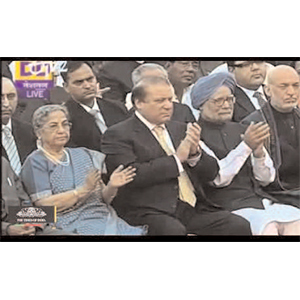
NEW DELHI (TIP): Even as Pakistani PM Nawaz Sharif reached out to his counterpart Narendra Modi by dispatching gifts for the Indian PM’s mother, Pakistani media reported that he was “not too happy” with the outcome of his meeting with Modi last week. Despite reservations expressed by the Pakistan army, Sharif accepted Modi’s invite to attend his swearing-in on May 26. Dawn quoted an anonymous leader in Sharif’s party PML (N) saying that Sharif felt “belittled” in Delhi.
“Sharif is not too happy at his reception in India during his visit there to attend the oathtaking ceremony of Narendra Modi,” the report said, citing the leader. Pakistani government sources though reiterated the remark by Sharif’s foreign policy adviser Sartaj Aziz that the Modi-Sharif meeting was “better than expected”. They said Sharif’s gifts for Modi’s mother underlined his commitment to jointly work with the Indian PM for improving ties. Sharif, in fact, had seemed more optimistic after his meeting with Modi when he said in his statement that the two countries had agreed to a meeting between the two foreign secretaries.
India, however, continues to maintain that the foreign secretaries would “remain in touch” and that does not necessarily mean meeting in person. Sources said a segment within Sharif’s party is not comfortable with the adverse media coverage in Pakistan of the visit and that the report may be a fallout of that. Sharif received some flak for not focusing on the Kashmir issue even as he apparently allowed Modi to talk at length on the need for Pakistan to address the issue of terrorism. A senior PML(N) member told Dawn that Sharif felt belittled when there was no joint press conference after the one-onone meeting between the two PMs, the report said. -

UNITED STATES HAS A STAKE IN INDIA’S SUCCESS
It is my hope that Prime Minister Modi and his government will recognize how a deeper strategic partnership with the US serves India’s national interests, especially in light of current economic and geopolitical challenges”, says the author.
Iwant Prime Minister Modi to succeed because I want India to succeed. It is no secret that the past few years have been challenging ones for India – political gridlock, a flagging economy, financial difficulties, and more. It is not my place or that of any other American to tell India how to realize its full potential.That is for the Indians to decide. Our concern is simply that India does realize its full potential, for the United States has a stake in India’s success. It is also no secret that India and the US have not been reaching our full potential as strategic partners over the past few years, and there is plenty of blame to be shared on both sides. Too often recently we have slipped back into a transactional relationship.
We need to lift our sights again. The real reason India and the US have resolved to develop the strategic partnership is because each country has determined independently that doing so is in its national interests. It is because we have been guided by our national interests that the progress of our partnership has consistently enjoyed bipartisan support in the US and in India.
When it comes to the national interests of the US, the logic of a strategic partnership with India is powerful. India will soon become the world’s most populous nation. It has a young, increasingly skilled workforce that can lead India to become one of the world’s largest economies.
It is a nuclear power and possesses the world’s second largest military. It shares strategic interests with us on issues as diverse and vital as defeating terrorism and extremism, strengthening a rules-based international order in Asia, securing global energy supplies, and sustaining global economic growth. We also share common values. It is because of these shared values we are confident that India’s continued rise as a democratic great power will be peaceful and thus can advance critical US national interests.
That is why, contrary to the old dictates of realpolitik, we seek not to limit India’s rise but to bolster and catalyze it – economically, geopolitically, and, yes, militarily. It is my hope that Prime Minister Modi and his government will recognize how a deeper strategic partnership with the US serves India’s national interests, especially in light of current economic and geopolitical challenges.
For example, a top priority for India is the modernization of its armed forces. This is an area where US defense capabilities, technologies, and cooperation can benefit India enormously. Similarly, greater bilateral trade and investment can be a key driver of economic growth in India. Put simply, I see three strategic interests that India and the US clearly share, and these should be the priorities of a reinvigorated partnership. First, to shape the development of South Asia as a region of sovereign democratic states that contribute to one another’s security and prosperity; second, to create a preponderance of power in the Asia-Pacific region that favors free societies, free markets, free trade, and free comments; and, finally, to strengthen a liberal international order and an open global economy.
It is important for US leaders to reach out personally to Prime Minister Modi, especially in light of recent history. That is largely why I am traveling to India, and that is why I am pleased President Obama invited the prime minister to visit Washington. When the prime minister comes to Washington, I urge our congressional leaders to invite him to address a joint session of Congress.
Yet we must be clear-eyed about those issues that could weaken our strategic partnership. One is Afghanistan. Before it was a safe haven for the terrorists who attacked America on September 11, 2001, Afghanistan was a base of terrorists that targeted India. Our Indian friends remember this well, even if we do not. For this reason I am deeply concerned about the consequences of the president’s plan to pull all of our troops out of Afghanistan by 2016.
If Afghanistan goes the way of Iraq in the absence of US forces, it would leave India with a clear and present danger on its periphery. It would constrain India’s rise and its ability to devote resources and attention to shared foreign policy challenges elsewhere. It would erode India’s perception of the credibility and capability of US power and America’s reliability as a strategic partner.
The bottom line here is clear: India and the US have a shared interest in working together to end the scourge of extremism and terrorism that threatens stability, freedom, and prosperity across South Asia and beyond.
I hope the president will be open to reevaluating and revising his withdrawal plan in light of conditions on the ground. Another hurdle on which our partnership could stumble is our resolve to see it through amid domestic political concerns and shortterm priorities.
If India and the US are to build a truly strategic partnership, we must each commit to it and defend it in equal measure. We must each build the public support needed to sustain our strategic priorities, and we must resist the domestic forces in each of our countries that would turn our strategic relationship into a transactional one.
If the 21st century is defined more by peace than war, more by prosperity than misery, and more by freedom than tyranny, I believe future historians will look back and point to the fact that a strategic partnership was consummated between the world’s two preeminent democratic powers: India and the United States. If we keep this vision of our relationship always uppermost in our minds, there is no dispute we cannot resolve, no investment in each other’s success we cannot make, and nothing we cannot accomplish together. -

Pak needs a long-term vision for Waziristan
ISLAMABAD (TIP): The long-awaited Pakistani military assault has been launched in North Waziristan. For over a decade, the region harboured local and foreign militants including Arabs, Chechens, Uzbeks, Turkmen, Tajiks and Uighurs.
Some militant groups holding sway in the region were considered by Pakistan as pro-state while others antistate. Prominent among the militant groups of good guys were ones led by Hafiz Gul Bahadur and slain Mullah Nazir while the Haqqani network of Afghan militants was the only foreign militant outfit given open space to operate from the region.
Last month, a major faction of Tehreek-i-Taliban Pakistan, which walked out of the umbrella organization, was willing to enter into the list of friendly groups, but Islamabad did not agree. Now, as the military has launched a “comprehensive” offensive in the region of battle-hardened fighters, the government needs to reveal whether the operation will take on all militant groups without discrimination or whether it is just aimed at eliminating the bad guys. One way or the other, all these groups of so-called good and bad elements have an understanding not to interfere in each other’s spheres of influence.
They have carved out their own territories in tribal badlands where they call all the shots – administrative, social, religious, legal, political and military. Their inspiration is the same. They have a history of being good at one time, and bad at another.
The question is after the military operation ends successfully, and the displaced families return to their abandoned homes, will they find themselves in midst of guntoting good militants or with the Sharifled government focused on its mega projects like highways and motorways? They have already suffered immensely due to the war on terror. They are, no doubt, simple people and their minds can be easily moulded the way one wants.
A chat with a senior intelligence official revealed that the kidnapped vice chancellor of Peshawar’s Islamia College University, Dr Ajmal Khan, reformed several militants by educating them in Shawal Valley of North Waziristan. The state brainwashed them when it wanted the die-hard religious tribesmen to take up guns in the name of religion.
Has it now decided to reverse the trend? If that is so, as some argue, the government needs to come up with a clear policy and vision at strategic, ideological, political and foreign policy levels while the military should keep cleansing the dens of militancy there. The operation in North Waziristan won’t end the scourge of terrorism in Pakistan unless a clear policy is adopted to address militancy in all shapes and shades.
Also, the government must stop calling people along Af-Pak border tribals, which makes them sound like a bunch of uncivilized people. They should be mainstreamed like the rest of Pakistanis. The people of tribal regions deserve the same rights, freedom, protection and economic opportunities available to Pakistanis elsewhere. For sustainable peace and development, the government needs to introduce political, economic, social and administrative reforms in tribal areas.
Their fundamental rights cannot be guaranteed unless the government decides to amend the constitution and transfer the legislative and administrative powers of tribal areas from the president to parliament. A comprehensive package should be announced for people of tribal areas, with focus on health, education and employment. Gains of military offensive can only be retained if these are coupled with a radical new development agenda for the deprived people.
-

It’s a new era in India’s foreign policy as countries compete to woo Modi
“The new majority government in power in New Delhi, freed from debilitating coalition politics and attaching priority to economic development, has aroused external interest”, says the author.
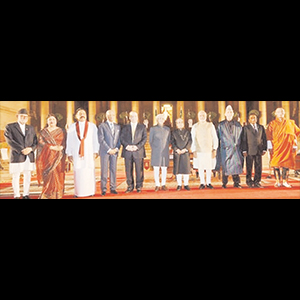
In foreign policy, Prime Minister Modi has hit the ground running, taking unexpected initiatives. He reached out to our neighbors, taking the unprecedented step of inviting their leaders to his swearing-in ceremony. While invitations to Bangladesh, Nepal, Bhutan, Maldives and Afghanistan carried only positive connotations, those to Prime Minister Nawaz Sharif and President Rajapakse carried mixed political implications. It was felt that the plus points in extending invitations to Pakistan and Sri Lanka outweighed the negatives.
Engagement
In Pakistan’s case the dilemma is whether we should engage it at the highest level without any ground-clearing move by Nawaz Sharif on terrorism, the Mumbai trial and trade. The Pakistani premier has been, on the contrary, aggressive over Kashmir, invoking the UN resolutions and self-determination as a solution, seeking third party intervention, permitting tirades by Hafiz Saeed against India, maintaining the pitch on water issues and reneging on granting MFN status even under a modified nomenclature.
In these circumstances, the move to invite him risked suggesting that, like the previous government, the new government too was willing to open the doors of a dialogue in the hope of creating a dynamics that would yield some satisfaction on the terrorism issue. In other words, practically delinking dialogue from terrorism, despite having taken a position to the contrary while in opposition.
In Sri Lanka’s case, the whipped-up sentiments in Tamil Nadu against President Rajapakse for his triumphalist rather than reconciliatory policies on the Tamilian issue have upset the overall balance of India’s foreign policy towards Sri Lanka that requires that we adequately weigh the need to counter powerful adversarial external forces are at play there against our interests. Inviting President Rajapakse to New Delhi obviously risked provoking a strong reaction in Tamil Nadu, but the new government had to decide whether, like its predecessor, it would get cowed down by such regional opposition, or it would act in the greater interest of the country even when according importance to the sentiments of a section of our population.
This dramatic outreach to the neighbors has elicited praise internally and externally, primarily focused on the invitation to the Pakistan president and its implication for the resumption of the Indo-Pak dialogue. Internally, those pro-dialogue lobbies that have espoused the previous government’s placative policies towards Pakistan have naturally welcomed the surprise move by Modi. Externally, India has always been counseled to have a dialogue with Pakistan irrespective of its conduct and its terrorist links, the argument being that these two South Asian nuclear armed neighbors with unresolved territorial conflicts risked sliding into a nuclear conflict unless they found a way to settle their differences for which a dialogue was an inescapable necessity. Such praise from within and without from predictable quarters should neither be surprising nor worth much attention.
Outreach
The new majority government in power in New Delhi, freed from debilitating coalition politics and attaching priority to economic development, has aroused external interest. The sentiment outside the country- as well as inside it – has been that the previous government lost its way, leading India into the quagmire of high fiscal deficits and tumbling growth, belying international expectations about its economic rise paralleling that of China.
If India can be steered back into a high growth trajectory with stronger leadership and improved governance, more economic opportunities will open up for our foreign partners. This would also draw renewed attention to India’s geo-political importance which, though an accepted reality now, has receded from the foreground lately.
Reassurance
Modi is seen as the man of the moment. This would explain the telephone calls from world leaders to Modi and the invitations given and received. India is being courted, and Modi’s choice of the countries he first visits or foreign leaders he first receives, is drawing external attention as an indication of his diplomatic priorities.
On this broader front too, Modi is following an unanticipated script of his own. He is being generous to the US despite its reprehensible conduct in denying him a visa, by prioritizing national interest over his individual feelings. He has not waited for the stigma of visa refusal to be erased by a US executive order removing his name from the State Department black-list. He is planning to meet President Obama in Washington in September – the first external visit to be announced – quickly relieving the Americans of fears that the visa issue could become a hurdle in engaging him.
In another remarkable gesture that the State Department would have noted for its political import, he has agreed to a book launch by an American think-tank at Race Course Road. China wants to complicate moves by Japan to strengthen strategic ties with India. Its decision to send its Foreign Minister to India after the swearing-in seems to have been motivated by this rivalry, apart from seeking to build on the personal contacts established by China with Modi when he was Chief Minister. If the Chinese FM was allowed to be the first consequential foreign leader to meet Modi, it appears Japan may be the first foreign country – barring Bhutan – the latter may visit en route to the BRICS meeting in July in Brazil.
The Bhutan visit underscores the importance Modi intends attaching to neighbors. Russia’s Deputy Prime Minister is visiting Delhi on June 18. It would seem that Modi’s immediate priority is to reassure all his important interlocutors, friends or adversaries, that they should have no misgivings about him and the direction of his policies, and that he seeks to engage with all power centers in a balanced manner.
-

Foreign ties will blossom under the new Modi government
For adversaries, habituated to passive and defensive responses to deliberate provocations, the likelihood of a less tolerant Indian response under a Modi-led government might induce rethinking on their part about the price they may have to pay for aggressive or assertive policies”, says the author.
The BJP’s massive electoral victory brings us foreign policy gains. The prospect of a strong and stable government in India makes our external image more positive. Other countries could conclude that the new government will have a more self-confident foreign policy, and will defend the country’s interests with greater vigor. Since the BJP is widely characterized at home and abroad as a Hindu nationalist party, it will be assumed that the Modi-led government will be more “nationalistic” in its thinking and actions, and will pursue national goals more sturdily.
Decisive
Notwithstanding their rhetoric about India’s global role, big powers have for long seen us as a country too preoccupied by internal problems to be able to act on the international stage sufficiently energetically. Issues of poverty and managing our complex diversities apart, coalition politics in India has been seen by our external interlocutors as contributing to governmental delays in decision making and failures in implementation even in the foreign policy domain. Modi’s personality gives us cards to play externally with advantage. He is seen as a strong and decisive leader, committed to making India vibrant economically, and more secure. For those eyeing more economic engagement with India, Modi’s development agenda offers greater investment opportunities.
For those seeking more engagement on security issues, Modi’s India will appear as a more confident partner. For adversaries, habituated to passive and defensive responses to deliberate provocations, the likelihood of a less tolerant Indian response under a Modi-led government might induce rethinking on their part about the price they may have to pay for aggressive or assertive policies. These real and psychological advantages that India obtains under Modi’s leadership should not be frittered away needlessly.
Prudence and “responsible” conduct are often used as a cloak to cover diffidence and timidity. There will be those who would advise that having won such a massive mandate, with all the political strength that comes with it, a Modiled government, burdened by a negative ideological image that worries sections at home and abroad, should send re-assuring signals to all. There should be no requirement for this, as it is India that has been long sinned against. Sections of our political class, intellectuals and media personalities have done great disservice to the country by their incessant vilification and deionization of Modi, making untenable historical parallels with the rise of fascism in Europe and making egregious references to Hitler and abusively using words like “genocide” to castigate him.
Initiatives
That otherwise sensible people should have for so long lost all sense of proportion remains a puzzle.Maybe they felt their self-esteem rise in proportion to their revilement of Modi. This calumny of Modi has naturally colored outsiders’ views of him, which explains the negative commentaries on him in the liberal western press. Modi’s exceptional mandate, however, is derived from the masses of India, and they have chosen him for what he is and stands for, unbothered by the obloquy of his detractors. Questions are being asked as to what “initiatives” Modi could take on the foreign policy front now that he has got a strong mandate.This suggests it has become somehow incumbent on the new government to prove its credentials in some way to the international community. It also carries the nuance that India could not meet the expectations of select countries because his party hobbled the choices of the previous Prime Minister. A feeling also exists that the previous government missed opportunities and was too passive in its foreign policy, a situation that the new government should redress. The sub-text of most such criticism is that India failed to live up to US expectations and allowed the relationship to slip into a lower gear, besides not being able to push the then prime minister’s vision of peace with Pakistan.
Assertiveness
Not having engaged in any provocative act against either China or Pakistan, India would be right to wait for China and Pakistan to signal a change of thinking towards it. In reality, repeated provocations have come from their side, which the previous government preferred, in China’s case, either to downplay or not counter, or, in Pakistan’s case, avoid retaliation in order not to have to admit the failure of the policy of engagement despite terrorism and Pakistan’s enduring hostility towards us. China’s assertiveness on the border will have to be watched, especially because its conduct in the South China and East China Seas flashes red signals to us that at a time of its choosing its posture towards us can suddenly harden.The recent signals from Pakistan have been uniformly negative, whether on Kashmir, curbing anti-Indian religious extremists, trade and water, and these have been capped by the expulsion of two Indian journalists despite the much touted media role in improving relations as signified, for example, by the “Aman ki Asha” initiative. Nawaz Sharif’s congratulatory message to Modi should be taken as a routine diplomatic exercise, with the invitation to visit Pakistan as a way of making himself look good and win an easy diplomatic point. Our relationship with the US remains very important, but to reinvigorate it the US should not let short-term transactional considerations take precedence over the logic of the strategic relationship.
Modi being the sole victim of the US legislation on religious freedom, the White House should be issuing an Executive Order to annul the State Department’s decision to blacklist Modi in the first place. While Obama’s gesture of telephoning Modi and alluding to a Washington visit by him can be appreciated, the fact that as Prime Minister he can now obtain an “A” category US visa does not erase the original insult.
-

Suggestions for new govt
New Delhi (TIP): Coalition and patronage politics has led to a bloated administration that often works at crosspurposes. It’s time to shut redundant ministries and bring together related functions.
- Place external affairs and commerce and industry under charge of one minister. This would be in keeping with Modi’s oft-stated intent to make commerce integral to foreign policy. Another possibility is to merge ministries of commerce & industry, textiles, heavy industry and micro, small and medium enterprises and form a mega ministry for trade & industry. This would bring inter-linked sectors under one roof.
- Hive off internal security and intelligence functions from the sprawling home ministry.
- Create an umbrella transport ministry comprising railways, roads, ports and shipping and civil aviation. Else, keep railways separate and merge the other three. These options are key to improving infrastructure and linked to Modi’s focus on tourism, a major job creating sector. A third option is to get back to the earlier surface transport, comprising roads and ports, and leave railways and civil aviation separate.
- PMO may see induction of mission specialists dealing with infrastructure and job-related sectors.
- A ministry of energy may be born, including oil & gas, power, coal and renewable energy. This will mean close linkages of natural resources and user industries. Alternatively, there could be a separate ministry for power, including coal, and a separate one for oil & gas, which may include chemicals and petrochemicals. The ministries of coal, mines and steel may also be merged into one (coal and mines used to be part of the same ministry at one point of time).
- Combine culture and tourism; alternatively merge culture with HRD.
- An omnibus ministry straddling agriculture, food, food processing, consumer affairs and civil supplies.
- Consider a merger of rural development and panchayati raj ministries.
- A Convergence or ICE ministry comprising telecommunications, information technology and information & broadcasting may be considered.
- Planning Commission may be in for a radical overhaul as it is seen to have lost its relevance in a modern economy.
-

Fear and loathing in Washington
The known unknowns about Modi are perfect catalysts for a reset of India-US relations
Over the past three years, Washington has also come to believe it did India too big a favor with the nuclear deal and received little payback. This premise conveniently ignores the many tangibles (Indian purchases of US defense platforms to the tune of $10 billion in less than a decade) and intangibles (India’s decision not to criticize wholesale spying by NSA). A strong government in New Delhi is unlikely to be as patient or as yielding
The American establishment is registering a measure of fear while the liberal academic-NGO community a sense of loathing at the prospect of Narendra Modi becoming India’s next PM. They are full of questions with no real answers. If elected, how would a state CM play the national and international game? How would he deal with a US administration whose policy lately has been to hit India on multiple fronts to extract concessions? More importantly, how would he look at a country that denied him a visa and had no contact with him for seven years?
The anti-Modi coalition of Christian evangelists, left-leaning Indian Americans and Muslim activists is gearing up to mount pressure through the US Congress. They will keep the heat on even though the old fervor is gone, especially among Republicans. The uncertainties, the ambiguities and the “known unknowns” about Modi are actually perfect catalysts for a “reset” of India-US relations currently running at a low. They can create the new chemistry necessary for a more balanced equation better suited to the times.
It cannot be the responsibility of one partner to create equilibrium, constantly ignore provocations and appease. A good relationship bears traffic in both directions. Actually the reset has already begun. Ironically, the button was pushed by the Khobragade affair. Needless provocation sparked a strong Indian response and washed the fuzziness off the relationship. Dialogue has gained in clarity since. The defensive tone has been replaced by a confident articulation of Indian expectations from the relationship. It is neither arrogant nor whiney. Terms of engagement will change further if Indian voters give a clear mandate.
Unfortunately, the last phase of the UPA government left the impression that India will reverse its policies in the face of pressure and noise from Washington. It did so on preferential market access and transfer pricing. This has emboldened US lobbies out to draw more blood. After all who wouldn’t use a tactic that works? Over the past three years, Washington has also come to believe it did India too big a favor with the nuclear deal and received little payback. This premise conveniently ignores the many tangibles (Indian purchases of US defense platforms to the tune of $10 billion in less than a decade) and intangibles (India’s decision not to criticize wholesale spying by NSA). A strong government in New Delhi is unlikely to be as patient or as yielding. Piling on public pressure is bad strategy for the general health of the relationship.
It reduces the Indo-US story to one of trade and investment disputes and blurs the original idea for coming together – a geostrategic convergence of interests. The new government will realize soon enough that an inward-looking Obama administration has had only fitful engagement with the world. That it has paid no special homage to strategic vision, and instead allowed a disaggregation of the India-US relationship. Then it has come after New Delhi issue by issue. It has attacked India at the behest of big pharma and other business interests whose maximalist agenda has been repeatedly exposed.
Their game is to scotch any serious attempt to keep medicine affordable while discrediting India’s generic drugs industry through means both fair and foul. In their calculation, if India bends, it would scare smaller, weaker countries from ever contemplating a compulsory license US pharma’s brutal overreach has even put the much-touted Trans-Pacific Partnership under a cloud as negotiating countries discover the traps set for them under the guise of protecting intellectual property and copyrights. If the US Trade Representative reviewing India’s intellectual property regime downgrades it and puts it on the list of ‘Special 301’ countries, this will add another twist to an already twisting relationship. Such naming and shaming could lead to sanctions.
Pushing the business agenda of demands drafted by the US Chamber of Commerce at a time when the US is losing international partners faster than it is acquiring them is unwise. Especially when Obama’s signature foreign policy effort – the pivot to Asia – keeps reincarnating in lesser and lesser avatars. Obama had also pledged to strengthen bonds with emerging economies but today all Brics are piled up against America for various reasons. India, Brazil, China and South Africa abstained on a UN resolution condemning the fifth partner Russia’s annexation of Crimea. India also abstained on a US-sponsored resolution against Sri Lanka’s human rights situation.
This reflects a post-Khobragade realism, a push-back, even a new equilibrium. India will give but also take. For every US demand to open the Indian economy, there would be an equal and opposite demand on completing a “tantalization agreement”. India may find it useful to cross-link and leverage defense contracts for something tangible. Surely $10 billion worth of arms can buy relief on H-1B visas or a more honest policy towards a certain neighbor that remains the hub of terrorism. The truth is if Washington can be transactional, so can others. But this new phase should not obscure the larger logic behind India and the US coming together because the many reasons for convergence remain. Those with a wider window than a four-year election cycle understand that. Equally importantly, those who make national security policy in India know what balance of power is more beneficial.
-

US unwilling to give up Middle East peace process yet
WASHINGTON (TIP): The suspension of peace talks between Israel and Palestinians delivered the harshest blow yet to secretary of state John Kerry’s ambitious, if perhaps quixotic, hope of ending the decades-long impasse at the cost of focusing on other crises around the world.
But Kerry refused to accept defeat, saying “we will never give up our hope or our commitment for the possibilities” of Mideast peace. On Thursday, Kerry sought to portray the latest setback with as much optimism as the dismal development would allow. “There is always a way forward,” he told reporters at the state department, just a few hours after Israeli Prime Minister Benjamin Netanyahu in Tel Aviv bluntly said the peace process had taken “a giant leap backward”.
Even diplomats and experts sympathetic to Kerry’s desire to soldier on with the talks declared the Mideast peace process on life support. Others, impatient with what they described as the Obama administration’s rudderless foreign policy, said the US needed to move on and refocus on other pressing priorities. Kerry acknowledged the bleakness of the situation, and said Israeli and Palestinian leaders needed to be willing to make compromises to keep the nine months of negotiations alive beyond an April 29 deadline.
“We may see a way forward, but if they’re not willing to make the compromises necessary, it becomes very elusive,” he said. Kerry has struggled to hold together the talks after a series of tit-for-tat diplomatic manoeuvres between the two sides over the last month that have eroded any trust or progress built since last summer. The worst blow came on Thursday when Israel’s security cabinet agreed to shelve the negotiations as the result of a new deal struck by the Palestinian Authority to create a reconciliation government with the militant group Hamas. Hamas has called for the destruction of the state of Israel, and is considered a terrorist organization by the US, European Union and other counties worldwide.
However, among Palestinians, the new agreement was hailed as a potentially historic step toward mending the rift that has split their people between two sets of rulers for seven years. Similar deals have been struck before between Hamas and the Fatah political party that Palestinian President Mahmoud Abbas represents. All have failed, and US experts said all sides should wait and see if the new agreement, reached on Wednesday, also fizzles out before declaring an end to the peace process with Israel. Former US diplomat and Mideast peace negotiator Dennis Ross said the Obama administration should wait to see whether Hamas and Fatah are able to form an interim government within five weeks, as they have pledged.
If the cannot, Ross said, the process might yet survive. Until then, “I don’t think you can say for sure that this is over with,” said Ross, who helped cobble together talks between Netanyahu and Abbas at the White House in 2010 and served as President Bill Clinton’s Mideast adviser. “It’s fair to say it’s on life support. I wouldn’t say this thing is done and can’t be resurrected.” Time is not on Kerry’s side, nor has it been throughout the negotiations. Originally, Kerry had envisioned a full agreement within nine months. When it became clear earlier this year that was not possible, given a glaring lack of meaningful progress, the state department adjusted its ambitions and set an April 29 deadline for producing a framework plan to keep the talks going for months longer.
It was not immediately clear how long the US is now prepared to let the latest impasse continue. US negotiators will remain in the region for the time being, said state department spokeswoman Jen Psaki. Throughout the year, Kerry has been forced to brush off snide accusations from critics that he is doggedly pursuing a peace deal in order to nab a Nobel Prize or make the Mideast his legacy issue after decades of statesmanship. During that time, the civil war in Syria has turned bloodier, with as many as 150,000 people killed and President Bashar Assad showing no signs of leaving.
Russia, meanwhile, has begun to flex its muscle in neighbouring former Soviet states, annexing the Crimea region in Ukraine and threatening to take over even more territory across that nation or others. No one accuses Kerry of ignoring other diplomatic crises, and he has spent at least as much time travelling to hotspots for negotiations on various problems during his first year at the State Department as he has spent in Washington. But Elliott Abrams, another longtime diplomat and top Mideast adviser to President George W Bush, described the peace process as a “forced march” fuelled by Kerry’s eagerness for a quick deal.
He predicted the peace process will live on in some form — largely because it fills a political need for the US, Israel and Palestinian leaders, and “because the two-state solution is still ultimately the right outcome”. “The pipe dream was Kerry’s belief that he could quickly reach a final status agreement; that was a vision based almost entirely on vanity,” Abrams said. “The administration should seriously be asking itself how it screwed things up so badly
-

Mounting pressure on USA
“With BJP declaring Modi as its prime ministerial candidate and the nation turning in his favor; US is trying to find an escape route”, says the author.
There has been a buzz in the diplomatic circles, after sudden resignation of US Ambassador to India, Nancy Powell. It is not the first time that US Ambassador to India, has been removed. However, present incidence of the resignation of the US ambassador, cannot be considered a normal occurrence. In diplomatic circles, this resignation is being linked with the emerging situation in wake of general elections in India and the possibility of Narendra Modi taking over the charge as Prime Minister of India.
BJP’s Prime Ministerial candidate Modi had been denied US Visa a number of times and India and the US have been at loggerheads over this issue in the past. Denial of US visa to Gujarat chief minister Narendra Modi, being in the constitutional position, was considered inappropriate in diplomatic terms. However, many people believe that, now in the event of Narendra Modi becoming the Prime Minister of India, it will not be good for US to continue with this stand.
It is notable that despite denial of visa by US administration, nothing could bar Modi to address the American gatherings, he was supposed to attend; by way of video conferencing. In recent months, with the BJP announcing Modi as its candidate for prime minister, heat on this issue has multiplied. Reportedly some parliamentarians from India had written to the US President to continue with the policy of denial of US visa to Modi; however, after facing criticism for this act of taking up the matter internationally, against a person holding constitutional post of Chief Minister; they had to eat their words and some of them even denied to have signed this controversial letter to US President.
Even Congress Party led UPA government also had to contest this policy of the United States. Nancy Powell, US ambassador in India for 5 years, was regarded to be close to the current government and the Congress party. She was obviously considered linked with this episode for denial of visa to Narendra Modi. However, relations between the United States of America and the Government of India have apparently been strained for several other reasons, including diplomatic row over Devyani Khobragade issue. Clearly India’s silent support to recent takeover of Crimea by Russia would not have been liked by USA. Thus Indo-US relations have been stressful in the recent past; and USA would not like to have an adversary in the PM position.
Now, when mood of the Indian people is very much clear, USA would obviously like to buy peace with Modi. By not assigning any reason for Nancy Powell’s resignation, USA itself has given air to such speculation. It is well known that the US government has always strived to protect the business interests of companies. In this context, the recent visit of a delegation consisting of USA’s lawmakers to Gujarat was an attempt to improve relations with Modi. It is notable that America denied visa to Modi on the pretext that a section of the Immigration and Nationality Act makes any foreign government official who was responsible or “directly carried out, at any time, particularly severe violations of religious freedom” ineligible for the visa. USA did not do it alone; England had also supported her by refusing visa to Modi.
England’s resolve
However, England ended this controversy in October, 2012 and granted visa to Modi and instructed English High Commissioner to India to meet him. UK government issued a press statement and said that England has strong economic interests linked to Gujarat. Modi in return tweeted to welcome UK government’s decision. After England’s resolve to grant visa to Modi, pressure has been mounting on USA to end its Modi boycott policy; and now, BJP declaring him as its prime ministerial candidate and the mood of the nation in his favor; USA is trying to find an escape route to come out of this controversy. In February 2014, USA’s ambassador Nancy Powell visited Gujarat to meet Modi. People who used to consider Modi as a controversial personality are now praising him. With chances of new government under Modi’s leadership getting brighter, attitude of people around the world is changing fast. Those who were referring to Gujarat riots are now referring to Gujarat development model.They are also talking about Modi’s initiative to boost industry, be it land allotment for Tata’s Nano or facilitating Maruti Suzuki. American agencies are also contemplating that once Modi becomes Prime Minister, US policy of denying American visa to Modi would be unsustainable, as he would enjoy all diplomatic rights. Though, not much is known about Modi’s foreign policy; looking at the public utterances of Modi, there would not be any acceptance or lackluster approach against expansionary policy of China. China will have to keep its aggression at back burner, in order to protect its economic interests in India.
If Pak TV channels or media is any guide, it is clear that Pakistan is extremely afraid of the emergence of a strong national leadership under Modi. Pak intelligence agencies are equally under stress. Modi has publicly expressed his unhappiness over the ill treatment of Hindus in Pakistan and Bangladesh. He has publicly said that if voted to power, his government would help Hindu migrants from Pakistan and Bangladesh settle in India. International and domestic agencies and defense experts have been critical of Prime Minister Manmohan Singh’s lame approach.
After Modi taking over the reign of power, it is expected that terrorist activities from across the border or from within would be dealt with sternly. On the one hand USA, European Countries and Japan are trying to improve ties with Modi, enemy nations are keeping a close eye on the developments in India. Although change in attitude of USA, should not surprise us, looking at its commercial interests; however US dilemma in this regard, also cannot be overlooked.
-

India abstains on human rights vote on Sri Lanka, rescues foreign policy
NEW DELHI (TIP): In a brave decision marking the reclamation of foreign policy from narrow political interests, India abstained from voting on a USsponsored resolution on human rights situation in Sri Lanka. While India had supported the resolution in 2012 and 2013, the latest resolution was much tougher, calling for an independent investigation into Sri Lanka.
The resolution passed with 23 votes for, 12 against and 12 abstentions. India’s abstention comes after MEA raised red flags about the resolution, saying it would be creating precedents that would be difficult to withstand. Sri Lanka too had mounted a strong diplomatic offensive with the Indian leadership, including long meetings with the national security adviser, Shivshankar Menon. Pakistan did its best to help Sri Lanka by proposing a separate vote on the operative paragraph 10 (deemed most offensive) hoping to remove it totally from the resolution — it failed 16 votes to 25.
BJP leader Subramanian Swamy today congratulated Prime Minister Manmohan Singh for India not supporting the resolution. “I congratulate PM Manmohan Singh for ordering the Indian delegation in UNHCR not to support the dangerous US resolution seeking international probe into the so called human rights violations during 2009 anti-LTTE war by Sri lanka,” Swamy said in a statement. In 2013, Menon and MEA failed to prevail against a determined Congress offensive led by finance minister P Chidambaram to punish Sri Lanka. Sources said this had a lot to do with the ruling UPA government’s sensitivity to Tamil parties. This time, Chidambaram is not fighting an election, and the government has been free to take a decision based on India’s foreign policy interests.
If India had voted against Sri Lanka, the government could have opened itself to the charge that it was influencing the Tamil vote. Besides, it would have dealt a body blow to relations with a neighbour that is arguably India’s closest economic and security ally in South Asia. The abstention gives India greater flexibility with Sri Lanka, greater ability to push for changes that Mahinda Rajapakse needs to undertake. Rajapakse has taken several steps in the last year like holding provincial council elections in the north which did not happen because of the HRC vote, but because of intensive Indian diplomacy. “Things will go in the right direction now,” said diplomatic sources following relations with the island nation.
If India had failed to stand with Sri Lanka at this time, it would not be able to stop Chinese influence spreading in the country. Moreover, the government has concluded that many countries pushing the resolution are being pressured by their Tamil-Lankan diaspora. India is wary of allowing its policies to be dictated by such interests, though in the past couple of years the UPA government has caved in to short-sighted tamil politics endangering India’s foreign policy. This year marks a correction in what most foreign policy analysts called a downward trajectory.
Explaining why it abstained from the vote, MEA said, “It has been India’s firm belief that adopting an intrusive approach that undermines national sovereignty and institutions is counterproductive…. any external investigative mechanism with an openended mandate to monitor national processes for protection of human rights in a country, is not reflective of the constructive approach of dialogue and cooperation envisaged by UN General Assembly resolution 60/251 that created the HRC in 2006 as well as the UNGA resolution 65/281 that reviewed the HRC in 2011.” The passage of the resolution was welcomed by human rights groups. Meenakshi Ganguly of Human Rights Watch said, “This is a welcome decision, and one that will encourage victims and activists in Sri Lanka who have strived so courageously for accountability and justice.
-

US Senate confirms Indian-American Puneet Talwar for key state department post
WASHINGTON (TIP): Puneet Talwar has been confirmed by the US Senate to a key diplomatic position, becoming the second Indian-American to join the state department. Talwar, who was a key aide of President Barack Obama on the Middle East, would now serve as the assistant secretary of state for political-military affairs.
He was confirmed on thursday by voice vote. In September last year Obama nominated Talwar, who played a key role on negotiations with Iran, to this top diplomatic position in the state department. After being sworn-in, Talwar would be the second Indian- American serving as assistant secretary in the state department after Nisha Desai Biswal, who is the assistant secretary of state for South and Central Asia.
Talwar would provide policy direction in the areas of international security, security assistance, military operations, defence strategy and plans, and defence trade. The Bureau of Political-Military Affairs is the department of state’s principal link to the department of defence. Since 2009, Talwar has been a special assistant to the US President and senior director for Iran, Iraq, and the Gulf States on the White House National Security Staff.
Prior to this, Talwar served as a senior professional staff member on the Committee on Foreign Relations of the US Senate (SFRC) from 2001 to 2009 and from 1997 to 1999, and was the chief adviser on the Middle East to then senator Joseph R Biden in his capacity as the chairman of the Senate Foreign Relations Committee. He served as a member of the department of state’s policy planning staff from 1999 to 2001. From 1992 to 1995, he served as a foreign policy adviser to Representative Thomas C Sawyer, and from 1990 to 1992 as an official with the United Nations. Talwar received a BS from Cornell University and an MA from Columbia University’s School of International and Public Affairs.
-

Israel gears up for possible unilateral strike on Iran
JERUSALEM (TIP): Israeli Prime Minister Benjamin Netanyahu and defence minister Moshe Ya’alon have ordered the military to continue preparations for a possible strike on Iran’s nuclear facilities during 2014, a media report here said.
The Israel Defense Forces allocated up to NIS 12 billion ($3.5 billion), nearly a fifth of its budget this year, for preparations for a possible unilateral strike on Iran, approximately the same amount invested last year, reported Xinhua citing Israeli daily Ha’aretz on March 19. The figure was presented by top officers who briefed the joint committee in January and February on the military’s plans, said the lawmakers who spoke to Ha’aretz requesting anonymity.
They said that some of their colleagues who were present at the meetings asked the officers whether it was justified to continue pouring billions into the preparations to strike Iran, citing the interim nuclear agreement inked between Tehran and the six powers last November, and the ongoing negotiations aimed at reaching a final accord. The officers replied that the military had received a “clear directive” from the political echelon, meaning Netanyahu and Ya’ alon, to continue training for a possible independent strike, the report said.
It was regardless of the diplomatic efforts to resolve the Iranian issue peacefully, it added. The second round of nuclear talks was launched in Vienna Tuesday, with European Union foreign policy chief Catherine Ashton and Iran’s Foreign Minister Mohammed Zarif in attendance. The newspaper noted that both Netanyahu and Ya’alon have strongly indicated in recent months that Israel, which views a nuclear-armed Iran as an existential threat, has not abandoned the military option.
-

Iran, six big powers seek to agree on basis for final nuclear deal
VIENNA (TIP): Six world powers and Iran appeared to make some progress at a second day of talks in Vienna on Wednesday to hammer out an agenda for reaching an ambitious final settlement to the decade-old standoff over Tehran’s nuclear programme. The United States, Russia, China, Britain, France and Germany want a long-term agreement on the permissible scope of Iran’s nuclear activities to lay to rest concerns that they could be put to developing atomic bombs.
Tehran’s priority is a complete removal of damaging economic sanctions against it. The negotiations will probably extend at least over several months, and could help defuse many years of hostility between energy-exporting Iran and the West, ease the danger of a new war in the Middle East, transform the regional power balance and open up major business opportunities for Western firms. Both sides were relatively upbeat about the first meeting. “The talks are going surprisingly well. There haven’t been any real problems so far,” a senior Western diplomat said.
A European diplomat said Iran and the world powers were “committed to negotiating in good faith” and that they had discussed the schedule for future meetings and other issues. had detailed discussions on some of the key issues which would have to be part of a comprehensive settlement,” the diplomat added. A senior Iranian official, Hamid Baidinejad, told Reuters: “Talks were positive and generally (were about) the framework for the agenda for further talks.” The talks had originally been expected to run for as long as three full days but might be adjourned as early as Thursday morning due to the crisis in Ukraine, according to Western diplomats.
European Union foreign policy chief Catherine Ashton, who coordinates official contacts with Iran on behalf of the six, was due to attend an extraordinary meeting of EU foreign ministers in Brussels on Ukraine on Thursday afternoon. Ashton’s deputy Helga Schmid chaired the Vienna talks during the day with Iranian Deputy Foreign Minister Abbas Araqchi, flanked by senior diplomats from the six powers. Separately, Ashton met Iranian Foreign Minister Mohammad Javad Zarif. The powers have yet to spell out their precise demands of Iran. But Western officials have signalled they want Tehran to cap enrichment of uranium at a low fissile concentration, limit research and development of new nuclear equipment, decommission a substantial portion of its centrifuges used to refine uranium, and allow more intrusive U.N. nuclear inspections.
Such steps, they believe, would help extend the time Iran would need to make enough fissile material for a bomb and make such a move easier to detect before it became a fait accompli. Tehran says its programme is peaceful and has no military aims. Graham Allison, director of Harvard University’s Belfer Center, said the aim should be to deny Iran an “exercisable nuclear weapons option”. “Our essential requirement is that the timeline between an Iranian decision to seek a bomb and success in building it is long enough, and an Iranian move in that direction is clear enough, that the United States or Israel have sufficient time to intervene to prevent Iran’s succeeding,” he said.
COMPLEX PROCESS AHEAD
Highlighting wide differences over expectations in the talks, Araqchi was cited by Iran’s English-language Press TV state television on Tuesday as saying that any dismantling of Iranian nuclear installations would not be up for negotiation. The talks could also stumble over the future of Iran’s facilities in Arak, an unfinished heavy-water reactor that Western states worry could yield plutonium for bombs, and the Fordow uranium enrichment plant, which was built deep underground to ward off any threat of air strikes. “Iran’s nuclear sites will continue their activities like before,” the official IRNA news agency quoted Iranian Atomic Energy Organisation spokesman Behrouz Kamalvandi saying.During a decade of on-and-off dialogue with world powers, Iran has rejected Western allegations that it has been seeking the means to build nuclear weapons. It says it is enriching uranium only for electricity generation and medical purposes. As part of a final deal, Iran expects the United States, the European Union and the United Nations to lift painful economic sanctions on the oil-dependent economy. But Western governments will be wary of giving up their leverage too soon. Ahead of the talks, a senior US official said getting to a deal would be a “complicated, difficult and lengthy process”.
On the eve of the Vienna round, both sides played down anticipation of early progress, with Iran’s clerical supreme leader, Ayatollah Ali Khamenei, saying he was not optimistic – but also not opposed to negotiations. The six powers hope to get a deal done by late July, when an interim accord struck in November expires. That agreement, made possible by the election of relative moderate President Hassan Rouhani on a platform of relieving Iran’s international isolation by engaging constructively with its adversaries, obliged Tehran to suspend higher-level enrichment in return for some relief from economic sanctions. Zarif, also quoted by Press TV on Tuesday, sounded an optimistic note. “It is really possible to make an agreement because of a simple overriding fact and that is that we have no other option.”
-

FOREIGN RELATIONS OF INDIA
India has formal diplomatic relations with most nations; it is the world’s second most populous country, the world’s mostpopulous democracy and one of the fastest growing major economies. With the world’s seventh largest military expenditure, ninth largest economy by nominal rates and third largest by purchasing power parity, India is a regional power, a nascent great power and a potential superpower.
India’s growing international influence gives it a prominent voice in global affairs. The Economist magazine argues, however, that underinvestment in diplomacy and a lack of strategic vision have minimised India’s influence in the world. India is a newly industrialised country, it has a long history of collaboration with several countries and is considered one of the leaders of the developing world along with China, Brazil, Russia and South Africa (the BRICS countries). India was one of the founding members of several international organisations, most notably the United Nations, the Asian Development Bank, G20 industrial nations and the founder of the Non-aligned movement.

India has often represented the interests of developing countries at various international platforms. Shown here is Prime Minister Manmohan Singh with Dmitry Medvedev, Hu Jintao and Luiz Inácio Lula da Silva during BRIC summit
India has also played an important and influential role in other international organisations like East Asia Summit, World Trade Organisation, International Monetary Fund (IMF), G8+5 and IBSA Dialogue Forum. Regionally, India is a part of SAARC and BIMSTEC. India has taken part in several UN peacekeeping missions and in 2007, it was the secondlargest troop contributor to the United Nations.[12] India is currently seeking a permanent seat in the UN Security Council, along with the G4 nations. India’s relations with the world have evolved since the British Raj (1857–1947), when the British Empire monopolised external and defence relations. When India gained independence in 1947, few Indians had experience in making or conducting foreign policy. However, the country’s oldest political party, the Indian National Congress, had established a small foreign department in 1925 to make overseas contacts and to publicise its freedom struggle.
From the late 1920s on, Jawaharlal Nehru, who had a longstanding interest in world affairs among independence leaders, formulated the Congress stance on international issues. As a member of the interim government in 1946, Nehru articulated India’s approach to the world. India’s international influence varied over the years after independence. Indian prestige and moral authority were high in the 1950s and facilitated the acquisition of developmental assistance from both East and West. Although the prestige stemmed from India’s nonaligned stance, the nation was unable to prevent Cold War politics from becoming intertwined with interstate relations in South Asia.

In the 1960s and 1970s India’s international position among developed and developing countries faded in the course of wars with China and Pakistan, disputes with other countries in South Asia, and India’s attempt to balance Pakistan’s support from the United States and China by signing the Indo- Soviet Treaty of Friendship and Cooperation in August 1971. Although India obtained substantial Soviet military and economic aid, which helped to strengthen the nation, India’s influence was undercut regionally and internationally by the perception that its friendship with the Soviet Union prevented a more forthright condemnation of the Soviet presence in Afghanistan. In the late 1980s, India improved relations with the United States, other developed countries, and China while continuing close ties with the Soviet Union. Relations with its South Asian neighbours, especially Pakistan, Sri Lanka, and Nepal, occupied much of the energies of the Ministry of External Affairs.
In the 1990s, India’s economic problems and the demise of the bipolar world political system forced India to reassess its foreign policy and adjust its foreign relations. Previous policies proved inadequate to cope with the serious domestic and international problems facing India. The end of the Cold War gutted the core meaning of nonalignment and left Indian foreign policy without significant direction. The hard, pragmatic considerations of the early 1990s were still viewed within the nonaligned framework of the past, but the disintegration of the Soviet Union removed much of India’s international leverage, for which relations with Russia and the other post-Soviet states could not compensate. After the dissolution of the Soviet Union, India improved its relations with the United States, Canada, France, Japan and Germany. In 1992, India established formal diplomatic relations with Israel and this relationship grew during the tenures of the Bharatiya Janata Party (BJP) government and the subsequent UPA (United Progressive Alliance) governments.
In the mid-1990s, India attracted the world attention towards the Pakistan-backed terrorism in Kashmir. The Kargil War resulted in a major diplomatic victory for India. The United States and European Union recognised the fact that Pakistani military had illegally infiltrated into Indian territory and pressured Pakistan to withdraw from Kargil. Several anti-India militant groups based in Pakistan were labeled as terrorist groups by the United States and European Union. India has often represented the interests of developing countries at various international platforms. Shown here are Prime Minister Manmohan Singh with Dmitry Medvedev, Hu Jintao and Luiz Inácio Lula da Silva during BRIC summit in June, 2009. In 1998, India tested nuclear weapons for the second time which resulted in several US, Japanese and European sanctions on India.
India’s then-defence minister, George Fernandes, said that India’s nuclear programme was necessary as it provided a deterrence to potential Chinese nuclear threat. Most of the sanctions imposed on India were removed by 2001. After the 11 September attacks in 2001, Indian intelligence agencies provided the U.S. with significant information on Al-Qaeda and related groups’ activities in Pakistan and Afghanistan. India’s extensive contribution to the War on Terror, coupled with a surge in its economy, has helped India’s diplomatic relations with several countries. Over the past three years, India has held numerous joint military exercises with U.S. and European nations that have resulted in a strengthened U.S.-India and E.U.-India bilateral relationship. India’s bilateral trade with Europe and United States has more than doubled in the last five years.
India has been pushing for reforms in the UN and WTO with mixed results. India’s candidature for a permanent seat at the UN Security Council is currently backed by several countries including France, Russia,[50] the United Germany, Japan, Brazil, Australia and UAE. In 2004, the United States signed a nuclear co-operation agreement with India even though the latter is not a part of the Nuclear Non- Proliferation Treaty. The US argued that India’s strong nuclear non-proliferation record made it an exception, however this has not persuaded other Nuclear Suppliers Group members to sign similar deals with India. During a state visit to India in November 2010, US president Barack Obama announced US support for India’s bid for permanent membership to UN Security Council as well as India’s entry to Nuclear Suppliers Group, Wassenaar Arrangement, Australia Group and Missile Technology Control Regime.
Mike Ghouse : The author is a community consultant, social scientist, thinker, writer, news maker, and a speaker on Pluralism, Interfaith, Islam, politics, terrorism, human rights, India, Israel-Palestine and foreign policy.