Tag: Francois Hollande

  • Francois Hollande decides not to seek re-election

    Francois Hollande decides not to seek re-election

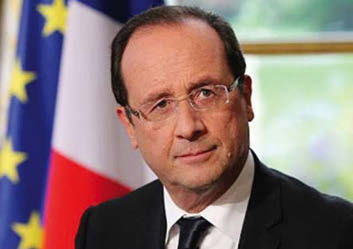
    PARIS (TIP): In a surprise move Francois Hollande has announced he will not seek a second term as president of France.

    “I’ve decided not to be a candidate to renew my mandate,” the Socialist leader said in a live televised address.

    The 62-year-old, faced with very low popularity ratings, has become the first sitting president in modern French history not to seek re-election.

    Conservative Republicans party candidate Francois Fillon is seen as a favorite in next year’s election. Recent opinion polls suggest far-right contender Marine Le Pen from the National Front could be Mr Fillon’s closest challenger. “In the months to come, my only duty will be to continue to lead my country,” Mr Hollande said on Thursday, December 1. “The world, Europe, France have faced particularly serious challenges during my mandate. In these particularly challenging circumstances I wanted to maintain national cohesion,” he said.

  • Arrest of 4 thwarted ‘imminent’ terror attack in France: Officials

    Arrest of 4 thwarted ‘imminent’ terror attack in France: Officials

    PARIS (TIP): Four long-time friends in their 30s, living in the same French city and communicating through a closed phone line, were planning a terror attack in France as early as next week on orders from an Islamic State group member in Iraq or Syria, Paris prosecutor Francois Molins said on Nov 26.

    The ‘commando’ of four arrested on Sunday in the eastern city of Strasbourg plotted to carry out an attack on Dec. 1, but investigators have not yet determined “the specific chosen target among all those considered by the group,” Molins said.

    A fifth suspect was arrested in the southern city of Marseille at the same time as the Strasbourg suspects. Molins told reporters that suspect was not in direct touch with the other four, but was ‘given guidance remotely’ from the same IS member.

    The prosecutor didn’t name any targets, but security was tightened this week at the Paris headquarters of France’s criminal investigations police, reportedly among the locations studied. French President Francois Hollande said a “large-scale attack” was thwarted.

    The night they were arrested, two of the Strasbourg group had just downloaded the Periscope application, which allows people to stream live on Internet with a cell phone. The app activity suggests they were preparing an “imminent” attack, Molins said.

    The four Strasbourg suspects also were in possession of guns and ammunition, he said. Among the weapons seized during home searches were two handguns, two automatic rifles, several cartridge clips and dozens of cartridges of different calibers.

    Investigators also found instructions for a money transfer, GPS coordinates and detailed explanations for obtaining more weapons on one suspect’s USB stick.

    All five men had a “clear will to find and to identify targets to commit an act in the very short term,” Molins said.

    In addition, the five “had common instructions to obtain weapons, instructions given by a person from the Iraqi-Syrian zone through encrypted applications popular among terrorists,” he said.

    Investigators recovered a notebook that contained 12 pages of writing that referred to an armed jihad, death in martyrdom and Abu Bakr al-Baghdadi, the Islamic State group leader, the prosecutor said. (AFP)

  • Hollande awards France’s Legion of Honour to UN’s Ban Ki-moon

    Hollande awards France’s Legion of Honour to UN’s Ban Ki-moon

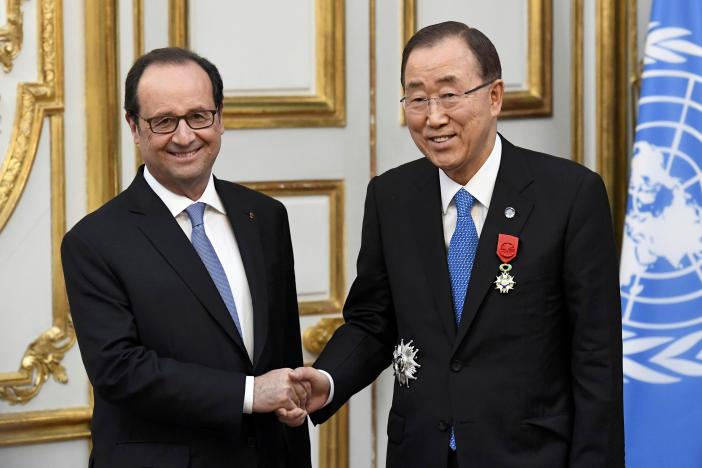
    PARIS (TIP): United Nations Secretary General Ban Ki-moon received the Legion of Honour from French President Francois Hollande on Nov 17 for his contributions to tackling climate change.

    The South Korean diplomat helped push through the 2015 Paris Agreement, a deal aimed at moving away from fossil fuels to cleaner energies that was signed by almost 200 countries after nearly two decades of negotiations.

    “It was largely because of your contribution, because many years ago you started putting this topic on all the agendas,” Hollande said at the ceremony of Ban’s efforts.

    The Legion of Honour was established in 1802 by Napoleon Bonaparte and is considered to be one of France’s highest civilian awards.

    “By doing this you are rewarding our honourable organisation and I feel deeply honoured and proud,” said Ban, who will step down as head of the 193-member world organisation after 10 years on January 1. He will be replaced by Antonio Guterres of Portugal. (Reuters)

  • WORLD LEADERS REACT TO  TRUMP’S TRIUMPH

    WORLD LEADERS REACT TO TRUMP’S TRIUMPH

    NEW YORK (TIP): The reaction of world leaders has been a mixed one. They were pleased and shocked at Donald Trump’s stunning victory over Hillary Clinton, to become the 45th President of America. Major world leaders, many of whom had publicly criticized Trump, however, expressed their wish to work with him.

    India’s Prime Minister Narendra Modi tweeted his thanks to Trump for “the friendship hearticulated towards India” during his campaign. “We appreciate the friendship you have articulated towards India during your campaign”, tweeted Modi.

    Canadian Prime Minister Justin Trudeau said, “We look forward to working very closely with President-elect Trump, his administration, and with the United States Congress in the years ahead.”

    Congratulating Trump, U.K.’s Prime Minister Theresa May said she looked forward to working with him. “Britain and the United States have an enduring and special relationship based on the values of freedom, democracy and enterprise. We are, and will remain, strong and close partners on trade, security and defense.

    Australia’s Prime Minister Malcolm Turnbulltook to twitter to express hopes of a strong relationship to continue. “The Aus Gvt congratulates President Elect Trump. With our shared, enduring national interests, our relationship will continue to be strong.”

    Russia’s President Vladimir Putin reportedly “expressed confidence that the dialogue between Moscow and Washington, in keeping with each other’s views, meets the interests of both Russia and the U.S.,” Russia Today reported.

    Chinese President Xi Jinping reportedly phoned Trump to congratulate him. “I place great importance on the China-U.S. relationship, and look forward to working with you to uphold the principles of non-conflict, non-confrontation, mutual respect and win-win cooperation,” Jinping said, according to Fortune.

    On a different note, French President Francois Hollande, whohad openly endorsed Hillary Clinton, said Trump’s victory marks the start of “a period of uncertainty.” “This new context requires that France be strong,” he said, in a televised address. “What is at stake is peace, the fight against terrorism, the Middle East and the preservation of the planet.”

    Describing Germany’s partnership with the U.S. as “a foundation stone of German foreign policy”, German Chancellor Angela Merkel has offered Trump “close cooperation” on the basis of shared trans-Atlantic values that she says include respect for human dignity regardless of people’s origin, gender or religion.

    Scotland’s First Minister Nicola Sturgeon released a statement saying that while the election did not have the outcome she hoped for, “it is the verdict of the American people and we must respect it”.”The ties that bind Scotland and the U.S. – of family, culture and business – are deep and longstanding and they will always endure.”

    Calling Trump a “True friend of the State of Israel” Israeli Prime Minister Benjamin Netanyahu said, “I am confident that president-elect Trump and I will continue to strengthen the unique alliance between our two countries and bring it to ever greater heights.”

    Palestinian President Mahmoud Abbas said in a statement that he “Congratulates the elected American president, Donald Trump, and hopes that peace will be achieved during his term”.

    Iran’s foreign minister Mohammad Javad Zarifwas quoted by media as saying that any US president “Should have a correct understanding of realities of the world and our region and face them realistically.”

    Japanese Prime Minister Shinzo Abe said, “As a very successful businessman with extraordinary talents, you not only made a great contribution to the growth of the US economy, but now as a strong leader, you have demonstrated your determination to lead the United States.”

    United Nations Secretary-General Ban Ki-moon said, “In the aftermath of a hard-fought and often divisive campaign, it is worth recalling and reaffirming that the unity in diversity of the United States is one of the country’s greatest strengths. I encourage all Americans to stay true to that spirit.”

    NATO Secretary-General Jens Stoltenberg said, “It is important that the Transatlantic bond remains strong” and that “US leadership is as important as ever.”

    European Union Council President Donald Tusk and his Commission counterpart Jean-Claude Juncker said that, despite Trump’s campaign talk of protectionism and isolationism, both sides “should consolidate the bridges we have been building across the Atlantic.” They have also invited Trump to visit the 28-nation bloc to assess transatlantic ties.

  • France warns UK premier of tough time ahead in Brexit talks

    France warns UK premier of tough time ahead in Brexit talks

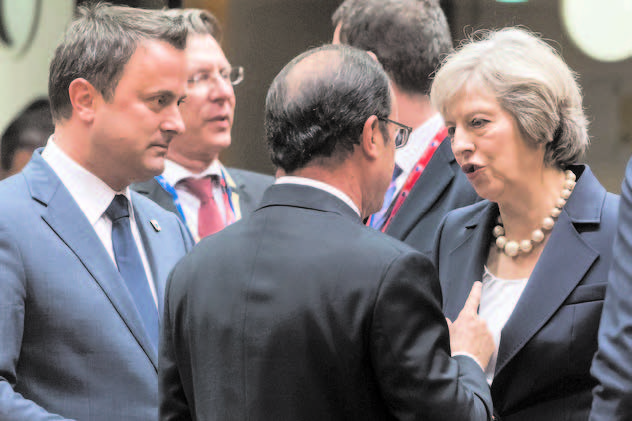
    BRUSSELS (TIP): France warned Britain at the start of a European Union summit on Oct 20 that it would face a tough, unyielding opponent if it sought too many concessions during its negotiations to leave the 28-nation EU.

    British Prime Minister Theresa May, who was attending her first EU summit as leader, was expected to brief her European counterparts on the way ahead for Britain’s exit from the trade bloc. Many uncertainties about the divorce remain because Britain has yet to trigger the two-year negotiations for “Brexit” and is unlikely to do so until the end of March.

    “It’s in the interests of the UK and the EU that we continue to work closely together, including at this summit,” May said.

    French President Francois Hollande immediately insisted that the EU would not surrender the bloc’s core values just to keep Britain close as a future ally.

    “I have said so very firmly: Mrs. Theresa May wants a hard Brexit? The negotiations will be hard,” Holland said.

    Britain’s June 23 breakup referendum has forced the 27 other nations to plot their future without a major but often recalcitrant member state. European leaders have grumbled that Britain’s tardiness in starting the negotiations slow down their own planning for the next few years.

    German Chancellor Angela Merkel said the other leaders would underscore the urgency and would “make clear again: We are waiting for the notification from Britain.”

    The Brexit referendum to leave the EU was a milestone in the history of the bloc and the disentanglement is expected to be long, difficult and confrontational.

    Still, EU President Donald Tusk, who chairs the summit, assured the British leader she would not get too hostile a reception.

    Tusk said that some compared it to “entering the lion’s den. It’s not true. It’s more like a nest of doves. She’ll be absolutely safe with us. And I hope that she will also realize that the European Union is simply the best company in the world.”

    May said Britain would continue to be a responsible member right up to the day it leaves the EU. “I’m here with a very clear message. The UK is leaving the EU but we will continue to play a full role until we leave.”

    Like Hollande, Tusk vowed last week not to compromise on the bloc’s principles in negotiating Britain’s departure and warned that London is heading for a hard exit.

    He insisted that Britain can’t hope to both stay in Europe’s single market and restrict the movement of EU migrants, saying there would be no compromises.

    May has appeared to signal that her government would prioritize controls on immigration over access to the European single market, an approach informally called a “hard Brexit.”

    Once May activates the exit clause -Article 50 in the EU’s governing Lisbon Treaty – negotiations on the terms of Britain’s departure would run for two years. The time frame could be extended, but only if the 27 remaining member states agree unanimously. (AP)

  • Forces moving ‘faster than expected’ on Mosul: Iraq PM

    Forces moving ‘faster than expected’ on Mosul: Iraq PM

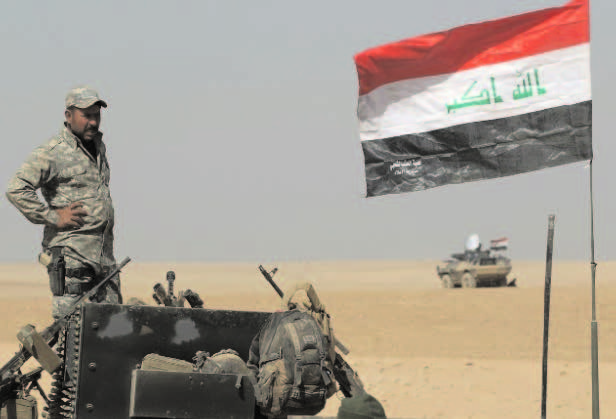
    PARIS (TI): Iraqi forces are “advancing faster than expected” in a major offensive to recapture Mosul from Islamic State jihadists, Iraqi Prime Minister Haider al-Abadi said on Oct 20.

    “We are advancing faster than we had expected and planned,” Abadi said, speaking on a videoconference link to an international meeting cohosted by France and Iraq on the future of Mosul following the start of the offensive this week.

    French Defence Minister Jean-Yves Le Drian had warned on Tuesday that the battle to retake Iraq’s second-biggest city could take “months”.

    French President Francois Hollande told today’s meeting that the jihadists were already fleeing to Raqa, their stronghold in neighbouring Syria.

    “We can’t afford mistakes in the pursuit of the terrorists who are already leaving Mosul for Raqa,” Hollande said, adding: “We cannot allow those who were in Mosul to evaporate.”

    The long-awaited offensive on Mosul was launched on Monday, with some 30,000 troops involved in Iraq’s largest military operation since the pullout of US troops in 2011.

    Representatives from around 20 countries including the US, Turkey, Gulf states and EU member states are attending the Paris meeting co-chaired by French Foreign Minister Jean-Marc Ayrault and his Iraqi counterpart Ibrahim al-Jaafari.

    Today’s talks come ahead of a meeting in Paris next Tuesday of the coalition’s defence ministers to assess progress in the Mosul offensive. US Defence Secretary Ashton Carter will be among 13 ministers at the talks, an aide to Le Drian said. (AFP)

  • Obama to attend Shimon Peres funeral in Jerusalem

    Obama to attend Shimon Peres funeral in Jerusalem


    WASHINGTON (TIP): US President Barack Obama will join other world leaders in attending the funeral of Israeli ex-president and Nobel Peace Prize winner Shimon Peres in Jerusalem, the White House said sept 28.

    Obama, who ordered US flags at half-staff late Wednesday, “will lead the US delegation to Jerusalem to participate in the funeral,” the White House said.

    He is to depart for Israel Thursday and return after the ceremony on Friday.

    The US president led tributes to the elder statesman as a friend who refused to give up on the dream of peace.

    Peres’ commitment to Israel’s security and pursuit of peace was “rooted in his own unshakeable moral foundation and unflagging optimism” the US leader said in a statement.

    Obama is to join world leaders including former US president Bill Clinton, French President Francois Hollande and German President Joachim Gauck as well as Britain’s Prince Charles in attending Peres’ Friday funeral at Jerusalem’s Mount Herzl, where many Israeli dignitaries are buried.

    Flags at the White House, on all public buildings and grounds, and at US buildings overseas will be flown at half-staff through sunset Friday “as a mark of respect for the memory of Shimon Peres,” the White House said in a statement. Peres, who was 93, held nearly every major office in the country, serving twice as prime minister and also as president, a mostly ceremonial role, from 2007 to 2014. (AFP)

  • Indian Air Force gets Rafale edge

    Indian Air Force gets Rafale edge

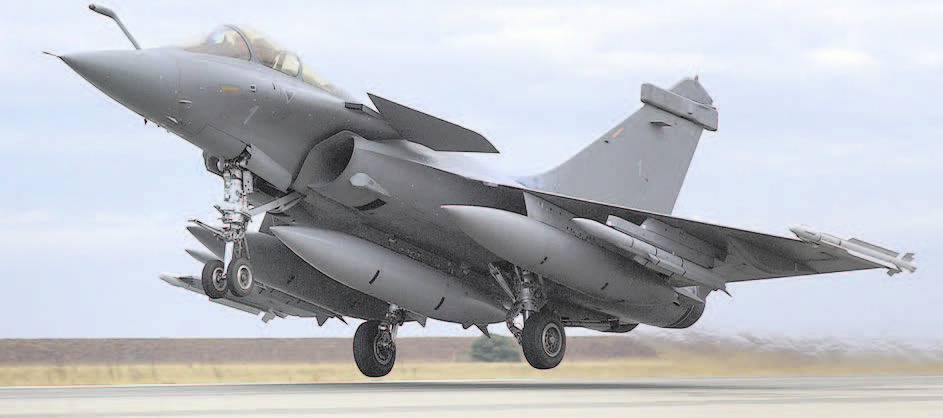
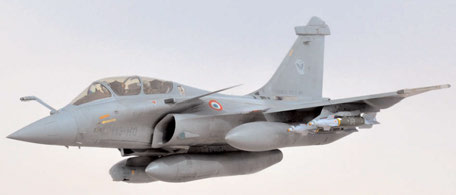
    In a major boost to the Indian Air Force, India has signed a formal agreement with France to buy 36 Rafale fighter jets for $8.7bn, in a major defense deal.

    The deal was signed by Defence Minister Manohar Parrikar and his visiting French counterpart Jean Yves Le Drian today sixteen months after Prime Minister Narendra Modi announced India’s plans to buy 36 Rafale fighter aircraft in fly away condition during his trip to France.

    The delivery of the jets will start in 36 months and will be completed in 66 months.

    India is looking to modernise its Soviet-era military and the deal is the result of years of negotiation.

    “You can only ever be completely sure once has been signed and that’s what happened today,” Mr Le Drian told AFP news agency after Friday’s signing ceremony.

    The first Rafales are expected to be delivered by 2019 and India is set to have all 36 jets within six years.

    Friday’s deal is a substantial reduction from the 126 planes that India originally planned to buy, but is still the biggest-ever foreign order of Rafale fighters, AFP says.

    French President Francois Hollande has hailed it as “a mark of the recognition by a major military power of the operational performance, the technical quality and the competitiveness of the French aviation industry”.

    Here’s what you need to know about the Rafale jet

    • The combat aircraft comes equipped with state-of-the-art missiles like ‘Meteor’ and ‘Scalp’ that will give IAF a capability that had been sorely missing in its arsenal.
    • Its Beyond Visual Range (BVR) Meteor air-to-air missile with a range in excess of 150 km makes the Rafale a strategic weapon in the hands of IAF
    • ‘Scalp’, a long-range air-to-ground cruise missile with a range in excess of 300 km, also gives IAF an edge over its adversaries.
    • According to Dassault Aviation, the Rafale can carry out both air-to-ground strikes, as well as air-to-air attacks and interceptions during the same sortie.
    • Stating that the Rafale has ‘Omnirole’ capability, Dassault Aviation claims that the aircraft can perform several actions at the same time, such as firing air-to-air missiles during a very low altitude penetration phase.
  • UK PM MAY VISITS GERMANY FOR BREXIT TALKS WITH MERKEL

    UK PM MAY VISITS GERMANY FOR BREXIT TALKS WITH MERKEL

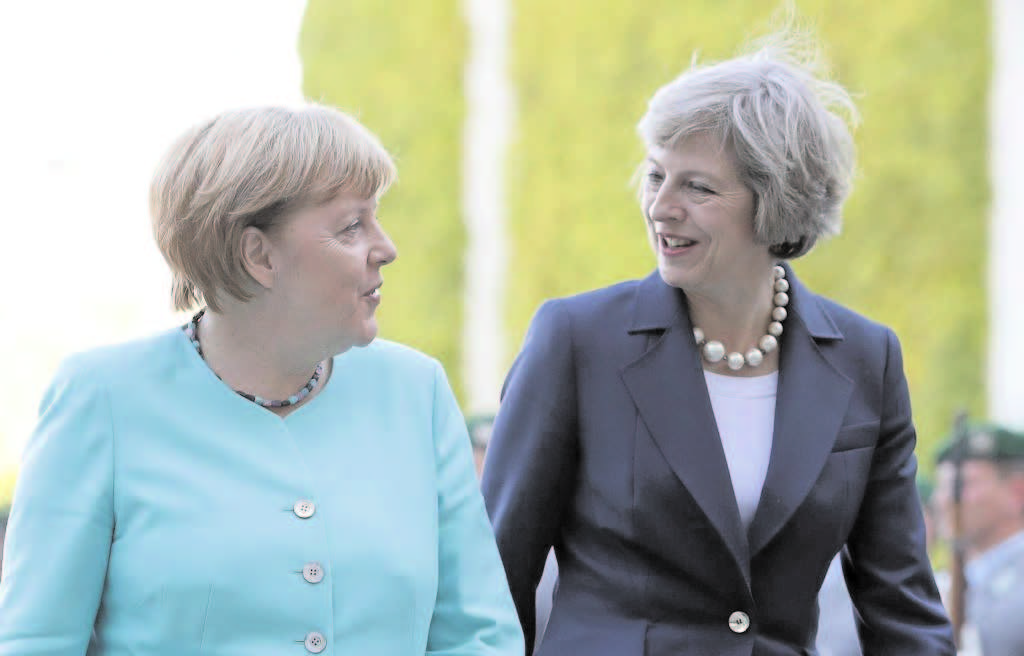
    BERLIN (TIP): Prime Minister Theresa May made her first overseas trip as Britain’s leader on July 20 to meet German Chancellor Angela Merkel, who will be a key figure in negotiating Britain’s exit from the European Union.

    May was greeted by a military band as she arrived at the Chancellery in Berlin for getting-to-know-you talks with the German leader.

    A week ago May replaced David Cameron, who resigned in the wake of Britain’s decision to leave the 28-nation bloc.

    May’s office says the trip, which also includes a visit to French President Francois Hollande, will help forge “the personal relations that will pave the way for open and frank discussions in the months ahead.”

    May is likely to be asked when she will invoke Article 50 of the EU’s constitution, which triggers a two-year process of quitting the bloc. She has said she does not plan to do that before the end of the year, but EU leaders say there can’t be any substantive talks about future relations until Britain does that.

    Merkel’s spokesman Steffen Seibert said talks with Britain over leaving the EU can only begin once Article 50 is activated, and there will be no “pre-negotiations” between Merkel and May.

    May said Wednesday that while she doesn’t underestimate the challenge of negotiating the British exit, she firmly believes “that being able to talk frankly and openly about the issues we face will be an important part of a successful negotiation.”

    The thorniest issue is likely to be the trade-off between access to Europe’s single market _ which the British economy relies on _ and control of immigration. EU leaders are unlikely to give Britain full access to the market unless it accepts the EU principle of free movement of people among member states.

    Facing her first weekly prime minister’s question session in the House of Commons Wednesday, May did not answer directly when asked if Britain would be willing to leave the single market in order to guarantee migration controls.

    She said the referendum result made clear that “people want control of free movement from the European Union.” But, she said, “we must also negotiate the right deal and the best deal on trade in goods and services for the British people.”

    May has also announced that Britain is relinquishing its turn at holding the EU presidency in the second half of 2017.

    May’s office said the prime minister spoke to European Council President Donald Tusk on Tuesday evening and told him Britain would give up the rotating six-month presidency _ held by EU member states in turn _ so it could prioritize exit negotiations.

    After a working dinner with Merkel in Berlin on Wednesday, May will travel to Paris on Thursday to meet Hollande in Paris. As well as talking about the EU, they will discuss counterterrorism cooperation in the wake of last week’s deadly truck attack in Nice.

    May said she wanted to send a message to Britain’s European allies that “these relationships have been vital in the past and they will be vital in the future.”

  • France: Truck attacker had accomplices, planned for months

    France: Truck attacker had accomplices, planned for months

    PARIS (TIP): The truck driver who killed 84 people on a Nice beachfront had accomplices and appears to have been plotting his attack for months, the Paris prosecutor said on July 21.

    Prosecutor Francois Molins said five suspects currently in custody are facing preliminary terrorism charges for their alleged roles in helping 31-year-old Mohamed Lahouaiej Bouhlel in the July 14 attack in the southern French city. Molins’ office, which oversees terrorism investigations, opened a judicial inquiry Thursday into a battery of charges for the suspects, including complicity to murder and possessing weapons tied to a terrorist enterprise.

    The suspects are four men — two Franco-Tunisians, a Tunisian and an Albanian — and one woman of dual French-Albanian nationality, Molins said. The driver was a Tunisian man who had been living in Nice for several years.

    People close to Bouhlel said he had shown no signs of radicalization until very recently. But Molins said information from Bouhlel’s phone showed searches and photos that suggested he could have been preparing an attack as far back as 2015.

    The Islamic State group has claimed responsibility for the attack, though authorities have said they had not found signs that the extremist group directed it.

    Earlier Thursday, French officials defended the government’s security measures in Nice on the night of the Bastille Day attack, even as the interior minister acknowledged that national police were not, as he had claimed before, stationed at the entrance to closed-off boulevard during the attack.

    Interior Minister Bernard Cazeneuve’s clarification comes after a newspaper accused French authorities of lacking transparency in their handling of the massacre.

    Cazeneuve said Thursday that only local police, who are more lightly armed, were guarding the entrance to the Promenade des Anglais when Bouhlel drove a 19-metric ton (20-ton) truck onto the sidewalk in Nice before mowing down pedestrians who had gathered to watch a holiday fireworks show.

    Cazeneuve then launched an internal police investigation Thursday into the handling of the Nice attack.

    President Francois Hollande said the conclusions of that investigation will be known next week. He said any police “shortcomings” will be carefully addressed but defended French authorities’ actions.

    “There’s no room for polemics, there’s only room for transparency,” he said. “The necessary, serious preparations had been made for the July 14 festivities.”

    Earlier, the French newspaper Liberation said Cazeneuve lied about the whereabouts of the national police officers and cars in Nice that day and accused authorities of lacking transparency. Using witness statements and photos, Liberation showed Thursday that only one local police car was stationed at the entrance to the Nice boulevard on July 14.

    The paper quoted Nice police officer Yves Bergerat, who said local police forces’ guns and bullets aren’t even equipped “to puncture the tires” let alone shatter the windshield of a truck that size.

    Cazeneuve accused the paper of conspiracy theories and said several “heroic” national police — who killed the attacker after an exchange of fire —were stationed further down the promenade.

    The criticism comes as the National Assembly extended France’s state of emergency for six month. The security measure had been in place since the Nov. 13 Paris attacks that killed 130 victims and were claimed by the Islamic State group.

  • Truck attacker kills 84 in Nice, France:  Drives into Bastille Day crowd, opens fire; shot down by police

    Truck attacker kills 84 in Nice, France: Drives into Bastille Day crowd, opens fire; shot down by police

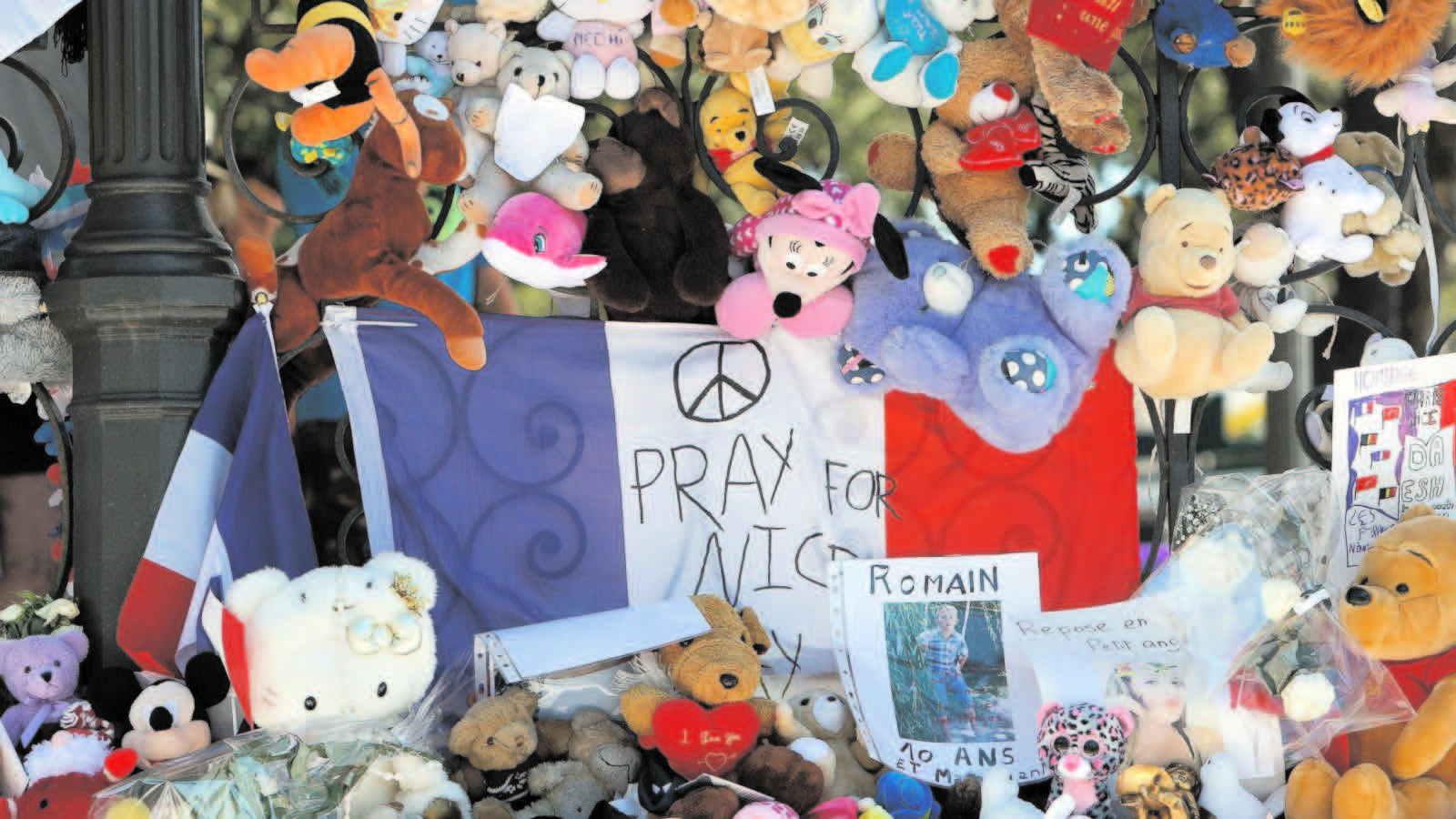
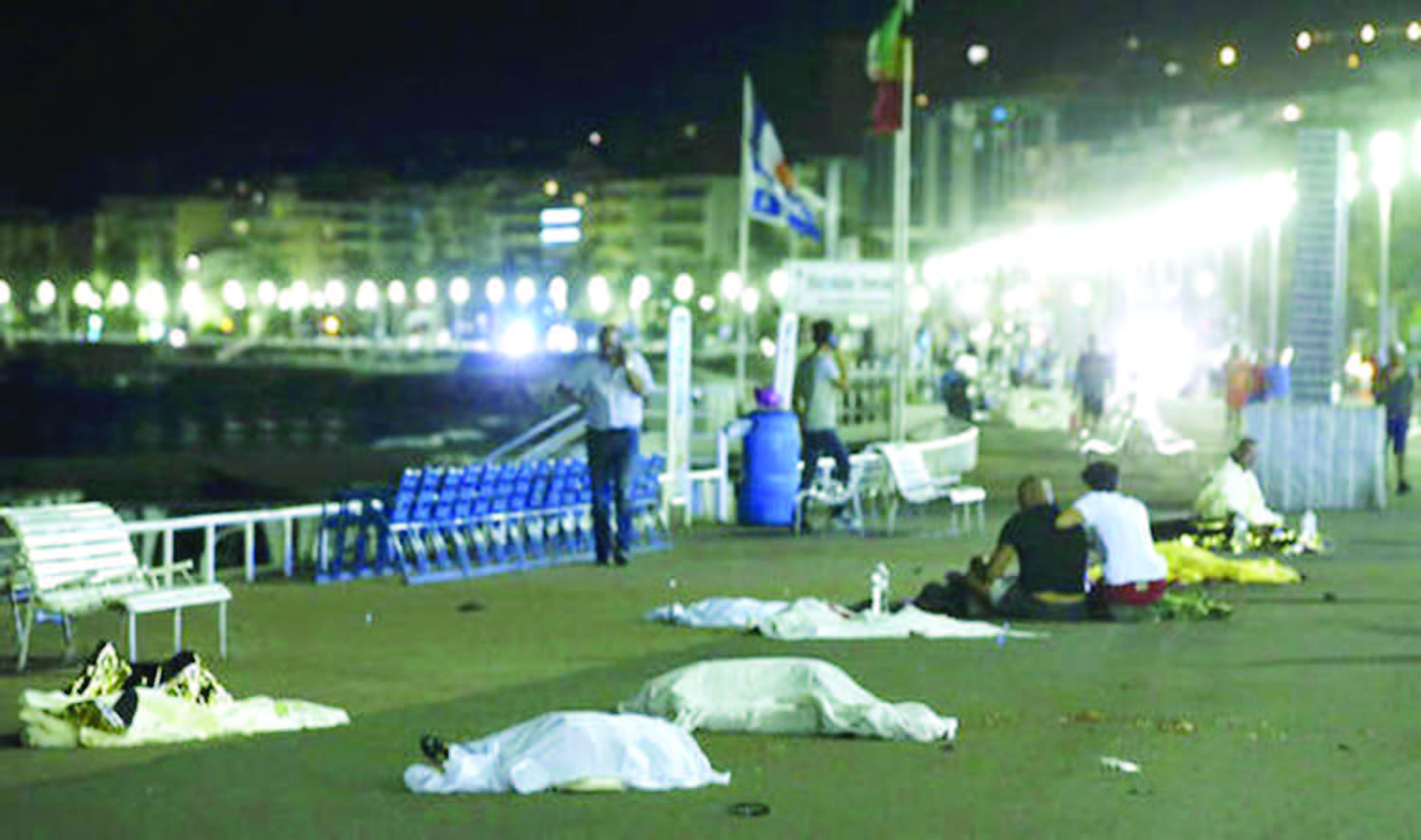
    NICE (TIP): France was hit again with a “monstrous” terror attack. Scores of people were killed Thursday, July 14 night when a large truck ploughed through a Bastille Day crowd in Nice, France, in what President Francois Hollande called a terror attack. Incidentally, it is the day of the end of the French Revolution in 1789.

    The death toll grew through the night and at the time of writing this report the number of dead had gone up to 84.

    The driver first shot a gun into the crowd before driving two kilometers along the Promenade des Anglais, the main street in Nice, mowing down people who had gathered to watch fireworks, reports say.

    Police shot and killed the driver, said Pierre-Henry Brandet, a spokesman for the French Interior Ministry. Police found firearms, explosives and grenades in the truck, Estrosi said.

    “We cannot deny that it was a terror attack,” Hollande said in a national television address. He added that the choice of the day — Bastille Day, when France celebrates its post-French Revolution republic — was particularly poignant.

    He said that the day is a “symbol of liberty,” and that “human rights are denied by fanatics and France is quite clearly their target.”

    So far, no group has claimed responsibility. Anti-terror prosecutors have taken over the investigation, according to BFMTV, citing the prosecutor’s office.

    Leaders around the world have condemned the brutal incident.

    U.S. President Barack Obama issued a statement saying, “We stand in solidarity and partnership with France, our oldest ally, as they respond to and recover from this attack.”

    Canadian Prime Minister Justin Trudeau tweeted: “Canadians are shocked by tonight’s attack in Nice. Our sympathy is with the victims, and our solidarity with the French people.” Brazilian President Michel Temer tweeted: “It is regrettable that on the day [that] eternalized fraternity as the motto of the French people, an attack destroyed the lives of so many citizens.”

    The United Nations condemned what it termed a “barbaric and cowardly” terror attack in Nice.

    As Asia woke up to the horrific news, India, China and South Korea’s leaders added their voices to the chorus of condemnation.

    “India shares the pain (and) stands firmly with our French sisters (and) brothers in this hour of immense sadness,” Indian Prime Minister Narendra Modi tweeted.

  • No Indian Hurt in Terrorist Attack in Nice, France: MEA India

    No Indian Hurt in Terrorist Attack in Nice, France: MEA India

    NEW DELHI (TIP): India shares France’s pain, Prime Minister Narendra Modi said Thursday morning, strongly condemning the horrific terror attack in Nice that has killed 84 people and left scores injured, several critically.

    “Appalled by the horrific attack in Nice. I strongly condemn such mindless acts of violence. My thoughts are with the families of deceased. I hope the injured recover soon. India shares the pain & stands firmly with our French sisters & brothers in this hour of immense sadness,” (sic) PM Modi tweeted.

    The government has said that so far there are no reports of any Indians being among the dead or wounded in Nice, where a large truck ploughed through hundreds of spectators gathered to watch Bastille Day fireworks at the famous Promenade des Anglais.

    The Indian embassy in French capital Paris has set up a helpline in Nice: +33-8-20-26-06-06 and Indian Embassy’s Paris helpline: +33-1-40507070.

    French President Francois Hollande has called the Nice attack “undeniably an act of terror,” and has extended a state of emergency in France by three months.

  • EgyptAir plane carrying 66 has crashed: Aviation officials

    CAIRO (TIP): An EgyptAir flight from Paris to Cairo with 66 passengers and crew on board crashed in the Mediterranean Sea off the Greek island of Crete early May 19 morning, Egyptian and Greek officials said.

    Egyptian Prime Minister Sherif Ismail said it was too early to say whether a technical problem or a terror attack caused the plane to crash. “We cannot rule anything out,” he told reporters at Cairo airport.

    EgyptAir Flight 804 was lost from radar at around 2:45am local time when it was flying at 37,000 feet, according to the airline. It said the Airbus A320 vanished 10 miles (16 kilometers) after it entered Egyptian airspace, around 280 kilometers (175 miles) off Egypt’s coastline north of the Mediterranean port city of Alexandria. Egyptian aviation officials said the plane crashed and that a search for debris was now underway.

    The “possibility that the plane crashed has been confirmed,” as the plane hasn’t landed in any of the nearby airports, said the officials, who spoke on condition of anonymity because they were not authorized to speak to the media.

    Konstantinos Lintzerakos, director of Greece Civil Aviation Authority, gave a roughly similar account to that given by EgyptAir. In comments to the private Antenna television, he said Greek air traffic controllers were in contact with the pilot who reported no problems as the aircraft cruised at 37,000 feet, traveling at 519 mph (830 kilometers per hour).

    The controllers tried to make contact with the pilot 10 miles (16 kilometers) before the plane exited the Greek Flight Information Region, or FIR. The pilot did not respond, he said, and they continued to try to speak to him until 3:29 am local time (2:29 a.m. Egyptian time) when the plane disappeared from the radar inside Egypt’s FIR, 11 kilometers (7 miles) southeast of the island of Crete.

    Egypt’s state-run newspaper Al-Ahram quoted an airport official as saying the pilot did not send a distress call, and that last contact with the plane was made 10 minutes before it disappeared from radar. It did not identify the official.

    Egyptian military aircraft and navy ships were taking part in a search operation off Egypt’s Mediterranean coast to locate the debris of the plane, which was carrying 56 passengers, including one child and two babies, and 10 crew members. The pilot had more than 6,000 flight hours.

    Greece also joined the search and rescue operation, officials at the Hellenic National Defense General Staff said.

    French Foreign Minister Jean-Marc Ayrault offered to send military planes and boats to join the Egyptian search for wreckage.

    “We are at the disposition of the Egyptian authorities with our military capacities, with our planes, our boats to help in the search for this plane,” he said. He spoke after French President Francois Hollande held an emergency meeting at the Elysee Palace. (AP)

  • Brussels Terror Attack: 34 Dead, Several Injured | ISIS Claims responsibility

    Brussels Terror Attack: 34 Dead, Several Injured | ISIS Claims responsibility

    At least 34 people were killed on Tuesday, March 22, as two deadly explosions rocked the Zaventem airport in the Belgian capital and a more powerful blast ripped through a train coach at a metro station in the heart of Brussels in the worst terror attack in Europe in four months.

    Key Points

    1.  At least 31 people killed in attacks on Brussels airport and a central metro station
    2.  Two blasts at Zaventem airport – one probably a suicide bomber, officials say
    3.  Airport blasts kill 10, official says
    4.  At least 20 people killed and 106 injured in Maelbeek metro station bombing
    5.  Prime Minister Charles Michel appeals for calm and solidarity
    6.  The blasts come days after the capture of Salah Abdeslam, the main fugitive in the Paris attacks in November
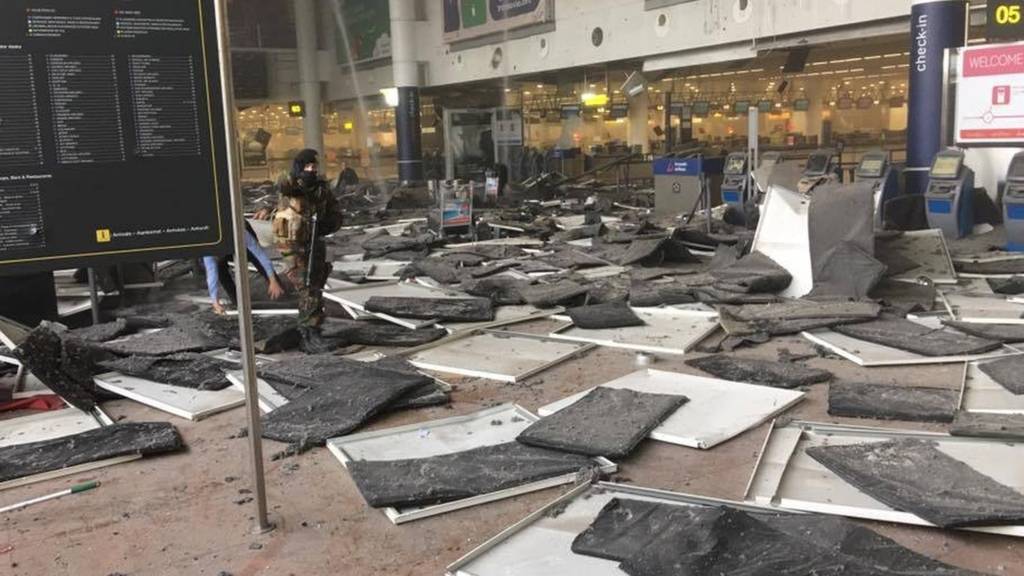
    A soldier stands near broken windows after explosions at Zaventem airport near Brussels, Belgium, March 22, 2016.
    A soldier stands near broken windows after explosions at Zaventem airport near Brussels, Belgium, March 22, 2016.

    Fourteen people were killed as two quick explosions took place in the country’s biggest airport just before 8 a.m. in a departure area, breaking windows, furniture and machinery, leaving it looking like a war zone.

    Over 80 people were injured in the huge blasts, which triggered a panic run by hundreds of stunned passengers and staff from the airport building. Authorities said a suicide bomber was to blame for one explosion and that someone was heard shouting in Arabic and open fire moments earlier.

    A Kalashnikov was later found near the body of a dead man.

    An hour later, another explosion shattered the middle of a three-coach train car at the Maalbeek Metro station, leaving the carriage in a heap of mangled wreck with 20 dead and 55 injured, 16 of them critically.

    US presidential candidates respond to Brussels attacks

    US Republican presidential front runner Donald Trump said the attacks showed the need for a much tougher Western response to jihadist violence.

    Democratic candidate and former US secretary of state Hillary Clinton said: “Today’s attacks will only strengthen our resolve to stand together as allies and defeat terrorism and radical jihadism around the world.”

    Ted Cruz, currently lying second in the race for the Republican nomination, said the attacks were not “isolated incidents” and said the West was “at war with radical Islam”.

    Joint statement from EU leaders on attacks


    As the global community, India included, rallied in solidarity with Belgium, Prime Minister Charles Michel called it a “moment of tragedy” and blamed it on “blind, violent and cowards”.

    He declined to link the bloodbath with the March 18 arrest in Brussels of Salah Abdeslam, the suspect in the Paris terrorist attack which killed 130 people in November last year.

    The injured included two employees of the privately-owned Indian airline Jet Airways. A Slovenian diplomat, said to be a man, was also injured, although the authorities did not release his name.

    Indian Prime Minister Narendra Modi said the terror attacks were “disturbing” and “condemnable”.

    Jet Airways said it quickly moved guests and staff on the landside at Brussels airport away from the terminal and transit guests in the terminal building to hangers in coaches.

    Prime Minister Michel said: “We were already fearing attacks. That has happened now.” He said Belgium was determined to deal with the situation, and that a suicide bomber was involved in the airport attack.

    The airport and all public transport were shut down after the bloodbath. So was the European Union headquarters, near the Maalbeek station where 20 people died. Belgium’s nuclear plant in Huy town was evacuated.

    “The Metro was leaving Maelbeek station for Schuman when there was a really loud explosion,” Alexandre Brans, 32, told the media, wiping blood from his face. “It was panic everywhere.”

    An intern working at the airport told Al Jazeera: “When I heard the first explosion, lots of people started screaming and running. When I heard the second explosion, which was about 30 seconds after the first, everything got chaotic. I could see panic on everyone’s face, blood on their bodies.”

    Hundreds of people fled the airport building, some with blood on their faces. First reports said the blasts were centred at the American Airlines check-in desk. The false ceiling in the building came crashing down.

    TV footages showed a number of Indian passengers being evacuated from the airport. Two Jet Airways planes had arrived earlier in the day from Mumbai and Delhi.

    Pictures showed the terminal windows blown out from the force of the explosion and plumes of smoke rising high into the sky. Video also showed terrified passengers running for their lives out of the terminal.

    Sky News Middle East correspondent Alex Rossi, who was at the airport, told the channel: “I could feel the building move.”

    CNN quoted a tourist, Anthony Barrett, as saying that he heard the explosions from his hotel across the terminal building. “When I opened the curtains and looked out, I could see people fleeing,” he said.

    Barrett said he saw luggage trolleys being used to transport the wounded.

    French President Francois Hollande said: “Terrorists struck Brussels but it was Europe that was targeted and all the world that is concerned. Today it is Belgium, yesterday it was France.”

    France is seeking Abdeslam’s extradition so that he stands trial for his alleged role in the November rampage of gunfire and suicide bombings which killed 130 people in Paris.

  • I AM A TOUGH NEGOTIATOR, LET ME SAVE MONEY: PARRIKAR ON RAFALE DEAL

    I AM A TOUGH NEGOTIATOR, LET ME SAVE MONEY: PARRIKAR ON RAFALE DEAL

    NEW DELHI (TIP): Showing no signs of relenting, Defence Minister Manohar Parrikar on March 5 said he is a “tough negotiator” and wants the “best price” for Rafale fighter jets from France.

    However, the minister said the budget for next fiscal takes into account the Rafale deal for which “adequate money” has been kept aside.

    “I am a tough negotiator. Let me save money for the nation,” Parrikar told reporters here when asked why the deal has not been signed yet.

    Stating that he was aware that the IAF needs the aircraft, the minister added “I think a good buyer does not put his weakness in front. He always keeps his cards close to his chest. Please don’t ask me to disclose my cards in national interest.”

    Asked if he was looking at any alternative to equip the IAF in case the Rafale deal does not go through, he said “many times it is better to cross the bridge when it comes”.

    The defence budget for the next fiscal takes into account the payments that will have to be made when the Rafale deal is signed, said Parrikar who had last month made it clear that the price of the aircraft was the only sticking point left in the agreement. At least 15 per cent of the total payment will have to be made immediately, if and when the deal is signed.

    During French President Francois Hollande’s visit here in January, India and France had inked an MoU for the purchase of 36 French Rafale aircraft but persisting differences over the pricing of the fighter jet came in the way of the multi-billion dollar deal being wrapped up.

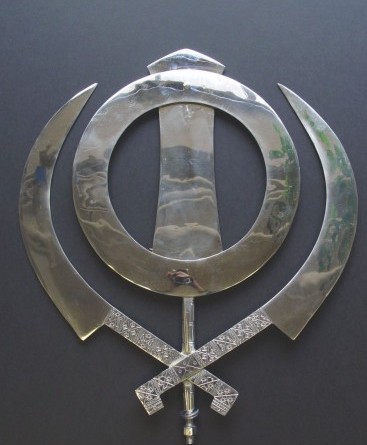
  • FRENCH CLARIFY – NO BAN ON SIKH TURBANS IN PUBLIC SPACES

    FRENCH CLARIFY – NO BAN ON SIKH TURBANS IN PUBLIC SPACES

    NEW DELHI (TIP): French embassy in Delhi has said there was no ban on wearing turbans in public space while reacting to a charge by a Sikh organization that the community has been fighting for their rights in France.

    “Outside the premises of public schools, wearing the Sikh turban is very much allowed in public space, contrary to the allegations of certain radical organizations. Only the burkha is banned in public places, for obvious security reasons.”

    “Furthermore, neither Sikhs wearing turbans in the streets nor Sikh shrines were ever subject to any hostility in France,” embassy said in a statement in Delhi.

    It also noted that the embassy issued this clarification following recent allegations regarding the so-called restrictions imposed on the wearing of the Sikh turban in France.

    “France upholds the freedom of religion, as well as the right not to have one, and opposes discriminations on this ground. There is no ban on the wearing of turbans. French law in this matter is very precise: the restriction applies to the wearing of all visible religious signs, without any discrimination, and it applies only to public schools.

    “It leaves it to the heads of public schools to take the most appropriate measures, so that it is implemented in a sensitive manner,” the statement added.

    This measure has been explained to the Indian authorities and representatives of the Sikh community in France, with whom a regular dialogue has been established, the embassy said.

    The Sikhs of France understand and have assimilated the laws on Laicite (French principle of separation between the State and religious institutions) and practical solutions have been found to reconcile their religious practice with the principles of the French Republic, it added.

    Protesting against the absence of a Sikh regiment contingent at the Republic Day parade where French President Francois Hollande was the chief guest, Shiromani Akali Dal yesterday said it was a setback to the struggle of Sikhs who have been fighting for their rights in France.

    Punjab Chief Minister Parkash Singh Badal had also written to Prime Minister Narendra Modi in this regard.

  • INDIA CELEBRATES 67th YEAR as Republic: Showcases Military Might

    INDIA CELEBRATES 67th YEAR as Republic: Showcases Military Might

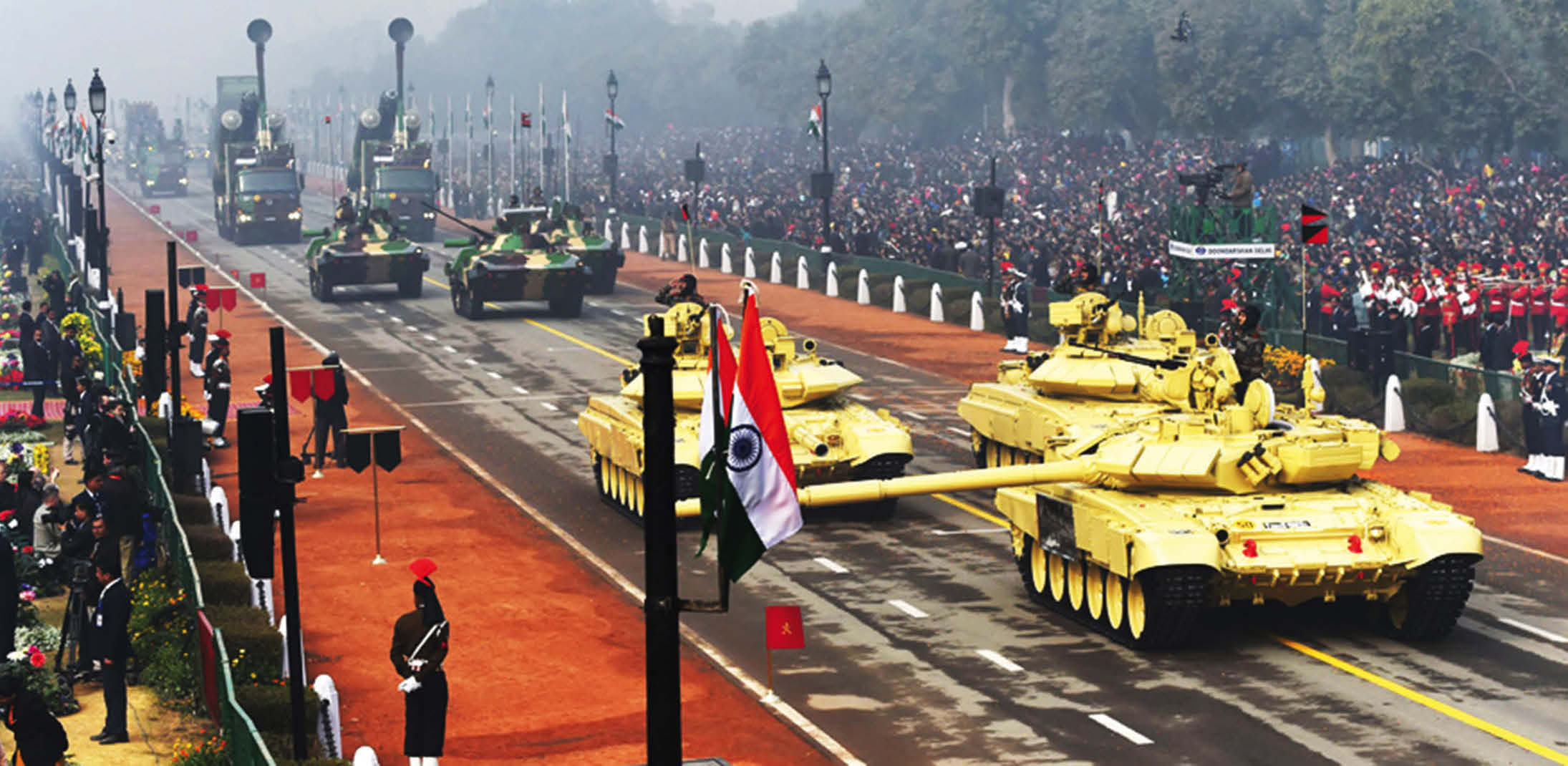
    NEW DELHI (TIP): India’s military prowess and achievements in different fields, state-of-the-art defense, diverse cultural and social traditions and the government’s emphasis on self-reliance dominated the showcase at New Delhi’s Rajpath on the country’s 67th Republic Day.

    For the first time in the history of Republic Day parades, a 123-member French Army contingent marched on Rajpath and presented a ceremonial salute to President Pranab Mukherjee, as guest of honor Francois Hollande watched and clapped seated next to Prime Minister Narendra Modi. Another first, after a gap of 26 years, was the march by an Army dog squad drawn from the Remount Veterinary Corps along with their handlers.

    Sticking to the 66-year-old tradition, the colorful Border Security Force regiment consisting of 56 camels also marched down the Rajpath. For the first time, the parade also witnessed an ex-servicemen tableau where army veterans showcased their role in nation building.

    Among the weapons on display were the army’s missile firing capability T-90 Bhishma tank, Infantry Combat Vehicle BMP II (Sarath), Mobile Autonomous Launcher of the BrahMos Missile System, Akash weapon system, Smerch Launcher Vehicles and Integrated Communication Electronic Warfare System.

    An Indian Air Force tableau, themed ‘Humanitarian Assistance and Disaster Relief Operations by IAF: In Service of the Nation and Beyond’ showcased models of C-17 Globemaster, C-130 Hercules and MI-17V5 aircraft, emphasizing its use in the IAF’s recent rescue and relief operations in Uttarakhand, Jammu and Kashmir, Yemen and Nepal.

    The Indian Navy’s tableau displayed flight deck operations on the new aircraft carrier Vikrant, under construction at the Kochi shipyard, and the indigenously constructed submarine Kalvari by Mazagaon Dock, Mumbai, having a Made in India tag on them.

    There was a scintillating display of folk and classical dances and performances by school children from Delhi and other parts of India.

    One of the highlights of the two-hour event at Rajpath was the stunts by daredevils belonging to the Army Signal Corps as they made various formations on motorbikes.

    The parade ended with flypasts and stunts over Rajpath by Jaguars and other aircraft, though low visibility due to fog made it difficult for thousands of cheering spectators below to enjoy the display.

    Delhi was turned into a virtual fortress as an unprecedented ground-to-air security cover with thousands of armed personnel kept a tight vigil for the Republic Day celebrations.

    Commandos with light machine guns were deployed at 10 strategic locations and anti-aircraft guns remained positioned at two vantage points in the capital. The entire central Delhi region had nearly 50,000 security personnel drawn from Delhi Police and central security forces guarding every nook and corner.


  • INDIA CELEBRATES 67TH REPUBLIC DAY

    INDIA CELEBRATES 67TH REPUBLIC DAY

    [vc_row][vc_column][vc_column_text]India celebrates 67th Republic Day on January 26. One of the three national holidays in India, Republic Day is celebrated with great pomp and show throughout the nation each year.

    [/vc_column_text][vc_images_carousel images=”56849,56848,56846,56845,56843,56842,56841″ img_size=”large” speed=”1500″ autoplay=”yes” wrap=”yes”][/vc_column][/vc_row][vc_row][vc_column][vc_column_text]Preparations begin almost a month before for the actual day. A massive parade is held which reflects a touch of modernity in the display of might and technology and the capabilities of growth in various sectors. While the parade symbolizes the power and force, the different regional tableaus reflect the cultural themes and motifs. Republic Day has a very significant place in the Indian history as India became a Republic from a British Dominion on this very day. Browse through the following lines to know all about the history and origin of Republic Day.

    India became independent from the British Rule on 15th August, 1947. However, the country did not have its own constitution and wholly depended on the modified colonial Government of India Act, 1935. Also, India was headed by King George VI, until the adoption of the Indian Constitution in 1950. Prior to this, the seeds of a republican nation were sowed by Pt. Jawaharlal Nehru in the Lahore session at the Indian National Congress at the midnight of 31st December, 1929 – 1st January, 1930.

    The tri-color flag was unfurled by the nationalists present who took a pledge to celebrate “Purna Swaraj” (complete Independence) Day every year on 26th January, while continuing to fight for the establishment of a Sovereign Democratic Republic of India. The independence was achieved in 1947 while the professed pledge was redeemed on 26th January, 1950.

    The Indian Constituent Assembly was called together on 9th December, 1946, where a committee was formed. Dr. B.R. Ambedkar became the chairman of the committee, who along with the other members drafted the Constitution. The Indian Constitution included 395 Articles and 8 Schedules. The Constitution was adopted by the Constituent Assembly on 26th November, 1949. In the following year on 26th January, 1950, the Constitution of India came into force and became a sovereign democratic republic of India, 894 days after the withdrawal of British Rule in 1947, which is why, it is said that India achieved its true independence on this day. Next, elections were held and Dr. Rajendra Prasad was elected as the first President of free India.

    He took the oath at the Durban Hall in the Government House, which was followed by the Presidential drive along the five-mile route to the Irwin Stadium. He unfurled the National Flag at the stadium. This transition of India into a sovereign democratic republic nation is indeed a historical event. The two-decade long journey, right from the conceptualization of the dream in 1930 to its actual realization in 1950, is certainly worth a grand celebration. Today, the Indian Constitution is the longest in the world, consisting of 397 articles and 12 schedules, providing a single citizenship for the whole nation. The national holiday is celebrated with festivities and patriotic fervor across the whole nation.

    Republic Day Parade

    The grandeur of the Republic Day of India is visible in the grand parade that is held along Rajpath, beginning from Raisina Hill near the Rashtrapati Bhavan (President’s Palace) and moving on to Rajpath past India Gate and proceeding to the Red Fort.

    The occasion witnesses the presence of the President, the Prime Minister and several other high-ranking officials of the country. The parade starts with the arrival of the President of India, who is escorted by a group of bodyguards on horses. Next, the Prime Minister of India offers wreaths at the Amar Jawan Jyoti at the India Gate in memory of the martyrs of the Indian army. The national flag is unfurled by the President of India, who is also the Commander-in-Chief of the Indian Armed Forces. This is succeeded by the cheerful tune of the National Anthem and a 21-gun salute. Led by three different divisions of the armed forces viz: Navy, Army and Air Force; the Republic Day Parade has all of them displaying their might along the Rajpath, saluting the President. The Armed Forces staff performs motorcycle rides whereas the staff of the Indian Air Force performs flying parade in fighter planes.

    The rich and colorful culture of India is showcased in the parade of the Republic Day. Traditional as well as cultural performances are given by professionals belonging to different regions. School children in picturesque costumes also participate in the display of different aspects of the glorious history of the country on this big day.

    The real heroes of the nation are honored with the bravery awards and medals. National Awards are given to children for selfless sacrifice and bravery.

    A row of IAF jets marks the end of the grand celebration, leaving behind a trail of colored smoke. It bids goodbye to the gathered audience by lavishing rose petals on them.

    Beating the Retreat Ceremony

    The Republic Day celebration ends officially with the Beating the Retreat ceremony, which is held on the 29 January every year. The event symbolizes retreat after a day on the battlefield and features remarkable performances by the Indian Air Force, the India Navy, and the Indian Army. Held at the Raisina Hill, New Delhi, Beating the Retreat Ceremony has its tickets available at the same outlets as the Republic Day Parade.

    Highlights of 2016 Republic Day Celebrations

    • French President Francois Hollande will be the Chief Guest at the Republic Day Parade on January 26, 2016.
    • The Republic Day Parade will be shorter by at least 15 minutes. Government is planning to hold a 90-minute parade instead of the nearly two hours one. This is done to cut down the number of marching contingents in addition to clubbing together the mechanized ones. The tableaux would also be held for less time.
    • The Action Plan for Start Up India, Stand Up India will be launched for introducing multiple opportunities for the youth of India. Cleanliness in surrounding areas and for statues of great personalities would also be ensured.
    • The topic “our duties” will be discussed in schools, colleges and other places.
    • Beating the Retreat would have Indian music infused with martial tunes.
    • All tableaux and music bands will be showcased for three days – till January 29 at the Red Fort to allow more people to participate.
    • Number of Army’s marching contingents will be reduced from 8 to 6.
    • Number of Navy’s marching contingents will be reduced from 3 to 2.
    • The Air Force will be putting up a single marching contingent.
    • Six central para-military forces will be putting up 3 marching contingents instead of one contingent individually.
    • The Indian Navy will showcase “Make in India” and hence put up models of the indigenously made aircraft carrier INS Vikrant along with the indigenously made submarine INS Kalvari.

    The entire nation comes alive with patriotic fervor on this day, but the principal celebration of the Republic Day takes place in the national capital, New Delhi from 9 a.m. and continues for about three hours. This historic occasion becomes a national festival with the involvement of people from all over the country. The day symbolizes the unity of the nation as it brings together people from different castes, creed, religions and regions to celebrate the day with the pride of being an Indian.

    The celebration takes place at the Rajpath with great enthusiasm and pride, which can be experienced by any individual as the Republic Day Parade is a ticketed event. The tickets for the same can be bought a couple of weeks before the event.

    Apart from the grand celebrations in the capital, the Republic Day is also celebrated in different parts of the country at different levels, such as in cities, district headquarters, panchayats, schools and offices.[/vc_column_text][/vc_column][/vc_row]

  • French President Francois Hollande arrives in India January 24 on a 3-day visit

    French President Francois Hollande arrives in India January 24 on a 3-day visit

    NEW DELHI (TIP): French President Francois Hollande will arrive in a French architect Le Corbusier’s city, Chandigarh, on a 3-day visit on January 24. He will leave on January 26 after attending the at-home function at the Rashtrapati Bhavan.

    PM Modi and Hollande are likely to discuss defense, counter-terrorism and solar energy issues.

    During the visit, Modi and Hollande will inaugurate the international secretariat of the International Solar Alliance, which is being housed at the institute of solar energy at Gurgaon’s Gual Pahari.

    After landing in Chandigarh, Hollande will visit the most frequented tourist spots of the city accompanied by PM Modi. The city’s famous Rock Garden will also be a part of the tour.

    Before leaving for the national capital in the evening on January 24, both leaders will address the CEOs forum in Chandigarh. A number of business-to-business agreements are likely to be signed, sources revealed.

    On January 25, the French President’s engagements will begin with a meeting of business leaders and CEOs. He will also be given a ceremonial welcome at the Rashtrapati Bhavan. Later, he will visit Rajghat to pay tributes to Mahatma Gandhi. The talks with PM Modi, both in restricted format and delegation level, are scheduled for the same day, with a number of agreements likely to be inked after the discussions. The day will end with President Pranab Mukherjee hosting a banquet for him.

    On Republic Day, Hollande will attend the parade as chief guest, which will be followed by a private lunch with French and Indian celebrities. Before leaving for Paris, he will also attend the at-home program at the Rashtrapati Bhavan’s Mughal Gardens. Hollande will be the fifth French leader to be a Chief Guest at India’s Republic Day celebrations – the maximum number from any country so far, with earlier such visits being in 1976, 1980, 1998 and 2008. Sources added that the French contingent marching at the Republic Day parade will be something unique. India, too, had sent its troops at French national day parade in July 2009.

    The visit comes almost nine months after Modi visited France, in his first bilateral visit to Europe. During the visit, 19 pacts were signed encompassing diverse areas of cooperation such as nuclear energy, space, railways, conservation of cultural heritage, science and technology, sports, tourism, human exchanges, renewable energy and twinning of historical monuments. While a deal on Rafale fighters is expected, officials said that last round of negotiations were still underway.

  • Historic COP21 climate change summit reaches deal in Paris

    Historic COP21 climate change summit reaches deal in Paris

    Dec 12 (TIP NEWSWIRE) : A landmark climate change deal was clinched with the approval of India, China and the US, after two weeks of intense discussions and negotiations, with the legally-binding pact seeking to limit global warming to “well below” 2 degrees Celsius and committing $100 billion a year from 2020 to help developing nations on Saturday, December 12.

    The pact is the first to commit all countries to cut carbon emissions.

    The agreement is partly legally binding and partly voluntary.

    Earlier, key blocs, including the G77 group of developing countries, and nations such as China and India said they supported the proposals.

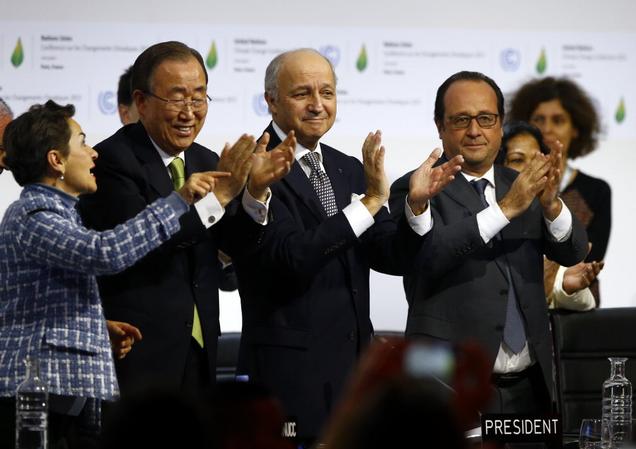
    Amidst cheers and applause from delegates from 195 countries, the draft of the “historic” deal was presented by President of the UN climate conference of parties (COP) and French Foreign Minister Laurent Fabius.

    “I now invite the COP to adopt the decision entitled Paris Agreement outlined in the document,” said Fabius.

    French President Francois Hollande appealed to the gathering to approve the accord.

    “Looking out to the room I see that the reaction is positive, I see no objections. The Paris agreement is adopted.”

    Fabius has claimed that the agreement which is 31 pages long acknowledges the notion of “climate justice” and takes into account the countries’ differentiated responsibilities and their respective capabilities in the light of different national circumstances.

    Key points of Deal, to take effect from 2020

    The measures in the agreement included:

    • To peak greenhouse gas emissions as soon as possible and achieve a balance between sources and sinks of greenhouse gases in the second half of this century

    • To keep global temperature increase “well below” 2C (3.6F) and to pursue efforts to limit it to 1.5C

    • To review progress every five years

    • $100 billion a year in climate finance for developing countries by 2020, with a commitment to further finance in the future.

    average

    US President Barack Obama has hailed the agreement as “ambitious” and “historic”, but also warned against complacency. “Together, we’ve shown what’s possible when the world stands as one.” And although admitting that the deal was not “perfect”, he said it was “the best chance to save the one planet we have”.

    Prime Minister Narendra Modi has hailed the landmark climate accord in Paris, saying it pointed the world towards a greener future.”Outcome of Paris agreement has no winners or losers. Climate justice has won & we are all working towards a greener future,” PM Modi posted on Twitter. The deliberations at the climate summit and the agreement reached “demonstrates the collective wisdom” of world leaders to mitigate climate change, he added.

    China’s chief negotiator Xie Zhenhua said the deal was not perfect. But he added that “this does not prevent us from marching historical steps forward”.

    Nearly 200 countries took part in the negotiations to strike the first climate deal to commit all countries to cut emissions, which would come into being in 2020.

    The chairman of the group representing some of the world’s poorest countries called the deal historic, adding: “We are living in unprecedented times, which call for unprecedented measures.

    “It is the best outcome we could have hoped for, not just for the Least Developed Countries, but for all citizens of the world.”


  • EcoSikh Calls on Prime Minister Modi for Climate Agreement in Paris

    EcoSikh Calls on Prime Minister Modi for Climate Agreement in Paris

    WASHINGTON (TIP): EcoSikh has appealed to Prime Minister Narendra Modi to commit to reducing carbon emissions and to work towards a meaningful agreement at the UN Climate Summit in Paris this week on behalf of India and the Indian people. Leaders from around the world have convened in Paris this week to begin negotiating a landmark climate agreement that may alter the course of climate dialogue for the future.

    Suneet Tuli of EcoSikh with the World Bank president along with faith representatives in Washington, DC
    Suneet Tuli of EcoSikh with the World Bank president along with faith representatives in Washington, DC

    The aim of the United Nation’s 21st Conference of Parties, also known as COP21, will be to commit the nations to reducing their greenhouse gas emissions, which is one step in fighting the adverse effects of climate change. The meeting is expected to be one of the largest held for the UN Framework Convention on Climate Change (UNFCCC), with 40,000 delegates attending the negotiations.

    EcoSikhDr. Rajwant Singh, President of the Washington based EcoSikh, said, “India stands to be affected severely from the effects of climate change in the coming decades. Many important parts of the country are vulnerable. India’s policy to increase coal plants and production of coal based energy is devastating to the overall goal of controlling carbon emissions. India’s poor are some of the hardest hit by climate change, and will continue to be if India does not take a grander stand in the UN negotiations. While PM Modi makes the argument that historically, India has not been the largest emitters of carbon and therefore should be able to prioritize development over environmental conservation, India still has the duty to its citizens to provide them with a safe, clean and healthy environment to live in.”

    Singh added, “We appreciate PM Modi’s drive to increase alternate sources of energy for the country and focusing on technology transfers, research and development, and investment in India’s alternative energy sector with the overall goal of emissions reductions. But, this will only come with the commitment of Prime Minister Modi and his cabinet. Climate change is a moral issue and India should stand on the right side of history.”

    Amar Singh Sawhney, a member of EcoSikh’s Board of Directors and CEO of Boston based Ocular Therapeutix, Inc, said, “There is a cost to using fossil fuel based energy that goes beyond global warming and its catastrophic climate change implications. The additional costs come in the form of health disasters from particulate and other gaseous emissions that are affecting the Indian populace. Already, asthma, lung cancer, and other diseases are growing in incidence dramatically in India as a direct result of air pollution.”

    He added, “While understandably, India may not be able to eliminate coal and oil from its energy mix, a firm commitment to technological improvements to decrease the pollution impact of these energy sources must be undertaken. Solar energy, which has begun to gain traction in India, must be supported to increase if it is to be viable in the long term.”

    Suneet Singh Tuli, a member of the EcoSikh Board of Directors and CEO of the Datawind, said, “One does not have to look too far to see farmers in Punjab suffering from a lack of groundwater, or India’s south devastated by intense storms and strong typhoons. India is at risk, and it is time for Prime Minister Modi, and India’s energy minister Piyush Goyal to take seriously the impending damage climate change will cause for India’s 1.2 billion people, and make sure economic development is not their only agenda. For, what will they develop if there is no land left?”

    EcoSikh has been invited by French President Francois Hollande and by the White House this year on consultations on Climate Change issues for faith perspectives. EcoSikh also took part in UN and the World Bank sponsored conference in Bristol and Paris on climate change and poverty issues leading to the UN Paris summit.

    India often finds itself in the same boat as another large greenhouse gas emitter: China. Both countries have a gone through and are currently undergoing rapid development, economic opening, and possess the top two most populous nations in the world. The difference comes with how China has led in the UN agreements. China has pledged $3.1 billion to help developing countries par down their carbon emissions, has promised an emissions peak around 2030 and committed to having 20% of their energy from non-fossil fuels sources. India, on the other hand, has made some commitments in comparison; one of which is to reduce emissions intensity by 30 to 35 percent by the year 2030. Still, India will require US$2.5 trillion to meet their goals and introduce alternative energy sources to the country.

  • Paris 13/11: What Next?

    Paris 13/11: What Next?

    The diligently coordinated and utterly condemnable November 13 terrorist attacks in Paris killing 129 and wounding 352 innocent human beings have terrorized France and the rest of the West. The Islamic State (IS) claimed ‘responsibility’ with much alacrity and satisfaction. The previous day, IS had killed 43 and wounded 200 in Lebanon, with the Western media and Western governments hardly taking any note of that incident. In contrast, Paris 13/11 has evoked moral outrage and expressions of solidarity with France. The colours of the French flag adorned prominent buildings in many Western capitals. Looking back, Mumbai 26/11 in 2008 that killed 164 people got less international media attention and governmental responses.

    Under President Francois Hollande, France has responded more or less in the same vein as the United States led by President George Bush did post-9/11. We now know that the US response under Bush was disastrous. Far from weakening, let alone eliminating terror, his Global War on Terror (GWOT) globalised terror and strengthened the terrorists especially in the WANA region. (This observation does not apply to the Indian subcontinent where the Jaish-e-Mohammed and Lashkar-e-Taiba had started carrying out terrorist attacks in the mid-1990s.) As far as the WANA region is concerned, it was the ill-conceived invasion of Iraq in 2003 and its criminally incompetent occupation based on false assumptions that created the preconditions necessary for the emergence of Jihadi Terrorism (JT). IS is only one form of JT that has emerged in that region. 13/11 Paris is only one of the acts of terror of the IS. The link between 13/11 Paris and GWOT has to be recognised. Without that recognition, it will not be possible for decision-makers to address the threat of IS and the rest of JT.

    When the attack on Charlie Hebdo occurred in January 2015 in Paris, France showed a degree of willingness to look deeper into the causes of that attack. It was recognized that the deprived conditions in the suburbs inhabited by Muslim immigrants — inadequate access to education and employment – needed to be rectified, even though there was not much follow-up action.
    But in response to 13/11, Hollande declared that France was at war and vowed to destroy the IS. He also stated that: Constitution will be amended to give more powers to security forces to arrest suspects; those who hold double nationality can be deprived of their French nationality if they are found involved in terrorism; the security agencies will get more personnel; and if a choice is to be made between security and liberty, France will unhesitatingly choose the former.

    Hollande addressed the two houses of Parliament at the historic Palace of Versailles. His audience sang The Marseillaise, one of the most militaristic of national anthems, after he completed his address. Originally, it was composed in 1792 when Revolutionary France was threatened by the European monarchies. Napoleon replaced it by another. His nephew Napoleon III introduced another, Partant pour La Syrie (Going to Syria), to recall Napoleon’s military campaign in Egypt and Syria (1798-1801). That military campaign was a disaster.

    Hollande is not, however, expected to send the army to Syria to fight the IS. He has only intensified air raids that France has been conducting since September against the IS. In fact, France had already declared war on the IS with these raids. If France did not expect any retaliation by IS, that is rather surprising.

    We do not know why France was taken in by surprise. Perhaps, some pundits misled the French government. For a while, they have been theorising on the difference in approach between Al Qaeda and the IS. The former attacks the ‘far enemy’ while the latter attacks the ‘near enemy’ and captures territory.

    It is not difficult to figure out why Paris was attacked. IS has suffered much under Russian air raids starting from 30 September. It has lost territory in Sinjar, cutting the road connection between Mosul, its most important territorial possession, and its capital at Al Raqqa. It brought down a Russian airliner carrying Russian tourists from Sharm al-Sheikh in Sinai. As Turkey has tightened its border controls, it is difficult for foreign volunteers wanting to join the IS to get into Syria. It was necessary to keep them occupied and the IS decided to make use of its assets in Belgium and France. To argue that the IS carried out the attacks because it has visceral hatred for Western values is to miss the central point. IS has that hatred, but essentially 13/11 was an act of vengeance against France and others who have been bombing the IS. Hence, there was good reason to anticipate an attack as IS lacks aircraft to bomb Paris.

    The day after the Paris attacks, Vienna once again hosted a meeting of the International Support Group on Syria (ISGS). The first meeting had been held earlier on 30 October. The role of Basher al Assad came up once again. The US and its allies want him to exit from power as early as possible. But they have realized that, with support from Russia and Iran, Assad is able to cling on to power. France has now accepted that the primary focus should be on destroying the IS and not on removing Assad. Thus, the Western opposition to Assad has become weaker. Yet, there is no clear agreement on this matter and that will come in the way of progress towards a negotiated solution. Turkey and Saudi Arabia remain adamant in their demand for Assad to step down. The US has realised the impracticality of taking that line, and is trying hard to persuade Saudi Arabia and Turkey in this regard. It might or might not succeed. Essentially, the US and its allies are demanding Assad’s exit without being able to do anything to enforce it. They lack the necessary political clout as well as military means.

    The ISGS succeeded in coming out with a statement by concealing internal differences through the use of clever words. It was decided that the UN will arrange for a meeting by January 1, 2016 between the Syrian government and its opposition to start the political process. The ISGS has also supported a cease-fire between the Assad regime and its non-terrorist opponents. The terrorists have to be destroyed and Jordan was tasked with listing the terrorists to be destroyed by consultations among the concerned intelligence agencies. This will not be an easy task as deep differences remain.

    It will not be realistic to expect much progress as the ground realities prevent it. Even the so-called non-terrorist opposition is not prepared to deal with Assad. He has also said that the political process cannot start till the terrorists are defeated. The prospects for any result-producing meeting are bleak. To talk of the writing of a constitution and the holding of an election is frankly irresponsible. All that Vienna 2 has done is to consolidate the opposition to the IS and that too up to a point. Conference rhetoric has to be taken with a pinch of salt.

    At the G-20 summit held on 15-16 November at Antalya, Turkey, Paris 13/11 and the IS dominated the discussions. Obama smiled at Putin when they two for 35 minutes, in contrast to their previous meeting in New York in September when Obama’s body language was markedly hostile. He has realised that Syria cannot be addressed without Putin’s cooperation. Putin has come out of the isolation imposed on him after he annexed the Crimea in early 2014. The US and Russia will coordinate operations against the IS, though their differences on Syria remain and the US cannot easily forget that rebels supported by it were bombed by Russia. Russia has not given its word that it will stop bombing these rebels.

    As a result of Paris 13/11, there is a backlash against refugees from Syria and elsewhere. When refugees started coming in large numbers through Greece, Europe led by German Chancellor Angela Merkel welcomed them. Even before 13/11, resistance had built up against refugees. 13/11 has made it more difficult to get people in Europe to accept Syrians and others. There is fear, not necessarily justifiable, that terrorists might come in as refugees. In the US, Congress has passed a resolution suspending Obama’s plan to take in 10,000 Syrians next year. 47 Democrats broke with the President and voted for the resolution.

    Paris 13/11 has provoked a debate among the candidates running for the US presidential election next year and Obama will come under increasing pressure to change his policy on Syria. He has categorically stated that he would not send ground troops to Syria. But what will he do if the US were to be attacked? An IS video has threatened to attack Times Square in New York, but it might not be a serious threat. The intention may be to cause panic. The IS may not have the capability to carry out any operations in the US.

    The IS likely to be there after Obama leaves office. Some military analysts have argued that with 500 air sorties a day the US should prepare the ground for Arab armies to fight with the IS. Retired General Tom Mclnerney has sharply criticised Obama and argued the case for carpet bombing so that nothing is left moving on the road between Mosul and Al Raqqa. We do not know how Obama’s successor will act.

    The Security Council’s unanimously passed Resolution 2249 calls upon Member States that “have the capacity to do so to take all necessary measures in compliance with international law” to “redouble and coordinate their efforts to prevent and suppress terrorist acts” committed by IS, Al Nusra, Al Qaeda and others. The weakly worded resolution does not invoke Chapter 7 and there is no obligation to act. Moreover, the division within the Council was apparent when the Russian draft urging cooperation with the Syrian government in fighting terrorism had to be withdrawn.

    Are we witnessing the beginning of the end of the IS? Hardly. IS can be brought down only by ground attacks on a major scale and there are no signs thereof yet. Neither France nor the US is in a position to send ground troops. Only Assad and his ally Iran can send ground troops, but the IS might be able to resist them at least for a while. The Arab powers are not actively fighting the IS. Saudi Arabia stopped its bombing campaign in September, Bahrain in February, the UAE in March, and Jordan in August. That they are busy in Yemen fighting an unwinnable war might be only part of the reason for their reluctance to fight the IS.

    In short, the IS has succeeded in spreading panic in the West. Brussels remains shut down as Belgium has reasons to fear a big attack. On the other hand, the adversaries of IS have redoubled their determination to intensify air raids and their efforts to weaken it. But there is no prospect as of now of any ground operations against the IS. The ongoing ground operations by Assad’s army assisted by Iran and the Hezbollah are not sufficient to decisively defeat the IS.

    Views expressed are of the author and do not necessarily reflect the views of the IDSA or of the Government of India
  • French President Francois Hollande to be 2016 R-Day chief guest

    French President Francois Hollande to be 2016 R-Day chief guest

    New Delhi: France President Francois Hollande is going to be India’s chief guest at the 67th Republic Day ceremony on January 26, 2016, according to a French daily Le Monde. Hollande’s presence will be seen as a moment and gesture of solidarity after the Islamic State’s terrorist attacks on Paris.

    The invitation to Hollande was extended by Prime Minister Narendra Modi earlier and has been accepted by the Elysees Palace. India had strongly expressed its support for France in the wake of the Paris tragedy and Modi urged stronger and concerted international action against terrorism at the G 20 meeting that took place soon after in Turkey.

    Hollande’s presence also marks the steadily rising profile of the Republic Day, a process that began under UPA with significant world leaders attending the function. Earlier this year US president Barack Obama and his wife Michelle were guests on January 26.

    French presidents have been a favourite at Republic Day celebrations – Chirac came in 1998, Nicolas Sarkozy was here in 2008, so Hollande will be the third French president in India on Republic day in 2016.

    The news was first tweeted by a South Asia correspondent of the newspaper and was later confirmed by sources in the Indian government. France President Francois Hollande is going to be India’s chief guest at the 67th Republic Day ceremony on January 26, 2016, according to a French daily Le Monde.

    India’s relations with France have been cemented by defence deals like Mirage and now Rafale fighters and cooperation in nuclear energy.

    The visit would be a way to express solidarity with France after the deadly terror attacks last weekend. PM will meet Hollande in a few weeks during the climate change conference.

  • Narendra Modi, Mukesh Ambani, Sundar Pichai in Line for Time Person of the Year Award

    Narendra Modi, Mukesh Ambani, Sundar Pichai in Line for Time Person of the Year Award

    New York: Prime Minister Narendra Modi, Reliance Industries Chairman Mukesh Ambani and Google’s India-born CEO Sundar Pichai are among over 50 global leaders, business chiefs and pop icons named as contenders by Time magazine for its annual Person of the Year honor.
    The Time Person of the Year 2015 will be announced next month. The news weekly said the title would be bestowed on the person who “most influenced the news this year for better or worse.”

    Time said Modi has “encouraged foreign direct investment in India and is trying to modernize the world’s largest democracy,” but added that the Indian leader has also “faced controversy over what some see as rightwing extremism.”

    Modi was a contender for the honor last year also. While he was not chosen for the award by Time’s editors, he was named winner of the readers’ poll, securing more than 16 percent of about 5 million votes cast.

    On Ambani, Time said the richest person in India is the chairman of Reliance Industries, “which owns everything from telecom properties to the world’s largest crude oil refinery.”

    Among the contenders is Pichai. “After 11 years at Google, most recently as cofounder Larry Page’s right hand, Pichai assumed the tech giant’s top job,” Time said.

    In a separate “face-off” poll, Modi has been pitted against Jinping, while Ambani has been pitted against Nigerian President Muhammudu Buhari.

    Time asked its readers to vote for the individual who they think should get the title of Person of the Year. The winner of the readers’ choice poll will be announced next month before Time’s editors choose the individual from the 58 candidates.

    Modi has so far got 1.3 percent of the votes, the same as Pichai and Russian President Vladimir Putin. Ambani has garnered a mere 0.2 percent of the votes cast.

    Other candidates in the fray include U.S. President Barack Obama, French President Francois Hollande, Chinese President Xi Jinping, ISIS leader Abu Bakr al-Baghdadi, Democratic presidential frontrunner Hillary Clinton, the refugees fleeing conflicts in Syria, Afghanistan and East and West Africa, Pakistani Nobel Peace Prize laureate Malala Yousafzai, Tesla head Elon Musk, Apple CEO Tim Cook and last year’s winner Pope Francis.
    – PTI

  • Russia, France push UN resolutions on fighting IS

    Russia, France push UN resolutions on fighting IS

    UNITED NATIONS (United States) (TIP): Russia submitted a revised draft UN resolution Nov 19 on fighting the Islamic State group that France said could be partially included in its own Security Council measure following the Paris attacks.

    Agreement from the 15-member council on a single draft resolution that lays out the international approach to defeating IS extremists would mark a significant step after months of disagreements between the West and Russia.

    The Russian draft text was first presented to the Security Council in late September but was rejected by the United States, Britain and France over a provision that calls for battling the IS extremists with the consent of the Syrian regime — a Moscow ally.

    The new draft resolution still contains that provision, said Russian Ambassador Vitaly Churkin, but he downplayed disagreements.

    “We are calling for closer cooperation than we currently have now among all those fighting in Syria and Iraq,” Churkin told reporters following a closed-door meeting of the council.

    “One thing which was heard loud and clear in our discussions in the council is that there should be unity of the council. I don’t see it as a huge gap.”

    French President Francois Hollande has called on the Security Council to quickly adopt a resolution to strengthen the fight against IS jihadists in the wake of the Paris attacks.

    Hollande is due to meet President Vladimir Putin in Moscow on November 26, two days after talks in Washington with President Barack Obama aimed at stepping up the campaign against the extremists.

    French Ambassador Francois Delattre said he was working “to prepare a text that will be short, strong and focused on the fight against our common enemy, Daesh
    (IS).”