Tag: Free Trade

  • Not Terminating NAFTA, for Now:  President Trump

    Not Terminating NAFTA, for Now: President Trump

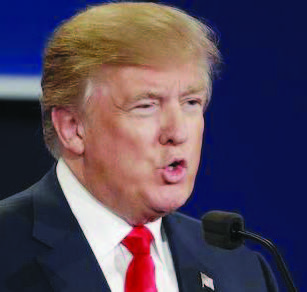
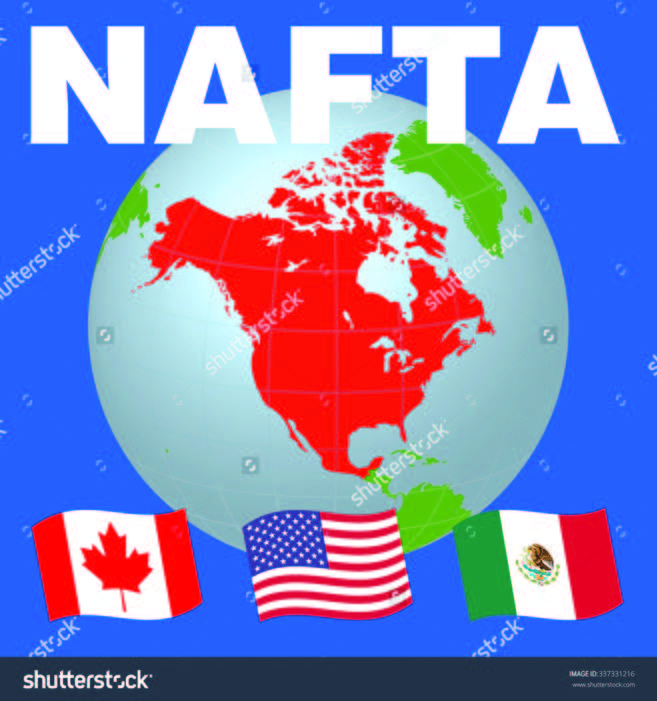
    WASHINGTON (TIP): In an apparent reversal of his stated position on NAFTA, U.S. President Donald Trump told the leaders of Canada and Mexico on Wednesday, April 26, that he will not terminate the NAFTA treaty at this stage, but will move quickly to begin renegotiating it with them, the White House said.

    President Donald Trump said he has told the leaders of Mexico and Canada that he will not pull out of the North American Free Trade Agreement at this time, but could still withdraw if he concludes a renegotiated pact is not “a fair deal for all.”

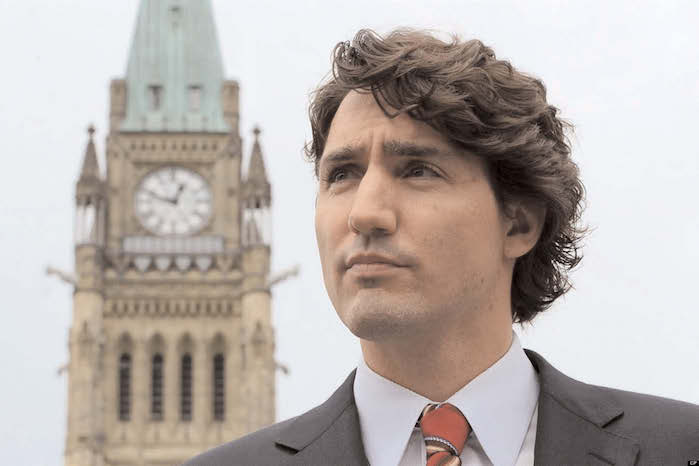
    Trump tweeted early Thursday, April 27, that he has agreed to remain a partner in the much-discussed trade agreement in calls he received from Mexican President Enrique Pena Nieto and Canadian Prime Minister Justin Trudeau. The White House released a statement late Wednesday saying only that Trump had assured the two leaders in phone conversations that the U.S. would not withdraw from NAFTA at this time.

    In his Twitter post, Trump called America’s relationships with the two hemispheric neighbors “very good” and said the prospects of a renegotiated deal are “very possible.” But he also said that his consent to remaining in NAFTA for now is “subject to the fact that if we do not reach a fair deal for all, we will then terminate NAFTA.”

    Speaking to reporters Thursday, April 27, before a White House meeting with Argentine President Mauricio Macri, Trump that he’d been planning to “terminate NAFTA as of two or three days from now,” but had been persuaded to reconsider, which he acknowledged “would be a pretty big, you know, shock to the system.”

    Trump added, “Now, if I’m unable to make a fair deal, if I’m unable to make a fair deal for the United States, meaning a fair deal for our workers and our companies, I will terminate NAFTA. But we’re going to give renegotiation a good, strong shot.”

    He later said renegotiation was “starting today.”

    The statement came hours after administration officials said Trump was considering a draft executive order to withdraw the U.S. from the deal – though administration officials cautioned it was just one of a number of options being discussed by the president and his staff.

    Some saw the threat as posturing by Trump to gain leverage over Mexico and Canada as he tries to negotiate changes to the deal. Trump railed against the decades-old trade deal during his campaign, describing it as a “disaster.”

    Senior White House officials had spent recent days discussing steps that could be taken to start the process of renegotiating or withdrawing from NAFTA before the end of Trump’s first 100 days in office, according to a person familiar with the president’s thinking. But the person, along with an administration official, said a number of options remained on the table, and stressed discussions are ongoing about the best way to proceed.

    Trump could withdraw from NAFTA – but he would have to give six months’ notice. And it is unclear what would happen next. The law Congress passed to enact the trade pact might remain in place, forcing Trump to wrangle with lawmakers and raising questions about the president’s authority to raise tariffs on Mexican and Canadian imports.

    The moves came days after the administration announced it would slap hefty tariffs on softwood lumber being imported from Canada. Trump has also been railing against changes in Canadian milk product pricing that he says are hurting the American dairy industry.

    Trump told The Associated Press in an interview last week that he planned to either renegotiate or terminate NAFTA, which he and other critics blame for wiping out U.S. manufacturing jobs because it allowed companies to move factories to Mexico to take advantage of low-wage labor.

    “I am very upset with NAFTA. I think NAFTA has been a catastrophic trade deal for the United States, trading agreement for the United States. It hurts us with Canada, and it hurts us with Mexico,” he said.

  • TRUMP BACKS AWAY FROM LABELING CHINA A CURRENCY MANIPULATOR

    TRUMP BACKS AWAY FROM LABELING CHINA A CURRENCY MANIPULATOR

    WASHINGTON (TIP): President Donald Trump said on Wednesday that his administration will not label China a currency manipulator, backing away from a campaign promise, even as he said the US dollar was “getting too strong” and would eventually hurt the economy.

    In an interview with The Wall Street Journal, Trump also said he would like to see US interest rates stay low, another comment at odds with what he had often said during the election campaign.

    A US Treasury spokesman confirmed that the Treasury Department’s semi-annual report on currency practices of major trading partners, due out later this week, will not name China a currency manipulator.

    The US dollar fell broadly on Trump’s comments on both the strong dollar and interest rates, while US Treasury yields fell on the interest rate comments, and Wall Street stocks slipped.

    Trump’s comments broke with a long-standing practice of both US Democratic and Republican administrations of refraining from commenting on policy set by the independent Federal Reserve. It is also highly unusual for a president to address the dollar’s value, which is a subject usually left to the US Treasury secretary.

    “They’re not currency manipulators,” Trump told the Journal about China. The statement is an about-face from Trump’s election campaign promises to slap that label on Beijing on the first day of his administration as part of his plan to reduce Chinese imports into the United States.

    The Wall Street Journal paraphrased Trump as saying that the reason he changed his mind on the currency issue was because China has not been manipulating its yuan for months and because taking the step now could jeopardize his talks with Beijing on confronting the threat from North Korea.

    Separately on Wednesday, at a joint news conference with NATO Secretary General Jens Stoltenberg, Trump said the United States was prepared to tackle the crisis surrounding North Korea without China if necessary.

    The United States last branded China a currency manipulator in 1994. Under US law, labeling a country as currency manipulator can trigger an investigation and negotiations on tariffs and trade.

    Senate Democratic leader Chuck Schumer said in a statement that Trump’s decision to break his campaign promise on China was “symptomatic of a lack of real, tough action on trade” against Beijing.

    “The best way to get China to cooperate with North Korea, is to be tough on them with trade, which is the number one thing China’s government cares about,” Schumer said.

    Trump open to reappointing Yellen as Fed chair

    Trump also told the Journal that he respected Federal Reserve Chair Janet Yellen and said she was “not toast” when her current term ends in 2018.

    That was also a turnaround from his frequent criticism of Yellen during his campaign, when he said she was keeping interest rates too low.

    At other times, however, Trump had said that low rates were good because higher rates would strengthen the dollar and hurt American exports and manufacturers.

    “I think our dollar is getting too strong, and partially that’s my fault because people have confidence in me. But that’s hurting – that will hurt ultimately,” Trump said on Wednesday.

    “It’s very, very hard to compete when you have a strong dollar and other countries are devaluing their currency,” Trump told the Journal.

    The dollar fell broadly Trump’s comments on the strong dollar and on his preference for low interest rates. It fell more than 1.0 percent against the yen, sinking below 110 yen for the first time since mid-November.

    “It’s hard to talk down your currency unless you’re going to talk down your interest rates and so obviously he’s trying to get Janet Yellen to play ball with him…”, said Robert Smith, president and chief investment officer at Sage Advisory Services in Texas.

    Trump’s comments about the Fed were his most explicit about the US central bank since he took office in January, and suggest a lower likelihood that he plans to try to push monetary policy in some unorthodox new direction. Source: Reuters

  • Canadian Prime Minister Justin Trudeau To Visit India Soon

    Canadian Prime Minister Justin Trudeau To Visit India Soon

    New Delhi:  Canadian Prime Minister Justin Trudeau is expected to visit India either late this year or early next year, the country’s High Commissioner to India Nadir Patel said on Friday.

    “The India-Canada relationship is blooming and thriving,” Mr Patel said at a media interaction organised by the Indian Association of Foreign Affairs Correspondents (IAFAC) here.

    “We have already held four strategic dialogues,” he said.

    Stating that Prime Minister Narendra Modi and PM Trudeau have met both formally and informally, he said that “our leaders have developed a very strong relationship”.

    PM Modi had visited Canada in April 2015 when Stephen Harper was the Prime Minister. It was the first standalone prime ministerial visit from India to Canada in 42 years.

    According to Mr Patel, PM Trudeau is scheduled to visit India either “late this year or early next year” at the invitation of PM Modi.

    “We are yet to finalise the dates,” he said.

    Seven Canadian cabinet ministers have visited India in the last eight months.

    The High Commissioner said that both PM Trudeau and Canadian Foreign Minister Chrystia Freeland “have made it clear that India is top priority for Canada”.

    “Delhi is our largest diplomatic mission in the world,” he said.

    Stating that bilateral trade and investment was “largely balanced”, he said that there was “$14-15 billion of Canadian investment in India in the last two years”.

    “There are around 1,000 Canadian companies in India of which 400 are physically present,” Patel said.

    However, he lamented the fact that bilateral trade stood at only $8 billion given that “we do $2 billion of trade per day with the US”.

    “There is potential do a lot more,” he said.

    In terms of what Canada can offer to India, he cited food security, aviation, start-ups and clean energy among various sectors.

    He said that Canada was keen to have a Comprehensive Economic Partnership Agreement (CEPA) with India.

    “SMEs (small and medium enterprises) of both countries stand to gain the most,” the High Commissioner said.

    As for the civil nuclear agreement signed during PM Modi’s visit, he said that administrative guidelines have been concluded and “things are moving fast”.

    In this connection, he said a delegation of Canadian companies would be visiting India to discuss nuclear technology.

    “Large-scale uranium supply is already happening,” he stated.

    With around 1.2 million Indian-origin people in Canada, Mr Patel, who’s also an Indian-origin, said there are “very significant people-to-people links” with India.

    Of this number, 5,00,000 hail from Punjab and there are 19 Indian-origin lawmakers, of whom 4 are cabinet ministers.

    He also said that there has been a hike in the number of Indian student visas for Canada in the last four months. Asked if this was due to the policies of the Donald Trump administration in the US, he said that the surge started even before the US election and was “not attributable to the new US administration”.