Tag: G-20

  • China may play spoilsport

    China may play spoilsport

    • India prepares to host G20, SCO summits amidst regional rivalries

     “The G20 Summit will be bringing together leaders of countries which constitute two-thirds of the world’s population, while providing 90% of global GDP and 80% of global trade. The year 2023 is set to become the most complex and busy period in India’s diplomatic history. It is also going to be a period when the country’s logistical and organizational strengths will be tested. The forthcoming summits will test our ability in bringing countries together in a constructive and harmonious cooperation at the highest level. The summits are coming in the wake of tensions arising from the military standoff in Arunachal Pradesh.

    The issue of special interest will be whether Xi Jinping will participate in the forthcoming summits in the background of the current state of Sino-Indian ties.”

    By G Parthasarathy

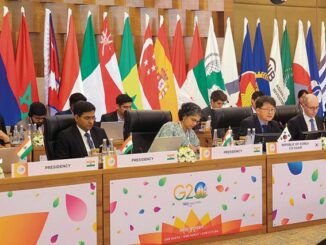
    India’s foreign policy and national security establishments are going to be deeply tied up this year in meetings with members of the Shanghai Cooperation Organisation (SCO) and the G20 grouping. They will have to meticulously prepare for the summit meetings which India will be hosting later this year. The SCO includes eight members, six ‘Dialogue Partners’, and four ‘Observer States’. The G20 Summit will be bringing together leaders of countries which constitute two-thirds of the world’s population, while providing 90% of global GDP and 80% of global trade. The year 2023 is set to become the most complex and busy period in India’s diplomatic history. It is also going to be a period when the country’s logistical and organizational strengths will be tested. The forthcoming summits will test our ability in bringing countries together in a constructive and harmonious cooperation at the highest level. The summits are coming in the wake of tensions arising from the military standoff in Arunachal Pradesh.

    The issue of special interest will be whether Xi Jinping will participate in the forthcoming summits in the background of the current state of Sino-Indian ties.

    There are a few points that New Delhi should bear in mind. It will enjoy unstinted support in the conferences from virtually all members of the G20 and Quad. Both Pakistan and China will be present in the SCO. Pakistan is now engrossed in dealing with its collapsing economy. It also has serious problems with Taliban-ruled Afghanistan, and its own jihadis, the Tehreek-e-Taliban, across its 2,600 km border with Afghanistan and Iran. Given Afghanistan’s strategic location abutting Central Asia, China is keen to secure access to its mineral resources and keep in touch with its radical Islamist Taliban regime, especially in the light of its own tensions with its disaffected Uighur Muslims.

    Chinese President Xi Jinping has displayed continuing hostility towards India. China is focusing attention on the joint production of its much-touted JF-17 fighter aircraft in Pakistan and in strengthening the Pakistan navy. The Gwadar Port in Balochistan has a growing Chinese presence, but Pakistan has more serious problems to deal with, with its dwindling foreign exchange resources. In the meantime, the IMF is insisting on stringent conditions before international assistance can flow in. Even Saudi Arabia and the UAE, which have always been more than generous in bailing out Pakistan, are now making it clear that they will open their purse strings only after Pakistan fully meets IMF conditionalities. Across the world, many governments are recognizing that the economic mess that Pakistan is now in flows from its own blunders.

    There has, meanwhile, been a growing feeling in India that much of the tensions with China flow from deliberate actions of the Xi Jinping government, despite India having rolled out the red carpet during his India visit. It has been interesting to see a comprehensive assessment of India’s policies by Liu Zongyi of the Shanghai Institute of International Studies. Liu is one of China’s most prominent experts on South Asian studies. He has visited both India and Pakistan. In a recent article, which has received due attention in academic circles in our eastern neighborhood, he has bluntly spelt out what China thinks about India and its policies. Senior scholars in China do not speak out of turn. They are a convenient medium to convey the thinking of the country’s Communist Party and government.

    His study, titled ‘India’s Rising Great Power Strategy’, is multifaceted. On India’s domestic political issues, it alludes to the ascendancy of ‘Hindu nationalism’. On economic issues, he describes the ‘Make in India’ strategy as an effort to take over China’s place in the global supply chain. India’s strategy, according to him, will be to target China by building bases in Indian Ocean states, advancing the integration of India’s armed forces and improving border infrastructure, including in the Andaman and Nicobar Islands. It also includes building military bases by India in small Indian Ocean islands.

    In his conclusion, he notes: ‘Thus, the biggest divide between India and China is no longer related to border issues. In fact, border issues have now been instrumentalized. For the Indians, the biggest issue between India and China is the battle for the regional and global order. It is a geopolitical conflict, because India is a country that places a lot of emphasis on the idea of spheres of influence.’ Regarding India hosting the G20 and Quad summits, he notes: ‘Ultimately, the G20 Summit cannot be a success without China’s active participation. Even though the West lavishes praise on India, and even though India presents itself as the so-called poster child of developing countries, and the leader of the South, it will most certainly not succeed without China’s support.’ One cannot think of this as anything but a warning, bordering on threat.

    Liu betrays an obsession with the growth of India-US relations. He avers that it is India’s strategy to work with the US to undermine and counter China’s Belt and Road Initiative to prevent the emergence of a ‘China led’ regional order. This is accompanied by his strong justification of recent Chinese military intrusions in Ladakh and Arunachal Pradesh. Liu expresses serious concerns about India’s relations with the US and its involvement in groupings like Quad and I2U2. He conveniently forgets how China has been deliberately seeking to undermine India’s relations with neighbors across South Asia, notably with Sri Lanka, Bangladesh, Nepal and the Maldives. He even forgets the impact of China’s continuing and growing military relations with Rawalpindi, including its transfer of nuclear weapons and missile capabilities to Pakistan.

    Under these circumstances, the issue of special interest in the coming months will be whether Xi Jinping will participate in the forthcoming summits in the background of the current state of Sino-Indian relations, and the widespread concerns in India about his assertive policies.

    (The author is Chancellor, Jammu Central University & Former High Commissioner to Pakistan)

  • India keen to present views of ‘global south’ at G-20: FM Sitharaman

    India keen to present views of ‘global south’ at G-20: FM Sitharaman

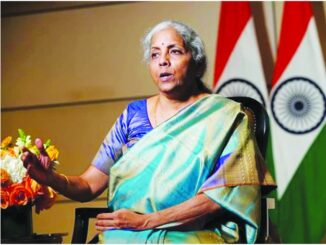
    New Delhi (TIP)- G20 President India is keen to put forward the development issues of the Global South in order to make the world economic order more equitable, including through reforms in multilateral institutions, Finance Minister Nirmala Sitharaman said on Thursday, January 12.

    Sitharaman was speaking at the Voice of Global South Summit, a virtual summit spearheaded by Prime Minister Narendra Modi, with the aim of presenting at the G20 the issues and challenges of emerging and low-income nations from Asia, Africa, and Latin America. Around 120 nations are attending the summit. It is an initiative by India to include the voice of nations who are not part of G-20.

    “India appreciates the contribution of multilateral institutions and development banks in dealing with global challenges. However, the hardships posed by the pandemic have exposed vulnerabilities at all levels and shown that a major scale-up of response mechanisms is required so that the support provided by these institutions is responsive to country-specific needs,” Sitharaman said.

    “We believe strengthening multilateral development banks is a key to addressing the global challenges of the 21st century,” she said, adding that the recent geopolitical tensions and the pandemic have aggravated global debt vulnerabilities. Sitharaman said India will use the G20 Presidency to encourage collective solutions to deal with the numerous challenges facing the world, like economic slowdown, rising inflation, threat of resurgence of pandemic, and risks emerging from geopolitical conflicts.

    “We strongly believe there should not be any first world or a third world, but just one world with a shared understanding for a common future,” Sitharaman said.

    India has repeatedly stated that one of its aims as G20 president will be to push for reforms in the likes of International Monetary Fund and World Bank to make them more attuned to the needs of the developing world. ‘Global South’ is a term used to describe emerging and poorer nations in Asia, Africa, Latin America, and Oceania, as opposed to the ‘Global North’, which are primarily developed nations from North America and Europe. Sitharaman said the global debt crisis is one of the biggest challenges that the world faces today, as many low-income countries are stuck between servicing outstanding sovereign debt and providing basic services for their citizens. As the world rebuilds itself from the pandemic, the Global South needs to exhibit “strong solidarity” to deal with challenges like pandemic, climate change, and geopolitical tensions, which are affecting efforts for development and economic growth.

    “If left unaddressed, these mounting debt vulnerabilities can trigger global recession and push millions to extreme poverty. Under India’s G20 presidency, financing for the social dimension of sustainable development is an important priority,” Sitharaman said.

                    Source: Business Standard

  • We count a lot on India’s G-20 leadership: IMF MD Kristalina Georgieva

    We count a lot on India’s G-20 leadership: IMF MD Kristalina Georgieva

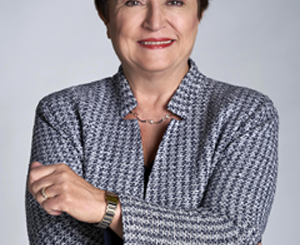
    WASHINGTON, D.C. (TIP): At a time when the world is faced with continued economic slowdown and social distress, the international community counts a lot on India’s leadership of G-20, the Managing Director of the International Monetary Fund Kristalina Georgieva said on Thursday, January 12.

    “India, which is the president of G-20 countries, remains among the countries that perform better than global average and by a good percentage,” IMF Managing Director told reporters during a media roundtable.

    India formally assumed the G20 (Group of 20) Presidency on December 1. The next G20 Leaders’ Summit at the level of Heads of State/Government is scheduled to be held on September 9 and 10 in New Delhi.

    “We count a lot on India’s leadership of the G-20. Because it is such a critical time for the world to protect its own wellbeing by protecting the integrated global economy. I hope that India will do that huge global service keeping us together,” she said.

    Georgieva lauded India for embracing digitization. “What we see as working extremely well for India is how the country has taken digitization that was accelerated by covid-19 to be a strong comparative advantage, both for public policy and for private sector growth,” the IMF Managing Director said in response to a question.

    (Source: PTI)

  • India is a constructive, dependable actor globally

    India is a constructive, dependable actor globally

    Through the pandemic, it has not only met its domestic requirements but taken a range of steps for global good

    By Harsh Vardhan Shringla
    We reaffirmed our position as first responder to humanitarian crises in the region by deploying medical teams to help Maldives, Mauritius, Comoros and Kuwait deal with the pandemic. India also dispatched naval assets to Maldives, Mauritius, Madagascar, Comoros and Seychelles to deliver assistance. This demonstrated our strong commitment to the PM’s vision of Security and Growth for All in the Region (SAGAR).

    At the virtual Global Vaccine Summit, the PM highlighted how India’s contribution to the global response in terms of sharing medicines was guided by our philosophy of Vasudhaiva Kutumbkum.

    Covid-19 continues to exact a heavy toll worldwide. In India too, positive cases are rising. However, India’s effective response has led to a significant improvement in its recovery rate, which is now 68.78%. The case fatality rate at 2.01% remains one of the lowest in the world.

    High recovery and low-fatality outcomes can be attributed to proactive measures taken to deal with the outbreak from its early stages. In comparative terms, India started screening Covid-19 cases a full 13 days before the first case was detected in the country.  India implemented full lockdown on the 55th day of the outbreak when it had only around 600 cases. Its public health response has been appreciated by the World Health Organization (WHO). The government took rapid steps to augment health infrastructure. As Prime Minister Narendra Modi noted, “India now has over 11,000 Covid-19 facilities and 1.1 million isolation beds. We have ramped up testing to over half-a-million tests a day, to be scaled up to a million”.

    India’s response has not been confined to meeting its domestic requirements. India has been significantly engaged with the international community in providing the leadership that the global situation demanded. As a responsible stakeholder in global health supply chains, India ensured  timely access to essential drugs and medical items for over 150 countries while meeting our own domestic requirements.

    We reaffirmed our position as first responder to humanitarian crises in the region by deploying medical teams to help Maldives, Mauritius, Comoros and Kuwait deal with the pandemic. India also dispatched naval assets to Maldives, Mauritius, Madagascar, Comoros and Seychelles to deliver assistance. This demonstrated our strong commitment to the PM’s vision of Security and Growth for All in the Region (SAGAR).

    From being a net importer of Covid-19-related medical items, India has emerged as a net exporter. Today, India manufactures over 500,000 personal protective equipment (PPE) kits and over 300,000 N-95 masks every day. Our system has shown the necessary adaptability and agility to significantly ramp up production to go beyond our domestic requirements.

    The repatriation of Indian nationals stranded abroad and the evacuation of foreigners from India to their home countries have been among the most successful aspects of our response. In the initial days, the ministry of external affairs had promptly set up a Covid cell and a 24×7 control room to assist Indian citizens abroad. The PM had also personally directed our heads of missions to extend all possible assistance to our nationals stranded abroad. Subsequently, the Vande Bharat mission, launched to repatriate our nationals stranded overseas, has been the largest exercise of its kind ever undertaken by the government and has demonstrated our capacity to effectively carry out complex humanitarian missions. Over a million Indians have returned under the ‘Vande Bharat’ mission so far through flights, across land borders and on naval ships.

    We have not only been able to bring home Indian nationals from distant locations but also facilitated the return of Bhutanese, Nepalese and other nationals stranded in third countries to their homes on these repatriation flights. In recognition of the immense contribution played by the Indian American community in building bridges between India and USA, India has allowed all holders of Overseas Citizenship of India cards to travel freely between the two countries. The institution of ‘travel bubbles’ between India and USA and a few other countries has further facilitated such travel.

    Rigorous screening of returnees by our diplomatic missions has ensured that the proportion of positive cases remains extremely small (less than 0.2%). Testing on arrival by the health ministry and state governments has helped detect these cases. The mission just doesn’t end with the return  of Indian nationals. Recognizing that a lot of expatriate Indians would have lost their jobs particularly in the Gulf area, the Govt is mapping the skills of Indians on arrival to reskill and  link them with companies for job opportunities.

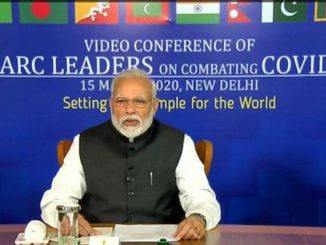
    There has also been no let-up in India’s diplomatic outreach during the pandemic. We have initiated and been part of several important conversations globally. Our ‘Neighborhood First’ policy was on full display when the PM hosted a video conference of the South Asian Association for Regional Cooperation (Saarc) leaders early in the crisis — our first such engagement on Covid-19. He announced a series of measures to deal with the pandemic, including the creation of a Covid-19 emergency fund with a commitment of $10 million from India.

    We have also called for a better multilateral response to global crises in the future. The PM has, on several occasions, including in the G-20 and Non-aligned Movement virtual summits, proposed the reform of multilateral cooperation by bringing people to the center of our efforts. Our own initiatives such as the International Solar Alliance and the Coalition for Disaster Resilient Infrastructure are prime examples of this approach. The decision of the G-20 on debt service suspension for developing countries, which India fully supported, reflects this people-centric approach.

    At the virtual Global Vaccine Summit, the PM highlighted how India’s contribution to the global response in terms of sharing medicines was guided by our philosophy of Vasudhaiva Kutumbkum.

    The PM also hosted the first virtual bilateral summit with Australia, which was followed by the India-European Union summit. In addition, the PM has spoken to his counterparts from 61 countries during this period. The external affairs minister has spoken to foreign ministers from 77 countries. I have been part of several dialogues with several of our partners countries, notably the Indo Pacific Group that convenes every other week to coordinate health, travel, immigration and related issues during COVID times,  We have kept open channels of virtual communication to strengthen partnerships and deal with situations that require diplomatic engagement.

    We have been constantly adjusting, adapting and innovating to deal with the changed reality, particularly in our engagement with the world. And in the process, we have been successful in elevating India’s profile as a constructive and dependable actor on the global stage.

    (The author  is foreign secretary, Government of India. The views expressed are personal)