Tag: G Parthasarathy

  • Trump rewrites US ties with Russia & China

    Trump rewrites US ties with Russia & China

    Using India as a balance to keep China in its place suits President Trump, just now. India, in turn, still needs US cooperation.

    “The US-China relationship has, however, been heading for hard times, arising from the substantial mutual distrust and dislike between the leaders of the two powers. The restoration of trust and cooperation would take time, especially as the tone of the Trump rhetoric would have shocked people in the ‘Middle Kingdom’. But Trump can always use the good offices of Elon Musk to address differences with China, given the vast relationship and vested interests that Musk shares with the ‘Middle Kingdom’. Already, there is speculation that China is considering a plan for Elon Musk to acquire TikTok’s US business. Indians who find occasion to deal with Musk must bear this in mind.”

    Biswarup Ganguly

    At his end-of-the-year news conference in December 2024, Russian President Vladimir Putin declared: “I must say that the situation is changing dramatically.” He added: “There is movement along the entire frontline every day.”

    Putin is given to choosing his words very carefully. It is now clear that it is only a matter of time before Russia achieves its territorial objectives of forcing Ukraine out of residual Russian territory, that Moscow now wants to soon regain and control. This is the territory that Moscow had historically controlled, along its southern shores. It now appears likely that Ukraine will be forced out of the territory it took control of prior to the conflict. Russia is, even now, recovering territory that it lost, since the conflict began.

    Also, there is no doubt that this has been a case of the young and inexperienced Ukrainian President, Volodymyr Zelenskyy, being encouraged by the Biden administration and its NATO allies to enhance control of its south-eastern shores.

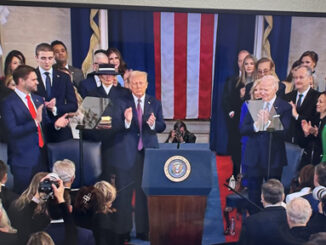
    It is now evident that unlike the Biden administration, the Trump administration will not back the Ukrainians in their military operations to take on Putin’s soldiers. In the process, the US seems to have forgotten that one of the main aims of the Russians has historically been to retain control of and unfettered access to the “warm waters” across their shores. Joe Biden did not evidently take note of the importance that Russia attached to the territories it controlled in its east, which provide it with access to the sea, especially across Ukraine.

    The most important change being seen with the advent of Trump is that a serious effort is underway for resolving these issues, to ensure that Moscow’s access to the sea is fully secured. Moreover, there are signs that in eastern Ukraine, the Russians are carefully seizing control of territory across the Donbas region.

    President Trump, however, appears to be deliberately oblivious of European concerns on Russia’s territorial claims. He has described Putin’s territorial claims as: “This is genius. Putin declares a big portion of Ukraine as independent. That is wonderful.” This is astonishing as one could not have expected Washington to support Moscow’s territorial claims!

    Regarding US-China relations under President Trump, while India is making efforts to end tensions on its borders with China, there appears to be little possibility of any serious breakthrough happening in Trump’s relations with China. Trump has not hesitated to allude to his differences with China’s policies. This has been reinforced by his appointment of Senator Marco Rubio as his Secretary of State and of Representative Mike Waltz as National Security Adviser.

    Rubio and Waltz are both characterized as “staunch China hawks” in Washington. Rubio has been banned twice in 2020 from entering China. One wonders if the bans are still in place. Both these Trump appointees would not exactly be welcome in China.

    Yet, another Trump ally, multi-billionaire Elon Musk, has a huge commercial interests in China, running into scores of billions of dollars. Trump is evidently keeping Beijing uncertain about his intentions.

    Despite the rhetoric, Trump is quite obviously keeping his options open with China. Using India as a balance to keep China in its place suits President Trump, just now. India, in turn, still needs US cooperation in areas ranging from high-tech, defense production and space to other spheres of security exchanges and economic cooperation. This is occurring amidst a growing, highly educated Indian population in the US, which is currently estimated at 5.1 million.

    The US-China relationship has, however, been heading for hard times, arising from the substantial mutual distrust and dislike between the leaders of the two powers. The restoration of trust and cooperation would take time, especially as the tone of the Trump rhetoric would have shocked people in the ‘Middle Kingdom’. But Trump can always use the good offices of Elon Musk to address differences with China, given the vast relationship and vested interests that Musk shares with the ‘Middle Kingdom’. Already, there is speculation that China is considering a plan for Elon Musk to acquire TikTok’s US business. Indians who find occasion to deal with Musk must bear this in mind.

    Another important factor that one cannot ignore is that Trump has a good relationship with President Putin. And countries across the world understand this clearly.

    The person to be hit the hardest by these developments is Ukraine’s besieged President Zelenskyy. He has made the rather serious miscalculation of believing that he could take on Putin’s Russia in a territorial dispute, with backing by the US, led by Joe Biden. Sadly, Biden’s successor Donald Trump is in no mood to back Zelenskyy.

    A negotiating tool that Trump has at his disposal is the battery of punitive sanctions imposed on Russia, led by the US. One of the final acts of the outgoing Biden administration has been the levy of a comprehensive sanctions package targeting Russia’s energy sector, effective January 10, 2025. Trump has frequently expressed skepticism about the effectiveness of sanctions as a standalone tool and signaled a willingness to use their reduction or removal as leverage in negotiations with Moscow. This approach may include offering a relief in sanctions in exchange for Russian concessions on Ukraine, such as agreeing to a ceasefire or territorial compromises in contested ‘independent’ regions, like Donbas.

    For India, which has significantly increased its imports of discounted Russian crude despite the tightening noose of sanctions, any potential easing could be a significant relief, stabilizing global energy markets and recalibrating supply chains. In fact, two Indian companies have been included in the January 10 sanctions list, embargoed for their alleged involvement in managing LNG carriers that transported cargo from Russia’s Arctic LNG 2 project.

    Given these emerging dynamics, India will need to carefully recalibrate its geopolitical and geostrategic ties, ensuring its interests are safeguarded while adapting to the evolving contours of the US-Russia and US-China relations under President Trump.

    (G Parthasarathy is an Indian journalist, educationist, and a former diplomat)

  • The Moscow declaration

    The Moscow declaration

    China and Russia agree to stand together on issues involving security interests

    “The declaration is a clear signal from Russia and China that they are prepared to stand together on issues involving each other’s security interests. While India finds mention on some issues of regional cooperation, there is nothing in the declaration to which it could take objection to. What now emerges is that Russia and China have much in common in dealing with the US and its allies. China prefers to keep out any mention of India. This should not surprise anyone with even a cursory understanding of China’s growing hubris, as it moves to attain global recognition of its economic clout and military potential. Moreover, there is considerable focus by China on Sino-Russian cooperation to build a security framework in the oil-rich Gulf region. China and Russia appear more than pleased that thanks to clumsy diplomacy by the Biden administration, they have been able to commence a rapprochement process between Iran and Saudi Arabia. Similar efforts are underway to forge normal ties between Syria and Saudi Arabia. These developments have resulted in a stronger Russian and Chinese presence in the region.”

    By G Parthasarathy

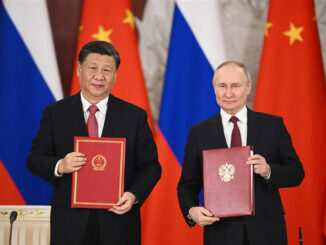
    The US and its Western allies were hoping that the Putin-Xi Jinping summit would turn out to be a damp squib. The recent Moscow summit has, however, produced a comprehensive plan by China and Russia to jointly meet the challenges they face from the US-led global order. The US and its allies have been repeatedly calling for sanctions against Russia, following its conflict with Ukraine. Some hope was also unrealistically expressed that China could follow through on its Ukraine plan by joining them in persuading Russia to pull out of Ukraine on Western terms. That hope now lies shattered. The joint declaration ends any illusion that Western powers may have had about China backing them on how the Ukraine conflict should be ended.

    The joint declaration states that the US and its allies would have to respect the legitimate security concerns of all countries, while adding that confrontation must be avoided. Russia and China have emphasized that ‘responsible dialogue’ is the best way to resolve problems and the international community should support constructive efforts. The declaration, in fact, calls on all parties to stop actions that promote tension to prevent the crisis from further aggravating, and even getting out of control. It concludes that China and Russia are opposed to unilateral sanctions not authorized by the UN Security Council.

    The US has, rather unconvincingly, been denying allegations made by one of its best-known investigative journalists, Seymour Hersh, that Washington had a hand in, and indeed organized, the bomb attack that destroyed the undersea Beixi gas pipeline (known also as Nordstream) carrying gas from Russia to Germany. Russia and China have bluntly noted, ‘The banner of extremism and the use of terrorist and extremist organizations to interfere in the internal affairs of other countries and achieve geopolitical goals.’ They have also demanded ‘an objective, impartial and professional investigation should be conducted on the Beixi pipeline explosion.’ It is going to be difficult for the US, and even Germany, which is reputed for observing high standards of respect for international law, to claim that they do not know who was responsible for blowing up the pipeline.

    Expectations in the international community that Russia may be persuaded by China to be more flexible on the withdrawal from Ukraine have been dashed. Russia and China announced that the ‘legitimate security concerns of all countries must be respected’, and that confrontation between camps, ‘adding fuel to the flames’, must be avoided. China firmly backs Russia’s position on the Ukraine crisis, averring that ‘responsible dialogue is the best way to solve problems steadily’. Most importantly, Russia has been assured of Chinese backing in the UN Security Council to ensure that ‘parties to the conflict stop all actions that promote tension and delay the end of war.’ Putin could not have asked for anything more from his Chinese guest. What remains to be seen is whether China will provide the military supplies that Moscow needs. The countries that would be most concerned by these developments are the US and its NATO allies. The declaration ends any illusion that Western powers, who speak for the so-called international community, have about China backing them on how the Ukraine conflict should be ended. China and Russia have also signaled that they have no regard for sanctions being imposed by Western powers. President Zelenskyy and the US would also have to think afresh on Russia’s concerns about the safety and security of Russians living in south-eastern Ukraine, while facing the reality that Russia intends to stay in Crimea, where it has exercised sovereignty for three centuries now.

    The declaration is a clear signal from Russia and China that they are prepared to stand together on issues involving each other’s security interests. While India finds mention on some issues of regional cooperation, there is nothing in the declaration to which it could take objection to. What now emerges is that Russia and China have much in common in dealing with the US and its allies. China prefers to keep out any mention of India. This should not surprise anyone with even a cursory understanding of China’s growing hubris, as it moves to attain global recognition of its economic clout and military potential. Moreover, there is considerable focus by China on Sino-Russian cooperation to build a security framework in the oil-rich Gulf region. China and Russia appear more than pleased that thanks to clumsy diplomacy by the Biden administration, they have been able to commence a rapprochement process between Iran and Saudi Arabia. Similar efforts are underway to forge normal ties between Syria and Saudi Arabia. These developments have resulted in a stronger Russian and Chinese presence in the region. There have sometimes been concerns about the impact of the growing Sino-Russia cooperation on Russia’s relations with India. Russia has for long been India’s largest supplier of modern weapons systems and has been helpful in India’s production of nuclear submarines. India is also manufacturing Russian-designed BrahMos missiles, which it has provided to friendly countries, with prospects of more buyers. Moreover, purchases of petroleum products at very reasonable prices from Russia have been helpful in managing India’s balance of payments. Russia, in turn, evidently understands that India’s defense cooperation with the US, together with its security links in groupings like Quad and I2U2 across the Indo-Pacific, are set to grow. While Russia is furious with Pakistan for supplying weapons to Ukraine, China would make every effort to get Moscow to assist Pakistan. Strategic autonomy, meanwhile, has been, and should remain, the hallmark of India’s defense and foreign policies.
    (The author is Chancellor, Jammu Central University & former High Commissioner to Pakistan)

  • China may play spoilsport

    China may play spoilsport

    • India prepares to host G20, SCO summits amidst regional rivalries

     “The G20 Summit will be bringing together leaders of countries which constitute two-thirds of the world’s population, while providing 90% of global GDP and 80% of global trade. The year 2023 is set to become the most complex and busy period in India’s diplomatic history. It is also going to be a period when the country’s logistical and organizational strengths will be tested. The forthcoming summits will test our ability in bringing countries together in a constructive and harmonious cooperation at the highest level. The summits are coming in the wake of tensions arising from the military standoff in Arunachal Pradesh.

    The issue of special interest will be whether Xi Jinping will participate in the forthcoming summits in the background of the current state of Sino-Indian ties.”

    By G Parthasarathy

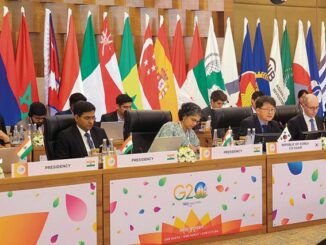
    India’s foreign policy and national security establishments are going to be deeply tied up this year in meetings with members of the Shanghai Cooperation Organisation (SCO) and the G20 grouping. They will have to meticulously prepare for the summit meetings which India will be hosting later this year. The SCO includes eight members, six ‘Dialogue Partners’, and four ‘Observer States’. The G20 Summit will be bringing together leaders of countries which constitute two-thirds of the world’s population, while providing 90% of global GDP and 80% of global trade. The year 2023 is set to become the most complex and busy period in India’s diplomatic history. It is also going to be a period when the country’s logistical and organizational strengths will be tested. The forthcoming summits will test our ability in bringing countries together in a constructive and harmonious cooperation at the highest level. The summits are coming in the wake of tensions arising from the military standoff in Arunachal Pradesh.

    The issue of special interest will be whether Xi Jinping will participate in the forthcoming summits in the background of the current state of Sino-Indian ties.

    There are a few points that New Delhi should bear in mind. It will enjoy unstinted support in the conferences from virtually all members of the G20 and Quad. Both Pakistan and China will be present in the SCO. Pakistan is now engrossed in dealing with its collapsing economy. It also has serious problems with Taliban-ruled Afghanistan, and its own jihadis, the Tehreek-e-Taliban, across its 2,600 km border with Afghanistan and Iran. Given Afghanistan’s strategic location abutting Central Asia, China is keen to secure access to its mineral resources and keep in touch with its radical Islamist Taliban regime, especially in the light of its own tensions with its disaffected Uighur Muslims.

    Chinese President Xi Jinping has displayed continuing hostility towards India. China is focusing attention on the joint production of its much-touted JF-17 fighter aircraft in Pakistan and in strengthening the Pakistan navy. The Gwadar Port in Balochistan has a growing Chinese presence, but Pakistan has more serious problems to deal with, with its dwindling foreign exchange resources. In the meantime, the IMF is insisting on stringent conditions before international assistance can flow in. Even Saudi Arabia and the UAE, which have always been more than generous in bailing out Pakistan, are now making it clear that they will open their purse strings only after Pakistan fully meets IMF conditionalities. Across the world, many governments are recognizing that the economic mess that Pakistan is now in flows from its own blunders.

    There has, meanwhile, been a growing feeling in India that much of the tensions with China flow from deliberate actions of the Xi Jinping government, despite India having rolled out the red carpet during his India visit. It has been interesting to see a comprehensive assessment of India’s policies by Liu Zongyi of the Shanghai Institute of International Studies. Liu is one of China’s most prominent experts on South Asian studies. He has visited both India and Pakistan. In a recent article, which has received due attention in academic circles in our eastern neighborhood, he has bluntly spelt out what China thinks about India and its policies. Senior scholars in China do not speak out of turn. They are a convenient medium to convey the thinking of the country’s Communist Party and government.

    His study, titled ‘India’s Rising Great Power Strategy’, is multifaceted. On India’s domestic political issues, it alludes to the ascendancy of ‘Hindu nationalism’. On economic issues, he describes the ‘Make in India’ strategy as an effort to take over China’s place in the global supply chain. India’s strategy, according to him, will be to target China by building bases in Indian Ocean states, advancing the integration of India’s armed forces and improving border infrastructure, including in the Andaman and Nicobar Islands. It also includes building military bases by India in small Indian Ocean islands.

    In his conclusion, he notes: ‘Thus, the biggest divide between India and China is no longer related to border issues. In fact, border issues have now been instrumentalized. For the Indians, the biggest issue between India and China is the battle for the regional and global order. It is a geopolitical conflict, because India is a country that places a lot of emphasis on the idea of spheres of influence.’ Regarding India hosting the G20 and Quad summits, he notes: ‘Ultimately, the G20 Summit cannot be a success without China’s active participation. Even though the West lavishes praise on India, and even though India presents itself as the so-called poster child of developing countries, and the leader of the South, it will most certainly not succeed without China’s support.’ One cannot think of this as anything but a warning, bordering on threat.

    Liu betrays an obsession with the growth of India-US relations. He avers that it is India’s strategy to work with the US to undermine and counter China’s Belt and Road Initiative to prevent the emergence of a ‘China led’ regional order. This is accompanied by his strong justification of recent Chinese military intrusions in Ladakh and Arunachal Pradesh. Liu expresses serious concerns about India’s relations with the US and its involvement in groupings like Quad and I2U2. He conveniently forgets how China has been deliberately seeking to undermine India’s relations with neighbors across South Asia, notably with Sri Lanka, Bangladesh, Nepal and the Maldives. He even forgets the impact of China’s continuing and growing military relations with Rawalpindi, including its transfer of nuclear weapons and missile capabilities to Pakistan.

    Under these circumstances, the issue of special interest in the coming months will be whether Xi Jinping will participate in the forthcoming summits in the background of the current state of Sino-Indian relations, and the widespread concerns in India about his assertive policies.

    (The author is Chancellor, Jammu Central University & Former High Commissioner to Pakistan)

  • Keep distance from Taliban

    Keep distance from Taliban

    The Modi government has rightly ignored the calls for ‘talks’

    By G Parthasarathy

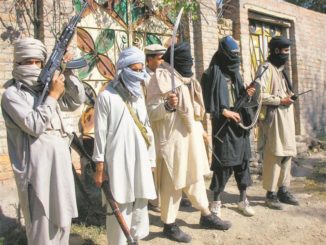
    There is an erroneous perception in India that Afghanistan is a monolithic country, where the Taliban represents the majority of the country. The Taliban is made up almost exclusively of Pashtuns, who constitute around 45% of Afghanistan’s population. The Taliban’s leaders and its cadres returned to Afghanistan from their hideouts in Pakistan, just as the occupying Soviet Forces began withdrawing from Afghanistan in February 1989. Having been trained and ideologically indoctrinated in some of the most fundamentalist madrasas, the Taliban sought to fill the political and security vacuum after the Soviets withdrew from Afghanistan. The Taliban let loose a reign of terror and oppression in Afghanistan, which was quite unique.

    The Taliban faced armed opposition from virtually every other Afghan ethnic grouping. This resistance was spearheaded by the Tajiks, who constitute around 35% of Afghanistan’s population. The Taliban ruled Afghanistan and soon became a safe haven for radical Islamist terrorist groups from across the world. American intervention in Afghanistan commenced in 2003, after the 9/11 terrorist strikes. Driven out of Afghanistan, the Taliban operated from Pakistan. Strangely, the Americans accepted Pakistani claims of innocence, despite the ISI’s obvious support for Taliban’s terrorism. Washington provided Pakistan all economic and military aid it could absorb. The Taliban, however, retained close links with terrorist groups, like the JeM and LeT, while colluding with the ISI.

    The US presence in Afghanistan did not deter or prevent the Taliban from strengthening its ties with radical Islamic groups across the world, while hosting these radicals in Afghanistan. These groups included the Al Qaeda, the IS, the Tehriq-e-Taliban (Pakistan), and the East Turkistan Independence Movement, which operated in China’s Xinjiang province. China received assurances from the Taliban that they would cease support for insurrection and seek peace with the Afghan government. That has not happened. Pakistan had led the US up the garden path by providing safe haven to Osama bin Laden, who was the mastermind of the 9/11 attacks.

    The Taliban leadership has made it clear how it will rule Afghanistan. Its spokesman Zabihullah Mujahid recently announced that they would rule according to the Sharia, which will be enforced ‘rigorously’. He asserted that elections did not yield positive results in Islamic countries. Women would not be permitted to sing and can work only in some areas. They would have to be accompanied by a male ‘for their protection’ whenever they leave the house. Men, in turn, are barred from wearing western clothes, and would have to grow a beard. They believe that war as an option is not ruled out, and that jihad will continue.

    The Taliban are giving high attention to capturing Kandahar, located close to the borders with Pakistan. Kandahar is equivalent of another Mecca for the people of Afghanistan. The then ruler of Afghanistan, Ahmed Shah Abdali, received a cloak, said to have been worn by the Prophet, during his visit to Bokhara (now in Uzbekistan), from the kingdom’s ruler, Amir Murad Beg. The cloak is now placed in a mosque near Abdali’s tomb. The normally reclusive Taliban leader Mullah Omar shot to fame when he emerged from the mosque, with the cloak, in 1996.

    There are fears that the Taliban will overrun the Afghan forces. The impression also prevails that the Afghan army lacks the sagacity to overcome the Taliban challenge, as there are areas in southern and western Afghanistan, near the country’s borders with Iran and Tajikistan, which are presently under Taliban control. Pakistani involvement is evident, as large numbers of Pakistani terrorists are now fighting alongside the Taliban. Russia has concerns about the conflict crossing into the territory of its erstwhile Central Asian republics like Tajikistan. Iran has similar concerns about Taliban attacks on its allies, the Shia Hazaras, living just across its borders in Afghanistan. Future Russian and Iranian involvement on the western borders of Afghanistan cannot, therefore, be ruled out.

    External Affairs Minister S Jaishankar has held wide-ranging talks with the US, Russia, and virtually all of Afghanistan’s Central Asian neighbors, both bilaterally and in the Shanghai Cooperation Organisation. His unprecedented meeting with Iran’s President-elect Ebrahim Raisi in Tehran was of particular significance. Iran has already warned of serious consequences if the Taliban should cause any harm to its Shia Hazara brethren. Iran was New Delhi’s close regional ally, when India, Iran and Russia backed groups in the Northern Alliance, drawn from the non-Pashtun majority in Afghanistan, even before the US intervention.

    While Taliban successes in an estimated 200 of the 424 districts across Afghanistan have received substantial attention, the Taliban are finding it hard to take over a provincial capital in even one of Afghanistan’s 34 provinces. The US left the Afghan army ill equipped, with hardly any tanks and artillery. The Afghan air force has an estimated 200 aircraft, which include 69 light attack helicopters. Washington would have to substantially strengthen Afghanistan’s armed forces. It remains to be seen if Pakistan provides the Taliban with Stinger surface-to-air missiles. There are calls for ‘talks’ with the Taliban, which the Modi government has rightly ignored. The Taliban are, and will remain, tools of the ISI. While contacts can be maintained with Taliban leaders like Mullah Baradar in Qatar, there is no need to follow the Chinese example, with moves like formally inviting Taliban leaders to New Delhi. The Taliban colluded with the hijackers of IC 814 and maintained close ties with ISI-backed terrorist groups. Pakistan, in turn, needs a weak and internationally discredited Afghanistan to constitute its ‘strategic depth’ against India.

    (The author is Chancellor, Jammu Central University & former High Commissioner to Pakistan)