Tag: George Abraham

  • From Principled Left to Power Without Purpose: The CPM’s Crisis in Kerala

    From Principled Left to Power Without Purpose: The CPM’s Crisis in Kerala

    By George Abraham

    The people of Kerala have spoken decisively in the recent Panchayat and Municipal elections, delivering a clear rebuke to the corrupt and authoritarian style of governance under Pinarayi Vijayan and his close coterie within the CPM. As one surveys the damage inflicted on a party that was once a credible voice for the poor and the disadvantaged, it is evident how far it has fallen and reduced to an empty shell, stripped of ideological coherence and moral authority.

    It is therefore worth revisiting whether the CPM’s past misjudgments continue to haunt it today, accelerating its steady decline and pushing the party toward political irrelevance. Once a formidable force in West Bengal since Independence, the CPM governed the state uninterrupted for 34 years. The turning point came during the final phase of its rule, when land acquisition controversy severely undermined its credibility. The violence in Nandigram proved to be a fatal blow, exposing a governance model increasingly associated with intimidation, favoritism, and corruption at both local and state levels.

    At the national level, the CPM remained a powerhouse even as the UPA-1 wrested power from the NDA in 2004. Together, the CPI and CPM commanded more than 61 seats in the Lok Sabha. With such significant representation, the Left could have demanded key portfolios in the Manmohan Singh cabinet, strengthening its national influence while delivering transformative projects to its strongholds in West Bengal and Kerala. Instead, the party squandered this historic opportunity by staying on the sidelines and ultimately withdrawing support from the government over the Indo–U.S. Civil Nuclear Agreement, a landmark deal that legitimized India’s entry into the global nuclear order.

    Prakash Karat, then General Secretary of the CPM, will likely be remembered as one of the principal architects of the party’s marginalization in national politics, having presided over decisions that sacrificed strategic influence at the altar of ideological rigidity. His insistence on party discipline culminated in the unfortunate and widely criticized action against a leader of immense stature, the then Speaker of the Lok Sabha, Mr. Somnath Chatterjee, an episode many viewed as a display of political arrogance that further eroded the party’s credibility. What we are witnessing today appears to be a continuation of that decline, now unfolding under the stewardship of Pinarayi Vijayan, with the CPM steadily losing its remaining footholds and diminishing its relevance in contemporary Indian politics.

    The Pinarayi Vijayan regime is not only eroding the party’s legacy as a populist force but is also widely perceived as one of the most corrupt administrations in Kerala’s history. It is a striking paradox that a leader who rose from modest beginnings is now seen as embracing luxury and fostering a culture of nepotism. Power is widely believed to be heavily centralized in the Chief Minister’s Office, with cabinet ministers and party functionaries frequently sidelined, thereby weakening collective decision-making. Critics further argue that transparency and accountability have been severely compromised, and that dissent or questioning of authority is met with little tolerance, marking a sharp departure from the Left’s traditional democratic ethos.

    Over time, a series of controversies have significantly dented the public image of the Pinarayi Vijayan administration. The gold smuggling case, which involved individuals with alleged links to the Chief Minister’s Office, raised serious questions about oversight and accountability. The LIFE Mission controversy further called attention to possible procedural violations, while irregularities in cooperative banks—allegedly involving party cadres—have reinforced perceptions of entrenched corruption within the system.

    Adding to these concerns, T. Veena, the Chief Minister’s daughter, has been named in an ongoing corporate fraud case linked to Cochin Minerals and Rutile Limited (CMRL). The Serious Fraud Investigation Office (SFIO) has alleged that Veena and her firm, Exalogic Solutions, received approximately ₹2.7 crore from CMRL without providing corresponding services, amounting to alleged fraudulent payments under the Companies Act. The Enforcement Directorate has also reportedly registered a case under the Prevention of Money Laundering Act (PMLA) in connection with these transactions. These matters remain under investigation.

    Equally troubling for the people of Kerala is what critics describe as economic mismanagement by the current government. Rising public debt and increasing dependence on borrowing point to a growing fiscal strain. The administration is accused of showing limited regard for fiscal discipline and offering little clarity on sustainable revenue generation. Despite repeated announcements of memoranda of understanding (MoUs), private investment, outside the consumer sector, has remained limited, resulting in inadequate job creation and continued migration of young Keralites in search of better opportunities elsewhere.
    Over the years, the CPM has been the principal nemesis of the BJP in Kerala, with youth cadres from both sides frequently engaging in violent clashes that have tragically resulted in loss of life. The CPM also positioned itself as the foremost proponent and defender of secularism, often castigating the Congress for what it perceived as ideological laxity. CPM leaders routinely and vociferously criticized the BJP’s policies and its Hindutva-driven politics.

    However, what has unfolded during the Pinarayi Vijayan regime has given rise to troubling accusations and narratives suggesting informal or tactical understandings, and even collaboration between the CPM and the BJP. Despite multiple corruption allegations involving Pinarayi Vijayan and his family, the BJP has adopted a noticeably soft approach, raising serious questions among political observers. Even the long-pending Lavalin case involving Pinarayi Vijayan has been deferred repeatedly, not at the behest of the defense but reportedly at the request of the prosecution. These developments prompt an uncomfortable question: whether knowingly or otherwise, the CPM has aligned itself with the BJP’s broader objective of creating a Congress-mukt Bharat.
    Such short-sightedness is deeply concerning. History shows that the BJP has consistently absorbed or marginalized its partners once it secures a foothold. A compromised and vulnerable Pinarayi Vijayan thus becomes a liability for Kerala, a complacent collaborator who risks opening the door for the BJP to inject communal poison into a state long known for its social harmony. Reports of closed-door meetings between CPM and BJP leaders have further fueled these suspicions. There is widespread speculation that vote transfers or tacit understandings may emerge in the upcoming Assembly elections, serving the interests of both parties. Similar patterns have been observed in West Bengal, where historical accounts from local and panchayat elections describe tactical cooperation between BJP and CPM workers at the grassroots level to counter the Trinamool Congress.
    Until now, BJP’s failure to gain a strong foothold in Kerala has largely been due to a vigilant electorate that instinctively shifts support between the UDF and the LDF whenever communal politics appears to gain ground. This delicate voter equilibrium, however, is being severely undermined by the CPM’s alleged attempts to protect the private interests of the Vijayan family.
    Pinarayi Vijayan and the present CPM leadership have strayed far from the values and principles upheld by stalwarts such as E. M. S. Namboothiripad and A. K. Gopalan, leaders who dedicated their lives selflessly to the upliftment of the poor and the marginalized without seeking personal gain. While I am not an admirer of communist philosophy, I have always respected those leaders for their idealism, personal sacrifice, and moral integrity, which deserve universal admiration. Pinarayi Vijayan, however, has rewritten that script, sacrificing ideological purity for personal and political survival, pushing the party toward irrelevance and plunging the state into deep uncertainty.

    The CPM today stands at a crossroads. Socialism in its classical form has failed across much of the world, and in Kerala the party appears increasingly devoid of a coherent political philosophy. Instead, it seems intent on perpetuating power through policies that erode the state’s financial stability, disturb social peace, and foster opportunistic alliances with communal forces for short-term gains, often accompanied by reckless populism and vote-oriented freebies.

    The verdict delivered by the people of Kerala in recent local body elections is not merely an electoral setback; it is a moral indictment. The people of Kerala are no longer blind to these ploys. History offers the CPM a sobering lesson. In West Bengal, prolonged rule bred arrogance, intolerance of dissent, and ultimately collapse. In national politics, ideological inflexibility squandered historic opportunities and hastened marginalization. Kerala now stands at a similar inflection point. The persistence of alleged compromises, whether ideological, ethical, or tactical, threatens not only the party’s future but also the delicate secular and social fabric of the state.
    (George Abraham is a former chief technology officer, United Nations. He is Vice-Chair of IOCUSA. He can be reached at gta777@gmail.com

  • Silence, Spectacle, and Suffering: The Reality of Christmas 2025

    Silence, Spectacle, and Suffering: The Reality of Christmas 2025

    By George Abraham

    One of the most tragic developments of the Christmas season of 2025 was the spate of targeted attacks, vandalism, and intimidation faced by Christians across India, allegedly carried out by elements affiliated with the Sangh Parivar. These incidents shocked freedom-loving people around the world and raised serious concerns about the state of religious liberty in the country.

    The duplicity of the BJP government was starkly on display when Prime Minister Narendra Modi attended a Christmas prayer service at the Cathedral Church of the Redemption in New Delhi, even as such acts of violence and intimidation were being orchestrated elsewhere by his ideological faithful. The Prime Minister’s appearance at the service appeared less an act of solidarity and more a carefully crafted publicity gesture aimed at the international audience.

    His continued silence in the face of these attacks has emboldened those seeking to normalize hatred, undermine India’s pluralistic traditions, and marginalize a community that has made immense contributions to the nation’s social, educational, and economic development. Christianity in India is not a colonial import but a faith with a rich and continuous presence dating back to A.D. 52. Yet today, the actions and rhetoric emanating from Modi and his ideological cohort suggest a deliberate attempt not merely to erase Christmas from public life, but to push Christians out of visible civic space altogether, systematically marginalizing them and constraining their role and influence in Indian society at large.

    Prior to the Christmas Day attacks, BJP governments at both the Centre and in several states had undertaken a series of provocative actions that lend credence to the pattern of events that followed. In 2014, Prime Minister Narendra Modi declared December 25 as “Good Governance Day,” a move widely perceived as an attempt to dilute the public recognition of Christmas. More recently, in Uttar Pradesh, schools were kept open on December 25, 2025, to commemorate the birth centenary of Atal Bihari Vajpayee rather than observe Christmas as a holiday. Such measures reflect a growing hostility toward Christianity and a deliberate effort to marginalize its public presence.

    Under the current BJP government, Chhattisgarh has emerged as a testing ground for policies aimed at suppressing Christian life. Christian families have been denied even the most basic right to bury their dead, an egregious illustration of entrenched discrimination and communal hostility. Credible reports indicate that local councils in districts such as Kanker and Sukma have passed resolutions, or exerted intense social pressure, to prevent Christians from residing in villages or freely practicing their faith. Against this backdrop, it is hardly surprising that masked men were able to enter Magneto Mall in Raipur and vandalize Christmas decorations, including trees and other festive displays, with apparent impunity.

    The targeted cancellation and non-renewal of FCRA licenses for thousands of Christian NGOs constitutes another grave assault on a community that runs mission hospitals, schools, and colleges, plays a vital role in disaster relief, and contributes enormously to charitable work nationwide. In many cases, authorities freeze FCRA bank accounts even before inquiries are concluded, preventing hospitals from purchasing medicines, schools from paying staff, and charities from providing food and essential services often without any proven wrongdoing.

    The delayed issuance of a visa to prominent American Christian leader Rev. Franklin Graham, issued only after the scheduled event had passed, is another troubling example of how India treats Christian leaders from the West. For more than a decade, India has routinely deported American Christian visitors, alleging missionary intent. Those associated with churches or Christian charities are often instructed to apply for missionary visas, yet nearly all such applications are rejected, effectively barring Christian engagement.

    And yet, we celebrated every Christmas remembering a Christ marked by simplicity and humility—born not in the luxury of a palace but in a manger. He was welcomed by the lowly and soon faced the threat of violence from the powerful. From its very beginning, the Christmas story has been intertwined with suffering, displacement, and quiet courage: God fully immersed in humanity, yet revealing a divine gift to the world.

    Across the globe today, countless Christians mark this sacred season amid untold suffering and persecution. In many parts of the Middle East, Asia, and Africa, professing the Christian faith invites harassment, imprisonment, or even death. Churches are burned or shuttered, Bibles are confiscated or destroyed, and families are displaced or torn apart simply for confessing the name of Christ.

    Across Europe, the persistent threat of Islamic terrorism has further stifled public celebrations, from France to Germany and Austria. A continent rich in Christian heritage appeared to have surrendered its traditions under mounting security concerns. In Germany, Christmas markets are ringed with concrete barriers and guarded by heavily armed police. In Salzburg, Austria, the famed Christmas market was monitored by extensive surveillance systems and round-the-clock security personnel. In Paris, authorities canceled Christmas–New Year celebrations along the Champs-Élysées this year out of fear of potential violence.

    Chinese Communist authorities have been reportedly raiding homes and makeshift churches during the Christmas season, arresting hundreds of believers and subjecting them to interrogation, sanctions, or imprisonment. Prominent clergy have been detained alongside ordinary worshippers. Official government statements describe these actions as routine law enforcement against illegal gatherings or unauthorized communications, while human rights and religious freedom organizations characterize them as systematic persecution of faith communities.

    In Nigeria, genocide against Christians is being perpetrated by Islamist militias. Rapes, mutilations, and murders occur with alarming regularity. The attacks on Christians in northern Nigeria are not isolated incidents but part of a brutal daily reality. Villages are burned, people are killed or kidnapped, and countless survivors are displaced with little protection or hope for peace. It is estimated that at least 125,000 Christians have been killed over the past decade, yet the world remains largely silent in the face of this continuing tragedy.

    Syria, once known as a cradle of Christianity, now faces the grim possibility of erasing what remains of its Christian heritage. A former terrorist leader, once carrying a multi-million-dollar bounty, now presides over the new Islamic order. The questionable policies of the United States, supporting extremist factions such as the Al-Nusra Front and facilitating the fall of the Assad regime, have had dire consequences for religious minorities. The bombing of the Mar Elias Greek Orthodox Church near Damascus and other targeted killings point to a bleak future for Christians, who have become collateral damage in broader geopolitical calculations.

    Despite these trials and tribulations, Christian faith has never depended on safety or privilege. The earliest believers worshipped in catacombs and homes, sustained not by power but by hope. The persecuted Church today stands firmly in that same tradition, bearing witness through endurance, forgiveness, and an unshakable belief that light shines brightest in darkness.

    For those of us who were fortunate to celebrate Christmas freely in 2025, this season calls us to remembrance and responsibility. Our response must go beyond sentiment, beyond candlelight and carols, toward prayer, advocacy, compassion, and a refusal to grow indifferent to injustice. Christmas proclaims that the Light has come into the world, and though darkness may resist it with violence and fear, it will not overcome it. That is the enduring hope of Christmas and the quiet strength of the persecuted Church.
    (George Abraham is a former Chief Technology Officer, United Nations. He is Vice Chair of IOCUSA. He can be reached at gta777@gmail.com)

  • IOC USA Vice-Chairman Slams Exclusion of Opposition Leaders from Putin State Dinner

    IOC USA Vice Chairman George Abraham has expressed strong dismay over the Modi government’s decision not to invite the Leader of the Opposition to the State dinner hosted for Russian President Vladimir Putin.

    NEW YORK (TIP): George Abraham, Vice-Chairman of the Indian Overseas Congress (IOC), USA, has expressed strong dismay over the Modi government’s decision not to invite the Leader of the Opposition to the State dinner hosted for Russian President Vladimir Putin.
    “There is little surprise anymore in how the Modi Administration continues to undermine the democratic traditions of our great country,” said Mr. Abraham, reacting to the exclusion of Rahul Gandhi and Mallikarjun Kharge, the respective Leaders of the Opposition in the Lok Sabha and Rajya Sabha. “This government is busy rewriting the script, upending long-standing conventions, and dismantling the vision laid down by the founding fathers of modern India.”
    Mr. Abraham noted that it has been a well-established practice—followed even by leaders like Atal Bihari Vajpayee—that the Opposition Leader is part of official engagements with visiting foreign dignitaries. “The Indian National Congress is a national party with a substantial following. Even with all of the BJP’s political success, they have secured the votes of barely 40% of the electorate. The remaining majority represents diverse voices that also deserve respect and representation.
    He further criticized the government’s growing disregard for democratic norms, citing the repeated passage of major legislation without adequate debate or review by parliamentary committees. “The recent theatrics around the ‘Vande Mataram’ debate perfectly illustrate the misplaced priorities of this administration—wasting parliamentary time while the nation grapples with pressing issues such as unemployment, inflation, and the urgent need for rural development.”
    According to Abraham, the trajectory of the country makes it evident—even to casual observers—that the democratic ethos championed by Gandhi, Nehru, and Ambedkar is being eroded. “What we are witnessing is an authoritarian agenda that seeks to weaken institutions, intimidate the press, and promote crony capitalism under the guise of ultra-nationalism,” he said.
    He concluded with a call for national introspection: “It is time for the nation to pause, self-examine, and return to the foundational principles that built our democracy—pluralism, transparency, and respect for dissent.”

  • Bihar Elections: India’s Drift Toward One-Party Hegemony

    Bihar Elections: India’s Drift Toward One-Party Hegemony

    “It is a profound irony that a party’s rise to power through a fair, transparent, and democratic process can ultimately weaken the very system that enabled its ascent. It raises questions about India’s political trajectory rather than the outcome of a single election. When one party amasses overwhelming political, financial, and institutional power, it becomes a grave threat to a vibrant democracy. The weakening of institutional autonomy, the erosion of electoral transparency, and the shrinking space for dissent all point toward a structural imbalance that no democracy can afford for long. A diverse nation like India can sustain this democratic experience only if there is contestation of ideas, challenging authority, and keeping those in power truly accountable.”

    By George Abraham

    Oh yes, the BJP won again! And if not for the sheer scale of its victory, there would have been nothing novel or particularly intriguing about these election results. So, what now? Are we heading toward a one-party domination of Indian politics, a situation where a single party holds significant power and influence over the political landscape? Are Modi and his colleagues executing a long-term script envisioned by the RSS from behind the scenes? And has the Congress been reduced to a political non-entity, especially in northern India? These questions are not frivolous, and they demand the nation’s serious attention.

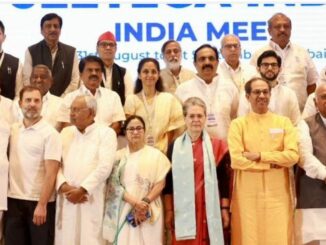
    Undoubtedly, the BJP’s sweeping victory in Bihar will be viewed as a watershed moment for the INDIA coalition, a diverse mix of the Congress and regional parties formed precisely to counter the BJP hegemony. The coalition, which was a significant attempt to unite various political forces against the BJP, had potential, but it struggled to realize it, plagued by internal rivalries and constant jockeying for leadership. The idea of the coalition was based on a sound argument: that the BJP often wins elections with only a plurality of votes. Yet the alliance failed to project a united front or a clear alternative.

    Since the 2024 Lok Sabha elections, the opposition has found itself confronted by a mammoth machinery, one that includes the full strength of the bureaucracy, an increasingly compliant Election Commission, supportive media ecosystems, and virtually unlimited resources from business magnates, electoral bonds, and vested interests. Combined with alleged voter-roll manipulation, which refers to the suspected tampering or removal of voter names from electoral rolls, accusations of EVM vulnerabilities, and selective enforcement of election rules, these forces appear to have contributed to sweeping victories in Haryana, Maharashtra, and now Bihar.

    One wonders whether Nehru and Ambedkar, architects of India’s democratic institutions, could have imagined how far the Election Commission would drift under the current regime. Rahul Gandhi’s explosive revelations on electoral-roll irregularities were met not with alarm but with silence. Even though the data Gandhi cited came directly from the Commission itself, the EC chose not to meaningfully address the complaints or the threat they pose to electoral integrity. Such dismissiveness undermines the very fabric of India’s democratic system.

    According to The Economic Times, the Bihar government under Nitish Kumar credited ₹10,000 each to around 14 million women belonging to self-help groups under the Mukhyamantri Mahila Rojgar Yojana (MMRY). These payments reportedly came just before, or even after, the Model Code of Conduct came into effect. Many analysts and opposition leaders believe this direct cash transfer functioned as a voter-influencing tool targeting a crucial demographic. Sharad Pawar of the NCP even called the payout a “threat to democracy,” arguing it unfairly tilted the electoral playing field toward the ruling coalition.

    This raises another critical question: where did such a massive sum of money suddenly come from? Jan Suraaj leaders allege that World Bank–financed project funds were diverted for this purpose, an accusation, if true, carrying serious governance, legal, and international implications. Even setting that aside, the BJP’s vast reservoir of financial resources or its access to billionaire networks, makes such electoral mobilizations easy to engineer. The result was a record-breaking turnout among women voters in Bihar. If misappropriation of multilateral funds is ultimately proven, it would demand a rigorous investigation.

    Another deeply troubling issue concerns the large-scale removal of voters from the electoral rolls. Reliable reports indicate that around 65 lakh names were deleted prior to the election, potentially disenfranchising marginalized communities and altering outcomes in closely contested constituencies. While the ruling party defends this as a necessary “cleanup,” the unprecedented scale raises serious questions about voter suppression and public trust in the electoral system’s integrity.

    Rahul Gandhi has further demonstrated, using official data, how “ghost voters” proliferate across rolls—names with invalid or nonexistent addresses, large clusters registered at single locations, and even foreign nationals inexplicably listed as Indian voters. These anomalies suggest either a breach of the central voter database or the misuse of authorized access. The existence of such ghost entries conveniently paves the way for manipulating outcomes, especially if combined with EVM systems that the Election Commission refuses to make fully transparent. The software on these machines is not open source, and multi-phase elections often involve long periods during which EVMs are stored without clear public access to CCTV footage that is sometimes destroyed prematurely. These conditions naturally erode public confidence.

    The opposition, for its part, has not helped its own cause. Beyond opposing the BJP, it rarely projected a cohesive ideological narrative. It lacked a compelling alternative vision for development, economic growth, or social welfare. Internal factionalism, weak grassroots organization, and inconsistent messaging have all contributed to its decline. Meanwhile, the NDA’s disciplined focus on religious nationalism and welfare delivery has resonated more effectively with voters.

    In northern India, the Congress has indeed been performing poorly in election after election. Its repeated “introspection” exercises have yielded little. Rahul Gandhi often appears as a lone voice, while many in his party remain disconnected from grassroots realities. It is past time for Congress to adopt serious organizational reforms, demand stronger electoral safeguards, such as paper ballots, and articulate an agenda and engage in a more sustained on the ground campaigning. At the very least, candidate selection must be merit-based, with tickets finalized at least six months in advance to give them any realistic chance of success.

    Meanwhile, the long-term ideological agenda of the RSS is coming increasingly into focus. It appears less interested in preserving the diversity of India’s political ecosystem and more committed to reshaping the nation along lines of cultural and religious conformity. Weakening the independence of institutions such as the Election Commission, judiciary, and media seems central to that strategy, consolidating lasting political dominance.

    It is a profound irony that a party’s rise to power through a fair, transparent, and democratic process can ultimately weaken the very system that enabled its ascent. It raises questions about India’s political trajectory rather than the outcome of a single election. When one party amasses overwhelming political, financial, and institutional power, it becomes a grave threat to a vibrant democracy. The weakening of institutional autonomy, the erosion of electoral transparency, and the shrinking space for dissent all point toward a structural imbalance that no democracy can afford for long. A diverse nation like India can sustain this democratic experience only if there is contestation of ideas, challenging authority, and keeping those in power truly accountable.

    The nation will also need opposition parties not to be fragmented or intimidated, and institutions that safeguard fairness not to be compromised. Elections may continue to be held like in many authoritarian nations, but the spirit of democracy will slowly fade and die. A true democracy requires competition, scrutiny, debate, and accountability, without which the country will move toward conformity and centralized dominance. India now stands at a crossroads, where citizens and institutions must rethink and evaluate the political trajectory we are on, and take a vow to uphold constitutional values. Protecting democracy and the hard-fought freedom won by our great leaders like Mahatma Gandhi and Jawaharlal Nehru do not simply rest in the hands of the opposition, and the nation’s future is shaped not by the will of one single entity, but by the voices and aspirations of all its people.


    (George Abraham is a former Chief Technology Officer of the United Nations. He is vice chair of IOC USA. He can be reached at gta777@gmail.com)

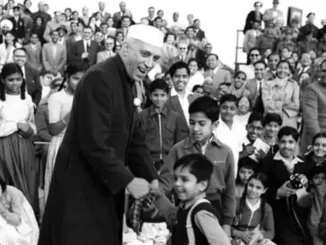
  • Nehru’s Enduring Idea of India: A Legacy under Siege

    Nehru’s Enduring Idea of India: A Legacy under Siege

    By George Abraham

    The BJP, under the leadership of Narendra Modi, is making an incessant effort to erase the Nehruvian legacy but build one of its own by denying, distorting, defaming, and destroying the real History of this great statesman and his noble contributions to the development of modern India. They strongly feel that they could accomplish that task and put their stamp on History only if they shatter the Nehruvian monopoly over ideas and probably demolish the man himself.

    The BJP and its allies have emphasized the roles of figures like Sardar Vallabhbhai Patel, B.R. Ambedkar, and Subhas Chandra Bose to diminish Nehru’s contribution and create a new narrative. The Congress Party built much of its political identity on Nehru and the “Nehruvian Era,” and what the BJP is engaged in here is challenging or reframing that legacy to create its own foundational story of India. By criticizing the Nehruvian policies, whether domestic or foreign, the BJP wants to present itself as an agent of change.

    They fully realize that History is power, how policies are created, critiqued, or institutions are named. Therefore, the BJP is deeply engaged in influencing that memory. For the Congress Party, Nehru remains an iconic figure whose legacy inspires and strengthens the party. The BJP and its ideological parent, the RSS, promote a civilizational model through a different lens than the Nehruvian liberal-scientific heritage. The BJP’s efforts to rename institutions, revise school textbooks, and promote a different narrative of India’s history are all part of this strategy.

    Reacting to the renaming of the Nehru Memorial Museum and Library to the Prime Ministers’ Memorial and Museum, the All India Congress Committee stated: “Mr. Modi can never take away Nehru’s gigantic contributions to the freedom movement and his towering achievements in building the democratic, secular, scientific, and liberal foundations of the Indian nation-state, all of which are now under assault by Mr. Modi and his drumbeaters.”

    It is quite remarkable that, even six decades after his passing, the architect of modern India is still a target of the current Prime Minister, who seems determined to erase a great legacy. Will this effort succeed, or will the people of India always remember the visionary who led the country from oppression to freedom, modernity, and self-reliance? Behind this relentless campaign and unsettling mindset lies a profound discomfort with Nehru’s vision — the very concept of India as a diverse society where people of different religions, languages, ethnicities, and castes coexist in relative harmony. This vision, despite the current challenges, continues to inspire and guide us towards a more inclusive and forward-looking India.

    In 2022, the National Council of Educational Research and Training (NCERT) indicated that it would remove or modify school textbooks that referenced Nehru. Some chapters on the Mughal Empire, sections on Mahatma Gandhi, Hindu-Muslim unity, and the ban on RSS were reportedly removed as part of “syllabus rationalization.” India’s school textbooks have become a new battleground for Hindu nationalism. There were significant pushbacks from opposition parties, states, and academics. The State government of Kerala, for instance, has resisted or reversed moves it saw as altering historical narratives.

    Sadly, Modi has succeeded somewhat in defining nationalism around a Hindu civilizational identity, replacing secular civic nationalism. The ideological terrain has undoubtedly shifted, as very few political parties in India today campaign on basic Nehruvian ideals. Nevertheless, as we celebrate the 136th birth anniversary of Jawaharlal Nehru on November 14th, 2025, we remain in awe as we recall his contributions to India’s independence and to laying a strong foundation for a pluralistic and forward-looking nation.

    One of Nehru’s most significant accomplishments was the crafting of the Indian Constitution with the help of B. R. Ambedkar, recognizing his intellect and pioneering legal and social thought. Nehru’s Objectives Resolution served as the moral preamble to Ambedkar’s draft. The Indian Constitution, one of the longest in the world, with 395 Articles and 9 Schedules, spells out the basic philosophy and the solemn resolve of the people of India to secure justice, liberty, equality, and fraternity for all its citizens. What Nehru accomplished through this document, with significant help and support from Ambedkar, was part of his vision to empower marginalized sections of society. Nehru is said to have defended Ambedkar in the Assembly when some conservatives opposed his ideas on women’s rights and the Hindu Code Bill.
    Nehru was committed to ensuring social justice and the welfare of the masses as far back as 1938, by setting up the National Planning Committee under the Congress Party’s banner to improve the quality of life of ordinary citizens. These efforts culminated in the creation of a permanent Planning Commission to establish a just social order and ensure the equitable distribution of income and wealth. Nehru’s actions in these matters paint him as a socialist. However, he firmly believed that planning was essential for a developing country with scarce resources that needed to be managed optimally.

    Working with Maulana Azad, the first Minister of Education, he was instrumental in establishing India’s first IIT at Kharagpur in 1951. He foresaw the importance of science and technology for national progress, enabling the country to compete with global institutions. The IIT model, later expanded to include Bombay, Madras, Kanpur, and Delhi, became elite institutions that produced successful engineers and scientists, and continue to drive the global technology revolution. He also played a leading role in creating the Council of Scientific and Industrial Research (CSIR) and other similar organizations, and he supported the Indian Institute of Science (IISc) in Bangalore as a premier research center.

    Under Nehru’s guidance, Azad also established three national academies to nurture and enhance India’s cultural identity: the Sahitya Akademi (1954) for literature, Lalit Kala Akademi (1954) for fine arts, and Sangeet Natak Akademi (1953) for music, dance, and drama. These institutions were created to preserve and promote India’s diverse linguistic and artistic heritage.

    Nehru established institutions such as the Planning Commission, IITs, IIMs, UGC, CSIR, AIIMS, and cultural academies. Today, the BJP has abolished or restructured some of these educational and cultural bodies and filled them with ideologically aligned members. Yet, core institutions like the IITs, AIIMS, and CSIR remain strong and continue to embody Nehru’s scientific and academic spirit. This resilience of Nehru’s educational and scientific legacy, despite the political challenges, should reassure us that his vision for India’s progress is deeply rooted and will continue to guide us.
    Undoubtedly, Nehru helped to build institutions that stood the test of time. The emerging nations of his era — such as Yugoslavia, Egypt, and Ghana — failed in this regard, and the results are evident for all to see. Nehru’s vision and leadership were critical in shaping India as we know it today. According to Journey of a Nation, edited by Anand Sharma, Nehru laid the foundation of a self-reliant, productive, and confident India, creating many of its institutions and leaving an indelible stamp on every aspect of the country.

    It has been said, “History is not merely a record of the past; it is the moral compass of a nation. Those who attempt to erase it often underestimate the resilience of ideas rooted in truth and justice. Nehru’s idea of India, democratic, secular, inclusive, and forward-looking, has withstood wars, political upheavals, and ideological assaults because it rests on universal human values. His legacy is not confined to statues or institutions bearing his name; it lives in the Constitution, in the scientific temper of the Indian mind, and in the freedom that allows dissent and diversity to flourish”.

    As India stands at another crossroads, the choice is not between Nehru and any individual leader, but between two competing visions of the Republic, one narrow and exclusionary, the other broad and humane. To remember Nehru is not an act of reminiscence; it is an affirmation of the moral and intellectual foundations on which modern India was built. His light, though dimmed by political hostility, continues to guide the nation, hopefully, toward reason, unity, and progress.

    (George Abraham is a former Chief Technological Officer with the United Nations. He is Vice Chair of IOC USA. He can be reached at gta777@gmail.com)

  • “Can America Endure Without the Spirit That Built It?”

    “Can America Endure Without the Spirit That Built It?”

    By George Abraham

    A troubling reality unfolding across the United States today is the growing disillusionment of a large segment of the people, mostly young, who are politically and economically upset with the current status quo. Their concerns are justified to a large extent, as the so-called American dream, a promise of upward mobility through hard work, has already slipped away beyond their reach. What once was taken for granted – a stable job, home ownership, and financial security-now feels unattainable to millions, creating a certain uncertainty about the nation’s future. As inequality widens, political polarizations intensify, creating populist movements on the left and right filled with emotions of anger and cynicism. This situation poses a potential threat to the very fabric of our society, raising the question: are we on the verge of a popular uprising that threatens the very foundations of social cohesion and democratic stability?

    The primary election victory of Zohran Mamdani as the Democratic candidate is a clear sign that the political pendulum in America is shifting. His campaign, anchored in progressive policies such as rent freezes, free public transit, and higher taxes on the wealthy, has struck a powerful chord with younger voters weary of economic hardship and inequality. Yet, this shift raises profound questions about the nation’s direction. Will these radical, left-wing reforms offer meaningful relief to a generation burdened by debt, stagnant wages, and unaffordable housing? Or will they usher in a social and economic transformation so sweeping that it could alter the very character of American society—perhaps beyond the point of return?

    If history is any guide, socialist revolutions have consistently failed to deliver on their promises. The collapse of the Berlin Wall remains one of the clearest testaments to that truth. When the wall finally fell, the world watched as East Germans fled not toward the socialist East but toward the freedom and prosperity of the capitalist West. Despite being surrounded by barriers, West Berliners enjoyed a standard of living, political freedom, and economic vitality unmatched anywhere across the Eastern Bloc. Time and again, socialist systems have produced not equality and abundance but shortages, stagnation, and widespread hardship.

    I had the rare opportunity to live in Communist Ethiopia during the rule of Mengistu Haile-Mariam, a dictator who held power through much of the early 1980s. Those years offered me a firsthand glimpse into the grim realities of life under a repressive regime. Beyond the absence of freedom of expression, the country suffered from severe shortages of essential goods, inadequate housing, and a collapsing healthcare system. Fear and silence gripped the population, while the privileged few in power thrived. Eventually, the people’s patience ran out, and the regime was swept away by a popular uprising.  It is a stark reminder that no system built on oppression and deprivation can endure indefinitely.

    Right in our own backyard, Cuba and Venezuela stand as glaring examples of failed socialist experiments. Cuba remains trapped in the economics and ideology of the last century, its people burdened by stagnation and scarcity. Venezuela, once among the most affluent nations in Latin America and blessed with vast natural resources, has been reduced to chaos under socialist rule. What was once a prosperous society is now marked by poverty, hyperinflation, and mass migration, with millions fleeing their homeland in search of freedom and opportunity.

    Some may argue that China, as a communist nation, has thrived under socialism. However, the truth is quite the opposite for those who look deeper. China began its remarkable transformation only after it loosened its centralized socialist controls and opened the door to private enterprise and market-driven reforms. Its leaders recognized the power of innovation and entrepreneurship while eagerly adopting Western ideas, technologies, and management practices. In essence, China’s success story is not the triumph of communism, but the outcome of its partial retreat from it.

    However, capitalism became the driving force of the modern era, unleashing the power of individual liberty and human creativity. Capitalism paved the way for unprecedented scientific and technological progress by rewarding innovation and enterprise. It built the foundations of a prosperous society that lifted millions out of poverty and expanded opportunities for generations. In its best form, capitalism has proven that freedom and productivity can advance hand in hand, inspiring a hopeful vision for the future.

    In the United States, capitalism does not operate unchecked. It functions within a framework of laws and regulations designed to ensure fairness and accountability. The government plays a crucial role in this, with oversight bodies and the judiciary curbing exploitation and corporate excesses. Robust anti-monopoly laws exist to prevent consumer fraud, price gouging, and the concentration of economic power in too few hands, preserving competition as the lifeblood of a healthy economy. This regulated form of capitalism, with the government as a watchdog, is a key factor in its success and the prosperity it has brought to the nation.

    India too experienced an economic revival when the landmark reforms led by Dr. Manmohan Singh were introduced in the early 1990s. By dismantling the rigid controls of the license-raj system and opening the country to global trade and investment, these reforms unleashed the power of the market economy. The results were transformative while propelling India onto a path of sustained growth and helping it emerge as the world’s fourth-largest economy today.

    However, for a market economy to succeed, it requires more than policies and regulations. It demands a dedicated and disciplined workforce. Hard work, integrity, and perseverance remain its most essential ingredients. The early immigrants to America are a testament to this truth. They had no Medicare, Food stamps, or Government Safety Nets. Yet, they toiled in the fields and factories, built families, and laid the foundation of a thriving society where effort was rewarded and success celebrated.

    The recent generations of immigrants are the actual beneficiaries of that legacy of hard work and perseverance. America became a magnet for talent and ambition and a beacon of freedom and prosperity, a shining city on a hill that drew millions from across the world, from every culture, language, and faith. Such massive movements occur only toward nations that uphold liberty and reward merit. These immigrants joined vibrant, market-driven economies and thrived and many becoming trailblazers in their own right, creating immense wealth, generating opportunities for others, and leading multinational companies that have guided society into a new era of innovation and sustained growth. Their success stories are a testament to the opportunities that a capitalist system can provide, and the social mobility it can enable.

    Capitalism and the market economy are not without their flaws. They move in cycles of expansion and recession, and in times of crisis such as the COVID-19 pandemic, the wheels of the economy can come to a grinding halt. Reckless spending by undisciplined politicians can fuel runaway inflation, while excessive regulation can stifle innovation and prevent industries from realizing their full potential. Similarly, a shortage of skilled workers can dampen productivity and slow growth. Yet, these challenges are not insurmountable — they demand dynamic leadership, sound policymaking, and the courage to innovate and adapt to changing realities.

    However, the sad reality is that many of today’s immigrants appear intent on challenging or undoing the very experiment that made the United States a beacon of opportunity. One is left to wonder why anyone would come to a country only to disparage the system that built the most powerful economy in history. Unlike the immigrants of earlier generations who valued self-reliance, hard work, and personal responsibility, some now advocate for a culture of dependence, believing that wealth redistribution can solve all social ills. They overlook a fundamental truth: in every system, it is the innovators, the risk-takers, and the diligent workers who drive progress and ultimately reap the rewards of their labor.

    New Yorkers face a crucial test in the coming elections. The city already carries roughly $300 billion in debt, and new taxes will disproportionately hurt the middle class. The very wealthy have options to relocate. The city budget has ballooned to some $112 billion, with excessive and wasteful spending in many corners. We should ask ourselves: do we want leaders whose  primary goal is to redistribute the wealth and who speak openly about “de-commodifying” housing—a euphemism, some fear, for eroding private property rights or even about “seizing the means of production”, a term Karl Marx used to describe the capital or wealth of those he painted as villains?  Do we really want to upend the very system that built New York, entrusting it to those who had no stake in building it?

    History has shown that no nation can thrive by undermining the very principles that built its success. Although imperfect, capitalism has proven to be the most effective engine for innovation, progress, and human advancement, provided it is guided by integrity, discipline, and a sense of shared responsibility. The challenges America faces today, from debt and division to disillusionment, call for leadership rooted in vision, prudence, and respect for the hard-won values that shaped this great nation. Let us remember that freedom and prosperity are not entitlements, but trusts handed down by generations who toiled and sacrificed. Preserving them requires courage, wisdom, and faith in the enduring promise of the American spirit.

    (George Abraham is a regular contributor to The Indian Panorama. He served as a Chief Technology Officer with the United Nations. He is Vice-Chair of the IOC. He can be reached at gta777@gmail.com)

  • The Shrinking Middle Class, Trade Wars, and the India–U.S. Paradox

    The Shrinking Middle Class, Trade Wars, and the India–U.S. Paradox

    “India, too, must think creatively and adapt to the changing global trade dynamics. For decades, its high tariff walls were justified to protect domestic industries under the Five-Year Plans envisioned by Jawaharlal Nehru. That strategy worked: India built everything from safety pins to airplanes, became self-reliant, and transformed from a food-deficient to a food-exporting nation. How, then, can we fault others for pursuing similar protectionist policies today? It’s time for India to rethink its strategies and find a balance between protectionism and global trade.”

    By George Abraham

    There is an ongoing discussion these days about whether the Indian diaspora has remained silent on tariffs and other U.S. policies that have hurt India. The Trump administration’s imposition of nearly 50% tariffs on most Indian goods imported to the United States has had a devastating effect on sectors such as textiles, shrimp, and cut diamonds. The recent $100,000 fee on new H1B visa issuance has only added fuel to the controversy.

    Although domestic political considerations may have driven these tariff policies, their application worldwide appeared to be without clear policy standards, often arbitrary, abrupt, and inconsistently justified. Economist Jeffrey Sachs has argued that many of the tariffs imposed by the Trump administration exceeded the president’s lawful authority, calling them “delusional” and unlikely to reduce either trade or budget deficits in any meaningful way.

    Nevertheless, tariffs are here to stay, and nations around the world, whether they like it or not, must learn to navigate them. Export-driven economies, including America’s closest allies, have been hit hard. The European Union, Japan, and South Korea reluctantly reached trade deals with Washington despite deep dissatisfaction, reflecting the leverage the U.S. still commands in global commerce.

    India, too, had an early opportunity to negotiate a similar agreement that might have averted the present predicament, but instead chose to walk a diplomatic tightrope. Understandably, India had to protect its farmers and guard against U.S. agricultural imports that could undermine its rural economy. Yet, in every negotiation, there must be give and take, and perhaps India underestimated the Trump administration’s resolve to reshape global trade on what it viewed as a more level playing field.

    More than anything else, the situation exposes the shortcomings of the Modi–Jaishankar statecraft, which has failed to advance India’s interests on the world stage. The recent Indo–Pak conflict revealed a sobering truth: in times of crisis, India stands largely alone. Despite global condemnation of the terrorist attack in Pahalgam, Kashmir, only Israel offered unequivocal support, while most nations maintained diplomatic silence.

    India’s ambiguous stance within BRICS, a group that includes Brazil, Russia, India, China, and South Africa, may also complicate its strategic relationship with the United States. Although New Delhi insists it does not seek to undermine the U.S. dollar, Washington remains wary of BRICS-level financial initiatives led by China and Russia that aim to reduce dependence on the dollar. India advocates gradual reforms, such as local currency settlements, without challenging the dollar’s dominance, yet the rhetoric emerging from BRICS summits continues to unsettle U.S. financial circles. This ambiguity in India’s stance within BRICS, balancing its relationship with the U.S. and its aspirations for a more multipolar world, poses a challenge for its foreign policy.

    Today, around 58–60% of global foreign exchange reserves remain denominated in U.S. dollars, compared to less than 3% in Chinese yuan. The dollar’s dominance is rooted in America’s economic scale, deep capital markets, and the global trust in its institutions: a legacy of the Bretton Woods system. Yet beneath that veneer of stability, the U.S. faces sobering economic realities. As of September 2025, the national debt has soared to $37.85 trillion, while the 2024 trade deficit stood at $918.4 billion. Mounting interest payments consume an ever-larger share of the federal budget, limiting investments in infrastructure, education, and defense. Persistent deficit spending fuels inflation and erodes living standards, raising questions about long-term fiscal sustainability.

    The Indian diaspora in the United States, a testament to human resilience, has long sought opportunity and a higher standard of living and has largely achieved it through hard work and discipline. Naturalized citizens of Indian origin have pledged allegiance to their adopted homeland, yet their emotional ties to India remain strong. They send back nearly one-third of India’s total remittances each year, a lifeline for millions.

    However, unlike Non-Resident Indians in the Gulf, these immigrants are not looking back. Their U.S.-born children rarely share the same depth of attachment to their ancestral land. Their primary concern is the economic stability of America. When multinational corporations exploit the H1B visa system to import low-wage labor at the expense of local graduates, disillusionment grows. The unemployment rate among computer science graduates, at 6.1%, underscores this frustration. In the 1970s and 1980s, U.S. tech companies routinely trained domestic graduates, even those without engineering degrees; today, they depend on lottery-based recruitment abroad.

    India, too, must think creatively and adapt to the changing global trade dynamics. For decades, its high tariff walls were justified to protect domestic industries under the Five-Year Plans envisioned by Jawaharlal Nehru. That strategy worked: India built everything from safety pins to airplanes, became self-reliant, and transformed from a food-deficient to a food-exporting nation. How, then, can we fault others for pursuing similar protectionist policies today? It’s time for India to rethink its strategies and find a balance between protectionism and global trade.

    Meanwhile, America’s Midwest has become a rust belt of ghost towns —a haunting monument to its industrial past. Rows of shuttered factories, silent assembly lines, and empty main streets mark the decline of the middle class that once anchored American stability. Much of that industrial wealth has since migrated offshore, fueling growth in distant economies even as it hollowed out communities at home. Economic gains now accrue largely to the wealthy, while younger generations struggle for the security once taken for granted. The resulting sense of insecurity fuels populist anger on both the left and the right, deepening divisions and eroding the democratic center that long kept the nation balanced.

    Amidst these challenges, the United States and India still share many commonalities. Both are large, pluralistic democracies rooted in constitutional principles and the rule of law. Both share a restless entrepreneurial spirit and a belief in the power of innovation. These shared values form the foundation for a relationship that transcends transactional politics. Let both nations build on this strategic partnership and friendship, overcome temporary differences, and work together to reach a trade agreement that is not just quick but also fair and equitable, reflecting the principles of justice and fairness in international relations.

    (George Abraham is a former Chief Technology Officer at the United Nations. He is Vice Chair of IOC USA. He can be reached at gta777@gmail.com)

  • IOCUSA calls for a nationwide audit of voter rolls and VVPAT for every EVM

    IOCUSA calls for a nationwide audit of voter rolls and VVPAT for every EVM

    NEW YORK (TIP): “The recent revelations by Rahul Gandhi, the opposition leader in India, have brought to light shocking election irregularities in Karnataka and Maharashtra. The solid evidence of massive fraud, aimed at subverting the voter’s will, poses a grave threat to the democratic process,” said George Abraham, Vice-Chairman for the Indian Overseas Congress, USA.

    Mr. Gandhi alleged manipulation via duplicate registrations, fake addresses, misused Form 6 entries, and more. The scale of the fraud is staggering and shocking. About 100,000 votes were stolen in the Mahadevapura constituency in Bangalore. This was achieved through five manipulating tactics: 11,965 duplicate voter entries, 40,009 fake or invalid addresses, 10.452 bulk entries from a single or invalid address, 4132 entries with invalid photos, and 33,692 misuses of Form 6 (new voter additions).

    The Election Commission has become a vassal in the hands of the BJP, infringing its independence and transforming it into a subsidiary of the government machinery, contrary to what the framers of the Constitution intended. The removal of the Chief Justice from the EC decision making process, while appointing bureaucrats amenable to the whims of the ruling disposition, was the beginning of the end of this venerable institution that was known for its independence and integrity. These explosive revelations throw into doubt not only the integrity of past elections but also their usability and value of this grand exercise, as they have become a mockery of deceit and thievery.

    IOCUSA is calling upon the Election Commission to conduct a nationwide audit of its voter rolls and to add VVPAT to every Electronic Voting Machine (EVM). These measures are crucial for ensuring complete transparency and fairness in elections, thereby preventing election manipulation. These principles are not just ideals, but the very foundation of a democratic society. Additionally, IOCUSA urges the BJP government to halt Executive overreach.

  • India’s Election System in Shambles: Restore Democracy with paper ballots and audited voter rolls

    India’s Election System in Shambles: Restore Democracy with paper ballots and audited voter rolls

    By George Abraham

    The recent revelations by Rahul Gandhi, the opposition leader in India, pointing to the election irregularities in Karnataka and Maharashtra, are shocking and yet sad. Undoubtedly, the solid evidence provided to show the massive fraud orchestrated to defy voters’ will is a clear indication of the demise of a venerable institution like the Election Commission, which may prove to be a death knell for Democracy itself.

    The Election Commission has become a vassal in the hands of the BJP, infringing its independence and transforming it into a subsidiary of the government machinery, contrary to what the framers of the Constitution intended. The removal of the Chief Justice from the EC selection process, while supplanting him with the Home Minister and appointing Government bureaucrats amenable to the whims of the ruling disposition, was the beginning of the end of this great institution that was known for its independence and integrity. These explosive revelations throw into doubt not only the integrity of past elections but also their usability and value, as they have become a mockery of deceit and thievery.

    The crux of the matter here is the overreach of the Executive branch, exercising its power in any way possible to maintain control, whether the people desired it or not. Transparency and fairness in an election are no longer their concern as they are obsessed with power grab to perpetuate an ideology that has little or no sway over the average voter, who is struggling to survive in Modi’s economy.

    At a press conference on August 7, 2025, Rahul Gandhi leveled serious allegations of electoral fraud in the Mahadevapura Assembly segment (part of Bangalore Central), accusing the Election Commission (EC) of colluding with the BJP to engineer what he termed “vote chori” (vote theft). Mr. Gandhi alleges manipulation via duplicate registrations, fake addresses, misused Form 6 entries, and more and as a result 100,000 votes were stolen in Mahadevapura constituency in Bangalore via five manipulating tactics: 11,965 duplicate voter entries, 40,009 fake or invalid addresses, 10.452 bulk entries from a single or invalid address, 4132 entries with invalid photos and 33,692 misuses of form, 6 (new voter additions). Mahadevapura (SC) stands out: it recorded approximately 115,046 vote margin—the largest among all assembly segments.

    The question everyone is now asking is whether the EC is directly involved in orchestrating voter duplication to skew results and aid the BJP government. In West Bengal, Trinamool Congress identified duplicate EPIC (Electors Photo Identity Card) numbers assigned to persons across constituencies. Similar accusations have surfaced in Maharashtra and Delhi, raising concerns about “fake voters” being inserted into the rolls.

    Congress also alleges large-scale voter fraud in the recently concluded Maharashtra elections. Between the 2024 Lok Sabha and Maharashtra Assembly elections (in 5 months), approximately 40.8 lakh new voters were added to the voter rolls. Of these newly added voters, over 18 lakhs were concentrated across 78 constituencies in just 13 Lok Sabha segments. BJP and its allies won 68 of them. Congress alerted the authorities also about the arbitrary deletion of voters, about 10,000 per constituency, followed by large-scale additions, potentially disenfranchising voters who may be loyal to the opposition.

    Historical research has always shown critical vulnerabilities in EVM (Electronic Voting Machines)  hardware and software. Although VVPATS were added to allay those concerns, only a tiny fraction (0.3%) of machines get their VVPATS counted. The Election Commission has always rejected the close monitoring of EVMs and asserted that they are tamper-proof. We are living in an age where even sophisticated systems with high levels of security are under attack from cybercriminals. The Defense Department in the U.S. believes that 15% of the “specially built for Pentagon” chips that go into aircraft and missiles are counterfeit, and they have no way of finding out.  However, EC aims to convince the country that the commodity microcontroller and other electric components in an EVM pose no greater threat than the Systems in a technologically advanced country like the U.S. There may not be a machine in the world that is truly impenetrable!

    Therefore, the critical question is whether these two threads are linked – the voter roll fraud and EVM manipulation. There is a growing body of critics who also believe that voter list fraud and EVM manipulations are intrinsically linked. What is the point of adding fake or ghost voters if they are unable to vote, as they are simply non-existent? If ghost voters “vote” (or their votes are effectively pre-programmed), the EVM may record ballots favoring a particular party. Thus, even if turnout looks ‘normal’, the final vote share distribution can be tilted systematically.

    There have been sporadic and unverified reports of discrepancies between the number of votes polled and those counted by some of the defeated candidates, alleging thousands of extra votes in certain constituencies. In another instance, errors during mock polling (in Kasaragod, Kerala) saw EVMs registering extra votes for a particular party, allegedly due to VVPAT malfunction.  The design of India’s EVMs relies entirely on the physical security of the machines and the integrity of election insiders. There was a story from Madhya Pradesh about CCTV cameras being installed at a storage area after electricity was cut off, raising suspicions and creating further innuendos. All these reports fuel further speculations in this whole election process, questioning the accuracy and integrity of EVM counting.

    In the aftermath of Congress’s defeat in Madhya Pradesh, Rajasthan, and Chhattisgarh in 2023, Mr. Digvijay Singh, a senior leader of the Congress Party and former Chief Minister of Madhya Pradesh, publicly questioned the reliability of EVMs: On X (formerly Twitter), he stated, “Any machine with a chip can be hacked. I have opposed voting by EVM since 2003.” He warned: “Can we allow our Indian Democracy to be controlled by professional hackers! On ECI and Hon Supreme Court, would you please defend our Indian Democracy? “

    Even countries with advanced technology, like Germany, the Netherlands, and parts of the U.S., returned to paper ballots because trust and auditability are more critical than speed or convenience in elections. Germany introduced electronic voting in 1998 and abolished it nationwide in 2009. The Federal Constitutional Court in Germany ruled that “EVMs violated the requirements – citizens could not independently verify that voters were recorded and counted correctly. There were obvious concerns in the country over software manipulation and a lack of auditability.

    In the United States, Direct Recording Electronic (DRE) machines were introduced in early 2000. However, security researchers and election officials reported software bugs and hacking vulnerabilities. As a result, VVPAT systems were introduced to ensure audits. But today, most States require paper trails, with some phasing out pure DRE machines entirely.

    Tulsi Gabbard, the Director of National Intelligence (DNI) in the United States, has raised significant concerns regarding the security of electronic voting systems. In April 2025, she revealed that her office had uncovered evidence of vulnerabilities in these systems, which could allow hackers to manipulate election outcomes. During a Cabinet meeting, Gabbard presented this information to President Donald Trump and advocated for a nationwide transition back to paper ballots to ensure election integrity.

    Gabbard’s call for paper ballots is rooted in the belief that they provide a more secure and verifiable method of voting. She has been a vocal advocate for this cause, introducing legislation such as the Securing America’s Elections Act of 2018, which aimed to require voter-verified paper ballots in federal elections. This legislation sought to ensure that paper ballots serve as the definitive record of votes cast, especially in cases of audit or recount, and to allow voters to verify and correct any errors before their permanent paper ballot is preserved for official government record.

    The allegations raised by Rahul Gandhi, supported by detailed evidence of voter roll irregularities in Karnataka and Maharashtra, coupled with historical concerns over EVM vulnerabilities, highlight a deepening crisis of trust in India’s electoral process. When independent institutions like the Election Commission are perceived as compromised or overly influenced by the ruling party, the very foundation of democracy, free, fair, and transparent elections, is at risk.

    In an era of sophisticated cyber threats and political overreach, the push toward paper ballots or verifiable hybrid systems is not merely a technological preference; it is a defense of democratic integrity itself. Ensuring that every vote counts, every voter is represented, and every result can be audited is essential for restoring public trust and safeguarding the future of Indian Democracy.

    (George Abraham is a former UN Chief Technology Officer. He is the Vice Chair of IOC USA. He can be reached at gta777@gmail.com)

  • Is India still a liberal democracy?

    Is India still a liberal democracy?

    • By George Abraham

    As the Diaspora celebrates the 79th Independence Day of India, a pressing question looms in the minds of people across the globe: Is today’s India truly a liberal democracy? This week, we may witness widespread celebrations of India’s independence that will be held in many cities across the U.S. However, one may hear very little regarding whether the hard-fought freedom by the founders of modern India is in danger of being extinguished, a concern that should be at the forefront of our discussions.

    Many cultural and religious organizations that host such events seem indifferent to the steadily eroding freedoms of India’s citizens and the weakening of its democratic institutions. It is essential that the Indian diaspora, with its unique vantage point and influence, take a principled stand and speak out on these issues. Yet, far too often, these forums choose instead to recycle the same celebratory narratives of India’s history and heritage, continually invoking our noble ancestry and cultural traditions. Adding to this irony, many of the same leaders neglect to acknowledge the freedoms and opportunities they themselves have enjoyed in their adopted countries—and, in some cases, go so far as to deride the so-called “decadent culture” of the West, as though migration to this part of the world were something imposed upon them.

    A noticeable trend in recent years has been the decline of India’s rankings on several global indices, especially dealing with subjective issues such as democracy and freedom. According to Varieties of Democracy (V-Dem), which produces the most extensive global dataset on democracy, India remains an “Electoral Autocracy”. Freedom House downgraded India from “Free to” Partly Free” and maintained that classification since 2024. The Economic Intelligence Unit (EIU) ranks India as a “Flawed Democracy”.

    Under Modi’s rule, the suppression of journalists has intensified. Tactics such as raiding news organizations like the BBC and bringing up sham charges against investigative journalists have become regular tools of intimidation. The Unlawful Activities Prevention Act, counter-terrorism laws, and a new censorship bill have been used to silence any criticism. India, like any other authoritarian country, has harassed and denied foreign funding to civil society organizations and religious ones. Academic freedom has also been a casualty, leading to the dismissal of professors critical of the Government.

    The democratic Institutions that were built and maintained under the Congress rule over the years are under deep duress. There has been a growing pressure on the judiciary by the Executive, resulting in inconsistent rulings in politically sensitive areas. There is also a steep decline in debates in parliaments over critical issues, while the governing party relies more and more on the use of ordinances, marginalizing the opposition. India’s election commission appears to have compromised its impartiality while becoming a vassal for the BJP political machine.

    India leads the world in Internet shutdowns, and platforms like Twitter and YouTube have been pressured to remove content critical of the Government. There are allegations of Pegasus spyware’s use against journalists, activists, and opposition politicians, painting a picture of a surveillance state that is said to be in operation, violating fundamental civil liberties. Since the Narendra Modi government came to power, access to information through the Right to Information (RTI) Act has diminished dramatically, according to the annual report of the Central Information Commission (CIC) for 2014-15. “Every Indian deserves to know the truth,” and the BJP wants to hide the truth. The BJP believes the truth must be hidden from the people, and they must not question people in power. The changes proposed to the RTI (Right to the Information Act) would make it a useless Act,” Rahul Gandhi, the opposition leader, once said on the X platform.

    Agencies such as India’s Central Bureau of Investigation (CBI), the Enforcement Directorate of the Finance Ministry, the Tax authorities, and even local police forces are often accused of doing the Government’s bidding. The opposition has charged that their leaders have frequently been targeted for harassment, which they consider a political vendetta for expressing their opinions critical of the Government.

    Religious freedom in India continued on a downward trend, said the United States Commission on International Religious Freedom’s annual report released recently. It noted that although government statistics have indicated that communal violence has decreased over the past two years, under the BJP rule, Hindu-nationalist groups have sought to “saffronize” India through violence, intimidation, and harassment against non-Hindus and Hindu Dalits. However, the Indian Constitution guarantees freedom of religion through articles 25 and 26. Since the ascendance of Modi as the Prime Minister, tensions between minorities and the majority community have increased in many parts of the country, further pushing minorities towards marginalization.

    These days, the Embassies and Consulates of India have been utilized as propaganda machinery for the ruling party in India. In the name of promoting soft power, they have been forced to underwrite programs with intrinsic religious themes or ones that would fit their nationalist agenda. Even English is often being banished at official functions to the dismay of the attendee population, which always includes non-Hindi speaking people from the south or people who are born and brought up abroad.

    India’s electoral integrity has been a focus of critics and a growing concern in recent years. Rahul Gandhi, the opposition leader, has recently exposed wholesale fraud in the voter rolls in the Mahadevapura constituency in Bangalore in the last parliamentary election. He had earlier alleged bogus turnout in the recently concluded Maharashtra elections. His concern reflects more profound structural anxieties about the whole electoral systems where disparate voices are calling for a shift to paper ballots away from Electronic Voting Machines (EVMs), The changing of the composition of the Election Commission to majority appointees by the ruling disposition cast a serious cloud on that body for its independence and integrity to dealing with chorus of protests and complaints arising from the opposition ranks.

    The basis for democracy is Liberty,’ said Aristotle. However, today, the Institutions that were built to safeguard that principle are under duress. India is one of the most diverse nations in the world. The country has a population of 80% Hindu, 14% Muslim, Sikhs, and Christians, about 2% each. It has Castes and sub-castes, many languages and dialects, and varying customs and traditions, including different dress codes and dietary habits. That is the crossroad where India is today, with Narendra Modi in power, disregarding the aspirations of the minorities and diminishing the power structures that provided political and social equilibrium in the last six decades or more.

    Many liberal critics of the Modi regime sincerely believe that his administration is run by a political dogma inspired by the RSS ideology. That ideology is based on a common thread promoted by the Sangh Parivar organizations and is called the ‘Hindu Nationalist agenda of the BJP.’ The ultimate goal of the agenda is to transform the pluralistic and democratic India into a Hindu nation where the majority religion will have the pre-eminence and minorities are relegated to a subservient role, probably being denied equal protection or opportunities, that too, to a substantial segment of the population.

    The constitution’s framers created a democratic system wherein the legislature would make laws, the Executive would implement laws and be accountable to parliament, and an independent judiciary would interpret them. They also put in a system of checks and balances among these three organs of the state. However, over the years, these three organs of the state have pushed the boundaries of their relationship with one another. NDA has the majority in the Lok Sabha, where they pass ordinary bills and then pass them on to the Rajya Sabha as Money bills to circumvent their numerical impairment in that body. They have also shown utter disregard for deliberating on essential bills, bypassing various parliamentary committees.

    The Bhartiya Janata Party’s victory in the Lok Sabha elections of 2014 has ushered in an unprecedented attack on India’s democracy and injected new elements of intolerance and authoritarianism into the lives of people living in the country. Most political scientists agree that a liberal democracy rests on the pillars of free and fair elections, the rule of law, civil liberties, minority rights protection, pluralism, political competition, and institutional autonomy. The Modi government has utterly failed on those scores, earning India the inglorious title of a ‘flawed democracy’.

    Martin Luther King Jr. once said: Our lives begin to end the day we become silent about things that matter. The question is: will the Diaspora continue its long-held silence on the state of India’s democracy?

    (The author is a former United Nations Chief Technology Officer. He is Vice Chair of IOC USA. He can be reached at gta777@gmail.com)


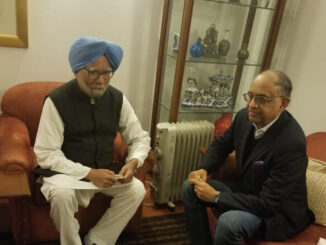
  • IOC Condoles Dr Manmohan Singh’s Death

    IOC Condoles Dr Manmohan Singh’s Death

    ‘India has lost a great statesman, a man of immense intellect with incredible humility,’ said George Abraham, Vice-Chair of the Indian Overseas Congress, USA, condoling the passing away of the former Prime Minister Dr. Manmohan Singh. “He will be fondly remembered for his outstanding contributions to India’s economic and social development.”

    Dr. Manmohan Singh was the Chief Architect of India’s new economy. He has taken a centrally planned, inward-looking, public sector-centered economy and reversed its direction. What he has accomplished is just phenomenal. This dramatic change paints a picture of a man who is some sort of a revolutionary. If India has entered the 21st century, Dr. Manmohan Singh has much to do with it.

    In addition, during his tenure as the Prime Minister of India, he was instrumental in establishing policies that lifted more than 20 crores of people above the poverty level, as per the World Bank report. IOCUSA expresses our sincere condolences to the family and the nation.
    George Abraham
    New York

  • Threats to U.S. Democracy: A Viewpoint

    Threats to U.S. Democracy: A Viewpoint

    “In the United States today, an I.D. is required for almost everything we do; why not a nationwide voter I.D. law to uphold elections’ integrity? If India can do it with 700 million voters, a more advanced society like the U.S. could accomplish that task rather easily.”

    “America is a polarized nation today. Extreme partisan animosity suits the authoritarian elements on the Left and the Right. Totalitarianism and authoritarianism are two sides of the same coin. Their goal is power, and they have little or no patience for opposing viewpoints or succinct policies and vetted procedures. For them, even the destruction of democracy is permissible to achieve their desired ends. It is up to the conscious citizenry to be awake and do what is needed.”

    By George Abraham

    One of the favorite slogans from the Left during the current American Election campaign is that Donald Trump, the Republican candidate for the Presidency, is a threat to democracy. America is indeed the world’s oldest democracy, and the founders of this great nation have put together a system of government that protects individual freedom and liberty that is unmatched in the history of the world. Those of us who are recent immigrants are in awe of how relevant those provisions still are to protect the life and property of every citizen today, though they came into force in 1789 when most of the world was alien to those noble concepts.
    Democracy is the rule by the people. It is a system of government in which the people of that country directly or indirectly decide laws, policies, leadership, and other polity. Essential elements of democracy also include pluralistic political parties, fair elections, transparent governance, civil liberties, and free media. Some studies state that 24 countries in the world are full democracies. The United States exemplified a multifaceted democracy that led the world in this grand experiment. However, today, questions are being raised about whether the country is fully living up to the letter and spirit of its Constitution or sliding fast toward the category of flawed democracies worldwide!

    When one talks about threats to democracy in the United States, the January 6, 2021, riots at Capitol Hill by Trump supporters are foremost in anybody’s mind. It was an effort to prevent Congress from certifying the election, which Trump and his followers claimed was stolen from them. Undoubtedly, it was an egregious violation of the Constitution that would have subverted the rule of law and prevented the continuity of the government. A failure of peaceful transfer of power would have severe repercussions on the affairs of the State, and the ensuing power struggle would have destroyed the democratic fabric and destabilized American society. However, the system of government was resilient to thwart any such threat, and the institutions proved their mettle and saved democracy.

    At the core of healthy democracies are free and fair elections. Unless there is a system in place to protect the integrity and practices of the election process, democracy itself will be in peril. Whether suppressing voting rights, manipulating EVMs or electoral rules, or attempting to overturn valid election results are all tantamount to threats to democracy and its foundational principles, and great vigilance by the citizenry is in order. In addition, allowing non-citizens to register and vote also imperils the true will of the people. In some States, an undocumented immigrant is eligible to get a driver’s license and has the opportunity to register to vote, thereby possibly getting into the voter rolls. The recent suit filed by the Justice Department against the Commonwealth of Virginia challenging the removal of non-citizens from voting in the upcoming election is truly bizarre. It gives further fodder to the critics who argue that the current dispensation in governance favors winning at any cost. While the system should do everything to prevent voter suppression, the popular narrative that a voter I.D. law would contribute to such an outcome is essentially baseless.   In the United States today, an I.D. is required for almost everything we do; why not a nationwide voter I.D. law to uphold elections’ integrity? If India can do it with 700 million voters, a more advanced society like the U.S. could accomplish that task rather easily.

    Persecution and killings of political opponents are not a rare occurrence in countries ruled by authoritarian governments. Respecting diversity of opinions and defending the freedom of expression of every citizen is a hallmark of a thriving democracy. However, lately, even in the U.S., the power centers are increasingly focusing their efforts on weaponizing the justice system to undermine and weaken political opponents. In India, too, there are an increasing number of cases where investigating agencies are being deployed to destroy political opponents and silence the critics. Justice should be impartial and objective, without bias or favoritism. Otherwise, it is a more significant threat to democracy.

    The term fourth estate refers to the press and news media in their ‘explicit capacity of advocacy and implicit ability to frame political issues.’ However, as we all witness today, objective journalism is simply dead. It is the fourth estate that should hold power to account today. Responsible journalism should call for upholding fundamental principles of defending democracy and citizen’s right to self-governance. Without democracy, there will not be a free press, and without independent journalism, there can be no democracy. Unless the media is willing to discover the truth honestly, democracy will die a slow death. In the United States today, there is such a partisan divide among the media that the people are not well served. Consequently, so much misinformation and disinformation across the ‘Net confuse the public to the detriment of a genuinely democratic process. The failure of the press to practice objective journalism and their unwillingness to stand up for the moral code is one of the biggest threats to democracies everywhere.

    The other important topic of our day is whether we should censor information to protect democracy. The spread of propaganda, misinformation, and biased narratives on social media is a growing concern in many democracies. The recent ban by the European Union on Russian TV brings that issue more into focus. Censorship is the suppression of ideas and information some individuals or groups find objectionable and dangerous. Censors would use the State’s power to impose their view of what is true and dangerous. The recent disclosures of U.S. interference in social media activities are disturbing and border on influencing election outcomes, a key democratic process. We may all agree on preventing the proliferation of hate speeches across the ‘Net, yet selective censorship is contrary to the First Amendment rights of every American. The First Amendment is obvious in this regard, ‘Congress shall make no law respecting an establishment of religion, or prohibiting the free exercise thereof, or abridging the freedom of speech or of the press or the right of the people peaceably to assemble and to petition the government for a redress of grievances.’

    During the Covid period, the nation witnessed far more stringent measures curbing their civil rights and the political class, which was cavalier in imposing their worldview on others.  The United States has also witnessed massive violations of human rights and structural racism, driving racial disparities and spurring protests across the country. The State’s failure to protect its citizenry regardless of their race or ethnic background points to a structural flaw that could threaten democracy at its core.

    America is a polarized nation today. Extreme partisan animosity suits the authoritarian elements on the Left and the Right. Totalitarianism and authoritarianism are two sides of the same coin. Their goal is power, and they have little or no patience for opposing viewpoints or succinct policies and vetted procedures. For them, even the destruction of democracy is permissible to achieve their desired ends. It is up to the conscious citizenry to be awake and do what is needed.
    (The author is a retired Chief Technology Officer, United Nations, and is Vice Chairman of IOC USA. He can be reached at gta777@gmail.com)

  • New Criminal Laws in India: Are they a threat to Civil Liberties?                            

    New Criminal Laws in India: Are they a threat to Civil Liberties?                            

    By George Abraham

    Monday, June 30, 2024, marked a transformative shift in the legal landscape in India, overhauling the British-era criminal laws that have existed in the country for a century or more. The ‘Bharatiya Nyaya Sanhita’ replaced the 163-year-old Indian Penal Code (IPC), ‘Bharatiya Nagrik Suraksha Sanhita’ made way for the 126-year-old ‘Criminal Procedure Code’ and the ‘Bharatiya Sakshya Adhiniyam replaced the Indian Evidence Act.’ Together, they are said to have formed the bedrock of the criminal justice system in India. The new law trims the IPC from 511 to 358 sections and adds 20 crimes, significantly changing criminal laws in India.
    Although the text of the new laws is still written in English, Hindi advocates would not miss an opportunity to send a message to mostly non-Hindi-speaking South India with any of their latest initiatives. Recently, Central funds were denied to Kerala because it said it could not comply with the Centre’s request to name NHM (National Health Mission) centers in Kerala to ‘Ayushman Arogya Mandirs’ as it is incongruent with the language and culture of the rural population in Kerala. The story is that Kerala finally capitulated to the bullying of Hindi supremacists in Delhi due to the starvation of needed funds. If it had not been for the courage of Tamil Nadu, the country would have been steamrolled over by destroying federalism, the critical concept in running the Indian democracy.
    The rewriting of these colonial-era laws cannot resolve the biggest crisis the court system faces in India. Today, 34 million cases are pending before the courts, and no end is in sight. 1.7 million are in the High Courts, and 18,122 cases are in the Supreme Court. Procedural delays, frequent adjournments, cumbersome legal procedures, and delays in submitting evidence are all blamed for the mounting crisis.  The oldest case still pending in the Indian court system goes back 38 years. The adage that ‘justice delayed is justice denied appears to have no relevance in the judicial realm of Indian society.
    Instead of helping to fast-track these pending cases and relieve those whose lives may be impacted, since most of them are filed under IPC, this unnecessary overhaul without proper discussions and necessary vetting only adds to the confusion and further delays. The biggest challenge for the system would be to operate in two parallel universes, as all the cases registered before June 30 would come under the old set of laws while the new ones would come under the purview of the newly created rules. All these new provisions may have to be interpreted by the court system, thereby further delaying the process. It should be noted that these bills were never sent to a Parliamentary Standing Committee for review but submitted as a supplementary agenda item and passed when 146 Members of Parliament were absent due to their suspension by the speaker. There were hardly any discussions with the State governments, which are supposed to implement these laws, or consultation with eminent constitutional experts available in the country. Once again, this has shown the arrogance and dictatorial ways the ruling disposition conducts the nation’s business.
    Why are the lawyers and Jurists across India quite upset about the implementation of these laws? Apart from relearning the new codes and practicing with two sets of law books, there are also serious concerns about how these would impact the civil liberties of Indian citizens. Mr. Manish Tiwari, a prominent Congress leader and a Supreme Court lawyer, summed up his concerns in the recent podcast with Mr. Sam Pitroda, the Chairman of the Indian Overseas Congress: “When you set a criminal law in motion, it is set in law by the legislation of the First Information Report (FIR). The Supreme Court in India, in the case of Lalithakumari, clearly said every complaint must be registered as a First Information Report. Therefore, they took away the discretion of the police completely as now these laws are going to be implemented in 17000 police stations across the length and breadth of this country; it is important that everyone has access to the first ladder of criminal law, that every complaint is registered as an FIR. However, this new law gives discretion to the police  (section 1733 of BNSS). For offenses that range from three to seven years, it would be at the discretion of the police whether to register an FIR or not. The practical implications of this would be that those who are disempowered,  marginalized, come from the weaker sections of society, or live far away in rural areas where communications today is an effort will be at the tender mercies of the police stations in charge where an inspector of a sub-inspector in charge set the criminal law machine into motion”.
    Another big problem with the new law is the duration for which an accused can be held in police custody. The eminent jurist and a former Supreme Court judge, V.R. Krishna Iyer, famously said there would be bail, no jail. As the law stands now, if the police arrest someone, the custody will be a maximum of 15 days simultaneously in one go, and it can go up to 15 days. After that, the person is sent to judicial custody, and your chances of getting bail on the 16th day are eminently high. However, the new law takes custody of a person for 60 days for minor offenses and 90 days for major offenses. Therefore, whenever the bail application is made within 60 or 90 days, the police could say that a person is further wanted for investigation. Consequently, one’s chances of getting bail before 60 or 90 days will be remote as these laws are being implemented.
    The handcuffing of the accused is now left to the discretion of the police. The Supreme Court once said that it is an assault on human dignity. There are enough concerns out there that this new provision will be misused against political opponents or civil rights advocates merely for the purpose of humiliating and demeaning them.
    The colonial-era sedition laws have always been a concern for human rights activists as even student demonstrators were imprisoned being falsely accused of using those draconian provisions. The revised laws removing sedition are divided into four separate activities, namely: Subversive activities, Separatist activities, Endangering the Unity and Integrity of India, and Armed rebellion. The major problem with these provisions is what truly constitutes a subversive activity! In the past, the law was leisurely used to silence political criticism. Will a public speech from a podium, a debate forum, or a careless forwarding of a social media post constitute the ‘endangering the unity and integrity’ of India?  A person who defends federalism and speaks against the Gujarat-centric rule be considered a separatist? Obviously, these areas are not well defined and may proscribe the fundamental right of free expression of India’s citizenry.
    There are also questions by many lawyers as to why the provision of Terrorism has been extrapolated into the general law as there are already existing stringent statutes to deal with it.  India’s “anti-terror act of 1967 requires prior sanction by the government and examination of all evidence by an independent authority to prosecute someone of terrorism charges. The new criminal statutes do not incorporate any such safeguard. The law defines a terrorist as someone who commits any act in India or in any foreign country to threaten the unity, integrity, and security of India with a provision to attach one’s property. Even currency smuggling will be considered a terrorist act.
    Mr. Tiwari further said, “If someone says something ironic or makes a joke out of something, it will constitute defamation. Freedom of speech and expression has been tossed out of the window. We must constitute a joint committee of the Parliament with eminent legal minds from all parties to scrutinize each of this bill provision by provision. These laws are pernicious in nature and draconian in their implementation, and they will lay the foundation of a police state in this country and will provide extensive latitude to the police because of the ambiguous nature by which certain provisions are crafted, such as bail laws”.
    With the additional provisions for capital punishment, questions are also raised about whether the judicial system is more fixated on retribution rather than reform.  The new laws replacing the old sedition laws appear more oppressive than ever. It seems that the BJP has used the opportunity under the cover of colonial baggage to enact more draconian laws that fit well into the ongoing project of Hindu nationalism. Unless they are reviewed and revised, they may constitute a severe threat to civil liberties and freedom of expression, which may ultimately undermine the democratic and secular values of the nation.
    (The author is a former Chief Technology Officer of the United Nations and is Vice Chairman of Indian Overseas Congress USA. He can be reached at gta777@gmail.com)

  • India’s Elections 2024: A slight sigh of Relief; Will it last?

    India’s Elections 2024: A slight sigh of Relief; Will it last?

    “The people of India have unequivocally rejected the BJP’s agenda, which sought to undermine the constitution and transform the country. This election outcome is a resounding endorsement of the current constitutional framework envisioned and implemented by Jawaharlal Nehru and B.R. Ambedkar. The voters appeared to have arrested the development of the nation’s slide towards dictatorship and fascism for now. It is also important to note that the BJP has not gotten a majority of its own. Narendra Modi himself has lost substantial vote share in his quest for reelection. Even the BJP candidate in Ayodhya, where the temple has been consecrated, had to concede defeat.”

    By George Abraham

    After the announcement of the election results, I heard nothing but a sigh of relief all around, especially from members of the Diaspora. It is almost as if they have been delivered from some precarious situation or a trap that had a debilitating impact on their thinking and actions. People were virtually living in fear of expressing their opinions and even stating the slightest criticism of the Modi government’s policies. Indeed, at least for now, they appear to feel liberated.

    If that is true, what would it have been if the Modi government had come down? Of course, the country would have truly restored its soul while recapturing the dynamism and freedom that was a hallmark of Indian democracy. The public has been struggling for a breath of air for freedom and liberty in the last decade, which was taken for granted mainly under the Congress party rule for six decades.

    Even the Diaspora was under the guns where there were allegations of conspiracies of assassinations of overseas Indian citizens who had disagreed with the Modi administration. The recent filing by the United States Justice Department accusing an ‘Indian government agent’ plotting to kill an American citizen of Indian origin and a Khalistani activist, regardless of our disapproval of issues he has been advocating, sent chills across the overseas community everywhere.

    Many members of the Diaspora were afraid to speak out because of the fear that any dissenting voice may result in the cancellation of the OCI cards. It happened to Aatish Taseer, who wrote a critical piece on Modi in Time magazine and was punished by denying his wish to visit his aging grandmother. Nitasha Kaul, a professor from Westminster University, was deported directly from the Bengaluru airport back to the U.K. because of her past statements critical of the Modi government on constitutional matters. It should be noted that the Modi government changed the rules to make these arbitrary decisions unchallengeable in the judicial system. The Modi regime has deported many more Christian leaders from the West directly from the airport just because they happened to be Christians.

    Modi Administration’s attacks on civil society have been ferocious, where many of the NGOs were forced to shutter their doors, and the foreign-related ones were either expelled or their FCRAs canceled. Minority-related institutions suffered the most at the hands of this regime, where 20000 or more FCRAs belonging to Christian Educational and Charitable organizations were suspended or frozen, thereby effectively putting them out of business. In contrast, Sangh Parivar organizations were allowed to receive money from abroad without any hindrance.

    In the United States, where people are supposed to have freedom of expression, the Godi media, controlled mainly by Gujaratis, may have stifled voices of dissent by striking any criticism of Modi from either printed pages or visual media. Moderators who tried to play even-handedly on some of those networks started distancing themselves from genuine debates or being banished from the scene altogether. Even the Asianet outfit in the U.S., a popular channel in Kerala, allegedly has been under the influence of Sangh Parivar, their principal correspondent in the USA, who was a no-show at the Javits Center, where Rahul Gandhi addressed a large crowd.

    Considering the above, it is understandable why the Diaspora is somewhat relieved by the changing dynamics with a new coalition government under Modi. However, there is a genuine fear that, given the opportunity, the BJP may poach M.P.s from other parties and craft a new majority of their own as they have plenty of resources to accomplish their set goals. Chandrababu Naidu and Nitish Kumar are crafty politicians who have been victims of Modi’s odious agenda, and the world will be restlessly watching how they navigate through opportunities that come their way.

    Nevertheless, the people of India have unequivocally rejected the BJP’s agenda, which sought to undermine the constitution and transform the country. This election outcome is a resounding endorsement of the current constitutional framework envisioned and implemented by Jawaharlal Nehru and B.R. Ambedkar. The voters appeared to have arrested the development of the nation’s slide towards dictatorship and fascism for now. It is also important to note that the BJP has not gotten a majority of its own. Narendra Modi himself has lost substantial vote share in his quest for reelection. Even the BJP candidate in Ayodhya, where the temple has been consecrated, had to concede defeat.

    If Narendra Modi and Amit Shah persist in governing India through their makeshift coalition, it is imperative for them to uphold the constitution. They must cease divisive and unscrupulous politics, halt the weaponization of investigating agencies, stop the destruction of worship places belonging to minority citizens, and govern the country by the law and its constitution. It is also high time for people to exercise their inherent right to express their opinions without fear of arrest or the cancellation of their OCI cards. The Fourth Estate should be allowed to function freely, promoting objective journalism that reaches people without bias or prejudice. We are again reminded that democracy is not a majoritarian rule but respects diversity and facilitates equal justice regardless of caste, creed, language, religion, or region.

    We at the Overseas Congress salute the INDIA coalition and its leaders, especially AICC President Kharge Ji Rahul Ji and Pitroda ji, for their tireless efforts in getting the message to the people, which elicited the current response through the ballot boxes. We express our special gratitude to all those IOC volunteers from across the globe who participated in the electoral process to save democracy in their motherland.

    (The author is a former Chief Technology Officer of the United Nations. He is Vice Chair of IOC USA. He can be reached at GTA777@gmail.com)

  • India’s Election Commission: Murder of an Institution

    India’s Election Commission: Murder of an Institution

    E.C. has not taken any action on the complaints against the Prime Minister even after a month for violating the moral code by explicitly attacking a minority community in his campaign speeches.

    “The Indian Constitution Article 324 establishes an independent election commission; Article 327 empowers Parliament to enact laws governing all aspects of elections. Article 329 provides a mechanism for resolving electoral disputes through review by an independent judiciary. These articles reflect the clear preference of the constituent assembly to ensure the autonomy and independence of the ECI, protecting it from Executive interference (Devi and Mendiratta, 2000). ECI has been considered one of the most trusted public institutions in India that ensured integrity and conducted 17 national and 370 state elections since India’s independence in one of the most populous countries in the world.”

    By George Abraham

    Ever since the BJP/RSS came to power with Narendra Modi at its helm, institutions built under the Nehruvian-Ambedkar vision have been facing either servitude or total decimation. India’s election commission, one of the revered pillars of Indian Democracy, appeared to have suffered the same fate as many others in their ongoing battle to move the nation towards a majoritarian rule rooted in the Hindutva philosophy.

    Under the visionary leadership of Jawaharlal Nehru and B.R. Ambedkar, India  created institutions that preserved freedom and Democracy for everyone. If we look back at history, many other countries that have gained independence along with India failed in their quest to safeguard freedom for their citizens. However, India has succeeded, whereas others have failed only because of those institutions that stood the test of time. Undoubtedly, the Election Commission is one institution that conducts free and fair elections and guarantees peaceful transfer of power  to the victor of the people’s mandate every time.

    BJP was only interested in free and fair elections until they reached the pinnacles of the power structure. Soon, they started meddling all around, weakening institutions, muzzling media, and intimidating and removing civil society, all in their quest to perpetuate power and establish long-lasting control over every segment of society. In their second term, they must have been anxious for their tenuous hold on power, considering their mammoth failures in tackling the nation’s pressing problems, such as rampant inflation, youth unemployment, and unrest in the agricultural sector.

    Towards that end, they have decided to remake the Election Commission to make it a handmaiden, a blow to Democracy and the established constitutional order. Democracy means that all the people in a nation have a say in one way or another in everything that affects their lives. That was the point of contention for a party like the BJP, which believed in majoritarian governance. Democracy is also a controversial concept often misused by dictators and single-party regimes to assert popular support to justify their power grab.

    The Indian Constitution Article 324 establishes an independent election commission; Article 327 empowers Parliament to enact laws governing all aspects of elections. Article 329 provides a mechanism for resolving electoral disputes through review by an independent judiciary. These articles reflect the clear preference of the constituent assembly to ensure the autonomy and independence of the ECI, protecting it from Executive interference (Devi and Mendiratta, 2000). ECI has been considered one of the most trusted public institutions in India that ensured integrity and conducted 17 national and 370 state elections since India’s independence in one of the most populous countries in the world.

    However, what has been happening during this election cycle under the watch of the current E.C. is genuinely disconcerting and tantamount to betraying their sacred duty as the chief guardian of Democracy in exercising their impartial judgment in the conduct of a free and fair election. The move to reorganize the ECI outside of the collegium, outlined by the Supreme Court, where the prime minister, the chief justice, and the opposition leader together choose election commissioners, was a grave mistake. As a result, the independence of the ECI has been lost, and it has become another instrument in the hands of an administration with a history of subjugation to achieve its political ends.

    Consequently, the court system is forced to work extra hours and sit in judgment on the issue of compliance with the election laws or with the moral code of conduct violations by the parties or their candidates. The court has directly intervened and criticized the election commission for failing to address various complaints nationwide. E.C. has not taken any action on the complaints against the Prime Minister even after a month for violating the moral code by explicitly attacking a minority community in his campaign speeches. E.C. sent a notice to the BJP President rather than the individual who made that offending statement. To any independent observer, it becomes clear that the level of communal statements and hate speeches during the election cycle is on a much larger scale than in any other election in the past. Subsequently, a Congress delegation met the Election Commission and gave a memorandum criticizing Modi’s statements that created false and divisive insinuations targeting a particular religious community, which is a clear provocation to the general public to act and breach the peace.

    The Supreme Court’s dismissal of adding VVPAT to every EVM on the petition by the Association of Democratic Reforms was quite unfortunate, and it has become abundantly clear now that the people lack faith in the current E.C. to fix the problems associated with these voting machines. There are several reports of the malfunctioning of EVMS and subsequent delays in voting across the country. The storage and safekeeping of this equipment until the counting is also under scrutiny as reports of CCTV camera failures emerge in this unusually long election cycle. Why it would take two months to conduct an election and for whose convenience, etc., are also shrouded in mystery. There is little doubt that EVMs are under the spotlight now, and real fears over fairness and openness in this regard are no longer limited to civil society debates.

    Congress Working Committee member Gurdeep Sappal said that people have voted in large numbers to vote this government out. Now, the number of votes counted will decide the outcome. “the E.C. must ensure that people have faith in its process. Unfortunately, this trust is missing. E.C.’s assertion that political parties must do their data analytics before coming to the commission was outrageous. Any institution that indulges in such whataboutery has something to hide. We never thought there would be a day in this country when the E.C. would refuse to give even the data of the votes polled on a particular day,” Mr. Sappal added.

    Indian Democracy is in an existential crisis. The values it embodies—specifically the right to choose leaders in a fair and free election—are under assault right now. The system finds itself battered and weakened. The slow and painful death of the Election Commission is another warning sign that India as a free society may cease to exist shortly unless people in large numbers realize the potential danger and speak out loud and together by casting their votes.

    (The author is a former Chief Technology Officer at the United Nations. He is currently the Vice Chair of IOC USA. He can be reached at gta777@gmail.com) )                   

  • Swimming against the current: How Suozzi won the special election

    Swimming against the current: How Suozzi won the special election

    The media is dumbfounded at how Suozzi won in an increasingly red district. The answer is simple: follow policies and programs that make common sense and benefit the people, and you will have their vote. Tom Suozzi has just proved that point to the nation!

    “There is little doubt that Suozzi won in a Republican majority district because of his sensible stand on several issues. He didn’t shy away from discussing the border crisis. For many of the residents in the Bellerose-Floral Park area, the migrant crisis is no longer an issue affecting Texas or Arizona. The migrants are at their doorstep as the city has housed hundreds of them on the grounds of the Creedmoor Psychiatric Center. It has unsettled many of the residents in the area, who are concerned about the safety and security of their families. The recent attack on NYPD cops has only heightened their apprehensions about the soundness of policy the Biden Administration is pursuing. The Eastern part of Queens is home to a large number of immigrants from around the world. Yet, they are not ready to endorse the current wave of illegal migration that is rocking many parts of the country and inflicting heavy financial burdens on taxpayers. Mr. Suozzi truly understood the pulse of the people in that regard and distanced himself from Biden’s policies.”

    By George Abraham

    Mr. Tom Suozzi, who recently won the special election to replace George Santos, the disgraced Congressman, stood at his campaign headquarters in Bayside Terrace, addressed his supporters last Friday, and urged them to go out and knock on doors. While speaking, he said, “There is said to be no Chinese dream or French dream or Russian dream but only American dream and let us keep that alive.” It is a slogan that we hardly hear from many of the progressive democrats who portray this country as inherently racist and beyond redemption. He also talked about finding solutions to the array of problems the country is facing rather than keeping bickering and engaging in a never-ending turf battle.

    Undoubtedly, Suozzi’s message resonated with the electorate in Long Island and the eastern part of Queens comprising the New York District 3, and he won a great victory. Pat Mathew, a resident of New Hyde Park, summed up the reason for his victory and said: “I am a registered Republican, and along with 3 of my friends, we cast a vote this time for Suozzi. He is a known quantity and not part of the extreme leftwing fringe of the Democratic Paty”.

    There is little doubt that Suozzi won in a Republican majority district because of his sensible stand on several issues. He didn’t shy away from discussing the border crisis. For many of the residents in the Bellerose-Floral Park area, the migrant crisis is no longer an issue affecting Texas or Arizona. The migrants are at their doorstep as the city has housed hundreds of them on the grounds of the Creedmoor Psychiatric Center. It has unsettled many of the residents in the area, who are concerned about the safety and security of their families. The recent attack on NYPD cops has only heightened their apprehensions about the soundness of policy the Biden Administration is pursuing. The Eastern part of Queens is home to a large number of immigrants from around the world. Yet, they are not ready to endorse the current wave of illegal migration that is rocking many parts of the country and inflicting heavy financial burdens on taxpayers. Mr. Suozzi truly understood the pulse of the people in that regard and distanced himself from Biden’s policies.

    The Asian Indian community, known for its hard work and disciplined living, is increasingly wary of the rising crime in their neighborhoods. Even riding the subway in New York has become a life-challenging experience as many people are pushed in front of the oncoming trains, and some have paid with their dear lives. Many immigrants who have come ashore have fled crime and violence in their own homelands. America was a breath of fresh air, a nation that respected individual liberty and freedom. The Constitution guaranteed protection for the lives and property of every citizen. However, the progressive policies of those governing us appear to be ripping apart that safety and security layer we took for granted. The defunding of the police movement and the cash bail reform in New York have all contributed directly or indirectly to the lawlessness that is taking place before our eyes. Suozzi once again rose to that challenge and positioned himself on the side of the citizens who were concerned about the rising crime in the neighborhoods.

    Moreover, the labor movement has also embraced him as someone who champions their cause. He supports a higher minimum wage, which could be a double-edged sword if that results in reduced labor participation or higher prices. Nevertheless, he argued that one may not be able to survive in New York with the current wages. He also agreed that higher taxes and rampant inflation are putting undue hardships on the middle class.

    Although the Asian Indian community is generally in agreement with most of the policy positions by Suozzi, there is a fringe group among the Hindu community from the North that posted negative comments across social media. One of them wrote, “No Indians should vote for Suozzi as he is anti-India and anti-Hindu. He wrote a letter against the revocation of the 370 article and refused to retract”. Their ire towards Suozzi is palpable because he stood for the human rights of all people in India, including the Christians and Muslims. Many of these Hindutva Vadis want it both ways: they want all the freedom and opportunities as minorities in the U.S. but are unwilling to grant the same rights to the minorities in India. They are mostly aligning themselves with the Christian nationalists in America while remaining silent on the onslaught of Hindu fundamentalists who are destroying churches and persecuting Christians. Their duplicity on this issue is hardly surprising! However, most South Asians sided with Suozzi because of his even-handed human rights and religious freedom policies.

    It is obvious that People want the gridlock in Washington to end, and towards finding effective solutions to improve the lives and safety of every citizen of this nation. The media is dumbfounded at how Suozzi won in an increasingly red district. The answer is simple: follow policies and programs that make common sense and benefit the people, and you will have their vote. Tom Suozzi has just proved that point to the nation!

    (The author is Vice Chair of IOC USA)

  • Time for the Congress party to reach out and work together for a united front to save democracy and the nation

    George Abraham, Vice-Chair of IOCUSA

    I salute the victory in Telangana while blaming overconfidence and infighting for the losses in the other three states!
    Telangana stands out as the shining light for the Congress party in the unfortunate defeats elsewhere in the just concluded state elections. Yet, the Congress Party should not give up the fight but rather garner all the energy and strengthen the INDIA alliance for the ultimate prize fight in 2024,” said George Abraham, Vice-Chairman of the IOCUSA and Global coordinator of the IT & Social media for IOC.
    Instead of engaging in the so-called introspection exercise, the leadership should quickly move to clean up the INC Secretariat and engage people who might bring contrasting perspectives that would enrich the debate and arrive at well-thought-out solutions to resolve various issues confronting the party. Keeping Shashi Tharoor at arms-length or removing him as the chairman of the Professional Congress right in the middle of an election is not an intelligent strategy. It is not only a united leadership that may win an election but also using modern strategy and employing the latest technologies that make a difference.
    There must be zero tolerance for groupism all across the party if it wishes to come back to power at the center again. The recent victory in Karnataka may have made some in the leadership a little cocky to the point where the ongoing talk on the INDIA alliance almost appeared to have come to a halt. Congress needs to be cognizant of the fact that fighting the Modi behemoth machine alone would not suffice; Congress may have to take a step back and reach a consensus. The ultimate aim for the next election must be the defeat of Modi but not the debate of who would be the Prime Minister.
    A change of leadership in many state units with young and dynamic individuals with a new vision would go a long way for the party. The victory led by Mr. Revanth Reddy in Telangana is a case in point. The appetite for corruption is still quite rampant in some party circles, and it ought to be seriously checked. In Rajasthan, the simmering leadership dispute should have been brought to an end a long time ago. In Chhattisgarh, a tribal community was driven out of their own homes on allegations of conversions, and the state government closed its eyes for political expediency; in Madhya Pradesh, the leadership appeared to have been practicing soft-Hindutva rather than championing the Nehruvian vision and Ambedkar’s constitution. Why would anybody opt for duplicates when the original BJP, which practices Hindutva ideology, is readily available? It is also time to check the EVMs and make sure the systems are performing well and fulfilling its constitutionally assigned responsibilities.
    It is time for the Congress party to reach out and work together for a united front to save democracy and the nation.
    (The opinion expressed above is strictly personal)

  • Thanksgiving: A time of gratitude and shared concerns!

    Thanksgiving: A time of gratitude and shared concerns!

    Let this Thanksgiving be a time of gratitude for peace and security and the great opportunities we have been blessed with until now. Let us also take a vow to strengthen the social fabric and fortify our bonds. The United States has faced daunting challenges in the past, like the Civil War, World War, and the great depression, and has not only managed to survive but thrived as a nation. However, the great challenge for the nation today is to stop the eroding social trust and restore faith in this faltering democracy.

    By George Abraham

    A few days ago, I was hitching a bus ride from Floral Park to Jamaica in New York as it had stopped near Creedmoor Hospital. As soon as the door opened, a group of youngsters stepped in and, without hesitation, walked past the driver and took their seats. The driver was unfazed whether they paid the fare or not. That is not the first time I have seen this emerging trend here in the city. Of course, there were always fare beaters, but now it appears to be an acceptable norm.
    Another time, I was standing at the turnstile in a subway station to catch a train, and a bunch of teenagers, like a flash, jumped over the turnstiles and disappeared onto the platform. I asked two nearby police officers if it was still a misdemeanor to jump turnstiles, and their look of stoic resignation said it all. The police who were supposed to enforce the laws looked powerless or laid back. The ‘defunding the police’ movement and New York’s bail legislation appear to have taken a toll on their morale and readiness!
    I also recollect walking into a Walgreens store looking for a bottle of after-shave lotion. The shelves were all empty. Soon, I walked back to the Cashier and inquired whether they were closing the store for good, as had been happening all around. The lady replied that there was no plan yet to shut that store down; however, she added that folks are simply walking out with goods, and nobody stops them.
    This is the new America before our eyes in this season of Thanksgiving. Many folks don’t have to thank God for jobs or other opportunities but are thankful for all the free stuff they can grab simply by walking in and exercising their privilege not to pay. This blatant behavior is not borne out of some residual frustration due to high unemployment or lack of access but simply a transformation to a new valueless culture, which doesn’t bode well for the future of America.
    Early America is said to have practiced the ‘Protestant work ethic.’ As per Max Weber, the Protestant ethic, in sociological theory, is the value attached to hard work, thrift, and efficiency in one’s worldly calling. A person had to be “self-made.” It further held that man was a sturdy and responsible individual, responsible to himself, society, and God. In short, anybody who could not measure up to that standard could not qualify for public office or widespread respect.
    Of course, we have come a long way from those Calvinist days, and there is ample justification to have a safety net for those poor and disadvantaged. And a country that boasts itself to be the richest could never turn its back on its hungry and people in need. The United States has a tradition of welcoming the ‘tired, poor and huddled masses yearning to be free.’ However, what we see today around the country is not a revolt due to open discrimination or denial of services. It can never be attributed to poverty as these miscreants mainly target luxury goods. The crux of the issue here is not necessarily the actions limited to some retail thefts by rowdy young men but a growing menace to the law-and-order situation of the neighborhoods we all live in.
    If one goes for a walk in mid-Manhattan today, the odor of cannabis is everywhere. One might not even venture out to buy it to feel the effect of it, as the recent legislation permitting recreational use of marijuana in certain States, including New York, is at the forefront of challenging the youth of today. Whatever the reasoning for legalizing marijuana, I am afraid that it sends a wrong message to Children that it is an acceptable part of life. It would be tough to counter the argument that it is a gateway drug that could easily ruin a life addicted to it. According to a recent study by the Yale School of Medicine, adolescents who use pot or alcohol are three times more likely to abuse hard drugs than children who do not use intoxicants. All around us, standards are collapsing fast; we are witnessing a definite degradation in morals and values as society faces an ethical dilemma.
    For any society, a strong nuclear family is its foundational strength. However, there are forces at work to weaken that institutional framework and to impose their agenda to its detriment. Take, for example, the confusion being raked up in adolescent minds whether they are truly a boy or a girl. In less than a decade, transgenderism has gone from an issue affecting a tiny group of the population to a powerful ideology driven by mainstream media, corporations, and academia. Children have come to be at the center of much debate around transgender issues. Brunskell-Evans argues that ‘belief in the existential “transgender child” has become so universally accepted that it is now counter-intuitive to suggest otherwise.’
    These days, gender identity has come to be how people feel and present themselves. A growing number of young people consider themselves non-binary. The use of bathrooms, particularly in schools, has become a thorny issue. A federal appeals court recently ruled that a group of parents could not challenge a Maryland School District’s policy against telling parents if their children identify as transgender or gender non-conforming. New York transgender guidance now says schools should hide gender transition from parents. More than 3.2 million US public school students are covered by guidance that blocks parents from knowing whether their child identifies as a different gender in the classroom. If a kid catches a fever at school, a parent is notified, but the same kid undergoes a gender transition; they say a parent has no right to learn about it! This whole saga unraveling before our eyes is gravely confusing to our growing young minds and bewildering to the parents!
    While Indian Americans are so busy spending their political capital in creating holidays and defending an increasingly autocratic theocracy back home, America is on a downward spiral, affecting their own future as well as their future generations. Rampant inflation, runaway spending, rising debt endangering the status of the dollar as its reserved currency, increasing lawlessness, deep polarization of the American body politic along racial and party lines, and open border with Mexican cartel smuggling fentanyl mostly imported from China endangering our children, our penchant for wasting trillions of dollars in unwinnable foreign wars and greater income inequality etc. are all matters of grave concern to the people of this great nation. American Politicians, by and large, who are being routinely re-elected to those important legislative bodies are either beholden to vested interests or impervious to the aspirations and concerns of its citizens. The gap between the governing and governed has never been so huge. Therefore, it is time to examine whether the social fabric of this great nation is at risk and whether our role in shaping its destiny is being jeopardized.
    Let this Thanksgiving be a time of gratitude for peace and security and the great opportunities we have been blessed with until now. Let us also take a vow to strengthen the social fabric and fortify our bonds. The United States has faced daunting challenges in the past, like the Civil War, World War, and the great depression, and has not only managed to survive but thrived as a nation. However, the great challenge for the nation today is to stop the eroding social trust and restore faith in this faltering democracy. Happy Thanksgiving to everyone!
    (The author is a former Chief Technology Officer with the United Nations and Vice Chairman of IOCUSA)

  • It is time for the U.S. to impose a solution to the Middle East crisis

    It is time for the U.S. to impose a solution to the Middle East crisis

    It is high time for the United States to intervene forcefully and guarantee the security of the state of Israel while assuring self-determination and sovereignty to the people of Palestine where they could live in peace and with dignity. It is also time for American politicians to stop shuddering before vested interests and stand up for what is morally right and conducive to lasting peace in the Middle East. Whether the U.S. will ever have another courageous leader like Dwight Eisenhower to do the right thing would be the most challenging question of the day.

    By George Abraha

    As the conflict in the Middle East involving Israel and Palestinians unfolds, the world is witnessing a story of barbarism, cruelty, and untold sufferings of innocent people who are caught in the web of political maneuvering and calamitous aftermath. There is little doubt that this massive incursion and massacre of hundreds of civilians have shocked the world, especially considering the capabilities of the Israeli Defense Forces and their world-renowned efficiency of the Intelligence services known as Mossad. It would be challenging to convince skeptics that Mossad and the CIA missed these extensive preparations by Hamas prior to launching the attack, which has killed over 700 Israelis and shattered their invincibility in dealing with these radical extremist groups.

    Benjamin Netanyahu, the Prime Minister of Israel, was in the midst of a political storm in Israel due to the changes he wanted to incorporate into the Judicial process. The Judiciary has proven to be a problem for him as he faced corruption and fraud charges. Israel has been mired in months of protests and uncertainty because of Netanyahu’s penchant for overhauling the judicial system in an apparent effort to circumvent his own legal problems. Although the Knesset has passed the bill despite the widespread opposition and protests, Netanyahu’s coalition government faced an uncertain future. The opponents claim that the ultimate objective of this judicial reform is to put the power in the hands of elected officials rather than unelected judges, which may transform Israel from a democratic state into a religious autocracy.

    Whether this is a significant intelligence failure or not, soon, the world will be dealing with another mushrooming crisis as Israel will do its utmost to crush Hamas and turn the Gaza Strip into a wasteland. This strategy of ‘an eye for an eye and a tooth for a tooth’ by both sides of the conflict has seen no end in sight as major powers, including the United States, are reserved in their judgment of the warring parties in this ongoing conflict probably from the inception of State of Israel. However, to all of the Western nations and much of the world, the very existence of Israel is a foregone conclusion. What remains to be seen is the fate of the Palestinians who lived in these occupied territories after the 1967 war and whether they, too, have a future to live with dignity and in peace.

    That is the point where major powers, including the United States, have failed to find a solution. The United Nations resolutions 242 and 338 were passed respectively in the aftermaths of the 1967 and 1973 Arab-Israeli wars. Resolution 242 (reaffirmed in 338) was designed to provide the framework for peace negotiations based on a “land for peace” formula for subsequent negotiations and peace treaties in the region. The resolutions called for the withdrawal of Israeli forces from the occupied territories and a recognition of State of Israel and right to live in peace within secure and recognized boundaries.

    However, the resolutions languished in the web of political underplays and misinterpretations until today. Israel took the resolution to assert their historical rights to Judea and Samaria and to fulfill the dreams of a greater Israel. For the hardline Palestinian advocates, wiping out Israel from the map and claiming the whole territory for the Palestinians remained an unrealistic obsession. The moderates among these warring parties often found themselves in the unenviable corner, questioned for their nationalist credentials or patriotic fervors. The world seemed to have paid attention only when a conflagration took place, and even then, their noted concern was overwhelmingly of the impact on the world economy, especially regarding the oil prices, rather than ending a humanitarian crisis in place for the last several decades.

    However, the United States’s role until now is a glaring example of a major failure in international diplomacy. The United States remains the sole superpower with an unmatched economic and military might. Moreover, the United States has remained a close ally of Israel ever since its founding. Israel depends on the United States for its Financial and Military support, sharing advanced technologies and Intelligence. Therefore, it is academic to conclude that the U.S. possesses enough leverage to bring about a settlement between Israel and Palestinians.

    But the truth is much farther from the reality in Washington. The odd factor in this quest for Middle Peace is the powerful Neocons in Washington, along with a captured media. When it comes to Israel, any politician expressing a different opinion is in danger of being booted out of office or termed as anti-Semitic at the minimum. Scores of politicians and others have paid a high price for stating that Palestinians, too, have a right to live in peace.

    Although President Jimmy Carter championed the Egypt-Israeli accord and brought peace between those nations, he is vilified today as an antisemite and enemy of Israel. If anyone knows the political dynamics in the Middle East, it is Carter. Once he told the truth about the inflexibility of Israel in achieving peace, he was driven out of the public forum. Recently, Vivek Swamy, a candidate for the Republican nomination for Presidency, spoke about ending aid to Israel that was the death knell for his candidacy as he suddenly fell from grace as a smart, intelligent, self-made businessman to a lying, fraudulent, and plotting conman.

    The Neocons in Washington were also said to be the architects of two other major wars in the Middle East. Based on the bogus claims of ‘weapons of mass destruction’, they encouraged a naïve George W. Bush to invade Iraq, thereby dismembering the country and destabilizing the entire Middle East, paving the way for Iran to be a major player in the region. The war further created ISIS, a radical Sunni terrorist group that killed scores of Christians and Yezidis, erased Christian heritage from Nineveh plains, and brought about indiscriminate slaughter of innocents and untold miseries to millions and exodus of refugees creating chaos in Europe.

    They didn’t stop there but set their eyes on Bashar al-Assad in Syria. Al-Nusra Front, an affiliate of Al-Qaida, was said to have received the tone of 500 million dollars from the United States to oust Assad and to replace it with an Islamic fundamentalist regime which would have brought harm to the 2 million Christians who were living peacefully under the Assad regime. What was the charge against Assad? He is an evil dictator. Why, then, only Assad was targeted, and there are numerous dictators worldwide? Obviously, both wars cost billions of tax dollars and precious American lives, and one should wonder for whose benefit those conflicts were waged!

    The United States remains the only power that can truly bring about peace and tranquility to this Middle East quagmire. It will take courage, determination, and a leader’s fairmindedness to accomplish that task. It is time to recollect how a past President resolved a crisis involving Israel and Egypt. President Dwight Eisenhower wrote to Prime Minister Ben-Gurion on November 7, 1956, and asked him to withdraw Israeli forces from the Suez Canal. The letter said, “Statements attributed to your government to the effect that Israel does not intend to withdraw from Egyptian territory, as requested by the United Nations, have been called to my attention. I need to assure you of the deep interest which the United States has in your country, nor recall the various elements of our policy of support to Israel in so many ways. It is in this context that I urge you to comply with the resolutions of the United Nations General Assembly dealing with the current crisis and to make your decision known immediately. It would be a matter of the greatest regret to all my countrymen if Israel’s policy on matter of such grave concern to the world should in any way impair the friendly cooperation between our two countries”.

    It is high time for the United States to intervene forcefully and guarantee the security of the state of Israel while assuring self-determination and sovereignty to the people of Palestine where they could live in peace and with dignity. It is also time for American politicians to stop shuddering before vested interests and stand up for what is morally right and conducive to lasting peace in the Middle East. Whether the U.S. will ever have another courageous leader like Dwight Eisenhower to do the right thing would be the most challenging question of the day.

    (The writer is a former Chief Technology Officer of the United Nations and Vice-Chairman of the Indian Overseas Congress, USA)

  • Freedom is fragile unless fiercely defended!  

    Freedom is fragile unless fiercely defended!  

    “Freedom is never more than one generation away from extinction. We didn’t pass it to our children in the bloodstream. It must be fought for, protected, and handed on for them to do the same, or one day we will spend our sunset years telling our children and our children’s children what it was once like in the United States where men were free.” – Ronald Reagan

     There is little doubt that the BJP’s role in the last nine years has ushered in an unprecedented attack on India’s democracy and people’s independence while injecting new elements of intolerance and authoritarianism. Martin Luther King Jr. once said that our lives begin to end when we become silent about things that matter. The question would be whether the Indian Diaspora could ill afford to continue its long-held silence on the current polarization that is ripping the country apart or its open defense of a regime that discriminates and punish the minorities in India! The thirty million-strong Diaspora may need to ponder our status as minority citizens across the globe and how we may be on the verge of undermining our own moral arguments in defense of freedom and justice.

    By George Abraham.

    After Prime Minister Modi’s much-celebrated visit to the United States, there was a growing debate as to the level of success compared to the previous visits by Modi himself or the former Indian prime Ministers. In an Economic Times report, various industrialists in India called it trend a setting or landmark visit. However, an article in Time magazine called the Biden-Modi meeting a failure for democracy. The truth is somewhere between these two assertions.

    Undoubtedly, Biden’s embrace of Modi was a significant endorsement by Washington that has made several of his allies in the progressive wing of the Democratic Party express deep concern about the state of affairs in India. About 75 Washington lawmakers, Senators, and Congressmen wrote to Biden in an open letter demanding that Biden discuss growing human rights violations in India. American mainstream media in general, decried Modi’s past complicity in rights violations and his current governance that discriminates religious minorities across India.

    It is to be noted that Modi was on a visit to the United States when one of the states in the union called, Manipur, was burning by ethnic clashes involving Hindu militants and Tribal Christians. Although the BJP propaganda machine has been eager to portray that as a dispute between two ethnic groups involving land rights, the burning of 243 churches in the Meitei heartland alone reveals the hidden agenda of the party in power. It is inconceivable that Mr. Modi hasn’t spoken about Manipur before or after his state visit to Washington.

    Washington’s Deep State’ might have embraced Modi, but the mainstream media’s stories tell altogether a different story about the situation in India. In a press conference held in Washington along with President Biden, Modi pretended to be surprised by the question about how India treats its minorities. Not long after that, the Muslim WSJ reporter who asked that question was threatened and trolled mercilessly by those faithful followers of the Prime Minister.

    There is little doubt in independent minds that Modi has been presiding over a period of rapid deterioration of human rights and religious freedom and the increasing criminalization of dissent. Civil Society, once vibrant in the country, is close to extinction as their voices are muted, and their financing channels are blocked. The media, by and large in India, has been taken over by the crony capitalists who have turned them into a Modi worship team. Investigative agencies have been weaponized to silence any organization, media outlet, or political party that would dare to challenge their deception and half-truths.

    As the country is about to celebrate its 77th Independence Day from colonialism, one wonders whose independence we will celebrate! It indeed is not the independence of those two women who were marched naked and allegedly gang-raped in Manipur at the beginning of the unrest. The video showed two women stripped naked, held, and groped by a mob of men and dragged to a field. Would a country that prides itself on being the largest democracy and of a great civilization treat its women this way? Moreover, the arbitrary Internet shutdown, another violation of the right to information, covered up this embarrassing news to the public before his impending arrival in the U.S.

    It is indeed not the independence of two Muslim men called Junaid and Nasir, from the Rajasthan-Haryana border, who were allegedly attacked and abducted by a mob that later set them ablaze, alive while they were inside their car. A gang of self-professed right-wing zealots appears to have taken control of what Indians should eat in that part of the country! A Bajrang Dal leader Monu Manesar is named as the gang leader as accused in the burning of Junaid and Nasir and still at large and probably is the latest provocateur in the Nuh, Haryana riots.

    It is indeed not the independence of those hundreds of Muslim families who were made homeless and destitute overnight by the actions of the state machinery that engaged in bulldozing homes of those who were allegedly accused of throwing stones at a march that appeared to have designed to enrage the locals due to the rumored presence of Monu Manesar. Nobody should condone the behavior of those who pelted stones; however, bulldozing their homes and shops that helped a community make a living is a crime against humanity. Don’t we have enough laws on the books to arrest and punish those culprits? Does the extra-judicial and collective punishment we might have copied from the Israeli occupation of Palestine appropriate for real democracy and the land of Mahatma?

    After nine years of BJP rule, lynching, burning of people alive, and ethnic cleansing are all assumed to have a sense of normality. However, the institutions that were built to safeguard the values of democracy are all under great duress. It is quite evident that the current government disregards the aspirations of minorities while actively diminishing the power structures that provided political and social equilibrium in the last 65 years or more. The great leaders who have fought for our independence from the British, like Gandhi, Nehru, and Patel, together with B.R. Ambedkar who, have built institutions that guaranteed life and property protection of every citizen regardless of their race, religion, or region, also provided the opportunity to climb up the ladder of success and economic prosperity. What we are witnessing today is not the pursuance of that dream but somewhat revisionist steps on a regressive path that would not bode well for the Republic.

    This week, we may witness widespread celebrations of India’s independence that will be held in many cities across the country in the U.S. However, you may not hear a word about whether the hard-fought freedom won by our founding fathers of modern India is in danger of being extinguished! The Indian community, by and large, remains silent on the ever-diminishing freedom or the weakening of its institutions. Five Congressmen of Indian origin are represented in the halls of Congress today, and we should be proud of that achievement. We must be grateful as well for the opportunities and privileges accorded in this great land of our adoption, where we can express our opinions freely and challenge the powers that be when we feel discriminated against. Yet not a single Congressman, who has taken an oath to uphold the American constitution and values, uttered a word when Manipur was burning, and the ethnic cleansing was in progress! They sat there in the joint session of Congress and clapped away, cheering the leader of the ‘mother of democracy’!

    There is little doubt that the BJP’s role in the last nine years has ushered in an unprecedented attack on India’s democracy and people’s independence while injecting new elements of intolerance and authoritarianism. Martin Luther King Jr. once said that our lives begin to end when we become silent about things that matter. The question would be whether the Indian Diaspora could ill afford to continue its long-held silence on the current polarization that is ripping the country apart or its open defense of a regime that discriminates and punish the minorities in India! The thirty million-strong Diaspora may need to ponder our status as minority citizens across the globe and how we may be on the verge of undermining our own moral arguments in defense of freedom and justice.

    (The author is a former Chief Technology Officer at the United Nations. He  is the Vice-Chairman of the Indian Overseas Congress, USA)

  • Hello!… Manipur is still burning! Is there anyone in charge?

    Hello!… Manipur is still burning! Is there anyone in charge?

    By George AbrahamGeorge Abraham

    “Despite widespread destruction and human loss of lives, India’s Prime Minister Narendra Modi has kept a vow of silence until now while making several important state visits to various capitals around the world, including the United States. His primary constitutional duty is to protect the lives and property of every citizen of India, regardless of caste, religion, or region. Yet, this leader of a great nation, whose aim is to make India the Vishwaguru and would readily tweet if a cricketer is involved in an accident, found it convenient to close his eyes to a State ablaze under his premiership. On his foreign visits, he often asks foreign leaders, especially in Christian-majority countries, to protect Hindu shrines and safeguard their sanctity. Yet, he is pretty undaunted about the destruction of 300 or more Christian Churches under his watch. His External Affairs Minister S. Jaishankar who has specialized in propaganda, could always rationalize his thoughts in the name of traditions and culture, and even as he has redefined human rights, one that would fit the people of his stripes abroad and the other for the marginalized communities in his homeland.” It has been almost three months since the State of Manipur in India has been in flames. The latest news reports speak about 140 or more people killed, 50,000 or more people made destitute and homeless, many hiding in forests, 317 churches burned, and 6137 homes set ablaze. It is indeed a colossal human tragedy that is unfolding before our eyes, and the power centers in the State or at the Center seem to be cavalier in their approach to a resolution.

    The Godi media in India is spinning the story as an age-old rivalry between two ethnic groups, and many pundits have dismissed it as some tribal infighting that occurs relatively often. However, there is little doubt that since the 3rd of May, the Kuki-Zomi tribals have been at the receiving end of this horrible attack, which has all the designs of a well-orchestrated and planned campaign of ethnic cleansing. Kuki-Zomi forms about 16% of the population of Manipur, and the Meiteis, predominantly Hindus, make up about 53% of the State.

    There is a raging debate over whether this ongoing crisis has any religious undertones! There is no doubt that it all started with an effort by the State Government to empower the Hindu majority at the expense of the Scheduled Tribes (mostly Christians) as regards their land rights. A writ petition filed in the High Court by members of the Meitei Tribe Union towards that goal appeared to have produced a ruling in favor of Meities, triggering the current mayhem. These anti-tribal policies are increasingly put in place in various states by the BJP government. Fr. Stan Swamy is a victim of those disastrous initiatives supporting crony capitalists that have hurt the indigenous and tribal people across India.

    The attacks appeared to have been pre-meditated and well-planned. In the valley, the reports indicate the precision pinpointing of minority houses that were selected and burnt. The Hindu militants, who mostly belong to Arambai Tenngol and Meitei Leepun, appeared to have the tacit support of the Police and the law enforcement authorities. As per sources, it has now been revealed that over 4000 weapons, including sophisticated ones, have been looted from different locations in Manipur since the unrest began. These arms appeared to have played a critical role in exacerbating the violence. Using mortars against fleeing Kukis-zomi refugees to the forest to escape death and destruction may point to a higher-level conspiracy in aiding and abetting these militant groups.

    It is also a known fact that there are Christians among the Meities. According to Dominic Lumon, the Archbishop of Imphal, 249 churches belonging to the Meitei Christians had been destroyed within 36 hours since the start of the violence. He said, “The wonder is, amid the fight between the Kukis and the Meiteis, why did the Meitei mob burn down and destroy 249 churches in the Meitei heartland? How is it that there was almost a natural attack on the church in the Meitei localities itself, and how did the mob know where the churches were located if not previously planned”. He attributed these attacks to the revival of Sanamahism, and the emergence of groups like Arambai Tenggol and Meitie Leepun.

    Therefore, the theory that has been promoted by vested interests that there is hardly any religious angle to the whole unrest is quite suspect. BJP has long been critical of Northeastern states and blamed foreigners, especially missionaries, for their separatist tendencies. Although people in those states are apprehensive about the Hindutva agenda, they have given in to supporting the party because it allows proximity to state power and, more importantly, to central funds. After the BJP took control of the central government in 2014, political leaders in these states gradually switched loyalties to the BJP. Now, they are beginning to pay a heavy price for their wanton disregard for making crucial decisions.

    While looking back at recent BJP history, the initial grabbing of power in Manipur and the subsequent unrest and violence come directly from the BJP playbook. According to Human Rights Watch, a majority of the reported incidents of violence against Christians in 1998 occurred in the western State of Gujarat, the same year that the BJP came to power in the State. The year began with an unprecedented hate campaign by Hindutva groups and culminated with ten days of nonstop violence against Christian tribals and the destruction of churches and Christian institutions in the southeastern districts at the year’s end. Human Rights Watch investigated these attacks in Dangs district in southeastern Gujarat. The events were preceded by escalating violence throughout the State in which many police and state officials were involved. Biren Singh, the Chief Minister of Manipur, seems to be following the same model. Before the current crisis, his government bulldozed three churches in the name of an anti-encroachment drive, though some have existed since the early 70s in Imphal’s’ East district Tribal colony.

    Despite widespread destruction and human loss of lives, India’s Prime Minister Narendra Modi has kept a vow of silence until now while making several important state visits to various capitals around the world, including the United States. His primary constitutional duty is to protect the lives and property of every citizen of India, regardless of caste, religion, or region. Yet, this leader of a great nation, whose aim is to make India the Vishwaguru and would readily tweet if a cricketer is involved in an accident, found it convenient to close his eyes to a State ablaze under his premiership. On his foreign visits, he often asks foreign leaders, especially in Christian-majority countries, to protect Hindu shrines and safeguard their sanctity. Yet, he is pretty undaunted about the destruction of 300 or more Christian Churches under his watch. His External Affairs Minister S. Jaishankar who has specialized in propaganda, could always rationalize his thoughts in the name of traditions and culture, and even as he has redefined human rights, one that would fit the people of his stripes abroad and the other for the marginalized communities in his homeland.

    For astute political observers, Manipur is coming apart at its seams, and so does the rest of India. The politics of polarization championed by the Modi administration is taking its toll on human lives and personal properties. However, more than anything else, transforming trajectories are not only causing the alienation of its people and the dismantlement of its institutions but also destroying the moral underpinnings of a great country. The party that prides itself on nationalism has given the impetus to the extremist elements to tear the nation apart for the selfish pursuit of power regardless of its consequences. Who is anti-national now: is that someone who drives the country towards disintegration with odious policies using religion as a tool with disastrous results or who honestly criticizes the downward spiral of a nation under the current governance? This question remains to be answered!
    (The author is a retired Chief Technology Officer at the United Nations. He is Vice Chairman of IOC. He can be reached at gta777@gmail.com)

  • Readers Comment

    • George Abrham

    As far as the State visit of Prime Minister Modi is concerned, I may be one of those who have mixed feelings about its timing. I am proud that India’s Prime Minister was honored at the highest level in the United States. India, which has the fifth-largest growing economy, is also being recognized in that regard. At the same time, America is also seen as a nation that can put its ideals and principles on the back burner when it is convenient to them. If Americans think that India could be an ally in case of a US-China conflict, they are sadly mistaken. For India also, America may not be a reliable ally as they continue to supply F-16 fighter jets to Pakistan, and their abrupt withdrawal from Afghanistan is still fresh in everyone’s memory. Therefore, what we have witnessed in the last few days was a marriage of convenience, and the US industry is looking for alternative space to replace China’s and having an eye toward the mushrooming middle class with enormous purchasing power. In between, they could also help Boeing and Raytheon with defense purchases, which would be a bonus, and replace Russia as their leading arms supplier. In the process, America has buried its idealism and concerns for Human rights to placate an authoritarian and religiously fundamentalist regime allowing Manipur to burn and become a killing field while raising a champagne toast welcoming Mr. Narendra Modi.

    George Abraham
    New York

  • Rahul Gandhi: a profile of Courage

    Rahul Gandhi: a profile of Courage

    By George Abraham

    Courage has its complexities but has a certain level of power attached to it. Standing up for principles in today’s world is both challenging and often costly. But it can inspire a whole new generation to follow that example. Rahul Gandhi brings forth that image of a man who would not bow even to the most powerful for expediency or to fulfill his ambitions.
    Undoubtedly, Rahul Gandhi may be the most vilified man in contemporary Indian politics. Over the years, he has been an object of sarcasm and constant attack by a paid social media gang. The BJP may have successfully painted Rahul Gandhi as “Pappu,” an entitled beneficiary of dynasty politics. The widespread anger against the entrenched elite, who are far removed from the realities of the ordinary people, may also have aided that campaign to demonize him. To err is human; he may have made his share of mistakes, but this level of hatred and cynicism directed at him by the governing party of India is quite inconceivable.
    However, the Bharat Jodo Yatra (BJY), the 4080 kilometers march under the banner of ‘uniting India’ from Kanyakumari to Srinagar, proved to be a phenomenal one that is beginning to turn the heads of the public. The march took place at a time when the people of India are increasingly polarized over religion and the Modi administration’s failure in governance that resulted in the mishandling of the COVID-19 pandemic, high unemployment among the youth, rising inflation and marginalization of minorities.
    India is no stranger to Padayatras, and from Mahatma Gandhi on, it has been an Indian institution that has produced major results for its stakeholders. Only time will tell whether BJY will translate into any electoral dividends for the Congress party in the upcoming national elections. Nevertheless, it appeared to have captured the imagination of the ordinary Indians and reflected their yearnings for a peaceful coexistence with everyone regardless of their faith, caste, language, or regional differences. One also wonders if Rahul Gandhi is such an ineffective and failed leader, why the BJP is so focused on targeting him. The truth is he is one of the few at the forefront to expose the duplicity and wrongdoings of this administration. He is totally unafraid to expose corruption at the highest levels and confront even the Prime Minister on issues like Rafael purchases or the Adani scam inside the parliament. In scanning today’s political arena, one might see other politicians struggling to put together a few words to express their outrage at the corruption or the ongoing anti-democratic measures employed by this government. The reason is simple: they know too well that they have many skeletons in their closets, or the government agencies are lurking around every corner. The very reason that people are awake and listening to the message of Rahul Gandhi during the Yatra has become such an unsettling or probably terrifying issue for the BJP government. Therefore, they have determined to silence the man by using any means. Even before the Gujarat verdict and further disqualification of Rahul Gandhi as a Lok Sabha member, wheels were in motion to expel him from the parliament based on his alleged ‘anti-nationalist statements’ made during a trip to Great Britain. He only spoke about the state of democracy, which is a global good.
    Rahul Gandhi is indeed a brave person who is willing to face challenges. Despite two of his family members falling victim to the hatred and division in the country, he has shown the moral Courage to continue on their path to serving the nation. An essential aspect of being courageous is accepting yourself and life’s circumstances beyond one’s control. Watching his controlled emotions and measured reactions is astounding, considering his immediate disqualification from the Lok Sabha after the verdict and a quick eviction from his residence.
    There is no doubt that Yatra has shown him as a man of empathy who understands the daily struggle of an ordinary citizen. It also allowed him to present an alternative vision to India that would unite people for a common purpose. That is in direct contrast to the current leadership that is increasingly distanced from the people it serves and pursuing policies that negatively impact their well-being.
    As Martin Luther King said in one of the last sermons he gave before his death, “You don’t have to have a college degree to serve. You don’t have to make your subject and your verb agree to serve. You don’t have to know about Plato and Aristotle to serve. You don’t have to know Einstein’s theory of relativity to serve. You only need a heart full of grace—a soul generated by love. And you can be that servant”. Is Rahul on the verge of becoming that celebrated servant? During his padayatra, his often-repeated mantra was, “In the market of hatred, I am opening a counter for love.” Let that love spread across India, touch humanity, and bear the fruits of peace and harmony for its 1.4 billion people. It is time for the people of India to wake up and smell the roses!
    Jai Hind.

    (The author is a former chief technology officer of the United Nations, and vice chairman of IOCUSA)

  • Congress should be concerned about the increasing defections from its ranks

    Congress should be concerned about the increasing defections from its ranks

    Congress Party could ill afford to dismiss the increasing defections of leaders from its ranks, and it is time long overdue for an introspection as to what exactly is causing these people to walk away from the grand old party.

    By George Abraham

    Congress Party could ill afford to dismiss the increasing defections of leaders from its ranks, and it is time long overdue for an introspection as to what exactly is causing these people to walk away from the grand old party. While we are disappointed with Anil Antony’s defection to the BJP and his subsequent statements, examining the factors that drive them out of the party is prudent. Anil’s defection pains me more as I have personally known him since his Stanford University days in the U.S., where my son was a schoolmate, and both enrolled in Management of Science and Engineering in graduate studies. Let us not dismiss that it is one more defection of a learned person whose scholarly articles on Technology and their impact on society were a regular feature in India’s major newspapers.
    The attacks on Anil came from various quarters: some who were envious of his entry into politics, others who despised his father for various reasons, and a group who had the same level of intolerance as the governing party to a dissenting point of view. Whether he has made an impact with his assignment with the AICC or not, there is no doubt that he represents a generation of young people who are increasingly estranged from the Congress party, and that should be a serious concern for the future as the party is gearing up for the 2024 elections. However, although as an adult he has the right to make his own choice, Anil’s sudden foray into the BJP politics is a colossal mistake, which has severely embarrassed and pained his own father, A.K. Antony, a stalwart of the Congress party for decades, more than anyone else.”
    Some of the BJP leaders in Kerala seem to be gloating that the Christian community will follow suit with Anil’s defection. That is much farther from the truth. Christians in Kerala understand the BJP ideology and their practices very well. They are educated and knowledgeable voters who will not fall for BJP’s political gimmicks. They foresee the prospect of a Hindu Rashtra in their future and listen to a constant stream of news coming out from BJP-ruled states where attacks on Churches, Priests, and Pastors occur with increasing frequency. They haven’t forgotten the renaming of ‘Good Friday’ into ‘Good Governance Day’ or the shutting down of Christian Charitable/educational entities across India while putting a chokehold on their Institutions using the power of FCRA to stop the flow of funds from abroad. Therefore, the BJP’s hopes of a sudden influx of Christians to their party rest on false premises, and Keralites will continue to uphold the values of democracy, secularism, and equal rights in the future.
    Shashi Tharoor for working President:
    Moreover, the Congress party needs more internal democracy and freedom of expression without the fear of retribution. Shashi Tharoor was welcomed to contest for the Presidency by the party hierarchy; however, he was penalized with exclusion from the steering committee for daring to challenge the status quo. Right now, rumors are that forces are at play to drive him out of the party altogether. Instead of utilizing his incredible talents and skillset, pressure had to be applied by some sane souls even to allow him to speak at the Raipur conference. Congress Party will be making a huge error if they let Tharoor walk, and the Congress in Kerala might even pay a heavier price. Instead, I would recommend to Kharge ji, the AICC President, to appoint Shashi Tharoor as the working President and designate him to use his diplomatic skills to negotiate a broader opposition front. Congress stands its best chance at a comeback in 2024 by combining the capabilities of Rahul Gandhi and Shashi Tharoor and enabling them to work together. If each of them was empowered to exercise their areas of expertise and strength, the Congress Party would create a formidable duo that could make a huge impact nationwide. This is a simple measure, which, if undertaken, will reap many benefits and secure a better position for Congress in the minds of the Indian voters. Albert Einstein once said that the definition of insanity is to do the same thing over and over again, expecting different results. It is time to think outside the box and reenergize the party and the nation. Time is short. Congress must act quickly and decisively.
    Let the party also seek out and find candidates for Assembly and Lok Sabha elections from the grassroots who are dedicated to the ideology of Congress and who will be reliable and steady in a storm of temptations and adversity. It would be prudent to select those candidates months in advance so they have ample time to convey the message to their constituents. There is no time to waste. I urge Kharge Ji to work with speed and clarity to stem any further bleeding from the party. If Congress continues in this mode of implosion, both Congress and India will be doomed.
    (The author is a former Chief Technology Officer of the United Nations and Vice-Chairman of the Indian Overseas Congress, USA.)