Tag: George Abraham

  • K-RAIL without a Silver lining!

    K-RAIL without a Silver lining!

    By George Abraham
    By George Abraham

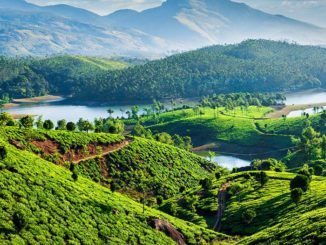
    If you are an NRI visitor like me who often takes a trip to Kerala, there will always be some surprises in store for you. Despite all that the doomsayers say, Kerala is on an upward trajectory, building infrastructure and modernizing every facet of people’s lives. Although mostly two-lanes, the roads have never been better, at least in the Central Travancore area where I belong. Commercial and Residential buildings are rising on both sides of the highways or significant roadways, and heavy traffic is on most of the main arteries. Main Central Road (M.C. Road) passes through my small town called Kallissery, which used to be a sleepy little village where I grew up and now transformed into a shopping paradise with appliance stores and a Reliance supermarket. Traveling just one Kilometer away from the Center of the town is the newly built ‘K.M. Cherian Hospital’ with some of the most modern facilities anywhere in the world. The nonstop flow of the vehicles and the constant sirens of Ambulances heading toward the hospitals might make one yearns for those good old days of peaceful and serene times. Traveling from Chengannur to Changanassery on the M.C. Road, it almost appears as one long contiguous town (a mini megapolis) with shops and multi-cuisine eateries on both sides. Yes, Kerala has progressed, and transformative changes come with its rewards and infliction.

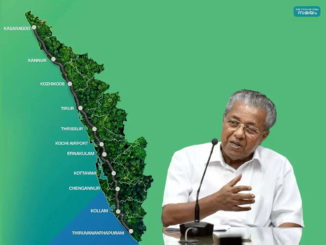
    On the political front, it has always been noisy. Both sides are impatient to listen to each other, and it is almost as if one is shouting over the other just to offset each other. These days, the most heated topic is the K-RAIL, a Semi–High-Speed Rail development project that the current LDF government is vigorously promoting under Chief Minister Pinarayi Vijayan. I cannot argue against this Silver Line project that could reduce travel time and pollute less. Moreover, high-speed transportation systems are an integral part of development anywhere, whether highways or Rail. The Shanghai Maglev in China is the world’s first high-speed commercial magnetic levitation (“maglev”) line, whose trains run on the non-conventional track and reach a top speed of 430 KM/h (267 mph). In 2020, China started testing a maglev prototype train that ran 600 km/h and planned a 2025 launch date.

    If we go back in history, the semi-High-Speed train project was the brainchild of the Oommen Chandy government and is now carried on by the current administration. As we all know, Trivandrum, the Capital of the State, is located at the far end of an elongated State where travel by road could often take almost half a day to reach from one end to the other. After decades of efforts in developing M.C. Road, it is a two-lane road, and an express highway remains a distant dream. Some would also argue that it may be a boon for tourism and open faster access to Kovalam and Vayanad on a single vacation trip. Commuting between the Capital and the commercial hub (Cochin) may become further effortless. Considering the project’s scope, as many experts demand, an environmental impact study may shed light on the flood impact on low-lying areas during the monsoon season. However, development and environmental protection are not mutually exclusive if we are to create jobs and prevent scores of our young people from exiting the State after their studies. What is the point of having a beautiful state while people have little or no means to survive?

    The real problem is how the current government has addressed this very important project. A level of arrogance and missteps has marred the positive aspects of this rail project. We should not undertake an ambitious project of this magnitude without transparency to all stakeholders. The government has failed miserably in making its constituents understand either the necessity or vitality of this giant undertaking. Average folks in Kerala have an inherent suspicion of any project due to a history of corruption and misdeeds. On top of that, there is a failure to deliver on past promises; whether it is OKHI cyclone or big flood of 2018, some of the victims are still waiting for rehabilitation. How then, all those who would be dispossessed due to this new venture trust the Government or any empowered Institution to compensate them in a timely fashion? It is a credibility issue that couldn’t resolve overnight. As a matter of fact, a government must work hard to create trust among its people, making it easier for any project proposal to succeed in a timely fashion. However, the challenge of maintaining trust is complicated by a faster and more diversified flow of information, such as through the Internet and social networks.

    It is a sorry state of affairs as well when some of the Members of Parliament from Kerala appeal to the BJP government not to fund this project. For the UDF, it is not a shining moment in its history! The BJP government at the Center hasn’t been very forthcoming to the growing financial needs of Kerala in general, and now they have been provided a support base from none other than the grand old party itself! If anyone from the party rank and files disagrees, they would become the object of scorn and threatened with disciplinary action! A healthy and open debate is an integral part of the democratic process. This issue should have been sorted out at the State level rather than setting up a bad precedent of one party appealing for funds and another demanding a denial of the same to the Center.

    There are also vibrant discussions on the project’s financial viability and whether the K-RAIL would be solvent. However, if you look around the world, public transportation systems are not self-sustaining, and government subsidies and other financial assistance are integral to daily operations. Amtrak in the USA and MTA in New York City are prime examples of transport systems that rely heavily on government handouts to provide affordable commuting or long-distance services to their citizens.

    Another valid issue that has been raised by the opposition leader V.D. Satheesan is whether we are buying some outdated technology from Japan that may be eager to recoup some money for their discarded products. If we are to embark on a project of this magnitude, we must seek state-of-the-art technology and look forward well into the future. Kerala’s mindset typically drives towards only thinking about the short-term, and we ought to alter that to think about tomorrow.   Nevertheless, the Congress party must be conscious to avoid attaching itself to an anti-development tag going into the next election. It was the Communist Party that stood against automation, and the people of Kerala have paid a heavy price for it over the years. Their intransigence barred multi-national companies from setting up commercial hubs in the State. The K-Rail issue should not become a distraction as well from monitoring other governance issues that are critical to the well-being of the people of the State.

    From my point of view, this project is doomed unless the LDF government brings the opposition to the table for dialogue while convincing the community at large and assuring the directly affected residents of fair and timely compensation. In a democracy, dialogue and building consensus are imperative, and steps need to be taken for transparency and confidence-building measures. Knocking down the kitchen doors with the help of the Police and bureaucrats to lay the survey stones would not help the cause. The current government appears to be inebriated with power, and they might pay a high price for the overreach unless there is a course correction. CPM hasn’t learned a lesson from Nandigram in West Bengal, and K-RAIL could be their undoing in Kerala!

    (Writer is a former Chief Technology Officer of the United Nations and the Vice-Chairman of the Indian Overseas Congress, USA. He can be reached at gta777@gmail.com)


  • Pegasus: The new Cyber Weapon for dismantling democracy

    Pegasus: The new Cyber Weapon for dismantling democracy

    By George Abraham

    “There is little doubt that the use of Pegasus is an assault on the right to privacy everywhere and specifically an attack on the very fabric of Indian democracy. Undoubtedly, the Government is responsible for monitoring people involved in criminal wrongdoings, and there are established procedures involving the judiciary laid out for it. However, targeting opposition leaders, journalists, and regular citizenry for surveilling for their God-given right to express themselves is tantamount to undermining the democracy itself. This Pegasus scandal exposes the mindset of the current leadership, and it does not bode well for the future of India.”

    “The state cannot get a free pass every time by raising national security concerns. No omnibus prohibition can be called against judicial review.”- Supreme Court of India

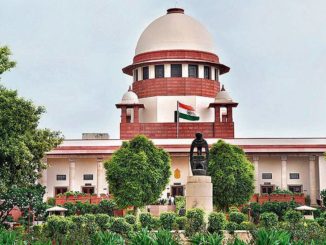
    The New York Times recently reported that India had purchased the Pegasus software from an Israeli company, NSO, as part of the multi-billion-dollar armaments deal that included sophisticated weapons and intelligence gear. The report also said that the purchase was finalized during the visit of Prime Minister Narendra Modi to Israel and cleared by the then Prime Minister Benjamin Netanyahu in 2017. Once again, the Government officials in India kept their silence on the New York Times story. Earlier, the Supreme Court in India has ordered an independent probe into Pegasus upon a ruling that came after petitions were filed which sought an investigation into allegations of unauthorized surveillance. The Court stated while ordering the inquiry that “the mere invocation of national security by the State does not render the Court a mute spectator.”

    The Court also listed several compelling circumstances that were weighed before issuing an order. The right to privacy and freedom of speech are alleged to be impacted, and the entire citizenry is affected by such allegations due to the potential chilling effect. The bench went on to say that the “right to privacy is directly infringed when there is surveillance or spying done on an individual, either by the State or by an external agency” and “if done by the State, the same must be justified on constitutional grounds .” During the hearing, the Centre had filed a brief affidavit “unequivocally” denying the allegations and said the matter involved national security concerns. The Indian Express recently reported that two Cybersecurity experts had told the Supreme Court-appointed committee on the Pegasus issue that there is concrete evidence that the application was used to spy on the petitioners.

    The NSO group claims that the product it sells to government clients is intended to collect data from the mobile devices of specific individuals suspected to be involved in serious crime and terror. However, contrary to their assertion, it has been reported that this spyware has been widely misused. In response, a global consortium of more than 80 journalists from 17 media outlets in 10 countries came together under the ‘Pegasus project’ coordinated by Forbidden Stories with the technical support of Amnesty International’s Security Lab. Their findings shed light on the fact that at least 180 journalists across the globe have been selected as targets in countries like India, Mexico, Hungary, Morocco and France, and others. Potential targets also included human rights activists, academics, businesspeople, lawyers, doctors, union leaders, diplomats, politicians, and several heads of state.

    In a recent column, Siddharth Varadarajan, of ‘The Wire’ wrote further on his interaction with Ronen  Bergman of the New York Times stating that the Indian leadership showed ‘specific interest’ in and ‘specific emphasis’ on acquiring the controversial spyware. The column went on to say that the forensic tests by Amnesty International’s tech lab revealed the presence of military-grade spyware on the smartphones of several journalists, including two of the publication’s founding editors, investigative journalists Paranjoy Guha Thakurta and Sushant Singh and the leading opposition strategist Prashant Kishor. Their numbers were part of a leaked database of probable Pegasus targets, including Congress leader Rahul Gandhi, former election commissioner Ashok Lavasa, and former CBI director Alok Verma.

    What is Pegasus? Pegasus is a spyware that can be covertly installed on mobile phones running most versions of iOS and Android. Pegasus can be installed on the phone through vulnerabilities in common apps such as SMS, WhatsApp, iMessage, or by tricking a target into clicking a malicious link. Once installed, Pegasus can theoretically harvest any data from the device  (SMS, Emails, WhatsApp chats, photos, videos, calendar, or contacts) and transmit it back to the attacker. It could also activate a camera or a microphone, record calls, and scan the GPS data. When iPhone is compromised, it’s done insuch a way that allows the attacker to obtain so-called root privileges, or administrative rights, on the device. Pegasus could easily do more than what the device owner can do.

    For a long time, Israel has used the sale of sophisticated weapons as part of its broader efforts to win diplomatic successes abroad or at the United Nations. Subsequently to this agreement, India voted in favor of Israel by denying observer status at the UN’s Economic and Social Council to a Palestinian human rights organization. India has maintained a commitment to the Palestinian cause for decades, and its records at the United Nations speak for itself. This sudden about-face by India is viewed as a betrayal of the Palestinian people, and Pegasus may have a lot to do with it. It is not only India that has changed its attitude towards Israel after a Pegasus deal; a few countries, including Mexico and Panama, also appeared to have done the same. After installing Pegasus spyware in Panama City in 2012, Panama’s Government voted to oppose the United Nations decision to upgrade the status of the Palestinian delegation.

    The story of Khadija Ismayilova’s is available in the public domain. In Azerbaijan, an oil-rich nation nestled next to the Caspian Sea, has increasingly stifled free speech and dissent in the last decade. Ismayilova’s investigation into the ruling family had made her a prime target of her own Government. The authorities had thrown the book at her arresting her: surreptitiously filming her during sex, accusing her of driving a colleague to suicide, and eventually charging her with tax fraud and sentencing her to seven years in prison. However, she was released on bail after 18 months and banned from leaving the country for five years. So, in 2021, at the end of the travel ban, when Ismayilova packed away all her belongings boarded a plane to Ankara, Turkey, she may have thought she was leaving all that behind. Little did she know the most invasive spy was coming with her. For nearly three years, Khadija Ismayilova’s phone was regularly infected with Pegasus. “All night, I have been thinking about what I did with my phone. I feel guilty for the messages I have sent. I feel guilty for the sources who sent me information thinking that some encrypted messaging ways are secure, and they didn’t know my phone was infected,” she told reporters. “My family members are also victimized. The sources are victimized, and private secrets of the people I have been working with are victimized,” she added.

    There is little doubt that the use of Pegasus is an assault on the right to privacy everywhere and specifically an attack on the very fabric of Indian democracy. Undoubtedly, the Government is responsible for monitoring people involved in criminal wrongdoings, and there are established procedures involving the judiciary laid out for it. However, targeting opposition leaders, journalists, and regular citizenry for surveilling for their God-given right to express themselves is tantamount to undermining the democracy itself. This Pegasus scandal exposes the mindset of the current leadership, and it does not bode well for the future of India.

    (Author is a former Chief Technology Officer of the United Nations and the Vice-Chairman of the Indian Overseas Congress, USA. He can be reached atgta777@gmail.com)


  • Comments of Readers

    2021 is exiting and 2022 is about to enter. So, adieu to one, and welcome to the other. We all have had a mixed kind of experiences in 2021 and we may have our hopes and apprehensions about 2022. The Indian Panorama decided to reach out to readers to have their comment on what impacted them the most in 2021, and what concerns them the most in 2022. We are glad that the response has been quite enthusiastic; we received comments from as many as 15 readers of The Indian Panorama. So, here we go with their comment. Please note we have not edited any, and, as such, the editorial board may please not be held responsible for the mistakes, if any.

    We thank the readers for their time and love, and wish them a Happy New Year – EDITORIAL BOARD

    Dr. VK Raju, Founder & President
    Eye Foundation of America, Morgantown, WV

    My reflections on 2021

    COVID-19 has affected our lives, our economy and nearly every nook and corner of the globe. More than 5 million covid deaths are reported globally and increasing. The US record for daily Coronavirus cases has been broken as two highly contagious variants- Delta and Omicron- have spread across the country.

    In 1918, the flu epidemic death rates varied among different groups. It is sad to say that 100 years later, this history repeated itself. Any specific therapies of the day had little impact on the disease. A hundred years later it is still true of covid 19.

    While few living people can recall the great flu epidemic of 1918, we can continue to learn its lessons, for example: 1. Common sense value of hand washing, 2. Wearing masks; 3. Vaccinations. Speaking about vaccinations, what percentage of the population recollects smallpox and polio? Smallpox was eradicated because of vaccinations. Polio is eradicated from the planet except for isolated cases in only two countries because of vaccinations.  In the case of polio, the Rotary International played a key role. It brought together the political will, professional will, and people’s will. Compare that with the covid situation in US.

    Benjamin Franklin said once,” in 1736, I lost my son, a fine boy of 4 years old to smallpox. I long regretted bitterly and still regret that I have not given it to him by inoculation. This mentioned for the sake of parents, who omit that operation on the supposition that they should never forgive themselves if a child dies: my example showing that the regret might be the same either way. Therefore, the safer should be chosen.” Today, living in such an advanced world, many of us get the basic facts wrong. In spite of the many advances in public health, one might say that it is too easily forgotten here and seen as having not enough impact in the rest of the world. There are > 700,000 physicians in USA and only less than 1% practice public health. Yearly flu infections cost the USA more than $87 billion annually, and it can be prevented by developing a universal vaccine at a fraction of the cost. We know the old adage “prevention is better than cure”. Yet prevention is celebrated in principle and resisted in practice.

    ——————————–

    Amita Singh, Owner, Daminis, Indian fashion retail store, Edison, NJ.

    Dreams can be realized at any age, with hard work and a vision

    One always dreaded the ‘C’ word, never quite comprehending the multiples it brings. As I was growing up and entering my adolescence, I was taught to respect ‘Mother Nature ‘and ‘Father Time’. Today my two cents worth would be to also trust science and a human’s resilience and spirit. Covid has taught us that there are multiple aspects of life that are out of our control. As a single woman, in my apartment during the worst of the pandemic, with my business closed, all I could realize was that it could always be worse. I have also within me, recognized my own personality to accept and overcome what I cannot change. It could be termed as maturity. Personally, it has risen me to another level.  This is ‘POWER’.

    Today I celebrate me, the family that truly connects with me and not just because we share a family tree. I have also grown to respect friends that have an honest, not always agreeable, discussion with me and participate in my life.  I have grown to cherish time that others make for me and not the gifts they bring nor the accolades. As we enter 2022, recognizing life can’t get any worse yet it can, I want to remember lessons learnt, not to be easily forgotten. I want to celebrate the strength within me to make small changes that leave those around me in a better place. Be it in words, action, holding hands or just offering my shoulder.

    Life is not difficult; we make it so by the choices we make!

    So I think and believe!!!

    Wishing every ‘Indian Panorama’ reader a very happy New Year! May 2022,bring you gifts that sustain you as a human being and are not fleeting. History is a cruel reminder. Let’s rise & shine!

    May you create precious memories that are passed onto the next generation!

    ——————————–

    Ashook Ramsaran, President
    Indian Diaspora Council International, New York

    Impactful Issue of Year 2021 and Primary Concern for 2022 – by Ashook Ramsaran

    Most impactful issue of 2021: The continuing spread, unknown trajectory and devastating effects of Covid-19 and its variants, inequity of Covid-19 vaccines globally and the tremendous impact on the lives and livelihoods of millions of people worldwide. The unexpected toll globally in 2021 has been hugely impactful: The unprecedented numbers of those who died, got infected, were physically and mentally affected, displaced, lost their jobs and loved ones, and experienced inordinate disruption in their way of life. Disproportionately affected were front line medical, emergency food industry workers, the poor, and working parents. Covid-19 induced poverty increased by over 100 million people worldwide. Business, travel, education and purchasing of food and goods changed dramatically in ways never before imagined. While technology allowed some sectors to continue at reduced levels, the untold consequences will have long lasting impact into the future.

    Issue of primary concern in 2022: The continuing devastating effects of global climate change with continued resistance to taking necessary steps to reverse the trend and save our planet. While promises are made and broken, there is absence of a coherent strategy and global leadership on the dire impact of changing climatic conditions due to mankind’s adverse influence on the environment. Developed and developing countries, as well as business self- interest, have largely failed to acknowledge science and physical changes taking place: unprecedented levels of pollution, global temperature rise, floods and droughts, forest fires, hurricanes, tornadoes and storms, increasing respiratory problems among all ages, availability of healthy foods, water and air. Climate changes will affect everyone’s lives and livelihood in unprecedented ways.

    ———————————

    Dr. Thomas Abraham, Chairman, GOPIO International, Stamford, CT

    The 2021 continued to be a year in turmoil with a global pandemic continuing to hit the USA, Europe, India and many other countries very badly. When the pandemic hit India severely in April/May/June 2021 and causing lack of Oxygen supplies, the Indian Diaspora community organizations including GOPIO came forwarded to ship massive number of oxygen concentrators to India. The good part in the USA in 2021 was the change over to a new administration which had put together many concrete steps to help American people from the disaster caused by the pandemic. The administration also helped to bring back a robust economy with a very low unemployment. The Corona Virus affected everyone including our Diaspora community. We lost many friends in India due to the pandemic. For Indian Americans, it was an extraordinary year with Indian/African origin Kamala Harris sworn in as Vice President of the USA. By the middle of the year, we could start organizing programs with physical presence, however, the new Omicron variant spreading fast in the USA and all over the world, has alerted us to be cautious. As we enter the New Year, let us hope that our world comes back with normal life in 2022. I wish everyone a healthy, peaceful and prosperous New Year.

    —————————-

    George Abraham,
    Vice Chairman, IOCUSA

    Another tumultuous year is passing by as we are on the threshold of a New Year. We were told to wear masks, wash our hands, take vaccines twice, take a booster shot, keep a safe distance, and we complied with them all. However, Omicron couldn’t care less, and once again as this virus (manufactured or not) made its way all-around, creating havoc and spreading panic. I am nostalgic for those days when I was indeed a free man enjoying life as a normal human being.

    It is also sad to see that politicians are using this crisis to advance their own interests rooted in the ideology of their choice. These elected representatives who are supposed to serve us are acting as our Lords and Kings. They have succeeded in depriving people like me of going into a Dunkin’ Donut’s shop and enjoying a coffee and apple fritter in-house in the last several weeks. I wonder whether they are genuinely concerned about my health or usurping their authority and exercising power over all of us. The primary responsibility of the government is to protect the lives and property of its citizens. If they are genuinely concerned about our security, they will not defund the police and facilitate a rise in crime that threatens every law-abiding citizen. However, today the authorities are busy yanking a whopper jr. from a kid’s hand at a Burger King joint rather than arresting and detaining marauding youths who are engaged in ‘smash and grab’ burglaries all around! It is amazing how our world has just turned upside down!

    Our only hope for 2022 is that common sense will prevail across the board! May I wish everyone a peaceful and healthier New Year!

    —————————-

    Mabel Pais, Writer on Social Issues, The Arts and Entertainment, Health & Wellness, and Spirituality, New York.

    In 2021, the COVID-19 virus that began to make its appearance in the latter half of 2019, pervaded us and took the lives of 10s of 1000s of humans, first in the western countries, then most countries, one by one.

    My wish for all of us to stay healthy in 2022 and live productive lives is to develop a healthy immune system that will NOT get impacted by any deadly virus. I think this can happen if we live as a co-existent, interdependent human society where we look out for one another.

    The demise this week of Nobel Prize laureate Archbishop Desmond Tutu, the South African Anglican bishop, theologian, and peace activist brings home the message: “I am, who I am….because…. we are, who we are.” “I am… because…. you are.” – Ubuntu thoughts. Our survival and our thriving are inextricably connected.

    Treading in the footsteps of another Nobel Prize laureate Nelson Mandela, Archbishop Desmond Tutu and other peace seekers, it is fitting to accept this co-existence and inter-dependence of us humans as absolutely vital to our survival and prosperity, if we wish to continue to thrive on Mother Earth. Mother Earth is our home. We cannot abuse our Mother who nurtures us and allows us to live and flourish day by day. Would we abuse our human mother? I doubt it. Let’s treat Mother Earth with the respect and caring she has bestowed on us for millennia. Let’s stop abuse of nature: the flora and fauna with which we have been gifted from birth.

    ————————————-

    Urmilesh Arya MD FACP, President, National Association of Indians in America, New York

    Impact of Covid on USA

    One of the issues that impacted US as well as the entire world is the Covid 19 crisis. In US more than 52.5 million suffered from this infection out of that more than 833,000 people died. As of Dec 16, 2021, 1 in 6 US resident have been confirmed infected and 1 in 409, people died. Many hospitals did not have enough staff to meet the demand and many countries had shortage of PPE, Respirators and oxygen supply.   The pandemic made an increase in Violence, robberies and lootings, a constant threat.

    Addictions, mental health challenges like anxiety, depression, loneliness, and social isolation affected more to young generation between18 to 34 years of age. Preventive care delayed because of Covid infection

    The pandemic has created a need of support in the areas of Housing / Homelessness, Health care, Nutrition / Food support, Mental Health, Domestic Violence, care for seniors etc.

    The major invention to control pandemic was invention of vaccine. According to CDC 241.6 million people (73%) has received at least one dose, out of that 62 % are fully vaccinated.  Recently there is a 41 % increase in new covid cases. People who are getting hospitalized are those who are not vaccinated.

    Pandemic has changed the life of people, how we work, learn and interact as social distancing guidelines have led amore virtual existence both personally and professionally. The good news is people were using this time to get healthier in many areas, better eating habits, improved sleep pattern, modifying on exercise program and healthy dietary changes. Quarantine made them value their relationships. Children have benefited from being able to spend more time with family. Also, people reevaluated how they spend their time and the life goals.

    There is a new variant of concern in 2022, covid Omicronthat spreads fast but less severe than beta and delta variant, symptoms are same as that of Flue.

    Vaccines clearly raise antibody and strengthen the body defense against infection. People feel a great concern about effect of Covid in 2022. Bill gates said, the biggest concern is “people’s distrust in Government.”  Chief executive officers of Companies like Health care, Restaurants, manufacturing etc., think hope for return of economy to normal is misguiding. Stock market may crash, Recession may happen. President Joe Biden said “we are experiencing the strongest economic recovery in the world. Even after inflation, our economy is bigger, and our families have more money than they did before pandemic.” We got to think positive and hope for a better future. Wish you all a Happy New year and there is a healthy, happy and pandemic ending 2022.

    ————————————-

    Gobind Bathija
    Entrepreneur and Community Leader, New York

    As 2021 comes to a close, it is sometimes difficult to remove yourself from the immediate challenges that face us and reflect on what has evolved as a result of those challenges.  India’s commitment to the development and implementation of COVID-19 vaccinations and treatment programs is a testament to their dedication to the safety and welfare of its citizens regardless of Sector.  With respect to the fight against the Covid Pandemic, India is unified.  All necessary steps are being taken to ensure India is prepared well to face the continued challenges and threats posed by the continued pandemic of the corona virus.  India has even addressed the Indian men’s love of spitting with officials introducing penalties for such actions combatting the airborne dangers in the spread of the virus. While united in the fight against Covid and with a growing economy, India continues to face challenges with Sector unification.  The Public Corruption Index (PCI) still measures close to historical highs.  In 2001, the PCI measured at 31 and currently measures at an historical high of 42.

    Prime Minister Narendra Modi has proven credibility in making the grandest of decisions to combat global and internal threats, including corruption and the pandemic.  PM Modi took immediate action at the early stages of the pandemic by shutting down the economy on the grandest possible scale.  He put the country first ahead of the political effects.  PM Modi can never be accused of not doing enough.  PM Modi should continue to lead with visions of improving quality of lives, strengthening of human freedoms and aspirations, and deepening democracy. While leaders around the world are pre-occupied with immediate challenges, PM Modi presents the initiatives for the next 25 years marking the Centenary of Indian Independence including making India stronger, more prosperous, more inclusive and equal and more democratic.  This will result in less corruption, and a safer, cleaner, stronger economic world power of India.

    ————————————-

    Harpreet Singh Toor, Co -Founder & President, South Asians for Global Empowerment

    The Year 2021 was a very challenging year as we were still in Covid-19, which we still are, and we also have a new President for US. There was such a contrast in personalities with outgoing president, but the challenges were still the same. The withdrawal from Afghanistan for US, the Farmers Protest and resolution for India and Russia knocking on the door of Ukraine. The 2022 is beginning with two major challenges for world. One is Covid-19 still raging and geopolitical challenges from Russia, China and Taliban. I hope and wish we have more Statesmen in the world. Still, wishing a Best and Healthy New Year to all of you. Best wishes for Indrajit Saluja for his tireless work and efforts to put the issues in a proper perspective.

    —————————————

    Sunil Mehra, MD, FACP, FCCP, Professor of Clinical Medicine
    Former Chief of Pulmonary Medicine, and Director of MICU

    We had a rough 2020-2021 for the entire world. Covid impacted the lives of everybody. It struck humanity with vengeance as Pandemic of the century. We lost a few million people in the world with USA losing more than half a million. It causes an economic downfall for many professions including medical field. 2022 is starting with surge in Covid omicron numbers making lots of people sicker esp. kids and unvaccinated individuals. My best wishes to readers of Indian Panorama and entire world for a better healthier life. May God be on our side and give us hope and strength

    Happy and healthy new year to all!

    —————————————

    Tirlok Malik, Emmy Nominated Filmmaker, Ayurveda Restaurateur. Happy Lifestyle Speaker

    Health, Health and Health 21 -22

    Health, health and health was one fear or issue for a lot of people in 2021 and it will continue in 2022 also. The atmosphere around covid is unpredictable. Various theories are being spread by many different people. It’s hard to really know what is true. I think it’s better to listen to doctors and scientist but then there are peoplewho do not agree. For me personally taking care of myself and be responsible towards my wellbeing and not getting sick. has been a concern. So far, I am fine, and I will continue taking care of myself and my health in 2022. My suggestion is to be responsible towards your wellbeing and learn to be more grateful to the universe and the people in your life. Explore within you happiness, contentment and inner peace.

    Once one practices this exploration then it can be easier to face challenges in life.

    Then there are realities of living such as work, family, finances etc which bring another challenge for individuals depending on their circumstances. I think the US had four cross-cutting issues- COVID-19, economic recovery, racial equity, and climate change. But the most important issue has been covid in 2021 and it will continue in 2022. Having said this, I still say welcome 2022 with hope and self-care responsibility.

    so Happy New Year! It sounds good to say it and to hear it!

    —————————————

    Mike Ghouse- motivational speaker, thinker, author, and interfaith wedding officiant,
    Washington, D.C.

    2021 went away swiftly, even before we realized it, so will be 2022

    We have a choice to reluctantly accept what comes our way or choose to shape the future we want. We can carry a rotten face and sulk about things that went awry or have a plan for 2022.

    A good plan is not difficult to write; let me simplify it for you. All you have to do is cut a few pieces of pocket-size paper or get 3×5 cards. On the top of each piece of paper, write this out.

    Personal health

    Family health

    Family finances

    Income and what to spend on

    Job situation

    Education

    Vacation

    Volunteering

    Whom to donate

    Other items

    As your mind races through different topics, take each piece and write down the bullets, don’t worry about priority or sequence at this time. Just jot down the points as they come to you. Once you have enough points on each piece of paper and start thinking about each item, could you write it down or absorb it?

    Now, you have the complete data to do whatever you want to do with it. Experience has shown that it gives you peace of mind when you come to this point; the scattered brain comes together.

     What is my plan?

    —————————————

    Gobind Munjal – A dedicated and committed Community Worker,
    New York

    Let me first congratulate Prof Saluja for having completed 15 years of publication of The Indian Panorama. I wish Prof Saluja and the staff of The Indian Panorama all the success and best wishes in their endeavor to serve the Indian Community by bringing truthful reporting and making it an informative and educative publication. It gives me immense pleasure to know that The Indian Panorama is bringing out a special edition on the occasion of the New Year.

    I am sure the new year edition will record events of 2021 much like 2020, a source of misery to people all over the world. In addition to a lot of deaths, the Coronavirus in the form of new variants continue to adversely impact the businesses and the economy causing a shortage of work force, supply constraints and high inflation. One thing is good that very effective Vaccines were made within a record period of time, which have proved to be a good defense against this deadly virus and people are learning to live with it. As we bid goodbye to 2021, we hope that the new year will bring hope and prosperity and put an end to this pandemic. The things will come back to normal, and world will be a much better place to live in. I wish Prof. Indrajit Saluja and The Indian Panorama continued success and wish everybody a Happy New Year!

    —————————————

    Rajendar Dichpally, General Secretary, IOCUSA, New York

    As the year 2021 comes to an End, we look back at the past year with a sense of despondency and also sorrow on the destruction that the second wave of Covid-19 – 2021 caused to human lives, especially for American Indian’s. I still have nightmares listening to horror stories of the collapse of the healthcare system in India caused by the second wave of Virus that hit the country like a tsunami. I have personally lost so many loved ones in my own family and friends. There was nothing we could do to control the situation and looked on helplessly as the virus took away so many lives in India and USA with quick succession.

    I was fortunate to work with some good organizations like Gandhian Society to do whatever little we could to help the situation in India. This Virus has taught us that life is so fragile and unreliable and only thing we can do is live a life to the full and try and be a good human being.

    As we enter 2022, we are again on the verge of another wave of the virus that has mutated in the form of Omicron, and we are looking at more troubling times. I pray to God to grant the world relief of this virus and let the world breathe easy again, let the children begin to enjoy their childhood again, let businesses flourish and let there be happiness, Good Health and happiness again in this world. Let us again unite to fight this battle together and emerge victorious against the virus. God Save this world and bless all the people who love on this earth. Amen.

    —————————————

    Indu Jaiswal RDN CDN, Chair Indian American Forum, New York.

    As we approach the end of 2021 and are looking forward to New Year 2022, we are still going to face tremendous challenges. We hope that year 2022 will be better than 2021. We are still facing the Pandemic of the COVID -19. all over the world however Vaccine and Booster shots are providing better hope in times to come. We also hope that people affected with mental Health challenges will think positive and become more tolerant. Pandemic has affected the Mental Health of people, Despite the arrival of Omicron Variant of COVID – 19 all over, we still feel positive that with constant Vaccinations this variant will be controlled. We Look forward for positive progress against COVID 19. Another factor is to hope for better environment, address Global warming so we do not have to face extreme weather. As people will start returning to work and to normal lifestyle, things will improve. Also as, Global economy will improve, and people will have better expectations. We all must be positive in our thoughts, and we continue to Salute out Frontline workers who continue to work tirelessly in providing us Quality health care and save our lives. We also want to Salute members of All armed forces and police officers for protecting our everyday lives. On behalf of Indian America Forum Members of Board of Trustees and Executive members we wish all of you Happy and Healthy New Year 2022

    —————————————

    Dr. Zafar Iqbal, Maryland

    May this New Year bring along love, prosperity, health, and peace in everyone’s life to make this year a beautiful one for all. We wish the New Year unfolds new goals, new happiness, and new achievements and brings smiles and joy for all of us. Na.e saal me.n pichhlii nafrat bhulaa de.n, Chalo apnii duniyaa ko jannat banaa de.n.(Parveen Shakir).

    After receiving a doctorate from the All-India Institute of Medical Sciences, New Delhi, in 1972, I served as a faculty member at the Northwestern University Medical School in Chicago. In 1994, joined the Veterans Health Administration, US Government as Scientific Review Advisor until retirement in 2020. I have served with several Indian literary and cultural organizations.

    Comments of readers are invited on the views expressed here.

  • The Afghanistan Tragedy: Will there be an end to endless wars?   

    The Afghanistan Tragedy: Will there be an end to endless wars?   

    By George Abraham

    “Many of these bureaucrats in Washington who are the true architects of these infamous wars have little in common with the folks who are sent to these godforsaken places to fight these unseen enemies. They are part of the elite society, mostly come with Ivy League credentials and live in their multi-million abodes in Washington suburbs. Most of them might not have served a single day in the United States armed forces, and some of the older ones might even have gotten away with waivers during the time of the draft. At the end of the day, it is either those boys from the Midwest who believe that it is their duty to serve their country and honor its flag or the poor black and Latino kids who are hoping to build a better life after completing their service in the Military are the ones who fall prey to these odious designs of the so-called establishment.”

     President Dwight Eisenhower once gave the nation a dire warning. “In the councils of government, we must guard against the acquisition of unwarranted influence, whether sought or unsought, by the military-industrial complex. The potential for the disastrous rise of misplaced power exists and will persist.” He called the military-industrial complex a formidable union of vested interests and a threat to democratic government.

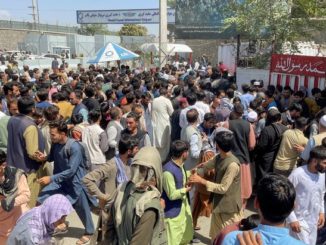
    As the tragedy in Afghanistan unfolds before our very eyes, the question is whether this could have been avoided? There is no doubt that this shameful exit by the United States has not only tarnished the reputation of the superpower but put thousands of Afghan lives in danger. There is little doubt that the current administration has failed miserably in executing a proper exit strategy. History will harshly judge those who have authored and run such an ill-conceived plan.

    Who are the victims of this unfolding strategy? The United States went to Afghanistan to root out Al Qaeda that has planned and staged the attacks on the World Trade Center that killed around 3000 Americans on September 11, 2001. There is no doubt that American intervention prevented more such episodes from the Afghan soil in the U.S., and the chief strategist of the 9/11 attack, Bin Laden, was pursued and eliminated. However, the United States got bogged down in this protracted struggle with the Taliban, who found a haven in Pakistan for their hit and run attacks. Therefore, this was a fight lost by the United States that had no patience to outlast the enemy’s will. Taliban once boasted that “NATO has watches, but we have the time,” The truth is that the Taliban simply waited out the NATO forces and the American resolve to recapture Kabul in lightning speed that may have shocked the bureaucrats in Washington. The infantile justification by Jake Sullivan, the National Security Advisor to the President, that this chaos was inevitable is symptomatic of the mindset of the Washington establishment that is so detached from reality and back to their business as usual.

    George W. Bush, who initiated the foray into Afghanistan, was never content with one war. Instead of focusing on eliminating the Taliban, which was dubbed as a terrorist organization, and securing the freedom for the people of Afghanistan from these regressive and evil elements reminiscent of medieval times, he started another war in Iraq that ended in disaster. Along with destabilizing the entire Middle East paving the way for the creation of a Caliphate by ISIS, American invincibility that was seen at the initial stages of the Afghan invasion was not only lost, but the American people simply got tired of these endless wars.

    Many of these bureaucrats in Washington who are the true architects of these infamous wars have little in common with the folks who are sent to these godforsaken places to fight these unseen enemies. They are part of the elite society, mostly come with Ivy League credentials and live in their multi-million abodes in Washington suburbs. Most of them might not have served a single day in the United States armed forces, and some of the older ones might even have gotten away with waivers during the time of the draft. At the end of the day, it is either those boys from the Midwest who believe that it is their duty to serve their country and honor its flag or the poor black and Latino kids who are hoping to build a better life after completing their service in the Military are the ones who fall prey to these odious designs of the so-called establishment.

    Making war has become the primary business for many of these bureaucrats who are part of this military-industrial complex. People like Dick Cheney, who has never served in the Military, are prime examples who promoted wars and stood to profit. To them, these young men and women who are sent to these battlefields to die or permanently scarred for life are only of peripheral interests. Thousands of others who are caught up in the crossfire and lost their lives are simply collateral damages.

    President Dwight Eisenhower once gave the nation a dire warning. “In the councils of government, we must guard against the acquisition of unwarranted influence, whether sought or unsought, by the military-industrial complex. The potential for the disastrous rise of misplaced power exists and will persist.” He called the military-industrial complex a formidable union of vested interests and a threat to democratic government.

    Take, for example, the folly of continuing to provide billions of dollars in funding to the Pakistan government while allowing bases for Afghan insurgents and actively supporting their mission. According to various reports, the Pakistani Military was also engaged in providing training and tactical support to terrorist groups crossing the border and creating havoc in Kashmir. How could the United States justify supporting the counter-insurgency funding for Pakistan while the country remained a factory for brainwashing young minds with fundamentalist ideology and turn them loose to commit horrendous crimes across the globe?

    Taxpayers of the United States indeed have lost Trillions of dollars fighting these regime-changing wars. Still, all is not lost for these conniving bureaucrats who represent potent lobbies and special interests in the Capitol. Washington suburbs have become the most expensive real estate on American soil today as these folks continue to rake in riches while the rest of the country is undergoing economic hardships and facing an uncertain future.

    ‘Powell doctrine,’ named after the four-star general Colin Powell, said that “war should be the politics of last resort. And when we go to war, we should have a purpose that our people understand and support; we should mobilize the country’s resources to fulfill that mission and then go in to win”. The precipitous withdrawal from Vietnam, Iraq, and now Afghanistan runs contrary to that principle, and Powel himself may have violated the spirit of his own proclamation with his WMD speech at the United Nations while promoting the invasion of Iraq.

    Obviously, people have lost control of their ‘greatest democracy.’ Once again, they are reeling from a shameful and disheartening scenario in Kabul as thousands who risked their lives supporting U.S. policies are stranded and fearing for their lives simply as the result of terrible decision-making in Washington. In the meantime, the powerful establishment may be plotting for yet another conflict somewhere around the world in the name of ‘promoting democracy and freedom’!

    (The author, a former Chief Technology Officer at the United Nations, is Vice President of IOC USA. He can be reached at gta777@gmail.com)

  • Whose freedom are we celebrating this August 15?

    Whose freedom are we celebrating this August 15?

    By George Abraham
    George Abraham

    What is happening to the soul of Indian democracy? ‘The basis for democracy is Liberty,’ said Aristotle. However, today, the Institutions that were built to safeguard that principle are under duress. Laws like UAPA were used in colonial times to suppress the independence movement by suspending ordinary jurisprudence. Under these laws, jail is the rule, and bail is an exception.

    “Many of the Desi civil rights organizations in this country would make loud protests, justifiably so, at the slightest discrimination or physical attack on an Indian but remain largely silent to any level of atrocities committed to vulnerable groups in India. Some of them act as if they are mouthpieces of the BJP regime, often defending actions that violate the fundamental values and principles of the democracy we all live in. As a minority, we demand equal opportunities and protection from the US government; however, we mostly remain reluctant to hold the Modi regime accountable to the same standard! It is quite a paradox!”

    As I was sitting at a corner table in a conference room at the Indian Consulate in New York surveying the folks who were busy preparing for a curtain-raiser function to celebrate India’s 74th anniversary of Independence with a Parade in Long Island, I wondered whether anyone in that group truly cared whether India is still holding on to that promise of freedom to all its citizens! To some, that question is lost amidst the excitement and pageantry of the upcoming celebration, and to many others, the retrogressive trajectory of India’s current path is the real reason for joy and celebration!

    As the Diaspora is about to celebrate Independence Day of India once again, one of the questions that arises in minds across the globe is whose freedom is being celebrated on August 15, 2021?

    Father Stan Swamy died recently in detention on trumped-up charges of terrorism.

    Obviously, it was not the freedom of Father Stan Swamy, who died recently in detention on trumped-up charges of terrorism. He was a man who had devoted his life fighting for the rights of Dalits and Adivasis from the onslaught of corporate interests. And it is not the freedom of Sudha Bharadwaj, who has been languishing in jail now for over three years for defending the rights of the workers and seeking justice for extrajudicial killings by police officers. Of course, it is not the freedom of Asif Iqbal Tanha, Devangana Kalita, and Natasha Narwal who were exercising their constitutional rights to protest CAA. For that alone, they were incarcerated under the draconian UAPA law.In the case of Stan Swamy, the authorities didn ‘t even show basic civility in providing the man with a straw as this frail 84-year-old with Parkinson’s disease had difficulty drinking water from a cup. Upon contacting Covid-19 in prison, it took a court intervention for him to get released to a hospital of his choice, a delay that may have cost him his life. What happened to his right to life and liberty? Why was Stan Swamy denied the freedom to have a presumption of innocence?

    Last February 13, 2021, marks the civil rights lawyer and activist Sudha Bharadwaj’s 900 days in detention under the UAPA law.

    Last February 13, 2021, marks the civil rights lawyer and activist Sudha Bharadwaj’s 900 days in detention under the UAPA law.  She took cases that many other attorneys refused to touch and represented workers wrongfully dismissed by companies, illegally evicted villagers from their land, and women who alleged sexual assault by security forces. Born in Boston to a distinguished economist, she went to IIT Kanpur to study Mathematics. Later, she moved to an iron mining ore town in Chhattisgarh and supported worker’s rights and safety while challenging land acquisition by major corporations and seeking justice for extrajudicial killings by police officers. Bharadwaj has denied the charges and said it was “totally concocted. Obviously, these arrests appear to be an affront to the rule of law and infringing on the citizen’s constitutional rights.  It has been said that a right without a remedy is no right at all. According to press reports, Sudha’s health situation continues to deteriorate in prison. The 59-year-old suffers from diabetes, hypertension, and heart disease, making her susceptible to Covid-19 in the cramped prison. Her bail plea is being rejected, and she has been denied books and Newspapers in jail. Michele Bachelet, the UNHCHR commissioner, has expressed concern over using ‘vaguely defined laws’ to silence activists and government critics. Doesn’t Sudha Bharadwaj deserve the freedom to have a hearing on her case without indefinite detention?

    According to press reports, the most bizarre incident took place on March 19, 2021, in Jhansi, Uttar Pradesh, when four Nuns from the Delhi province of the Sacred Heart Society were arrested while on the way to Odisha from Delhi. The incident occurred while the train they were traveling stopped at 6.30 PM at Jhansi railway station. A group of religious extremists returning from a pilgrimage accused them of religious conversion and raised religious slogans. Subsequently, police arrived at the spot and arrested the Nuns without paying any heed to their side of the story. Around 150 religious radicals accompanied the women in procession to the police station. The terrified nuns were finally released at 11.30 PM after the intervention of some advocacy groups. Don’t these Nuns deserve the freedom of unimpeded travel without harassment anywhere in India?

    Mohammed Munazir arrived in Delhi decades ago, escaping poverty in his native Bihar, where his landless father worked on other people’s farms for a pittance. In the beginning, like poor migrants, he lived in a tarped hovel on the fringes of sprawling Capital, working in a bookbinding shop. Finally, when the bookbinding shop folded, he started selling home-cooked biryani on a cart. Ultimately, he saved enough money to buy a home, a nondescript building in a narrow lane. “It was a nest I finally built for my wife and six children after a lifetime of struggle,” says Mr. Munazir. “It was the only thing I wanted in life; it was my dream come true.” It is that dream that ended in flames on a bright sunny Tuesday when the Capital’s worst religious riots in decades took place in 2020, leaving 53 people dead and hundreds of wounded languishing in understaffed medical facilities, and corpses were still being discovered in drainage ditches. Doesn’t Mr. Munazir have the freedom to dream of building his own nest?

    Born to a Dalit family in the slums of Indora, an Ambedkarite hub in Nagpur, fifty-four-year-old Sudhir Dhawale is an activist, editor, and writer. Dhawale was arrested alongside five other activists and professors on June 6, 2018, due to their connection to Elgar Parishad, which was blamed for the violence at Bhima Koregaon, which took place on January 1, 2018. The 1818 Battle of Koregaon is an important milestone for Dalits. On January 1818, eight hundred troops of the East India company’s Bombay Presidency army with a large number of Mahars defeated a numerically superior force of the Peshwa Baji Rao II. A victory pillar was erected in Koregaon by the British, and in 1928 B. R. Ambedkar led the first commemoration ceremony there. Since then, on January 1, every year, Ambedkarites gather at Bhima Koregaon to celebrate the victory against the upper castes and highlight the historical oppression they have suffered under the caste system. However, to the powerful establishment, these daring Dalits needed to be taught a lesson! They may have finally succeeded in putting a damper on Edgar Parishad’s luster through defamation, linking it to the Maoist and anti-national movements. Doesn’t Sudhir Dhawale and other Dalits have a right to celebrate a historical event without interference from the upper castes?

    It should also be noted that Milind Ekbote, President of Dharmaveer Sambhaji Maharaj Pratishthan, and Sambhaji Bhide, a man associated with RSS and Shiv Pratishthan, who was accused of causing the violence, never faced any serious action.

    Mr. Rajesh Tikait from Uttar Pradesh, a farm leader and spokesperson of the Bharatiya Kisan Union, could be seen in a video distressed and wailing so loudly that his sobbing drowned out his words. Mr. Tikait said that the BJP was trying to “destroy” farmers and that he would not let it happen. He was indeed referring to how goons have infiltrated the January 26 protests by farmers to discredit their movement that has legitimate grievances against the farm laws passed by the Government in 2020. Harsimrat Kaur Badal, a former Union Minister and erstwhile ally of the BJP government, said, “This anti-farmer attitude of the NDA government is responsible for the plight of farmers who are not only been stonewalled for eight months but even their dead are not being recognized.” Why this farming community that is ‘annadaata’ to the country is being humiliated in this manner and called anti-nationals for exercising freedom to air their grievances?

    The alleged snooping by the Indian Government using Israeli spyware Pegasus on opposition politicians, media personnel, and private citizens indicates that individual freedom and the right to privacy have become a thing of the past. Congress leader Rahul Gandhi, one of the victims of the phone tapping issue, asked, “we want to ask just one question. Has the Government of India bought Pegasus? Yes or No. Did the Government use Pegasus weapon against its own people?” The Indians in the snooping database include over 40 journalists, three major opposition figures, and one constitutional authority. What happened to the freedom of the opposition parties to hold the Government accountable and the freedom of the fourth estate to keep Government, legislators, and big business in check by keeping society or the public informed?

    What is happening to the soul of Indian democracy? ‘The basis for democracy is Liberty,’ said Aristotle. However, today, the Institutions that were built to safeguard that principle are under duress. Laws like UAPA were used in colonial times to suppress the independence movement by suspending ordinary jurisprudence. Under these laws, jail is the rule, and bail is an exception. A polis project statement says ‘political prisoner’ is a category of criminal offense that sits most egregiously in any civilized society, especially in countries that call themselves liberal democracies. It is a thought crime: the crime of thinking, acting, speaking, probing, reporting, questioning, demanding rights, and, more importantly, exercising one’s citizenship. The assault on the fundamental rights has been consistent and ongoing at a global level, and rights-bearing citizens are transformed into consuming subjects of a surveillance state”.

    Freedom of Conscience is fundamental to all other liberties. It is innate and God-given. It is guaranteed under the Indian Constitution. However, it is open season for those who freely exercise it. Academia has become another favorite target of the Modi Government. BJP and its ilk have always hated Institutions like JNU, where the free flow of ideas flourished, and lively debates on the pros and cons of contemporary issues were the order of the day. Today, the students and faculty in these revered institutions are intimidated, harassed, and called anti-national for failing to toe their Hindutva agenda line and are often charged with sedition. Modi Government has been openly hostile to civil society groups. It repeatedly denounces human rights and environmental activism as “anti-national” – a phrase that carries connotations of treason.

    There is also quite an irony in the fact that today’s BJP leaders, who mostly come from the RSS ranks, are vocal on the issue of nationalism. The words and deeds of the founders of that organization, from Hedgewar to Veer Savarkar, clearly indicated that they were not only non-participants in the freedom struggle where hundreds of people were risking their lives daily but also collaborators who supported the British on critical occasions. The British acknowledged that RSS has “scrupulously kept itself within the law and refrained from taking part in the disturbances that broke out in August 1942.” Sardar Patel, writing on the assassination of Gandhiji by Nathuram Godse, said, “As regards to RSS and Hindu Mahasabha…our reports do confirm that as a result of the activities of these two bodies, particularly the former (RSS), an atmosphere was created in the country in which such ghastly tragedy became possible.”

    “Religious freedom in India is taking a drastic turn downward, with national and various state governments tolerating widespread harassment and violence against religious minorities” said United States Commission for International Religious Freedom in its 2020 report. The BJP-led Government enacted the Citizenship Amendment Act (CAA), which potentially exposes millions of Muslims to detention, deportation, and statelessness when the Government completes its planned nationwide National Registry of Citizens”. USCIRF also recommended to the State Department that India be designated as a ‘Country of Particular Concern.’ India also slipped into 53rd position in the 2020 Democracy Index’s global ranking, dubbed a flawed democracy. The Economic Intelligence Unit (EIU) said that in India, democratic backsliding by the authorities and crackdown on civil liberties led to a further decline in their global rankings.

    Christians who constitute around 3% of the population are also under severe stress with many of their places of worship under attack, increased re-conversion efforts by Hindu fundamentalist organizations, removal of Christmas Day and Easter Day from the National Calendar, and the cancellation of FCRA of thousands of Christian charities effectively putting them out of business, the Saffron brigade appears to be questioning the very Indian ness of every Christian in India. In addition, they are engaged in a scathing campaign to link Christianity in India, which has a two-thousand-year history, with the colonial legacy.

    Agencies such as India’s Central Bureau of Investigation (CBI), the Enforcement Directorate of the Finance Ministry, the Tax authorities, and even local police forces are often accused of doing the Government’s bidding. The opposition has charged that their leaders have often been targeted for harassment which they consider a political vendetta for expressing their opinions critical of the Government.

    In this week, we may witness widespread celebrations of India’s Independence that will be held in many cities across the U.S. However, one may hear very little regarding whether the hard-fought freedom won by the founding fathers of modern India is in danger of being extinguished! The Cultural and Religious organizations that provide forums for these events appear not to be concerned about the ever-diminishing freedom of India’s citizens or the weakening of its institutions. The current dispensation favors singing Vande Mataram in place of Jana Gana Mana as parts of that national song are replete with Hindu symbolism that is more gratifying, albeit not the communities in their entirety.

    Indians have done well with the open electoral process in the US, having elected four of their own to the House of Representatives and another one as the Vice-President. Although most of them ascribe to policies considered far left of the center and often very strident on issues dealing with Civil Rights, Social Policies, or Immigration, they rarely criticize the Government of India for any similar wrongdoings such as violations of human rights or religious freedom.  They seem reluctant even to raise these issues when meeting with the Prime Minister or other Embassy officials.

    Many of the Desi civil rights organizations in this country would make loud protests, justifiably so, at the slightest discrimination or physical attack on an Indian but remain largely silent to any level of atrocities committed to vulnerable groups in India. Some of them act as if they are mouthpieces of the BJP regime, often defending actions that violate the fundamental values and principles of the democracy we all live in. As a minority, we demand equal opportunities and protection from the US government; however, we mostly remain reluctant to hold the Modi regime accountable to the same standard! It is quite a paradox!

    The Bhartiya Janata Party’s victory in the Lok Sabha elections of 2014 and 2019 has ushered in an unprecedented attack on India’s democracy and injected new elements of intolerance and authoritarianism into the lives of people living in the country. The anti-democratic actions by the Government have sullied international reputation. Therefore, it is time to ask exactly whose freedom are we celebrating on this 74th anniversary? Is it the hard-fought freedom won under the long struggle by Mahatma Gandhi, Jawaharlal Nehru, Sardar Patel, and Maulana Azad from the British to the benefit of all its citizens in India or the diminishing freedom at the expense of the minorities and Dalits solely to the delight of the feudalists/upper castes elites? Nevertheless, from a vantage point, this celebration may be all about the genuine freedom we enjoy in this land of the free and home of the brave, which includes the right to hold a foreign national flag and walk in a parade under a religious banner of our choice!

    (The author is a former Chief Technology Officer of the United Nations and Vice-Chairman of the Indian Overseas Congress, USA)


  • “In death, Fr. Stan Swamy’s voice is even stronger’ – Father Noby Ayyaneth

    “In death, Fr. Stan Swamy’s voice is even stronger’ – Father Noby Ayyaneth

    Mohinder Singh Gilzian, Father Noby Ayyaneth, Dr. Surinder Malhotra, George Abraham
    Prof. Indrajit Saluja, Varghese Abraham, Leela Maret

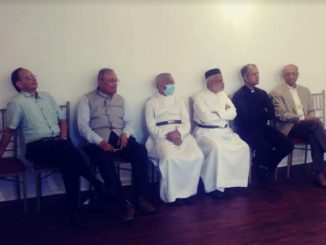
    NEW YORK (TIP): “Living Stan was a nobleman, but the departed Stan is unstoppable and his voice on behalf of the poor and the downtrodden is even stronger and will resonate it throughout history,” said Father Noby Ayyaneth of the Malankara Catholic Diocese of North America condoling the death of Father Stan Swamy at a remembrance meeting organized under the banner of Indo-US Democracy Foundation in Floral Park, New York. Jesus Christ was a master humanitarian, and Fr. Stan was following in his master’s footsteps. For him, suffering was not a tragedy in the face of injustice and as he could not be a silent spectator”.

    Mr. George Abraham, Executive Director of the India-US Democracy Foundation, welcomed the gathering and stated ‘it is a dark day for democracy in India and Father Stan Swamy’s detention, treatment in prison and death is a blot on the nation’s consciousness and a travesty of justice. He expressed his disappointment that in today’s India, the presumption of innocence is becoming a thing of the past. India is about to celebrate its 75th Independence Day, and our founding fathers built democratic institutions that stood the test of time and protected democracy, freedom, individual liberty, and equal justice under law. However, these institutions are increasingly under attack and are being diminished. Today, anyone who dares to criticize the authorities is in danger of being termed anti-national.

    Professor Indrajit Saluja, Publisher of Indian Panorama Newspaper, said Father Stan Swamy was a frail and weak man physically but strong morally and spiritually to carry on with his work on behalf of the weaker sections of society. As Indian Americans, we must demand our politicos to speak out when authorities target the poor and downtrodden in India. UAPA is a draconian law that the Supreme Court should have reviewed, and it is a shame that an innocent man had to pay with his life this way.

    Pastor Wilson Jose, Pastor of the Grace International Church in Mineola, said while we have gathered here to celebrate Father Stan’s life, we would like to express our indignation as Pravasis, the way the political leaders and the judiciary treated him in India. Father Stan represented Christ’s teachings to its core and did his best to uplift the neglected ones by a caste system that is in place over centuries. Jesus said, love your enemies and pray for those who persecute you, and Fr. Stan’s life exemplified those principles. During the freedom struggle, Mahatma Gandhi was jailed many times by the British authorities. However, they respected his ideals and made sure no harm happened to him. Sadly today, the Government of India lacks even that basic level of humanity in the treatment of its own citizens!

    Father John Thomas of Orthodox Church pondered what it would be like if any one of us would be in Fr. Stan’s shoes. Will we get intimidated or pull back? Father Stan’s life is a testament to all of us and should inspire us to stand up and fight for what is right.

    Father P.M. Thomas, Vicar-in-charge of Marthoma Church in Queens Village, said Father Stan’s passing had created a big void, and each of us has a role to play in continuing his work. He asked not to be discouraged but to continue the fight until the truth is revealed.

    Mr. Amir Rashid, Director at NYPD who hails from Bihar, described the hardships the marginalized people suffer at the powerful hands in States like Jharkhand. Father Stan Swamy was the voice for the voiceless, and as long as this same power structure exists, these injustices will continue to be tolerated.

    Pastor Babu Thomas of IPC Hebron in Queens Village reiterated the old saying that injustice anywhere is a threat to justice everywhere. Father Stan Swamy was not a terrorist. The government knew that. His only crime was he loved the poor and served them. Unless we stand up and fight for our freedom and rights, our world will be a diminished place to live.

    Dr. Surinder Malhotra, former President of the Indian Overseas Congress described the pathetic situation in India as far as caste and religion is concerned. Unlike the United States, even for a job application, they want to know your religion. Even in our Diaspora here, they tend to ask whether he is a Hindu or a Christian, north Indian or south Indian, and such intolerance is so evident and has become part of our mindset. He condoled the death of a man who dedicated his entire life to doing good but ended up dying in custody.

    Mr. Mohinder Singh Gilzian, President of the Indian Overseas Congress, USA, said it is outrageous that a man who is working on behalf of the poor dies in Government custody. The people who are responsible for foisting false charges to imprison him should be held accountable. The UAPA act is being misused and used against people for political reasons.

    Dr. Anna George, President of the Indian Nurses’ Association in New York, called Father Stan Swamy’s imprisonment and death cruel and unusual punishment. She asked for raising our collective voices to stop this from happening again.

    Mr. Koshy Thomas, who ran for the NYC Council from District 23, expressed his sorrow, and asked authorities to protect  activists such as Father Stan while respecting the human rights of every citizen in India regardless of their religion or caste.

    Mr. John Joseph, the Vice-President of the Indian overseas Congress, urged not to be silent on these ongoing atrocities by the authorities. Is India a real democracy? He asked the participants to be more vigilant in guarding against these Human Rights abuses.

    Mr. Shaji Karackal, National news coordinator, Harvest TV said ‘forgive us father, I am guilty and many of us are for not seeing the truth on time to come to your defense”. Father Stan Swamy will be remembered as a nobleman who stood up for the poor and marginalized.

    Mr. George Chacko also spoke. Mr. Varhgese Abraham thanked everyone for their attendance and paid tribute to the memory of this great soul, Father Stan Swamy. Mr. Shaji Ennasseril (solidactionstudio.com) provided the logistics.

    (Based on a press release)

  • Indian Overseas Congress, USA writes to US lawmakers to investigate Facebook’s meddling in Indian elections

    Indian Overseas Congress, USA writes to US lawmakers to investigate Facebook’s meddling in Indian elections

    NEW YORK (TIP): The Indian Overseas Congress, USA has written to the Chairmen of the Senate Committee on Foreign Relations and House Committee on Foreign Affairs and the members of the members of the India Caucus to investigate Facebook’s meddling in the Indian electoral politics in favor of BJP, a Hindu nationalist party currently in power. The letter expresses serious concern over Facebook’s election-year interference, content bias, and the selective suppression of Indian citizens’ free expression.

    The letter was triggered by a report in the Wallstreet Journal that detailed how Ankhi Das,  a top executive in charge of the content, instructed her colleagues and said, “punishing violations by politicians from @narendramodi party would damage the company’s business prospects in the country”.

    “India is the largest market for FACEBOOK and FACEBOOK owned WhatsApp in terms of the number of users, and therefore these companies have a huge responsibility in managing the content without religious bias and bigotry. However, FACEBOOK and WhatsApp have chosen the side of those that incite violence and encourage instability that has led to the destruction of lives and property” the letter further added.

    The letter went on to say that “We recognize that India is an important partner in the region for the United States strategically and economically. But the actions of FACEBOOK and WhatsApp are undermining the democratic institutions and threatening the religious minorities. Under the Modi Administration, freedom of expression is being suppressed, media is being muzzled, judicial independence is being destroyed, and religious freedom is under attack, and the behavior of FACEBOOK is a prime example of influential businesses becoming enablers of such actions. This is a matter of great concern to the Indian Diaspora in the United States”.

    The organization is actively seeking a congressional investigation into the abuses by Facebook and has formally requested that ” we respectfully request you to hold Congressional hearings on FACEBOOK’s efforts which undermine the values of liberal democracies in countries like India, drastically altering its political discourse like it has in the US and elsewhere.”

    Ref:

     “Facebook’s Hate-Speech Rules Collide with Indian Politics”, Wall Street Journal. https://www.wsj.com/articles/facebook-hate-speech-india-politics-muslim-hindu-modi-zuckerberg-11597423346

     “Facebook Executive Supported India’s Modi, Disparaged Opposition in Internal Messages”, Wall Street Journal.https://www.wsj.com/articles/facebook-executive-supported-indias-modi-disparaged-opposition-in-internal-messages-11598809348

     “Who Were The Key Players Responsible for Facebook’s Support to Modi and the BJP?”, Newsclick. https://www.newsclick.in/part-3-who-were-key-players-responsible-facebooks-support-modi-and-bjp

     “Facebook Ties to India’s BJP Under Scrutiny Over Hate Speech”, Time. https://time.com/5883993/india-facebook-hate-speech-bjp/

    “Three Out of Facebook’s Seven Fact Checking Partners Have Shared Misinformation”, Alt News. https://www.altnews.in/3-out-of-facebooks-7-fact-checking-partners-have-shared-misinformation-post-pulwama/

  • Tribute to Pranab Mukherjee: A man of independent mind and steely resolve

    Tribute to Pranab Mukherjee: A man of independent mind and steely resolve


    Tribute to Pranab Mukherjee: A man of independent mind and steely resolve

                                              By George Abraham

    George Abraham

    Pranab Mukherjee at the Indian National Overseas Congress reception, September end, 2007, for Congress party president Sonia Gandhi and her delegation members who were in New York to attend the extraordinary General Assembly session to launch the International Day of Non-violence in commemoration of Mahatma Gandhi’s birthday , Oct. 2. Present at the reception on dais were  Dr. Karan Singh, Vayalar Ravi, Anand Sharma, Dr. Surinder S. Malhotra , Pranab Mukherji, Ambassador Ronen Sen , George Abraham , & Sonia Gandhi

    It was in the Fall of 2007; Smt. Sonia Gandhi led a delegation to the United Nations. The occasion was the extraordinary General Assembly session to launch the International day of non-violence on October 2,  Mahatma Gandhi’s birthday. The delegation included senior Congress leaders such as Dr. Karan Singh, Vayalar Ravi, Anand Sharma along with late Pranab Mukherjee. Prior to the U.N. General Assembly session, Indian National Overseas Congress (renamed in 2018 as Indian Overseas Congress, USA), gave a thumping reception to Sonia Gandhi and the delegation at the Marriott Hotel in Times Square, where a few thousand people attended.


    Before the meeting was called to order, at the reception room adjacent to the auditorium, prominent figures from the local Diaspora were rubbing shoulders and taking photographs and were busily engaged in chit-chats. However, one leader was sitting alone in the corner isolated from all the hoopla surrounding him. He was none other than Pranab Mukherjee, the Minister of External Affairs of India.  As the General Secretary of the organization, I wondered why he was not interacting with people and walked up to him to inquire how he was doing.  His security detail then told me that he would like to be left alone.

    I have no explanation for his reaction then. But the more I thought about it; I concluded that he was not your conventional politician but someone who has elevated the level of engagement with people to find tangible solutions to the pressing issues of the time. He appeared to be disinterested in meaningless conversation or insincere overtures. News reports have revealed that he disliked socializing in the Delhi circuit and listed that he had attended just one private dinner in Delhi – hosted by Sibal.   Mukherjee was never a mass leader but derived much of his political clout in his association with Indira Gandhi, Rajiv Gandhi, and P.V. Narasimha Rao.

    Addressing the Diaspora during that visit, Mukherjee said that ‘the future of India and that of the Indian community appear to be intrinsically intertwined”. He then paused for a few seconds and wondered out loud, “When I look at you and meet fellow Indians from different parts of the world, I often ask myself, what is it in us that we are able to adapt ourselves so easily to different societies, traditions, and cultures? Why is it possible for Indians to make different places their home and make themselves liked and admired?  Then he answered his own question by saying, “While I do not always look at antiquity to seek answers to the riddles of contemporary times, I am convinced that many of the answers to the success of Indians at home and abroad lie in our history and culture.”

    True to its creed, he was a Master of History and purveyor of our culture and traditions. All those who know him closely talk about history’s anecdotes he was fond of creating and retelling. From being an Assistant Professor in Vidyanagar college, Kolkata to the President of India, his remarkable journey was that of an intellectual and a scholar with a passion for politics and great loyalty to the Congress Party.

    During the UPA-1, Manmohan Singh Government signed the historic US-Indo Civil Nuclear Agreement with the United States. It soon became a contentious issue for Democrats, and the Bush Administration sought help from all avenues for its ratification. INOC, under the leadership of Dr. Surinder Malhotra at that time, joined the campaign engaging in advocacy and promotion to make the passage of the agreement in the Senate a reality. The deal was an important milestone in cementing the strategic relationship between the two democracies that would pave the way for closer cooperation in the areas of National Security and Trade.

    Pranab Mukherjee played a pivotal role in the agreement’s passing, but for the Left front, which was a coalition partner in the UPA-1, threatened to pull down the Government. A task force set up under the leadership of Mukherjee took charge of the situation, effectively troubleshooting the issues leading up to its passage in the Parliament. Mike Pompeo, the Secretary of State, in his message of condolences stated that “As Minister of External Affairs and Defense, he championed the landmark US-India Civil Nuclear agreement, a foundation of the US-India strategic partnership, and signed the Defense Framework agreement to enable the US-India security relationship we witness today. Few Indian statesmen played a more vital role in preparing India for the mantle of global leadership in the 21st century.”

    There is no doubt that Mukherjee’s acceptance of an invitation by RSS at their convention had stunned the Congress party and many in the leadership. Congress leaders, including his own daughter Sharmistha Mukherjee, expressed displeasure at the former President’s visiting the RSS headquarters in Nagpur. He went there anyway and called the RSS founder K.B. Hedgewar as a ‘great son of India’ to the anguish of millions who regard him as a polarizing figure in Indian history. It is quite difficult to fathom that the former President could not have been aware of the Hindutva ideologue’s views that contradicted the very ‘idea of India’ that was planted and nurtured by Mahatma Gandhi and Pandit Nehru.

    However, to his credit, Mukherjee has given a speech at the RSS meet that reiterated his faith in the country and its constitution. He said, “I want to share some truths I have internalized in 50 years of my political life. The soul of India resides in pluralism. We derive our strength from tolerance. We accept and respect our pluralism. We celebrate our diversity. Any attempt at defining our nationhood in terms of dogmas and identities of religion, region, hatred, and intolerance will only lead to dilution of our national identity. India’s nationhood is not one language, one religion, and it is perennial universalism of 1.3 billion people who use more than 122 languages and 1600 dialects, practice seven major religions and belong to three major ethnic groups, live under one system, one flag, and one identity of being Bhartiya.”


    President of India Ram Nath Kovind paying his last respects to Pranab Mukherjee

    Pranab Mukherjee was his own man with an independent mind and a steely resolve. Coming from a flicker of a lamp in a small Bengali village to chandeliers of Delhi, his immense contribution to modern India’s development will never be forgotten. Moreover, Mukherjee’s 5’3″ physical frame undoubtedly towered over most of his contemporaries, whether it is upholding timeless principles or proposing much-needed solutions to the nation’s serious Domestic and International problems.  In his last address to the nation as the President of India,  he said, “For the past fifty years of my public life, my sacred text has been the constitution of India, my temple has been the Parliament of India, my  passion  has been the service of the people of India.”

    That summarizes a great legacy at its best! Farewell, Pranab Da!.


    (The author is a former Chief technology officer of the United Nations and Vice-Chairman of the Indian Overseas Congress, USA)


  • Indian Overseas Congress, USA, seeks dismissal of Ankhi Das, FACEBOOK content Chief in India

    Indian Overseas Congress, USA, seeks dismissal of Ankhi Das, FACEBOOK content Chief in India

    NEW YORK (TIP): Indian Overseas Congress, USA, an advocacy group that promotes democracy, freedom, and equal justice in India, condemns the FACEBOOK management for its election-year interference, content bias, and suppression of free expression by Indian citizens to help the Bharatiya Janata Party (BJP), that is in power.

    The Wall Street Journal dated August 14, 2020    (https://www.wsj.com/articles/facebook-hate-speech-india-politics-muslim-hindu-modi-zuckerberg-11597423346),  wrote a story on how FACEBOOK’s blatant bias and dubious practices in India in favor of the Modi government is having an impact on the social media as regards its citizen’s right to express their opinions in public. These revelations shine a light on how major business houses that include Ambani’s Jio platform and Tech companies in Silicon Valley are heavily invested in India’s current politics and interferes in its communal fault lines.

    “It is quite unfortunate that a company founded in a free society undermines the very essence of that philosophy in a sister democracy in the world and that too in favor of a political party that demonstrated its disdain for pluralism, democracy and freedom of religion, “ said George Abraham, Vice-Chairman of the Indian Overseas Congress, USA.

     It has been reported that Ms. Ankhi Das, the content manager in charge of FACEBOOK in India, is said to have told her colleagues “punishing violations by politicians from the @narendramodi party would damage the company’s business prospects in the country.” Reuters reported that a handful of employees had written a letter asking FACEBOOK to denounce “anti-Muslim” bigotry” from BJP politicians that Ankit Das said to have protected.            

    “Congress party valiantly fought for freedom and independence and the dignity of every Indian for the last 74 years, and it is regrettable to see that India’s democracy has now been undermined by a profit-making company such as FACEBOOK,” said Mohinder Singh, president of the IOC, USA.

     It is a well-known fact that India is the largest market for FACEBOOK and WhatsApp, and these companies have a huge responsibility in managing the content without bias and bigotry. However, they have chosen the side of those that incite violence and encourage instability that has led to destruction of lives and property. Facebook shoulders a heavy responsibility for what has transpired.    

     IOC, USA, supports the proposal by the AICC asking Facebook to set up a panel to investigate the blatant bias regarding BJP-RSS and punish those who have engaged in such dubious practices. As a first step, Ankhi Das, who is the content manager for FACEBOOK in India, should be relieved of her duties and be investigated for her connection to a political party since her actions have tainted the company’s reputation as an independent arbiter of opposing viewpoints.

  • ‘God’s own country’ or not? NRIs and Tourists in the throes of Coronavirus crisis

    ‘God’s own country’ or not? NRIs and Tourists in the throes of Coronavirus crisis

    By George Abraham

    The world has indeed taken notice of how well Kerala has handled the Coronavirus threat so far and widely applauded for steps the state has undertaken to mitigate the crisis. However, as the virus fear sweeps through Kerala, some of the stories coming out of my home state are very disconcerting. It doesn’t bring out the best of humanity, especially from those who have lived and prospered on the largesse of the NRI remittances and significant revenue from the tourism boom.

    I am referring here about the treatment some of the Keralites meted out to NRIs and foreign nationals who are either returning from foreign countries or trapped in the state due to state-imposed travel restrictions. Most of the NRIs are Indian citizens, and they have the right to return to their home country. Some of the tourists  might have been caught off guard and stranded by these fast-moving developments around the Coronavirus or made the trip regardless due to their long-term planning for a dream vacation or fearing potential losses in terms of  prepaid bookings.

    Kerala’s prosperity in the last five decades can be primarily attributed to the ‘money-order economy’ where the foreign currency remittances fast-tracked the socio-economic development in the state. According to World Bank reports, India retained its position as the world’s top recipient of remittances with its diaspora sending a whopping 79 Billion dollars back home in 2018.  Kerala tops in that category, with almost 20% of that remittances directly going to the state. The money the NRIs send home helps not only the families but also the balance of payments of the country.

    The flow of that amount of money into the Kerala economy by way of remittances has a very significant impact on the living conditions of its citizens. It is important to note that 80% of emigrants from Kerala went to the Gulf, and they contribute a large chunk of the remittances that flow into Kerala. According to a previous study done by the Middle East Institute, remittances were 1.74 times the revenue receipts of the state. Remittances in Kerala were 5.5 times the finance received from the central government and 36 times the exporting earnings from cashews and 30 times that from marine products.

    The study also pointed out the impact of remittances to Kerala and how it has manifested in household consumption, saving and investment, the quality of houses, and the possession of modern consumer durables. Remittances also played a role in enhancing the quality of life and contributing to a high human development index for Kerala in terms of education and health, along with the reduction of poverty and unemployment.

    The overall result for the state has been quite impressive. Kerala’s rating for the Human Development Index (HDI) 0.790, is the highest in India, resulting from the vast improvements state has made in the fields of sanitation, health, education, and poverty reduction. In 2016, the state was also declared ‘open defecation free’ with toilets in every household. The female literacy rate in Kerala stands at 94%, and it is the only state in the union where the female population exceeds the male population.

    Nevertheless, the stories being aired about some of the experiences of returning NRIs and stranded tourists at these difficult times are heart-wrenching. It is critical that the returning NRIs ought to be truthful to the authorities and mindful of their vulnerability in terms of spreading this virus. They need to behave responsibly as per the rules and be accountable for their actions. However, they shouldn’t be blamed for the failures of the state from properly screening all arrivals. It is the responsibility of the authorities to ascertain origins of travel and routings and to decide whether anyone should be quarantined. The infrastructure should have been already in place at all airports for health screenings, and the medical personnel should have been fitted with protective gear.

    Instead, what we are witnessing is an act of demonization of some of those who happened to carry the Coronavirus, probably of no fault of their own. Some of them might have  contracted the virus during the travel and possibly even asymptomatic upon their arrival. Therefore, there is very little justification for the harassment and name-calling they were subjected to and the contempt with which they have been treated.

    The experiences of some of the foreign tourists at the hands of my fellow Malayalees are even more appalling. An alien couple was found to be traumatized and crying incessantly in the middle of a road as they haven’t had food for three days. According to the reports, they were denied food or lodging by panicky guest houses and hotels across the state and finally had to be rescued by the Police department. There were stories of tourists sleeping in cemeteries because their reservations to the hotels were not being honored.

    It is not only a phenomenon in Kerala but also across the country where foreign tourists are being evicted from their apartments, made to feel unwelcome in Taxis, asked to leave restaurants, and have been subjected to hostile looks in public spaces. Social media also bears some responsibility in spreading this panic-driven disinformation that all foreign tourists are carries of the Coronavirus. Even students from Northeast are not spared this time around as many have experienced harassment at the hands of other students, and their interactions were marked by suspicion and rudeness often bordering racism.

    Finally, Keralites are one of the largest groups of economic refugees on this planet, constantly exploring opportunities and daring to break barriers to travel to the ends of the earth to better themselves. We do expect those foreign countries and their nationals to treat us fairly, provide us with opportunities, respect our cultures, and honor our religious traditions. Besides, we also request them to transfer part of their wealth to our state so that folks who are left behind may do better with their own lives as well.

    Therefore, it is obligatory to keep our end of the bargain in treating foreign tourists as well as returning NRIs fairly in good times as well as bad. We simply cannot have it both ways! I am encouraged to see that the government of Kerala, which saw more than a million tourists set foot in the state in 2018, came out to denounce such attacks on foreign tourists asking locals not to see them as carriers of virus. A national crisis often reveals the character of a people. Kerala is often dubbed as ‘God’s own country’ and not let the world call us ‘Devil’s own people’!

    (The writer is a former Chief Technology Officer of the United Nations and Vice-Chairman of the Indian Overseas Congress, USA)

  • The fall of the ‘last Citadel’ of justice: Supreme Court of India

    The fall of the ‘last Citadel’ of justice: Supreme Court of India

    Former Chief Justice of India (CJI) Ranjan Gogoi takes oath as Rajya Sabha MP during the ongoing Budget Session of Parliament, in New Delhi, Thursday, March 19, 2020. (RSTV/PTI Photo)(PTI19-03-2020_000012B)

    “I am surprised as to how Justice Ranjan Gogoi, who once exhibited such courage of conviction to uphold the independence of the judiciary, has compromised the noble principles on the independence and impartiality of the judiciary,” said retired Justice Kurian Thomas.

    He was reacting to the appointment of recently retired Chief Justice of the Supreme Court to the Rajya Sabha by the Modi Administration. “Mr. Gogoi’s decision to accept the nomination to Rajya Sabha has certainly shaken the confidence of the common man on the independence of the judiciary,” Mr. Joseph added.

    It is to be noted that not so long ago, on January 12, 2018, to be exact, Mr. Gogoi was part of the four-member Supreme Court Justices along with Justice Kurian Joseph, who held an unprecedented news conference to warn about dangers of political interference in the judiciary. “The four of us are convinced that unless this institution is preserved and it maintains its equanimity, democracy will not survive in this country,” Justice Jasti Chelameswar said during the press conference held at his home.

    Since independence, the Supreme Court remained a firewall against abuse of power by the Executive branch or the elites in the ruling class. The integrity of judges has been a critical component in rendering impartial decisions that have far-reaching effects on every segment of society. Judicial independence is vital in reassuring the public that judges would dispense cases with honesty and impartiality only in accordance with the law and evidence presented to them. The Supreme court must be free of fear and favor from the Executive, then only it would be trusted by the public.

    If we look at the record of Gogoi as the Chief Justice, he has headed a five-member constitution bench that delivered a historical and unanimous judgment deciding the fate of the Babri Masjid land in Ayodhya in favor of Hindus and also headed the bench that put SC’s stamp of approval on the Rafale fighter jet deal between India and France clearing the BJP government of serious corruption charges from the Opposition. Moreover, Supreme Court headed by Gogoi appeared to have dragged its feet in setting up a quick hearing on the violations of the civil rights of Indian citizens in Kashmir after the abrogation of Article 370 by the Modi Administration.

    Therefore, his nomination to the Rajya Sabha raises a serious question of quid pro quo that would have a diminishing effect on the judges who serve in the Court and debilitating impact on the Institution and its Independence the public have come to rely on for its final word. One may argue that Mr. Ranjan Gogoi’s nomination to Rajya Sabha is not unprecedented as it has happened under the rule of the Congress Party as well. When Justice Rangnath Mishra, the former Chief Justice of India, was nominated to Rajya Sabha in 1998, most observers also saw it as a case of quid pro quo. Two wrongs don’t make it right.

    There are indeed widespread criticisms around this nomination, and some of the prominent citizens have spoken out loud. “What concerns me is that Justice Gogoi had relinquished charge as the CJI as recently as on November 17, 2019, exactly four months ago. In my view, offering the higher members of the judiciary nominated positions such as the Governor of a State or a Membership in the Rajya Sabha undoubtedly sets an unhealthy precedent, as it tends to weaken the institution of the judiciary,” wrote E.A.S Sarma, a former IAS officer of 1965 batch in a letter written to President Ram Nath Kovind.

    Some others are also wondering about the evolution of Ranjan Gogoi from an independent justice who has spoken out against the tyranny of the executive interference in the judiciary to a vassal of a Machiavellian ruling hierarchy that is hellbent on controlling the judicial process promoting their political agenda. As soon as Mr. Gogoi was nominated to the position of CJI, a 35-year-old junior court assistant wrote to 22 Justices in the Supreme Court, accusing him of sexual harassment. Later, a three-member Supreme Court panel investigating the allegations gave a clean chit to Gogoi in the matter. The woman who filed the charges was fired, and her family was said to be harassed. In a statement, the complainant said, “Today, my worst fears have come true, and all hopes of justice and redress from the highest Court of the land have been shattered. “However, in a curious and shocking twist and turn to the whole story, the woman was magically reinstated after Gogoi has vacated his office. One indeed wonders who is behind this entire drama and how the justice may have been compromised!

    When those four justices, including Gogoi, conducted that famous 2018 press conference, they were expressing their disapproval about how then Chief Justice Dipak Misra was assigning the cases, especially the one pertaining to a petition seeking an independent investigation into the mysterious circumstances surrounding the death of BH Loya in 2014. At the time of death, Loya was presiding over the Sohrabuddin encounter case, in which the current Home Minister was a prime accused. In November 2017, the caravan reported the shocking claims raised by the family of Judge Loya.

    In Expressing their strong disapproval of the process, on behalf of the four Justices, Mr. Chelameswar said “they don’t want another twenty years later some very wise men in the country to say that Chelameswar, Ranjan Gogoi, Madan Lokur and Kurian Joseph sold their souls; they didn’t take care of their institution; they didn’t think of the interest of the nation. So, we place it before the people of the country,”

    Only time will tell whether Mr. Ranjan Gogoi has sold his soul or compromised the noble principles. Still, his actions during his tenure as CJI and now his acceptance of Rajya Sabha seat from BJP has indeed cast a cloud suspicion around him and may have irreparably damaged the independence of the institution he was sworn to protect and proclaimed to defend. Moreover, for the people India, it is a steep and tragic fall of the ‘last citadel’ of justice and a threat to freedom itself!

    (Writer is a former Chief Technology Officer of the United Nations and Vice-Chairman of the Indian Overseas Congress, USA)

  • Bashing Christians and befriending Trump, the Christian,  Modi Style

    Bashing Christians and befriending Trump, the Christian, Modi Style


    In the light of President’s remarks at the United Nations General Assembly that it is necessary to “increase the prosecution and punishment of crimes against religious communities”, the world is waiting to see whether he will raise the issue privately with Modi during the state visit, make a public statement in support of constitutional rights similar to Obama, or remain silent. Then we will have a much clearer idea whether religious freedom is merely a political football or a sincere goal of the Trump Administration.


    On the surface, President Trump appears committed fully to the idea of Religious Freedom. He has been very vocal about the issue on many forums that include the United Nations. To his credit, he has appointed Mr. Sam Brownback, a conservative Catholic, to the position at the State Department as the Ambassador of Religious freedom. Evangelical leaders in the U.S. are some of the most ardent supporters of this President anywhere because of his clear commitment to the cause.  To the delight of his Evangelical base, he has not only spoken against the ‘Johnson Amendment’ that prohibits Clergy from commenting on politics from the pulpit but also issued an Executive order that lessens its enforcement power and limits its bureaucratic oversight.

    However, a different picture emerges if one delves deeply into the inner workings of this President concerning this very issue. As someone who has participated in the Religious Freedom Conference in Washington, D.C., I witnessed the selective application of this issue firsthand that suits his political purposes. There were many speakers from countries like China and Iran who detailed the suppression of religious freedom in those countries and the persecution of the faithful by the authorities. However, India rather conspicuously was missing any representation at the conference.

    The weaponization of religion by the current Administration – so they can preserve their power -has reached a fever pitch in India, where minorities are being lynched for their dietary habits and churches are being torched by the Hindutva radicals. When questioned about this absence, an official of the State Department could only respond by saying that India was invited but declined to participate. It is hard to believe that speakers from authoritarian regimes of China and Iran somehow found their way to the conference, but Indian representatives willing to speak on the matter could not be found! Upon questioning, Mr. Brownback feigned his ignorance in this regard and said someone from India should have been present. However, according to several sources, White House appears to have given special instructions to the State Department not to bring the current BJP government’s shabby record on religious freedom to the table.

    Now that President Trump is on the way to India to meet with Prime Minister Modi, whom he considers his strategic partner, it is important to examine how the wellbeing of the minority Christians in India, as well as the interests of American Christian leadership, may have been undermined by this Administration for either political expediency or plain business interests.

    Firstly, let us take the case of ‘Compassion International,’ a Christian Charitable organization in the U.S. that has done incredible work around the World, including India, by clothing, feeding, and educating impoverished children by allowing their upward mobility. The Modi Government has decided to throw out the organization while knowing fully well that they are jeopardizing the futures of 145000 poor children only because the organization is considered ‘Christian.’ If the country is so opposed to foreign funding, why then the Hindu organizations like ‘Ekal Vidyalaya,’ a Sangh Parivar affiliated outfit in the U.S. continue to collect funds from all Americans including Christians?

    To add insult to injury, Mr. S. Jaishankar, the diplomat, turned politician who is the current Minister of External Affairs, is said to have invited the lead attorney for the organization and gave him a tongue-lashing at his office lambasting the organization and accusing its leadership of engaging in proselytizing. The organization had vehemently denied these charges often raised by anti-minority zealots who could care less about the lives of the lower caste and poor folks around them. Moreover, it is genuinely disappointing to see a diplomat who had such a rich multi-cultural global experience, including being Ambassador to the United States, to behave with such arrogance and lack of empathy.

    Another arena where American Christian leadership is unfairly treated by India is in the issuance of visas to those who aspire to visit their fellow Christians to attend a conference or a convention. In a shocking display of bad faith, only a few months ago, nine leaders from the New York Council of Christian churches headed by Rev. Peter Cook, who traveled to India with valid visas were denied entry at the Chennai airport. And after subjugating them to a grueling 12-hour questioning, they were deported back to the United States. ‘The team was there to meet some people and learn,’ said Mr. Cook, who is also the Executive Director of the New York State Council of Churches.  They were even denied the basic courtesy of making a phone call to their would-be hosts. According to one of the team members, an immigration official went as far as to pronounce, ‘we don’t want Christians to come here’!

    Visas are indeed considered a privilege, not a right; however, protocol and courtesy call for reciprocity. Hindu religious leaders from India appear to have unlimited access to visit or serve their fellow faithful in this country. The number of religious visas issued to Hindu temples and other religious institutions by the U.S. stand at an all-time high. However, an American Christian leader does not even have an option to apply for a visa on such a ground. If one dares to take a tourist visa and attend any of the church meetings, he/she risks not only being deported but will be banned from an entry back to India for their lifetime.

    It is not only the American Christian leadership that is put under the grind but also Indians who have immigrated to this country and acquired U.S. Citizenship. Many of them took the opportunity to avail themselves of the Overseas Citizenship (OCI) card, believing that it would give them privileges on par with Indian citizens except for voting or owning agricultural lands. However, as Dr. Christo Philip from Houston found out, one of his frequent trips to India turned out to be a nightmare. He was stopped at the airport and deported back to Spain, where the flight originated, ending up in prison for a day and losing his OCI status. He was falsely accused of evangelizing though, as a medical doctor, his primary interest was to serve the needy people over their health concerns at some of the remotest parts of India. Although the Delhi high court has finally restored his OCI status, the Judge involved may have paid a higher price and said to have been reassigned since then.

    The current OCI application contains obvious conditions preventing ‘Missionary work’ and ‘Journalism’ and combined with the provision in the newly passed Citizenship Amendment Act (CAA) empowering the bureaucracy to cancel OCI card for any ‘violation of the law’ has sent shivers down the spine in the Indian Christian leadership in America. Mere participation of religious activity while visiting India could now be construed as a violation of the OCI agreement, and there are plenty of  folks in the RSS cadre and in the bureaucracy who are more than willing to collude in making such a participation a violation of the law that may also be beyond any judicial review. The provision of ‘journalism’ may shield the Government from any form of criticism from OCI cardholders who may want to pen their experiences in any of the media outlets.

    Let me also quote from a letter recently sent by a multi-faith group to President Trump highlighting the plight of an American Pastor named Bryan Nerren that shows Religious persecution is not restricted to Indian citizens only. “In October 2019, police arrested U.S. pastor Bryan Nerren in Bagdogra airport in India. The police arrested him on the grounds of failing to declare funds, this followed after the officers in New Delhi interrogated him, asking him if he was Christian and if the money was for Christians or Hindus, they cleared him at the airport in New Delhi only to have him arrested in Bagdogra. The pastor was compliant and said he would fill out the customs form but was instead arrested. Authorities confiscated the pastor’s funds and passport, and while he has now been released, he is still waiting to receive his passport. Senator Alexander and Senator Blackburn are working on his case. The boldness of the authorities’ arrest and discrimination of a U.S. national because of his faith – shows that actors of religious persecution in India, afforded government impunity, further embolden state and non-state extremists to continue their discriminatory and abusive actions towards non-Hindus”.

    The ill-treatment of the Christian leadership by the officials is not just limited to American Christians but includes leaders from other countries as well. Considering that India, which has 30 million of its citizens living abroad and more at home are looking for opportunities around the World, what the Modi government has done to a Spanish Nun who lived in India for five decades and serving the poor is deeply shameful. Sister Enedina, 86 years old, a member of the Daughters of Charity, was denied the renewal of her visa and was told by the Government that she had ten days to leave the country.  She flew August 20 from New Delhi to Spain. It should also be noted that the Modi administration has so far not extended an invitation to Pope Francis, who is eager for such a visit, despite appeals from various Christian and secular quarters.

    In many of the incidents highlighted above, so far, Trump Administration appears to have taken a wait and see attitude in dealing with the Modi Administration. In the light of President’s remarks at the United Nations General Assembly that it is necessary to “increase the prosecution and punishment of crimes against religious communities”, the world is waiting to see whether he will raise the issue privately with Modi during the state visit, make a public statement in support of constitutional rights similar to Obama, or remain silent. Then we will have a much clearer idea whether religious freedom is merely a political football or a sincere goal of the Trump Administration.

     (Author  is a former Chief Technology Officer of the United Nations)