Tag: George Floyd

  • 4 ex-cops indicted on US civil rights charges in Floyd death

    4 ex-cops indicted on US civil rights charges in Floyd death

    MINNEAPOLIS (TIP): A federal grand jury has indicted the four former Minneapolis police officers involved in George Floyd’s arrest and death, accusing them of violating the Black man’s constitutional rights as he was restrained face-down on the pavement and gasping for air, according to indictments unsealed Friday, May 7.

    The three-count indictment names Derek Chauvin, Thomas Lane, J. Kueng and Tou Thao. Specifically, Chauvin, Thao and Kueng are charged with violating Floyd’s right to be free from unreasonable seizure and excessive force. All four officers are charged for their failure to provide Floyd with medical care. Chauvin was also charged in a second indictment, stemming from the arrest and neck restraint of a 14-year-old boy in 2017.

    Thomas Lane, Tou Thao and J. Kueng appeared via videoconference in US District Court in Minneapolis. Chauvin was not part of the court appearance.

    Chauvin was convicted last month on state charges of murder and manslaughter in Floyd’s death and is in Minnesota’s only maximum-security prison as he awaits sentencing. The other three former officers face a state trial in August, and they are free on bond. They were allowed to remain free after Friday’s federal court appearance.

    Floyd, 46, died May 25 after Chauvin pinned him to the ground with a knee on his neck, even as Floyd, who was handcuffed, repeatedly said he couldn’t breathe. Kueng and Lane also helped restrain Floyd — state prosecutors have said Kueng knelt on Floyd’s back and Lane held down Floyd’s legs. State prosecutors say Thao held back bystanders and kept them from intervening during the 9 1/2-minute restraint.

    Chauvin’s attorney, Eric Nelson, argued during his murder trial that Chauvin acted reasonably in the situation and that Floyd died because of underlying health issues and drug use. He has filed a request for a new trial, citing many issues including the judge’s refusal to move the trial due to publicity.

    Nelson had no comment on the federal charges Friday. Messages left with attorneys for two of the other officers were not immediately returned, and an attorney for the fourth officer was getting in an elevator and disconnected when reached by The Associated Press.

    Floyd’s arrest and death, which a bystander captured on cellphone video, sparked protests nationwide and widespread calls for an end to police brutality and racial inequities.

    (Source: Agencies)

  • The Floyd verdict

    The Floyd verdict

    Mindsets must change to rein in police brutality, racism

    Nine minutes and 29 seconds — that’s how long Derek Chauvin, a White police officer, kept African-American George Floyd pinned under his knee on a pavement in Minneapolis on May 25 last year. Floyd was neither a terrorist nor a killer on the loose. All that he was accused of was using a counterfeit $20 note at a store. Yet, he was choked to death by the cop, with his last words being a desperate plea: ‘I can’t breathe.’ This abominable act of police brutality and racism shamed America and gave a new lease of life to the Black Lives Matter movement. On Tuesday, a federal grand jury found Chauvin guilty on all three counts of Floyd’s murder. Soon after the verdict, President Joe Biden candidly admitted that the killing had ‘ripped the blinders off for the whole world to see the systemic racism’ in the US.

    With Chauvin set to be imprisoned for a long term, justice appears to have been done in the Floyd case, and that too within one year of the incident. But is it the beginning of a new dawn in America, which has a long history of racial inequality and injustice? The House of Representatives has passed the George Floyd Justice in Policing Act, which is aimed at bringing about police reforms in the US, but it is yet to be adopted by the Senate. The biggest challenge is to catalyze a transformation in the hearts and minds of the law enforcers as well as the ordinary people. The recent massacre of Asian-Americans in Indianapolis is a grim reminder of the enormity of the task of changing mindsets. The US case has lessons for India, which is no stranger to police excesses and sectarian intolerance. All the custodial deaths, fake encounters and mob lynchings demonstrate blatant disregard for the rule of law. The frequent cases of instant justice point to the dwindling trust in the judicial system. The police-politician-criminal nexus is taking its toll on the dispensation of justice. What’s needed is earnest introspection, followed by course correction, so as to create an environment in which every Floyd can breathe freely and fearlessly.

    (Tribune, India)

  • George Floyd remembered at memorial service

    George Floyd remembered at memorial service

    MINNEAPOLIS, MN (TIP): Hundreds of mourners in Minneapolis on Thursday, June 4,  remembered George Floyd, the black man whose death in police custody set off a wave of nationwide protests that reached the doors of the White House and ignited a debate about race and justice.

    Philonise  Floyd, one of Floyd’s brothers, choking with emotion, told a memorial service at a chapel in the Minnesota city’s North Central University that their family was poor.

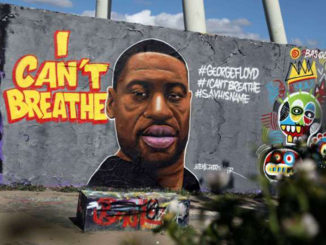
    “It’s crazy man, all these people came to see my brother, it’s amazing he touched so many hearts,” said the brother, wearing a dark suit and a badge with a photo of his brother and the words “I can’t breathe” on his lapel.

    Floyd’s death on May 25 has become the latest flashpoint for rage over police brutality against African Americans, propelling the issue of race to the top of the political agenda ahead of the U.S. presidential election on Nov. 3.

    Derek Chauvin, 44,  filmed in a widely circulated video kneeling on Floyd’s neck for nearly nine minutes as Floyd gasped for air and repeatedly groaned, ”Please, I can’t breathe.” was fired from the Minneapolis police force and charged with second-degree murder.

    Huge crowds have defied curfews and taken to the streets of cities across the country for nine nights in sometimes violent protests that prompted President Donald Trump to threaten to send in the military.

    The Reverend Al Sharpton, a television political commentator and civil rights activist was among those at the memorial service for George Floyd

    Ben Crump, a lawyer for Floyd’s family, told the memorial service that the police action that day was evil.

    “What we saw in that video was evil. So America, as we proclaim as we memorialize George Floyd, do not accept evil. Protest against evil. We cannot cooperate with evil. We cannot cooperate with torture,” Mr. Crump said.

    Prosecutors leveled new charges against four former Minneapolis police officers implicated in the killing on Wednesday, June 3. .

    However, on Thursday, June 4, the three officers charged with aiding and abetting the murder of Floyd made their first appearances in court, where bail was set at $1 million but would be lowered to $750,000 if they agreed to certain conditions, including forfeiting any personal firearms.

    In New York City, which has been hit by looting during the protests, thousands of people attended a memorial event in a Brooklyn park for Floyd.

    Many knelt in the grass in the afternoon sunshine in a symbol of protest against police behavior and chanted, “No Justice. No Peace.”

    U.S. Representative Hakeem Jeffries urged people to continue their protests, saying the tragedy has awakened a cross-section of people who would bring lasting change.

    “This time will be different, because the movement is being led by young African American sisters,” the New York Democrat told the crowd. “This time will be different because it’s not a top-down movement, it’s a bottom-up-movement.”

    Meanwhile, U.S. Attorney General William Barr said on Thursday, June 4,  there had been evidence that foreign interests and “extremist agitators” affiliated with left-wing movements like Antifa were taking over the protests. But he offered no details.

    The Reverend Al Sharpton, a television political commentator and civil rights activist, told the Minneapolis service that the overwhelming majority of protesters were peaceful.

    “There have been protests all over the world. Some have looted and done other things. None of us condone it – looting and violence,” Rev. Sharpton said. “But there is a difference between those calling for peace – and those calling for quiet. Some y’all don’t want peace, you just want quiet. You just want us to suffer in silence.”

    The protests against Floyd’s killing came close to the White House on Monday, June 1 night when baton-swinging police used heavy handed tactics to drive demonstrators away.

    Mr. Trump has threatened to send U.S. troops to stamp out civil unrest against the wishes of State governors. That alarmed current and former military officials.

    Mr. Trump’s former Defense Secretary Jim Mattis, after long refusing to explicitly criticize his former boss, denounced any militarization of the response to protests.

    “Donald Trump is the first president in my lifetime who does not try to unite the American people does not even pretend to try,” Mr. Mattis, who resigned as defense secretary in 2018, wrote in a statement published by The Atlantic.

    Services for Floyd are expected to stretch across six days and three States, including memorials in North Carolina and Houston. A funeral is planned for Tuesday, June  9.

    (Agencies)