[vc_row][vc_column][vc_custom_heading text=”E-Edition” font_container=”tag:h2|text_align:center” google_fonts=”font_family:Istok%20Web%3Aregular%2Citalic%2C700%2C700italic|font_style:700%20bold%20regular%3A700%3Anormal” css=”” link=”url:https%3A%2F%2Fwww.theindianpanorama.news%2Fwp-content%2Fuploads%2F2025%2F02%2FTIP-February-21-E-Edition-1.pdf”][vc_single_image image=”179544″ img_size=”full” alignment=”center” onclick=”custom_link” css=”” link=”https://www.theindianpanorama.news/wp-content/uploads/2025/02/TIP-February-21-E-Edition-1.pdf”][/vc_column][/vc_row][vc_row][vc_column width=”2/3″][vc_custom_heading text=”Lead Stories This Week” google_fonts=”font_family:Istok%20Web%3Aregular%2Citalic%2C700%2C700italic|font_style:700%20bold%20regular%3A700%3Anormal” css=”” link=”url:https%3A%2F%2Fwww.theindianpanorama.news%2F”][vc_wp_posts number=”5″ show_date=”1″][/vc_column][vc_column width=”1/3″][vc_single_image image=”82828″ img_size=”medium” alignment=”center” onclick=”custom_link” css=”” link=” https://www.theindianpanorama.news/advertising-media-kit-portal-indian-panorama/ “][vc_single_image image=”82829″ img_size=”medium” alignment=”center” onclick=”custom_link” css=”” link=” https://www.theindianpanorama.news/advertising-media-kit-portal-indian-panorama/ “][/vc_column][/vc_row]
Tag: Google
-

Mukesh Ambani buys Nvidia AI chips, plans to build largest data centre in India: Report
Mukesh Ambani, chairman of Reliance Industries, is planning to build what could become the world’s largest data centre in Jamnagar, Gujarat, according to a report by Bloomberg. The facility, expected to boast a total capacity of three gigawatts, would be a huge move in India’s tech landscape, easily outpacing current global benchmarks by a big margin. For comparison, the largest operational data centres today, mostly located in the United States, are under one gigawatt.
To support this ambitious move, Reliance is procuring advanced AI semiconductors from Nvidia Corporation. These high-performance chips are essential for the complex computations required by AI-driven tools, such as ChatGPT and other generative AI platforms.
The timing of Mukesh Ambani’s move is no coincidence. Globally, tech giants like Microsoft, Amazon, and Google have been spending billions of dollars on expanding data centre capacities to keep up with the high demand for AI services. Earlier this week, a consortium including OpenAI, SoftBank, and Oracle announced plans to invest up to $500 billion in AI infrastructure under a project called Stargate.
If this initiative goes ahead as planned, Ambani’s Jamnagar facility will not only surpass existing data centre capacities but also give India a competitive edge in the growing AI market. As of now, India’s total data centre capacity — just like the USA — is under one gigawatt. Tripling this capacity in one project would be a major milestone for the country, potentially accelerating its AI development.
While the scale of the project is unprecedented, so is its estimated cost. Building such a massive facility could require an investment of $20 to $30 billion, according to industry estimates. Although Reliance Industries has about $26 billion in cash reserves, funding such a project would still be a challenge. The company has not commented on the reports yet.
Ambani’s strategy appears similar to his approach in the telecom sector, where Reliance Jio disrupted the market by offering services at affordable prices. This time, the aim is to lower the cost of AI inferencing — the computational process behind running AI models — which can be prohibitively expensive for startups and established firms alike.
Jamnagar, already the site of Reliance’s oil refining and petrochemical operations, will now play a central role in the company’s push for renewable energy and AI. The data centre is expected to be powered largely by green energy, with Reliance building solar, wind, and green hydrogen projects nearby. However, experts point out that maintaining a continuous energy supply for such a massive facility may still require fossil fuels or large battery storage systems. Ambani has made it clear that his ultimate goal is to make AI accessible to everyone in India. “We want to offer the lowest AI inferencing costs in the world, making AI affordable and available to all,” he said last year. -

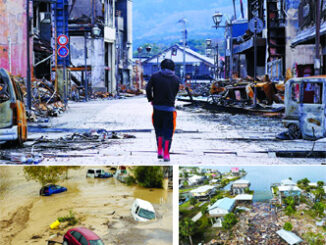
Natural disasters that rocked the world in 2024
The year 2024 has seen a horrifying variety of natural disasters resulting in tragic deaths and destruction that have shocked the world. Events, including everything from earthquakes to hurricanes and landslides, have left in their wake grieving survivors and destroyed homes and livelihoods. Of course, natural disasters have afflicted humanity since the dawn of time—but now we have a sinister extra factor to contend with: climate change.
Noto Earthquake
A powerful earthquake struck on New Year’s Day, heralding a disastrous start to 2024 for the people of the Noto Peninsula in western Japan. NASA’s Earth Observatory reported, “The 7.5 magnitude main shock was followed by dozens of strong aftershocks in the following minutes, hours, and days.” The principal quake struck at 4:10 in the afternoon.Just to make a bad situation worse, there was heavy snowfall in the immediate aftermath of the earthquake and the resulting fires, hampering rescue efforts. NASA geophysicist Eric Fielding said that some areas of the Noto Peninsula were lifted as much as 13 feet (4 meters). Around 84,000 homes were damaged, leaving a repair bill that may be as high as $17.6 billion, with 14,000 people directly affected by the destruction. And grimly, 281 people lost their lives, with many more badly injured.
Spain Floods
On October 29, as much as 20 inches (51 cm) of rain fell on the southeastern Spanish province of Valencia in just eight hours. Unsurprisingly, this massive deluge resulted in flash floods and devastating destruction. The city of Valencia, which lies on the Mediterranean coast, and the surrounding towns and farmland were heavily flooded, and a total of 216 people died, almost half of them over the age of 70. The rain turned streets into rivers, and cars were tossed aside as if they were toys.NASA’s Earth Observatory reports that the exceptionally high levels of rainfall “came from a high-altitude low-pressure weather system that became isolated from the jet stream.” This happened when a cold front collided with warm air over the Mediterranean. In the aftermath of the floods, public outrage at a perceived lack of warning and poor response from rescue services spilled over into angry demonstrations. When King Felipe VI and Queen Letizia visited Valencia, angry survivors pelted the royal couple with mud as they toured the streets.
Uganda Garbage Landslide
The Kiteezi garbage dump, clearly visible on Google Maps satellite view, is the only place to dispose of garbage in Uganda’s capital city, Kampala. The satellite pictures also reveal the fact that there are homes nestled cheek-by-jowl with the festering mountain of trash, which covers a 36-acre site in the city. Some of the residents of those homes were the victims of a garbage landslide in August when torrential rain caused a substantial portion of the trash mountain to collapse.Around 1,000 people were forced to leave their homes, but it turns out that by escaping with their lives, they were the fortunate ones, even though many lost everything. Meanwhile, rescuers dug their way through tons of garbage in a desperate effort to locate survivors. A few days after the Kiteezi disaster, the Kampala police announced a confirmed death toll of 35, with 28 people still unaccounted for.
Hurricane Helene
Helene, the deadliest hurricane since Katrina 20 years ago, swept in from the Atlantic in late September, making landfall in Florida. From there, it worked its way across Georgia, both Carolinas, Virginia, Tennessee, and Alabama. As it tracked across the southeastern states, it left a terrible trail of destruction in its wake. Rescue and recovery efforts continued for days after Helene had completed its bout of devastation.More than a week after the hurricane had blown through, the Associated Press reported that more than 230 people had lost their lives in the fearful storm. Those who survived Helene had to cope with widespread power outages, intense flooding, and massive destruction of infrastructure. North Carolina’s Governor Roy Cooper highlighted the ferocious strength of Helene, saying, “We knew storms could cause damage, but we weren’t expecting the magnitude of this one – water raging in rivers all over in a way we’ve never seen before.”
Wayanad Landslide
In July, it was the Wayanad district in India’s Kerala region on the country’s southwestern coast that experienced just how devastating the forces of nature can be. Torrential rain, 22 inches (56 cm) in two days, caused landslides, and by early August, the grim death toll had risen to 392, with 150 people reported as being missing. The casualties came in small villages on steep hillsides where many of the inhabitants worked on local tea plantations.The Hindu website told the tragic story of two of the villages that were engulfed by the landslide, Mundakkai and Chooralmala, both places previously best known for their “scenic landscapes and waterfalls.” However, in the massive landslide, which originated in a nearby mountaintop and barreled some 5 miles (8 km) down the course of the Iruvaniphuza River, these two villages were virtually wiped out. Weeks later, the gruesome task of identifying bodies continued, with some of the dead only identified with the use of DNA testing.
Indonesian Volcano
Volcanic Mount Lewotobi Laki-Laki on Indonesia’s Flores Island erupted in early November, sending hot ash soaring 6,500 feet (1,981 meters) into the skies. A flow of deadly lava and cascading rocks hit villages on the mountain’s slopes, about 2 miles (3.2 km) from the eruption. The Indonesian Center for Volcanology and Geological Disaster Mitigation called for a complete evacuation for all those living within a four-mile radius of Mount Lewotobi Laki-Laki “due to the ejection of incandescent material.” The evacuation came after ten people had already lost their lives.BBC News reported that a video shot by people at the scene of the eruption showed survivors “covered in volcanic ash, rock showers and homes ablaze, as well as the scorched aftermath of the disruption.” In fact, there had been considerable advance warning of a likely eruption as Mount Lewotobi Laki-Laki had been emitting clouds of smoke and ash since December 2023. As a result, many people had previously left the area or the casualty level would almost certainly have been higher.
Typhoon Yagi
Typhoon Yagi raged across several Asian countries in early September, including Laos, Thailand, and Myanmar, but Vietnam was the worst affected country. The overall death toll of Yagi was 600, with 42 fatalities in Thailand, 242 in Myanmar, and 300 in Vietnam. The majority of the casualties were caused by flash floods and landslides resulting from the extreme rainfall that Yagi brought to the region. The Center for Disaster Philanthropy (CDP) reported that there were “still people missing who are presumed dead.”CDP cited the case of one especially tragic incident in the Vietnamese village of Lang Nu in Lao Cai province. There, the torrential rain caused a landslide, which overwhelmed the hamlet’s population of 158. At least 48 of the villagers lost their lives, while a further 17 were injured. Some 39 were missing and assumed to be dead, so that less than half the people of the village had survived to tell the horrifying tale. As well as a high death toll overall, Vietnam also suffered the destruction of around 237,000 homes.
Drought in Zambia
A severe drought got underway in the African nation of Zambia in January 2024, and the following month, the African country’s president, Hakainde Hichilema, declared an official national disaster. The United Nations has said that the landlocked South African nation experienced the worst water shortage during the growing season in three decades. This has caused food shortages in Zambia, but it’s not just the agricultural sector that has been damaged.Up to 80% of Zambia’s electric power is generated by one hydroelectric scheme, the Kariba Dam, with its mighty 420-foot (128-meter) wall creating the world’s largest man-made lake. But thanks to the drought, water levels have fallen too low to power the turbines fully, severely curtailing the electricity supply. In November, the Guardian reported that the drought continued with no sign of rains, and that meant the Kariba generator might have to close altogether. Already, Zambians are reduced to just three hours of electricity each day.
Ethiopian Landslide
It was on July 21 and 22 that two massive landslides, triggered by torrential rainfall, engulfed several Ethiopian villages in the Gofa Zone region. Within a couple of days of the catastrophe, the death toll stood at 257, with the UN warning that the total number of fatalities was likely to increase to perhaps as high as 500. Some 15,000 people were evacuated from the Kencho Shacha Gozdi district as further landslips were a distinct possibility. Harrowing reports emerged of survivors desperately digging through deep mud with their bare hands in an effort to find those buried by the disastrous landslides. Speaking to Agence France-Presse, survivor Tseganesh Obole told how she and her six children had been buried in the mud. Although she had escaped with two of her youngsters, a distraught Tseganesh explained that “four of my children died and remained buried.”
Las Vegas Heat Wave
Las Vegas residents know that summer inevitably brings high temperatures that can be hard to bear. But the heatwave that baked the city in 2024 was way beyond normal. During the three summer months—June, July, and August—the average daily temperature was 96.2°F (35.7°C), the hottest summer Las Vegas has experienced since records began in 1937. Weather service meteorologist Morgan Stessman told the Las Vegas Review-Journal that, “We blew [the summer] record out of the water.”In December, the Las Vegas Review-Journal reported that the Clark County coroner’s office had confirmed that 491 deaths could be attributed to the exceptionally hot summer, up from 309 heat fatalities in 2023. Grimly, the coroner’s office also pointed out that nearly all of those killed by heat and aged under 40 had a contributing cause of death of drug or alcohol abuse. -

The rise and contributions of the Indian diaspora
The Indian diaspora is one of the largest and most diverse global communities, with an estimated 32 million people of Indian origin living across the world. From the shores of the Caribbean islands to the bustling cities of North America, Europe, the Middle East, Southeast Asia, and beyond, Indians have built thriving communities that are often key to the economic, social, and cultural fabric of their host nations. Over the past few centuries, the Indian diaspora has experienced remarkable growth, playing an influential role in shaping the world’s geopolitical landscape, global markets, and cultural exchanges. This article aims to explore the rise of the Indian diaspora, their historical journey, the factors contributing to their migration, and their diverse and substantial contributions to their host countries and to India itself.
Historical Background of Indian Emigration
Early Waves of Migration
Indian migration has a rich history that spans centuries. The earliest recorded instances of Indian emigration occurred during the ancient and medieval periods, with Indians settling in Southeast Asia, Africa, and the Arabian Peninsula. Traders, scholars, and missionaries often traveled across the Indian Ocean, leaving behind traces of Indian culture and religion.
During the British colonial period (18th–20th centuries), however, emigration from India significantly increased. The indentured labor system, implemented by the British after the abolition of the transatlantic slave trade, became the primary mechanism for the large-scale migration of Indians. Millions of Indians were transported to various colonies such as Mauritius, Fiji, the Caribbean islands, and South Africa to work on sugar plantations, railways, and in other industries. This wave of migration laid the foundation for the development of vibrant Indian communities in these regions, some of which still maintain strong cultural ties to their Indian roots.
Post-Independence Migration
After India’s independence in 1947, migration patterns began to shift. Many Indians sought better economic opportunities abroad, especially in Western countries such as the United States, the United Kingdom, Canada, and Australia. The 1960s and 1970s saw the rise of skilled Indian professionals, including doctors, engineers, and IT specialists, migrating to meet labor shortages in these nations. By the 1980s and 1990s, the expansion of India’s global footprint, coupled with economic liberalization, further accelerated the migration of professionals seeking better opportunities in growing economies.
Factors Driving Indian Migration
Economic Opportunities
The most significant factor driving Indian migration has been the search for better economic prospects. As India’s population grew and its economic landscape evolved, many Indians faced limited opportunities for career advancement, education, and financial stability at home. Countries with burgeoning economies and labor shortages, such as the Gulf states, the United States, Canada, and the United Kingdom, offered higher wages, better living standards, and improved career prospects.
In the post-1991 liberalized economy, India’s economic growth allowed many to take advantage of international opportunities. The rise of the Indian information technology (IT) sector also played a crucial role in facilitating the migration of highly skilled professionals to countries like the United States and Canada.
Educational Pursuits
The pursuit of education has also been a driving force for migration. Indian students have flocked to institutions abroad for higher education, particularly in fields like engineering, medicine, management, and the sciences. The United States, United Kingdom, Australia, and Canada remain top destinations for Indian students, who not only benefit from quality education but also gain exposure to international networks, knowledge, and skills.
Political and Social Factors
In some cases, migration was driven by political instability, persecution, or limited opportunities in India. For example, during the period of political turmoil in India during the 1970s and 1980s, large numbers of people sought refuge or better prospects abroad. In countries like Uganda, Fiji, and Kenya, political events (such as Idi Amin’s expulsion of Indians from Uganda) forced many to leave.
Additionally, factors such as religious intolerance, caste-based discrimination, and economic inequalities led to waves of migration from certain regions within India to more developed countries, where better social mobility and opportunities were available.
Indian Diaspora’s Contribution to Global Economies
Economic Impact and Remittances
One of the most important contributions of the Indian diaspora has been in the form of remittances. According to the World Bank, India has been the largest recipient of remittances globally, receiving over $87 billion in 2020 alone. Remittances sent by Indian expatriates to their families back home have been a vital source of income for millions, contributing significantly to poverty alleviation, education, healthcare, and overall economic growth.
The economic footprint of the Indian diaspora extends beyond remittances. Indian entrepreneurs and professionals have made substantial investments in their host countries, contributing to the growth of industries ranging from technology to real estate, hospitality, and retail. The Indian diaspora has played a key role in the global technology boom, especially in sectors like software development, finance, and telecommunications.
Business and Entrepreneurship
Indians have been instrumental in the development of several industries worldwide. In countries like the United States, the United Kingdom, Canada, and Australia, Indian entrepreneurs have built successful businesses that employ thousands of people. In Silicon Valley, Indian-origin entrepreneurs have become some of the most prominent figures in the tech industry, with individuals like Sundar Pichai (CEO of Google), Satya Nadella (CEO of Microsoft), and Vinod Khosla (co-founder of Sun Microsystems) leading major global tech firms.
In the United States, Indian immigrants have made their mark in the healthcare sector, particularly in the fields of medicine and biotechnology. Indian-origin doctors, researchers, and health professionals are highly respected for their expertise and have contributed to the development of cutting-edge medical technologies.
Indian businesses have also flourished in the Gulf states, where large communities of Indians work in construction, retail, and hospitality. Moreover, successful Indian businesspeople, such as Lakshmi Mittal, who heads ArcelorMittal, the world’s largest steel producer, and Mukesh Ambani, the chairman of Reliance Industries, have become global symbols of entrepreneurship.
Contributions to Culture and Society
Cultural Diplomacy and Soft Power
The Indian diaspora has been a powerful vehicle for the spread of Indian culture across the globe. Whether through Bollywood films, traditional dance forms like Bharatanatyam and Kathak, or global cuisine, the Indian diaspora has brought India’s rich cultural heritage to the forefront of global consciousness. Cultural festivals, such as Diwali and Holi, are celebrated by communities of Indian origin in many countries, fostering a greater understanding of Indian traditions and values.
In countries like the United States, the United Kingdom, Canada, and Australia, the Indian diaspora has been at the center of intercultural dialogues, promoting diversity, tolerance, and understanding. The popularity of yoga and meditation in the West is also largely attributed to the Indian diaspora’s efforts in sharing these practices with the world.
Philanthropy and Social Causes
Indian diaspora communities have also made significant contributions to charitable causes and social development, both in their host countries and in India. Many members of the Indian diaspora have been involved in philanthropy, supporting causes such as education, healthcare, and disaster relief.
The Indian diaspora has also been active in promoting educational initiatives, providing scholarships to students in need, and supporting schools and universities in India. The contributions of Indian-origin individuals to international organizations such as the United Nations and the World Health Organization further highlight the global impact of the Indian diaspora.
Political Influence and Advocacy
Engagement in Host Country Politics
The Indian diaspora’s political engagement has grown significantly over the years. In countries like the United States, the United Kingdom, Canada, and Australia, Indian-origin individuals have been elected to high political offices, contributing to the political landscape of their respective nations. Notable figures include Kamala Harris, the Vice President of the United States, and Priti Patel, the Home Secretary of the United Kingdom, both of whom have Indian heritage.
Indian-origin politicians have advocated for the interests of the diaspora, building bridges between their home country, India, and their adopted nations. In the United States, for example, Indian-Americans have emerged as a significant voting bloc, influencing political campaigns, policy decisions, and international relations.
Strengthening India’s Global Presence
The Indian diaspora has also played a crucial role in strengthening India’s global influence. By acting as a bridge between their host countries and India, the diaspora has contributed to enhancing India’s diplomatic, economic, and cultural ties with the world. Indian-origin politicians, business leaders, and community organizers have often acted as ambassadors for India, lobbying for greater trade and investment, fostering bilateral partnerships, and promoting India’s interests on the global stage.
The Future of the Indian Diaspora
As the world becomes increasingly interconnected, the role of the Indian diaspora is expected to grow even further. In the coming decades, the Indian diaspora will continue to be a critical factor in fostering India’s global standing. The rise of India as an economic powerhouse, along with its expanding influence in global politics, will provide new avenues for the diaspora to contribute to their home country’s growth.
Moreover, as the Indian diaspora becomes more integrated into the societies in which they live, their contributions will likely become more visible and impactful. The focus will likely shift from simple remittances and labor to more complex forms of collaboration, such as joint ventures, innovation partnerships, and global research initiatives. -

Prepare to remove TikTok from app stores: US lawmakers to Google, Apple
WASHINGTON, D.C. (TIP): Two influential US lawmakers, including Indian-American Raja Krishnamoorthi, have asked Google and Apple to remove TikTok from their app stores ahead of a potential ban on the video-sharing platform next month. A bill signed by President Joe Biden into law in April requires China-based ByteDance, which owns TikTok, to divest from it by January 19 or face a US ban.
Ahead of the January 19 deadline, House Select Committee on the Chinese Communist Party (CCP) Chair John Moolenaar and Ranking Member Krishnamoorthi on Friday wrote to Apple CEO Tim Cook, Google CEO Sundar Pichai and TikTok CEO Shou Chew. The lawmakers asked Cook and Pichai to prepare to remove TikTok from their play stores by January 19. In their letter to the TikTok CEO, they urged Chew to “immediately execute a qualified divestiture”.
All three letters come after the DC Circuit Court’s 3-0 opinion that upheld the Protecting Americans from Foreign Adversary Controlled Applications Act.
In the letters to Cook and Pichai, the lawmakers said, “Today, we sent a letter to TikTok highlighting that Congress has provided ample time—233 days and counting—for the company to take the necessary steps to comply with the law and pursue a divestment that protects US national security.”
“As you know, without a qualified divestiture, the Act makes it unlawful to provide services to distribute, maintain, or update such foreign adversary-controlled application (including any source code of such application) by means of a marketplace (including an online mobile application store) through which users within the land or maritime borders of the United States may access, maintain, or update such application.
“Under US law, (Apple and Google) must take the necessary steps to ensure it can fully comply with this requirement by January 19, 2025,” they wrote.
-

Is Google’s Play Store monopoly over? US court orders tech giant to carry rival app stores
While Google has said that it will be seeking a stay, Monday’s ruling marks the culmination of a four year-long antitrust fight between the Fortnite maker and the big tech company. It also means that Google could face genuine competition in the Android app marketplace for the first time, at least in the US.
What does Google have to do now?
From November 1, 2024 to November 1, 2027, Google has been ordered to let apps use their own billing systems for in-app payment purchases instead of being forced to use only Google Play Billing. Previously, the jury had found that Google had violated the law by tying its payment system to the app store.
The court also ordered Google to remove the anti-steering provisions in its policy, which restricts app developers from linking to external payment options as well as informing users about it. Additionally, Google has to let app developers inform users about the availability and pricing of their apps outside the Play Store, and the company cannot stop them from providing users with a link to download the app outside the Play Store (also known as sideloading).
What is Google not allowed to do anymore?
To stop Google from maintaining its dominance in the app distribution market, the court has prohibited the company from offering app developers money or perks to exclusively launch their apps on the Play Store.
It is also not allowed to share app revenue “with any person or entity that distributes Android apps” or plans to launch an app store or app platform.
Notably, Google is no longer allowed to ink deals with smartphone manufacturers like Samsung for the Play Store app to be pre-installed on Android devices. Furthermore, the company cannot offer money to device makers or carriers so that they don’t pre-install third-party app stores on their devices.
During the hearings, Epic Games had argued that Google entered into agreements with various app developers, smartphone manufacturers, and carriers that made it impossible for rival app stores to compete. The jury was also convinced that “Google entered into one or more agreements that unreasonably restrained trade in a relevant antitrust market” including “agreements with OEMs [original equipment manufacturers] that sell mobile devices.”
The pro-competition changes to the Play Store have to be in place for three years, though Epic had initially sought a six-year period. Dismissing Epic’s argument, the judge said, “The provisions are designed to level the playing field for the entry and growth of rivals, without burdening Google excessively.” Source: The Indian Express