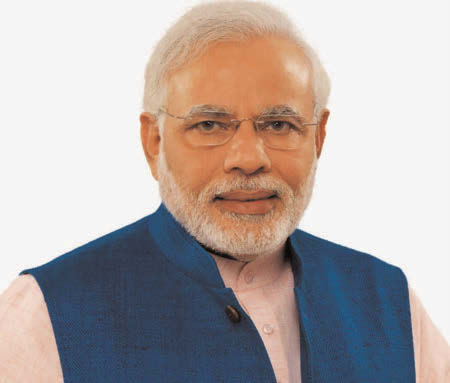
NEW YORK (TIP): Ahead of Prime Minister Narendra Modi’s visit to Switzerland for Davos summit, an international survey has ranked him among the top three leaders of the world.
An annual survey by Gallup International has put Prime Minister Modi at number three among the global leaders.
The respondents in the survey, which was conducted among the people across 50 countries, had rated Prime Minister Modi ahead of China’s Xi Jinping, Russian President Vladimir Putin, British Prime Minister Theresa May, Israel’s Benjamin Netanyahu amongst others.
The top ranking in the survey went to German Chancellor Angela Merkel, followed by French president Emmanuel Macron.
Prime Minister Modi will be on a two-day visit to Davos, Switzerland, to attend the World Economic Forum (WEF) meeting between January 22 and 23.
SRIHARIKOTA (TIP): India on Friday, January 12, successfully launched weather observation satellite Cartosat 2 Series and 29 other spacecraft onboard its dependable Polar rocket from here.
The successful orbiting of the satellites by the Polar Satellite Launch Vehicle PSLV C-40 comes four months after the Indian space Research Organisation’s mission to launch backup navigation spacecraft IRNSS-1H onboard PSLV-39 ended in a rare failure.
My heartiest congratulations to @isro and its scientists on the successful launch of PSLV today. This success in the New Year will bring benefits of the country’s rapid strides in space technology to our citizens, farmers, fishermen etc. — Narendra Modi (@narendramodi) January 12, 2018
A jubilant ISRO Chairman A S Kiran Kumar announced that the Cartosat 2 Series satellite, the seventh in the series, a nano satellite and 28 commercial payloads were successfully injected into the orbit one by one by the PSLV C-40, in the space of about 17.33 minutes since lift-off.
A micro satellite of India would be orbited after about 90 minutes following the re-ignition of the fourth stage, Kumar said.
International customer satellites are three micro and 25 nano-satellites from six countries — Canada, Finland, France, Korea, the United Kingdom and the United States of America.
Earlier, at the end of the 28-hours countdown, the 44.4-meter-tall PSLV-C40 in its 42nd flight, lifted off at 9.29 am and soared into a cloudy sky from the first launch pad.
The opening mission of 2018 was considered crucial for ISRO as the previous PSLV launch came as a setback to scientists as the backup navigation satellite IRNSS-1H could not be placed in orbit following a snag in the final leg of the PSLV-C39 mission in August last year.
The heat shield of the rocket did not separate in the final leg of the launch sequence, trapping the satellite in the fourth stage of the rocket.
A visibly relieved Kiran Kumar, on his final mission as the chief of the space agency, said he was happy to provide Cartosat 2 Series as a New Year gift for the country.
“ISRO is starting 2018 with the successful launch… all customer satellites (besides Cartosat and nanosat) released and the microast after one hour. So far Cartosat performance is satisfactory,” he said at the mission control room.
Referring to the previous launch, he said it had heat shield problem and an ISRO committee had addressed it and taken steps to ensure the vehicle was ‘robust’.
INTERVIEW BY PROF. INDRAJIT S SALUJA, CHIEF EDITOR, THE INDIAN PANORAMA
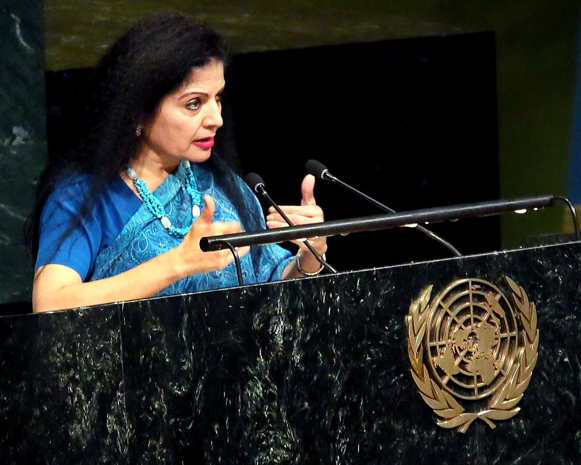
“The power of one is about passion, commitment and indomitable courage and keeping faith with the causes we serve no matter the difficulties and setbacks. It’s about not giving up ever.” Ambassador Lakshmi Puri, Assistant Secretary General & Deputy Executive Director UN Women, had said, receiving her Diwali Power of One Award at the United Nations on December 11, 2017. The only woman among five diplomats to be honored, Ambassador Puri made her resolve known: “I will power on believing in the infinite possibility of all of us to achieve our infinite potential for good”.
As this champion of gender equality prepared to leave the UN Women towards the end of January 2018 to go back to India, after having served the apex women’s body of the United Nations since its inception in 2011, The Indian Panorama succeeded in securing her nod for an interview.
So, on a January 2 cold morning I reached her office in the iconic Daily News building on 42nd Street in New York City to speak with her. In a candid conversation with me she spoke passionately about her work at the UN Women – how much needed to be done, how much has been done, and how much more needs to be done – for gender equality, for emancipation of women, for empowerment of women. I could see a tigress in her when ready to pounce if she thought she was being challenged. During the conversation, at one or two points, she flipped at some remark which she considered was sexist or discriminatory.
I tried to wean her away from the subject so dear to her, to her personal life and succeeded but only briefly because she was possessed with thinking only of women and their rightful and dignified place in society.
Here are excerpts from the interview.
TIP: You have put your heart and soul in your work to care for the dignity of women as guided by your parents and that’s what,Ibelieve, you have instilled in your children. You are known to be a fiercely feminist personality. I would like my readers to know what is the role of UN Women when it comes to emancipation, ending bias and grant women their rights as human beings I will then come to my other question.
AMB: Un Women was founded in Jan. 2011, and I joined in March 2011. So, Iam in the leadership team since the beginning and this forum is the only global advocate for gender equality, women’s empowerment and women’s right in every area. So, what does that mean? It means for us that international agreements and commitments made by govts. to uphold and advance gender equality and empowerment, norms and standards. And that has been UN women’s and my own contribution.Because we have in place today historic gender equality compact on the part of international community which is reflected in the Beijing platform for action not only recommitted but taken forward.
Similarly, the UN’s sustainable development agenda has made gender equality central to the agenda. And there is a sustainable goal on achieving gender equality and empowering all women. So, we mobilized all countries tostrongly support and take forward the goal.
And that goal is about ending all forms of violence against women, child marriage, women trafficking, harmful practices like honor killing, sex selection, and everything. apart from that all harmful practices that we have in, includingIndia, south Asia. So, this is a strong sustainable target.
Similarly, ending all forms discrimination, laws and practices. Women’s economic empowerment equal ownership over productive resources. Similarly, parity in voice participation and leadership in all public life, economic and political life. That means in parliament, in the executive, in judiciary, in law enforcement, in public service, in corporations, everywhere. and, then it also involves universal access to sexual and reproductive health and reproductive rights. Women need control over their bodies and their reproductive role. And, then, the goal also recognizes that women have to bear disproportionate role in domestic care. This is really frontier pushing. 2/3rds of such work is done by women and in places like in India, it is higher which is without compensation and it also without opportunity, cost on education, income and employment, economic empowerment. So, valuing that, reducing that, redistributing that and provisioning that. so, these goals are something that were very hard to attain and that’s something that I count that as my legacy – the whole gender equality, climate change, peace and security, the new urban agenda. My husband is the urban affairs minister in India,but we have been advocating before the govt. of India and implementing smart cities program and all the urban programs that they are doing. PM Modi is very much supportive of gender equality program and his new India campaign.
Receiving the Diwali Power of One Award, in recognition of powerful advocacy and leadership in ensuring the adoption of a dedicated goal on gender equality and women’s empowerment (SDG 5) within the Sustainable Development Goals, and championship of the cause, December 11, 2017 Photo /Jay Mandal
But sexual harassment in work place is very pervasive. It is challenging to women who are coming out and participating in different sectors of political life and professions. So, all these stories are now coming out like “metoo” movement.
TIP: I concur with what you are saying but centuries old cultural, social and patriarchal norms take time to change. Compared to US, there are not many women rising to top in Punjab or Africa. How tough do you think your ground is whether in Punjab or Africa?
AMB: Well, cultural,social, and patriarchal norms are critical and that is why we believe in movement building. and that is why I believe govt. of India’s – bibi bachao, beti padhao – unless you start building culture and social norms around valuing the girl child that she is of equal value and also you dismantle all the patriarchal institutions and norms that devalue the child and aversion to the girl child, you are not going to get any change. So, movement building has to be done. This movement building has been going on through village councils. UN women has been working in India through women village councilors and zilla parishad councilors. Because they have got elected on quota and there are 1.5 million women councilors who are acting as staff. What we have do is to work with them, train them and demand rights and public services from authorities and also implementation of the programs that have been approved, money to be spent on programs that have been approved. So, our governance program is very successful program.
Women’s economic empowerment, access to energy and water and sanitation are really important. But you have to target gender equality when you target these programs. And equally these programs will benefit gender equality in return. For example, the jan-dhan program, the access to finance, women’s disadvantage in terms of owning property, lands and in Punjab this is prevalent in spite of having a law that prevents it and also to disincentivize the discrimination. So effective laws and policies and their effective implementation, movement building, and youth have to be part of all this.
On the youth side, we have this LEAP program – Leadership, empowerment, action and prevention of violence against women and partnership with women’s organization, young men’s organization and intergenerational dialog. So that is the youth part.
We are very successful in our “he or she” programs. men and boys have to be made champions of gender equality. Women have to stand up for their rights. I have seen in India women are transmitting harmful, discriminatory patriarchal norms. So social transformation by women themselves is important. but men and boys have to be taught from the beginning.
With Prime Minister of India, Narendra Modi, October 2017 Photo / PMO
TIP:That is where the problem is. When there are many women in the family, only then men are sensitive to feminist issues.
AMB:Yes, it has to begin when youare a boy. Every father and mother must bring up their children in a gender equal way. Boys must learn in their textbooks in the way their teachers teach them about how women and girls are lower in dignity. The other day PM Modi said in “swacha Bharat abhiyan” – he talked about how everybody in the house leaves the woman to do the cleaning work. Why? It should be the responsibility of each one. So that kind of new culture respecting the dignity and equal rights of women has to be developed. Education is an important part, but prevention, protection, prosecution of perpetrators, ending violence against women and provision of multisectoral services- in all of that again, changing mindset and educating from the beginning is needed. We are now dealing with generations of people who have grown up on gender unequal basis and mindset that have stereotypes. So, we have to change that and to change that we have to work with them. and we have been working with them.
90% of the world is governed by men leaders and they are leading from the front. You asked about Africa. We have worked with tribal leaders, advocating and championing. It has been successful.
Faith is another important thing. In Sikhism, women are always seen as equal. And, what has happened now? it is with all other religions including Hindus that we worship them on one side and on the other, we devalue them.
Farewell call with the Secretary-General of the United Nations, Antonio Guterres, December 2017 Photo/ Mohammed Jaffer-SnapsIndia
In order to build 50/50 progress by 2030, we have to take some measures. We are leading not only in India but many parts of the world, “Gender parity Democracy” movement.
TIP: Do you think, likereservation system, we should have a similar system in political and corporate world?
AMB: I entirely advocate what is in the Beijing platform and what is in the convention for ending all forms of discrimination against women. There is a rule for special temporary measures. it is not that these measures will be there forever, but when you levelthe playing field, you need some special measures to take those who are at the position of disadvantage now to the position of equality and once that has been achieved, then those measures will become irrelevant. So thatis what we should aspire for.
Now to your question, even before going to corporate, we have been advocating, and achieved constitutional amendments in many countries whereby quotas have been set for parliaments but not yet in India.We are strongly advocating for “reservation bill” in India. There are electoral system challenges and diverse community cultures, but we are advocating reservation bill strongly and parliamentary seats for women for some time. I remember one case in a village panchayt near Jaipur when she stated that she was first nominated and now she defeated 15 other contestants on her own strength. She said people voted for her because she delivered -“I built roads, got schools opened, got projects opened”.
It is not only women and girls that we do reservation for; it is for good governance.
Accepting the Eleanor Roosevelt Human Rights Award In recognition of her contribution to furthering the mission of the United Nations, her deep-seated commitment to human rights, as well as the global impact of her work, November 2016
TIP: So those girls are advocating requirements for themselves.
AMB: So, you need to bring us up to a level when we don’t need any more help and also to a point where people recognize women’s equal participation in governance.
That brings me to the corporate world. It is a major challenge. There are many countries – like Norway – that have special measures which state that any company that wants to be listed on stock exchange has to have 50 percent women on board. China and Japan are also working towards having women board members. So, it is a mandatory movement. There are movements in India, European union and Germany as well.
In Australia, women owned business companies are given certain preferences. These kinds of incentives build women’s management and governance capacity in the corporate sector as well.
So, you need some measures to achieve that.
With Prime Minister of Canada, Justin Trudeau, global champion of gender equality and UN Women; and Executive Director of UN Women, Phumzile Mlambo-Ngcuka. June 2016
TIP: Even though India had Lady PM and President in politics, what about corporate sector?
AMB: We have women CMs, ministers etc. We are taking many steps but not enough.This is a very slow progress. In order to build 50/50 progress by 2030, we have to take some measures.We are leading not only in India but many parts of the world, “Gender parity Democracy” movement.
We have great women’s movement in India, many NGO leaders are women.
As UN organization, we have our first MOU with NYC and we have partnership program on all aspects of gender equality. Like NYC, we are working with many cities in in the world. We also have safe and sustainable cities program which include 66 cities in the program and India has about 8 or 9 cities that participates in the gender equality program which includes many areas like transport, business etc.
Regarding your earlier question on women, apart from this norm setting and movement building, one major project has been how to build a knowledge hub. we want to bring out the facts for a “gender statistics revolution”.
We need to know and bring out what is happening with women and girls – whether economic empowerment, violence etc. and we have this program called “making women and girls count”.
India is a pathfinder country. There are about now 20 countries that participating in this program. Now social media is also helping in that – gender statistics revolution.
We need to bring out the facts to make people outreach to bring about the emancipation of women. As Swami Vivekananda said -“arise, awake and stop not” – this whole knowledge is important and that is the basis of the revolution.
TIP: Is there a time frame for that?
AMB:We have set a time-frame of 2030. That is why the slogan is – “planet 50/50 by 2030”. We are asking every country to step up.
We are very strapped and under-resourced. Original target was 1 billion, then it became 500 million and now we are struggling to reach 300 million. It has been a big challenge. We have tried to raise from philanthropist and private sectors, including India. We are doing everything, but governments are not forthcoming.
TIP: Just like any country that violates UN resolutions, are there any sanctions for the country that violates the gender equality?
AMB: UN women is intergovernmental organization. There are no sanctions that can be placed but we work with every country to make them speed up the gender equality. In UAE we have opened an office. We are having dialog with Saudi Arabia and we have a very strong Arab office in Egypt that oversees all of the Arab world.
We are working in conflict countries, natural disasters, refugee countries, we are working on humanitarian response and resiliencebuilding, making sure that whateverhumanitarianresponse is provided, there is a very strong focusing on differential and disproportionate response on women as they are more prone to exploitation.
TIP:Regrading your 2030 target, do you think your organization needs more resources and extra power to meet the target?
AMB: Absolutely. This has been one of my regrets that the international community has been very strong in committing in terms of norms and standards to women’s empowerment and gender equality, they have not setup institutions to take this forward. So, the financial commitment part has not been commensurate with declared political commitment. We are very strapped and under-resourced.
Original target was 1 billion, then it became 500 million and now we are struggling to reach 300 million. It has been a big challenge. We have tried to raise from philanthropist and private sectors,including India. We are doing everything, but governments are not forthcoming.
“Making Women and children count” is supported by Gates Foundation.
With the godmother of feminism, Gloria Steinem at the launch symposium of the Women, Peace and Security program at Columbia University, October 2017
I would like all women to come forward and claim their rights which are equal to all the men and boys. And to all men and boys, join the gender equality cause, because this is not only good for your mothers, sisters, colleagues etc.; it is good for you.
TIP: US president has decided to cut back funding for UN. So, are you also affected?
AMB: No, we were in fact very happy that in 2017 contribution from US increased by a million.
TIP: What about now?
AMB: In 2017 US govt. gave 8.5 million, 1 million more than the previous year.
TIP:How is India performing?
AMB: India, from the inception, has played a very stellar role and they are the only country contributing 1 million every year.
TIP:One last question. Your husband, Mr. Hardeep Singh Puri has been a wonderful diplomat. Now that he has chosen to go into politics, how do you look at the new avatar of your husband.
AMB: He always wanted to be in politics. He was in politics during his student days. He always wanted to break out of his civil service mantle and go into politics. After retirement, he chose to go into politics. I am very happy that he has assumed the role of minister for urban and housing development which is very critical in order to achieve all the 17 goals of sustainable development and he has my full support.
TIP: Before we close, would you like to say something to The Indian Panorama readers?
AMB: I would like all women to come forward and claim their rights which are equal to all the men and boys. And to all men and boys, join the gender equality cause, because this is not only good for your mothers, sisters, colleagues etc.; it is good for you.
As we remember Swami Vivekananda on his birthday we can’t stop visualizing his youthful aura and his glowing personality. Swami ji underscored the ideals and high values for the youth to follow. First of all, his focus on patriotism remains very appealing for the young people. Swami ji reflected high energy and charm as he travelled far and wider. He always addressed the youth as torch bearers for the future.
“Young people should believe in themselves”, Swami ji said. He pinpointed to self esteem which is most essential for all young people to build in themselves. He knew that youth power was the only hope for India’s future. He called to the youth saying there was no alternative than to use your power and conquer the world. This conquest was very much Indian. It was not to be accomplished by use of the gun but by the force of knowledge.
Swami ji was a great proponent of Vedic philosophy. He asked the youth to sharpen their mind and invigorate their energy in the service of the Lord. “In our short lifespan the youth must rise and get involved in the welfare of humanity”, he said focusing on the meaningful deeds in life. He pointed out that the only noble cause made life worth living was service to humanity. “In life, there is no place for fear and the young people should waste no time standing up and get busy in purposeful activities.”
Swami ji’s raw appeal to the younger generation ignited the nation half a century before it gained independence.
Since he belonged to the same generation that represented the youth, dynamism and vibrancy, Swami ji’s words influenced people all over India. He continued to inspire the youth until his untimely death at the age of 39. By then he had developed a large following of disciples around the world.
Today the youth in India is facing many challenges. Swami ji’s message is a guiding force for all. He told the youth to find purpose in life. “Life without a purpose was useless. We must set our objective first then decide a path to follow. With a clear purpose one can get engaged into activities that could drive your life to meaningful goals.”
Swami Vivekananda attached more importance to self-confidence than even faith in God! He asked everyone to develop self-confidence and compared the lack of self-confidence with not believing in God. According to Swami ji the second principle of life was dedication. Swami ji asked the youth to dedicate themselves to a certain cause and work towards accomplishing the goals with dedication and patience. “Pursuing a challenge with utmost dedication is indeed a road to success for our youth.”
Swami ji’s clarion call to youth came in Chicago where he challenged the youth to ‘Awake, Arise and continue moving until the goal is reached.’ His Chicago lecture became world famous and increased the respect for India in the world arena. We are celebrating the birthday of Swami Vivekananda today on January 12 that reminds us his messages we should always remember. The youth of the world must continue to work together for a better world. Today there is a greater need to learn from Swami ji. He taught us to be organized and work as a team. In any professional field team work is necessary. The spirit of team work is important for today’s youth to practice and follow, no matter what field of life they wished to pursue. Swami Vivekananda founded the Ramakrishna Mission where team work for nation building was practiced. He organized the Sanyasis to work towards nation building.
Swami ji’s social thinking and economic and political thoughts are useful even today. He called for religious harmony and appealed to people to avoid confrontation. Swami ji should be looked upon as a great humanitarian whose wisdom is inspiring to all.
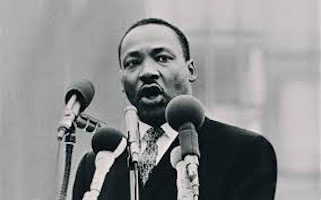
Almost half a century ago Martin Luther King, Jr. shook the conscious of the United States of America by launching his movement to empower the poor, the discriminated and marginalized people. The nation was deeply divided between races and classes. King, a priest, challenged the administration of this country and vowed to establish the valued ingrained in the country’s constitution.
People of all colors and shades identified with the values set by King and took part in his protest movements to demand equality and justice. We celebrate King’s birthday on January 15 and find that his deeds continue to inspire us. As we celebrate the birthday of this great civil rights warrior we realize that his values and goals continue to be relevant and meaningful guiding force. In order to compel the nation change its path of progress King followed the strategies that Gandhi in India had implemented with success. Gandhi led his people to the road to freedom from the British rule. King led a movement very similar to what Gandhi had achieved three decades ago.
King’s strategy of resistance through non-violence proved very effective. The positive results of Gandhi’s strategy of non-violence sound logical to King. He was certain that violence was not the right path to achieve equality in USA. In order to convince the government in Washington D. C. King made inspiring speeches and led marches. He designed his movement against white supremacists same as Gandhi had asked his people to follow the path of civil disobedience against the British.
The two leaders were not afraid of sufferings that they invited through their campaigns. They were ready to face violent consequences of their actions. In the end they were certain to compel their opponents change their hearts and minds. Their goal was to establish the power of non-violence which was greater than the power of the gun.
Gandhi always combined faith in his principle of nonviolence. He was firm in his believe in seeking truth. ‘Truth is God’ was his mantra. King was a godly person, a Baptist minister of black Church who preached for God. He linked the power of God with the power of oppressed people and believed that freedom and equality belonged to them. Like Gandhi King was also a seeker of Truth.
Inspired by the civil disobedience technic formulated by Gandhi, King asked his followers to boycott the use of segregated buses in Montgomery, Alabama. This was his experiment with truth. He was using the method of noncooperation with the system. His method was so much like that of Gandhi that people called him, ‘The American Gandhi’. However, Gandhi was fighting against the rulers who were outsiders. On the contrary King was bent upon forcing the federal government to do more for people. He knew that the federal government was able to find solutions for many problems that caused poverty and unemployment.
Neither Gandhi nor King was willing to compromise on their goals. Gandhi didn’t accept anything less than ‘total freedom’. King’s fight for racial equality was aimed at equal rights for Black people. King’s efforts were well rewarded with Nobel Peace Prize in 1964. He focused his fight against poverty and Vietnam War. He targeted his fight on a broader scale to include elimination of poverty and social justice. He aimed at appealing to a broader audience of both Black and White masses.
In 1964, King received a Nobel Peace Prize for his nonviolent fight against racial inequality.
In the final years of his life, King’s focus changed to include a resistance to widespread poverty and the Vietnam War. The latter alienated many of his liberal allies.
Today, civil disobedience continues to be a tool in a democratic society. Oppression of the poor has not stopped. Equality remains noble words in the constitution. King’s philosophy and his path of democratic resistance guides those who believe in struggle for freedom. Gandhi and King experimented with truth and achieved it. But for the oppressed and the poor truth continues to be elusive. The principles of Gandhi and King are strong guiding force for the seekers of change. King was assassinated in Memphis, Tennessee. His death ignited riots in many US cities. His mission is yet to be fulfilled.
Vinod Tawade: A failed Education Minister or an Amateurish Experimenter in Education System?
By Kishor Satwick
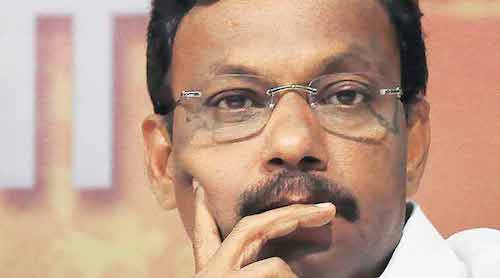
Maharashtra Education Minister Vinod Tawade has again bowled a bad delivery. Under his initiative, the HSC Board has proposed two sets of test papers for Std. XII exam to be conducted in 2019 – A tough question paper for those desirous to pursue medical and engineering degrees and an easy one for the rest. The new paper pattern is already being implemented for class XI.
According to the changed pattern, students will be given fewer choices on questions thus making it tougher to omit to study chapters or topics from a particular subject. The aim was to follow the CBSE pattern and prepare students for National Eligibility-cum-Entrance Test (NEET) and Joint Entrance Exam (JEE).
The justification given by Vinod Tawade is: – “In NEET and JEE exams, you don’t have the option to choose what topic to study. You have to study everything. But if you are not going for these exams, then you could perhaps leave out certain topics. Out of roughly 15 lakh students who appear for class XII exams, only 5,000 go to medical colleges and 60,000 to engineering colleges. The rest go for a BSc degree. So, I have made this suggestion and the educationists are deliberating on this. We will take a decision on this before the next academic year begins.”
It is known fact that level of examination depth in HSC is less than that in CBSC. Hence, students passing from HSC find it difficult to compete in NEET conducted by CBSC. The same goes for JEE. To increase the competitiveness of the Maharashtra Students is the call of the day. Earlier Congress/NCP Government had realized this and they had made the exam pattern competitive. However, the present Education Minister has been diluting even the syllabus ever since he has occupied that Chair.
A bizarre idea has come to the fertile brain of Education Minister. The Learned Education Minister of Maharashtra further concludes that only 5,000 students go for medical degrees and rest do not go. The Learned Minister does not understand that it is not the case that only 5,000 students opt for medical education; rather the situation is because in Maharashtra, only 5,000 medical seats are available for admission, only 5,000 students can go for medical degrees. Instead of increasing the medical infrastructure in the State so that more students can go for medical education and fill the vacuum in health sector, the Minister is tinkering with the examination pattern promoting mediocrity. If one sees the admissions in engineering colleges, the figure of 60,000 quoted by Vinod Tawade is far from reality. As per DTE, Maharashtra, about 1,20,000 students took admissions in Engineering colleges in the Maharashtra State in 2017 as against the capacity of 2,10,000 seats. That left about 42% of the total seats vacant. According to DTE, while more students appeared for the MH-CET this year, compared to the past few years, there weren’t too many top scores when the results were announced on June 3. Just 1% of the applicants scored above 75% in the exam. This clearly shows the syllabus and the exam patter need to be redesigned to increase the intelligence and the competitiveness of the students and not to make them mediocre.
This move is strongly opposed by the Academicians.
Anil Deshmukh, president, Maharashtra State Federation of Junior College Teachers’ Organization says: “How can there be two papers? Asking students to decide if they are going to give entrances at the time of giving HSC is not a cogent suggestion.”
Dr Ashok Wadia, Principal, Jai Hind College pointed out, “Students only know they have to give exams. The coaching class lobby has raised the bogey of failures as they streamline their coaching to how students can get more marks by studying most likely topics. Students have to study everything. Can a physics student say I can study the topic of ‘light’ but not ‘heat’?”
But Learned Education Minister of Maharashtra thinks Yes; a student can learn ‘light’ but not ‘heat’. Considering this danger, the SC took away the medical entrance from the States to Centre and there is one NEET conducted by CBSC. If left to the likes of Vinod Tawade, we would have Neuro Surgeons who had left brain as option in their medical education.
Mr. Vinod Tawade, the syllabus – whether for SSC – HSC or Engineering – should be such that it produces knowledgeable students/professionals. Industry is already complaining that 60% of the BE/B.Tech degree holders are unemployable. It is simply because of people like Vinod Tawade who encourage students to leave the topics for option thereby weakening their basic educational foundation by producing mediocracy.
It is said a mediocre produces a mediocre. It is high time we had some professional as Education Minister in Maharashtra.
(The author is a Mumbai based Chartered Accountant and Social Activist)
When I accepted the job of Chancellor, I knew right away that the arts would be a focal point of my tenure. The arts are not an add-on or simply an extra-curricular activity – a rich arts curriculum strengthens school communities and teaches students skills and passion, cultivates hobbies and can instill confidence and creativity that students will keep with them for the rest of their lives.
This is evident at PS 111 in Queens. When I visited in September to celebrate the opening of a new cafeteria, I was stopped in my tracks by the sound of students belting at the top of their lungs. I instantly turned around to see where the noise was coming from. As I walked down the hallway, the singing became louder until finally I found the classroom – a group of 25 fourth grade students practicing scales. I interrupted and asked the teacher what they were working on. It was still only the third week of school, but they were already rehearsing for their holiday concert in December. “We have a lot of work to do,” the teacher said with a smile.
She was right, they had a long way to go. But that didn’t matter, because every student in that classroom was beaming with joy. This was the music teacher’s first year at the school and her class represented the culmination of hard work by the principal, Ms. Jaggon, to revamp the school’s arts instruction.
Just two years ago, PS 111 was on the State’s list of persistently dangerous schools. The school was also struggling to engage parents and morale was low. Needless to say, a drastic change was needed and the arts have played a critical part in that effort. The school now has a dance teacher and a new dance studio, a visual arts teacher, a music teacher and a theater teacher. Parents are excited to be in the building where student artwork hangs on every wall and a performance or concert happens with great frequency. Most importantly, students have become more confident, motivated and curious to try new things.
These are the types of investments that we’re seeing schools make in every borough. In fact, over the past two years, school-level spending in the arts has increased by over $45 million. And this year, we have a record high-number of certified arts teachers in our schools – the highest in more than a decade, with nearly 3,000 citywide.
Schools like PS 111 are the reason this administration invests in the arts each year. Because we know that the arts help strengthen school communities, foster creativity and critical thinking skills and help create an inclusive environment for all students.
At PS 111, for example, one in five students is an English Language Learners and nearly 40 percent of students have special needs. The arts have played an even more important role in the lives of students like these and their families. This year, we’ve expanded arts programming for ELL students and students with disabilities to nearly 350 schools across the City, more than double the number of schools in 2014-15. These programs also help students learn English and become more confident and expressive.
When I look at schools like PS 111, I know that our investments in arts go beyond just teaching music, dance, visual arts or theater. Our investments have built stronger ties between families and schools and have opened up new and exciting doors for students, helping them discover passions they never knew they had.
As we continue to make these investments in the arts, and cultivate partnerships with cultural institutions, I’m also proud that thousands of 7th graders have benefitted from “Teen Thursdays” where they enjoy the incredible museum offerings across our City. And for the first time, we’re also providing some high schools with additional funding and support so that they can enhance their arts programs and attract more students through competitive auditions. As more schools spend their own resources on the arts programming, it is clear that the arts have become a pillar of instruction in our schools.
Now, after 52 years of working in New York City schools, I will be retiring in the coming months. It gives me great pride and satisfaction to see this reinvigorated passion for the arts from our youngest learners through high school. The arts are not a frill, and they are here to stay.
“Since in office, Trump has given a very favorable treatment to many Indian Americans by appointing them in key Federal positions in his administration. He has also given India whatever it asked for. Additionally, Trump started to band with India in Asia-Pacific and other parts of the world against India’s archenemies. Indian Americans definitely appreciate that”, says the author.
In 2008, when I was contesting for the US Congress from the New Jersey’s District 7, I met with many seasoned and intelligent politicians from both parties. They all agreed on one thing that America’s problems were too big. They also agreed that they knew of no politician who had the capabilities to solve them.
When I focused on these problems, I found out that there were just two big sources of most of America’s problems. They both had to do with the poor boarder control. One due to the lack of control of human inflow into the country and the second due to the lack of control of goods flowing in from all over the world. In other words, it is due to the illegal immigration and unchecked importation of goods. This is how America from being the world’s biggest and best-quality producer became the biggest importer and became a laughing stock of those countries that imported to America and even of those living in America, for its poor quality.
In the process, from being the richest country in the world, it needed to borrow money from almost all countries around the world, with our biggest creditors being those who sold their goods to us, such as China, Japan, Germany, Mexico, Canada, Korea, etc. Because of the large inflow of the low skill workers from poor countries, American wages fell. Americans lost their jobs and riches to those who had forced themselves in through the borders, mostly along the South. The unemployment costs increased on the states and, because most of the illegal immigrant businesses run underground, the tax base decreased. Furthermore, the increased school, healthcare and other costs made the states and the Federal government operating in deficit.
I believed that if we fixed these two problems, we could revive our economy and, with that, our financial problems will disappear. Furthermore, as money comes back in the system, slowly but surely everything will come back. America’s problems will disappear.
In 2015, when I decided to support Donald J. Trump for the US President and, on December 25, 2015, with a friend, decided to form a committee to promote Trump, I knew that Trump would be able to deliver what America needed to fix its problems. Therefore, with my friend and another colleague, in January 2016, I registered a PAC called Indian Americans for Trump 2016. I did so because I had faith in Trump’s ability and temperament to be able to take on America’s problems. I expected Trump’s temperament as his big strength since the approaches of all other so called “normal” presidents had not succeeded in solving our problems, economic as well as foreign policy.
During the primary campaign period, according to the records of the Trump for President, I was one of the three academics to had endorsed Trump for President. The political action committee we formed and I led was the first Indian American group formed specifically to openly favor Trump for President. The PAC worked very hard, reached out to Indian Americans and others in many states to campaign for Trump. President Trump, after his victory, agreed that Indian Americans played a critical role in his victory.
Since in office, Trump has given a very favorable treatment to many Indian Americans by appointing them in key Federal positions in his administration. He has also given India whatever it asked for. Additionally, Trump started to band with India in Asia-Pacific and other parts of the world against India’s archenemies. Indian Americans definitely appreciate that.
Another issue is that the countries who are “our friends” believe in keep taking money from us whether we have it or not. The story is the same whether these were countries who would keep selling to us their products without buying anything form us, or these were the countries who were living on aid from America; they all disdained America if America tried to cut their stream of cash coming from the USA. Both these groups of countries believed that they had a right to those streams, whether it was Japan, Germany, South Korea, Canada, France, and many others in this class. On the other hand, these are the countries that had been living on the aid coming from the USA. They include Pakistan, Egypt, Iraq, Israel, Palestine, Jordan, etc. They also believed that it was their right to receive these monies without any obligation. Trump already had bitter arguments on this with the leaders of these countries such as Angela Markel of Germany and Khwaja Asif of Pakistan.
Another big problem that muddies up things in the USA is the political lobbies. They engage in pay-to-play. Politicians get contributions, and, in return, they do what the lobbyists want them to do. Many question why when Presidents were candidates, contesting for election, talked about these problems, but accepted them on their election. Others said that these have been happening for so long that they have become the “American Way”, America’s tradition. Among other American Presidents, Obama criticized the practice and promised never to do that and promised to change them, but did not dare go against the lobbyists. In fact, he let them run the White House, such as David Axelrod and Rahm Immanuel. The presidents, who changed, as Obama did, did not want to take the “risk”. They wanted to have their 8 years and retire, shifting the responsibility on the next President.
Trump has been in office less than a year. All voters are watching. So far, he has been doing all right. If election were held today, he will win. However, if illegal immigrants continue to stay in the country and others, somehow, are allowed to sneak in, and the unchecked importation of foreign goods is allowed to continue, America’s problems will not go away. The stock market rise will be temporary and will make some rich, nevertheless, the problems will continue.
However, Trump’s performance for the 2020 reelection will depend on his ability to handle the sources of America’s biggest problems listed above. If he cannot handle the trade imbalances, the illegal immigrant problems, and the power of the lobbyists, it will be difficult for him to get votes of those who made him win in 2016, Indian Americans or not.
(The author is Professor of Management, Stillman School of Business, Seton Hall University. He can be reached at Ad.amar@shu.edu / Tel: (973) 761 9684.)
Special article on the occasion of celebration of Hindi Day on January 13 at the Indian Consulate in New York
Over the past decade, there has been an increasing interest in the U.S. in the study of Hindi as an important world language due to India’s emergence as a political and economic power in the global age. This is reflected in the current upward trend in student enrollment at the secondary and post-secondary levels by heritage students (irrespective of their home language, which may be Bengali, Gujarati, Punjabi, etc.) who recognize the growing demand for Hindi-speaking professionals in the business, scientific and health sectors. Enrollment is also on the rise for non-heritage students who see opportunities for the use of Hindi in the U.S., especially in local businesses in which there are a large concentration of people of Indian origin (hospitality workers, tax accountants, information technology), in addition to law and medical practice, and also worldwide due to India’s economic ties across the globe.
Given the current trend and future projections for the growth of Hindi (the third most common language other than English spoken in homes in the states), leaders in the Hindi education field recognized the need to build capacity for the teaching of Hindi in the U.S. (where most Hindi teachers lack formal teacher preparation) that would support the training of a “new breed of teachers” prepared to teach Hindi to 21st century digital learners. These teachers would learn about research-based best practices for effective teaching of languages that include language learning in real world contexts and in contemporary learning environments incorporating the use of current and emerging technologies. With well trained teachers, who actively engage students in learning Hindi for meaningful, real world purposes, the vision is to attract yet a greater percentage of students who “value” and wish to further pursue the study of Hindi for its long-term worth in our modern society. (It is well documented that instructional practices influence students’ inclination to study the language and impact efforts to promote the teaching and learning of Hindi).
——————————————————————————————————————————-
New Jersey based Kean University’s program is the only master’s degree program in Hindi and Urdu foreign language pedagogy in the U.S.
———————————————————————————————————————-
A Master’s Degree Program in Hindi and Urdu Language Pedagogy was developed at Kean University with support by federal funding. This program is the only master’s degree program in Hindi and Urdu foreign language pedagogy in the U.S. Although there are domestic institutions of higher education offering undergraduate and graduate degree programs in Hindi and Urdu as foreign languages, none of these institutions offer undergraduate/graduate Hindi/Urdu teacher preparation programs or a concentration in the field of Hindi/Urdu language-specific language pedagogy at the graduate level. Graduate level pedagogy programs are also non-existent in the Hindi/Urdu language field in other countries, including India and Pakistan. The program builds upon Kean’s well established reputation for teacher education due to its innovative approach to Hindi and Urdu teacher preparation and the potential development of a corpus of research lacking in the field of Hindi/Urdu language pedagogy.
The first cohort of MA students will graduate from the program in spring 2018. Applications are currently being accepted for the next cohort of students which begin the program in fall 2018 and are available online at http://grad.kean.edu/masters-programs/hindi-and-urdu-language-pedagogy
While the application deadline is June 1, 2018, interested individuals are encouraged to apply as early as possible as partial scholarships are available on a limited basis for the first 10 qualified applicants (subject to availability of federal funding on an annual basis). The program seeks applicants who are Native/Advanced speakers of Hindi or Urdu that reside in the U.S. and possess a Bachelor’s Degree. Applicants should be willing to complete the 2-year 30-credit program which consists of seven online courses and four onsite courses (offered at the Kean University Union Campus for 3-weeks during 2-consecutive summers and include clinical practice). Upon completion of the program, graduates will be able to: teach in private schools and/or government schools, colleges/universities and in heritage language community schools using contemporary research-based best practices in language education; conduct research on second language-specific pedagogy or in the field of Hindi/Urdu Second Language Acquisition leading to a doctoral program; and/or pursue Alternate Route teacher certification options available in NJ and in most states in order to teach in public school settings. For additional information, interested individuals may contact Janis Jensen, Program Director, at jjensen@kean.edu.
(Janis Jensen is Program Director of STARTALK Language Initiatives at Kean University where she oversees Hindi/Urdu Student Summer Programs and the MA Degree Program in Hindi/Urdu Language Pedagogy.)
Special article on the occasion of celebration of Hindi Day on January 13 at the Indian Consulate in New York
In the late Nineties and during the first decade of 21st century I worked in a publishing company dealing with readers reviews of newly published books. Those were the years of the onset of Internet age that was strengthening its grip on the electronic media. Print media was collapsing, readers were moving towards blogs, podcasts, newsletter and e-commerce.
I was among those feeling marginalized finding no option than to look for a new profession. The profession of teaching required face to face interaction with students in classroom. I came in contact with STARTALK program that proved to be an ideal system for teaching Hindi in the community using modern tools. The program offered teachers training opportunities at various universities. I was selected by the University of Pennsylvania teacher training program for this training. On the other hand, we needed to collaborate with local schools and colleges for developing quality program under STARTALK. With the support from open minded community leaders like Upendra Chivukula, who was a member of NJ Assembly, I was able to launch our first short term Hindi program in a public university in 2010. Since then I achieved a number of milestones in my journey to promoting Hindi learning and its use in the community.
A large number of language experts support and encourage me. A growing number of Indian-American parents have supported our program by sending their children to study Hindi during the summer vacation. Most of these supporters don’t speak Hindi but truly understand the importance of promoting its teaching in USA. We have the back and the ears of the Ministry of External Affairs, Government of India, whose officials have quietly extended their support to our programs.
With the help of our ever powerful community and successful professionals Hindi Sangam Foundation is moving towards fulfilling its mission to establish a K8 language school where Hindi will rule. Students will learn all subjects including Science and Math in Hindi up to the standards of six or eight after which English learning will be introduced. Research tells us that Bilingual students of immersion programs graduate from High School with top scores. They grow up as proud adults who reflect the values of their native culture and qualities of the education system of the adopted land, in our case, India and the USA. Such students make both cultures proud of themselves-America, where they grew up and their native culture from where their parents or grandparents came from.
(Ashok Ojha, President, Hindi Sangam Foundation, is a New Jersey based journalist and teacher.)
As the new year begins, here are the smartest predictions of what’s coming in politics, tech and business in 2018.
By Erica Pandey
The Big picture: In many ways 2018 will mirror 2017. The world’s largest economies will continue to grow in sync, the #MeToo movement will continue to topple men who behave badly from positions of power, and the North Korean nuclear threat will keep fueling international tensions. But new trends may emerge if the Democrats take the House in the midterm elections or media companies find a solution to the “fake news” epidemic.
At home
Democrats will take back the House “by an eyelash” in the 2018 midterm elections, the Financial Times’ Courtney Weaver predicts. It’s typical for the party of the president to lose seats in the midterms, and the Republican Party could “lose big” given Trump’s sub-50 approval rating. A Democrat majority in the House would also mean impeachment proceedings against Trump could gain ground in the new year.
Abroad
Trump’s approach to China is about to change for several reasons, per Sinocism’s Bill Bishop: the administration’s National Security Strategy very clearly reframed the U.S. government’s view of China in a confrontational way, the president believes China is still not doing enough on North Korea, and the administration’s “America First” trade contingent is ascendant. Several trade actions are in the planning stages and they will likely hit soon.
Uneasy tension around the North Korean nuclear threat will continue — or escalate. Trump tweeted on Dec. 28 that there won’t be a “friendly solution” to the issue of North Korea if China violates UN sanctions against the rogue regime. And Admiral Mike Mullen, a former chairman of the Joint Chiefs, said on ABC’s This Week that the U.S. is closer “than ever before” to a nuclear confrontation with North Korea.
UK Prime Minister Theresa May will keep her job, per the Financial Times’ Sebastian Payne. “Sealing a Brexit divorce deal has ensured short-term job security,” Payne writes.
Zimbabwe won’t hold free and fair elections in 2018 despite the end to Robert Mugabe’s 37-year rule, FT’s David Pilling predicts. And Al Jazeera’s Barnaby Phillips writes, “Emmerson Mnangagwa will surely prove a more capable manager of Zimbabwe’s economy than Mugabe, but there are plenty of reasons to fear he’ll be just as ruthless and undemocratic.”
The global economy
Synchronized growth will continue. This year, for the first time since the Great Recession, the world’s leading economies grew in sync. And that growth will hold into 2018, Goldman Sachs research economists predict. They’re forecasting 4.0% GDP growth for the new year, up from a 3.7% projection for 2017.
Emerging markets will grow as well. Average GDP growth for emerging markets will reach 5%, up from 4.7% in 2017, per the Financial Times’ James Kynge. “This will mostly be because Russia and Brazil, which have stumbled, will bounce back,” Kynge writes.
In tech
Big Tech will get stronger. “Silicon Valley got raked over the coals in 2017 about sexism, security and its influence on national affairs. But it hasn’t really grappled with the bigger problem: There’s too much power in the hands of too few … Expect to see tech giants flogging their “social good” efforts in the year ahead, but our trust won’t be restored by watching them act like benevolent dictators,” per the Washington Post’s Gregory Fowler.
Bitcoin will keep dominating headlines with its dramatic crashes and booms. Goldman Sachs became the first major Wall Street institution to launch a trading desk for the cryptocurrency in 2017, and, as more institutions venture into the crypto world, prices will rise accordingly, CNBC’s Eric Jackson predicts.
Augmented reality will rise in prominence, Axios’ Alayna Treene reports. “In the next few years, we’re going to see AR develop significantly and start to break through to the mainstream. Once that happens, it will effect almost every aspect of daily life — from entertainment and work to education and transportation.”
In media
Transparency will become “the antidote to fake news,” Frontline’s Raney Aronson-Rath tells Nieman Lab. Per Aronson-Rath, “We’ve seen Facebook make moves towards differentiating between verified and unverified stories. Twitter and Google, too. But the problem is massive, and these are just first steps.”
The #MeToo movement will continue toppling powerful men who behave badly in media and every other industry. Here’s a list of the 82 men accused of sexual harassment and assault in 2017.
The dawn of November 9, 2016, was one of great disbelief for the world’s oldest democracy as the news was just beginning to sink in among Americans of Donald Trump’s astounding victory in the presidential polls. A year on since that win, here’s a look at Trump in the White House:
BY THE NUMBERS
Approval rating: 37% Lower than any previous president in over 70 years
Economy: 2.6% up in 2nd quarter of 2017. Trump had set a 3% target for long-term economic growth
21% rise in S&P 500, fourth largest 12-month gain following a presidential election since 19363.
Jobless rate: 4.3% in July, lowest since early 2014
Tourist flow: 4.3m decline in overseas tourist numbers to US, represents loss of $7.4 billion revenue
Terror cases/ mass shootings: 362, including the October 1 Las Vegas shooting, the worst such in US history, and the October 31 New York van attack
Trump on Twitter
Around 2,400 tweets since November 8, 2016. That’s about 7 tweets a day
Key words used in tweets: Great – 456, Fake news/media – 167, Jobs – 94, Obamacare – 77
Some interesting tweets:
Donald J. Trump✔ @realDonaldTrump My use of social media is not Presidential – it’s MODERN DAY PRESIDENTIAL. Make America Great Again! 5:41 PM – Jul 1, 2017
Donald J. Trump @realDonaldTrump Just heard Foreign Minister of North Korea speak at U.N. If he echoes thoughts of Little Rocket Man, they won’t be around much longer! 10:08 PM – Sep 23, 2017
Donald J. Trump ✔ @realDonaldTrump CHAIN MIGRATION must end now! Some people come in, and they bring their whole family with them, who can be truly evil. NOT ACCEPTABLE! 6:03 PM – Nov 1, 2017
Forbes said Trump’s wealth dipped by $600m to $3.1bn in Sept 2017 since 2016
He fell 92 spots on the latest list of the richest Americans
The drop was put down mainly to a tough real estate market and an expensive poll campaign
PM Modi and Trump have declared ties between Washington and New Delhi have “never been stronger”. India is a key component in US plans to contain China. The White House has also pushed Pakistan to combat terrorism.
President Trump may have big policy plans for 2018, but political distractions are likely to shadow prospects of big legislative achievements.
WASHINGTON (TIP) White House officials said Trump wants to rein in the threat from North Korea and list four top domestic priorities on his 2018 agenda: Repealing and replacing President Obama’s 2010 health care law, welfare reform, immigration, and a new infrastructure plan.
“I would expect to see those four areas, as well as national security, which never goes away,” White House spokeswoman Sarah Sanders said.
Yet the Republican-controlled Congress has been struggling to pass some of Trump’s major priorities since his election – and their challenges will only increase in 2018. The GOP’s Senate bare majority will shrink when Alabama’s newly elected senator, Democrat Doug Jones, is sworn in.
In January, lawmakers will have to confront a thicket of unfinished business. In their rush to get home for the holidays, the GOP-led Congress passed a short-term spending bill that expires Jan. 19.
Trump and GOP leaders will have to negotiate a longer-term spending deal before then to avert a government shutdown, and they will likely need Democratic support for that to pass. Other sticky issues on the January agenda include legislation aimed at stabilizing the Obamacare individual insurance markets and reauthorizing the Foreign Intelligence Surveillance Act, a contentious anti-terrorism law that gives law enforcement sweeping spy powers.
What’s more, lawmakers will be consumed with their own 2018 mid-term elections – and the increasingly contentious Russia investigations. “As everybody in Washington knows, a midterm election year is a year when most legislation comes to a standstill,” said David Cohen, a political science professor at the University of Akron.
“Members of Congress are going to be obsessed with winning re-election,” Cohen said, and will be more eager to campaign at home than be in Washington casting tough votes.
Here are seven key issues that Trump and Congress will confront:
North Korea
Trump will lobby China – and other countries – to twist the economic screws on North Korea, in the hopes of forcing that rogue nation to give up their nuclear weapons program.
Trump traveled to Asia to press that issue in November and declared North Korea a state sponsor of terror. Yet North Korea leader Kim Jong Un has more or less thumbed his nose at the effort, recently setting off another ballistic missile test, and continued threatening the U.S. and its allies.
As 2018 approaches, Trump and his advisers hope to settle the dispute diplomatically, but they have not ruled out the possibility of a military strike.
Infrastructure
In his 2018 budget proposal, Trump sought $200 billion over 10 years to spend on infrastructure, leveraging private-sector spending to focus federal dollars on “transformative” projects seen as priorities at both the federal and regional level.
That went nowhere in 2017, as Trump and the GOP-led Congress focused instead on trying to repeal Obamacare and enacting tax cuts. But the president plans to rev up that push early next year, with the hope that Democrats will cooperate.
Infrastructure spending is generally a bipartisan issue, and few dispute the need to improve the nation’s highway and bridges. But Trump and Democrats have already outlined competing plans, and conservatives are likely to oppose any legislation that calls for massive new spending.
So, the fate of that will likely depend on Trump’s willingness to cut a deal with Democrats—and vice versa—heading into a heated election year.
Health care
Trump insists he has not given up on his goal of repealing and replacing the Affordable Care Act, President Obama’s health reform law, even though Republicans in Congress could not muster enough votes to deliver on that long-promised goal this year.
After Congress passed a massive tax bill in December that repealed Obamacare’s individual mandate, Trump declared the law was “essentially” repealed and lawmakers would work together to find a replacement. (However, the law is barely touched, though the requirement that nearly everyone have insurance or pay a penalty at tax time was repealed effective in 2019.)
Overhauling Obamacare will only get more complicated in 2018, as Republicans will have just 51 seats in the Senate. And the GOP’s previous efforts to nix Obamacare sparked intense anger among voters who wanted to keep the coverage – something lawmakers may not want to reignite when many of them will be on the ballot.
Senate Majority Leader Mitch McConnell, R-Ky., signaled little interest in taking another stab at the issue. “Well, we obviously were unable to completely repeal and replace with a 52-48 Senate,” McConnell told NPR in a Dec. 21 interview. “We’ll have to take a look at what that looks like with a 51-49 Senate. But I think we’ll probably move on to other issues.”
Other Republicans pushed back, saying the GOP should not give up on that long-touted campaign promise.
Immigration
Congress has a March deadline to decide the fate of the so-called DREAMers, the approximately 700,000 immigrants brought to the U.S. illegally when they were children. Trump nixed an Obama-era program that shielded the DREAMers from deportation, but he also said Congress should figure out a legislative fix, so the young people aren’t sent back to countries they did not grow up in.
Critics have called the Obama protections—known as DACA, or Deferred Action for Childhood Arrivals— a form of “amnesty” and suggested those young immigrants have taken jobs from Americans. But there’s bipartisan support in Congress and in the public to grant the DREAMers legal status and even a path to citizenship.
Whether Trump—who campaigned on a hardline anti-immigrant platform—will sign such a bill is unclear. He has sent mixed signals on the issue, and he’s also called for new restrictions on refugees and others seeking entry into the United States.
After the Dec. 12 arrest of a man who tried to set off a bomb in a New York commuter tunnel, Trump called for the end of “chain migration” and the diversity visa lottery programs.
Welfare reform
In announcing a new major legislative priority following the tax cut bill, Trump said welfare reform is “desperately needed in our country.”
A Trump budget proposal last year called for adding work requirements to some government programs and tightening eligibility requirements for low-income tax credits. “We want to get our people off of welfare and back to work,” Trump said. “So important. It’s out of control. It’s out of control.”
Democrats say welfare reforms instituted two decades ago are working and that Trump wants to punch major holes in the social safety net.
Iran
Trump announced in October he would no longer certify that Iran is in compliance with an Obama-era deal, in which Tehran pledged to give up the means to make nuclear weapons while the U.S. and allies ease economic sanctions. Instead, Trump called on Congress to improve the agreement, and the fate of the Iran nuclear deal is likely to come to a head in 2018.
Supporters of the agreement fear Iran will walk away from the agreement and pursue nuclear weapons anyway, triggering a dangerous arms race in the Middle East.
The debt limit
The U.S. Treasury will run out of money to pay its bills sometime in the spring — unless Congress and the president agree on legislation to raise the nation’s debt limit. The Treasury Department lost its authority to borrow any new money to pay the government’s obligations on Dec. 9.
Officials are currently taking “extraordinary measures” to keep from defaulting on the government’s current obligations, including Medicare benefits and the interest on the national debt. But the agency will run out of those accounting gimmicks in late March or early April, according to an analysis by the Congressional Budget Office.
That could lead to a round of partisan fiscal brinksmanship—with threats of defaulting on the government’s debts. Conservatives have generally opposed increasing the nation’s borrowing authority, so Trump will likely have to negotiate with Democrats to come to an agreement.
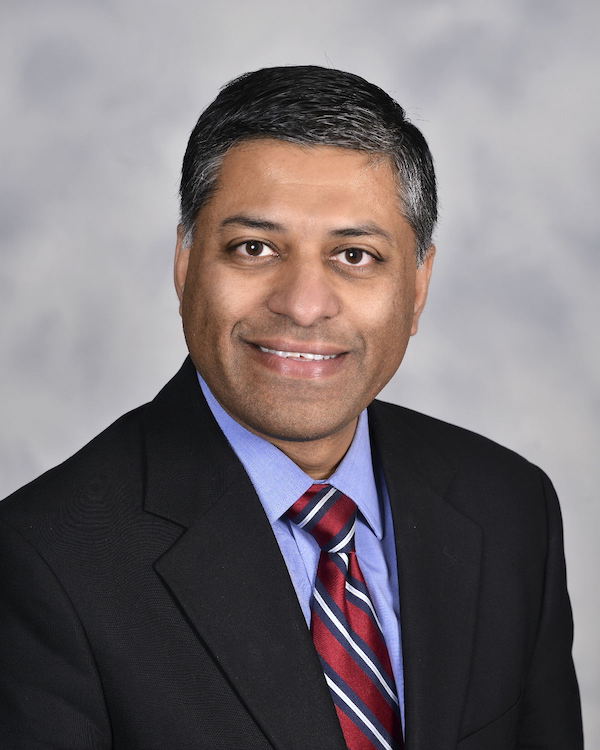
MORGANTOWN (TIP): Dr. Rahul Gupta, State Health Officer and Commissioner for the West Virginia Department of Health and Human Resources Bureau for Public Health, has been named as “West Virginian of the Year” 2017 by Charleston Gazette-Mail -the state’s largest Pulitzer winning newspaper.
In the past, this honor has generally gone to governors, senators, celebrities such Jennifer Garner. He is perhaps the first immigrant to ever receive the coveted honor. Dr. Rahul Gupta is a family medicine doctor in Charleston, West Virginia. He received his medical degree from Delhi University College of Medical Sciences and has been in practice for more than 20 years.
Dr. Rahul Gupta serves as the West Virginia State Health Officer and Commissioner From 2009-2014 Dr. Gupta served as the health officer and executive director of the Kanawha-Charleston Health Department, the state’s largest local health department. Additionally, Dr. Gupta served as the executive director and health officer of the Putnam County Health Department.
Prior to working in West Virginia, Dr. Gupta was an assistant professor of medicine at Meharry Medical College and clinical assistant professor of medicine at the Vanderbilt University School of medicine; both in Nashville, Tennessee. He also served as assistant professor of medicine at the University of Alabama-Birmingham.
Dr. Rahul Gupta and his staff are working with the Centers for Disease Control and Prevention on what he called a “post-autopsy autopsy.” Gupta is compiling data to develop an overdose profile that identifies factors shared by the 881 West Virginians who fatally overdosed on drugs last year.
It’s a huge undertaking. Gupta said he hopes the project will provide a blueprint for saving lives. “We wanted to learn from people who passed away to avoid what’s been happening year after year,” Gupta said. “What we’re finding out is that, while we may only have a single chance, there appear to be opportunities to prevent fatal overdoses in the state.”
So far, Gupta and his researchers have discovered 86 percent of those who fatally overdosed had interacted with health care providers within the past dozen months — at places like a doctor’s office, hospital emergency room or health clinic. Many of those had two or three interactions. All were opportunities to steer people into drug treatment.
Of those ages 25 to 34, about half of those who overdosed and died had spent time in jail during the previous 12-month period. “There might have been missed opportunities to work with them at the time of their release,” Gupta said.
He said over 70 percent of West Virginians who fatally overdosed were covered by Medicaid within the past year. Also, 65 percent had received prescriptions for controlled substances like pain pills within a year of their death. About 40 percent had such prescriptions 30 days before they overdosed. West Virginia has the highest overdose death rate in the nation. This year’s total is expected to surpass last year’s record number of overdoses.
“Oftentimes, we end up just counting deaths,” Gupta said. “But now we’re trying to learn from those who passed away.” This year, Gupta and his office also established a panel of public health experts to develop a “rapid opioid response plan.” The plan is due in mid-January.
The office has distributed 16,000 doses of naloxone to emergency responders, developed standards for syringe exchange programs, set up an Office of Drug Control Policy and worked with a national group that represents health officials to share West Virginia’s opioid-fighting efforts, such as the analysis of people who overdosed.
“The deaths are the most important piece we can do something about immediately,” Gupta said. “It’s an attempt to utilize an evidence-based, data-driven approach to reduce the overdose deaths.”
The previous awardees include John Chambers, President and Chief Executive Officer of Cisco Systems, Okey L. Patteson and Arch A. Moore Jr., Governors, Adm. Felix B. Stump, Commander of Navy’s Pacific Fleet, Senator Robert C. Byrd, Dr. James Harlow, Physicist, 16th President of West Virginia University, Sen. Jay Rockefeller, Legislator, Secretary Of State, Governor, U.S. Senator, Henry Louis Gates Jr., Harvard Professor, Elizabeth Hallanan, One of America’s Few Female Federal Judges, Jennifer Garner, Actress and Catherine Johnson, recipient of Presidential Medal Of Freedom.
JABALPUR (TIP): Olympic gold medalist Alexi Singh Grewal has always been in news headlines. Now he has set a new precedent. He married Jabalpur-based Manjit Kaur, a Botanist, to become the first-ever Olympic gold medalist (individual) to get married on the Indian soil. Interestingly the marriage, which was kept a low profile affair, took place on January 9, the day India celebrates Pravasi Bharatiya Divas – a day dedicated to People of Indian Origin. It was on this day that Father of the Indian nation, Mahatma Gandhi, returned home from South Africa.
The 57-year-old US Born, 1984 Olympic Games road race champion is an Overseas Citizen of India (OCI). His father, Jasjit Singh Grewal, came from India. The marriage was performed in accordance with Sikh traditions and rites at a simple ceremony in a Jabalpur Gurdwara in Central India where only family members, relatives and close friends were invited.
Alexi Singh Grewal is the first ever athlete of Indian origin to win an individual gold medal in Olympic Games. He won the tough road race (cycling) in Los Angeles Olympic Games. Twenty-four years later, the honor to win the first individual gold medal for India in Olympic Games went to Abhinav Bindra in the shooting. Abhinav won the gold in Beijing Olympic Games, 24 years after Alexi.
“I am happy to rediscover my roots,” says Alexi Grewal, who has come to India to make it his second home. He had first visited India 20 years ago. His father, Jasjit Singh Grewal, himself a cyclist, groomed all his three sons – Alexi (Olympic champion), Ranjit and Rishi.
Ranjit and Rishi are into the mountain and national biking.
Alexi has strong roots in India. His grandfather, Bhagwant Singh Grewal, was Minister of Education at Patiala State. Jasjit Singh Grewal was born in Simla (now Shimla). Manjeet, one of the sisters of Jasjit Grewal, happened to be Miss Simla while his other sister, Mohanjeet, who moved to France, is a fashion designer and had the distinction of designing dresses for like of Jane Fonda and first lady of the US, wife of JF Kennedy. His third sister, Nirmaljeet, is settled in Delhi.
The family originally belongs to Patiala. Alexi Singh Grewal is keen to visit his ancestral homes in Patiala and also in Shimla.His great-grandfather was Commander in Chief of Rewa Royalty.Jasjit Singh Grewal married Martha Huber, a German, and settled in the US.
Talking of his marriage, Alexi says “we are two people from totally different cultures” and adds “we have found deep delights in each other’s souls.”
Manjit Grewal (nee Bhalla) is a research scholar and holds M.Sc. and M. Phil degrees. She is registered for Doctorate and worked as a scholar with the State Forest Research Institute. Her late father was a school teacher in Central Government. Later he taught Law at Jabalpur University. Though her father came from Amritsar and mother from Mohali, the family has now settled in Madhya Pradesh. She lives with her mother and brother.
Alexi is keen to work and train young Indian cyclists. He is toying with the idea of setting up a cycling academy also.
Soon after his arrival in India, he went on Nilgiri mission where he interacted with young and experienced cyclists.
Alexi and Manjit are now planning to visit Punjab and Kashmir. “I am keen to witness Rural Olympics at Kila Raipur. Rural games are something I look forward as I immerse myself in Indian culture.”
“The fundraising effort in the name of setting up a Tamil Chair is a ruse that exemplifies Harvard’s habitual exploitation of indigenous people. This is an egregious example akin to a burglar asking you to pay money to buy a rickety ladder to rob your own home. Harvard is asking Tamilians to pay $6 million for a professorship that will be used to rob their own historic artifacts worth trillions of dollars representing the ‘Holy Grail’ of the world’s most highly-prized indigenous knowledge.” – Dr. Shiva Ayyadurai
By Prakash M Swamy
NEW YORK (TIP): U.S. Senate Candidate, inventor of e-mail and tech guru Dr. Shiva Ayyadurai has exposed Harvard University’s attempt to pilfer trillions of dollars worth of indigenous artifacts through the sale of a “Harvard Tamil Chair” professorship.
Harvard sought to collect $6 Million from the Tamil Diaspora worldwide, who had no idea of Harvard’s business model of selling professorships to fund its $35 Billion hedge fund investments. Tamil is the oldest surviving language with the richest body of poetry, art, and literature known to humankind, along with hundreds of thousands of sacred artifacts codified in palm leaf manuscripts embodying the scientific, technological and medical knowledge spanning at least 5,000 years of the Tamilians, the indigenous people of the Indian subcontinent, who today primarily reside in Tamil Nadu in India.
According to Dr. Ayyadurai, “The fundraising effort in the name of setting up a Tamil Chair is a ruse that exemplifies Harvard’s habitual exploitation of indigenous people. This is an egregious example akin to a burglar asking you to pay money to buy a rickety ladder to rob your own home. Harvard is asking Tamilians to pay $6 million for a professorship that will be used to rob their own historic artifacts worth trillions of dollars representing the ‘Holy Grail’ of the world’s most highly-prized indigenous knowledge.” Harvard will then proceed to use access to those artifacts to rewrite and hegemonies Tamil history, an unfortunate and recurrent process that Harvard has done for far too long to many indigenous cultures.
Harvard’s financial statements reveal that the university is fundamentally a tax-exempt Wall Street hedge fund with cash and investments of nearly $35 Billion. In 2016 alone, Harvard’s capital marketing campaign raised $7 Billion, with its hedge fund in 2017 yielding $2 billion in gross profits. The operating budget further reveals that professors and administrators effectively serve as business development staff to attract wealthy donors to fund Chairs and professorships that finance their lucrative hedge fund. In 2017, as the Boston Globe reported, Harvard’s seven top hedge fund managers earned a total of nearly $58 million in compensation.
The reason behind the appointment of Naushard Cader, President – The Harvard University Alumni Financial Markets Forum as Special Coordinator with unlimited power has come to light now.
Ayyadurai said, “As these numbers indicate, Harvard is a hedge fund masquerading as a University, which perpetuates this facade by reinvesting large portions of its hedge fund proceeds to unleash propaganda that it is a ‘world-renowned’ institution of higher learning and scholarliness dedicated to advancing humankind. This branding attracts financing from well-meaning folks, compelled to ‘join the club’ so their children get preferential treatment when applying to Harvard and access to Harvard’s insider network. This dynamic is rarely discussed in the mainstream media.”
Nearly one-third of the students admitted to Harvard are beneficiaries of a well-documented legacy and preferential admission system that is not merit-based but on “who you know” or who donated money.
Dr. Ayyadurai’s leadership in opposing the “Harvard Tamil Chair” has led to significant discussions on social media. Questions are being raised about why Harvard exists. Does Harvard exist as a center of research and learning? Or, does Harvard exist to enrich itself through its hedge fund activities? Given the historic value of Tamil, why didn’t Harvard fund Tamil studies with its own $6 million, particularly given that the amount would be a paltry sum (which would be less than one-tenth of one-percent of the $7 billion Harvard raised from its recent 2016 capital campaign)?
Dr. Vijay Janakiraman, the co-founder of the Harvard Tamil Chair effort to raise the $6 million, claimed he was unaware of Harvard’s business practices until his recent phone conversation with Dr. Ayyadurai, who shared with him that Harvard is not only a hedge fund but also an institution that thrives on racism, corruption and exploitation of indigenous people. Dr. Janakiraman admitted he had naively believed that by donating money to Harvard, he was helping in the preservation and dissemination of the Tamil language.
Harvard has a track record of destroying indigenous peoples’ heritage and culture by seizing control of their property, intellectual and otherwise. In 2011, an exposé revealed that Harvard used its hedge fund cash to take over land in Africa leading to forcible displacement of indigenous farmers. The Harvard Tamil Chair would have offered a gateway for Harvard to exercise control over the rare and ancient palm leaf manuscripts — the intellectual property of the indigenous people of Tamil Nadu.
Harvard’s abusive treatment of Dr. Subramanian Swamy further exemplifies how they treat an indigenous Tamil scholar, who was dismissed for challenging Harvard’s party line. In contrast, Harvard uses its hedge fund profits to hire and retain Elizabeth Warren, who has never challenged Harvard’s exploitative practices. In fact, it paid her an exorbitant sum of $350,000 per year for teaching just one course.
The Harvard Office of the President was complicit with Warren, who shoplifted Native American identity in order to not just advance her career but also to benefit Harvard from Federal grants by misleading the government that they had a Native American on their staff. Warren went on to increase her net worth to over $10 million while the average net worth of African-Americans, segregated in Warren’s and Harvard’s own backyard in Cambridge and Boston, spiraled downward,as reported by the Federal Reserve Bank of Boston, to a meager and unbelievable $8.
Dr. Ayyadurai’s timely involvement, fortunately, has been a relief to Tamilians worldwide, who are pleased that Dr. Janakiraman, after listening to Dr. Ayyadurai, decided to stop funding Harvard. Dr. Janakiraman told Dr. Ayyadurai, “You are the expert. Tell me what to do and provide me guidance.”
Dr. Ayyadurai’s plan involves galvanizing the Tamil population globally to build the first online Tamil University at TamilNadu.com, a media property Dr. Ayyadurai has owned since 1993 and will donate to the cause. The finest Tamil software engineers worldwide are volunteering to build a 21st century digital platform that will deliver the Tamil language to all who seek to learn it, across various skill levels. This approach will be far different than “Harvard Tamil Chair” that would have provided, at best, a rudimentary pre-kindergarten knowledge in Tamil language.
The online video of Jonathan Ripley of Harvard University purportedly teaching Tamil language is evidence of this. The vocabulary in his lessons is limited to a few words — yes, no, this, that, what, hand, leg, tooth, stone, bag, and milk — which is nothing more than baby-talk. The TamilNadu.Com platform will further provide universal access to the ancient manuscripts to advance all humanity, in contrast to enabling Harvard’s predatory practices.
There is also growing evidence that people behind the Harvard effort appear to be Hebrew language chauvinists in academia and their allies who seek to deliberately cover up the preeminence of the Tamil language by ensuring that they control the historical narrative of Tamil and reduce it to some “goo goo ga ga” language. A comparison of the Hebrew script with the Tamil Brahmi script will confirm that Hebrew script is based on the older Brahmi script, an uncomfortable fact for the Hebrew chauvinists who suppress this fact. Dr. Ayyadurai stated,
“Harvard is a predatory institution that leeches of taxpayers and needs to be busted up and returned to the public to serve as a community college, as it was originally intended. Their teaching model is medieval and dead, relying on egomaniacal professors who think they know better than the rest of us. The Department of Justice must investigate the racial and religious composition of Harvard’s faculty to determine if any single group is overrepresented due to its chauvinist hiring practices.
The Pro-LTTE and anti-Brahmin Tamil outfit in the US- Federation of Tamil Sangams of North America (FeTNA) and Tamil Nadu Foundation that raises funds for several projects in Tamil Nadu have been on the forefront collecting millions of dollars in fund raising all over the US as they saw the Harvard project as revival of Dravidian culture in the US.
A. Shiva Ayyadurai is an Indian-born American scientist and entrepreneur notable for his claim to be the inventor of email, based on the electronic mail software called “EMAIL” he wrote as a New Jersey high school student in the late 1970s. Ayyadurai also produced two controversial reports: the first questioning the working conditions of India’s largest scientific agency; the second questioning the safety of genetically modified soybeans. Ayyadurai holds four degrees from
MIT including a Ph.D. in biological engineering, and is a Fulbright grant recipient. He is a candidate in the 2018 US Senate election in Massachusetts.
To raise funds to the tune of S 6 Million, prominent Tamils in the US have formed Tamil Chair Inc. is a 501(c)(3) non-profit organization (Tax-ID 47-5021758) registered in the state of Maryland (USA) that is currently working on fund raising for
Harvard Tamil Chair
The Board consists of – Dr Vijay Janakiraman, Hollidausburg,Pa; Mrs. Vaidehi Herbert, Kilauea, Hawaii; Sornam Sankar of Ellicott City, MD; Appadurai Muthulingam, Markham, Canada; Siva Illanko, Stouffville, Canada, Dr Sundaresan Sambandam, Cranston, RI; Paul Pandian, Dallas, TX; Kumar Kumarappan, Freemont,CA; Dr. Arumugam Murukiah, Chennai and Dr Varadarajan Raghuraman, North York, Canada. Mrs. Suja Chandrasekaran, Chief Information Officer at Kimberly-Clark and B.Karthikeyan Executive Director at Thriveni Earthmovers Private Limited, Salem, Tamil Nadu and G.Balachandran, a retired I.A.S officer of Tamil Nadu, probably biggest donors were made Members of the Advisory Council – Harvard Tamil Chair.
Over 4791 donors have given $5,310,556.24 of the total estimated collection of S4, 854,995.09. The major donors are: Government of Tamil Nadu $1,537,929.18; Vijay and Malliga Janakiraman $510,000; Sundaresan and Vijayalakshmi Sambandam $507,850; Paul & Geetha Pandian $ 203,685; Arumugam Murukiah ofHumetis Technologies $100,000; Sky Mining Services, LLC $100,000; Mr. V.P. Parama Lingam $75,376.30 and Fetna Tampa event $55,298.86; Bala Swaminathan $52,200; G Balachandran $41,200; Velammal Educational Trust of Madurai $38,473.93; Valluvan Tamil Academy $36,760.; Anbarasu Natchimuthu $25,000; Dr.Kanthilal $25,000; Dr. Sembu & Amutha Kanthilal $25,000;;
Prominent film personalities from Tamil Nadu have opened up their wallets – ; Actor Kamal Haasan $30,501.75, Actor Vishal Krishna $15,114.87; Actor R. Suriya -Akaram Foundation $15,293.63, director Rajanayagam Shanmugraja Mysskin $386.00.
Several Tamil associations and patrons from outside the US have donated and they include Delhi Tamil Sangam $3095, K.A.Manoharan, Tamil Valarchi Mandra Arakattalai, Hosur, Tamil Nadu $1,550; Tamil Nadu Teachers Cooperative Trust – (Asiriyar kootani) $1526. Tamil Arts and Culture Association Inc, Sydney, Australia $1025.29; Mr. Jawahaar Tirupapuliyur $499.
However, none of the top Tamil CEOs or Silicon Valley business leaders including Indra Nooyi, CEO of Pepsico, Tennis ace and Hollywood Producer Vijay Amritraj has donated a penny to set up Harvard Tamil Chair as they have understood the purpose behind the collection and how the funds will be deployed other than for promoting Tamil. Ranjon Tandon and his wife Chandrika Krishnamurthy Tandon, sister of Pepsico CEO Indra Nooyi have donated $100 Million gift to support engineering at NYU.
Of course, the principle of “sovereign equality” is one of the fundamental pillars of the United Nations system. However, the growing trend among four of the five permanent members of the United Nations Security Council (the United States, China, Russia and the United Kingdom) to assert the primacy of sovereignty over the objectives of international cooperation can potentially alter contemporary global governance structures adversely.
India has a key role, as well as core national interests, in implementing Agenda 2030 and the Paris Agreement on Climate Change. These interests are an integral part of the major initiative announced by Prime Minister Modi under the “sabka saath, sabka vikas” policy. Perhaps the best illustration of India’s ground-based approach is in clean and renewable energy, which is an essential requirement for development.
By Asoke Mukerji
The year that has just ended was marked by the vigorous reassertion of the principle of sovereignty in international relations. Implicitly, this has challenged the concept of international cooperation, enshrined in the UN Charter 70 years ago. Founding members of the UN, including India, which had suffered the ravages of war and conflict, focused on international cooperation to prevent another world war, while sustaining peace through equitable socio-economic development.
Of course, the principle of “sovereign equality” is one of the fundamental pillars of the United Nations system. However, the growing trend among four of the five permanent members of the United Nations Security Council (the United States, China, Russia and the United Kingdom) to assert the primacy of sovereignty over the objectives of international cooperation can potentially alter contemporary global governance structures adversely.
President Donald Trump, in his maiden address to the UN General Assembly in September 2017, advocated a coalition of “strong and independent nations that embrace their sovereignty”. This was endorsed by Russia. At the 19th Chinese Communist Party Congress in November 2017, President Xi Jinping of China asserted his country’s commitment to weiquan or protection of rights, foremost of which was the right to sovereignty. Outside the United Nations, the United Kingdom, following its referendum in June 2016, been moving inexorably towards asserting its sovereignty in relationship to the European Union through the Brexit negotiations.
While the bigger powers look to give substance to their focus on assertive sovereignty through building up their militaries (and the economic sectors that sustain these militaries), the majority of the 193 countries that are represented in the UN General Assembly have been engaged in maximizing international cooperation to eradicate poverty and sustain their socio-economic development. Just two years before President Trump’s speech, in September 2015, the UN General Assembly had adopted an ambitious road-map to achieve these objectives through the 17 specific Sustainable Development Goals (SDGs) at the heart of Agenda 2030.
The overarching goal, SDG 1, is eradication of poverty. In 2013, about 10 per cent of the global population, or 767 million people, lived below the World Bank’s poverty line of US$1.90 a day. Of these, the majority were in sub-Saharan Africa (389 million) and South Asia (256 million). It is clear from this that eradication of poverty as a priority requires international cooperation, which allows the flow of investments, trade and people in a supportive atmosphere of peace and security. The fact that the most active United Nations peacekeeping operations today are in sub-Saharan Africa, where ironically the bulk of the peace-keeping troops are from South Asia, is an illustration of the challenges ahead.
Agenda 2030 was accompanied by two other important global decisions on international cooperation on sustainable development. One was a commitment to facilitate the use of appropriate cyber technologies for development and empowerment, especially to bridge the digital divides, as part of the High-Level Review of the Tunis Agenda of the UN. The second was the prioritization on replacing fossil-fuels with renewable energy for sustaining development, which was endorsed by the Paris Climate Change Conference. Both these decisions were reached in December 2015.
India has a key role, as well as core national interests, in implementing Agenda 2030 and the Paris Agreement on Climate Change. These interests are an integral part of the major initiative announced by Prime Minister Modi under the “sabka saath, sabka vikas” policy. Perhaps the best illustration of India’s ground-based approach is in clean and renewable energy, which is an essential requirement for development.
While the Agenda 2030 negotiations on clean energy (SDG 7) were underway at the United Nations, India had announced its national goal of generating 175 GW of renewable energy by 2022. This was followed up by India’s bold initiative (endorsed by France) of proposing an International Solar Alliance (ISA) of 121 countries to accelerate investments, the transfer of appropriate technologies, and sharing of developmental experiences in using renewable energy for sustainable development. The ISA came into being on 6 December 2017, following the ratification of the treaty establishing the ISA as an inter-governmental organization by 15 countries. It is the only such international organization headquartered in India.
Developing economies like India are today at the center of effective international cooperation. They not only offer the markets for investments, but through the application of technology by skilled professionals successfully showcase an inter-connected (and inter-dependent) world.
The call to assertive sovereignty by raising new protectionist barriers to the flow of people, data, investments and technologies poses a direct challenge to effective and equitable international cooperation. The issue of sovereignty therefore needs to be placed in the context of the 21st century. As Germany aptly stated at the UN General Assembly in September 2017, “in international cooperation, no one loses sovereignty. Rather we all gain new sovereignty which we could no longer have as nation-states on our own in today’s world.”
(The author, a career diplomat, was India’s Permanent Representative to the United Nations from April 2013 to December 2015. He can be reached at 1955pram@gmail.com)
Eye Foundation of America is dedicated to the elimination of avoidable blindness in children worldwide, and, in India. Dr. VK Raju, an internationally reputed ophthalmologist, is founder and president of the Eye Foundation of America.
EFA began its work in 1979 in Morgantown, West Virginia, USA. EFA grew out of his earlier work providing services and treatment near his birthplace in Rajahmundry, a town in Southeast India’s Andhra Pradesh. Raju organized teams to go to remote areas and deliver eye care in areas where there otherwise were none. These traveling clinics were known as “eye camps.” (Eye camps remain a standard part of the Foundation’s services today.)
Dr. VK Raju, an internationally reputed ophthalmologist, is founder and president of the Eye Foundation of America
Today, Foundation has grown far beyond its original size and scope but never outgrew the vision of its founder, who continues to look ahead. EFA has built modern eye hospitals and trained ophthalmic assistants and other personnel to carry on our work. We provide workshops and fellowships for physicians and medical students throughout the world. We also conduct research to find better ways of preventing blindness, to learn how to distribute Vitamin A efficiently
His team has done wonders, considering the tremendous work done by them.
* 2 million+ outpatients
* 300 thousand+ eye surgeries
* 25 thousand+ on children
This is completed by the Eye Foundation of America team since 1977 in India and 21 other developing countries. Additionally, the Eye Foundation of America lays great emphasis on teaching and training of health professionals who receive the Foundation’s support at every level.
According to the World Health Organization (WHO), there are as many as 1.4 million blind children worldwide who are affected. WHO reports that eighty percent of the world’s 45 million blind people live in developing countries. The Eye Foundation of America’s (EFA) mission is to go where the need is greatest — often rural and remote areas of developing countries where there is no medical care or where the cost of the care is prohibitive.
EFA provides medical eye care and treatment that is both affordable and accessible to all on equal terms, with the goal of eliminating avoidable blindness, especially in children. They take extra steps to ensure that our treatment is of the highest quality–comparable to that provided by the best hospitals in the world. EFA also delivers that care in ways that maintain each patient’s self-respect and dignity.
EFA has treated Native Americans, wounded refugees in war-torn Afghanistan and Iraq, and have built eye hospitals in India–one with a wing devoted exclusively to children. They work in more than 14 countries and plan to extend that reach in the years ahead.
Although the Eye Foundation of America serves people of all ages, they have a special place in their heart for children because it is they who have the most to lose. Visually impaired or blind children grow up without the same advantages as sighted children. Unable to read and write, they often cannot support themselves as adults and become a burden on their families and communities.
The Eye Foundation of America’s Goutami Eye Institute in Rajahmundry, Andhra Pradesh sponsors a free 6-month certificate program that trains local young men and women to become ophthalmic assistants. They pay them a living stipend during training and often hire graduates to staff hospitals. The career training helps them support themselves in places where jobs are difficult to find. Eighty percent of the graduates come from poor families.
The Goutami Eye Institute conducts workshops and other programs to teach its staff about new medical techniques and equipment. This program has been expanded to include physicians and medical practitioners from all over the world. Some workshops provide Continuing Medical Education (CME) credits. Fellowships available through Goutami Institute allow postgraduate physicians from India to further their education.
The commitment of Goutami towards training and education in eye care is spread across medical and non-medical spheres. Long-term fellowships for young post-graduates and Short-term fellowships and observer ship for practicing ophthalmologists and periodic Continuing Medical Education programs with eminent national and international faculty are available for medical fraternity.
Training of Key Informants, like teachers, medical practitioners, primary health care workers, etc., in identifying and referring people, especially of children, with eye problems is done periodically.
Education of community on avoidable causes of blindness and visual impairment is undertaken in the form of patient information series on different eye aliments and through health talks.
It is to achieve this end that Dr. Raju, in collaboration with his daughter, Dr. Leela Raju, authored a book “Musings on Medicine, Myth, and History – India’s Legacy”. It is a masterpiece to be read by everyone who would like to know hoe medicine and surgery came out of India.
For his monumental work, Dr. VK Raju has been profusely recognized, honored and awarded. The latest recognition came his way early this year when he was admitted to Toledo University Global Medical Missions Hall of Fame for his efforts to eradicate blindness.
Dr. Raju has traveled round the world, attending conferences and meetings; speaking at various national and international meets; interacting with great minds to find solutions to the problems of health, particularly blindness among children. Most of his time is spent in traveling.
He is a keen student of history and admires the great historian Padma Bhushan Dr. Romila Thapar who he recently visited in Delhi and interacted with her on many issues of mutual interest.
At the speed and the zeal, with which Dr. Raju is working to fulfil his mission of life to eradicate preventable blindness among children, it can be expected that he will set up more medical facilities, apart from the Goutami Hospital he is running at Rajahmundry in Andhra Pradesh, India. Of course, he alone cannot do it. He will need cooperation of government of India and people. Government of India could play a contributory role by providing certain facilities to set up such medical centers. And, people can contribute their bit by donating liberally to a humanitarian effort of great significance. I learn, Dr. Raju is already working on a plan to have a series of medical facilities in various States of India. It will be worthy of all lovers of humanity to chip in to support a historic mission of The Eye Foundation of America.
(The author is chief editor of the weekly English newspaper ‘The Indian Panorama’)
“After more than three decades, Congress under President Trump, finally passed much-needed and long-overdue tax relief for millions of individuals, families and businesses. While the new tax bill is still not perfect, but it will go a long way in helping individuals, families, small to medium businesses as well as big corporations practically in every sector to be more competitive domestically as well as internationally. Consumers will receive much-needed tax relief and therefore, increase discretionary income. This Tax Bill will create still not too perfect but some what a fairer tax code that will trigger reinvestment in practically every state of America to create more jobs and better wages. This will boost the spending power of consumers and take America on the path of more prosperity”, says the author.
Personally, I have failed to understand the logics of Democrats that the Trump Tax Bill is anti-growth and anti-common person. The fact is this bill is pro-growth and pro-people. There is no doubt that the residents like me of high property and state tax states like New Jersey, New York, California etc. will be affected to a certain extent because of the $10,000 cap on property tax and state tax deduction but not a whole lot because of the doubling up of standard deduction.
As an resident of New Jersey since 1996, I can simply say if the property taxes are exorbitantly high; it is the residents that are to be blamed for allowing unionized politicians posing as Republicans & Democrats to govern 8.5 mil people in 8,000 sq. miles with 588 governments with over 10,000 elected/appointed politicians and 660,000 employees with no or little work. Unless the residents revolt to cut down the number of governments, elected/appointed politicians as well as the employees; they will see every year their property and state taxes going up to financially feed the monstrous size 588 governments of New Jersey.
Democrats are ignoring the fact that about70 percent of Americans take the standard deduction. Trump Tax Bill has doubled that deduction to $12,000 for individuals, 18,000 for heads of household, and $24,000 for joint filers combined with some more generous 7 tax brackets and rates. It would mean less tax taken from most individuals’ and families’ paychecks. Child tax credit has been increased from $1,000 to $2,000 per child. A portion $1,400 would be refundable. That is, taxpayers could get up to $1,400 back from the government, even if they owed no tax. The Bill also raises the income limit for child credit, so families with higher incomes can qualify. Families also could claim a new, $500 “family” tax credit for non-child dependents. That credit is non-refundable. The Bill would increase the amount that could be contributed to tax-favored ABLE savings accounts, designed to save for the needs of disabled adults and children. Contributions could also make the beneficiary of an ABLE account eligible for the saver’s credit, intended to supplement savings for lower-income people. This Bill also provides a temporary break to low-earning people, applying the lowest, 10% rate to more of their taxable income (individuals would get an additional $200 in income taxed at 10 percent; joint filers would get an additional $400 taxed at that rate). For Tax payers subject to the alternative minimum tax, for individuals the exemption from current first $54.300 has been raised to $70,300. For married couples filing jointly the limit from $54,500 has been raised to first $109,400 of income. Under the new Tax Bill by one estimate, a family of four with an income of roughly $73,000 would save $1,500 each year in taxes. In nut shell under this Tax Bill, it would mean less tax taken from most individual’s and families’ paychecks.
Lower Property & state taxes deduction: A maximum $10,000 deduction for state and local taxes could be split between property taxes, and either state income or sales taxes. That’s compared with an unlimited deduction in the current tax code is certainly a setback for residents of high property & local tax states. This $10,000 cap applies to both singles and married couples filing jointly, though married people filing separately could deduct a maximum of only $5,000 each. People who run home businesses could still deduct the portion of state and local taxes, including property tax, that applies to that business. Interest on up to $750,000 in mortgage debt on a newly purchased primary home could be deducted; that’s a drop from the $1 million allowed now. The interest on home-equity loans and line of credit would no longer be deductible, regardless of what it’s used for.
Upper-Middle Class Tax payers/investors with passive income. Will get a significant tax break on a portion of qualifying income. According to a research paper authored by 13 tax experts notes, certain wealthy individuals might be able to incorporate themselves and pay tax on interest income at the corporate rate of 21 percent, not the top 37 percent they’d pay as individuals.
Coming to the rich, the heirs of wealthy people’s surviving spouses would continue to pay no estate tax. The estate tax exemption would double; currently non-spousal heirs would avoid a 40 percent tax on the first $5.49 million inherited from one individual and $10.98 million inherited from two.
The main villain for the Tax Bill critics “The Corporations”:Their tax rate would drop to 21 percent from a top 35 percent rate; decline of a whopping 40 percent! Also allows fully allowable deductions for capital expenses and lower levies on repatriating overseas profits.
Real Estate Businesses: can claim a new tax break that’s planned for partnerships, limited liability companies and other so-called “pass-through” entities.
Technology: U.S. Tech companies are sitting on $3.1 trillion in overseas earnings, according to an estimate from Goldman Sachs. The largest stockpile belongs to Apple at $252 billion – 94% of its total cash. Microsoft, Cisco Systems, Google parent Alphabet Inc. and Oracle round out the top five, data compiled by Bloomberg show. One caveat is that the repatriation provision could generate a large tax bill. In Apple’s case, a 14.5 percent rate would equate to $36.6 billion in taxes, or about $7 a share, according to Bloomberg Intelligence.
Banks: The earnings of big U.S. banks will be boosted by an average of 13 percent, according to Goldman Sachs. Leading the way will be Wells Fargo (17%) and PNC Financial Services Group Inc. (15%).
Autos: The industry’s biggest companies, including General Motors and Ford, will benefit from the rate cut and the reduction on levies for repatriating overseas profits, according to UBS.
Consumer products/retail: Retailers are big winners from the rate cut because many generate all, or at least an overwhelming majority, of their income in the U.S. and pay the highest tax rates of any industry. Most tax breaks and loopholes are not applicable to retail. Total sales from the nearly 3.8 million retail establishments in the United States reached about $2.6 trillion in 2016. Retailers employ almost 29 million, and support more than 42 million jobs in the U.S. That increases the prospect for better wages for existing employees in this sector and more jobs.
Full and immediate deductions on capital expenditures could allow at least one retailer to not owe any federal taxes the next two years. Aaron’s Inc., which leases televisions and refrigerators to consumers at more than 1,700 stores, will be able to use deductions on buying inventory, which are considered capital investments, to wipe out its tax bill in 2018 and 2019, according to Stifel Nicolaus & Co.
Chains and consumer brands also expect the tax bill to boost demand for their goods and services. Many of those companies rely on middle- and low-income shoppers for the bulk of their sales, and changes to individual taxes — such as doubling the standard deduction — will increase discretionary income.
Industrials: In machinery, trucking is likely to see the biggest impact, according to Jefferies. The corporate rate cut would give U.S. transportation companies of all sizes more money to upgrade their fleets with fuel-efficient vehicles. The bill’s increased deductions for capital spending would add another incentive to buy new 18-wheelers, a potential boon for truck makers like Paccar Inc. and Navistar International Corp.
Energy: oil-and-gas companies will be big winners because they pay the second-highest effective tax rate of any sector, at 37 percent, according to Bloomberg Intelligence. But a number of oil explorers and equipment providers won’t benefit because their operations are unprofitable.
Hospitals and insurers: The bill is estimated to boost insurance companies’ profits by as much as 15 percent because they pay high rates, according Ana Gupte, an analyst at Leerink Partners.
Pharmaceuticals: U.S. drug makers will be one of the biggest beneficiaries of the repatriation portion of the bill. They’ve been sitting on billions of dollars in overseas earnings and can now bring home that cash at a reduced rate. Biotech and pharma companies will get a smaller tax credit for developing drugs for rare diseases. Under current law, they can deduct 50 percent of the cost of testing drugs for rare or orphan diseases that affect only small numbers of patients. The revised bill cuts that amount to 25 percent, raising government revenue by $32.5 billion over a decade.
Chris Martin in his article “Hidden Benefit to U.S. Corporate Tax Cuts: Lower Utility Bills” in Bloomberg wrote that there’s one place where every American may benefit from lower corporate income-tax rates: utility bills. Regulated utilities may pass tax savings on to ratepayers, consumers may get share of estimated 15% cut to utility tax. An average consumer could see a reduction of about 5 percent off their monthly bill, according to Rhame.
After more than three decades, Congress under President Trump, finally passed much-needed and long-overdue tax relief for millions of individuals, families and businesses. While the new tax bill is still not perfect but it will go a long way in helping individuals, families, small to medium businesses as well as big corporations practically in every sector to be more competitive domestically as well as internationally. Consumers will receive much-needed tax relief and therefore, increase discretionary income. This Tax Bill will create still not too perfect but some what a fairer tax code that will trigger reinvestment in practically every state of America to create more jobs and better wages. This will boosts the spending power of consumers and take America on the path of more prosperity.
If we want sustained and continuous economic growth and prosperity for all with low levels of poverty, the corporations must come up with a solution for equitable distribution of nation’s economic prosperity by voluntarily defining what should be the maximum or reasonable pay, perks and retirement packages for its executives. Corporations must stop creating high levels of economic inequalities by fraudulently defining the minimum wages for its workers that have if not equal; at least equitable contributions in creating the wealth for corporations and the nation. An Economy of exclusions, gross economic injustice with very high inequalities cannot continue forever because it can bring down the country with a massive class war between the “Haves” and the “Have Nots”.
(Data Compiled from various sources)
(The author is a social activist and is a regular contributor to The Indian Panorama. He can be reached at davemakkar@yahoo.com)
Within three years, however, the BJP is huffing and puffing, tired of its own baggage of successes, whereas the much pilloried and humbled Congress is seen as rejuvenating like a fallen Arnold ‘Terminator’ Schwarzenegger being revived by his emergency batteries. If in the early 1960s, India faced the huge question mark, ‘Who, after Nehru?’, and in the 1970s, ‘Who, after Indira Gandhi? the year 2018 has arrived with ‘Who, after Modi?’
Bhagwat, who succeeded K S Sudarshan as the RSS chief in March 2009, has been junior to Modi in the Sangh Pariwar hierarchy and seen as the one unable to tame the man who now helms India from 7, Race Course Road in New Delhi. On the contrary, Bhagwat is seen as a Modi-acolyte and many of the RSS subsidiaries—the Vishwa Hindu Parishad (VHP), the Bharatiya Mazdoor Sangh (BMS), Swadeshi Jagaran Manch (SJM) etc.—have, from time to time, raised the standard of rebellion ostensibly against the Government’s failures to deliver on the promises and also, indirectly, against the Modi-Bhagwat stranglehold that may pull down the entire edifice built since the founding of the RSS in 1925. RSS is the “socio-cultural-spiritual” parent of the BJP, its political front, which is part of dozens of organizations having Hindutva ideological affinities with the Grand Master across India.
In 2014, when Narendra Modi, 64, became India’s 16th Prime Minister, he, and many, believed and boasted that he would continue to helm the affairs at least until 2024, what with the decimated main Opposition party, the Indian National Congress, touching the nadir of its entire political existence since 1885. Managing to win a measly 44 seats, out of 543, in the Lok Sabha (Lower House of Parliament), the corruption-accused, Jurassic Era’s Grand Old Party (GOP) had become laughing stock of the nation. Modi was the flavor of the season, the Knight-in-Shining-Armor, the Messiah…the very God Who Could Do No Wrong…
The ‘belief’ that the right-wing Bharatiya Janata Party (BJP), led by a ‘youthful’ and energetic Modi as the fulcrum of National Democratic Alliance (NDA), had finally arrived as an effective alternative to the Congress was further buttressed with the BJP winning a series of State Assembly elections across India, replacing the Congress everywhere. Indeed, a gloating Modi himself has been talking about how to make India celebrate the Diamond Jubilee of her Independence in 2022 and, hinting, how he will continue to helm India until 2024!
Within three years, however, the BJP is huffing and puffing, tired of its own baggage of successes, whereas the much pilloried and humbled Congress is seen as rejuvenating like a fallen Arnold ‘Terminator’ Schwarzenegger being revived by his emergency batteries. If in the early 1960s, India faced the huge question mark, ‘Who, after Nehru?’, and in the 1970s, ‘Who, after Indira Gandhi? the year 2018 has arrived with ‘Who, after Modi?’.
For, all these three towering leaders, suffering with narcissism, would leave no second line of leaders who could replace or succeed them—but Mother India has been fecund enough to nurture a successor silently, even if via transitional leaders until the NextGen was crowned. So, Lal Bahadur Shastri succeeded Nehru while Indira was by her son Rajiv Gandhi. The Mother could, therefore, be trusted to be silently nurturing a successor to Modi as well! Next year, 2019, he will face the Lok Sabha election with a heavy baggage from the past; and his possible successor, if he loses the elections, is not visible yet!
But why has this huge question mark emerged in the last few weeks? Has the Modi rhetoric run its course? Has his mystic and charisma seen a steep and sudden decline? Since 2014, he strode like a Colossus across not only India’s political firmament but also globally. He scripted many foreign policy firsts and successes, as millions of Indians looked with amazement at this fashion-designed Prime Minister making India proud both on national and global fronts. What has changed now, and so spectacularly?
In November 2014, RSS chief Mohan Bhagwat compared Modi with the Mahabharata’s Abhimanyu, Arjuna’s valiant son who knew how to enter a Chakravyuha (the enemy’s phalanx in concentric circles with openings only at opposite sides) but not how to come out of it, and was, therefore, slain by seven Kaurava warriors. Modi, buffeted as he is now encircled by seven enemies, may have stepped into Abhimanyu’s shoes!
His first enemy is, of course, the Indian economy. Only on January 5, the Central Statistical Organization (CSO) said the country’s growth in economy in 2017-18 slowed down to a four-year low of 6.5%, dragged down by sluggish manufacturing and farm sectors and the impact of the rollout of demonetization and Goods and Services Tax (GST) in the last one year. Clearly, an overall job-loss, farm distress shown by farmers’ suicides, youth unrest and the like have dragged down the people’s confidence in the government’s ability to deliver on its promises. Few, if any, are interested in what Moody’s says about Modi.
A year on, the double whammy of demonetization and GST have begun to impact politics. In Modi’s home state of Gujarat, the recent Assembly elections left the BJP with, at best, a pyrrhic victory with the saffron party winning only 99 of the 182 seats, lowest since 1995. This steep decline in Modi’s image emboldened the BJP’s own leaders to virtually blackmail the party leadership and extract their pound of flesh! Clearly, the Modi charisma began to fade, first of all, in his own state. Successful event managements, circus-like extravaganzas, and sound-and-light razzmatazz, all at the expense of the exchequer, cannot replace good politics!
His second enemy is India’s upwardly mobile and irreverent youth, nearly 100 million of them unemployed due to a variety of reasons. While battling for Prime Ministership in 2013-2014, Modi never tired of talking about this ‘demographic dividend’, what with 65% of the voters being in the 18-35-year age-group. He also drafted a series of plans for the youth, gave them dreams to live for and support him. But they remained pipedreams, and turned into nightmares for many. Empty promises disillusioned them, triggered youth rebellion, giving rise to the emergence of a formidable trio of Young Turks—Hardik Patel, Alpesh Thakore and Jignesh Mewani—in Modi’s own Gujarat. Together, they left the BJP with its bloodiest nose in 22 years and produced green-shoots in a Congress that lay comatose for a long time.
With these three youths, the caste-centric politics of the 1990s has returned to India. This return to India’s basic, chaotic politics is the third enemy of Modi, who seemed to have replaced the Mandal-Kamandal era of the BJP with his own brand of vikas-centric politics that sought to stress on socio-economic development. Due to lack of resources to fund development, his boastful brand of politics collapsed, first of all, in his home state of Gujarat in the December 2017 Assembly elections. The assertive-aspirational politics of the caste-conscious youth, soon, found expression in neighboring BJP-ruled Maharashtra where the Dalits (Suppressed Castes) raised a banner of rebellion against the Upper Castes, they saw as represented by the BJP’s Chief Minister Devendra Fadanavis.
Modi’s fourth enemy is the coming Assembly elections in eight states in 2018. Three of them are large states—Rajasthan, Madhya Pradesh and Chhattisgarh—and are BJP-ruled for years where the saffron party is expected to face a strong anti-incumbency and reverses. This is due to the BJP evolving itself as an ‘alternative’ to the Congress, i.e. as corrupt! The fourth state, Karnataka, hub of India’s IT revolution, also has little chances of going the BJP way. A caste-based social-re-engineering is now at work across the states and the “vote-banks” of yore are disintegrating everywhere, in the great socio-economic churning current in the cauldron called Modern India. Even the Muslims no longer remain a solid ‘vote-bank” as Muslim women saw in the ‘enemy’ BJP their emancipators, thanks to its support to them on the divorce issue, as evidenced in Gujarat by their large vote for the saffron party!
With these new emerging trends reshaping Indian politics, Modi’s fifth enemy is the likely revival of the erstwhile United Progressive Alliance (UPA), led by a revivified Congress under a combative Rahul Gandhi. If the BJP fails to win back the major states this year, and with one state slipping after another from the saffron fold, the NDA itself may come apart. Some of its current regional partners may even join the UPA bandwagon. Only a few months ago, the UPA seemed to be disintegrating what with Bihar’s Nitish Kumar joining the NDA; no longer. India’s politics has entered its most mercurial state and equations change quickly.
His sixth enemy is the overall disillusionment among the people with the political class as a whole. Modi came to power promising Achche Din (Better Days Ahead) and punishment to the corrupt UPA leaders but each one of them have been acquitted by the courts, and they are back hounding and howling at him. The general apathy of the voters for politicians of all hues, including Modi, was demonstrated by over 500,000 people who voted for the “None-Of-The-Above” (NOTA) option in Gujarat. This option, introduced by the Election Commission for the first time in an Assembly election, impacted the outcome in nearly 30 Assembly seats, out of 182, in Gujarat. It harmed both the BJP and the Congress as the number of NOTA votes were, in those 30 constituencies, more than the winning or losing margins.
And his seventh enemy is from within: the disgruntled Sangh Pariwar (Saffron Brotherhood) and its many constituents. In 2014, the entire Pariwar, with over 25 million workers, had helped Modi climb the steps of Raisina Hills in New Delhi and take oath as the Prime Minister of an aspirational India. Three years down the line, with few results to show on the ground, his promises galore remain hollow, his bravado seems melting away, his 56-inch chest losing muscle. His recent election speeches in Gujarat showed him as a tired titan. Promising a better future, he emerged from Bharat but surrendered to India.
But it is not Modi, the Abhimanyu, who alone may lose out. His “Krishna”, Mohan Bhagwat, having travelled with Modi so far and shielded him unconditionally, may also face heat from within the RSS rank-and-file for putting all the Hindutva eggs in Modi’s Nehru jacket.
Their relationship, to say the list, is interesting. Bhagwat, who succeeded K S Sudarshan as the RSS chief in March 2009, has been junior to Modi in the Sangh Pariwar hierarchy and seen as the one unable to tame the man who now helms India from 7, Race Course Road in New Delhi. On the contrary, Bhagwat is seen as a Modi-acolyte and many of the RSS subsidiaries—the Vishwa Hindu Parishad (VHP), the Bharatiya Mazdoor Sangh (BMS), Swadeshi Jagaran Manch (SJM) etc—have, from time to time, raised the standard of rebellion ostensibly against the Government’s failures to deliver on the promises and also, indirectly, against the Modi-Bhagwat stranglehold that may pull down the entire edifice built since the founding of the RSS in 1925. RSS is the “socio-cultural-spiritual” parent of the BJP, its political front, which is part of dozens of organizations having Hindutva ideological affinities with the Grand Master across India.
In a way, Modi himself may have undermined Bhagwat’s authority. In TV interviews, Modi had boasted in 2014 about his relations with Mohan’s father, Madhukar Rao, thus indirectly hinting that he (Modi) was senior to the Bhagwat Junior in the RSS hierarchy!
It is this internal dynamics of the RSS that helped bring Modi to power in 2014. And it is this internal dynamics of the RSS that may also defeat him at the hustings in 2019, what with most of the RSS workers remaining aloof from elections, as in Gujarat recently.
In 2014, the RSS had Modi to support. Who will it support in 2019?
(The author is a journalist since 1983 and has worked with newspapers, news agencies and magazines in English and Hindi languages. He has contributed articles on diverse subjects. Currently, he is working as Consulting Editor with Business Line, the business daily of The Hindu Group of Publications in India. He is based in Ahmedabad in Gujarat, India. He can be reached at virendra.pandit@gmail.com)
NEW YORK (TIP): Jewish Federation of the Berkshires is offering free Chair Yoga to the community “for Flexibility, Mobility and Peace of Mind” in Pittsfield (Massachusetts) on January 8.
Announcement says: “Yoga is good for ALL BODIES.” Linda Novick, professional level Kripalu Yoga teacher, is the instructor. Her approach to yoga “encourages everyone to listen and love their body”. Yoga instruction will be followed by a kosher hot lunch.
Welcoming the Jewish Federation of the Berkshires for offering free yoga, distinguished Hindu statesman Rajan Zed, in a statement in Nevada Jan 6, urged all such community groups in USA to launch multi-beneficial yoga programs, including offering some free classes to low income enthusiasts.
Yoga, referred as “a living fossil”, was a mental and physical discipline, for everybody to share and benefit from, whose traces went back to around 2,000 BCE to Indus Valley civilization, Zed, who is President of Universal Society of Hinduism, noted.
Rajan Zed further said that yoga, although introduced and nourished by Hinduism, was a world heritage and liberation powerhouse to be utilized by all. According to Patanjali who codified it in Yoga Sutra, yoga was a methodical effort to attain perfection, through the control of the different elements of human nature, physical and psychical.
According to US National Institutes of Health, yoga may help one to feel more relaxed, be more flexible, improve posture, breathe deeply, and get rid of stress. According to “2016 Yoga in America Study”, about 37 million Americans (which included many celebrities) now practice yoga; and yoga is strongly correlated with having a positive self image. Yoga was the repository of something basic in the human soul and psyche, Zed added.
“Guided by our Jewish values, the Jewish Federation of the Berkshires brings together the Berkshire Jewish community”. Judy Usow is the President
LUBBOCK, TX (TIP): Indian American educator Dr. Sukanth Misra has been appointed as the new Vice Provost for the Office of International Affairs at Texas Tech University.
Misra has replaced Ambassador Tibor Nagy, who was serving as the Vice Provost since 2003. Misra began his new role on January 1, 2018.
“I am humbled and deeply honored to be selected to serve as the Vice Provost for International Affairs and provide leadership of the international mission for this great university,” Misra said, Texas Tech University reported. “I have been with Texas Tech University for more than 23 years, and it has been thoroughly gratifying. One of the university’s goals is to comprehensively internationalize our campus, and great strides have been made over the last few years toward this vision.”
Misra said his priorities in the new position include the internationalization of the Texas Tech student body and the curricula to prepare productive citizens for the global community, the globalization of the university’s research enterprise to empower faculty to innovate and the universalization of outreach efforts to promote long-term, sustainable development locally as well as in other countries.
Lawrence Schovanac, the Texas Tech president said, “Sukant Misra has done an excellent job in enhancing the recruitment and support of international students, as well as in the global branding of the university,” he said. “Under Dr. Misra’s leadership, I am confident the Office of International Affairs will continue to advance the globalization of Texas Tech, and provide excellent service and support to our international community on campus and in Lubbock.”
Misra praised Nagy for his contributions to Texas Tech’s past internationalization accomplishments during his 14-year stint with the OIA.
“I have worked with Ambassador Nagy since he joined Texas Tech University, and over the years, we have developed a bond that is founded on both professional and personal levels,” Misra said. “He has been an invaluable mentor and friend to me and was instrumental in making internationalization a priority for the university.”
Prior to his current position, Misra has served as an Associate Vice Provost at Texas Tech University. He has also served as the Associate Dean for Research for the College of Agricultural Sciences and Natural Resources from 2002 to 2014. Before joining the Texas Tech University, he was a researcher at the University of Georgia for three years. He has served in several local, state, regional, and national organizations involved in the advancement of higher education.
Misra completed his bachelor’s and master’s degrees in Analytical and Applied Economics from Utkal University in India. He then completed his doctorate in Agricultural Economics from Mississippi State University.
A recipient of more than $2.2 million in external funding as a principal and co-principal investigator, Misra has published more than 100 peer-reviewed journal articles, technical and invited papers, and book chapters.
Lawmakers, professionals criticize Proposal as harmful for America
The H1B visa is a non-immigrant visa that allows US companies to employ foreign workers in specialty occupations that require theoretical or technical expertise. It is typically issued for three to six years to employers to hire a foreign worker. But H-1B holders who have begun the green card process can often renew their work visas indefinitely.
HIGHLIGHTS
H-1B visa issued for 3-6 years to employers to hire a foreign worker
US move could affect hundreds of thousands of foreign workers
Proposal a part of Donald Trump’s “Buy American, Hire American” initiative
WASHINGTON (TIP): US is considering new regulations aimed at preventing the extension of H-1B visas, predominantly used by Indian IT professionals, as part of president Donald Trump’s “Buy American, Hire American” initiative, a media report has said.
The move could directly stop hundreds of thousands of foreign workers from keeping their H-1B visas while their green card applications are pending.
The proposal, which is being shared between the Department of Homeland Security Department (DHS) heads, is part of President Trump’s “Buy American, Hire American” initiative promised during the 2016 campaign, US-based news agency McClatchy’s DC Bureau reported.
It aims to impose new restrictions to prevent abuse and misuse of H-1B visas, besides ending the provision of granting extension for those who already have a green card.
“The act currently allows the administration to extend the H-1B visas for thousands of immigrants, predominantly Indian immigrants, beyond the allowed two three-year terms if a green card is pending,” the report said.
“The idea is to create a sort of ‘self- deportation’ of hundreds of thousands of Indian tech workers in the United States to open up those jobs for Americans,” it said, quoting a source briefed by Homeland Security officials.
“The agency is considering a number of policy and regulatory changes to carry out the President’s Buy American, Hire American Executive Order, including a thorough review of employment-based visa programs,” said Jonathan Withington, chief of media relations for United States Citizenship and Immigration Services (USCIS).
The H1B visa is a non-immigrant visa that allows US companies to employ foreign workers in specialty occupations that require theoretical or technical expertise.
It is typically issued for three to six years to employers to hire a foreign worker. But H-1B holders who have begun the green card process can often renew their work visas indefinitely.
The technology companies depend on it to hire tens of thousands of employees each year from countries like India and China.
The proposed changes would have a dramatic effect particularly on Indian visa holders considering more than half of all H-1B visas have been awarded to Indian nationals, the report said, quoting the Pew Research Center report.
“This would be a major catastrophic development as many people have been waiting in line for green cards for over a decade, have US citizen children, own a home,” said Leon Fresco, who served as a deputy assistant attorney general for the Justice Department in the Obama administration who now represent H-1B workers.
Fresco estimates more than 1 million H1-B visa holders in the country are waiting for green cards, many of whom are from India and have been waiting for more than a decade.
Software body Nasscom has flagged its concerns over visa-related issues and has taken it up with Senators, Congressmen and the administration. “That formulation has conditions which are extremely onerous and makes it very difficult for people to not just get the visa but also on how they can be used,” R Chandrashekhar, President, National Association for Software and Services Companies (Nasscom) told PTI.
Influential Democratic Congresswoman Tulsi Gabbard said: “Imposing these draconian restrictions on H-1B visa holders will tear families apart, drain our society of talent and expertise, and damage our relationship with an important partner, India.
“This proposal could lead to the deportation of an estimated 500,000 to 750,000 Indian H-1B visa holders, many of whom are small business owners and job creators who are helping to build and strengthen our US economy. his brain drain will stifle innovation and decrease our ability to compete in the global 21st century economy,” Gabbard said.
In a statement the Hindu American Foundation (HAF) sounded alarm over the Trump administration’s proposal to deny extensions of H-1B visas to green card applicants and leaving them with no choice but to return to the country of origin or be deported.
“It’s a baffling calculation. How would deporting hundreds of thousands of skilled workers, the very backbone of our STEM industries, in any way advance an ‘America First’ agenda?” Shukla asked.
Indian-American Congressman Raja Krishnamoorthi said while priority must continue to be improving advanced training for domestic workforce, ending H-1B visa extensions would kneecap American economy and encourage companies to further offshore jobs, instead of making those investments here.
“I hope the administration immediately rejects this proposal,” he said.
Congressman Ro Khanna said the proposal was “anti- immigrant”.
“My parents came here on green cards. So did @sundarpichai, @elonmusk, @satyanadella. Trump is saying to immigrants and their kids we don’t have a place in America. It’s not just wrong. It’s dumb. Mr President, would America really be greater without us?” he asked in a tweet.
According to Aman Kapoor of Immigration Voice, H-1B extension change would be just wrong at every level.
“It will be a catastrophe of epic proportion for Indian- American community leading to mass exodus of close to 1.5 million people (around 750,000 primary applicants on H-1B visa and another 750,000+ spouses and children),” he said.
Tsion Chudnovsky, an immigration and business lawyer in California said: “Given the dramatic effect this proposal could have on the Technology industry, it doesn’t seem likely it could garner enough support to be enacted as stated.”
DALLAS, TX (TIP): Sherin Mathews, the 3-year-old Indian girl whose body was found in a culvert in Dallas, died of “homicidal violence”, according to her autopsy report. According to the police official who spoke to the WFAA TV station, an exact cause of death could not be determined due to extensive decomposition.
Sherin Mathews was reported missing by her Indian-American foster father on October 7, who said he had left her outside their house for not drinking her milk. Police found her body on October 22 in a culvert about 1 km from her home in suburban Dallas during a massive search for the toddler.
Wesley Mathews, her foster father, later changed his statement and said that she died after choking while he was forcing her to drink her milk.
The police later reported that Wesley Mathews bundled her “stiff and cold” body in the back of his car along with a bag of trash and hid the corpse in the culvert.
A doctor testified before the court saying that Sherin showed signs of abuse, including a series of broken bones and injuries in various stages of healing.
Wesley Mathews was arrested in October and has been charged with injury to a child, a first-degree felony punishable by up to life in prison, and is being held on a $1 million bond. He and his wife, Sini Mathews, have also lost all rights to see their biological daughter, who was put into foster care and later placed with a Houston family.