Tag: Govardhan Puja

  • Govardhan Puja, Annakut, Padwa: A celebration of faith, gratitude and renewal

    Govardhan Puja, Annakut, Padwa: A celebration of faith, gratitude and renewal

    Honoring Lord Krishna, Nature’s Bounty, and the Bonds of Prosperity and Love
    The fourth day of Diwali, following the radiant night of Lakshmi Puja, holds a profound blend of devotion, gratitude, and renewal. Known by various names across India-Govardhan Puja, Annakut, and Padwa (Bali Pratipada)-this day represents different yet harmoniously connected aspects of the human experience: faith in the divine, thankfulness to nature, and celebration of relationships and new beginnings.
    The Legend of Govardhan Puja: When Krishna Lifted the Mountain
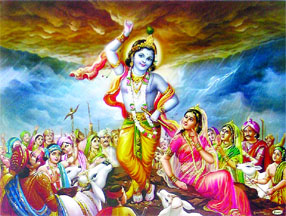
    The most celebrated story associated with this day comes from the Bhagavata Purana and centers on Lord Krishna’s miraculous lifting of the Govardhan Hill. In the idyllic village of Vrindavan, the people once worshipped Lord Indra, the rain god, offering him rituals and feasts to ensure abundant rains and rich harvests. Young Krishna, seeing this practice, asked the villagers to instead worship Govardhan Hill, which provided them with fertile pastures, food, and shelter. He taught that nature itself is divine and should be revered with sincerity and gratitude.
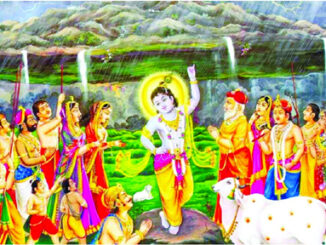
    Convinced by Krishna’s wisdom, the villagers offered their prayers and food to the Govardhan Hill instead of Indra. Enraged by this defiance, Indra unleashed torrential rains and storms over Vrindavan. To protect the people and animals, Krishna lifted the Govardhan Hill on his little finger, holding it like a vast umbrella for seven days and nights.
    Defeated, Indra realized Krishna’s supreme divinity and humbly sought forgiveness. From that day, the people of Braj began celebrating Govardhan Puja, honoring Krishna’s protection and the nurturing power of nature.
    Spiritual Meaning: Worshipping the Sustainer of Life
    Govardhan Puja is not merely a celebration of a mythological event-it is a spiritual lesson in humility, ecology, and gratitude. Lord Krishna’s act symbolizes the victory of devotion over arrogance, faith over fear, and nature’s grace over human pride.
    The Govardhan Hill represents Mother Earth, the ultimate giver of sustenance. Worshipping the hill is an acknowledgment that every grain of food, drop of water, and blade of grass is a divine blessing. Krishna’s message remains timeless: true worship lies not in hollow rituals but in reverence for the living world and in acts of service, protection, and compassion.
    Annakut – The Mountain of Food
    The day is also celebrated as Annakut, meaning “mountain of food.” This ritual is one of the most visually delightful and spiritually fulfilling parts of the festival. Devotees prepare an enormous array of vegetarian dishes-sweets, fruits, snacks, rice, pulses, and milk products-and arrange them in the form of a hill, symbolizing Govardhan Mountain.
    The offering, known as Chhappan Bhog (56 dishes), is made to Lord Krishna to express gratitude for the year’s harvest and the abundance bestowed by nature. In many temples, especially in Mathura, Vrindavan, Nathdwara, and ISKCON centers, the food is beautifully displayed before the deity and then distributed as prasadam to devotees, representing the sharing of divine blessings and communal joy.
    The Annakut feast also carries the message of charity and community sharing-reminding that wealth and food gain true sanctity only when distributed selflessly.
    Padwa or Bali Pratipada: Renewal and Relationships
    In many parts of India, especially in Maharashtra, Gujarat, and South India, the same day is celebrated as Padwa or Bali Pratipada, each with its own cultural significance.
    – In Maharashtra, Padwa is observed as Gudi Padwa of the Diwali cycle (not to be confused with the spring New Year festival). It celebrates the bond between husband and wife. Wives perform rituals and apply tilak on their husbands’ foreheads, praying for their long life and prosperity, while husbands present gifts as tokens of love and respect. This exchange reinforces marital harmony and gratitude within family life.
    – In Gujarat, the day marks the beginning of the new financial year, known as Bestu Varas. Business communities perform Chopda Pujan, worshipping their account books and ledgers before Lord Ganesha and Goddess Lakshmi. It symbolizes a fresh start guided by honesty, diligence, and divine blessings for prosperity.
    – In the Vaishnavite tradition, this day also honors King Bali, the generous demon ruler who was sent to the underworld by Lord Vishnu in his Vamana avatar, with a promise that he would return once a year. Bali Pratipada thus symbolizes selfless devotion and eternal faith.
    Regional and Cultural Diversity
    Across India, the celebrations of this day take on varied hues:
    – In Braj, Mathura, and Vrindavan, devotees perform Govardhan Parikrama-circumambulating the sacred Govardhan Hill, chanting Krishna’s name, and offering food, incense, and flowers.
    – In Gujarat and Rajasthan, people decorate cow dung models of the hill and worship cows, recognizing their sacred role in agrarian life.
    – In South India, the day marks Bali Pratipada, symbolizing the return of righteousness and devotion through Lord Vishnu’s blessing.
    Despite the regional differences, the underlying message remains the same-gratitude to nature, reverence for divinity, and celebration of togetherness.
    Symbolism: Lessons for Modern Life
    The story of Govardhan Puja holds a timeless message for today’s world. As humanity faces ecological challenges, Krishna’s act reminds us that nature is not to be exploited but revered. The hill he lifted is a symbol of environmental balance, while his protection of the villagers embodies compassion and responsibility toward all living beings.
    The Annakut offering teaches the virtue of contentment and sharing, and Padwa highlights love, renewal, and integrity in relationships and enterprise. Together, they form a holistic message for modern living-anchored in faith, gratitude, and sustainability.
    Govardhan Puja, Annakut, and Padwa together form a sacred triad of spiritual, material, and emotional renewal within the Diwali cycle. They remind us to bow not only before gods but also before the gifts of the Earth-to live with humility, to share what we receive, and to begin each new year with integrity and love.
    As the fragrance of fresh food mingles with the sound of prayers and the glow of diyas, this day celebrates the essence of life itself-gratitude for what sustains us, devotion to what guides us, and love for those who walk beside us.
    In honoring Govardhan, we honor the Earth; in celebrating Annakut, we honor abundance; and in observing Padwa, we honor relationships. Together, they illuminate a path where faith, prosperity, and compassion coexist in divine harmony.

  • Govardhan Puja

    Govardhan Puja

    Govardhan Puja is an auspicious festival in the Hindu culture that occurs a day after Diwali to commemorate the Baal Roop (child form) of Lord Shri Krishna. Govardhan Puja is also known as Annakut or Annakoot (meaning a “mountain of food”), in which devotees’ worship Govardhan Parvat (a hill) and offer 56 varieties (Chappan Bhog) of vegetarian food and sweets as a mark of gratitude.
    The word Govardhan is derived from the Govardhan mountain located in Gokul (Uttar Pradesh), which was single-handedly lifted by Lord Krishna. Govardhan puja started from Brijbhoomi as a thanksgiving ceremony to the most lovable God Krishna and gradually became prevalent throughout India. According to the Hindu calendar, people of India celebrate this holy festival on the first day of Shukla Paksha in the Kartik month.
    How is Govardhan Puja Celebrated
    Devotees celebrate this auspicious ritual Govardhan Puja or Annakut Puja with utmost devotion. The birthplace of Lord Krishna known as Brijbhoomi celebrates this festival with a grand ceremony. The idols of Lord Krishna and Goddess Radha are given milk bath and dressed in new clothes and ornaments in the temples of Mathura and Vrindavan.
    The puja starts with devotees making heaps of cow dung in the form of a hill which represents a symbol of mount Govardhan and decorates it with different colors and flowers. Then, devotees perform ‘Parikrama’ (moving around the mountain) around the cow dung hillocks while doing Kirtans (a combination of music, dance, and devotional hymns).
    The temples of Lord Krishna all across the country celebrate this festival by reciting bhajans, kirtans and by offering different foods, sweets, and flowers to the deities and distributing the prasad among all devotees. As per the tradition, devotees prepare and offer ‘Chappan Bhog’ (56 different food items made up of delicacies, sweets, or savories) to the Govardhan mountain as a respect towards Mother Nature. The festival of Govardhan Puja is associated with several other rituals and traditions. People living in different parts of India, celebrate this holy day while worshipping Lord Indra, the God of Rain, and Lord Vishwakarma, the divine architecture god for their blessings and support to live a comfortable life on earth.
    Significance
    Govardhan Puja is an auspicious festival that upholds the powerful bond of faith, devotion, and protection between Gods and devotees. The story behind Govardhan Puja educates every human to respect the forces of nature and to always remember that, being a mortal, we are dependent on Mother nature and must be grateful for all the blessings bestowed on us. The story of Lord Krishna, lifting the mountain and saving the lives of thousands of devotees describes that bhakti or devotion is the only way to connect with divinity. Lord Krishna lifted and sheltered all living beings of Gokul village under the large mountain, Govardhan. So, the significance of Govardhan puja also rests on the belief of the devotees in their Lord and how the Lord will protect them against all odds and in every critical situation.
    Govardhan Puja Story
    As per Vishnu Puran, once Lord Krishna asked His mother Yashoda the reason behind worshipping God Indra. Mother Yashoda explained that people worship God Indra because He is responsible for rain on Earth. Young Krishna disagreed with His mother and asked the villagers to stop worshipping God Indra. He had requested them to worship the Govardhan mountain, for the reason that Mount Govardhan is the one that provides natural resources to the villagers for their livelihood. All villagers agreed with Krishna as He was respected by everyone due to His knowledge and immense power. As a result, God Indra got furious by the act of the young boy Krishna and asked Varuna Deva (the god of rains) to pour continuous torrential rain for seven days. Due to the heavy downpour, the people of Gokul requested Lord Krishna to save their lives.
    The little God Krishna immediately asked the villagers to come near the Govardhan hill, where He uprooted and lifted the mountain on His little finger. Villagers, along with their cows and other animals, took shelter under the Govardhan mountain. After 7 days of continuous storms, Lord Indra accepted his defeat and stopped the storms as he realized that the young boy is an incarnation of Lord Vishnu. This day is therefore celebrated as a festival that pays respect to Mount Govardhan. Since that event, Hindus started celebrating Govardhan Puja and Mount Govardhan becomes a major pilgrimage site for the devotees of Lord Krishna. On the day of Annakut, thousands of devotees offer a variety of food to the mountain after doing the ‘Parikrama’ of an eleven-mile path around the mountain and offering flowers and Diyas to the several shrines located in that region.
    Summary
    According to the Hindu calendar, Govardhan Puja falls in the month of October-November. Hindus celebrates this holy day on the very next day of the grand Diwali celebration. People worship Lord Krishna as well as the Govardhan Mountain as a symbol that reminds the victory of good over evil. People from different regions celebrate this day according to their age-old tradition. Govardhan Puja is grandly celebrated in Mathura and Gokul because it is the birth place of Lord Krishna and He had spent most of his childhood in this region. Bhagavat Purana describes a beautiful story that Lord Krishna lifted Govardhan Hill with His little finger for 7 days and nights to provide shelter to the villagers of Gokul from torrential rains
    Since this episode, Govardhan has turned into a pilgrimage and devotees’ worship and offer prayers and food to the mountain. Hindu devotees around the world come to worship Govardhan mountain, which is located near Mathura in Uttar Pradesh. On this auspicious day, devotees offer 56 kinds of sweet dishes to Lord Krishna which are collectively called “Chhappan Bhog”. Devotees worship Lord Krishna as well as ‘Govardhan Parvat’ with full devotion and they perform kirtans, aarti, bhajans, etc. Devotees with their utmost faith and love for Lord Krishna, offer prayer and seek his blessing for a life without hurdles.

  • Govardhan Puja

    Govardhan Puja

    The day following Diwali or the fourth day of the Diwali celebrations is known by the names of ‘Padwa’ or ‘Varsha Pratipada’, & ‘Govardhan Puja’.
    These two festivals are celebrated differently in the diverse geographical parts of the country. While the festival of Padwa is celebrated in order to celebrate the coronation of King Vikramaditya, the festival of Govardhan Puja is celebrated for commemorating the incidence of lifting of Mount Govardhan by Lord Krishna.
    Both the festivals ‘Padwa & Govardhan Puja are celebrated with much fervor in different parts of the country. While Padwa is celebrated in parts like Maharashtra and the western states of India, Govardhan Puja is mainly associated with the Northern parts of the country.
    Padwa
    The fourth day of diwali celebrations or the day following the ‘Amavasya’ is ‘Kartik Shuddh Padwa’, which is also the day when the King Bali would come out of the ‘Patal Lok’, the Nether Land and rule the ‘Bhoo Lok’, the world as per the boon given to him by ‘Batu Waman’, Lord Vishnu. Since then this day came to be celebrated as Padwa in order to honor and welcome the King Bali. Therefore this day is also known as ‘Bali Padyami’.
    Gudi Padwa
    The day of Gudi Padwa has special significance for the Hindu families. There is a custom in which on this holy day the wife applies the ‘Tilak’ on the forehead of her husband, garlands him, performs his ‘Aarti’ and also prays for his long life. Then the husband gives her a gift in appreciation of all the tender care that his wife showers on him. Thus the Gudi Padwa is festival of celebrations and respect of love and devotion between the wife and the husband. People invite their newly married daughters with their husbands on this day of Gudi Padwa for special meals and give them gifts.
    Legends of Govardhan Puja
    There are several popular legendary stories to explain the foundation of Govardhan Puja celebration.
    Lord Krishna lifts the Govardhana Hill
    ‘Govardhan’ is a small hillock in Braj, near Mathura and on this day of Diwali people of Punjab, Haryana, Uttar Pradesh and Bihar build cow dung, hillocks, decorate them with flowers and then worship them. This festival is in commemoration of the lifting of Mount Govardhan by Krishna.
    As per Vishnu Puran the people of Gokul used to worship and offer prayer to Lord Indra for the rains because they believed that it was he who sent rains for their welfare but Lord Krishna told them that it was Mount Govardhan (Govardhan Parvat) and not Lord Indra who caused rains therefore they should worship the former and not the latter. People did the same and it made Lord Indra so furious that the people of Gokul had to face very heavy rains as a result of his anger. People were afraid that the downpour was a result of their neglect of Indra. But Krishna assured them that no harm would befall them. Then Lord Krishna came forward to ensure their security and after performing worship and offering prayers to Mount Govardhan lifted it as an umbrella on the little finger of his right hand so that everyone (men and beasts ) could take shelter under it. After this event Lord Krishna was also known as Giridhari or Govardhandhari. After this, Indra accepted the supremacy of Krishna. Govardhan Puja is also called Anna-Koot.
    Anna-Koot
    This day is also observed as ‘Anna-Koot’, which means mountain of food. Pious people keep awake the whole night and cook 56 or 108 different types of food for the Bhog (the offering of food) to Krishna. In temples especially in Mathura and Nathadwara, the deities are given milkbath, dressed in shining attires with ornaments of dazzling diamonds, pearls, rubies and other precious stones. After the prayers and traditional worship innumerable varieties of delicious sweets are ceremoniously raised in the form of a mountain before the deities as “Bhog” and then the devotees approach the Mountain of Food and take Prasad from it.
    Significance
    This ceremony has great significance in the Hindu religion. On this day, devotees worship the cow, Govardhan Parvat, and Lord Shri Krishna. Govardhan Puja is a festival that honours Lord Krishna and shows respect and adoration for Mother Nature. Worshipers are said to receive Lord Krishna’s blessings on this day if they worship the Govardhan hill and his favoured cows.
    Hindu legend states that on this day, Lord Krishna raised the Govardhan Parvat upon his little finger to avert the wrath of Lord Indra, the Rain God, on the inhabitants of Vrindavan. With tremendous fervour, people started to worship Govardhan Parvat, and Lord Krishna was given the titles “Govardhandhari” and “Girirdhari.”