Tag: government of India

  • Farm Laws:  No headway in 11thRound of Talks between Government and Farmers

    Farm Laws: No headway in 11thRound of Talks between Government and Farmers

    NEW DELHI (TIP): Farmer unions on Friday, January 22, told the government that they wanted a complete repeal of three contentious farm laws even as the Centre asked them to reconsider its proposal for putting the Acts on hold for 12-18 months, as the two sides met for their 11th round of talks to resolve the nearly-two-month-long deadlock.

    The 11th round of farmer-government meeting lasted barely for 30 minutes. Broadly, the government has made it clear that the three controversial laws will not be repealed, and that the government has made its best offer.The Union Government has also urged the farmer leaders to consider building consensus around the proposal.

    Ending the meeting, Agriculture Minister Narendra Singh Tomar told unions that “the government is grateful for their cooperation”. “There is nothing wrong in the three laws. We gave the proposal, but you could not arrive at any decision. If you arrive at any conclusion please let us know, we will discuss again,” Tomar said.

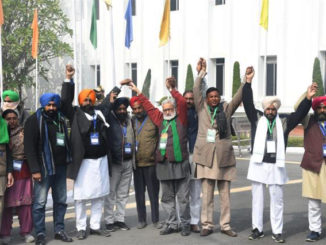
    Sources say Union Ministers have told farmer leaders that they had given the “best proposal” and that they should try to build consensus around it. Meanwhile, farmer leaders said they were firm on their stated stance and have already decided that farmers would not settle for anything less than the repeal of the three laws. “We will now prepare for the January 26 parade,” they said, adding: “The government could not build a consensus and was wrong of them to accuse us of going to the media,” they said.While the morning session lasted for barely 20 minutes, the post lunch was also finished in 10 minutes after Tomar’s brief statement.The government has not set a date for the next meeting and has told the union leaders to think on its proposal. Notably, a section among Punjab unions were in the favor of accepting the government’s offer. They included some “small unions from Doaba” and similar organizations.Unions have claimed “threats” to union leaders namely Darshan Pal and Rakesh Tikait.

    In the last round of meetings held on Wednesday, the government had offered to put on hold the three laws and set up a joint committee to find solutions. However, after internal consultations on Thursday, the farmer unions decided to reject the offer and stick to their two major demands -the repeal of the three laws and a legal guarantee of the minimum support price (MSP). “We told the government that we would not agree to anything other than the repeal of the laws. But the minister asked us to discuss separately again and rethink on the matter and convey the decision,” farmer leader Darshan Pal told PTI during a break after the first session.

    BKU leader Rakesh Tikait said: “We conveyed our position clearly to the government that we want a repeal of the laws and not a suspension. The minister (Narendra Singh Tomar) asked us to reconsider our decision.”

    The eleventh round of talks between protesting farmer unions and three central ministers began at around 1 pm, but not much headway was visible in the first few hours of the meeting.

    Some leaders had apprehensions that the movement would lose its momentum once the farmers went away from Delhi borders.

    Harpal Singh, president of Bhartiya Kisan Union – Asli Arajnaitik, said: “Even if we accept the government’s offer, our fellow brothers sitting at Delhi borders will not accept anything other than a repeal of the laws. They will not spare us. What achievement will we show to them?”

    He also questioned the government’s credibility, alleging it was difficult to believe that they would keep their word on putting the laws on hold for 18 months.

    “We will die here but we will not return without getting the laws repealed,” Singh said. Along with Union Agriculture Minister Tomar, Railways, Commerce and Food Minister Piyush Goyal and Minister of State for Commerce Som Parkash are also participating in the talks with representatives of 41 farmer unions at the Vigyan Bhawan here. In a full general body meeting on Thursday, SamyuktKisanMorcha, the umbrella body of the protesting unions, rejected the government’s proposal.

    “A full repeal of three central farm Acts and enacting a legislation for remunerative MSP for all farmers were reiterated as the pending demands of the movement,” the Morcha said in a statement.

    Thousands of farmers, mainly from Punjab, Haryana and western Uttar Pradesh, are protesting at various border points of Delhi for over a month now against the three laws.

    Farmer groups have alleged these laws will end the mandi and MSP procurement systems and leave the farmers at the mercy of big corporates, even as the government has rejected these apprehensions as misplaced.

    On January 11, the Supreme Court stayed the implementation of the three laws till further orders and appointed a four-member panel to resolve the impasse.

    Bhartiya Kisan Union president Bhupinder Singh Mann had recused himself from the committee appointed by the apex court.

    ShetkariSanghatana (Maharashtra) President Anil Ghanwat and agriculture economists Pramod Kumar Joshi and Ashok Gulati, the other three members on the panel, started the consultation process with stakeholders on Thursday, January 21.

    (With inputs from PTI and TNS)

  • India is a constructive, dependable actor globally

    India is a constructive, dependable actor globally

    Through the pandemic, it has not only met its domestic requirements but taken a range of steps for global good

    By Harsh Vardhan Shringla
    We reaffirmed our position as first responder to humanitarian crises in the region by deploying medical teams to help Maldives, Mauritius, Comoros and Kuwait deal with the pandemic. India also dispatched naval assets to Maldives, Mauritius, Madagascar, Comoros and Seychelles to deliver assistance. This demonstrated our strong commitment to the PM’s vision of Security and Growth for All in the Region (SAGAR).

    At the virtual Global Vaccine Summit, the PM highlighted how India’s contribution to the global response in terms of sharing medicines was guided by our philosophy of Vasudhaiva Kutumbkum.

    Covid-19 continues to exact a heavy toll worldwide. In India too, positive cases are rising. However, India’s effective response has led to a significant improvement in its recovery rate, which is now 68.78%. The case fatality rate at 2.01% remains one of the lowest in the world.

    High recovery and low-fatality outcomes can be attributed to proactive measures taken to deal with the outbreak from its early stages. In comparative terms, India started screening Covid-19 cases a full 13 days before the first case was detected in the country.  India implemented full lockdown on the 55th day of the outbreak when it had only around 600 cases. Its public health response has been appreciated by the World Health Organization (WHO). The government took rapid steps to augment health infrastructure. As Prime Minister Narendra Modi noted, “India now has over 11,000 Covid-19 facilities and 1.1 million isolation beds. We have ramped up testing to over half-a-million tests a day, to be scaled up to a million”.

    India’s response has not been confined to meeting its domestic requirements. India has been significantly engaged with the international community in providing the leadership that the global situation demanded. As a responsible stakeholder in global health supply chains, India ensured  timely access to essential drugs and medical items for over 150 countries while meeting our own domestic requirements.

    We reaffirmed our position as first responder to humanitarian crises in the region by deploying medical teams to help Maldives, Mauritius, Comoros and Kuwait deal with the pandemic. India also dispatched naval assets to Maldives, Mauritius, Madagascar, Comoros and Seychelles to deliver assistance. This demonstrated our strong commitment to the PM’s vision of Security and Growth for All in the Region (SAGAR).

    From being a net importer of Covid-19-related medical items, India has emerged as a net exporter. Today, India manufactures over 500,000 personal protective equipment (PPE) kits and over 300,000 N-95 masks every day. Our system has shown the necessary adaptability and agility to significantly ramp up production to go beyond our domestic requirements.

    The repatriation of Indian nationals stranded abroad and the evacuation of foreigners from India to their home countries have been among the most successful aspects of our response. In the initial days, the ministry of external affairs had promptly set up a Covid cell and a 24×7 control room to assist Indian citizens abroad. The PM had also personally directed our heads of missions to extend all possible assistance to our nationals stranded abroad. Subsequently, the Vande Bharat mission, launched to repatriate our nationals stranded overseas, has been the largest exercise of its kind ever undertaken by the government and has demonstrated our capacity to effectively carry out complex humanitarian missions. Over a million Indians have returned under the ‘Vande Bharat’ mission so far through flights, across land borders and on naval ships.

    We have not only been able to bring home Indian nationals from distant locations but also facilitated the return of Bhutanese, Nepalese and other nationals stranded in third countries to their homes on these repatriation flights. In recognition of the immense contribution played by the Indian American community in building bridges between India and USA, India has allowed all holders of Overseas Citizenship of India cards to travel freely between the two countries. The institution of ‘travel bubbles’ between India and USA and a few other countries has further facilitated such travel.

    Rigorous screening of returnees by our diplomatic missions has ensured that the proportion of positive cases remains extremely small (less than 0.2%). Testing on arrival by the health ministry and state governments has helped detect these cases. The mission just doesn’t end with the return  of Indian nationals. Recognizing that a lot of expatriate Indians would have lost their jobs particularly in the Gulf area, the Govt is mapping the skills of Indians on arrival to reskill and  link them with companies for job opportunities.

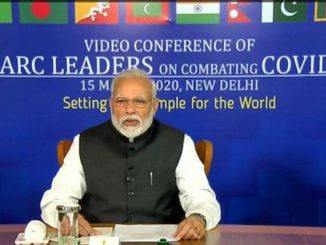
    There has also been no let-up in India’s diplomatic outreach during the pandemic. We have initiated and been part of several important conversations globally. Our ‘Neighborhood First’ policy was on full display when the PM hosted a video conference of the South Asian Association for Regional Cooperation (Saarc) leaders early in the crisis — our first such engagement on Covid-19. He announced a series of measures to deal with the pandemic, including the creation of a Covid-19 emergency fund with a commitment of $10 million from India.

    We have also called for a better multilateral response to global crises in the future. The PM has, on several occasions, including in the G-20 and Non-aligned Movement virtual summits, proposed the reform of multilateral cooperation by bringing people to the center of our efforts. Our own initiatives such as the International Solar Alliance and the Coalition for Disaster Resilient Infrastructure are prime examples of this approach. The decision of the G-20 on debt service suspension for developing countries, which India fully supported, reflects this people-centric approach.

    At the virtual Global Vaccine Summit, the PM highlighted how India’s contribution to the global response in terms of sharing medicines was guided by our philosophy of Vasudhaiva Kutumbkum.

    The PM also hosted the first virtual bilateral summit with Australia, which was followed by the India-European Union summit. In addition, the PM has spoken to his counterparts from 61 countries during this period. The external affairs minister has spoken to foreign ministers from 77 countries. I have been part of several dialogues with several of our partners countries, notably the Indo Pacific Group that convenes every other week to coordinate health, travel, immigration and related issues during COVID times,  We have kept open channels of virtual communication to strengthen partnerships and deal with situations that require diplomatic engagement.

    We have been constantly adjusting, adapting and innovating to deal with the changed reality, particularly in our engagement with the world. And in the process, we have been successful in elevating India’s profile as a constructive and dependable actor on the global stage.

    (The author  is foreign secretary, Government of India. The views expressed are personal)

  • No exponential rise in Covid-19 cases in India

    No exponential rise in Covid-19 cases in India

    I.S.Saluja

    NEW DELHI / NEW YORK (TIP): Government of India said , Thursday, April 23 that the rise in coronavirus cases in the country has been more or less linear, not exponential.

    The country is experiencing 4.5 per cent positive cases among the tested people, which is similar to the situation a month ago before the lockdown was imposed, added the Centre.

    “No new case of Covid-19 was reported from 78 districts in the last 14 days. A total of 388 patients were cured in one day, the recovery rate is 19.89 per cent. There are 33 new districts in nine states from where no new case was reported in the last 14 days,” said Luv Agarwal, Joint Secretary at the Union Health Ministry.

    The total number of confirmed cases in India is 21,393. While 4,257 people have been cured so far, 681 persons have succumbed to the dreaded virus. The number of active cases in the country is 16,454. In the last 24 hours, 1,409 positive cases were reported from across the country.

    “We have scaled up nearly 33 times in 30 days. We need to consistently ramp up testing”,

    CK Mishra, Chairman of Empowered Group 2, at a press conference said, “On March 23, we had done 14,915 tests across the country and on April 22, we did more than 5 lakh tests, and as per a rough calculation, we have scaled up nearly 33 times in 30 days. We need to consistently ramp up testing.” Mishra said.

    Mishra said the focus of the government is on the districts.

    “Our focus is on the districts now. The way positive cases moved in India, the growth is more or less linear and not exponential. Certain strategies are in work to contain it to a particular level. Beyond this, looking at the story of positive cases in these 30 days, we are more or less in the same position where we were one month ago. Among those tested, 4.5 per cent cases have returned positive,” added Mishra.

    He insisted that through the lockdown, the government has been able to minimize the spread of the infection, cut the transmission rate and increase the number of days in doubling of the cases.

    “One crucial weapon we employed during the 30-day lockdown period is RT-PCR test to ascertain if one has contracted the disease or not.”

    Of the empowered groups formed to suggest measures to ramp up healthcare, put the economy back on track and reduce misery of people once the lockdown is lifted, Mishra is the chairman of Empowered Group Two tasked with coordinating availability of hospitals, isolation and quarantine facilities, disease surveillance, testing and critical care training.

    “The growth of Covid-19 cases has been more or less linear, not exponential; this indicates that the strategies we adopted have succeeded in containing the infection to a particular level. Post imposition of lockdown, while the number of new positive cases has increased by 16 times, testing increased by 24 times,” Mishra said in his presentation.

    “During the 30 days of lockdown, we have been able to cut transmission, minimize spread and increase the doubling days of COVID-19. We have been able to consistently ramp up our testing and utilize our time preparing for the future in case the virus spreads further,” he said.

    Mishra also said that in the last month, the number of dedicated hospitals for treating coronavirus patients has been increased 3.5 times and the number of isolation beds rose by 3.6 times.

    “Despite a 24-fold increase in testing, percentage of positive cases is not rising. The percentage of positive cases as a ratio of testing is more or less the same as that a month ago,” he said.

    Mishra also claimed that India has done better than a majority of developed countries with respect to the percentage of test cases yielding positive results.

    “We need to evolve our strategy based on the current position… We seem to be doing well so far with our strategy which is intensely focused on areas where we see a lot of positivity and action happening. Our testing strategy has been focused, targeted and continues to expand,” he said.

    The assessment of  medical specialists  is that the containment has worked well, considering the low number of new cases surfacing. However, in view of the scant scope for testing , the number of those infected may not be known too soon. The coming weeks will unfold both the number of news cases and the rate of deaths. They caution that the seeming situation may prove deceptive if the guard is taken off. They will like the government not to hurry to get the nation back to work.

    (With input from agencies)