Tag: GST

  • Cuts in time: On the new GST system

    The GST rate cuts will boost consumption at a time when exports face challenges

    The sweeping changes to the Goods and Services Tax (GST) regime, authorized by the GST Council on Wednesday (September 3, 2025), have come as a shot in the arm for the mood of the people, and, potentially, for the economy overall. Few things spur optimism and demand as effectively as tax cuts. The Centre did well to push the GST Council towards these reforms, which rose to the occasion and cleared them quickly. Criticism that these reforms have come too late is neither here nor there. The GST Council is a federal body, and any of the States could have suggested these rate cuts earlier but did not. The appropriateness of the Prime Minister’s announcement of the reforms in his Independence Day speech, coming as it did before either the relevant Group of Ministers or the GST Council met, can be questioned. But here, too, the fact that the Council announced its decisions on the first day of what was supposed to be a two-day meeting shows that the States were on board. The minutes of the 56th meeting will reveal each member’s stated position. The rate changes span nearly every sector, and are, overwhelmingly, in the downward direction. Very few items, such as high-end motorcycles and higher priced apparel, are set to become more expensive. Tempting as it was to pack the 40% bracket with more items, the GST Council did well to keep it narrow. Overall, these rate cuts, coupled with the income-tax rate cuts announced in Budget 2025, should serve as a much-needed boost to consumption at a time when other engines of growth such as exports and private investment are sputtering.

    The government has maintained that the revenue implication of these GST rate cuts would be around ₹48,000 crore a year, based on 2023-24 consumption data. Given the scope of the cuts, this seems like an underestimation. However, only time will tell what the actual number will be. It is to be noted that the GST Council decided to do away with the compensation cess, despite Opposition-governed States calling for one to protect their revenues. Such a cess would have diluted the rate rationalization and simplification efforts and is best eschewed. Instead, the States are now going to have to look to their own revenue sources, as well as the 16th Finance Commission, to offset the losses they face. The new GST 2.0 still has some anomalies, and is still more complicated than it needs to be, but the removal of duty inversions and the easing of paperwork are a huge improvement. The government should now revive the National Anti-Profiteering Authority, at least temporarily, to ensure that the rate cuts are passed on once they kick in on September 22.

    (The Hindu)

  • GDP growth should be a corollary of job creation

    GDP growth should be a corollary of job creation

    It is time for a paradigm shift. The focus needs to shift from GDP growth to the creation of more productive and better-paying jobs.

    “A national mission for achieving 100 per cent modern solid waste management, sewage treatment and processing and utilization of bio-waste as a source of renewable energy should get the resource allocation needed for giving us a clean environment and, at the same time, creating large-scale dispersed employment.

    The key is to design state interventions and allocate financial resources, giving job creation overriding priority. It should be profitable for private firms to create more jobs, and the state can and should make it happen.”

    By Ajay Shankar

    The India Employment Report 2024, released recently by the Institute for Human Development in partnership with the International Labour Organisation, provides a comprehensive analysis of the latest official data. Some of its key findings are: the slow transition to non-farm employment has reversed; nearly 82 per cent of the workforce is engaged in the informal sector and around 90 per cent is informally employed; the youth unemployment rate has increased in accordance with the level of education, with the highest rate among those with a graduate degree or higher; and the real wages of regular workers have either remained stagnant or declined.

    This is the situation even when GDP growth rates have been rising after the post-Covid recovery. If growth rates rise further, the acute problem regarding employment will continue. This calls for a policy response. But when looking for one, there is a mindset barrier that needs to be overcome first. One way of understanding this is to compare our performance with that of China. In 1991, the per capita incomes of the two nations were almost the same, and technologically, we were on a par, notwithstanding China being a powerful centralized state. Today, the Dragon has a per capita income that is five times ours. It has become the factory of the world and is trying to catch up with the US in frontier technologies. The primary reason for this widening gap has been our embrace of the Washington Consensus, with its faith in the efficacy of free markets, globalization and the diminished role of the state. The state should restrict itself to providing macroeconomic stability, ease of doing business and the provision of physical infrastructure, along with education and healthcare. The state should not pursue an old-fashioned industrial policy as it is incapable of ‘choosing winners and losers’.

    The Chinese, on the other hand, made symbolic gestures to please the West but followed the smart industrial policies that South Korea and Japan had pursued to catch up with advanced industrial economies. The state steered the economy with pragmatic policies. The problem with our mindset was reflected in the comments of Chief Economic Adviser V Anantha Nageswaran at the release of the report; he listed all good macro-level policies that were already there. It was now for the industry to create jobs. There was, by implication, nothing more that the government could do.

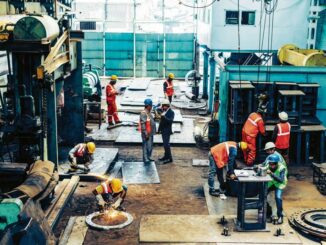
    Given the severity of the employment challenge, it is time for a paradigm shift. The focus needs to shift from GDP growth to the creation of more productive and better-paying jobs. GDP growth should be a corollary of job creation. The starting point for change is to realize that smart sectoral policies can steer market forces to create more jobs. The purpose of choosing sectors and policy instruments has to be higher job creation.

    There are two macro-level decisions that are prerequisites for offering better incentives to firms to create jobs. The first is for the Reserve Bank of India to give up the article of faith of letting market forces determine the exchange rate rather than acting to prevent real exchange rate appreciation. Real exchange rate appreciation makes imports cheaper and exports more expensive and has an adverse impact on employment. India is getting disproportionately large capital inflows through remittances and speculative foreign investments in our stock markets, resulting in real exchange rate appreciation. East Asian nations kept their currencies artificially depreciated to industrialize faster.

    More than improving the ease of doing business, firms look at the cost of doing business. The PLI (production-linked incentive) is a recognition of the fact that there is a cost disadvantage in manufacturing in India, and a cash grant is made to offset this disadvantage linked to the achievement of agreed levels of output. It would be much better to lower costs across the board. But this would involve difficult decisions. These would include bringing petrol and diesel into the GST ambit, that in the 18 per cent slab, doing away with toll highways, ending cross-subsidy in rail freight charges and making the movement of goods by rail lucrative. The high cost of logistics in India is a major source of competitive disadvantage. Further, creating affordable rental accommodation for workers near manufacturing areas would improve their productivity.

    A few labor-intensive sectors with the highest potential for creating jobs need to be chosen initially for putting together a critical mass of interventions to achieve a breakthrough. Tourism creates many jobs, but it awaits state-driven investment to establish destinations that attract international tourists and wealthy Indians in large numbers. In manufacturing, selectively raising the import duty and combining this with a package of financial incentives to achieve scale and competitiveness is one option that has produced good results in the case of toys. Having an FTA (free trade agreement) with the European Union should be a priority, as it would provide duty-free access to the European market for our labor-intensive garment exports. Creating, for instance, a labor-intensive ship-building industry is feasible. In the industrial era, competitive advantage is not a natural endowment; it is created. The state, in consultation with the domestic industry and global firms, can work out incentives that would lead to large-scale investment and job creation. Apple is a good example of the success of this approach in the manufacturing and export of smartphones.

    A national mission for achieving 100 per cent modern solid waste management, sewage treatment and processing and utilization of bio-waste as a source of renewable energy should get the resource allocation needed for giving us a clean environment and, at the same time, creating large-scale dispersed employment.

    The key is to design state interventions and allocate financial resources, giving job creation overriding priority. It should be profitable for private firms to create more jobs, and the state can and should make it happen.

    (The author is Distinguished Fellow, TERI)