Tag: Gujarat

  • CBI CHARGESHEET terms Ishrat Jahan encounter fake

    CBI CHARGESHEET terms Ishrat Jahan encounter fake

    AHMEDABAD (TIP): Spelling trouble for the Narendra Modi government, the CBI on July 3 held that 19-year-old Ishrat Jahan was killed in a “fake” encounter in 2004 and chargesheeted seven police officers in the case, saying it was a joint operation between Gujarat police and the subsidiaryIntelligence Bureau (SIB). Those against whom the chargesheet was filed for murder and criminal conspiracy include absconding Additional DGP PP Pandey and suspended DIG D G Vanzara. “The encounter was a joint operation between Gujarat police and SIB of the state,” CBI said in the chargesheet, adding, “the encounter was fake”.

    The investigation is going on against four Intelligence Bureau officers, including its Special Director Rajinder Kumar, and three other officers â ” P Mittal, M K Sinha and Rajiv Wankhede, it said. Supplementary chargesheet would be filed against IB officers once the investigation was over, the court was told. Apart from Pandey and Vanzara other Gujarat police officers who have been chargesheeted are GL Singhal, Tarun Barot, NK Amin, JG Parmar and Anaju Chaudhary. Ishrat, who belonged to Mumbra in Thane district adjoining Mumbai, Javed Shaikh alias Pranesh Pillai, Amjadali Akbarali Rana and Zeeshan Johar were killed in the encounter with the Gujarat police on the outskirts of Ahmedabad on June 15, 2004.

  • Ishrat Jahan case: CBI gets closer to Modi, may quiz Amit Shah

    Ishrat Jahan case: CBI gets closer to Modi, may quiz Amit Shah

    NEW DELHI (TIP): The CBI, probing the June 2004 fake encounter deaths of Mumbai college student Ishrat Jahan and three other terror suspects in Ahmedabad, is likely to examine the then state home minister Amit Shah to verify if he had known about the conspiracy. The agency will take Shah’s version for the first time as part of the probe, after filing its charge sheet in the case early next week, according to a CBI source. “There is a suspicion that a case accused was in touch with Shah before and after the incident telephonically, the records of which we are verifying.

    We may examine him after filing our charge sheet, which will be followed by a supplementary charge sheet,” he said. The agency may charge sheet Intelligence Bureau’s special director Rajinder Kumar, a 1979 batch Indian Police Service officer who was posted in Gujarat from 2001 to 2005, without seeking a prosecution sanction from the home ministry. “We don’t need any prosecution sanction to charge sheet the IB officer since sanction under section 197 of the CrPC is mandatory only if the crime is committed as part of the government servant’s official duties. This was a fake encounter, orchestrating it wasn’t part of his official duty,” he said. “No prosecution sanction was required to charge sheet senior police officers accused in fake encounter probes in Punjab,” said the source. A home ministry source, however, said that CBI’s evidence only indicated that Kumar was in the loop, not conspired to murder.

  • In Devastated Uttarakhand, Claims Of Rape And Robberyj

    In Devastated Uttarakhand, Claims Of Rape And Robberyj

    DEHRADUN (TIP): The police are in denial mode, but locals said rape, loot and killing of Uttarakhand disaster victims at Kedar Valley did happen. Victims too claimed to have been at the mercy of criminals of all hues. Locals said they helped the Ukhimath police arrest three men and recover R4lakh from them. But the police did not register any case against them, nor did they say where they were taken to. Most top police officers in Rudraprayag district remained incommunicado.

    Swatantra Verma, a victim from Raipur in Chhattisgarh, said he traded everything he had to prevent four persons from molested his daughter in the Jangalchatti area near Rambara. “They approached us on June 18 offering to take us to a safer location. Their attitude changed after it turned dark. No sooner did we reach Jangalchatti around 10pm than they pounced on my daughter,” he said. His wife Shalini said the experience was worse than the natural calamity they had escaped from. A similar incident happened with a group of pilgrims from Gujarat.

    They too had to hand over their belonging to criminals to save themselves. Gujarat principal secretary and disaster management commissioner PK Parmar said he didn’t receive any specific complaint of rape from Gujarat pilgrims but he had heard about women disrobed and harassed in Kedar Valley. There were also reports of miscreants chopping off body parts of corpses in front of the survivors. Police, however, said there were no criminal activities.

    “We haven’t received any complaint of loot or rape from anywhere. On the other hand, some 1,200 persons were screened at Rudrparyag area as a precautionary measure,” said RS Meena, IG (law and order). West Bengal transport minister Madan Mitra and state planning and development minister Rachhpal Singh alleged muleteers raped several pilgrims.

  • Rare Jain Text Declared World Heritage Document

    Rare Jain Text Declared World Heritage Document

    LONDON (TIP): One of the most important documents of the Jain community has been declared a global treasure by Unesco. Shantinatha Charitra – a text written in Sanskrit, that describes the life and times of Shantinatha, the 16th Jain Tirthankara has been included in the most prestigious list of the world’s greatest documents. Unesco’s world heritage body on Wednesday included the Indian entry in the Memory of the World Register 2013 and said “the story is of lasting value to humankind”.

    The manuscript talks about peace, nonviolence and brotherhood and was composed and written in the late 14th century. It contains 10 images of scenes from the life of Shantinatha in the style of Jain paintings from Gujarat. Unesco said the document is an universal message of friendship, global peace and unity with integrity. “It also describes historical facts and professes high moral and cultural values. The Illustrations found in this manuscript are oldest specimens of miniature painting.

    These illustrations are beautifully drawn in multi-colour and are examples of a highly evolved style of painting. As these illustrations are rarest of rare, their preservation and protection is necessary for humanity. These are the best and oldest examples of miniature paintings while the story itself is of lasting value to humankind,” Unesco added. India in its application to Unesco said the rare document is an example of the finest expression in the art of miniature paintings in manuscripts.

    The ink used in the manuscript is gum lampblack and white paint made from mineral silver. The manuscripts are owned by Lalbhai Dalpatbhai Institute of Indology. It was donated by late Muni Punyavijayji who had inherited it through family. The application said, “Such hereditary manuscripts are genuine especially if they belong to Jain monks…Muni Shri Punyavijayji was a Jain monk highly revered in his community and thus the authenticity of the manuscript is beyond doubt.

    The paper and ink of the document are a proof of its authenticity”. “This is the oldest (1397 CE) example of Jain miniature painting available in a text,” the application added. The Lalbhai Dalpatbhai Institute of Indology has a rich collection of nearly 75,000 rare manuscripts including a substantial number received as gifts for preservation and custody. Many of these manuscripts are written on palm leaf, birch-bark (bhojpatra) and handmade paper. Some of the manuscripts are written in gold and silver inks and are full of multicolour miniatures while some others are in black and white.

  • NRCC Appoints Indian-American Shalli Kumar To Foster Ties With Community

    NRCC Appoints Indian-American Shalli Kumar To Foster Ties With Community

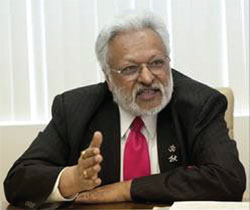
    WASHINGTON: An Indian- American has been appointed by a Republican Congressional panel to strengthen ties between the Republican Party and the community. The Indian American Executive Council of the National Republican Congressional Committee (NRCC) would be headed by Shalli (Shalabh) Kumar of Chicago, who early this year had taken a Congressional delegation to Gujarat, which had met Chief Minister Narendra Modi.

    According to a press statement, Kumar and the Indian American Executive Council shall help facilitate communications between National Republican Congressional Committee and the Indian-American community. In this capacity, Kumar will play an integral role in fostering relations between the NRCC and the Indian- American community. The NRCC will seek his input regarding how to increase Republican outreach efforts in the coming elections and identify potential candidates, the media statement said.

  • RSS Chief Offers No Assurances To Advani

    RSS Chief Offers No Assurances To Advani

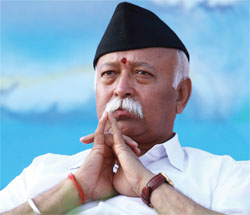
    NEW DELHI (TIP): BJP stalwart L K Advani on June 20 failed to extract a firm commitment from RSS chief Mohan Bhagwat that his concerns about the functioning and direction of the party would be heeded. While Advani raised with Bhagwat the issues he had cited when he resigned in the wake of Gujarat CM Narendra Modi’s appointment as chairman of BJP’s national campaign committee, the RSS chief offered little except the assurance to hold more discussions and an advice to the veteran saffronite to stay engaged.

    In fact, Bhagwat, who had persuaded Advani to withdraw his resignation on June 11, also said that other stakeholders needed to be heard before he took a view: a rather candid assertion that Advani’s views on party’s affairs were not the final word. The hour-long “detailed and candid interaction” at the RSS headquarters in the Capital ended without Bhagwat committing himself to any timeline for addressing the issues Advani raised with him before withdrawing his resignation.

    In his resignation letter to party president Rajnath Singh, Advani had said, “For some time, I have been finding it difficult to reconcile either with the current functioning of the party or the direction in which it is going.” He also said that most party leaders had deviated from the ideals of the founding fathers, and were pursuing their selfish agendas.

    Sangh Parivar circles had interpreted Advani’s lament about the “functioning” and “direction” of the party as shorthand for the resentment of his supporters about the functioning of RSS’s joint secretary general Suresh Soni and Modi’s ascendancy. Soni, RSS’s liaison person who is respected by many in saffron circles for his ideological clarity and tough resolve, has earned a reputation for not allowing himself to be intimidated by seniority.

    A statement issued by the RSS on the meeting suggests that no decision on Soni, especially on whether he should continue on Sangh’s BJP desk, will be taken without hearing him and others. As for Modi’s elevation, it is irreversible, and Rajnath had made it clear even before Advani withdrew his resignation. The RSS statement made it plain that Advani got no concession from Bhagwat. “Shri Advaniji conveyed his views on various developments in the country and the role of the party and the broad nationalist movement led by Sangh.

    It was opined that several issues need further discussion and exchange of notes at various levels. Same will take place at appropriate time. Shri Bhagwatji suggested that such useful exchange of views should continue in future also,” the statement said. The meeting between the two leading Sangh Parivar figures was agreed upon after Advani took back his papers following a brief telephonic conversation with Bhagwat.

    The resignation, which was widely interpreted as a protest against Modi’s elevation and surprised many, ended equally dramatically the following day with Rajnath Singh emphasizing that Advani had retraced his step following talks with Bhagwat, while assuring that all his “concerns” would be “properly addressed”. Many who considered the assurance to be vague and meant more for soothing the veteran’s hurt rather than an expression of an intention to change decisions of the party, especially Modi’s appointment in Goa, claimed validation after seeing RSS’s version of the interaction between Advani and Bhagwat.

  • Bjp Sweeps Gujarat Bypolls, Rjd Triumphs In Bihar

    Bjp Sweeps Gujarat Bypolls, Rjd Triumphs In Bihar

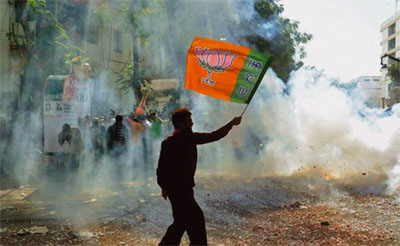
    NEW DELHI (TIP): The ruling BJP in Gujarat has swept five of the six seats — two Lok Sabha and three assembly seats — to which bypolls were held last Sunday, while the JD(U) in Bihar is all set to suffer a setback in Maharajganj Lok Sabha seat. BJP is also leading in the sixth assembly seat of Dhoraji, which fell vacant after Vithhal Radadia left Congress to join BJP and resigned as an MLA.

    BJP candidate Pravin Mankadia is fighting against Congress rival Haribhai Patel on the seat. The party is leading by 6,803 votes after 26 rounds of counting. All the six seats were earlier with the Congress party. The BJP registered a significant win in the Porbandar Lok Sabha seat where Vithhal Radadia, who was caught brandishing his gun at a toll booth last year when he was a Congress MP and later crossed over BJP, won the seat with over 1,28,000 votes.

    The Sabarkantha Lok Sabha seat, which fell vacant after the death of Congress MP Mukesh Gadhvi, was won by Haribhai Chaudhary of BJP with the margin of more than 71,000 votes over his Congress rival Krishna Gadhvi, wife of Mukesh Gadhvi. BJP’s Jayesh Radadia, who also defected from Congress with his father Vithhal Radadia, won the Jetpur assembly seat defeating Jagdish Pambhar of the Congress. Nimisha Suthar of the BJP won the Morva Hadaf (ST) assembly seat by defeating Congress candidate Bhupendrasinh Khant.

    The seat was held by Bhupendrasinh’s mother Savita Khant, who died during the counting of assembly elections last December. Former state minister and BJP leader Kiritsinh Rana won Limbadi seat by defeating Congress candidate Satish Patel. The byelection was necessitated after Congress MP Soma Patel, who won Limbadi assembly seat too, resigned as an MLA. Congress had fielded his son Satish Patel on the seat.

    Trinamool wins Howrah seat

    In Bengal, Trinamool Congress candidate Prasun Banerjee won the Howrah Lok Sabha seat defeating his nearest rival, CPM candidate Sridip Bhattacherjee, by over 27,000 votes. Though official results were still to be declared, Election Commission sources said that Prasun Banerjee secured 4,26,273 votes and Sridip Bhattacherjee 3,99,258 votes. Congress candidate Sanatan Mukherjee was in third spot polling 96,727 votes. The sources said that counting of 300 votes in one EVM which developed a technical malfunction would be taken up before the official declaration of the result.

    The seat fell vacant following the death of TMC MP Ambika Banerjee. Senior TMC leader and panchayat minister Subrata Mukherjee told reporters that the poll result would give a boost to the party before next month’s crucial panchayat elections. The result prove that people reposed their faith on the performance of Mamata Banerjee government in the past two years, he also said.

  • Gujarat, Bihar, Tripura, Chhattisgarh Cms Oppose National Counter Terrorism Centre

    Gujarat, Bihar, Tripura, Chhattisgarh Cms Oppose National Counter Terrorism Centre

    NEW DELHI (TIP) Chief ministers belonging to parties not partners or allies of the ruling UPA alliance at the centre on June 5 expressed strong reservations over the proposed National Counter Terrorism Centre (NCTC), arguing that the mooted set-up was against the principle of federalism. Many chief ministers of opposition parties also pointed out that Naxalism was one of the biggest security threats facing the country. Gujarat chief minister Narendra Modi said: “On the NCTC, I think the new draft circulated has taken into consideration some of the concerns raised by the states.

    However, even on the new draft, some concerns remain. We have strong reservations about the proposed structure and functioning of the NCTC.” He said: “The proposed structure of the NCTC is not in congruence with the principles of federalism and the clear division of powers between the union and the states as envisaged under the constitution, as it essentially creates a federal police, a concept totally alien to our country”. Bihar chief minister Nitish Kumar stuck to the apprehensions he had expressed on the NCTC last year.

    “I had expressed serious apprehensions about the structure, powers and functions of the proposed NCTC. The draft order still suffers from several serious flaws,” he said at the Chief Ministers’ Conference on internal security here. Tripura chief minister Manik Sarkar said: “The state government fully appreciates the need for an effective mechanism for sharing intelligence between the centre and the states. However, the state government had expressed opposition to the manner in which the Ministry of Home Affairs had sought to set up the NCTC”.

    The chief ministers identified Naxal violence as one of the biggest security threats facing the country. Nitish Kumar said: “We are all aware that tackling the problem of Left-wing extremism is the acute need of the hour. Recent incidents have raised grim challenges. The complicated and widespread problem of LWE defies easy and superficial solutions that are often applied or prescribed for it”. “…it warrants a multi-disciplinary, multi-departmental and holistic approach,” he said. Chhattisgarh chief minister Raman Singh said: “Naxalism is the biggest threat to internal security.

    It is not just Chhattisgarh’s problem, but that of several states. It requires a single national policy to tackle this menace.” “We have always adopted the combined strategy of security and development to fight against Naxalism and we have worked continuously on both aspects. I firmly believe that Naxalism is a direct threat to the nation. To fight it, we have to put up a nationally united front and strong national policy,” he said.

    Modi claimed that the equitable distribution of benefits of development and progress to remote parts of his state had frustrated the designs of Left-wing extremist organisations in Gujarat, but the unveiling of an urban plan by the CPI (Maoist) was a matter of serious concern. “The spread of the benefits of development and economic progress to even the remotest parts of the state and a pervasive sense of socio-economic well-being have been the prime factors which have repeatedly and resolutely frustrated the designs of left-wing extremist organisations trying to enter Gujarat,” he said. “I would like to express my very serious concerns about the unveiling of the urban plan by the CPI (Maoist), which is a very innovative shift of strategy,” he said.

  • BJP to decide PM candidate ‘soon’: Rajnath

    BJP to decide PM candidate ‘soon’: Rajnath

    NEW DELHI (TIP): There is “no question mark” on Gujarat Chief Minister Narendra Modi’s popularity and the party will “soon” decide its prime ministerial candidate, BJP president Rajnath Singh has said. “The decision on the prime ministerial candidate will be taken at the right time and it may be soon,” Rajnath Singh told IANS in an exclusive interview here.

    Asked if Modi could be the party’s choice for the prime minister’s post ahead of the 2014 Lok Sabha battle, he refused to make a comment but said Modi’s popularity cannot be denied. “There is no question mark on the popularity of Modi.” What about the reservations against Modi expressed by ally Janata Dal- United? “We are old allies, the alliance is strong. If there is a difference, we will sit and talk and sort it out.”

    In 2009, the BJP projected L.K. Advani as its prime ministerial candidate, but the Congress won the election. Amid speculation on who the BJP would project as its prime ministerial candidate, Rajnath Singh,MP from Ghaziabad, told his party colleagues not to comment on the subject after taking charge in January. The 61-year-old said the BJP was hopeful of forging new alliances.

  • UPA should declare its PM candidate first: BJP

    UPA should declare its PM candidate first: BJP

    JAMMU (TIP): BJP said, the Congress-led UPA should declare its Prime Ministerial candidate first and whether Rahul Gandhi is a stakeholder for the top job or not. While insisting that BJP Parliamentary Board will take a decision regarding its PM candidate at an appropriate time BJP national general secretary and former Gujarat Home Minister Amit Shah said, since UPA was in power, it should first take a decision in this regard. “I am a BJP worker. I don’t have any individual thinking. BJP Parliamentary Board will take a decision at the right time,” Shah said when asked whether the party will project Narendra Modi as its PM candidate. “UPA is in power, let them first decide whether their prince (Rahul Gandhi) is a stakeholder for the top job or he will be the Prime Minister. Let UPA first decide, after that the Opposition’s case comes in question,” he said.

  • Sreesanth confesses to spot-fixing

    Sreesanth confesses to spot-fixing

    NEW DELHI (TIP): Rajasthan Royals pacer S Sreesanth on May 17 confessed to spot-fixing in the domestic T20 league. “Sreesanth has confessed to spot-fixing. He was teary eyed during interrogation,” a Delhi Police official said. Cricketer Ankit Chavan was the first to accept his role in spot-fixing during questioning by the Delhi Police which secured the five-day custody of the players and 11 bookies arrested from various locations on May 16. The third player, Ajit Chandila, is yet to accept the charges. Chandila is also learnt to have approached two more domestic T20 league players to be part of the spot fixing. At a club in Manesar, he had named two players who could be roped in for the betting deal. The bookies had asked him to bring them to a party where the deal could be discussed. And when the two cricketers refused to attend the party, he contacted Ankit Chavan who agreed to be part of the deal.

    The arrest of more players in the spot-fixing racket can’t be ruled out, joint commissioner of Mumbai Police Himanshu Roy told a news channel. He said the involvement of the Dawood Ibrahim network was possible and the investigations will be heading in that direction. Tamil Nadu police meanwhile arrested six more bookies during raids on Thursday night and Friday morning, taking the total number of arrested bookies to 17. Country’s premier cricketing body, the Board of Control for Cricket in India, suspended Gujarat pacer Amit Singh who, during his stint with Rajasthan Royals, had been allegedly used by the bookies to fix deals with cricketers. BCCI secretary Sanjay Jagdale said its working committee will discuss the arrest of the three cricketers at an emergency meeting on Sunday.

  • Ami Bera Joins Sikh Congressional Caucus

    Ami Bera Joins Sikh Congressional Caucus

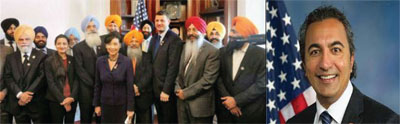
    WASHINGTON (TIP): The newly formed American Sikh Congressional Caucus, which is under a cloud over alleged backing from some pro- Khalistan elements, got a shot in the arm as Ami Bera, the only Indian American in US Congress, signed up for the caucus. The caucus, which was inaugurated on April 24, aims to tackle problems faced by the community such as hate crimes, school bullying, and discrimination in enlisting due to a ban on turban.

    Bera, a California Democrat whose family came from Gujarat, was being claimed by both sides, especially after his name was not there on the list of members announced at the launch. The pro-Sikh caucus group claimed that he was one of the 30 lawmakers who had signed up. The other side, including Indian officials, were confident he hadn’t. Bera’s family came here from Gujarat, and, was seen as a deal in the bag by those who had pointed out the Khalistan connection of some of the prime backers of the caucus. But he clearly wasn’t.

    “The memory of the tragedy at Oak Creek is still fresh, and in my own community of Elk Grove, two Sikh men were murdered in 2011 in a probable hate crime,” Bera said in a statement to media. “Violence and discrimination against the Sikh American community is a real and important civil rights issue in the US. That’s why I co-sponsored strong anti-hate crimes legislation earlier this year and joined the American Sikh Congressional Caucus,” he said.

    That’s pretty much in line with the stated objectives of the caucus, as laid out by its co-founders representatives Judy Chu and David Valadao at its launch.

  • Indian-American Students Shine In California Science Fair

    Indian-American Students Shine In California Science Fair

    LOS ANGELES (TIP): Indian- American students shone in this year’s California State Science Fair, grabbing the top award, six first place honors and various other awards. Eesha Khare, a 12th grade student of Lynbrook High School in San Jose, California, won the top award for ‘Project of the Year’ in the senior grade at the fair held earlier this year, India-West reported on Saturday. Khare won a $5,000 for her project, ‘Design and Synthesis of Hydrogenated TiO2-Polyaniline Nanorods for Flexible High- Performance Supercapacitors’.

    “My project this year created a cost effective, environmentally friendly, and energy efficient water purification filter, using photoactivated Nano-TiO2,” she told India- West.”I developed a filter, and a prototype design, which can be applied in rural and modern settings all around the world.” Last summer, Khare had completed an internship with Water and Sanitation Management Organization, which has a mandate to provide clean drinking water to 18,000 villages in the Gujarat.

    Stating that it was an eye-opening experience for her, she said: “After coming back to the US, I visited the Rinconada Water Treatment plant in Santa Clara County, which provides 80 million gallons of clean drinking water to the Silicon Valley every day, where I saw the Silicon Valley water treatment method. It was truly fascinating to see, and it allowed me to gain insight on water purification on a large scale.

    “The five Indian- American students who won first place honors winners in the junior category are Mythri Ambatipudi of Stratford Middle School, San Jose, Venkat N Sankar, of The Harker School, San Jose, Ashwath M Radhachandran, of Thurgood Middle School, San Diego, and Shashank H Dholakia and Shishir H Dholakia, of Marion A Peterson Middle School, Sunnyvale.This year, 1,037 students from all over California participated in the fair that was held at the California Science Centre in Los Angeles.

  • Karnataka State Election: A Key Test

    Karnataka State Election: A Key Test

    The 224-member Karnataka assembly will go to polls on May 5 and counting of votes will take place on May 8. Undoubtedly, this will set the tone for the 2014 general elections and will have significant impact on the political parties as to how they would conduct themselves in the realignment process. It is well known that the state of Karnataka has been beset with corruption, nepotism, ineptitude, public squabbling and internal rivalries and to simply put it, very bad governance. The BJP regime has also become known for its religious intolerance of the minorities and moral policing.

    In nutshell, BJP in their years as a ruling party saw Karnataka take a beating in terms of development as well as suffering a setback to the progressive image of such a vibrant state. I do believe the Kannada people deserve better governance. It was a state that created a Silicone Valley for India through its dynamism and energy under various Congress Governments. Non-Resident Indians working with entrepreneurs in India played a vital role in transforming the Karnataka State especially the city of Bangalore into a world class metropolis. US president Barack Obama has mentioned Bangalore in many of his speeches including once when he exhorted American students ‘to toil harder at school, saying their success would determine the country’s leadership in a world where children in Bangalore and Beijing were raring to race ahead’.

    Successive Congress Governments in Karnataka played key roles in making this a reality. It was the Congress governments under Veerappa Moily and S.M. Krishna who have ushered Karnataka into the modern age recognizing the potential of the Information Technology and Biomedical research and laid the foundation for their growth. In addition, the land reform act, major irrigation projects, establishments of several Universities including the University for Medical Studies and the prestigious Law School of India University were all part of those notable achievements. Moreover, four lakh houses were constructed during the last Congress Karnataka Government under “Rajiv Gandhi rural housing program.

    Since 1980 Karnataka leads the nation in GDP and per capita GDP as compared to other states in India and it should also be noted that with the initiatives undertaken during the Congress Government, Karnataka became home of largest biotechnology with 50% of large firms in Bangalore.” Sonia Gandhi in a major address pepping up the Congress cadres in Karnataka said “we all know corruption is a disease, a cancer. Who does it affect the most, it is the poor. No other party has done what UPA has done to fight corruption. We brought RTA (Right to Information Act) because we genuinely want to fight corruption”. She went on to say that the UPA government wanted to pass the Lokpal bill but BJP has indeed obstructed the initiative. There is no doubt that corruption is endemic and it is a national problem that transcends all boundaries. However, it is clear to those keen political observers who take an objective look at the issue that UPA Government has done a whole lot more to fight corruption than any one other party.

    Anyone who is directly accused of corruption has either resigned from the Government, or sent to jail or under active investigation and facing possible trial. The RTI itself has become the catalyst in unearthing numerous cases of corruption and has become a very effective tool in the hands of the civil society. In addition, the UPA Government has introduced a number of bills in the Parliament to combat corruption in public places that include The Public Procurement Bill, 2012, Grievances Redresser Bill, Foreign Bribery Bill, Judicial Accountability Bill as well as the Whistle Blowers Protection Bill. What happened to Karnataka under the stewardship of Yeddyurappa is out there for the record. He is accused of massive corruption, with 15 cases including him and his family members and was subsequently jailed. This is the first Chief Minister who has been jailed because of corruption.

    It has been reported in the media that “All restraint appears to have been thrown to the winds during the reign of Chief Minister B S Yeddyurappa when the Reddy brothers, ministers in his Bharatiya Janata Party government who had allegedly bankrolled the party’s campaign, were given free rein and the illegal mining spilled into adjoining Andhra Pradesh” A former BJP leader and a junior central minister Mr. V. Dhananjaya Kumar has even alleged that one of the national leaders of BJP was on the take from the Yeddyurappa Government in this web of corruption and the misguided governance. BJP also tried to turn Karnataka into a mini Gujarat with fanning of the flame of communalism across the state.

    There were cases of people getting killed, worship places of minorities attacked and their leaders jailed for exercising their right to religious freedom under the Constitution. Once again the objective of the BJP Government was to divide the people along caste and religious lines. Sonia Gandhi while visiting the Mangalore city said, “We have to see the forces of communalism are defeated… We must stand up and fight these forces. We must fight communalism regardless of where it originates from”. The UPA Government under the capable leadership of Dr. Manmohan Singh has shown the way for economic growth and prosperity for all its citizens by leading India as an important player in the global arena while keeping the integrity of the nation and providing inclusive growth opportunity to everyone. The Mahatma Gandhi Rural Employment Act alone has given much needed relief for the so many unskilled laborers across the country.

    The reforms in the economic arena including granting of FDI to multinationals are not only to benefit the consumer but are also expected to bring technology and jobs along with. Undoubtedly, the NRIs in United States especially from the proud state of Karnataka with a long history and tradition would like to see their State continue to be a beacon of hope for freedom, liberty and Justice for all. The cosmopolitan city of Bangalore that has become a magnet for those with a vision, dynamism and energy has to be sustained and to be protected.

    The NRIs indeed have a stake in the outcome of this very important election. Therefore, the time is ripe for the people of Karnataka to speak out on the Election Day with their ballots. They can reclaim their state by electing clean candidates who are committed to good governance. I am certain that people of Karnataka will deliver their answer on May 5th. (The author is the President of the Indian National Overseas Congress (I) which is the recognized entity in USA by the All India Congress Committee and has various chapters that include a Karnataka Chapter headed by Dr. Dayan Naik)

  • US based Kannadiga group appeals for restoring credibility in Karnataka

    US based Kannadiga group appeals for restoring credibility in Karnataka

    NEW YORK (TIP): The Karnataka Chapter of the Indian National Overseas Congress (INOC) USA has appealed to Non-Resident Kannadigas worldwide to help elect a corrupt-free and performance-oriented government in the ensuing state-level Vidhan Sabha elections in Karnataka Karnataka State and Bangalore in particular were on the forefront of rapid economic and technological growth and a major contributor to help build India’s GDP. All these were nullified during the last five years that brought a shame to Karnataka and Kannadigas worldwide with daily dose of corruptions and scams,” said Dr. Dayan Anand Naik, president of the Karnataka chapter of INOC. “We want to see Karnataka back on the path of progress as its image has gone down globally due to corruption and failures in all fronts in the last five years. Karnataka was world’s IT capital and knowledge capital.

    Congress Party had its share in building this unique brand and model of prosperous Karnataka. There are 60 million Kannadigas both in India and abroad, he said. Since 1980 Karnataka lead the nation in GDP and per capita GDP as compared to other states in India. During the Congress regimes of Chief Ministers Veerappa Moily and S M Krishna, Karnataka became home of largest biotechnology with 50 percent of large firms located in Bangalore, he said addressing the media in New York.

    The Congress government planned and executed one of the largest airports in India in Bangalore that became a boon to non-resident Indians. His “Munnade Karnataka” (Aghe Chalo Karnataka) campaign theme is a clarion call to throw out the corrupt leaders like B.S. Yeddyurappa and the BJP government and bring back the Congress whose manifesto is on development and good governance. Yeddyurappa the former Chief Minister faced in Court, fifteen cases of corruption and He was jailed.

    He was perhaps the first Chief Minister jailed because of corruption,” he said. Dr. Naik will be leading a delegation of Non-Resident Indians from the US to campaign for the Congress Party in the Karnataka Vidhan Sabha elections. “We will campaign for as many candidates as possible and tell the voters that the whole world especially the United States is awaiting their choice to bring back the state to glory that slipped in the BJP regime,” he said. Dr. Dayan Naik, an acclaimed cardiologist by profession, is the new Karnataka INOC Chapter President and also a leading community activist. He was born and educated in Karnataka and speaks with passion and power.

    He is recipient of several prestigious awards and accolades in USA. As President of the American Association of Physicians of Indian Origin (AAPI) the largest Indian-American professional association in the United States with 60,000 Indian physicians and 20,000 medical students and researchers as members, he initiated several community outreach programs to help the patients and improve the quality of treatment. He was responsible for inviting UPA Chairperson Sonia Gandhi to the AAPI annual Convention in Washington D.C. where she addressed over 5,000 Indian doctor physicians when she visited USA in 2001. Dr. Naik was born in Neethigere village near Thanda in Channagiri taluk of Karnataka and did his MBBS from Karnataka Medical College Hubli.

    He moved to the US in 1970 and rose to become the Clinical Associate Professor of Cardiology New York Medical College. He held various prestigious posts such as Fellow of American College of Cardiology; President of American Association of Indian Cardiologists; Board of Trustee of Xavier University Medical School Aruba and Board Trustee of AAPI. He raised funds for support 26 free medical clinics in India to serve the poor and needy and sent four plane loads of medical equipment, food, clothes and medicine for earthquake victims of Bhuj in Gujarat; initiated AIDS awareness program in India and conducted several free medical camps for poor and the needy in New York and New Jersey areas

  • JD-U likely to ask BJP to name PM candidate

    JD-U likely to ask BJP to name PM candidate

    NEW DELHI (TIP): The Janata Dal- United (JD-U) is expected to press for an early projection of the National Democratic Alliance’s prime ministerial candidate, with a party MP stating yesterday that it had laid down “principles” in the matter. The JD-U, which has strong reservations on Gujarat Chief Minister Narendra Modi as the NDA’s prime ministerial candidate, is expected to clear its stance on the issue at its national executive and national convention meeting beginning here Saturday. JD-U president Sharad Yadav, who is set to be re-elected to the post at the meeting, has been evading a pointed reply on whether the party would oppose the projection of Modi.

    He has stated that the JD-U has never compromised on the issue of secularism. Party leaders said there was no restriction on discussing any issue and the signals about Modi’s growing clout in the BJP could figure in speeches at the JD-U meeting. They said the final line of the party on prime ministerial candidate would emerge from the meeting.

    There has been some unease in the JD-U over the rise of Modi in the BJP and indications that he could emerge as the prime ministerial candidate of the main opposition party. JD-U leader and Bihar Chief Minister Nitish Kumar has also expressed grave reservations over Modi’s candidature on account of the 2002 Gujarat riots, which occurred under his watch. The JD-U is the largest constituent of the NDA after the BJP, with 20 members in the Lok Sabha.

    The party leads the government in Bihar, with the BJP as its junior partner. Modi, in recent speeches, has indicated national ambitions, presenting Gujarat as a model for the rest of the country. Sources said that JD-U leaders were expected to demand a decision on the prime ministerial candidate to bring clarity on the issue.

    They said the JDU could take a decision to part ways with the BJP if Modi is projected the prime ministerial candidate in the 2014 Lok Sabha polls. JD-U MP Ali Anwar Ansari Thursday said the party has laid down ‘principles’ on the issue of prime ministerial candidate. ‘We have laid down principles: The candidate should have secular credentials, be able to take everyone along, and should be a votary of the rights of backward states,’ Ansari said. He said the NDA would take a decision on its prime ministerial candidate, and the BJP, being its largest constituent, should propose a name. ‘The final decision will be taken at a meeting of NDA,’ he said. Ansari, who is the party’s chief whip in the Rajya Sabha, said the constituents of the NDA would meet before an announcement of the prime ministerial candidate is made. JD-U leaders have said that their alliance with the BJP was working on a common national agenda.

  • Navjot Sidhu suffocated by politics, says wife

    Navjot Sidhu suffocated by politics, says wife

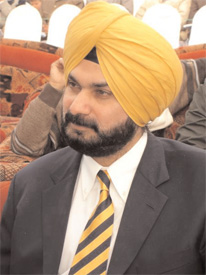
    AMRITSAR (TIP): Amritsar BJP MP Navjot Singh Sidhu’s wife, Dr Navjot Kaur Sidhu, on April 11 said her cricketer-turned-politician husband feels “suffocated in the system for his honesty and this has led to his alienation within the party”. She said Sidhu isn’t even allowed to select his own people in BJP’s Amritsar unit.

    Kaur, who is a BJP MLA, said, “Being in a system, you need to be given liberty to choose your people, and if you don’t get that then the system suffocates you.” Earlier in the day she had posted a Facebook comment saying, “Sidhu has returned to the profession where he is respected”; in other words cricket – triggering speculation that he was ending his political career. Asked whether Sidhu would quit politics, Kaur said, “A person lives where he gets respect; we are in politics for respect and we don’t need anything more than that.” Kaur said she was reacting to messages on Facebook saying, ‘Sidhu gum gaya, gayab ho gaya’ (Sidhu has disappeared). “That was the trigger. I wanted to convey that he has not disappeared, he felt suffocated and has gone back to cricket and television,” she said. “He was suffocated because he couldn’t adjust his own trusted people even in the Amritsar BJP,” said Kaur.

    For the past six months, Sidhu has remained largely out of Amritsar. Recalling how Sidhu was pulled out of a TV reality show and asked to campaign in Gujarat, she said, “He suffered a loss of Rs 6 crore for the party. He wanted to live in Amritsar, serve the people of his constituency and make his own team… If he has gone away, there must be some strong reason. He is not an irresponsible man.” Asked how long Sidhu would remain away from politics, she replied that it was for the party to decide. If he gets honour, it’s alright. Else he is happy with his cricketing career. Rejecting the possibility of switching political parties, Kaur said, “We both are not politicians. It was Atal Bihari Vajpayee who brought Sidhu into politics. We are not going to forget that.” BJP spokesperson Nirmala Sitharaman said the party had nothing to say in light of her “clarification”. When TOI contacted Kaur, she said she stood by her day’s statements.

  • President Confers Padma Awards

    President Confers Padma Awards

    NEW DELHI (TIP): President PranabMukherjee on April 5 conferred Padma Awards, the country’s highest civilian awards, to 108 personalities. The awards comprise 4 PadmaVibhushan, 24 PadmaBhushan and 80 PadmaShri Awards on Friday. 24 of the awardees are women and the list also includes 11 people in the category of foreigners, NRIs, PIOs and posthumous awardees. Noted physicist Yash Pal and space scientist Roddam Narasimha were chosen the second highest civilian honour Padma Vibhushan. Batting great Rahul Dravid and Olympic bronze medallist MC Mary Kom and late Bollywood actor Rajesh Khanna were named for the prestigious Padma Bhushan award, the third highest civilian award of the country. Renowned sculptor Raghunath Mohapatra and painter S Haider Raza were chosen for Padma Vibhushan.

    The list of 108 Padma awardees for this year also includes actress Sridevi, actors Nana Patekar and Malayalam star Madhu of Chemmeen fame and Olympians Yogeshwar Dutt and Vijay Kumar. Nobody was named for Bharat Ratna for this year too. The last awardee was late Bhimsen Joshi in 2008. Satirist Jaspal Bhatti, who died in a road accident last year, film maker D Rama Naidu, noted South Indian playback singer S Janaki, Bharatnatyam dancer Saroja Vaidyanathan, missile scientist Dr A Sivathanu Pillai of BrahMos programme, Industrialist Adi Godrej and R Tyagarajan, former bureaucrat M K Bhan were among the 24 Padma Bhushan awardees. In all four personalities were awarded Padma Vibhushan, 24 for Padma Bhushan and 80 Padma Shri. Of the awardees 24 are women, 11 belong to the category of foreigners, NRI, PIOs and posthumous.

    Padma Awards, the country’s highest civilian awards, are conferred in three categories, namely Padma Vibhushan, Padma Bhushan and Padma Shri.

    PADMA VIBHUSHAN
    Raghunath Mohapatra, Art, Orissa
    S Haider Raza, Art, Delhi
    Prof Yash Pal, Science and Engineering, Uttar Pradesh
    Prof Roddam Narasimha, Science and Engineering,Karnataka

    PADMA BHUSHAN
    Dr Ramanaidu Daggubati, Art, Andhra Pradesh
    Sreeramamurthy Janaki, Art, Tamil Nadu
    Dr (Smt) Kanak Rele, Art, Maharashtra
    Sharmila Tagore, Art, Delhi
    Dr (Smt) Saroja Vaidyanathan, Art, Delhi
    Abdul Rashid Khan, Art, West Bengal
    Late Rajesh Khanna, Art, Maharashtra
    Late Jaspal Singh Bhatti, Art, Punjab
    Shivajirao Girdhar Patil, Public Affairs, Maharashtra
    Dr Apathukatha Sivathanu Pillai, Science, Engineering,Delhi
    Dr Vijay Kumar Saraswat, Science and Engineering,Delhi
    Dr Ashoke Sen Science and Engineering,Uttar Pradesh
    B N Suresh, Science and Engineering, Karnataka
    Prof Satya N Atluri, Science and Engineering, USA
    Prof Jogesh Chandra Pati, Science and Engineering,USA
    Ramamurthy Thyagarajan, Trade and Industry,Tamil Nadu
    Adi Burjor Godrej, Trade and Industry, Maharashtra
    Dr Nandkishore Shamrao Laud, Medicine,Maharashtra
    Mangesh Padgaonkar, Literature and Education,Maharashtra
    Prof Gayatri Chakravorty Spivak, Literature & Education USA
    Hemendra Singh Panwar, Civil Service,Madhya Pradesh
    Maharaj Kishan Bhan, Civil Service, Delhi
    Rahul Dravid, Sports, Karnataka
    H Mangte Chungneijang Mary Kom, Sports, Manipur

    PADMA SHRI
    Gajam Anjaiah, Art, Andhra Pradesh
    Swami G C D Bharti alias Bharati Bandhu, Art,Chhattisgarh
    B Jayashree, Art, Karnataka
    Sridevi Kapoor, Art, Maharashtra
    Kailash Chandra Meher, Art, Orissa
    Brahmdeo Ram Pandit, Art, Maharashtra
    Vishwanath D Patekar alias Nana Patekar, Art,Maharashtra
    R Nageswara Rao alias Surabhi Babji, Art, Andhra Pradesh
    Lakshmi Narayana Sathiraju, Art, Tamil Nadu
    Jaymala Shiledar, Art, Maharashtra
    Suresh Dattatray Talwalkar, Art, Maharashtra
    P Madhavan Nair alias Madhu, Art, Kerala
    Apurba Kishore Bir, Art, Maharashtra
    Ghanakanta Bora Borbayan, Art, Assam
    Hilda Mit Lepcha, Art, Sikkim
    Sudha Malhotra, Art, Maharashtra
    Ghulam Mohammad Saznawaz, Art,Jammu and Kashmir
    Ramesh Gopaldas Sippy, Art, Maharashtra
    Mahrukh Tarapor, Art, Maharashtra
    Balwant Thakur, Art, Jammu and Kashmir
    Puran Das Baul, Art, West Bengal
    Rajendra Tikku, Art, Jammu and Kashmir
    Pablo Bartholomew, Art, Delhi
    Shri S Shakir Ali, Art, Rajasthan
    S K M Maeilanandhan, Social Work, Tamil Nadu
    Nileema Mishra, Social Work, Maharashtra
    Reema Nanavati, Social Work, Gujarat
    Jharna Dhara Chowdhury, Social Work, Bangladesh
    Late Dr Ram Krishan, Social Work, Uttar Pradesh
    Late Manju Bharat Ram, Social Work, Delhi
    Prof Mustansir Barma, Science and Engineering,Maharashtra
    Avinash Chander, Science and Engineering, Delhi
    Sanjay Govind Dhande, Science and Engineering,Uttar Pradesh
    Prof (Dr) Sankar Kumar Pal, Science, Engineering,West Bengal
    Deepak B Phatak, Science and Engineering,Maharashtra
    Dr Mudundi Ramakrishna Raju, Science and Engg,Andhra Pradesh
    Prof Ajay K Sood, Science and Engineering, Karnataka
    Prof Krishnaswamy Vijayraghavan, Science & Engg,Karnataka
    Dr Manindra Agrawal, Science and Engineering,Uttar Pradesh
    Dr Jayaraman Gowrishankar, Science & Engineering,Andhra Pradesh
    Prof Sharad Pandurang Kale, Science & Engineering,Maharashtra
    Vandana Luthra, Trade and Industry, Delhi
    Rajshree Pathy, Trade and Industry, Tamil Nadu
    Hemendra Prasad Barooah, Trade and Industry,Assam.
    Milind Kamble, Trade and Industry, Maharashtra
    Kalpana Saroj, Trade and Industry, Maharashtra
    Dr Sudarshan K Aggarwal, Medicine, Delhi
    Dr C Venkata S Ram alias Chitta, Venkata Sundara Ram, Medicine, Andhra Pradesh
    Dr Rajendra Achyut Badwe, Medicine, Maharashtra
    Dr Taraprasad Das, Medicine, Orissa
    Prof (Dr) T V Devarajan, Medicine, Tamil Nadu
    Prof (Dr) Saroj Chooramani Gopal, Medicine,Uttar Pradesh
    Dr Pramod Kumar Julka, Medicine, Delhi
    Dr Gulshan Rai Khatri, Medicine, Delhi
    Dr Ganesh Kumar Mani, Medicine, Delhi
    Dr Amit Prabhakar Maydeo, Medicine, Maharashtra
    Dr Sundaram Natarajan, Medicine, Maharashtra
    Prof Krishna Chandra Chunekar, Medicine,Uttar Pradesh
    Dr Vishwa Kumar Gupta, Medicine, Delhi
    Prof (Capt) Dr M Sharaf-eAlam, Literature & Education, Bihar
    Dr Radhika Herzberger, Literature & Education,Andhra Pradesh
    J Malsawma, Literature and Education, Mizoram
    Devendra Patel, Literature & Education, Gujarat
    Dr Rama Kant Shukla, Literature & Education, Delhi
    Prof Akhtarul Wasey, Literature & Education, Delhi
    Prof Anvita Abbi, Literature & Education, Delhi
    Nida Fazli, Literature & Education, Madhya Pradesh
    Surender Kumar Sharma, Literature & Education,Delhi
    Dr Jagdish Prasad Singh, Literature & Education,Bihar
    Late Shaukat Riaz Kapoor Alias Salik Lakhnawi,
    Literature & Education, West Bengal.
    Prof Noboru Karashima, Literature & Education, Japan
    Christopher Pinney, Literature & Education, UK
    Premlata Agrawal, Sports, Jharkhand
    Yogeshwar Dutt, Sports, Haryana
    Hosanagara Nagarajegowda Girisha, Sports,Karnataka
    Subedar Major Vijay Kumar, Sports, Himachal Pradesh
    Ngangom Dingko Singh, Sports, Maharashtra
    Naib Subedar Bajrang Lal Takhar, Sports, Rajasthan
    Ritu Kumar, Fashion Designing, Delhi
    Dr Ravindra Singh Bisht, Archaeology, Uttar Pradesh.

  • IAF Honors Four Indian American Women

    IAF Honors Four Indian American Women

    LONG ISLAND, NEW YORK (TIP): The Indian American Forum gave away Outstanding Women’s Achievements Award to four women in celebration of Women’s History Month. The IAF Second Annual gala to honor the four was held on Thursday March 28 at Stuart Thomas Manor, a prestigious venue, in Farmingdale, Long Island. Kate Murray, Supervisor of Town of Hempstead and a great friend of the Indian American community was the Chief Guest. Outstanding Women’s Achievement Awards were given to Dr Dina Pahlajani, Founder, President of Children’s Hope (Medical and Social Award); Bharti Desai, Past President of Gujarat Samaj NY (Cultural Award); Shammi Singh, Member Board of Directors Nargis Dutt Foundation (Community Services Award); and Deborah Misir, President of the India American Bar Association of LI and Queens (Professional Award). Supervisor Kate Murray’s love of the Indian American community earned her an award.

    Honorees were presented with award from IAF, Citations from Town of Hempstead, Nassau County, Office of Nassau County Comptroller, Indian American Bar Association & Certificates of merit from Congresswoman Carolyn McCarthy. Supervisor Kate Murray praised the efforts of the Indian American Forum, Indian American Community and reaffirmed that Town of Hempstead will continue with celebrations of India’s Republic Day and other such events. Among the attendees were Town of Hempstead Senior Councilman Anthony Santino, Judge Joy Watson, Judge Eileen Fisher, Nassau County Legislator Wayne Wink, Bobby K Kalotee, National Chairman of All America Political Party, Zahid Syed, Chairman , Nassau County Human Rights Commission, Mohinder Singh Taneja, Deputy Commissioner, Town of North Hempstead, Nassau County Attorney John Ciampoli & Steve Labriola from Nassau County Comptroller’s office. Indu Jaiswal, Chairperson of IAF in her remarks congratulated all the honorees and praised their efforts in achieving such successes.

  • Building his dreams: Mihir Patel

    Building his dreams: Mihir Patel

    “Within our dreams and aspirations we find our opportunities”.
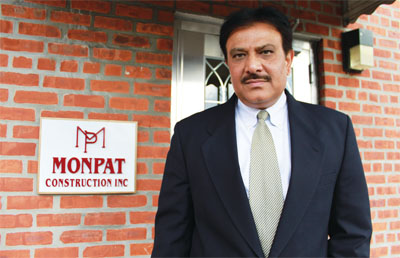
    Very few people truly love their jobs let it alone be a passion. But the just sworn in new President of the prestigious Society of Indo-American Engineers and Architects (SIAEA), Mihir Patel not only loves his job but works everyday with a burning passion. He is the President of Monpat Constructions Ltd., and a prominent member of the Indian American community. He spoke to The Indian Panorama correspondent Pooja Premchandran in an exclusive interview at his office in Flushing, New York. Mihir B. Patel is perhaps one of the wellestablished engineers in the Indian American community. A firm believer in the philosophy of ‘one life-live well’, Mihir Patel bats away the problems of his life and work. After a bit of struggling start, Patel has come a long way. “I am one of the founding members of Monpat Construction. The start to that hasn’t been easy but I sure am happy now. I came here and started working at a construction group. Currently we work on many New York City projects. Now I am the 15th President at SIAEA and that’s additional responsibility.


    img10

    But I am more than happy to take up this responsibility,” says a smiling Patel. Born in Mehsana, Gujarat, Mihir was always inclined towards doing Engineering. He set out to complete his Bachelors in Engineering from Birla Vishwakarma Mahvidyala in 1982. In 1986, he married Bhavana Patel and he now has a son, Priyank Patel, who is also an architect. Mohan Jetwani founded the Society of Indo-American Engineers and Architects or SIAEA in 1981. The Association immediately gained popularity among the Indian American engineers and architects who were continually looking for a larger umbrella to share their common goals. Patel is ready to further the valor of the organization. “They sowed the seed for this Association.

    Although it has blossomed already, my task is to make sure it remains that way. I need to carry its name and glory much further,” says Patel. Mihir also plans to get the Indian-American youth on board with SIAEA. He adds, “We plan to get many youngsters also inducted to our organization. We plan to provide them with scholarships to Engineering schools and once they graduate we will orient them to our organization.” Unlike many who see the seat of power as just another feather in their caps, Mihir resolves to change a few things within the SIAEA. He vows to accomplish a few of his own personal ambitions by using all the Presidential power that he is allotted to use. “My personal goal under this Presidency would be to open new chapters, facilitate grassroot level meetings, get more young engineers and architects involved. That would be priority. This was also the dream of Nayan Parikh, so now my task is to fulfill them,” Mihir stresses.

    In the midst of a housing crisis where the prices are sky-rocketing, Mihir has not lost all hope to provide housing for all. His personal ambition is to provide housing options to all sectors of the society. “My biggest ambition is to provide housing options for the society and not just specifically the Indian community. I think housing or shelter is a basic need for us all. I, along with the SIAEA have been trying to work on this need for the past six years. But we require continual monetary support for this. I am hoping that in these two years as the SIAEA President I will be able to bring us closer to fulfilling that dream,” says Mihir. He explains that he is relentlessly pursuing this aspiration and he hopes that it gets fulfilled. While most of us cannot handle just one job, Mihir eases through his role as President to two organizations. He attributes the successful organizing of his office and work projects to his brother. He explains, “Well my company is well organized and its very well established. I have my brother also helping me out and my staff does a wonderful job to settle things in a good way. So it gives me the motivation to come to a hassle free environment. As far as SIAEA is concerned, just being part of this group is an honor.

    I get all the respect and admiration I could ask for from SIAEA and in turn I strive to live up to the organizations dreams and valor.” Mihir also learnt long ago that all work and no play is not the way to go. He still remains a lively and active man despite the mounting economic crisis and additional work pressure. He explains that that he takes ‘the edge off’ by playing various sports. “I am most passionate about sports. I play cricket, tennis, golf and other active sports.

    I have made a small cricket pitch in my backyard. I had the fortune of having Mr. Kapil Dev come there and play once. It’s simple. With all the work you do, you need to find something that relaxes you. I need that relaxation after its 5 in the evening.” Mihir draws all his inspiration from his father. He recalls his father’s debacle when he was told that he couldn’t be an engineer. Since, then his father resolved to make Mihir an engineer.

    Mihir says, “My father easily is my mentor. When he was young, he aspired to be an engineer and run his own company in America. But sadly, my grandfather did not have the means to support him. So he always willed me to be an engineer and I did just that. Even today, I stress on the value of education. I always believe that education is the only way you can succeed in today’s world.” It usually takes a life changing experience for us to transform our manner of thinking and living.

    On being asked about Mihir’s life changing experience, he jokingly tells us, “I think ever since the 2009 recession I have been having life changing experiences. But seriously, initially we used to get regular work orders from agencies, but now we need to dig a little deeper to find work. Sadly though, the situation does not seem to be improving.” The 2009 recession has stunted many companies growth and many have given up. But Mihir Patel carries on due to his loving support from his family and friends. “See, problems will always come.

    It is never going to stop. I find that a good support from friends who are loyal and committed to you, it is easier to solve your problems,” he advises. In the last 20 years, Monpat Constructions have completed work worth $100 million. All his projects are close to his heart but two are very distinctive. “Currently, I am working on a project at the Otisville Correction facility. Although there are many other projects we are currently undertaking, the Otisville prison project or any other project that you do at the prison, deserves a special mention. Working at a prison is completely different.

    You get a bare minimum of 5 hours to work every day and you need to somehow complete your project by deadline. Also, there are strict rules on how many tools you can carry inside and how you can carry them. Even our Super’s presence and absence must be notified to authorities. So, construction around the prison is definitely a more challenging job for me,” Mihir adds.

    He also tell us about a second project called “Challenge America’ where the debris from the 9/11 tragedy was used to make the Houston park near FDR. Mihir explains, “This project was a joint effort of Erin Brokovich and Mayor Giuliani. We provided the roofing to this project. I decided to contribute to this project mainly because we all were overcome with the sense of needing to do something after the harsh 9/11 tragedy.” Like many other prominent members of our Indian American community, Mihir Patel also urges our community to grow stronger and stand united from within. “I find that the Gujarati community is very active and very well behaved. This is a group comprising of very well educated and very well established people. This is also true about the other Indian communities we have in the US. However, there is a problem with unity in our Indian society.

    Not only are we disunited but we also have the nature of being displeased when others succeed. I wish we could change that aspect.” But like any other Indian, family is the most important thing to him. “I only pray that in good or bad times, I have the support and presence of family and close friends. For me, family is of utmost importance. Everything else is secondary,” he concluded.

  • Dr. Sudhir Parikh pulls out of Wharton India Economic Forum

    Dr. Sudhir Parikh pulls out of Wharton India Economic Forum

    NEW YORK (TIP): A noted Indian-American physician has withdrawn from the annual Wharton India Economic Forum in the wake the organizer’s decision to cancel a key-note address by Gujarat Chief Minister Narendra Modi.

    New Jersey-based eminent physician, philanthropist and publisher, Sudhir Parikh, was invited to address the WIEF conference on March 23 in place of The Wall Street columnist Sadanand Dhume, who withdrew from the conference in protest of the forum’s handling the Modi affair. “As an immigrant of over 30 years standing and dedicated to promoting the cause of India and Indian Americans, I look forward to sharing my thoughts about NRIs as ambassadors of India,” Dr Parikh is reported to have told WIFE. “However, the manner in which the committee has been pressurized to rescind its invitation to Gujarat Chief Minister Narendra Modi on entirely suspicious grounds, I feel the intellectual integrity of the forum has been compromised,” Dr Parikh said in his letter, a copy of which was made available to the PTI.

    Parikh, who is publisher of several India American publications in the US, said as a publisher he is constrained to err on the side of the free flow of ideas and unfettered discussion public policy issue be it in academics or journalism. “It is for this reason; I have no choice but to withdraw my name from the panel of speakers of this year’s forum,” said Parikh, who in 2012 was conferred the Padma Shri award by the then President Pratibha Patil.

  • Aggressive Pm Tears Into Bjp

    Aggressive Pm Tears Into Bjp

    NEW DELHI (TIP): Prime Minister Manmohan Singh on March 7 donned an unusually aggressive mantle in the Lok Sabha as he tore into the Opposition BJP’s recent tirade against the Congress and dared it at the hustings, saying people will repeat UPA at the Centre if they saw its track record. The quintessential economist listed one development statistic after the other to prove that in numbers, UPA’s nineyear rule was way above NDA’s. But more than the figures, it was the PM’s combative stance against the BJP leadership that took Leader of Opposition Sushma Swaraj and party president Rajnath Singh seated in the House by surprise. By the end of it, both were agitated enough to seek the right to reply to the PM,whose speech was described by Rajnath Singh as “ballistic, never heard before, but one that was akin to the last flight of a flame before it died”. As for the PM, he denounced Gujarat Chief Minister Narendra Modi’s (without naming him) recent attack on him and the Congress leadership, saying, “At the BJP National Council meeting, leaders used choicest of abuses for the Congress leadership. It is not in my interest to reply to them in that language.

    Our work will speak for itself.” He went on to play his political part to perfection as he quoted Mirza Ghalib to provoke the Opposition MPs: “Humko unse wafa ki hai umeed jo nahi jaante wafa kya hai… (We expect loyalty from those that do not know the meaning of the word).” Sushma later countered him with a couplet: “Kuch to majbooriyaan rahi hongi, yun hi koi bewafa nahi hota (There must have been some compulsion, one is not disloyal for no reason)”. UPA chief Sonia Gandhi by his side, the PM sounded the poll bugle for the 2014 General Election, citing the BJP’s arrogance as its anathema and saying people would re-elect the UPA if they saw its track record of development.

    “Jo garajte hain woh baraste nahi (thundering clouds don’t yield rain),” the PM told the Opposition, reminding them of the 2004 Shining India campaign that fell flat. He then ticked off Sushma Swaraj, a confidante of BJP veteran LK Advani, saying, “In 2009, they fielded the Iron Man LK Advani against the lamb Manmohan Singh.We all know the results.We have not seen BJP’s arrogance for the first time. Shining India had led to disastrous results for them. If people were to look at our records, they would repeat what they did in 2004 and 2009.” The PM was speaking to the thumping of Treasury benches led by Sonia and Congress vice-president Rahul Gandhi.

    He was replying to the Motion of Thanks by MPs to the President for his address to the joint session of Parliament. The motion was carried by a voice vote, but not before the PM’s reply became the trigger for a visible UPA-NDA war of words in the House. Before provoking the BJP, the PM had taken enough time to list how the UPA’s rule yielded better results on development. So, he said how growth rate of agriculture production was 3.7% in 2005-2011 as against just 2.9% in 1998- 2003; how per capita consumption in rural areas during UPA’s time is 3.4% as against 0.8% in the NDA’s rule among others.

  • Movie Review-Kai Po Che!

    Movie Review-Kai Po Che!

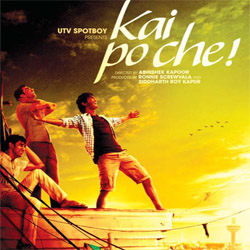
    Cast: Raj Kumar, Sushant Singh Rajput, Amit Sadh, Amrita Puri
    Direction: Abhishek Kapoor
    Genre: Drama
    Duration: 2 hours 6 minutes

    STORY: Three close friends – Govind, Ishaan and Omi — seem inseparable. But can they overcome the odds to stay together for life?

    Movie Review: Welcome to another sensitive and superlative friendship film. Like other memorable cinema in this category, Dil Chahta Hai (2001), Rang De Basanti(2006), Rock On!! (from the same director, Abhishek Kapoor, in 2008) and Zindagi Na Milegi Dobara (2011), Kai Po Che, too, is a story of male bonding in the time of the devastating Gujarat earthquake and the disturbing Godhra riots. Based on Chetan Bhagat’s The 3 Mistakes of My Life, in his second outing,Abhishek Kapoor raises the bar by giving us a thoroughly enjoyable film that showcases the strong emotions between the three protagonists who are boisterous, ballistic and at times plain bored. The film captures their trials and tribulations in the post-college, pre-what-career-to-pursue period.

    They have two passions — cricket and their camaraderie. And two of them (Ishaan and Omi) also have concerned parents who want them to find direction quickly. They find temporary succour when they turn their passion for the sport into a business venture; opening a store selling sports equipment.

    The rebellious Ishaan (whose raison d’etre is cricket) sobers down a bit as he lands an opportunity to impart cricket coaching to the neighbourhood Muslim boy, Ali. But the screenplay gathers momentum when tragedy strikes in the form of the 2001 Gujarat earthquake and the 2002 Godhra riots.

    Both these calamities expose the chinks in the armour of the friendship between the boys. They also throw open the can of worms that brought to light the tainted Hindu-Muslim hatred, one of the darkest chapters in the history of Gujarat.

    There is also a nicely handled romantic track between Amrita Puri (Vidya) and Govind that adds a lovely touch to the proceedings. The performances of the three boys – – Sushant Singh Rajput (Ishaan), Raj Kumar Yadav (Govind) and Amit Sadh (Omi) — are the finest one has seen. A special mention for Sushant who has the best role and manages to do full justice to it. Amrita Puri is very likeable. Amit Trivedi’s music is soulful, leaving you mesmerised.

    Despite the disturbing backdrop of death, destruction and politics, Kai Po Che is very likeable. Between tears, you find yourself smiling, because it’s the story of friendship and human triumph above all else.

  • Plea For Restoration Of Ferozepur-Amritsar Rail Line

    Plea For Restoration Of Ferozepur-Amritsar Rail Line

    Prior to 1947, Ferozepore in Punjab was a thriving transportation town with great rail and road connectivity with the provincial capital of Lahore and the industrial and commercial capital of Amritsar. Both links were via Kasur, a Tehsil headquarter town in Lahore district. Lahore in 1947 fell into the share of Pakistan and so did Kasur and, as a result, Ferozepore lost both important railway links. A much longer and indirect road linkage was subsequently established between Amritsar and Ferozepore via Harike Pattan confluence of the Beas and the Sutlej.

    But the railway link to date did not see the light of the day. After the 1947 partition of Punjab, the entire border region of East Punjab, which used to be a flourishing area became neglected. The boundary line of prosperity moved Eastwards towards Jalandhar, Ludhiana and Chandigarh. The entire border belt of Punjab from Pathankot, Gurdaspur, Batala, Tarntaran, Patti, Ferozepore, Guru Har Sahai, Jalalabad up to Fazilka became educationally and economically very backward. Amritsar, because of its pre-1947 economic momentum and due to the existence of the Golden Temple remained the only oasis of education, progress and prosperity. Several economists and men of wisdom have been suggesting the reconstruction of the railway link between Amritsar and Ferozepore.

    Former railway minister Laloo Prasad Yadav was requested by the Prime Minister Dr. Manmohan Singh in 2004 to build the missing railway link between Amritsar and Ferozepore. Even the local industry of Amritsar pitched for it. But an obsessed with Bihar only, Mr. Laloo Yadav half-heartedly ordered a survey,which was completed. Later on Mamata Bannerjee, in her lopsided over enthusiasm to dislodge the Left Front, directed all her energies towards the development of new railway lines in West Bengal.

    The not too long ago appointed railway minister Pawan Bansal is a son of the soil, a Punjabi. There was a lot of moral and political pressure on him to start the construction of this long ignored missing link. Finally in the All India Railway Budget of 2013, an announcement was made by the railway minister to include this missing link between Patti in former Amritsar district and the divisional headquarter town of Ferozepore on February 26, 2013. This strategic rail link will shorten the distance between Amritsar and the port of Mumbai by two hundred and forty kilometers.

    With the completion of this rail link, the entire backward border belt starting from Baramula in Jammu and Kashmir via Srinagar, Anantnag, Udhampur and Jammu and then the border belt in Punjab from Pathankot via Gurdaspur, Batala, Amritsar, Tarntaran, Patti, Ferozepore, Guru Har Sahai, Jalalabad, Fazilka and Abohar will be linked to Mumbai via Sri Ganganagar. Since there will be overall less traffic on this Jammu & Kashmir, Punjab, Rajasthan, Gujarat and Maharashtra corridor, the perishable fruits and vegetables shall be delivered in Mumbai and Gujarat within two to three days. Passenger travel time will be reduced by five to six hours.

    The most congested National Capital Region (NCR) shall be effectively avoided. This railway line will also give boost to tourism in Vaishno Devi (Katra), Amritsar, Bikaner, Jodhpur, Jaisalmer and Barmer. Mumbai shall be able to fast-track export its goods by rail to Northern Pakistan via Amritsar and Amritsar will be able to export to the world via Mumbai.

  • President Pranab Mukherjee May Turn Down 5 More Mercy Pleas

    President Pranab Mukherjee May Turn Down 5 More Mercy Pleas

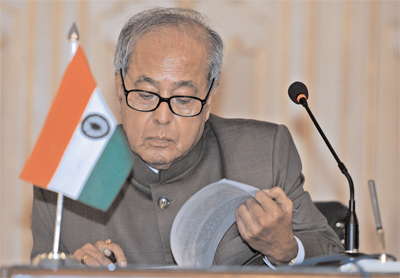
    NEW DELHI (TIP): The Union homeministry is learnt to have recommendedrejection of mercy petitions in five morecases as it seeks to speedily dispose of allthe cases of death row convicts pendingwith it.Seeking to have a swift closure on thecases of those who have filed mercy pleasagainst capital punishment awarded tothem, the ministry has sent all the pendingfiles to President Pranab Mukherjee for afinal call.Sources said that seven cases involvingthe fate of nine people have been sent to thePresident, with the ministryrecommending rejection of the mercy pleasin five cases. It has and left the tworemaining ones open for commutation ofdeath sentence to life imprisonment withthe rider that the life term means jail forthe entire life of the convict and not just 20years or 14 years in prison.

    The President had sent the files to Unionhome minister Sushilkumar Shinde onOctober 30 for his review and opinion.Shinde sent the files back within 100 daysin a major shift from the pattern wheredecisions on mercy petitions wereindefinitely delayed with files shuttlingbetween the home ministry and theRashtrapati Bhavan.Though the case-wise recommendationsfor convicts were not known as both thehome ministry and Rashtrapati Bhavancontinue to remain tightlipped on mercypetition files, the seven cases relate tomultiple murders, including one in which arape convict out on bail killed five membersof the victim’s family.

    While two files were sent to RashtrapatiBhavan on February 9 (the day ParliamentHouse attack case convict Afzal Guru washanged), the remaining five files weredispatched last month.The mercy files, which have beenpending for years while moving to and frobetween Rashtrapati Bhavan and the homeministry, saw unprecedented movement oflate, resulting in two quick hangings(Ajmal Kasab and Afzal Guru) within lessthan three months. Mukherjee had rejectedthe mercy plea of Kasab on November 5,and Guru on February 3.The files, which are now with PresidentMukherjee, include the longest pendingcase of Gurmeet Singh of Uttar Pradesh,who was convicted for killing 13 membersof a family on August 17, 1986.

    The otherscases are of Suresh and Ramji, also fromUP, who were convicted for killing fivemembers of their brother’s family andDharampal from Haryana, who hadmurdered five members of the family of agirl he had raped in 1993. He had murderedthe family while on bail in the rape case.The other cases are of Sonia, daughter ofa former Haryana MLA, and her husbandSanjeev, who drugged and killed eight ofher family in Hisar in 2001, including herparents. Sunder Singh from Uttarakhand isconvicted for rape and murder on June 30,1989, Jafar Ali from Uttar Pradesh who wasconvicted for killing wife and five daughterin 2002 and Praveen Kumar of Karnataka,convicted for killing four members of afamily on February 23, 1994.

    Mukherjee has so far disposed of mercypetitions of eight death row convicts in fivecases.The President has also rejected themercy petitions of Saibanna NingappaNatikar (Karnataka: convicted for killingwife and daughter) and mercy petitions ofslain forest brigand Veerappan’s associatesGnanaprakash, Simon, ‘Meesai’ Madaianand Pilavendran, who were sentenced todeath for killing 22 police personnel in 1993.However, the mercy petition of Atbir(Delhi), who was convicted for murder ofhis step-mother, step-sister and step-brotherover property, was commuted to lifeimprisonment by the President.

    Strained mercy:
    1,455 persons awarded death penaltyin India from 2001 to 2011Sentences for 4,321 persons werecommuted from death penalty to lifeimprisonment during the same period.Highest number of death penalty wasimposed in Uttar Pradesh (370)followed by Bihar (132), Maharashtra(125), Karnataka and Tamil Nadu (95each), Madhya Pradesh (87),Jharkhand (81), West Bengal (79),Delhi (71), Gujarat (57), Rajasthan (38),Kerala (34), Odisha (33), Haryana (31),Assam (21), Jammu & Kashmir (20),Punjab (19), Chhattisgarh (18),Uttarakhand (16), Andhra Pradesh (8),Meghalaya (6), Chandigarh and Daman& Diu (4 each), Manipur and HimachalPradesh (3 each), Tripura andPondicherry (2 each) and Goa (1)No death penalty imposed inArunachal Pradesh, Mizoram,Nagaland and Sikkim and UnionTerritories of Andaman & NicobarIslands, Dadra & Nagar Haveli andLakshadweepSentences of 4,321 persons werecommuted from death penalty to lifeimprisonment in the country during2001-11.