Tag: GURPURB SPECIAL

  • Sacrifices – Endurance in the face of tragedy

    Sacrifices – Endurance in the face of tragedy

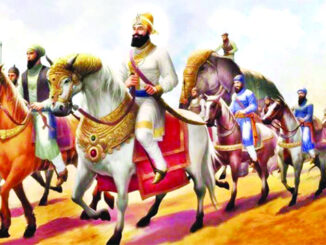
    Guru Gobind Singh Ji, the tenth Sikh Guru, stands as a timeless symbol of courage, resilience, and unwavering faith. While celebrated for his spiritual guidance, poetic genius, and martial prowess, his life was marked by profound personal losses and sacrifices that shaped the Sikh community and its enduring values. His story is one of endurance in the face of tragedy, teaching that true leadership and devotion often demand immense personal cost.
    A Childhood Shadowed by Martyrdom
    Even before assuming the role of Guru, young Gobind Rai experienced the shadow of sacrifice and injustice. His father, Guru Tegh Bahadur Ji, was martyred in 1675 for defending the right of Hindus to practice their faith freely under Mughal oppression. Witnessing his father’s steadfast courage and ultimate sacrifice left an indelible impression on the young Guru. This early encounter with loss instilled in him a deep sense of duty, moral courage, and spiritual fortitude. From this foundation, he would go on to lead the Sikh community through some of its most turbulent periods, blending wisdom, bravery, and compassion.
    A Sacrifice of Comfort for Principle
    In 1699, Guru Gobind Singh initiated the Khalsa, a community of fearless devotees committed to righteousness, equality, and devotion to God. This act required immense moral courage: he challenged his followers to offer their lives in service of truth. The Panj Pyare (Five Beloved Ones) stepped forward, ready to sacrifice everything.
    Through this act, the Guru demonstrated that sacrifice is not merely physical but spiritual and ethical. Establishing the Khalsa meant sacrificing comfort, personal safety, and conventional norms to create a community guided by valor, devotion, and justice.
    Loss of Family – Enduring Personal Tragedy
    Guru Gobind Singh Ji faced devastating personal losses. His four sons, the Sahibzadas, were martyred at young ages while defending the faith and community: Ajit Singh and Jujhar Singh fell in the Battle of Chamkaur (1704). Zorawar Singh and Fateh Singh, his younger sons, were executed in Sirhind under Mughal orders.
    These tragedies were unimaginable, yet the Guru remained steadfast, turning personal grief into inspiration for the Sikh community. He taught that sacrifice in defense of truth and justice is a noble duty, reinforcing the spiritual and moral strength of his followers.
    Exile and Constant Threats – Endurance Amid Adversity
    After repeated battles with Mughal forces and hostile hill rajas, Guru Gobind Singh was forced into constant movement and exile. His home, Anandpur Sahib, was besieged multiple times, his family and followers were threatened, and yet he never abandoned his mission.
    During these years of hardship, he continued to train warriors, compose spiritual poetry, and guide the Khalsa, demonstrating that resilience and perseverance are as crucial as bravery on the battlefield.
    Spiritual Strength Amid Loss
    Despite overwhelming adversity, Guru Gobind Singh Ji maintained a profound spiritual composure. He emphasized that attachment to life should never override devotion to God or commitment to righteousness. His writings, including Bachittar Natak and Zafarnama, reflect a heart grieved yet unbroken, offering lessons in courage, hope, and moral clarity.
    His ability to turn personal grief into collective inspiration solidified his position as a saint-warrior whose life exemplifies endurance, moral fortitude, and fearless faith.
    Lessons from His Sacrifices
    – Courage in Adversity: True leadership requires steadfastness even in the face of personal loss.
    – Moral Integrity: Upholding justice and righteousness may demand the highest personal sacrifices.
    – Spiritual Resilience: Faith in God provides strength to endure tragedy without despair.
    – Inspiration for Others: Transforming personal grief into motivation for a community leaves a lasting legacy.
    Legacy of Endurance
    Guru Gobind Singh’s sacrifices continue to inspire millions around the world. His endurance in the face of immense tragedy became the spiritual and moral backbone of the Khalsa. The values of courage, justice, devotion, and selfless service that he exemplified remain central to Sikh identity and are universally admired as principles of ethical leadership and moral courage.
    Quotes Reflecting His Sacrifices
    “Those who have no faith in their words, have no faith in their soul.”
    “In the midst of darkness, be the flame of courage.”
    “The greatest devotion is to uphold justice and righteousness, even at the cost of life.”
    These sayings encapsulate his belief that sacrifice, faith, and moral courage are inseparable, offering timeless guidance to humanity.
    Guru Gobind Singh Ji’s life teaches that true greatness lies not in comfort or ease but in enduring hardship with courage, faith, and moral clarity. His sacrifices are not just historical events-they are eternal lessons in resilience, devotion, and the transformative power of selflessness.

  • The poet warrior: Guru Gobind Singh’s verse and valor

    The poet warrior: Guru Gobind Singh’s verse and valor

    Guru Gobind Singh Ji, the tenth Sikh Guru, stands as one of history’s rare figures who seamlessly combined saintliness, poetic brilliance, and fearless leadership. While he is widely celebrated for founding the Khalsa and leading Sikhs in defense of righteousness, his literary genius as a poet remains equally remarkable. His poetry reflects a fusion of devotion, heroism, philosophy, and moral guidance, offering inspiration not only to Sikhs but to readers across faiths and generations.
    Early Literary Genius
    From a young age, Guru Gobind Singh demonstrated an extraordinary aptitude for language and literature. Fluent in Persian, Sanskrit, Braj, and Punjabi, he composed verses that were both sophisticated and accessible, conveying spiritual depth and ethical guidance. Even as a child, he combined creative expression with philosophical insight, laying the foundation for a body of work that would inspire courage, devotion, and moral clarity throughout his life. His early exposure to sacred texts, history, and martial training shaped a literary style that merged intellectual rigor with spiritual sensitivity.
    Major Literary Works
    Guru Gobind Singh’s poetic oeuvre is vast and diverse, encompassing hymns, epic poetry, philosophical treatises, and letters. Each work reflects his unique ability to communicate profound truths through lyrical expression.
    – Jaap Sahib is a hymn of divine praise, composed in 199 stanzas, celebrating God’s omnipotence, omnipresence, and justice. It combines metaphysical depth with devotional fervor and is recited daily by Sikhs worldwide to cultivate courage and faith.
    – Akal Ustat focuses on the eternal and all-encompassing nature of God, integrating mystical insight with poetic beauty. It encourages humility and devotion while emphasizing that spiritual realization is inseparable from righteous action.
    – Bachittar Natak blends autobiography, epic narrative, and philosophical reflection. Through this work, Guru Gobind Singh recounts his life, spiritual visions, and heroic endeavors, providing moral and ethical lessons alongside accounts of bravery.
    – The Zafarnama, a poetic letter addressed to Emperor Aurangzeb, exemplifies his ability to use poetry as a tool of moral persuasion and diplomacy. Written in elegant Persian verse, it challenges tyranny with reasoned courage, blending rhetorical brilliance with philosophical depth.
    Other works, such as Chandi di Var, celebrate divine heroism and courage, while selections from Shabad Hazare and Charitropakhyan explore human psychology, ethics, and spirituality. Together, these writings form a rich tapestry of devotion, courage, and wisdom.
    Themes in His Poetry
    Several recurring themes define Guru Gobind Singh’s poetic vision. Devotion and spirituality permeate his work, emphasizing remembrance of God and ethical living. Courage and valor are central, celebrating heroism while reinforcing the moral imperative to act against injustice. Equality and social justice appear throughout, rejecting caste discrimination and advocating for human dignity. Guru Gobind Singh also explores moral philosophy, addressing virtue, honesty, and righteousness, and demonstrates that art can serve as a medium for teaching, inspiring, and guiding communities.
    Literary Style and Craftsmanship
    Guru Gobind Singh’s poetry is remarkable for its multilingual richness, vivid imagery, and rhetorical brilliance. He blends Persian sophistication with Sanskrit and Punjabi clarity, creating verses that are both lyrically beautiful and philosophically profound. His use of metaphor, allegory, and narrative storytelling makes complex spiritual and ethical concepts accessible. Many works, such as Chandi di Var, were intended to be recited or sung, giving them a musical and devotional quality that reinforces their spiritual and motivational impact.
    Influence and Legacy
    The influence of Guru Gobind Singh’s poetry is profound. His compositions provide spiritual inspiration, guiding Sikhs in daily devotion, ethical conduct, and courageous action. They also offer cultural and literary significance, shaping Sikh literature, music, and identity. Beyond Sikhism, his poetry communicates universal values: fearlessness, devotion, equality, self-discipline, and service, offering lessons for leaders, poets, and ordinary individuals alike.
    Famous Quotes from His Poetry
    “In the midst of darkness, be the flame of courage.”
    “Those who have no faith in their words have no faith in their soul.”
    “Through devotion, discipline, and courage, one can conquer fear and live with honor.”
    “Righteous action is the highest form of devotion.”
    These lines encapsulate the fusion of spiritual depth, moral guidance, and heroic inspiration that characterizes his literary legacy.
    Poetry as Leadership
    Guru Gobind Singh used poetry not just for devotion but as a tool of leadership and education. His heroic verses motivated warriors before battle, his philosophical passages guided moral conduct, and his letters, like the Zafarnama, challenged injustice with reasoned argument and poetic elegance. In doing so, he demonstrated that literature can inspire courage, cultivate ethics, and unite communities.
    Guru Gobind Singh Ji, as a poet, exemplifies the integration of art, spirituality, and action. His literary genius complements his roles as a saint and warrior, offering timeless guidance for living with courage, devotion, and ethical integrity. Through his poetry, he continues to inspire generations to be fearless, righteous, and devoted, securing his place not only in Sikh history but in the broader canon of spiritual and literary achievement.
    Legacy – Eternal Light of the Tenth Guru
    Guru Gobind Singh’s life continues to shape Sikh identity and philosophy. He left the Sikhs a spiritual and martial framework, with the Guru Granth Sahib as the eternal Guru and the Khalsa as living embodiment of his ideals.
    Today, Anandpur Sahib, Patna Sahib, and Nanded remain sacred pilgrimage sites, and his writings continue to guide millions toward courage, equality, and devotion. His vision of a fearless, just, and spiritually grounded society remains relevant across generations, making him not only a Sikh leader but a global symbol of integrity, valor, and wisdom.

  • Battles & defense of Faith – Courage against all odds

    Battles & defense of Faith – Courage against all odds

    Guru Gobind Singh’s leadership was not confined to spiritual guidance; he led the Sikhs in multiple defensive battles to protect religious freedom and human dignity. His strategic brilliance was evident in Bhangani (1688), Nadaun (1691), Guler (1696), Chamkaur (1704), and Muktsar (1705).
    These battles were not about conquest, but defense of righteousness, ensuring that the Sikh community could practice its faith freely. The Siege of Chamkaur is particularly legendary: Guru Gobind Singh, with just 40 warriors, faced thousands of Mughal soldiers. His two elder sons sacrificed their lives, yet the Guru held the fort, demonstrating extraordinary valor, resilience, and faith in God.
    Through his leadership, Guru Gobind Singh taught that true courage arises from moral conviction, and that defending the weak and upholding justice is a sacred duty.
    The Saint-Soldier – Merging
    Spirituality and Valor
    Guru Gobind Singh epitomized the Saint-Soldier ideal, integrating deep spirituality with martial prowess. His writings, including Jaap Sahib, Akal Ustat, and Zafarnama, combine poetry, theology, and philosophical insight, encouraging Sikhs to lead righteous lives while being prepared to fight injustice.
    He emphasized Miri-Piri, the balance of temporal and spiritual power, teaching that worldly responsibilities and spiritual growth are intertwined. The Khalsa became the embodiment of this principle, inspiring generations to be both morally upright and courageous defenders of faith.
    Teachings of Guru Gobind Singh: Courage, Devotion, and Righteous Living
    Guru Gobind Singh Ji, the tenth Sikh Guru, was a unique combination of saint, poet, and warrior. His life was a symphony of devotion, courage, moral integrity, and leadership. The principles he articulated were not abstract ideals-they were practical guides for living a purposeful, righteous life. His teachings form the cornerstone of Sikh philosophy, but their universal appeal transcends religion, offering lessons in spirituality, ethics, courage, and service for humanity at large.
    _Fearlessness and Courage – The Foundation of a Saint-Soldier
    Guru Gobind Singh’s vision of the Khalsa was rooted in the principle of fearlessness. He believed that faith without courage is incomplete, and spiritual growth requires the ability to confront injustice and adversity with steadfast resolve.
    The Baisakhi of 1699, when he created the Khalsa, was a powerful manifestation of this principle. The five men who stepped forward for initiation exemplified complete courage, surrendering personal safety for the cause of righteousness.
    The Siege of Chamkaur (1704), where he defended Anandpur with just forty warriors against a massive Mughal army, illustrates his teachings in action: courage, strategic acumen, and unwavering faith.
    His poetry in Jaap Sahib repeatedly exhorts the devotee to “be fearless, like the lion, in the face of tyranny.”
    Fearlessness, according to Guru Gobind Singh, is not recklessness; it is disciplined courage guided by ethics and devotion. Every Sikh is taught to internalize this principle, applying it to life challenges, moral choices, and societal responsibility.
    Equality and Social Justice – Upholding Human Dignity
    A hallmark of Guru Gobind Singh’s teachings was the emphasis on equality and justice. In a society rife with caste discrimination, gender inequality, and religious persecution, he stood for the dignity and rights of all human beings.
    By instituting the Panj Pyare, he rejected caste hierarchies, emphasizing that spiritual worth is not determined by birth but by character and devotion.
    His life exemplified defending the oppressed. He not only led his followers in battles for religious freedom but also advocated for universal respect and fairness.
    His writings encourage Sikhs to actively combat injustice, demonstrating that spirituality and social responsibility are inseparable.
    This teaching resonates even today, emphasizing that true faith must manifest in ethical action and protection of human rights.
    Devotion to God – The Core of Spiritual Life
    At the heart of Guru Gobind Singh’s philosophy is unwavering devotion to God (Waheguru). He taught that spiritual life is not limited to ritual but requires living in constant remembrance of the Divine, cultivating purity of mind, body, and action. His compositions, including Jaap Sahib, Akal Ustat, and Bachittar Natak, are replete with praise for God’s infinite power, wisdom, and justice.
    He emphasized direct, personal connection with the Divine, teaching that faith is not inherited but realized through disciplined practice, meditation, and righteous living. Devotion, in his view, is inseparable from moral courage: true worship requires action in the world.
    Self-Discipline and Moral Integrity – The Backbone of Character
    Guru Gobind Singh believed that self-discipline is essential for spiritual and worldly success. Physical fitness, mental sharpness, and ethical conduct are all intertwined in his teachings.
    Daily discipline included prayer, meditation, physical training, and study.
    He emphasized truthfulness, honesty, humility, and compassion as the foundations of character.
    The Khalsa was trained to live a life of regulated conduct, balancing spiritual practice with the demands of leadership, service, and community defense.
    Self-discipline, for Guru Gobind Singh, was not mere personal restraint; it was preparation for moral and physical responsibility, enabling one to act decisively when confronted with injustice.
    Sacrifice and Service (Seva) – The Measure of Devotion
    Service to humanity, or seva, was central to Guru Gobind Singh’s vision. Spiritual devotion, he taught, is incomplete unless it translates into selfless action for the benefit of others.
    His own life was a model of sacrifice. From witnessing his father’s martyrdom to losing four sons in the struggle for justice, he demonstrated that principle comes before personal gain.
    Seva extends beyond ritual; it includes protecting the oppressed, feeding the hungry, educating the community, and fighting tyranny.
    The Guru emphasized that such service is both a spiritual practice and a civic duty, creating a compassionate, responsible society.
    Education, Knowledge, and Wisdom
    Guru Gobind Singh stressed the importance of knowledge as a companion to valor and faith. An educated mind, he taught, strengthens spiritual insight and enhances leadership.
    He himself was multilingual, proficient in Persian, Sanskrit, Braj, and Punjabi, and composed literary works of immense depth.
    Education was not limited to academic learning; it included understanding scripture, philosophy, history, and martial skills.
    He believed that intellectual growth empowers moral action, ensuring that courage is guided by wisdom rather than impulse.
    The Warrior Ethos – Protecting Justice
    While he preached peace and devotion, Guru Gobind Singh recognized that defending righteousness sometimes requires armed action.
    The Khalsa identity embodies this principle: a disciplined, spiritual community trained to protect truth, freedom, and the weak.
    He distinguished between aggression and defense, teaching that warfare is a duty only in the service of justice.
    His life demonstrates that spirituality and martial skill are complementary, enabling individuals to uphold ethical principles in a hostile world.
    Universal Values – Lessons Beyond Religion
    Guru Gobind Singh’s teachings are timeless and universal: courage, devotion, equality, self-discipline, service, and education are values that transcend faith. Leaders and thinkers across India and the world have recognized his wisdom. His message encourages all individuals to live ethically, act courageously, and serve humanity, offering a framework for personal excellence and societal betterment.
    Quotes Reflecting Guru’s Teachings
    “Fear God, do your duty, and keep your word.”
    “In the midst of darkness, be the flame of courage.”
    “Those who have no faith in their words have no faith in their soul.”
    “True worship lies in righteous action and fearless living.”
    Each quote reflects a fusion of spiritual devotion, ethical responsibility, and moral courage, guiding Sikhs and non-Sikhs alike toward principled living.

  • Guru Gobind Singh: The divine warrior, saint and poet

    Few figures in history embody the rare combination of spiritual depth, poetic brilliance, and fearless courage like Guru Gobind Singh Ji, the tenth Sikh Guru. Born in 1666, he emerged as a saint, a poet, and a warrior, shaping not only the Sikh faith but leaving a legacy that resonates across centuries. From his early days in Patna and Anandpur to the creation of the Khalsa, Guru Gobind Singh’s life was a tapestry of devotion, intellect, valor, and sacrifice.
    As a saint, he exemplified unwavering faith, humility, and moral clarity, guiding his followers toward spiritual growth. As a poet, he expressed profound philosophy, divine praise, and heroic inspiration in works like Jaap Sahib and Bachittar Natak, blending devotion with literary genius. And as a warrior, he led the Sikhs in defense of justice and righteousness, demonstrating that spirituality and courage are inseparable.
    Through his teachings, sacrifices, and indomitable spirit, Guru Gobind Singh remains a beacon of fearless faith, ethical leadership, and eternal wisdom, inspiring generations to live with honor, devotion, and courage.
    Guru Gobind Singh was born on 22 December 1666 in Patna Sahib, at a time when India stood at the crossroads of intense political turmoil and religious persecution. Born as Gobind Rai, he was the only son of Guru Tegh Bahadur, the ninth Sikh Guru, and Mata Gujri, a woman of extraordinary spiritual strength.
    His birth itself was seen as providential—a soul destined to reshape the moral and spiritual destiny of a people.Gobind Rai’s early years were marked not by royal luxury but by discipline, learning, and deep spiritual exposure.
    From a young age, he was trained in classical languages such as Sanskrit, Persian, and Braj, alongside the study of scriptures, philosophy, history, and poetry. Equally important was his martial training—horse riding, archery, swordsmanship, and military strategy—reflecting the Sikh ideal that spirituality and strength must walk together.The defining moment of his childhood came in 1675, when Guru Tegh Bahadur was executed in Delhi by the Mughal emperor Aurangzeb for defending the religious freedom of Kashmiri Pandits. Gobind Rai was only nine years old when he accepted the mantle of Guruship, transforming personal tragedy into spiritual resolve.
    From that moment, the child became a Guru—bearing the weight of sacrifice, truth, and leadership with remarkable maturity.
    Early Life – The Making of a Saint from Patna to Anandpur
    Guru Gobind Singh’s birth was celebrated with immense joy by the Sikh community, who saw divine purpose in this child destined to shape the course of Sikh history. Even as an infant, he was said to have an aura of wisdom and composure, inspiring reverence among elders.
    From an early age, Gobind Rai displayed a keen intellect, spiritual inclination, and extraordinary courage. He was trained in martial skills, archery, swordsmanship, and horse-riding, while also studying Persian, Sanskrit, and local languages, as well as Sikh scriptures. His upbringing emphasized the balance between spiritual learning and physical discipline, reflecting the Sikh ideal of the Saint-Soldier.
    When his father moved the family to Anandpur, young Gobind Rai witnessed first-hand the challenges faced by Sikhs under Mughal rule and hostile hill rajas. These experiences instilled in him a sense of justice, resilience, and leadership that would later define his life. The serene hills of Anandpur became both his classroom and training ground, shaping his mind, body, and spirit for the monumental responsibilities ahead.
    The Making of a Guru – Ascension and Early Leadership
    At the tender age of nine, Gobind Rai ascended to the position of tenth Sikh Guru after the martyrdom of his father, Guru Tegh Bahadur Ji, who sacrificed his life defending the religious freedom of Hindus against Mughal tyranny. Despite his youth, Guru Gobind Singh exhibited exceptional maturity, guiding the Sikh community with wisdom, courage, and clarity. He took immediate steps to strengthen the spiritual and martial foundations of the Sikh community. Under his leadership, Sikhs were trained not only in devotional practices but also in combat, strategy, and governance, preparing them for the challenges posed by oppressive rulers. His early writings, including portions of Bachittar Natak, reveal his poetic brilliance, philosophical depth, and visionary outlook.
    During this period, he traveled extensively, visiting villages and towns to preach moral courage, equality, and devotion to God. These formative years set the stage for his transformative contributions to Sikhism and established him as both a spiritual guide and a leader capable of uniting a diverse and dispersed community.
    Birth of Khalsa – Forging the Sikh Identity
    The creation of the Khalsa on 30 March 1699, during Baisakhi at Anandpur Sahib, remains the defining moment in Sikh history. Guru Gobind Singh envisioned a community of fearless devotees committed to justice, truth, and God. This was a revolutionary step: the Sikh community was now to be identified not just by faith, but also by distinctive symbols, disciplined conduct, and unwavering courage.
    On that historic day, Guru Gobind Singh asked who was willing to give up their life for the service of God. Five brave men, later known as the Panj Pyare (Five Beloved Ones), stepped forward. Each was initiated with Amrit (sweetened water stirred with a double-edged sword), symbolizing spiritual rebirth, courage, and equality. This ritual emphasized sacrifice, devotion, and moral responsibility.
    The Khalsa was given the Five Ks:
    – 1. Kesh (uncut hair) – Acceptance of God’s will.
    – 2. Kangha (wooden comb) – Discipline and cleanliness.
    – 3. Kara (steel bracelet) – Eternal connection to God and moral restraint.
    – 4. Kachera (cotton undergarment) – Self-control and modesty.
    – 5. Kirpan (sword) – Readiness to protect justice and the oppressed.
    This event not only strengthened Sikh identity but also merged spiritual devotion with martial readiness, laying the foundation for centuries of Sikh courage and community resilience.