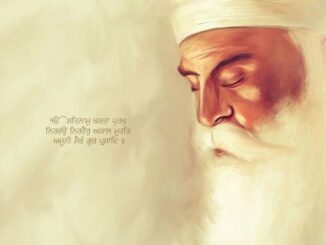
Tag: Guru Baba Nanak Dev

  • Celebrating the 554th birth anniversary of Shri Guru Nanak Dev Ji

    Celebrating the 554th birth anniversary of Shri Guru Nanak Dev Ji

    The nearly 30 million Sikhs across the world are in jubilation to celebrate the 554th birth anniversary of their First Master Shri Guru Nanak Dev Ji on November 27. 

    https://youtu.be/lO0Y-FBMt3A?si=svh9-ZdL98rdn4wf

    Guru Nanak, the founder of Sikhism and the first of the ten Sikh Gurus, was not merely a religious figure but a beacon of humanity, compassion, and social justice. His teachings reverberate through the corridors of time, transcending centuries to inspire and guide humanity towards a path of righteousness, equality, and enlightenment. Guru Nanak’s philosophy encompasses a profound humanism that remains remarkably pertinent in today’s world.

    At the heart of Guru Nanak’s teachings lies a resolute emphasis on the oneness of humanity. He propagated the concept of Ik Onkar, the belief in the unity of God, emphasizing that all human beings are equal regardless of their caste, creed, religion, or social status. In an era marred by deep-seated societal divisions and discriminatory practices, Guru Nanak’s message of equality and unity was revolutionary. He challenged the prevailing societal norms that fostered discrimination, and propagated the dignity of every individual.

    His teachings against blind faith and ritualism challenged the dogmas prevalent during his time. Guru Nanak emphasized the importance of spirituality over mere religious practices. He advocated for a direct connection with the divine through meditation, honest living, and serving humanity. His rejection of empty rituals and emphasis on genuine, heartfelt devotion resonates with the modern quest for spiritual authenticity.

    Guru Nanak was a vehement critic of social exploitation and oppression in all its forms. He spoke out against the oppressive caste system, societal hierarchies, and economic injustices prevalent in society. His teachings denounced the exploitation of the poor and marginalized, advocating for compassion, empathy, and sharing with those in need. He established the concept of langar, a community kitchen where people from all walks of life could sit together and share a meal, breaking down barriers of caste and class.

    The Guru’s humanitarian efforts extended beyond religious boundaries. He traveled extensively, engaging in dialogues with people from different faiths and backgrounds, promoting mutual respect and understanding among diverse communities. His messages of peace, love, and harmony resonate with the principles of tolerance and coexistence that are vital in today’s multicultural world.

    Guru Nanak’s teachings on women’s rights were revolutionary for his time. He advocated for gender equality, condemning the subjugation and mistreatment of women. He believed in the inherent dignity and equality of women, empowering them with equal rights and respect in society. His teachings emphasized the importance of education for both men and women, recognizing the crucial role of women in shaping a progressive society.

    The Guru’s legacy as a humanitarian and social reformer remains incredibly relevant in addressing contemporary global challenges. In an era marked by religious extremism, intolerance, and social inequality, Guru Nanak’s teachings offer a beacon of hope and guidance. His emphasis on compassion, selflessness, and service to humanity serves as a guiding principle for fostering a more inclusive and compassionate society.

    Furthermore, Guru Nanak’s teachings resonate strongly with the ideals of modern humanism. His emphasis on the inherent worth and dignity of every individual, irrespective of their background or beliefs, aligns with the core values of humanism. He encouraged critical thinking, rationality, and a quest for truth, challenging individuals to seek enlightenment through knowledge and introspection.

    Guru Nanak’s profound teachings as a great humanitarian, advocate against blind belief, and proponent of social justice transcend time and continue to hold immense relevance in the modern world. His legacy serves as a guiding light, inspiring individuals to strive for a more equitable, compassionate, and harmonious society. As we navigate the complexities of the contemporary world, the universal message of Guru Nanak stands as a testament to the enduring power of humanism, social justice, and the pursuit of a more enlightened humanity.

    Happy Guru Nanak Prakash Divas (birth anniversary) !


  • Sikh History This Week- January 27 to February 2

    27th January

    1682       Janam Din Baba Deep Singh Ji. Known as Deepaa in his childhood, he was born on 14 Magh Sunmat 1737 to mother Mata Jeeonee and father Bhai Bhagtoo at Paahoowind, Amritsar. He is remembered as one of the most revered martyrs of Sikh history.

    1846       Anglo-Sikh war was fought at village Aliwal, Tehsil Jagraon. The Sikhs suffered severe losses due to internal dissensions.

    1921       Gurudwara Sudhar Dal was named Akali Dal and Sarmukh Singh Jhabal was elected its first President. This body was to serve as a central body controlling and directing various Akali Jathas that had mushroomed from mid-1920.

    1923       The Kar-Sewa of Amritsar Sarowar was initaited. All participant Sikh sangats gathered at Gurdwara Sri Putali Sahib to do their ardas before proceeding for kar-sewa at Sri Harmandie Sahib.

    1983       Akali members of Parliament and Assembly resigned in support of Sikh’s righteous demands.

    28th January

    1520: Guru Baba Nanak Dev in the course of his udasis (travels) arrived at Mecca, the Centre of Islam, accompanied with his GurSikh Bhai Mardana. Here he convinced the Hajies and other dignitories that God is omnipresent. His abode is not confined to Mecca alone. He preached the Message of Universal love and brotherhood.

    1757: Baba Aalla Singh and Sardar Chadhat Singh together attacked the forces of Abdali and rescued the Hindu women that were being forcibly taken from their residence. The Sikh forces safely returned each women to her rightful home.

    29th January

    The Babbar Akali conspiracy case, Supplementary I, was brought before the committing magistrate.

    1925       14th Shahidi Jatha of 500 valiant Akali Satyagrahies, led by Saradar Darshan Singh Pheruman courted arrest upon reaching Gangsar, Jaito.

    1928       All Party Sikh Conference held at Amritsar.

    1970       Indira Ghandhi announced the so-called award on Chandigarh. It was to be given to Punjab in exchange for 114 villages to Haryana. It was like buying a white elephant to save the life of Fateh Singh. Though Fateh Singh would not have died even otherwise; a coward, as he was.

    1976       Articles of Organization for the Sikh Dharma Brotherhood were promilgated.

    1986       The the Panthic Committee, appointed by Sarbat Khalsa on Jan. 26, 1986, announced the Declaration of Independence, from Sri Akal Takht Sahib, Amritsar.

    1989       The US Congress condemns India for its prosecution of the Sikhs. The Congressmen expressed their sympathies for the Sikh national cause and condemned Indian Nazism.

    30th January

    1850: Bhai Maharaj Singh was deported to Calcutta from Jalandhar.

    1855:     Baba Dayal Singh Nirankari passed away.

    1892       Lal Singh, a Bar Student charged with an offence, insisted to give his evidence on oath by saying: I am a Sikh. I have a religion. When he was examined on solemn affirmation and not oath, the matter went up in appeal. It was held by Justice Hawkins that it was wrong to let Lal Singh make a solemn affirmation instead of taking an oath. Wills, Charles, Lawrence, and Wright JJ all concurred.

    31st January

    1630       Seventh Patshash, Guru Har Rai Ji came to this planet. He was born at Kirtapur in the house of Baba Gurditta, eldest son of Guru Hargobind, and Mata Nihal Kaur. He was the second grandson of Guru hargobind, the first being Baba Dhir Mal. Today is the actual date of birth, although it is observed on a different date by Guru Khalsa Panth (Please NOTE the contention on the actual date. Some have suggested Jan. 16, 1630.)

    1922       The management of Gurudwara Guru Ka Bagh was handed over to the Sikhs after a long agitation.

    1927       Saint Attar Singh passed away.

    1st February

    1998       The British Army announced a revolutionary dress code, which is aimed to allow it Sikh members wear their traditional dresses. The Sikhs will be able to carry a miniature version of the kirpan in their wallets. They would also be permitted to wear army-issue special design knee-length underpants.

    2nd February

    1534       Bibi Bhani Ji, was born at Basarkae.

    1807       Maharaja Ranjit Singh attacked Kasur, as Quitbuddin had sided against him in the battle of Bhasin. Qutbuddin was caught while fleeing. However, he was pardoned with a jagir at Mamdot. Kasur was annexed to Lahore Darbar. Pasrur town was also annexed.

    1958       Sikhs held a Protest March in Delhi against numerous acts of the sacrilege of their Gurdwaras by the Hindus.
