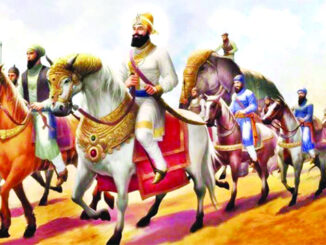
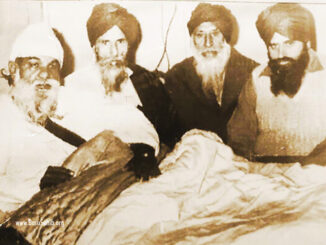
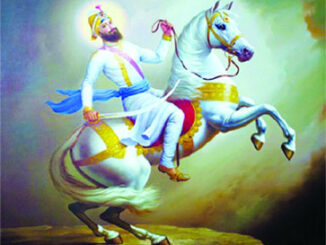
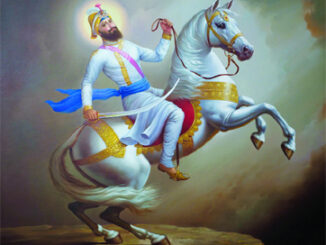
Guru Gobind Singh Ji, the tenth Sikh Guru, stands as a timeless symbol of courage, resilience, and unwavering faith. While celebrated for his spiritual guidance, poetic genius, and martial prowess, his life was marked by profound personal losses and sacrifices that shaped the Sikh community and its enduring values. His story is one of endurance in the face of tragedy, teaching that true leadership and devotion often demand immense personal cost.
A Childhood Shadowed by Martyrdom
Even before assuming the role of Guru, young Gobind Rai experienced the shadow of sacrifice and injustice. His father, Guru Tegh Bahadur Ji, was martyred in 1675 for defending the right of Hindus to practice their faith freely under Mughal oppression. Witnessing his father’s steadfast courage and ultimate sacrifice left an indelible impression on the young Guru. This early encounter with loss instilled in him a deep sense of duty, moral courage, and spiritual fortitude. From this foundation, he would go on to lead the Sikh community through some of its most turbulent periods, blending wisdom, bravery, and compassion.
A Sacrifice of Comfort for Principle
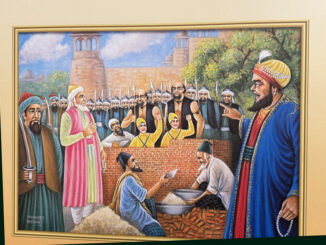
In 1699, Guru Gobind Singh initiated the Khalsa, a community of fearless devotees committed to righteousness, equality, and devotion to God. This act required immense moral courage: he challenged his followers to offer their lives in service of truth. The Panj Pyare (Five Beloved Ones) stepped forward, ready to sacrifice everything.
Through this act, the Guru demonstrated that sacrifice is not merely physical but spiritual and ethical. Establishing the Khalsa meant sacrificing comfort, personal safety, and conventional norms to create a community guided by valor, devotion, and justice.
Loss of Family – Enduring Personal Tragedy
Guru Gobind Singh Ji faced devastating personal losses. His four sons, the Sahibzadas, were martyred at young ages while defending the faith and community: Ajit Singh and Jujhar Singh fell in the Battle of Chamkaur (1704). Zorawar Singh and Fateh Singh, his younger sons, were executed in Sirhind under Mughal orders.
These tragedies were unimaginable, yet the Guru remained steadfast, turning personal grief into inspiration for the Sikh community. He taught that sacrifice in defense of truth and justice is a noble duty, reinforcing the spiritual and moral strength of his followers.
Exile and Constant Threats – Endurance Amid Adversity
After repeated battles with Mughal forces and hostile hill rajas, Guru Gobind Singh was forced into constant movement and exile. His home, Anandpur Sahib, was besieged multiple times, his family and followers were threatened, and yet he never abandoned his mission.
During these years of hardship, he continued to train warriors, compose spiritual poetry, and guide the Khalsa, demonstrating that resilience and perseverance are as crucial as bravery on the battlefield.
Spiritual Strength Amid Loss
Despite overwhelming adversity, Guru Gobind Singh Ji maintained a profound spiritual composure. He emphasized that attachment to life should never override devotion to God or commitment to righteousness. His writings, including Bachittar Natak and Zafarnama, reflect a heart grieved yet unbroken, offering lessons in courage, hope, and moral clarity.
His ability to turn personal grief into collective inspiration solidified his position as a saint-warrior whose life exemplifies endurance, moral fortitude, and fearless faith.
Lessons from His Sacrifices
– Courage in Adversity: True leadership requires steadfastness even in the face of personal loss.
– Moral Integrity: Upholding justice and righteousness may demand the highest personal sacrifices.
– Spiritual Resilience: Faith in God provides strength to endure tragedy without despair.
– Inspiration for Others: Transforming personal grief into motivation for a community leaves a lasting legacy.
Legacy of Endurance
Guru Gobind Singh’s sacrifices continue to inspire millions around the world. His endurance in the face of immense tragedy became the spiritual and moral backbone of the Khalsa. The values of courage, justice, devotion, and selfless service that he exemplified remain central to Sikh identity and are universally admired as principles of ethical leadership and moral courage.
Quotes Reflecting His Sacrifices
“Those who have no faith in their words, have no faith in their soul.”
“In the midst of darkness, be the flame of courage.”
“The greatest devotion is to uphold justice and righteousness, even at the cost of life.”
These sayings encapsulate his belief that sacrifice, faith, and moral courage are inseparable, offering timeless guidance to humanity.
Guru Gobind Singh Ji’s life teaches that true greatness lies not in comfort or ease but in enduring hardship with courage, faith, and moral clarity. His sacrifices are not just historical events-they are eternal lessons in resilience, devotion, and the transformative power of selflessness.
Tag: Guru Gobind Singh Ji
-

Sacrifices – Endurance in the face of tragedy
-

The poet warrior: Guru Gobind Singh’s verse and valor
Guru Gobind Singh Ji, the tenth Sikh Guru, stands as one of history’s rare figures who seamlessly combined saintliness, poetic brilliance, and fearless leadership. While he is widely celebrated for founding the Khalsa and leading Sikhs in defense of righteousness, his literary genius as a poet remains equally remarkable. His poetry reflects a fusion of devotion, heroism, philosophy, and moral guidance, offering inspiration not only to Sikhs but to readers across faiths and generations.
Early Literary Genius
From a young age, Guru Gobind Singh demonstrated an extraordinary aptitude for language and literature. Fluent in Persian, Sanskrit, Braj, and Punjabi, he composed verses that were both sophisticated and accessible, conveying spiritual depth and ethical guidance. Even as a child, he combined creative expression with philosophical insight, laying the foundation for a body of work that would inspire courage, devotion, and moral clarity throughout his life. His early exposure to sacred texts, history, and martial training shaped a literary style that merged intellectual rigor with spiritual sensitivity.
Major Literary Works
Guru Gobind Singh’s poetic oeuvre is vast and diverse, encompassing hymns, epic poetry, philosophical treatises, and letters. Each work reflects his unique ability to communicate profound truths through lyrical expression.
– Jaap Sahib is a hymn of divine praise, composed in 199 stanzas, celebrating God’s omnipotence, omnipresence, and justice. It combines metaphysical depth with devotional fervor and is recited daily by Sikhs worldwide to cultivate courage and faith.
– Akal Ustat focuses on the eternal and all-encompassing nature of God, integrating mystical insight with poetic beauty. It encourages humility and devotion while emphasizing that spiritual realization is inseparable from righteous action.
– Bachittar Natak blends autobiography, epic narrative, and philosophical reflection. Through this work, Guru Gobind Singh recounts his life, spiritual visions, and heroic endeavors, providing moral and ethical lessons alongside accounts of bravery.
– The Zafarnama, a poetic letter addressed to Emperor Aurangzeb, exemplifies his ability to use poetry as a tool of moral persuasion and diplomacy. Written in elegant Persian verse, it challenges tyranny with reasoned courage, blending rhetorical brilliance with philosophical depth.
Other works, such as Chandi di Var, celebrate divine heroism and courage, while selections from Shabad Hazare and Charitropakhyan explore human psychology, ethics, and spirituality. Together, these writings form a rich tapestry of devotion, courage, and wisdom.
Themes in His Poetry
Several recurring themes define Guru Gobind Singh’s poetic vision. Devotion and spirituality permeate his work, emphasizing remembrance of God and ethical living. Courage and valor are central, celebrating heroism while reinforcing the moral imperative to act against injustice. Equality and social justice appear throughout, rejecting caste discrimination and advocating for human dignity. Guru Gobind Singh also explores moral philosophy, addressing virtue, honesty, and righteousness, and demonstrates that art can serve as a medium for teaching, inspiring, and guiding communities.
Literary Style and Craftsmanship
Guru Gobind Singh’s poetry is remarkable for its multilingual richness, vivid imagery, and rhetorical brilliance. He blends Persian sophistication with Sanskrit and Punjabi clarity, creating verses that are both lyrically beautiful and philosophically profound. His use of metaphor, allegory, and narrative storytelling makes complex spiritual and ethical concepts accessible. Many works, such as Chandi di Var, were intended to be recited or sung, giving them a musical and devotional quality that reinforces their spiritual and motivational impact.
Influence and Legacy
The influence of Guru Gobind Singh’s poetry is profound. His compositions provide spiritual inspiration, guiding Sikhs in daily devotion, ethical conduct, and courageous action. They also offer cultural and literary significance, shaping Sikh literature, music, and identity. Beyond Sikhism, his poetry communicates universal values: fearlessness, devotion, equality, self-discipline, and service, offering lessons for leaders, poets, and ordinary individuals alike.
Famous Quotes from His Poetry
“In the midst of darkness, be the flame of courage.”
“Those who have no faith in their words have no faith in their soul.”
“Through devotion, discipline, and courage, one can conquer fear and live with honor.”
“Righteous action is the highest form of devotion.”
These lines encapsulate the fusion of spiritual depth, moral guidance, and heroic inspiration that characterizes his literary legacy.
Poetry as Leadership
Guru Gobind Singh used poetry not just for devotion but as a tool of leadership and education. His heroic verses motivated warriors before battle, his philosophical passages guided moral conduct, and his letters, like the Zafarnama, challenged injustice with reasoned argument and poetic elegance. In doing so, he demonstrated that literature can inspire courage, cultivate ethics, and unite communities.
Guru Gobind Singh Ji, as a poet, exemplifies the integration of art, spirituality, and action. His literary genius complements his roles as a saint and warrior, offering timeless guidance for living with courage, devotion, and ethical integrity. Through his poetry, he continues to inspire generations to be fearless, righteous, and devoted, securing his place not only in Sikh history but in the broader canon of spiritual and literary achievement.
Legacy – Eternal Light of the Tenth Guru
Guru Gobind Singh’s life continues to shape Sikh identity and philosophy. He left the Sikhs a spiritual and martial framework, with the Guru Granth Sahib as the eternal Guru and the Khalsa as living embodiment of his ideals.
Today, Anandpur Sahib, Patna Sahib, and Nanded remain sacred pilgrimage sites, and his writings continue to guide millions toward courage, equality, and devotion. His vision of a fearless, just, and spiritually grounded society remains relevant across generations, making him not only a Sikh leader but a global symbol of integrity, valor, and wisdom. -

Battles & defense of Faith – Courage against all odds
Guru Gobind Singh’s leadership was not confined to spiritual guidance; he led the Sikhs in multiple defensive battles to protect religious freedom and human dignity. His strategic brilliance was evident in Bhangani (1688), Nadaun (1691), Guler (1696), Chamkaur (1704), and Muktsar (1705).
These battles were not about conquest, but defense of righteousness, ensuring that the Sikh community could practice its faith freely. The Siege of Chamkaur is particularly legendary: Guru Gobind Singh, with just 40 warriors, faced thousands of Mughal soldiers. His two elder sons sacrificed their lives, yet the Guru held the fort, demonstrating extraordinary valor, resilience, and faith in God.
Through his leadership, Guru Gobind Singh taught that true courage arises from moral conviction, and that defending the weak and upholding justice is a sacred duty.
The Saint-Soldier – Merging
Spirituality and Valor
Guru Gobind Singh epitomized the Saint-Soldier ideal, integrating deep spirituality with martial prowess. His writings, including Jaap Sahib, Akal Ustat, and Zafarnama, combine poetry, theology, and philosophical insight, encouraging Sikhs to lead righteous lives while being prepared to fight injustice.
He emphasized Miri-Piri, the balance of temporal and spiritual power, teaching that worldly responsibilities and spiritual growth are intertwined. The Khalsa became the embodiment of this principle, inspiring generations to be both morally upright and courageous defenders of faith.
Teachings of Guru Gobind Singh: Courage, Devotion, and Righteous Living
Guru Gobind Singh Ji, the tenth Sikh Guru, was a unique combination of saint, poet, and warrior. His life was a symphony of devotion, courage, moral integrity, and leadership. The principles he articulated were not abstract ideals-they were practical guides for living a purposeful, righteous life. His teachings form the cornerstone of Sikh philosophy, but their universal appeal transcends religion, offering lessons in spirituality, ethics, courage, and service for humanity at large.
_Fearlessness and Courage – The Foundation of a Saint-Soldier
Guru Gobind Singh’s vision of the Khalsa was rooted in the principle of fearlessness. He believed that faith without courage is incomplete, and spiritual growth requires the ability to confront injustice and adversity with steadfast resolve.
The Baisakhi of 1699, when he created the Khalsa, was a powerful manifestation of this principle. The five men who stepped forward for initiation exemplified complete courage, surrendering personal safety for the cause of righteousness.
The Siege of Chamkaur (1704), where he defended Anandpur with just forty warriors against a massive Mughal army, illustrates his teachings in action: courage, strategic acumen, and unwavering faith.
His poetry in Jaap Sahib repeatedly exhorts the devotee to “be fearless, like the lion, in the face of tyranny.”
Fearlessness, according to Guru Gobind Singh, is not recklessness; it is disciplined courage guided by ethics and devotion. Every Sikh is taught to internalize this principle, applying it to life challenges, moral choices, and societal responsibility.
Equality and Social Justice – Upholding Human Dignity
A hallmark of Guru Gobind Singh’s teachings was the emphasis on equality and justice. In a society rife with caste discrimination, gender inequality, and religious persecution, he stood for the dignity and rights of all human beings.
By instituting the Panj Pyare, he rejected caste hierarchies, emphasizing that spiritual worth is not determined by birth but by character and devotion.
His life exemplified defending the oppressed. He not only led his followers in battles for religious freedom but also advocated for universal respect and fairness.
His writings encourage Sikhs to actively combat injustice, demonstrating that spirituality and social responsibility are inseparable.
This teaching resonates even today, emphasizing that true faith must manifest in ethical action and protection of human rights.
Devotion to God – The Core of Spiritual Life
At the heart of Guru Gobind Singh’s philosophy is unwavering devotion to God (Waheguru). He taught that spiritual life is not limited to ritual but requires living in constant remembrance of the Divine, cultivating purity of mind, body, and action. His compositions, including Jaap Sahib, Akal Ustat, and Bachittar Natak, are replete with praise for God’s infinite power, wisdom, and justice.
He emphasized direct, personal connection with the Divine, teaching that faith is not inherited but realized through disciplined practice, meditation, and righteous living. Devotion, in his view, is inseparable from moral courage: true worship requires action in the world.
Self-Discipline and Moral Integrity – The Backbone of Character
Guru Gobind Singh believed that self-discipline is essential for spiritual and worldly success. Physical fitness, mental sharpness, and ethical conduct are all intertwined in his teachings.
Daily discipline included prayer, meditation, physical training, and study.
He emphasized truthfulness, honesty, humility, and compassion as the foundations of character.
The Khalsa was trained to live a life of regulated conduct, balancing spiritual practice with the demands of leadership, service, and community defense.
Self-discipline, for Guru Gobind Singh, was not mere personal restraint; it was preparation for moral and physical responsibility, enabling one to act decisively when confronted with injustice.
Sacrifice and Service (Seva) – The Measure of Devotion
Service to humanity, or seva, was central to Guru Gobind Singh’s vision. Spiritual devotion, he taught, is incomplete unless it translates into selfless action for the benefit of others.
His own life was a model of sacrifice. From witnessing his father’s martyrdom to losing four sons in the struggle for justice, he demonstrated that principle comes before personal gain.
Seva extends beyond ritual; it includes protecting the oppressed, feeding the hungry, educating the community, and fighting tyranny.
The Guru emphasized that such service is both a spiritual practice and a civic duty, creating a compassionate, responsible society.
Education, Knowledge, and Wisdom
Guru Gobind Singh stressed the importance of knowledge as a companion to valor and faith. An educated mind, he taught, strengthens spiritual insight and enhances leadership.
He himself was multilingual, proficient in Persian, Sanskrit, Braj, and Punjabi, and composed literary works of immense depth.
Education was not limited to academic learning; it included understanding scripture, philosophy, history, and martial skills.
He believed that intellectual growth empowers moral action, ensuring that courage is guided by wisdom rather than impulse.
The Warrior Ethos – Protecting Justice
While he preached peace and devotion, Guru Gobind Singh recognized that defending righteousness sometimes requires armed action.
The Khalsa identity embodies this principle: a disciplined, spiritual community trained to protect truth, freedom, and the weak.
He distinguished between aggression and defense, teaching that warfare is a duty only in the service of justice.
His life demonstrates that spirituality and martial skill are complementary, enabling individuals to uphold ethical principles in a hostile world.
Universal Values – Lessons Beyond Religion
Guru Gobind Singh’s teachings are timeless and universal: courage, devotion, equality, self-discipline, service, and education are values that transcend faith. Leaders and thinkers across India and the world have recognized his wisdom. His message encourages all individuals to live ethically, act courageously, and serve humanity, offering a framework for personal excellence and societal betterment.
Quotes Reflecting Guru’s Teachings
“Fear God, do your duty, and keep your word.”
“In the midst of darkness, be the flame of courage.”
“Those who have no faith in their words have no faith in their soul.”
“True worship lies in righteous action and fearless living.”
Each quote reflects a fusion of spiritual devotion, ethical responsibility, and moral courage, guiding Sikhs and non-Sikhs alike toward principled living. -

Sikh History This Week- 19th December to 25th December
19th December
1924 Babbar Sada Singh PinDori accepted shahadat in Jail.
1967 Punjabi Bill passed by the Punjab Assembly.20th December
1520 Guru Nanak Ji visited Baghdad, Iraq.
1704 Guru Gobind Singh Ji evacauted Anadpur Sahib.
1920 Gurudwara Panja Sahib management came under the Panthic controls.
21st December
1704 Sikhs blocked the advances of the joint Hindu-Moghul army near Sirsa (Ropar district) so that Guru Gobind Singh Ji could reach some safer zone.
1838 Ranjit Singh suffered a stroke and severe attack of paralysis. Remained critical for several days. Speech and sight virtually gone.22nd December

1666 Parkash Utsav, Patshahi Tenth, Guru Gobind Singh Ji. Guru Gobind Singh, born as Gobind Das or Gobind Rai, was the tenth Sikh Guru, a spiritual master, warrior, poet and philosopher. When his father, Guru Tegh Bahadur was executed by Aurangzeb, Guru Gobind Singh was formally installed as the leader of the Sikhs at the age of nine, becoming the tenth and final human Sikh Guru. Among his notable contributions to Sikhism are founding the Sikh warrior community called Khalsa in 1699 and introducing the Five Ks, the five articles of faith that Khalsa Sikhs wear at all times. Guru Gobind Singh is credited with the Dasam Granth whose hymns are a sacred part of Sikh prayers and Khalsa rituals.
1704 SHAHEEDHI, Wadhae Sahibjadhae, Sakka Chamkaur.
1899 Birth of freedom fighter Sardar Udam Singh.23rd December

1667 Birth of Mata Sudari Ji.
1704 Martydom of Bhai Jaita.24th December
1805 Fateh Singh Ahluwalia sought understanding between General Lake and Jaswant Rai Hulkar.
1921 Kishan Singh Garhgaj attended diwans at Chamjkaur Sahib and Sirhind during Dec. 24-28 and delivered fiercy speeches.25th December
1850 Lord Dalhousie visits Fatehgarh to meet Maharaja Dalip Singh.
1922 First meeting of Babbars is held at Jassowal to decide the reformation of the Jholichuks.
1922 Special issue of “Babbar Akali Doaba” newspaper on Kalghidhar. -
Vaisakhi: From Harvest Festival to the Birth of Khalsa – A Legacy of Courage and Purity

By Prof. Indrajit S Saluja Vaisakhi, for centuries, was observed as a traditional harvest festival in Punjab—a celebration of the land’s fertility, the joy of abundance, and the spirit of community. Farmers would come together to give thanks for the bountiful wheat harvest, marking the arrival of the Punjabi new year with vibrant festivities, music, and joy. However, on April 13, 1699, this festival took on a new, transformative meaning—one that would not only change the course of Sikh history but also leave a deep imprint on the spiritual and socio-political fabric of India.
It was on this day that Guru Gobind Singh Ji, the tenth and final human Guru of the Sikhs, created the Khalsa Panth, a distinct spiritual and martial brotherhood committed to defending righteousness and upholding justice. What began as an agrarian festival became a sacred day of awakening, sacrifice, and empowerment. To fully understand the profound significance of this transformation, one must revisit the historical and political context in which the Khalsa was born.
The Political Backdrop: A Land Under Siege
From as early as the 10th century, the Indian subcontinent—particularly the region of Punjab—was subjected to a series of invasions from the northwest. Invaders, mostly from Persia and Central Asia, swept through the land, looting, plundering, and returning to their homelands. But with the arrival of Babur in the early 16th century, the pattern changed. Babur established the Mughal Empire, and unlike earlier invaders, he stayed, expanding his dominion deep into North India, including Delhi and beyond.
As the Mughal Empire consolidated its power, it brought with it a system of governance marked by oppression, religious intolerance, and forced conversions—especially under emperors like Aurangzeb. The Mughal rulers often imposed harsh taxes on non-Muslims, desecrated places of worship, and sought to convert large swathes of the Hindu and Sikh population by coercion or brute force.
The Guru Tradition of Resistance
It was in this hostile environment that the Sikh faith emerged and evolved as a spiritual resistance movement. The Sikh Gurus, beginning with Guru Nanak Dev Ji, opposed tyranny not with arms, but with a powerful message of equality, compassion, and divine justice. Guru Nanak’s teachings transcended caste, creed, and religion. He spoke fearlessly against the injustices of both Hindu orthodoxy and Islamic fanaticism, calling upon the rulers of the time to abandon their oppression.
Over time, as Mughal persecution intensified, the Sikh movement too evolved—from a purely spiritual path to one that embraced the need for self-defense and righteous struggle. The Fifth Guru, Guru Arjan Dev Ji, was the first Sikh martyr. He was arrested and brutally tortured on the orders of Emperor Jahangir for refusing to convert to Islam and for giving voice to the oppressed. His martyrdom marked a turning point in Sikh history.
Later, Guru Tegh Bahadur Ji, the Ninth Guru, made the ultimate sacrifice to protect the religious freedom of the Kashmiri Pandits, who were being forcibly converted by Aurangzeb. Despite having the power to flee or save himself, Guru Tegh Bahadur chose martyrdom—laying down his life not for his own faith, but for the right of others to practice theirs. This powerful stand further embedded the values of dharma (righteousness), freedom, and sacrifice in the Sikh tradition.
Guru Gobind Singh Ji and the Birth of Khalsa
Guru Gobind Singh Ji ascended to the Guruship at the tender age of nine after his father, Guru Tegh Bahadur Ji, was executed. From a young age, he understood that spiritual resistance alone would not suffice in an era of violent persecution. A new kind of disciple was needed—one who combined saintly virtues with warrior courage.
Thus, on Vaisakhi of 1699, in a gathering of thousands at Anandpur Sahib, Guru Gobind Singh Ji issued a divine call. He stood before the congregation, sword in hand, and asked for five volunteers who were willing to give their heads for the cause of faith and justice. One by one, five men stepped forward. To the awe of the gathering, Guru Gobind Singh initiated them into the Khalsa, baptizing them with Amrit (sacred nectar) and giving them a new identity, free from caste, region, or background. These five became known as the Panj Pyare (Five Beloved Ones).
Guru Gobind Singh then performed a revolutionary act—he bowed before the Panj Pyare and asked them to initiate him into the Khalsa, thereby erasing the distinction between Guru and disciple. This act epitomized egalitarianism and humility, core values of the Khalsa.
The Khalsa was given a distinct identity—marked by the Five Ks (Kesh, Kara, Kirpan, Kachera, Kangha)—symbols of purity, discipline, and readiness to serve and protect. The Khalsa were to be fearless, morally upright, and spiritually grounded. They were to rise against injustice, help the downtrodden, and live by the principles of truth and equality.
Khalsa: The Ideal of Sant-Sipahi
Guru Gobind Singh Ji envisioned every Khalsa as a “Sant-Sipahi”—a saint-soldier, someone who cultivates spiritual wisdom while being ever-ready to stand against tyranny. This dual role was revolutionary. In a world divided between ascetics and warriors, Guru Gobind Singh harmonized the two into a powerful force for good. The Khalsa was not to seek war, but never to shirk from it when righteousness was at stake.
This ideal continues to define Sikh identity today. Sikhs across the world are known for their community service, spiritual depth, and courage in defending justice—whether on battlefields, in humanitarian crises, or in everyday acts of kindness.
The Relevance of Vaisakhi Today
In today’s world—scarred by religious intolerance, social injustice, inequality, and authoritarianism—the message of Vaisakhi and the creation of the Khalsa are more relevant than ever. Guru Gobind Singh Ji’s teachings remind us that true power lies not in domination, but in the moral courage to protect the weak and uphold what is right.
Vaisakhi is not just a day of celebration—it is a renewal of commitment to live by the Khalsa ideals of purity in mind, body, and soul. It is a reminder that faith must walk hand in hand with action, that spirituality without compassion is hollow, and that true devotion demands sacrifice.
As we celebrate Vaisakhi today, let us honor not only the joyous spirit of harvest, but the deeper legacy of courage, sacrifice, and spiritual awakening that this day represents. Let us remember the Khalsa as a symbol of unity, equality, and fearless resistance against oppression.
May we draw inspiration from Guru Gobind Singh Ji, the Sant-Sipahi who gave us the Khalsa, and strive to embody his message in our lives. Let us remain ever committed to justice, compassion, and purity, and carry forward the timeless legacy of Vaisakhi—not just in ritual, but in action.
Waheguru Ji Ka Khalsa, Waheguru Ji Ki Fateh!
-

Guru Gobind Singh: The Warrior Saint and Spiritual Luminary
Guru Gobind Singh Ji, the tenth Sikh Guru, was born as Gobind Rai on 22 December 1666 in Patna, Bihar. His early life is a blend of extraordinary spiritual growth, intellectual development, and moments of deep tragedy that profoundly shaped his later contributions as a spiritual leader and warrior. This section explores his family background, formative years, education, and the events that set the stage for his lifelong mission to protect dharma and human rights.
Birth and Family Background
Gobind Rai was born to Guru Tegh Bahadur, the ninth Sikh Guru, and Mata Gujri Ji, a devout and wise woman who played an essential role in shaping his character. His birthplace, Patna Sahib, is now revered as one of the five Takhts (seats of authority) in Sikhism. The political and social climate during his birth was fraught with tension, as Mughal Emperor Aurangzeb was actively enforcing Islamic conversion policies, leading to oppression of Hindus and Sikhs alike.
Guru Tegh Bahadur was a spiritual leader and warrior who traveled extensively to spread the teachings of Sikhism and protect religious freedom. His wife, Mata Gujri, was a pillar of support, ensuring Gobind Rai grew up in an environment imbued with spirituality, discipline, and resilience. Gobind Rai was their only child, making him the center of their attention and guidance.
The Significance of Patna in His Early Years
While Guru Tegh Bahadur was away on his missionary journeys, Mata Gujri and Gobind Rai stayed in Patna. The town became a hub for the Sikh community during their stay. Gobind Rai’s early interactions with the local people of diverse faiths and backgrounds allowed him to develop a deep respect for cultural and religious diversity.
Even as a child, Gobind Rai exhibited signs of spiritual wisdom and bravery. It is said that his aura was so radiant that visitors often remarked on his extraordinary presence. Despite being born during a period of religious persecution, his childhood was marked by an innate curiosity about the world and an unwavering connection to the divine.
Guru Tegh Bahadur’s Influence
on Gobind Rai
One of the most significant influences in Gobind Rai’s life was his father, Guru Tegh Bahadur. Known as the “Protector of Humanity” (Hind Di Chadar), Guru Tegh Bahadur embodied the principles of selflessness and courage.
– Missionary Work: Guru Tegh Bahadur’s travels to Punjab, Assam, and Bengal brought him into contact with various communities, teaching Gobind Rai the importance of inclusivity.
– Sacrifices: The Guru’s willingness to stand against injustice, even at great personal cost, left a lasting impression on his son.
Guru Tegh Bahadur’s teachings laid the groundwork for Gobind Rai’s future role as a defender of human rights and a leader who would unify his community under the banner of equality and justice.
Formative Years and Education
Gobind Rai was not only raised as a spiritual seeker but also as a warrior and intellectual. His upbringing emphasized a holistic approach to leadership, balancing spiritual enlightenment with physical strength.
– Training in Martial Arts: Gobind Rai was trained in horse riding, archery, swordsmanship, and other forms of combat. This training prepared him to lead his people during tumultuous times.
– Study of Scriptures: He studied Sikh scriptures and other religious texts, including Hindu epics like the Mahabharata and Ramayana, gaining insights into dharma (righteousness) and leadership.
– Language Proficiency: Gobind Rai was proficient in multiple languages, including Punjabi, Sanskrit, Persian, and Braj, enabling him to connect with diverse communities and articulate his vision effectively.
His education was not limited to religious studies; it also included lessons in statecraft and diplomacy, which proved invaluable in his later dealings with hill chieftains and Mughal authorities.
Early Signs of Leadership
Even as a child, Gobind Rai demonstrated remarkable leadership qualities. He was known for his courage, intelligence, and ability to inspire others. Anecdotes from his childhood highlight his innate sense of justice and fairness.
– Incident of the Broken Toy Bow: A popular story recounts how young Gobind Rai refused to cry when his toy bow broke, stating that a true warrior does not mourn over minor losses. This incident symbolized his resilience and readiness to face challenges.
– Interactions with Saints and Scholars: Gobind Rai often engaged in discussions with visiting saints, absorbing their wisdom and demonstrating his deep understanding of spiritual concepts.
Martyrdom of Guru Tegh Bahadur
A defining moment in Gobind Rai’s early life was the martyrdom of his father. In 1675, Guru Tegh Bahadur was executed by Aurangzeb for refusing to convert to Islam and defending the religious freedom of Kashmiri Pandits.
– The Turning Point: At the age of nine, Gobind Rai witnessed the brutal consequences of tyranny. This event solidified his resolve to fight oppression and protect the rights of the marginalized.
– Acceptance of Guruship: Following his father’s death, Gobind Rai was formally installed as the tenth Guru of the Sikhs. Despite his young age, he took on the immense responsibility of leading his community through a period of crisis.
The sacrifice of Guru Tegh Bahadur became a rallying cry for Sikhs, and Gobind Rai’s leadership ensured that his father’s legacy of resistance and justice would endure.
Anandpur Sahib: A Hub of
Spiritual and Martial Training
After becoming the Guru, Gobind Rai established Anandpur Sahib, which became the epicenter of Sikhism under his guidance. It was here that he began to organize the Sikh community into a cohesive force, blending spirituality with martial discipline.
– Community Building: Anandpur Sahib attracted Sikhs from all over India, creating a sense of unity and purpose.
– Preparation for Future Battles: Gobind Rai encouraged the Sikhs to train in martial arts and self-defense, anticipating the need to resist future aggression.
Legacy of His Early Life
Gobind Rai’s early life was marked by a unique combination of spiritual wisdom, intellectual growth, and exposure to the harsh realities of life under an oppressive regime. These formative years laid the foundation for his later contributions as Guru Gobind Singh, the warrior-saint who would transform Sikhism and inspire generations to come.
– Spiritual Resilience: His connection to the divine and commitment to justice were evident from a young age.
– Leadership Qualities: His ability to inspire and lead others became apparent during his childhood. -

Guru Gobind Singh: The Saint Soldier and founder of Khalsa Panth
Guru Gobind Singh Sahib, the 10th master of the Sikhism, was born on 7th day of the month of POH, samvat 1723, (22nd December, 1666 AD ) at Patna Sahib in Bihar. Guru ji was a great revolutionary whose greatest achievement was the creation of the Khalsa Panth on Baisakhi Day of 1699 at Anandpur Sahib in Punjab. Guru ji was a linguistic familiar with many languages Iike, Persian, Arabic, Sanskrit as well as his native Punjabi. Guru ji codified Sikh law,wrote martial poetry and music ,fought many battles and won. Guru ji wrote the renowned holy Granth called the Dasam Granth.The noted prayers included in this Granth are Jaap Sahib, Chandi Di Vaar, Tav-Prasad Savaiye, Zafarnamah, Bachittar Natak, Akal Ustat, Chaupai Sahib and more.
Guru Gobind Singh Sahib Ji was a revolutionary prophet who practiced his spiritual ideals to counter the forces of tyranny and injustice. Tyranny in all its forms – social, political, and religious was to be countered and annihilated. A state which could not provide basic human rights, social justice, equality and religious freedom was to be opposed. A God oriented person, owed primary allegiance to God, truth, conscience and morality. Guru Gobind Singh was concern were universal, integrated and without any boundaries. The martyrdom of Guru ji’s father, mother, four sons and hundreds of followers for the lofty ideals of freedom, justice and righteousness were unique in the annals of human history. Guru Gobind Singh Ji ignited that spark in human nature that inspired mankind to build lives of compassion, love and commitment to justice and also to suffer and make sacrifices for the cause of righteousness.
Sir J. D.Cunningham, the noted author of the book “, History Of The Sikhs”,wrote about Guru Gobind Singh Sahib Ji as under:
A living spirit possess the whole Sikh people and the impression of Guru Gobind Singh Ji has not only elevated and attired the constitution of their minds but has operated materially and given amplitude to their physical frames ,”The Khalsa ideals transformed the life, outlook and aspirations of the people and imparted a new direction to Indian history”.
In the words of Gurudev Rabindra Nath Tagore, “Guru Gobind Singh Ji appeared on the Indian National scene with the message of militarism of the community for the defence of social equality and religious freedom. In order to execute his plan, Guru Gobind Singh Sahib Ji unified the Sikhs, taught them how to face any crisis calmly and boldly and generated a new hope and confidence “.
Guru Gobind Singh Sahib Ji came to reside Anandpur Sahib along with his parents, when he was a child of 7 years old. After some years, a deputation of Kashmiri Pandits came to Anandpur Sahib and met his father, the 9th Sikh Guru, Shree Guru Tegh Bahadur Sahib ji. They narrated the cruel acts of Mughal rulers towards the Hindu community and sought Guru Ji’s help. Guru Tegh Bahadur Ji became silent and was absorbed in deep thoughts. Guru Gobind Singh ii,who was, at that time, a child of just 9 years of age, asked his father about the reason for his silence. Guru Tegh Bahadur Ji explained that these helpless people from Kashmir had no one to protect their Dharma. The sacrifice of a great and brave soul was needed.The child, Guru Gobind Singh Ji, immediately Said ,”Who can be more brave and greater than you? Please have mercy on them and do what is necessary to protect “Hindu Dharma “.
Guru Tegh Bahadur Ji was pleased to hear this and went to Delhi to sacrifice his life only to save the Hindu Dharma. The Mughal emperor Aurangzeb asked Guru Ji to either embrace Islam or face death.Guru Tegh Bahadur ji replied, “My religion is most dear to me. I am not afraid of death ” At this, Aurangzeb ordered the execution of Guru Tegh Bahadur Ji.
Guru Ji was to be beheaded at the Main Bazar of Chandni Chowk, Delhi.At the Chandni Chowk in Delhi, where the great Gurudwara Sri Sisganj Sahib stands today, was the place chosen for Guru Ji’s execution. Guru Tegh Bahadur Ji died a hero’s death. Guru ji’s execution only strengthened the resistance against Aurangzeb’s religious fanaticism. When Guru Gobind Singh was told that no one came forward to protest because of the fear of death, Guru Ji declared that he would lay the foundation of the Khalsa Panth and would train it in such a way that it’s members would be ready to sacrifice everything for the right cause.
Guru Gobind Singh Ji’s creation of Khalsa Panth in 1699 AD , on the Baisakhi day at Anandpur Sahib was an event of world significance. Noted historian Arnold Tonybee has called it the precursor and forerunner of Lennin’s communist party two centuries later in the history, an idealistic minority fighting with the weapons of adversity in the name of God , for the sake of majority.
Guru ji baptised the 5 chosen Sikhs by administering Amrit ,prepared by a double edged sword,sweetened by dissolving “Battashas ” in to the water, to them.They were called as the five chosen loved ones, Panj Pyare.
They were given the surname of Singh, and were called as Khalsa, the army of lord God:
“Khalsa Akalpurkh Ki Fauj,
Pargatiyo Khalsa,
Parmatam Ki Mauj!’
(KHALSA is the army of the eternal God raised by him out of his pleasure)
Guru ji held his Chosen five in so high esteem that he knelt before them and asked them to initiate himself into the Khalsa Panth in the same manner as he had done them. Guru ji was then administered Amrit in the same way and was given the surname Singh (Previously Guru ji’s name was Gobind Rai)
The Khalsa, with God’s light shining within was meant to be a global society. They were not to form a separate denomination as that was totally against the Guru Ji concept of universal brotherhood. The creation of the Khalsa Panth was a crowning event of Guru Gobind Singh ji’s life. Ideologically, the creation of the KHALSA PANTH aimed at a well balanced combination of the ideals of Bhakti and Shakti, of moral spiritual excellence and militant valour and heroism of the highest order. They were expected to salute one another with words,
“Wahe Guru Ji Ka Khalsa
Wahe Guru Ji Ki Fateh!”
This was meant to remind that they were knighted as God’s soldiers to carry out his mission and that victory was theirs.
But the Khalsa, the ‘Singhs”, were not to be merely soldiers. It was imperative that they must at the same time be saints deeply devoted to God, singing his hymns as composed by Sikh Gurus, observing the daily religious discipline prescribed in Rahit Maryaada of the Khalsa Panth and bearing a high moral character. Guru Gobind Singh Ji, though, was a matchless warrior, always remained a Saint at heart.Guru ji was a Saint who had dedicated himself to God,a God intoxicated philosopher Guru ji was a sincere lover of mankind who wanted to see all manmade differences created by barriers of formal religion and social distinctions brought in by caste, to be oblitered from the society.
Guru ji left for his heavenly abode on October 7th, 1708 at a place, Naded, in Maharashtra due to a conspiracy hatched against him by Nawaab Wazir Khan of Punjab. Guru ji,before leaving for his heavenly abode, declared that the Sikh community be guided by the decisions of “Panj Piayrey”, the chosen five, chosen from among the devotees. Guru ji handed over the stewardship of the Sikh Panth, the Sikh way of life, to holy Guru Grant Sahib Ji .Those, who wished to seek God ,can find him in the holy Guru Grant Sahib. Ji.
In conclusion, it can be said that Guru Gobind Singh Sahib Ji, the son of martyred Guru Tegh Bahadur Ji, the great grandson of 5th Sikh Guru, Shree Guru Arjan Dev Ji, who also attained martyrdom at Lahore .(Guru Arjan Dev Ji was martyred for compiling the 1st official version of the holy scripture called the Adi Granth, which later was expanded in to the holy Guru Granth Sahib Ji.), laid at the altar of Almighty, all that that he could call his own, his father, mother, his four sons and even his entire life for the freedom of all including those who considered themselves his enemy.
The man and his philosophy
A divine messenger, a warrior, a poet, and a philosopher, Guru Gobind Singh molded the Sikh religion into its present shape, with the institution of the Khalsa fraternity, and the completion of the sacred scripture, the Guru Granth Sahib, in the final form that we find today. Before leaving his mortal body in 1708, Guru Gobind Singh decreed the Guru Granth Sahib as the next and perpetual Guru of the Sikhs.
It may not be out of context to consider that throughout the chronicles of human history, there has been no individual who lived a life more inspirational than Guru Gobind Singh. He is variously revered as Sarbans Dani (the merciful donor, who sacrificed his all), Mard Agamra (man without any parallels), Shah-e-Shahenshah (emperor of emperors), Bar do Alam Shah (ruler of both worlds), amongst others.
It is said that after the martyrdom of his father, Guru Teg Bahadur, the tenth Master declared that he would create such a Panth (community/society), which would challenge the tyrant rulers in every walk of life to restore justice, equality and peace for all of mankind. Via institution of the Khalsa in 1699, Guru Gobind Singh Ji infused the dual spirit of a saint and a soldier in the minds and hearts of his followers to fight oppression in order to restore righteousness (Dharma) and to uplift the down-trodden people in this world.
As a prophet, the Guru is unique. His teachings are very scientific and most suitable for all times. Unlike many other prophets he never called himself God or ‘the only son of God.’ Instead he called all people the sons of God sharing His Kingdom equally. For himself he used the word ‘slave’ or servant of God.
A splendid Divine Light shone in the darkness of the night. Pir Bhikan Shah a Muslim mystic performed his prayers in that Easterly direction (instead of towards the West, contrary to his daily practice), and guided by this Divine Light, he travelled with a group of his followers until he reached Patna Sahib in Bihar. It was here that Gobind Rai was born to Mata Gujri. It is said that Pir Bhikan Shah approached the child and offered two bowls of milk and water, signifying both the great religions of Hinduism and Islam. The child smiled and placed his hands on both bowls. The Pir bowed in utter humility and reverence to the new Prophet of all humanity.
Gobind Rai was born with a holy mission of which he tells us in his autobiography “Bachitar Natak” (Wonderous Drama). In it Guru Ji tells us how and for what purpose he was sent into this world by God. He states that before he came into this world , as a free spirit he was engaged in meditation in the seven peaked Hemkunt mountain.
Early Life
Gobind Rai’s father, Guru Teg Bahadur, the Ninth Guru, was then travelling across Bengal and Assam. Returning to Patna in 1670, he directed his family to return to the Punjab. On the site of the house at Patna in which Gobind Rai was born and where he spent his early childhood now stands a sacred shrine, Sri Patna Sahib Gurdwara, Bihar.
Gobind Rai was escorted to Anandpur (then known as Chakk Nanaki) on the foothills of the Sivaliks where he reached in March 1672 and where his early education included reading and writing of Punjabi, Braj, Sanskrit and Persian. He was barely nine years of age when a sudden turn came in his life as well as in the life of the community he was destined to lead.
Kashmiri Brahmins come to Anandpur
Early in 1675, a group of Kashmiri brahmins under the leadership of Pandit Kirpa Ram, mad in desperation by the religious fanaticism of the Mughals General, Iftikar Khan, (he had threatened them with forced conversion to Islam) visited Anandpur to seek Guru Teg Bahadur’s advice. Aurangzeb had ordered the forced conversion of all Hindus and thought that if the respected Kashmiri brahmans accepted Islam, others in the country would be easily converted. They had been given six months to decide or suffer the consequences. Time was running out!
As the Guru sat reflecting what to do, young Gobind Rai, arriving there in company with his playmates, asked why he looked so preoccupied. The father, as records Kuir Singh in his Gurbilas Patshahi 10, replied, “Grave are the burdens the earth bears. She will be redeemed only if a truly worthy person comes forward to lay down his head. Distress will then be expunged and happiness ushered in.” “None could be worthier than you to make such a sacrifice,” remarked Gobind Rai in his innocent manner. Guru Teg Bahadur advised the brahmins to return to their village and tell the authorities that they would accept Islam if Guru Teg Bahadur could first be persuaded to do so.
Soon afterwards the Guru with a few followers proceeded to the imperial capital, Delhi. After watching the tortured deaths of three of his followers he, as well, refused to convert and was beheaded on November 11, 1675. The 13 year old Gobind Rai, ordained as the next Guru before his father departed Anandpur, was formally installed as Guru Gobind Singh on the Baisakhi day of March 1676. In the midst of his engagement with the concerns of the community, he gave attention to the mastery of physical skills and literary accomplishment. He had grown into a comely youth spare, lithe of limb and energetic.
He had a natural genius for poetic composition and his early years were assiduously given to this pursuit. The Var Sri Bhagauti Ji Ki, popularly called Chandi di Var. written in 1684, was his first composition and his only major work in the Punjabi language. The poem depicted the legendary contest between the gods and the demons as described in the Markandeya Purana. The choice of a warlike theme for this and a number of his later compositions such as the two Chandi Charitras, mostly in Braj, was made to infuse martial spirit among his followers to prepare them to stand up against injustice and tyranny.
For the first 20 years or so of his life, Guru Gobind Singh lived peacefully at Anandpur practicing arms and exercises to complete his training as a soldier.
He also studied Persian and Sanskrit and engaged 52 poets to translate the Hindu epics. Stories of ancient heroes were translated into Punjabi in order to create the martial spirit among the Sikhs. The Guru also wrote several compositions including Jaap Sahib, Akal Ustat and Sawayas during this period. He also established a Gurdwara at Paonta Sahib on the banks of the river Jamna.
Stay at Paonta Sahib
Much of Guru Gobind Singh’s creative literary work was done at Paonta he had founded on the banks of the River Yamuna and to which site he had temporarily shifted in April 1685. Poetry as such was, however, not his aim. For him it was a means of revealing the divine principle and concretizing a personal vision of the Supreme Being that had been vouchsafed to him. His Jap Sahib, Swayas and the composition known as Akal Ustat are in this tenor.
Through his poetry he preached love and equality and a strictly ethical and moral code of conduct. He preached the worship of the One Supreme Being, deprecating idolatry and superstitious beliefs and observances. The glorification of the sword itself which he eulogized as Bhagauti was to secure fulfillment of God’s justice. The sword was never meant as a symbol of aggression, and it was never to be used for self-aggrandizement. It was the emblem of manliness and self-respect and was to be used only in self-defence, as a last resort.
Martial training
During his stay at Paonta, Guru Gobind Singh availed himself of his spare time to practice different forms of manly exercises, such as riding, swimming and archery. His increasing influence among the people and the martial exercises of his men excited the jealousy of the neighbouring Rajput hill rulers who led by Raja Fateh Chand of Garhwal collected a host to attack him. But they were worsted in an action at Bhangam, about 10 km north-east of Paonta, in September 1688. Soon thereafter Guru Gobind Singh left Paonta Sahib and returned to Anandpur. The Guru and his Sikhs were involved in a battle with a Mughal commander, Alif Khan, at Nadaur on the left bank of the Beas, about 30 km south-east of Kangra, in March 1691.
Describing the battle in stirring verse in Bachitra Natak, he said that Alif Khan fled in utter disarray “without being able to give any attention to his camp.” Among several other battles that occurred was the Husain battle (20 February 1696) fought against Husain Khan, an imperial general, which resulted in a decisive victory for the Sikhs.
Following the appointment in 1694 of the liberal Prince Muazzam (later Emperor Bahadur Shah) as viceroy of north-western region including Punjab, there was however a brief respite from pressure from the ruling authority. In Sambat 1756 (1699 A.D), Guru Gobind Singh issued directions to Sikh sangats or communities in different parts not to acknowledge masands, the local ministers, against whom he had heard complaints. He asked the Sikhs to send their offerings directly to Anandpur.
The Masands
The Guru received various complaints against the priests, masands who robbed the poor Sikhs and misappropriated the collections. Guru Sahib abolished this order and severly punished the miscreants. Hereafter, the faithful were to bring their offerings directly to the Guru at the time of the annual Vaisakhi fair. The Guru wanted to create a strong self-respecting community. He inspired the Sikhs with courage and heroism and a life of simplicity and hard work. He started an arms factory at Anandpur in order to manufacture swords and lances needed for his soldiers. Once when the Brahmins insisted that he should offer worship to goddess Durga in order to seal victory, he agreed and kept up the farce till nothing came out of it. At the crucial moment, the Guru unsheathed his sword exclaiming, “The sword is the Durga which will give us victory over our enemies.
Sikhs, he instructed, should come to Anandpur straight without any intermediaries. The Guru thus established direct relationship with his Sikhs. The institution of the Khalsa was given concrete form on 30 March 1699 when Sikhs had gathered at Anandpur in large numbers for the annual festival of Baisakhi.
Creation of the Khalsa
An open air diwan was held in Kesgarh Sahib at Anandpur. The Guru drew his sword and in a thundering voice said, “I want one head, is there any one who can offer me?”
This most unusual call caused some terror in the gathering and the people were stunned. There was dead silence. The Guru made a second call. Nobody came forward. There was still more silence. On the third call there raised Daya Ram, a khatri of Lahore who said, “O true king, my head is at your service.”
The Guru took Daya Ram by the arm and led him inside a tent. A blow and thud were heard. Then the Guru, with his sword dripping with blood, came out and said, “I want another head, is there anyone who can offer?” Again on third call Dharam Das, a Jat from Delhi came forward and said, “O true king! My head is at thy disposal.” The Guru took Dharam Das inside the tent, again a blow and thud were heard, and he came out with his sword dripping with blood and repeated, “I want another head, is there any beloved Sikh who can offer it?”
Upon this some people in the assembly remarked that the Guru had lost all reason and went to his mother to complain. Mohkam Chand, a calico priner/tailor of Dwarka (west coast of India) offered himself as a sacrifice. The Guru took him inside the tent and went through the same process. When he came out, he made a call for the fourth head. The Sikhs began to think that he was going to kill all of them.
Some of them ran away and the others hung their heads down in disbelief. Himmat Chand, a cook of Jagan Nath Puri, offered himself as a fourth sacrifice. Then the Guru made a fifth and the last call for a fifth head. Sahib Chand, a barber of Bidar (in central India), came forward and the Guru took him inside the tent. A blow and thud were heard.
The last time he stayed longer in the tent. People began to breathe with relief. They thought may be the Guru has realised “his mistake” and has now stopped.
The panj pyare
The Guru now clad his five volunteers in splendid garments. They had offered their heads to the Guru, and the Guru had now given them himself and his glory. When they were brought outside, they were in the most radiant form. There were exclamations of wonder and the sighs of regret on all sides. Now people were sorry for not offering their heads.
Since the time of Guru Nanak, Charan Pauhal had been the customary form of initiation. People were to drink the holy water which had been touched or washed by the Guru’s toe or feet. The Guru proceeded to initiate them to his new order (Khande di Pauhal) by asking the five faithful Sikhs to stand up. He put pure water into an iron vessel or Bowl (Batta of Sarbloh) and stirred it with a Khanda (two edged small sword). While stirring the water with Khanda, he recited Gurbani (Five Banis- Japji, Jaap Sahib, Anand Sahib, Swayas, and Chaupai). Sugar crystals called ‘Patasas’ which incidently the Guru’s wife, Mata Sahib Kaur, had brought at that moment, were mixed in the water.
Amrit Sanchar
The Guru then stood up with the sacred Amrit (nectar) prepared in the iron bowl. Each of the five faithful, by turn, each kneeling upon his left knee, looked up to the Master to receive the divine amrit. He gave five palmfuls of Amrit to each of them to drink and sprinkled it five times in the eyes, asking them to repeat aloud with each sprinkle, “Waheguru Ji ka Khalsa, Waheguru Ji Ki Fateh.” (This means: Khalsa belongs to God and all triumph be to His Name) Then he anointed with five sprinkles in the hair.
In this way Amrit was administered to the five faithful from the same bowl. After that he asked them to sip Amrit from the same bowl to signify their initiation into the casteless fraternity of the Khalsa. All the five faithful were baptized in this way by the Guru who then called them the ‘PANJ PYARE’ or Five Beloved Ones.
He gave them the appellation of Singhs (Lions) and they were named from Daya Ram to Daya Singh, Dharam Das to Dharam Singh, Mohkam Chand to Mohkam Singh, Himmat Chand to Himmat Singh, and Sahib Chand to Sahib Singh. The Guru then addressed them as the supreme, the liberated ones, pure ones and he called them The Khalsa.
Guru asks for Amrit
After the Guru had administered Amrit to his Five Beloved Ones, he stood up in supplication and with folded hands, begged them to baptize him in the same way as he had baptized them. He himself became their disciple (Wonderful is Guru Gobind Singh, himself the Master and himself the disciple). The Five Beloved Ones were astonished at such a proposal, and represented their own unworthiness, and the greatness of the Guru, whom they deemed God’s Vicar upon earth. They asked him why he made such a request and why he stood in a supplicant posture before them. He replied,” I am the son of the Immortal God. It is by His order I have been born and have established this form of baptism. They who accept it shall henceforth be known as the Khalsa. The Khalsa is the Guru and the Guru is the Khalsa. There is no difference between you and me. As Guru Nanak seated Guru Angad on the throne, so have I made you also a Guru. Wherefore administer the baptismal nectar to me without any hesitation.” Accordingly the Five Beloved Ones baptized the Guru with the same ceremonies and injunctions he himself had employed.
The rise of the Khalsa
The Guru was then named Gobind Singh instead of Gobind Rai. Guru Gobind Singh was the first one to take Amrit from the Khalsa, the Five Beloved Ones. About 80,000 men and women were baptized within a few days at Anandpur. “The creation of the Khalsa was the greatest work of the Guru. He created a type of superman, a universal man of God, casteless and country less. The Guru regarded himself as the servant of the Khalsa. He said, “To serve them pleases me the most; no other service is so dear to my soul.” The Khalsa was the spearhead of resistance against tyranny.” (Miss Pearl, S. Buck)
The creation of the Khalsa created a sense of unity among the Sikhs and their supporters. This unity and the resulting perceived strength in the Sikhs did not go well with the local rulers. The continuous gatherings at Anandpur sahib and the presence of many thousands of the congregation, some armed with fierce weapons caused anguish with the surrounding hill Rajas. These developments most alarmed the caste ridden Rajput chiefs of the Sivalik hills. They perceived the Sikhs as lower caste beings who had posed no danger to their authority. However, the creation of the Khalsa changed that. Firstly, it disturbed their system of discrimination and division; secondly, they could see that the forces of the Guru were becoming dangerous in number and in armaments.
Siege of Anandpur
They hence rallied under the leadership of the Raja of Bilaspur, in whose territory lay Anandpur, to forcibly evict Guru Gobind Singh from his hilly citadel. Their repeated expeditions during 1700-04 however proved abortive. The Khalsa forces were too strong to be dealt with by the hill Rajas. They at last petitioned Emperor Aurangzeb for help. In concert with contingents sent under imperial orders by the governor of Lahore and those of the faujdar of Sirhind, they marched upon Anandpur and laid a siege to the fort in May 1705.
Over the months, the Guru and his Sikhs firmly withstood their successive assaults despite insufficient amounts of food resulting from the prolonged blockade. While the besieged (Sikhs) were reduced to desperate straits, the besiegers (governor of Lahore) too were exhausted at the courage of the Sikhs. At this stage the besiegers offered, on Oath (promise) of the Qur’an, safe exit to the Sikhs if they quit Anandpur. At last, the town was evacuated during a night of December 1705. But as the Guru and his Sikhs came out, the hill monarchs and their Mughal allies set upon them in full fury.
Sikhs tricked by the Mughals
In the ensuing confusion many Sikhs were killed and all of the Guru’s baggage, including most of the precious manuscripts, was lost. The Guru himself was able to make his way to Chamkaur, 40 km southwest of Anandpur, with barely 40 Sikhs and his two elder sons. There the imperial army, following closely on his heels, caught up with him. His two sons, Ajit Singh (born. 1687) and Jujhar Singh (born. 1691) and all but five of the Sikhs fell in the action that took place on 7 December 1705. The five surviving Sikhs commanded the Guru to save himself in order to reconsolidate the Khalsa. -

Indian Consulate in New York organizes Photo Exhibition to showcase valor of Guru Gobind Singh’s sons on Veer Bal Diwas

Visitors to the exhibition ( Photos : Jay Mandal- on assignment) NEW YORK CITY (TIP): An exhibition highlighting the valor and sacrifices of Sahibzada Zorawar Singh aged 9 and Sahibzada Fateh Singh aged 7, the sons of Guru Gobind Singh, was organized at the Indian Consulate here on Veer Bal Diwas. The exhibition on Tuesday, December 26 on Veer Bal Diwas was to “commemorate the extraordinary valor and unparalleled sacrifices” made by ‘Veer Sahibzadas’, sons of the tenth Sikh Guru, Guru Gobind Singh, a press release from the mission said.
“Honoring the exemplary courage and immortal sacrifice of Veer Sahibzaade, proud sons of Guru Gobind Singh ji,” the Consulate said in a post on X, adding that it hosted an “exhibition on the occasion of #VeerBaalDiwas, paying our tributes to the Bravehearts with unparalleled courage”. A large number of members from the Indian-American community attended the event to pay their homage and tributes to the ‘Veer Sahibzade’. The Consulate said that on the request of a local gurdwara priest and as a mark of respect, the exhibition would be displayed at the Consulate premises through December 28.

Acting Consul General of India in New York Dr. Varun Jeph partakes of langar with others at Gurdwara Baba Makhan Shah Lobana in Queens, New York where he had gone to pay obeisance to the Veer Sahibzadas on ‘Veer Bal Diwas’. Seen in the picture, from L to R: Consul, Community Affairs Vijaykrishnan, a former President of Gurdwara Baba Makhan Shah Lobana Himat Singh Sarpanch, Acting Consul General Dr. Varun Jeph, The Indian Panorama editor Prof. Indrajit S Saluja, a former president of the Gurdwara Gurmej Singh. Sukhjinder Singh, General Secretary of the Gurdwara is seen serving langar. (Photo : PTI) The exhibition will also be showcased at gurdwaras in New York, New Jersey and Connecticut.
Earlier in the day, Acting Consul General of India in New York Varun Jeph visited the Gurdwara Baba Makhan Shah Lobana in Queens and paid obeisance to the Veer Sahibzade.
He was joined by members of the gurdwara’s executive committee and local sangat in performing ardas and kirtan. He also joined the community members for langar at the gurdwara.
Special videos on Veer Bal Diwas are also being showcased at the gurdwara for young students attending winter camps there. The Consulate General of India in Houston also observed Veer Bal Diwas, “a day commemorating the valor and martyrdom of young heroes, Guru Gobind Singh Ji’s Sahibzade. A photo exhibition showcased their courage and resilience”.
The Indian Embassy in the US said in a post on X, “Shaheedi Samagam was held at Brookfield Gurdwara, Wisconsin. Leading Sikh and Indian American leaders along with senior Embassy officials participated.”
The Indian Embassy added, “A fitting tribute was given to the exemplary courage and sacrifice of ‘sahibzadas’ of Guru Gobind Singh marking #VeerBaalDiwas.”
(With inputs from PTI)
The Consulate staff with visitors to the Exhibition (Photo/ Jay Mandal- on assignment) -
Honoring the Unparalleled Sacrifice of Sahibzadas: A Historic Time for the Sikh Community
As December unfolds, the Sikh community commemorates a pivotal chapter in their history, a poignant moment that resonates with the spirit of sacrifice and valor. These upcoming days hold profound significance, marking the tribute to the supreme and unparalleled martyrdom of Sahibzadas, the revered sons of Guru Gobind Singh Ji. Their sacrifice remains etched in the annals of time, an indelible testament to unwavering faith and unparalleled bravery.The legacy of Sahibzadas—Sahibzada Ajit Singh, Sahibzada Jujhar Singh, Sahibzada Zorawar Singh, and Sahibzada Fateh Singh—echoes through generations, inspiring millions with their unyielding commitment to righteousness and fearlessness. Their story isn’t just a chapter in history; it is a beacon of courage that continues to guide and uplift humanity.
Guru Gobind Singh Ji, the tenth Sikh Guru, imbued his sons with principles of valor, selflessness, and devotion to justice. During a tumultuous period, these young souls fearlessly embraced their father’s teachings, standing unwavering against tyranny and oppression. Their sacrifice wasn’t merely a loss for the Sikh community; it was a profound statement against injustice and tyranny.
The commemoration of their martyrdom is not just an event but a spiritual journey for Sikhs worldwide. It’s a time for reflection, introspection, and rekindling the values that Sahibzadas exemplified. Their unwavering commitment to their faith and principles, even in the face of extreme adversity, remains an awe-inspiring tale of courage and resilience.
Sahibzadas’ sacrifice wasn’t confined to their individual selves; it symbolized a larger struggle for righteousness and freedom. Their unwavering resolve in upholding truth and righteousness against oppressive forces serves as an eternal reminder of the fight against injustice.
In commemorating their sacrifice, the Sikh community gathers in prayer, reflection, and service, reinforcing the teachings espoused by Guru Gobind Singh Ji. It’s a time not only to honor their martyrdom but to emulate their virtues in everyday life—selflessness, bravery, and unwavering commitment to truth.
The stories of Sahibzadas’ martyrdom transcend religious boundaries, serving as a testament to the resilience of the human spirit in the face of adversity. Their sacrifice is a beacon of hope, inspiring people worldwide to stand up against injustice and uphold the values of righteousness and compassion.
As the Sikh community observes these historic days, it’s a reminder to humanity of the need for unity, compassion, and courage in the face of challenges. It’s a time to remember that the spirit of sacrifice and righteousness, exemplified by Sahibzadas, remains eternally relevant and serves as a guiding light for all.
In essence, the commemoration of Sahibzadas’ supreme sacrifice isn’t just a historical event—it’s a timeless narrative of valor and selflessness that resonates with the core of human existence. It’s a reminder that their martyrdom shall forever remain etched in the collective consciousness, urging generations to uphold truth, justice, and humanity above all.
As we pay tribute to the unparalleled martyrdom of Sahibzadas, let us ensure their legacy lives on by embodying their teachings and perpetuating their ideals of courage, compassion, and unwavering faith in the pursuit of righteousness.
-
Sikh History This Week- may 12, 2023, to may 18, 2023
12th May
1710 Battle of Chaaper Chheri in which Nawab Wazir Khan was killed.

1979 Calcutta Gurdwara Burnt.
1984 Murder of Sri Ramesh, editor of Hind Samachar.13th May
1665 Guru Tegh Bahadur reached Bilaspur.
Guru Tegh Bahadur accompanied by his mother Nanaki, and members of his Darbar reached Bilaspur. Guru Sahib was attending the bhog ceremony of Bilaspur’s ruler at the urgent request of his wife Rani Champa Devi.
1673 Gobind Rai married Jitan at Chak Nanaki.
1710 Famous battle of Chapar Cheri fought near Sarhind. Banda Bahadur defeated and killed Wazir Khan, the Governor of Sirhind.
Having won the battle of Chapar Cheri, the Khalsa army seigned the city of Sirhind. Before entering the city, on this day, the Khalsa army had to face another severe battle. Five hundred Sikhs lay martyrs to the fort guns. The city, however, fell to the Khalsa army in the afternoon. desctruction of life and property in the city was boundless. Various descriptions mention that the city was reduced to ruins. Whole families were killed. Large amounts of wealth plundered not only by the victorios army but also by robbers and dacoits.
Banda Singh ransacked Saharanpur and renamed it Bhanagar. Banda Bahadur established his camp at Mukhlispur (a small fortress constructed by Mukhlis Khan for camping during hunts in the Shivalik Hills.) Banda Bahadur repaired the fortress and renamed it Lohgarh. Banda Bahadur truck coins and adopted a seal for his order. The coins were issued in the name of Guru Nanak and Guru Gobind Singh Sahib.
1835 Maharaja Ranjit Singh surrounds the forces of Mohammad Khan.14th May
1710 Banda Singh Bahadhur conquered Sirhind.
Banda Singh Bahadhur conquered Sirhind and established a Sikh government. Baz Singh was appointed governer and Baba Ali Singh got Naibship (joint Governership). The Khalsa kesri flag was hoisted over Sirhind fort.15th May
1629 Mukhlis Khan reaches Amritsar with his forces to fight Guru Har Gobind Sahib.
1765 Conquest of Lahore by the Khalsa Forces. Ahmad Shah reached Lahore via Eminabad during his 7th invasion. Sikhs attacked his outposts conquered Lahore and assembled at Amritsar.
1850 Bhai Maharaj Singh was deported to Singapore aboard ship named “Mohammed Shah” guarded by soldiers of the 70th regiment. Bhai MAHARAJ SINGH: Born in village Rabbon, near Malud, Ludhiana Dist. Parents named him Nihal Singh. As a young lad, he went to stay at Bhai Bir Singh’s Dera at Naurangabad. Did sewa for many years, took Amrit at the hands of Bhai Bir Singh, was given the name Bhagwan Singh, and eventually became his chela. The Dera was practically a military camp with 1200 musketmen and 3000 horsemen. It had always been a sanctuary for political refugees. It became the centre of the Sikh revolt against Dogra dominance over the Punjab.
Hira Singh Dogra, the chief minister of the Punjab, attacked the Dera in 1844 with 20000 troops and 50 cannon. Several hundred Sikhs, including General Attar Singh Sandhanwalla, Prince Kashmira Singh and Bhai Bir Singh were killed. Bhagwan Singh became the head of the Dera.
The British, who had been waiting for the right moment to intervene and establish their authority, made their move in 1847. They deported Rani Jinda. The Sikh chiefs revolted, including Bhagwan Singh. He was welcomed by Sikhs saying “Ah Wo Maharaj”, because of his sanctity, thus, soon he came to be referred to as Bhai Maharaj Singh.16th May
1765 Sikhs assembled at Amritsar and passed a Gurmatta to regain more territorits, occupy Lahore and strike coins in the name of their gurus as a symbol of the sovereignty of the Khalsa.
Lahna Singh, Gujjar Singh, and Sobha Singh occupied Lahore and divided the city into three administrative zones under each Sardar. Silver rupee was struck from Lahore mint.
1748 Misl Bhangian was organised.
Misl Bhangian, one of the twelve Sikh Misls, was organized by Sardar Chhaju Singh of Panjwar Dist. Amritsar. Sardar Hari Singh and Bhuma Singh, etc., the leaders of this Misl captured Lahore in 1765. This Misl also ruled over Ambala, Ferozpur and Amritsar (See description below for details on Sikh Misls).
1848 Maharani Jindan was imprisoned in the fort at Benaras.
1931 Sadhu Singh Babbar of Sandhara sent to the gallows.17th May
1762 Jassa Singh Ahluwalia defeats Jain Khan.
1783 Baba Dyal Ji, the Nirankari leader, was born. NIRANKARI: a particular branch of GurSikh faith, established by Bhai Dayal Singh Ji. A Saehajdhari Sikh resident of Peshwar, GurSahai Ji, had a son named RamSahai Ji who married Ladhaki, daughter of Vasakha Singh (treasurer for the tenth Guru). Bhai Dayal Singh was born from this marriage on 15 Vaisakh sunmat 1840 (1783).
1973 US Government recognized Sikh Dharma as a religion.
The United States Government recognized Sikh Dharma as a religion, granting them the privileges and protection enjoyed by other churches in America.18th May
1711 Battle of Batala between Baba Banda Singh Bahadhur and followers of Saekhul Hind. -

Hola Mohalla- the Sikh festival of display of martial prowess
Falling on the second day of the month of Chet, which usually comes in March as per the Gregorian calendar, Hola Mohalla is all about exploring the essence of Punjabi culture.
Organized at a grand scale in Anandpur Sahib in Punjab, this festival takes people on a fun-packed ride of heritage, glorifying the Sikh Culture.
Mohala is a word that is usually used to describe a cheerful procession. And Hola Mohalla primarily implies to be a form of an army column that is accompanied by the war drums, standard-bearers, and much pomp and show.
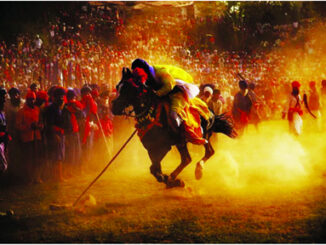
Hola Mohalla was first organized by the tenth guru of the Sikhs, Guru Gobind Singh Ji. It is believed that the main purpose of organizing this festival was to fundamentally strengthen the Sikh Community with fair use of military exercises and mock battles. Daredevil acts like bareback horse-riding by the warriors, standing upright simultaneously on two speeding horses to even tent pegging are a few common acts on display during this Indian festival.
Hola Mohalla truly depicts the bravado of Sikh men through mock fighting of the Sikh warriors, which they have showcased in the battlefields over history.
Meaning of “Hola Mohalla”
The word “Hola” is a masculine form of feminine sounding “Holi” and is more likely to have evolved from word “halla” which implies a military charge. “Mohalla” is derived from an Arabic word mahalla, implying a colony, in this case an army procession. Thus, when combined together, the words “Hola Mohalla” mean “the charge of an army.”
When is Hola Mohalla Celebrated?
The dates of Hola Mohalla celebrations are based on the traditional lunar calendar of Sikhism, known as “Nanakshahi calendar”. The festival commences on the second day of Chett month, which is also the first month of Nanakshahi calendar.
The festival of Hola Mohalla usually coincides or differs by a day with holi celebrations in the Gregorian calendar month of March. Holi is celebrated in the Phalgun month of Hindu calendar and the celebration falls on the first day of lunar month Chett.
Hola Mohalla History
The festival of Hola Mohalla was founded by the 10th Guru of Sikhism – Guru Gobind Singh. The history of Hola Mohalla dates back to 1699, when Guru Gobind Singh formed the Khalsa Panth, which is a warrior community of Sikhs. Khalsa was formed by the Guru to wage war against the atrocities and conversion philosophy of Mughal emperor Aurangzeb.
The legend has it that in 1699 Guru Gobind Singh asked the sikhs to gather at Anandpur on the day of Vaisakhi, an annual spring harvest festival celebrated in Punjab. It was on this day that the Guru appointed “Panj Pyares” and called them as the first Khalsa in Sikh traditions.
Subsequently, in the following year of 1701 on 7th March, Guru Gobind Singh initiated a new tradition of mock battles and poetry at the Lohgarh fort in Anandpur Sahib. Since then the festival of Hola Mohalla is being annually celebrated at Anandpur Sahib and has also spread to other Gurudwaras like Kirtarpur Sahib in Rupnagar district and is also replicated in the Gurudwaras around the world.
Hola Mohalla at Anandpur Sahib
Though the festivities of Hola Mohalla last for three days, people start gathering at Anandpur Sahib, a week before the main festival. The festival at Anandpur Sahib is specially celebrated as a display of war skills and velour of the Sikh community.
Huge colorful procession is organized in which Sikh warriors display their skills of sword fighting, horse riding, martial arts, tent pegging and other daring activities like standing on two galloping horses, riding a bareback horse etc. The Akali warriors also known as Nihang and Khalsa warriors are main participants in mock battles.
Apart from the mock battles, religious processions are also held, giving the people a deep insight into the Sikh religion. Sikhs as well as people of different faith from around the world gather at Ananadpur Sahib to witness the grand festival of Hola Mohalla. Nihangs riding on horseback, spray gulal at the audiences. Religious sermons are organized at various durbars in Anandpur Sahib.
A huge fair is set up at Anandpur Sahib with various stalls for children and elderly. Stalls sell all type of weapons replica – swords, daggers, spear etc and also local delicacies. Another attraction of Hola Mohalla at Anandpur Sahib is the make shift tent houses for the performers and the people coming from far places.
The festival concludes on the third day with a huge procession by Nihang warriors followed by hundred of Sikh pilgrims. The procession is headed by the Panj Pyare and originates from Takht Sri Keshgarh Sahib, one of the five panch takhts (religious thrones) of Sikhism.
The procession then passes through other Gurudwaras – Quila Anandgarh, Mata Jitoji and Lohgarh Sahib, before terminating at Takht. Langars are organized at Gurudwaras as well as other locations for the visitors. Villagers too volunteer for organizing langar as community service.
Hola Mohalla Celebration around the Globe
The festival of Hola Mohalla is celebrated in other Gurudwaras of India and the Gurudwaras across the world as well. Religious sermons and poetry are recited. Stories of valor of Guru Gobind Singh and other religious Gurus are told to the devotees. The procession at Anandpur Sahib is also replicated at other places as well, with Sikh warriors displaying their battle skills.
Hola Mohalla is also celebrated in the countries having good presence of Sikh Diaspora. The celebrations are usually marked by recitation of Guru Grant Sahib and story of Guru Gobind Singh and other religious gurus of Sikhs.
Significance of Hola Mohalla
Hola Mohalla gives a chance to the Sikh community to reaffirm their faith in religious customs and beliefs along with remembering their religious Gurus. The festival is a kind of tribute to Guru Gobind Singh who formed Khalsa warrior community to fight back invaders, and provide protection to the vulnerable, poor, oppressed and needy.
People belonging to other religions and cultures get to know Sikh religion and admire their unity and war skills. The festival of Hola Mohalla also signifies unity in diversity as it is a huge congregation of not only Sikhs but also millions of various faiths and religions. People belonging to different religions and castes enjoy the festivities and dine at the langars (community feast) together.