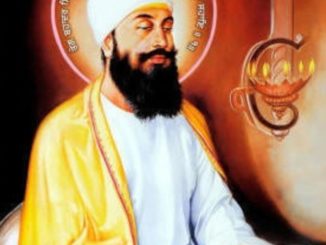
Tag: Guru Tegh Bahadur

  • Guru Tegh Bahadur: The ninth Sikh master

    Guru Tegh Bahadur: The ninth Sikh master

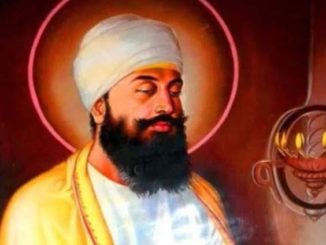
    In the grand tapestry of Indian spiritual history, few figures radiate the moral force, courage, and spiritual clarity of Guru Tegh Bahadur, remembered with reverence as Hind di Ch?dar-the Shield of India. His life, shaped by renunciation, fearless sacrifice, and vast spiritual outreach, became a turning point in Sikh history. From his humble childhood as Tyag Mal, to the revelation of the Ninth Guru at Baba Bakala, to his extensive travels and founding of Sri Anandpur Sahib, Guru Tegh Bahadur’s journey remains a saga of unparalleled spiritual aura and civilizational defence.
    From Tyag Mal to Tegh Bahadur
    Guru Tegh Bahadur was born on 1 April 1621 in Amritsar to Guru Hargobind Sahib, the Sixth Sikh Guru, and Mata Nanaki. He was originally named Tyag Mal, symbolizing a life rooted in selflessness, meditation, and inner discipline. Yet, destiny had inscribed both stillness and velour into his path.
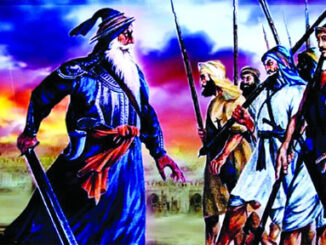
    As a young boy, he displayed deep inclination toward contemplation, often absorbed in reflection even during the lively tempos of daily life in the Guru’s household. But fate had other tests in store. At the symbolic Battle of Kartarpur, where Guru Hargobind defended Sikh sovereignty, the young Tyag Mal fought with such remarkable courage that his father bestowed upon him the title “Tegh Bahadur”-Master of the Sword.
    This duality of ty?g (renunciation) and tegh (courage) defined his personality: a warrior who avoided violence, but stood up when dharma demanded it; a saint who embraced silence, yet spoke with a thunderous moral spine when defending the oppressed.
    For years after the Sixth Guru’s passing, Tegh Bahadur lived quietly with his family at Baba Bakala, immersed in deep meditation, humility, and seva. Little did the world know that this silence would one day become the voice of a nation’s conscience.
    The Coronation at Baba Bakala: How the Ninth Guru Was Revealed
    The announcement of the next Guru after Guru Har Krishan Sahib was cryptic: “Baba Bakale.” Amid the confusion, 22 claimants emerged at the village. It was a moment demanding both spiritual discernment and divine timing.
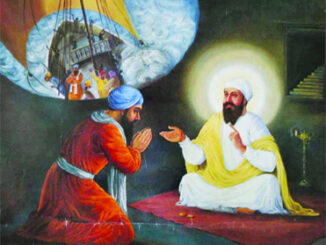
    Enter Makhan Shah Lubana, a devout Sikh merchant. Having prayed for divine intervention during a storm at sea, he vowed to offer 500 gold coins to the true Guru if his life was saved. When he reached Baba Bakala, every claimant accepted only two coins – except one.
    The recluse Tegh Bahadur, immersed in meditation, accepted the full 500, saying gently, “Why test the Guru?”
    Makhan Shah ran to the rooftop and proclaimed: “Guru Ladho Re! I have found the Guru!”
    The Sikh world erupted with clarity. On 20 March 1665, Tegh Bahadur was formally enthroned as the Ninth Guru of the Sikhs-a moment that reinstated spiritual unity and reaffirmed the lineage of Guru Nanak.
    Guru Tegh Bahadur’s Extensive Travels:
    Once enthroned, Guru Tegh Bahadur set out on one of the most extensive spiritual journeys undertaken by any Sikh Guru. These travels were not political tours-they were missions of consciousness, humility, and inner reform.
    Across Eastern India: Bengal, Assam, and Bihar
    Guru Tegh Bahadur travelled eastward to regions where Guru Nanak’s earlier message had taken root. At Dhaka, Sylhet, Pandua, and Assam, he engaged in inter-faith dialogue, uplifted local communities, and inspired devotional practice. His meeting with King Raja Ram Singh in Assam helped de-escalate conflict and promote peace-an act that revealed his quiet diplomatic wisdom.
    Northern Plains: Haryana, Uttar Pradesh, and Delhi
    At places like Kurukshetra, Agra, Mathura, and Allahabad, he spread Guru Nanak’s message of equality, compassion, and devotion. His kirtan gatherings drew Hindus, Muslims, and Sikhs alike. At Delhi, he encountered the turbulence of Aurangzeb’s reign-signalling the confrontation that history would inevitably record.
    Malwa and Southern Punjab
    He travelled extensively in Malwa, founding and blessing numerous villages such as Mandi, Talwandi Sabo, Bahadurgarh, Patiala region, and Mullowal. These regions blossomed into Sikh centres due to his spiritual presence and social upliftment.
    The Philosophical Footprint
    During these travels, Guru Tegh Bahadur composed hymns infused with deep detachment, spiritual clarity, and a philosophical understanding of life’s impermanence. His verses-now part of the Guru Granth Sahib-guide seekers toward fearlessness, humility, and liberation from ego.
    Historic Encounters: Guru Tegh Bahadur and Contemporary Sikh, Hindu, and Muslim Leaders
    Guru Tegh Bahadur’s life intersected with some of the most influential figures of the 17th century.
    With Sikh Sangats and Saints
    He rejuvenated distant Sikh congregations that had not seen a Guru in decades. His engagement with Sangats in Eastern India and Malwa revived spiritual vigour across communities.
    With Hindu Leaders: A Voice for Collective Dharma
    His later years saw a defining moment when Kashmiri Pandit scholars from Mattan sought protection from forced conversions under Aurangzeb. Their appeal echoed across India. Guru Tegh Bahadur’s response was simple yet epoch-making:
    “Tell the Emperor that if he can convert Tegh Bahadur, all will follow.”
    This was not a defense of any one religion; it was a defense of freedom of conscience-the right of every human being to worship without fear.
    With Muslim Scholars and Saints
    Contrary to popular simplification, Guru Tegh Bahadur engaged with several Muslim faqirs, saints, and leaders during his travels. His discussions emphasised the unity of the Divine, transcending sectarian divides. His martyrdom, too, saw Muslim figures-such as Saiyyad Adam Shah and others-decry cruelty and honour his sacrifice.
    Sri Anandpur Sahib: The City Founded Under His Vision
    In 1665, Guru Tegh Bahadur purchased land from Raja Deep Chand of Bilaspur and laid the foundation of Chak Nanki, which later became Sri Anandpur Sahib-one of the most sacred centres of Sikh history.
    A City of Spiritual Learning and Martial Preparedness
    Anandpur was envisioned as a place where: spiritual learning thrived, Sikh arts flourished, martial training coexisted with devotional practice, and communities lived under the ideals of equality and self-respect.
    After Guru Tegh Bahadur’s martyrdom, it was here that Guru Gobind Singh forged the Khalsa in 1699-a direct continuation of his father’s vision to create a society free from fear, injustice, and oppression.
    Legacy of Anandpur Sahib
    To this day, Sri Anandpur Sahib stands as a living testament to the Ninth Guru’s foresight-an epicentre of Sikh courage, culture, and spiritual discipline.
    Guru Tegh Bahadur’s martyrdom in 1675 at Chandni Chowk, Delhi, where he gave his life to protect religious freedom, remains unmatched. His sacrifice changed the course of history and catalysed the formation of the Khalsa under Guru Gobind Singh.
    He is remembered not merely as a Sikh Guru, but as a defender of humanity, a guardian of civil liberties, and truly, Hind di Ch?dar-the Shield of India.
    His life continues to inspire generations with its message of fearless righteousness, unyielding compassion, and unwavering commitment to truth.

  • Guru Tegh Bahadur: The Martyr Who Shaped History and Defines Modern Freedom

    Guru Tegh Bahadur: The Martyr Who Shaped History and Defines Modern Freedom

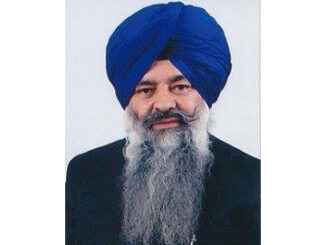
    By Prof. Indrajit S. Saluja

    The martyrdom of Guru Tegh Bahadur, the Ninth Master of the Sikhs, remains one of the most exalted episodes in human history—an event that transcends the boundaries of time, geography, and community. It is not merely a moment recorded in annals; it is a moral force that continues to shape the world’s understanding of conscience, human rights, and the sacred value of pluralism. Three and a half centuries after his execution in Delhi in 1675, his sacrifice commands not only reverence but deep reflection, for its relevance in the modern global context is as profound as it was in the India of Aurangzeb’s reign.

    To understand why, we must return to the historical landscape in which his martyrdom took place. In the late 17th century, Mughal Emperor Aurangzeb had intensified policies of religious coercion aimed at homogenizing the empire under Islamic law. Hindus, particularly the Kashmiri Pandits, faced aggressive pressure to convert. Their temples were destroyed, their scholars persecuted, and the dread of conversion hovered over the community like a dark cloud. In desperation, a delegation of Kashmiri Brahmins reached Anandpur Sahib and appealed to Guru Tegh Bahadur for protection. Their plea was not for political autonomy or economic relief but for the most fundamental of human entitlements: the right to practice their religion freely.

    Guru Tegh Bahadur recognized instantly that the struggle was not merely the plight of one community; it was a defining test of whether the individual conscience could prevail against state power. His response was unequivocal. By deciding to stand against forced conversions and offering himself up as the moral challenger to Aurangzeb’s policies, he affirmed a universal principle: faith must be an act of free will, not submission. This singular act of resistance would go on to transform the trajectory of Indian history.

    Upon reaching Delhi and refusing to accept Islam, he faced months of imprisonment, torture, and threats. The executions of his companions—Bhai Mati Das, Bhai Sati Das, and Bhai Dayala—were meant to break his resolve. Yet the Guru remained unshaken. His martyrdom on November 24, 1675, by beheading in Chandni Chowk, was a watershed moment. The Mughal Empire hoped to stifle dissent through this brutal spectacle. Instead, it ignited a fire of resistance and spiritual awakening across India.

    Martyrs do not simply belong to history; they create and reshape it. Guru Tegh Bahadur’s sacrifice undermined the moral legitimacy of Aurangzeb’s coercive policies, inspired grassroots defiance against tyranny, and ultimately contributed to the weakening of Mughal authority. It also prepared the ground for the rise of Guru Gobind Singh and the formation of the Khalsa, a force that would challenge imperial aggression with spiritual strength and armed resistance.

    But the significance of Guru Tegh Bahadur’s martyrdom extends far beyond the boundaries of his time. It was, in essence, a declaration of religious freedom—a concept that modern constitutions and international human rights frameworks have now enshrined, but which was scarcely acknowledged in the political philosophies of the 17th century. Long before the world recognized the right to faith in the Universal Declaration of Human Rights (1948), Guru Tegh Bahadur upheld it with the ultimate sacrifice of his life.

    His legacy anticipated a world order in which religious freedom, human dignity, and freedom of conscience are recognized as foundational values. In the modern global landscape, where intolerance, majoritarianism, and religious persecution continue to surface in various forms, his martyrdom holds a mirror to humanity. It compels societies to reflect: Are we living up to the ideals he died defending?

    Today, nations around the world grapple with challenges that echo the dilemmas of his era. In certain regions, religious minorities still face threats to their identity and survival. Governments legislate matters of belief. Communities clash over ideologies. Extremist movements attempt to impose singular narratives. In such a world, Guru Tegh Bahadur’s life and sacrifice assert a universal and timeless message: the conscience of an individual is sacred, and the right to faith cannot be dictated by rulers, mobs, or majorities.

    This is why he came to be revered as Hind ki Chadar—the Shield of India. He did not fall defending his own religion but safeguarding the faith of another. His martyrdom was an expression of the highest moral courage—a level of ethical clarity that remains a benchmark for humanity. The modern world, with all its technological advancements and evolving political systems, still struggles to embody this ethos.

    The power of his example lies in its breadth. Guru Tegh Bahadur’s message is not confined to Sikhs or Indians; it is universal. In an era where societies debate the limits of tolerance, free expression, and cultural diversity, his sacrifice underscores a fundamental truth: pluralism is not a burden but a civilizational strength. Upholding the rights of others—even when their beliefs differ from one’s own—is not just moral duty but the foundation of peaceful coexistence.

    Indeed, one of the most remarkable aspects of his martyrdom is that it defended a community whose faith, customs, and theology were distinct from his own. The Kashmiri Pandits practiced a faith different from Sikhism, yet their right to worship was sacred in Guru Tegh Bahadur’s eyes. His sacrifice speaks directly to a contemporary world where polarization is increasing and empathy shrinking. He teaches us that humanity must rise above identity and serve the universal principles of justice.

    The moral hierarchy expressed by the distinguished Sikh leader Master Tara Singh beautifully captures the spirit of Guru Tegh Bahadur’s life:

    Blessed is the one who gets to serve others.

    More blessed is the one who serves their faith.

    Even more blessed is the one who serves another’s faith.

    Greater still is the one who protects another’s religion.

    The greatest is the one who gives their life for another’s religion.

    It is in this final, most exalted ideal that Guru Tegh Bahadur stands alone in world history. He did not die for territory, power, or his community’s privilege. He died for the right of others to retain their identity, their scriptures, their temples, and their conscience. His martyrdom represents the pinnacle of spiritual altruism.

    As the global community confronts new forms of intolerance—whether digital manipulation of identities, persecution of minorities, cultural erasure, or ideological extremism—Guru Tegh Bahadur’s example offers a path forward. It reminds nations that progress without values is hollow, and development without freedom is fragile. It urges individuals to stand for justice even when the cost is high, to defend the rights of others even when they are different, and to recognize that conscience is the greatest sovereign.

    Guru Tegh Bahadur’s martyrdom is therefore not just a golden chapter in human history; it is a living beacon for the present and a guide for the future. It invites the world to rediscover the profound strength that lies in moral courage. It challenges humanity to uphold the right to faith, resist oppression, and cherish diversity. And above all, it teaches that the noblest expression of humanity is the willingness to stand for another’s freedom—even at the cost of one’s own life.

  • The Guru gave his all for freedom of faith

    The Guru gave his all for freedom of faith

    Guru Tegh Bahadur’s supreme sacrifice carries a timeless message for posterity

    “The commemoration of Guru Tegh Bahadur’s 350th death anniversary demands not just recrimination of past bigotry but renewed commitment to freedom of faith and conscience, which the Indian Constitution safeguards. Article 18 of the Universal Declaration of Human Rights, adopted by the UN General Assembly in 1948, affirms this resolve. All must accept that true faith, as the Gurus demonstrated by self-sacrifice, lies in the acceptance of one Supreme God, ethical conduct and public service, besides being tolerant of multiple paths that lead to Him.”

    By KC Singh

    The 350th anniversary of Guru Tegh Bahadur’s martyrdom falls on November 24. Union and state governments, besides several organizations, including the RSS, are commemorating the occasion. While doing so, the focus must remain on the historical context and the correct message that the Guru’s supreme sacrifice holds for posterity.

    A narrow interpretation may merely recount the bigotry of some Mughal emperors, especially Aurangzeb. The Sikh religion evolved over two centuries, from the foundation of Kartarpur town by Guru Nanak Dev in 1504 to the creation of the Khalsa by Guru Gobind Singh in 1699. During this period, the Mughals first captured power, then lost it and later regained it under Humayun; their empire peaked under Akbar and eventually declined after Aurangzeb’s death.

    Guru Arjan Dev (1606) and Guru Tegh Bahadur (1675) chose self-sacrifice over abandoning their religion or performing miracles.

    As the two sagas run parallel, their crucial linkages need to be analyzed to understand Sikhism’s defense of freedom of faith. Guru Nanak Dev is said to have first encountered Emperor Babur in Hyderabad as his forces advanced into India. Babur’s successor Humayun lost the throne of Delhi to Sher Shah Suri; heading for exile in Iran, he made a halt to seek the blessings of Guru Angad Dev, the second Sikh Guru, in 1540. Two vital inflection points occurred during the Mughal rule which impacted Sikhism’s evolution.

    It is important to recall that Emperor Akbar’s long reign (1556-1605) coincided with that of three Sikh Gurus — Guru Amar Das (1552-74), Guru Ram Das (1574-81) and Guru Arjan Dev (1581-1606). Akbar’s religious tolerance, the espousal of Din-I Ilahi (Religion of God) in 1582 and repeal of jizya or tax on non-Muslims created an ethos in which Sikhism could flourish. Akbar visited Guru Amar Das in 1567 and also partook of langar.

    Akbar favored his grandson, Prince Khusrau, to succeed him as he considered his eldest son unfit to rule. But that son, Jahangir, succeeded him in 1605. When Khusrau rebelled against his father in 1606, he met Guru Arjan Dev on the way to Lahore. The Mughal army defeated and captured him. Although Jahangir was not totally bigoted, he could be unpredictably vindictive. He targeted Guru Arjan Dev mainly because the latter had received his rebellious son. Had Khusrau succeeded Akbar, perhaps tolerance and religious freedom would have persisted in India.

    After Guru Arjan Dev passed away in Mughal captivity, the Sikh religion mutated under his son and successor Guru Hargobind, adopting martial training alongside religious discourse. He began carrying two swords, representing Miri and Piri, symbolizing the temporal and the spiritual. Guru Hargobind’s period (1606-44) bridged the reign of Jahangir (1605-27) and Shah Jahan (1627-58). His limited Sikh force successfully fought six battles with the Mughal forces, sent by Shah Jahan, until a grown-up Dara Shikoh, the heir apparent, restrained targeting of Sikhs.

    The second inflection point came when Shah Jahan’s sons became rivals over succession. The eldest, Dara Shikoh, favored Sufi thinking and religious tolerance, besides peaceful coexistence between Hindus and Muslims. He translated the Upanishads from Sanskrit to Persian to enable Muslim scholars to study them. Shah Jahan’s illness in 1657 started a power tussle. Dara fell seriously ill due to suspected poisoning by his main rival, Aurangzeb. Guru Har Rai, specializing in ayurveda, sent medicine that cured him. Dara sent gifts to the Guru in gratitude. However, he was defeated on the battlefield by Aurangzeb in 1658. He sought refuge in Punjab. The Guru extended him material help and obstructed Aurangzeb’s forces to assist his escape. Betrayed by former associates, Dara was captured and eventually killed.

    Destiny again betrayed India and the Sikh Gurus. The Sufi lost to a bigoted fundamentalist. When summoned by Aurangzeb in 1660, Guru Har Rai sent his son Ram Rai, who was held hostage. When questioned about Adi Granth hymns ostensibly berating Muslims, Ram Rai amended them in a bid to please Aurangzeb. The Guru excommunicated him, passing the succession to his younger son Har Krishan, who succeeded him a year later. Aurangzeb lured Guru Har Krishan to Delhi, where he contracted smallpox and passed away in 1664. Since he had declared that a Baba from Bakala would be his successor, many claimants came forward. Eventually, Guru Tegh Bahadur emerged as the chosen one.

    Thus, the eventual confrontation between Aurangzeb and the ninth Guru was not just over Pandit Kirpa Ram leading a delegation of Kashmiri Pandits to seek the Guru’s protection against forced conversion to Islam. It was an old tussle, reignited afresh, between the forces of bigotry and freedom of faith. It led to the birth of the Khalsa and greater resistance to Muslim invaders like Ahmad Shah Abdali and the remnants of the Mughal empire in Delhi.

    Today, there is a regression towards majoritarian, religion-influenced rule globally and in India, with secular constitutions or governance being put to the test. The US, once a model of secular governance with a wall between the Church and the State, is witnessing rising White Christian supremacism. The White House ordered flags at half-mast when a bigoted Charlie Kirk was shot. US Vice-President JD Vance publicly pushed his wife to convert from Hinduism to Christianity, wooing MAGA supporters. President Donald Trump’s strong supporter, Vivek Ramaswamy, a candidate for Ohio’s governorship, was trolled by MAGA followers on religious and racial grounds after he posted a photo with his sons on Halloween.

    In India, minorities, especially Muslims, feel targeted, especially when their nationalism is questioned. Proponents of Khalistan, such as Lok Sabha MP Amritpal Singh and his aides, are detained, but slogans and processions in support of Hindu Rashtra are tolerated. The rise of far-right parties in Europe has increased the risk of secular walls crumbling there too.

    Hence, the commemoration of Guru Tegh Bahadur’s 350th death anniversary demands not just recrimination of past bigotry but renewed commitment to freedom of faith and conscience, which the Indian Constitution safeguards. Article 18 of the Universal Declaration of Human Rights, adopted by the UN General Assembly in 1948, affirms this resolve. All must accept that true faith, as the Gurus demonstrated by self-sacrifice, lies in the acceptance of one Supreme God, ethical conduct and public service, besides being tolerant of multiple paths that lead to Him.
    (KC Singh is India’s former Ambassador to Iran and UAE)

  • Transformation of Sikhism into a Warrior Faith

    Transformation of Sikhism into a Warrior Faith

    Guru Gobind Singh’s leadership marked the transformation of Sikhism from a primarily spiritual movement into a martial and political force. This transition was not merely about militarization but represented a comprehensive restructuring of the Sikh faith to respond to the socio-political realities of the time. This section explores the evolution of Sikhism under Guru Gobind Singh, the principles of saint-soldierhood, key battles, and the enduring legacy of the warrior ethos in Sikhism.
    Context of Transformation: Historical Challenges
    Religious Persecution in India:
    – The late 17th century saw widespread persecution under Mughal Emperor Aurangzeb, who sought to impose Islamic orthodoxy.
    – Sikhs, Hindus, and other non-Muslim communities faced forced conversions, destruction of places of worship, and suppression of cultural practices.
    Legacy of Guru Hargobind:
    – Guru Gobind Singh inherited the ideology of Miri-Piri established by Guru Hargobind, blending spiritual enlightenment with temporal strength.
    – Guru Hargobind had already begun the militarization of Sikhism by creating the Akal Sena (army) to protect the oppressed.
    Martyrdom of Guru Tegh Bahadur:
    – The execution of Guru Gobind Singh’s father, Guru Tegh Bahadur, for defending religious freedom served as a turning point.
    – It reinforced the need for Sikhs to adopt a defensive and proactive stance against oppression.
    Rise of Banditry and Local Tyranny:
    – Beyond Mughal persecution, local chieftains and landlords often exploited peasants and lower-caste groups.
    – Guru Gobind Singh envisioned Sikhism as a force to liberate society from these injustices.
    Philosophy of Saint-Soldierhood
    Guru Gobind Singh introduced the concept of the Sant-Sipahi, or saint-soldier, emphasizing a balance between spiritual devotion and martial readiness.
    Spiritual Foundation:
    – Sikhs were encouraged to meditate on Naam (God’s Name) and uphold the principles of humility, compassion, and selflessness.
    – The warrior ethos was rooted in the defense of righteousness and justice, not in aggression or conquest.
    Martial Responsibility:
    – Every Sikh was taught to see themselves as a protector of the weak and a defender of the faith.
    – Martial training, including the use of swords, bows, and horses, became integral to Sikh life.
    Equality and Justice:
    – The saint-soldier was also a social reformer, challenging caste-based discrimination and advocating for human rights.
    Inspiration from Mythology and History:
    – Guru Gobind Singh drew inspiration from Hindu epics like the Mahabharata and Ramayana, and Islamic traditions of chivalry, blending these influences into a unique Sikh warrior philosophy.
    Formation of the Khalsa
    The founding of the Khalsa in 1699 was central to the transformation of Sikhism into a warrior faith.
    Institutionalizing Martial Training:
    – The Khalsa order emphasized discipline, bravery, and self-sacrifice.
    – Initiates were trained in the art of war and imbued with spiritual teachings.
    Democratic Leadership:
    – The concept of the Panj Pyare (Five Beloved Ones) reflected Guru Gobind Singh’s commitment to collective decision-making.
    – The Khalsa was a brotherhood bound by shared principles, transcending caste and class divisions.
    Code of Conduct (Rehat Maryada):
    – Khalsa Sikhs were required to wear the Five Ks, embodying spiritual and martial values.
    – They pledged to fight against tyranny and protect the oppressed, regardless of religion or background.
    Military Campaigns of Guru Gobind Singh
    Guru Gobind Singh personally led numerous military campaigns to defend Sikhism and resist Mughal oppression.
    Battle of Bhangani (1688):
    – The first major battle fought by Guru Gobind Singh against local hill chieftains who resented his growing influence.
    – It established his reputation as a capable military leader.
    Battle of Nadaun (1691):
    – Guru Gobind Singh allied with Raja Bhim Chand of Bilaspur to defeat Mughal forces.
    Defensive Strategies at Anandpur Sahib:
    – Anandpur Sahib became a fortress of resistance, symbolizing Sikh resilience.
    – Guru Gobind Singh repelled multiple attacks by combined Mughal and hill chieftain forces.
    Battle of Chamkaur (1704):
    – A pivotal moment in Sikh history, where Guru Gobind Singh and his forces valiantly defended against overwhelming Mughal forces.
    – The Guru’s two elder sons, Ajit Singh and Jujhar Singh, were martyred in this battle, epitomizing the spirit of sacrifice.
    Battle of Muktsar (1705):
    – The Guru’s forces, though outnumbered, achieved a symbolic victory, demonstrating their unyielding spirit.
    – The battle is commemorated as a testament to Sikh valor and unity.
    Transformation of Sikh Institutions
    Guru Gobind Singh restructured Sikh institutions to reflect the warrior ethos and ensure the community’s self-sufficiency.
    Fortification of Sikh Centers:
    – Anandpur Sahib and other towns were developed into centers of spiritual learning and martial training.
    Economic Self-Reliance:
    – Sikhs were encouraged to contribute to the community treasury, enabling the establishment of langars (community kitchens) and the maintenance of armed forces.
    Appointment of Successors:
    – Before his death, Guru Gobind Singh declared the Guru Granth Sahib as the eternal Guru of the Sikhs, ensuring spiritual continuity.
    – Leadership was decentralized, with the Khalsa assuming collective responsibility.
    Enduring Legacy of the Warrior Faith
    Guru Gobind Singh’s transformation of Sikhism into a warrior faith has left a lasting legacy.
    – The martial ethos inspired later Sikh leaders, including Banda Singh Bahadur and Maharaja Ranjit Singh, in their struggles against tyranny.
    – Sikh soldiers played crucial roles in global conflicts, earning respect for their bravery and discipline.
    Modern Relevance:
    – The principles of saint-soldierhood guide Sikhs in addressing contemporary challenges, from social injustice to humanitarian crises.
    Cultural Identity:
    – The warrior spirit is celebrated through Sikh festivals, martial arts like Gatka, and the continued reverence for the Five Ks.
    Guru Gobind Singh’s Military Strategy
    Guerrilla Warfare:
    – The Guru employed hit-and-run tactics, using the terrain to his advantage.
    – He avoided direct confrontations with larger forces, striking strategically to weaken the enemy.
    Use of Fortresses:
    – Fortresses like Anandpur Sahib and Lohgarh were strategically located and well-fortified to withstand prolonged sieges.
    Unity and Morale:
    – Guru Gobind Singh fostered a sense of brotherhood and shared purpose among his warriors.
    – His personal involvement in battles inspired loyalty and courage.

  • Hindu-Sikh unity event held in Sacramento

    Hindu-Sikh unity event held in Sacramento

    SACRAMENTO (TIP): Days after a Hindu temple in Canada was attacked by alleged Khalistani activists, Indian-Americans in Silicon Valley held a ‘Hindu Sikh Unity Interfaith’ event honoring the sacrifice of Sikh guru Tegh Bahadur.

    Hosted by Gurudwara Sant Nagar in Sacramento over the weekend, the event was attended by more than 200 members of Hindu, Sikh and other communities. Prominent among those who attended the event were Elk Grove City Mayor Bobby Singh-Allen, Commissioner of City of Elk Grove Bhavin Parikh, Council member of City of Rocklin Jill Gayaldo, Vice Mayor of Elk Grove Rod Brewer, and member of Interfaith Council of Sacramento Akram Keval.

    “Religious intolerance is plaguing our society. A few are dividing us and we must reject it. We gathered here to celebrate oneness. It is just the beginning; we have to show a better way. An attack on one is an attack on all of us,” said Singh-Allen.

    In his keynote address, Narinderpal Singh Hundal of Sant Sagar Gurdwara said, “We should all uphold the message of unity that Guru Tegh Bahadur Sahib gave by sacrificing himself to protect religion, and by obeying his command, maintain mutual brotherhood and love, and try to further propagate this mission.”

    Parikh said the guru’s sacrifice has a message that hate doesn’t have any place in this world. He said Sikhism teaches equality, humility and respect.

    “We all need to learn to appreciate and embrace other cultures and learn from them,” he added.

    Rewa Kaul, a Kashmir Pandit born in Srinagar and a resident of Bay Area, talked about how Guru Tegh Bahadur’s sacrifice defended the religious freedom of Kashmiri Pandits and Hindus who faced brutal oppression and were forced to convert to Islam under Mughal emperor Aurangzeb. She reminded the attendees to stay united.

  • Guru Gobind Singh: The Founder of Khalsa

    Guru Gobind Singh: The Founder of Khalsa

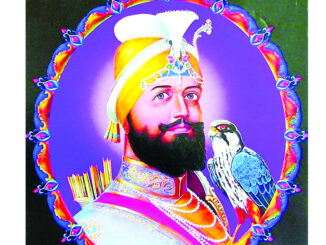
    Guru Gobind Singh was the tenth and last Sikh Guru, a spiritual leader, philosopher, poet and a great warrior. Born as Gobind Rai, he emerged as tenth Sikh Guru at age nine after his father Guru Tegh Bahadur, the ninth Sikh Guru, was beheaded publicly on the orders of Mughal emperor Aurangzeb as he refused to convert to Islam. Such atrocity led Guru Gobind Singh to found the Sikh warrior community called Khalsa that marked a significant event in the history of Sikhism. He also introduced the five articles famous as the Five Ks and commanded the Khalsa Sikhs to wear at all times. Other contributions of the Guru includes writing important texts on Sikhism and holding Guru Granth Sahib, the religious scripture of Sikhism, as the eternal living guru of the Sikhs.
    Childhood & Early Life
    He was born Gobind Rai on January 5, 1666 in Patna Sahib, Bihar, India in the Sodhi Khatri family of the ninth Sikh guru, Guru Tegh Bahadur and his wife Mata Gujri. The first Maharaja of Sikh Empire Ranjit Singh later built the Gurdwara Takht Sri Patna Sahib in the site of the house where Guru Gobind Singh was born and lived for the first four years of his life. The Guru returned to Punjab with his family in 1670 and later relocated with them to ChakkNanaki on the edge of Shivalik Hills in March 1672 where he did his schooling.
    In 1675, the Kashmiri Pandits approached Guru Tegh Bahadur to protect them from oppression of the Islamic satrap of Mughal Emperor Aurangzeb called Iftikar Khan. According to the composition Bachittar Natak written by Guru Gobind Singh, his father promised to protect the Kashmiri Pandits and was summoned to Delhi on a pretext by Aurangzeb and on his arrival, Tegh Bahadur was asked to convert to Islam. Tegh Bahadur was arrested along with his associates after he refused and was beheaded in public on November 11, 1675, in Chandni Chowk, Delhi. Such execution only toughened determination of the Sikhs to fight against atrocities of the Muslims in safeguarding their human rights and identity as Sikhs.
    The martyrdom of his father led the Sikhs to formally install the nine year old Gobind Rai as the tenth Sikh Guru on March 29, 1676, on Vaisakhi. He continued with his education which apart from reading and writing also included archery, horse riding and other martial arts. Till 1685 he stayed in Paonta Sahib.
    In 1699, the Guru asked the Sikhs to assemble at Anandpur Sahib on Vaisakhi. The Guru with a sword in hand called for a volunteer from among the crowd who is ready to sacrifice his head. On his third call one person named Daya Ram (later called BhaiDaya Singh) came forward. The Guru took him in a tent and returned alone to the crowd with blood dripping from his sword. Another volunteer was called by the Guru who was again taken inside the tent and after some time the Guru returned alone with the bloody sword. He continued the process with three more volunteers but after the fifth volunteer went inside the tent, the Guru came out with all the five volunteers unharmed. The Guru blessed the five volunteers namely BhaiDaya Singh, BhaiDharam Singh, Bhai Sahib Singh, BhaiMohkam Singh and Bhai Himmat Singh and called them the PanjPyare (the five beloved ones) and the first Khalsa in the Sikh tradition. The Guru then took an iron bowl and prepared a solution of water and sugar stirring it with a double-edged sword calling it Amrit (nectar). The five volunteers then received the nectar from the Guru amidst recitations from the Adi Granth. With this the khandekapahul (baptization ceremony) of the warrior community of Khalsa was initiated. A new surname of “Singh” meaning lion was given to them by the Guru. The Guru then asked the five baptized Sikhs to baptize him as a Khalsa and with this the Guru became the sixth Khalsa and from this time he came to be known as Guru Gobind Singh.
    The Guru commanded the Sikhs to wear five items all the time which included Kesh (uncut hair), Kangha (a comb made of wood), Kara (a bracelet made of iron), Kachera (a tieable undergarment made of 100% cotton) and Kirpan (a large iron dagger for self-defense). A code of discipline was introduced by him for the Khalsa warriors. These included prohibition of tobacco, eating ‘halal’ meat that is slaughtered as per Muslim ritual, fornication and adultery. The Khalsas consented never to communicate with followers of the rivals or their successors. The principle of equality was institutionalised in Sikhism with initiation of both men and women from different castes as Khalsa. The Guru played an instrumental role by institutionalising Khalsa in Sikhism thus strengthening the Sikhs in their resistance on the continuous persecution of the Mughal Empire under Aurangzeb. He came up with different concepts that posed indirect challenge to the biased tax system of the Islamic authorities.
    Adi Granth, the first official edition of the Sikh scripture was compiled by the fifth Sikh Guru, Guru Arjan. It contained hymns of previous Gurus and of other saints. Adi Granth was eventually expanded into the Guru Granth Sahib. In 1706, Guru Gobind Singh released the second rendition of the religious scripture with addition of one salok, dohramahala 9 ang, 1429 and all the 115 hymns of Guru Tegh Bahadur. The rendition came to be known as Sri Guru Granth Sahib. The Guru Granth Sahib composed by Guru Nanak Dev and other Sikh Gurus including Guru Arjan Dev, Guru Ram Das, Guru Angad Dev, Guru Amar Das, Guru Tegh Bahadur and Guru Gobind Singh and also containing traditions and teachings of Indian sants (saints), like Namdev and Kabir as also two Muslim Sufi saints Sheikh Farid and BhagatBhikan was declared as the eternal living guru for Sikhs by Guru Gobind Singh.
    Hostility between the Sikhs and the Muslims increased following execution of Guru Tegh Bahadur. Guru Gobind Singh believed in a DharamYudh that is to fight to defend righteousness and fought thirteen wars against the Mughal Empire and the kings of Siwalik Hills but never held captive or destroyed place of worship of other religions. Among the conflicts, the Second Battle of Anandpur (1704) witnessed a fierce battle and towards its end Aurangzeb offered a safe passage out of Anandpur for the Guru, his family and followers which the Guru accepted. However the two batches of the Sikhs were attacked while they were leaving Anandpur and the one including the Guru’s mother Mata Gujari and his two sons Zorawar Singh aged 8 and Fateh Singh aged 5 was captured. The two sons died after they were buried live into a wall when they refused to convert to Islam while Mata Gujri died hearing her grandsons’ death. The Guru lost two of his other sons Ajit Singh and Jujhar Singh, along with other Sikh soldiers during the Battle of Chamkaur (1704).
    In 1705 following the Battle of Chamkaur where Aurangzeb and his army betrayed after making a promise the Guru wrote a defiant letter to Aurangzeb in Persian language titled Zafarnama (literally, “epistle of victory”). In the letter the Guru sternly censured and accused Aurangzeb and his commanders for being immoral, both in governing and in war conduct and predicted end of Mughal Empire in near future due to its immorality, persecution and untruthfulness.
    Last Years & Death
    The Guru and his soldiers stayed at different places following the Second Battle of Anandpur in 1704 including hiding in the Machhiwara jungle of southern Panjab. Following a succession struggle after death of Aurangzeb in 1707, Bahadur Shah, the official successor wanted to meet the Guru in person in the Deccan area of India to reconcile with him. While the Guru camped at Nanded on the banks of Godavari River two Afghans, Jamshed Khan and Wasil Beg managed to enter his vicinity and Jamshed Khan stabbed the Guru. The Guru retaliated and killed Jamshed Khan while Wasil Beg was killed by the Sikh guards. The Guru succumbed to the wounds of the assault on October 7, 1708 which was followed by resurgence of the Sikh-Mughal war. While it is considered that Muslim army commander and the Nawab of Sarhandh Wazir Khan sent the assassins to kill the Guru, some scholars opine that they were sent by the Mughal army stationed nearby.
    Maharaja Ranjit Singh built the Takht Sri Hazur Sahib in Nanded to commemorate the place of assassination of the Guru.
    Teachings of Guru Gobind Singh
    Be A Warrior & A Saint
    Be a warrior with a noble cause who stands against injustice, promises to uphold dharma, is inwardly spiritual, is a fearless soul and is compassionate within oneself.
    Serve Humanity
    There is no religion greater than humanity. Guru Gobind Singh devoted his life to the happiness of his people and made many sacrifices to serve mankind. One must do as much as possible to serve and help those in need or trouble. If required, even pick up the weapon to battle injustice.
    Power of Love
    Love has the power to turn something basic into something gold or something ordinary to something extraordinary. Guru Gobind Singh believed that God is one and omnipresent. Those who love God and his creations shall attain divinity and salvation.
    Everyone’s Equal
    He believed in non-discrimination, fairness, justice and freedom for everyone irrespective of the caste, colour, religion or creed they belonged to. He had the deepest regard for all religions and believed that the difference is only man-made.
    Be Humble
    Guru Gobind Singh never thought of himself to be a big-shot. Instead, he claimed to be the servant of God. He said that it was the people who believed in him, who gave him the status of a guru. Rest, the world is filled with people like him. He asked everyone to practice humility, have a kind heart and doesn’t expect anything in return, not even gratitude.
    Be Mindful of your Speech
    The words have the power to either transform a life or cut a wound so deep that is beyond healing. Guru Gobind Singh taught his people to be mindful and cautious when speaking to others. He was also against verbal abuse, cursing, gossiping, slandering or being spiteful to anyone.

    Be a model human
    Other than these, there are 52 hukams (or instructions) by Guru Gobind Singh that encourage the ordinary homemaker to live a good and righteous life.
    The 52 Hukams of Guru Gobind Singh
    – Dharam dee kirat karnee – Make a righteous living.
    – Dasvand denaa – Donate a tenth share of your earnings.
    – Gurbani kantth karnee – Memorize Gurbani.
    – Amrit Vela utthnaa – Arise during Amrit vela (early morning).
    – Piaar naal Sikhaa di Seva karni – Devotedly serve the Sikh who serves others.
    – Gursikhaa paaso Gurbani dae arth samajhane – Learn the meanings of Gurbani from Gursikhs.
    – Panj Kakaar dee rehit drirh rukhnee – Follow the discipline of The Five Ks strictly. Adhere resolutely to the five articles of faith.
    – Shabad da abhiaas karnaa – Practice and rehearse the shabads.
    – Sat Saroop Satgur daa dhian dharnaa – Contemplate and assimilate the beautiful truth of the True Enlightener.
    – Guru Granth Sahib Jee noo Guru mananaa – Believe in and accept Guru Granth Sahib as the Guide to enlightenment.
    – Kaarjaan dae arambh vich ardaas karnee – When undertaking any task, first perform the prayer of Ardas.
    – Jaman, maran, ja viah mokae jup da paatth kar tihaaval (Karaah Parsaad) kar anand sahib dia punj paurian, ardaas, pratham panj pyaariaan atae hazooree granthee noo vartaa kae oprunth sangat noo vartaaouna – For birth naming, funeral, or marriage ceremonies or devotional reading paath; recite Japji Sahib while making Karah Parshad, perform five verses of Anand Sahib, and ardas; and then distribute Karah Prashad to the Panj Pyare, attending Granthi, and then to the congregation gathered for worship.
    – Jad tak Karaah Parshaad vartadaa rahae sadh sangat addol batthee rahae – Until Karah Parshad has been served to everyone, the congregation ought to be still and remain seated.
    – Anand viah binaa grahist nahee karnaa – Without the Anand Karaj marriage ceremony, carnal relations should not occur.
    – Par istree, ma bhain, dhee bhain, kar jaananee. Par istree da sang nahee karnaa – Other than your wedded wife, consider all women as your mothers, sisters and daughters. Do not indulge in carnal marital relationships with them.
    – Istree da mooh nahee phitkaarnaa – Do not subject women to cursing, or verbal abuse.
    – Jagat jootth tambaakoo bikhiaa da tiaag karnaa – Discard worldly ways, falsehoods, and poisonous tobacco.
    – Rehitvaan atae naam jupan vaalae gursikhaa dee sangat karnee – Make companions of Gursikhs who follow the Code of Conduct and recite the Divine Name.
    – Kum karan vich daridar nahee karnaa – Work hard and don’t be lazy.
    – Gurbani di kathaa ate kirtan roaz sunanaa te karnaa – Listen to and perform the religious discourse/sermon and singing of the hymns of Gurbani every day.
    – Kisae dee ninda, chugalee, atae eirkhaa nahee karnee – Do not gossip nor slander, or be spiteful to anyone.
    – Dhan, javaanee, tae kul jaat da abhiman naee karnaa (Nanak daadak tahe duae goath. Saak guroo Sikhan sang hoath) – Do not be proud of riches, youthfulness, clan or lineage. (Regardless of maternal and paternal clan or heritage, all of the Guru’s Sikhs are siblings of one family.)
    – Mat uchee tae suchee rakhnee – Maintain a high standard of purity in religious discipline.
    – Shubh karman tao kadae naa ttarnaa – Do not avoid performing virtuous acts.
    – Budh bal da daataa Vaheguroo noo jaananaa – Appreciate intellect and power as gifts of the all-knowing Wondrous Enlightener.
    – Sugandh (kasam/saunh) dae kar itbaar janaaoun vaalae tae yakeen nahee karnaa – Have no faith in oaths sworn by one attempting to convince another of sincerity.
    – Sutantar Vicharna – Rule Independently.
    – Raajniti vi parhnee – Read about politics.
    – Dushman naal saam, daam, bhed, aadik upaao vartnae ate uprant yudh karnaa dharam hai – When dealing with enemies, practice diplomacy (through conciliation, economics, or causing division of the opposing group), and exhaust all of these techniques before justifying battle with the adversary.
    – Shastar vidya te ghorh-savaari da abhiaas karnaa – Practice and exercise weaponry and horsemanship.
    – Doosrae dharmaaa dae pustakaa, vidyaa parhnee. Par bhrosaa drirh Gurbanee, Akaal Purakh ute hi rakhna – Read the books and science/knowledge of other religions. But keep your trust in Gurbani and Akal Purakh [The Timeless Being] resolute, firm, and tight.
    – Guroopdaesaa noo dhaaran karnaa – Follow the Guru’s teachings.
    – Raheraas da paath kar kharae ho kae ardaas karnee – After reciting Rehras [evening prayers], stand up and perform Ardas.
    – Saun valae sohilaa atae ‘paun guru pani pita…’ salok parhnaa – Recite the late evening prayer Sohila [3 hymns] and the verse “Pavan guru pani pita…” before sleeping.
    – Kes nange nahi rakhne – Do not leave your hair uncovered.
    – Singhaa da adhaa naam nahee bulaunaa – Address a Singh [or Kaur] by their entire name including Singh [or Kaur], do not shorten it by half or call them nicknames.
    – Sharaab nahi peeni-piauni – Do not drink or serve alcoholic beverages.
    – Sir munae noo kanaiaa nahee daenee. Uos ghar daeve jithae Akal Purukh dee sikhee ha, jo karza-ai naa hovae, bhalae subhaa da hovae, bibaekee atae gyanvaan hovae – Do not given a daughter’s hand in marriage to a shaven one. Give her to a household where the Undying divine personification Akal Purakh and tenets of Sikhism are respected, to household without debt, of a pleasing nature, which is disciplined and educated.
    – Subh kaaraj Gurbanee anusaar karnae – Maintain all business affairs in accordance with scripture.
    – Chugalee kar kisae da kam nahee vigaarnaa – Do not defame anyone by gossiping about their business.
    – Kaurha bachan nahee kahinaa – Do not speak bitter words.
    – Darshan yaatraa gurdwaaraa dee hee karnee – Make pilgrimages only for seeing Gurdwaras.
    – Bachan karkae paalnaa – Keep all promises made.
    – Pardaesee, lorvaan, dukhee, apung manukh dee yataahshkat seva karnee – Do as much as possible to serve and aid foreigners, those in sadness, need, disability or trouble.
    – Dhee Putaree da dhan bikh Kar jananaa – Realize that taking the earnings of a daughter is poison [don’t be greedy].
    – Dikhaavae da Sikh nahee banana – Do not act a Sikh outwardly only for show.
    – Sikhi kesaa-suaasa sang nibhaaounee – With every breath, live as a Sikh who has uncut hair. Know this kes to be equal to the Guru and give it the utmost respect.
    – Chori, yaari, tthugi, dhokaa, dagaa nahee karnaa – Abstain from thievery, adultery, cheating, deception, fraud, and pillaging.
    – Sikh da itbaar karnaa – Have confidence in a Sikh.
    – Jhutthi gavaahee nahee daenee – Do not make false testimonies.
    – Dhroh nahee karnaa – Do not participate in treason.
    – Langar Parshaad ik ras vartaaunaa – Serve langar [free community kitchen of a gurdwara] and prashad with impartiality.

  • Baba Makhan Shah Lobana who discovered Guru Tegh Bahadur

    Baba Makhan Shah Lobana who discovered Guru Tegh Bahadur

    Baba Makhan Shah Lobana was born on July 7, 1619, at village Tanda in Jhelum district of West Punjab. He rose to become a big businessman who carried out his trade through land and sea coast but moved mainly through river routes. One day, one of his ships carrying his goods was caught in a storm and struck underwater rocks. His life, the safety of the crew and goods were in great danger. He knelt down and prayed to the Guru to help him, his crew and consignment to safety and he would donate five hundred mohars to the Guru’s inventory for charitable purposes.
    The ship steered safely out of the storm. Makhan Shah immediately left for Delhi to fulfill his vow. On arrival in Delhi, he found that Guru Har Kishanji had passed away. While breathing his last, he had said “Baba Bakale”. The ninth Master was to reveal himself at Bakala. He immediately moved his caravan to Bakala. He reached there in the first week of August 1664. On arrival there, he found that as many as 22 persons were posing as the ninth Guru. He saw that it was difficult to identify the real Guru whom he should offer 500 mohars. He decided to offer only five mohars to each one of them and gauge their reaction. The true Guru will be the one who shall known his secret wish.
    One by one he visited all of them and offered five mohars each. None reacted. Finally, he enquired if there was any other Sodhi Baba. On August 10, 1664, he was guided by a local boy to Guru Tegh Bahadur, popularly called Baba Tegha, where he was meditating. Makhan Shah bowed before him and offered five mohars. Baba then opened his eyes and said: “God bless you my man, but why only five mohars after having pledged five hundred”.
    Makhan Shah was so overwhelmed by this chance discovery of the Guru that he was unable to speak for some time. He came out of the Guruji’s room and climbed on to the roof. He waived his chadar over his head and started shouted; “Guru Ladho Re! Guru Ladho Re!” (I have found the guru! I have found the guru!).
    The announcement was greeted by thousands of people who had gathered there. Makhan Shah asked his attendants to bring all the gifts respectfully to the Guru’s house while he himself carried a robe of honour, specially prepared for the Guru. On an appeal by Makhan Shah, the Guru then came out of his house and blessed the gathering.
    Attack by Dhir Mall
    After finding the Guru there was a pandemonium and all 22 fake manjis start running like bulls running during a stampede and all of them ran away. Only Dhir Mall stayed there and he said who is Makhan Shah to put himself in charge of case involving us sodhis? He also said bad things about Guru Tegh Bahadur ji, and his assistants were refusing to relinquish their right to the Guruship. Dhir Mall felt so jealous that he was ready to fight to the death if required.
    As soon as Baba Makhan Shah left the darbar for meals and Sri Guru Tegh bahadur was left only with few personal attendents and members of household with about hundred fully armed men Shihan rushed out of the house commanding all other men of his gang to follow him. Dhir mal followed him from the rear to watch and direct the operations, if possible. The raiders powered upon everyone they met to join them.
    Kirpal Chand, Bhai Jetha, Bhai Dayala put up a stout defence with whatever stick or staff they could get hold of. In next movement Shihan aimed bullet at Guru Tegh Bahadur and fired point blank. The Guru has a minor bullet injury on his shoulder. Kirpal Chand and Bhai Jetha asked all the men to hold there arms and be prepared to punish the bandits and redeem the stolen goods. A messenger was immediately sent to Makhan Shah. Sri Guru Tegh Bahadur urged everyone not to upset by material loses. Soon, Makhan Shah arrived with his men armed to their teeth. Makhan Shah was shocked at damage done to darbar and injuries sustained to by the Guru.
    Baba Makhan Shah and Dhir Mall
    Makhan Shah marched with his men to Dhir Mall’s house. Dhir Mall bolted the door from inside and Shihan took the responsibility to defend the house. The next moment Makhan Shah was at door loudly asking Dhir Mall to surrender all stolen property immediately or prepared for dire consequences. Shihan and Dhirmall hurled abuses at Makhan Shah and Kirpal Chand and their men. The next moment Makhan Shah and Kirpal Chand ordered their men to storm Dhir Mall’s house and punish everyone who resisted but avoid killing anyone.
    After a tough fight, everyone of Dhir Mall’s masands and hired bandits were arrested and dragged to the presence of Guru Tegh Bahadur. Addressing Dhir Mal, Makhan Shah said, “I have spared your life just because you are the Guru’s nephew, otherwise I would not have hesitated to destroy a cowardly killer like you.” Dhir Mall and his masands were down on there knees begging the Guru to pardon their offences. Deeply moved by their tears of repentance, Guru Tegh Bahadur not only ordered their immediate release, but even resented harsh treatment accord to them. Explaining his action, Makhan Shah said, “Gurudeva, if we allowed ourselves to be robbed and plundered the way Dhir Mall and his masands have done, we might be compeletly annihilated. How could we tolerate their attempt to murder thee, Master?” All the items brought from Dhir Mall’s camp were returned as per the Guru’s directive. Dhir Mall then reprimanded Shihan for all these happenings and next day left for kartarpur.
    Accompanied Guru to Amritsar
    On Nov. 22 1664 AD Sri Guru Tegh Bahadur left for Amritsar in response to invitation of Dwarka Dass and Bhai Garhia. Makhan Shah’s convoy carried provisions. There are two different versions what happened to Guru Tegh Bahadur ji at Amritsar.
    According to evidence of Bhatt Vahi in “Tumar Bijlautan ki” and “Guru Kian Sakhian” by Sarup Singh Kaushish, no untoward event came to pass on this occasion and Hariji, son and succesor of Baba Meharban and then custidion of Harimandir Sahib, Amritsar, along with his son Kanwal Nainand, local sangat came round and made obeisance before Guru Tegh Bahadur and pesonally took him inside the premisis of temple.
    According to Dr. Trilochan Singh, as soon as Guru ji and others reached Harimandir sahib to pay homage to sacred place, they found that the door to the entrance were closed to them. The whole of Amritsar was now under the control of Hariji Mina (son of Meharbaan). The Mina’s had full control of Harimandir sahib and they were afraid that they could be thrown out of the panth in same manner as Dhir Mall had been thrown out of Bakala.
    Makhan Shah said to the Guru, “I will not let them treat you like that. Permit me master, to compel them to open the doors”. Guru Sahib said, “No Makhan Shah, we will never use force.” Just then, a peasent women named Hariyan of nearby village Walla stepped forward and begged and pleaded to the Guru to spend the night in her humble dwelling. The Guru at once agreed to spend the night at Walla as guest.
    Makhan Shah now found the oppurtunity to enter the temple and pay his homage to sacred shrine. He then denounced and admonished the preists in presence of women who had come there to question them. When the priests came to know that the man addressing then was Makhan Shah, who severly punished Dhir Mall, they became cautious not to annoy or contradict him. They start making the lame excuses to defend their action. Makhan Shah explained to them how he had tested all the imposters and Guru Tegh Bahadur had been acknowledged as rightful successor to Guru Har Krishan. Makhan Shah told them, “I would handle you all, teach you a lesson here and now, but Gurdeva has ordered me to be tolerant towards even notorious people like you.”
    The next day Guru Sahib thanked Mata Harian and came to the temple where priests tendered their formal apology to the Guru. After paying homage at the sacred shrine, Guru Tegh Bahadur went to Goindwal. From Goindwal, Guru ji, Makhan Shah, Mati Das and Dyal Das rode on horse backs ahead of everybody and under supervision of Kirpal Chand followed a large convoy.
    At Kiratpur
    Now Guru Tegh Bahadur and his followers reached at Kiratpur in March 1665; a number of distinguished visitors came to pay homage to the master. Rani Jalal Devi, wife of Raja Dip Chand of Bilaspur offered substantial amount of money and land to build a new city for Guru’s residence. Guru ji refused to accept the land as gift but agrees to buy it on reasonable payment in vicinity of Kiratpur. Makhan Shah had made considerable contribution in the payment. An old village Makhowal 8 km. away from Kiratpur was selected as the site for new city, which was first called Nanki Chak and after its extension with villages Mathaur and Lodhipur it is named as Anandpur. Makhan Shah & Kirpal Chand contribution in processing the present site of Anandpur sahib is worth mentioning. Kirpal chand and Makhan shah had the active participation during the course of land.

  • Sikh History This Week- may 12, 2023, to may 18, 2023

    12th May

    1710 Battle of Chaaper Chheri in which Nawab Wazir Khan was killed.

    1979 Calcutta Gurdwara Burnt.
    1984 Murder of Sri Ramesh, editor of Hind Samachar.

    13th May
    1665 Guru Tegh Bahadur reached Bilaspur.


    Guru Tegh Bahadur accompanied by his mother Nanaki, and members of his Darbar reached Bilaspur. Guru Sahib was attending the bhog ceremony of Bilaspur’s ruler at the urgent request of his wife Rani Champa Devi.
    1673 Gobind Rai married Jitan at Chak Nanaki.


    1710 Famous battle of Chapar Cheri fought near Sarhind. Banda Bahadur defeated and killed Wazir Khan, the Governor of Sirhind.
    Having won the battle of Chapar Cheri, the Khalsa army seigned the city of Sirhind. Before entering the city, on this day, the Khalsa army had to face another severe battle. Five hundred Sikhs lay martyrs to the fort guns. The city, however, fell to the Khalsa army in the afternoon. desctruction of life and property in the city was boundless. Various descriptions mention that the city was reduced to ruins. Whole families were killed. Large amounts of wealth plundered not only by the victorios army but also by robbers and dacoits.


    Banda Singh ransacked Saharanpur and renamed it Bhanagar. Banda Bahadur established his camp at Mukhlispur (a small fortress constructed by Mukhlis Khan for camping during hunts in the Shivalik Hills.) Banda Bahadur repaired the fortress and renamed it Lohgarh. Banda Bahadur truck coins and adopted a seal for his order. The coins were issued in the name of Guru Nanak and Guru Gobind Singh Sahib.
    1835 Maharaja Ranjit Singh surrounds the forces of Mohammad Khan.

    14th May
    1710 Banda Singh Bahadhur conquered Sirhind.
    Banda Singh Bahadhur conquered Sirhind and established a Sikh government. Baz Singh was appointed governer and Baba Ali Singh got Naibship (joint Governership). The Khalsa kesri flag was hoisted over Sirhind fort.

    15th May
    1629 Mukhlis Khan reaches Amritsar with his forces to fight Guru Har Gobind Sahib.
    1765 Conquest of Lahore by the Khalsa Forces. Ahmad Shah reached Lahore via Eminabad during his 7th invasion. Sikhs attacked his outposts conquered Lahore and assembled at Amritsar.
    1850 Bhai Maharaj Singh was deported to Singapore aboard ship named “Mohammed Shah” guarded by soldiers of the 70th regiment. Bhai MAHARAJ SINGH: Born in village Rabbon, near Malud, Ludhiana Dist. Parents named him Nihal Singh. As a young lad, he went to stay at Bhai Bir Singh’s Dera at Naurangabad. Did sewa for many years, took Amrit at the hands of Bhai Bir Singh, was given the name Bhagwan Singh, and eventually became his chela. The Dera was practically a military camp with 1200 musketmen and 3000 horsemen. It had always been a sanctuary for political refugees. It became the centre of the Sikh revolt against Dogra dominance over the Punjab.
    Hira Singh Dogra, the chief minister of the Punjab, attacked the Dera in 1844 with 20000 troops and 50 cannon. Several hundred Sikhs, including General Attar Singh Sandhanwalla, Prince Kashmira Singh and Bhai Bir Singh were killed. Bhagwan Singh became the head of the Dera.
    The British, who had been waiting for the right moment to intervene and establish their authority, made their move in 1847. They deported Rani Jinda. The Sikh chiefs revolted, including Bhagwan Singh. He was welcomed by Sikhs saying “Ah Wo Maharaj”, because of his sanctity, thus, soon he came to be referred to as Bhai Maharaj Singh.

    16th May
    1765 Sikhs assembled at Amritsar and passed a Gurmatta to regain more territorits, occupy Lahore and strike coins in the name of their gurus as a symbol of the sovereignty of the Khalsa.
    Lahna Singh, Gujjar Singh, and Sobha Singh occupied Lahore and divided the city into three administrative zones under each Sardar. Silver rupee was struck from Lahore mint.
    1748 Misl Bhangian was organised.
    Misl Bhangian, one of the twelve Sikh Misls, was organized by Sardar Chhaju Singh of Panjwar Dist. Amritsar. Sardar Hari Singh and Bhuma Singh, etc., the leaders of this Misl captured Lahore in 1765. This Misl also ruled over Ambala, Ferozpur and Amritsar (See description below for details on Sikh Misls).
    1848 Maharani Jindan was imprisoned in the fort at Benaras.


    1931 Sadhu Singh Babbar of Sandhara sent to the gallows.

    17th May
    1762 Jassa Singh Ahluwalia defeats Jain Khan.


    1783 Baba Dyal Ji, the Nirankari leader, was born. NIRANKARI: a particular branch of GurSikh faith, established by Bhai Dayal Singh Ji. A Saehajdhari Sikh resident of Peshwar, GurSahai Ji, had a son named RamSahai Ji who married Ladhaki, daughter of Vasakha Singh (treasurer for the tenth Guru). Bhai Dayal Singh was born from this marriage on 15 Vaisakh sunmat 1840 (1783).
    1973 US Government recognized Sikh Dharma as a religion.
    The United States Government recognized Sikh Dharma as a religion, granting them the privileges and protection enjoyed by other churches in America.

    18th May
    1711 Battle of Batala between Baba Banda Singh Bahadhur and followers of Saekhul Hind.

  • Guru Tegh Bahadur: The ninth master of Sikhs

    Guru Tegh Bahadur: The ninth master of Sikhs

    Guru Tegh Bahadur ji is the ninth Master of the Sikhs who sacrificed his life to secure the right to practice one’s chosen faith. His birth anniversary in 2023 falls on April 11. Guru Tegh Bahadur, the ninth Sikh Guru, is often venerated as the ‘Protector of Humanity’ (Srisht-di-Chadar) by the Sikhs. Known as a great teacher, Guru Tegh Bahadur was also an excellent warrior, thinker, and poet, who wrote detailed description of the nature of God, mind, body, and physical attachments among other things spiritual. His writings are housed in the sacred text, ‘Guru Granth Sahib,’ in the form of 116 poetic hymns. He was also an avid traveler and played a key role in setting up preaching centers throughout the Indian subcontinent. During one such mission, he founded the town of Chak-Nanki in Punjab, which later became a part of Punjab’s Anandpur Sahib. In 1675, Guru Tegh Bahadur was forced by the then Mughal Emperor Aurangzeb to give up his faith and convert to Islam. When he refused, the Sikh Guru was beheaded on November 24, 1675, in Delhi.

    Early Life

    Guru Tegh Bahadur was born Tyag Mal on April 1, 1621, in Amritsar, Panjab. He was born to the sixth Sikh Guru, Guru Hargobind, and his wife, Mata Nanaki. As a child, Tyag Mal learnt Sanskrit, Hindi, and Gurmukhi from the revered Sikh scholar, Bhai Gurdas. While horsemanship and archery was taught to him by Baba Buddha ji, Guru Hargobind taught him swordsmanship.

    When Tyag Mal was just 13 years old, he accompanied his father to a battle against the Mughals, who had laid siege to Kartarpur. Thanks to Guru Hargobind and Tyag Mal, Kartarpur was successfully defended by the Sikhs. For exhibiting great valor and military skills in the battle, Guru Hargobind bestowed upon his son the title ‘Tegh Bahadur,’ which literally means ‘brave sword wielder.’ Tyag Mal henceforth came to be known as Tegh Bahadur.

    In 1632, Tegh Bahadur got married to Mata Gujri. By now, Tegh Bahadur had begun to spend much of his time in meditation and had gradually secluded himself. In 1644, Guru Hargobind asked Tegh Bahadur to move to a village, Bakala, along with his wife and his mother. The next two decades saw Tegh Bahadur spend most of his time meditating in an underground room in Bakala, where he would later be recognized as the ninth Sikh Guru. During his stay in Bakala, Tegh Bahadur traveled extensively and even visited Delhi to meet Guru Har Krishan, the eighth Sikh guru.

    Guruship

    In 1664, Guru Har Krishan’s health was badly affected by smallpox, which ultimately led to his death on March 30, 1664. While on his death bed, Guru Har Krishan was asked who would be his successor to which he simply uttered the words ‘Baba’ and ‘Bakala,’ which implied that the next Guru would be found in Bakala. When the word about the next Sikh Guru spread, many imposters settled down in Bakala and claimed to be the next Guru for monetary and other trivial gains. This led to confusion among the Sikhs as it made the task of finding the real Sikh Guru very difficult.

    Meanwhile, a wealthy trader named Baba Makhan Shah Labana had once been caught in a powerful storm, which had almost capsized his ship. During the incident, Baba Makhan Shah felt helpless and hence prayed to God that he would offer 500 gold coins to the Guru, should he be saved from the storm. After being saved miraculously, Baba Makhan Shah went in search of Guru Har Krishan, when he was informed about the passing of the Guru. He was also informed that Guru Har Kishan had professed that the next Guru will be found in Bakala.

    When Baba Makhan Shah Labana arrived in Bakala on August 1664, he was surprised to see as many as 22 imposters claiming to be the ninth Sikh Guru. Baba Makhan Shah recalled his prayer and then started giving away two Dinars to every imposter. As expected, all the imposters walked away happily after receiving two Dinars. Baba Makhan Shah, who was disappointed for not having met the real Guru, was taken to Tegh Bahadur on August 10, 1664. Upon seeing Tegh Bahadur, Baba Makhan Shah placed two Dinars before him, for which Tegh Bahadur replied by saying, ‘why two when you pledged 500?’ Upon hearing those words, Baba Makhan Shah placed 500 gold coins before Tegh Bahadur and started yelling with excitement, ‘Guru ladho re’ (I have found the Guru). Henceforth, Tegh Bahadur was declared as the ninth Sikh Guru.

    Works

    Guru Tegh Bahadur started traveling to various parts of the country in order to preach the teachings of the first Sikh Guru, Guru Nanak. He also started spreading the message of Sikhism, while helping those in need. In 1664, Guru Tegh Bahadur visited Kiratpur thrice for three different reasons. During his first visit on August 21, 1664, the Guru met with Bibi Rup, the daughter of the seventh Sikh guru, who was mourning the death of her father as well as that of her brother. The second visit was prompted by the death of Bassi, the mother of the seventh Sikh guru, Guru Har Rai. The third visit marked the end of a long journey through the northwestern Indian subcontinent.

    On one of his visits to Bilaspur, Guru Tegh Bahadur met with Rani Champa of Bilaspur, who offered him a piece of land. The Guru insisted on paying her 500 rupees for the land, where he founded a city called Anandpur Sahib.

    Some of Guru Tegh Bahadur’s works are added in the ‘Guru Granth Sahib’ and cover a range of topics, including nature of God, mind, body, physical attachments, etc. In 1672, the Guru traveled through the North-West Frontier, where the persecution of non-Muslims was at its peak.

    Execution

    When the then Mughal Emperor Aurangzeb forced the Brahmin scholars of Kashmir to convert to Islam, the Brahmins approached Guru Tegh Bahadur for a solution. The Guru sent them back with a message to Aurangzeb, which stated that the Mughal emperor could convert the Brahmins if he succeeds in converting Guru Tegh Bahadur. A few days after his proclamation, Guru Tegh Bahadur was arrested along with a couple of his followers, namely Bhai Mati Das and Bhai Dayal Das. When the trio refused to convert to Islam despite being tortured, Aurangzeb ordered their execution. While Mati Das was sawn to death, Dayal Das was cast into a huge cauldron of boiling water. On November 24, 1675, Guru Tegh Bahadur was beheaded in Delhi for standing up against the Mughal ruler.

    Impact of the Execution

    Post Guru Tegh Bahadur’s execution, the Sikhs became more resilience than ever. Many Sikh temples were built in the memory of Guru Tegh Bahadur and his deceased followers. ‘Gurdwara Sis Ganj Sahib’ was built in Chandni Chowk, where the Guru was executed. After his execution, the severed head of the Guru was taken back to Punjab by one of his followers named Bhai Jaita. After cremating his head, another Sikh temple was built there. The Guru’s sacrifice continues to remind the followers of the Sikh religion to stay true to their faith.

    Legacy

    Upon Guru Tegh Bahadur’s execution, his son Gobind Singh became the tenth Sikh Guru and came to be known as Guru Gobind Singh. Guru Tegh Bahadur’s execution left an indelible impression on Guru Gobind Singh, who was just nine years old at that time. As a result, Guru Gobind Singh organized the Sikh group in such a way that it eventually became a distinct and symbol-patterned community. Also, the Sikhs began to focus more on aspects like bravery and self-defense, which gave rise to the ‘Khalsa.’

    A number of places, including educational institutions and hospitals have been named after Guru Tegh Bahadur. While many of these places are located in Punjab, there are several places in other parts of India, which have been named after Guru Tegh Bahadur. While Maharashtra has several educational institutions named after him, places like New Delhi and Uttar Pradesh too, have a number of schools and colleges that have been named after the great Sikh Guru.

    Source: CultureIndia

  • Guru Tegh Bahadur – Hind ki Chadar

    Guru Tegh Bahadur – Hind ki Chadar

    Guru Tegh Bahadur Jayanti 2022 or Prakash Parv 2022 is being celebrated on April 21 to mark the birth of the Ninth Guru of Sikhism, Guru Tegh Bahadur. This year marks the 400th year of his birth anniversary.

    Born in 1621, Guru Tegh Bahadur, often venerated as the ‘Protector of Humanity’ (Srisht-di-Chadar),  or Hind Di Chadar’ (Protector of Hindu Religion), was the youngest son of Guru Hargobind. Guru Tegh Bahadur is remembered as the warrior guru, who relentlessly fought for religious freedom. Widely regarded as the saviour guru, Tegh Bahadur is considered to be an honourable scholar and poet who greatly contributed to the Sri Guru Granth Sahib, the holy book of Sikhism.

     Known as a great teacher, Guru Tegh Bahadur was also an excellent warrior, thinker, and poet, who wrote detailed description of the nature of God, mind, body, and physical attachments among other things spiritual. His writings are housed in the sacred text, ‘Guru Granth Sahib,’ in the form of 116 poetic hymns. He was also an avid traveler and played a key role in setting up preaching centers throughout the Indian subcontinent. During one such mission, he founded the town of Chak-Nanki in Punjab, which later became a part of Punjab’s Anandpur Sahib. In 1675, Guru Tegh Bahadur was forced by the then Mughal Emperor Aurangzeb to give up his faith and convert to Islam. When he refused, the Sikh Guru was beheaded on November 24, 1675, in Delhi.

    Early Life

    Guru Tegh Bahadur was born Tyag Mal on April 1, 1621, in Amritsar, Panjab. He was born to the sixth Sikh Guru, Guru Hargobind, and his wife, Mata Nanaki. As a child, Tyag Mal learnt Sanskrit, Hindi, and Gurmukhi from the revered Sikh scholar, Bhai Gurdas. While horsemanship and archery was taught to him by Baba Buddha ji, Guru Hargobind taught him swordsmanship.

    When Tyag Mal was just 13 years old, he accompanied his father to a battle against the Mughals, who had laid siege to Kartarpur. Thanks to Guru Hargobind and Tyag Mal, Kartarpur was successfully defended by the Sikhs. For exhibiting great valor and military skills in the battle, Guru Hargobind bestowed upon his son the title ‘Tegh Bahadur,’ which literally means ‘brave sword wielder.’ Tyag Mal henceforth came to be known as Tegh Bahadur.

    In 1632, Tegh Bahadur got married to Mata Gujri. By now, Tegh Bahadur had begun to spend much of his time in meditation and had gradually secluded himself. In 1644, Guru Hargobind asked Tegh Bahadur to move to a village, Bakala, along with his wife and his mother. The next two decades saw Tegh Bahadur spend most of his time meditating in an underground room in Bakala, where he would later be recognized as the ninth Sikh Guru. During his stay in Bakala, Tegh Bahadur traveled extensively and even visited Delhi to meet Guru Har Krishan, the eighth Sikh guru.

    Guruship

    In 1664, Guru Har Krishan’s health was badly affected by smallpox, which ultimately led to his death on March 30, 1664. While on his death bed, Guru Har Krishan was asked who would be his successor to which he simply uttered the words ‘Baba’ and ‘Bakala,’ which implied that the next Guru would be found in Bakala. When the word about the next Sikh Guru spread, many imposters settled down in Bakala and claimed to be the next Guru for monetary and other trivial gains. This led to confusion among the Sikhs as it made the task of finding the real Sikh Guru very difficult.

    Meanwhile, a wealthy trader named Baba Makhan Shah Labana had once been caught in a powerful storm, which had almost capsized his ship. During the incident, Baba Makhan Shah felt helpless and hence prayed to God that he would offer 500 gold coins to the Guru, should he be saved from the storm. After being saved miraculously, Baba Makhan Shah went in search of Guru Har Krishan, when he was informed about the passing of the Guru. He was also informed that Guru Har Kishan had professed that the next Guru will be found in Bakala.

    When Baba Makhan Shah Labana arrived in Bakala on August 1664, he was surprised to see as many as 22 imposters claiming to be the ninth Sikh Guru. Baba Makhan Shah recalled his prayer and then started giving away two Dinars to every imposter. As expected, all the imposters walked away happily after receiving two Dinars. Baba Makhan Shah, who was disappointed for not having met the real Guru, was taken to Tegh Bahadur on August 10, 1664. Upon seeing Tegh Bahadur, Baba Makhan Shah placed two Dinars before him, for which Tegh Bahadur replied by saying, ‘why two when you pledged 500?’ Upon hearing those words, Baba Makhan Shah placed 500 gold coins before Tegh Bahadur and started yelling with excitement, ‘Guru ladho re’ (I have found the Guru). Henceforth, Tegh Bahadur was declared as the ninth Sikh Guru.

    Works

    Guru Tegh Bahadur started traveling to various parts of the country in order to preach the teachings of the first Sikh Guru, Guru Nanak. He also started spreading the message of Sikhism, while helping those in need. In 1664, Guru Tegh Bahadur visited Kiratpur thrice for three different reasons. During his first visit on August 21, 1664, the Guru met with Bibi Rup, the daughter of the seventh Sikh guru, who was mourning the death of her father as well as that of her brother. The second visit was prompted by the death of Bassi, the mother of the seventh Sikh guru, Guru Har Rai. The third visit marked the end of a long journey through the northwestern Indian subcontinent.

    On one of his visits to Bilaspur, Guru Tegh Bahadur met with Rani Champa of Bilaspur, who offered him a piece of land. The Guru insisted on paying her 500 rupees for the land, where he founded a city called Anandpur Sahib.

    Some of Guru Tegh Bahadur’s works are added in the ‘Guru Granth Sahib’ and cover a range of topics, including nature of God, mind, body, physical attachments, etc. In 1672, the Guru traveled through the North-West Frontier, where the persecution of non-Muslims was at its peak.

    Execution

    When the then Mughal Emperor Aurangzeb forced the Brahmin scholars of Kashmir to convert to Islam, the Brahmins approached Guru Tegh Bahadur for a solution. The Guru sent them back with a message to Aurangzeb, which stated that the Mughal emperor could convert the Brahmins if he succeeds in converting Guru Tegh Bahadur. A few days after his proclamation, Guru Tegh Bahadur was arrested along with a couple of his followers, namely Bhai Mati Das and Bhai Dayal Das. When the trio refused to convert to Islam despite being tortured, Aurangzeb ordered their execution. While Mati Das was sawn to death, Dayal Das was cast into a huge cauldron of boiling water. On November 24, 1675, Guru Tegh Bahadur was beheaded in Delhi for standing up against the Mughal ruler.

    Impact of the Execution

    Post Guru Tegh Bahadur’s execution, the Sikhs became more resilience than ever. Many Sikh temples were built in the memory of Guru Tegh Bahadur and his deceased followers. ‘Gurdwara Sis Ganj Sahib’ was built in Chandni Chowk, where the Guru was executed. After his execution, the severed head of the Guru was taken back to Punjab by one of his followers named Bhai Jaita. After cremating his head, another Sikh temple was built there. The Guru’s sacrifice continues to remind the followers of the Sikh religion to stay true to their faith.

    Legacy

    Upon Guru Tegh Bahadur’s execution, his son Gobind Singh became the tenth Sikh Guru and came to be known as Guru Gobind Singh. Guru Tegh Bahadur’s execution left an indelible impression on Guru Gobind Singh, who was just nine years old at that time. As a result, Guru Gobind Singh organized the Sikh group in such a way that it eventually became a distinct and symbol-patterned community. Also, the Sikhs began to focus more on aspects like bravery and self-defense, which gave rise to the ‘Khalsa.’

    A number of places, including educational institutions and hospitals have been named after Guru Tegh Bahadur. While many of these places are located in Punjab, there are several places in other parts of India, which have been named after Guru Tegh Bahadur. While Maharashtra has several educational institutions named after him, places like New Delhi and Uttar Pradesh too, have a number of schools and colleges that have been named after the great Sikh Guru.

  • Prime Minister Modi pays glowing tribute to the Sikh Gurus

    Prime Minister Modi pays glowing tribute to the Sikh Gurus

    Recalls the sacrifice of Guru Tegh Bahadur, releases commemorative coin and postage stamp

    NEW DELHI (TIP): Prime Minister Narendra Modi on Thursday, April 21, 2022, released a commemorative coin and postage stamp to mark the 400th birth anniversary of Guru Tegh Bahadur and recalled the sacrifice of the ninth Sikh guru in protecting India and the Indian culture.

    Mr. Modi addressed the gathering at Red Fort, where a two-day celebration of the 400th birth anniversary of Guru Tegh Bahadur culminated on Thursday, April 21 night. The Prime Minister said Red Fort had witnessed many events in history, including the martyrdom of Guru Tegh Bahadur and tested the courage of those who died for the country. Guru Tegh Bahadur was executed in the nearby Chandni Chowk, while the order for his beheading was issued from Red Fort. Mr. Modi said there was a “storm of religious fanaticism in the country at that time” and Guru Tegh Bahadur was the great hope for India to save its identity and stand against Aurangzeb’s tyranny. The sacrifice of Guru Tegh Bahadur had inspired many generations to live and die “to protect the dignity of their culture”, he said. “Great powers have disappeared, big storms have calmed, but India is still standing, moving ahead,” Mr. Modi said. Mr. Modi said the government was working on connecting the centers of Sikh pilgrimage. He said India had never posed a threat to any country or society and even today, India thought about the welfare of the whole world. Earlier as part of the two-day celebrations organized by the Culture Ministry, a kirtan was held and the story of Guru Tegh Bahadur’s life was depicted through a sound and light show projected onto the facade of Red Fort. Delhi Sikh Gurdwara Management Committee president Harmeet Singh Kalka called on the Prime Minister to fulfil two demands — setting up a Sikh university in Delhi and naming the Indira Gandhi International Airport after Guru Tegh Bahadur.

  • PM to launch Rs 400 commemorative coin, postal stamp to mark 400th birth anniversary of Sri Guru Tegh Bahadur on April 21

    PM to launch Rs 400 commemorative coin, postal stamp to mark 400th birth anniversary of Sri Guru Tegh Bahadur on April 21

    NEW DELHI/NEW YORK (TIP): The Centre in coordination with the Delhi Sikh Gurdwara Management Committee (DSGMC) will be holding a two-day commemoration event at Red Fort in New Delhi on April 20 and 21, to celebrate the 400th Parkash Purb (birth anniversary) of Sri Guru Tegh Bahadur Ji, the ninth Sikh guru. Prime Minister Narendra Modi and home minister Amit Shah would be attending these events. PM Modi will release a commemorative coin and a postage stamp dedicated to the birth centenary of the ninth Guru on April 21.

    As per the sources privy to the development, the commemorative coin will be of Rs 400 denomination, which will have the picture of Guru Ke Mahal, Amritsar, the birthplace of the ninth Guru on its one side and the writings dedicated to the birth centenary. The coin will also have a line from the writings of Kavi (poet) Senapati, a contemporary poet to the tenth Sikh Guru,

    ‘Pragat Bhae Gur Teg Bahadur Sagal Srisht Pai Dhapi Chadar

    ‘ (Guru Teg Bahadur came forward and saved the entire world from atrocities).

    As per the letter written by Atul Kumar Mishra, deputy secretary (Special Cell/C&M) of the Union ministry of culture to DSGMC President Harmeet Singh Kalka on Monday, April 4, HM Amit Shah will inaugurate the event on April 20, followed by a light and sound show, participation in Shabad Kirtan to be organized by children followed by his address. The letter reads that it has been decided to organize two day closing ceremony.

    Similarly, PM Modi will inaugurate the event on April 21, followed by the release of commemorative coin and postage stamp, 400 raagis will participate in Shabad Kirtan and PM will also address the gathering.

    The ministry of culture hoped for cooperation from DSGMC President Kalka in organizing the commemoration.

    However, it is yet unclear that whether the GOI would be officially inviting the SGPC President or not.

    Sources told that the GOI for deciding and approving the design and details of commemorative coin of Rs 400 with regards to marking this commemoration, roped in the Shiromani Gurdwara Parbandhak Committee (SGPC), Amritsar, and the same would be released as per the approval given by the Sikh body (SGPC).

    Following a meeting of the SGPC’s Sikh Itihas Research Board on January 23, 2021, the then SGPC President Bibi Jagir Kaur had demanded from the GOI to issue a commemorative coin and postage stamp dedicated to the 400th birth anniversary of the ninth Guru.

    SGPC had celebrated the 400th Parkash Purb on the ninth Guru on May 1, 2021.

    Guru Teg Bahadur Ji was born in 1621 at Guru Ke Mahal, Amritsar and he was executed on the orders of Mughal emperor Aurangzeb at Delhi’s Chandni Chowk in 1675, and presently, historical Gurdwara Sis Ganj Sahib is situated in Delhi at the same spot where the Guru was martyred.

  • SRI GURU TEGH BAHADUR SAHIB A PROPHET AND A MARTYR

    SRI GURU TEGH BAHADUR SAHIB A PROPHET AND A MARTYR

    Special on the occasion of the 400th birth anniversary celebrations of Sri Guru Tegh Bahadur Ji

    By Dr. Amrit Kaur

    Sri Guru Tegh Bahadur Sahib was a protector of the oppressed class. He fought against oppression and laid down his life to protect the right of the people to follow the religion of their own choice. His bani consists of 59 sabdas and 57 slokas. These sabdas and slokas essentialize the same spiritual experience and insights as does the bani of his predecessor Gurus.

    Sri Guru Tegh Bahadur Sahib, the Ninth Guru (Revealer of the Sikh faith) of the Sikhs was born on Baisakh vadi 5, 1678 Birkimi i.e., April 1, 1621 in Amritsar, Punjab. He was the youngest of the five sons of Sri Guru Hargobind Sahib, the Sixth Guru of the Sikhs and Bibi Nanaki. His childhood name was Tyag Mal, tyag means ‘giving away’ or parting with what one possesses. As a small child he gave away his clothes to a poor child in charity. On being asked by his mother as to why he had done so, he promptly answered that no one else would have given ‘that boy’ any clothes whereas you will immediately give me new clothes. From his early childhood, he was very humble, religious and detached from worldly possessions. During his childhood, Bhai Buddha Ji, a very revered Sikh of the time, taught him the manly arts of archery and horsemanship and Bhai Gurdas Ji, another renowned Sikh was in-charge of his religious instruction.

    At the age of 13 he took part in the battle of Kartarpur in District Jallandhar of Punjab fought by his father Sri Guru Hargobind Sahib against one of his own former warriors who had deserted him and subsequently invaded him. In this battle (Guru) Tegh Bahadur Sahib evinced so much bravery and valor that his father, Sri Guru Hargobind Sahib renamed him as Tegh Bahadur, tegh means sword and bahadur means brave. In his life to come he lived up to the ‘meaning’ implied in this name. At the age of 12 he was married to (Mata) Gujri Ji, daughter of Bhai Lal Chand Ji and Bibi Bishan Kaur Ji of Kartarpur in District Jallandhar of Punjab who had migrated from village Lakhnaur near Ambala in Haryana. After this, his father Sri Guru Hargobind Sahib, along with the whole family went to Kiratpur Sahib, a small township in the foothill of Himalayas in District Ropar of Punjab, where they lived for nine years. After his father left for his heavenly abode in 1644, he left Kiratpur Sahib alongwith his mother Bibi Nanaki Ji and wife Mata Gujri Ji and shifted to Baba Bakala in District Amritsar of Punjab, the ancestral village of Bibi Nanaki Ji’s father.

    On March 30, 1664 before leaving for his heavenly abode, the Eighth Sikh Guru, Sri Guru Har Krishan Sahib bestowed Guruship on him. Thus, on March 30, 1664 he assumed Guruship but was formally anointed Guru on August 11, 1664. After assuming this high seat of Guruship, he started preaching the message of the First Sikh Guru, Sri Guru Nanak Dev Ji’s that (i) God is one (ii) God is omnipresent and omnipotent (iii) God is the creator of the whole world and of all human beings (iv) all human beings are equal, thus persons of all religions and castes should be given equal respect (v) women should be given equal status (vi) we should recite the name of God Almighty (vii) we should earn our livelihood honestly and share it with the needy persons. The spiritual pathway as revealed by Sri Guru Nanak Dev Ji is a pathway of gradual growth and leads to union with God.

    After assuming Guruship, as a first step, with a view to establish a place for the congregation of Sikhs he bought some land at a place 8 kms. north of Kiratpur Sahib, from Deep Chand the King of Kahlur. He bought three villages Makhopur, Mataur and Lodhipur from Deep Chand at a cost of Rs. 2200 and in June 1665 established the town Chakk Nanaki which later came to be called Anandpur Sahib (the City of Bliss). This town is now one of the five spiritual seats (Takhts) of the Sikhs, and this is where in April 1699, Sri Guru Gobind Singh Ji, the Tenth Sikh Guru created the Khalsa. After establishing this place of pilgrimage, to further strengthen the preaching activity, he left for an extensive tour of Banger area which now partly falls in Punjab and partly in Haryana. During this tour he visited more than 120 places in the Districts of Amritsar, Ropar, Patiala, Jallandhar, Nawan Shahar, Fatehgarh Sahib, Sangrur, Bathinda and Mansa in Punjab. In fond memory of his visits, historical Gurdwaras have been established at all of the places that he visited. After his he visited several places in the districts of Ambala, Kaithal, Kurukshetra, Mohindergarh, Narnaul, Rohtak, Yamuna Nagar and Jind in Haryana State. To commemorate his holy visits in Haryana more than 30 historical Gurdwaras have been established.

    During his tour of Punjab and Haryana, in addition to conveying the message of Sikhism, he (i) got several wells dug in the areas which faced scarcity of water due to draught (ii) campaigned against drug addiction (iii) campaigned against growing of tobacco, and (iv) dispelled the miseries of sick and suffering population. Although, his tours were purely religious in nature, but they created many doubts in the mind of Aurangzeb, the emperor on the Delhi throne. Several false complaints to this effect were received by Aurangzeb and he sent orders for his arrest. Aurangzeb who had acceded to the Delhi throne in July 1658 after sending his father to prison and killing his brothers wanted to please Mughals by giving torture to non-Mughals. As part of his mission, he wanted to arrest Sri Guru Tegh Bahadur Sahib. But Raja Ram Singh, son of Mirza Raja Jai Singh intervened and convinced the ruler that Guru Sahib’s activities were religious and social and not any threat to his empire. Thus, his arrest was averted.

    After this, Sri Guru Tegh Bahadur Sahib started on an extensive tour of the eastern part of India to further spread the message of Sikhism. During this tour, he visited Agra, Mathura, Etawah, Kanpur, Fatehpur, Mirzapur, Allahabad, Jaunpur, Nizamabad and Banaras in U.P.; Gaya, Sasaram, Bhagalpur, Patna Sahib, Lakshmipur (District Katihar) and Monghyr in Bihar; Sahibganj in Jharkhand; Calcutta in West Bengal, Dhubri in Assam and Dhaka, Pabna, Comilla, Sylhet and Chittagong (now in Bangladesh) and Sondip Island.

    By the time he returned to Punjab, Aurangzeb’s pro-Islam policies and programs were in full swing. Aurangzeb wanted to completely destroy the Hindu old civilization. Under his orders centuries old temples in Ayodhya, Banaras and Mathura in U.P. were demolished. A very renowned temple Vishwanath which had been built by Raja Nar Singh Dev at a cost of Rs. 33 lacs was destroyed. ‘Mathura’, the holy city of Hindus was renamed as ‘Islamabad’. Ancient Hindu temples in Bihar and Orissa were also demolished. Ban was imposed on Hindu fairs and festivals. Aurangzeb had established a Jatha of Mullans consisting of horse riders who would go from place to place to destroy Hindu idols and temples. All Governors were directed not to give jobs to Hindus and wherever possible to dismiss them and replace them by Muslims. Employees in various sectors were issued orders to get converted to Islam up to a specific date or be prepared to lose their jobs. Aurangzeb had established a full-fledged Department for this purpose and appointed a Director General as its in-charge. Under his policies and programs thousands of Brahmins were imprisoned and put to torture to pressurize them to get converted to Islam. As per historical evidence, Aurangzeb would not eat any meal unless the janeu (sacred thread) taken away from the bodies of Brahmins weighing a quarter and a maund (one quintal) were presented to him. This means that thousands of Hindus were being converted to Islam.

    It was part of this policy that Aurangzeb sent directions to Iftikhar Khan the Governor of Kashmir that all Hindus in Kashmir be converted to Islam. Within a few months more than half of the Brahmins adopted Islam. As a result of this, Kashmiri Brahmins became awe stricken. As reported by PNK Bamzai, a Kashmiri historian, in his book History of Kashmir when the cruelty became unbearable, some Pandits got together and went to Amar Nath for pilgrimage and praying. After that, under the leadership of Pandit Kirpa Ram, about 500 Brahmins decided to meet Sri Guru Tegh Bahadur Sahib for help. This desperate group met Sri Guru Tegh Bahadur Sahib at Anandpur Sahib on May 25, 1675 and requested for help. After listening to the woeful stories of Pandits Sri Guru Tegh Bahadur Sahib decided to sacrifice his life to dispel their tortures and save the Hindu Community from extinction. He resolved to lay down his life to uphold the people’s right to practice the religion of their own choice. He told the Pandits to return to Kashmir and tell the Mughal Governor that if they convert their Guru i.e., Sri Guru Tegh Bahadur Sahib to Islam they would all get converted to Islam. Getting furious over this development Aurangzeb ordered that Guru Sahib be arrested, put to torture and executed.

    By that time, Guru Sahib himself had left Anandpur Sahib and was traveling towards Delhi via Agra. As per Aurangzeb’s orders the soldiers arrested him at Sikandra, District Agra in U.P. At this place now stands Gurdwara Guru Ka Taal Sahib. At Sikandra he was put in an iron cage and then subjected to torture and then under a heavy escort brought to Delhi on November 4, 1675. At Delhi, he was bound in chains and as per Aurangzeb’s orders was to be tortured until he accepted Islam. Thus, he was subjected to severe torture. But he firmly refused to abandon his religion. When Mullans became sure that he could not be persuaded to abandon his religion, he was asked to perform some miracle, which he firmly refused. Finally, on November 11, 1675 he was brutally beheaded in Chandni Chowk, Delhi in public view. At this place now stands Gurdwara Sisganj Sahib. At nightfall, a devout Sikh Lakkhi Shah Lubana Ji helped by three of his sons Nagahia, Hema and Harhi, not caring for the Mughal reprisal placed the headless trunk in a cart and took it to his home in Raisina village. To avoid direct confrontation with the Mughals, instead of an open cremation, he set fire to his whole house and thus cremated the sacred headless body of the martyred Guru Sahib. At this spot now stands Gurdwara Rikabganj Sahib.

    Bhai Jaita Ji, another devout Sikh alongwith Bhai Uda Ji and Bhai Nanu Ji secretly carried the severed sacred head in a basket to Kiratpur Sahib. On the way they stopped to take rest at Taraori, District Karnal in Haryana; two places in Ambala, Haryana and village Nabha which now falls in district SAS Nagar, Punjab. In village Nabha now stands Gurdwara Sis Asthan Patshahi Naumi ate Dasmi. After Nabha, Bhai Jaita Ji and his companions reached Kiratpur Sahib in District Ropar of Punjab. At the spot where the sacred head of the martyred Guru was handed over to his son (Sri Guru) Gobind Singh Ji, now stands Gurdwara Bibangarh Sahib. From here the sacred head was taken in a decorated palanquin by (Sri Guru) Gobind Singh Ji, who became the Tenth Guru, to Anandpur Sahib and cremated there on November 16, 1675. In fond memory of Sri Guru Tegh Bahadur Sahib Gurdwara Sisganj Sahib has been established at this place.

    Sri Guru Tegh Bahadur Sahib was a protector of the oppressed class. He fought against oppression and laid down his life to protect the right of the people to follow the religion of their own choice. His bani consists of 59 sabdas and 57 slokas. These sabdas and slokas essentialize the same spiritual experience and insights as does the bani of his predecessor Gurus.

    Dhan Sri Guru Tegh Bahadur Sahib!

    (The author is a Retd. Professor, Punjabi University, Patiala, Punjab, India)

    Gurdwara Sisganj Sahib, Delhi and Gurdwara Rikabganj Sahib, New Delhi