Tag: H-1B

  • No  communication on H-1B visa cap received from US, says India

    No communication on H-1B visa cap received from US, says India

    NEW YORK / NEW DELHI (TIP): According to a media report, the US is considering restrictions on H-1B visa that allow foreign professionals to work in that country.

    However, India has not received any communication from the US on its reported decision to consider caps on H-1B work visa for nations that mandate storing of data locally, the Indian  Foreign Ministry said on Thursday, June 20.

    India had last year mandated payment firms to store customer data exclusively in the country without creating mirror sites overseas. Some US firms are opposed to this as it would require them to make an additional investment.

    Irked by such requirements, the US is considering restrictions on H-1B visa that allow foreign professionals to work in that country, according to a media report.

    At a media briefing on the upcoming visit of US Secretary of State Michael Pompeo from June 25 to 27, Ministry of External Affairs spokesperson Raveesh Kumar said no communication has been received on the issue from the US.

    “We have not heard anything officially from the US government. We continue to reiterate and engage with the US government on this matter,” he said.

    The Reserve Bank of India (RBI) in April last year asked payment firms to ensure their data are stored exclusively on local servers, setting a tight six-month deadline for compliance. That deadline was said to have been missed by some foreign firms, including credit card giants Visa and Mastercard.

    Sources in the commerce ministry said no communication on the visa cap has been received from the US.

    IT industry body Nasscom cautioned that any move by the US to limit visas for tech workers will weaken American companies that depend on these work permits to fill skills gaps and put jobs at risk.

    Nasscom also highlighted that Indian nationals accounting for a large chunk of approved H-1B visas is a “testimony” to their skill-set, and pointed out that a “vast majority” of these visas were being sponsored by global and US multinational companies.

    The statement came after a report said US was mulling 10-15 per cent cap on H-1B visa for nations that compel foreign companies to store data locally. Such a move gains significance amid a row between the US and India over trade and tariffs.

    Nasscom, which represents Indian IT majors like TCS, Infosys, and Wipro as well as smaller tech firms, noted that there is no official confirmation yet on the development from the US government on the matter and that it is awaiting clarity from official channels.

    “If US policy makes it more difficult to hire advanced tech workers, it will only weaken the US companies that depend on them to help fill their skills gaps, put jobs at risk, creating pressure to send technology services abroad,” Nasscom said in a statement.

    Such a move, if implemented, would have a major impact on the over USD 150 billion Indian IT sector that gets a lion’s share of its revenues from the North American market. Indian IT firms use H-1B visas to send staff to client locations in the US.

    However, increasing visa scrutiny over the past few years has compelled Indian IT services companies to ramp up local hiring in the US.

    Nasscom said in April this year, the number of unfilled jobs stood at 7.5 million in the US. Of these, 67 per cent – or 2 in every 3 jobs – required specific technical skills.

    “It is this very unmet technical requirement that skilled immigrants, including workers on H-1B visas, have helped meet in the US… The US’ global leadership in technology has been made possible, in part, by its ability to attract the most talented workers from around the world,” the statement said.

    Acknowledging that Indian nationals accounted for a majority of all approved H-1B visas in FY2017, Nasscom said this is a “testimony” to their skill-set.

    “Only a small share of these Indian nationals is employed by Indian companies. The vast majority of them are sponsored by global and US multinationals,” it added.

    The industry body also warned that if such a move were to be implemented, it could lead to a greater crunch for businesses to access the skilled workers they need.

    “…this is true for all businesses operating in the US, including both Indian as well as American and global firms,” it said.

    The RBI in April 2018 put out a circular requiring that all “data relating to payment systems” are “stored in a system only in India” within six months.

    International giants usually store data on global servers and the requirement to store data locally would require them to make an additional investment. But policymakers in India believe storing data locally would help monitor and conduct investigations if the need arises.

    American IT and e-commerce firms have also raised concerns about certain provisions of the draft e-commerce policy.

    The draft policy has called for creating a legal and technological framework for imposing restrictions on cross-border data flow from specified sources such as data generated by users in India by various sources, including e-retail platforms and social media tools.

    India had earlier time and again raised the issue of tightening of norms for H-1B and L1 visas.

    (Source:  PTI)

  • Work Visa to  Green Card route getting tougher from October 1

    Work Visa to Green Card route getting tougher from October 1

    With 2.47 lakh applications, Indians are top H-1B visa applicants till July 2017

    NEW YORK (TIP): Heretofore, thousands every year transited to US Green Card through their work visa in the country. H1 B route was found to be quite convenient to obtain a green card. But it appears it is not going to be the same “easy and convenient” route anymore.

    As reported in The Indian Panorama earlier, from October 1, the United States Citizenship and Immigration Service (USCIS) has made an in-person interview mandatory in such cases. In technical parlance, it refers to an I-485 adjustment of status interview. This announcement was made on August 28 and was reported immediately by The Indian Panorama

    On another front, US immigration attorneys are seeing an uptick in number of ‘Requests For Evidence’ (RFEs) being issued by the USCIS. These RFEs relate to petitions (applications) filed on or about April 2017 for H-1B visas that will be valid from October 1, 2017.

    As regards the amendment made for adjustment of status to that of a green card, NPZ Law Group managing attorney David H Nachman explains, “USCIS currently requires interviews for family-based green card and naturalization (obtaining citizenship) processes. But most of the time, it waives the interview requirement for the above category of applicants. While interviews for those transitioning from employment-based visa status to green cards were standard a decade ago, waivers have been regularly granted since then. Under the new policy, there will be no further waivers. Thus, the new process will lengthen the waiting time for green card applicants.”

    A vast majority of those to whom green cards are allotted comprise those who are already working in the US on temporary visas.

    During the four-year period up to 2014, over 2 lakh green cards were allotted to H-1B visa holders, according to a report by the Bipartisan Policy Centre.

    Latest available data released by the USCIS shows that during 2015, as many as 34,843 Indians adjusted their temporary visa status and obtained green cards. Of this, 25,179 were holding jobs in the US (primarily under the H1-B category).

     Immigration.com managing attorney Rajiv S Khanna says, “A new wrinkle in the inquiries is that, as USCIS had warned, they will not accept level-1 wages to be given in H-1B cases easily. They are questioning level-1 wages almost uniformly.”

    He explains the various levels and illustrates the wages. Level-1 category relates to entry-level jobs and, at the other end, is the level-4 category which calls for a more technical and leadership role.

    The prescribed wage at level 1 for a software developer in San Jose is $88,733 a year, which rises to $155,147 annually at level 4. Khanna adds, “It is the USCIS position that level-1 salary indicates a non-professional position that does not require a specific college degree and is a job that would be inappropriate for an H-1B visa.

     There are often situations where level 1 is indeed the appropriate level — even the largest consulting firms in the US do send out entry-level professionals for assignments.”

    NPZ Law Group has seen a sharp hike in the RFEs — by 55% to 65% as compared to the past numbers.

    Nachman explains, “The question that continues to arise in the RFEs is to prove that the position that the H-IB applicant will be taking is in a specialty occupation. The new set of questions that we are seeing has to do with why the level-1 wage has been chosen if the position is a ‘specialty position’ calling for a complex set of duties. As you can see, the US government is requiring us to argue that the position is ‘complex’ and then, on the other side, asking that if it is so complex why is a lower salary being assigned?”

    The increase in inquiries is an administrative cost for all, and is especially challenging for those employers (mid-tier companies) that had designated level 1 even for more experienced visa applicants.

    (TIP Bureau compilation)

  • Indian American Businesswoman Pleads Guilty to Tech Worker Visa Fraud

    Indian American Businesswoman Pleads Guilty to Tech Worker Visa Fraud

    SAN JOSE (TIP): A San Jose businesswoman of Indian origin pleaded guilty in federal court last week to three counts of visa fraud. In pleading guilty, Sridevi Aiyaswamy, 50, of San Jose, admitted that between April 2010 and June 2013 she made numerous false statements, and submitted over 25 fraudulent documents, to the United States Citizenship and Immigration Services (USCIS) for the purpose of obtaining H-1B non-immigrant classifications for skilled foreign workers.

    Acting as a petitioner on behalf of foreign worker beneficiaries, Aiyaswamy falsely represented in I-129 petitions that the foreign worker beneficiaries would be working at Cisco, an information technology and networking company in San Jose, Calif.  Aiyaswamy further submitted counterfeit statements of work with forged signatures as back-up documentation to the I-129 petitions.  In fact, at the time she submitted these documents to USCIS, Aiyaswamy knew that the statements regarding offers of work from Cisco for these beneficiaries were false statements, and that Cisco had not made any offers of employment regarding these individuals.

    A federal grand jury indicted Aiyaswamy on December 3, 2015, charging her with 34 counts of visa fraud, in violation of 18 U.S.C. § 1546(a).  Pursuant to today’s pea agreement, Aiyaswamy pleaded guilty to three of the counts of visa fraud and the government agreed to request dismissal of the remaining counts.

    Aiyaswamy is currently free on bond.  Judge Koh scheduled her sentencing for November 15, 2017, at 9:15 a.m.  The maximum statutory penalty for visa fraud is 10 years in prison and a $250,000 fine.

    (Source: U.S. Attorney’s Office, Northern District of California)

  • Another big jolt to Indian H-1B visa holders in Cognizant seeking a green card

    Another big jolt to Indian H-1B visa holders in Cognizant seeking a green card

    WASHINGTON (TIP): IT major Cognizant Technology Solutions (CTS) is going to stop applying green cards for its employees under EB2 and EB3 routes. In a major decision, giving up the employees hopes of getting permanent residence in the US, the Cognizant decides to halt the fresh filing of applications for green cards under EB2 and EB3 routes until further notice.

    This move to halt the processing of EB2 and EB3 applications could dash the hopes of many H-1B visa holders Any H1-B visa holder who is going for permanent residency need to go through the process of green card filed by the company. A company provides its H1- B employees with Employment Based (EB) permanent residency through EB1, EB2 and EB3 routes. It will affect thousands of Indian employees in Cognizant working with H-1B visa seeking a green card.

    In an email sent to some of its employees Cognizant said, “As part of our strategic business goals, we continue to assess the benefits and efficiency of our internal programs which are evolving to align with our long-term objectives. As part of this, we will no longer be filing green card PERM (EB2 and EB3 applications) until further notice.”

    Cognizant already hired 4,000 US citizens and residents for its US delivery centers, a similar move also by its counterparts like Infosys.The company’s decision follows a policy by the Trump administration to encourage hiring of more American workers.

  • Donald Trump: Not against legal immigration

    Donald Trump: Not against legal immigration

    Donald Trump: Not against legal immigration

    WASHINGTON (TIP): President Donald Trump has said that he wants to stop illegal immigration into the US and called for a merit-based immigration system that could benefit high-tech professionals from countries like India.

    “I want to stop illegal immigration…I want people to come into the country legally. I want people to come in on merit. I want to go to a merit-based system,” Trump told a news magazine. He praised Australia and Canada for their merit-based immigration system.

    “I like those systems very much,  they’re very strong, they’re very good, I like them very much. We’re going to a much more merit-based system,” Trump said without giving an indication of the details of his new immigration policy to come.

    “I absolutely want talented people coming in, I want people that are going to love our country coming in, I want people that are going to contribute to our country coming in,” said the US President, who last month ordered a review of immigration policies in particular the H-1B work visas which is highly popular among Indian IT workers and companies.

    “We want a provision at the right time, we want people that are coming in and will commit to not getting not receiving any form of subsidy to live in our country for at least a five-year period,” Trump said in an apparent hint at the forthcoming policy.

    “We also want farm workers to be able to come in. You know, we’re going to have work visas for the farm workers. If you look, you know we have a lot of people coming through the border, they’re great people and they work on the farms and then they go back home. We like those people a lot and we want them to continue to come in,” he said in response to a question. (PTI)


  • US Universities Register Drop In Indian Student Applications, Finds Survey

    US Universities Register Drop In Indian Student Applications, Finds Survey

    Washington: US universities have registered a hefty drop in the number of applications from Indian students amid a spate of hate crimes and fear about potential changes to visa policies by the Trump administration, found a survey. According to the preliminary results of the survey of more than 250 American colleges and universities conducted by six top American higher education groups, students from India this fall registered a 26 per cent decline in undergraduate applications and 15 per cent decline has been reported in graduate applications.

    The full version of the ‘Open Doors 2016’ report is slated to be released later this week. These higher educational institutions reported a drop of an average of 40 per cent application from international students.

    The report said that India and China currently make up 47 per cent of US international student enrollment, with almost half a million Indian and Chinese students studying in the US.

    China reported a drop of 25 per cent application in undergraduate studies and 32 per cent from graduate studies, said the survey report.

    The survey was conducted jointly by American Association of Collegiate Registrars and Admissions Officers, the Institute of International Education, Association of International Educators, the National Association for College Admission Counseling (NACAC) and its focus subgroup International Association for College Admission Counseling (ACAC).

    The most frequently noted concerns of international students and their families, as reported by institution-based professionals, include perception of a rise in student visa denials at US embassies and consulates in China, India and Nepal and perception that the climate in the US is now less welcoming to individuals from other countries.

    It also includes concerns that benefits and restrictions around visas could change, especially around the ability to travel, re-entry after travel, and employment opportunities and concerns that the Executive Order travel ban might expand to include additional countries.

    “I’d say the rhetoric and actual executive orders are definitely having a chilling effect on decisions by current applicants/admitted students, and by extension are likely to affect future applicants as well,” Wim Wiewel, Portland State’s president, who was recently in India told Inside Higher Education.

    “India’s demonetisation policy and the weakness of the value of the rupee against the dollar,” are other factors according to Wiewel, the news report said.

    The Portland University has registered 27 per cent drop in the number of Indian students this fall.

    “However, we were struck by how much US higher education is still considered the holy grail, and that especially in the southern half of India almost every middle class family seems to have a relative in the US… Thus, if nothing too bad happens in the future we will recover from this, but people are watching,” he noted.

    A lot of universities are concerned about declines in master’s students from India, John J Wood, the senior associate vice provost for international education, at the State University of New York at Buffalo, was quoted as saying by Inside Higher Education.

    “A lot of the master’s students coming from India are ultimately hoping to get on the job market here through OPT (Optional Practical Training) and eventually H-1B,” Wood said.

    The optional practical training programme allows international students to work for one to three years on their student visas after graduation.

    “There’s a lot of fear and anxiety about potential changes to H-1B and/or OPT that would limit their opportunities. Making the decision to invest in a master’s program when the uncertainty on the other end is there is an issue for a lot of students in India,” he was quoted as saying by the report.

    Recent killing of an Indian engineer in Kansas and other hate crime is another factor that would have an impact on application of students from India, Woo said.

    “Those events affect us, whether we like it or not. The impact is not just going to be on Indian nationals. It could impact other students from other countries who may now be concerned about coming,” Ahmad Ezzeddine, associate vice president for educational outreach and international programs, at Wayne State University, told a media outlet that focuses on higher education.

  • New Bill on H-1B Visas Seeks to Crack Down on Abuse

    New Bill on H-1B Visas Seeks to Crack Down on Abuse

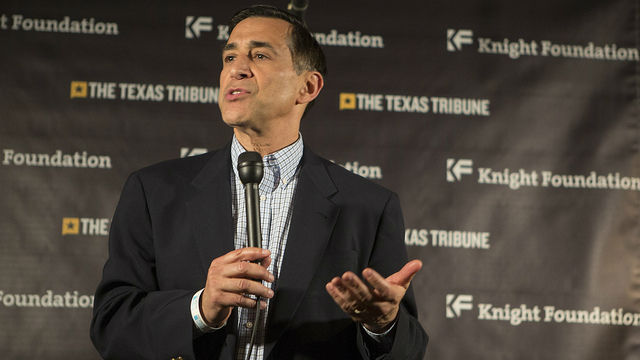
    WASHINGTON (TIP): A bill backing key changes in the H-1B visa program that allows skilled workers from countries like India to fill high-tech jobs in the U.S. has been re-introduced in Congress by two lawmakers who claim that it will help crack down on abuse of the work visa.

    The ‘Protect and Grow American Jobs Act,’ which makes important changes to the eligibility requirements for H-1B visa exemptions, was re-introduced Jan. 4 by Republican Darrell Issa and Scott Peters -both from California.

    The bill, among other things, increases the minimum salary of an H-1B visa holder to $100,000 per annum and eliminates the master’s degree exemption.

    The legislation, the lawmakers argued, will help crack down on abuse and ensure that these jobs remain available for the best and brightest talent from around the world.

    The bill comes after a number of companies – Disney, SoCal Edison and others – came under fire for abusing the H-1B visa program to replace American workers with foreign workers.

    “In order for America to lead again, we need to ensure we can retain the world’s best and brightest talent. At the same time, we also need to make sure programs are not abused to allow companies to outsource and hire cheap foreign labor from abroad to replace American workers,” Issa said.

    “The legislation we’re introducing today does both. It will ensure that our valuable high-skilled immigration spots are used by companies when the positions cannot be filled by the existing workforce,” Issa said.

    By raising the salary to a level more in-line with the average American salary for these positions, it would help cut down on abuse by removing the profit incentive and ensuring these positions remain available for companies who truly need them, a media release said.

    “Curbing abuse of the H-1B system will protect American jobs and help ensure that visas are available for innovators who need them to maintain a competitive workforce,” Peters said. By raising the salary to a level more in-line with the average American salary for these positions, it would help cut down on abuse by removing the profit incentive and ensuring these positions remain available for companies who truly need them, a media release said.

    “This bipartisan bill makes one of the much-needed updates to our high-skilled visa system to level the playing field and help prevent companies from taking advantage of the system to offshore jobs,” the congressman said.

    The two lawmakers claimed that the legislation would cut down on abuse by eliminating the master’s degree exemption, which has become abused as foreign workers seeking H-1B visas have increasingly sought and obtained low-quality certificates to meet the requirements for an exemption just to qualify for an H-1B, instead of keeping the positions open for truly high-skilled positions that companies cannot fill domestically.

    The bill had faced opposition last year in Congress.

    Reshaping immigration is a central tenet of President-elect Donald Trump’s push for companies to invest and hire more in the U.S.

    Trump has listed immigration reform among five executive actions he plans to take on his first day in office. They include asking the Department of Labor to investigate “all abuses of the visa programs that undercut the American worker.”

  • India Highest Recipient Of H-1B Visas despite Fee Hike

    India Highest Recipient Of H-1B Visas despite Fee Hike

    Despite a hefty hike in fees of US H-1B and L-1 visas, there has been no drop in number of applications from India and the country continues to be the highest recipient of H-1B visas, the highest US official in Washington dealing with international visa issues said on Tuesday, August 23.

    “Indian citizens receive almost 70 percent of all the H-1B visas issued worldwide,” Michele Bond, US Assistant Secretary of State for Consular Affairs, said during a media interaction.

    “Overwhelmingly, Indian applicants are the ones who are successful in qualifying for these visas,” she said.

    As for L-1 visas, she said that Indian citizens received around 30 percent of all such visas issued.

    The US doubled the visa fees to $4,000 for H-1B and to $4,500 for L-1 at the end of last year.

    Indian IT bellwethers have most of their employees working on site holding H-1B visas.

    Ms Bond said that in US fiscal year 2015 (October 1, 2014 to September 30, 2015), more than 110,000 H-1B visas were issued to Indian citizens.

    “This is a priority for us because we are part of a bilateral India and US effort to grow their economic and commercial ties,” she said.

    Asked if there has been any move to revisit the issue of hike in visa fees, she said: “These specific visas where the fees changed — the H and L visas — we have seen no drop in the number of applications for those visas, no lessening of interest in obtaining those visas. It was a legislative change, so we were implementing that law.”

    Ms Bond came to India to attend the annual bilateral consular dialogue that was held in New Delhi on Monday during which issues like facilitating tourism and business and other travel between the two countries, visa assessing, protection of US citizens in India, transparent international adoption, and preventing international parental child abduction cases were discussed.

    While she led the US delegation, P. Kumaran, Joint Secretary (Consular, Passport, Visa) in the Ministry of External Affairs, headed the Indian side.

  • Rep. Darrell Issa Introduces Bipartisan Bill to Thwart #H-1B Abuse

    Rep. Darrell Issa Introduces Bipartisan Bill to Thwart #H-1B Abuse

    With the topic of U.S. jobs filled by foreign workers fanning the heat of the presidential campaign, Rep. Darrell Issa has introduced bipartisan legislation designed to close loopholes in the H1-B temporary visa program to ensure that only the most highly skilled foreign applicants can work in the United States.

    The new House bill that would restrict the controversial visa program for highly skilled overseas employees, specially from the Technology (IT) sector.

    The “Protect and Grow American Jobs Act” bill, H.R. 5801, led by Issa, was introduced with support from the entire San Diego congressional delegation, industry stakeholders and immigration policy leaders, including Congressman Lamar Smith, R-Texas, according to a statement released by Issa’s office.

    U.S. Rep. Darrell Issa is proposing to change certain exemptions that allow companies to hire more foreign workers when qualified U.S. candidates are not available.

    “First and foremost, this bill is about protecting American jobs,” Issa said in a statement.

    The program ensures American companies can attract the best talent worldwide, he said. “Unfortunately, in recent years, this important program has become abused and exploited as a loophole for companies to replace American workers with cheaper labor from overseas,” he said.

    “The bill we’ve put forward is simple, bipartisan and will go a long way to fixing one of the many problems with our broken immigration system,” he added.

    Issa pointed to what he called abuses by Southern California Edison, the Rosemead-based utility, one of many U.S. companies hiring foreign workers under the H-1B program.

    Last year, federal officials investigated two outsourcing firms used by the company to hire foreign workers and found no wrongdoing. The company’s hiring practices came under scrutiny in 2014, after Edison announced it would lay off hundreds of workers, including information technology employees. Critics charged some of those workers were replaced by foreign hires.

    Issa’s bill seeks to change certain exemptions to a cap on the visas as they apply to employers with more than 15 percent of their employees on H-1B visas.

    The employers are required to attest they are unable to fill their positions with qualified U.S. workers when they seek more of the H-1B visas.

    But companies can bypass the “attestation” requirement if the foreign workers has a master’s degree or higher, or is paid more than $60,000 per year.

    Issa proposes doing away with the master’s degree exemption, and raising the salary cap from $60,000 to $100,000, thus making it harder for companies to add to their H-1B employees.

    A large share of H1-B visas go to workers from India. Shikha Bhatnagar, director of the South Asian Network in Artesia, opposes the bill and argues there’s a demand for foreign workers.

    “It is my impression that there is a need for bringing in qualified tech professionals from overseas,” she said.

    Some H-1B visa critics don’t think the bill goes far enough. John Miano, co-author of a book that takes aim at the program, said lawmakers don’t want to impose too many restrictions on the visas.

    “There is too much money being made here,” said Miano. “There is a chain of people making money off replacing Americans with foreign workers.”

    Miano said since the exemptions in question apply only to companies with a share of H-1B workers above 15 percent, the impact of the bill if it passes would be limited.

    The federal government limits the number of H-1B visas to 65,000 each fiscal year. But another 20,000 can be exempted from the cap if the foreigners hold a U.S. master’s degree or higher.

    Colleges and universities, related nonprofits and government research organizations can also petition for exemptions from the 65,000 limit when hiring H-1B employees.

    Attempts to reform the H-1B program have been pushed by both Republicans and Democrats who argue that the visas allow companies to pay lower wages to foreign workers while displacing U.S. workers.

    Issa’s bill, which would be taken up by the GOP-controlled House, has seven co-sponsors, including four Democrats.

  • Bill Introduced to Block Indian Firms from Hiring H-1B, L-1 Visa Workers

    Bill Introduced to Block Indian Firms from Hiring H-1B, L-1 Visa Workers

    WASHINGTON — A bipartisan group of two U.S. lawmakers has introduced in the House of Representatives a legislation, which if passed by Congress would prevent Indian companies from hiring IT professionals on H-1B and L-1 work visas.

    Since the revenue model of the majority of big Indian and U.S. IT companies is heavily dependent on H-1B and L-1 visas in the U.S., such a bill is likely to have a major impact, if not sound a death knell, on their business.

    The “H-1B and L-1 Visa Reform Act of 2016” introduced by Reps. Bill Pascrell, D-N.J., and Dana Rohrabacher, R-Calif., would prohibit companies from hiring H-1B employees if they employ more than 50 people and more than 50 percent of their employees are H-1B and L-1 visa holders.

    Before the bill is signed into a law by President Barack Obama, it needs to be passed by the Senate, wherein it has not been tabled so far. Notably, the two sponsors of the bill come from the two American states that have the maximum concentration of Indian Americans.

    “America is producing many skilled, high-tech professionals with advanced degrees and no jobs. By ‘in-sourcing’ and exploiting foreign workers, some businesses are abusing the visa programs and undercutting our workforce to reap the rewards,” Pascrell said. “Without the critical reforms our bill proposes, American workers will continue to be unfairly displaced and visa workers will continue to be mistreated — both of which are unacceptable.”

    Noting the foreign outsourcing companies are the top users of the H-1B and L-1 visa programs, a media statement issued by the congressman’s office said over the years a number of concerns have been raised about how certain companies have been using these visa programs, including a 2011 report from the Government Accountability Office calling for reform.

    Pascrell and Rohrabacher had introduced a similar version of this bill in 2010, which could not gain enough support in Congress.

    The lawmakers said the H-1B and L-1 Visa Reform Act of 2016 would close loopholes in the H-1B and L-1 visa programs, reduce fraud and abuse, provide protections for American workers and visa holders, require more transparency in the recruitment of foreign workers and increase penalties on those who violate the law.

    That would require employers to make a good faith effort to recruit and hire American workers before bringing in visa workers, and prohibit employers from replacing American workers or giving preference to visa holders when they are filling open positions, they said.

    It would provide more authority to the departments of Homeland Security and Labor to investigate fraud and abuse in the H-1B and L-1 programs.

    Modifying existing H-1B wage requirements and established wage requirements for L-1 workers, the bill would provide visa holders with a list of rights before they enter the U.S. so that they are better protected against mistreatment or underpayment of wages.

    The American Federation of Labor and Congress of Industrial Organizations and the Institute of Electrical and Electronics Engineers have endorsed the bill.

    “We applaud (the) long-term commitment to addressing the glaring gaps in protections in our current skilled visa programs,” AFL-CIO government affairs department director William Samuel wrote in support of the bill. “These loopholes have resulted in the mistreatment of H-1B workers and U.S. workers alike, and have led to the egregious displacement scandals that continue to make headlines and discredit these programs.”

    Added IEEE president Peter Eckstein, “It is more than clear that the H-1B and L-1 visa programs are being used by major companies across our economy to hire cheap, disposable workers in place of their American employees. Reports of Americans being fired and replaced by non-Americans, who will never be invited to become Americans, can no longer be dismissed as mere ‘anecdotes.’ Rather, outsourcing companies dominate the H-1B and L-1 programs, annually costing America tens of thousands of good, middle-class jobs,” he added.

  • India continues to get more H-1B visas despite fee hike: Verma

    India continues to get more H-1B visas despite fee hike: Verma

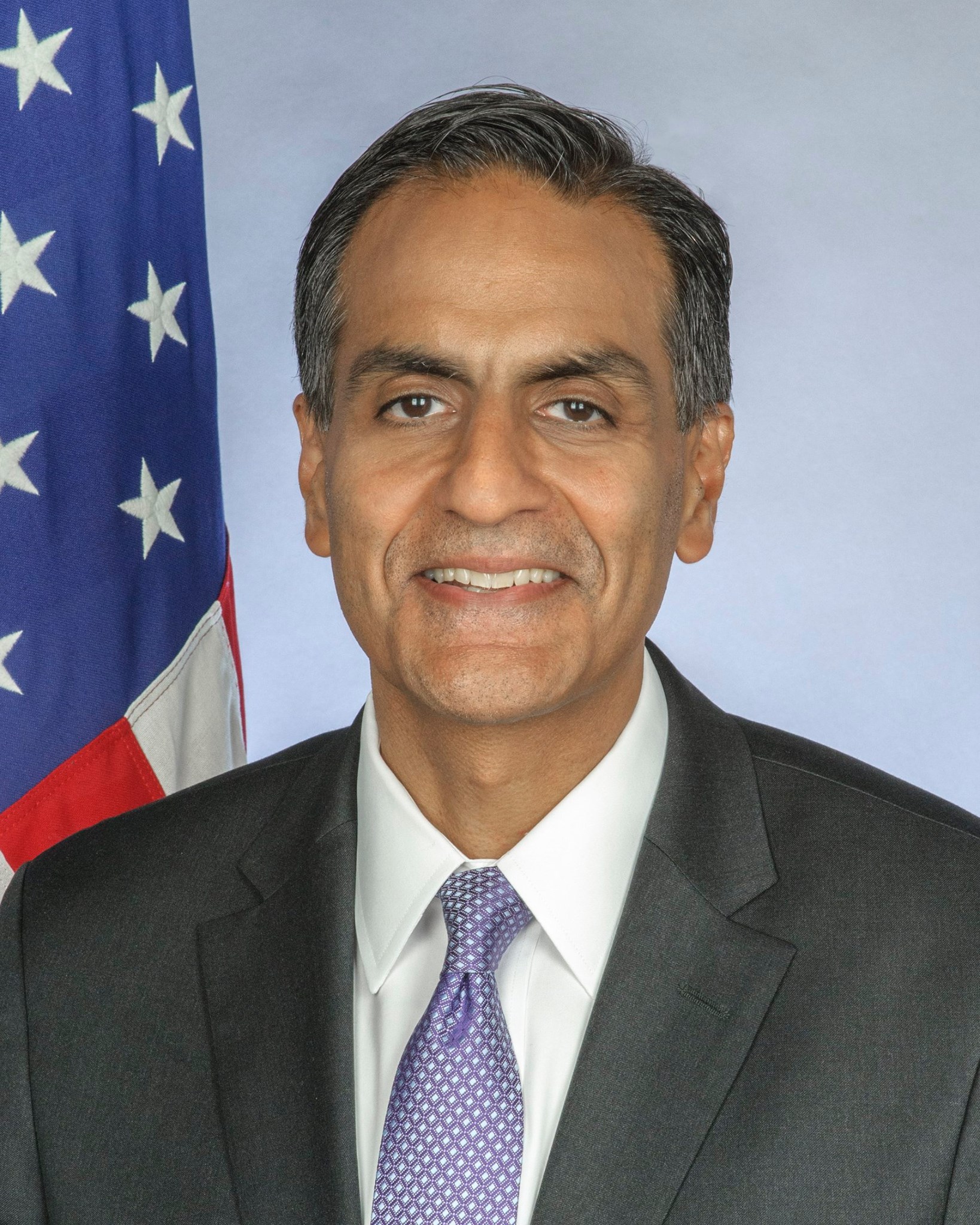
    NEW YORK (TIP): India continues to get the “lion’s share” of the H-1B visas from the US government despite the fee hike, US Ambassador to India Richard Verma.

    “India continues to receive the lion’s share of H-1B and L1 and even after the fee increase, they continue to get 70 per cent of those H-1B visas,” Verma said on the sidelines of ‘The Future is Now: From COP21 to Reality’ conference in New Delhi.

    “We understand the concern about the fee hike. I think there is an ongoing conversation. We also know this is an important part of travel and commercial enterprise in the US. And again, there is an increase in the number of visas issued, in fact, there is a slight increase,” he added.

    The US, under the 9/11 Health and Compensation Act, has imposed a special fee of USD 4,000 on certain categories of H-1B visas and USD 4,500 on L1 visas.

    Almost all Indian IT companies would be paying between USD 8,000 and USD 10,000 per H-1B visa as per the hike. According to Nasscom, this is expected to have an impact of about USD 400 million annually on India’s technology sector.

    Earlier in his speech, Verma said the ongoing deforestation and poor land management is responsible for nearly a quarter of the world’s greenhouse gas emissions as each day, greenhouse gases emitted by human activities trap the same amount of heat energy as would be released by 400,000 atomic bombs.

    “Climate change is not just an environmental challenge; it is a national security issue. Changes in climate could potentially damage critical infrastructure, create shortages of food and water, and lead to mass migrations and disease outbreaks.

    “Receding ice sheets in the Arctic and the opening of new sea passages raise concerns about maritime security and freedom of navigation,” he said. According to Verma, Prime Minister Narendra Modi’s 175 GW target for renewable energy deployments is among the most ambitious in the world and the US has done a great deal to support this effort.

    Through the US-India Partnership to Advance Clean Energy, or PACE, nearly USD 2.5 billion have been mobilized for clean energy projects in India and another USD 1.4 billion in climate finance for solar projects was announced during the Prime Minister’s visit to the US.

    “India’s success is critical to global success and I firmly believe, clean energy will be one of the biggest growth opportunities in the years ahead. Between now and 2035, investment in the global energy sector is expected to reach nearly USD 17 trillion. That’s more than the entire GDP of China and India combined,” Verma said.

    The US is actively supporting India’s solar targets through the Government of India-led International Solar Alliance and bilateral initiatives, such as rooftop solar cooperation and solar resource mapping, he said.

  • US Lawmakers Propose Change In H-1B Visa Laws To Contest Layoffs: Report

    US Lawmakers Propose Change In H-1B Visa Laws To Contest Layoffs: Report

    New York: Several US lawmakers have proposed revisions to visa laws to include measures allowing former employees to contest their layoffs after a number of American workers lost their jobs to immigrants from countries like India on H-1B and other work visas, a media report said on Sunday.

    The New York Times report said that while corporate executives have been outspoken in defending their labour practices, the American workers who lost jobs to global outsourcing companies have been largely silent.

    “Until recently. Now some of the workers who were displaced are starting to speak out, despite severance agreements prohibiting them from criticising their former employers,” the report said.

    It cited the example of former Abbott Laboratories employee Marco Pena, who was among about 150 technology workers laid off in April by the global healthcare conglomerate.

    Mr Pena and the other laid off employees “handed in their badges and computer passwords, and turned over their work to a company based in India”.

    Mr Pena said he had decided not to sign the agreement that was given to all departing employees, which included a nondisparagement clause. He said his choice cost him at least $10,000 in severance pay.

    The report said leading members of the US Congress from both major parties have questioned the non-disparagement agreements, which are commonly used by corporations but can prohibit ousted workers from raising complaints about what they see as a misuse of temporary visas.

    Lawmakers, including Richard Durbin of Illinois, the second-highest-ranking Senate Democrat, and Jeff Sessions of Alabama, the Republican chairman of the Senate Judiciary Subcommittee on Immigration, have proposed revisions to visa laws to include measures allowing former employees to contest their layoffs.

    “I have heard from workers who are fearful of retaliation,” Senator Richard Blumenthal, Democrat of
    Connecticut, said in the report. “They are told they can say whatever they want, except they can’t say anything negative about being fired.”

    Senator Durbin, who is from Illinois, criticised the layoffs and said Abbott’s non-disparagement clause was “overly broad”.

    Professor Hal Salzman, a labour force expert at Rutgers University, said in the past five years, through loopholes in the rules, tens of thousands of American workers have been replaced by foreigners on H-1B and other temporary visas.

    In March, two Americans Craig Diangelo, 63, and Judy Konopka, 56, laid off in 2014 by a New England power company – Eversource Energy, spoke at a news conference in Hartford even though they had signed non-disparagement agreements.

    They said “most of the 220 people facing dismissal had been required as part of their severance to train Indian immigrants with H-1B and other visas”.

  • H-1B Cap Reached: Majority of Applications by Indian Companies: 250k Applications in 5 Days

    H-1B Cap Reached: Majority of Applications by Indian Companies: 250k Applications in 5 Days

    WASHINGTON (TIP): The US government is believed to have received about 250,000 petitions for H-1B visas – the most sought after American work visas — with a majority of them being from either Indian companies or having huge footprint in India.

    In 2015, about 2,30,000 petitions for H1-B visa were received. This year, the US believes it may have received about 2,50,000 petitions for the most sought-after work visa.

    The US Citizenship and Immigration Services yesterday, April 6 said it has reached the Congressional mandated cap for H-1B visas in the general category and also the 20,000 for those who completed higher education from inside the US in STEM (science, technology, engineering and mathematics) subjects.

    USCIS did not give the number of H-1B petitions it received since April 1, when it started accepting applications for this most coveted visa for the fiscal year 2017 beginning October 1, this year. But, it says the successful petitions would be determined by a computerized draw of lots.

    As of now, below are the H1B cap number for fiscal year 2017. The below numbers are confirmed in press release by USCIS on Mar 16, 2016.

    • Regular H1B Quota: 65,000
    • H1B Master’s Degree Quota (only US Master Degrees): 20,000
    • Out of the above, a total of 6,800 is usually set aside for Singapore and Chile citizens as part of the free trade agreement between them.

    Summary of H1B 2017 Cap Reached News from USCIS

    • Congressionally mandated H1B visa cap for FY 2017 reached as USCIS received enough number of petitions for this fiscal year 2017.
    • USCIS has also received more than 20,000 petitions for the master’s cap.

    H1B 2017 Lottery Details:

    • As there were more petitions received by USCIS than required for the H1B cap, USCIS will conduct a random selection process, aka popularly called as H1B lottery, to pick the necessary cap count of 65,000 petitions for regular quota and 20,000 for master’s quota to fulfill the FY 2017 cap.
    • Lottery will be conducted for US Master’s students quota first and then the unselected petitions will be part of the general group to conduct lottery for the selecting the remaining 65,000 petitions.
    • All the unselected petitions, which are not duplicate will be rejected and return along with the filing fees
    • USCIS will consider all the H1B petitions received during the 5-day filing window from April 1st through April 7th for conducting this lottery.
    • H1B Lottery Date: As there were lot of H1B petitions filed, USCIS at the moment cannot really announce the date of H1B Lottery, as they need to do the initial paperwork for all the petitions so that the lottery can be conducted for the petitions received properly.

    H1B Cap Exempt Petitions:

    • USCIS will NOT include the cap-exempt petitions, aka who already have filed earlier and counted towards H1B cap, in the lottery selection process.
    • USCIS will continue to accept all the cap-exempt petitions that are filed with USCIS that fall under the below categories
    • H1B transfers, H1B extensions
    • H1B petitions for changes in employment terms
    • Second H1B petition to work concurrently for those who have been part of cap.
  • STEM F-1 visa students can work for 3 years under OPT – From May 10, 2016: it’s official

    STEM F-1 visa students can work for 3 years under OPT – From May 10, 2016: it’s official

    NEW YORK (TIP): The much anticipated new rule for F-1 OPT STEM extension has been released for public inspection.

    On March 9, 2016, U.S. Department of Homeland Security (DHS) released an advance copy of the final rule pertaining to optional practical training (OPT) for certain students with degrees in science, technology, engineering, or mathematics (STEM).

    The official version of the final rule is scheduled to be published in the Federal Register on March 11, 2016.

    The new rule will permit employers to retain the talents of certain individuals currently dependent on an F-1 nonimmigrant student visa for a longer period.

    USCIS will begin accepting applications under this provision on May 10, 2016. Prior to that date, USCIS will continue to accept applications per the existing 17-month STEM OPT procedures.

    Here is a quick overview:

    F-1 visa students who are enrolled in the STEM (Science, Technology, Engineering, Math) fields of study from accredited educational institutions will be allowed, beginning from May 10, 2016, to work for as long as three years under the new Optional Practical Training (OPT) regulations. The 17-month STEM OPT regulations remain in force through May 9, 2016.

    The Department of Homeland Security released its final rule in this matter, which will be published in the Federal Register Friday, March 11.

    Beginning on May 10, 2016, USCIS will issue RFEs to students whose applications are still pending on that date.

    The RFEs will allow these students to effectively amend their application to demonstrate eligibility for 24-month extensions without incurring an additional fee or having to refile the Application for Employment Authorization. Specifically, USCIS will issue RFEs requesting documentation that will establish that the student is eligible for a 24-month STEM OPT extension, including a Form I-20 Certificate of Eligibility endorsed on or after May 10, 2016, indicating that the designated school official (DSO) recommends the student for a 24-month STEM OPT extension.

    A student may file for a STEM OPT extension only if the student is in a valid period of post-completion OPT at the time of filing.

    Any 17-month STEM OPT EAD that is issued before May 10, 2016 will remain valid until the EAD expires or is terminated or revoked.

    As a transitional measure, starting on May 10, 2016, certain students with such EADs will have a limited window in which to apply for an additional 7 months of OPT, effectively enabling them to benefit from a 24-month period of STEM OPT.

    The STEM OPT student must properly file an Application for Employment Authorization with USCIS, along with applicable fees and supporting documentation, on or before August 8, 2016, and within 60 days of the date the DSO enters the recommendation for the 24-month STEM OPT extension into the student’s SEVIS record.

    DHS believes that the 90-day window for filing such applications provides sufficient time for students to submit a required Training Plan, obtain the necessary Form I-20 Certificate of Eligibility and recommendation from the student’s DSO, and fulfill other requirements for the 24-month extension.

    The student must have at least 150 calendar days remaining prior to the expiration of the 17-month STEM OPT EAD at the time the Application for Employment Authorization is filed.

    This 150-day period guarantees that a student who obtains an additional 7-month extension will have at least 1 year of practical training under the enhancements introduced in this rule, including site visits, reporting requirements, and statement and evaluation of goals and objectives. For students who choose to seek an additional 7-month extension, the new enhancements apply upon the proper filing of the Application for Employment Authorization requesting the 7-month extension.

    What Employers Need to Know About the New Rule

    This new regulation includes the following major provisions:

    1. increases the STEM OPT extension period from 17 months to 24 months;
    2. automatically extends work authorization if students properly file a STEM OPT extension;
    3. permits students currently approved for a 17-month extension of work authorization to apply for the balance of the new 24-month extension if they meet certain requirements pertaining to timing of their applications;
    4. allows students enrolled in a subsequent STEM degree program at a higher level to become eligible for an additional 24-month STEM OPT extension upon completion of the subsequent, higher level program;
    5. permits eligibility for the 24-month STEM OPT extension under the new rule to be based on a previously obtained STEM degree (with certain limitations);
    6. provides clearer definitions of STEM fields of study within the Department of Education categories;
    7. requires students and employers to submit a formal training plan (i.e., learning objectives for the student) and certain employer attestations to protect the U.S. workforce-both of which the student and employer must submit on Form I-983 Training Plan for STEM OPT Students (to be released by USCIS);
    8. adds new reporting requirements for students and their employers, including confirmation of the student’s physical residence and employment status every six months, regular evaluations regarding the student’s progress with the training plan, and immediate notification regarding termination of the student’s employment; and
    9. provides for DHS site visits to employer locations in which STEM OPT students are employed. The DHS will generally give advance notice of such visits but may also conduct an unannounced visit if triggered by a complaint or other evidence of violation of the regulations.

    In addition, the updated rule retains other original provisions from the 2008 interim rule, such as: E-Verify and reporting requirements for STEM OPT employers; and a cap-gap extension for F-1 nonimmigrants with timely filed H-1B cap-subject petitions requesting change of status.

    Mentoring and Training Programs for OPT Participants

    One of the most notable changes in the new rule is the requirement for employer implementation of formal mentoring and training programs for OPT participants. Employers must now create a mentoring and training plan, which is signed by the employer and the student as a prerequisite to obtaining the STEM extension period; this plan must be submitted on USCIS’s new Form I-983. The plan must describe the field in which the employee will receive training; list the name, title, and contact information of a designated supervisor within the company; and describe in detail the following parameters:

    • how the proposed work assignment is directly related to the student’s degree;
    • a list of the goals and objectives of the program, including a detailed explanation on how the goals will be achieved;
    • a list of the supervisor’s qualifications to provide training and how often the supervisor will interact with the student to further training;
    • a list of other employees who will supervise or train the student and their respective qualifications; and
    • the methodology for measuring the student’s acquisition of the required skills and knowledge for the position.

    Special Requirements for Current Holders of 17-Month STEM OPT Seeking 7-Month Extension

    As a transitional measure, starting on May 10, 2016, certain students with the 17-month Employment Authorization Documents (EAD) will have a limited window in which to apply for the additional 7 months of OPT to benefit from the full 24-month STEM OPT period. In order to qualify for the additional 7 months of OPT, these students must satisfy the following requirements:

    • The student must meet all requirements for the new 24-month STEM OPT extension, including but not limited to submission of the required training plan to the university on the new Form I-983. The student must also obtain the necessary recommendation for the additional 7-month STEM OPT extension from the university’s Designated School Official (DSO).
    • The student must file Form I-765 Application for Employment Authorization with USCIS on or before August 8, 2016 and within 60 days of the date that the DSO updated the SEVIS record.
    • The student must have at least 150 calendar days remaining prior to the expiration of the 17-month STEM OPT EAD at the time Form I- 765 is filed. The purpose of this 150-day period is to ensure that the student will have at least one year of practical training under the enhancements introduced in this rule, including site visits, reporting requirements, and a statement and evaluation of goals and objectives.

    The new rule also expands the amount of time a student may be unemployed while in OPT status. Students may not be unemployed for an aggregate of more than 90 days during the initial OPT period. Under the new rule, students granted a 24-month OPT extension may not be unemployed for an aggregate of more than 150 days (which, prior to the new rule, was 120 days) during the total OPT period (i.e., students may not be unemployed for more than 150 days for the 12 months of initial OPT plus the 24-month STEM extension period).

    STEM OPT Extension Events Timeline

    Aug 12, 2015 – Federal Court Vacates STEM OPT Extension Rule
    Sep 11, 2015 – White House Petition Reaches 100,000 Signatures
    Oct 2, 2015 – Rule Making Process (see below the timeline)
    Dec 15, 2015 – Validity of current 17 Months STEM OPT extension under Review
    Dec 22, 2015 – DHS asks the federal county for deadline extension till May 10, 2016
    Dec 24, 2015 – Court gave a deadline of Jan 11, 2016 for Wash Teach to respond to DHS.
    Jan 11, 2016 – Wash Tech replied asking the court to not grant the extension.
    Jan 15, 2016 – DHS responds to WashTech.
    Jan 19, 2016 – Waiting for court’s decision.
    Jan 19, 2016 – Judge Orders Hearing at 3.00 PM EST on Jan 21. 2016
    Jan 21, 2016 – There’s no decision from the Judge after the Hearing.
    Jan 23, 2016 – Judge’s Extended the Deadline. 27 Feb 5, 2016 – DHS Submits Final Rule to OMB.
    Mar 02, 2016 – OMB clears the rule.
    Mar 9, 2016 – STEM OPT Rule Text Published 30 Mar 10, 2016 – Rule Published to Federal Register

  • India takes US to WTO over visa fee hike for H-1B, L-1 visas, limited quotas

    India takes US to WTO over visa fee hike for H-1B, L-1 visas, limited quotas

    NEW YORK (TIP): India has filed a complaint in the World Trade Organization (WTO) against the US decision to impose high fees on temporary working visas, like H-1B and L-1 visa, a move that makes Indian IT companies less competitive in that market.

    In the complaint, India has notified the WTO that “it has initiated a WTO dispute proceeding against the US regarding measures imposing increased fees on certain applicants for L-1 and H-1B categories of non-immigrant temporary working visas into the US, and measures relating to numerical commitments for H-1B visas,” the WTO said in a statement. India has time and again raised serious concerns over the issue saying the move would impact Indian IT professionals.

    The Geneva-based body said Friday that India has notified it has started dispute proceedings alleging the U.S. measures are not consistent with Washington’s commitments to accept services from other countries.

    The statement said that according to India, the US’ measure “appear to be inconsistent” with the global norms. According to India, it said, the current measures appear to be “inconsistent” with the terms, limitations and conditions agreed to and specified by the US in its commitments under the GATS (General Agreement on Trade in Services).

    In its request for consultation, India alleges the U.S. had increased fees for temporary visas in December, officials said. It argues that as a result, some Indians receive unfair treatment compared with Americans in the United States in providing similar services in sectors like computer services.

    A spokesperson of the US trade relations, Andrew Bate, has confirmed that they have received the request for consultation from WTO.

    “We are confident that the United States’ visa program, which was recently updated on a bipartisan basis by Congress, is fully consistent with our WTO obligations,” he said.

    The US had recently doubled the fees for certain categories of H-1B and L1 visas to$4,000 and $4,500, respectively. H-1B and L-1 visas are temporary work visas for skilled professionals. India is the largest user of H- 1B visas (67.4 per cent of the total 161,369 H1B visas issued in FY14 went to Indians) and is also among the largest users of L-1 visas (Indians received 28.2 percent of the 71,513 L1 visas issued in FY14).

    Andrew Bates, spokesperson for the U.S. trade representative, confirmed the U.S. had received the request for consultations.

    “We are confident that the United States’ visa program, which was recently updated on a bipartisan basis by Congress, is fully consistent with our WTO obligations,” he said.

    The Indian move is unusual at the WTO, where most disputes involve goods, tariffs and restrictions, not services.

    Last summer, the WTO upheld a ruling that India was unfairly blocking imports of U.S. poultry and eggs, which the Obama administration called a major victory that could expand export opportunities for American farmers.

  • NYCEDC And CUNY Launch IN2NYC H1B sponsorship Program For International Entrepreneurs

    NYCEDC And CUNY Launch IN2NYC H1B sponsorship Program For International Entrepreneurs

    Program Will Support 80 Entrepreneurs and Create More Than 700 New Jobs for New Yorkers in First Three Years Alone

    Entrepreneurs Will Be Required to Base Business at CUNY Incubators, Bringing Employment and Education Opportunities to Neighborhoods in Every Borough

    This initiative, termed IN2NYC, is the brainchild of the New York City Economic Development Corporation (NYCEDC), in partnership with CUNY and is one of the first of its kind municipal program in the nation designed to help international entrepreneurs access visas so they can create jobs in the United States.

    IN2NYC will help up to 80 selected entrepreneurs gain access to the visas they need to grow their businesses in New York City, and is projected to create more than 700 jobs for New Yorkers in the first three years alone.

    These 80 Entrepreneurs who would qualify for the H-1B visa will be outside the annual cap of 85,000 H-1B visas issued by the DHS, which now has a lottery system in place. Last year, 233,000 people applied for H-1B visa; with only around 1/3rd of applicants finally getting it. This year, more applications than ever before are expected when filing begins April 1.

    IN2NYC will also serve as a model that can be scaled and expanded at both public and private schools throughout New York City, with the potential to ultimately contribute thousands of jobs to the city’s innovation economy. The program advances the de Blasio administration’s goals of encouraging entrepreneurship and supporting international partnerships to build a diverse and inclusive economy for New Yorkers in every borough.

    IN2NYC will partner selected entrepreneurs with one of seven participating CUNY institutions: Baruch College, City College of New York, LaGuardia Community College, Lehman College, Medgar Evers College, Queens College, and the College of Staten Island. Entrepreneurs will be required to base their businesses in their partner school’s incubator, bringing new services, revenue streams, and employment opportunities to neighborhoods and strengthening their innovation ecosystems. Entrepreneurs must also commit to support the mission of the partner school by contributing to academic research, developing curricula, providing students with internship and employment opportunities, or serving as mentors.

    The program is designed to foster innovation ecosystems and diversify the economy by retaining international talent that has been educated locally, and attract entrepreneurs from abroad who have skills and knowledge that would benefit CUNY students and educators. NYCEDC will begin accepting applications for IN2NYC this spring, with the first group of entrepreneurs expected to be in place by the fall. For more information, go to www.in2.nyc.

    “This is a win for our universities, our working people and our city’s ability to compete on the global stage. We are making sure New York City remains a magnet for the world’s top talent, and putting New Yorkers to work at the technology and engineering firms of tomorrow,” said Mayor Bill de Blasio.

    “The success of our innovation ecosystem is rooted in the diversity and the talent of our people,” said NYCEDC President Maria Torres-Springer. “For too long, we would graduate some of the world’s smartest entrepreneurs, only to send them packing as soon as they got their degree. This ends today. IN2NYC is the first city run program in the US to help international entrepreneurs access the visas they need to grow businesses, create jobs, and cultivate the next generation of talented New Yorkers. No matter our national origins, we’ve got to be One New York, innovating together.”

    “New York City has created an innovative pathway for the next generation of international entrepreneurs to launch their businesses right here in NYC,” said Penny Abeywardena, Mayor’s Office for International Affairs Commissioner. “Not only does the IN2NYC program encourage entrepreneurship, and builds and strengthens New York City’s international partnerships, but the program also directly benefits CUNY students by training them on how to launch their own businesses. IN2NYC is good for the international entrepreneurs, good for the New York City neighborhoods in which they will grow their startups and create jobs, and good for the CUNY students who will be mentored by these innovators. Moreover, it reinforces New York City’s role as a global hub for innovation.”

    “The program underscores how immigrants are integral to the economic, social, and cultural life of our City. New York City reaps countless benefits when immigrant entrepreneurs have opportunities to build their businesses. Through the IN2NYC program, the de Blasio administration demonstrates again how building a welcoming and inclusive city benefits all New Yorkers,” said Commissioner Nisha Agarwal of the Mayor’s Office of Immigrant Affairs.

    “Simply put, IN2NYC is a game-changer for NYC in the global competition to attract world-class tech talent and the businesses of tomorrow,” said Chief Technology Officer for the City of New York Minerva Tantoco. “IN2NYC builds on the Big Apple’s proud tradition of inviting bold and entrepreneurial thinkers to come to NYC and invent the future. IN2NYC supercharges the de Blasio administration’s goal of making New York the most tech-friendly and innovative city in the world.”

  • Silicon Valley Wants ‘Dramatic Expansion’ Of H1-B Visa: Top American CEO

    Silicon Valley Wants ‘Dramatic Expansion’ Of H1-B Visa: Top American CEO

    WASHINGTON:  With IT firms struggling to find quality and right number of professionals, a top American CEO has called for a “dramatic expansion” of the H-1B visa scheme popular among Indian tech firms to meet the growing demand.

    “The entire Silicon Valley believes that the H-1B visa policy needs to be dramatically expanded,” Bill Coleman CEO of Veritas told news agency PTI in an interview.

    “We can’t hire enough good people. They are just not available here. The salaries here are going through the roof, because everybody is competing to hire from everybody else,” he said.

    Mr Coleman, a former chairman of Silicon Valley Leadership Group, is involved with the Silicon Valley for about 40 years.

    Early this month, he became the CEO of Veritas, which has re-emerged as a newly-independent company after its purchase by The Carlyle Group for USD 7.4 billion on January 29.

    Soon headed to India, where Veritas has about 1,700 people working for it with Pune being a major centre, Mr Coleman said he plans to migrate some of his facilities to India from Florida.

    “That is a priority,” he said. The H1B visa is designed to allow US employers to recruit and employ foreign professionals in speciality occupations within the US. But in a blow to Indian IT firms, the US has imposed an additional fee of up to USD 4,500 for certain categories of H-1B visa.

    Amidst revival of the US economy wherein the unemployment rate has hit below 5 per cent, Mr Coleman referred to the huge shortage of quality IT professionals the Silicon Valley faces.

    “In Silicon Valley you go to Apple, Facebook or Google, open their websites, you will find thousands of open jobs. One of the biggest problem here is that everybody is trying to hire from everybody else. As they can’t find enough good candidates what they are doing is pushing the salaries through the moon,” he said.

    Referring to a conversation he recently had with Alphabet chairman Eric Schmidt, Mr Coleman described a “crazy” incident when the hiring-salary of a data scientist skyrocketed.

    “I know this is a very very extreme example. I was talking to Eric Smith a while ago. He was telling me that they had a really really top machine learning data scientist who they were trying to recruit. They ended up getting him, but with a USD 10 million sign on bonus. That’s crazy,” he said.

    Mr Coleman said the number of H-1B visas should be based on market demand and the programme’s expansion is one of the top priorities for the Silicon Valley.

  • STEM OPT EXTN Regulation | Deadline Extended

    STEM OPT EXTN Regulation | Deadline Extended

    For the past 5 months, thousands of recent foreign science, technology, engineering, and mathematics (STEM) graduates of U.S. universities who hold jobs in the United States under a program known as Optional Practical Training (OPT) have worried that their permission to remain in the country would expire on 12 February because of an August 2015 ruling from U.S. District Judge Ellen Segal Huvelle.

    On 23 January, U.S. District Judge Ellen Segal Huvelle granted the Department of Homeland Security’s request that the ruling be stayed for an additional 90 days, which the agency argued would give it time to implement a new proposed rule for the program and prevent disruption or hardship for participating students and employers.

    “The significance of that hardship cannot be overstated,” Judge Huvelle wrote. “According to DHS, there are approximately 23,000 STEM OPT participants, 2,300 dependents of STEM OPT participants, 8,000 pending applications for STEM OPT extensions and 434,000 foreign students who might be eligible to apply for STEM OPT authorizations … If the stay is not extended, many of these people would be adversely affected, either by losing their existing work authorization, not being able to apply for the OPT extension or not knowing whether they will be able to benefit from the extension in the future. And of course, the U.S. tech sector will lose employees, and U.S. educational institutions could conceivably become less attractive to foreign students.”

    [yuzo_related]

    • On February 5, 2016, DHS sent the final STEM OPT rule to OMB for review. This is the last phase of review before the rule is published in the Federal Register.
    • DHS had previously announced an intention to have an effective date 60 days after the Federal Register publication date. The final rule would have to be published by about March 10, 2016 to accommodate the May 10, 2016 vacatur date of the current rule.
    • On January 23, 2016, the District Court granted DHS’s motion to extend the stay of the vacatur of the STEM OPT rule from February 12, 2016 until May 10, 2016.
    • On January 14, 2016, DHS filed a response brief to WashTech’s January 11, 2016 response, arguing that the district court does have jurisdiction to extend its stay of vacatur through May 10, 2016, and asking the court to reject WashTech’s opposition brief. In addition, DHS made the following important request in its brief: “”In the event the Court denies DHS’s Rule 60(b)(6) motion, the agency respectfully requests that the Court clarify that its vacatur will not affect the legal status of F-1 students holding unexpired employment authorization documents (“EADs”) granted under the 2008 STEM OPT Extension rule, and their dependents. Such an order of clarification is appropriate in light of the interests of many F-1 students, their schools, and their employers, and would help DHS ensure that it is in full compliance with the Court’s order. Moreover, it will assist interested parties greatly as this case continues to move forward.” DHS also asked the district court to issue a decision on its motion to extend the vacatur date “as expeditiously as possible.
    • On January 11, 2016, the Washington Alliance of Technology Workers (WashTech) filed a response to DHS’s December 22, 2015 motion, arguing that the District Court should not grant the extension until May 10, 2016 that DHS requested in its motion.
    • On December 24, 2015, the court granted a WashTech motion for an extension of time to respond to DHS’s December 22, 2015 motion. The court granted WashTech until January 11, 2016 to respond to the DHS motion.
    • On December 22, 2015, after receiving over 50,000 comments on the proposed rule, DHS moved the WashTech court to extend the stay on the vacatur of the current STEM OPT rule from February 12, 2016 until May 10, 2016, to provide for “approximately 30 days to complete the rulemaking and 60 days for a delayed-effective-date period, under which DHS would train agency personnel and coordinate with the regulated community.” Read the December 22, 2015 DHS motion to extend the stay on the court’s original vacatur order. If the court does not grant DHS’ motion to extend the stay of vacatur, the current rule would expire effective February 13, 2016, and DHS suggested that it may have to consider options like returning any pending STEM OPT applications and requiring that applicants refile after the effective date of a final rule.
    • On October 19, 2015, the Department of Homeland Security published the much-anticipated proposed STEM OPT rule. The public will have 30 days (until November 18) to comment on the proposed rule. Many of NAFSA’s longstanding priorities are addressed, but there are also some additional obligations.
    • On August 18, 2015, the Washington Alliance of Technology Workers (WashTech) filed a notice of appeal with the United States Court of Appeals for the District of Columbia Circuit [Civil Action No. 1:14-cv-529]. It is likely that WashTech will challenge the District Court’s August 12, 2015 determination that establishing the STEM OPT benefit in 2008 was within the scope of DHS’s regulatory authority.
    • In an August 12, 2015 opinion and order, the United States District Court for the District of Columbia found that DHS’ failure to provide notice and invite public comment at the time of the 2008 STEM OPT extension rule was “a serious procedural deficiency” that merits “vacatur” (i.e., rescinding, setting aside, annulling) the STEM OPT extension. It is important to note that the court found that establishing the STEM OPT benefit itself in 2008 was within the scope of DHS’s regulatory authority, and that the court’s decision to vacate was based on the procedural deficiency only. The judge’s vacatur order specifically references only “the 17-month STEM extension described at 73 Fed. Reg 18,944 (Apr. 8, 2008),” and so it is unclear what impact, if any, the order will have on parts of the 2008 rule other than the 17-month STEM extension. In any case, DHS has been working on publishing a new STEM OPT regulation to cure the procedural defects of the 2008 rule and to address other issues raised with STEM OPT.
    • In a June 8, 2015 letter to DHS Secretary Jeh Johnson, Senator Charles Grassley (R-Iowa) expressed concern “about the Department’s plans to expand the Optional Practical Training (OPT) program,” and urged DHS “to reconsider expanding the program without adding adequate controls and safeguards.” See Senator Grassley’s website for details.

    The OPT program permits foreign students and recent graduates to work in the United States under their existing F-1 student visas rather than requiring a work visa, such as the H-1B, which can be very difficult to obtain. Reporting may appear to suggest that Huvelle’s recent ruling assures that the regulations currently governing the program will remain intact at least until the 10 May deadline, but this is not necessarily so. According to a lawyer familiar with these issues, a “tangle” of motions and appeals concerning OPT are now pending in a pair of federal courts in Washington, D.C. The situation, therefore, has actually become more rather than less confused and uncertain.

  • 14,000 Indians Overstayed In US In 2015

    14,000 Indians Overstayed In US In 2015

    WASHINGTON:  Over 14,000 of the 8.8 lakh Indians who travelled to the US on visitor or business visa in 2015 overstayed in the country, according to official figures.

    The data provided by the Department of Homeland Security (DHS) said that 14,348 Indians overstayed in the US in 2015.

    In 2014, of the 7.6 lakhs Indians who were supposed to leave the country before the expiry of their B1-B-2 visas, 11,653 of them overstayed in the US, it said.

    Overstaying means a non-immigrant who was lawfully admitted to the US for an authorised period but stayed or remains in the country beyond his or her lawful admission period.

    According to the “Entry/Exit Overstay Report” released by the DHS, in fiscal 2015, of the nearly 45 million non-immigrant visitor admissions through air or sea ports of entry that were expected to depart last year, 527,127 individuals overstayed their admission, for a total overstay rate of 1.17 per cent.

    In other words, 98.83 per cent had left the US on time and abided by the terms of their admission, the report said.

    The report does not include student on F-1 visa or those who arrived on work visas like H-1B.

    In FY 2015, of the nearly 45 million nonimmigrant visitor admissions through air or sea ports of entry that were expected to depart in FY 2015, DHS determined that 527,127 individuals overstayed their admission, for a total overstay rate of 1.17 per cent.

    In other words, 98.83 per cent had left the US on time and abided by the terms of their admission.

    The report breaks the overstay rates down further to provide a better picture of those overstays that remain in the US beyond their period of admission and for whom CBP has no evidence of a departure or transition to another immigration status, DHS said in a statement.

    At the end of FY 2015, the overall Suspected In-Country Overstay number was 482,781 individuals, or 1.07 per cent.

    Due to further continuing departures by individuals in this population, by January 4, 2016, the number of Suspected In-Country overstays for FY 2015 had dropped to 416,500, rendering the Suspected In-Country Overstay rate as 0.9 per cent, it said.

    In its report, DHS said a number of countries with ties to terrorism had significant numbers of nationals still in the US accounted for by the federal government: 1,435 from Pakistan, 681 from Iraq, 564 from Iran, 440 from Syria, 219 from Yemen, 219 from Afghanistan, and 56 from Libya.

  • H-1B, L-1 Visa Fee hiked by upto $4500

    H-1B, L-1 Visa Fee hiked by upto $4500

    WASHINGTON (TIP): The US Congress has imposed a special fee of up to $4,500 on the H-1B and L-1 visas popular among Indian IT companies to fund a 9/11 healthcare act and biometric tracking system.

    Such a move has been made part of the James Zadroga 9/11 Health and Compensation Act which funds health screenings and treatments for 9/11 first responders.

    The bill, named after Detective James Zadroga who died of a respiratory illness in 2006, expired on October 1. Lawmakers are seeking to permanently extend the bill and want to generate necessary funds by imposing a $2,000 additional fee on H-1B visas.

    The bill has been written in such a way that it would impact only Indian companies.

    Congressional leaders, while agreeing on the $1.1 trillion spending bill, yesterday decided to impose a special fee of $4,000 on certain categories of H-1B visas and $4,500 on L-1 visas. The US House of Representatives is slated to vote on the $1.1 trillion spending bill deal later today.

    According to the agreed bill, the new $4,000 fee would apply to companies having at least 50 employees with 50 per cent of their employees on H-1B or L-1 visa. Such companies would have to pay a new fee of $4,000 for H-1B visas and $4,500 for L-1 visas.

    While the specific provisions of the spending bill has no mention of Indian IT companies, the language of the bill has been written in such a way that it would have a big impact on Indian IT companies.

    Though the lawmakers behind the bill described it as a temporary provision, the new H-1B and L-1 visa fee increase is for a period of 10 years as against a previous provision of five years. The previous such provision from 2010 to 2015 of $2,000 for H-1B visas lapsed on September 30.

    In a study released in September this year, NASSCOM, a trade association of Indian IT industry, said Indian IT companies have paid between $70 to $80 million annually for the US Treasury approximately. Given that, the new punitive measure is expected to raise between $1.4 billion and $1.6 billion every year for the next one decade.

    Expecting that this provision would generate more than $1 billion per annum, the bill says that after $1 billion is deposited for 9/11 first responders and the Biometrics Ext account, the rest of the money would be deposited in the general fund of the Treasury.

    Notably, Prime Minister Narendra Modi had raised the issue with US President Barack Obama when the latter telephoned him to thank for his leadership role on achieving the historic agreement on climate change in Paris on December 12.


    It is learnt that the White House did raise its concerns with the Congressional leaders on the impact of such a move to dramatically increase H-1B and L-1 visas fees on India-US relationship. However, the Republican-majority Congress decided to ignore the concerns of the White House and doubled the H-1B and L-1 fees for Indian IT companies.

  • Former-Disney Workers Replaced by H1-B Visa Holders File Complaint

    Former-Disney Workers Replaced by H1-B Visa Holders File Complaint

    WASHINGTON:  Replaced by H-1B visa workers, at least 23 former Disney IT workers have filed a complaint alleging discrimination.

    In a complaint filed before the federal Equal Employment Opportunity Commission, the fired Disney employees alleged that they are victims of national origin discrimination, Computer World reported.

    The report is the first step towards filing a discrimination against the major US Company.

    “These employees are making discrimination claims with the EEO under Title VII of the Civil Rights Act of 1964, citing in part ‘hostile treatment in forcing the Americans to train their replacements’. The claims include discrimination based on national origin and age,” the report said.

    However, Disney spokeswoman Jacquee Wahler asserted that the company complies with all applicable employment laws.

    “We comply with all applicable employment laws. We are expanding our IT department and adding more jobs for US IT workers,” she was quoted as saying.

    “I’m hoping that it signifies that American workers are being brave and standing up and doing something about it,” said Sara Blackwell, the attorney representing these workers.

    In June, Disney had laid off about 250 employees and replaced them with Indians holding H1-B visas.

  • How outsourcing companies are exploiting US H-1B visa program

    How outsourcing companies are exploiting US H-1B visa program

    Many of the visas are given out through a lottery, and a small number of giant global outsourcing companies had flooded the system with applications, significantly increasing their chances of success.

    Congress set up the H-1B program to help US companies hire foreigners with exceptional skills, to fill open jobs and to help their businesses grow. But the program has been failing many US employers who cannot get visas for foreigners with the special skills they need.

    Instead, the outsourcing firms are increasingly dominating the program, federal records show. In recent years, they have obtained many thousands of the visas – which are limited to 85,000 a year – by learning to game the H-1B system without breaking the rules, researchers and lawyers said.

    OUT OF LUCK

    In some years, a US employer could snag one of these coveted visas at almost any time of the year. But recently, with the economy picking up, the outsourcing companies have sent in tens of thousands of visa requests right after the application window opens on April 1. Employers who apply after a week are out of luck.

    “The H-1B program is critical as a way for employers to fill skill gaps and for really talented people to come to the United States,” said Ronil Hira, a professor at Howard University who studies visa programs. “But the outsourcing companies are squeezing out legitimate users of the program,” he said. “The H-1Bs are actually pushing jobs offshore.”

    Those firms have used the visas to bring their employees, mostly from India, for large contracts to take over work at US businesses. And as the share of H-1B visas obtained by outsourcing firms has grown, more Americans say they are being put out of work, or are seeing their jobs moved overseas.

    Of the 20 companies that received the most H-1B visas in 2014, 13 were global outsourcing operators, according to an analysis of federal records by Hira. The top 20 companies took nearly 40 per cent of the visas available – about 32,000 – while more than 10,000 other employers received far fewer visas each. And about half of the applications in 2014 were rejected entirely because the quota had been met.

    The top companies receiving H-1B visas in recent years, Hira found, include Tata Consultancy Services, known as TCS, Infosys and Wipro, all outsourcing giants based in India; Cognizant, with headquarters in New Jersey; and Accenture, a global operation incorporated in Ireland.

    Among the immigration visas offered by the United States, the H-1B program stands out for its peculiar rules. The annual quota includes 65,000 visas for foreign workers applying for the first time, while the remaining 20,000 are for foreign students graduating with advanced degrees from US universities. Each year the period for applications opens on April 1, and they are accepted on a first-come, first-served basis.

    COMPUTER-RUN LOTTERY

    Federal officials allow only one application for each foreign worker. But there is no limit on the number of visas a single company can seek. A company with thousands of employees can submit many applications. By law, if applications quickly exceed the quota, officials turn to a computer-run lottery to select the visa recipients.

    Immigration officials do not acknowledge the outsourcing companies’ advantage and how they have understand the lottery game. Because of the lottery scheme post 2013; they have started putting so many more applications than they need just to improve their winning chances.


  • New bill proposes H1B & L1 visa reforms

    New bill proposes H1B & L1 visa reforms

    BENGALURU: The US is set to pass a bill on immigration with major implications for the Indian IT sector and its employees. The bill seeks to prohibit companies from hiring H-1B employees if they employ more than 50 people in the US and more than 50% of those employees are H-1B and L-1 visa holders.

    49799498.cmsThe Bipartisan legislation, if passed, all U.S. companies looking to hire workers with H-1Bs would be required to first search for a U.S. citizen to fill the position. Companies of more than 50 people in which over half of the workforce in made up of H-1B and L-1 visa holders would be banned from hiring any new workers with H-1Bs. (L-1 visas allow for the relocation of specialized workers to U.S.-based departments of international companies). This move will place severe restrictions on larger Indian IT companies that are the largest users of H-1B visas. Though companies do not disclose the data, it is believed that the large Indian IT companies have more than 50% of their employees on H-1Bs and L-1s.

    The bill was introduced by Republican Iowa senator Chuck Grassley, who is also chairman of the Senate Judiciary Committee, and Democratic Illinois senator Dick Durbin.

    The Wall Street Journal reports that India’s outsourcing firms, and subsequently the country’s economy, have already been facing challenges because of cloud computing. This bill would add to their troubles.

    The Bill also gives the labour department enhanced authority to review, investigate, and audit employer compliance with programme requirements, as well as to penalize fraudulent or abusive conduct. It requires the production of extensive statistical data about the H-1B and L-1 programmes, including wage data, worker education levels, place of employment and gender. “If this Bill is enacted, US companies would be prohibited from hiring foreign workers under the H-1B and L-1 visa categories if at least 50% of their employees have already been employed on such visas. The Bill also gives wide powers to the law enforcement authorities to investigate and penalize for non-compliances,” Shroff said.

  • Republican Candidate Ted Cruz Calls to Suspend H-1B Visa for 6 Months

    Republican Candidate Ted Cruz Calls to Suspend H-1B Visa for 6 Months

    WASHINGTON:  A leading Republican presidential candidate has called for suspending the issuance of H-1B visa for six months to investigate abuses against the most sought work visa by Indian IT professionals.

    “In order to strengthen our immigration system, protect national security and better serve American workers, we must suspend the issuance of all H-1B visas for 180 days to complete a comprehensive investigation and audit of pervasive allegations of abuse of the program,” said Republican presidential candidate Ted Cruz as he rolled out his immigration reform plan.

    “New allegations detail appalling abuses of the H-1B visa program – a program meant to create American jobs and spur economic growth. I will suspend the program for 180 days to investigate abuses,” said Mr Cruz whose popularity ratings in the last few weeks have increased nationwide.

    Interestingly, as a Senator from Texas, Mr Cruz had backed quintupling the number of H-1B visas. Mr Cruz also called for halting increases in legal immigration so long as American unemployment remains unacceptably high.

    “The purpose of legal immigration should be to grow the economy, not to displace American workers. Under no circumstances should legal immigration levels be adjusted upwards so long as work-force participation rates remain below historical averages,” he said.

    Cruz sought to end birthright citizenship. “Birthright citizenship was not intended to legalise the children of people who are breaking the law by entering and staying in the country illegally. I will take steps to pass legislation or a constitutional amendment to end it,” Mr Cruz said.

    In his speech in Orlando, Florida Mr Cruz said if elected as the president he will suspend the H-1B program for 180 days to investigate abuses and enact fundamental reforms of this program to ensure that it protects American workers.

    “A Cruz administration will enforce existing protections for American workers and amend the H-1B visa program to fulfill its original purpose,” he said.

    Calling for creating a “layoff cool-off” period for all H-1B visa applications, he said companies must wait one or two years between laying off a worker and bringing in any H-1B foreign workers to ensure that the program is not used to displace American workers.

    Observing that the recent lack of federal oversight of the H-1B visa program has fueled a cottage industry of diploma mills, he said, foreign academic institutions must meet minimum accreditation standards at least as stringent as those imposed on American universities in order to qualify for the advanced-degree requirement.

    Under his plan, Mr Cruz said companies will provide sworn statements and documentation that detail their efforts to hire Americans before requesting foreign workers through the H-1B visa program.

    Individuals who make false statements in these affidavits will be subject to perjury charges, he said.

  • 2 Silicon Valley companies owned by Indian Americans have been penalised for violating H1B visa rules

    2 Silicon Valley companies owned by Indian Americans have been penalised for violating H1B visa rules

    Scopus Consulting Group and Orian Engineers, two companies based in Silicon Valley and owned by an Indian-American Kishore Kumar have been ordered to pay fines of $103,000 to the federal government. Along with this, the company is required to pay $84,000 in back wages to its employees who are carrying H-1B visas.

    The two companies bring workers from India and other countries on H1B visas to employ them as software engineers for Silicon Valley firms such as eBay, Apple and Cisco Systems.

    During investigations, US Department of Labor Wage and Hour investigators found that the two companies violated the H1B provisions of the Immigration and Nationality Act by misrepresenting the prevailing wage level on the Labor Condition Applications required by the act, an official release said yesterday.Federal Administrative Law Judge Stephen R Henley ordered the two businesses owned by Kishore Kumar to pay 21 workers $84,000 in back wages and $103,000 in fines to the federal government.

    “Some of the country’s most cutting-edge, successful organisations benefit from underpaid H-1B workers,” director for the Wage and Hour Division in San Francisco, Susana Blanco said.

    “H1B workers must be paid local prevailing wages. We will not allow companies to undercut local wages and hurt US workers and businesses who pay their workers fairly,” Blanco said. — PTI