Tag: H-1B

  • Limited H-1B visas may force companies to skip placement season at IITs

    Limited H-1B visas may force companies to skip placement season at IITs

    Facebook may not be coming to the Indian Institutes of Technology (IITs) this year, both for internship and final placement, according to sources from IIT placement cells, reports ET.

    At least five IITs confirmed that the online social networking service, headquartered in Menlo Park, California, was not visiting them this year. Facebook had made about a dozen offers at three of these institutes last year with salaries going upwards of a crore and even touching Rs 2 crore for positions of software engineers in California.

    “Visa is an issue for US based technology companies that hire from India,” said former placement manager at IIT Bombay, Mohak Mehta. The current quota for H1B visas is 65,000 which is exhausted in a matter of days of the annual allocation becoming available at the beginning of April each year. US demand for talent in science, technology, engineering and mathematics (STEM) is estimated to go up to a million by the year 2020.

    “Considering that a million of STEM workers would be needed by the US in some years, they are likely to fall short by almost 50 per cent. India has a good supply of talent in this space, which also includes the young IITians,” said Shivendra Singh, VP, NASSCOM.

    Facebook declined to comment. But sources close to the company said it had visa problems last year too. It was forced to position its IIT hires at the UK for almost a year before getting visas in place for the US.

    “Facebook did not come this year for undergraduate interns at our IIT,” confirmed Atal Ashutosh Agarwal, Vice President, Technology Students’ Gymkhana at IIT Kharagpur. It is the same story at other IITs.


  • F-1 Visa : OPT STEM EXTENSION INCREASE TO 24 months : DHS PROPOSES NEW RULE

    F-1 Visa : OPT STEM EXTENSION INCREASE TO 24 months : DHS PROPOSES NEW RULE

    The Department of Homeland Security (DHS) proposes to amend its F-1 non-immigrant student visa regulations on optional practical training (OPT) for certain students with degrees in science, technology, engineering, or mathematics (STEM) from U.S. institutions of higher education after this rule was vacated by a Federal Court on procedural grounds in August 2015.

    DHS HAS PROPOSED AN EXTENSION OF 24 MONTHS FROM THE EARLIER 17-MONTHS EXTENSION TO THE OFFICE OF MANAGEMENT AND BUDGET (OMB). THE PROPOSED RULE WILL BE SUBJECTED TO THE COMMENT PERIOD ON OR TILL NOVEMBER 18TH, 2015 AS PER THE FEDERAL REGISTER WEBSITE. (After the comment period, the comments will be reviewed and analyzed – OMB will then either recommend changes to the rule or clear the rule for publication – before publishing the final rule)

    This 24-month extension would effectively replace the 17-month STEM OPT extension currently available to certain STEM students.

    As with the current 17-month STEM OPT extension, the proposed rule would authorize STEM OPT extensions only for students employed by employers enrolled in U.S. Citizenship and Immigration Services’ (USCIS’) E-Verify employment eligibility verification program.

    The proposal also includes the “Cap-Gap” relief first introduced in 2008 for any F-1 student with a timely filed H-1B petition and request for change of status.

    This Cap-Gap relief allows such students to automatically extend the duration of F-1 status and any current employment authorization until October 1 of the fiscal year for which such H-1B visa is being requested.

    Source : Federal Register: https://www.federalregister.gov/articles/2015/10/19/2015-26395/improving-and-expanding-training-opportunities-for-f-1-nonimmigrant-students-with-stem-degrees-and

  • WASHTECH DECISION: F1 STEM OPT EXTENSION PROGRAM INVALIDATED

    WASHTECH DECISION: F1 STEM OPT EXTENSION PROGRAM INVALIDATED

    Update: DHS Proposes New STEM OPT Extension Rule | F-1 Visa Update | Complete Update – Click to Read Now – Updated October 12, 2015


    This past week, a Federal District Court decided Washington Alliance of Technology Workers v. DHS. The lawsuit sought to prevent foreign students from having an opportunity to gain  practical experience in the U.S. following their full-time course of study.

    The Court invalidated a 2008 U.S. Department of Homeland Security (DHS) rule which permits an F-1 student to receive up to a seventeen (17) month extension of their Optional Practical Training (OPT) on top of the twelve (12) months previously authorized (for a maximum of twenty-nine months), if their field of study is in a designated as a Science, Technology, Engineering or Math (STEM) field and the employer is registered in the E-Verify Program.

    [vc_row full_width=”” parallax=”” parallax_image=””][vc_column width=”1/1″][td_block_trending_now style=”style2″ tag_slug=”immigration” sort=”popular” limit=”5″][/vc_column][/vc_row]

    The Court’s decision is based on the allegation that DHS did not lawfully issue the 2008 rule because DHS failed to provide the public with notice and an opportunity to comment in advance of issuing it – what is often commonly referred to as the normal “rule-making procedure”. DHS explained, at the time, that the STEM OPT extension was necessary because it would benefit the economy by reducing the disruption to U.S. high-tech employers that occurred when these F-1 STEM-degree graduates reached the end of their twelve-month OPT and their employers could not receive an H-1B classification for them to remain in the U.S. as highly-skilled workers because of the numerical limitations placed on H-1B visa numbers.
    Interestingly, the Court found that the substance of the rule itself was not unreasonable. The Court spoke specifically to the procedure DHS followed to issue the 2008 rule. In addition, the Court invalidated DHS’ later modifications of the rule that expanded the list of designated fields of study. The Court stayed its order until early-2016 to allow DHS to correct its procedural mistake. As many are aware, in November 2014, President Obama announced new policies and regulations to support U.S. high-skilled businesses and workers. Part of that initiative is directed at the development of regulations for notice and comment to expand the degree programs eligible for OPT and to extend the length and use of OPT while “ensuring that OPT employment is consistent with U.S. labor market protections to safeguard the interests of U.S. workers in related fields.”
    The “ripple effect” of the Court’s Order in Washtech is likely to be the impetus of the Administration to issue proposed regulations for notice and comment. The “soon to be issued” proposed regulations will likely be more expansive and will benefit foreign students as well as U.S. employers and all workers.
  • F1 Visa | OPT STEM | Court Says USCIS Rule Allowing 17-month STEM Extension is Revoked

    F1 Visa | OPT STEM | Court Says USCIS Rule Allowing 17-month STEM Extension is Revoked

    Update: DHS Proposes New STEM OPT Extension Rule | F-1 Visa Update | Complete Update – Click to Read Now – Updated October 12, 2015

    U.S. District Judge Ellen Segal Huvelleon (D.C.) on Wednesday, August 12, said the 2008 Department of Homeland Security rule that allows certain F-1 visa students with math and science-related degrees to have an additional 17 months of training in the U.S. is deficient because it wasn’t subjected to public notice and comment, but she allowed it to stay in place temporarily.

    The judge vacated the 2008 rule allowing the 17-month extension, HOWEVER, a stay was put in place until February 12, 2016. DHS will have until then in order to take action regarding the fate of the STEM extension program.

    [vc_row full_width=”” parallax=”” parallax_image=””][vc_column width=”1/1″][td_block_trending_now style=”style2″ tag_slug=”immigration” sort=”popular” limit=”5″][/vc_column][/vc_row]

    STEM extension was created in 2008 to help F-1 students who were not selected in the H-1B lottery by allowing them to continue on OPT until they could try for the H-1B again the following year. The DHS estimated in 2008 that there were about 70,000 F-1 visa students on optional practical training, or OPT, and that one-third had earned degrees in a science, technology, engineering and math, or STEM, field, according to Judge Huvelle. And while the agency had not disclosed the current number of immigrants taking advantage of the extension, she had no doubt that vacating the rule would force “thousands of foreign students with work authorizations to scramble” to leave the country, she added, citing DHS’ opposition brief.“The court sees no way of immediately restoring the pre-2008 status quo without causing substantial hardship for foreign students and a major labor disruption for the technology sector,” the judge said. “As such, the court will order that the 2008 Rule — and its subsequent amendments — be vacated, but it will order that the vacatur be stayed.”Judge Huvelle did, however, disagree with the union’s argument there was not enough evidence to show that Congress was aware of DHS’ interpretation of F-1, saying in light of Congress’ broad delegation of authority to the agency to regulate the duration of a nonimmigrant’s stay and Congress’ acquiescence in DHS’ long-standing reading of F-1, the DHS’ interpretation was not unreasonable.
    The decision in Washington Alliance of Technology Workers v. U.S. Department of Homeland Security was based on the fact that DHS did not go through the usual notice and comment period required for new regulations.
    The judge determined that the situation for high-tech employers was not urgent enough to bypass the notice and comment requirement for the regulatory process. The judge further indicated that the deficiency in the process was serious enough to require the rule to be vacated (i.e. cancelled).
    Since it is now August, there should be sufficient time for DHS to propose the same rule again and provide the proper period for notice and comment (usually 60 days). Then, the rule may be implemented again by the time the stay is lifted. If all goes well, this decision should not impact those currently on a STEM extension or those who will become eligible after February.
    Disclaimer: This information has been collected through secondary research and TIP is not responsible for any errors in the same.
    [crp]
  • Indian H-1B Engineer Raghunandan Yandamuri Guilty of Double Murder – Faces death penalty

    Indian H-1B Engineer Raghunandan Yandamuri Guilty of Double Murder – Faces death penalty

    Raghunandan Yandamuri has been found guilty of double murder of 61-year-old Satyavathi Venna and her 10-month-old grand-daughter Saanvi Venna at their apartment in King of Prussia, Pennsylvania following a failed kidnapping bid in October 2012.

    29-year-old Indian software engineer on H-1B visa, facing death penalty for a double murder, has told a US court that he would present himself during an appeal to the State Supreme Court in Pennsylvania.

    After a hearing last week, Montgomery County Judge Steve O’Neill allowed Raghunandan to represent himself, but only after warning about how strict and rigid the procedures of the high court are, local media reported.

    However, the judge has appointed two standby attorneys Stephen Heckman and Henry Hilles, to help Raghunandan, a native of Andhra Pradesh, if needed.

    Raghunandan is facing death sentence by lethal injection.

  • Work Permits For Spouses of H1-B Visa Holders Will Help Families, Economy

    Work Permits For Spouses of H1-B Visa Holders Will Help Families, Economy

    NEW YORK (TIP): The news that the United States has finally decided to amend its regulations to allow the dependent spouses of the specialized H-1B visa holders to work was hailed with jubilation by Indian Americans.

    Effective immediately, US Citizenship and Immigration Services will begin accepting applications for employment (see details at www.uscis.gov).

    Technology companies have lobbied hard for this change, which they say will retain and attract more foreign talent and their educated spouses. This will apparently affect 97,000 people in the first year, and 30,000 per year after that.

    It’s one of a few small changes in immigration policy that the White House can make while comprehensive reform languishes in Congress.

    Rashi Bhatnagar, a former journalist from New Delhi who is currently unemployed, is ecstatic. The 31-year-old Milwaukee resident took a stand seven years ago. She started a Facebook blog H4 Visa, A Curse. It has attracted about 13,000 “likes” and many people routinely log on to commiserate. “We had no financial independence, no identity in this country. I was a voiceless, faceless human being,” she said. She came here to be with her husband Kapil, who works for Cognizant.

    Pallavi Banerjee, a post-doctoral fellow at Vanderbilt University, agrees. She has studied the effects of the visa policy on the domestic affairs of high-skilled immigrants from India, and found that they often regressed to the traditional model of dominant husbands and subservient wives. This led to depression, anxiety, domestic violence and financial difficulties.” As a sociologist, I wanted to discover the stories of people who need their voices heard and who are made invisible. There was no activism or even public discussion,” says Banerjee, who started the project seven years ago. “It affected me as a feminist academic and as an immigrant woman. I was appalled at the US Laws.”

    Ravi Batra, a famous Manhattan attorney also applauds the new development. “A family that is fully and gainfully employed is not only good for that individual unit but good for the entire nation as each working member in our nation is contributing to the country’s economy,” he says.

    By Sonia Chopra
    Journalist – http://www.huffingtonpost.in/sonia-chopra/

    The Indian Panorama News cited: DHS Starts Accepting Work Permit Applications For H4 Visa Holders

  • H-1B visa issue: US begins probe of TCS, Infosys

    H-1B visa issue: US begins probe of TCS, Infosys

    The US Department of Labor has opened up an investigation against TCS and Infosys for possible violations of H-1B visa rules, indicating that there could be tougher regulations ahead for onsite workers.

    As the campaigning for the 2016 US Presidential elections starts to gain steam, Indian outsourcers find themselves in the midst of yet another storm.

    In the latest round, the Labor Department is investigating possible violations of rules for visas for foreign technology workers contracted with Southern California Edison, an electric utility company.

    Senators Richard Durbin of Illinois and Jeff Sessions of Alabama announced the investigation after they were notified by the Department, according to reports.

  • F1 visa Students maybe able to work in USA for upto 6 years under OPT

    F1 visa Students maybe able to work in USA for upto 6 years under OPT

    Update : F1 Visa | OPT STEM |Court Says USCIS Rule Allowing 17-Month STEM Extension Is Revoked — Read more – Stay has been put in place until February 12, 2016


    Earlier Update:

    [vc_row full_width=”” parallax=”” parallax_image=””][vc_column width=”1/1″][td_block_trending_now style=”style2″ tag_slug=”immigration” sort=”popular” limit=”5″][/vc_column][/vc_row]

    Department of Homeland Security (DHS) is considering revising regulations that would allow Foreign Students on F1 visas to work in the United States for upto SIX YEARS Jobs/Employment under the Optimal Practical Training Program.

    In the United States, the F visas are a type of non-immigrant student visa that allows foreigners to pursue education (academic studies and/or language training programs) in the United States. F-1 students must maintain a full course of study.

    Optional Practical Training and Curricular Practical Training are two employment options available to students on an F1 student visa.

    OPT is a 12-month period after graduation in which students may work in a field related to their study,and find an H-1B sponsor. Science, technology, engineering and mathematics students are eligible for an additional 17-month extension.

    CPT allows students to work up to 20 hours a week in a field related to their studies while still attending school.

    Currently, the Optional Practical Training (OPT) program allows Foreign Students to work in the U.S. in their field of study for 12 months after graduation.

    Foreign Graduates from Science, Technology, Engineering and Math (STEM) programs can request an additional work authorization for between 17 and 29 months.

    ICE officials briefed Senate Judiciary Committee staff in late May about proposed regulation affecting foreign students.

    The regulation would:

    • Allow foreign students with degrees in STEM fields to receive up to two 24-month extensions beyond the original 12-month period provided under OPT regulations; and
    • Authorize foreign graduates of non-STEM U.S. degree programs to receive the 24-month extension of the OPT period, even if the STEM degree upon which the extension is based is an earlier degree and not for the program from which the student is currently.

    DHS proposes to give same level benefit to F1 visa students that are given to H1-B visa holders.

    [crp]

  • Save Jobs USA Continue Fight To Keep H-4 Work Rule Challenge Alive

    Save Jobs USA Continue Fight To Keep H-4 Work Rule Challenge Alive

    Save Jobs USA urged a D.C. federal court Tuesday to keep alive their challenge to a new U.S. Department of Homeland Security H-4 visa rule that allows certain spouses of high-skilled immigrants to get work authorization, saying the department wrongly argued that they didn’t properly plead an injury.
    Save Jobs USA, a group of former Southern California Edison tech workers who say they were replaced by foreign nationals on H-1B visas, filed an opposition to the government’s motion to have the case tossed, arguing that the group has standing to challenge the H-4 visa rule because the rule harmed its members and that DHS was wrong to argue otherwise.

    The opposition, filed on the day the DHS rule took effect, also contended that dismissal at this stage would be premature.

    “The fundamental problem DHS faces making a lack of standing argument is that the H-4 rule creates injury so widespread that nearly every American worker has been injured by it and thus possesses standing to challenge it,” the opposition said. “The court should reject DHS’s argument.”

    Under the regulation, certain H-4 visa holders who are married to foreign workers on H-1B visas and have begun the process of becoming legal permanent residents themselves can apply for their own temporary work permits.

    The group launched its suit on April 23, a month before the H-4 employment rule was slated to go into effect. Save Jobs argues that DHS lacks statutory authority to allow H-4 visa holders to work and that the rule’s purpose is simply to increase foreign labor by drawing more people to the H-1B program. The group also contends that the rule is arbitrary and capricious since the law restricts H-4 visas to residency only.

    The group says the H-4 work rule hurts its members by increasing the number of “economic competitors” and depriving them of protections from foreign labor.

    On Sunday, U.S. District Judge Tanya S. Chutkan denied Save Jobs’ bid for a preliminary injunction, saying the group failed to show it would suffer irreparable harm without the order. The rule went into effect Tuesday, allowing certain H-4 visa holders to begin applying for work authorization.

    Earlier this month, DHS strongly urged Judge Chutkan to dismiss the suit, arguing that Save Jobs has failed to show that its members directly compete with any potential beneficiaries of the new rule and has fallen far short of showing how the members have been hurt for standing purposes.

    But Save Jobs’ opposition Tuesday listed several injuries it suffered as a result of the H-4 rule, including that the rule deprives it of statutory protections from foreign labor, creates increased competition from both H-1B and H-4 workers and confers benefits on Save Jobs’ H-1B competitors.

    DHS’ motion to dismiss has “once again employed its repeatedly failed argument that a plaintiff who alleges competitive standing injury must prove that she or he applied for a job and didn’t get the job but for an alien worker,” the group said.

    Further, Save Jobs said it properly stated a viable claim that DHS acted beyond its authority in promulgating the H-4 rule because it has no authority to authorize H-4 visa holders to work.

    The group also reiterated its contention that DHS acted arbitrarily and capriciously in enacting the rule, in part by overturning a nearly five-decade-old policy of Congress.

    “Unlike the work visas in the H category, the H-4 visa contains no protections for American workers,” it said. “By allowing aliens to work on an H-4 visa, instead of a guest worker visa, DHS circumvents the protections for domestic labor in the immigration system.”

    Ultimately, Save Jobs said the case boils down to whether, under the Immigration and Nationality Act, Congress defines the classes of noncitizens allowed to work in the U.S. and DHS has broad authority to determine which individuals within those classes may be admitted, or whether DHS and Congress share “dual authority” to define those classes.

    “The outcome has major implications because, should the court hold that DHS has ‘dual authority’ to define classes of aliens allowed to work in the U.S., the entire system of admitting nonimmigrant labor into the United States will be upended,” the opposition said.

  • DHS starts accepting work permit applications for H4 visa holders

    DHS starts accepting work permit applications for H4 visa holders

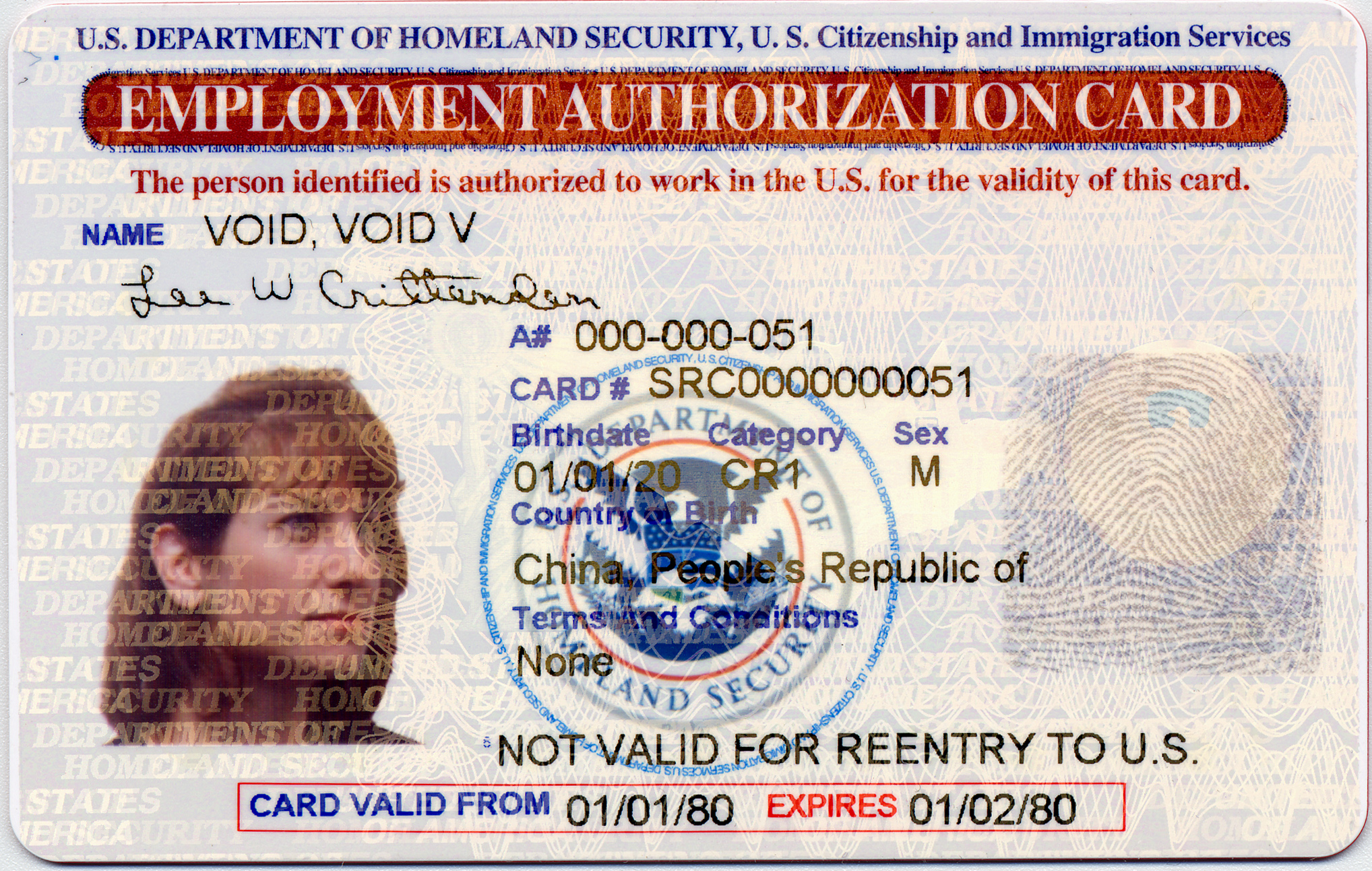
    The US Department of Homeland Security (DHS) yesterday started accepting the applications for H-4 visas.

    Issuing employment authorisation card (EAD) to certain category of spouses of H-1B visas is one of the legislative measures taken by President Barack Obama to fix the immigration system of the country.

    As a result, about 1,80,000 would be eligible to work in the US.

    According to the DHS, it will issue EAD within 90 days of receiving the application.

    Under existing regulations, DHS does not extend employment authorisation to dependents (also known as H—4 nonimmigrants) of H—1B nonimmigrant workers.

    The new rules allow H—4 dependent spouses of certain H—1B nonimmigrant workers to request employment authorisation, as long as the H—1B worker has already started the process of seeking lawful permanent residence through employment.

    [quote_box_right]

    H4 Visa Holders EAD Eligibility 2014 Rules

    Firstly, NOT all H4 visa holders are eligible for the Employment Authorization Document ( EAD).  H4 Visa holders have to fall under one of the below category to be eligible for EAD.

    • Have an approved I-140.    or ( The I-140 refers to the Immigrant Petition for Alien work to get permanent residence – aka Green Card – in United states  )
    • Have been granted extension to authorized stay beyond 6 years under AC21 Act. ( The American Competitiveness in the Twenty-first Century Act of 2000 (AC21)  allows H1B visa holders seeking lawful permanent residence ( Green Card) to work and stay in United States beyond the six year limit, if their PERM/Green Card Processing is pending )

    The above rule is Final and has been passed. USCIS will accept applications for H4 visa EAD from May 26, 2015

    [/quote_box_right]

    Also, some stats on the impact about the H4 Visa Holders EAD Eligibility 2014 Rule.

    • This new proposed rule will enable about 97,000 H4 visa holders to be immediately eligible for employment authorization ( EAD)
    • Also, about 30,000 H4 visa holders would be eligible annually going forward to avail this EAD facility.

    The complete details of the proposed rule will be published in the Federal Register soon. The above information is on a high level and does not list all the details.

    Why DHS is giving EAD for H4 Visa holders  ?

    DHS explains in the federal register that the justification to allow H4 visa holders is to reduce the negative economic effects that H1B households face with one income during the lengthy waiting time of adjustment of status to legal permanent residence. Also, this rule will help H1B holders not to quit and leave their Green Card/ Permanent residence application processing because their H4 spouse cannot work.  Also, it explains that the impact of this rule would only have a negligible increase in domestic work force, which should not raise any eyebrows that jobs are reduced for locals.

    Also Read : 

    NO STOPPING | H4 WORK PERMITS A GO: SAVE JOBS USA LAWSUIT DISMISSED

  • NO STOPPING H4 WORK PERMITS : LAWSUIT DISMISSED

    NO STOPPING H4 WORK PERMITS : LAWSUIT DISMISSED

    [quote_center]

    ALSO READ : DHS Starts Accepting Work Permit Applications For H4 Visa Holders

    [/quote_center]

    NEW YORK (TIP) – The spouses of guest workers with H-4 visas may apply for jobs in the United States, after a federal judge declined to stop the new policy.

         Save Jobs USA, a group made up of former Southern California Edison computer workers replaced by foreign workers with H-1B visas, filed suit against the U.S. Department of Homeland Security in April seeking to stop the regulation.

         The group alleged it is already difficult for its members to find work after they were replaced with H-1B workers, and that the new policy will further increase competition for jobs.

         U.S. District Judge Tanya S. Chutkan found in a memorandum opinion filed Sunday that Save Jobs USA failed to prove that its members would suffer injuries under the policy.

         “There is no indication, and Save Jobs has not provided any evidence, that it is certain that H-4 visa holders will apply for IT jobs and compete with Save Jobs members,” Chutkan wrote. “Save Jobs is correct that this could happen, and eventually it may in fact happen. But at this stage, it is entirely speculative whether any H-4 visa holders will ever apply for IT jobs at SCE, IT jobs in California (where the members of Save Jobs reside), or IT jobs at all.”

         According to DHS, nearly 180,000 new foreign workers may be added to the U.S. workforce in the first year of the rule with as many as 55,000 jobs added annually thereafter.

         “Save Jobs does not explain how many IT jobs may be taken by H-4 visa holders, how many of those jobs its members may have sought themselves, what pay or benefits its members risk losing while the case is pending, or what other harm its members may face,” Chutkan wrote. “The court is left to speculate as to the magnitude of the injury, and speculation is not enough to turn economic loss into irreparable harm.”

         A bipartisan letter written by 10 U.S. senators called for the U.S. Department of Labor to investigate Southern California Edison’s alleged replacement of American employees with H-1B visa holders. Solicitor General M. Patricia Smith declined to investigate, citing a “lack of basis.”

         “At this point, Save Jobs has provided no evidence that any H-1B visa holder has or will stay in the United States as a result of the rule,” Chutkan found. “There is also no evidence that the rule will lead to an increase in the number of H-1B visa holders seeking permanent residence and competing with Save Jobs’ members.”

         Save Jobs attorney Dale L. Wilcox, of the Immigration Reform Law Institute, says public policy should “benefit Americans, not foreigners.”

         “Our immigration laws are supposed to restrain corporations from manipulating the labor market in order to collapse wages and displace American workers,” Wilcox said in a statement.

         Chutkan’s ruling stated that both parties presented compelling arguments, and neither party’s arguments “significantly outweigh” the other.

         “Whether American workers and the U.S. economy are better served with more or fewer foreign workers is a policy question the court need not answer,” Chutkan wrote.

         The Department of Homeland Security declined to comment on the ruling.

  • Hundreds of IT workers at Disney replaced by H-1B, L-1 visa workers from India

    Hundreds of IT workers at Disney replaced by H-1B, L-1 visa workers from India

    WASHINGTON, DC (TIP): A number of information technology workers who were formerly laid off by Disney have come forward in an interview with Computerworld to describe a system they believe was systematically designed to replace American workers with H-1B visa and L-1 visa workers, primarily from India.

    The restructuring, which transpired in October 2014, was not intended to displace workers, according to Disney.

    “We have restructured our global technology organization to significantly increase our [staff] focus on future innovation and new capabilities, and are continuing to work with leading technical firms to maintain our existing systems as needed,” stated a spokesperson for the company.

    However, from the perspective of five laid-off Disney IT workers, all of whom agreed to speak to Computerworld on the condition of anonymity, Disney was cutting well-paid and longtime staff members – some who had been previously singled out for excellence – as it shifted work to contractors.

    The laid-off workers believe the primary motivation behind Disney’s action was cost-cutting.

    “Some of these folks were literally flown in the day before to take over the exact same job I was doing,” said one of the IT workers who lost his job. Computerworld noted he had to train his replacement and was angry over the fact he had to train someone from India “on site, in our country.”

    The IT workers who were let go alleged Disney cut several hundred employees last year, although the company placed the number at about 135. Disney reportedly encouraged the terminated staffers to apply for new innovation-based positions, but the former employees who were interviewed said they knew of few co-workers who landed one of the new positions.

    One of the laid off workers opined there were alternative methods for Disney to achieve its goals. “There is no need to have any type of foreigners, boots on the ground, augmenting any type of perceived technological gap,” said one former employee. “We don’t have one, first off.”

    Several of the interviewees told Computerworld they didn’t want to appear as xenophobic, but as one noted,
    “There were times when I didn’t hear English spoken” in the days leading up to his or her layoff. “I really felt like a foreigner in that building,” the worker said, primarily referring to the widespread use of Hindi.

    Congress has begun to focus on the displacement of American workers ever since Southern California Edison made national headlines for replacing hundreds of IT employees with H-1B guest workers. Disney is one of a slew of top tier companies that have been pushing lawmakers to allow more H-1B workers into the country.

  • H4 WORK PERMITS HALTED: LAWSUIT FILED BY SAVE JOBS USA

    H4 WORK PERMITS HALTED: LAWSUIT FILED BY SAVE JOBS USA

    READ UPDATE ON THIS STORY :

    [quote_box_center]H4 WORK PERMITS ALLOWED : LAWSUIT FILED BY SAVE JOBS USA DISMISSED[/quote_box_center]

    WASHINGTON (TIP): The lawsuit, co-led by the Immigration Reform Law Institute, centers not on the H-1B “high-tech” employment visa, but on the related H-4 visa that applies to the spouses of H-1B holders. A Department of Homeland Security rule published in the Federal Registrar in February purports to allow H-4 holders the right to work in the country. According to DHS estimates, 179,600 of these work permits will be doled out in the first year alone, with 55,000 more going out in subsequent years. Also according to the rule, DHS has given itself the option of expanding the program to other groups in future. The lawsuit asserts basically what H-1B expert Norm Matloff said recently, that the new H-4 visa rule is yet another example of U.S. Citizen and Immigration Services “taking the law into their own hands.”

    The complaint against DHS revolves around two functions of the new visa rule. Besides creating a new category of competitors against American workers, the H-4 rule states: “A primary purpose of this rule is to help U.S. businesses retain the H-1B non-immigrants” (emphasis added). In other words, the rule works to draw in potential H-1B workers from abroad (and who are used to far lower salaries and living standards) while providing work permits to brand-new competitors (their potentially high-skilled spouses) who will directly compete with people like Julie Gutierrez. According to the complaint, advertisements for H-4 visa holders are already popping up on engineering job boards online.

    Among the legal claims is that the authority to create work permits under the H-4 visa cannot be found in the Immigration and Nationality Act or elsewhere. But the plaintiffs say that even if a statutory basis could be found, DHS acted “arbitrarily and capriciously” when it concluded that the rule would have only “minimal labor market impacts.” As mentioned, DHS has admitted that the program will hand out nearly 200,000 work permits to new foreign job competitors in the first year, with a further 55,000 every year afterward. This alone shows that DHS’s “finding” that American workers won’t be affected was merely conjecture.

    Elsewhere, Save Jobs USA claims that the Department of Labor failed to certify that the new visa rule won’t
    “adversely affect wages and working conditions” of similarly employed American workers – that such certifications exist will probably surprise those workers in immigrant-heavy industries who have seen flat-line wages for decades. By contrast, many foreign-visa supporters believe that tech companies must interview Americans first before tapping the pool of H-1B workers; however, there is no such requirement in the law. One expert testified before Congress last month that “employers can easily hire an H-1B worker at wages far below what an American worker is paid.”

    The H-4 and H-1B programs, like most employment visas, confer benefits to other country’s citizens at the expense of American workers. It’s a corporate subsidy paid for by the middle class and everyone from Senator Sanders to Senator Inhofe now seems to agree. As the late Democratic senator Eugene McCarthy warned in 1992, right after the creation of the H-1B program, we cannot let America become “a colony of the world.” For the members of Save Jobs USA and other workers like them, this could give rise to a new Gadsden Flag. Any presidential candidate for 2016 who waves that banner will pull in a new and growing constituency that’s begging to be heard: the displaced American worker.

  • US workers fired, forced to train foreign replacements: Senators seek probe

    WASHINGTON (TIP): A popular visa program allegedly is being misused by U.S. companies to lay off thousands of American workers and replace them with foreign labor.

    And, adding insult to injury, many of the laid-off workers allegedly have been forced to train their replacements, in what one anonymous whistleblower called a “humiliating” experience.

    The allegations have caught the attention of a bipartisan group of senators — including immigration hawk Sen. Jeff Sessions, R-Ala., and the No. 2 Senate Democrat, Illinois’ Dick Durbin — who are calling for a federal probe. A letter sent by 10 senators urging an investigation specifically cited reports of the firing and hiring practices at Southern California Edison, California’s second-largest utility. The incidents are concentrated in the IT field, and involve American workers being replaced by H-1B visa holders.

    “A number of U.S. employers, including some large, well-known, publicly-traded corporations, have reportedly laid off thousands of American workers and replaced them with H-1B visa holders,” the senators wrote. In the letter to Attorney General Eric Holder, Homeland Security Secretary Jeh Johnson, and Labor Secretary Thomas Perez, the senators urged the departments to “investigate the unacceptable replacement of American workers” to see whether laws were broken.

  • United States to start accepting H-1B petitions from April 1

    United States to start accepting H-1B petitions from April 1

    WASHINGTON (TIP): The United States government will start accepting petitions for the H-1B visas, the most sought after work visa for Indian IT professionals, from April 1, an official release said.

    The congressionally mandated cap on H-1B visas for the fiscal year 2016 beginning October 1, 2015 remains 65,000.

    The first 20,000 H-1B petitions filed for individuals with a US master’s degree or higher are exempt from the 65,000 cap. In a statement, US Citizenship and Immigration Services (USCIS) said it expects to receive more petitions than the H-1B cap during the first five business days of this year’s program.

    As such it will monitor the number of petitions received and notify the public when the H-1B cap has been met.

    If USCIS receives an excess of petitions during the first five business days, the agency will use a lottery system to randomly select the number of petitions required to meet the cap, the media statement said.

    Successful H-1B applicants were determined through a lottery system last year.

  • Highly skilled immigrant spouses can soon work in US on H-4 visa

    Highly skilled immigrant spouses can soon work in US on H-4 visa

    The Obama administration announced a visa rule revision that will let spouses of some highly skilled immigrants apply to work in the United States starting this year.

    Leon Rodriguez, director of U.S. Citizenship and Immigration Services, said the change will encourage more highly skilled workers to come to the United States on H-1B visas and apply for green cards to stay here. He said attracting those workers — and their spouses — will give a boost to America’s economy.

    “They are, in many cases, in their own right highly skilled workers,” Rodriguez told reporters, adding that many families struggled financially when a spouse couldn’t work, and in some cases returned to their country.

    Employers can hire foreign workers under H-1B visas after proving there are no qualified candidates available in the U.S. Each year about 85,000 are issued, mostly in tech firms.

    Until now, their spouses have been issued a different H-4 visa that made them ineligible to get aSocial Security number. They simply couldn’t legally earn any money.

    “This is a long-awaited change that will do nothing but good for all,” said Austin, Texas, immigration attorney Daniel Kowalski. “H-4 spouses will benefit, putting their skills to productive use, and easing the stress on families previously burdened by having one talented spouse sidelined. There is no downside.”

    Sen. Jeff Sessions, R-Ala., disagrees. In a news release, he said the spouses of foreign workers will take jobs away from Americans.

    “The administration says this is to reduce the ‘personal stresses’ on guest workers. What about the stresses on American workers, and their families and spouses, and their children?” Sessions said.

    The Obama administration announced plans to make the change last May. The government estimates as many as 179,000 spouses could apply for work permits in the first year, and another 55,000 each year after. Applications will be accepted starting May 26.

    The announcement comes as the Obama administration battles with Republicans over plans for more expansive immigration measures that could allow 4 million immigrants in the country illegally to seek work permits and protection from deportation.

    A federal judge temporarily blocked the measures, and the Obama administration has since appealed.

  • Fear and loathing in Washington

    Fear and loathing in Washington

    The known unknowns about Modi are perfect catalysts for a reset of India-US relations

    Over the past three years, Washington has also come to believe it did India too big a favor with the nuclear deal and received little payback. This premise conveniently ignores the many tangibles (Indian purchases of US defense platforms to the tune of $10 billion in less than a decade) and intangibles (India’s decision not to criticize wholesale spying by NSA). A strong government in New Delhi is unlikely to be as patient or as yielding

    The American establishment is registering a measure of fear while the liberal academic-NGO community a sense of loathing at the prospect of Narendra Modi becoming India’s next PM. They are full of questions with no real answers. If elected, how would a state CM play the national and international game? How would he deal with a US administration whose policy lately has been to hit India on multiple fronts to extract concessions? More importantly, how would he look at a country that denied him a visa and had no contact with him for seven years?

    The anti-Modi coalition of Christian evangelists, left-leaning Indian Americans and Muslim activists is gearing up to mount pressure through the US Congress. They will keep the heat on even though the old fervor is gone, especially among Republicans. The uncertainties, the ambiguities and the “known unknowns” about Modi are actually perfect catalysts for a “reset” of India-US relations currently running at a low. They can create the new chemistry necessary for a more balanced equation better suited to the times.

    It cannot be the responsibility of one partner to create equilibrium, constantly ignore provocations and appease. A good relationship bears traffic in both directions. Actually the reset has already begun. Ironically, the button was pushed by the Khobragade affair. Needless provocation sparked a strong Indian response and washed the fuzziness off the relationship. Dialogue has gained in clarity since. The defensive tone has been replaced by a confident articulation of Indian expectations from the relationship. It is neither arrogant nor whiney. Terms of engagement will change further if Indian voters give a clear mandate.

    Unfortunately, the last phase of the UPA government left the impression that India will reverse its policies in the face of pressure and noise from Washington. It did so on preferential market access and transfer pricing. This has emboldened US lobbies out to draw more blood. After all who wouldn’t use a tactic that works? Over the past three years, Washington has also come to believe it did India too big a favor with the nuclear deal and received little payback. This premise conveniently ignores the many tangibles (Indian purchases of US defense platforms to the tune of $10 billion in less than a decade) and intangibles (India’s decision not to criticize wholesale spying by NSA). A strong government in New Delhi is unlikely to be as patient or as yielding. Piling on public pressure is bad strategy for the general health of the relationship.

    It reduces the Indo-US story to one of trade and investment disputes and blurs the original idea for coming together – a geostrategic convergence of interests. The new government will realize soon enough that an inward-looking Obama administration has had only fitful engagement with the world. That it has paid no special homage to strategic vision, and instead allowed a disaggregation of the India-US relationship. Then it has come after New Delhi issue by issue. It has attacked India at the behest of big pharma and other business interests whose maximalist agenda has been repeatedly exposed.

    Their game is to scotch any serious attempt to keep medicine affordable while discrediting India’s generic drugs industry through means both fair and foul. In their calculation, if India bends, it would scare smaller, weaker countries from ever contemplating a compulsory license US pharma’s brutal overreach has even put the much-touted Trans-Pacific Partnership under a cloud as negotiating countries discover the traps set for them under the guise of protecting intellectual property and copyrights. If the US Trade Representative reviewing India’s intellectual property regime downgrades it and puts it on the list of ‘Special 301’ countries, this will add another twist to an already twisting relationship. Such naming and shaming could lead to sanctions.

    Pushing the business agenda of demands drafted by the US Chamber of Commerce at a time when the US is losing international partners faster than it is acquiring them is unwise. Especially when Obama’s signature foreign policy effort – the pivot to Asia – keeps reincarnating in lesser and lesser avatars. Obama had also pledged to strengthen bonds with emerging economies but today all Brics are piled up against America for various reasons. India, Brazil, China and South Africa abstained on a UN resolution condemning the fifth partner Russia’s annexation of Crimea. India also abstained on a US-sponsored resolution against Sri Lanka’s human rights situation.

    This reflects a post-Khobragade realism, a push-back, even a new equilibrium. India will give but also take. For every US demand to open the Indian economy, there would be an equal and opposite demand on completing a “tantalization agreement”. India may find it useful to cross-link and leverage defense contracts for something tangible. Surely $10 billion worth of arms can buy relief on H-1B visas or a more honest policy towards a certain neighbor that remains the hub of terrorism. The truth is if Washington can be transactional, so can others. But this new phase should not obscure the larger logic behind India and the US coming together because the many reasons for convergence remain. Those with a wider window than a four-year election cycle understand that. Equally importantly, those who make national security policy in India know what balance of power is more beneficial.

  • Speaker Boehner deserves appreciation for his principled stand on immigration legislation

    Speaker Boehner deserves appreciation for his principled stand on immigration legislation

    House Speaker John Boehner has done well to speak out hismind on an important issue that has beenhanging fire for many years now. It is givingstatus to more than 11 million undocumentedimmigrants. It is a question of accepting a work forcethat has contributed to the growth of America.

    It is aquestion of giving due dignity to people who havesweated it out to support their families back home andhave given ungrudgingly to America their unflinchingloyalty. I appreciate the Speaker who has, in the teeth of opposition from some of his Republican colleagues, said he would like to see the immigration legislation through this year itself. I have had “every brick and bat and arrow shot at me” over the Immigration legislation issue, said House Speaker Boehner of his Republican colleagues.

    But he is resolved that the immigration legislation is a priority for the nation and that it should not be delayed any further. Earlier, last year, Mayor of Los Angeles, Villaraigosa, had championed the cause of the undocumented immigrants. I am tempted to quote here a few excerpts from his statement who had said, “A temporary status, second-classcitizenship, cannot and will not be a comprehensiveimmigration policy. It’s not amnesty, it’s earned. Youhave to prove you’ve been here for a period of time. Youhave to pay your back taxes. You have to get at the end ofthe line. You have to learn English and have someknowledge of the country if you want to be a citizen.

    What’s the alternative? The [mass] deportation of 11million people? No country in the world has everdeported 11 million people, and this great countrycertainly won’t be the first.” Speaking about the economic incentives for theimmigration reform, Villaraigosa had said, “There’s a$1.5 trillion economic impact, according to the Centerfor American Progress. The Dreamers alone, it’sestimated, will have a $329 billion impact over a 10- yearperiod. And the reason is this: You’re bringing thesepeople from out of the dark and into the light.

    Whathappens when you do that? You encourage them to getan education; you encourage them to improve their jobskills. They’re encouraged to seek better jobs. Theycontribute more to our Social Security system.President Obama has said that we should attach a greencard to the diploma of people who come here gettingbachelor’s degrees, particularly in science and math.[Also, H-1B] visas need to be expanded, and we need tomake sure that we have a program that makes sense inthe agricultural sector.” Speaker Boehner deserves appreciation for his bold, principled stand on the issue. We hope he will stand his ground and ensure the immigration legislation passes this year.

  • INDIA GOT 93,000 US WORK VISAS IN 2013

    INDIA GOT 93,000 US WORK VISAS IN 2013

    CHENNAI (TIP): US President Barack Obama was not too far off the mark when he told students at Maryland recently that Americans would have to compete against Indians and Chinese for good jobs in the present and near future. Consider this: India is slated to get nearly 60 per cent of all H-1B work visas that the US issues worldwide. India alone got 93,000 H-1B visas out of an estimated 1,48,000 visas issued worldwide by the US in 2013.

    The Chennai Consulate General alone issued 37,000 visas, which means just one consulate in India is issuing nearly 24 per cent of all H-1B visas issued worldwide, top officials of the US Consulate General said. The rest 55,000 visas were shared by scores of other countries competing with India. The other consulates in India taken together issued the rest 56,000 visas.

    This means around 30-32 per cent of all visas issued in India come from the Chennai consulate alone, indicating the enormous number of people waiting to travel to the US. The IT sector is strong in Southern India which explains the demand. While 65,000 H-1B visas is the worldwide limit approved by the US Congress, the number of visas actually issued shoots up because there are H-1B visas that do not fall under the 65,000 cap and because hundreds of visas come up for renewal, consulate officials said.

  • U.S. may allow H1B spouses to work during green card wait

    U.S. may allow H1B spouses to work during green card wait

    WASHINGTON (TIP): In a rare move that flies in the face of anti-immigrant rhetoric in some corners of the U.S. the Department of Homeland Security announced in recent weeks that it was proposing to provide employment authorization to H-4 visa holders, who are spouse-dependents of principal H-1B “non-immigrant” visa holders.

    In taking this progressive step the DHS has however clarified that it planned to extend employment authorization only to those within the H4 population who “have begun the process of seeking lawful permanent resident status through employment and have extended their authorized period of admission,” in the U.S. The DHS in its notification of proposed amendments to the law appeared to cognize an important point made in the articles, that restrictions on the right of H4 spouses to work in the U.S. could affect the decision of the principal H1B worker to remain in employment here.

    In this regard the DHS said that it “recognizes that the limitation on the period of stay is not the only event that could cause an H-1B worker to leave his or her employment and cause disruption to the employer’s business, inclusive of the loss of significant time and money invested in the immigration process… This rule will encourage H-1B skilled workers to not abandon their adjustment application because their H-4 spouse is unable to work.” The proposed rules granting employment rights to some H4 visa holders were also “intended to mitigate some of the negative economic effects of limiting H-1B households to one income during lengthy waiting periods in the adjustment of status process,” the DHS noted.

    Calls for relaxing the restrictions placed on H4 visa holders have come amidst growing expectations that President Barack Obama may address the complex issue of comprehensive immigration reform during his second term in office. While opposition to reform has primarily been rooted in concerns over further loss in American jobs to new immigrants, proponents have made the case that fewer work restrictions for H-4 dependent spouses, for example, might encourage “professionals with high demand skills to remain in the country and help spur the innovation and growth of U.S. companies,” and the DHS appeared to support this view in its notes. Applicants seeking to obtain the right to work in the U.S. on this basis should however bear in mind that the proposed changes would only impact spouses of H-1B workers who have been admitted or have extended their stay under the provisions of the American Competitiveness in the Twenty- First Century Act of 2000 or AC21.

    Also it may take at least six months or more for the new rule to get formalized given that the rule is only in the proposal stage and would need to be discussed and passed by the government. Pre-emptively addressing any suggestions that the new rules could take away jobs from American residents the DHS said, “Allowing certain H-4 spouses the opportunity to work would result in a negligible increase to the overall domestic labor force. The benefits of this rule are retaining highly-skilled persons who intend to adjust to lawful permanent resident status. This is important when considering the contributions of these individuals to the U.S. economy, including advances in entrepreneurial and research and development endeavors, which are highly correlated with overall economic growth and job creation.” It added that the proposed amendments would also bring U.S. immigration laws more in line with other countries that seek to attract skilled foreign workers.

  • Immigration reform tops Obama menu

    Immigration reform tops Obama menu

    WASHINGTON (TIP): US President Obama on October 24 asked the Republican-majority House of Representatives to pass by the year end a stalled immigration bill over which India has expressed concern. “Let’s see if we can get it done this year. Let’s not wait. It doesn’t get easier to just put it off. Let’s do it now. Let’s not delay. Now it’s up to Republicans in the House to decide whether reform becomes a reality or not,” Obama said in a White House speech.If enacted into law the bill will pave the way for citizenship of 11 million undocumented people and accelerate immigration of science and technology professionals from India and China. Prime Minister Manmohan Singh has expressed India’s concern over the comprehensive immigration bill, already passed by the Senate. Certain provisions of the bill, in particular those related to H-1B and L1 visas, will adversely impact top Indian IT companies doing business in the US. Obama said the current immigration system is broken. “It’s not smart; it’s not fair; it doesn’t make sense. We have kicked this particular can down the road for too long,” he said.

    “It’s not smart to invite some of the brightest minds from around the world to study here and then not let them start businesses here. We’ve sent them back to their home countries to start businesses and create jobs and invent new products someplace else,” he said. The Senate passed the bill in June. The plan, crafted and approved with Senate Republican support, would strengthen the border with Mexico and reorganise the visa system to give priority to high-demand fields, including engineers and farm workers.Meanwhile, the US-India Business Council (USIBC) is keeping a close eye on the bill on the House version of the bill to protect the interest of the Indian companies. PTIand US businesses with ties with India. “USIBC plans on being absolutely vigilant in the coming weeks and months with its Coalition for Jobs and Growth, with Patton Boggs leading the lobby effort, to ensure that when the Immigration Reform Bill reawakens and begins to gain traction that we are in front of it and doing our best to educate lawmakers to make certain the discriminatory provisions are excised from any final Bill,” USIBC president Ron Somers said. “We will continue to sensitise the Senate as to these harmful provisions, while working with the House to ensure a clean bill, so that when legislation goes to conference we will have champions in both chambers to ensure a clean outcome,” Somers said.

  • Six-fold increase in Green cards for Indians

    Six-fold increase in Green cards for Indians

    NEW YORK (TIP): Indians chasing the American dream have reason to cheer. In 2012, as many as 35,472 Indians with H- 1B visas got green cards, up from 6,000 in 2011 – accounting for more than 50% of all green cards issued to H-1B holders for all countries in the year.

    The data from the US Citizenship and Immigration Services (USCIS) comes in the wake of a new Bill that focuses on attracting knowledge workers to the US by providing them citizenship. The common impression is that the US is increasingly trying to keep foreigners out with new immigration walls. But that’s only a partial truth; it pertains to less skilled overseas workers. In reality, the US is also trying to attract the best brains from around the world and among the biggest beneficiaries are talented Indians.

    A green card allows a person to live and work anywhere in America, and is a path to citizenship. An H-1B visaholder is beholden to the employer who hired him or her, and can be deported unless the holder can find another H-1B sponsor. Most Indians who got green cards in 2012 came from the EB-2 category, which includes professionals with advanced degrees in STEM (science, technology, engineering and math).

    Clearly, the US wants to retain its competitive edge and accelerate R&D. “They need people with specialized skills who can substantially contribute to the knowledge economy. The large base of Indians with advanced degrees and domain expertise is highly sought after and given preferential treatment,” said Rakesh Prabhu, partner, immigration practice, ALMT Legal. The number of green cards a country gets in a year cannot exceed 7% of the total available. The limit primarily restricts those born in India, China, Mexico and the Philippines, given the large numbers of applicants from these countries.

    However, most of the rest of the world does not come anywhere close to this quota. The unused numbers in a year from other countries are often given to countries that have long queues. In 2012, India appears to have benefited. “The US visa office seeks to use the available visa numbers by the time the fiscal year ends, at the end of September. They don’t like to waste numbers. So there could be a new surge (Indians becoming eligible for green cards) in August 2013 and in subsequent months,” said Cyrus D Mehta, managing attorney and founder of the New York-based law firm Cyrus D Mehta & Associates.

    Now, there’s a serious effort to remove country quotas, which has a broad agreement among Republicans and Democrats. The Comprehensive Immigration Bill, which is before the Senate, seeks to remove the country caps to attract the best minds to the US. The political consensus right now is that knowledge workers with permanent residency are valuable to the economy. “If Congress removes country quotas, it should help Indian citizens. However, it will affect the rest of the world adversely,” said Denyse Sabagh, partner in the Philadelphia-headquartered law firm Duane Morris.

  • US uses lottery to choose recipients of H-1B visas

    US uses lottery to choose recipients of H-1B visas

    WASHINGTON (TIP): The US federal agency, which received nearly 124,000 applications for the H-1B visas, has used lottery to determine who all would be given the most sought after work visas among IT professionals. The US Citizenship and Immigration Services (USCIS) today, April 10 said that the lottery was done on April 7.

    The federal agency had started receiving applications for H-1B visas on April 1 and five days later on April 5 it announced to have reached the cap. “For the first time since 2008, USCIS has reached the statutory H-1B cap of 65,000 for fiscal year (FY) 2014 within the first week of the filing period,” an official statement said, adding that it also received more than 20,000 H-1B petitions filed on behalf of persons exempt from the cap under the advanced degree exemption. “USCIS received approximately 124,000 H-1B petitions during the filing period, including petitions filed for the advanced degree exemption,” USCIS said. “On April 7, 2013, USCIS used a computer-generated random selection process (commonly known as a lottery) to select a sufficient number of petitions needed to meet the caps of 65,000 for the general category and 20,000 under the advanced degree exemption limit,” the statement said. “For cap-subject petitions not randomly selected, USCIS will reject and return the petition with filing fees, unless it is found to be a duplicate filing,” it said. The agency conducted the selection process for advanced degree exemption petitions first. All advanced degree petitions not selected were part of the random selection process for the 65,000 limit. USCIS said it will however continue to accept and process petitions that are otherwise exempt from the cap.

  • USCIS to Accept H-1B Petitions for Fiscal Year 2014 on April 1, 2013

    USCIS to Accept H-1B Petitions for Fiscal Year 2014 on April 1, 2013

    Premium Processing for Cap-Subject H-1B Petitions to Begin April 15, 2013
    WASHINGTON (TIP): U.S. Citizenship and Immigration Services (USCIS) announced March 15 that it will begin accepting H-1B petitions subject to the Fiscal Year (FY) 2014 cap on Monday, April 1, 2013. Cases will be considered accepted on the date that USCIS receives a properly filed petition for which the correct fee has been submitted; not the date that the petition is postmarked. The cap (the numerical limitation on H-1B petitions) for FY 2014 is 65,000. In addition, the first 20,000 H- 1B petitions filed on behalf of individuals with U.S. master’s degree or higher are exempt from the fiscal year cap of 65,000. Based on feedback from a number of stakeholders, USCIS anticipates that it may receive more petitions than the H-1B cap between April 1, 2013 and April 5, 2013. USCIS will monitor the number of petitions received and notify the public of the date on which the numerical limit of the H-1B cap has been met.

    This date is known as the final receipt date. If USCIS receives more petitions than it can accept, USCIS will use a lottery system to randomly select the number of petitions required to reach the numerical limit. USCIS will reject petitions that are subject to the cap and are not selected, as well as petitions received after it has the necessary number of petitions needed to meet the cap. The lottery for the H-1B cap was last used in April 2008. In addition, H-1B cap cases can continue to request premium processing concurrently. Due to the historic premium processing receipt levels, combined with the possibility that the H-1B cap will be met in the first 5 business days of the filing season, USCIS has temporarily adjusted its current premium processing practice. To facilitate the prioritized data entry of cap-subject petitions requesting premium processing, USCIS will begin premium processing for H-1B cap cases on April 15, 2013. For more information on premium processing for FY 2014 cap-subject petitions, please see the USCIS Alert . H-1B petitioners should follow all statutory and regulatory requirements as they prepare petitions, in order to avoid delays in processing and possible requests for evidence.

    USCIS has developed detailed information, including an optional checklist to assist in the completion and submission of a FY2014 H-1B petition. The processing worksheet is available on the USCIS website, www.uscis.gov. U.S. businesses use the H-1B program to employ foreign workers in specialty occupations that require theoretical or technical expertise in specialized fields, including, but not limited to, scientists, engineers, and computer programmers. For more information on the H-1B nonimmigrant visa program and current Form I-129 processing times, visit the H-1B FY 2014 Cap Season Web page or call the National Customer Service Center at (800) 375-5283.

  • Us Entices Future Techies  With H-1b Visas, Green Cards

    Us Entices Future Techies With H-1b Visas, Green Cards

    WASHINGTON (TIP): The United States is poised to turn the so-called outsourcing visa into a skill importing programme. American lawmakers are on the verge of overhauling immigration laws, including the infamous H-1B visa, which critics say has been widely misused by bodyshoppers and outsourcing giants to bring in underspaid foreign (mainly Indian) technology workers to displace Americans from the workforce.

    Under new proposals being considered by a senate panel, the number of H-1B visas will actually be doubled from the current 65,000 to 130,000 to address the continued shortage of specific skilled workers in the US. But the primary beneficiaries will not be outsourcing firms who rotate workers between the US and home countries, but foreign students who come to study in America, who will be enticed to stay back, work here, and contribute to the US economy. Industrious foreign students who pay top dollar to graduate from US universities in science, technology, engineering and math ( STEM) subjects will literally have H-1B visas – eventually leading to Green Cards – stapled to their degrees, if the proposals go through. Over 100,000 Indians students are enrolled in US universities at any given time, with thousands coming in each year. The student inflow is already said to contribute more than $3 billion annually to the US economy. In the process, family members of US citizens waiting to immigrate to America may get shafted.

    Among the proposals under consideration is one which will reduce the number of green cards to siblings, parents and grown children of immigrants who have become US citizens. The restriction will not apply to spouses and underage children. In effect, Washington is gradually shifting its immigration policy from being “family unification” centered to economic and skill-based immigration. In other words, prospective immigrants will have a better chance of moving to America if they have a required skill set rather than just having a relative in the US.

    Tough negotiations are going on in the Congress on all aspects of the visa makeover. Powerful technology giants such as Microsoft, IBM, and Google want foreign workers because they say there is a genuine skills’ shortage in the US and they have benefited from infusion of foreign talent. In a letter to President Obama and lawmakers last week, a number of high-profile CEOs, including Facebook’s Mark Zuckerberg and Yahoo’s Marissa Mayer, said that being able to hire more high-skilled workers and retain foreign students enrolled in US schools is key to keeping American companies globally competitive.

    Tech companies fear that American schools are failing to produce enough graduates with advanced science and engineering degrees. But lawmakers are also buffeted by a vicious anti-immigrant sentiment on the ground, including some directed against the H1-B visa program and Indian workers. Not that pro-H1B groups are keeping quiet. A Washington Post story on the subject elicited hundreds of comments, many of them xenophobic and borderline racist.