Tag: H-4 Visa

  • USCIS suspends Premium Processing for All H-1B Petitions

    USCIS suspends Premium Processing for All H-1B Petitions

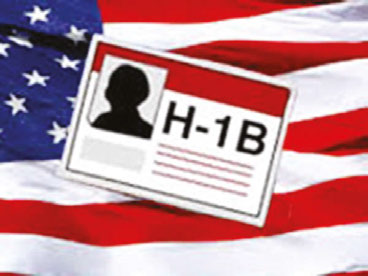
    Starting April 3, 2017, U.S. Citizenship and Immigration Services will temporarily suspend premium processing for all H-1B petitions, a statement issued by the USCIS stated. This suspension may last up to 6 months. While H-1B premium processing is suspended, petitioners will not be able to file Form I-907, Request for Premium Processing Service for a Form I-129, Petition for a Non-immigrant Worker which requests the H-1B nonimmigrant classification. We will notify the public before resuming premium processing for H-1B petitions.

    The premium processing service allows an applicant or his potential employer to pay $1,225 to receive a response to his petition within 15 days. If USCIS has not responded within 15 days, the fee is refunded, though the application still receives expedited processing, according to a bulletin issued by the agency March 3. H-1B visas are used by U.S. employers to temporarily employ foreign workers, most often from India, in specialty occupations.

    “This temporary suspension will help us to reduce overall H-1B processing times. By temporarily suspending premium processing, we will be able to process long-pending petitions, which we have currently been unable to process due to the high volume of incoming petitions and the significant surge in premium processing requests over the past few years; and prioritize adjudication of H-1B extension of status cases that are nearing the 240 day mark,” said the agency in a bulletin.

    USCIS has said the temporary suspension of premium processing could last as long as six months. The agency has said it will reject any form I-907 – request for premium processing – filed with an H-1B petition. If a check is issued to cover both applications, USCIS noted it will have to reject the H-1B application as well.

    “Since FY18 cap-subject H-1B petitions cannot be filed before April 3, this suspension will apply to all petitions filed for the FY18 H-1B regular cap and master’s advanced degree cap exemption (the ‘master’s cap’),” noted USCIS, adding that the suspension also applies to petitions that may be cap-exempt.

    H-1B petitioners can still expedite their applications if they meet one of the following criteria: a severe financial loss to company or  person;   an emergency situation; humanitarian reasons; a non-profit organization whose work benefits the cultural and social interests of the U.S., certain Defense Department situations; or USCIS errors. Such requests will be reviewed on a case-by-case basis. The temporary suspension does not apply to other non-immigrant classifications. The United States Citizenship and Immigration Services has ruled that Green Card holders and visa holders, like those on H-1B, L-1, J or F-1, H4 visa, and even those having an Employment Authorization Card (EAD) must carry legal documents papers when traveling in and out of the country and at all times within the United States, or face the risk of being fined or imprisoned, or even both.

    With a large-scale immigration crack-down on undocumented foreigners imminent after President Donald Trump’s new executive orders, it’s important for all documented residents in the US to keep proof of their legal status in the country.

    And for those in the pipeline for a Green Card, a misdemeanor charge could have terrible repercussions when it comes to being adjudicated for legal permanent resident status. The same applies for Green Card holders who wish to become US citizen.

    The United States Citizenship and Immigration Services rule states: ‘Every alien, eighteen years of age and over, shall at all times carry with him and have in his personal possession any certificate of alien registration or alien registration receipt card issued to him pursuant to subsection (d). Any alien who fails to comply with the provisions of this subsection shall be guilty of a misdemeanor and shall upon conviction for each offense be fined not to exceed $100 or be imprisoned not more than thirty days, or both.’

    Another sub-section of the rule says: ‘Notwithstanding any other provision of law, the Attorney General is authorized to require any alien to provide the alien’s social security account number for purposes of inclusion in any record of the alien maintained by the Attorney General or the Service.’

  • Trump’s H-1B Visa Bill spooks India’s IT companies

    Trump’s H-1B Visa Bill spooks India’s IT companies

    It may not be a good time to be a non-American in Trump’s America.

    India, the largest exporter of IT workforce to the US, could be jolted if the H-1B Visa Bill, which was tabled in the House of Representatives, becomes a law.

    The country’s biggest IT companies, TCS, Infosys, Wipro and others, that enjoy significant cost advantages by sending Indian engineers to the US, are likely to be hit if the minimum salary cap for H-1B visas is raised to $130,000 from its current $60,000.

    In anticipation of the eventuality, India’s top four IT company stocks plunged on the Bombay Stock Exchange today. Mashable India reached out to these companies but they declined comment.

    Meanwhile, NASSCOM, the industry body for software and services companies, was not pleased with the development. “The bill does not treat all IT service companies with H-1B visa holders equally, and the provisions are biased against H-1B dependent companies,” it said in a statement.

    “The bill does nothing to address the underlying shortage of STEM-skilled workers, which has led all companies to have a calibrated strategy of hiring locally and bridging the skills gap by bringing skilled workers on non-immigrant visas including H-1Bs,” it added.

    The US issued more than a million visas to Indians in 2016, which accounted for 70% of all H1B visas issued worldwide.

    India happens to be the largest receiver of H-1B visas in the world. The US issued more than a million visas to Indians in 2016, which accounted for 70% of all H1B visas issued worldwide, according to news reports.

    IT analysts reckon that the new law, if and when it passes, will have far-reaching implications not only on Indian companies but on the US economy as well since most US-based Fortune 500 organizations are “deeply invested and dependent” on Indian IT services providers.

    “Skilled foreign workers who come to work in the US by the route of H1-B visas don’t just directly supplement the US IT industry with specialized skillsets, they also contribute indirectly to other industries in the US. Often H1-B workers bring their families along and thereby bring additional business for other industries like real estate, banking, hospitality to name a few. The effects of this announcement will impact the GDP and the overall business economy and growth of US,” says Sanchit Vir Gogia, chief analyst at Greyhound Research

    While the final outcome of the Bill is yet to be known, NASSCOM said it will continue to engage with the US administration and legislators both directly and through the Government of India. The focus would be on highlighting the value contribution of India’s IT sector as a “net creator” of jobs in the US.

    FUN FACT: The CEOs of both Microsoft and Google are of Indian origin.

  • Trump’s Next Executive Order on Immigration may cause H-4 Visa holders to lose work permit

    Trump’s Next Executive Order on Immigration may cause H-4 Visa holders to lose work permit

    Indian Americans overwhelmingly use H1-B or the work visa. Most recently, under Obama administration their spouses, who are on H-4 visa were allowed to work. However, things are changing with the new Trump administration at the healm and Republicans and some Democratic lawmakers consider that high-tech Indian workers are stealing away American jobs.

    The Trump administration, media reports suggest, has launched a sweeping overhaul of the nation’s immigration policies, especially on the H-4 visa holders — spouses of H-1B visa-holders.

    President Donald Trump said to be considering an executive order that would rescind employment authorization for H-4 visa holders, leaving 180,000 women, mostly from India, frantic about their ability to continue to work in the U.S.

    H-4 visas are given to the spouses of H-1B visa holders, highly-skilled foreign workers, the majority of whom are from India. Until 2015, H-4 visa holders – who often had skill levels comparable to their spouses – were not allowed to work. In 2015, U.S. Citizenship and Immigration Services announced that some H-4 visa holders, whose spouses were on track for permanent residency in the U.S., would be able to work.

    “Allowing the spouses of these visa holders to legally work in the United States makes perfect sense,” USCIS Director León Rodríguez said in February 2015. “It helps U.S. businesses keep their highly skilled workers by increasing the chances these workers will choose to stay in this country during the transition from temporary workers to permanent residents. It also provides more economic stability and better quality of life for the affected families.”

    At a press briefing on February 8th organized by New America Media, Sally Kinoshita, deputy director of the Immigrant Legal Resource Center, told reporters that a leaked memo from the Trump administration proposes to end work authorization for H-4 visa holders. “H-4s are vulnerable because the Department of Homeland Security extended work permits to them under the regulations in 2015 and this draft memo seeks to rescind those regulations,” she said.

    A leaked draft of an executive order titled “Protecting American jobs and workers by strengthening the integrity of foreign worker visa programs” appeared on the New York Times Web site Jan. 27. In the draft, Trump proposes sweeping changes to several highly-skilled foreign worker visa programs, including H-1B workers.

  • Save Jobs USA Continue Fight To Keep H-4 Work Rule Challenge Alive

    Save Jobs USA Continue Fight To Keep H-4 Work Rule Challenge Alive

    Save Jobs USA urged a D.C. federal court Tuesday to keep alive their challenge to a new U.S. Department of Homeland Security H-4 visa rule that allows certain spouses of high-skilled immigrants to get work authorization, saying the department wrongly argued that they didn’t properly plead an injury.
    Save Jobs USA, a group of former Southern California Edison tech workers who say they were replaced by foreign nationals on H-1B visas, filed an opposition to the government’s motion to have the case tossed, arguing that the group has standing to challenge the H-4 visa rule because the rule harmed its members and that DHS was wrong to argue otherwise.

    The opposition, filed on the day the DHS rule took effect, also contended that dismissal at this stage would be premature.

    “The fundamental problem DHS faces making a lack of standing argument is that the H-4 rule creates injury so widespread that nearly every American worker has been injured by it and thus possesses standing to challenge it,” the opposition said. “The court should reject DHS’s argument.”

    Under the regulation, certain H-4 visa holders who are married to foreign workers on H-1B visas and have begun the process of becoming legal permanent residents themselves can apply for their own temporary work permits.

    The group launched its suit on April 23, a month before the H-4 employment rule was slated to go into effect. Save Jobs argues that DHS lacks statutory authority to allow H-4 visa holders to work and that the rule’s purpose is simply to increase foreign labor by drawing more people to the H-1B program. The group also contends that the rule is arbitrary and capricious since the law restricts H-4 visas to residency only.

    The group says the H-4 work rule hurts its members by increasing the number of “economic competitors” and depriving them of protections from foreign labor.

    On Sunday, U.S. District Judge Tanya S. Chutkan denied Save Jobs’ bid for a preliminary injunction, saying the group failed to show it would suffer irreparable harm without the order. The rule went into effect Tuesday, allowing certain H-4 visa holders to begin applying for work authorization.

    Earlier this month, DHS strongly urged Judge Chutkan to dismiss the suit, arguing that Save Jobs has failed to show that its members directly compete with any potential beneficiaries of the new rule and has fallen far short of showing how the members have been hurt for standing purposes.

    But Save Jobs’ opposition Tuesday listed several injuries it suffered as a result of the H-4 rule, including that the rule deprives it of statutory protections from foreign labor, creates increased competition from both H-1B and H-4 workers and confers benefits on Save Jobs’ H-1B competitors.

    DHS’ motion to dismiss has “once again employed its repeatedly failed argument that a plaintiff who alleges competitive standing injury must prove that she or he applied for a job and didn’t get the job but for an alien worker,” the group said.

    Further, Save Jobs said it properly stated a viable claim that DHS acted beyond its authority in promulgating the H-4 rule because it has no authority to authorize H-4 visa holders to work.

    The group also reiterated its contention that DHS acted arbitrarily and capriciously in enacting the rule, in part by overturning a nearly five-decade-old policy of Congress.

    “Unlike the work visas in the H category, the H-4 visa contains no protections for American workers,” it said. “By allowing aliens to work on an H-4 visa, instead of a guest worker visa, DHS circumvents the protections for domestic labor in the immigration system.”

    Ultimately, Save Jobs said the case boils down to whether, under the Immigration and Nationality Act, Congress defines the classes of noncitizens allowed to work in the U.S. and DHS has broad authority to determine which individuals within those classes may be admitted, or whether DHS and Congress share “dual authority” to define those classes.

    “The outcome has major implications because, should the court hold that DHS has ‘dual authority’ to define classes of aliens allowed to work in the U.S., the entire system of admitting nonimmigrant labor into the United States will be upended,” the opposition said.

  • DHS starts accepting work permit applications for H4 visa holders

    DHS starts accepting work permit applications for H4 visa holders

    The US Department of Homeland Security (DHS) yesterday started accepting the applications for H-4 visas.

    Issuing employment authorisation card (EAD) to certain category of spouses of H-1B visas is one of the legislative measures taken by President Barack Obama to fix the immigration system of the country.

    As a result, about 1,80,000 would be eligible to work in the US.

    According to the DHS, it will issue EAD within 90 days of receiving the application.

    Under existing regulations, DHS does not extend employment authorisation to dependents (also known as H—4 nonimmigrants) of H—1B nonimmigrant workers.

    The new rules allow H—4 dependent spouses of certain H—1B nonimmigrant workers to request employment authorisation, as long as the H—1B worker has already started the process of seeking lawful permanent residence through employment.

    [quote_box_right]

    H4 Visa Holders EAD Eligibility 2014 Rules

    Firstly, NOT all H4 visa holders are eligible for the Employment Authorization Document ( EAD).  H4 Visa holders have to fall under one of the below category to be eligible for EAD.

    • Have an approved I-140.    or ( The I-140 refers to the Immigrant Petition for Alien work to get permanent residence – aka Green Card – in United states  )
    • Have been granted extension to authorized stay beyond 6 years under AC21 Act. ( The American Competitiveness in the Twenty-first Century Act of 2000 (AC21)  allows H1B visa holders seeking lawful permanent residence ( Green Card) to work and stay in United States beyond the six year limit, if their PERM/Green Card Processing is pending )

    The above rule is Final and has been passed. USCIS will accept applications for H4 visa EAD from May 26, 2015

    [/quote_box_right]

    Also, some stats on the impact about the H4 Visa Holders EAD Eligibility 2014 Rule.

    • This new proposed rule will enable about 97,000 H4 visa holders to be immediately eligible for employment authorization ( EAD)
    • Also, about 30,000 H4 visa holders would be eligible annually going forward to avail this EAD facility.

    The complete details of the proposed rule will be published in the Federal Register soon. The above information is on a high level and does not list all the details.

    Why DHS is giving EAD for H4 Visa holders  ?

    DHS explains in the federal register that the justification to allow H4 visa holders is to reduce the negative economic effects that H1B households face with one income during the lengthy waiting time of adjustment of status to legal permanent residence. Also, this rule will help H1B holders not to quit and leave their Green Card/ Permanent residence application processing because their H4 spouse cannot work.  Also, it explains that the impact of this rule would only have a negligible increase in domestic work force, which should not raise any eyebrows that jobs are reduced for locals.

    Also Read : 

    NO STOPPING | H4 WORK PERMITS A GO: SAVE JOBS USA LAWSUIT DISMISSED

  • NO STOPPING H4 WORK PERMITS : LAWSUIT DISMISSED

    NO STOPPING H4 WORK PERMITS : LAWSUIT DISMISSED

    [quote_center]

    ALSO READ : DHS Starts Accepting Work Permit Applications For H4 Visa Holders

    [/quote_center]

    NEW YORK (TIP) – The spouses of guest workers with H-4 visas may apply for jobs in the United States, after a federal judge declined to stop the new policy.

         Save Jobs USA, a group made up of former Southern California Edison computer workers replaced by foreign workers with H-1B visas, filed suit against the U.S. Department of Homeland Security in April seeking to stop the regulation.

         The group alleged it is already difficult for its members to find work after they were replaced with H-1B workers, and that the new policy will further increase competition for jobs.

         U.S. District Judge Tanya S. Chutkan found in a memorandum opinion filed Sunday that Save Jobs USA failed to prove that its members would suffer injuries under the policy.

         “There is no indication, and Save Jobs has not provided any evidence, that it is certain that H-4 visa holders will apply for IT jobs and compete with Save Jobs members,” Chutkan wrote. “Save Jobs is correct that this could happen, and eventually it may in fact happen. But at this stage, it is entirely speculative whether any H-4 visa holders will ever apply for IT jobs at SCE, IT jobs in California (where the members of Save Jobs reside), or IT jobs at all.”

         According to DHS, nearly 180,000 new foreign workers may be added to the U.S. workforce in the first year of the rule with as many as 55,000 jobs added annually thereafter.

         “Save Jobs does not explain how many IT jobs may be taken by H-4 visa holders, how many of those jobs its members may have sought themselves, what pay or benefits its members risk losing while the case is pending, or what other harm its members may face,” Chutkan wrote. “The court is left to speculate as to the magnitude of the injury, and speculation is not enough to turn economic loss into irreparable harm.”

         A bipartisan letter written by 10 U.S. senators called for the U.S. Department of Labor to investigate Southern California Edison’s alleged replacement of American employees with H-1B visa holders. Solicitor General M. Patricia Smith declined to investigate, citing a “lack of basis.”

         “At this point, Save Jobs has provided no evidence that any H-1B visa holder has or will stay in the United States as a result of the rule,” Chutkan found. “There is also no evidence that the rule will lead to an increase in the number of H-1B visa holders seeking permanent residence and competing with Save Jobs’ members.”

         Save Jobs attorney Dale L. Wilcox, of the Immigration Reform Law Institute, says public policy should “benefit Americans, not foreigners.”

         “Our immigration laws are supposed to restrain corporations from manipulating the labor market in order to collapse wages and displace American workers,” Wilcox said in a statement.

         Chutkan’s ruling stated that both parties presented compelling arguments, and neither party’s arguments “significantly outweigh” the other.

         “Whether American workers and the U.S. economy are better served with more or fewer foreign workers is a policy question the court need not answer,” Chutkan wrote.

         The Department of Homeland Security declined to comment on the ruling.

  • H4 WORK PERMITS HALTED: LAWSUIT FILED BY SAVE JOBS USA

    H4 WORK PERMITS HALTED: LAWSUIT FILED BY SAVE JOBS USA

    READ UPDATE ON THIS STORY :

    [quote_box_center]H4 WORK PERMITS ALLOWED : LAWSUIT FILED BY SAVE JOBS USA DISMISSED[/quote_box_center]

    WASHINGTON (TIP): The lawsuit, co-led by the Immigration Reform Law Institute, centers not on the H-1B “high-tech” employment visa, but on the related H-4 visa that applies to the spouses of H-1B holders. A Department of Homeland Security rule published in the Federal Registrar in February purports to allow H-4 holders the right to work in the country. According to DHS estimates, 179,600 of these work permits will be doled out in the first year alone, with 55,000 more going out in subsequent years. Also according to the rule, DHS has given itself the option of expanding the program to other groups in future. The lawsuit asserts basically what H-1B expert Norm Matloff said recently, that the new H-4 visa rule is yet another example of U.S. Citizen and Immigration Services “taking the law into their own hands.”

    The complaint against DHS revolves around two functions of the new visa rule. Besides creating a new category of competitors against American workers, the H-4 rule states: “A primary purpose of this rule is to help U.S. businesses retain the H-1B non-immigrants” (emphasis added). In other words, the rule works to draw in potential H-1B workers from abroad (and who are used to far lower salaries and living standards) while providing work permits to brand-new competitors (their potentially high-skilled spouses) who will directly compete with people like Julie Gutierrez. According to the complaint, advertisements for H-4 visa holders are already popping up on engineering job boards online.

    Among the legal claims is that the authority to create work permits under the H-4 visa cannot be found in the Immigration and Nationality Act or elsewhere. But the plaintiffs say that even if a statutory basis could be found, DHS acted “arbitrarily and capriciously” when it concluded that the rule would have only “minimal labor market impacts.” As mentioned, DHS has admitted that the program will hand out nearly 200,000 work permits to new foreign job competitors in the first year, with a further 55,000 every year afterward. This alone shows that DHS’s “finding” that American workers won’t be affected was merely conjecture.

    Elsewhere, Save Jobs USA claims that the Department of Labor failed to certify that the new visa rule won’t
    “adversely affect wages and working conditions” of similarly employed American workers – that such certifications exist will probably surprise those workers in immigrant-heavy industries who have seen flat-line wages for decades. By contrast, many foreign-visa supporters believe that tech companies must interview Americans first before tapping the pool of H-1B workers; however, there is no such requirement in the law. One expert testified before Congress last month that “employers can easily hire an H-1B worker at wages far below what an American worker is paid.”

    The H-4 and H-1B programs, like most employment visas, confer benefits to other country’s citizens at the expense of American workers. It’s a corporate subsidy paid for by the middle class and everyone from Senator Sanders to Senator Inhofe now seems to agree. As the late Democratic senator Eugene McCarthy warned in 1992, right after the creation of the H-1B program, we cannot let America become “a colony of the world.” For the members of Save Jobs USA and other workers like them, this could give rise to a new Gadsden Flag. Any presidential candidate for 2016 who waves that banner will pull in a new and growing constituency that’s begging to be heard: the displaced American worker.

  • Indians to benefit most from sop for ‘H1-B spouses’

    Indians to benefit most from sop for ‘H1-B spouses’

    WASHINGTON (TIP): Kusuma’s long hard winters of discontent in America, six of them in fact, are drawing to a close. Spouse of an Indian H1-B visa professional who came with her husband to the United States in 2009, the Bangalore University graduate had to become an involuntary homemaker, despite her degree in accounting, because her H-4 dependent visa tied to her husband’s guest worker visa barred her from seeking employment in the US.

    The Obama administration on Tuesday announced it was extending work authorization to certain categories of H-4 visa holders effective May 26, 2015, sending a wave a joy and relief through Kusuma and thousands of so called “H1-B spouses” across America, a majority of them from India. According to the United States Citizenship and Immigration Services (USCIS), which initiated the move as part of President Obama immigration reform, an estimated 179,600 H-4 dependent spouses will be eligible to apply for employment authorization in the first year of implementation alone, and an estimated 55,000 H-4 spouses will be eligible to apply in subsequent years.

    ”Allowing the spouses of these visa holders to legally work in the US makes perfect sense,” USCIS Direction Leon Rodriguez said while announcing the changes and presenting it as a win-win to both potential immigrants and the United States. ”It helps U.S. businesses keep their highly skilled workers by increasing the chances these workers will choose to stay in this country during the transition from temporary workers to permanent residents. It also provides more economic stability and better quality of life for the affected families.”

    Not all H-4 visa holders will be qualify for work authorization, USCIS has clarified. The immediate beneficiaries will be spouses of those H1-B visa holders who have applied for green cards through their employer and have received an approved Form I-140 (called Immigration of Petition for Alien Worker), and spouses of those have extended H1B status beyond six years based. Kusuma, whose name has been changed at her request, makes the cut on the first count.

    ”The important thing is I can express myself and feel my academic degree is not useless,” says Kusuma, who worked in an accounting firm in Bangalore before she came to the U.S after her marriage to a software professional.

  • Highly skilled immigrant spouses can soon work in US on H-4 visa

    Highly skilled immigrant spouses can soon work in US on H-4 visa

    The Obama administration announced a visa rule revision that will let spouses of some highly skilled immigrants apply to work in the United States starting this year.

    Leon Rodriguez, director of U.S. Citizenship and Immigration Services, said the change will encourage more highly skilled workers to come to the United States on H-1B visas and apply for green cards to stay here. He said attracting those workers — and their spouses — will give a boost to America’s economy.

    “They are, in many cases, in their own right highly skilled workers,” Rodriguez told reporters, adding that many families struggled financially when a spouse couldn’t work, and in some cases returned to their country.

    Employers can hire foreign workers under H-1B visas after proving there are no qualified candidates available in the U.S. Each year about 85,000 are issued, mostly in tech firms.

    Until now, their spouses have been issued a different H-4 visa that made them ineligible to get aSocial Security number. They simply couldn’t legally earn any money.

    “This is a long-awaited change that will do nothing but good for all,” said Austin, Texas, immigration attorney Daniel Kowalski. “H-4 spouses will benefit, putting their skills to productive use, and easing the stress on families previously burdened by having one talented spouse sidelined. There is no downside.”

    Sen. Jeff Sessions, R-Ala., disagrees. In a news release, he said the spouses of foreign workers will take jobs away from Americans.

    “The administration says this is to reduce the ‘personal stresses’ on guest workers. What about the stresses on American workers, and their families and spouses, and their children?” Sessions said.

    The Obama administration announced plans to make the change last May. The government estimates as many as 179,000 spouses could apply for work permits in the first year, and another 55,000 each year after. Applications will be accepted starting May 26.

    The announcement comes as the Obama administration battles with Republicans over plans for more expansive immigration measures that could allow 4 million immigrants in the country illegally to seek work permits and protection from deportation.

    A federal judge temporarily blocked the measures, and the Obama administration has since appealed.

  • U.S. may allow H1B spouses to work during green card wait

    U.S. may allow H1B spouses to work during green card wait

    WASHINGTON (TIP): In a rare move that flies in the face of anti-immigrant rhetoric in some corners of the U.S. the Department of Homeland Security announced in recent weeks that it was proposing to provide employment authorization to H-4 visa holders, who are spouse-dependents of principal H-1B “non-immigrant” visa holders.

    In taking this progressive step the DHS has however clarified that it planned to extend employment authorization only to those within the H4 population who “have begun the process of seeking lawful permanent resident status through employment and have extended their authorized period of admission,” in the U.S. The DHS in its notification of proposed amendments to the law appeared to cognize an important point made in the articles, that restrictions on the right of H4 spouses to work in the U.S. could affect the decision of the principal H1B worker to remain in employment here.

    In this regard the DHS said that it “recognizes that the limitation on the period of stay is not the only event that could cause an H-1B worker to leave his or her employment and cause disruption to the employer’s business, inclusive of the loss of significant time and money invested in the immigration process… This rule will encourage H-1B skilled workers to not abandon their adjustment application because their H-4 spouse is unable to work.” The proposed rules granting employment rights to some H4 visa holders were also “intended to mitigate some of the negative economic effects of limiting H-1B households to one income during lengthy waiting periods in the adjustment of status process,” the DHS noted.

    Calls for relaxing the restrictions placed on H4 visa holders have come amidst growing expectations that President Barack Obama may address the complex issue of comprehensive immigration reform during his second term in office. While opposition to reform has primarily been rooted in concerns over further loss in American jobs to new immigrants, proponents have made the case that fewer work restrictions for H-4 dependent spouses, for example, might encourage “professionals with high demand skills to remain in the country and help spur the innovation and growth of U.S. companies,” and the DHS appeared to support this view in its notes. Applicants seeking to obtain the right to work in the U.S. on this basis should however bear in mind that the proposed changes would only impact spouses of H-1B workers who have been admitted or have extended their stay under the provisions of the American Competitiveness in the Twenty- First Century Act of 2000 or AC21.

    Also it may take at least six months or more for the new rule to get formalized given that the rule is only in the proposal stage and would need to be discussed and passed by the government. Pre-emptively addressing any suggestions that the new rules could take away jobs from American residents the DHS said, “Allowing certain H-4 spouses the opportunity to work would result in a negligible increase to the overall domestic labor force. The benefits of this rule are retaining highly-skilled persons who intend to adjust to lawful permanent resident status. This is important when considering the contributions of these individuals to the U.S. economy, including advances in entrepreneurial and research and development endeavors, which are highly correlated with overall economic growth and job creation.” It added that the proposed amendments would also bring U.S. immigration laws more in line with other countries that seek to attract skilled foreign workers.