Tag: Hanuman Jayanti

  • Hanuman Jayanti: A celebration of devotion and strength

    Hanuman Jayanti: A celebration of devotion and strength

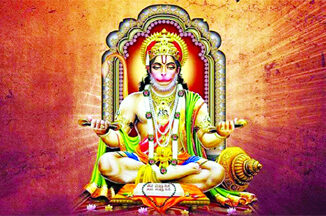
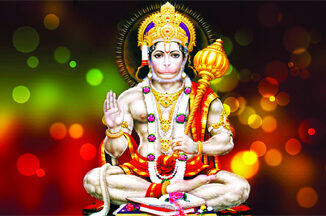
    Hanuman Jayanti is one of the most celebrated festivals in the Hindu calendar, dedicated to the birth of Lord Hanuman-the ultimate symbol of strength (bala), unwavering devotion (bhakti), knowledge (gyan), and humility. A deeply spiritual occasion, it reflects the core values of courage, service, and spiritual discipline.
    Hanuman is not only a central character in Hindu mythology but also a living presence in the daily spiritual practices of millions. Celebrating his birthday is both a devotional act and a reaffirmation of one’s faith in righteousness and moral strength.

    Hanuman the Chiranjeevi: The Immortal Devotee
    In Hindu tradition, Chiranjeevi means an immortal being. Lord Hanuman is one of the seven legendary immortals (Chiranjeevis) who are destined to live until the end of the current age (Kali Yuga). He was blessed with immortality by Lord Rama for his unwavering devotion, courage, and service.
    Hanuman’s immortality signifies his eternal presence on Earth. It is believed that he continues to live in a subtle form, aiding devotees, protecting the righteous, and responding to the sincere chanting of Rama’s name. He is called Sankat Mochan (remover of troubles) and is worshipped for strength, protection, wisdom, and inner peace.He plays an active role in the spiritual lives of millions even today, offering comfort and power to overcome challenges. His timeless presence reminds devotees that divine help is always near, especially in difficult times.
    The Divine Birth of Hanuman
    According to Hindu scriptures, Hanuman was born to Anjana, an apsara who was cursed to live on Earth, and Kesari, a monkey chief and a great warrior. Anjana prayed fervently to Lord Shiva for a child. Pleased with her devotion, Shiva granted her the boon of a powerful son.
    At the same time, King Dasharatha of Ayodhya was performing a yagna to beget sons, and he received divine pudding (payasam) from the fire god Agni. As the story goes, a portion of this divine offering was carried by the Wind God (Vayu Dev) to Anjana, who consumed it and conceived Hanuman. Thus, Hanuman is also considered the spiritual son of Vayu, earning him the name Vayuputra.
    Astrological Significance
    Hanuman Jayanti is celebrated during the full moon (Purnima) of the Chaitra month (March-April), as per the Hindu lunar calendar. This day is astrologically significant because it’s believed that Hanuman was born during the Chitra Nakshatra, on a Tuesday, a day that remains sacred to him.
    Legends and Heroic Feats
    Hanuman’s life is a series of incredible episodes filled with miracles and service to dharma:
    – Childhood Pranks and Powers: As a child, Hanuman mistook the sun for a ripe mango and flew up to swallow it, causing cosmic chaos. The gods had to intervene, and his powers were temporarily subdued to prevent misuse-restored only later when required in Rama’s service.
    – Service to Lord Rama: Hanuman played a key role in the Ramayana. He leapt across the ocean to Lanka, found Sita, burned Lanka with his tail, and brought the Sanjeevani herb to save Lakshmana’s life.
    – Symbol of Immortality: It is believed that Hanuman is Chiranjivi (immortal) and still roams the Earth, especially wherever Lord Rama’s name is chanted.
    Devotional Practices
    1. Fasting (Vrat)
    Many devotees undertake a strict fast from sunrise to sunset, abstaining from grains and consuming only fruits and milk. The fast is a symbol of self-discipline and spiritual cleansing.
    2. Mantra Chanting
    Devotees recite:
    – Hanuman Chalisa (composed by Tulsidas)
    – Sundarakanda (from Ramayana)
    – Bajrang Baan, Anjaneya Dandakam, and other stotras
    These hymns are believed to remove obstacles, protect from evil, and bring inner peace.
    3. Temple Worship
    Special pujas are conducted at Hanuman temples. The idol is often smeared with sindoor (vermilion) mixed with ghee, a sacred offering representing purity and energy. Devotees offer flowers, bananas, sweets like boondi or laddus, and light diya (lamps).
    4. Sankirtan and Bhajans
    Devotional songs and group chanting (kirtans) are organized. Some temples hold Akhand Ramayana Path (non-stop recitation of the Ramayana) throughout the day and night.
    Regional Celebrations
    North India
    – Celebrated on Chaitra Purnima with fasting, prayers, and large temple gatherings.
    – Delhi’s Hanuman Mandir and Varanasi’s Sankat Mochan Temple see massive footfall.
    Maharashtra
    – Devotees perform 41-day Hanuman sadhana leading up to Jayanti.
    – Applying sindoor to idols is highly popular, especially in Mumbai and Nashik.
    Andhra Pradesh & Telangana
    – Celebrated for 41 days starting from Chaitra Purnima to the 10th day of Krishna Paksha in Vaishakha.
    – Known as Hanuman Deeksha.
    Tamil Nadu & Kerala
    – Observed in Margazhi month (Dec-Jan) as Hanumath Jayanthi.
    – Devotees visit temples like Namakkal Anjaneyar Temple (Tamil Nadu) and Chowalloor Sri Hanuman Temple (Kerala).
    Karnataka
    – Celebrated on Shukla Paksha Trayodashi in Vaishakha month.
    – Special prayers and processions are common.
    Modern-Day Relevance
    Hanuman’s popularity is timeless. In modern times, his image is associated with:
    – Strength and Endurance: Athletes, bodybuilders, and martial artists look up to Hanuman as the original embodiment of physical prowess.
    – Protection: Amulets, lockets, and even vehicle decals of Hanuman are believed to ward off evil.
    – Mental Focus: Students and professionals invoke him for concentration and clarity.
    – Social Inspiration: Hanuman inspires youth to engage in service, stand up for justice, and stay grounded in values.
    Interesting Facts
    – Hanuman is worshipped on Saturdays and Tuesdays, considered especially auspicious.
    – He is also a master of the nine forms of devotion (Navadha Bhakti).
    – Several martial arts schools in India, including Kalaripayattu, honor Hanuman as their patron deity.
    – Hanuman Chalisa is among the most recited spiritual texts in the world.

  • Hanuman Jayanti

    Hanuman Jayanti

    Hanuman Jayanti is celebrated on the 15th day of the Shukla Paksha, during the month of Chaitra (the Chaitra Pournimaa). Hanuman, who is also known as Vanara God, was born on this day and Hanuman Jayanti is celebrated to commemorate the birth of Lord Hanuman.
    Hanuman avatar is considered as the 11th Rudra manifestation of the Lord Siva with great devotion, strength, knowledge, divine power, bravery, intelligence, spirit for selfless service and etc. He has devoted his life only for his Lord Rama and Mata Sita and never shows his bravery and intelligence without any purpose. Hanuman Jayanti is an important festival of Hindus and widely celebrated all over India. Lord Varuna is another name given to Lord Hanuman. Hanuman Jayanti is an occasion to remember Lord Hanuman’s unbridled devotion to Lord Rama and his feats of daring. In the epic tale of Ramayana, the extraordinary role of Lord Hanuman, an exemplary devotee of Lord Rama, is very well detailed out in situations requiring strength, will-power and courage. Lord Hanuman is considered a symbol of power and energy. The line ‘Bhoot Pisaach Nikat Nahi Aawe, Mahabir Jab Naam Sunave’ mentioned in Hanuman Chalisa, symbolizes that Mahavira takes away all the negativity from the life of his devotees. It is believed that is a person is supposed to get rid of all negativity or ghosts; should worship Lord Hanuman.
    There is a popular belief that worshiping Lord Hanuman will help in removing the hardship caused by Lord Shani or Saturn in astrology. When Lord Hanuman broke the boasting of Lord Shani then he apologized to Hanumanji and promised that he never ever create obstacles in Shri Ram and Hanuman work. To make Hanuman Jayanti, a fruitful day, you can visit Maruti’s temple and worship the deity. As a part of the tradition, red tilak (vermilion mark) is applied on the forehead of Lord Hanuman idol and Ladoos (sweet) are offered.Some of the important puja rituals include offering red vermillion with ghee to the idol of Hanuman. People are seen observing fast (Vrat) on this day. Worshiping Rudra (Bajrangbali) with these rituals will bestow you with blessings and glory of Hanuman or Anjaneya on Hanuman Jayanti. Thus, he will always stand by his sincere devotees.
    Significance of Hanuman Jayanti
    Hanuman Jayanti has immense significance for Brahmacharis, wrestlers, and bodybuilders. They consider Hanuman an ideal role model for physical strength and discipline due to his immense physical prowess. Special prayers, devotional songs, and the chanting of Hanuman Chalisa, a hymn dedicated to Lord Hanuman, mark the festival of Hanuman Jayanti.
    Devotees offer sweets, fruits, and flowers to the deity on this day. Some even fast to express their devotion and also to seek his blessings. As the 11th Rudra avatar of Lord Shiva, Hanuman dedicated his life to Lord Rama and Sita. His devotion and selflessness toward them inspire millions of Hindus worldwide.
    Moreover, people pray to Lord Hanuman for their bright future and widely regard him as a symbol of hope and optimism. Hanuman’s teachings and example of selflessness and devotion continue to inspire and guide people in their spiritual and personal lives. This also makes him a revered and beloved figure in Hinduism.
    Connection between Lord Hanuman and Rudraksha
    Hinduism considers Rudraksha beads sacred in Hinduism and believes them to possess divine powers. The seeds of the Rudraksha tree are the tears of Lord Shiva, which he shed while meditating for the welfare of mankind. Using Rudraksha beads during Hanuman Jayanti brings peace, harmony, and good health to the devotees.
    Additionally, as Hanuman is an avatar of Lord Shiva, using Rudraksha beads helps enhance the power and effectiveness of Hanuman worship. Many people wear Rudraksha beads as a necklace or bracelet while performing Hanuman puja. While some even use them to make a mala for chanting Hanuman mantras. Overall, using Rudraksha beads during Hanuman Jayanti is a way for devotees to connect with the divine energy and seek the blessings of Lord Hanuman.
    Hanuman Jayanti Vrat importance
    Fasting is an important tradition associated with Hanuman Jayanti among devotees. The belief is that by observing a fast on this day, one can purify their mind, body, and soul and seek blessings from Lord Hanuman. Devotees see fasting as a way to express their gratitude and devotion to the deity. While some people observe a complete fast, others consume only fruits or a simple sattvic meal.
    Fasting additionally helps develop self-discipline and control the senses. By observing Hanuman Jayanti Vrat, one can gain strength, courage, and wisdom. These are the qualities devotees associate with Lord Hanuman. In summary, fasting on Hanuman Jayanti is a way to strengthen the spiritual connection with the deity and seek his divine blessings.
    Astrological importance of Hanuman Jayanti
    Hanuman Jayanti is an important day in astrology, as it ought to significantly impact the planetary positions and the energy levels of the universe. Astrologers consider the recitation of Hanuman Chalisa during Hanuman Jayanti to be very powerful from an astrological perspective.
    The hymn can appease the planet Mars (Mangal), which associates with strength, courage, and victory. Chanting the Hanuman Chalisa reduces the negative effects of Mars in one’s horoscope and brings positive life changes.
    Many people perform pujas and rituals on Hanuman Jayanti, which has astrological benefits. The puja helps to connect with the divine energies of Lord Hanuman and seek his blessings. It brings positive changes in life, such as success in endeavors, good health, and protection from negative energies.
    How to perform Puja on Hanuman Jayanti?
    Hanuman Puja is a powerful way to connect with Lord Hanuman and seek his blessings for success, good health, and happiness. Devotees consider it one of the most sacred rituals to seek Lord Hanuman’s blessings and their gratitude towards him. Wake up early and take a bath: It is essential to wake up early and take a bath to purify your body and mind before starting the puja.
    Meditate and pledge to perform the puja sincerely: Before starting the puja, sit in silence and meditate for a few minutes to calm your mind. Take a pledge to perform the puja with devotion and sincerity.
    Place the idol or image of Lord Hanuman: Place the idol or image of Lord Hanuman on a wooden chowki covered with a fresh yellow cloth facing east. You can also use a picture of Lord Hanuman if you do not have an idol.
    Light an oil or ghee lamp and place it near the idol of Lord Hanuman. Seek blessings from Lord Ganesha for a hurdle-free puja.
    Sprinkle water on the idol or image of Lord Hanuman
    Sprinkle some water on the image of Lord Hanuman to purify it. Moreover, if the idol is of metal, use water, raw milk, honey, curd, ghee, etc., for doing the Abhishek.

  • Hanuman Jayanti

    Hanuman Jayanti

    To mark the birth of Lord Hanuman, Hanuman Jayanti is celebrated all over India in the month of Chaitra in Hindu calendar. The great Hanuman is known for its great strength, power and his immortal devotion towards Lord Rama. He is considered to be a greatest follower of Lord Rama and played a crucial role in his life. He is also known as Sankat Mochan who people remember in both good and bad times. He is considered to be as one of the most powerful Hindu gods in India. According to Hindu mythology, as the son of ‘Pawan’, the God of Winds and ‘Anjanee’ often referred to as ‘Pawanputra,’ is blessed with immense physical and mental strength that is greatly inspiring. Lord Hanuman is considered to be the eleventh Rudra manifestation of Lord Shiva. He symbolizes strength and selfless devotion, and his ability and determination to achieve impossible feats has been chronicled in several episodes of the Ramayana. He showed his unconditional love for Lord Ram, who also blessed him and reciprocated his devotion by treating him like a brother.

    Hanuman Jayanti is observed on full moon day, which is the 15th day of Shukla Paksha in the Hindu month of Chaitra (April-May). In different parts of India, Hanuman Jayanti is celebrated in different months on account of variation in the dates of Hindu calendar followed by different states. In North India, Sankat Mochan Temple in Varanasi and Hanuman Garhi at Ayodhya are the venues of great celebration.

    How to Celebrate Hanuman Jayanti

    Celebrations on Hanuman Jayanti began early in the day with special puja being performed by devotees. Devotees perform holy Puja in temples dedicated to Sree Hanuman or at Home. People in India organize special prayers for Lord Hanuman to get rid of evil spirits. The God is known for its magical powers. Prayers and Hymns are sung all day long in various Hanuman temples dedicated to the lord. Hanuman is considered as a symbol of Power and great strength in Hindu mythology. He is believed to have carried a whole mountain in his shoulder. On auspicious day of Hanuman Jayanti, People apply red Sindur from Lord’s feet on their foreheads. This is considering being a ritual for good health and good luck.

    Some of the important puja rituals include offering red vermillion with ghee to the idol of Hanuman. Red flowers, rui leaves with areca nut, fruits especially bananas, ladoos are offered and diyas are lit. Devotees recite the Hanuman Chalisa and Bajrang Baan and perform ‘arti’. It is believed that Hanuman was born at sunrise, so recitations and poring over religious texts is done at dawn and later ‘prasad’ distribution ceremony is held.

    In Western India, the practice of fasting a day before the Hanuman Jayanti is prevalent, whereas in Northern India, the general practice is to observe fasting on the day Hanuman Jayanti is held. Also, it is far more popular among males, especially wrestlers and bodybuilders. It is believed that chanting the Hanuman Chalisa hundred times for hundred days can help one attain the four tenets of Dharma, Artha, Kama, Moksha.

    Hanuman Jayanti is an occasion to remember Lord Hanuman’s unbridled devotion to Lord Rama and his feats of daring. In their quest to fight against Ravana, Lord Hanuman led a monkey army and built a bridge to Lanka. He also carried a whole mountain of magic herbs on his shoulders to restore the life of Lakshman. Thus, the ubiquitous standing statue of Lord Hanuman with his heart stretched out open is at once a metaphoric as well as literal illustration of his infinite devotion to Lord Ram, his wife Sita and brother Lakshman.

    In the epic tale of Ramayana, the extraordinary role of Lord Hanuman, an exemplary devotee of Lord Rama, is very well detailed out in situations requiring strength, will-power and courage. Lord Hanuman’s character is lyrically elaborated in Tulsidas’s ‘Hanuman Chalisa’. Also invoked as ‘Sankat Mochan’, Lord Hanuman can avert any ill-effects posed by the nine planets to one’s life as well as save one from the influence of evil spirits. In India, Tuesdays and Saturdays are dedicated to the worship of Lord Hanuman to get his blessings for progress, wisdom and fearlessness.

    Significance of Hanuman Jayanti

    Lord Hanuman is the embodiment of courage, self-control, highest state of devotion, intellect, sense-control and humility. Hanuman Jayanti is the most auspicious time to worship him to imbibe all his great qualities in our human capacity. It is also said that Lord Hanuman can grant extraordinary powers to a ‘sadhak’ earnestly seeking his blessings on his spiritual journey. The saffron flag near the Hanuman temples in the highways and the hilly regions is a sign of protection against the possibility of any untoward incident or evil energies. He has the boon of immortality, (he is called ‘Chiranjeev’ for this reason), and it is believed he still exists.

    When Maa Sita was abducted by Ravana, Hanuman could locate the place of captivity of Mata Sita and used his intellect and power to build an army to reach Lanka and save Sita. Some of the most noticeable episodes in the Ramayana include burning of Lanka with his tail, bringing an entire mountain which had ‘sanjeevani’ or life-saving herbs to save Lakshman’s life. Lord Rama reciprocated his love and devotion by treating him as his brother and blessing him.There is a story about the meeting of Bheem and Lord Hanuman in Mahabharat.

    There is a popular belief that worshiping Lord Hanuman will help in removing the hardship caused by Lord Shani or Saturn in astrology. When Lord Hanuman broke the boasting of Lord Shani then he apologized to Hanumanji and promised that he never ever create obstacles in Shri Ram and Hanuman work. To make Hanuman Jayanti, a fruitful day, you can visit Maruti’s temple and worship the deity. As a part of the tradition, red tilak (vermilion mark) is applied on the forehead of Lord Hanuman idol and Ladoos (sweet) are offered.Some of the important puja rituals include offering red vermillion with ghee to the idol of Hanuman. People are seen observing fast (Vrat) on this day. Worshiping Rudra (Bajrangbali) with these rituals will bestow you with blessings and glory of Hanuman or Anjaneya on Hanuman Jayanti. Thus, he will always stand by his sincere devotees.