Tag: Haryana

  • IN NEW DING TO CREDIBILITY, HARYANA GOVERNMENT TOLD TO CANCEL DLF DEAL

    IN NEW DING TO CREDIBILITY, HARYANA GOVERNMENT TOLD TO CANCEL DLF DEAL

    Chandigarh (TIP): The Haryana government has been ordered to cancel the allocation of 350 acres of land in Gurgaon to real estate major DLF. The verdict of the Punjab and Haryana High Court further will add another ding to the credibility of the state’s Congress government, which has been accused of allowing sweetheart land deals between DLF and Robert Vadra, the entrepreneur son-in-law of Congress president Sonia Gandhi.

    The assignment of 350 acres of prime property in the Wazirabad had been challenged by villagers who claim they were told that the government was acquiring their land for a recreational park. Instead, the land was given to DLF which planned to develop golf courses and villas for commercial sale. The state government headed by Chief Minister Bhupinder Singh Hooda had also been accused by the villagers and activist-turned-politician Arvind Kejriwal of favouring DLF over two other bidders for the same property.

    The court on September 3 has asked the government to invite fresh bids for the property. The government’s consultants valued the land and set a reserve price of nearly 1700 crores. When only DLF was deemed eligible by a government committee, its bid which was almost identical was accepted – so the government appears to have accepted a poor offer.

    In a statement, DLF said it is waiting for a copy of the verdict and it would ” like to clarify that the said land was allotted to DLF after two rounds of International Competitive Bidding process.” Ashok Khemka, a senior bureaucrat in Haryana who handled land records in an earlier posting has alleged that the Hooda administration allowed Mr Vadra to strike illicit land deals in Gurgaon which allowed him windfall gain.Mr Khemka has alleged a long campaign of vendetta by the government, which transferred him.

    The government has rejected the charges and has declared Vadra’s deals with DLF were clean. Haryana votes soon for its next government. The BJP won seven of the state’s 10 seats in the national elections that were held in May.

  • HJC parts ways with BJP, joins hands with Venod Sharma’s party

    HJC parts ways with BJP, joins hands with Venod Sharma’s party

    CHANDIGARH (TIP): Snapping a three-year-old alliance with the Bharatiya Janata Party (BJP), the Kuldeep Bishnoi-led Haryana Janhit Congress (HJC) on Aug 28 joined hands with former Congress MLA Venod Sharma’s Haryana Jan Chetna Party (HJCP) for the upcoming assembly elections in Haryana.

    Bishnoi and Sharma jointly made this announcement while interacting with mediapersons here. Hitting out at the BJP, Bishnoi said: “BJP ka to ye culture hi raha hai jhooth bolna aur dhokha dena. Jo Vajpayee, Advani aur Murli Manohar Joshi (top BJP leaders) ke nahi huye, Charan Singh, Devi Lal, Bansi Lal aur Om Prakash Chautala ke nahi huye, vo hamare kaise honge (it’s been the BJP’s culture to betray and tell lies).” “Aur kyonki hamein yeh pata tha ke yeh ab hamein dhokha denge, hamne likhit samjhota kiya, par inhon ne phir hamein dhokha diya (Since we knew that the BJP would betray us, we went in for a written agreement, but the BJP still betrayed us).” Claiming that it was unprecedented in Indian politics that a written agreement was made for an alliance, Bishnoi said the BJP again showed its true colours.

    “BJP dhokhebaz hai aur iska ghamand saatwein aasmaan pe chadh gaya hai, aur ghamand to Ravana ka bhi tuta tha (The BJP is treacherous and its arrogance has gone skyhigh. But even the arrogant Ravana was humbled).” Bishnoi claimed that though the HJC went the extra mile to maintain the alliance, the BJP cheated it at every step. “Inhone har pal, har kadam par mera gala ghotna chaha, aur hum sahan karte rahe, par ab pani sar se upar chala gaya hai (The BJP tried to stifle us, and we kept tolerating them. But now all limits have been crossed).” He, however, avoided naming BJP leaders who were opposed to the alliance. Replying to a question on a likely alliance with former minister Gopal Kanda’s Haryana Lokhit Party, he said he could not comment on it at present.

    Regarding the new alliance’s manifesto and seatsharing, Bishnoi said it would be worked out in the days to come. Meanwhile, former Ambala MLA Venod Sharma, who also addressed mediapersons on the occasion, said Haryana would now witness an HJC-HJCP wave as the BJP did not even have candidates for all 90 seats. He said the alliance, if voted to power, would abolish the interview system in government jobs and the practice of re-employment of retired employees. “The HJCP would release its own manifesto during its rally at Ambala on August 31, though the alliance would have a common manifesto too,” Sharma said.

  • Cong, BJP wrangle over booing of Opposition CMs

    Cong, BJP wrangle over booing of Opposition CMs

    After Hooda, jeers for Jharkhand CM at PM function * Prithviraj Chavan skips Modi event

    NEW DELHI (TIP):
    Maharashtra chief minister Prithviraj Chavan on August 21 boycotted both the government functions in Nagpur and refused to share the dias with Prime Minister Narendra Modi in the wake of heckling of non – BJP chief ministers by BJP workers in recent past, in such programmes. Chavan kept away from the inauguration of the Mouda Super Thermal Power Project Phase I, and later also skipped the function for laying the foundation stone of the proposed Nagpur Metro project.

    The guardian minister for the district, Nitin Raut, also refused to share the dais with Modi. The minister for social justice, Shivajirao Meghe received Modi at the airport on behalf of the state government, in keeping with protocol. The decision came after two other chief ministers, Bhupinder Singh Hooda of Haryana and Hemant Soren of Jharkhand, were booed by Bharatiya Janata Party (BJP) supporters at meetings addressed earlier by the Prime Minister.

    Chavan himself was heckled by BJP activists at a function attended by Modi in Raigad last week. Chavan accused the BJP of politicising the Prime Minister’s public events ahead of assembly polls. “I have decided not to attend the Prime Minister’s function because of the incidents that took place in recent days,” he said. A group of Congress supporters, meanwhile, staged a demonstration with black flags near the venue of a function attended by the PM.

    Hemant Soren booed
    Crowds heckled Jharkhand chief minister Hemant Soren in the presence of Prime Minister Narendra Modi on Thursday, the third instance of public humiliation of opposition leaders, fuelling talk over whether there was a BJP design to undermine the chief ministers in some election-bound states. The crowd, comprising mainly BJP supporters, booed and kept shouting “Modi, Modi” throughout Soren’s speech at a public rally in Ranchi.

    At one point, he asked the gathering to forget the political rivalry for a day, but that further irked the 70,000-odd crowd and the booing became louder. “Political powers keep changing; we need to respect the dignity of this stage,” Soren said, which irked the crowd of about 70,000 even more and led to louder chants. The reaction of the crowd appeared to have taken the chief minister by surprise, causing some errors in his speech. Soren mistakenly referred to Modi as the president at least five times.

    Modi was in Ranchi to inaugurate a substation of the Power Grid Corporation in the district. Later, the ruling Jharkhand Mukti Morcha (JMM) took a strong stand and said the party will not let the BJP hold such events in the state in future. Asking Modi to apologise to the public and leaders of Jharkhand and Haryana, the party’s national general secretary Supriyo Bhattacharya said the BJP should learn how to control its men.

    CM Soren too criticised the incident calling it a “pre-planned stunt by the BJP” and “an insult of the federal structure”, a reference to Modi’s repeated assertions that his government believed in “cooperative federalism” and taking along all states. “The PM must look into it… the federal system he talks about. I feel it is like raping the system, the tradition of the federal system.

    There is a plan to break it.” Soren had earlier asked the Prime Minister’s Office (PMO) to ensure no ‘Hooda-like incident’ occurs at the event in Ranchi. The JMM had said that in case of any such incident the party would take strong steps. The BJP has reacted to the incidents saying its government gives due respect to all CMs.

  • AAP ON THE VERGE OF COLLAPSE

    AAP ON THE VERGE OF COLLAPSE

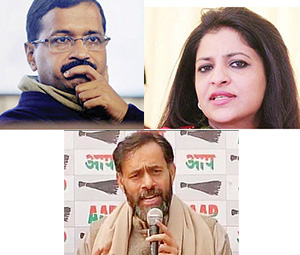
    New cracks in AAP as Shanti Bhushan takes on Kejriwal

    NEW DELHI (TIP) The Aam Aadmi Party (AAP) confronted a new installment of its intense internal battle August 13 after one of its founder members, Shanti Bhushan, went public with his criticism of party chief Arvind Kejriwal. Bhushan told a TV channel on Wednesday, August 13: “Arvind (Kejriwal) is a great leader and a great campaigner, but in my opinion he lacks organizational ability.

    He does not have the kind of competence which can spread the message of the party all over India, which can quickly create elected structures of the party which nobody will be able to blame.” In a detailed critique, he also criticized Kejriwal for abruptly resigning as Delhi chief minister after 49 days without consulting anyone, calling it “a sign of political immaturity”. AAP rebutted that Bhushan was “apparently unhappy” at the party’s decision to not contest the Haryana polls.

    “Bhushan has access to everyone in the party and his colleagues expect him to raise any issue which he considers important, with them, as a senior. It is unfortunate that he has aired his views publicly,” the party said in a statement. The 88-year-old former law minister remained silent today, while his son Prashant Bhushan, a close aide of Kejriwal, distanced himself from the comments.

    “This is his personal view. It would have been better if he had discussed it with party members,” Bhushan said, siding with the party. Kejriwal has been facing increasingly sharp and unsparing attacks on his leadership since the party’s abysmal performance in the national election undid its spectacular debut in the Delhi polls in December. AAP contested over 300 seats but won just four seats in Punjab.

    Many in the party believe Kejriwal’s high profile contest against Narendra Modi in Varanasi compromised AAP’s national poll campaign. Soon after the verdict, Shazia Ilmi, a prominent AAP leader, quit citing lack of inner democracy. In June, Yogendra Yadav, another founder member, wrote in an email to AAP members: “Arvind is turning into a personality cult that can damage an organization and the leader himself.” The party later insisted that it was united.

  • Control of gurdwaras in Haryana: SC orders for status quo

    Control of gurdwaras in Haryana: SC orders for status quo

    NEW DELHI (TIP):
    The Supreme Court has directed the SGPC and newly formed Haryana Sikh Gurdwara Management Committee (HSGMC) to maintain status quo on the management control of gurdwaras prevailing at 2:30pm on August 7 in Haryana till further orders. During the hearing, the Haryana government informed the SC that the new state committee has forcibly taken control of Sikh gurdwaras in the state.

    The SC asked Haryana DGP and district administration to maintain status quo with regard to gurdwaras and not permit any violence. The next hearing in the case would take place on August 25. The SC order came on a petition filed by Harbhajan Singh, a resident of Haryana and member of SGPC. Petitioner Harbhajan Singh – an SGPC member from Kurukshetra – contended that the Haryana Sikh Gurdwara (Management) Act, 2014 was not only a hasty enactment but also against the constitutional provisions and the Punjab Reorganisation Act, 1966.

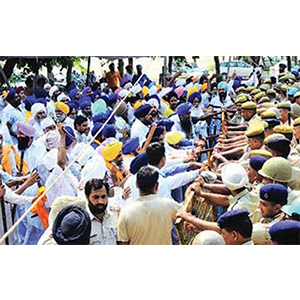
    The petition said a wilful attempt was being made by Sikhs of Haryana, prompted by the state government, to wrest control of gurdwaras from the rightful members of SGPC by use of force. The on-going tussle between Amritsar-based SGPC and HSGMC in Haryana turned violent on August 6 when members of HSGMC “forcibly” tried to take control of a gurdwara in Kurukshetra and clashed with police leaving several people injured. Clashes erupted outside ‘Chhevin Patshahi’, one of the biggest gurdwaras in Haryana, when members of HSGMC “forcibly” tried to enter the Sikh shrine and were stopped by police, Kurukshetra superintendent of police (SP) Ashwin Shenvi said.

    Police used water canons, lobbed tear gas shells and resorted to cane charge to disperse the agitated members. The members owing allegiance to HSGMC brandishing naked swords and lathis threw stones towards the shrine where the Amritsar-based Shiromani Gurdwara Parbhandhak Committee (SGPC) members were keeping watch. Some of the stones hit the policemen who acted as a buffer between the two rival groups.

    Police fired water canons to stop the marching HSGMC members to avoid a direct contact between the two rival groups. Policemen deployed at the barricades used force to check the movement of the marchers towards the shrine. Shenvi said five police personnel were injured in the violence while the HSGMC claimed 65 of its members received injuries, five of them serious. HSGMC president Jagdish Singh Jhinda said police used force in which 65 people owing allegiance to the newly constituted body were injured.

  • Haryana may go to polls in mid-October

    Haryana may go to polls in mid-October

    NEW DELHI (TIP): The Election Commission is set to announce assembly polls in Haryana within the next fortnight, with polling likely to be held in mid-October in a single phase. Sources indicated that the schedule for the state poll, the first after NDA’s emphatic win in Lok Sabha elections,may be out around August 21. A separate announcement for the other three poll-bound states of Maharashtra, Jharkhand and Jammu and Kashmir will follow later, possibly in late September or early October. This round of state polls will stretch over multiple phases from November to December.

    According to sources, polling for the three states may begin in mid- November and conclude in the second half of December. J&K, in particular,may witness polling over seven to eight phases. The EC’s move to delink Haryana polls from the other state elections due between December 7 and January 19 was necessary as the term of the state assembly expires on October 27. Maharashtra, Jharkhand and J&K assemblies have time until December 7, January 3 and January 19 respectively.

    Advancing the three state polls to match the Haryana schedule was not seen as feasible as Maharashtra, in particular, is witnessing an erratic monsoon and its impact, including flooding, may continue until October. The EC is likely to schedule the Haryana polling after October 10, and have the election process completed latest by October 20, leaving a week for government formation.

    The upcoming state polls are significant as they will be the Modi government’s first test after assuming power at the Centre. For the Congress too, the polls hold special significance as the party faces a tough test in Maharashtra and Haryana due to strong antiincumbency.

    The results, which are not quite expected to redeem the Congress after its drubbing in the Lok Sabha polls, are likely to pave the way for Priyanka Vadra’s political plunge after years of reluctance. Indications are that she may join the organization under her brother and party vice-president Rahul Gandhi.

  • No room for complacency in state polls, Amit Shah tells BJP MPs

    No room for complacency in state polls, Amit Shah tells BJP MPs

    NEW DELHI (TIP):
    On the back of BJP’s stupendous victory in the Lok Sabha polls, party chief Amit Shah has asked ministers and MPs to put their best foot forward to maintain the winning streak in the assembly polls slated in four states later this year. Addressing party MPs on July 31, for the first time since he took charge, Shah made it clear that there is no room for complacency and that the immediate focus of the party is to win the state polls in Maharashtra, Jammu and Kashmir, Jharkhand and Haryana.

    Speaking at the parliamentary party meeting at the Central Hall, Shah, whose UP strategy changed BJP’s electoral fortunes, asked the MPs to adhere to “Sampark, Samvaad and Samanvay” (communication, dialogue and coordination) with the voters, so that they do not turn away from the party at the state level. He asked the MPs to utilize their MPLADS funds judiciously in consultation with local leaders to avoid any disconnect between the party and MPs. As a step in this direction, he said, each one of them should set up offices as well as coordination committees in their respective constituencies for effective utilisation of MPLADS funds.

    Shah cautioned them against disconnect with voters and take the upcoming assembly elections and bypolls seriously. Prime Minister Narendra Modi, who chaired the BJP parliamentary party meeting, earlier introduced Shah to the party MPs. “The new BJP chief stressed on having coordination between the party MPs and the public and asked all party members to work at the booth-level,” said BJP vice president Mukhtar Abbas Naqvi after the meeting.

    Shah told the MPs that this was the first time in independent India’s history that a non-Congress government got absolute majority and it will be the duty of MPs to ensure party’s victory in their respective states. MPs from those states which are not poll-bound will also be deployed for party work in the pollbound states.

  • Rajya Sabha MP Birender Singh Removed From Congress Working Committee

    Rajya Sabha MP Birender Singh Removed From Congress Working Committee

    NEW DELHI (TIP): Cracking the whip against its sulking Haryana MP Chaudhary Birender Singh who appears set to join the BJP, the Congress on July 31 night removed him from the party’s working committee and sought an explanation from the senior leader asking why he was associating with the saffron party. Singh, who has raised a banner of revolt against Haryana Chief Minister Bhupinder Singh Hooda, had recently met BJP President Amit Shah and there were indications that he may join the BJP.

    Singh had earlier served as an All India Congress Committee (AICC) General Secretary and is a Rajya Sabha MP. He was made a member of Congress Working Committee (CWC), the party’s top decision-making body during the last AICC reshuffle. In a letter to Singh, AICC General Secretary in charge of party affairs in Haryana Shakeel Ahmed is learnt to have drawn his attention towards media reports of his meetings with BJP leaders including Shah.

    The party is learnt to have pointed out that there are media reports that he is hobnobbing with BJP leaders without any contradiction or denial from his side. The party has also taken note of his meeting with Mr Shah two days back and his subsequent statement that he discussed political issues. “All these actions are detrimental to the party’s interests and have given the party a very bad name. As you are a party MP, you are requested to explain your position within three days,” the party is learnt to have told him.

  • Time for Hard Decisions

    Time for Hard Decisions

    For the Congress, things came to a head this week: on a single day, two senior Ministers in Assam and Maharashtra, States where it is in power, resigned; three of its MLAs in West Bengal defected to the Trinamool Congress, and an ex-MP in Jammu & Kashmir quit the party 24 hours after the Congress and the National Conference decided to contest elections separately even though they still rule J&K jointly. Simultaneously, speculation grew about the possibility of similar exits in Haryana.

    This came at the end of a month that witnessed demands from within the party for the removal of the Chief Ministers of Assam, Maharashtra and Haryana. The attempts to replace them failed eventually, but the delay in settling the issue further undermined the authority of the incumbents and tried the patience of the rebels. The message that the Congress high command will not act under pressure came too late; the fact that the Chief Ministers and the dissidents both had backers in Delhi helped even less, presenting the picture of a divided leadership.

    The fact that State Assembly elections are due later this year in Maharashtra, Haryana, Jammu and Kashmir and Jharkhand, has increased the anxiety – and impatience – of party members in these States: they fear a repeat of the results of the recent general elections that saw the Congress touching an unprecedented low in terms of seats won. Taken together, these events are symptomatic of the deep crisis the Congress is going through. The party’s rank and file are not just looking for a major organizational overhaul and a big idea; it is actually thirsting for inspirational leadership and direction that can restore the fortunes of the Congress.

    But party vice-president Rahul Gandhi, who was expected to take over the organization’s reins after the Lok Sabha polls, continues to be reluctant to lead from the front, as is apparent from Karnataka veteran Mallikarjun Kharge’s appointment as the parliamentary party leader in the Lok Sabha. And party president Sonia Gandhi is clearly unable to persuade Mr. Gandhi to either accept the leader’s role fully or learn from his failed experiments at democratizing the party.

    Instead, thus far, a committee under senior leader A.K. Antony has been set up to make a diagnosis of, and suggest a cure for, the party’s ills. But while the committee’s sittings provided party members with a forum to vent their feelings, the report that will eventually emerge is not expected to change anything much: for, like similar post-debacle reports by Mr. Antony in the past, this one, too, is intended for Sonia Gandhi’s eyes only. The Congress is clearly not yet ready to look beyond the Gandhis, and it is therefore time now for Mr. Gandhi to take on the challenge or make way for someone else.

  • Haryana Guv okays HSGPC Bill

    Haryana Guv okays HSGPC Bill

    Chandigarh (TIP): On a day when a delegation of the Shiromani Gurdwara Prabandhak Committee (SGPC) met Haryana Governor Jagannath Pahadia against the passage of the Haryana Sikh Gurdwara Management Bill, 2014, by the Haryana Assembly, the Governor on July 14 gave his assent to the Bill, paving the way for the creation of a separate body for the management of the Sikh shrines in Haryana. The assent by the Governor came as a relief to the Hooda Government eyeing Sikh votes ahead of the Assembly elections later this year even as the SGPC described the Bill as “a blatant constitutional transgression” and “a brazen interference in Sikh religious affairs”.


    Urging Pahadia to decline assent to the Bill and “seek clarification regarding reserving the Bill for Presidential assent,” a delegation threemember delegation led by SGPC president Avtar Singh Makkar today submitted a memorandum to the him alleging that the Bill been passed in an “unconstitutional manner”. Chief Minister Bhupinder Singh Hooda, however, reiterated his stand claiming that the Vidhan Sabha was competent to pass Bill and “there is no need to forward it to the President” after Governor’s assent.


    “It was part of party’s manifesto for the 2005 and 2009 Assembly elections. It was party’s agenda and was based on demand of the Sikh brothers,” Hooda added. Meanwhile, the SGPC memorandum maintained that a state Vidhan Sabha had “no legislative competence “to pass a bill on a subject, which was governed by an Act of the Parliament. “Even after Partition, the gurdwaras which fell in the undivided state of Punjab and PEPSU have continuously been under the jurisdiction of the SGPC by virtue of the Sikh Gurdwara Act, 1925.This scope of jurisdiction has been preserved even after the territorial bifurcation of the state in November,1966,by according SGPC the status of an inter-state body corporate,” the memorandum asserted.


    Akal Takht excommunicates HSGPC Chattha, Nalvi, Jhinda
    Akal Takht on July 16 excommunicated Haryana Finance Minister Harmohinder Singh Chattha and state Sikh leaders Jagdish Singh Jhinda and Didar Singh Nalvi for “challenging the supremacy of Akal Takht by conspiring to divide the SGPC despite being repeatedly warned against it”. Akal Takht Jathedar Giani Gurbachan Singh, while reading out his edict from the rostrum of the Takht this afternoon, said: “The Sikh Sangat is directed to socially, religiously and politically boycott these individuals until they appear before Akal Takht and undergo ‘tankhah’ (religious punishment).” The decision came after the Sikh clergy and the SGPC executive committee held separate meetings. The meeting of Sikh high priests was preceded by a meeting of the SGPC executive, which passed a resolution terming the Haryana Sikh Gurdwara (Management) Bill 2014 to form a separate gurdwara panel for Haryana as “unconstitutional” and seeking action against Haryana Sikh leaders involved in it.


    Punjab Assembly passes anti-HSGPC resolution
    In the backdrop of controversy over the formation of a separate gurdwara panel by Haryana, the Punjab Legislative Assembly on July 17 passed by voice vote a resolution seeking the Centre’s intervention in prohibiting any state to interfere in religious matter of other states. The Congress opposed the resolution saying the Akalis were to blame for the formation of the Haryana Gurdwara Parbandhak Committee (HSGPC) as they had politicised the Shiromani Gurdwara Parbandhak Committee (SGPC) for their own vested interests. The Congress MLAs said they were for all for the unity of the Sikhs when it came to making of the All-India Gurdwara Act, but the Akalis had no right to oppose the HSGPC.

  • HARYANA ASSEMBLY PASSES BILL FOR SEPARATE SGPC

    HARYANA ASSEMBLY PASSES BILL FOR SEPARATE SGPC

    CHANDIGARH (TIP): Haryana Assembly on July 11 passed a bill paving the way for the formation of a separate body to manage affairs of Gurdwaras in the state even as the main opposition parties INLD and the BJP staged a walkout over the issue. The bill moved by Parliamentary Affairs Minister Randeep Surjewala was passed with a voice vote in the absence of the Indian National Lok Dal and BJP members, who had earlier staged a walkout opposing the legislation, claiming that the move was Congress’ “conspiracy” to “divide” the community.

    Bhupinder Singh Hooda-led Congress government in Haryana passed the bill ignoring the stiff opposition of the Amritsarbased Shiromani Gurdwara Parbandhak Committee, the Shiromani Akali Dal and other groups. Congress had promised the formation of separate SGPC in its poll manifesto in 2005, but the issue remained unsettled in its first term and got carried over to Hooda’s second term. But with assembly elections due in Haryana in October this year, the issue was speeded up. Hooda, Surjewala and other treasury benches members described the bill as “historic” one which was long overdue as the Sikhs of Haryana had been “fighting” to have right over management of their Gurudwaras.

    Heated arguments erupted between the ruling and opposition benches during the discussion on the Bill with the latter dubbing it as a “ploy” to garner votes ahead of the polls. “Dont divide the Sikhs on religious lines. They have a long history of sacrifice and the Sikhs of Haryana have not favoured this. This Bill should be taken back,” INLD’s State unit President Ashok Arora said, finding full support from his party MLAs including senior leaders Abhay Singh Chautala and Ramphal Majra. BJP’s senior leader Anil Vij said that the ruling party was “rushing through” and in a “hurry” to pass the 46-page Bill and had not given enough time to the Opposition to study and go through the contents of the important legislation, which was connected to the future of the Sikh community in the State. Vij said that the move was a “Congress conspiracy” to divide the community.

    However, Hooda and Finance Minister Harmohinder Singh Chattha, who prepared the report which favoured the separate body, told the House that there was no politics being behind the move as the decision regarding it was taken considering sentiments and aspirations of the Sikhs of Haryana. Earlier in the day, Surjewala introduced the Haryana Sikh Gurdwaras (Management) Bill, 2014 “to provide for the better autonomous management and effective supervision of Sikh Gurdwaras and Gurdwara properties in Haryana and matters related thereto.” Haryana Sikh leaders including Jagdish Singh Jhinda, Didar Singh Nalwi, who spearheaded the campaign for separate SGPC in Haryana, besides Congress leaders from Punjab including state unit chief Pratap Singh Bajwa and some party MLAs watched the proceedings of the House from the visitors gallery.

    SGPC wants Centre to intervene, stall move
    Chandigarh (TIP): Dubbing the Haryana Government’s initiative to carve out a separate Sikh gurdwara panel for the state as ‘unconstitutional and illegal’, an anguished Shiromani Gurdwara Parbandhak Committee (SGPC) has urged the Central Government and the President to intervene and stall the move. The Amritsar-based apex religious body of the Sikhs on July 11 said it might take a legal route to block the creation of the Haryana Sikh Gurdwara Parbandhak Committee (HSGPC). “The party will decide the next course of action and do the needful. We will see…we might take legal action if necessary,” said SGPC chief Avtar Singh Makkar. The SGPC chief, who presided over a meeting at Nada Sahib, said: “It’s the prerogative of SAD patron Parkash Singh Badal and party chief Sukhbir Singh Badal to take up the matter with the Central Government and the President. We have also requested the Haryana Governor to not give his nod to the Bill for creation of the HSGPC.”

    It is learnt that Badal during his recent meetings with top BJP leaders sought the Union Government’s support to stall the ongoing process for creation of a separate HSGPC. On being asked about the Modi government’s response, Makkar said: “It (response) was good.” The sources, however, said SAD leadership was given a ‘cold shoulder’ by central BJP leaders over the issue. Consequently, the SGPC has ‘toned down’ its stand on the HSGPC issue. The panel on Friday renewed its ‘truce’ offer to Haryana Sikh leaders. “We are all for the ‘panthic ekta’. To achieve it, we again offer our Haryana elected members two posts — that of Vice- President and Additional Secretary. We are also okay with Haryana gurdwaras spending the income being generated by them,” said Makkar.

  • Akal Takht-appointed committee meets Haryana Sikh leaders

    Akal Takht-appointed committee meets Haryana Sikh leaders

    CHANDIGARH (TIP): A 10-member committee formed by Akal Takht today met Sikh leaders of Haryana who have been demanding a separate body to manage the affairs of gurudwaras in the state, and offered them greater autonomy in handling the shrines.

    The Haryana leaders have sought time till June 4 to think on the “proposals”. The votaries of the separate SGPC for Haryana were invited for deliberations by the Sikh clergy in Amritsar yesterday, but they had stayed away giving various reasons.

    Following this, Giani Gurbachan Singh, the ‘Jathedar’ of the Akal Takht, had yesterday constituted the committee to visit Gurudwara Cheevin Patshahi, Kurukshetra, in a bid to convince the leaders spearheading the campaign for a separate body to withdraw their demand. Akal Takht is the supreme temporal seat of the Sikhs.

    “We had detailed discussion with them (the Akal Takht committee) on a range of issues. “The crux of our meeting is that they (SGPC) have offered greater autonomy to us (in running the affairs of gurudwaras in Haryana) while overall control will remain with the (Amritsar-based) SGPC,” said Didar Singh Nalwi, one of the prominent leaders who is at the forefront of the campaign for a separate SGPC for Haryana.

  • Appointment of Juned Qazi as INOC(I), USA President celebrated

    Appointment of Juned Qazi as INOC(I), USA President celebrated

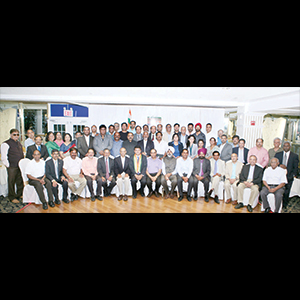
    NEW YORK (TIP): A large gathering of INOC (I) workers celebrated, June 17, the appointment of Juned Qazi as the new President of INOC (I) USA. Introducing Juned Qazi, George Abraham, Chairman of INOC(I) said Qazi is a dedicated leader with charisma and youthful vigor who is capable of taking INOC (I) to the next level. He recollected the time he was with Qazi in India during the recent election cycle to secure a seat to run from Aligarh constituency on a Congress ticket.

    ” I have personally witnessed his ability to motivate and mobilize the cadre at the grass-roots level; if he is to employ the same amount of stamina and focus, INOC could be rebuilt very soon to face up to the challenges on hand”, Abraham added. General Secretary Harbachan Singh who was master of ceremonies for the event, said that Juned Qazi was a consensus builder and a very talented leader who has earned the trust of fellow members of the organization both in USA and India.


    45
    Mrs. George Abraham presenting a bouquet to Juned Qazi

    He is a very amiable and dynamic leader, and we are confident that he will fully and very ably discharge his duties as President of INOC (I) and overwhelming support for him was the order of the day. He added, ” A sense of relief was felt all around the reception hall that the stagnant INOC(I) over the last one year was now once again geared up to function fullswing to respond to the aspirations of the people.” Mohinder Singh Gilzian, senior Vice- President lauded Qazi for his commitment to the values and principles of the Congress Party and wished him all the success. Juned Qazi thanked everyone for the great show of support and committed himself to work hard for the Indian Americans and motherland India, and to foster greater cooperation and friendship ties between the two.


    46
    ” I have been a Congress worker and loyalist all my life and I mean to remain one and serve the organization in the best possible manner. Of course, I will need your support to restore strength and vibrancy to the organization”, said Juned. Photos/ Gunjesh Desai/ Masala Junction

    He also vouched that he will go the extra mile to help the needy and will not hesitate to stand for what is right. Those who felicitated included Dr. Dayan Naik (President, Karnataka Chapter), Dr. Neil Mandava (Chairman, AP Chapter), John Joseph (President, Tamil Nadu ), T. J. Gill (President, Punjab), Zinda Singh (President, Delhi), Sonia Sodhi (President, MP Chapter), Chander Prakash Sukhval (V.P. Rajasthan Chapter), U.A. Naseer (Secretary, Kerala chapter), Sawaran Singh (President, Haryana Chapter) and Executive Committee members; Zach Thomas, Sabina Ali, Prasad Kambahpaty, Karamjit Dhaliwal. Others who felicitated included R. Jayachandran, Dr. Vaijinath Chakote, Jose George, Thomas T. Oommen, Dr. Uday Singh, Ram Gadula, Vidya Bhushan Sharma, Harkesh Thakur, Jose Jacob, Rev. Dr. Abraham and Rev. Wilson Jose, Mahesh Bhai and Rumpy Bindra. Earlier, at the beginning of the function, Mrs. George Abraham, the first lady of the INOC (I) presented, on behalf of the INOC (I) family a bouquet to Juned Qazi.

  • Congress in revamp mode, mulls leadership change in three states

    Congress in revamp mode, mulls leadership change in three states

    NEW DELHI (TIP): A month after the Congress got decimated in the Lok Sabha polls, the party seems to be in revamp mode. Top sources have confirmedthat the party’s immediate priority is to quell the rebellion in its ranks, especially in the states it rules.

    The Congress is reportedly looking at a possible change of chief ministers in Maharashtra, Assam and Haryana. Sources say the revamp will not confine itself to just containing rebellion but also bringing in new faces in the form of party chiefs in the states. Assam chief minister Tarun Gogoi has been facing dissidence for over two years now, but the Lok Sabha debacle has made his continuation untenable. The party managed just three out of 14 seats in a state where it has been in power since 2001.

    In Haryana, Chief Minister Bhupinder Singh Hooda faces severe opposition from party colleagues and former union minister Kumari Selja. The party could manage just one seat in the general elections. Hooda’s counterpart in Maharashtra, Prithviraj Chavan, also faces an uncertain future.

    On Thursday, Sharad Pawar, whose Nationalist Congress Party (NCP) is an ally in the state, met the Congress’ AK Antony and Ahmed Patel and both sides reportedly confirmed that their state legislators are seeking a change in leadership. The Congress-NCP combine was decimated in the Lok Sabha elections. “Right now, we are seriously considering leadership change in these three states but all I can say is that the odds of a new incumbent taking over in these three states are 50-50,” said a top Congress source. Assembly elections in Haryana and Maharashtra are about three months away.

    The Congress leadership seems hesitant in effecting a change; many argue that changing chief ministers in these states will have little or no impact on the outcome of the elections. However, in case of Assam, many believe that the party can make a good comeback with a fresh face as elections there are due in 2016.

  • Govt on overdrive to rescue Indians trapped in Iraq

    Govt on overdrive to rescue Indians trapped in Iraq

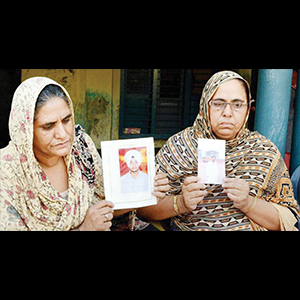
    NEW DELHI (TIP): The new government led by Prime Minister Narendra Modi on Thursday, June 19 scrambled to secure the release of 40 Indians being held in war-torn Iraq but asserted it was doing its “very best” to ensure their safety in the strife-torn country. While the ministry of external affairs said that it had information on the location where the Indians are being held captive, external affairs minister Sushma Swaraj — who met families of some of the abducted Indians – said the government would leave no stone unturned to free the Indian workers. The mass abductions have arguably presented the new government with the first big challenge since it assumed power last month. Most of the abducted Indians, working for a Turkish construction company, hail from Punjab though a few are from Himachal Pradesh and Uttar Pradesh.

    “I am personally mulling over all options. The government is making all kinds of efforts. We are not leaving any stone unturned,” Swaraj told reporters. “I am personally supervising this…I want to assure the families that the government and I will try our very best… make every effort,” she added. The government has already dispatched a former ambassador to Baghdad to coordinate rescue efforts in Iraq where large parts have been overran by Sunni insurgents. External affairs ministry spokesperson Syed Akbaruddin said during briefing, “We do have an understanding of the location (of the workers).

    Given that the matter is underway, at this stage, I will not be able to share details of their location and what Iraqi authorities have shared with us”. Punjab chief minister Parkash Singh Badal and his Himachal Pradesh counterpart Virbhadra Singh appealed to the Centre to ensure the safe return of the abducted Indians. Badal has said he is willing to pay a ransom to gain the freedom of the workers from Punjab. Earlier in the day, Sushma Swaraj met a delegation of families of seven of the abducted Indians.

    “The 40 men are safe… When the situation normalises, we will try to get them released,” she told the delegation accompanied by Badal. Himachal chief minister Virbhadra Singh said that the government has so far learnt that at least eight persons hailing from different parts of the state are missing in Iraq. “We are concerned about the safety of the all Himachal employed in Iraq,” he added. Official sources said, at least 16 residents of Haryana are believed to be stranded in strife-torn Iraq.

    Tamil Nadu chief minister J Jayalalithaa also sought the Prime Minister’s personal intervention to secure safety of 46 Indian nurses, including six from the state, trapped in Iraq. In Jammu, the family-members of Rajesh Kumar, 34, informed that his phone is switched off for the last one week. “We are constantly trying but his phone is switched-off for one week. It has never happened before,” a sobbing Reema, his wife, said. Eight migrants from Gorakhpur and Deoria in Uttar Pradesh are feared stuck in the Iraq turmoil.

  • ‘Am I not a citizen of India?’

    ‘Am I not a citizen of India?’

    An inner cry of a Dalit from the heartland of India

    Why I am asked about my caste when I go to the police? Am I not a citizen of India?” The father of one of the girls gang raped and brutally murdered asked the Samajawadi Party leader and Badaun Member of Parliament Dharmendra Yadav. It is time that this pertinent question needs to be answered not just by few politicians across the party lines but by the nation itself. What happened in Katra village in India’s northern state of Uttar Pradesh is a horrific crime of brutality against women.

    Millions of Indians everywhere must be feeling the shame of India in the news on the continuing assaults on women. However, it is more than just isolated incident of criminal wrong doings but rather emanating from an entrenched caste-driven mindset of these mad men who feel that they have the god-given right to them and are a privileged sect who can therefore get away with murder. According to press reports, in Badaun District, U.P, on the night of 28 May, two girls, cousins aged 14 and 15 years, stepped out of their house in Katra village to relieve themselves.

    When the father, a farm laborer went to police last week to report that his daughter and her cousin had gone missing, a constable slapped him in the face and sent him away. Hours later, he found the two girls hanging by their necks from a nearby mango tree. An autopsy revealed that they had been raped and strangled. The reaction from Akhilesh Yadav, the Chief Minister of the state while questioned on the brutality of this Taliban type of execution was nothing but a cold, callous and insensitive one as he chided the woman journalist who asked the question — ‘you aren’t in any danger are you?’.

    It is reminiscent of his father and the Samajawadi honcho Mulayam Singh Yadav’s statement in the past that ‘boys make mistakes, should we hang them for it? What is in it with these political leaders who have taken the oaths to uphold the law? Are they plain incompetent or willfully negligent in carrying out the responsibilities as elected representatives? His inaction during and after the Muzaffarnagar riots is on record that has already left a huge question mark on his leadership credentials as well as his impartiality in dealing with these human tragedies.

    This case has shocked the nation for a number of reasons; first and foremost, it once again shows the ugly truth about the age-old caste system which is not only thriving in India but exploited by various political parties. Mr. Shashi Tharoor, a former Congress Minister and Member of Parliament recently was quoted as saying ‘when India castes the votes in an election, it is voting the castes’.

    The family of the victims belongs to the Dalit community whereas the perpetrators of this heinous crime belonged to the higher caste Yadavs. If one looks at the history, the Dalits have been at the receiving end for centuries being discriminated against by the higher castes with impunity often being harassed and murdered without having a price to pay. Sadly, Uttar Pradesh is the epicenter of these crimes targeted at these helpless women who were taunted and raped at will, many times, just for the simple reason that they belong to the Dalit community.

    The recent election of Modi appeared to have given a boost to the upper caste majoritarian sentiment as evidenced in the current makeup of the Cabinet that consists two-thirds of the Ministers belonging to the RSS (Rashtriya Swayamsevak Samaj), a powerful ultranationalist grassroots movement raising serious doubt that whether an egalitarian shift would take place under this new Administration. At a rally in Muzaffarpur in March, BJP’s prime ministerial candidate Narendra Modi had stood beside Dalit leader Ram Vilas Paswan of the Lok Janshakti Party, and declared that the coming decade would be a “decade of dalits” and weaker sections of the country.

    Back in Gujarat however, over the last decade nearly Rs 3,689 crore of funds for targeted programs to uplift Dalits and economically and socially backward classes, went unutilized, according to Dalit group Navsarjan. The December 2012 gang rape in New Delhi, the country’s capital shook us all that prompted Congress-led UPA government to pass stricter laws. However, the rapes and abuse of women continue to occur unabated. Recent reports show that a rape is committed every 22 minutes though, the statistics and official records would never reveal the true picture as many of these cases go unreported.

    The social stigma attached to a rape often results in silencing the victim who might be ostracized or ridiculed publicly if they choose to go public. The law enforcement system is not geared to provide sympathetic ears, if anything, they impart fear. On that fateful night, the route these two girls took is familiar for the women of the village. It is probably the only time in the day when they step out alone, unaccompanied by the men of the family, in the dark. “Men go out in the day, so women can go only early in the morning or late at night” said one of the neighbors.

    This is a familiar, every day routine in rural India where the acute shortage of basic toilet facilities forces women and girls to venture out to open fields that makes them obvious targets for sexual violence. Nearly two months ago, four girls from Bhagna in Haryana who had stepped out to answer nature’s call were picked up from right outside their residence. They were raped and then dumped at the Bhatindia railway station in Punjab. It took the families an entire day to get the FIR registered and the medical examination took even longer. Five people were arrested in connection with that case, though the man alleged to be the main culprit, the village sarpanch continues to roam free.

    Most of that family fled the village fearing for their lives and they have been holding a protest at Jantar Mantar, for nearly two months. To those observers, the horrific crimes in both Badaun and Bhangana display the power politics as well as the prevalent caste and gender discrimination and there is no relief in sight with caste oriented policies of those who are in power. The National Campaign for Dalit Human Rights states that over one-sixth of India’s population, some 170 million people, live a precarious existence, shunned by much of Indian society because of their rank as “untouchables” or Dalits – literally meaning “broken” people – at the bottom pf India’s caste system.

    Dalits are discriminated against, denied access to land and basic resources, forced to work in degrading conditions, and routinely abused at the hands of police and dominant-caste groups that enjoy the state’s protection. Among the Dalit community and its supporters & sympathizers, Dr. Ambedkar’s statement resounds today more than ever; ‘My final words of advice to you are; educate, agitate and organize’ have faith in yourself. With justice on our side I do not see how we can lose our battle.

    The battle to me is a matter of joy. This battle is in the fullest sense spiritual. There is nothing material or social in it. For ours is a battle not for wealth or power. It is a battle for freedom. It is the battle of reclamation of human personality’. Are the NRIs only ashamed of the News itself or this entrenched system of enslavement? Will we ever show the courage to join this ‘ battle for freedom’ as Ambedkar called it for the sake of India?
    (The author is Chairman, Indian National Overseas Congress (I), USA)

  • High voter turnout in 91 seats in LS polls, crosses the 2009 mark

    High voter turnout in 91 seats in LS polls, crosses the 2009 mark

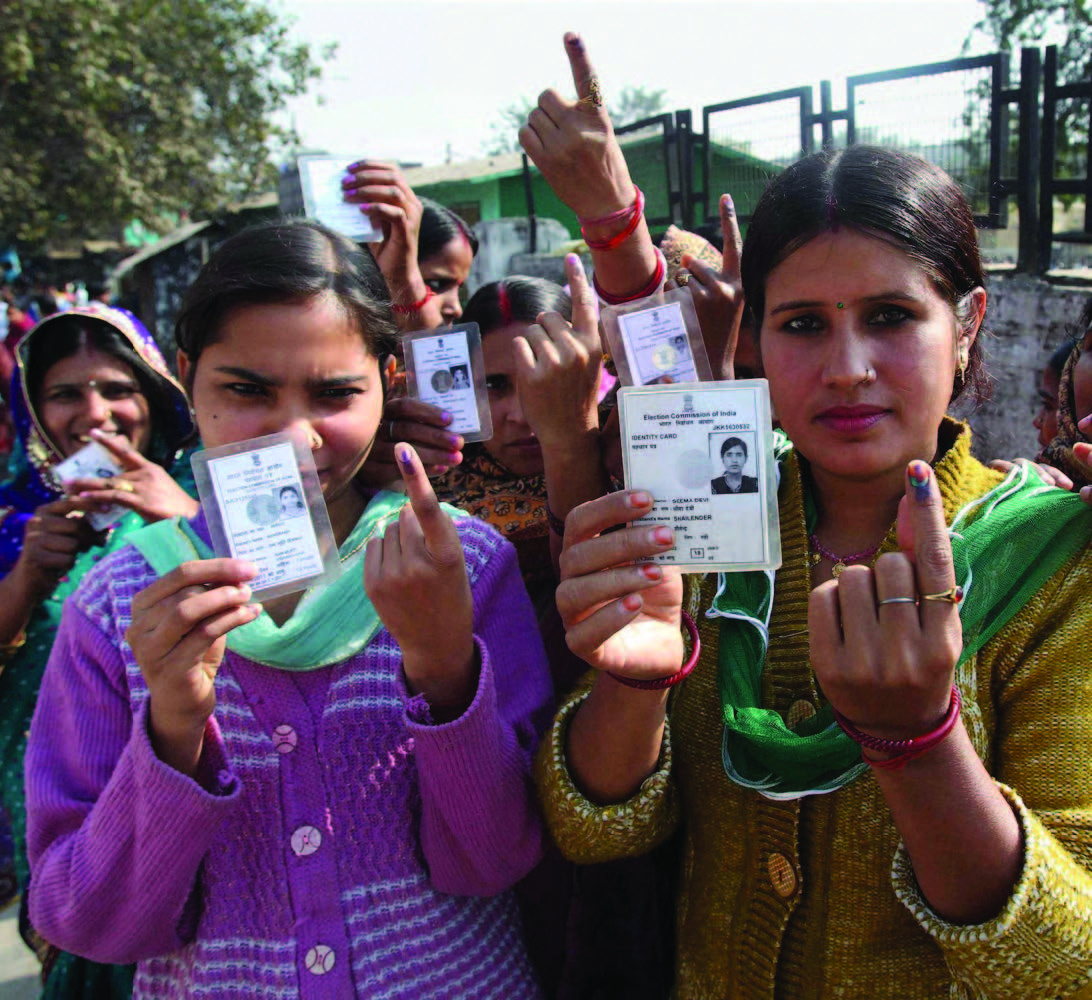
    NEW DELHI (TIP): Marking a considerably high voter turnout as compared to the 2009 Lok Sabha elections, India voted for 91 constituencies in 14 states and Union Territories which went to polls in the third and substantial phase on April 10, with Chandigarh witnessing the highest percentage of 74.

    The national capital of Delhi, too, recorded a 64 per cent voter turnout in the mega-battle for seven Lok Sabha seats where a faction-ridden BJP tried to sail on ‘Modi wave’ while AAP and Congress attempted to regain the lost ground. A substantial increase of 12 per cent was seen in the voter turn in Delhi as compared to the 2009 polls. Muzaffarnagar and Shamli in Uttar Pradesh, which witnessed communal riots in August 2013, recorded “above average” voter turnout of 67.78 per cent and 70.85 per cent, respectively.

    The 10 seats of Uttar Pradesh, which went to polls on Thursday, reported a record turnout of 65 per cent as compared to 51.30 per cent recorded in the last LS polls. The turnout in Delhi was 64 per cent, up by 12 per cent as against 2009 elections. Chandigarh constituency recorded the highest turnout of 74 per cent, against 64 per cent in 2009 polls. Kerala, which went to polls in single phase, recorded 73.4 per cent voter turnout, up from 73.2 per cent last time. Chhattisgarh’s Bastar seat witnessed the lowest voter turnout among the 91 seats of 51.4 per cent.

    But it was higher as compared to 47.33 per cent recorded in the last LS polls. There was a voter turnout between 67 and 55.9 per cent for the 21 Lok Sabha seats in three states and a union territory, besides 70 Assembly constituencies in Odisha in eastern India. An estimated 50 per cent of the 191 million electorate had voted in eight hours of brisk polling, with men and women of all age groups queuing up at the 140,850 voting centres from the time they opened at 7 am. EC maintained that the turnout could be “much higher” in all the seats as final reports were yet to come in with voting still on after the stipulated hours in various areas.

    Although the polls were mostly peaceful, there were some incidents of violence reported from Chhattisgarh, Odisha and Bihar in Naxal related violence. In Bihar, two Central Reserve Police Force (CRPF) personnel were killed when Maoists exploded a concealed land mine in Munger district when they were on their way to neighbouring Jamui where polling was on. Maoists also blasted a school in Bihar’s Lakhisarai district. In Odisha, Maoists snatched EVMs and took away the battery of one voting machine. Though the staggered nine-phase balloting began April 7, the first two rounds involved only 13 constituencies from the country’s northeast where the BJP is not a major player. While the people of India have made their choice, the results will be known when the votes are counted on May 16.

    CONSTITUENCY-WISE VOTER TURNOUT FOR LS SEATS IN 2014

    BIHAR
    1. Sasaram – 54 per cent
    2. Karakat – 51 per cent
    3. Aurangabad – 47.5 per cent
    4. Gaya – 51.64 per cent
    5. Nawada – 49 per cent
    MAHARASHTRA
    1. Buldhana -44 per cent
    2. Akola -39 per cent
    3. Amravati – 46 per cent
    4. Wardha – 42 per cent
    5. Ramtek -40.3 per cent
    6. Nagpur – 48 per cent
    7. Bhandara-Gondiya – 53 per cent
    8. Gadchiroli-Chimur – 59 per cent
    9. Chandrapur -43.49 per cent
    10. Yavatmal-Washim -40 per cent
    JAMMU & KASHMIR
    1. Jammu – 68 per cent
    CHHATTISGARH
    1. Bastar – 47 per cent
    UTTAR PRADESH
    1. Saharanpur – 68.40 per cent
    2. Kairana – 64.90 per cent
    3. Muzaffarnagar – 63.53 per cent
    4. Bijnor – 62.96 per cent
    5. Meerut – 60.50 per cent
    6. Baghpat – 61.52 per cent
    7. Ghaziabad – 60.20 per cent
    8. Gautam buddha nagar – 47.20 per cent
    9. Bulandshahar – 61.60 per cent
    10. Aligarh – 55.60 per cent
    DELHI
    1. Chandni chowk – 66.8 per cent
    2. West Delhi – 65.64 per cent
    3. East Delhi – 65.59 per cent
    4. South Delhi – 62.67 per cent
    5. Northwest Delhi – 61.38 per cent
    6. North-East Delhi – 67.08 per cent
    HARYANA
    1. Ambala – 70.7 per cent
    2. Kurukshetra – 75.8 per cent
    3. Sirsa – 76 per cent
    4. Gurgaon – 70.02 per cent
    5. Faridabad – 60.08 per cent
    JHARKHAND
    1. Chatra – 53.88 per cent
    2. Kodarma – 60.97 per cent
    3. Lohardaga – 59 per cent
    4. Palamau – 59.30 per cent
    LAKSHADWEEP
    1. Lakshadweep – 71.36 per cent
    ANDAMAN & NICOBAR ISLANDS
    1. Andaman & Nicobar Island – 70 per cent
    MADHYA PRADESH
    1. Satna -53.77 per cent
    2. Rewa -53.99 per cent
    3. Sidh -56.45 per cent
    4. Shahdol -60.79 per cent
    5. Jabalpur -48.14 per cent
    6. Mandla -65.53 per cent
    7. Balaghat -62.52 per cent
    8 Chhindwara -70.93 per cent
    9. Hoshangabad -65.01 per cent

  • BJP and the great communal divide

    BJP and the great communal divide

    Unless the leaders of India, especially from the secular parties show some courage to stand up to fundamentalism that may emanate from any quarters whether it is Hindu, Muslim, Sikh or Christian and stop exploiting religion and caste for vote bank politics, India’s democracy is headed for serious trouble”, says the author who visited Muzaffarnagar, last month, and got reactions of people there.

    On my recent visit to Muzaffarnagar in Uttar Pradesh, at the refugee camp of the September 2013 riot victims, the name of Amit Shah often came up during discussions. Mr. Shah is the newly appointed Campaign manager for Narendra Modi in Western U.P. For those who are keeping a close tab on the human rights situation in India, Amit Shah’s name rings an alarm bell. The appointment of Amit Shah appears to have a lot of political underpinnings.

    How this man who is charged with murder in Gujarat end up being the campaign manger in U.P? Sajjad, an aid worker to the riot victims wondered aloud in disbelief ! Uttar Pradesh has become a pivotal ground for BJP’s election strategy and Mr. Shah, who has a winning track record in Gujarat has the full confidence of Modi and the BJP. In order for Modi to become the Prime Minister, UP’s share of BJP seats has to be substantially increased from nine seats at present. Amit Shah, who has been charged with murder, extortion, kidnapping and five other sections under IPC for the killing of Sohrabuddin and his wife Kausar Bi in 2005.

    He was minister of state for Home in the Gujarat government under Chief Minister Narendra Modi, but had to resign in 2010 after he was arrested on charges of having ordered a series of “encounter” killings by the State Police. Currently on judicial bail, the Supreme Court has directed that he may not enter his home state of Gujarat where he may influence the investigations of the encounter killings. In Muzaffarnagar, they would all agree that it is the first time in history of the region that Jats and Muslims have killed each other. They are culturally the same people and the Muley Jats are converts from the Hindu Jat community. For instance, both communities observe the custom of pagri rasam ritual which consecrates a new head of a family, lineage or clan. The worship of Goga Pir, a local saint is common among both communities, remembering of ancestors.

    In a recent incident when an Imam issued a Fatwa against the use of cell phones by Muslim women, the entire community got together and filed an FIR and thereby forcing the withdrawal of such a dictate. The community is primarily known as owner cultivators who also tend cattle and raise chicken farms. The Jat-Muslim combine was first formed by Charan Singh and was efficiently used fielding Jat and Muslim candidates for a great win that catapulted him to become the Prime Minister of the country in 1979. The BSP in 2009 followed the same strategy and got encouraging results. For BJP and Samajawadi party, the Jat-Muslim combine has become an obstacle for 2014 election strategy and had to be broken and thereby breaking the hold of BSP.

    Two Jat youths named Sachin and Gaurav Singh had first killed Mohammed Shahnawaz, a Muslim youth of the village of Kawal after a traffic incident. Later a Muslim mob lynched to death the killers. It looks like it was a perfect situation handed down on a silver platter to these political operatives to put together a game plan and score for their party. The rest of the events are there for the record. For BJP, it presented an opportunity to consolidate the Hindu vote overriding caste divisions in U.P. They went on an overdrive even directly involving Members of the Legislative Assemblies to aggravate the situation by inciting the rioters. FIRs are filed against 19 MLAs though only 4 were arrested and all of them were shortly released.

    For Samajawadi party, the slow response to the worsening situation in Muzaffarnagar was alleged to be a calculated move as well. They were determined to break the supremacy of BSP in the region in order to add additional seats as SP President Mulayam Singh Yadav who is eyeing the post of Prime Minister in the upcoming election. Seema Mustafa, Director of Center for Policy Analysis doesn’t mince words when naming the perpetrators behind the violence. ‘The BJP, RSS and VHP, supported by the Bharatiya Kisan Union (BKU), were behind the violence. Moreover, the Samajwadi Party government did not do anything to prevent or control the violence, nor did it rehabilitate the displaced’.

    BJP seems to have accomplished its goal by fracturing the Jat-Muslim combine and their support for the Lok Dal and BSP. Samajawadi may be biggest loser in this whole affair as they have alienated Muslims who voted with them (40%) in the past. Jats who live not only in U.P. but also in Haryana and Rajasthan are indeed tilting towards BJP as the strategy of divisive politics beginning to pay dividends. To add insult to injury, those BJP MLAs who incited the community into violence are now rewarded with tickets to run for the Parliament. That includes Mr. Sangeet Som who created a fake video which is blamed for much of the anger and frustrations by the Hindu mob that participated in the melee.

    Sadhvi Prachi, a BJP leader was also arrested for violation of prohibitory orders and inciting communal violence by speeches in meetings at Nagala Madore area of Muzaffarnagar is heralded as a great champion for the promoting the Hindutva agenda. If one looks back at the history, Babri Masjid demolition and subsequent riots were results of careful and intensive strategizing by the Hindutva leadership. The demolition of the ancient Mosque in 1992 is the one incident in India’s social and political history that marks the climax of the politics of religious identity, and is the source from which caste identity politics originated and became powerful .

    There were 24 riots that happened last year alone and the public might even have missed noticing those reports. Soon after assuming responsibility for UP campaign, Amit Shah reportedly visited the Babri Masjid site and said the temple should be built there. Although he said it was not an election campaign issue, many observers made the connection as soon as the riots broke out, with minority affairs minister Rahman Khan telling India Today magazine that Shah had been sent expressly to stir up communal tension. ‘Any polarization along the religious lines would naturally help BJP’ another observer pointed out.

    Riots seem to be engineered for political purposes and BJP is mastering the art of creating communal tension for the sole purpose of political leverage or electoral gains. By driving own citizens from their homes to refugee camps, these parties are in gross violation of their oath to safeguard the life and property of all its citizens guaranteed by the constitution. Unless the leaders of India, especially from the secular parties show some courage to stand up to fundamentalism that may emanate from any quarters whether it is Hindu, Muslim, Sikh or Christian and stop exploiting religion and caste for vote bank politics, India’s democracy is headed for serious trouble.

  • BJP stands by Uddhav, dumps Raj

    BJP stands by Uddhav, dumps Raj

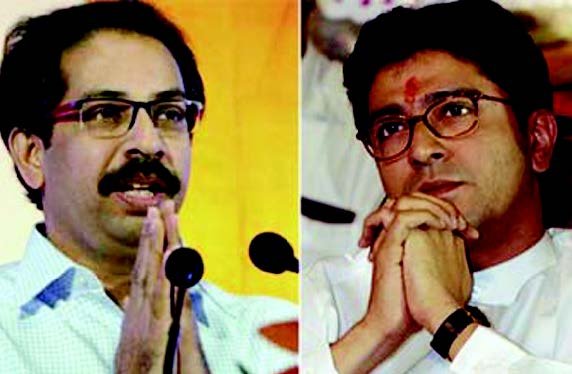
    PUNE (TIP): Unimpressed by Raj Thackeray’s support for its prime ministerial candidate Narendra Modi, the state BJP unit has decided to take on the Maharashtra Navnirman Sena (MNS) in the Lok Sabha elections. State BJP president Devendra Fadnavis said that the BJP leaders will campaign for Shiv Sena’s candidates to ensure the MNS’s defeat.

    “We stand by our alliance partner Shiv Sena. We are doing all to win every seat in the state. The MNS has opened a front against our alliance partner and we are going to resist every attack on the Sena. Our leaders will campaign for the Sena candidates and appeal to voters to defeat the MNS,” Fadnavis added. He said there was no confusion and though Raj has announced that his MPs will support Modi, they would are going to campaign against MNS candidates. Allegations about colluding with the MNS have been in the air. Fadnavis said there is no covert or overt understanding with the MNS.

    “The BJP values its old alliance partner Shiv Sena and there is no question of any understanding with the MNS. We are contesting the election as an alliance and it is our duty to abide by it,” he added. Senior BJP leader Gopinath Munde, speaking to local media persons in his hometown of Beed, said, “I had met Raj Thackeray and wanted him in our alliance. But things did not work out and the chapter was closed. There is no point in raking up the issue again.

    We are confident that the alliance will win the maximum seats in the state.” Munde said he would address a series of rallies with Uddhav across the state. The BJP’s support for Uddhav comes against Raj’s appeal to his party workers to “target Shiv Sena”. During his public rally in Pune on Monday, Raj announced a dozen public rallies to explain his stand on Shiv Sena and Uddhav. “I need to clarify that I was not against joining the BJP-Sena alliance. But Uddhav never wanted me in. I plan to reveal more such facts in the next few days,” Raj had said.

    City unit told to get its act together
    The BJP’s state president Devendra Fadnavis said he had asked the city unit leaders to set aside their differences and campaign for the party candidate Anil Shirole. “We don’t want to lose any seat because of infighting. We cannot afford any bickering at this moment. All party workers will work for Anil Shirole and we are confident of winning the Pune seat,” said Fadnavis. He added that MLA Girish Bapat and his supporters were actively campaigning for Shirole and senior state leaders would address public rallies in the city. Nitin Gadkari supporter Bapat had sought party nomination, but finally Munde supporter Shirole succeeded to fetch the ticket. Unhappy with the decision, Bapat and supporters had publically expressed unhappiness over the party’s decision.

    Mistry, Modi’s opponent in Vadodara, arrested
    VADODARA (TIP): Congress’s Vadodara candidate Madhusudan Mistry, who removed posters of the BJP prime ministerial candidate Narendra Modi, was on April 3 arrested by cops on charges of vandalism.Mistry, the Congress candidate was earlier detained for vandalism. Mistry, along with 100-odd Congress workers tried to remove posters of his rival and BJP’s prime ministerial candidate, Narendra Modi, in Vadodara.After detention, an unrepentant Mistry said he had no regrets for his action and said that he would continue to protest against Modi.

    Will your jijaji be India’s chowkidaar? Modi asks Rahul Gandhi
    KURUKSHETRA (TIP): Bharatiya Janata Party prime ministerial candidate Narendra Modi took on Congress vice president Rahul Gandhi in a rally in Kurukshetra in Haryana. Referring to Rahul’s brother-in-law Robert Vadra’s controversial land deals in Haryana, Modi attacked the Gandhi scion, calling him shehzada. He was quoted by NDTV as saying, “I had said the country needs a chowkidaar and I will serve you like a chowkidaar.

    Shehzada said the country needs 125 crore countrymen as chowkidaars. I ask him, will his jijaji (brotherin- law) be a chowkidaar too? Will he guard land?” In 2012, Vadra was accused by Arvind Kejriwal, an anticorruption crusader, of taking an interest-free loan of Rs 65 crores and heavy bargains on land from DLF Limited in exchange for political favours.Congress’ principal opponents, the Bharatiya Janata Party raked up the issue in the parliament and demanded a probe into the matter. In response to the controversies surrounding the deals, the Congress came in strong defence of Vadra, criticising the BJPfor targeting its president Sonia Gandhi’s family.

  • CCI slaps Rs 2.4 crore penalty on DLF

    CCI slaps Rs 2.4 crore penalty on DLF

    NEW DELHI (TIP): The Competition Commission has slapped Rs 2.4 crore penalty on realty major DLF for not complying with its directions to cease and desist from unfair trade practices. Besides, the fair trade watchdog has said that continued non-compliance would result in penalty of Rs 1 lakh every day. Holding that DLF contravened its directions, Competition Commission of India (CCI) has imposed a fine of Rs 2.4 crore. The CCI order, dated March 26, has come on complaint filed by Magnolia Flat Owners Association and one Rahul Kapoor regarding demand letters issued to them by DLF “under the garb of super area”.

    The complaint was filed against DLF Universal, Haryana Urban Development Authority and Director Town and Country Planning, Haryana. After looking into the matter, CCI found that DLF had contravened its order, dated January 31, 2012 by issuing the impugned demand letters dated November 28, 2012. Besides, the entity “failed to show any cause, much less any reasonable cause, for non-compliance of the aforesaid order”. “No stay on the cease and desist order by the Commission was operating when the non-compliance occurred. The said demand letter has not been withdrawn till date,” the order said.

  • Haryana governor’s plane crashes at Chandigarh, no casualties

    Haryana governor’s plane crashes at Chandigarh, no casualties

    CHANDIGARH (TIP): The Haryana governor, Jagan Nath Pahadia had a miraculous escape on March 27 morning, when state government’s plane with governor on board caught fire while taking-off on the runaway at the Chandigarh airport. The incident took place at around 11.30 am when Governor’s plane was to take off from technical area of Chandigarh airport.

    The plane immediately crash-landed at the runway, when it was it was about to take off. Pahadia was immediately pulled out of the plane by his staff and taken to Post Graduate Institute of Medical Education & Research (PGI) Chandigarh for detailed medical examination. No serious injury was reported.

    According to Haryana Raj Bhawan spokesperson, 82-years old Pahadia was going for Delhi, where the President of India would be launching his autobiography on Thursday at Rastrapati Bhawan. At the time of incident, a total of nine persons including Governor, his personal doctor, governor’s aide-de-camp (ADC) and others were accompanying him in the plane. The incident had happened immediately after the plane was taken to runway after refueling at the airport. The airport runway was closed for half

  • Cabinet clears Jat reservation, drops Rahul’s anti-graft ordinances

    Cabinet clears Jat reservation, drops Rahul’s anti-graft ordinances

    NEW DELHI (TIP):
    The Union Cabinet cleared the ordinance for Jat reservation in government jobs. The anti-graft ordinances, which were pushed by Congress vice-president Rahul Gandhi, were not passed after President Pranab Mukherjee reportedly expressed reluctance to support government’s ordinance route. Ahead of Lok Sabha polls, the government decided to include the Jat community in the central list of OBCs in nine states, a move that is expected to benefit about nine crore people from the community. The decision would pave the way for the community members to avail benefits of reservation in central government jobs and central education institutions as per the existing norms.

    The Central list of OBCs for the states of Bihar, Gujarat, Haryana, Himachal Pradesh, Madhya pradesh, Rajasthan, Uttarrakhand, Uttar Pradesh and the National capital territory of Delhi will include the Jat community. On the other hand, after President Pranab Mukherjee’s reluctance over the seven anti-graft bills, the government decided not to bring ordinances. Earlier, Senior Congress leaders had met the President just before the crucial meeting. On the Telangana front, the Cabinet decided to direct Planning Commission to implement grant of special category status to Seemandhra for 5 years. The Cabinet also decided to make amendments in Andhra Pradesh Reorganisation Bill to facilitate smooth and full resettlement and rehabilitation as part of Polavaram project. Polvarum project will be executed by Central Government.

    Both the submerged area and the area where the people will be relocated, will be transferred to Seemandhra. The Union Cabinet also tried to address the concerns regarding electricity supply in the states. Congress leader Jairam Ramesh informed that the power from central generating stations will be allocated on the basis of consumption of last 5 years. He said the Telangana Bill says that only 15 per cent of unallocated power will be allocated on the basis of power consumption trends.

    The rest will be allocated on the basis of population. The Cabinet also approved transfer of 123 properties in Delhi under DDA and Land and Development Department to Wakf Board. Defending the ordinance recourse to pass the pending bills, information and broadcasting minister Manish Tiwari blamed the Opposition for disrupting Parliament. “We believe probity is public life. UPA endeavoured during various sessions bills are passed but disruptions by opposition did not allow them to be deliberated in Parliament or enacted as laws. There was a marked difference between what Opposition said and did on the issue,” he said.

  • Rs 45,000 crore ponzi scam busted: CBI

    Rs 45,000 crore ponzi scam busted: CBI

    NEW DELHI (TIP): The Central Bureau of Investigation (CBI) on February 27 busted a massive ponzi scam of Rs 45,000 crore by two Delhi-based private companies of a group, raising money from over five crore gullible investors in the garb of sale and development of agricultural land and booked their managing directors and six directors.

    A series of raids were conducted over the last five days at the office premises and residences of the directors and other suspects at places in Delhi, Chandigarh, Punjab and Haryana, which led to recovery of huge records and data relating to deposits from public and their misutilisation and diversion of funds, besides other incriminating documents.

    A CBI spokesman said only after preliminary analysis of documents the agency came to know of the enormity of the scam. Initially, the investigators did not realise the gravity of the scam when they carried out the probe in the orders of the Supreme Court into the allegation of the companies taking deposits from public through their ponzi scheme promising land until they saw the mindboggling figures in some of the seized laptops.

    Then only they realised that their earlier estimates about the size of the scam were just a tip of the iceberg. The agency has converted the Preliminary Enquiry registered on the Apex Court’s orders to register the case against the managing directors and promoters of the two companies.

    The case has been registered against PACL managing director Sukhdev Singh, PGF managing director Nirmal Singh Bhangoo and six other directors of these companies. In Ponzi schemes, returns are given to investors from the money collected from other depositors in a pyramid-like structure.

    The CBI spokesperson said the inquiry found prima-facie evidence of said companies of the group of Delhi having raised investments by issuing bogus land allotment letters to induce the investors. She said it was revealed only when one of the companies, on being directed by the Punjab and Haryana High Court to wind up the scheme and refund the investors, that a similar fraudulent scheme was operated under the name of the second company of the group.

  • Marital cruelty Enable women to fight it

    Marital cruelty Enable women to fight it

    In a country where domestic violence is not only widely prevalent but also underreported, the Supreme Court’s observation on marital cruelty assumes great significance.

    A Bench comprising Chief Justice P Sathasivam and Justices Ranjan Gogoi and SK Singh has rightly held that the complaint of mental and physical cruelty leveled against the husband and parents-in-law cannot be dismissed at the onset. Its ruling that a trial is essential may not by itself translate into relief for scores of battered women.

    Yet armed with the knowledge that their grievances will not be dismissed on frivolous pretexts, it can enable more women to come forward and seek redress. Even though much is said about women’s growing empowerment, instances of domestic abuse continue to find sanction in the patriarchal system.

    According to the National Family and Health Survey 3, almost two in every five married women in India have experienced domestic violence. In states like Punjab and Haryana, it is one of the major crimes against women. While Haryana reported 18 cases everyday, helplines in Punjab were flooded with complaints of domestic abuse by women in distress.

    Ironically, though domestic violence was recognized as a criminal offence way back in 1983 and the path-breaking Protection of Women Against Domestic Violence Act was passed nine years ago, not many recognize the gravity of the problem. While more heinous crimes like rape are looked at with horror, incidents of spousal violence are invariably brushed aside.

    Sadly, though a host of laws have been passed to enable women to fight oppression, gender inequity and violence is a reality women in high positions too have to live with. Answers lie not only in proper implementation of the existing laws but also a change in attitudes that tend to dismiss cases of domestic violence as mere spousal disagreements. It’s time India realized violence against women, be it on the streets or within the four walls of a home, was abhorrent and must be dealt with severely.

  • KHAPS TURN DOWN AAP’s RALLY INVITE

    KHAPS TURN DOWN AAP’s RALLY INVITE

    CHANDIGARH (TIP): Haryana’s khap leaders have rejected Aam Aadmi Party’s invitation to attend the party’s Rohtak rally, scheduled to be held on February 23. The leaders on Thursday said khap panchayats are social platforms and they want to stay away from political stages.

    AAP’s national executive member Naveen Jaihind had invited social organizations, including khap panchayats, to attend the rally to launch the party’s Lok Sabha election campaign. But sources said some khap leaders are likely to attend the rally in their individual capacity. “Few khap leaders have even applied to seek AAP tickets for Lok Sabha elections in Haryana,” said a khap leader.

    Dhankhar khap president Om Prakash Dhankhar said they won’t attend the rally as they want to raise social issues not political ones. “We have members from different sections of the society who have affiliation with different political parties. So, we cannot associate khaps with any particular party,” he said.