Tag: Haryana

  • AAP effect: Haryana reduces power tariff

    AAP effect: Haryana reduces power tariff

    CHANDIGARH (TIP): In an apparent AAP effect, Haryana government today gave a major relief to power consumers by reducing tariff in the state. While the Congress Government rolled back tariff hike for consumption of up to 500 units by domestic consumers, power rate for farm sector was reduced by 60 per cent for current fiscal. The decision, which will cost Rs 600 crore per annum to the state exchequer, will benefit 38 lakh domestic consumers, which account for 95 per cent of total consumers, and 5.50 lakh agriculture consumers. It comes just a fortnight after Delhi chief minister Arvind Kejriwal announced a 50 per cent cut in electricity tariffs for households consuming up to 400 units of power per month, fulfilling a second key electoral promise of his Aam Aadmi Party (AAP).

    “Government has withdrawn the tariff increase (about 13 per cent) made from April 2013 onward for domestic consumers consuming up to 500 units per month. Moreover, the Fuel Surcharge Adjustment (FSA) of financial year 2013-14 will also remain same,” chief minister Bhupinder Singh Hooda said in a release. “As a result of this decision, up to 1000 units bimonthly consumption will get the benefit of old slab system as well as reduction in tariff and FSA to the last year’s level,” he said. The domestic sector power rate from April 1, 2013 were Rs 5.24, Rs 5.94 and Rs 6.32 per unit for those consuming up to 250 units, between 250 and 500 units and above 500 units respectively. Giving relief to farm consumers, Hooda said tariff being charged to agriculture consumers has been reduced by 60 per cent in the state.

    “Now the agriculture consumer will have to pay 10 paisa per unit (present rate 25 paise per unit) or Rs 15 per BHP per month,” he said. Hooda said that the decision, which comes just months ahead of Lok Sabha polls, would provide relief to the electricity consumers in the state and the entire expenditure would be borne by the state government. Haryana government had already decided not to hike power tariff for 2014-15.

  • Fresh chargesheet against IAS officer Ashok Khemka

    Fresh chargesheet against IAS officer Ashok Khemka

    NEW DELHI (TIP): IAS officer Ashok Khemka, who questioned land deals involving Sonia Gandhi’s son-in-law Robert Vadra, has been served a fresh chargesheet by the Haryana government. The state government has asked the bureaucrat to respond to the chargesheet, served last night and received by his son, within 15 days. Khemka has been booked for the violations of sections 3,5,6 and 8 of the All India Service Rules, said a govt official.

    Khemka shot into news after he cancelled a land deal between DLF and a company owned by Robert Vadra in 2012. Two chargesheets have already been filed against Khemka — one for administrative misconduct in cancelling the mutation and the other for low sale of wheat seeds during his tenure in the Haryana Seeds Development Corporation (HSDC).

  • Patiala Police denies releasing a list of NRIs involved in International Drug Racket

    Patiala Police denies releasing a list of NRIs involved in International Drug Racket

    Harjit Singh Dhesi

    DALLAS (TIP): The arrest of a dismissed Punjab Police officer involved in an international drug racket on November 11near the Haryana-Delhi border has given rise to a variety of news relating to involvement of many NRIs in the racket. The arrested Ex-deputy superintendent of Punjab police Jagdish Bhola is reported to have stated, according to a police officer who requested for anonymity, that the markets spanned up to Britain, Canada and European countries and quite a few well known NRIs were part of the racket. A Canadian newspaper carried the news that Patiala police which had arrested Bhola has identified over 30 non-resident Indians (NRIs), who acted as active and passive couriers for him. There was mention of some of the names in the news report.

    Among those mentioned were John Singh Gill, Jaswinder Choker, and Major Nat who claimed their innocense. According to information available with The Indian Panorama, when Sacramento based journalist representing Ajit of Jalandhar asked the Patiala Police Chief, the Senior Superintendent Hardial Singh Mann whether or not the police had released a list of NRIs supposedly involved in the drug racket, the SSP said that the Police had not released any list carrying the names of persons in question.

    The attorney for John Singh Gill decried such rumors, which he said, were aimed at tarnishing the fair image of his client. A friend of John Singh Gill said it was the handiwork of those who are envious of John Singh Gill who has come to occupy a fair name and position in the community and is known as one of the best promoters of the game of Kabaddi. He added that it is by sheer dint of hard work that Gill, Choker, Nat and people like them came to acquire respectability and commanded admiration of the community. He condemned those who were trying to damage their image by spreading rumors.

  • Of Sants and Babas

    Of Sants and Babas

    It must be the darkest Kaliyug that our Sants and Babas have turned in to common criminals. They are in the news most of the time for all the bad reasons. As a child, I remember Sant Nihchal Singh Ji of Jagadhari visiting my maternal grandfather in Giridih, Bihar. I was naughty, very naughty. My mother took me to Sant Ji and requested him to bless me to be not so naughty. Sant Ji recommended to my mother a verse from Gurbani that she should recite while waking me up in the morning. My mother very religiously recited the verse while waking me up.

    I did not understand what the verse meant. But I liked to hear the cadence of the sweet voice of my mother and her meditating posture. As soon as she had finished, I would give her a pinch and rush out for the day of loafing. Her recitals of verse probably did not change me much. But she certainly had its calming effect. She stopped complaining about my being naughty. But I am glad she did not have to face an Asa Ram or a Narayan Sain. Both have proved how innocent faith of devotes can be abused. There have been Sadhus, Sants, and Babas all the time. In fact, Bharat is a land of Sadhus and Babas.

    And they always had a potent voice in the community. Going back in to ancient times in India, we find stories of how even the powerful kings preferred no to antagonize a Sadhu. A Durvasa certainly was feared more than a Rakshasa. But they were good intentioned people, not the kind that we have today. That is why I said at the outset it must be the darkest Kaliyug that we have such Babas. To add to the list of these illustrious Babas, we now have Baba Ramdev. I admire the man for his sheer enthusiasm in demanding the most stringent punishment for the corrupt.

    I have met him a couple of times in New York and spoken with him. I have always found him spitting venom against Congress Party in general, and against Sonia Gandhi and Rahul Gandhi, in particular. Let me share with you, my dear readers, I have often wondered how this man, with little education, rose from a common villager in Haryana to become the master of a vast business empire worth Rs. 1100 crore.

    This comment will become long if I started on how he amassed this wealth. So, I will leave it for some other time. The story of Babas and Sants will always be there. Nothing special about it. It is what we make out of those stories that counts.

  • Of Sants and Babas

    Of Sants and Babas

    It must be the darkest Kaliyug that our Sants and Babas have turned in to common criminals. They are in the news most of the time for all the bad reasons. As a child, I remember Sant Nihchal Singh Ji of Jagadhari visiting my maternal grandfather in Giridih, Bihar. I was naughty, very naughty. My mother took me to Sant Ji and requested him to bless me to be not so naughty. Sant Ji recommended to my mother a verse from Gurbani that she should recite while waking me up in the morning. My mother very religiously recited the verse while waking me up. I did not understand what the verse meant.

    But I liked to hear the cadence of the sweet voice of my mother and her meditating posture. As soon as she had finished, I would give her a pinch and rush out for the day of loafing. Her recitals of verse probably did not change me much. But she certainly had its calming effect. She stopped complaining about my being naughty. But I am glad she did not have to face an Asa Ram or a Narayan Sain. Both have proved how innocent faith of devotes can be abused. There have been Sadhus, Sants, and Babas all the time. In fact, Bharat is a land of Sadhus and Babas. And they always had a potent voice in the community. Going back in to ancient times in India, we find stories of how even the powerful kings preferred no to antagonize a Sadhu.

    A Durvasa certainly was feared more than a Rakshasa. But they were good intentioned people, not the kind that we have today. That is why I said at the outset it must be the darkest Kaliyug that we have such Babas. To add to the list of these illustrious Babas, we now have Baba Ramdev. I admire the man for his sheer enthusiasm in demanding the most stringent punishment for the corrupt. I have met him a couple of times in New York and spoken with him.

    I have always found him spitting venom against Congress Party in general, and against Sonia Gandhi and Rahul Gandhi, in particular. Let me share with you, my dear readers, I have often wondered how this man, with little education, rose from a common villager in Haryana to become the master of a vast business empire worth Rs. 1100 crore. This comment will become long if I started on how he amassed this wealth. So, I will leave it for some other time. The story of Babas and Sants will always be there. Nothing special about it. It is what we make out of those stories that counts.

  • HC STAYS ARREST OF BHANSALI, RANVEER, DEEPIKA

    HC STAYS ARREST OF BHANSALI, RANVEER, DEEPIKA

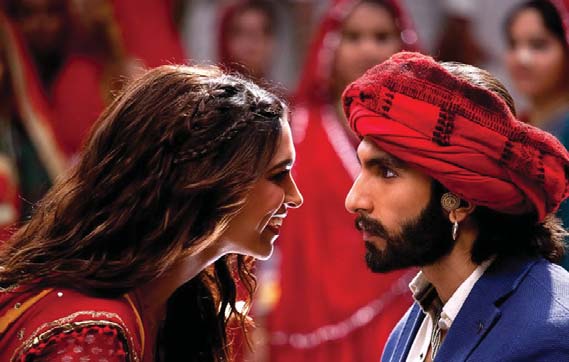
    CHANDIGARH (TIP): The Punjab and Haryana high court, on November 14, stayed the arrest of Bollywood director Sanjay Leela Bhansali and actors Ranveer Singh and Deepika Padukone in connection with an FIR lodged against them in Jalandhar in connection with their movie Ram-Leela. Justice Jitender Chauhan of the high court has issued the order after hearing a petition filed by Bhansali, Ranveer and Deepika. When the case came up for hearing on Thursday, the counsel for the Bollywood stars pleaded that it was strange that the Jalandhar police registered the FIR without even ascertaining the facts. It was further argued that the grievance of the complainant in this case was that the movie’s title, the trailer and photographs were highly objectionable and offended the religious sentiments of general public believing in Hindu mythology. He argued that the story of the movie was contrary to the title, as it had nothing to do with Lord Ram’s life and the Delhi high court has already decided that no organization or individual can claim to be the sole interpreter to Hindu religion and sole proprietor of names of Hindu Gods. Bhansali, Ranveer and Deepika had moved the HC on Tuesday against the registration of case against them in Jalandhar. The police had booked Bhansali, Ranveer and Deepika in September on the basis of a complaint filed by one Lalit Kumar. The FIR was registered under Section 295-A (deliberate and malicious act intended to outrage religious feelings) of the IPC.

  • Haryana CM Inaugurates INOC (I) Haryana Chapter

    Haryana CM Inaugurates INOC (I) Haryana Chapter

    NEWYORK (TIP): In an impressive ceremony at the Haryana Pradesh Congress Committee office in Chandigarh, the Chief Minister of Haryana Ch. Bhupinder Singh Hooda inaugurated the Haryana Chapter of Indian National Overseas Congress (I) The event was hosted by ChPhool Chand Mullana, President Haryana Pradesh Congress Committee to welcome the INOC (I) USA delegation led by its President ShudhParkash Singh. The Chairman of NRI Cell of HPCC BudhParkash Singh welcomed the Chief Minister and the delegates from USA. In his opening address, Phool Chand Mullana spoke in detail about the importance of the contribution of the NRI’s. He congratulated the newly appointed Chapter President, Sher Singh Madra and assured him of HPCC’s total support. ShudhParkash Singh spoke about the work being done by Indian National Overseas Congress (I). He said Indians living abroad felt proud of the State of Haryana. “We believe the present Chief Minister is doing an outstanding job”, he said.

    He thanked the CM for bringing the crime rate down and making Haryana a truly progressive State. He underscored the need to have greater FDI in India. As part of those efforts, as President of the INOC (I) he had asked skilled and able men, such as Madra, to join the INOC Overseas. Madra has the experience of being a banker for over 40 years and as a former Global Banking Head of Citigroup, he is more than able to help in that effort. Additionally, as the President of the NargisDutt Memorial Cancer Foundation he has been involved for many years in helping to fight cancer in India. Sher Singh Madra thanked ShudhParkash Singh for his appointment. He said it is a dream come true for him to be inaugurated by the Chief Minister himself in the presence of the state party President. Hooda appreciated the role of NRI’S for building India. He said new schemes will be implemented soon to facilitate the investments and charity work conducted by NRI’S. He lauded the hard work and dedication of ShudhParkash Singh and his team, the delegation of the INOC (I) that included Kanwal Sra, Ravi Chopra, Mohan Wanchoo and Edward Troy.

  • Umesh Yadav, Rohit Sharma in India Test squad

    Umesh Yadav, Rohit Sharma in India Test squad

    MUMBAI (TIP): Rohit Sharma, who is yet to make his Test debut, has made a comeback to the squad selected for the two Tests against West Indies. Ravindra Jadeja missed out because of a shoulder strain, creating an opening for the third spinner that was filled by legspinner Amit Mishra.

    The surprise, however, was that Zaheer Khan didn’t make it to the four-man pace unit, while Ishant Sharma retained his place. Umesh Yadav returned after a back injury had forced him out of the Australia series, and Mohammed Shami was the new inclusion. After spending the off season training in France and coming back fitter, Zaheer took match hauls of five wickets in successive first-class matches against West Indies A and Haryana.

    Dropped during the England series last year, Zaheer was expected to make it back into the squad. He has not, but the selectors are still looking at him as a prospect for the South Africa tour. The selectors debated whether to bring him back immediately or give him more match time in domestic cricket. The eventual consensus was that he needed more overs under his belt before coming back to Test cricket. “He is very much a part of the plans for South Africa,” the source said. Rohit made his way back into the squad with consistent performances at the top of the order in ODIs, and could even be used as a back-up opener should the need arise.

    As it stands, he and his Mumbai team-mate Ajinkya Rahane will compete for the middle-order vacancy that arises because of the absence of Jadeja, who has been advised two weeks’ rest. Suresh Raina, who was part of the previous Test squad, was dropped. Harbhajan Singh and Ashok Dinda were also dropped. Bhuvneshwar Kumar, the main spinners – R Ashwin and Pragyan Ojha – and other batsmen retained their places. A big matter of debate will be the retention of Ishant, whose results in international cricket have been ordinary of late.

    To go with the recent hidings in one-day cricket, Ishant last took more than three wickets in a Test innings more than two years ago, at Lord’s in July 2011. His overall average of 38 is uninspiring, and since that Lord’s Test every wicket he has taken has cost India 60 runs. Squad: MS Dhoni (capt. & wk), Shikhar Dhawan, M Vijay, Cheteshwar Pujara, Sachin Tendulkar, Virat Kohli, R Ashwin, Bhuvneshwar Kumar, Pragyan Ojha, Amit Mishra, Ajinkya Rahane, Umesh Yadav, Mohammed Shami, Rohit Sharma, Ishant Sharma.

  • FIGHTER PILOT RAHA TO BE NEXT IAF CHIEF

    FIGHTER PILOT RAHA TO BE NEXT IAF CHIEF

    NEW DELHI (TIP): Ace fighter pilot Air Marshal Arup Raha has been appointed the next Chief of the Indian Air Force. He will succeed Air Chief Marshal NAK Browne, also a fighter pilot, on December 31. At present, Air Marshal Raha is the Vice-Chief of Air Staff. Air Marshal Raha was commissioned into the IAF on December 14, 1974 in the fighter stream of the flying branch. In his career spanning nearly 39 years, he has commanded the vital Western Air Command which is tasked with the responsibility of Jammu and Kashmir, Punjab, Himachal Pradesh, Haryana and parts of Rajasthan. During Operation ‘Parakaram’, he was the Commanding Officer of the MiG-29 squadron at Bathinda in Punjab. He then went on to be the Air Officer Commanding at the IAF base at Adampur near Jalandhar and Advance Headquarters, Western Air Command at Chandimandir.

  • KHEMKA CHARGESHEET: HE HAS TO ANSWER FOR HIS ACTIONS, SAYS CONG

    KHEMKA CHARGESHEET: HE HAS TO ANSWER FOR HIS ACTIONS, SAYS CONG

    NEW DELHI (TIP): As second charge sheet is set to be served against Ashok Khemka, Congress has suggested that law is taking its own course against the Haryana IAS officer who had raised the issue of controversial land deals of Robert Vadra. Party spokesperson Renuka Chowdhary told reporters that administrative rules are same for everyone and every official has to adhere to them. “You have to answer for your actions,” she said. She was asked questions on the impending trouble for Khemka who is to receive a fresh charge sheet from the Congress government in Haryana. He is currently posted in Chandigarh as the Director General of Archives. After the controversy over Vadra’s land deals, Khemka has cried foul yet again as the state government gave a go ahead to file another charge sheet against him. Khemka will be chargesheeted for low sales of seeds when he was the Managing Director of Haryana Seed Development Corporation. The state government had earlier chargesheeted Khemka for overstepping his jurisdiction in the cancellation of Robert Vadra-DLF land deal.

  • Sexual assault case: Asaram Bapu undergoes potency test, son still missing

    Sexual assault case: Asaram Bapu undergoes potency test, son still missing

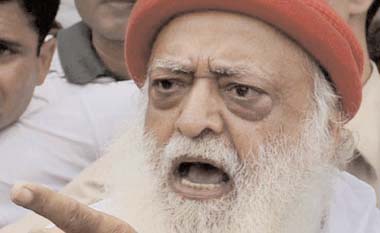
    AHMEDABAD (TIP): Asaram, 72, was brought to Ahmedabad on a transit remand from a court in Jodhpur where he was lodged in a jail since August in another sexual assault case involving minor daughter of one of his devotees. Controversial godman Asaram Bapu was on October 16 subjected to a potency test in connection with a sexual assault case lodged against him and his son Narayan Sai by two Surat-based sisters. “Asaram was taken to civil hospital for potency test in connection with the sexual assault case lodged against him,” a senior police official said. A magisterial court in Gandhinagar had remanded him in four-day police custody. Surat police recently registered two complaints – one against Asaram and another against his son Narayan Sai – of rape, sexual assault, illegal confinement and other charges as alleged by the two sisters. The elder of the sisters, in her complaint, had accused Asaram of repeated sexual assault between 1997 and 2006 when she had been living in his ashram on the outskirts of Ahmedabad city. The case against Asaram was transferred to Chandkheda police station as the incident took place in Ahmedabad. The younger of the two sisters had filed a complaint against Narayan Sai, whose whereabouts are still not known, accusing him of repeated sexual assault between 2002 and 2005 when she was living in their Surat ashram. Narayan Sai and Asaram had also filed petitions in the Gujarat High Court, seeking quashing of the complaints on the grounds of delay in filing them and that they are based on flimsy grounds.

    Asaram’s ashrams raided
    A team of the Gujarat Police assisted by the Delhi Police raided controversial selfstyled godman Asaram Bapu’s ashrams in the Capital on Thursday. They were in search of his son Narayan Sai, who is facing charges of sexual assault in a case registered in Surat. Sources in the Delhi Police said that while intercepting Sai’s cell phone locations, the investigating sleuths traced the phone number of one of his followers somewhere in Delhi and suspecting that the phone could have been used by Sai, a team from Gujarat was dispatched. Here, the team was joined by the Delhi Police’s Crime Branch and it raided Sai’s possible hideouts in Najafgarh, Rohini, Jaffarpur Kalan and Ridge Road. However, Sai could not be found and the phone, too, was found switched off later in the day. It is also learnt that there are strong possibilities that he may have slipped into Haryana from South-West Delhi.

    Asaram’s wife, daughter get anticipatory bail
    The Gandhinagar Sessions Court on October 17 granted anticipatory bail to wife and daughter of self-styled godman Asaram Bapu, Laxmi and Bharti respectively, in connection with the alleged rape of a Surendranagar woman in 2001 at Asaram’s farm near Motera in Ahmedabad. The court granted bail to the two while enforcing several conditions, including that they cannot leave Gujarat without the court’s permission. The court has also directed the two to remain present before the police on October 19 between 10 am and 2 pm. Apart from Asaram, seven others have been named as accused in the FIR registered with Chandkheda police station of Ahmedabad. Asaram has been arrested in the case and is currently on police custody remand of Ahmedabad police. Laxmi and Bharti have been accused of abetting the rape. Earlier this week, Laxmi, Bharti and one another woman accused, Dhruvben, had moved anticipatory bail petitions before the Gandhinagar District and Sessions Court, while claiming innocence in the case.

  • PROGRESS BLOW TO GUJARAT

    PROGRESS BLOW TO GUJARAT

    Human indicators put state that brags about growth behind Tripura and Sikkim

    NEW DELHI (TIP): A new development index has identified Gujarat as a less developed state, while ranking Odisha and Bihar along with eight others as “least developed” and Goa and Kerala among the seven “relatively developed” states. A panel headed by Raghuram Rajan, now the RBI governor, which submitted its report to finance minister P Chidambaram, also recommended a fresh approach to devolution of funds to states and moved away from the special category classification to devise three categories – least developed, less developed and relatively developed. According to the index, there are 10 least developed states, 11 less developed and seven relatively developed states in the country. The slotting of Gujarat, which has attracted attention due to its development model, in the “less developed” category is likely to escalate the already bitter political debate on the ‘Gujarat model of development’.

    The other states in this category are Manipur, West Bengal, Nagaland, Andhra Pradesh, Jammu and Kashmir, Mizoram, Tripura, Karnataka, Sikkim and Himachal Pradesh. The least developed states include, apart from Odisha and Bihar, Madhya Pradesh, Chhattisgarh, Jharkhand, Arunachal Pradesh, Assam, Meghalaya, Uttar Pradesh and Rajasthan. The relatively developed states according to the index are Haryana, Uttarakhand, Maharashtra, Punjab, Tamil Nadu, Kerala and Goa. The panel has developed a multidimensional index of backwardness based on monthly per capita consumption expenditure, education, health, household amenities, poverty rate, female literacy, percent of SC-ST population, urbanisation rate, financial inclusion and connectivity.

    The panel said less developed states rank higher on the index and would get larger allocations based on the need criteria. “The committee has proposed a general method for allocating funds from the Centre to the states based on both a state’s development needs as well as its development performance,” Chidambaram told reporters. “The committee has recommended that each state may get a fixed basic allocation of 0.3% of overall funds, to which will be added its share stemming from need and performance to get its overall share,” Chidambaram said. The panel was set up after persistent demand from Bihar CM Nitish Kumar who insisted a the special category status to help access more funds for its development. This sparked off a demand from several other states such Odisha for the special category state status. While the new index will ensure more funds for Bihar from the central kitty, it has stopped short of conferring the “special category” tag on the state, Shaibal Gupta, seen as Nitish’s nominee on the panel to submit a 10-page dissent note.

    However on Thursday, Nitish concealed his disappointment, if any, to celebrate the recommendation as a triumph even as BJP taunted him for failing to have his way despite cozying up to Congress. “It is a very decent report. For example under this index Odisha is at the bottom of the list and then Bihar. Therefore it recognizes that Odisha, Bihar, Madhya Pradesh are among the most backward states of India. That is I think the demand,” Chidambaram said. “The demand of these states is please recognize the fact that for a variety of reasons we are the most backward states. I think this index captures the degree of backwardness and acknowledges that Bihar is among the most backward states of India. Special category is the present categorisation. Now they are moving away from that,” finance minister said while detailing the recommendations of the panel.

    “This is not an answer to all the demands of the states. This is meant only to be a way forward on how to devolve funds to the more backwards states and areas of India. He said the index better captures the stage of development in a state, how backward it is or how relatively less backward it is and is a good measure for planning and devolution of funds. “Because some states are small very limited resources it is necessary to have a threshold below which the devolution of funds does not fall. So the committee has recommended that each one of the states will get a basic allocation of 0.3%,” Chidambaram said. The finance minister said that the report will be examined by various stakeholders before being implemented. “It will not be in the current year. It has to go through the examination process and will be implemented in an appropriate time in the next financial year.

    To which funds this should be applied a decision will be taken,” Chidambaram said. The report said that the National Development Council had accorded the status of special category state to eleven out of 28 states. They were based on a number of characteristics such as hilly and difficult terrain, low population density and or sizeable share of tribal population, strategic location along the borders with neighbouring countries, economic and infrastructural backwardness and non-viable nature of state finances. State under this category have a low resource base and are not in a position to mobilise resources for their developmental needs even though the per capita income of some of these states is relatively high, the report said.

  • LALIT MODI EXPELLED FROM BCCI

    LALIT MODI EXPELLED FROM BCCI

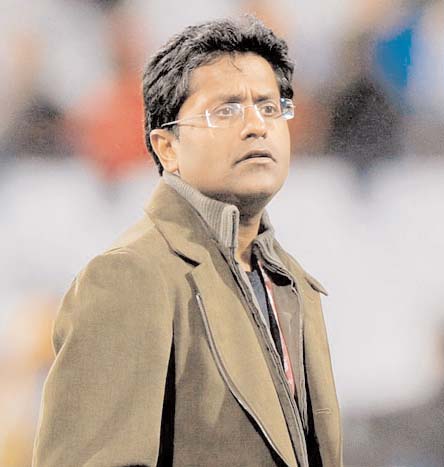
    CHENNAI (TIP) : The decision to ban Lalit Modi from BCCI for life was taken much ahead of the board’s special general meeting (SGM), which started at 2:05 pm on September 25 and was over by 2:20 pm. Modi the maverick became history as his sworn enemy, president-in-exile N Srinivasan, clinically packed him off, gaining a huge advantage ahead of the annual general meeting (AGM) on Sunday. The 29-0 scoreline in an electorate of 30 (the J&K representative was absent) said it all. There was no voice of support for Modi who was desperately trying to prolong his administrative career. All Srinivasan needed was a two-thirds majority (21 votes), but there was no voice of dissent, proving beyond doubt who is the supreme boss in BCCI at the moment. “Modi is guilty of committing acts of misconduct and indiscipline, and therefore, in exercise of powers as per Regulation 32 of the Memorandum of Rules and Regulations of the BCCI, Modi is hereby expelled from the board,” a terse note written by BCCI secretary Sanjay Patel was sent to the media. Modi’s Special Leave Petition in the Supreme Court to stop the SGM was rejected and a letter that he had sent to BCCI urging the members to allow him to present his case or defer the meeting to a date after the Sunday AGM wasn’t paid attention to.

    “Please note that I do intend to appear before the SGM and place my version and the facility that was extended to the BCCI witnesses for the purposes of recording of their evidence, that is by way of video conferencing, may kindly be extended to me as well,” Modi had said in his letter. According to a BCCI member present in the meeting, they were informed about the contents of Modi’s letter but they didn’t feel it important enough to attach importance to it. “He was found guilty by the disciplinary committee and there was no reason to waste too much time on it any longer. And Modi wasn’t available for video conferencing either,” a BCCI member present in the meeting said. “It was a unanimous choice to ban Modi. The proposer was Anirudh Chaudhury from the Haryana Cricket Association and the seconder was Ranjib Biswal from Orissa Cricket Association. There was no voice of opposition,” Rajeev Shukla said. IS Bindra, the president of Punjab Cricket Association and a known Modi sympathizer, didn’t attend the meeting and MP Pandove, who represented the association, went in favour of the motion. The only office-bearer absent from the meeting chaired by Srinivasan was North Zone vice-president Arun Jaitley, who was busy with a BJP rally in Bhopal.

    Officials only interested in themselves: Lalit Modi
    In a video interview to ESPN Cricinfo, Modi said: “Board officials are not interested in doing what is good for cricket. They are only interested in what they are getting out of it.” Modi spoke about how ridiculous it was for Srinivasan to stand for elections in the midst of a burning spot fixing controversy involving his son-inlaw. “There is unanimity in allowing him to continue. You never see a lone ranger standing out because they shut them all up. Only I S Bindra and myself have been lone rangers in the past, “ he said.

  • About Dr. Prem C. Goel

    About Dr. Prem C. Goel

    Dr. Prem C. Goel was born in 1944 in Taraori, a small town in Haryana. He earned a medal of honor for standing first in Kurukshetra University in premedical and graduated from the prestigious All India Institute of Medical Sciences, New Delhi in 1969. After completing the compulsory Internship at AIIMS, Dr. Goel embarked on a journey to the land of opportunities and touched the shores of the city that never sleeps on June 23, 1971. He completed a residency in internal medicine and a fellowship in cardiology at the Brookdale University Hospital Medical Center in Brooklyn, New York. He was soon appointed director of critical care unit at the hospital. It is here that he was offered a teaching appointment as an assistant professor of medicine at the Cornell-Weil medical college in 1977 but the fear of administrative hierarchy and insecurities and the lure of independence took him away from academics to private practice but only for a short while. His heart and soul belonged to teaching the residents and fellows which he continues without being on the institutional salary. He maintained a faculty position briefly at Down State Medical Center in Brooklyn, New York . He was first acknowledged with an award for social service while still in high school.

    He received an award of community service from the well known Nargis Dutt Memorial Foundation of which he subsequently became the President and served it extremely successfully with dedication and devotion. Former prime minister Mr. Inder Kumar Gujral bestowed upon him an award in 1997 for “his commitment, outstanding contribution and fierce dedication.” It is very befitting to state that Prem is a kind hearted doctor with a Midas touch and a mind set for diligent service to the humanity. Philanthropy was first coined 2500 years ago in ancient Greece by the playwright Aeschylus but the modern philanthropy with its entire previous history means, “private initiatives for public good, focusing on quality of life.” Prem befits this very meaning and it is for this very reason that we are honoring him this evening. He is married to the shy and religious but equally kind-hearted and loving sweetheart, Shashi. She has been the proverbial woman behind Dr. Goel’s success.

    They have a daughter, Kavita and two sons, Paresh and Amit. Kavita, who finished at the top of her class in medical school, is an internist and provided the most compassionate, dedicated and high quality patient care alongside her father for five years. She is married to Naveen, a highly successful and respected attorney. Since the birth of their second child, Kavita chose to pay fulltime attention to raising their two beautiful daughters, Naiya and Riya. Paresh along with his wife, Usha, both very astute and dedicated physicians, have also followed the family foot steps and joined Prem in his private practice. Amit, the genius with independent mind that he is, chose a modern path of information technology and is a computer consultant. Goels live in Muttontown, Long Island. We wish Prem and his family continued achievements, happiness and peace as they continue to travel the path of humanitarian services.

  • The Good Samaritans

    The Good Samaritans

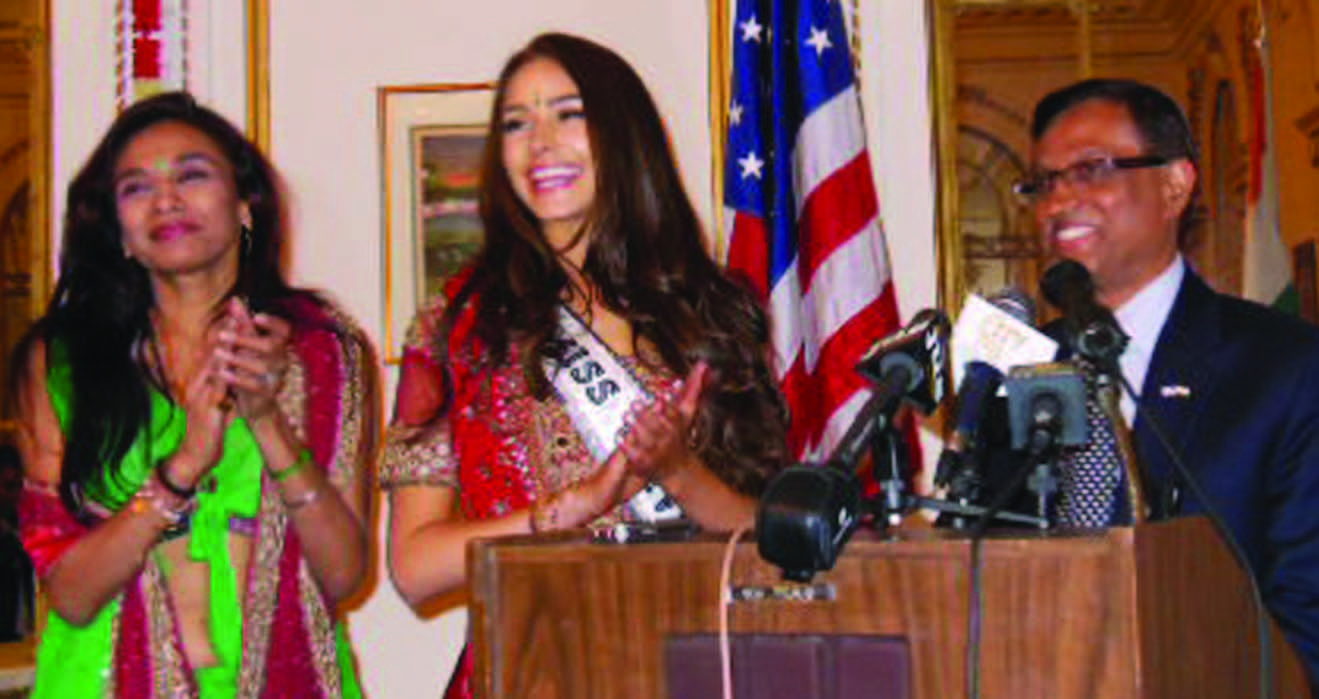
    NEW YORK, NY (TIP): Consul General of India, Ambassador Dnyaneshwar M. Mulay announced, August 21, the Sanjana Jon Tour to India with Olivia Culpo, the current Miss Universe from the 27th of September to the 6th of October. Mr. Mulay emphasized on the importance of cultural ambassadors and cultural tours to build closer ties between the two countries and globally The tour will be to the capital New Delhi, Mumbai, Agra and several key cities in India to promote and propagate “Celebrate the Girl Child”, Women Empowerment and AIDS Awareness. Actress Manisha Koirala joined and supported the initiative.

    The focus would be to eradicate female feticide especially in states like Punjab, Haryana, Rajasthan where the incidence is very high. The awareness tour initiated by Sanjana Jon in 2004 with the then Miss Universe Jennifer Hawkins has grown monumentally as an amazing positive movement and currently is the 6th Sanjana Jon Tour to India with Miss Universe for charity. The Tour has been supported by Salman Khan to highlight the different causes and several other celebrities like Sohail Khan, Sajid- Wajid Khan, Suhasini-ManiRatnam, Venkatesh, Padmabhushan Padmashri Dr KJ Yesudas, Padmashri Shobana, Usha Uthup, to name a few.

    “This time the tour will effectively reach out to the masses and try to bring more creative constructive support on the whole by creating “Community of Love n Light” a movement to ‘Share n Care’,” said Sanjana. Sanjana Jon started her career working with her brother Anand Jon in New York and they created a jewelry line together which was highly appreciated by Iman, David Bowie, Barbara Hershey while supporting AMFAR. Then they worked on the mens collection which was highlighted by Bruce Springsteen, Backstreet Boys, Prince, Collective Soul, Matchbox 20 to name a few. Her acclaimed debut was at Cannes for the Film Festival was supported by Prince Albert of Monaco, Princess Sorayya, Princess Sara Al Saud, Princess Olivia de Borbon and more. This led to the New York Fashion Week debut and Vancouver Fashion Week where she won International Rising Star award. Fashion with heart has been propagated by her where at every show or event she supports a charity or cause.

    Sanjana Jon has been a socially motivated person since her school and college days with her brother Anand Jon used to provide food and clothing to the underprivileged kids and read for the blind students. A special sanctuary was set for more than a 100 tigers in Florida and special campaign was organized with Anand Jon & Michelle Rodriegez to save tigers and animals globally. Paws for style where celebs walked with their pets was again highlighted and supported by Sanjana and Anand Jon to create love for animals. She has been creating awareness about various issues such as AIDS Awareness and HIV testing , Save the Girl Child ,Human and Animal Rights by involving celebrities like Bollywood stars, more than 10 Miss Universe over the years. She tied up with United Nations and held a press conference in the New York headquarters. In India, she worked with CARE International in hopes of a united front to combat the increasing pandemic of AIDS. Fashion to Sanjana is not the end but the means to the end which is to make the world a better place filled with love and light.

    The Sanjana Jon AIDS Awareness Tour toured most major Indian cities. She has also organized events to fight for Truth and Justice against racism with various models and celebrities and initiated several promotional campaigns in NY and LA against racism. She organized protests against racism in Bombay and Delhi and put together a show for Save the Girl Child against female infanticide with 16 celebrity siblings including Salman Khan, Sohail Khan, Sushmita Sen, Riya and Raima Sen, Sajid and Wajid Khan. Recently, she organized a Sanjana Jon Creative Tihar show and project in Tihar with inmates- for the inmates, by the inmates and of the inmates and tried to create a constructive creative training program to make the inmates a more resourceful progressive part of the community. Currently working on Pride of India Show by Sanjana Jon an attempt to break the Guinness Book of Work Records with more than 500 models in a show also promoting and highlighting traditional and cultural wear of every state in India and with celebrities representing the pride of every state and highlighting and propagating the Celebration of the Girl Child and in support of Global Human Rights. Winner of innumerable awards including Karamveer Puraskar, Paramveer Award, Indira Gandhi Award, Rajiv Gandhi Excellence awards to name a few, Sanjana has miles to go and not sleep.

  • 4 Cong states go ahead with food security plans

    4 Cong states go ahead with food security plans

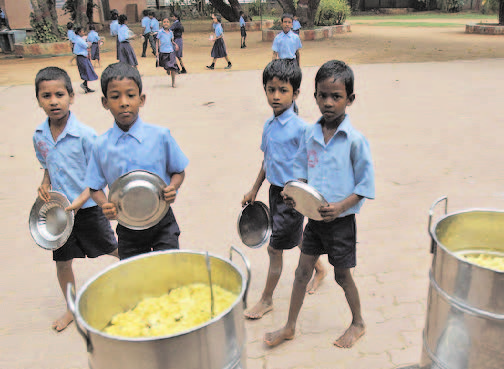
    CHANDIGARH (TIP): The UPA’s much touted Food Security Scheme aimed at ensuring that “no Indian goes to bed hungry” was simultaneously rolled out in four Congress-ruled states in North India. Congress president Sonia Gandhi rolled out the scheme in New Delhi, while Haryana Chief Minister Bhupinder Singh Hooda launched a customised scheme, covering nearly half the state’s population, at a special function in Panipat. Unveiling the scheme by handing over food grain packets and Aadharbased smart cards to 12 women beneficiaries in the Capital, Sonia Gandhi said: “We made the (food security) scheme so that nobody remains hungry in the country and no one’s child sleeps hungry. Giving food security in such a large scale is unparalleled in the world.” The other two states that announced the implementation of similar schemes today were Uttarakhand and Rajasthan.

    Rice, wheat and other foodgrain would be provided to the needy under these schemes The rolling out the schemes coincided with the 70th birth anniversary of former Prime Minister Rajiv Gandhi. Himachal Pradesh was also scheduled to launch the scheme today, but it decided to postpone it by a week till the discussion on the Food Security Bill got over in Parliament. In Delhi, around 73.5 lakh people out of a population of 1.68 crore would benefit from the scheme. In the first phase, all Below Poverty Line (BPL) families, Above Poverty Line (APL) families and Jhughi Ration Card (JRC) holders would benefit, beside beneficiaries under the Antodaya Anna Yojna (AAY). It has also been decided to include homeless, daily wage-earners, ragpickers, people living in resettlement colonies and slum clusters under the scheme.

    In Haryana, nearly half of the state’s population would benefit from the two schemes that have been rolled out simultaneously. Chief Minister Hooda said the scheme was simultaneously launched in every district of the state by the minister in charge for the particular district. Initially, 90.28 lakh people from rural areas and 36.21 lakh people from towns and cities will benefit. The beneficiaries are those that fall under the Antodaya Anna Yojana (AAY), the Central Below Poverty Line (CBPL) and the State Below Poverty Line (SBPL). Haryana and Delhi were among the first states to clear such schemes and have implemented these ahead of passing of the Food Security Bill in Parliament. Haryana has also started a “Dal- Roti Scheme”. An announcement to this effect was made by Hooda today. Under this scheme, 12.4 lakh BPL families will get 2.5 kg dal at Rs 20 per kg. The scheme is currently held up due to a litigation in the high court. Hooda said the AAY beneficiaries would get 35 kg foodgrain every month at the rate of Rs 2 per kg whereas priority households would be given 5 kg foodgrain per person per month at the rate of Rs 2 per kg. Around 126.49 lakh people would be covered under the newly rolled out scheme in the state, Hooda said. Around 70 %of India’s population would be targeted under the Food Security Bill.

  • INDIA’S JOURNEY TO BECOMING AN ECONOMIC SUPERPOWER

    INDIA’S JOURNEY TO BECOMING AN ECONOMIC SUPERPOWER

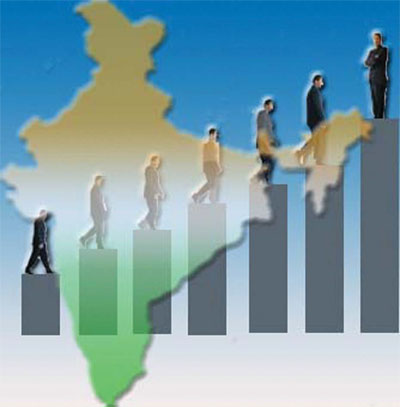
    The economic development in India followed socialist-inspired policies for most of its independent history, including state-ownership of many sectors; India’s per capita income increased at only around 1% annualised rate in the three decades after Independence. Since the mid-1980s, India has slowly opened up its markets through economic liberalisation.

    After more fundamental reforms since 1991 and their renewal in the 2000s, India has progressed towards a free market economy. In the late 2000s, India’s growth reached 7.5%, which will double the average income in a decade. Analysts] say that if India pushed more fundamental market reforms, it could sustain the rate and even reach the government’s 2011 target of 10%. States have large responsibilities over their economies.

    The annualised 1999-2008 growth rates for Tamil Nadu (9.8), Gujarat (9.6%),Haryana (9.1%), or Delhi (8.9%) were significantly higher than for Bihar (5.1%), Uttar Pradesh (4.4%), or Madhya Pradesh (6.5%). India is the tenth-largest economy in the world and the third largest by purchasing power parity adjusted exchange rates (PPP). On per capita basis, it ranks 140th in the world or 129th by PPP. The economic growth has been driven by the expansion of services that have been growing consistently faster than other sectors.

    It is argued that the pattern of Indian development has been a specific one and that the country may be able to skip the intermediate industrialisationled phase in the transformation of its economic structure. Serious concerns have been raised about the jobless nature of the economic growth. Favourable macroeconomic performance has been a necessary but not sufficient condition for the significant reduction of poverty amongst the Indian population.

    The rate of poverty decline has not been higher in the post-reform period (since 1991). The improvements in some other non-economic dimensions of social development have been even less favourable. The most pronounced example is an exceptionally high and persistent level of child malnutrition (46% in 2005-6). The progress of economic reforms in India is followed closely. The World Bank suggests that the most important priorities are public sector reform, infrastructure, agricultural and rural development, removal of labour regulations, reforms in lagging states, and HIV/AIDS.

    [5] For 2012, India ranked 132nd in Ease of Doing Business Index, which is setback as compared with China 91st and Brazil 126th. According to Index of Economic Freedom World Ranking an annual survey on economic freedom of the nations, India ranks 123rd as compared with China and Russia which ranks 138th and 144th respectively in 2012. India ranks second worldwide in farm output.

    Agriculture and allied sectors like forestry, logging and fishing accounted for 18.6% of the GDP in 2005, employed 60% of the total workforce and despite a steady decline of its share in the GDP, is still the largest economic sector and plays a significant role in the overall socioeconomic development of India. Yields per unit area of all crops have grown since 1950, due to the special emphasis placed on agriculture in the five-year plans and steady improvements in irrigation, technology, application of modern agricultural practices and provision of agricultural credit and subsidies since the green revolution.

    India is the largest producer in the world of milk, cashew nuts, coconuts, tea, ginger, turmeric and black pepper. It also has the world’s largest cattle population (193 million). It is the second largest producer of wheat, rice, sugar, groundnut and inland fish. It is the third largest producer of tobacco. India accounts for 10% of the world fruit production with first rank in the production of banana and sapota. The required level of investment for the development of marketing, storage and cold storage infrastructure is estimated to be huge.

    The government has implemented various schemes to raise investment in marketing infrastructure. Amongst these schemes are Construction of Rural Go downs, Market Research and Information Network, and Development / Strengthening of Agricultural Marketing Infrastructure, Grading and Standardisation.

    Main problems in the agricultural sector, as listed by the World Bank, are:

  • Cabinet Gives Nod To Mega Plan For Smoother NCR Traffic

    Cabinet Gives Nod To Mega Plan For Smoother NCR Traffic

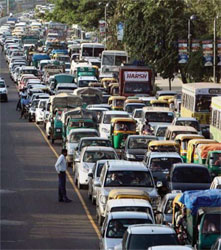
    NEW DELHI (TIP): In an effort to decongest the growing traffic in the National Capital region (NCR), the Union Cabinet today gave its approval for the setting up of a National Capital Region Transport Corporation Limited (NCRTC) under the Companies Act with an initial seed capital of Rs 100 crore. The new corporation has been set up with the focus on constructing three Regional Rapid Transit System corridors connecting Delhi with Panipat, Alwar and Meerut.

    The NCRTC has been approved for designing, developing, implementing, financing, operating and maintaining Regional Rapid Transit system (RRTS) in the NCR to provide comfortable and fast transit to its towns. This company may form subsidiary companies for implementing each corridor. The NCRTC shall be set up within two months after approval of the Cabinet. The corporation is proposed as the implementing agency for taking up the RRTS project in the NCR.

    It is envisaged to undertake design construction, operation and maintenance of the RRTS project on a similar pattern as the Delhi Metro Rail Corporation (DMRC). It will cover the states of Delhi, Haryana, Rajasthan and Uttar Pradesh. The Centre and state governments would contribute equally to the initial seed capital of Rs 100 crore. While the Urban Development and Railway ministries would contribute 22.5% of the amount, the National Capital Region Planning Board would contribute 5%. The remaining amount would be contributed by Delhi, Haryana, Rajasthan and UP.

    While a total of eight RRTS corridors have been identified for development in the NCR area, the NCRTC will take up three corridors on priority. These are the Delhi-Sonipat-Panipat, Delhi – Gurgaon – Alwar and the Delhi – Ghaziabad – Meerut, corridors. The Delhi – Sonipat – Panipat is 111-km-long corridor and the daily ridership is estimated to be 3.77 lakh in 2016 which may grow to 9.83 lakh by 2041.

    The Delhi – Gurgaon – Alwar is 180-km-long stretch and estimated to carry 6.9 lakh people daily in 2016 which will go up to 15.1 lakh by 2041. The Delhi – Ghaziabad – Meerut is 90-km-long and would carry an estimated 5.7 lakh people every day in 2016 and 11.4 lakh by 2041. The total length of the three corridors to be developed by NCRTC is 381 km. The actual cost, financing plan, RRTS alignments, real estate development, financing through transit oriented development and more will be firmed up and frozen in the DPRs of these projects.

  • Visiting Parliamentarians Felicitated

    Visiting Parliamentarians Felicitated

    LONG ISLAND, NY (TIP): At a special gathering held on 25th June 2013 here Mrs. and Subba Rao Anumolu hosted the Telugu Association of North America (TANA)’s felicitation of 12 Indian parliament members who were visiting USA. The distinguished group of parliamentarians included CM Ramesh (Andhra Pradesh), Shadilal Batra (Haryana), Bharat Kumar Raut (Maharastra), Bhubaneswar Kalita (Assam), Mrs. Poonam Jat (Gujarat), Mrs. Smriti Z Irani(Gujarat), Vivek Gupta (West Bengal), YS Chowdary (Andhra Pradesh), Harish Choudhary( Rajasthan), Modugula Venugopala Reddy(Andhra Pradesh), Ramesh Chandran (Kerala), and Badnore VPS (Rajasthan).

    These parliamentarians had attended the Leadership and Management Training Program at Yale University in New Haven and upon the request of TANA attended the facilitation event in Long Island before their departure to India. Mohan Nannapaneni, President of Telugu Association of North America (TANA) welcomed the Parliament members and thanked them for attending the event despite their hectic schedule. Nannapaneni introduced the host, Rao Anumolu who has an outstanding record of professional achievements, philanthropy and community service which have been already being recognized with the highest honor and acclaim in USA. Vijayawada’s Anumolu is the President & CEO of Long Island (New York) based, internationally known, high tech firm – ASR International Corporation.

    Anumolu is the only Asian Indian to have been cited by the US Congress for the contributions made towards homeland security in USA. He is also the recipient of the 2010 Ellis Island Medal of Honor. This prestigious award, highest civilian award for immigrants, recognizes recipients for outstanding contributions to their communities, their nation and the world. Both the United States House of Representatives and Senate have officially recognized the Ellis Island Medal of Honor and the recipients are read into the Congressional Record. Past medalists include six US Presidents.

    Anumolu has the unique distinction of being the only Asian Indian to have the dual honor of being cited by the US Congress and also the recipient of the Ellis Island Medal of Honor. Mrs. Smriti Irani, on behalf of the group, expressed deep condolences for the flood victims of Uttarkhand, and the audience observed a moment of silence. The parliament members addressed the gathering and expressed their vision for India in the near future. They predicted that India would become a dominant contributor for world economic and energy development within the next decade. All the parliament members were felicitated by TANA, with a shawl and a memento. The reception to visiting parliamentarians was attended by many well known Indian Americans from various walks of life. Jayasekhar Talluri, Chairman TANA Foundation conveyed vote of thanks to the attendees.

  • Thousands Feared Dead In Rain-Ravaged Uttarakhand

    Thousands Feared Dead In Rain-Ravaged Uttarakhand

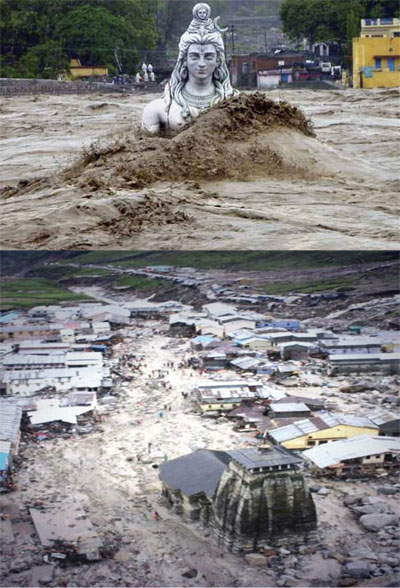
    NEW DELHI (TIP): Nature’s fury continued unabated amid fears of the death toll rising rainravaged Uttarakhand as many pilgrims staying in 90 rest houses may have been washed away in flash flood even as rescue operations were stepped up. The the Uttarakhand State Disaster Mitigation and Management Centre in its report to the union ministry said casualties in the affected areas may run into thousands as about 90 guest houses with pilgrims were swept away in the flash floods.

    But official death toll still stands at 150. With the weather clearing up, rescue operation were stepped up. Chief Minister Vijay Bahuguna while seeking funds to help the affected people, said many kilometers of roads have been washed away in Uttarakhand due to the flash floods. The chief minister said many bridges, houses, water lines, canals, check dams, electricity lines, power houses and other public and private property had been severely damaged.

    He said the Chardam pilgrimage, which includes the shrines at Kedarnath and Badrinath, had been severely hit. He appealed to people and voluntary organizations to contribute to relief efforts in the wake of the devastation caused by heavy rains, landslides, cloud bursts and floods.

    Meanwhile, an official of the Badrinath- Kedarnath Temple Committee said that pilgrimage to the shrines of Kedarnath and Badrinath in Uttarakhand cannot resume for three years due to extensive damage caused by heavy rains and floods. Officials of the two shrines say the two places have been so badly devastated that there was nothing “but mud, devastation and death” around the highly revered temples visited by millions.

    “What we are seeing is very painful and unbelievable,” he said. “We don’t expect the Char Dham Yatra to resume in the next three years.” KEDARNATH SHRINE SAFE, EVERYTHING ELSE DESTROYED The ancient Kedarnath shrine has survived the devastating floods in Uttarakhand but virtually everything around it has been destroyed, an official of the temple committee said. “Call it a miracle but the Nandi statue and the other idols in the temple are intact,” the official said.

    “In fact, those pilgrims who were in the temple during the tragedy also survived. “But the destruction all around the temple has been terrible,” said the official, adding that the real death toll in the floods and cloudburst of the weekend would be much more than the officially stated 150. But he admitted that the temple had suffered some damage. The official said there was no trace of a large number of pilgrims who were either headed to or returning from the shrine, built by Adi Shankara around 1,000 years ago.

    He said Ram Bada, located about seven kilometres from the temple, had been destroyed. So was the case with Gaurikund where there was a parking lot and a rest house. “There were an estimated 5,000 people at Ram Bada when a cloudburst took place,” he said. “The shops and houses around Kedarnath temple have been either destroyed or severely damaged,” said the official. “From the reports we are getting, I don’t think the Kedarnath pilgrimage can restart for two to three years,” he added. According to the official, 1,000 to 2,000 pilgrims were rescued from the temple region Wednesday.

    “The rescue operations are still going on.” 1,446 people rescued from flooded areas A total of 1,446 people were rescued by the NDRF from areas affected by floods caused by torrential rains in various places of north India, including Uttarakhand, a disaster management official said Thursday. “While 443 people were rescued in Uttarakhand, NDRF teams rescued 930 people from Haryana out of which 844 from Karnal and 86 from Yamuna Nagar.

    Fifty were rescued from Reckong Peo in Kinnaur district in Himachal Pradesh and 23 in Uttar Pradesh,” a National Disaster Response Force (NDRF) official said in a statement. Twenty-nine teams of the NDRF have been deployed in various flood hit area of Uttarakhand, Himachal Pradesh, Uttar Pradesh, Haryana, West Bengal and Assam for relief operations.

    “The water levels have decreased, relief operations are continuing,” the statement added. Apart from NDRF, men and staff of the Indo-Tibetan Border Police (ITBP) and the army are carrying over the rescue operations particularly in Uttarakhand, the worst hit by heavy rains. Home Minister Sushilkumar Shinde has put the number of people stranded in Uttarakhand at some 62,000.

  • Emaar MGF Receives Rs 8.6k Crore Fine Notice

    Emaar MGF Receives Rs 8.6k Crore Fine Notice

    NEW DELHI (TIP): Realty giant and Commonwealth Games Village builder Emaar MGF was on Tuesday slapped with a show-cause notice of Rs 8,600 crore by the Enforcement Directorate for violating Foreign Exchange Management Act (FEMA). The company is alleged to have diverted FDI money to buy thousands of acres of agricultural land in violation of FEMA and FDI rules and could face a penalty in excess of Rs 25,000 crore.

    Significantly, the development comes on a day the Union Cabinet approved the Real Estate Regulators Bill. Sources said the company had used a modus operandi similar to as alleged in the case of Walmart, under investigation by the ED for diverting FDI money to retail sector through various subsidiaries. Emaar MGF allegedly used a maze of subsidiaries through which it diverted FDI money — brought in for investment in construction projects — to buy agricultural land. ED first raided 13 premises of the company here and elsewhere in 2009 in connection with the case and had seized several documents and large amounts of cash.

    Investigations then found that almost 70% of the company’s land bank was agricultural land. Out of over 12,000 acres of land bank with the company, close to 8,500 acres were found to be agricultural, most of which is alleged to have been bought by FDI money. The firm is also alleged to have floated over 300 companies as subsidiaries in India and abroad with several of its lowgrade employees listed as directors. Some of these companies were allegedly used to divert FDI into agricultural land bought around Delhi, Haryana , Punjab and Uttar Pradesh.

  • Enforcement Directorate attaches Chautala’s flat

    Enforcement Directorate attaches Chautala’s flat

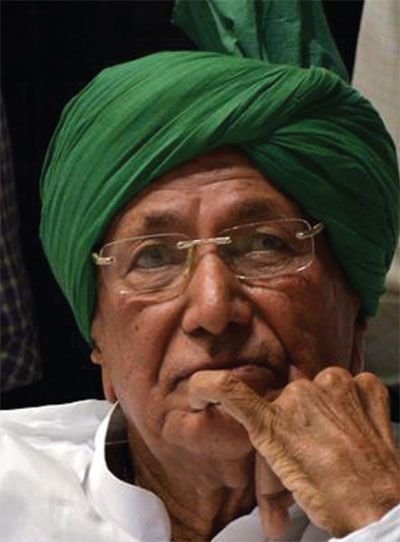
    NEW DELHI (TIP): Following conviction in the teachers recruitment scam, former Haryana chief minister Om Prakash Chautala is facing confiscation of his properties. Enforcement Directorate on Thursday attached a residential property belonging to Chautala under the criminal provisions of money laundering laws. This is the first attachment order by the agency against the five-time CM even as it prepares to attach assets acquired by him “illegally and beyond his known sources of income” with an estimated value of over Rs 6 crore.

    The first attachment order was issued by the agency against him for a flat in Gurgaon on Delhi’s outskirts and, according to ED, the house is in the “exclusive” name of Chautala with a total value of Rs 46,96,000. The flat is located in Sector 28 of Tech-city under Haryana Jan Pratinidhi Cooperative Group Housing Society scheme. The agency is probing the politician and his associates under the Prevention of Money Laundering Act (PMLA) after it registered a case based on a CBI chargesheet.

    The ED’s attachment order can be challenged at the PMLA Adjudicating Authority in Delhi within 180 days of issue. Chief of Indian National Lok Dal, 78-year-old Chautala, along with 54 others, is on interim bail for medical treatment after he was sentenced by a Delhi court in the 2000 Junior Basic Trained (JBT) Teachers recruitment scam. On January 22, the trial court had convicted and sentenced Chautala and nine others, including his son Ajay Chautala, to 10 years’ jail term for illegally recruiting 3,206 junior teachers.

    Among other convicts, 44 have been sentenced to four years in jail and one was sentenced to a fiveyear jail term. All of them were held guilty of cheating, forgery, using fake documents as genuine, conspiracy under the IPC and for abusing their official position under the Prevention of Corruption Act.

  • In search of Technology

    In search of Technology

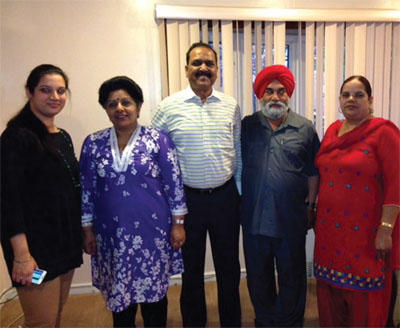
    Ashok Kumar Yadav, a Haryana Cadre India Administrative Service officer was recently in New York. He was visiting to study the new technologies available for production of fertilizers in Haryana. The Yadav couple stayed with their old acquaintance Pritam Singh Gilzian who is a popular and well known Sikh community leader. Seen in the picture are the Yadavas and the Gilzians at the latter’s residence

  • Police book Honey Singh for singing lewd songs

    Police book Honey Singh for singing lewd songs

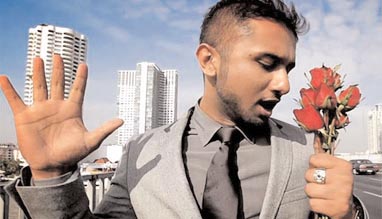
    NAWANSHAHR (TIP): Three days after Punjab and Haryana high court rapped Punjab government for not taking action against controversial singer Honey Singh, Punjab police on Friday registered an FIR against him at the Nawanshahr police station.

    The singer has been booked under Section 294 of the IPC (obscene acts and songs) for crooning vulgar songs, one of which is titled ‘Main Hoon Balatkari’ (I’m a rapist). The high court on May 14 had pulled up the Punjab government and asked it to get tough with the Hoshiarpur-born singer, who already has a similar police case registered against him in Lucknow.

    “We have started collecting evidence against the singer regarding the case and our next course of action will depend entirely on what we lay our hands on,” said Nawanshahr SSP Dhanpreet Kaur. Police registered the case on the complaint of Parvinder Singh Kitna, a local resident, who also heads an NGO. The complaint was filed in January but at that time, the police had refused to register a case, prompting Kitna to move the HC seeking ban on playing and sale of vulgar songs in the state. According to the FIR, Honey’s songs were crossing all barriers of decency and his one particular song – ‘Mein Hoon Balatkari’ — even provoked sexual violence against women.

    Honey and some of his songs had come under the spotlight in the wake of Nirbhaya gang rape case for use of sexist lyrics and commodifying women. The singer had faced flak from various quarters. Some of his programmes were forcibly cancelled when the entire nation was shocked over Nirbhaya’s plight. Conviction under Section 294 of the IPC can lead to imprisonment, which may extend up to three years. Meanwhile, the high court has also directed Honey to appear before it on July 4, when the case will come up for hearing again.

  • Clinical Super Kings Thump Delhi

    Clinical Super Kings Thump Delhi

    NEW DELHI (TIP): In the school of Chennai Super Kings cricket, they swear by a formula. Ten times six plus ten times 10 equals a winning total on a slow pitch. The corollary is, ten times six often begets ten times ten. On April 17, Super Kings followed that formula like frontbenching geeks. They reached 60 for 1 in 10 overs, then switched gears to score 109 in the last 10 with Michael Hussey and MS Dhoni turning it on like only they can. The chase was killed by the time Virender Sehwag joined David Warner and Mahela Jayawardene back in the dugout. Delhi Daredevils have lost all of their six matches in this year’s IPL.

    It was an all too familiar sight with Hussey back in the side and Super Kings biding their time at the start of the match, sizing up their prey. Suresh Raina seemed to struggle to find his touch a bit, but they reached that preliminary 60 in 10 without much drama. Just like that Raina drove Umesh Yadav over cover in the 11th over, and Super Kings were on their way. In the next over, when Hussey pulled Ajit Agarkar over midwicket for a six, his strike rate finally crossed a run a ball. Despite Raina’s wicket, the five overs immediately after the 10th went for 9, 14, 11, 10 and 12. A bit of it had to do with Dhoni, who not only finally came out to bat at four, but came with the switch flicked on that told him he didn’t need to block at the start of the innings. The first ball Dhoni faced he pulled disdainfully through midwicket for four, and you knew bad things were going to happen to bowlers. And then, horror of horrors, Agarkar, one of the best fielders among Indian quicks, dropped him at long-off.

    Dhoni would have gone for 17 off 10 had it been taken. That was also a period when Daredevils were trying to play games with that formula of ten times 10. That Yadav over brought only seven, and in the next over Irfan Pathan conceded just four of the first five balls. Hussey, though, drilled the last one through long-off to reopen the flood gates. He went from 24 off 27 to 65 not out off 50. And Dhoni, by the time he played a dot ball he had reached 32 off 15, and would go on to add 12 off eight more.

    The thing with Daredevils, though, is you can’t count them out lest one of their big three has a crazy day with the bat. Haryana quick Mohit Sharma, coming back like Hussey, quickly put paid to that. First he got a bottom edge from Warner, and then had Sehwag holing out to deep midwicket. In between, Chris Morris got Jayawardene lbw. After that Dwayne Bravo kept taking catches and danced into the night.