Tag: Healthcare

  • Indian Origin Texas Man Admits Role in Nearly $5 Million Health Care Fraud Scheme

    Indian Origin Texas Man Admits Role in Nearly $5 Million Health Care Fraud Scheme

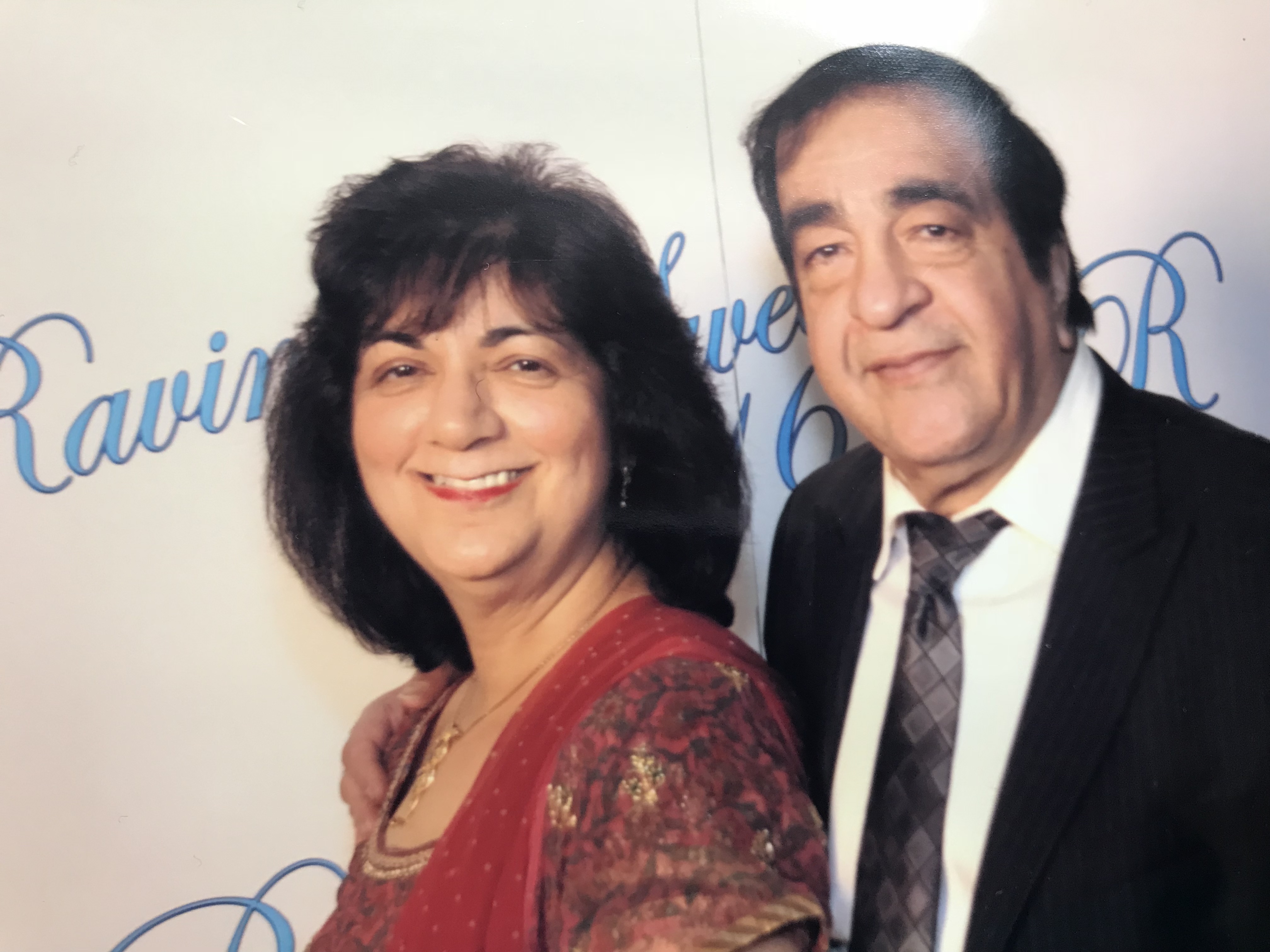
    HOUSTON (TIP): A 57-year-old Houston man has entered a guilty plea in Corpus Christi federal court for conspiring to commit health care fraud, announced U.S. Attorney Ryan Patrick.

    Ravinder Syal admitted he engaged in a scheme that resulted in the false billing of $4,878,530.92 for services never provided to patients. From Feb. 1, 2018, until March 1, 2020, he acquired physicians’ practices throughout Texas and assumed control of their billing department. He then brought in a company located in India to bill false claims to Medicare, Medicaid and various insurance providers.

    Syal would submit false claims for services that were never performed, for nutritional servicers that were never provided and even for office visits that occurred over holidays when the clinics were actually closed. He would also bill for services that could not even be performed at the clinics he acquired due to lack of equipment.

    Syal altered the billing information and added these fraudulent services without the knowledge of the physicians at the respective practices.

    As a result of his scheme, Medicare, Medicaid and various insurance providers were billed $4,878,530.92 for services never performed. Syal was overpaid $553,068.65 on the fraudulent claims.

    Sentencing has been set for Aug. 10 before U.S. District Judge David S. Morales.  At that time, Syal faces up to 10 years in federal prison and a possible $250,000 maximum fine.

    Syal was permitted to remain on bond pending that hearing.


  • NJ Native M.D. Returns After Success With Houston Texans, Rockets, Astros and Dynamo

    NJ Native M.D. Returns After Success With Houston Texans, Rockets, Astros and Dynamo

    By Mabel Pais

    “(What) makes me most excited about going to work everyday is that I have the ability to truly help people get back to the activities and things that they love to do in their life.”-Arun Rajaram, M.D.

    Dr. Arun Rajaram, M.D. is a New Jersey native, born and brought up in Morris County, New Jersey.

    Dr. Rajaram completed his orthopaedic surgery residency at Yale University. He completed his orthopedic sports medicine fellowship through the Baylor College of Medicine at the Texas Medical Center, the largest medical center in the world. During his fellowship, he gained phenomenal experience while serving as an assistant team physician for multiple professional teams, including the Houston Texans, Rockets, Astros and Dynamo. He received his medical degree (with distinction) and bachelor’s degree in computer science from The George Washington University.

    An orthopedic surgeon specializing in sports medicine and arthroscopic surgery, Dr. Arun Rajaram uses the most advanced techniques available to surgeons.

    Dr. Rajaram chatted with Mabel Pais about his work as an Orthopaedic surgeon.

    What is your specialty?

    I’m a board-certified orthopaedic surgeon with a specialty in Sports Medicine andarthroscopic surgery, using the most advanced techniques.  I’m from the IGEADivision of Orthopaedics and Sports Medicine.  Prior to returning home to practice in New Jersey, I was anassistant team physician for multiple professional teams, including the Houston Texans, Rockets, Astros and Dynamo.

    What are some of the most common causes of back issues?  Are there preventive measures?

    Some of the most common causes of back issues can come from traumatic injuries, overuse injuries or postural imbalance.

    Many of these injuries can be prevented by strengthening the lumbar muscles and the core muscles of our body.

    What are some of the common problems you have found in your patients?

    When you are sitting at a desk for several hours a day, a lot of your muscles tend to develop tightness and weakness.  We see a lot of patients develop shoulder problems such as rotator cuff tendonitis and shoulder pain because of their position on the keyboard, the position at their desk.  We also see people develop knee pain issues from their position at the desk or sitting in their vehicle for long periods of time.  This puts a lot of pressure on the inside of the knee and causes knee symptoms.  The problems we see in a lot of athletes, we also see in a lot of professionals working at the desk.

    Do you use holistic approaches to treatment?  Explain.

    As a result of the experience I gained working with professional athletes, I have incorporated many biologic treatment options into my practice.  Working in that world of orthopaedics, I have included alternative methods, therapies in my practice.  Many of these treatments help the body repair and recover from a variety of athletic, work related, and day to day activities.  As a result, in addition to surgical options, biologic therapies are also available for my patients.

    Ortho-Biologics such as Platelet Rich Plasma is an alternative therapy where we draw blood from the patient’s arm and then the blood is placed in a centrifuge.  It is then spun for 5 minutes in the centrifuge, which then separates the blood from the plasma layer.  We then extract the plasma layer with all of the platelets.  Then we inject the platelet-rich plasma back into the site of the injury.  This is a common form of biologic cell therapy.

    It has been very successful.  The 4 most common joints that we use this therapy for are the knee, elbow, hip and shoulder.  We have many other treatments whereby we are able to optimize the patient’s recovery and healing and enable them to return to their normal activities.

    What is the connection between the brain, spine, and sports medicine?

    The most common brain injury we see in sports medicine is concussions.  Spine injuries can also occur in sporting activities.  The brain and spine injuries must be taken very seriously and cared for by the appropriate team of specialists.

    Explain the use of the Stability Ball?

    The stability ball helps to strengthen and stabilize the core muscles of our body which help improve and prevent a lot of injuries.  The two most important core muscles are the abdominal muscles and the lumbar muscles.  These muscles stabilize your core, whether you’re standing, walking or sitting. These muscles stabilize the central portion of the body in all activities.

    What self-help or healing modalities do you recommend to your patients?

    We absolutely recommend exercises on quadriceps-strengthening to help improve the function of the knees.  I demonstrate these exercises to the patients in our office.  I also work closely with many physical therapists to continue our patient’s treatment plans outside of the office.

    Do you incorporate exercise and nutrition in your therapy?

    I spend a lot of time on nutrition.  Protein in the diet will help with muscle healing and growth.  We discuss the importance of fruits and vegetables in our diet, and Vitamin D for the need for strong bones, and overall a well- balanced diet to fuel the body.

    I’ve been in practice with IGEA since December 2017 and in Sports Medicine since 2014.

    Why choose to practice in IgeaNeuro?

    What I like about IGEA is that we are a multi-specialty practice that is able to help patients from head to toe and we’re able to provide world-class care in a comforting private practice setting.  We strive to provide excellent care and create great relationships with our patients in the IGEA.

    Why do you love your job?

    One of the things that makes me most excited about going to work everyday is that I have the ability to truly help people get back to the activities and things that they love to do in their life.

    The entire mission of Orthopaedic Sports Medicine is to help people get back to doing everything they want to do in life.

    At which locations do you practice? 

    I practice at the following locations:  Union, Florham Park, and Hazlet in New Jersey; and New York City at 86thStreet & Park Avenue and Broad Street in the Financial District.

    For more information on Arun Rajaram, M.D. and IGEA, visit

    https://youtu.be/yOaMptTNr3w

    https://www.igeaneuro.com/nj-neurosurgeons-physicians/arun-rajaram-md/

    (Mabel Pais writes on The Arts and Entertainment, Social Issues, Health and Wellness, and Spirituality)

  • Prasanna at the Eye Foundation of America fundraiser casts spell with a memorable musical performance

    Prasanna at the Eye Foundation of America fundraiser casts spell with a memorable musical performance

    NEW YORK CITY(TIP): The Eye Foundation of America (www.eyefoundationofamerica.org) held a fundraiser, May 23 in Downtown here. Around a hundred well wishers and patrons of the Foundation gathered to support the Foundation which aims at “preventing the avoidable blindness”.

    Ashok Raju speaks about the Eye Foundation of America
    Dr. Leela Raju speaks about various projects

    Ashok Raju and Leela Raju spoke about the Foundation’s work in the last three decades and expressed their gratitude to the patrons of the Foundation who have been regularly funding the various projects of the Foundation.

    The Madullas, Srinu and Tulsi who are regular donors received special recognition, as did the Maddalis, the Panchals, and the Modaks for their generous pledges.

    Ms Neeta Bhasin, CEO of ASB Communications and Chair of Diwali at Times Square making announcement of having the Eye Foundation as a partner at the October 2018 Diwali at times square

    A highlight of the event was an announcement by Ms Neeta Bhasin, CEO of ASB Media and Chair of Diwali at Times Square that the Eye Foundation of America will be a partner in Diwali celebrations in October 2018.

    Prasanna and ensemble performing
    Organizers and Prasanna Ensemble
    Master of Ceremonies Kulraaj Bhushan Anand

    Prasanna and his ensemble which included his singer wife Shalini cast a spell with their soulful music and won the admiration and appreciation of the gathering.

    The fundraiser netted $350,000.

    The Foundation has planned a fundraising event in NJ on Sept 22 at Royal Albert Palace.

    The Foundation is also considering a tour with Prasanna in Chicago and San Francisco, and maybe at some  other locations also, given the fact that the gathering felt hugely entertained by his ensemble.

    Dr. VK Raju, founder of the Eye Foundation of America chose no to speak on the occasion. His wife and he kept themselves busy looking after the guests.

    The organizers thanked Prasanna and his ensemble, Joe’s Pub, the Master of Ceremonies Kulraaj Bhushan Anand, Gloria and the Society and Diplomatic Review, and Prof. Indrajit Saluja and The Indian Panorama for their support.


  • AAPI & USAID partnering for a TB- Free India

    AAPI & USAID partnering for a TB- Free India

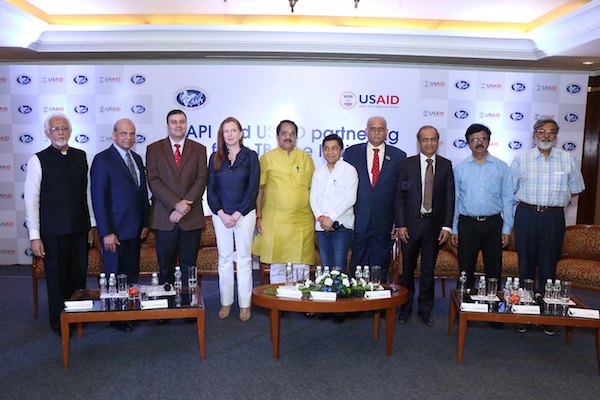
    WASHINGTON (TIP): USA-International Developmental Agency (USAID) on April 5thsigned an MOU with American Association of Physicians of Indian Origin (AAPI) to work together in achieving the goal of Tuberculosis (TB) free India.

    According to the MOU, the USAID in partnership with the Ministry of Health, India, and AAPI will rigorously work to make India TB Free.

    AAPI will play the pivotal role in achieving the goal by providing high-level education and research facility to India’s health ministry which has been pushing for the eradication of the life-threatening disease.

    According to Dr. Naresh Parikh, president-elect, AAPI, in addition to providing tools to engage patients, the organization will also be creating WHO mandated symptomatology by which indexed cases will be first detected from hotspots of tuberculosis in India.

    In addition to the TB Free India partnership, AAPI has also announced that its 12th health summit will take place in Mumbai this December. The organization said that it will provide free health care, training and support across India.

    Following the announcement of USAID and AAPI, the US Consulate in Mumbai tweeted, “Today we celebrate the announcement of @usaid_india ‘s newly signed MOU with the American Asso of Physicians of Indian Origin (AAPI) to work together toward achieving a #TBFreeIndia.”

    USAID works to end extreme global poverty and enable resilient, democratic societies to realize their potential. Since 1998, USAID has been partnering with the Government of India to combat TB. According to the official website of USAID, it has already invested more than $120 million to help diagnose and treat 15 million people with TB in India.

    AAPI is an organization of Indian American doctors practicing in the US. Founded about 34 years ago, it is now one of the largest organization of physicians in the United States.


  • Indian diabetologist Dr. V. Mohan honored by American Diabetic Association

    Indian diabetologist Dr. V. Mohan honored by American Diabetic Association

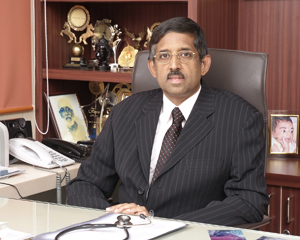
    FLORIDA (TIP): Dr. V. Mohan, diabetologist and founder of the Dr. Mohan’s Diabetes Specialties Center, Chennai, has been bestowed with the Harold Rifkin Distinguished International Service in the Cause of Diabetes Award. This makes him the first Indian physician to receive the highest accolade conferred by American Diabetic Association (ADA).

    A noted diabetologist, Mohan has been working in the field of diabetes in Chennai for over three decades. He is the Chairman and Chief of Diabetology at Dr. Mohan’s Diabetes Specialities Centre which is a WHO Collaborating Centre for Noncommunicable Diseases Prevention and Control and an IDF Centre of Education. He is also President and Director of the Madras Diabetes Research Foundation.

    Presented in memory of Harold Rifkin, the award is meant to honor individuals who have provided outstanding service in the cause of diabetes. The awardees are usually doctors who have made an impact in the field of diabetes with an international perspective. The award also recognizes individuals whose efforts have increased the awareness of the burden of diabetes worldwide.

    Mohan will receive the award during the National Scientific Achievement Awards Presentation Ceremony on the sidelines of the 78th Scientific Sessions of the ADA at Orlando, Florida.

    Recipient of more than 160 awards, Mohan started working on diabetes as an undergraduate medical student when he joined his father Prof. M. Viswanathan a pioneer in diabetes in India. Together, they founded the first private diabetes center in India in 1971. He continued to work at this center till 1991.

    Mohan and his wife, Dr. Rema Mohan, subsequently established their own diabetes centers under the name ‘Dr. Mohan’s Diabetes Specialities Centre.’ Currently, he oversees 20 diabetes centers and clinics in India and one international diabetes center in Oman. More than 350,000 diabetic patients have been registered at these centers.

    In 2012, Govt. of India awarded Mohan with Padma Shri – the highest civilian award – for his accomplishments in the field of diabetology. He is also the winner of Dr. BC Roy Award from the Medical Council of India and the Basanti Devi Amir Chand Prize from the Indian Council of Medical Research.


  • Indian American’s $ 1 Million Research May Change Cancer Treatment

    Indian American’s $ 1 Million Research May Change Cancer Treatment

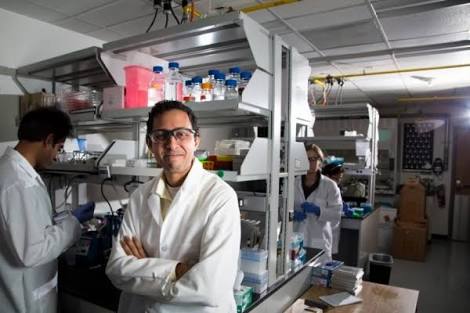
    HOUSTON (TIP):  An Indian American scientist has been awarded a grant of over $1.1 million for his ground- breaking research on cancer.

    Navin Vardarajan, along with another University of Houston researcher Sanghyuk Chung, were awarded huge grants by Cancer Prevention & Research Institute of Texas (CPRIT) , an organization that funds pioneering cancer research and prevention programes in the state.

    Associate professor of chemical and bimolecular engineering, Navin was given $1,173,420 to improve effectiveness of T-cell immunotherapy, while his fellow researcher Sanghyuk Chung, associate professor of biology and biochemistry, was awarded $811,617 to define molecular targets for the treatment of cervical cancer.

    Mr Varadarajan will use his grant to bring consistent results to cancer patients undergoing T-cell immunotherapy by manufacturing programmed T cells to meet, recognize and destroy tumors, a statement said.

    “We have to understand every single T cell and what each one is capable of,” said Mr Varadarajan, who is looking for a perfect cell composition in order to manufacture only those that cure tumors.

    “Once we know what is required to get a positive response, we can control the composition of the cells so that they all can work to fight cancer,” he said.

    Mr Varadarajan said studying what makes better T cells will guide the development of the next generation of genetically modified cells, and all of immunotherapy in general.

    “The big challenge with T cells is that there isn’t one single thing that can be used to define what a T cell is supposed to do. Because it’s a living cell, it’s capable of so many different things but studying them at the single-cell level allows us to map all of these different things onto the same cell,” he said.

    Although cervical cancer is the fourth leading cause of cancer death in women worldwide, there has been little progress in the treatment of it over the past decade.

    Mr. Chung will use his award to delve into the little-researched topic – the role of oestrogen in the development of cervical cancer.

    “It is clearly demonstrated that human papillomavirus (HPV) is required for the development of cervical cancer, but evidence indicates that other co-factors are required for cervical cancer,” Mr Chung said.


  • Nargis Dutt Cancer Foundation Emerges Stronger and United under Andy Mansukhani and Dr. Prem Goel

    Nargis Dutt Cancer Foundation Emerges Stronger and United under Andy Mansukhani and Dr. Prem Goel

    LONG ISLAND, NY (TIP): At a Nargis Dutt Cancer Foundation Board of Directors meeting held last month, the Board elected Andy Mansukhani as President of the Foundation.

    The Directors called upon their former President to revitalize the Foundation and restore it to its earlier glory and status by expanding membership to more youthful and vibrant new generation professional Indians to support the Foundation activities of improving cancer care.

    Andy Mansukhani enjoys wide support of the business and medical community and is known for his humility, moderation and business acumen in problem solving under difficult situations.

    In an unprecedented display of unity and magnanimity, Andy and the Board of Directors appointed Dr. Prem Goel as Honorary Patron of the Foundation. The vision of the new President and his associates is to foster unity of purpose and reach distant impoverished villages with improved cancer detection and care. Both Mr. Mansukhani and Mr. Goel have been strong supporters of the Foundation for over twenty years.

    One hopes, the 5 year period of eclipse for the Foundation has ended.

  • Indian American student to build a primary health clinic in Uttar Pradesh village

    Indian American student to build a primary health clinic in Uttar Pradesh village

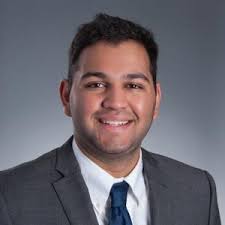
    MARYLAND (TIP): An Indian American student at Towson University is leading an effort to build a primary health clinic in a remote village in Uttar Pradesh.

    Mohammad Siddiqi, 21, is helping to build a clinic in the village of Santokha, in the Sandila district, 50 miles to the southwest of Lucknow. Siddiqi’s parents Akhlaq and Anjum Siddiqi were born and grew up in the area before they moved to the United States decades ago.

    There are no healthcare facilities in Santokha and villagers are forced to see quack doctors with no medical background that recommend hazardous “treatments,” Mohammad Siddiqi said.His mission is to provide quality healthcare to the poor people in the village and neighboring areas, he added.

    “After visiting my parents’ village for the first time, I realized there is very limited access to emergency medical services as well as a need for basic education regarding health practices in different situations, such as prenatal and postnatal care,” he said. “I hope to tackle these two needs with this clinic, which is already well into its development.”

    Siddiqi, who is currently studying at Towson University with a major in accounting while interning part-time at Morgan Stanley as a finance analyst, has been able to raise $75,000 for the construction of the clinic so far.

    His father, Akhlaq Siddiqi, works for the US Patent Office and his mother Anjum Siddiqi runs an assisted living facility in Gaithersburg, MD.

    Although his studies and career plans are centered around accounting and finance — upon completing his undergraduate degree in May 2018, he plans to start an internship with Deloitte for Summer 2018 before pursuing a Master’s in Finance — Mohammad Siddiqi said he has developed a passion to help others not as fortunate.

    Among other things, the clinic will screen patients for serious illnesses, such as heart diseases, cancer, blood diseases, eye diseases and kidney diseases, as well as treat common diseases including fever, malaria, tuberculosis, gastroenteritis, respiratory diseases and infections, he said. It will have curative, education and prevention programs.

    Eventually, the clinic will have state-of-the-art diagnostic services, including X-ray, ultrasound and ECG, he added.

    Siddiqi said a current challenge is building relationships with the local government as well as NGOs and healthcare professionals. Involvement of the local community and other stakeholders will ensure long-term viability of the project, he said.

    Citing the assisted living facility his mother runs, Siddiqi said healthcare is a field that his family deeply cares about and has expertise in, and, considering his parents’ roots in the area, starting a clinic in the Sandila region was quite natural.

    His father Akhlaq Siddiqi said the family has a strong emotional bond with the village and wanted to do something for the area. After a family visit a few years ago, Mohammad saw the condition of the villagers and decided to take the initiative in building the clinic, he said.

    “In future we plan to build similar clinic in other parts of Uttar Pradesh by mobilizing other people of Uttar Pradesh origin,” Akhlaq Siddiqi said.


  • AAPI’s 36th annual Convention & Scientific Assembly to be held at Columbus Convention Center, OH, July 4-8, 2018

    AAPI’s 36th annual Convention & Scientific Assembly to be held at Columbus Convention Center, OH, July 4-8, 2018

    COLUMBUS, OH (TIP): “The 36th Annual Convention & Scientific Assembly of the American Association of Physicians of Indian Origin (AAPI) will be held at the at Columbus Convention Center, OH July 4-8, 2018,” Dr. Gautam Samadder, President of AAPI, announced her, February 18. “The 2018 AAPI Convention offers a rare platform to interact with leading physicians, health professionals, academicians, and scientists of Indian origin,” he added.

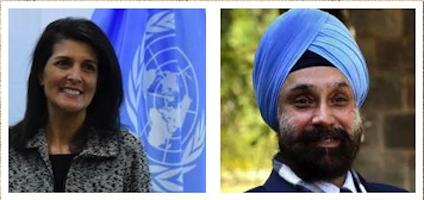
    Ambassador Nikki Haley, the top American diplomat and US Ambassador to the United Nations, and Ambassador Navtej Singh Sarna, an Indian author-columnist, diplomat and current Indian Ambassador to the US, have agreed to attend the AAPI convention and address the delegates, Dr. Samadder announced.

    AAPI’s mission is to provide a forum to facilitate and enable Indian American physicians to excel in patient care, teaching and research, and to pursue their aspirations in professional and community affairs. For 36 years, the AAPI Convention has provided a venue for medical education programs and symposia with world renowned physicians on the cutting edge of medicine.

    The annual convention this year is being organized by the Ohio Chapter and is led by Convention Chair, Dr. John A. Johnson, a physician, business executive, private equity/venture capital investor, and philanthropist. A pool of dedicated AAPI leaders are working hard to make the Convention a unique event for all the participants.

    “We have been working hard to put together an attractive program for our annual get together, educational activity and family enjoyment. I and the Co-Chairs are fortunate to have a dedicated team of convention committee members from the Tri-State region helping us. We are expecting a record turnout and hence I would encourage early registration to avoid later disappointment,” Dr. Johnson said.

    “The preliminary program is in place, the major attractions include 12 hours of cutting-edge CME with renowned speakers, CEO Forum, Innovation Forum, Entrepreneur Forum, Women’s Forum, Men’s Forum, and Product Theaters to highlight the newest advances in patient care and medical technology. Alumni meetings for networking, also an AAPI-India Strategic Engagement Forum to showcase the AAPI initiatives in India like Trauma Brain Injury Guidelines, MoU on TB Eradication in India and recognition of AAPI Award winners will make this Convention unique,” Dr. Ashok Jain, Chair, Board of Trustees, said.

    “Many of the physicians who will attend this convention have excelled in different specialties and subspecialties and occupy high positions as faculty members of medical schools, heads of departments, and executives of hospital staff. The AAPI Convention offers an opportunity to meet directly with these physicians who are leaders in their fields and play an integral part in the decision-making process regarding new products and services,” Dr. Yashwant Reddy, Treasurer of AAPI Convention 2018, said.

    In addition to the exhibition hall featuring large exhibit booth spaces in which the healthcare industry will have the opportunity to engage, inform and educate the physicians directly through one on one, hands on product demonstrations and discussions, there will be focused group and specialty Product Theater, Interactive Medical Device Trade Show, and special exhibition area for new innovations by young physicians.

    Physicians of Indian origin are well known around the world for their compassion, passion for patient care, medical skills, research, and leadership. Not satisfied with their own professional growth and the service they provide to their patients around the world, they are in the forefront, sharing their knowledge and expertise with others, especially those physicians and leaders in the medical field from India.

    Representing the interests of the over 100,000 physicians of Indian origin, leaders of American Association of Physicians of Indian Origin (AAPI), the largest ethnic organization of physicians, for 36 years, AAPI Convention has provided a venue for medical education programs and symposia with world renowned physicians on the cutting edge of medicine.

    AAPI is an umbrella organization which has nearly 90 local chapters, specialty societies and alumni organizations. Almost 10%-12% of medical students entering US schools are of Indian origin. AAPI represents the interests of over 60,000 physicians and 25,000medical students and residents of Indian heritage in the United States. AAPI, the largest ethnic medical organization in the nation, and serves as an umbrella organization.

    The AAPI Convention offers an opportunity to meet directly with these physicians who are leaders in their fields and play an integral part in the decision-making process regarding new products and services.

     “Physicians and healthcare professionals from across the country and internationally will convene and participate in the scholarly exchange of medical advances, to develop health policy agendas, and to encourage legislative priorities in the coming year. We look forward to seeing you in Columbus, OHIO!” said Dr. Gautam Samadder.  For more details, and sponsorship opportunities, please visit:  www.aapiconvention.org; and www.aapiusa.org

  • Indian Americans Romesh and Sunil Wadhwani  launch a non Profit artificial intelligence center in Mumbai

    Indian Americans Romesh and Sunil Wadhwani launch a non Profit artificial intelligence center in Mumbai

    The mission of the institute is to be a hub for collaborations between AI scientists from top global institutions, social-impact organizations, and governments by creating and curating high-quality open-access datasets to foster innovation.

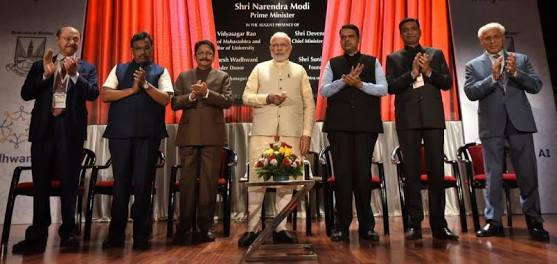
    TIP: Indian Prime Minister Narendra Modi on February 18th  inaugurated the Wadhwani Institute for Artificial Intelligence on the Kalina campus of the Mumbai University.

    The Wadhwani Institute for Artificial Intelligence, a nonprofit independent research institute that aims at developing AI technologies for social gain, will help improve productivity and lead to equitable development, said Modi during his speech.

    Founded by Indian American tech entrepreneurs Romesh and Sunil Wadhwani, the institute will work in domains of societal importance, including agriculture, health, education and infrastructure.

     “With each wave of new technology, new opportunities arise,” said Modi. “It opens an entirely new paradigm of opportunities. New opportunities have always outnumbered old ones.”

    “This optimism spells from my firm faith in the ancient Indian thinking that blended science and spirituality and found harmony between the two for the greater good of mankind,” he added.

    The institute is the first of its kind in India that focuses on further developments in artificial intelligence and is supported by the state government of Maharashtra.

    The institute will have 10 data scientists from across the world in the initial stage.

    The mission of the institute is to be a hub for collaborations between AI scientists from top global institutions, social-impact organizations, and governments by creating and curating high-quality open-access datasets to foster innovation.

    The research team at the Wadhwani Institute is collaborating with MIT, Stanford, University of Southern California, NYU, University of Washington, CMU, Alan Turing Institute, IIT Bombay, IIT Madras and IIT Delhi, among other institutions.

    In addition to providing space for the institute, the Government of Maharashtra has also offered to provide a test bed for piloting our projects.

    “The institute will develop AI-based solutions to serve the bottom 20% of society. Unique initiative!” tweeted CEO of Niti Aayog Amitabh Kant.


  • The American India Foundation to honor Chintu Patel and Chirag Patel for their outstanding leadership in business and philanthropy

    The American India Foundation to honor Chintu Patel and Chirag Patel for their outstanding leadership in business and philanthropy

    New York (TIP): The American India Foundation will honor Chintu Patel and Chirag Patel, cofounders, co-chairmen and co-CEOs of Amneal Pharmaceuticals, at its Philadelphia fundraising gala, which will be held at the National Constitution Center on February 25.

    The two executives will be recognized for their “outstanding leadership in business and philanthropy,” AIF said in a press release.

    “We are proud to support the important work of the America India Foundation, an organization that strives to improve the lives of millions of citizens of India through the provision of healthcare, livelihoods, and education,” Chintu Patel and Chirag Patel said in a joint statement. “Although there is great need in India, we are confident that together, under the leadership of organizations like the AIF and our own Niswarth and Irada Foundations, we can produce impactful improvements that improve countless lives.”

    Counsel General in New York to India Sandeep Chakravorty and AIF CEO Nishant Pandey will be among prominent speakers. The Gala Chairs are Raj Gupta, retired chairman and CEO of Rohm and Haas Company, and Steven Collis, president and CEO of AmerisourceBergen Corporation.

    A number of dignitaries, including business leaders, entrepreneurs and academics will attend the gala, which will support the organization’s Maternal and Newborn Survival Initiative (MANSI).

    The MANSI program, which is designed to reduce maternal and child mortality in rural, impoverished areas, utilizes a public-private partnership model to provide the resources and support required to empower local communities to care for their mothers and children while improving the local health system.

    The program provides preventative and curative care for both mothers and newborns all the way from the individual household to government health facilities to ensure new mothers and infants have the care they need to prepare for, survive, and thrive during and after pregnancy.

    Gala registration link: https://donate.aif.org/2018philadelphiagala

    South Asian acappella group Penn Masala will perform at the event, the AIF said.


  • Harvard University India Conference : People need “Health Assurance”, not insurance says Indian political leader Manish Sisodia

    Harvard University India Conference : People need “Health Assurance”, not insurance says Indian political leader Manish Sisodia

    ‘Our Government’s vision is to provide 100% coverage of high quality education and healthcare at very low, affordable cost”, added the Deputy Chief Minister of Delhi

    BOSTON (TIP): The annual India Conference organized by Harvard Business School is a confluence of some of India’s brightest minds focusing on various issues concerning the country. This year’s conference last weekend again saw an impressive array of speakers from prominent politicians to movie stars and, journalists to economists. One of the keynote speeches was given by Manish Sisodia, Deputy Chief Minister and Education Minister of the city-state of Delhi, capital of India.

    During his speech titled: “Healthcare and Education Model of Delhi”, he highlighted how his government has brought special focus to the Education Department which for last several decades saw stagnant budget allocations and declining standards of infrastructure in public schools run by the government. After his government came to power in 2015, the very first budget saw huge increase in education budget, rupee equivalent of a little over $1.5 Billion, which is 106% over the previous government’s allocation. Over the next two years, the allocation to education has been maintained at around a quarter of the total budget of the Delhi government, which has shown major improvements in both quality of school infrastructure and students’ performance. For instance, with the increased budget, 8000 new classrooms have been added to the government-run schools with 10,000 more are under construction, reduced the learning gap among children, invested in brining well-trained teachers, and taken efforts to make schools accountable to students and parents.

    He then highlighted the issues that are plaguing the Indian health sector. Treatment in government hospitals is availed only when a person cannot access a privately-run facility. With a huge section of India’s population under poverty, quality healthcare and life-saving surgical procedures remain inaccessible to millions of people. He said it will be unfair to expect people to buy health insurance with a high premium. Hence his government’s model is a “health assurance” regime that guarantees quality and affordable healthcare government facilities.

    Building a three-tier model to offer better care and reduce load on hospitals

    India’s current hospital-centric model of healthcare delivery is neither sustainable nor convenient. Current Delhi Government focused both on reducing the load on existing hospitals by creating two additional tiers of care while simultaneously increasing the capacity of Delhi’s larger government hospitals.

    The second tier, called ‘Polyclinics’, will serve as extended arms of government hospitals, to treat out-patients through Specialists. The third tier would be the low-cost primary health care facilities called ‘Mohalla Clinics’ or ‘neighborhood clinics’. Mohalla Clinic is an innovation in primary care that has been commended by the Stanford Social Innovation Review and by The Lancet journal among others.

    “An average primary care unit costs close to one million dollars to build. Instead of continuing to build such expensive dispensaries, Delhi government decided to build temporary air-conditioned structures within the community that they are to serve at a cost of about thirty thousand dollars instead. We are now building 25 Mohalla clinics at the cost of one erstwhile dispensary. With more than 160 such clinics functioning throughout the city, the patients who were crowding the large hospitals for primary care have been diverted to local clinics” added Mr. Sisodia.

    “Within three years of this model, we have been able to rebuild the lost confidence in public healthcare to a large extent. The number of patient visits have increased from 30 to 45 million, a phenomenal growth of 50%”, he claimed.

    Finally, on why his model is a disruptive idea, Sisodia said: “Our government has provided ‘health assurance’ to all citizens, which is if the waiting time for any major surgery is more than a month, then the patient can get the procedure done at a private hospital and the government will pay for it. Economies of scale have ensured that the cost paid by the government is much lower than what the patient would have paid as an individual. At a fraction of the cost of surgeries at private hospitals, any patient who needs urgent procedures is entitled to free treatment at any of the empaneled private hospitals. This is as close to single-payer system that any state in India has attempted to introduce. “