Tag: Hillary Clinton

  • US election 2016: Sanders beats Clinton in Maine caucuses

    US election 2016: Sanders beats Clinton in Maine caucuses

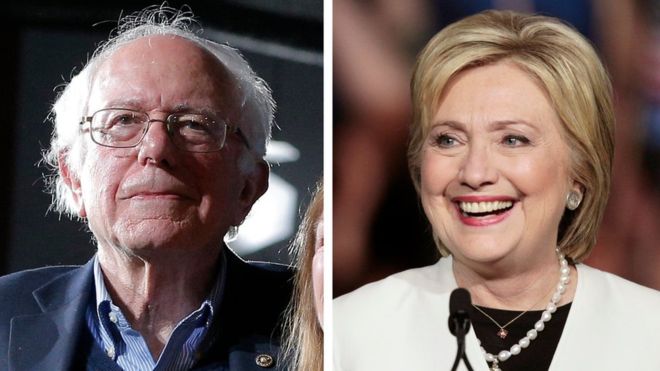
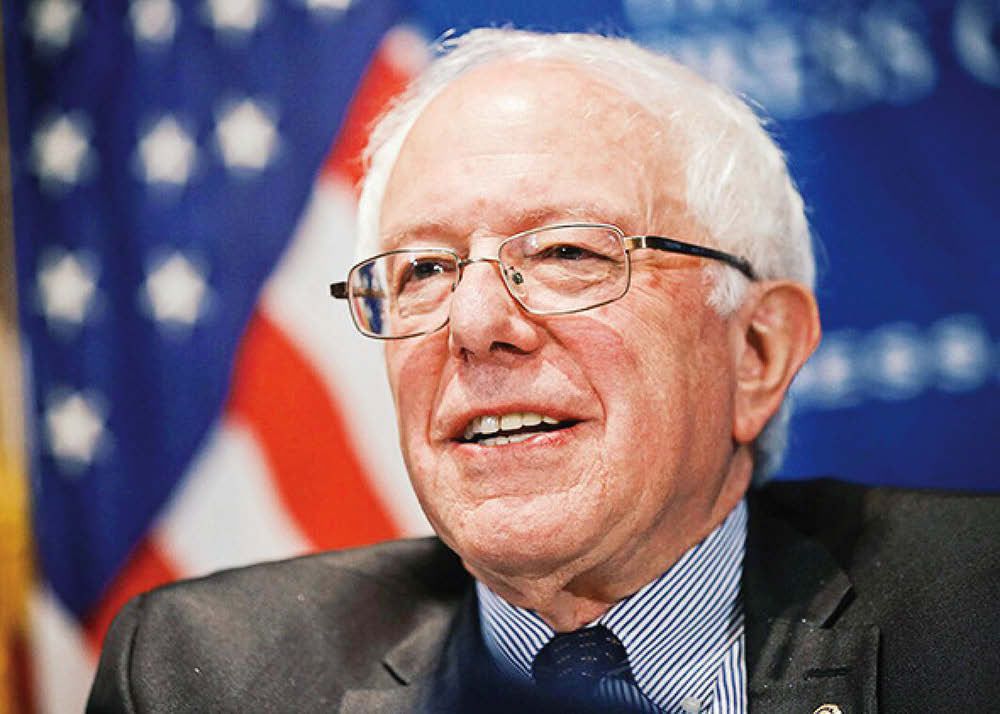
    Bernie Sanders has beaten Hillary Clinton in the Maine caucuses, the latest contest in the battle to be the Democratic presidential candidate.

    With 80% of the vote counted, Vermont Senator Mr Sanders is polling 64%, while former Secretary of State Mrs Clinton has 36%.

    In the Republican race, Marco Rubio easily won Puerto Rico’s primary, beating billionaire Donald Trump.

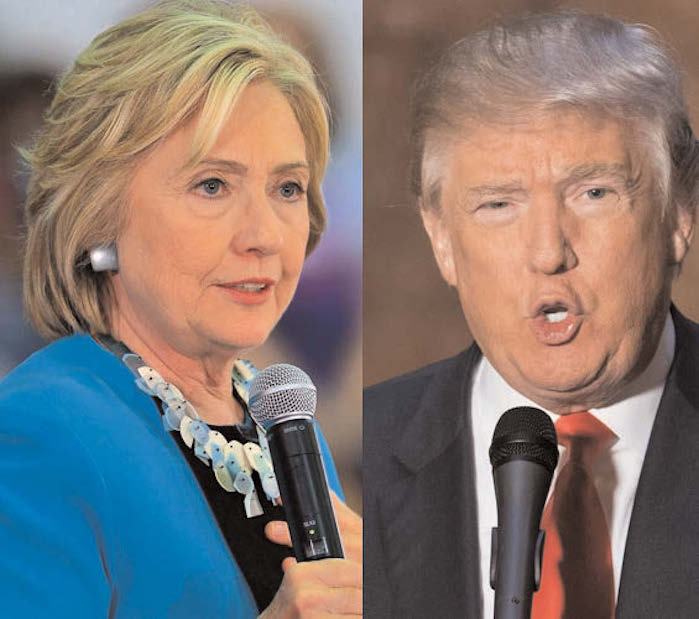
    Mrs Clinton and Mr Trump remain overall leaders in the nomination campaigns.

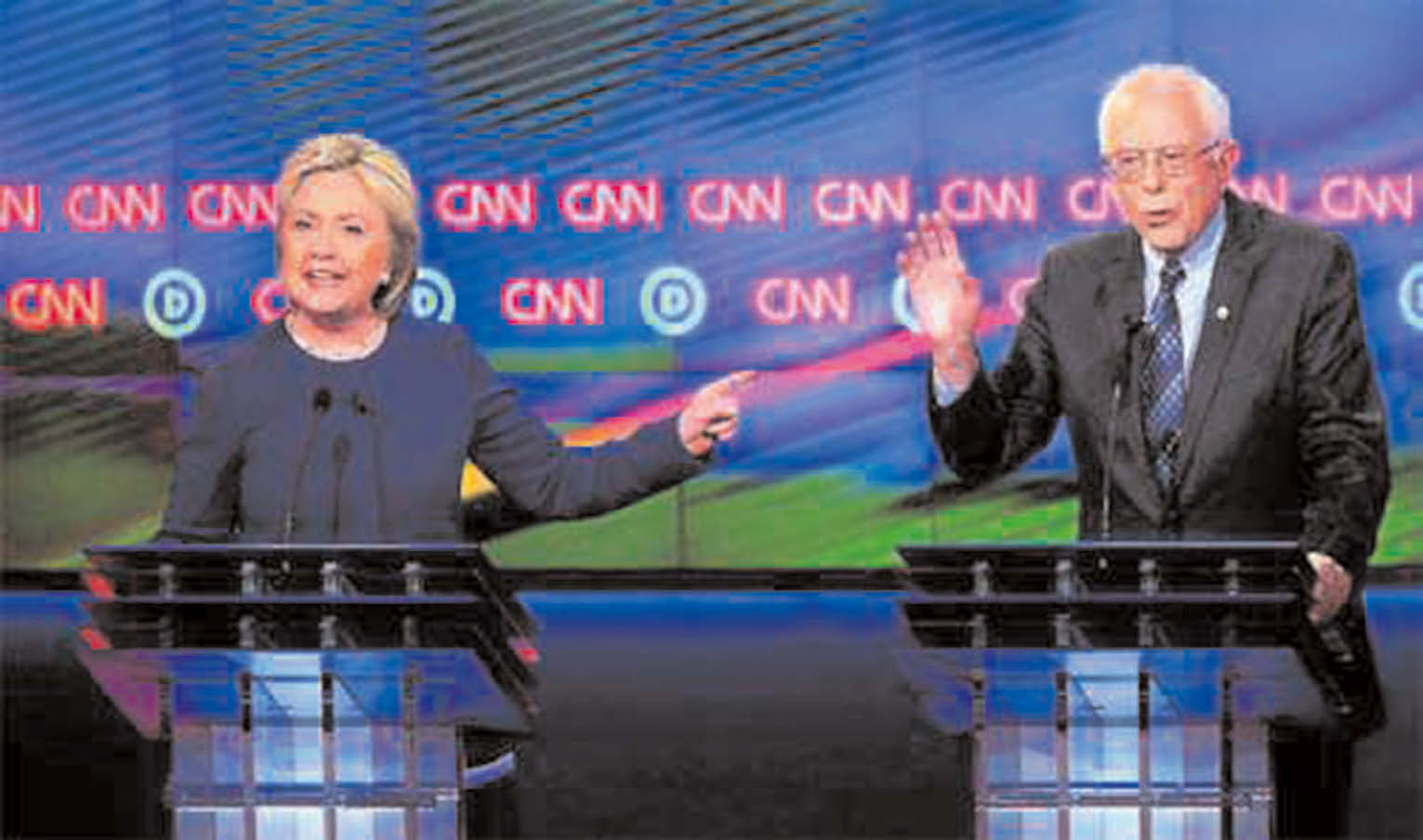
    Sunday night saw Mrs Clinton and Mr Sanders clash in a CNN-hosted debate in Flint, Michigan.

    In Saturday’s round of voting, Mr Sanders took two states – Kansas and Nebraska – but Mrs Clinton maintained her Democratic front-runner status after a big victory in Louisiana.

    While the win in Puerto Rico – a US territory – will boost Florida Senator Mr Rubio’s campaign, it sends just 23 delegates to the Republican convention which nominates a presidential candidate.

    Republican hopefuls need the votes of 1,237 delegates to get the nod for the presidential race proper.

    Mr Rubio still trails Donald Trump and Texas Senator Ted Cruz.

    Speaking after wins in the Republican Kentucky caucuses and Louisiana primary election on Saturday, Mr Trump told a news conference: “I would love to take on Ted Cruz one on one.”

    “Marco Rubio had a very very bad night and personally I call for him to drop out of the race. I think it’s time now that he dropped out of the race. I really think so.”

    Meanwhile, Texas Senator Mr Cruz – who won Republican caucuses in Kansas and Maine – said he believed that “as long as the field remains divided, it gives Donald an advantage”.

  • With Donald’s rise, ‘Trump anxiety’ is sending Americans to therapists

    With Donald’s rise, ‘Trump anxiety’ is sending Americans to therapists

    WASHINGTON: To the growing list of psychological illnesses in a country that hasn’t discovered a problem it has not monetised, add ‘Trump anxiety’. Apparently, shrinks, therapists, and even masseurs are reporting an uptick in clients coming to them with apprehensions about the possible election of Donald Trump as America’s 45th President.

    Based largely on anecdotal accounts, the sample is small and mostly located on the East Coast, which in any event is known for its liberal bias. But publications ranging from Washington Post to Wall Street Journal have cited psychologists reporting an increase in patients with whatthey term “Trump anxiety”. That includes some disquiet among shrinks themselves.

    “Part of the reason he makes people so anxious is that he has no anxiety himself. It’s frightening,” one psychologist was quoted as saying, a day after the ferocious Detroit debate in which the candidates fetishized about the size of hands vis-a-vis other parts of the anatomy.

    Another reason behind the increased stress associated with Trump, psychologist Alison Howard said, was the sense that the real estate mogul tramples over social mores and is allowed “to get away with it”.

    Whether psychologists in Middle America and the hinterland that constitutes the Republican redoubts feel a similar unease about the possible election of Hillary Clinton or Bernie Sanders is not clear. But like Sarah Palin, who copped four times as many jokes as Obama in the 2008 elections, Trump is getting hammered on the comedy front, with Hillary a distant second.

    Comedians though are trying to make light of the Trump mania. “It’s being reported that the Democrats have a plan to “shatter the Republican Party”. When he heard, Donald Trump said, “Beat youtoit!”” ‘LateNight’ host Conan O’Brien joked last night. Then, referring to Ted Cruz trying to tie Trump to a prominent mobster, O’Brien kidded that in an attempt to repair the damage to his reputation, the mobster is distancing himself from Trump.

    That feeling pervades even nations. The latest joke is that after watching Trump’s rise, Canada and Mexico intend to build the kind of wall on its border with the US that Trump wants to build on the US border withMexico—to prevent anti-Trump Americans from crossing over.

    Meanwhile, those with Trump anxiety who cannot decamp to Canada or Mexico may have to figure out other kind of mental blocks.

  • US Presidential Elections: Cruz catches up

    US Presidential Elections: Cruz catches up

    The march of Donald Trump and Hillary Clinton to Republican and Democratic presidential nominations was slowed a little as rivals Ted Cruz and Bernie Sanders notched two more wins each in five nomination contests.

    While real estate mogul added Louisiana primaries and Kentucky caucuses on Saturday to his 10 victories in 15 states earlier, Texas Senator Ted Cruz put Kansas and Maine in his victory column to slow the Trump train.

    Though with 12 victories to date, Trump remains far ahead overall in the Republican contest, Cruz’s two wins Saturday combined with his earlier success in four other states — Iowa, Nevada, Oklahoma and Alaska — back up his claim to be Trump’s main rival.

    “I have been in competitions all of my life,” Trump said in a press conference at Trump International Golf Course in West Palm Beach, Florida. “There is nothing so exciting as this stuff.”

    But rival Cruz said at an event in Idaho, which votes on Tuesday, that “the scream you hear-the howl you hear from Washington, DC – is utter terror for what we the people are doing together. What we’re seeing is conservatives coming together”.

    “I think what it represents is Republicans coalescing, saying it would be a disaster for Donald Trump to be our nominee and we’re going to stand behind the strongest conservative in the race,” he said.

    Boasting of his “breadth of support”, Cruz suggested it was time for the other two Republican candidates, Florida Senator Marco Rubio and Ohio Governor John Kasich, to consider dropping out of the race.

    Establishment favourite Rubio, who has won only one state so far, put on a brave face, saying that the states being contested on Super Saturday favoured other candidates, but predicted that his fortunes would soon change.

    He predicted victory in his home state of Florida on March 15, but polls show Trump leading him by double digits there.

    On the Democratic side, self-styled Democratic Socialist Sanders won in Nebraska and Kansas, while Clinton picked up another win in Louisiana, where black voters make up a large portion of the Democratic electorate.

    In a statement after his victory in Kansas, Sanders pointed to wins in a geographic range of states. “We have now won double-digit victories from New England to the Rocky Mountains to the Great Plains to the Midwest,” Sanders said.

    “Tonight, we won Kansas with a good vote. We won Nebraska with a good vote,” he said. “I think we are going to do well in Maine tomorrow. We are going to do very well here on Tuesday.”

    Saturday’s results were not likely to alter the broader contours of the Democratic race as Clinton maintains a significant delegate lead.

  • Tulsi Gabbard, the first Hindu in the US Congress, on Modi, Hinduism, and linking Islam to terror

    Tulsi Gabbard, the first Hindu in the US Congress, on Modi, Hinduism, and linking Islam to terror

    Washington has no shortage of politicians struggling to be seen as a maverick. But Tulsi Gabbard isn’t one of them.

    As one of the first two female combat veterans elected to US Congress and also its first Hindu and first American Samoan representative, she wears the label quite easily. And this week, the 34-year-old congresswoman from Hawaii reminded everyone of it, as she broke ranks with the Democratic party establishment and relinquished her post as vice chair of the Democratic National Committee on Feb. 29 to endorse Bernie Sanders for president. (Her role with the DNC, the party’s governing body, would have required to stay neutral in the election.)

    Described last October by the Washington Post as “the Democrat that Republicans love and the DNC can’t control,” Gabbard offered a sample of her independent streak a year ago, when she spoke out of sync with her fellow Democrats and criticized US president Barack Obama’s handling of Islamic extremism—specifically over his unwillingness to brand ISIL an “Islamic” group. “[Obama] is completely missing the point of this radical Islamic ideology that’s fueling these people,” Gabbard told Fox News last February.

    Her viewpoint on this subject is all the more notable given her military experience in the Middle East, where she served in a field medical unit in Iraq and was a trainer for the Kuwait National Guard.

    But it also aligns nicely with the stance toward Islam held by India’s right-wing Bharatiya Janata Party (BJP) and its Hindu nationalist leader, Narendra Modi, with whom Gabbard shares a great rapport.

    Gabbard was among the few to criticize the US government’s decision to deny a visa to Modi before he was prime minister, in the wake of accusations that his government in the state of Gujarat did not do enough to save Muslims during the horrific communal violence carried out there in 2002. The Gujarat riots claimed more than 1,000 people, including close to 800 Muslims. Gabbard had called the no-visa decision a “great blunder.”

    And in November 2013, five months before Modi would win election as prime minister, Gabbard opposed a House resolution that called for “religious freedom and related human rights to be included in the United States-India Strategic Dialogue and for such issues to be raised directly with federal and state Indian government officials,” saying it would weaken the friendship between India and US.

    Critiques of her stance, like this one published on the American social-justice site Alternet.org, accused her of putting politics before policy:

    Rather than review the litany of abuses that have occurred in the country, Gabbard mused she did “not believe that the timing of this hearing is a coincidence….I am concerned that the goal of this hearing is to influence the outcome of India’s national elections.” She went on to state that even holding a hearing on the issue was “an attempt to foment fear and loathing purely for political purposes.” In other words, her concern was that Modi’s electoral chances would be hurt by an honest look at religious persecution in India.

    Speaking at a fundraising event for the BJP in August 2014, where she articulated the plight of Hindus around the world who have suffered persecution, Gabbard said that Modi’s election victory was only possible because “people stood up, one by one by one by one, and said we will demand that this change occurs.”

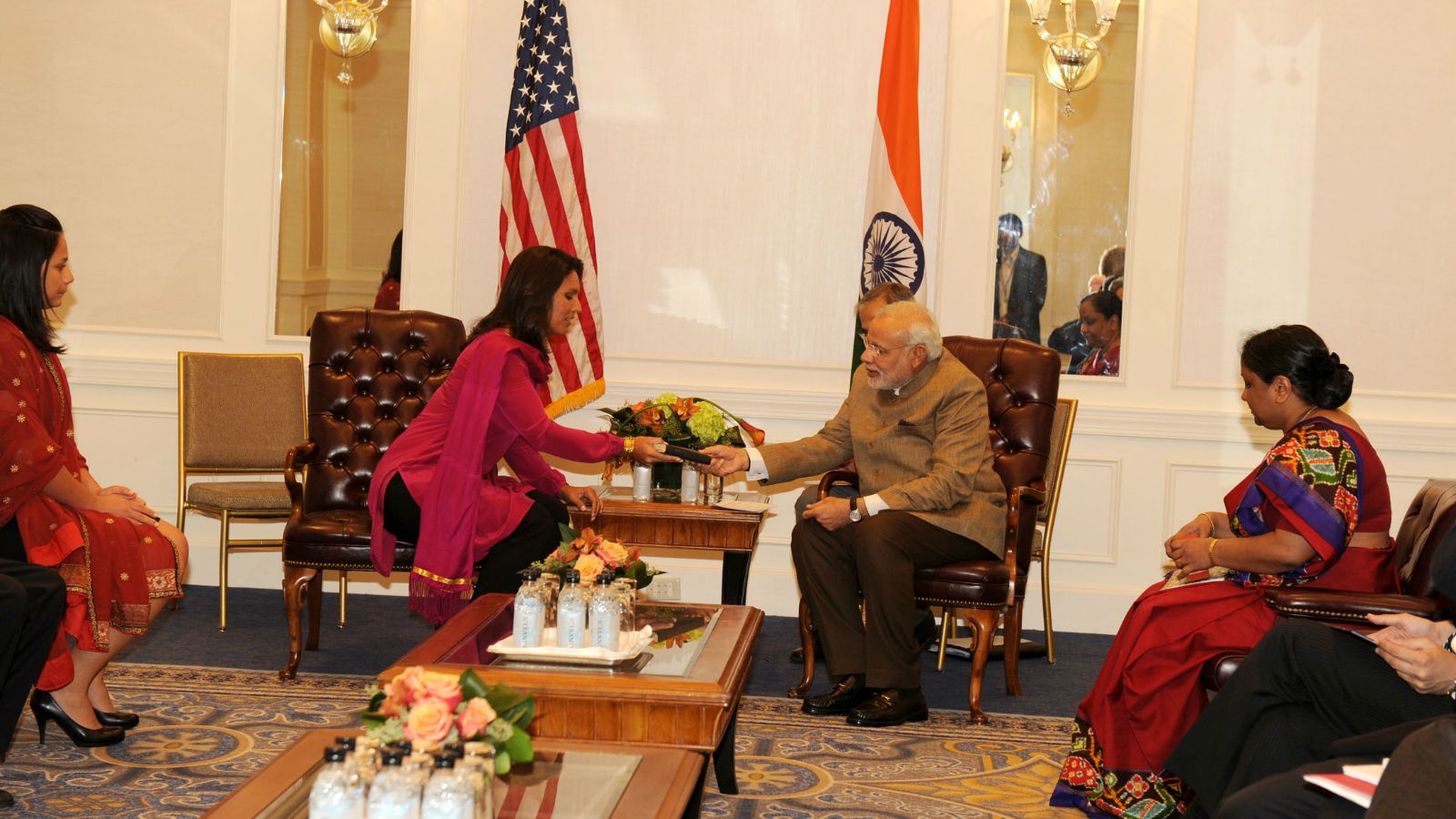
    In September 2014, the new Indian prime minister made it a point to meet Gabbard following his historic post-election speech at New York’s Madison Square Garden. And the congresswoman gave Modi a gift—a copy of the Bhagwad Gita that she swore by when elected to office—and assured him of her support for a Modi pet project of declaring an International Yoga day.

    “We had a wide-ranging discussion on several issues our countries have in common, including how America and India can work together to help combat the global threat posed by Islamic extremism,” Gabbard said after the meeting.

    For all that and more, Gabbard was treated as royalty on her visit to India last year. As she hobnobbed with the Indian prime minister and foreign minister among others, The Telegraph, a Kolkata-based newspaper, called her “the Sangh’s mascot” in the US. The Sangh, a moniker for the Rashtriya Swayamsevak Sangh (RSS), is a right-wing hindutva organisation and the ideological guardian of the BJP party that rules India now.

    With Modi set to stay in power until 2019, and Sanders doing better than expected in the Democratic primaries (or at least was up until March 1, when Democratic frontrunner Hillary Clinton handily won key states like Texas and Virginia in the “Super Tuesday” state contests), it can’t hurt the BJP and India to have a friend like Gabbard in the US.

    On March 2, Gabbard answered questions from Quartz via email about her support of Modi, her approach to Hinduism, and the connection she draws between Islam and terrorism. The transcript below has been condensed and lightly edited:

    Quartz: Could you tell us about your reasons for supporting the BJP and Narendra Modi, and why you referred to him being denied a visa as a “great blunder”?

    Tulsi Gabbard: There are many different areas and sectors where the United States and India’s growing friendship can cover mutually beneficial ground such as defense, renewable energy, bilateral trade, and global environmental concerns such as climate change. Modi impressed me as a person who cares deeply about these issues and as a leader whose example and dedication to the people he serves should be an inspiration to elected officials everywhere.

    It is very important that the US and India have a strong relationship of mutual respect. The denial of a visa to prime minister Modi could have undermined that relationship had he used it as an excuse to reject having a strong bilateral relationships with America. This would have been bad for both of our countries. For many reasons—not the least of which is the war against terrorists—the relationship between India and America is very important.

    QZ: You took on the US president for his reluctance to name ISIS as an Islamic extremist group. Do you still stand by this criticism?

    TG: In order to defeat the terrorists who have declared war on the United States and the rest of the world, we need to understand their ideology. In other words, the war can’t be won just militarily. We must defeat them in the ideological war, not just on the battlefield. In order to defeat their ideology, we need to recognize what their ideology is.

    The ideology of these terrorists is “Islamism.” It is a radical political ideology of violent jihad aimed at bringing about an establishment of a totalitarian society governed by a particular interpretation of Islam as state law. Referring to terrorists as “Islamist extremists” is simply an accurate way to identify ISIS and other Islamist extremist organizations whose ideology is rooted in one form of Islamism or another.

    The majority of Muslims are practicing the spiritual path of Islam within their own lives in a pluralistic, peaceful way. So by calling organizations like ISIS Islamic or Islamist extremists [emphasis hers], we are making a distinction between the vast majority of Muslims who are not extremists and a handful of those who are.

    QZ: How much of that sentiment is influenced by your experience serving in the military in the Middle East, versus your interest in Hindu/Muslim conflicts in India?

    TG: My experience serving in the Middle East has shaped many of my views. This has nothing to do with any “Hindus/Muslim” conflict in India or anywhere else. It comes from the understanding that in order to defeat the terrorists who have declared war on the United States and the rest of the world, we need to understand their ideology.

    My two deployments in the Middle East reinforced the fundamental military wisdom that you can’t defeat an enemy if you don’t understand him. We cannot win this war if we do not understand our enemy’s goals, [or the] ideology that inspires them and fuels their recruitment propaganda. And the first step to understanding an enemy is correctly identifying him in a way that makes clear his ideology.

    QZ: You referred to the suffering of Hindu minorities across the world, in a speech you gave during a fundraiser attended by some of the top leaders of the BJP. Do you think that in India there exists a similar situation?

    TG: Throughout the world, Hindus are victims of discrimination. Recently, a Hindu priest in Bangladesh was brutally hacked to death by ISIS terrorists and two others were injured trying to help him. Unfortunately, even in the United States, as well as different pockets of India, such discrimination exists.

    While there is no doubt there is some discrimination directed toward different “religious minorities” in India, throughout India you will find Muslims, Christians, and people of all kinds of religions free to practice their faith. However, you will not find this degree of tolerance or openness in countries like Pakistan, Saudi Arabia, Iran, or other Muslim countries. In fact, if you are not a member of the government-approved religion in those countries, it is government policy that you will be punished and discriminated against. To my knowledge, this does not exist in India. However, if India were to enact government policies that punish their citizens simply for being of a “minority religion,” I would condemn that action.

    The essence of the Hinduism that I practice is karma yoga and bhakti yoga, which means to love God and all [emphasis hers] of His children, regardless of their race, religion, etc., and to use my life working for the well-being of everyone.

    QZ: A report in The Telegraph, an Indian newspaper, referred to you as the mascot for the right-wing RSS in India. How do you respond to that? Do you think that is true and would you like to be associated with the RSS?

    TG: Both in India and here in the US, I have held meetings with members of both the BJP and the Congress Party. As a member of the US Congress, my interest is in helping produce a closer relationship between the United States and India, not just between the United States and one political party of India.

    I have no affiliation with the RSS. Sometimes people on both sides, for their own purposes, try to say I somehow favor, or am part, of the BJP or take photos of me at Indian events and circulate them for their own promotional reasons. But the fact is, I’m not partial to BJP, the Congress Party, or any other particular political party in India.

    QZ: Some media reports suggest that you seem to be supporting the Indian diaspora, mostly because they are huge contributors to your campaign, especially with your Hindu identity. How do you respond?

    TG: Through my election to Congress and my swearing in on Bhagavad-gita, those in the national media, my colleagues in Congress, and regular Americans across the country have all been very respectful, and even proud of America’s diversity. I assume the reason Hindus all across the country have been so supportive of me, is because when they see me, they see the potential for themselves and their sons and daughters.

    There are many Hindus in America who feel they need to convert to Christianity or take “Christian” names if they or their children are to succeed in this country. I have found that simply being the first Hindu elected in Congress has been liberating to so many because it shows that every American, regardless of their background, race, or religion, has the opportunity serve our community in any capacity he or she may choose.

  • Super Tuesday: Hillary Clinton and Donald Trump rack up more wins

    Super Tuesday: Hillary Clinton and Donald Trump rack up more wins

    WASHINGTON (TIP): Democrat Hillary Clinton and Republican Donald Trump have each won the most states on the biggest day of the race for the US presidential nominations.

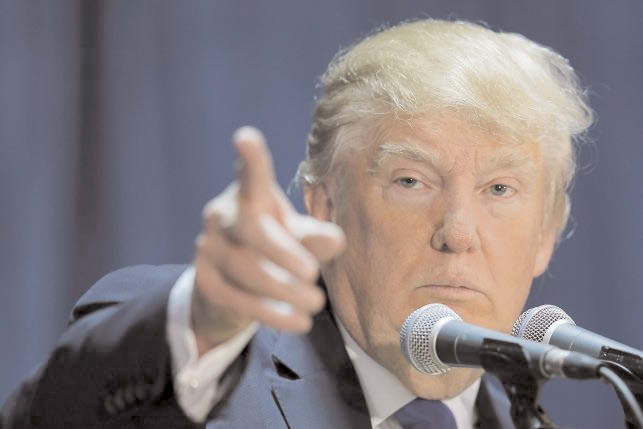
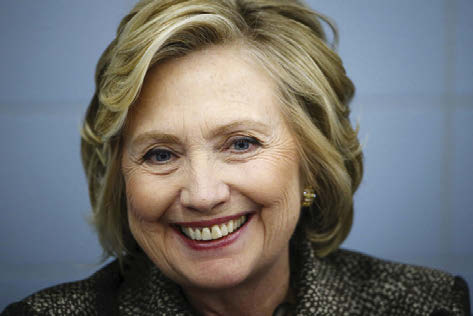
    The Frontrunners - Democrat Hillary Clinton and Republican Donald Trump
    The Frontrunners – Democrat Hillary Clinton and Republican Donald Trump

    Key Points

    • Republican Donald Trump and Democrat Hillary Clinton dominate ‘Super Tuesday’ primaries
    • Clinton wins seven states but Democrat rival Bernie Sanders has four
    • In Republican race, Senator Ted Cruz wins Texas, Oklahoma and Alaska to prevent a Trump clean sweep. Trump won seven
    • Florida Senator Marco Rubio wins his first state in the race in Minnesota caucuses
    • After earlier votes in four states in recent weeks, Trump leads the Republican field and Clinton the Democratic contest
    • Mr. Trump won seven states while his closest rival, Ted Cruz, took three. The third-placed Republican, Marco Rubio, came in with one.

    Speaking in his home state of Texas, Mr. Cruz urged other Republicans to quit the race and join him against Mr. Trump.

    Democrat Bernie Sanders had wins in four states.

    Super Tuesday saw 11 states voting, from Massachusetts in the east to Alaska in the north-west. A 12th state, Colorado, held a caucus – won by Mr. Sanders – but does not actually select its delegates until April.

    Tuesday allocates nearly a quarter of Republican delegates, and about a fifth of Democratic delegates, who will elect their respective presidential candidates at party conventions in July. No candidate has yet won enough delegates to secure their party’s nomination.

    Mrs Clinton, a former secretary of state, and Mr. Trump, a property tycoon, entered Super Tuesday as favorites to win the vast majority of states for their respective parties.

    The Democratic frontrunner won in Alabama, Georgia, Tennessee, Virginia, Arkansas, Texas and Massachusetts, polling well among blocs of black voters.

    Delivering her victory speech from Miami, having moved her campaign to Florida for the primary there on 15 March, in common with other candidates, she appeared to already be looking towards a potential presidential race against Mr. Trump.

    “The stakes in this election have never been higher and the rhetoric we’re hearing on the other side has never been lower,” she said.

    Donald Trump won the Republican primaries in  Alabama, Georgia, Massachusetts, Tennessee, Virginia, Arkansas and Vermont.

    The billionaire insisted he had “expanded the Republican party”, referring to higher turnout from a broad demographic in states that have already voted.

    He described himself as a “unifier” who could put internal fighting in the Republican party behind him and told reporters in Florida: “Once we get all this finished, I’m going after one person – Hillary Clinton.”

    Super Tuesday states won:

    Donald Trump (Republican): Alabama, Georgia, Massachusetts, Tennessee, Virginia, Arkansas, Vermont

    Ted Cruz (Republican): Texas, Oklahoma, Alaska

    Marco Rubio (Republican): Minnesota

    Hillary Clinton (Democrat): Alabama, Georgia, Tennessee, Virginia, Arkansas, Texas, Massachusetts, and the South Pacific territory of American Samoa

    Bernie Sanders (Democrat): Vermont, Oklahoma, Minnesota, Colorado

  • Tulsi Gabbard Quits Party Post To Endorse Bernie Sanders

    Tulsi Gabbard Quits Party Post To Endorse Bernie Sanders

    WASHINGTON: Tulsi Gabbard, the first ever Hindu elected to the US Congress who has a sizeable following among Indian-Americans, today quit a senior Democratic party position to endorse Bernie Sanders as the US presidential candidate.

    Ms Gabbard’s sudden endorsement comes ahead of the Super Tuesday in which front-runner Hillary Clinton is pitched in a tough battle against Mr Sanders in the 11 States where the Democratic Party’s presidential primaries are scheduled.

    Appearing in a Sunday talk show on NBC News, the 34-year-old, said she is stepping down as the vice chair of the Democratic National Committee and is endorsing Mr Sanders, who is attracting thousands of people across the country for his views of health care and education.

    “There is a clear contrast between our two candidates with regard to my strong belief that we must end the interventionist, regime change policies that have cost us so much. This is not just another issue… it’s deeply personal to me,” Ms Gabbard said on NBC’s ‘Meet the Press’.

    “As a veteran, as a soldier, I’ve seen firsthand the true cost of war… As we look at our choices as to who our next Commander-in-chief will be is to recognise the necessity to have a Commander-in-chief who has foresight. Who exercises good judgement,” she said.

    “Who looks beyond the consequences — who looks at the consequences of the actions that they are willing to take before they take those actions. So that we don’t continue to find ourselves in these failures that have resulted in chaos in the Middle East and so much loss of life,” Ms Gabbard said.

    Welcoming the endorsement, Mr Sanders said: “Congresswoman Gabbard is one of the important voices of a new generation of leaders.As a veteran of the Iraq War, she understands the cost of war and is fighting to create a foreign policy that not only protects America but keeps us out of perpetual wars.”

    Ms Gabbard, an Iraq War veteran and member of the Hawaii Army National Guard, also released a video today explaining her decision to back Mr Sanders.

    “We need a commander in chief, who understands the need for a foreign policy which is robust in defending the safety and security of the American people. Who will not waste precious lives and money on interventionist wars of regime change,” said Ms Gabbard, a veteran of two deployments to the Middle East.

    “That’s why today I am endorsing Bernie Sanders to be the next president and commander-in-chief of the US,” she said. Elected in 2012, Ms Gabbard is the first Hindu member of the United States Congress.

  • As we approach Super Tuesday, why most Indian Americans are saying ‘Hillary Clinton Zindabad’

    As we approach Super Tuesday, why most Indian Americans are saying ‘Hillary Clinton Zindabad’

    In my discussions with several fellow Indian Americans, I have heard a common theme when I inquired why they are supporting Hillary Clinton over Bernie Sanders and why they will support her in November over the Republican nominee; Clinton has the most domestic as well as foreign policy experience out of any candidate running and has built close friendships with the Indian American community over the years.  Currently, her key advisors are Indian American and we will likely have more Indian Americans appointed to key posts during a Hillary Clinton administration than any previous administration.

    Super Tuesday

    h-clintonAs we approach Super Tuesday on 1 March, I believe we will see a lot of Indian Americans active in their communities Getting Out The Vote (GOTV) in support of Hillary Clinton.  On Super Tuesday, a total of 865 delegates are up for grabs on the Democratic side.  Alabama, American Samoa, Arkansas, Colorado, Georgia, Massachusetts, Minnesota, Oklahoma, Tennessee, Texas, Vermont, Virginia and democrats abroad will cast their votes.

    I am currently in Virginia joining fellow veterans who are supporting Hillary Clinton as a part of Operation Rolling Victory for Hillary.  Veterans and military families have convened in Virginia to canvass and make calls to Get Out The Vote for Hillary.  Campaign surrogates kicked off the event on Saturday and hundreds of Hillary supporters joined us in Arlington and Alexandria, Virginia.  Senator Tim Kaine (D – Virginia) joined us during a stop at a Latinos for Hillary event in Arlington, Virginia.  He highlighted why he is supporting Hillary over Bernie Sanders and why forty out of forty-four of his democratic colleagues in the United States Senate, who have worked with both Bernie and Hillary have endorsed Hillary instead of Bernie.  He said the reason for their endorsement is definitely not because they believe she is the “establishment” candidate, but it is because they have seen her get things done and keep her promises over and over again.

    Conversations with Indian Americans

    I recently spoke with Mr. Frank Islam, an Indian American business leader and entrepreneur who is my colleague on Hillary for America’s India Policy Working group. Frank currently heads the FI Investment Group, a private investment holding company that he established in 2007 after he sold his information technology firm, the QSS Group.  Frank founded the QSS Group in 1994 and built it from 1 employee to more than 2,000 employees and revenues of approximately $300M before its sale.

    Frank IslamFrank Islam | Frank is a major fundraiser for Hillary’s Campaign and serves on the Campaign’s National Finance Committee.  He has worked hard to engage the Indian American community to get involved and contribute to help Hillary.  Frank told me he is supporting her because Secretary Clinton “has a lifetime of accomplishments and will be able to govern effectively on day one. More importantly, she also has a demonstrated history of concern, compassion and commitment to fighting for the rights of all people no matter their caste, color or creed.  I support the Secretary because she will make America and the world a better place for everyone.”

    My friend Puja Mukherjee, who attended undergraduate studies with me, recently moved to Washington, DC and works for an IT recruiting firm.  While discussing her thoughts on the 2016 race, Puja stated that she is supporting Hillary because she has seen how her policy platforms relate to disability rights and heard her speak about issues pertaining to the protection of minority groups, which are not just limited to racial identities, but include gender identities, sexual identities, and labor groups as well.

    Puja MukerjeePuja Mukherjee | “My family, as immigrants from India have worked so hard to get to where we are now and I believe Hillary Clinton understands the struggle immigrants go through to make it in America. I identify with her not only as a woman, but as a seeker of the path to righteousness, unlike Bernie Sanders who seeks the easy road without paying attention to the groups who have struggled the most.   I also believe she has the best chance to win in November.  The anti-minorities and divisive rhetoric coming from the Republican side is troubling.  I will talk to all my Indian American friends and encourage them to support Hillary.”

    While chatting with my friend Anuj Patel, who went to law school with me, I asked him whom he was supporting for president.  I wasn’t surprised to hear his response.  He was also supporting Hillary Clinton.

    Anuj PatelAnuj Patel | He told me he’s supporting her because “he believes she is the right person to represent us in the world.” As Secretary of State, Hillary Clinton traveled to 112 countries, more than any other Secretary of State.  The international community respects her and with Hillary as our President we can probably bring new allies and partners to join the fight against terrorism and promote world peace.


    “Email Scandal”

    While I was at an event supporting Hillary on Saturday, someone asked me about the “email scandal,” and I’m sure a lot of us have seen misleading media reports about Hillary Clinton’s use of her personal email and that “classified information” may have been exchanged and that she is under FBI investigation. In my discussions with former senior military intelligence officials, they believe Hillary Clinton did not break the law and operated in a similar fashion as her predecessors Colin Powell and Condoleezza Rice.  Any information that has been marked as “classified” has been done retroactively, after she left the State Department.  The FBI also probed former Secretary of State Colin Powell and aides to former Secretary of State Condoleezza Rice.  This has turned into a fishing expedition into finding anything negative about Hillary Clinton and her staff, although her opponents have not had much luck so far. As someone who recently attained my JD from The George Washington University Law School, the key concept I learned while taking Evidence was that you need evidence to prove your case.  There is currently no evidence against Hillary.

  • Sikhs In US Raise $400,000 To Campaign About Their Religion

    Sikhs In US Raise $400,000 To Campaign About Their Religion

    WASHINGTON:  Sikhs in the US state of California have raised a record USD 400,000 for a national media campaign to generate awareness among Americans about their religion in the backdrop of increasing hate crimes against the community.

    This is the first time, Sikhs have raised this amount of money to spread the awareness about their faith in America. Previous record is of USD 90,000 in NSC’s Los Angeles Gala last year.

    At a fund raising gala in San Francisco Bay Area, television advertisements created by AKPD, former President Obama’s campaign media team, were unveiled, a statement said.

    Last year, National Sikh Campaign had hired the services of AKPD and Hart Research Associates which is headed by Geoff Garin, Hillary Clinton’s former chief strategic advisor, to develop the messaging and framework of these advertisements.

    “This is a historic moment in the history of the Sikh community in America. Never before have we had the opportunity to tell our story to our fellow Americans around the country and that time has come now,” said Kaval Kaur, national charter member of NSC and host of the event.

    Among the attendees were prominent Sikh entrepreneurs, leading Silicon Valley IT professionals, Medical doctors, owners of trucking companies and officials of all gurdwaras in the area.

    “We, Sikhs, need to change the narrative and present the correct image of who we are, showcasing how we are totally integrated in the American society and not only as victims,” said Rajwant Singh, co-founder of National Sikh Campaign, who presented the overview of the campaign and appealed to the audience to donate for the cause.

    There have been a number of incidents of attacks and discrimination against the community in the US.

    A 68-year-old Sikh man was stabbed to death in California’s Fresno city on January 1 while in December another elderly Sikh man was brutally assaulted by two persons in Fresno.

  • Donald Trump Scores Third Consecutive Victory, Wins Nevada Caucuses

    Donald Trump Scores Third Consecutive Victory, Wins Nevada Caucuses

    LAS VEGAS (TIP): Riding on voters’ anger wave, Donald Trump scored his third consecutive victory in the Nevada caucuses to cement his frontrunner status in the Republican presidential race with his rivals failing miserably to arrest his winning streak.

    “We will be celebrating for a long time tonight,” he said, add that a prediction that he’ll soon claim the GOP nomination.

    “It’s going to be an amazing two months,” he said. “We might not even need the two months, folks, to be honest.”

    “If you listen to the pundits, we weren’t expected to win too much, and now we’re winning, winning, winning the country,” Trump said at a victory rally in Las Vegas. “Soon, the country is going to start winning, winning, winning.”

    Trump vowed to keep the open the military detention center at Guantanamo Bay, Cuba, telling supporters: “We’re going to load it up with a lot of bad dudes out there.”

    To the chagrin of the establishment, the real estate mogul won with a huge margin garnering about 45.9 percent of the total vote in Tuesday night’s fourth nomination contest with his two main rivals Marco Rubio at 23.9 and Ted Cruz at 21.4 percent together falling short of his vote share.

    Marco Rubio elbowed out Ted Cruz for second place, far ahead of Ohio Gov. John Kasich, who was endorsed by the New York Times for the GOP nomination, and Ben Carson, a retired neurosurgeon.

    While more than 1,200 are needed to secure the Republican presidential nomination, Trump has a formidable head start.

    The Washington Post attributed his victory to “an angry electorate hungry for a political outsider in the White House.”

    The billionaire mogul “used visceral rhetoric to tap into anxieties about the economy, terrorism and illegal immigration,” it suggested even as it acknowledged the “staggering breadth” of Trump’s support.

    The Nevada results demonstrated the power of Trump’s appeal in this anti-establishment year, said CNN.

    In the Democratic race, front-runner Hillary Clinton was looking for a commanding victory over Vermont Sen. Bernie Sanders in Saturday’s South Carolina primary to give her a boost heading into Super Tuesday.

    Polls show the former secretary of state with a huge advantage among African-Americans which bodes well for her prospects in South Carolina and then the Southern states which vote on Super Tuesday where blacks make up a large segment of the Democratic primary electorate.

  • Indian American Nikki Haley Rules Out US Vice Presidential Run

    Indian American Nikki Haley Rules Out US Vice Presidential Run

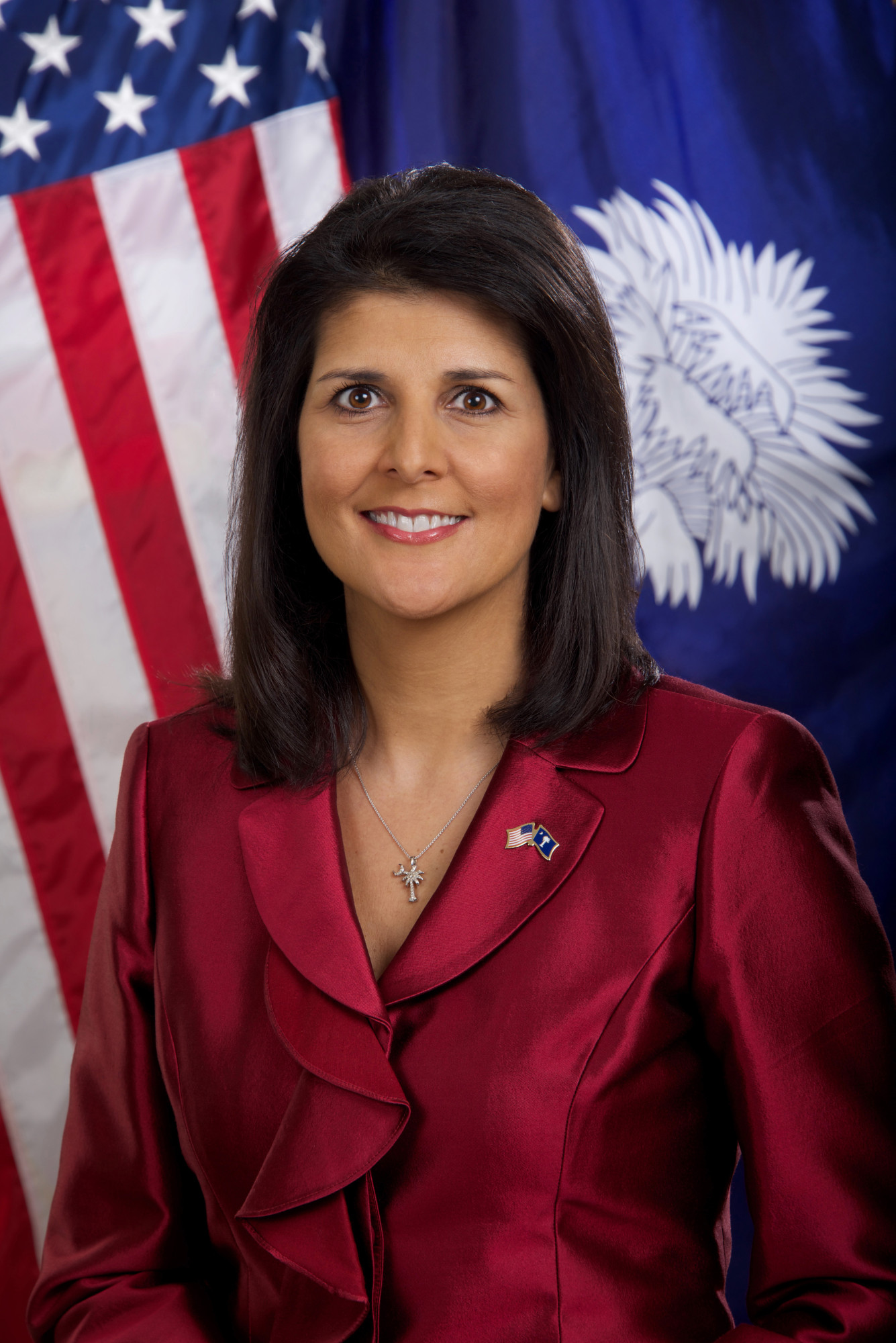
    WASHINGTON: Amid reports that she was emerging as a “fantastic choice” for being Republican party’s Vice Presidential candidate, Indian-American South Carolina Governor Nikki Haley has ruled out any such possibility, saying her “plate is full”.

    Ms Haley, who earlier this week endorsed Florida Senator Marco Rubio in the Republican presidential race, said she is quite “content” with her responsibilities as the Governor of South Carolina and bringing up two kids.

    “Not at all. I have said my plate is full,” Ms Haley told the Fox news in an interview when asked about latest media reports that Rubio-Haley would be a dream Republican ticket.

    “I am not only a mom, my daughter is going to college next year, son is in middle school. I got a State that I love. We have not done finished all the work we want to finish here,” 44-year-old said.

    “So I am totally content and happy in South Carolina. What I do want to see that America gets a great president,”

    Ms Haley said in a joint appearance on the Fox News with Mr Rubio in South Carolina.

    “I think, we can do that with Marco Rubio,” she said responding to questions on her potential running as a Vice Presidential running mate of Mr Rubio, as being reported by some of the major media outlets.

    Senator Tim Scott from South Carolina said that, he is “all for” Haley being picked for Vice President.

    Ms Haley is articulate and a strong leader, who went “through the fire” during a tragic 2015 in the State, he said.

    “She would be a fantastic choice and one that I think the country would be quite responsive to,” Mr Scott said.

    However, The Washington Post offered a word of caution.

    “A Rubio-Haley ticket might be many things. But a panacea for the GOP’s sundry political and demographic challenges? It certainly is not,” it said.

    But for The New York Observer, a Rubio-Haley ticket would be a worst nightmare for Hillary Clinton, the Democratic presidential front runner.

    “The sight of Florida Senator Marco Rubio standing side-by-side with South Carolina Governor Nikki Haley, after her blockbuster endorsement of his candidacy for president days before the South Carolina GOP primary, gave the appearance of a presidential ticket that would be a game changer for the 2016 campaign,” it said.

    “Maybe a Hispanic-Asian ticket with one candidate who’s rediscovering his tea-party roots and another who’s made herself into the top union-hater in the country is the best they can do,” The New Yorker wrote.

  • Don’t know if America is ready for woman president: Hillary Clinton

    Don’t know if America is ready for woman president: Hillary Clinton

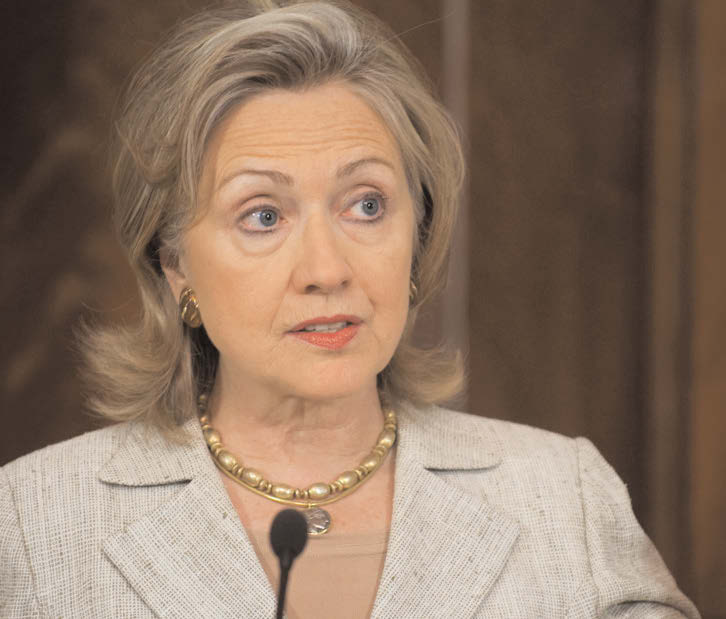
    WASHINGTON (TIP): Hillary Clinton has said she is not sure if the US is ready to elect its first woman president even as the Democratic presidential front-runner emphasised that there has been a “big improvement” in people’s perception in this regard.

    “I really don’t know. I think it’s gotten better. I think there still is a very deep set of concerns that people have, which very often they’re not even aware of or they couldn’t articulate,” Clinton, 68, said.

    The former First Lady and the top American diplomat who is aiming to create history by becoming the first woman president of the US was responding to question if the country is ready for it.

    “There’s nothing overt about it in most instances. People are very convinced they want to vote for the right person. And then you know, you get little hints that maybe they’re not as comfortable with a woman being in an executive position,” Clinton said in an interview with ‘Vogue’ magazine.

    “Especially in a big, rough-and-tumble setting like New York City or the United States of America. But I think it’s changing. I’ve noticed a big improvement between now and the last time I ran,” she said.

    Meanwhile, latest opinion polls said more women have shifted to her Democratic primary rival Bernie Sanders.

    Clinton said she believes she is a better candidate.

    “I’d be a good president, having now watched it up close: my husband’s administration, being in the Senate–especially after 9/11–being Secretary of State, spending a lot of time with the national security team and President Obama. I just have a lot of confidence in,” Clinton said.

    “Some people run for president and they don’t know what they don’t know. Some people run for president and they know how hard the job is, but they may not be entirely convinced that this daunting task is one that can be taken on,” Clinton said.

    “I know how hard it is, and I feel very ready and very confident to take it on,” she added.

  • Ohio State, IndoGenius Develop MOOC to Educate Students About India

    Ohio State, IndoGenius Develop MOOC to Educate Students About India

    NEW YORK (TIP): Ohio State University and Delhi-based IndoGenius have developed an online course to help students learn about the importance of India.

    The course, which was launched Jan 12 by Ambassador to India, Richard Verma, at the American Center in New Delhi will be delivered via the world’s largest online course platform, Coursera.

    The massive open online course (MOOC) is funded through the U.S. Department of State’s Passport to India initiative, which is jointly managed by Ohio State and IndoGenius.

    Passport to India seeks to increase the number and diversity of American college and university students studying abroad and interning in India by 2020.

    The program was launched by former Secretary of State Hillary Clinton in 2011 to create a hub for U.S.-India higher education partnerships and to develop a stronger bond between the youth of both countries by increasing American student mobility.

    “With India’s growing economy it is critical for our future leaders to understand India’s cultural, historic and economic importance in world affairs,” said William Brustein, vice provost for global strategies and international affairs at Ohio State. “Engaging young Americans to experience the depth and breadth of India firsthand will only produce stronger U.S.-India relations. For Ohio State to take a leadership role in this transformative process is an exciting and important opportunity.”

    The curriculum for the course was developed by Brian Joseph, a distinguished university professor of linguistics at Ohio State and Nick Booker, co-founder of IndoGenius, and implemented through the Office of Distance Education and eLearning.

    The course titled, The Importance of India, covers a broad range of topics, from India’s ancient trade relations with the Roman Empire, South East Asia and China to India’s rapidly growing startup ecosystem and its role in creatively solving global problems through technology.

    The course’s final lecture is dedicated to presenting study, startup and internship opportunities in India along with references and advice for those wishing to travel to India.

    By educating students about India through the online course, Ohio State and IndoGenius are hoping it will make a significant contribution toward meeting Passport to India’s goal of increasing the number of students studying abroad in India annually from its current, 4,583 to at least 10,000 in the next four years.

    “India is relevant to American students of all backgrounds and interests,” said Booker of IndoGenius. “The Passport to India MOOC will demonstrate how India’s economic and civilizational re-emergence has renewed the importance of India. Take any of the grand challenges faced by the world today and if you can innovate a solution that works in India it can work anywhere.”

    The course is free for anyone in the world and currently open for enrollment on coursera.org

    Indian students are actively encouraged to join and learn alongside their American peers. Those interested in learning more about Passport to India and its directory of 60+ study abroad and paid internship opportunities in India can do so at www.passporttoindia.com.

  • Donald Trump, Bernie Sanders win New Hampshire

    Donald Trump, Bernie Sanders win New Hampshire

    NEW YORK (TIP): Ten candidates, on Feb 9, chugged in to New Hampshire after the Iowa caucuses with hopes of success.

    Bernie SandersRepublican Donald Trump and Democrat Bernie Sanders have shaken up the US presidential race with decisive victories in the New Hampshire primary.

    Senator Bernie Sanders, who beat Democratic rival Hillary Clinton by a huge margin, said his victory showed people wanted “real change”.

    Both candidates are riding on a wave of discontent with mainstream politics.

    The aim of the primary race is to choose which candidates will represent the Republican and Democratic parties in November 2016 presidential election.

    On Tuesday, Feb 9, Ohio Gov. John Kasich, whose aspirational conservative message contrasts with Trump’s populist rhetoric, surged to a surprise second place in the GOP race, with former Florida Governor Jeb Bush, Texas Senator Ted Cruz and Florida Senator Marco Rubio all vying for third place.

    New Hampshire is the second state to choose delegates in the long nomination battle following last week’s Iowa caucuses, which were won by Mr. Cruz for the Republicans and Mrs. Clinton for the Democrats.

    The result gives momentum to the winners ahead of the next contests in South Carolina and Nevada.

    New Hampshire also delivered a painful personal blow to Hillary Clinton, who squeezed out the narrowest of victories in Iowa last week. The scale of her defeat – by more than 20 points -is likely to fuel signs of growing internal rancor in her campaign and complaints by Democrats that her message as a progressive who gets results is no match for Sanders’ heady demands for a political revolution, which has inspired younger Democratic voters.

    The loss was especially rough because New Hampshire has long been kind to the Clintons. It’s the state that made Bill Clinton the “comeback kid” in 1992. And Hillary Clinton beat Barack Obama there in 2008, salvaging her campaign after a third-place showing in Iowa.

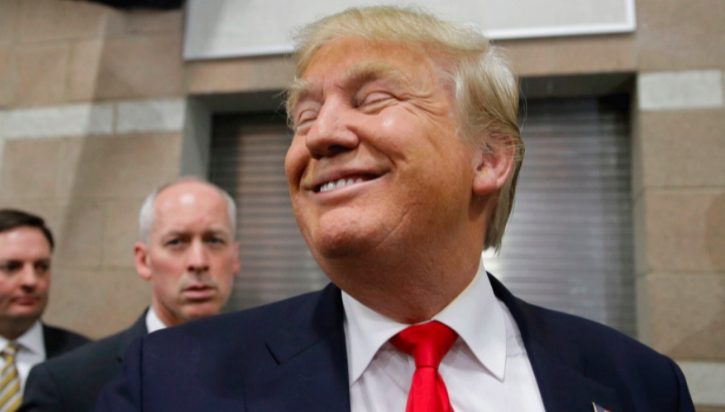
    trumpTrump, relishing a victory that restored luster to his claim to be one of life’s perpetual winners, which lost some sheen after his second in Iowa, took to the stage at his victory party with a beaming smile and a thumbs-up after defying doubters who had questioned whether he can turn stellar poll numbers into actual votes.

    “Wow, wow, wow,” Trump said. “We are going to make America great again!”

    He spoke in unusually personal terms about his family during his acceptance speech.

    Despite a “huge” win in New Hampshire on Tuesday and a second-place finish in Iowa last week, Donald Trump doesn’t have enough support to be anointed anything and faces an uphill battle in the race for his party’s nomination, political experts say.

    While Trump got 35% support among Granite State Republicans, more than 60% of them voted against the real estate mogul, spreading their backing among a splintered slate of six mostly establishment candidates and sending a message that most GOPers don’t in fact like The Donald.

    What’s next in election 2016: Dates for primaries, caucuses

    Eleven states have open primaries in which all registered voters may vote in the primaries. Voters not enrolled in a political party in most of these states may vote in either the Republican or Democratic primaries. Unlike most open primary states, New Hampshire does not allow Republicans to vote in the Democratic primary or Democrats to vote in the Republican primary.

    Eleven states have closed primaries, which means a voter can vote only for a candidate in his or her party. The other states have either hybrids or caucuses.

    Most states send delegates to the convention that proportionally reflect the popular vote of each candidate in a caucus or primary. For example, if a presidential candidate won 60 percent of the primary vote or 60 percent of delegates in a caucus vote, he or she would be assured six out of every 10 delegates from that state.

    A few states adopt a winner-takes-all process in which the top candidate gains the automatic support of all delegates.

    But not all delegates are obligated to support a specific candidate at the national convention based on the popular vote. Those rules vary by state. In Iowa, for example, all delegates are unpledged.

    Many states also have “superdelegates” who are uncommitted and are often elected officials.

    Following is the schedule of party primaries and caucuses in states and American territories 

    Feb. 11 – Democratic debate in Milwaukee, Wisconsin Feb. 13 – GOP debate in Greenville, South Carolina Feb. 20 – South Carolina Republican primary
    Feb. 20 – Democratic caucuses in Nevada
    Feb. 23 – GOP caucuses in Nevada
    Feb. 25 – GOP debate in Houston, Texas
    Feb. 27 – South Carolina Democratic primary

    March 1 – Super Tuesday
    Alabama Primary
    Alaska Republican Caucus
    American Samoa Democratic Caucus
    Arkansas Primary
    Colorado Democratic Caucus
    Georgia Primary
    Massachusetts Primary
    Minnesota Caucus
    Oklahoma Primary
    Tennessee Primary
    Texas Primary
    Vermont Primary
    Virginia Primary
    Wyoming Republican Caucus
    March 5
    Kentucky Republican Caucus
    Kansas Caucus
    Louisiana Primary
    Maine Republican Caucus
    Nebraska Democratic Caucus
    March 6
    Maine Democratic Caucus
    Puerto Rico Republican Primary
    March 8
    Hawaii Republican Caucus
    Idaho Republican Primary
    Michigan Primary
    Mississippi Primary
    March 9 – Democratic debate in Miami, Florida March 10 – GOP debate in Miami, Florida
    March 12
    District of Columbia Republican Caucus
    Northern Mariana Islands Democratic Caucus March 15
    Florida Primary
    Illinois Primary
    Missouri Primary
    North Carolina Primary
    Northern Mariana Islands Republican Caucus
    Ohio Primary
    March 19 – Virgin Islands Republican Caucus
    March 22
    Arizona Primary
    Idaho Democratic Caucus
    Utah Primary
    March 26
    Alaska Democratic Primary
    Hawaii Democratic Primary
    Washington Democratic Caucus

    April 5 – Wisconsin Primary
    April 9 – Wyoming Democratic Primary
    April 19 – New York Primary
    April 26
    Connecticut Primary
    Delaware Primary
    Maryland Primary
    Pennsylvania Primary
    Rhode Island Primary

    May 3 – Indiana Primary
    May 7 – Guam Democratic Primary
    May 10
    Nebraska Republican Primary
    West Virginia Primary
    May 17
    Kentucky Democratic Primary
    Oregon Primary
    May 24 – Washington Republican Primary

    June 4 – Virgin Islands Democratic Caucus
    June 5 – Puerto Rico Democratic Caucus
    June 7
    California Primary
    Montana Primary
    New Jersey Primary
    New Mexico Primary
    North Dakota Democratic Caucus
    South Dakota Primary
    June 14
    District of Columbia Democratic Primary

    July 18-21 – GOP National Convention
    July 25-28 – Democratic National Convention

    Sept. 26 – First Presidential debate

    Oct. 4 – Vice Presidential debate
    Oct. 9 – Second presidential debate
    Oct. 19 – Third presidential debate

    Nov. 8 Election Day

  • Sending troops to Iraq, Syria will be terrible mistake: Hillary Clinton

    Sending troops to Iraq, Syria will be terrible mistake: Hillary Clinton

    WASHINGTON (TIP): Democratic presidential front-runner Hillary Clinton promised not to send US troops to war-torn Iraq or Syria if elected saying it would be a “terrible mistake”, but refused to give any “blanket statement” on overseas deployment of American combat forces.

    “I will not send American combat troops to Iraq or Syria. That is off the table. That would be a terrible mistake,” Clinton said.

    The US, however, will continue to use Special Forces because of the kind of threats America faces, she told a New Hampshire audience during a townhall organised by CNN.

    “The network of terrorist organisations – not just ISIS, but others who are part of this unfortunate network that stretches from North Africa to South Asia – pose serious threats to friends, allies, partners, as well as to ourselves,” she said, using an acronym of the Islamic State.

    “We have got to keep our country safe, and we have to work with the rest of the world to try to defeat ISIS, to end that terrorist threat. So I will be very careful, deliberate with decision makers when facing hard choices, because I know what’s at stake,” said the 68-year-old ex-secretary of state.

    In response to a query from the audience on overseas troop deployment, Clinton said she can’t give a “blanket statement.”

    “I know you can understand why there can’t be from me anyway a blanket statement. But, I want to assure you I will be transparent, I will be open, and I will explain to the American people if any occasion arises where we do have to take military action to protect ourselves or our close friends and partners,” Clinton said.

    Michael, who is opposed to “the US being the world’s policeman”, asked if she can assure him that as a president she would not expand US military involvement abroad?

    Clinton said she believes military force must always be the last resort not a first choice. “That is one of the biggest differences between me and the Republicans,” she said.

    “I will do everything I possibly can to avoid sending American troops abroad, getting us involved in military conflicts,” she said.

    “But I can’t in good conscious stand here and tell you that there would never be any circumstances in the time that I served as President where it very well might be in America’s best vital national security interest,” Clinton said.

    Appearing earlier at the same townhall, Sanders emphasised that the Islamic State needed to be defeated.

    “For a start, in my view, we have got to crush ISIS,” he said.

    “But we have to be not just tough, we have to be smart. That means we work with a large coalition, led by on-the-ground Muslim troops. King Abdullah of Jordan made the point, it will be Muslim troops who destroy ISIS, because ISIS has hijacked their religion,” he said.

    “The US, the UK, France, Germany, Russia provide support, in my view, to the troops on the ground. So we’ve got to crush them. Internally, what we have got to do is significantly improve intelligence,” Sanders said.

    – PTI

  • Donlad Trump holds forte, Hillary Clinton losing ground: Opinion poll

    Donlad Trump holds forte, Hillary Clinton losing ground: Opinion poll

    WASHINGTON (TIP): Republican presidential front-runner Donald Front is holding forte in New Hampshire with a double digit lead over his nearest rival Marco Rubio while Democratic presidential aspirant Bernie Sanders has a massive lead over Hillary Clinton, a latest opinion poll has shown.

    As the results of the Iowa Caucuses came in, the crowded Republican presidential race appeared to be narrowing down to a three-cornered contest with Florida Senator Rubio coming a close third behind Texas Senator Ted Cruz and Donald Trump.

    On the other hand, Vermont Senator Bernie Sanders has a massive two-to-one lead over Democratic presidential aspirant Hillary Clinton, who defeated him in the Iowa polls with a very slim margin of less than half a point, the opinion poll said yesterday.

    Sanders is favoured in New Hampshire’s first-in-the-nation February 9 primary as the state-by-state voting to collect delegates for the party’s nominating convention picks up speed.

    According to the new CNN/WMUR tracking poll was conducted entirely after Iowa Caucus early this week, Trump has support of 29 per cent of likely Republican primary goers, followed by Rubio who has support of 18 per cent. Senator Cruz, who surprised many by winning the Iowa caucus is now trailing third with 13 per cent and is followed very closely by Ohio Governor John Kaisch (12 per cent) and the former Florida Governor Jeb Bush (10 per cent). CNN/WMUR said Clinton is trailing massively in New Hampshire. Sanders has support of 61 per cent of the likely Democratic primary goers, while Clinton has support of just 30 per cent, a drop of four points from the last polls. (PTI)

  • IOWA DEFLATES TRUMP; HILLARY AND SANDERS TIE

    IOWA DEFLATES TRUMP; HILLARY AND SANDERS TIE

    DES MOINES (TIP): The races for the Republican and Democratic presidential nominations are taking shape now that brave Iowans have had their say.

    In some cases, the results confirmed conventional wisdom. In others, it totally reshaped it.

    For the Republicans, it was Ted Cruz with (28%) who bested Donald Trump who got 24% and Marco Rubio who surprisingly cut in to the vote share of Donald Trump to get an unexpected 23%.

    For the Democrats, it was a much keener competition between Hillary Clinton and Bernie Sanders who were tied at 50%.

    Here are five things we learned after a remarkable evening in America’s heartland.

    donald trump1. Donald Trump isn’t untouchable – For the past few months it seemed as though the New York real estate mogul had become an unrivalled political savant. Every move he made, no matter how questionable, only strengthened his standing among conservative voters.

    That bubble, however, has burst. Despite leading in the Iowa polls for the past several weeks, Mr. Trump was bested by rival Ted Cruz on caucus night. In the end Mr. Trump’s much-heralded cadre of new voters didn’t show up in the predicted numbers and Mr. Cruz’s formidable ground game, backed by strong evangelical support, carried the day.

    This hardly means it’s the end for Mr. Trump. He may well hold onto his large lead in New Hampshire, a state where the conservative voters often embrace the renegade outsider, and find success in the Southern primaries that follow. The notion that the New Yorker could steamroll his way to the Republican nomination, however, has now been firmly dispelled.

    marco rubio2. Marco Rubio has given the establishment hope – Florida Senator Marco Rubio’s speech in Iowa on Monday night sounded more like a victory celebration than the concession speech of a third-place finisher. By finishing with 23% of the vote, however – a hair’s breadth from second-place Trump – Mr. Rubio shattered pre-caucus expectations.

    This is the kind of Iowa result that candidates like New Jersey’s Chris Christie, former Florida Governor Jeb Bush and Ohio Governor John Kasich were dreading. They have placed all their hopes in New Hampshire, and now they’ll have to face off against a man who has the political wind at his back.

    This is the kind of Iowa result that candidates like New Jersey’s Chris Christie, former Florida Governor Jeb Bush and Ohio Governor John Kasich were dreading. They have placed all their hopes in New Hampshire, and now they’ll have to face off against a man who has the political wind at his back.

    The polls for Mr. Rubio in the coming states haven’t looked particularly encouraging, but that could quickly change. And even if he suffers setbacks in the Southern states that follow New Hampshire, he likely will have the resources to wage a long fight for the nomination.

    Democrats3. The Democrats are in a dogfight – At this point it comes as little surprise that Vermont Senator Bernie Sanders and former Secretary of State Hillary Clinton finished in a virtual tie in Iowa – polls had been indicating such a result was likely.

    Nevertheless, the outcome marks a significant achievement for Mr. Sanders, who was polling in single digits in Iowa six months ago.

    Mrs. Clinton is simply not going to be able to deliver the knockout punch to her rival the way she once had hoped. Instead, she faces a likely defeat in New Hampshire -where the Vermonter is strong – and then a protracted fight across the country that could last at least through March.

    She still has the greater financial resources and a much more developed campaign infrastructure, but she had those advantages in Iowa as well. The electorate will change, however – becoming more moderate and more ethnically diverse. There is more hospitable ground ahead for Mrs. Clinton – but a nomination victory, if it comes, will take time to realize.

    ted cruz4. Ted Cruz is built to last – If Mr. Cruz had been defeated in Iowa it would have been a devastating blow to his campaign. He had raised expectations of a victory in the caucuses and heralded it as proof that he could build a coalition of evangelical, grass-roots Tea Party and libertarian voters.

    As it turns out, that coalition exists – and it will likely re-emerge after New Hampshire, as South Carolina and other Southern states hold their primary contests.

    Mr. Cruz has nearly $20m in campaign cash on hand and supporting political committees with even greater resources. He’s built a political machine that can operate through the entire primary calendar and, if necessary, wage a two-front battle with Mr. Trump and an establishment-backed candidate like Mr. Rubio.

    In his victory speech on Monday night, Mr. Cruz credited his grass-roots organization – as he should – but he also gave Republicans a look at a more moderate, general-election version of himself. He’ll need to convince his party that he is a candidate who can beat the Democrats in November. This was his first step toward making that pitch.

    5. The field is about to thin dramatically – Democrat Martin O’Malley is gone, as is Republican Mike Huckabee & Rand Paul and – in all likelihood, Rick Santorum.

    There were rumors abounded that Ben Carson was poised to exit. Although his camp quickly denied this, the retired surgeon’s 9% performance in a state that once viewed him as a front-runner likely means the end is near.

    Carly Fiorina’s bid is on life support, and Rand Paul – at one point thought to be a contender for the nomination – garnered less than 5%, a far cry from his father’s 21%in Iowa just four years ago.

    New Hampshire will likely cull the herd even further, threatening the future of candidates like Mr. Bush, Mr. Christie and Mr. Kasich if they can’t slow Mr. Rubio’s momentum.

    The Republican race for the nomination isn’t likely to end anytime soon, but there are about to be a lot fewer candidates on the debate stage in the coming weeks.

    Also-Rans: 2016 Presidential Race – These are the candidates who have dropped out of the 2016 presidential race. Scott Walker (R),Rand Paul (R), Rick Perry (R), Mike Huckabee (R), Lindsey Graham (R), Bobby Jindal (R), Martin O’Malley (D),George Pataki (R), Rick Santorum R), Jim Webb (D).

  • Bill Clinton paints candidate Hillary as ‘changemaker’

    Bill Clinton paints candidate Hillary as ‘changemaker’

    MASON CITY: Former president Bill Clinton was back on the campaign trail in Iowa on Wednesday, calling his presidential candidate wife Hillary a changemaker as her rival surged ahead in a new poll.

    “There’s only one person who is a proven changemaker on hostile territory,” the ex-president told a crowd of 325 in Iowa state, which holds its caucuses Monday, with his wife in a close race for the Democratic party’s presidential nod.

    Across the small town of Mason City that same evening, her rival Senator Bernie Sanders was hosting a larger rally with Hollywood star Susan Sarandon on hand.

    Sanders, who calls himself a Democratic socialist, is calling for a revolution against the “billionaire class.”

    The Clintons say Sanders’ call for a single-payer universal health care system is unrealistic.

    “I will not make perfect the enemy of good. People can’t wait,” Bill Clinton thundered on health care policy.

    He said his wife’s gradual approach was best.

    “Everything she has ever touched, she made something good happen,” he said. “She’s a born changemaker.”

    “She is a walking, breathing change agent, the only person qualified and has the knowledge on economic and social issues, and political issues and national security issues,” Bill Clinton argued.

    A new poll showed Sanders leading Clinton by four percentage points among likely Democrat participants in Monday’s much-anticipated Iowa caucuses.

    The Quinnipiac University poll showed the former secretary of state at 45 percent with Sanders, a senator from Vermont, nudging ahead with 49 percent.

    (AP)

  • 4 Indian Americans Nominated To Democratic Convention Standing Committees

    4 Indian Americans Nominated To Democratic Convention Standing Committees

    Four eminent Indian-Americans, including two women, have been nominated to the Democratic Party’s 2016 Convention Standing Committees which would formally announce its candidate for the presidential polls.

    Smita Shah
    Smita Shah

    Topping the list of Indian-Americans is Smita Shah, president and CEO of Chicago-based Spaan Tech, who has been nominated as vice chair of the Rules Committee.

    Shefali Razdan Duggal
    Shefali Razdan Duggal

    One of the top fund raisers for President Barack Obama and now Hillary Clinton, California-based Shefali Razdan Duggal has been nominated a member of the Rules Committee.

    Dr Sreedhar Potarazu
    Dr Sreedhar Potarazu

    Renowned ophthalmologist and entrepreneur, Dr Sreedhar Potarazu has been nominated to the Credentials Committee, according to the list released by the Democratic National Committee (DNC) Chairwoman Debbie Wasserman Schultz.

    Saif Khan
    Saif Khan

    Saif Khan, an Iraq war veteran who had served as a Combat Engineer in the Iraqi city of Mosul as part of Operation Iraqi Freedom, was nominated to the Rules Committee. He hails from Mysore and currently lives in Washington, DC.

    DNC rules provide for the Chair to appoint 75 Party Leader and Elected Official Members to the three Convention Standing Committees to be held in Philadelphia in July, which would formally announce party’s presidential candidate.

    These Party Leader and Members serve in addition to and together with the over 160 members that are elected in every state to those same committees.

    “This slate represents the great variety of perspectives, backgrounds, and experiences that make up our party. We wanted to make sure that the diversity of our party was reflected at the highest levels in terms of race, gender, age and geography,” Ms Schultz said.

    A Clinton White House staffer, Ms Shah was a delegate at the 1996 and 2004 Democratic National Conventions and was on the DNC’s Rules Committee in 2000 and 2004.

    In 2012, she become the first Indian-American to serve as a Democratic National Convention parliamentarian.

    Ms Duggal is a presidential appointee to the US Holocaust Memorial Council, which supervises the United States Holocaust Memorial Museum, for a term expiring in January 2018.

    She is one of the top fund raiser for the Clinton campaign and also serves on the National Finance Committee for Hillary for America, Clinton’s 2016 presidential campaign.

    Dr Potarazu is the founder of VitalSpring Technologies Inc., a privately held enterprise software company focusing on providing employers with applications to empower them to become more sophisticated purchasers of health care.

    Saif Khan is the Founder & Managing Director of Khanections. He is one of the founders of American Veterans Committee and a member of the American Legion, Iraq and Afghanistan Veterans of America and a life member of the Veterans of Foreign Wars.


    (CORRECTION: An earlier version of this article incorrectly referred to Mr. Saif Khan, as a Pakistani-American appointment to one of the Democratic Convention Standing Committees. This version has been corrected – 01/27/2016 – 12:09:30 PM EST.)

  • Hillary Clinton Disapproves of  Increased Deportations & Raids

    Hillary Clinton Disapproves of Increased Deportations & Raids

    WASHINGTON (TIP): Immigration is one of the leading issues in the 2016 race and a spike in raids in recent weeks, largely aimed at women and children, has drawn the ire of rights groups.

    Hillary Clinton has called for an end to deportation raids targeting Central American families living in the US illegally.

    Mrs. Clinton said the raids “have sown fear and division in immigrant communities across the country”.

    Scores of House Democrats on Tuesday, Jan 12, echoed Mrs. Clinton and demanded the raids stop.

    Democratic President Barack Obama has been assailed by both political parties on this issue.

    More than two million undocumented migrants have been deported from the US during his presidency, prompting accusations of being “deporter-in-chief” from within his own party.

    But his Republican critics attack his administration for not doing enough to secure the borders.

    They are also deeply opposed to his plan to lift the threat of deportation to 11 million people who have been living illegally in the US for some time.

    Thousands have come over the border with Mexico in the last two years, mostly fleeing violence in Central America.

    The raids spiked over the holiday season, with 121 adults and children arrested, mainly in Texas, Georgia and North Carolina.

    Why are the raids happening?
    They come as fears grow that a spike in immigration from Central America may be foreshadowing a repeat of the 2014 crisis that saw tens of thousands of migrants – especially unaccompanied children – cross the border.

    The White House has defended the raids, with spokesman Josh Earnest saying the president was aware of the outrage but that “the enforcement strategy and priorities that the administration has articulated are not going to change”.

    The Obama administration has unilaterally enacted immigration reform to protect undocumented immigrants who have been in the country a long time, but has said deportations would continue. In February, Mr. Obama said that the forced removals would be “focusing on potential felons”.

    What has the reaction been?
    The raids have riled lawmakers and activists, who say they are disruptive and ill-timed, and were breaking families apart as well as spreading fear across immigrant communities.

    Rep Nydia Vlazquez, a member of the Hispanic caucus, said that “immigrants and their families are terrorized”.

    “These are some of the most vulnerable members of society and we are treating them like criminals.”

    The anger prompted White House officials to meet with politicians on Thursday in an attempt to dampen the anger.

    That failed to stop 135 Democrats from co-signing a letter asking that the raids stop immediately.

    “We strongly condemn the Department of Homeland Security’s recent enforcement operation targeting refugee mothers and children from El Salvador, Honduras, and Guatemala,” the letter reads.

    How has immigration played in the 2016 campaign?
    Republican candidate Donald Trump prompted a weeks-long outrage over the summer when he described Mexican immigrants as “rapists” and “criminals” and called for a wall to be built on the southern border.

    Meanwhile, one of his rivals, Marco Rubio, is framing the issue as one of national security, saying that radical jihadist groups could exploit the immigration system.

    Mr. Rubio’s support for immigration reforms in the past could be a liability for the candidate during primary elections, as he attempts to climb to the top of the crowded and mainly conservative Republican pack.

    Democrats have taken a different approach to the issue, urging a humanitarian response.
    Senator Bernie Sanders, currently in second place, wrote a letter to President Obama earlier this month saying: “I urge you to immediately cease these raids and not deport families back to countries where a death sentence awaits.”

    Martin O’Malley, who is in a distant third place, has attacked his two rivals saying that their support for immigrants was recent and politically expedient.

  • Bill Clinton, the subdued spouse, makes his campaign debut

    Bill Clinton, the subdued spouse, makes his campaign debut

    WASHINGTON (TIP): Eight years after aggressively defending his wife during her first presidential campaign, Bill Clinton was unusually understated and subdued Monday during his first solo swing back in New Hampshire for Hillary Clinton, restraining himself even in the face of taunts from Donald Trump.

    Sticking mostly to descriptions of Hillary Clinton’s policy positions and biography, the former president made only glancing references to her opponents, saying that some were “kind of scary” but not naming names. He also suggested that he would not thrive politically today because he was not “mad at anybody,” an implicit jab at Trump’s harsh attacks on Muslims and others — and a signal that Trump had not gotten under Bill Clinton’s skin.

    With Trump campaigning Monday night just across the state line in Lowell, Massachusetts, Clinton did not bring up his onetime friend’s recent attacks on Clinton’s history of extramarital affairs. But after the first of his two campaign events, Clinton did respond to a reporter’s question about whether his own past was “fair game” to talk about in the race.

    “The Republicans have to decide who they want to nominate,” Clinton replied. “I think there’s always attempts to take the election away from people, so I’m just going to give it to them.”

    At a rally in Lowell, Massachusetts, just a few miles from New Hampshire, Trump, calling himself “a messenger in a sense,” harshly criticized Hillary Clinton but did not mention Bill Clinton. In an interview, Trump said he brought up Bill Clinton’s past simply as a response to provocation. “I would be inclined to just let it go” if the Clintons never again accused him of sexism, Trump said.

    If Bill Clinton was champing at the bit to attack Trump, he gave no sign of it Monday.

    Famed as the Big Dog of American politics, Bill Clinton seemed to be on a tight leash during his appearances in Nashua and Exeter, delivering performances far different from the ones he gave in 2008, when some Democrats criticized him for overshadowing Hillary Clinton with his attacks on then-Sen. Barack Obama.

    (NYT News Service)

  • Assad Can Stay, for Now | US changes stance for peace

    Assad Can Stay, for Now | US changes stance for peace

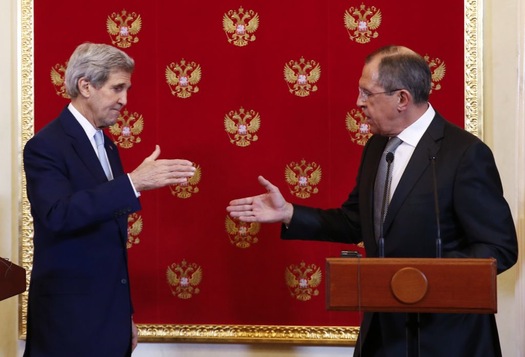
    WASHINGTON (TIP): U.S. Secretary of State John Kerry on Tuesday, December 15, accepted Russia’s long-standing demand that President Bashar Assad’s future be determined by his own people, as Washington and Moscow edged toward putting aside years of disagreement over how to end Syria’s civil war.

    Kerry announced this critical shift in Moscow where he met Russian President Vladimir Putin and Foreign Minister Sergey Lavrov to discuss the ongoing conflicts in Ukraine and Syria.

    “The United States and our partners are not seeking so-called regime change,” Kerry told reporters in the Russian capital after meeting President Vladimir Putin.

    This means Assad can stay in power for a bit longer if Russia and America cooperate together in overseeing the transition from Assad’s chaos to peace.

    A major international conference on Syria would take place later this week (Friday) in New York, Kerry announced.

    Assad is the very kind of “dictator” the US prides itself in fighting to remove. For the past four years, President Obama has called for Assad to step down. From Assad’s alleged use of chemical gas to barrel bombs to ISIS overtaking Syrian territory, Assad attracts a very diverse response from world leaders on how to achieve peace because the situation in Syria is so complex.

    But after a day of discussions with Assad’s key international backer, Kerry said the focus now is “not on our differences about what can or cannot be done immediately about Assad.” Rather, it is on facilitating a peace process in which “Syrians will be making decisions for the future of Syria.”

    Within the United States, where political debates are increasingly revolving around foreign policy — especially to do with Assad and ISIS — the presidential candidates (as well as politicians in general) find themselves equally divided on the Syrian solution. In fact, shifting positions on Assad seems to be the norm.

    The world is better off when Russia and the U.S. work together, Kerry added, calling Obama and Putin’s current cooperation a “sign of maturity.”

    “There is no policy of the United States, per se, to isolate Russia,” Kerry stressed.

    Below is a brief timeline of major American politicians on their stances regarding Assad and Syria, especially in relations to Putin and Russia.
    August 2011

    Secretary of State Hillary Clinton tells the press “it’s not going to be any news if the United States says, ‘Assad needs to go.’”

    A week later, US President Barack Obama announces for the first time — after weeks of political pressure — that Assad “must step down”.

    The American announcement happened in coordination with key allies’ announcements: Germany, France, and the UK, amongst others, also called for Assad’s departure from his presidency position around this time.

    February 2012

    Western powers reportedly ignore a Russian proposal to securely remove Assad from his position, as the US, French, and British leaders believe the Syrian president would not last much longer in power.

    September 2013

    President Obama addresses the nation, detailing the brutalities of the Assad regime and announces the US will strike Assad’s forces to deter the regime from the use of chemical weapons.
    The US and Russia then pushed for Syria to become party to the Chemical Weapons Convention, which banned the use of chemical and biological weaponry in warfare.

    November 2014

    President Obama states at the G20 press conference that “there’s no expectation that we are going to in some ways enter an alliance with Assad. He is not credible in that country.”

    The US president continues on to say that “we are looking for a political solution eventually within Syria that is inclusive of all the groups who live there — the Alawite, the Sunni, Christians. And at some point, the people of Syria and the various players involved, as well as the regional players — Turkey, Iran, Assad’s patrons like Russia — are going to have to engage in a political conversation.”

    August 2015

    Four years later, increased diplomacy between major powers — especially the US and Russia — start to cause US leaders to soften their “Assad must go” position.

    The New York Times quotes an unnamed senior American official as saying, “It’s encouraging, but we’re still a long ways off [on a solution for Assad].”

    September 2015

    Donald Trump tells Americans to let Russia take care of Assad and ISIS.

    “Let Syria and ISIS fight. Why do we care? Let ISIS and Syria fight. And let Russia, they’re in Syria already, let them fight ISIS. Look, I don’t want ISIS. ISIS is bad. They are evil. When they start doing with a head chopping … these are really bad dudes. … Let Russia take care of ISIS. How many places can we be? … Russia likes Assad seemingly a lot. Let them worry about ISIS. Let them fight it out.”

    October 2015

    Hillary Clinton, now a presidential candidate and no longer Secretary of State (since 2013), states removing Assad is America’s top priority, four years after she said it wouldn’t make US news.

    December 2015

    A month after the Paris attacks, a week after the San Bernardino attack, the day Los Angeles shut down its public schools due to a bomb threat, and the last Republican debate of the year before the holidays. Also the day Kerry meets Putin and Lavrov in Moscow.

    The Secretary of State officially reverses the position of the US on Assad, while Republican contenders for the 2016 election spar over what to do. The more memorable quotes are anti-Russian and anti-intervention.

    Donald Trump: “Spend the money [used in striking in the Middle East] in the US… It’s a tremendous disservice to humanity, and for what? [The Middle East is] a mess, [a] total and complete mess.”

    John Kasich: “In regard to Syria, understand that Assad is an ally of Iran who wants to extend that Shi’i radicalism all the way across the Middle East. He has to go. And for the Russians, frankly, it’s time to punch the Russians in the nose. They’ve gotten away with too much in this world, and we need to stand up against them, not just there, but also in Eastern Europe where they threaten some of our most precious allies.”

    Rand Paul: “We need to confront Russia from a position of strength.”

    Chris Christie: “Reckless was inviting Russia into Syria.”


    As of now, President Obama has yet to make an official statement confirming Kerry’s comments in Moscow. Kerry maintained that it is in the best interest for the world when Russia and the US cooperate, and that this cooperation is “a sign of maturity” between the two presidents.

    While it’s great for the US and Russia to be on slightly better terms again, time will only tell if this rekindling of relations will bring Assad to justice and peace to the Syrian people.

  • Hillary Clinton: Donald Trump no longer funny

    Hillary Clinton: Donald Trump no longer funny

    WASHINGTON: Hillary Clinton took aim at fellow White House hopeful Donald Trump over his call to ban Muslims from entering the United States, saying: “I no longer think he is funny.”

    Appearing on NBC’s “Late Night with Seth Meyers” later Thursday, the frontrunner for the Democratic presidential nomination said Trump had overstepped the mark with his latest comments.

    “You know, I have to say, Seth, I no longer think he is funny,” Clinton said, according to NBC News.

    “I think for weeks you and everybody else were just bringing folks to hysterical laughter, but now he has gone way over the line.

    “And what he is saying now is not only shameful and wrong, it is dangerous.”

    Trump, the frontrunner for the Republican nomination, came under fire at home and abroad this week for his proposal to temporarily bar Muslims from entering the US.

    It came in the wake of last week’s shooting by a Muslim couple in Sen Bernardino, California, that left 14 dead.

  • China, India taking advantage of US: Donald Trump

    China, India taking advantage of US: Donald Trump

    WASHINGTON (TIP): Terming China as “number-one abuser”, leading Republican presidential candidate Donald Trump has alleged that the Communist nation, along with India, is taking advantage of the US through its economic policies.

    Trump said China was becoming a “major force” and is now creating problems both economically and through its behaviour in the South China Sea.

    “If you look at the way China and India and almost everybody takes advantage of the US – China in particular, because they’re so good. It’s the number-one abuser of this country,” Trump said during the fourth debate of the party.

    “China is a problem, both economically in what they’re doing in the South China Sea, I mean, they are becoming a very, very major force,” Trump said.

    He said that it was through “currency manipulation” that does not even find a mention in almost 6,000-page (TPP) agreement that the countries were taking advantage of the US.

    While several other Republican candidates joined Trump on the China issue, there were no takers for his allegations against India, which was mentioned only once in the debate.

    “We lose a fortune on trade. The US loses with everybody. We’re losing now over USD 500 billion in terms of imbalance with China, USD 75 billion a year imbalance with Japan,” Trump said.

    John Kasich, governor of Ohio, said China did not own the South China Sea.

    “I give the (US) President some credit for being able to move a naval force in there to let the Chinese know that we’re not going to put up with it any more,” he said.

    Russia and president Vladimir Putin too figured prominently during the debate.

    “What we have to recognise is that Putin is trying to really spread his influence throughout the Middle East. This is going to be his base. And we have to oppose him there in an effective way,” said presidential candidate Ben Carson.

    “We also must recognise that it’s a very complex place. You know, the Chinese are there, as well as the Russians, and you have all kinds of factions there,” he said.

    Jeb Bush said President Barack Obama and Hillary Clinton both do not believe the US has a leadership role to play.

    “And we are now paying a price, and it will have a huge impact on the economy of this country if we don’t deal with this,” he said.

    He favoured a no-fly zone in Syria.

    “We should have a support for the remnants of the Syrian Free Army, and create safe zones. If you want to deal with the four million refugees that are leaving Syria because of the devastation there, then we ought to create safe zones for them to stay in the region rather than go to Europe. And, that requires American leadership,” Bush said.

    (Source: PTI)

  • Hillary Clinton wants minimum wage increased to $12 an hour

    Hillary Clinton wants minimum wage increased to $12 an hour

    U.S. Democratic presidential candidate Hillary Clinton said on Tuesday, November 3, at two campaign stops in Iowa that she would like to raise the federal minimum wage to $12 an hour from the current $7.25.

    Clinton has said repeatedly she wants to raise wages for working Americans, including by raising the minimum hourly wage, but she has rarely named a specific figure.

    “I want to raise the federal minimum wage to $12, and encourage other communities to go even higher,” Clinton told a campaign event in Coralville, Iowa.

    “I think we can manage it, and I don’t think there should be any unintended consequences to job creation,” Clinton said at another campaign stop at Grinnell College.

    Many U.S. cities and municipalities have established a higher minimum wage than the federal rate. Bernie Sanders, who is Clinton’s chief challenger for the Democratic Party nomination for the 2016 presidential election, has said the federal minimum wage should be raised to $15 an hour.

    “I’m more comfortable saying let’s get to $12,” Clinton said at Grinnell, “in a reasonable, expeditious way.”


  • At Benghazi hearing, shouting match over Hillary Clinton’s emails

    At Benghazi hearing, shouting match over Hillary Clinton’s emails

    WASHINGTON (TIP): Republican lawmakers spent more than eight hours aggressively questioning Hillary Rodham Clinton on Thursday, seeking to build a case that the former secretary of state had been derelict in her duty to secure the American diplomatic mission in Benghazi, Libya, in the months before the 2012 terrorist attacks that killed four Americans.

    •  Clinton was questioned about about the American diplomatic mission in Benghazi, Libya, in the months before the 2012 terrorist attacks that killed four Americans.
    •  The marathon hearing began at 10am and, with breaks, lasted until 9pm.
    •  The questioning gave Mrs Clinton her first opportunity since early 2013 to respond directly to her fiercest critics.

    Billed by Republican leaders of the select House committee investigating the Benghazi attacks as a critical moment in its inquiry, the long-awaited appearance by Mrs Clinton, the leading Democratic presidential candidate, served largely as a replay of highly contested arguments from previous congressional hearings, press examinations and Sunday-morning talk shows.

    “Why were there so many requests for security equipment and personnel, and why were those requests denied in Washington?” Representative Trey Gowdy of South Carolina, the committee chairman, demanded to know as he opened the hearing on Thursday morning. “What did our leaders in Washington do or not do, and when?”

    But the long day of often-testy exchanges between committee members and their prominent witness revealed little new information about an episode that has been the subject of seven previous investigations, and that Republicans have long seen as a blemish on Mrs Clinton’s record that could be exploited as she sought the presidency.

    Held in the ornate room that is home to the House Ways and Means Committee, the marathon hearing began at 10am and, with breaks, lasted until 9pm. It provided Republicans with a national audience as they questioned Mrs Clinton, often using her own words from thousands of pages of emails obtained by the committee. But it also gave Mrs Clinton her first opportunity since early 2013 to respond directly to her fiercest critics, and she used the platform to offer lengthy explanations of her diplomatic efforts around the world and her actions before and after the Benghazi attacks.

    Perhaps stung by recent admissions that the pursuit of Mrs Clinton’s emails was politically motivated, Republican lawmakers on the panel for the most part avoided any mention of her use of a private email server. Still, Representative Jim Jordan of Ohio did raise the issue late in the hearing, accusing her of repeatedly changing her account of the server and why she had used it. In a heated exchange, Mrs Clinton repeated that she had made a mistake in using a private email account, but maintained that she had never sent or received anything marked classified and had sought to be transparent by publicly releasing her emails.

    But committee Republicans focused mostly on accusations that Mrs Clinton had ignored security needs in Benghazi in the months before the attacks, a charge she repeatedly rejected.

    Throughout the day, Democrats on the committee portrayed Republicans as the leaders of a partisan crusade against Mrs Clinton, while Republicans responded angrily that Democrats were seeking to block a legitimate inquiry into fatal security lapses at an American diplomatic outpost. Shortly before the committee broke for lunch, a shouting match erupted between Mr. Gowdy and two Democrats, Adam B. Schiff and Elijah E. Cummings, over the focus on Mrs Clinton’s email exchanges with Sidney Blumenthal, a former aide to her husband and a friend.

    Late in the evening, Mrs Clinton had a coughing fit that stopped testimony for two minutes. Hoarse and visibly tired, she responded testily to comments by Mr. Gowdy questioning the independence of a Benghazi review led by Thomas R Pickering, a retired diplomat, and Mike Mullen, a former chairman of the Joint Chiefs of Staff.