Tag: Hillary Clinton

  • Hillary emerges stronger from 11 hour marathon Congressional hearing on Benghazi

    Hillary emerges stronger from 11 hour marathon Congressional hearing on Benghazi

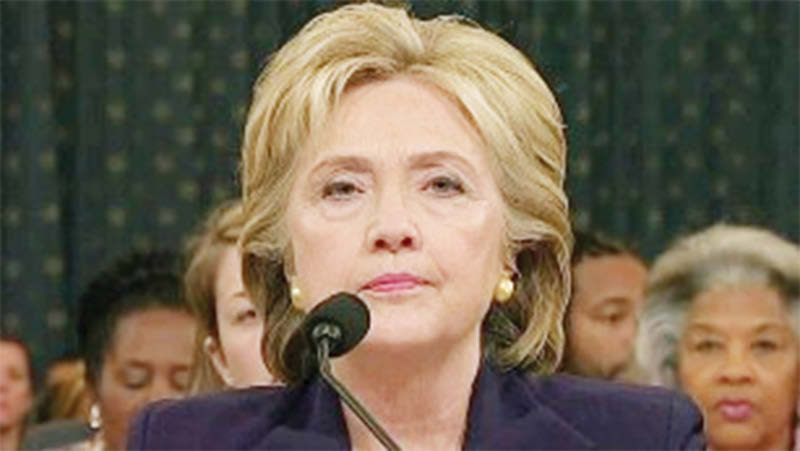
    WASHINGTON (TIP): At times, appearing impatient but never losing control of self, Hillary Clinton answered questions at a nearly 11-hour congressional hearing Thursday, October 22. The Congressional hearing was dominated by Republican criticism of her response to the Benghazi attacks. After a day-long grilling on the details of the attack and how Clinton handled it, the former secretary of state was forced to defend her use of a private email account while in office from a flurry of late evening attacks by GOP lawmakers.

    CNN reports that she also came under testy cross-examination over the extent to which she has taken responsibility for the deaths of the Americans in the September 11, 2012, attacks and her contact with U.S. Ambassador to Libya Chris Stevens, one of the victims, after sending him to the North African country.

    “I came here because I said I would. And I’ve done everything I know to do, as have the people with whom I worked, to try to answer your questions. I cannot do any more than that,” Clinton said towards the end of the grueling day — before later breaking into a coughing fit and taking a throat lozenge to ease her failing voice.

    One of the most dramatic moments of the hearing came when Clinton was asked about her contact with Stevens. She acknowledged that she couldn’t recall having talked to him after having sworn him in as ambassador, though she believed they had spoken.

    Despite the day’s intensity, Clinton appeared cool and in command for much of the hearing. But as the day wore on, she seemed to be increasingly impatient with the Republican line of questioning and with the constant interruptions from the GOP members on the panel.

    In her most emotive testimony, Clinton sought to defang the GOP attacks by arguing that she was agonized over the deaths of four Americans in Libya more than anyone else on the panel.

    “I would imagine I have thought more about what happened than all of you put together,” she said. “I have lost more sleep than all of you put together. I have been wracking my brain about what more could have been done or should have been done.”

    Clinton noted that an independent Accountability Review Board that she set up as secretary had pulled no punches, unveiling 29 recommendations for improving security for U.S. diplomats overseas. She also noted that previous attacks on Americans abroad, including in 1983 on a U.S. Marines barracks and the U.S. Embassy in Beirut, had produced changes to U.S. security procedures after nonpartisan investigations by Congress.

  • Hillary Clinton’s Call to turn Texas Blue

    Hillary Clinton’s Call to turn Texas Blue

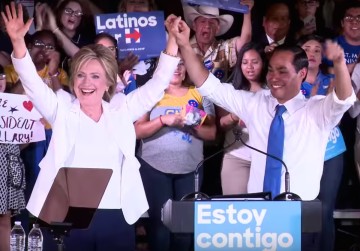
    SAN ANTONIO, TX (TIP): Hillary Clinton came to San Antonio Thursday, October 15 to receive the blessing of the Castro brothers, making her first official campaign stop in Texas and marking a significant moment in her second bid for the White House. At two events — a Q&A with the U.S. Hispanic Chamber of Commerce and an outdoor rally at Sunset Station — she sought to appeal to Hispanic voters, a core constituency of the Obama coalition, and underline the possibility that her campaign could mount a serious bid to win Texas in the 2016 general election.

    Clinton is one of the most fascinating figures in modern American politics, in part because of the remarkable, even Sisyphean, way that the nation’s political architecture rearranges itself seemingly with the intention of thwarting her.

    The Clintons appeared to have finally found the path to return Democrats from exile in 1992, with Hillary playing an unusually prominent role in making policy, but the Republican revolution of 1994 put a damper on that, and much of the rest of her time as first lady was derailed by other matters. She came back to independent prominence as a respectably centrist senator from New York in the 2000s, an Iraq war hawk and a defender of Wall Street, but when it came time to run for president, those positions helped sink her.

    Now, her supporters say, she’s one of the most experienced presidential contenders ever, and it’s a claim with some merit — she’s been the closest advisor of a governor and a president, and she’s served in the U.S. Senate and the cabinet. She’s been privy to history in the last quarter-century like few other people on the planet. And yet she’s running in a year of seemingly unprecedented hatred of the establishment, where her experience and record is in some ways a liability. She’s popular with Dems, for the most part, but she still needs to bolster her left credentials to win over parts of the base afflicted with Clinton fatigue.

    At the launch of the “Latinos for Hillary” initiative, October 16 Clinton was introduced by Julián Castro, who was in turn introduced by Joaquin Castro. Both brothers have now endorsed Clinton, and emphasized to the crowd that Clinton was someone for whom Hispanic issues were, and had always been, close to heart. “She’s always been there for us,” Julián Castro told the crowd, “and today we’re there for her.”

    Some Democrats had hoped to see Clinton take on more of the mantle of the left. On Thursday, she spoke about the wage gap and family leave policies, thanked the #BlackLivesMatter movement for their activism, and told the crowd she would take up immigration reform from the beginning of her presidency, aggressively pursuing a reform package with a full pathway to citizenship for undocumented people. She told the crowd that she would actively pursue gun control in office. “If you join me,” she said, “I will continue taking on the NRA!”

    Introducing Clinton, Julián Castro told the crowd he looked forward to seeing Fox News announce Clinton’s taking of Texas’ electoral votes come November, and Clinton responded by asking the audience to help her “turn Texas blue.” She lauded former San Antonio mayor Julián Castro’s advocacy for pre-K in San Antonio. She emphasized her belief that government could help level the playing field. “Talent is universal, and opportunity is not in America,” she said.

    And she lavished praise on the sitting president: “This country’s come a long way in the last six and-a-half years,” she said, thanks to the “leadership of President Obama.” He didn’t get enough credit for avoiding a second great depression, she said, to cheers. In other arenas, particularly when it comes to foreign policy, Clinton has carefully underlined differences with Obama. In front of this crowd of Texas Democrats, there was no such distancing.

    Another important thread at the Clinton event on Thursday was the possibility that Clinton’s campaign will invest some of its massive resources in Texas during the general election, with an eye to strengthening the party’s infrastructure here. That’s a hope related to long-running speculation that Clinton will pick Julián Castro to be her running mate when the time comes.

    Texas Democrats would love that, but there’s always been plenty of reason to be skeptical of the idea that Clinton would invest heavily in Texas. In a close presidential race, putting a lot of money in a state Democrats are exceptionally unlikely to win would be an inefficient use of resources, especially given the problems with party unity and competency that surfaced in 2014, and given that the third election for an incumbent party after two terms in office is traditionally a time of atrophying energy and turnout.

    But Thursday, it seemed clear that the Clinton campaign was trying to lay the foundation for a Lone Star subplot this cycle. There was the simple fact that today’s rally, the launch of the campaign’s Hispanic outreach project, happened in San Antonio, with the Castros. Introducing Clinton, Julián Castro told the crowd he looked forward to seeing Fox News announce Clinton’s taking of Texas’ electoral votes come November, and Clinton responded by asking the audience to help her “turn Texas blue.”

    Clinton also emphasized her time, spent with then-boyfriend Bill, doing organizing work in South Texas, by all accounts a formative experience for the two. Back then, she said, she and Bill, with his beard and big head of hair “like a Viking,” had a grand old time in Texas. They ate “a lot of green enchiladas,” and “drank our share of Shiner Bocks.” They “ate way too much mango ice cream at the Menger Hotel.”

    When Bill and Hillary came to Texas in 1972, they came to do campaign work for George McGovern, the liberal no-hope Democratic nominee who limped to a crushing defeat against Richard Nixon, winning only one state. That crushing defeat is one of the things that pushed the Clintons toward finding a kind of Democratic identity that could win in what was becoming a more conservative country. That search changed the Clintons in surprising ways: Years later, after Bill Clinton won the White House, Nixon and Bill became friends.

    History’s funny that way. Now the winds have changed again. The country is shifting, in some ways, to the left — at least in presidential elections, when younger and more diverse voters come out. And again, a Clinton is trying to surf the wave. Can she manage it this time? While most people are transfixed by the vulgar Republican primary, Clinton’s the best show in politics right now.


  • Hillary Clinton turns up heat on Sanders in sharp first Democratic presidential debate

    Hillary Clinton turns up heat on Sanders in sharp first Democratic presidential debate

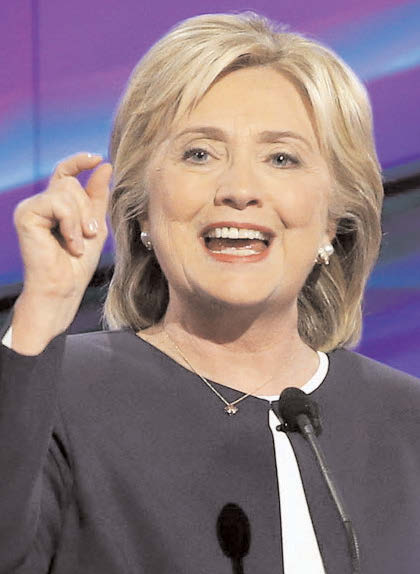
    WASHINGTON (TIP): Hillary Rodham Clinton, seeking to halt the momentum of her insurgent challenger, Sen Bernie Sanders of Vermont, aggressively questioned his values, positions and voting history on Tuesday night in the first Democratic presidential debate, turning a showdown that had been expected to scrutinize her character into a forceful critique of his record.

    In a series of sometimes biting exchanges, Clinton declared that Sanders was mistaken in his handling of crucial votes on gun control and misguided in his grasp of the essentialness of capitalism to the American identity. Mocking Sanders’ admiration for the health care system of Denmark, she interrupted a moderator to offer a stinging assessment of his logic, suggesting he was unprepared to grapple with the realities of governing a superpower.

    “We are not Denmark,” Clinton said, adding, “We are the United States of America.”

    The crowd erupted in applause.

    A few moments later, Clinton took aim at what may be Sanders’ greatest vulnerability with the Democratic left, asking why he had voted to shield gun-makers and dealers from liability lawsuits. Sanders, who linked his record on gun control to his representation of a rural state, called the bill “large and complicated.”

    “I was in the Senate at the same time,” Clinton replied. “It wasn’t that complicated to me. It was pretty straightforward.”

    Asked if Sanders had been tough enough on guns during nearly a decade in the Senate, Clinton offered a sharp reply: “No, not at all.”

    “I think that we have to look at the fact that we lose 90 people a day from gun violence,” she said. “This has gone on too long, and it’s time the entire country stood up against the NRA.”

    It was a dominant performance that showcased Clinton’s political arsenal: a long record of appearances in presidential debates, intense and diligent preparation, and a nimbleness and humor largely lacking in her male counterparts. She let no opportunity pass her by. When Sanders described the conflict in Syria as “a quagmire within a quagmire” but said he did not support sending U.S. ground troops there, Clinton interjected energetically: “Nobody does. Nobody does, Senator Sanders.”

    For Sanders, the gathering in Las Vegas provided an evening of unexpectedly forceful challenges, both from Clinton and from the moderator, Anderson Cooper of CNN. At times, he seemed somewhat exasperated and unsure about how to match Clinton’s agility. A memorable moment came when he sought to shield Clinton from criticism of her email practices.

    “Let me say something that may not be great politics,” he said. “But I think the secretary is right, and that is that the American people are sick and tired of hearing about your damn emails.”

    Clinton flashed a wide smile and shook her rival’s hand. “Thank you,” she said, setting off huge applause in the auditorium.

    Sanders regained his footing when the debate turned to one of his signature issues: Wall Street and its excesses.

  • Hillary Clinton proposes plan to hold Wall Street accountable

    Hillary Clinton proposes plan to hold Wall Street accountable

    WASHINGTON (TIP): Leading Democratic presidential candidate Hillary Clinton has proposed measures including new taxes for trading to hold Wall Street accountable and reduce risk of the failure of big banks and investor firms.

    “The bottom line is that we can never allow what happened in 2008 to happen again. Just as important, we have to encourage Wall Street to live up to its proper role in our economy — helping Main Street grow and prosper,” Clinton wrote in an op-ed as she rolled out her new set of proposals.

    “I will propose a new fee on risk that would discourage the type of excessive leverage and short-term borrowing that could spark another crisis,” she said, adding that her plan would give regulators the authority they need to reorganise, downsize or even break apart any financial institution that is too large and risky to be managed effectively.

    “It is a comprehensive and flexible approach. It allows regulators to adapt to changing markets and help ensure that large financial firms never pose a danger to our entire economy,” she said.

    Clinton said it is time for more accountability on Wall Street.

    Stories of misconduct in the financial industry are shocking – like HSBC allowing drug cartels to launder money or five major banks pleading guilty to felony charges for conspiring to manipulate currency exchange rates, she said.

    This is criminal behavior, yet the individuals responsible often get off with limited consequences — or none at all. “I want to change that,” she said.

    Following her announcement, The Wall Street Journal said the proposed tax on excessive order cancellations could increase costs, cause market problems.

    “We don’t yet know how good or bad this idea could be,” said James Angel, a professor at Georgetown University who studies markets.

    “If it’s a small fee used for regulatory purposes, then it could be helpful. If it’s more than that, it could end up costing investors more money in a lot of ways,” he told The Wall Street Journal.

    By focusing on cancellations, Clinton runs the risk of hampering an important function of trading firms called market making, according to some market observers, the daily noted.

    Bill Harts, spokesman for the high-frequency trading group Modern Markets Initiative, said taxes on trading firms will only “end up costing investors more” because market-makers would have to widen their spreads to accommodate the added cost.

    Widening the spread means increasing the difference between offered buy and sell order, which would make it more expensive for buyers and sellers of stocks, Harts said.

    However, Joseph Saluzzi from Themis Trading said Clinton’s proposal — if designed correctly — could reduce some of the “noise” in the markets.

    “You’re not going to fix things with a tax, but there should be a fee that helps distribute the costs more fairly and reduces manipulative activity,” he told Journal.

  • McCarthy Quits Speaker Race leaving House Republicans Shell shocked

    McCarthy Quits Speaker Race leaving House Republicans Shell shocked

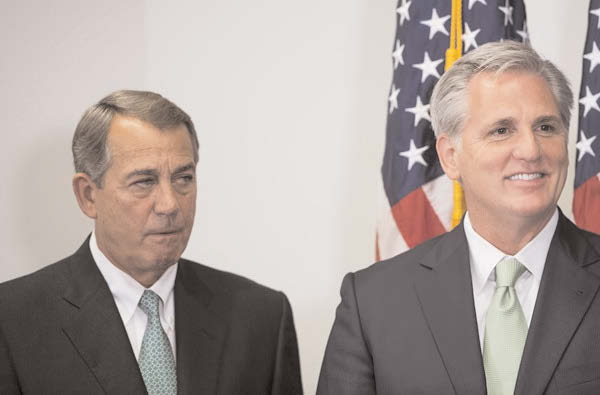
    WASHINGTON (TIP): House Republicans were shell shocked on Thursday, October 8, when California Representative Kevin McCarthy, the favorite to succeed retiring House Speaker John Boehner, dropped out of the race in a surprise that adds to concerns about the party’s ability to govern effectively, news reports said.

    McCarthy, the No. 2 Republican in the House, faced opposition from more conservative lawmakers who now could be emboldened to take a more confrontational approach toward Democratic President Barack Obama on legislation and policy.

    McCarthy’s decision leaves House Republicans without a leader at a time when they face difficult decisions about the spending and national debt that could threaten the country’s ability to pay its bills and keep its government running.

    Florida Rep. Daniel Webster, who is seeking the speaker’s post himself, told CNN’s “The Situation Room with Wolf Blitzer,” he was “shocked” at the announcement, saying McCarthy seemed excited about running not long before.

    “I don’t know why he dropped out, because we just had a member session where all the members came together and he and myself and the other two candidates were there, Kevin was there,” Webster said. “And he was passionate about it. This was just an hour and a half before he announced he wasn’t going to do it.”

    Even under the leadership of Boehner, who relied on McCarthy as an ally, Republicans stumbled into a 16-day government shutdown in 2013 and brought the country to the brink of default in 2011, leading to the United States’ first-ever debt rating downgrade.

    The next speaker will have to answer to a newly assertive conservative wing at a time when the party is trying to appeal to a broad swath of voters in the campaign for the November 2016 presidential elections.

    In several closed-door meetings this week, McCarthy told lawmakers he would not be like Boehner, some lawmakers said afterward, but few seem to have found this convincing.

    Boehner, who announced Sept. 25 that he would step down at the end of October, said on Thursday that he would stay on the job until a replacement is elected.

    Both the secret-ballot vote to nominate a Republican candidate for speaker and the full House vote, which was set for Oct. 30, have been postponed until further notice.

    House Republicans’ inability to merely pick a leader comes after Boehner and Senate Majority Leader Mitch McConnell, also a Republican, had gone to great lengths all year to demonstrate that their party can effectively run Congress.

    “If we are going to unite and be strong, we need a new face to help do that,” McCarthy told reporters. He said he would stay on in his current post as majority leader.

    McCarthy’s ability to effectively communicate Republican initiatives was called into question last week when he made a connection between a special House committee investigating a 2012 attack in Benghazi, Libya, and Democratic presidential candidate Hillary Clinton’s falling public opinion poll numbers.

    One possible successor to Boehner, Wisconsin Representative Paul Ryan, said he was not interested in becoming speaker. The party’s 2012 vice presidential nominee is widely admired among Republicans but said he wanted to remain as chairman of the tax-writing Ways and Means Committee.

    The two lawmakers who had challenged McCarthy for the post, Representatives Jason Chaffetz of Utah and Daniel Webster of Florida, said they were still in the race.

    “It was just absolutely stunning what happened,” Chaffetz said. “I don’t know if I am the right person. I put my name in the hat because I do want to unite this party internally.” Webster said he expected other candidates to enter the contest.

    The Republicans were tossed into upheaval just a few weeks before the United States is due to reach the limits of its borrowing authority. The Treasury department has estimated that the United States will hit its$18 trillion debt cap around Nov. 5, and the White House urged Congress to raise the limit before then to avoid a possible default.

    Lawmakers are also struggling with Obama on spending levels before government funding runs out on Dec. 11.

    White House spokesman Josh Earnest said there had been several instances in the past few years in which a Republican-dominated House of Representatives has managed to raise the debt ceiling without political brinkmanship.

    “And we’re hopeful that in spite of this chaos, that Republicans and Democrats in the House will do the same thing again,” Earnest said at a news briefing.

    McCarthy was elected to Congress from California in 2006 and had been one of Boehner’s lieutenants in House Republican leadership since 2011. He has been majority leader since August 2014.

    Webster had drawn the backing of the House Freedom Caucus, a bloc of about 40 conservatives. These Tea Party-aligned members noted that Webster, 66, led efforts that “empowered” individual lawmakers while he was speaker of the Florida House from 1996 to 1998.

  • Some Indian-Americans in Silicon Valley Upset with Hillary Clinton

    Some Indian-Americans in Silicon Valley Upset with Hillary Clinton

    SAN JOSE (TIP): Hillary Clinton, who has long cultivated the Indian-American community for both funds and votes, is tapping into the excitement around the Silicon Valley visit of Prime Minister Narendra Modi this weekend. according to a Reuters report.

    Next Monday she is holding a presidential campaign fundraiser expected to attract many prominent Californians with ties to India.

    But some Indian-American Democrats from the region have told Reuters they won’t be attending the event, in part because they are upset about the way a candidate was treated in a 2014 race for a Silicon Valley congressional seat.

    Their frustration extends to other Democratic candidates and causes besides Ms Clinton, who wasn’t involved in the race, but ignoring her campaign is a high-profile way to vent.

    Supporters of the candidate, Ro Khanna, an intellectual-property lawyer of South Indian heritage, accuse his opponent, fellow Democrat Mike Honda, of using race-baiting to undermine Mr. Khanna.

    Mr. Honda narrowly beat out Mr. Khanna, a former trade official in President Barack Obama’s administration, in the election for a seat in the House of Representatives.

    Just weeks before the election, Mr. Honda attacked Mr. Khanna in a television ad for supporting “companies that send our jobs overseas.” In the same ad, a shadow briefly appeared on Mr. Khanna’s forehead that some Khanna supporters interpreted as a ‘bindi’.

    Mr. Khanna’s supporters point out that in 2012 he published a book on the importance of US manufacturing jobs, and they say that the shadow was an attempt to spark unease among non-Indians. They say the Democratic Party should have intervened to stop what they saw as unfair attacks.

    Mr. Honda’s spokesman Adam Alberti says Mr. Khanna’s financial backers included supporters of outsourcing, and no dot was placed, or is visible, on Khanna’s forehead in the ad in question.

    “The issue of racial baiting is both unfounded and is shallow political theater,” said Mr. Alberti, adding that as a Japanese-American who was held in an internment camp as a baby during World War II, Mr. Honda is especially committed to racial diversity.

    In March, Mr. Honda co-hosted a networking and fundraising event for “Ready for Clinton,” the organization that sought to draft Ms Clinton to run for president.

    Among those who say they aren’t going to Monday’s Mr. Clinton fundraiser, or getting involved in other Democratic campaigns out of concern at Khanna’s treatment, is Rahul Roy, a software entrepreneur. “It hurts,” he says. Mr. Roy recently hosted a fundraiser for Mr. Khanna, who is  running for the seat again in 2016.

    The Clinton campaign says it is concentrating on the large numbers of Indian Americans that back her.

    “Hillary Clinton is grateful for the broad support she is receiving across the Indian-American and Asian-American and Pacific Islander communities in California and around the country,” a spokesman said. He did not respond to questions from Reuters about the disquiet over the 2014 election.

    SOCIAL JUSTICE

    Certainly Ms Clinton has been raising funds in Silicon Valley, where donations to her and an organization raising money on her behalf from area technology employees have totaled $1.07 million through June 30, according to the Center for Responsive Politics.

    And some Khanna supporters are raising money for her. Monday’s Clinton fundraiser – which she is due to attend in person – is being hosted in their home by Khanna supporters Kamil Hasan, a venture capitalist, and his wife Talat Hasan, an entrepreneur. Tickets start at $1,000, and it is expected to attract at least 150 donors, according to a person familiar with the event.

    Mr. Khanna’s supporters have shown a largesse that any presidential candidate would want to tap into. He has raised$1.25 million through June 30, far more than most congressional candidates, and more than double the $608,000 raised by Honda.

    “Some of the attacks were very xenophobic,” said Naren Gupta, a Khanna donor and co-founder of investment firm Nexus Ventures, who said the party should have stepped in.

    He stopped short of saying the issue would affect his support for other Democratic candidates. He is not expected at the Hasan fundraiser, according to the person familiar with the event. Mr. Gupta is also co-chairman of the Indo-American Community of the West Coast, which is helping organize Modi’s appearance before a capacity crowd of 18,000 at the SAP Center in San Joseon Sunday.

    Other donors, like Facebook millionaire turned venture capitalist Chamath Palihapitiya, think Mr. Khanna should have hit back harder.

    “You’ve got to be willing to take the gloves off and fight,” said Mr. Palihapitya, who donated $2,600 to Khanna in the last race and said he planned to support him again this time. He hasn’t made up his mind about who he might support in the presidential race, he said.

    Through spokesman Hari Sevugan, Mr. Khanna took credit for bringing many South Asians and technology workers into the political arena for the first time. Now, many of those recruits feel alienated, the spokesman said.

    Mr. Khanna himself didn’t comment directly on the 2014 race or its fallout, but in an email said Indian Americans feel strongly about social justice, and the Democratic Party “needs to do a better job recognizing that.”

  • Clinton’s lead over Sanders thins even as her edge over GOP shrinks

    Clinton’s lead over Sanders thins even as her edge over GOP shrinks

    WASHINGTON (TIP): A new CNN/ORC poll has found that Hillary Clinton’s lead in the race for the Democratic nomination has fallen to just 10 points, and at the same time, her advantage against the top Republican contenders has vanished. The new poll finds Clinton with 37%support among Democratic and Democratic-leaning voters, down 10 points since August, followed by Vermont Sen. Bernie Sanders at 27% and Vice President Joe Biden at 20%. Sanders’ support is about the same as it was in August, making Biden the only candidate to post significant gains in the last month. His support is up 6 points in the last month as he weighs making a run for the presidency.

    Behind the top three, former Maryland Gov. Martin O’Malley holds 3%, former Virginia Sen. Jim Webb is at 2% and former Rhode Island Gov. Lincoln Chafee logs less than 1% support.

    In the general election match ups, Clinton trails former neurosurgeon Ben Carson by a significant margin (51% Carson to 46%Clinton among registered voters) while running about evenly with both former Florida Gov. Jeb Bush (49% Bush to 47%Clinton) and businessman Donald Trump (48% back each).

    The shift away from the former secretary of state stems from shrinking support among women. Clinton’s advantage among women has disappeared in match ups against Bush and Carson. Facing Trump, Clinton still carries women by a large, though tighter, margin. In August, 60% of women favored Clinton to 37% for Trump, but that’s narrowed slightly to 55% Clinton, 41%Trump now. Clinton’s advantage among women against Trump is fueled by independent women, despite that group shifting away from Clinton in the head-to-head against Bush.

    The poll suggests Republican women have consolidated their support around their party’s front-runners in the last month, and are now more apt to back both Bush and Trump than they were a month ago. At the same time, the near-universal support for Clinton among Democratic women has softened slightly, bringing it more in-line with her support among Democratic men.

    With Biden’s consideration of a run for the White House gaining attention, the poll finds he outperforms Clinton in these hypothetical general election matchups, topping Bush and Trump while falling just slightly behind Carson. Biden tops Trump by 10 points (54%to 44% among registered voters), leads Bush by 8 points (52% to 44%) and is 3 points behind Carson (50% Carson to 47% Biden). Biden’s advantages against Bush and Trump rest on the same kind of gender gap that Clinton appears to have lost: Biden leads Bush by 16 points among women while tying him among men, he tops Trump by 26 points among women while trailing him by 7 among men, and he leads Carson by 5 among women while trailing by 10 among men.

    The poll also finds Democrats’ overall enthusiasm for Clinton has waned. In April, shortly after she launched her campaign, 60% of Democratic and Democratic-leaning voters said they would be enthusiastic about her candidacy should she win the party’s nomination for president. Now, just 43% feel that way. But neither Biden nor Sanders has mustered that level of enthusiasm among the Democratic faithful, 37% say they would be enthusiastic about Biden, 31% about Sanders.

    And Sanders prompts the greatest potential dissatisfaction, with 30% saying they would be dissatisfied or upset if he eventually won the party’s nomination.

    Clinton’s fade in the Democratic race comes as an ideological divide within the party grows into a chasm. In August, Clinton held support from 43% of moderates and 46%of liberals. In the new poll, her support among moderates holds at 47%, while among liberals, it has plummeted to just 23%. Sanders has increased his share of the liberal vote (from 42% to 49%), while falling 9 points among moderates (from 24% to 15%). Meanwhile, Biden has gained ground in both groups.

    And enthusiasm for Clinton among liberals has fallen nearly 40 points. Just 29%of liberal Democrats say they would be enthusiastic if she were the party’s nominee, down from 68% in an April poll.

    Asked why they back their candidate, most Clinton supporters said her experience is the draw: 58% say it’s mostly on account of her on the job experience, 32% because of her positions on the issues, and 9% because they don’t like the other candidates. Among those Democrats backing her rivals for the nomination, 55% say their choice was driven by the candidate’s positions on the issues, while 27% cite experience and 17% say it’s due to dislike of the other candidates.

    There is some good news for Clinton in the poll, however, since most Democrats still say they expect her to be the party’s eventual nominee and the more enthusiastic Democratic voters are more apt to be Clinton backers. Among Democrats and Democatic-leaning voters, 65% expect Clinton to top the party’s ticket in 2016. And among those Democratic voters who say they are extremely or very enthusiastic about voting for president next year — a group which may be more likely to cast ballots in next year’s primary contests — 42% back Clinton, 29%Sanders and 15% Biden.

    The CNN/ORC Poll was conducted by telephone September 4-8 among a random national sample of 1,012 adults. This sample included 930 interviews with registered voters, 395 of whom were self-identified Democrats or Democratic-leaning independents. For results among all registered voters, the margin of sampling error is plus or minus 3 percentage points. Among Democratic voters, it is plus or minus 5 points.

    A Quinnipiac University poll released Thursday, September 10, showed Sanders continues to build momentum against Clinton, pulling even with her in Iowa, 41%to 40%. That’s up from a 21-point deficit with Clinton two months ago. Other recent polling that has shown Sanders ahead in another key early primary state, New Hampshire, although Clinton still maintains double-digit leads in national polling.

    Sanders said his campaign has received contributions from more than 400,000 people with an average donation of $31.20, while eschewing raising money for super PACs.

  • Obama caught between Clinton, Biden ambitions

    Obama caught between Clinton, Biden ambitions

    WASHINGTON (TIP): President Barack Obama is caught between the White House aspirations of two of his closest advisers: Vice President Joe Biden and former Secretary of State Hillary Rodham Clinton.

    For months, White House officials expected Clinton to be the Democratic nominee in the 2016 election. Some of Obama’s top political advisers moved to New York to run her campaign and Obama appeared to give his tacit approval, saying she would be an “excellent president.”

    But that bet on Clinton suddenly looks less certain. With Biden weighing his own presidential run more seriously amid signs of weakness in Clinton’s campaign, the White House faces the prospect of a family feud over who will become heir to Obama’s legacy.

    “Certainly he’s got something at stake here,” White House spokesman Josh Earnest said Monday of Obama’s interest in the 2016 election.

    Biden’s recent overtures to donors and Democratic officials have led to palpable awkwardness in the West Wing as aides _ many with close ties to Clinton, the vice president or both try to maintain impartiality.

    Earnest raised the prospect that Obama could endorse a candidate in the Democratic primary, though others close to the president say it’s unlikely he’d publicly put his thumb on the scale if Clinton and Biden were locked in a close contest. In picking between Biden and Clinton, Obama would be making a choice between two of the most influential members of his administration.

    Obama and Clinton long ago turned their political rivalry from the 2008 primary into an alliance. Clinton left the administration in early 2013 after four years as Obama’s secretary of state, but she and the president still get together for occasional meetings.

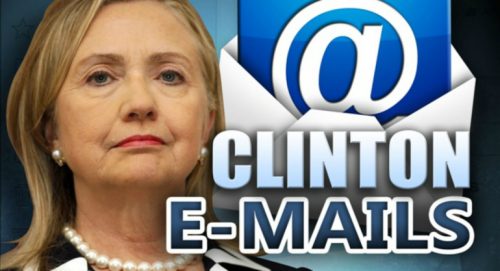
  • HILLARY CLINTON’S EMAILS Hilary Camp’s clarifications

    HILLARY CLINTON’S EMAILS Hilary Camp’s clarifications

    WASHINGTON (TIP): The Hilary emails issue boils over and over again, with politicians and now the issue is before the courts, too. And Hilary camp keeps offering explanations. The latest explanation has come from the Hilary Campaign Communications Director Jennifer Palmieri. She released the following explanation on August 12.

    Here are the basics: 

    Like other Secretaries of State who served before her, Hillary used a personal email address, and the rules of the State Department permitted it. She’s already acknowledged that, in hindsight, it would have been better just to use separate work and personal email accounts. No one disputes that.

    The State Department’s request: 

    Last year, as part of a review of its records, the State Department asked the last four former Secretaries of State to provide any work-related emails they had. Hillary was the only former Secretary of State to provide any materials — more than 30,000 emails. In fact, she handed over too many –the Department said it will be returning over 1,200 messages to her because, in their and the National Archives’ judgment, these messages were completely personal in nature.

    Hillary didn’t send any classified materials over email: 

    Hillary only used her personal account for unclassified email. No information in her emails was marked classified at the time she sent or received them. She viewed classified materials in hard copy in her office or via other secure means while traveling, not on email.

    What makes it complicated: 

    It’s common for information previously considered unclassified to be upgraded to classified before being publicly released. Some emails that weren’t secret at the time she sent or received them might be secret now. And sometimes government agencies disagree about what should be classified, so it isn’t surprising that another agency might want to conduct its own review, even though the State Department has repeatedly confirmed that Hillary’s emails contained no classified information at the time she sent or received them.

    To be clear, there is absolutely no criminal inquiry into Hillary’s email or email server.

    Any and all reports to that effect have been widely debunked. Hillary directed her team to provide her email server and a thumb drive in order to cooperate with the review process and to ensure these materials were stored in a safe and secure manner.

    What about the Benghazi committee?

    While you may hear from the Republican-led Benghazi committee about Hillary’s emails, it is important to remember that the committee was formed to focus on learning lessons from Benghazi to help prevent future tragedies at our embassies and consulates around the globe. Instead, the committee, led by Republican Representative Trey Gowdy, is spending nearly $6 million in taxpayer money to conduct a partisan witch-hunt designed to do political damage to Hillary in the run-up to the election.

    Hillary has remained absolutely committed to cooperating.

    That’s why, just as she gave her email server to the government, she’s also testifying before the Benghazi committee in October and is actively working with the Justice Department to make sure they have what they need. She hopes that her emails will continue to be released in a timely fashion.

    It’s worth noting: 

    Many of the Republican candidates for president have done the same things for which they’re now criticizing Hillary. As governor, Jeb Bush owned his own private server and his staff decided which emails he turned over as work-related from his private account. Bobby Jindal went a step further, using private email to communicate with his immediate staff but refusing to release his work-related emails. Scott Walker and Rick Perry had email issues themselves.

    The bottom line: 

    Look, Indrajit, this kind of nonsense comes with the territory of running for president. We know it, Hillary knows it, and we expect it to continue from now until Election Day.

    It’s okay. We’ll be ready. We have the facts, our principles, and you on our side. And it’s vital that you read and absorb the real story so that you know what to say the next time you hear about this around the dinner table or the water cooler.

  • Hillary’s former Indian American aide Huma Abedin under scrutiny

    Hillary’s former Indian American aide Huma Abedin under scrutiny

    Indian-American Huma Abedin who worked and is still vice chairwoman for the 2016 Clinton presidential campaign to Democratic presidential candidate Hillary Clinton is being probed for allegedly accepting overpayments from the State Department while working for the then US secretary of state (Huma Abedin worked as a full time staffer for Hillary Clinton from January 2009 until June 2012), media reported on Tuesday, Aug 4.

    Huma Abedin, who has been at Mrs. Clinton’s side as her personal assistant since the 2008 presidential race, has come under scrutiny for pocketing a $33,000 payout from the State Department for unused leave and using her simultaneous employment inside and outside of government to “deliver favors” to Clinton cronies.

    “Abedin leveraged her State Department job to benefit her two other employers at that time – the Clinton Foundation and a consulting firm called Teneo Strategies (Teneo Strategies was founded by Douglas Band, a long time aide to Bill Clinton),” claimed a letter to Secretary of State John Kerry, written by senator Chuck Grassley, chairman of the Senate Judiciary Committee, the Washington Examiner reported.
    In his letter, Grassley wrote to Abedin – “The committee has learned of allegations that, during your simultaneous employment by the Department of State, Teneo, and the Clinton Foundation, you were solicited for and delivered favors for preferred individuals”. The letter added, She was given a “special government employee” designation and soon took on roles at the Clinton Foundation and Teneo.
    Grassley also called into question a $33,000 payment Abedin received from the State Department for leave she had not used.
    “During approximately three and a half years as a full time government employee, Ms Abedin reportedly never requested, was approved for, or had her leave balance reduced for use of any sick leave, annual leave, or administrative leave,” he said in the letter.
    A federal judge last week ordered her and another top Clinton aide at the State Department, Cheryl Mills, to attest, under penalty of perjury, that they had turned over all official email in their possession.The order followed a revelation that Ms. Abedin and Ms. Mills used a private email account for official business, just like their boss, whose secretive email setup with private accounts hosted on a server in Mrs. Clinton’s home in New York has raised questions about her skirting open-records laws and mishandling classified information.Ms. Abedin, 39, holds the title of vice chairwoman for the 2016 Clinton presidential campaign, but she continues to serve as Mrs. Clinton’s “girl Friday.” She was captured on surveillance video alongside Mrs. Clinton when the former first lady, senator and top diplomat went unnoticed ordering a burrito bowl at a Chipotle restaurant in Ohio on the first road trip for the campaign.

    The Clinton campaign refused to comment on the increased focus on Ms. Abedin.

    Ms. Abedin’s attorney, Karen L. Dunn, called the inspector general’s report “fundamentally flawed.”

    “Huma Abedin is widely known as one of the hardest working and most dedicated public servants over the nearly two decades she served,” she said in a statement.

    “The Inspector General’s report is fundamentally flawed, including contradicting its own conclusion by finding that Huma — a woman who regularly worked 16-20 hour days — also worked hard while on maternity leave,” she said. “No hardworking, dedicated public servant should be subjected to such irresponsible allegations based on a fundamentally flawed report — and it is appropriate that the State Department is now reviewing the IG’s report. Huma has been nothing but cooperative in helping the Department work through its record keeping issues, and she will continue to do so in the hope the right thing is done.”

    Mr. Grassley also said the auditor’s finding found evidence that Ms. Abedin’s overlapping employment inside and outside government created conflicts of interest and special treatment for people with connections to Teneo and the Clinton Foundation.

  • HILLARY CLINTON TO URGE CONGRESS TO LIFT CUBA EMBARGO

    HILLARY CLINTON TO URGE CONGRESS TO LIFT CUBA EMBARGO

    MIAMI (TIP): Hillary Clinton will urge US lawmakers on Friday to lift the trade embargo against Cuba, arguing that Republican opposition to normalizing ties reflects the past’s
    “failed policies,” her campaign said.

    Clinton, the frontrunner for the 2016 Democratic presidential nomination, will make her plea during a speech in Miami.

    “She will highlight that Republican arguments against increased engagement are part of failed policies of the past and contend that we must look to the future in order to advance a core set of values and interests to engage with Cubans and address human rights abuses,” her team said.

    President Barack Obama made his own appeal to Congress on July 1 to end the crippling embargo, but the Republican-led Senate and House of Representatives have been unmoved.

    Obama gave the green light in 2013 for secret negotiations between Washington and Havana, and last December he and his Cuban counterpart Raul Castro simultaneously announced plans to normalize relations after more than half a century of strain.

    On January 20, the countries reopened embassies in their respective capitals.

    Clinton has expressed support for the detente and for ending the embargo before, including in her memoir “Hard Choices,” released last year.

    In June 2014, shortly after the book’s publication, the former secretary of state told the Council on Foreign Relations that “the embargo is Castro’s best friend,” because the leader could use the US blockade as an excuse for all Cuban economic woes.

    Her position puts her in contrast with her many Republican presidential rivals, including former Florida governor Jeb Bush, who speaks fluent Spanish, and Marco Rubio and Ted Cruz, US senators whose parents fled Cuba.

    They have been outspoken in criticizing the administration’s improved ties with Havana, and have demanded that the embargo remain in place.

    While diplomatic ties are on the mend, dismantling the trade blockade is expected to be far more difficult, with a US president requiring an act of Congress to lift the embargo.

    Many Republicans and some Democrats have said they would oppose such a move.

  • Anjuman-e-Badri hosts the annual Public Relations Event with politicians, community leaders in attendance

    Anjuman-e-Badri hosts the annual Public Relations Event with politicians, community leaders in attendance

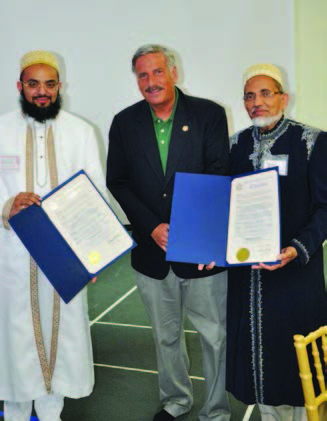
    NEW YORK (TIP): Anjuman-e-Badri hosted its annual public relations event at Jamali Markaz, Queens-New York. This event was attended by several local politicians which included councilmen, assemblymen, various supporters and Jamaat members. Also present was Congresswoman Grace Meng, who voiced her support for the Dawoodi Bohra community and wished everyone a Happy Eid.

    The Jamaat was presented with several citations applauding the Jamaat for its work in the community. Former Secretary of State Hillary Clinton sent a letter addressed to the Jamaat and extended her greetings to members.

    The distinguished gathering
    The distinguished gathering
    Yusuf Bhai Saheb, President , Anjuman-e-Badri addresses the gathering
    Yusuf Bhai Saheb, President , Anjuman-e-Badri addresses the gathering
  • Finally, racist flag to come down in South Carolina

    Finally, racist flag to come down in South Carolina

    WASHINGTON (TIP): Indian-American South Carolina Governor Nikki Haley on Thursday said a “new day” has dawned for her state as lawmakers voted for removal of the controversial Confederate flag – a symbol of nation’s racist past.

    “It is a new day in South Carolina, a day we can all be proud of, a day that truly brings us all together as we continue to heal, as one people and one state,” Haley said in a statement after the State House of Representatives voted overwhelmingly to remove the flag.

    Last month, after a White man shot down several black people inside a historic church, Haley had taken the courageous step to remove the controversial Confederate flag from the State Capitol – a move which was welcomed across the nation including the US President, Barack Obama. “Removing this symbol of our nation’s racist past is an important step towards equality and civil rights in America.

    The flag may soon no longer fly at the State Capitol, but there is still unfinished business in confronting and acting on the inequalities that still exist in our country” Hillary Clinton, the Democratic presidential candidate, said. “We can’t hide from the hard truths about race and justice. We must do everything in our power to have the courage to name them and change them,” she said.

    Local media reported that confederate flag could be removed from the State House by Friday. South Carolina’s House of Representatives passed the vote with 94-20, more than the two-thirds vote needed for approval. Haley is expected to sign the bill – now passed by both chambers of the State legislature today.

  • Bobby Jindal’s popularity ratings still low: Poll

    Bobby Jindal’s popularity ratings still low: Poll

    WASHINGTON (TIP): A week after he announced his 2016 presidential bid, the popularity ratings of Indian-American Republican candidate Bobby Jindal remain abysmally low at two per cent, a latest poll said on Wednesday. 44-year-old Jindal, a two-term Governor of Louisiana, received just two per cent of the votes in the CNN poll as against 19 per cent for Jeb Bush who leads Republican presidential aspirants.

    The polls were conducted by CNN between June 26 and 28. Jindal announced his 2016 presidential bid on June 24.

    Donald Trump, who also announced his candidacy last month, is ranked second after Bush with 12 per cent of the votes, followed by Mike Huckabee (eight per cent), Ben Carson (seven per cent), Rand Paul (seven per cent) and Senator Marco Rubio (six per cent). But poll results did indicate that Jindal’s popularity slightly increased in the last one month. In a similar poll by CNN in May, he had just one per cent of the votes.

    With just two per cent of the votes in the current poll, Jindal is ranked 12th, which rules him out of any of the pre-primary Republican presidential debates. On the Democratic side, former Secretary of State Hillary Clinton maintains her formidable lead over her nearest potential rivals with 57 per cent of the votes. However, her popularity registered a slight drop of three per cent in the last one month.

  • US State Department says 15 Hillary Clinton emails missing

    US State Department says 15 Hillary Clinton emails missing

    WASHINGTON (TIP): The State Department acknowledged on Thursday it could not find any record of part or all of 15 emails from Hillary Clinton dating from her time as secretary of state, copies of which have been given to US lawmakers.

    A stash of thousands of emails has been turned over to a congressional panel investigating the 2012 attack on a US mission in Libya by longtime Clinton confidante and friend Sidney Blumenthal.

    But in comparing the Blumenthal cache with some 30,000 emails Clinton has given to the State Department, officials admitted there were “a limited number of instances, 15, in which we could not locate all or part of the content of a document from his production within the tens of thousands of emails she gave us.”

    “The substance of those 15 emails is not relevant to the 2012 attacks in Benghazi,” the State Department official stressed, asking not to be named.

    The email correspondence has triggered a political row after Clinton — now bidding to be elected America’s first woman president in 2016 elections — revealed she had used a private server and email address during her time as secretary of state from 2009 to early 2013.

    A first slew of 296 emails relating to Libya and the 2012 attack on the US mission in Benghazi in which four Americans were killed was made public in May after a judge ordered that they be released.

    The next batch from some 55,000 pages of correspondence is due to be released by the State Department on June 30.

  • Hillary Clinton on course to win 2016 presidential election: Poll

    Hillary Clinton on course to win 2016 presidential election: Poll

    WASHINGTON (TIP): Hillary Clinton is the firm favourite to be chosen as the Democratic Party nominee for 2016 US presidential polls and go on to be elected as the first woman president of America, according to a new poll.

    A Wall Street Journal/NBC News poll taken in the days after Clinton held her first public rally earlier this month, showed the former secretary of state garnering broad support for being chosen the Democratic presidential nominee.

    Three-quarters of Democratic primary voters said Clinton was their top pick to be the nominee, compared with the 15 per cent who selected Bernie Sanders.

    Clinton, 67, enters the 2016 contest with unusually broad support from fellow Democrats with some 92 per cent of Democratic primary voters saying they could see themselves supporting her and just 8 per cent saying they could not, according to the poll.

    But it is not that Clinton just emerges as the strongest contender in the primary vote but the poll shows that she is looking set for a successful November 2016 election bid to become the first woman president of America.

    The poll asked 1,000 likely voters about their opinions on potential presidential candidates, both Republican and Democrat.

    It showed Clinton polling at 48 per cent to 40 per cent against her closest Republican contender, former Florida governor Jeb Bush, the brother of former president George W Bush and son of former president George HW Bush.

    Against the Florida senator Marco Rubio, Clinton polled 50 per cent against 40 per cent. And against Wisconsin governor Scott Walker she polled 51 per cent to 37 per cent.

    The survey found that Americans are divided on whether they want the next president to be a Republican or a Democrat. But among many key demographic groups, Clinton outpaces the support for her party.

    “The poll underscores Clinton’s strength as a candidate, both among Democrats and key constituencies that could tip the balance in a general election. But the results also show a clear desire among Democratic voters for a rival to emerge and hint at potential cracks in her support,” the Wall Street Journal said.

    Among Republican primary voters, the poll showed Bush ahead with 22 per cent of the vote. Walker was next with 17 per cent and Rubio third with 14 per cent. Retired neurosurgeon Ben Carson had 11 per cent, while former Arkansas governor Mike Huckabee 9 per cent, libertarian senator Rand Paul 7 per cent, former Texas governor Rick Perry 5 per cent, New Jersey governor Chris Christie 4 per cent and Texas senator Ted Cruz 4 per cent were all in single figures.

  • White man guns down 9 at black church in US

    White man guns down 9 at black church in US

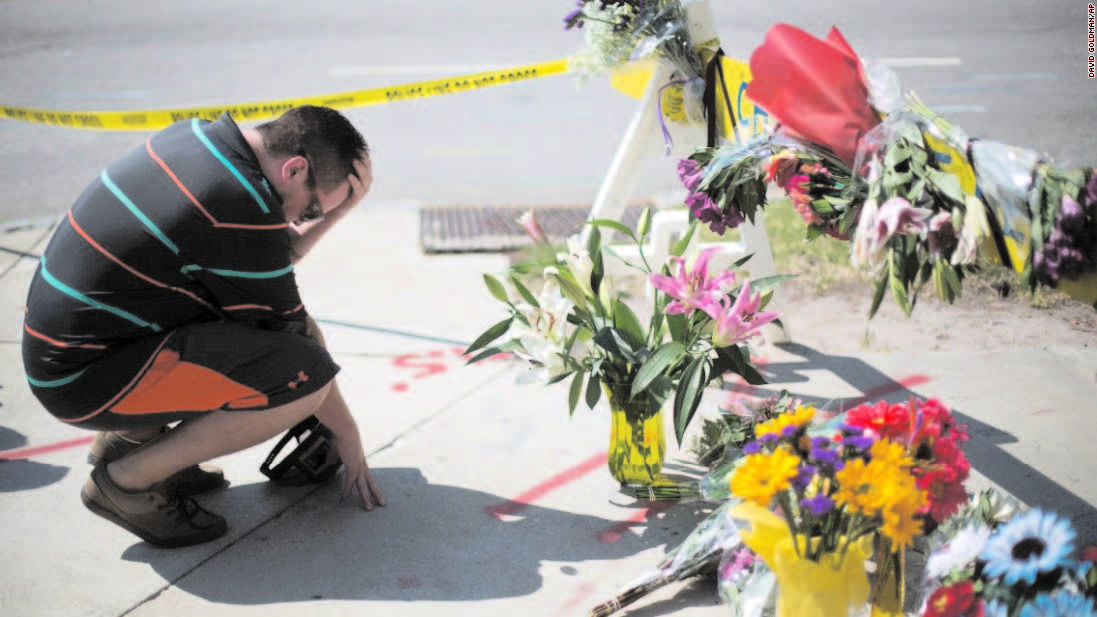
    WASHINGTON (TIP): A young white gunman opened fire in a historically black church in South Carolina on June 17 night killing nine African-Americans in what was said to be hate crime, one of the worst in US history. The gunman, still at large at the time of writing, reportedly spared one woman so that she could ”go and tell the world what happened.”

    It was little after 9pm on June 17 when the group of African-Americans congregated at the 150-year-old Emanuel African Methodist Episcopal (AME) church for their weekly Bible studies. The gunman, who was described as wearing a gray hoodie, blue jeans, and Timberland boots, is said to have come into the church and sat down with the group before opening fire and fleeing.

    Police teams with sniffer dogs arrived quickly on the scene and cordoned off the area before putting the whole city, which witnessed massive protests following a white cop-killing-a black man case some weeks ago, into a lockdown.

    There are concerns about further violence from the fugitive gunman and possible retaliatory attacks in a state that has a deep history of racism, but yet has successfully elected an Indian-American, Nikki Haley (nee Nimrata Randhawa) as the governor. Haley condoled the tragedy, saying, ”Michael, Rena, Nalin, and I are praying for victims and families touched by tonight’s senseless tragedy” and adding, ”While we do not yet know all of the details, we do know that we’ll never understand what motivates anyone to enter one of our places of worship and take the life of another.”

    But city authorities appeared certain it is a hate crime.

    ”I do believe this is a hate crime,” Charleston Police Chief Greg Mullen said at a news conference, without explaining the basis for his conclusion. ”This is a tragedy that no community should have to experience. It is senseless, unfathomable…we are going to do everything in our power to find this individual, to lock him up, to make sure he does not hurt anyone else…”

    Mayor Joe Riley, who like Mullen is also white in a city that is 25% African-American, backed him, saying, ”The only reason someone could walk into a church and shoot people praying is out of hate. It is the most dastardly act that one could possibly imagine.”

    The shooting came just days ahead of two big back-to-back political rallies in the city, first by Republican Presidential candidate Jeb Bush (which has now been cancelled) and followed by one by Democratic front runner Hillary Clinton, who tweeted her condolences but did not say anything about the rally.

    Police initially apprehended a young white photographer who happened to be in the vicinity because he matched the description of the gunman. But he only happened to be interviewing strangers for a project he was detailing on Facebook.

  • CLINTON FOUNDATION RELEASES LIST OF MONEY MAKING SPEECHES

    NEW YORK (TIP): The Clinton Foundation, facing heavy scrutiny of its fund-raising during Hillary Rodham Clinton’s 2016 presidential campaign, released on Thursday, May 28, a list of paid speeches by the Clintons that generated at least $12 million for the organization.

    The list shows that Bill, Hillary and Chelsea Clinton turned over to the foundation from $12 million to as much as $26 million in speaking fees.

    The list shows the speeches filled the foundation’s coffers in a range of amounts and over years, with Mr. Clinton giving roughly 70 speeches since 2002, including three that brought in from $500,001 to $1 million.

    Mrs. Clinton, the former secretary of state, gave roughly 15 speeches and Chelsea Clinton gave six, bringing in between $370,000 and $800,000.

    “Like other global charities,” Craig Minassian, a spokesman for the foundation, said on Thursday, “the Clinton Foundation receives support from individuals and organizations across all sectors of society, backgrounds and ideologies because they know our programs are improving the lives of millions of people around the world.”

    He continued: “In addition to the more than 300,000 donors who are all listed on our website, posting these speeches is just another example of how our disclosure policies go above and beyond what’s required of charities.”

    Many of the speeches had previously been reported, such as Mrs. Clinton’s address at Hamilton College, and some drew criticism in the last two years, such as those at public universities that accept taxpayer dollars. She also gave at least two speeches to business groups in China, the list shows.

    Foundation officials said that the charitable contributions were different from the speeches, which are listed as revenue on financial forms because there is no tax deduction credited to the host group.

    Last week Mrs. Clinton released her personal financial disclosure, showing that she and her husband earned more than $25 million from over 100 paid speeches since January 2014.

    Some critics questioned whether the amounts showed she could not relate to average voters in the postrecession economic climate. At the same time, the foundation has been criticized for accepting foreign donations both while Mrs. Clinton was secretary of state and after she left.

  • Bobby Jindal slams Republican presidential opponent

    Bobby Jindal slams Republican presidential opponent

    WASHINGTON (TIP): Moving closer to a formal announcement of his US presidential bid, Indian-American Bobby Jindal has slammed his fellow Republican and presidential aspirant Rand Paul for being “unsuited to be the commander in chief.”

    In an unusually harsh language, the 43-year-old Louisiana Governor slammed Senator Paul as being
    “unsuited to be the commander in chief” after Paul in a TV interview said that “ISIS grew stronger because of the hawks” in the Republican party.

    “This is a perfect example of why Senator Paul is unsuited to be Commander-in-Chief,” said Jindal, who earlier this month formed an exploratory committee for his presidential bid.

    “We have men and women in the military who are in the field trying to fight ISIS right now, and Senator Paul is taking the weakest, most liberal Democrat position,” he said.

    Jindal, who is expected to join the GOP fray next month, said: “It’s one thing for Senator Paul to take an outlandish position as a Senator at Washington cocktail parties, but being Commander-in-Chief is an entirely different job.”

    “We should all be clear that evil and Radical Islam are at fault for the rise of ISIS, and people like President Obama and Hillary Clinton exacerbate it,” he said.

    “American weakness, not American strength, emboldens our enemies. Senator Paul’s illogical argument clouds a situation that should provide pure moral clarity. Islam has a problem. ISIS is its current manifestation,” he said.

    Jindal said that the next US President’s job is to have the “discipline and strength” to wipe out ISIS. “It has become impossible to imagine a President Paul defeating radical Islam and it’s time for the rest of us to say it.”

    Paul’s campaign fought back immediately, with Paul’s senior adviser Doug Stafford calling Jindal’s attack
    “ironic.”

    “It’s ironic Governor Jindal would level such a charge when he flip-flops on crucial issues like common core and national security, and he has cratered his own state’s economy and budget,” said Stafford.

    Jindal previously supported the federal Common Core educational standards, but has since become the anti-Common Core movement’s most vocal advocate.

    Jindal is a former congressman who started his career in public service as Louisiana’s health secretary. The war of words between Jindal and Paul has been widely reported in the US media on Wednesday.

  • God’s Plenty confuses and causes concern to Republicans

    God’s Plenty confuses and causes concern to Republicans

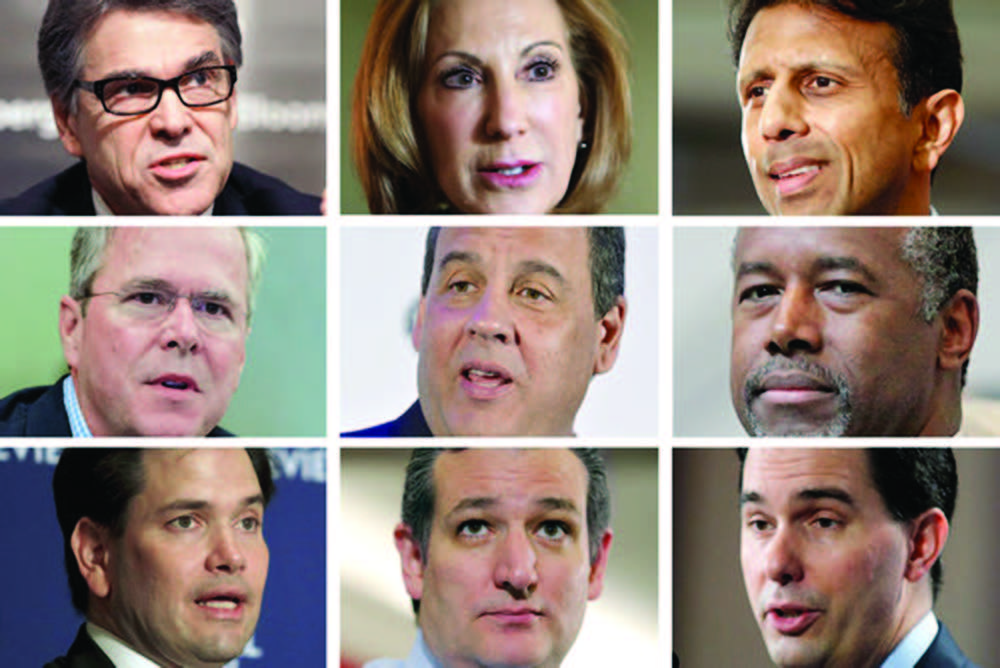
    NEW YORK (TIP): With Rick Perry, Carly Fiorina, Bobby Jindal, Jeb Bush, Chris Christie, Ben Carson, Marco Rubio, Ted Cruz  and Scott Walker  ready to throw their hats in the 2016 Presidential ring, the party’s top leaders are growing increasingly fearful  about the  manner and method of the upcoming debates. On Wednesday, May 20, Fox News said that it planned to limit the number of debaters based on how candidates are performing in polls. Such a threshold has drawn pushback from lesser-known candidates who say they lack the national name recognition to dominate early polling.

    New York Times had an  interesting  report on the issue which said : “Is there a more novel and fair way to select the candidates? As a service to the debate organizers, First Draft contemplated alternative criteria.

    Spanish Speaking: Speaking Spanish seems to correlate with success in this Republican field: Jeb Bush and Senator Marco Rubio, two early favorites who sit atop many polls, would automatically be included under this criteria. Senator Ted Cruz has some facility with the language, but is not known to be fluent. In 2012, when running for Senate, he declined an offer to debate his opponent in Spanish.

    Ivy Leaguer: A proud Princeton graduate, Mr. Cruz would be a shoo-in under this rule. Gov. Bobby Jindal would also get a ticket to the debate, thanks to his degree from Brown University. Ben Carson, who attended Yale, would also be included despite his soft polling numbers. Former Gov. Jeb Bush’s brother George W. Bush went to Yale, too, but Jeb himself would not make the cut: He went to the University of Texas at Austin.

    Embroiled in Scandal: The lane closings in New Jersey at the George Washington Bridge would give Gov. Chris Christie a ticket to the big stage if scrutiny by prosecutors was the price of admission.

    But he would not be alone. Former Gov. Rick Perry remains under the cloud of a criminal felony indictment for abuse of power in Texas. And Gov. Scott Walker faces continuing allegations over a “John Doe” scandal in Wisconsin in which he is accused of mixing official business with political business.

    Musical Proficiency: Debates don’t have to be all about yelling. Some of the candidates can carry a tune.

    According to Carly Fiorina’s campaign, the former Hewlett-Packard chief executive is a talented pianist. In this situation, she would face off with former Gov. Mike Huckabee, who was not only a Baptist pastor but also skilled with the bass guitar. While capitalism and religion do not always mix, Ms. Fiorina and Mr. Huckabee could make for an entertaining evening as a duo, if they bring their instruments.

    Surely, Hillary Clinton is amused. So are democrats.

  • Louisiana’s Indian-American Governor Bobby Jindal geting set for 2016 US Presidential Run?

    Louisiana’s Indian-American Governor Bobby Jindal geting set for 2016 US Presidential Run?

    WASHINGTON, UNITED STATES:  Louisiana’s Indian-American Governor Bobby Jindal has taken another step towards a possible 2016 presidential run by forming an exploratory committee and launching a national website, www.bobbyjindal.com

    Though Mr Jindal has said he isn’t an official candidate yet, he is expected to formally enter the race after the Louisiana Legislature adjourns on June 11, according to local Times Picayune newspaper.
    Forming an exploratory committee allows a potential presidential candidate to “test the waters” for a national campaign, raise money, take out-of-state trips or conduct polling for a potential presidential campaign.

    “For some time now, my wife Supriya and I have been thinking and praying about whether to run for the presidency of our great nation,” Mr Jindal said in a statement.

    “If I run, my candidacy will be based on the idea that the American people are ready to try a dramatically different direction. Not a course correction, but a dramatically different path.”

    Mr Jindal has made frequent visits to key early voting states in recent months, testing a message centered on the need to “restore the American Dream.”

    But despite his experience as governor and a compelling personal background as the American-born son of Indian immigrants, Mr Jindal has struggled to make an impact in national polls of potential Republican candidates, the Washington Post noted.

    “Bobby Jindal would likely face an uphill battle for the nomination if he decides to run with a Republican field already extremely crowded with six declared candidates and another half-dozen expected to announce in the coming month,” it said.

    Former Florida governor Jeb Bush and Wisconsin Governor Scott Walker have already launched aggressive fundraising efforts, in part with the help of allied super PACs which can raise and spend unlimited sums of money to advocate for or against political candidates.

    On the Democratic side besides former First Lady and Secretary of State Hillary Clinton, presidential exploratory committee have been formed among others by former senator Jim Webb and Senator Lincoln Chaffee, former Rhode Island Governor

    Vermont Senator Bernie Sanders has also said he would be seeking Democratic nomination.

  • ‘Row over donations cheap publicity stunt to defame Hillary’

    ‘Row over donations cheap publicity stunt to defame Hillary’

    WASHINGTON (TIP): A controversial new book on foreign donations to the Clinton Foundation is a politically motivated “cheap publicity stunt” to defame Hillary Clinton as she tries to break the glass ceiling in the 2016 presidential elections, Indian-American hotelier Sant Chatwal said today.

    Named prominently in book titled ‘Clinton Cash’ by author Peter Schweizer, New York-based Chatwal strongly refuted the allegations that the donations made by him to the Clinton Foundation was instrumental in Hillary to vote in favour of the India-US civil nuclear deal in 2008.

    “This is 100 per cent wrong. There is not even an iota of truth in it,” he told PTI in an interview.

    Chatwal, who was awarded the Padma Bhushan by the Indian government in 2010 for his contribution in the nuclear deal, asserted that his fund raising efforts and his campaign in favour of the historic nuclear deal had nothing to do with the decision making process of Hillary, who was then a Senator.

    The allegations were also refuted by the office of Hillary, 67, who last month announced her second presidential bid.

    In his book, Schweizer alleged that the Indian government rewarded Chatwal with one of its highest civilian awards for getting Hillary’s support the civilian nuclear deal.

    “All an act of fiction. The book has been written only because she is running for president. And there are certain people who do not want a woman to be the president of the US. That’s the reason for such a malign campaign against her,” Chatwal said.

    Chatwal, who has been a family friend of the Clintons for the past several decades, showed a series of letters written by Senators and Members of the House of Representatives during the civil nuclear days in 2008 to prove his point.

    On May 17, it was the then four Senators – Joe Biden (now the US Vice President), Lamar Alexander, Charles Schumer and John Cornyn – who wrote a dear colleague letter urging other Senators to participate in an informal discussion with some top Indian businessmen.

    And a week earlier, Joe Crowley wrote letters to other members of the Congress inviting them for a similar reception involving Chatwal, according to a copy of the letter provided by him.

    Chatwal also refuted the description in the book that Amar Singh, the Indian politician, was involved in talks with US lawmakers or with Hillary on the civil nuclear deal.

    In 2008, Clinton Foundation said Amar Singh donated between USD 1-5 million.

    “He (Singh) had no role at all (in the US). He was never part of our team that worked on the civil nuclear deal,” Chatwal added.

  • Sikhs Explain Meaning of Turban to US Lawmakers

    Sikhs Explain Meaning of Turban to US Lawmakers

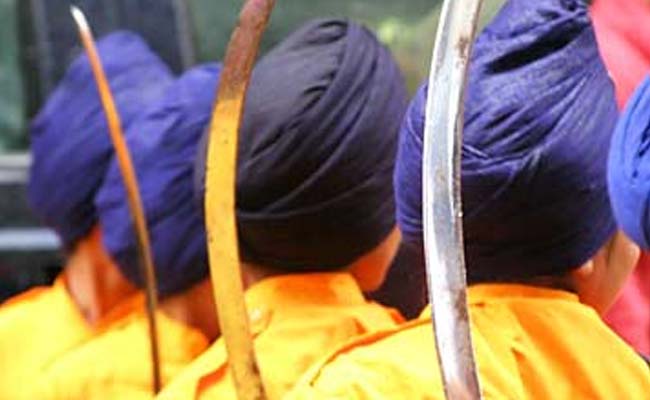
    WASHINGTON:  Sikhs have to explain to American people what the turban means because that is the immediate source of their identification, according to the author of a new report on Sikhs in America presented to US lawmakers.

    “Sikhs have to explain what it symbolizes and what values it represents,” said Geoff Garin, former political strategist for presidential candidate Hillary Clinton presenting the key findings of the report at a briefing arranged by the National Sikh Campaign (NSC).

    “This will have a very powerful impact on the broader American public,” he said. “The study shows that when people see Sikhs on the streets anywhere, people are very confused about what Sikh faith is and that confusion leads to tragic consequences,” said Mr Garin.

    “They also feel that they will not have very much in common with Sikhs.”

    Mr Garin, whose current clients include the World Bank, Bill and Melinda Gates Foundation and the Harvard University, heads the Hart Research Associates, one of the leading survey firms in the US.

    The firm conducted a six-month long nationwide polling and focus group study to understand how Sikhs are perceived in America and what strategies would be helpful to change perceptions.

    The report lists specific messaging techniques which Sikhs could use in their media strategies resonating with American public.

    Mr Garin said the survey showed that 6 out 10 Americans acknowledge that they know nothing at all about Sikhs and Sikhism.”

    “Better educated Americans are likely to come in contact with Sikhs,” he said. “Younger Americans are likely to have some information about Sikhs.”

    Judy Chu, founder and vice chair of the Congressional American Sikh Caucus, called it “a very significant report about the American perceptions of the Sikh community.”

    John Garamendi, co-chair of the Sikh Caucus, said, “It’s extremely important that the people of the United States and beyond learn and understand the multiple cultures that we have in the United States.”

    Dr Rajwant Singh, senior advisor to NSC, said the NSC plans to start a media ad campaign based specifically on this study and the various intricate details input collected from common Americans.

  • Hillary Clinton dismisses claims Indian cash swayed her n-deal stance

    Hillary Clinton dismisses claims Indian cash swayed her n-deal stance

    WASHINGTON (TIP): Hillary Clinton’s presidential campaign has dismissed as conspiracy theory claims made by a new book that cash donations from India swayed her stance as a senator on the landmark India-US nuclear deal.

    “Clinton Cash is attempting to rewrite history to fit a pre-determined partisan narrative,” Clinton campaign spokesman Josh Schwerin told Politico, an influential Washington political news site.

    “It only takes a quick look at Hillary’s actual voting record and statements to see that this conspiracy theory doesn’t even come close to passing the smell test,” he was quoted as saying on Wednesday.

    Politico said it has obtained a chapter relating to India from the book, “Clinton Cash: The Untold Story of How and Why Foreign Governments and Businesses Help Make Bill and Hillary Rich” by author Peter Schweizer, due for release on May 5.

    The chapter, titled, “Indian Nukes: How to Win a Medal by Changing Hillary’s Mind,” details a series of donations and overtures from Indians who supported the nuclear deal to the Clintons, Politico said.

    “While Clinton’s stance toward India evolved over the years, a review of then-Senator Clinton’s statements and votes while the Indian nuclear deal was under debate shows that two key facts in Schweizer’s argument on the topic are false,” it acknowledged, Clinton actually publicly stated her support for the deal in 2006 and in fact voted against a “killer amendment” that the book reports she supported, Politico noted, Schweizer writes in the chapter that in 2006, “Hillary was still a reluctant and questionable supporter of the bill.”

    But in June of that year Clinton, a founding member of the Senate India caucus, issued a press release announcing her intention to vote for the legislation, and praising Senators Richard Lugar and Joe Biden, who she said improved upon the Bush administration’s initial proposal.

    “As India continues to grow stronger and to shoulder more of the responsibilities that come with being a leading nation in the world, we must continue to work towards greater cooperation with our Indian friends to deal with our common challenges in security, energy, economics and health,” she was quoted as writing.

    “I hope that this agreement is just the first step on that journey that our countries, and our people, will take together.”

    Implying that a group of influential Indians directed money and attention to the Clintons in order to get them to support the nuclear deal, the book, according to Politico details the activities of Indian-American hotelier Sant Chatwal.

    Chatwal allegedly helped arrange one of former President Bill Clinton’s most lucrative public speeches – a $450,000 affair in London

    He is also reported to have once said, “Even my close friend Hillary Clinton was not in favour of the deal [in 2006] … But when I put the whole package together, she also came on board. … In politics nothing comes free. You have to write cheques in the American political system.”

  • Candidate Hillary

    Candidate Hillary

    OnApril 12, Hillary Clinton moved one step closer to becoming the first-ever woman President of the United States. The 2016 election will be her second presidential run. To succeed this time she will have to eschew the theme of
    “inevitability” that had crept into her bruising primaries battle against Barack Obama in 2008, and that ultimately sank her campaign. The former First Lady was off to a quick start in her campaign video and came out swinging for the fences as a would-be “champion of everyday Americans”. The implied focus on the welfare of the middle class is a throwback to liberal Democratic values and poses a challenge to Republican Party free-marketeers. It may also reflect her intention to separate her record from that of the inc umbent Mr. Obama; this was mostly evident in her comment that “the cards are still stacked” against the common person. Ms. Clinton is indeed a different beast to the President, although pundits predict she will borrow elements of campaign design from her former boss, and indeed the social media strategies employed so ably by Team Modi in 2013-14. Buttressing her nuts-and-bolts approach to campaign management, she can be expected to project her deep understanding of the paralysed politics of Washington, and be unapologetic about her political pedigree.

    But will all this be enough? And if it is, will she reshape the American story to fit better into a turbulent world?The Republican Party is not throwing up any inspiring leaders. Among the hopefuls, Jeb Bush has the clout of his last name but not much else. Ted Cruz is considered to be a fringe candidate, even among Republican heavyweights. Marco Rubio has passable charisma and an important connection to the Latino community, but he would flounder if he went toe-to-toe against a much more experienced Ms. Clinton. Though her entry into the Oval Office is far from being a certainty as of now, the greater challenge for her may be knowing what to do once she gets there. She was, after all, leading the Obama action that fumbled through the Arab Spring. Would she do it differently a second time? The rise of Islamic State will certainly dominate the attention of the next POTUS. She also promised, in a 2010 speech, that the administration would think “smart power” and focus on multilateralism, regional architectures and broad-strategic engagements with countries such as India, Russia and China. Clearly that dream didn’t materialise. On domestic policy , however, the Obama years offer hope. Just as he tackled the inequities of the health-care system head-on, Ms. Clinton could do much to close the gender pay gap, tackle America’s rape crisis, and upgrade its education system to help the millennials thrive in the workforce. That, and much more. Her time is now.