Tag: Hillary Clinton

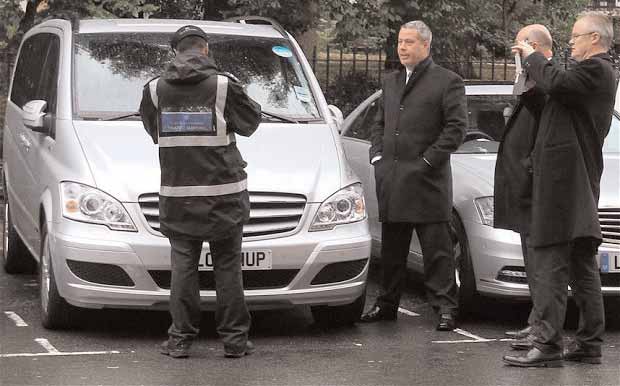
  • Hillary Clinton gets a parking ticket from London traffic warden

    Hillary Clinton gets a parking ticket from London traffic warden

    LONDON (TIP): Hillary Clinton may be tipped as a future US president, but that did not impress a London traffic warden who slapped her vehicle with an £80 (95-euro, $130) parking fine. The former US secretary of state was in town to receive a prize from the Chatham House think tank last week for her work in promoting “a new era of US diplomatic engagement”. But her entourage failed to buy the £3.30 ticket required to park the Mercedes for an hour on the exclusive St James’ Square in central London, and received a £80 fine. “The former US secretary of state was parked for nearly 45 minutes without paying,” said Daniel Astaire, an elected member of Westminster City Council. “I’m sure she will understand that we have to be fair to everyone, regardless of their status on the world stage.” There is some good news for former first lady Clinton, however — if she pays up within 14 days, the fine will be halved to £40. London Mayor Boris Johnson has previously complained about the refusal of US diplomats to pay a ten pound daily charge for the congestion zone in the centre of the capital.

  • Shikshayatan celebrates 25th

    Shikshayatan celebrates 25th

    Committed to promotion of Indian Culture and Heritage

    Shikshayatan, a premier institute to promote Indian culture and heritage celebrated its 25th anniversary on July 20 and 21, in the benign presence of a great spiritual master, Satguru Yogiraj Gurunath Siddhanath who had specially come to New York to bless the students, teachers and the management.

    The institute was founded by Mrs. Purnima Desai on the auspicious day of Vijayadashmi- on Thursday, October 20,1988 – the day Lord Rama achieved victory over demon king Ravana. Vijaydashmi is also the day when many families start formal education of their kids. Purnima Desai is the Chief Editor and Publisher of “ABHYUDAYA” magazine in Hindi and English for young and adults – mouth piece of Shikshayatan to give opportunity for creative writing and to learn about India. Shikshayatan conducts regular and organized classes to impart knowledge about Indian culture, philosophy, languages such as Sanskrit, Hindi, and music -Classical and light, Vocal, Instrumental music (Harmonium, Keyboard, Tabla, Violin Sitar, Flute) and dance. Purnima herself is an adept vocalist.

    She is an excellent educator, a producer of music albums and a motivating teacher. She has run Shikshayatan successfully for the last 25 years and has touched the lives of many students. Her mission is to serve humanity and her vision is to have a full fledged institution to spread Indian art & culture. Pandit Kamal Mishra – music director, vocalist and violinist and a teacher has proved to be an asset to the center. Anand Ramanujam, a reputed tabla performer in Nagpur Doordarshan has recently joined Shikshayatan cultural center.

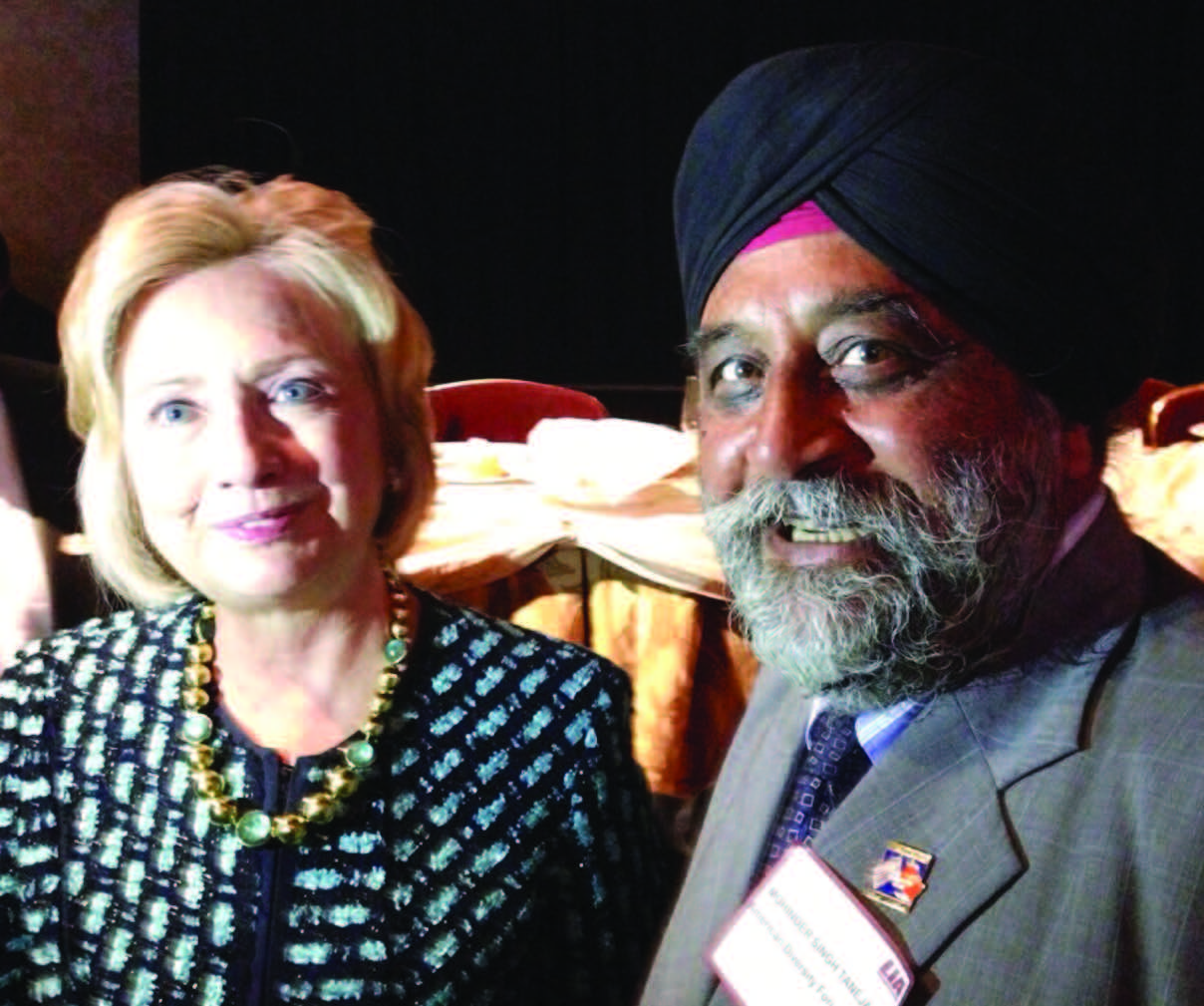
    Shikshayatan has opened its doors to all nationalities to come together for peace , harmony and team spirit. Shikshayatan has celebrated many Indian festivals, birthdays of saints, patriotic leaders and received blessings from spiritual masters like Amma, Sant Morari Bapu, Acharya Mridula Shashtri, Swami Buaji, dignitaries and diplomats – Hillary Clinton, Gary Ackeraman, Dr. Karan Singh etc. Purnima is a highly spiritual lady with a pure heart.

    Her strong desire is to seek the Lord, She developed a strong connection with Satguru Yogiraj Gurunath Siddhanath in whom she saw her God. Yogiraj was so impressed with her devotion that he accepted her invitation to come to Shikshayatan on its 25th anniversary celebration and bless the students and other attendees.

    On July 20th, 2013 the program started with Deep Prajvalan by Moksha Priya from Maha Mandaleshwar Maa Yog Shakti Durga Temple. The Cultural Program started with American National Anthem led by Kirti Shukla. Kavita and Sudipta sang Mata Saraswati bhajan “Veena Kar Dhavalaabara”. Shiv Panchaakshari stotram was sung in raag Bhimpalaasi by students Rosa Mori, Kavita and Sudipta. Shivani sang raag khamaj chhota khayaal. Kavita sang raag Tilak Kamod. Sudipta sang raag yaman. Rosa sang Krishna bhajan and Manali sang Meera bhajan.

    Little children from age of 6 to 14 years – Shiv Iyer, Sudeep Sureshbabu, Darshan and Ashwin played varieties of Taal from six beats to 16 beats on Tabla accompanied by Kavita Mahabir and Sudipta Sureshbabu on Keyboard. Audience was spell bound seeing children rendering such beautiful presentation.

    Renowned Pandit Sujan Rane sang two bhajans, one based on raag yaman and the second one based on raag desh, accompanied by illustrious tabla player Naren Budhakar. Renowned musician Pandit Kamal Mishra sang classical piece raag maalkonsh and won the hearts of many with his unique and melodious performance. His violin recital – raag vihaag- was also much appreciated which was accompanied by famous tabla performer Anand Ramanujam . Smt. Purnima sang Shiva bhajan “Bahati Ganga” with total devotion. This cultural program was followed by the auspicious presence and empowerment by Satguru Yogiraj Gurunath Siddhanath.

    Yogiraj Gurunath was born in Gwalior, India on May 10,1944, and is descended from the ancient family of Ikshavaku Rama of the Solar Dynasty. Though he belonged to a royal family, he was a born siddha and went into spontaneous enlightened state from the age of 3. During his long hours in meditation Yogiraj Gurunath has visions of Shiva, Krishna, Rama and Christ. Spiritually realized from a very young age, he cast away his educational responsibilities and fulfilled his calling as a Yogi. Yogiraj Gurunath spent his early years in the Himalayas with the great Nath Yogis in whose presence he was transformed, realizing the unity of all Yogas and religions. Yogiraj’s message to humanity is “EARTH PEACE THROUGH SELF PEACE” and spiritual evolution of consciousness through the divine science of Kundalini Kriya Yoga meditation.

    In conveying his message, Yogiraj goes beyond the limited reach of words and offers the grace of direct experience. Yogiraj Gurunath introduced his message to the audience. Every single person could feel his divine presence after performing the breathing exercise on Satguru’s instructions. Audience was allowed to take active part in discussions by asking questions. Guruji says that our true religion is humanity. He says,” Live your life like an incense stick, dissolve yourself to spread the spiritual aroma of peace and joy to others. Live your life like the Sun, explode yourself to give light and life to humanity.”


    img27

    Satguru was spreading his message of love and divinity and how the powers of a Satguru can heal the wounded souls and bodies. On Purnima’s request, Satgurunath blessed Shikshayatan students by giving “Saraswati” trophies to girls – Shivani, Sudipta, Kavita, Manali, Rosa and Nataraj trophies to boys – Darshan, Shiva, Sudeep, Ashwin. Also awarded were “Bhanu Mani” plaques with titles like Sur Samraat to Pandit Kamala Prasad Mishra, Sur Shiromani to Pandit Suja Rane, Hind Mani to Ramesh Kalicharan, Kaavya Mani to Nina Wahi, Sanchaalak Mani to Dr. Bindeshwari Agrawal, Saahitya Mani to Anjana Roy, Chitrakala Mani to Anand Patole, Taal Shiromani to Naren Budhakar and Anand Ramanujam. “Seva Mani” awards were presented to

  • US aims to expand India arms trade by “billions of dollars”

    US aims to expand India arms trade by “billions of dollars”

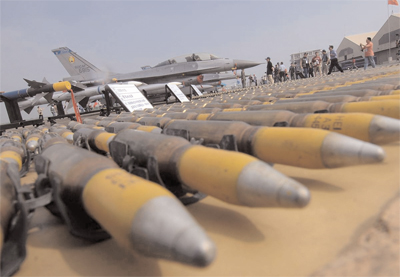
    WASHINGTON (TIP): The United States has already made “tremendous progress” in expanding weapons sales to India since 2008, and US companies could see “billions of dollars” in additional sales in coming years, a senior US State Department official said on april 18.

    Andrew Shapiro, assistant secretary of state for politicalmilitary affairs, said US sales of military equipment to India had grown from zero in 2008 to around $8 billion, despite a decision by India to choose a French-built plane in a closely-watched fighter plane competition. “While that fighter competition loss was disappointing, we have made tremendous progress in the defense trade relationship,” he told a news briefing. “There’s going to be billions of dollars more in the next couple of years.” He said a major arms trade initiative headed by Deputy Defense Secretary Ashton Carter was making good progress and should lead to “an ever greater pace of additional defense trade.” He gave no details on future possible arms sales. US weapons makers including Lockheed Martin Corp (LMT.N), Boeing Co (BA.N), Raytheon Co (RTN.N) and others, are keen to sale their wares to India, the world’s largest arms importer, especially since US military spending is now declining after a decade of sharp growth fueled by the wars in Iraq and Afghanistan. India plans to spend about $100 billion over the next decade upgrading its mostly Sovietera military hardware.

    Shapiro, who is due to leave the State Department at the end of this week, said he had seen news reports about delays in India’s talks with France’s Dassault Aviation (AVMD.PA) about a $15 billion purchase of 126 Rafale fighter jets. But he said the US State Department had not received word from India that it planned to reopen that competition or move ahead with a separate Indian naval fighter competition. Lockheed and Boeing were eliminated from the Indian fighter competition in April 2011.

    Shapiro said the State Department was seeing continued demand for US weaponry from the Middle East and Asia, but US companies faced stiff competition from European weapons makers, who are also facing declining demand in their home markets. He declined to discuss any specific arms sales, but noted that Singapore, Indonesia, and Australia had been key partners in defense trade in recent years. South Korea is also expected to announce the winner of its 60-fighter competition soon.

    Shapiro said his office had dramatically increased its advocacy for US weapons makers under former Secretary of State Hillary Clinton, and her successor, John Kerry, planned to continue the “economic diplomacy” initiative. Shapiro said State Department representatives planned to attend a major air show in Paris in June, despite mandatory budget cuts required under a process known as sequestration, but said officials would have to be conservative about the number of air shows they attended. He said sequestration-related furloughs could also slow the Pentagon’s work on export license requests, which threatened to slow or reverse progress made by the State Department in accelerating work on the licenses to 17 days on average now from 40 to 60 days several years ago. “Those processing times are likely to increase at a time when we’re trying to increase our defense trade. That’s not the best signal to send,” Shapiro said.

  • Hillary Clinton tops 2016 US presidential poll

    Hillary Clinton tops 2016 US presidential poll

    WASHINGTON (TIP): The 2016 US election might be a full three and a half years away, but that is not stopping pollsters from asking voters who has the early presidential edge. And the advantage goes to Hillary Clinton. The recently retired secretary of state and former first lady would handily defeat any of three leading potential Republican candidates, including New Jersey Governor Chris Christie, the Quinnipiac University poll said on Thursday.

    The blunt-talking Christie came in second in the poll, well ahead of fellow Republicans Marco Rubio, a first-term senator from Florida, and congressman Paul Ryan, who was Mitt Romney’s running mate in 2012. “Former secretary of state Hillary Clinton would start a 2016 presidential campaign with enormous advantages,” said the polling institute’s assistant director Peter Brown. “She obviously is by far the best known, and her more than 20 years in the public spotlight allows her to create a very favorable impression on the American people.” Clinton topped Christie 45-37 per cent in the poll, bested Ryan 50-38 and trounced Rubio, seen as a Republican rising star, 50- 34 per cent.

    But Christie, who was recently snubbed when he was not invited to the upcoming Conservative Political Action Conference, outperformed the other two Democrats in the poll, edging vice president Joe Biden 43-40 per cent and comfortably topping New York Governor Andrew Cuomo 45-28. “Although some Republicans don’t think… Christie is conservative enough for their taste, he runs best of the three Republicans tested,” Brown said. “He obviously is doing better than… Cuomo, despite other indications of anti- Republican sentiment.” Clinton, 65, is the early frontrunner in part because of her ability to attract independent voters. She tied Christie 36-36 per cent among independents, whereas Biden trails Christie 44-32 per cent and Cuomo is in the cellar among independents, losing to Christie 47-20.

  • Hillary Clinton to charge $200,000 per speech

    Hillary Clinton to charge $200,000 per speech

    WASHINGTON (TIP): Hillary Clinton has signed up for speaking circuit and will charge a whopping $200,000 per appearance, an amount more than her annual salaray as the US Secretary of State. The $200,000-per-speech fee will be a sizable increase for 65-year-old Clinton, who made $186,000 annually as secretary of state before stepping down earlier this month. “Now that she’s out as Secretary of State, Hillary Clinton isn’t going to be hurting for money, thanks to speaking fees of more $200,000 per speaking appearance, according to a source familiar with the situation,” Buzzfeed reported. Clinton will be represented by the New York-based Harry Walker agency, which also represents her husband Bill Clinton, the former US President.

    According to CNN, Clinton gave 471 paid speeches during his 11 years as a private citizen and raked in an average of $1,89,000 per event – joining the speaking industry’s rarefied six-figure circle occupied by Arnold Schwarzenegger, Al Gore, Dick Cheney and Sarah Palin. Clinton, however, according to Politico, will do some speeches pro bono, particularly those for the charities and causes she champions. She will also be involved in non-profit works.

  • ‘Thank You, Hillary’, Says Gillibrand

    ‘Thank You, Hillary’, Says Gillibrand

    NEW YORK (TIP): Even as HillaryClinton stepped down as Secretary ofState, Senator Kirsten Gillibrand, aprotégé of Hillary Clinton, paid richtributes to her in a statement to TheIndian Panorama.Kirsten said, “Hillary Clinton has beena role model for me since she traveled toBeijing as first lady and announced that”human rights are women’s rights, andwomen’s rights are human rights.” In fact,it was that speech that inspired me to getoff the sidelines and pursue a career inpublic service.

    “Ever since, Hillary has continued toinspire me and so many others, first assenator from New York, then as a historymakingpresidential candidate, and, mostrecently, representing the United Statesaround the world as our secretary of state.”As Hillary steps down from the Obamaadministration this week, I hope you’lljoin me in thanking her and letting herknow how much she’s meant to us.”I can’t tell you what an honor it hasbeen to follow in her footsteps as senatorfrom New York. She’s not only been a rolemodel, but also a mentor and friend. I willalways be grateful to her.”But I know I’m not alone. She’stouched so many of you as well with herstrength, dignity and grace as she’snavigated the highest positions of powerin our nation.

  • Japanese PM holds out olive branch to China

    Japanese PM holds out olive branch to China

    TOKYO (TIP): Hawkish Japanese premier Shinzo Abe held out an olive branch to China on Tuesday, sending a letter to Beijing’s leader-in-waiting to be hand delivered by a coalition ally.

    The move comes after months of diplomatic tussles between China and Japan over the sovereignty of a disputed island chain in the East China Sea that have seen repeated maritime encounters. Natsuo Yamaguchi, head of the New Komeito party, was expected to stay in Beijing for four days, during which time he would meet China’s incoming president, Xi Jinping, and hand over a letter from Abe, local media reported. “Japan-China relations have been faced with various kinds of friction, and political dialogue has not been held for a long time,” Yamaguchi told reporters ahead of his departure. “I would like to make a step toward opening the door to normalising our relations,” he said. But Yamaguchi, who has no official government role, said Tokyo has no plan to compromise over the island row. “Our stance is that no territorial problem exists. That’s a shared recognition among the government and coalition.” China has repeatedly sent ships to waters near the disputed islands since Japan nationalised some of the chain in September, a move that triggered a diplomatic dispute and huge anti-Japan demonstrations across China.

    Beijing has also sent air patrols near the Tokyocontrolled islands, known as the Senkakus in Japan, but claimed by Beijing as the Diaoyus. On Sunday, Beijing rebuked the United States after secretary of state Hillary Clinton issued a veiled warning to China not to challenge Tokyo’s control over the chain, which is believed to sit atop vast mineral reserves.

  • Us Stands With You, Clinton Assures India

    Us Stands With You, Clinton Assures India

    WASHINGTON (TIP): Greeting the people of India on its Republic Day, US Secretary of State Hillary Clinton has said the US-India strategic partnership is making the world more united, prosperous, and secure. “Together we are strengthening our ties and working to address some of the most difficult global challenges,” she said in a Republic day message holding out an assurance “that the United States stands with you.” Noting that the United States and India share an unwavering commitment to democratic government, Clinton said: “Our shared values are the foundation for the innovative, entrepreneurial drive that is allowing more and more of our 1.5 billion people to realize their potential.” “My three trips to India as Secretary of State reinforced my unyielding belief that the US-India strategic partnership is making the world more united, prosperous, and secure,” said America’s top diplomat considered a prime mover of stronger India-US ties. “Together we are strengthening our ties and working to address some of the most difficult global challenges,” she said.

    Here is the full text of the message:
    “On behalf of President Obama and the people of the United States, I am delighted to send my best wishes to the people and government of India as you celebrate your 64th Republic Day this January 26th. ‘The United States and India share an unwavering commitment to democratic government. Our shared values are the foundation for the innovative, entrepreneurial drive that is allowing more and more of our 1.5 billion people to realize their potential. ‘My three trips to India as Secretary of State reinforced my unyielding belief that the US-India strategic partnership is making the world more united, prosperous, and secure. Together we are strengthening our ties and working to address some of the most difficult global challenges. ‘As you celebrate this special day, know that the United States stands with you. Best wishes for a year filled with peace and prosperity.’

  • Obama Criticized For White Male Cabinet

    Obama Criticized For White Male Cabinet

    WASHINGTON (TIP): The first black US president is coming under fire from some of his own Democratic Party for naming a stream of white men to key cabinet and leadership posts in his second administration. President Barack Obama on Thursday named Jack Lew as his Treasury secretary, the fourth white male he has named to the most prized cabinet posts in recent weeks. Lew’s nomination follows Obama’s pick of Senator John Kerry to replace Hillary Clinton as secretary of state. He has also named former Senator Chuck Hagel to be defense Secretary and John Brennan to head the Central Intelligence Agency. Against this, he lost the first Hispanic woman in the cabinet when Labor Secretary Hilda Solis announced her resignation on Wednesday.

    And last month Lisa Jackson, who is black, announced she was stepping down as head of the Environmental Protection Agency. “It’s embarrassing as hell,” New York Democrat Charles Rangel, one of the most senior black members of Congress, said of the Obama appointments. New Hampshire Democratic Senator Jeanne Shaheen, whose state has the only all-female delegation in Congress, described the appointments as “disappointing.” “We need a government that looks like America so we can address the concerns that we hear from across the spectrum,” she said. Republicans joined in the criticism with former presidential candidate Mike Huckabee accusing Obama of waging a “war on women,” using the same words Democrats coined to criticize Republican presidential candidate Mitt Romney during the election campaign last year. “Now a lot of those females who supported Barack Obama are scratching their heads, and they’re saying, ‘Whoa! How come there is so much testosterone in the Obama Cabinet and so little estrogen?’” the former Arkansas governor said on his radio show. Obama beat Romney 55 percent to 43 percent among women, according to Reuters/Ipsos exit polling on Election Day. He also won large majorities of the African-American and Hispanic vote.

    DIVERSITY AND DEMOGRAPHICS
    Diversity in the United States is usually defined as including women and racial minorities, especially Hispanics and African-Americans. U.S. political pundits parse polling data of women, Hispanics, African Americans and other groups for signs of voting patterns. They track the “gender gap,” which is the percentage difference between Democratic and Republican support among women. Since Obama’s reelection in November, many analysts have noted the rising percentage of U.S. ethnic minorities and described his victory as a reflection of changing demography. The criticism of Obama is surprising because Republicans usually are the party accused of insensitivity to diversity. Former President George W. Bush deflected this by pointing to the two secretaries of state during his eight years in office — African-Americans Colin Powell and Condoleezza Rice.

    They were followed by Hillary Clinton. If confirmed by the Senate, Kerry will be the first white male to hold the top US diplomatic post in more than a decade. Almost overlooked in the criticism is that the White House announced this week that Attorney General Eric Holder, who is black, will stay on as the nation’s senior legal officer. Obama also was widely reported to be considering an African-American woman, United Nations Ambassador Susan Rice as Secretary of State. She pulled her name from consideration because of Republican objections to her statements about the attack on the US consulate in Benghazi, Libya. White House spokesman Jay Carney urged critics on Wednesday to make their judgments only after Obama had completed his team.

    “Women are well represented in the president’s senior staff,” he told reporters, noting that his team included Homeland Security Secretary Janet Napolitano and Health and Human Services Secretary Kathleen Sebelius. Debbie Walsh, director of Rutgers University’s Center for American Women in Politics, which tracks women in elective office, said Obama’s choices were a missed opportunity to put women into powerful jobs such as heading the Pentagon. “A case could be made that Barack Obama won on the strength of the support that he had with women, given the gender gap,” she told Reuters. With women filling 36 percent of Cabinet posts in his first term, Obama had the highest percentage of women in top jobs of any president other than fellow Democrat Bill Clinton, she said.a

  • US offers India help in combating violence against women

    US offers India help in combating violence against women

    WASHINGTON (TIP): In the wake of the gang-rape of an Indian woman, the United States has offered to help India strengthen public and private organizations working to combat violence against women. “Our goal is, whether it’s in India or anywhere else, to help strengthen all of the public and private organizations that are working to combat violence against women,” State Department spokesperson Victoria Nuland told reporters on January 3 The US has worked very hard around the world to combat violence against women and will continue to make it a strong tenet of itsforeign policy wherever there is a problem, she said when asked about the gang-rape in Delhi and subsequent death of the victim Delhi that sparked huge protests in India.

    US Ambassador to India Nancy Powell had put out a statement on Dec 29 “after the victim died from this assault, offering our heartfelt condolences and our absolute abhorrence of these events”, Nuland noted. “Obviously, we have as a government worked very hard around the world with regard to combating violence against women,” she added. “We have a number of programes, including programes in India in public education, in support for NGOs, that help women who are victims of violence, including domestic violence,” she said.

    “And we will continue to make this a strong tenet of our foreign policy wherever there is a problem, and unfortunately, there are problems in countries around the world, including our own.” “Obviously, if the result of the investigation into this case indicates that the Indian Government wants to make changes or go in a different set of directions with regard to those programmes, we’d be interested in talking to them about it,” Nuland said. “Our goal is, whether it’s in India or anywhere else, to help strengthen all of the public and private organizations that are working to combat violence against women,” Nuland added. Asked if Secretary of State Hillary Clinton, recovering from a clot in her head, was aware of the issue in India, the spokesperson said: “I’m sure she’s aware of it. It’s, as you know, had enormous press and it’s a subject that is very close to her heart.”

  • India offers sympathies to families affected by Newton school tragedy

    India offers sympathies to families affected by Newton school tragedy

    NEW DELHI (TIP): India has expressed grief over the massacre of 20 children and seven adults in an American school, saying the horrific violence “leaves the whole world diminished”. External affairs minister, Salman Khurshid, sent condolences to US secretary of state Hillary Clinton. “I was deeply saddened to learn the terrible news.

    The killing of the children is a particularly abhorrent act, one which leaves the whole world diminished,” Khurshid said. Offering sympathy to families of the victims in Connecticut, he said “Please accept my personal sympathy and solidarity, and that of the people of India for the friendly people of the US. “As you and the American people try to come to terms with this act of complete senselessness, and to address the trauma caused by it, I want you to know that the government and people of India share your grief and prayers for consolation,” he added.

    A gunman Friday opened fire at an elementary school in Newtown, Connecticut. He too was killed. It is the second worst massacre of its kind in the US after the Virginia Tech Massacre of 2007 that left 33 dead.

  • US Counsel Who Advised Immunity For ISI Backed Drone Strikes

    US Counsel Who Advised Immunity For ISI Backed Drone Strikes

    WASHINGTON (TIP): The US government legal counsel who advised the Department of Justice to seek immunity for the Pakistani spy agency ISI and two of its former chiefs in the 26/11 Mumbai terrorist attack turns out to be a strong supporter of the legality of Obama administration’s drone attacks in Pakistan and other countries. Documents reviewed by the Times of India reveal that the immunity guidance to the Justice Department came from Harold Hongju Koh, who is the State Department’s legal advisor, and also a former Dean of the Yale Law School. Koh, who is Korean-American, went on leave from Yale (which is Hillary Clinton’s law school alma mater) after he was appointed to the position in June 2009 by President Obama, who is an alumnus of the Harvard Law School.

    Koh is scheduled to return in January 2003 to Yale, which was started in 1718 with an endowment from Elihu Yale, an American governor of the British East India Company in what was then Madras. In remarks predating his advice on immunity to ISI, Koh asserted that US Drone warfare is lawful self-defense under international law for targeted killings of non-state actors. In a 2010 keynote at the American Society of International Law meeting in Washington DC, Koh stated that “US. targeting practices, including lethal operations conducted with the use of unmanned aerial vehicles (UAVs), comply with all applicable law, including the laws of war.”

    He further explained that the US is in “an armed conflict with al Qaeda, the Taliban, and the associated forces” and thus has the lawful right to use force “consistent with its inherent right to self-defense” under international law in response to the 9/11 attacks. An international law blog which reviewed Koh address said he identified three elements related to situational considerations that the US uses when determining whether a specific targeted drone killing at a particular location will occur: Imminence of the threat; Sovereignty of other States involved; and Willingness and ability of those States to suppress the threat the target poses. Going by the Obama administration’s relentless drone strikes inside Pakistan, Washington seems to make light of the sovereignty issues, believing Islamabad does not have control over its territories ceded to terrorists and is unwilling or unable to take action.

    But in the 26/11 Mumbai case, sovereignty leaps to the forefront, with the US administration challenging the argument that the ISI and its heads are beyond the control or outside the purview of the Pakistani government. “Plaintiffs’ theory is particularly unusual in the context of an intelligence agency, which, like a foreign ministry or defense ministry, serves a quintessentially sovereign purpose,” reads the statement of interest filed by the US Justice Department before the Eastern District Court of New York, where American families of the 26/11 victims have filed their case. Referring specifically to the plaintiff’s implicating the ISI chiefs, the statement concludes that the “Department of State has determined that former Directors General Pasha and Taj are immune because plaintiffs’ allegations relate to acts that these defendants allegedly took in their official capacities as directors of an entity that is undeniably a fundamental part of the Government of Pakistan.”

    Meanwhile, even as New Delhi expressed its disappointment at the Obama administration letting ISI off the hook, US officials maintained that Washington’s submission was based on a technicality in this specific case where it was asked to determine sovereignty issue, and that it “should not be viewed as a US Government determination on the merits of the Plaintiffs’ claims.” In other words, the US is not talking about the involvement or otherwise of ISI and its chiefs in the Mumbai attacks; just on the issue of sovereign immunity as afforded under law and diplomatic conventions.

    In remarks that offered no relief to Pakistan, which was exulting in what it saw as an exculpatory US statement of interest, a state department spokesperson echoed the court submission which urged the Government of Pakistan to dismantle Lashkar-e-Taiba and specifically asked Pakistan “to support India’s efforts to counter this terrorist threat.” Indian officials see the developments as part of a backroom deal between US and Pakistan to facilitate the American drawdown from Afghanistan which will be difficult to accomplish without Pakistan’s help. Pakistan’s own media and civil society, not to speak of highranking US officials, have implicated the country’s military and ISI in sponsorship of terrorism, one official pointed out, suggesting that geo-politics more than technicalities determined the US court submissions.

  • Three countries, one center of gravity

    Three countries, one center of gravity

    United States Secretary of State Hillary Clinton, Australia’s Defense Minister Stephen Smith, India’s National Security Advisor Shivshankar Menon and Foreign Secretary Ranjan Mathai have all spoken of the “Indo-Pacific” – a region spanning the Indian and the Pacific Oceans – as the world’s new “strategic centre of gravity.” What is behind this new-found discovery of the Indo- Pacific and does it imply a strategic convergence between these three democracies?

    A closer analysis suggests that the Indo- Pacific regional construction is driven more by a desire to resolve distinctive domestic and foreign policy preoccupations rather than promote a common regional vision. For the U.S., central policy issues include reversing the slide in its economic fortunes and dealing with the shift of power to Asia in ways that preserve existing international rules and the U.S.’s position as the world’s foremost rule-maker. Australia has long been preoccupied by the disjuncture between its geographical positioning in Asia and its historical links with the West.

    The implications of continuing a close alliance with the U.S., while growing increasingly economically enmeshed with Asia, have dominated recent foreign policy debates. The Indo-Pacific regional construction is a key part of the U.S.’s “pivot to Asia,” which Australia has supported. For both the Australian and U.S. policymakers, adopting and shaping the “Indo-Pacific” as a geostrategic category helps them resolve their key domestic and foreign policy dilemmas while maintaining their positions in the global order as a great power and middle power respectively.

    Fitting in India
    But how does India fit into this emerging concept? While India supports a basic adherence to international law, freedom of navigation and peaceful dispute settlement, it is increasingly clear that its preferred regional architecture in the “Indo-Pacific” will be shaped by the demands of its domestic economic restructuring and its continuing adherence to the principle of strategic autonomy.

    For this reason, any assumption that India will sign up to an Indo-Pacific security architecture devised in Washington and Canberra fundamentally misreads the domestic political projects that animate India’s own vision of the Indo- Pacific. To see how different domestic imperatives lead to distinctive Indo-Pacific regional constructions, we can examine some of the major regional initiatives that have recently been promoted by the U.S., Australia and India.

    Leaving out China
    The U.S. has recently launched the Trans- Pacific Partnership (TPP), a free trade initiative that does not involve China and includes trade, investment, intellectual property, health care, environmental and labor standards. It has also called for a “regional architecture of institutions and arrangements to enforce international norms on security, trade, rule of law, human rights, and accountable governance” in the Indo-Pacific region.

    These regional initiatives are built on the promotion of regulatory frameworks in the Indo-Pacific – in areas such as intellectual property rights – that serve domestic political and economic agendas, namely increasing the competitiveness of the American economy and maintaining U.S. prominence as a global rule-setter. It is thus central to emerging geo-economic competition over the regulation and rules of the regional and global political economy.

    The Australian bridge
    Australia, meanwhile, is attempting to act as a classic middle power bridge between the East and West by balancing its commitment to a U.S.-driven framework of rules and regulations with the knowledge that its economic future is increasingly intertwined with Asia and China, in particular.

    To manage these growing tensions, it has encouraged the U.S. pivot to the Indo- Pacific while advocating greater political, economic and strategic enmeshment between the U.S. and China and refocusing its attention on the Indian Ocean Rim- Association for Regional Cooperation (IORARC). Australia has also welcomed both the U.S.-centred TPP as well as the Association of South-East Asian Nations (ASEAN)- centred Regional Comprehensive Economic Partnership (RCEP).

    The RCEP includes China and focuses on a narrower set of issues than the TPP, excluding issues such as labor standards, which would deter China from ascension. Despite the differences between the two schemes, Australia regards the TPP and RCEP as complementary pathways to a regional free trade area and has vowed to promote the inclusion of elements such as environmental and labor standards during RCEP negotiations.

    Despite embracing the Indo-Pacific concept, India is not a member of the TPP but has joined the RCEP. The TPP’s rigid objectives of regulatory coherence do not fit with India’s stated desire for a “plural, inclusive and open security architecture in the Indo-Pacific” and India has long resisted the inclusion of non-trade related provisions in multilateral trade negotiations.

    RCEP’s provisions for “the different levels of development of the participating countries” and ASEAN’s emphasis on consensual decision-making are far more conducive to the type of regional architecture that India desires, since they are more congruent with its domestic imperatives of development and autonomy. This suggests the contested nature of the Indo-Pacific.

    Domestic imperatives also drive India’s increased attention to regional groupings like the IOR-ARC and smaller, more specialized forums that deal with issues like piracy, energy and food security. These initiatives focus on non-traditional security issues, which India sees as posing the most significant external threat to its economic development.

    This bottom-up, issue-driven approach to Indo- Pacific regionalism may prove, over the long run, to be more sustainable than the elitedriven regional projects that were the hallmark of Asia-Pacific regionalism. Hence, a new “Indo-Pacific” era may well be dawning. But the adoption of the concept in the foreign policy debates and vocabularies of India, Australia and the United States reflect a heightened focus in all three countries on domestic political and economic challenges rather than a strategic convergence or a common regional vision.

  • Hedging Bets: Washington’s Pivot to India

    Hedging Bets: Washington’s Pivot to India

    In November 2010, President Obama visited India for three days. In addition to meeting with top Indian business leaders and announcing deals between the two countries worth more than $10 billion, the president declared on several occasions that the US and India’s would be the “defining partnership of the twenty-first century.” Afterward, Obama flew straight to Jakarta without any plans to visit Pakistan, officially the US’s major non-NATO ally in the region.

    No president, except Jimmy Carter, had done such a thing before. The US has traditionally seen its India and Pakistan policies as being deeply linked, and except for Richard Nixon’s brief “tilt” in 1971, the US has been cautious of elevating one neighbor over the other. Despite India’s non-aligned status and pro-Soviet posture during the Cold War, Washington has tried to ensure that its relationship with Pakistan would not disadvantage India.

    Obama’s visit, however, illustrated that this era of evenhandedness was now over. With India’s economic rise, fears of Chinese hegemony, and the unraveling relationship with Pakistan, the US is now pursuing what previously would have been regarded as an asymmetrical foreign policy agenda in South Asia. As part of its new Asia-Pacific strategy, the US is committed to strengthening India in all major sectors of national development, with the hope of making it a global power and a bulwark against Chinese influence in Asia. Meanwhile, Washington is looking for a minimalist relationship with Pakistan, focused almost exclusively on security concerns.

    The US and India are natural allies, but Obama has let China and Pakistan get in the way of New Delhi’s importance. Early signals of this gradual tilt toward India can be found in the final years of the Clinton administration. During his 1999 visit to South Asia, President Clinton spent five days in India, praising the nation’s accomplishments, and mingling with everyday Indians. During his speech to the Indian Parliament, Clinton referred to the US and India as “natural allies” and offered a program for a close partnership in the twenty-first century. In sharp contrast, his stop in Pakistan lasted only five hours and was blemished with security concerns, a refusal to be photographed shaking hands with the country’s military dictator, General Pervez Musharraf (who would become the country’s president in two years), and a blunt warning that Pakistan was increasingly becoming an international pariah.

    The Bush administration took office wanting to take this policy even further by actually de-linking the US’s India and Pakistan policies, and enhancing its relationship with India. As former Deputy Secretary of State Richard Armitage explained to me, “The Bush administration came in with our stated desire to obviously improve relations with India, but also to remove the hyphen from ‘India-Pakistan.’” And the administration did just that. While relations with Pakistan improved dramatically in the aftermath of the 9/11 attacks, they were based almost exclusively on combating terrorism. On the other hand, relations with India, which deepened more slowly but also more surely, were focused on broad economic, security, and energy sectors. The most significant achievement in this regard was the US-India civilnuclear deal that was announced during President Bush’s 2006 visit to New Delhi. The fact that this agreement was extremely controversial because India, like Pakistan, has not signed on to the Nuclear Non- Proliferation Treaty, was evidence of the US’s commitment to transforming relations with India and facilitating its rise as a global power.

    This redefinition of regional priorities has continued during the current administration. While the strategic partnership with India continued to be strengthened, Pakistan was declared the source of America’s Afghanistan troubles in the first few months of the Obama presidency. Since then, as mutual mistrust has grown because of policies such as US drone strikes in Pakistan’s tribal areas and Pakistan’s eight-month blockade of NATO supply lines, the US-Pakistan engagement has reached one of its all-time lows. The difference between Washington’s relationship with India and its relationship with Pakistan is best illustrated by the actual words used by members of the administration. While Secretary of State Hillary Clinton describes US-India ties as “an affair of the heart,” Secretary of Defense Leon Panetta characterized relations with Pakistan as “complicated, but necessary.”

    This affair of the heart is hardheaded and unemotional. The defining feature of evolving US-India relations is that, unlike the US and Pakistan, the two countries actually share a number of common interests, and have also managed to create a broad-based partnership centered along deepening trade ties and energy and security cooperation. Bilateral trade and investment are the most significant components of the two countries’ engagement. The US-India trade relationship has become increasingly strong over the past decade-especially after the lifting of US sanctions in 2001-with the result that today the US is India’s thirdlargest trading partner (see Figure 1). India’s industrial and service sectors have now become increasingly linked to the American market. In the first half of 2012 alone, the US imported almost $20 billion worth of goods and $16 billion worth of services from India, while in 2011 US-India bilateral trade in goods and services peaked at almost $86.3 billion. Standing at $18.9 billion in 2001, bilateral trade in goods and services has doubled twice within a decade. This steady rise has made the US one of the largest investors in the Indian economy. According to the Office of the US Trade Representative, US foreign direct investment in India was $27.1 billion in 2010 (latest available data), a thirty-percent increase from 2009. Even Indian FDI in the US increased by forty percent between 2009 and 2010, reaching $3.3 billion.

    It was, of course, cooperation over energy that symbolized the coming-of-age of Indo-American relations. The landmark civil-nuclear deal signed in 2008 was intended to help India meet its growing energy demand through the use of nuclear technology. The US agreed to supply nuclear fuel to India and convince members of the Nuclear Suppliers Group to follow suit. In addition to this, the US has also been helping India access oil from suppliers other than Iran, with the aim of reducing Indo-Iranian cooperation.

    Along with deepening economic and energy ties, the two countries’ defense cooperation has also strengthened over the past decade. In addition to closely cooperating with India over counterterrorism and conducting joint military exercises with it since 2007, the US has included India in the “Quad” forum, along with Japan, Australia, and Singapore, thereby making it an integral part of its emerging Asian security architecture. Moreover, during his visit President Obama also announced more than $5 billion worth of military sales to India, adding to the $8 billion of military hardware India had already purchased from US companies between 2007 and 2011. As reported by the Times of India, India will spend almost $100 billion over the next decade to acquire weapons systems and platforms. This push for sales comes partly from the US Defense Department’s strong desire to equip India with modern weaponry, to collaborate with it on high-end defense technology such as unmanned aerial vehicles (“drones”), and to become India’s largest weapons supplier.

    Beyond defense technology, the US and India have also cooperated successfully in space. The joint venture between NASA and the Indian Space Research Organization during India’s Chandrayaan-1 lunar mission, which detected water on the lunar surface for the first time, is a significant example. Moreover, members of the US and Indian public and private sectors have also promoted the idea of cooperation to harness space-based solar power. Finally, the US has offered New Delhi increasingly strong political support as exemplified in Obama’s unequivocal backing of India’s bid to become a permanent member of the UN Security Council. Furthermore, despite Pakistan’s request for American assistance in negotiating the Kashmir dispute, the US has yielded to Indian demands that it not get involved. When Richard Holbrooke was appointed the US special envoy to Afghanistan and Pakistan in 2009, India and Kashmir, as revealed by US officials to the Washington Post, were covered within Holbrooke’s mandate under “related matters.” The Indian government, however, lobbied the Obama administration swiftly and strongly with the result that Kashmir was eliminated from Holbrooke’s portfolio altogether.

    Although the evolving Indo-American partnership is rooted in multiple areas of common interest, from Washington’s perspective one priority looms larger than others in its partnership with India, and that is China. Simply put, India has become a central component in America’s grand strategy to balance Chinese power in Asia. China’s strengthening military capabilities and several moves in Asia, such as its claim of territorial sovereignty in the South China Sea, assertiveness in the Pacific Ocean, and growing naval and commercial presence in the Indian Ocean, have increasingly worried the US. For example, China’s aggressive posture and territorial claims inundated Secretary Clinton’s agenda when she visited the region in September. Further, according to one report, in 2007 a senior Chinese naval officer even suggested to the former US Pacific Fleet commander, Admiral Timothy Keating, a plan to limit US naval influence at Hawaii. Moreover, through its “string of pearls” policy China has acquired rights to base or resupply its navy at several ports from Africa though the Middle East and South Asia to the South China Sea.

    Over the last decade Washington has considered several strategies to check Chinese power, with India essential to all of them. The National Security Strategy 2002 made it clear that India could aid the US in creating a “strategically stable Asia.” George Bush’s secretary of state, Condoleezza Rice, had also voiced this view in a Foreign Affairs article written during the 2000 presidential campaign. Moreover, a 2011 report by the Council on Foreign Relations and Aspen Institute India argued that “a militarily strong India is a uniquely stabilizing factor in a dynamic twenty-firstcentury Asia.” India’s role in balancing China was most vividly described later on in the Obama administration. The 2012 Defense Strategic Review recognized that China’s rise would affect the US economy and security, and declared that the US “will of necessity rebalance [its military] toward the Asia- Pacific region.” Secretary of State Clinton had previously outlined this policy in greater detail in an article titled “America’s Pacific Century,” explaining that to sustain its global leadership the US would invest militarily, diplomatically, and economically in the Asia-Pacific region. The US security agenda, she highlighted,

    would include countering North Korea’s proliferation efforts, defending “freedom of navigation through the South China Sea,” and ensuring “transparency in the military activities of the region’s key players.” Two of the three objectives, in other words, were targeted directly at China. While in the past the US had projected power into the Asia-Pacific through colonization and occupation-notable examples being Guam and the Philippines in 1898 and Japan after 1945-its new presence is based on creating strong bilateral economic and military alliances with regional countries, and efforts to organize the region into multilateral economic and security institutions to balance China’s economic and military influence. Thus, in addition to strongly supporting the Association of Southeast Asian Nations (ASEAN) and the Asia- Pacific Economic Cooperation (APEC), America also backs other organizations like the Trans- Pacific Partnership and Pacific Islands Forum, and formal security dialogue groups such as the “Quad” and the US-India-Japan trilateral forum.

    Not only is the US looking to enhance India’s Pacific presence by integrating it into these organizations, but, as described in the Defense Strategic Review, through its long-term goal of helping it become an “economic anchor and provider of security in the broader Indian Ocean region.” The grand strategies are in play, but will the US and India be able to manage a strong alliance whose chief objective is enabling the US to effectively accomplish its goals vis-à-vis China? To put the question more simply, will India play the balancing game? And will India also support the US on other foreign policy objectives in Asia?

    The strategic goals of at least a section of the Indian foreign policy elite can be gauged from the report Nonalignment 2.0, published in 2012 by the Center for Policy Research (CPR), an influential Indian think tank. The report’s study group included prominent retired officials such as Ambassador Shyam Saran, who helped negotiate the US-India civil nuclear deal, and Lieutenant General Prakash Menon. The deliberations were also attended by the sitting national security adviser, Shivshanker Menon, and his deputies, thus signaling some level of official endorsement. The report argued that “strategic autonomy” in the international sphere has and should continue to define Indian foreign policy so that India can benefit from a variety of partnerships and economic opportunities to spur internal development, which in turn will propel its rise to great-power status.

    Even if India were to abandon strategic autonomy, as some of the report’s critics advocate, it is essential to note that the Sino-Indian relationship is a little too complex for the sort of balancing game the US played with the USSR during the Cold War. As highlighted by Mohan Malik, the relationship faces several tensions, including territorial disputes, China’s aggressive patrolling of borders, maritime competition, and the race for alliances with littoral states in the Indian and Pacific Oceans. But China also happens to be India’s second-largest trading partner. Sino- Indian bilateral trade in 2011 peaked at almost $74 billion. In short, the relationship is adversarial in certain areas, but symbiotic in others.

    India is also engaged with China in international forums that are often perceived as emerging balancers against US power, such as the India-Russia-China forum and the Brazil-Russia-India-China- South Africa (BRICS) group, which has not only criticized US policies, but also called for replacing the US dollar as the international currency. Furthermore, the Indo-US relationship has troubles of its own, especially in dealing with Iran and Afghanistan, which signal the limits of Indian support for US policies in Asia. Because Iran is a key resource for energy supplies, India has not participated in efforts to pressure Iran economically to curtail its nuclear program. When US sanctions against Iran were heightened in early 2012, Iran and India proposed a plan to barter oil for wheat and other exports. India is also perturbed by the US’s planned departure from Afghanistan in 2014, which it fears may lead to chaos there. Moreover, it is wary of US-Taliban negotiations, afraid that the Taliban’s return to power will put Indian investments in Afghanistan at risk and also offer strategic space to anti-Indian militant groups.

    For these and other reasons, while the US and India share a range of common interests now and have been cooperating in a variety of areas, they still have a long way to go before establishing a truly close partnership. While the growing strength of this relationship is obvious, so are its limitations, and the ultimate nature of this relationship is as yet an open question. India’s global rise and the position it can acquire within US grand strategy is also dependent on things beyond America’s control-its continued economic growth and ability to tackle domestic challenges such as poverty and underdevelopment, infrastructural weaknesses, and multiple insurgent conflicts. It also fundamentally depends on the US’s continued ability to financially and politically afford a strong military and diplomatic presence in Asia. The current strategic commitments of American and Indian policymakers have also placed limits on the relationship. In Washington’s game plan, India is only one country in a larger web of alliancesstretching from India to Japan and Mongolia to Australia-that the US is developing. For its part, New Delhi is not looking to commit to an exclusive alliance with the US, but rather enter into a series of partnerships with a number of countries to gain what it can in terms of resources, trade, and security cooperation.

    Nevertheless, while this affair of the heart may remain unconsummated, both parties are growing more serious about each other and implementing policies to strengthen the strategic partnership. As for the US and Pakistan, they should limit their relationship to cooperation over issues that are truly of common interest. Moreover, though Islamabad will remain uneasy with increasing US-India coziness, this partnership does not necessarily forebode trouble for it. Such an outcome is especially avoidable with continued normalization of diplomatic relations and increased trade relations between India and Pakistan. That the Pakistani military and civilian leaderships are becoming committed to reducing tensions is a welcome sign.

  • Obama’s Choice for Secretary of State: Fried Rice vs Stale Kerry

    Obama’s Choice for Secretary of State: Fried Rice vs Stale Kerry

    WASHINGTON (TIP): A furious political scrap has erupted in full public view in the US capital over a potential successor to Hillary Clinton in the State Department. Republican lawmakers have threatened to block the confirmation of Susan Rice, the US envoy to UN, if President Obama nominates her for Secretary of State. The President has dared them to take him on.

    At the heart of the wrangle are charges from lawmakers that Rice misled them on the events in Benghazi, Libya, when she suggested that the killing of the U.S ambassador there was the result of a spontaneous uprising rather than a terrorist attack. They have demanded an inquiry into the incident and have said they have no confidence in Rice, who is an Obama acolyte and one of three candidates in running to succeed Clinton, John Kerry and National Security Advisor Tom Donilon being the other two.

    But at a White House press conference on Wednesday — his first since March — Obama bristled at suggestions that he would be forced to back down if he nominated Rice, and strongly defended the UN ambassador. Rice, the President grated, made her presentation at the request of the White House and gave her best understanding of the intelligence that had been provided to her. If McCain and Graham and others want to go after somebody, ”they should go after me. And I’m happy to have that discussion with them.” “But for them to go after the UN ambassador, who had nothing to do with Benghazi and was simply making a presentation based on intelligence that she had received and to besmirch her reputation is outrageous,” Obama fumed, adding if they are going after Rice because she’s an easy target, ”then they’ve got a problem with me.” It was the most combative President Obama got during the hour long session with the media in the East Room, although the press conference also touched on two other explosive topics — the Petraeus affair and the fiscal cliff issue. Other than that minor eruption, the President, who appeared to have banished his gray hair overnight, exuded good cheer and confidence after his famous election win. Obama maintained he had not made a decision on naming Rice but “if I think that she would be the best person to serve America in the capacity, then I will nominate her. That’s not a determination that I’ve made yet.”

    The current Foggy Bottom incumbent, who has expressed her desire to step down, was meanwhile in Perth, Australia, on her final farewell tours. Opinion is divided on whether Obama will expend political capital in pushing Rice should McCain and Graham dig in their heels and fry her nomination. Democrats have 53 seats in the Senate and the support of two Independents; they need 60 votes to pull Rice through, not an impossible task. But the President also has the option of drafting Rice as his National Security Advisor — a staff position that does not require Senate confirmation — and sending his current NSA Tom Donilon to State. Another possibility is that he may nominate John Kerry — the Senate will happily confirm one of its own — although it will reduce the Democrats’ strength in the chamber.

    Capitals across the world are watching the developments. Whichever way it goes, New Delhi mandarins say they can live with it in the spirit of accepting what is inevitable, although they lean towards Rice despite occasional run-ins with her at the United Nations. Rice recently went on a private trip to India — including a mandatory visit to Agra — but found time to exchange notes with NSA Shiv Shankar Menon and Foreign Secretary Ranjan Mathai, an exercise that reportedly went off well. Kerry on the other hand — despite his longer engagement with foreign policy and India — invites a roll of the eyebrows because of his ardent championing of US aid to Pakistan to buy its support. That stale policy, repeated every few years, is now deemed a failure.

  • Hillary Clinton hints at keeping post in a second Obama term

    Hillary Clinton hints at keeping post in a second Obama term

    WASHINGTON (TIP): US secretary of state Hillary left the door open on Friday to continuing to serve under President Barack Obama should he win a second term that would begin in January.

    One of Obama’s most popular cabinet members, Clinton has repeatedly insisted she would leave her office as America’s top diplomat at the end of the Obama administration’s first term.

    But she hinted at serving beyond then in an interview with The Wall Street Journal.

    “A lot of people have talked to me about staying,” Clinton said.

    She said it was “unlikely” that the fallout from the deadly September 11 attack on the US consulate in the eastern Libyan city of Benghazi would force her to stay on, though left that possibility open for the first time since she took office in 2009.

    The hint not only suggests continuity in Obama’s foreign policy, but also broadens the president’s appeal among women voters, who have backed him in the past but are increasingly supporting his Republican challenger Mitt Romney. Clinton, who lost her 2008 Democratic presidential nomination bid to Obama, has long been seen as a possible White House contender in 2016. But she has been adamant in quashing the rumours.

    “I have ruled it out,” said Clinton, who turned 65 on Friday. “It’s important for me to step off this incredibly high wire I’ve been on… to take stock of the rest of my life.” In a separate interview with The Washington Post, Clinton reiterated her intention to step down after a single term, even if Obama is reelected.

    “I’m aiming to leave shortly after the inauguration; that’s my plan,” she said, explaining she would stay until her successor is confirmed. “But I haven’t been able to sit down and talk to the president yet because he’s trying to win an election, which hopefully will be finalized shortly. And then we will talk through how to do the transition.”

  • Indo-US Relations: Economic Respite?

    Indo-US Relations: Economic Respite?

    Amid domestic political opposition by various states and political parties, the Indian government issued a notification clearing the way for the implementation of economic reforms. New Delhi announced massive set of reforms viz. 100 percent Foreign Direct Investment (FDI) in single-brand sector (earlier it was 51 per cent), 51 per cent FDI in multi-brand retail (prohibited so far), 49 per cent in aviation and 74 per cent in broadcast sector (except the TV news channels and FM Radio). The move is not surprising as the proposal regarding the reforms was approved by the cabinet in November 2011. But the implementation of the proposals had been deferred because of lack of a broader consensus among the various states.

    Some states and union territories extended their support in written and asked for its implementation, while other states expressed their reservations on the proposed reforms. Following the announcement, there has been widespread criticism amongst various political parties. They argue that through this step the government is trying to divert the people’s attention from corruption issues faced by the government

    According to them, the small industry sector will be adversely affected by these reforms. However, the government justified these reforms in terms of capital infusion and employment opportunities.

    These economic reforms are being seen as a second wave of reforms after 1991, when reforms were introduced to save India from the severe balance of payment crisis. India integrated its economy with the world economy by adopting the policy of liberalization.

    However, despite the opposition, this move will strengthen the bilateral relations of India with other countries as the foreign companies would get a chance to invest more in many sectors.

    The US media and corporations have hailed the Indian reforms as the biggest positive development in the last decade. US-India Business Council (USIBC) President Ron Somers said that these big bang reforms send a crystal clear signal that India is open for business.

    In fact, the leadership in the US had been pushing India for economic reforms for a long time. Earlier, US President Barak Obama had expressed concerns over deteriorating investment climate and stated that India has delayed decisions on FDI proposals in many sectors. However, corporate minister Veerappa Moily had countered such statements by stating that the US President was not properly informed about the country’s strong economic fundamentals. Thereafter, US Secretary of State Hillary Clinton during her Indian visit in May this year expressed her expectations from India regarding economic reforms.

    This visit was significant because she visited China just before arriving in India. During this visit she met with her Indian counterparts and the Chief Minister of West Bengal.

    There were media reports that during her meeting with Indian officials, Secretary Clinton discussed the investment issue that indicated the US desire of the economic reforms as its business corporation can get benefits from the large Indian market.

    So, one of the motives of Hillary Clinton’s visit to India was to push India for further reforms particularly in the multi-brand retail sector. While in 1991 Indian policy of liberalization was one of the major factors that led to the gradual improvement in Indo- US relations, India’s hesitance of late was now being deemed by analysts in both the countries as an area of discord in Indo-US economic relations.

    The recent reforms in India can be deemed as bonhomie in the Indo-US relations. Despite this, US investors may be hesitant on the absence of Bilateral Investment Treaty (BIT) between India and the US. According to this treaty, the government commits to protect investment in their territory by other countries (82 of them currently). At the instance of lack of security assurance the US investors will find themselves in a disadvantageous condition as compared to other foreign competitors. There is no doubt that these reforms will make way for better Indo-US relations and especially in the economic realm.

    But signing the Bilateral Investment Treaty is a must if both the nations want to gain full advantage from each other’s markets. At the same time, the Indian decision to put on hold its complaint against the US over the visa fee hike in the World Trade Organization (WTO) is also a welcome move from New Delhi as it will strengthen the bilateral relations further

  • Sikhs For Justice demands termination of Indo-American Extradition Treaty

    Sikhs For Justice demands termination of Indo-American Extradition Treaty

    NEW YORK (TIP): Galvanized by the Human Rights Watch’s September 27 report about Kulbir Singh Barapind’s torture by the Indian authorities, Sikhs for Justice (SFJ) has approached Hillary Clinton, US Secretary of State urging her to terminate the Extradition Treaty between United States and India due to India’s routine practice of torturing detainees.

    SFJ’s September 28th letter to Secretary Clinton reminds that being a signatory to the UN Convention Against Torture, United States is bound by Article 3 of the Convention to “not extradite any person to a country where torture is practiced”. Torture of Barapind, an individual who was extradited from the United States warrants immediate termination of the Extradition Treaty between United States and India.

  • Netanyahu draws ‘red line’ on Iran’s nuclear program

    Netanyahu draws ‘red line’ on Iran’s nuclear program

    UNITED NATIONS (TIP): Israeli Prime Minister Benjamin Netanyahu drew a “red line” for Iran’s nuclear program on Thursday despite a U.S. refusal to set an ultimatum, saying Tehran will be on the brink of developing a nuclear weapon in less than a year.

    By citing a time frame in an address to the U.N. General Assembly, Netanyahu – who has clashed with President Barack Obama over the urgency of military action against Iran – appeared to suggest no Israeli attack was imminent before the November 6 U.S. presidential election.

    Holding up a cartoon-like drawing of a bomb with a fuse, Netanyahu literally drew a red line just below a label reading “final stage” to a bomb, in which Iran was 90 percent along the path to having sufficient weapons-grade material.

    Experts put that at the point that Iran has amassed enough uranium, purified to a level of 20 percent, that could quickly be enriched further and be used to produce an atomic bomb.

    Netanyahu told the United Nations he believes that faced with a clear red line, Iran will back down in a crisis that has sent jitters across the region and through financial markets.

    “And this will give more time for sanctions and diplomacy to convince Iran to dismantle its nuclear weapons program altogether,” said the Israeli leader, who later met with U.S. Secretary of State Hillary Clinton for 75 minutes.
    Netanyahu’s remarks were the closest he or any top Israeli official has come to publicly laying out precisely which Iranian actions could trigger an Israeli military strike on Tehran’s nuclear infrastructure.

    But by referring to a spring or summer 2013 time frame for Iran to complete the next stage of uranium enrichment, the Israeli leader also seemed to dispel, at least for now, fears that Israel might strike Iran before the U.S. presidential election, 40 days away.

    Iran’s U.N. mission, responding to Netanyahu’s speech, accused him of making “baseless and absurd allegations” and said the Islamic Republic “reserves its full right to retaliate with full force against any attack.”
    Iran called Netanyahu’s visual tool “an unfounded and imaginary graph … used to justify a threat against a founding Member of the United Nations.”

    Netanyahu’s remarks also seemed to deliver a two-part message to the Obama White House – along with Iran’s leaders, his most important audience – signalling that the hawkish prime minister wanted an end to the all-too-public war of words with Washington over Iran’s suspected nuclear ambitions.

    But they also showed he was not backing down from his insistence that harsher warnings must be delivered to Tehran.
    A senior State Department official, making no mention of Netanyahu’s ultimatum, said the Israeli leader and Clinton reaffirmed “that the United States and Israel share the goal of preventing Iran from acquiring a nuclear weapon.”
    White House spokesman Jay Carney said he expected Obama to have a follow-up phone call with Netanyahu, probably on Friday.

    ‘NEXT SPRING OR SUMMER’

    In his speech, Netanyahu never explicitly said that if Iran crossed his red line, Israel would launch attacks against Iranian nuclear facilities, but he did seem to imply such a threat.

    “At this late hour, there is only one way to peacefully prevent Iran from getting atomic bombs. That’s by placing a clear red line on Iran’s nuclear program,” Netanyahu said.

    Iran, Netanyahu said, was well into what he defined as the second stage of enrichment – 20 percent purification – and predicted it would complete that stage by “next spring, at most by next summer, at current enrichment rates.”
    According to an August report by the U.N. International Atomic Energy Agency (IAEA), Iran has stockpiled 91.4 kg (201.5 pounds) of the 20 percent material.

    Some experts say Iran would need 200 to 250 kg (440 to 550 pounds) of such material for a weapon. Other experts suggest less might do it. Iran could potentially reach that threshold soon by producing roughly 15 kg (33 pounds) a month, a rate that could be speeded up if it activates new enrichment centrifuges.

    According to the U.N. nuclear watchdog, around 25 kg (55.1 pounds) of uranium enriched to a 90 percent purity level would be needed for a single nuclear weapon.

    In his own speech to the General Assembly on Tuesday, Obama said the United States will “do what we must” to prevent Iran from acquiring nuclear weapons and that time is not unlimited for diplomacy to resolve the issue.

    Britain, France, Germany, the United States, Russia and China have negotiated with Iran without success in one form or another for nearly 10 years to persuade it to halt its nuclear program in exchange for political and economic incentives.

    Addressing the General Assembly on Thursday, Chinese Foreign Minister Yang Jiechi said disagreement over Iran’s nuclear program had reached “a new, crucial stage,” and urged a diplomatic solution.

    The six nations, whose foreign ministers met at the United Nations on Thursday, have held three rounds of talks with Iran this year without visible progress. A U.S. official voiced hope for a fourth round “in the not-too-distant future.”

    As if to highlight Netanyahu’s concerns that tougher U.N. sanctions against Iran are unlikely due to Russian and Chinese resistance, the group failed to agree on any plan for further steps against Tehran, envoys said.
    Obama set no ultimatum or clear “red line” of his own, despite public urging from Netanyahu over the past several weeks that has aggravated strains between the two leaders.

    ‘CHART A PATH FORWARD’

    Seeking re-election, Obama has faced criticism from Republican challenger Mitt Romney that the president is being too tough with Israel and not tough enough with Iran.

    “I very much appreciate the president’s position, as does everyone in my country. We share the goal of stopping Iran’s nuclear weapons program,” Netanyahu said. “Israel is in discussions with the United States over this issue, and I am confident we can chart a path forward together,” he said.

    He spoke a day after Iranian President Mahmoud Ahmadinejad addressed the General Assembly. Ahmadinejad said on Monday he did not take seriously the threat that Israel could launch a military strike on Iran’s nuclear facilities.
    He also said Israel has no roots in the Middle East and would be “eliminated.”

    Obama has drawn criticism from Republicans for opting not to meet Netanyahu or other foreign leaders on the sidelines of the General Assembly and focus instead on his re-election campaign. Netanyahu has faced opposition within his cabinet and from former Israeli security chiefs to any go-it-alone attack on Iran. Opinion polls show Israelis are wary of any such strike by their military, whose capability of destroying underground Iranian facilities is limited.

    Israel, believed to have the Middle East’s only atomic arsenal, sees a nuclear-armed Iran as a threat to its existence and has expressed frustration over the failure of diplomacy and sanctions to rein in Tehran’s nuclear activity.

    Iran says it is enriching uranium only for peaceful energy and medical purposes, not for nuclear bombs.

  • Egypt’s mufti urges Muslims to endure insults peacefully

    Egypt’s mufti urges Muslims to endure insults peacefully

    CAIRO (TIP) – Muslims angered by cartoons mocking the Prophet Mohammad should follow his example of enduring insults without retaliating, Egypt’s highest Islamic legal official said.

    Western embassies tightened security in Sanaa, fearing the cartoons published in a French magazine on September 19 could lead to more unrest in the Yemeni capital where crowds attacked the U.S. mission last week over an anti-Islam film made in America.

    In the latest of a wave of protests against that video in the Islamic world, several thousand Shi’ite Muslims demonstrated in the northern Nigerian town of Zaria, burning an effigy of U.S. President Barack Obama and crying “Death to America”.

    In the Pakistani capital, about 1,000 stone-throwing protesters clashed with police as they tried to force their way to the U.S. embassy on Thursday and the government shut down mobile phone services in more than a dozen cities as part of security arrangements ahead of protests expected on Friday.

    The U.S. embassy in Pakistan has been running television advertisements, one featuring Secretary of State Hillary Clinton, emphasising that the U.S. government had nothing to do with the film.

    The U.S. and French embassies were closed on Friday in Jakarta, capital of Indonesia, which has the world’s biggest Muslim population, and diplomatic missions in the Afghan capital, Kabul, were on lock-down.

    The cartoons in France’s Charlie Hebdo satirical weekly have provoked relatively little street anger, although about 100 Iranians demonstrated outside the French embassy in Tehran.

    In Tunisia, the birthplace of the Arab Spring revolts, the Islamist-led government decreed a ban on protests planned on Friday against the cartoons. Four people died and almost 30 were wounded last week when protesters incensed by the movie about the Prophet Mohammad stormed the U.S. embassy.

    An Islamist activist called for attacks in France to avenge the perceived insult to Islam by the “slaves of the cross”.

    Mu’awiyya al-Qahtani said on a website used by Islamist militants and monitored by the U.S.-based SITE intelligence group: “Is there someone who will roll up his sleeves and bring back to us the glory of the hero Mohammed Merah?”
    He was referring to an al Qaeda-inspired gunman who killed seven people, including three Jewish children, in the southern French city of Toulouse in March.

    Condemning the publication of the cartoons in France as an act verging on incitement, Egypt’s Grand Mufti Ali Gomaa said on Thursday it showed how polarised the West and the Muslim world had become.

    Gomaa said Mohammad and his companions had endured “the worst insults from the non-believers of his time. Not only was his message routinely rejected, but he was often chased out of town, cursed and physically assaulted on numerous occasions.

    “But his example was always to endure all personal insults and attacks without retaliation of any sort. There is no doubt that, since the Prophet is our greatest example in this life, this should also be the reaction of all Muslims.”
    His statement echoed one by Al Azhar, Egypt’s prestigious seat of Sunni learning, which condemned the caricatures showing the Prophet naked but said any protest should be peaceful.An official at the Coptic Orthodox Church in Egypt, whose population of 83 million people is 10 percent Christian, also condemned the cartoons as insults to Islam.

  • HAQQANI NETWORK AS  FTO: WHAT IMPACT?

    HAQQANI NETWORK AS FTO: WHAT IMPACT?

    By B.Raman

    In a report to the US Congress on September 7,2012, Mrs. Hillary Clinton, US Secretary of State, intimated it of her decision to designate the Haqqani Network, an affiliate of the Afghan Taliban operating from the Kurram-North Waziristan areas of Pakistan, as a Foreign Terrorist Organization (FTO) under the Immigration and Nationality Act.

    She said in a separate statement:

    “Today, I have sent a report to Congress saying that the Haqqani Network meets the statutory criteria of the Immigration and Nationality Act (INA) for designation as a Foreign Terrorist Organization (FTO). This action meets the requirements of the Haqqani Network Terrorist Designation Act of 2012 (P.L. 112-168). Based on that assessment, I notified Congress of my intent to designate the Haqqani Network as an FTO under the INA. I also intend to designate the organization as a Specially Designated Global Terrorist entity under Executive Order 13224.

    “The consequences of these designations include a prohibition against knowingly providing material support or resources to, or engaging in other transactions with, the Haqqani Network, and the freezing of all property and interests in property of the organization that are in the United States, or come within the United States, or the control of U.S. persons. These actions follow a series of other steps that the U.S. government already has taken against the Haqqanis. The Department of State previously designated key Haqqani Network leaders under E.O. 13224, and the Department of the Treasury has designated other militants with ties to the Haqqanis under the same authority. We also continue our robust campaign of diplomatic, military, and intelligence pressure on the network, demonstrating the United States’ resolve to degrade the organization’s ability to execute violent attacks.

    “I take this action in the context of our overall strategy in Afghanistan, the five lines of effort that President Obama laid out when he was in Afghanistan in May: increasing the capacity of Afghan security forces to fight insurgents; transitioning to Afghan security lead; building an enduring partnership with Afghanistan; pursuing Afghan-led reconciliation; and putting together an international consensus to support peace and stability in the region. We will continue to work with both Afghanistan and Pakistan to move these efforts forward and build a more peaceful and secure future.”

    For some weeks now, the State Department had been under pressure from sections of the Congress to declare the Haqqani Network as an FTO because of its role in killing US and other NATO troops in Afghanistan. The State Department was resisting the pressure because US intelligence reportedly believed that Sergeant Bowe Bergdahl of the US Army, who disappeared from southern Afghanistan in June, 2009, might be in the custody of the Network. They were worried that the designation of the Network as an FTO could hamper efforts to rescue him. The decision now to designate the Network as an FTO would indicate that the US intelligence is pessimistic about its chances of being able to rescue him.

    The Agence France Presse (AFP) reported as follows on September 8,2012:

    “The network’s founder is Jalaluddin Haqqani, a disciplined Afghan guerrilla leader bankrolled by the US to fight Soviet troops in Afghanistan in the 1980s and now based with his family in Pakistan.

    “In the 1980s, Jalaluddin was close to the CIA and Pakistani intelligence. He allied himself to the Taliban after they took power in Kabul in 1996, serving as a cabinet minister under the militia’s supreme leader, Mullah Omar.

    “When American troops arrived after the 9/11 attacks, Haqqani looked up old friends and sought refuge in North Waziristan, becoming one of the first anti-US commanders based in Pakistan’s border areas.

    “He has training bases in eastern Afghanistan, is close to al Qaeda and his fighters are active across east and southeastern Afghanistan and in Kabul.

    “Militarily the most capable of the Taliban factions, the network operates independently but remains loyal to Omar and would probably fall behind any peace deal negotiated by the Taliban.

    “Now in his late 70s and frail, Jalaluddin’s seat on the Afghan Taliban leadership council has passed to his son Sirajuddin, who effectively runs a fighting force of at least 2,000 men.

    “The United States blames the network for some of the most spectacular attacks in Afghanistan, such as a 2011 siege on the US embassy and, in 2009, the deadliest attack on the CIA in 25 years.

    “Washington has long since designated Jalaluddin and Sirajuddin “global terrorists” but in July Congress urged the State Department to blacklist the entire network.

    “Supporters of the designation say the financial sanctions will help disrupt the Haqqani network’s fundraising activities in Saudi Arabia and the United Arab Emirates.

    “But Pakistanis fear it could further worsen ties between Islamabad and Washington just as cooperation had resumed after a series of major crises in 2011, particularly the killing of Osama bin Laden in Pakistan.

    “Any such decision will take the relationship back to square one, ruining the improvement seen in ties between the two countries during the last couple of months,” a senior Pakistani security official said.

    “Last year, the outgoing top US military officer, Admiral Mike Mullen, called the Haqqanis the “veritable arm” of Pakistan’s ISI, although other American officials later distanced themselves from the remarks.”

    The designation of an organization as an FTO impairs its ability to collect funds from the Diaspora in the US. Where an organization does not depend on flow of funds from the Diaspora in the US, it has very little impact on its operational capabilities.

    The US started the practice of declaring foreign terrorist set-ups as FTOs in 1997. Since then, there has not been a single instance of any terrorist organization withering away due to drying-up of funds because of its being declared an FTO. All organizations declared by the US as FTO continued to maintain their terrorist activities without any problem.

    The US declared the Liberation Tigers of Tamil Eelam (LTTE) as an FTO in 1997. It had no impact on the activities of the LTTE. The LTTE was crushed 12 years later in May 2009 not by the US designation, but by the counter-insurgency operations of the Sri Lankan Army.

    Since 1997, the US has declared the Harkat-ul-Ansar also known as the Harkat-ul-Mujahideen (HUM), the Lashkar-e-Toiba (LET) and the Harkat-ul-Jihad-al-Islami (HUJI) of Bangladesh as FTOs. The declarations have had no impact on their activities. They continue to be as active as before

    This is because the jihadi terrorist organizations based in Pakistan, Bangladesh and Afghanistan get their funds not from the Diaspora in the US, but from the Diaspora in the Gulf, from so-called charitable organizations in Saudi Arabia and other Gulf countries and from the intelligence agencies sponsoring them such as those of Pakistan and Saudi Arabia. They also get their funds from the narcotics trade in the Af-Pak region.

    Unless these real sources of funding are tackled, just designating an organization as an FTO and making it illegal for persons in the US to help it financially will not help.

    The US war of attrition based on precise intelligence, which has been effective against Al Qaeda in the tribal areas, has not been that effective against the Haqqani Network. Al Qaeda is perceived largely as an Arab organization. Some Pashtuns have had no qualms over co-operating with the US against Al Qaeda as one saw in the case of the Pashtun doctor, now in Pakistani custody, who allegedly collaborated against Osama bin Laden. But the Haqqani Network is a Pashtun organization. It has been more difficult to find Pashtun sources willing to collaborate against the leadership of the Network.

    Only the Shias of Kurram, who have been suffering due to the atrocities committed by the Afghan Taliban and the Network, and the Tajik remnants of Ahmed Shah Masood’s pre-2001 organization might be in a position to help in neutralizing the Haqqani Network through ground and air operations. The suspicions between the US and the former followers of Masood have come in the way of such operations. The US has been reluctant to seek the co-operation of the Shias of Kurram because of their reported links with Iran.

    New ideas, new operational methods and new allies are required to neutralize the Network without having to depend on Pakistan. The US has been bereft of such ideas, methods and allies. Designating the Haqqani Network an FTO alone will not help.

    The US and other NATO forces have been facing problems in Afghanistan because of the mix of conventional and terrorist strikes adopted by the Afghan Taliban and the commando style complex terrorist strikes in which the Haqqani Network specializes. Unless an effective answer is found to the capabilities and techniques of the Afghan Taliban, there is unlikely to be an improvement in the ground situation in Afghanistan.

    Only punitive pressure against Pakistan can help in neutralizing the Haqqani Network. The Network operates from sanctuaries in North Waziristan and Kurram. It maintains close links with the ISI, which is well-informed regarding the location and movements of its leaders. The ISI is in a position to help the US in neutralizing the Network, but is hesitant to do so as it looks upon the Network as its strategic ally for recovering its influence in Afghanistan after the withdrawal of the US and other NATO forces from there.

    The US is not prepared to declare Pakistan a state-sponsor of terrorism for its collusion with the Network. Declaration of Pakistan as a State-sponsor of terrorism could entail follow-up steps such as a rupture of diplomatic relations with Pakistan, termination of all military-military and intelligence-intelligence co-operation and suspension of all economic and military assistance. No US Government would be prepared to take such actions. The US has to tolerate Pakistan and find ways of getting along with it whatever the difficulties and consequences of such a policy.

    In the absence of a capability to mount an Abbottabad style unilateral strike against the Haqqani leadership, the only transit option left to the US is to have the Network designated as an FTO. That is what it has done without any illusions that it will lead to the neutralization of the Network.

    (The author is Additional Secretary (retd), Cabinet Secretariat, Govt. of India, New Delhi, and, presently, Director, Institute For Topical Studies, Chennai, and Associate of the Chennai Centre For China Studies. E-mail: seventyone2@gmail.com Twitter @SORBONNE75)

  • Indian-American Forum offersinternships in USCongress and WH

    Indian-American Forum offersinternships in USCongress and WH

    TAMPA, FL (TIP): An Indian-American forum has announced internship program for young members of the community in the US Congress and the White House with the aim of creating political awareness among them.

    Noting that while there are two Indian-American Governors – Nikki Haley and Bobby Jindal – there has not been much community representation in the Congress, the Indian-American Forum for Political Education (IAFPE) has said that it is time for more political awareness and participation among younger members of the community.

    “Internship program at the US Congress and the White House would help us achieve this goal,” IAFPE president Dr Sampat Shivangi said while announcing the internships. At its meeting in Tampa on September 8 to launch the Florida chapter of IAFPE, Dr Shivangi also announced programs to promote voter registration and encourage Indian- Americans to exercise their rights to vote and run for public offices. Inaugurated by the Deputy Indian Ambassador to the US, Arun Singh, IAFPE meeting also announced Student Ambassador Program for Indian-American students to visit India in association with Indian Embassy in US to maintain their Indian identity. Speaking on the occasion, Singh said that India-US relations have matured in last few years. The bi-lateral trade between to democracies has now touched USD 100 billion.

    India and US are natural allies as described US President Barack Obama and the Secretary of state Hillary Clinton, Singh said. Tulsi Gabbard, the Democratic Party Congressional candidate from Hawaii, was one of the guest speakers. Congressman Gus Bilirakis emphasized the contributions Indian-Americans have made in the US. The Congressman promised to join as a member of Indian Caucus in US Congress.

    Speaking on the occasion, the former Indian Ambassador at Large for Non-resident Indians, Bhishma Agnihotri, traced the history of Indian Immigrants and their contributions in the field of Medicine specifically by American Physicians of Indian Origin. (Agencies)

  • Democratic convention calls for Obama re-election

    Democratic convention calls for Obama re-election

    CHARLOTTE, NC (TIP): The US Democratic Party launched its National Convention September 4 as it seeks to convince voters that President Barack Obama deserves a second term.
    The chair of the Democratic National Committee, Debbie Wasserman Schultz, brought the gala into session with a strike of the gavel at 5 P.M. ET.

    Schultz, who is also the chairwoman of the Democratic National Committee, said that throughout the next three days, “we will demonstrate we need to keep President Barack Obama and Vice President Joe Biden four more years.”
    We will keep tabs on the convention all night. I’ll be joined by NPR’s Liz Halloran, and photographer Becky Lettenberger will bring us some of the sights.

    If Ted Strickland delivered the strongest attack on Mitt Romney, Gov. Deval Patrick delivered the best defense of Barack Obama.

    “If we want to win elections in November and keep our country moving forward, if we want to earn the privilege to lead, it’s time for Democrats to stiffen our backbone and stand up for what we believe,” he said.

    He added:”This is the president who delivered the security of affordable health care to every single American after 90 years of trying. This is the president who brought Osama bin Laden to justice, who ended the war in Iraq and is ending the war in Afghanistan. This is the president who ended “don’t ask, don’t tell” so that love of country, not love of another, determines fitness for military service. Who made equal pay for equal work the law of the land. This is the president who saved the American auto industry from extinction, the American financial industry from self-destruction, and the American economy from depression. Who added over 4.5 million private sector jobs in the last two-plus years, more jobs than George W. Bush added in eight.

    “The list of accomplishments is long, impressive and barely told—even more so when you consider that congressional Republicans have made obstruction itself the centerpiece of their governing strategy. With a record and a vision like that, I will not stand by and let him be bullied out of office—and neither should you, and neither should you and neither should you.”

    First Lady Michelle Obama and former President Bill Clinton are among those who will address the three-day jamboree in Time Warner Cable Arena, Charlotte, North Carolina.
    A recent opinion poll shows Mr. Obama maintains a thin lead over the Republican nominee Mr. Mitt Romney.

    With November’s election looming, the president will aim to recapture the political spotlight over the next few days, after last week’s Republican convention. Throughout this campaign, there’s been a lot of talk about whether President Obama would be able to rekindle the kind of fervor he sparked in 2008.

    Mr. Obama is expected to answer Republican attacks that his economic policies have failed, and present himself to voters as an experienced and caring alternative to Mr. Romney.Shortly after the convention opened, delegates cheered their backing for the party’s new platform in an open voice vote.

    Among the changes found in the text of the party’s 2012 platform was the removal of language from the Middle East section referring to Jerusalem as the capital of Israel. That message was replaced with a passage referring to the party’s “unshakeable commitment to Israel’s security” and Mr. Obama’s “steadfast opposition to any attempt to delegitimize Israel”.

    The change prompted criticism from Republicans and Mitt Romney, who accuse Mr. Obama of “selling out” a key US ally.
    Tuesday’s first session saw a series of Democratic governors, members of Congress, mayors and electoral candidates speak in support of Mr. Obama and his policies, most notably his much-criticized healthcare reform law.

    A video tribute to the late Senator Edward Kennedy included clips from his 1994 Senate debate with Mr. Romney, and independent Rhode Island Governor Lincoln Chafee argued that his former party – the Republicans – had lost their way and had forfeited the label of conservative.

    Former White House Chief of Staff Rahm Emanuel said the next president would set the tone for the next 40 years.
    “It will be the president’s leadership that determines how we as a nation meet the challenges that face the middle class. It is the president’s values that shape a future in which the middle class has hope,” he said.
    Mrs. Obama’s address at the end of Tuesday’s session will highlight the president’s character and praise his attributes as a father and husband.

    Her remarks will inevitably be compared and contrasted with those by would-be first lady Ann Romney, who gave a glowing tribute to her husband last week to the Republican convention in Tampa, Florida.
    The Democratic convention is likely to highlight the party’s diversity, with young black and Hispanic party members set to deliver speeches.Julian Castro, the Latino Mayor of San Antonio, Texas, will give the keynote address immediately before Mrs. Obama. But a number of the country’s top Democratic figures will not attend.
    Secretary of State Hillary Clinton is missing a Democratic convention for the first time in more than 40 years on account of ethical guidelines preventing cabinet heads from participating in political activities.
    Nor will California Governor Jerry Brown and former Vice-President Al Gore be present, both citing personal commitments.

    A number of Democratic congressional candidates and incumbents have also declined to attend, as they are engaged in tough battles for election in November.

    The Democratic gathering will see Mr. Obama and Vice-President Joe Biden formally re-nominated as the party’s presidential and vice-presidential candidates on Wednesday.

    Later that evening, there will be speeches from Elizabeth Warren, who is fighting Republican incumbent Scott Brown in a high-profile race for a Massachusetts Senate seat, and former President Clinton.The convention culminates on Thursday with speeches from Mr. Obama and Mr. Biden.The gala also offers the Democrats the chance to make a high-profile pitch to voters in North Carolina, a state that narrowly voted for Mr. Obama in 2008, but is now firmly up for grabs.

    As they did four years ago, the Democrats will take the event outside the convention centre for the president’s prime-time speech, taking over a 74,000-seater stadium in Charlotte for the final night of speeches.

    Organizers are working to ensure a full house for Mr. Obama’s speech. But organizers are concerned that thunderstorms forecast to hit Charlotte during the convention could keep people away.

    Meanwhile, Republicans were quick to seize on a remark Mr. Obama made on Monday, in which he told a local Colorado news station that he would give himself an “incomplete” grade on the economy.

    Vice-presidential candidate Paul Ryan told CBS News that the US should be “bouncing out of” the recent recession. “We’re not creating jobs at near the pace we could,” he said.

    A Gallup opinion poll on Monday suggested the convention had given the Republicans only the slightest of boosts, with 40% saying they were now more likely to vote for Mr. Romney but 38% of respondents describing themselves as less likely to.Mr. Obama maintained a lead over Mr. Romney of one percentage point – as he had done before the event