Tag: Hinduism

  • There is no holy cow in the Vedas

    There is no holy cow in the Vedas

    Hinduism considers the Vedas as its Supreme Court, whose word is final, and if any of the later Sanskrit or non-Sanskrit writing goes against what the Vedas have said, a Hindu has to follow the words of the Vedas.

    The Vedas consider bovines important  for milk, beef, agriculture, transport, but not as divine or holy. The word ‘Aghnyaa’ applies only to a milch cow because it is not economical to kill it. A Vaisha cow is meant for beef, and especially reserved to an extent for Brahmins only. Atharva 12.4(13) tells us that in case a Brahmin begs for a cow from a non-Brahmin, “even if that person has a beef-dinner at his house, he has to select another cow to slaughter for his own dinner than the one that is asked for”.

    The word ‘Aghnyaa’ (not to be killed) coined by Rigveda for young milch cows was the main cause of the Hindu misunderstanding that cows or bovines are not to be slaughtered. The importance of the cow entered the Hindu religion with full force possibly later, when Krishna began to be worshipped as Vishnu’s incarnation. The Rig Veda, like our Constitution, only recommends that young milch cows should be considered ‘Aghnyaa’ or ‘not to be slaughtered’, for economic reasons, and specifically states that those animals which are of no use have to be killed -Rigveda[10.95(6)]. The cattle-protection laws in most of the Indian states also rule the same way.

    The Rigveda has never used the word ‘mother’ for a cow. As in our Constitution, so in the Rig Veda, cow protection is not mandatory but only a directive principle. There is no punishment recommended for a cow slaughterer even if he kills a young milch cow. Beef-eating is also not taboo. Beef parties are not only allowed but highly appreciated, and a person who cooks beef for his guests is praised by the term ‘Atithi-gva’ ‘one who offers beef to guests’.

    Ritual sacrifice of a bull is a must in worship to God Indra. Beef parties also seem a regular affair in weddings (RV 10.85). Cows are not sacred and beef is not forbidden to Hindus. Here is a line from a verse ascribed to god Savita, the presiding deity of the Gayatri Mantra, describing a dinner party he is hosting: “At night we are going to kill cows” (RV.10.85(19). RV 10.89 (14) mentions “cows for food, laying scattered on the grounds of a slaughter house”. Mark that the author does not use the word ‘animals’ but ‘cows’, showing that beef was the most popular item, and the cow the most slaughtered animal. RV 10.95(6) says that “old cows which do not give milk” are “only fit to be cooked”. It further states that “useless cows are taken to be cooked, but never milch cows”. It is clear that slaughter houses are not banned, beef is allowed and useless bovines are allowed to be slaughtered in Hinduism.

    The cattle-protection laws in most of the Indian states also rule the same way. The Central government, in a letter dated 20th December 1950, directed the state governments not to introduce total prohibition on cow slaughter, stating economic reasons[i](DAHD, 2002, para. 64). Again, in 1995, the government of India stated before the Supreme Court that the central government was encouraging development of livestock resources and their efficient utilization which included production of quality meat for export as well as for the domestic market (DAHD, 2002, para. 65). In recent decades, the government also started giving grants and loans for setting up modern slaughter houses (Ministry of Food Processing Industries, ND.).

    In several cases, the Supreme Court has held that “a total ban (on cattle slaughter) was not permissible if, under economic conditions, keeping useless bull or bullock be a burden on the society and therefore not in the public interest” (DAHD, 2002, para. 124). So much for the legal standing on cow slaughter in the Constitution of India.

    (Summarized by Dave Makkar from the article Bovines, India And Hinduism by Rajani K. Dixit, retired Lecturer in Sanskrit.

    We look forward to your comments – Editor

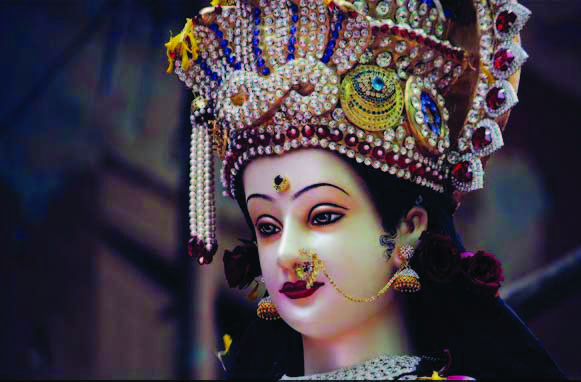
  • CHAITRA NAVRATRI

    CHAITRA NAVRATRI

    Goddess Shakti is worshipped and offered prayers during the nine days

    CHAITRA NAVRATRI IS MORE POPULAR IN NORTHERN INDIA. IN MAHARASHTRA CHAITRA NAVRATRI BEGINS WITH GUDI PADWA AND IN ANDHRA PRADESH IT BEGINS WITH #UGADI

    Chaitra Navratri is nine days festivity which starts on the first day of Hindu Luni-Solar calendar and falls in the month of March or April. Chaitra is the first month of Hindu lunar calendar and because of it this Navratri is known as Chaitra Navratri. Chaitra Navratri is also known as Vasanta Navratri. Rama Navami, the birthday of Lord Rama usually falls on the ninth day during Navratri festivity. Hence Chaitra Navratri is also known as Rama Navratri.

    All nine days during Navratri are dedicated to nine forms of Goddess Shakti. Most customs and rituals followed during Shardiya Navratri, which falls in the month of September or October, are also followed during Chaitra Navratri. Ghatasthapana Puja Vidhi for Shardiya Navratri and Chaitra Navratri is same.

    Chaitra Navratri is more popular in northern India. In Maharashtra Chaitra Navratri begins with Gudi Padwa and in Andhra Pradesh it begins with Ugadi.

    Ghatsthapana, Shailputri Puja

    The first day of Chaitra Navaratri festival will fall on March 28, Tuesday. Goddess Shailputri is worshipped on the first day of Navratri. Just like the Shardiya Navratri, most of rituals and traditions remain similar during the spring festival celebrations. Ghatasthapana Muhurta is the most important ritual which is to be followed dedicatedly as it marks the beginning of Chaitra Navaratri festivity. Ghatasthapana is an invocation of Goddess Shakti and to be done only in shubh muhurat time. Ghatasthapana is also known as Kalash Sthapana or Kalashsthapana.

    Chandra Darshan, Brahmacharini Puja

    The second day of Chaitra Navaratri festival will fall on March 29, Wednesday. Goddess Brahmacharini is worshipped on the second day of Navratri. Dwitya also marks the 2017 Chandra Darshan, the first day of moon sighting after no moon day also known as Amavasya. Goddess Brahmacharini is believed to be controlling Lord Mangal, the provider of all fortunes according to Hindu legends and hence worshipping the goddess brings happiness and prosperity.

    Gauri Teej, Chandraghanta Puja

    The third day of Chaitra Navaratri festival will be on March 30, Thursday. Goddess Chandraghanta is worshipped on the third day of Navratri. She is believed to govern the shukra (Venus) planet. According to ages old mythology, she drives away the spirits troubling her devotees with the sound of the moon-bell present on her forehead. The day is observed as Gangaur also known as Gauri Tritiya. Gangaur festival is widely celebrated in Rajasthan and some parts of Uttar Pradesh, Madhya Pradesh, Haryana and Gujarat.

    Varad Vinayaka Chauth, Kushmanda Puja

    The fourth day of Chaitra Navaratri festival will be on March 31, Friday. Goddess Kushmanda is worshipped on the fourth day of Navratri. She governs the God Sun and is the source of energy and direction of Sun. Kushmanda Puja and Varad Vinayaka Chauth is celebrated on Chaturthi. Varad means “asking God to fulfill any desire one has”. Goddess Kushmanda is worshipped with her favourite red coloured flowers.

    Lakshmi Panchami, Skandamata Puja

    The fifth day of Chaitra Navaratri festival will be on April 1, Saturday. Goddess Skandamata is worshipped on the fifth day of Navratri. This form of Goddess Parvati, Goddess Skandamata governs Planet Budha (Mercury), and red coloured flowers are also used to worship her. Devotees worship Skandamata also gets the benefit of worshipping Lord Kartikeya. Panchami is also widely celebrated as Kalpadi Tithi. Chaitra Shukla Panchami is also known as Lakshmi Panchami, dedicated to Goddess Lakshmi, the Goddess of wealth and prosperity. Among Tamil Hindus, this day is celebrated as Skanda Sashti or Kanda Sashti Vratam 2017 as Skanda, son of Lord Shiva and Goddess Parvati is a favorite deity.

    Yamuna Chhath, Katyayani Puja

    The sixth day of Chaitra Navaratri festival will be on April 2, Sunday. Goddess Katyayani is worshipped on the sixth day of Navratri. She governs the planet B?haspati (Jupiter). Roses are the favourite flowers to worship Goddess Katyayani. The day also marks the birth anniversary of Goddess Yamuna and celebrated as Yamuna Jayanti. Yamuna Chhath is a popular festival celebrated in Indian city Mathura.

    Maha Saptami, Kalaratri Puja

    The seventh day of Chaitra Navaratri festival will be on April 3, Monday. Goddess Kalaratri is worshipped on the seventh day of Navratri. Goddess Kalaratri is also known as Goddess Shubhankari and worshipped with night-blooming Jasmine flowers. She is believed to govern planet Shani (Saturn). She is one of the most powerful and ferocious forms of Goddess Parvati and said to remove the darkness from the lives of her pure-hearted devotees and wrath hell on the evil-doers.

    Durga Maha Ashtami, Mahagauri Puja

    The eighth day of Chaitra Navaratri festival will be on April 4, Tuesday. Goddess Mahagauri is worshipped on the eighth day of Navratri. This form of Goddess Parvati governs the planet Rahu (Neptune). Masik Durgashtami 2017 also falls on the day with devotees fasting during Ashtami Tithi of Shukla Paksha. The day also marks the Sandhi Puja, which has a special significance during Navratri festival puja. Sandhi Puja is done at the juncture when Ashtami Tithi ends, and Navami Tithi starts.

    Rama Navami, Siddhidatri Puja

    The ninth and final day of Chaitra Navaratri festival will be on April 5, Wednesday. Goddess Siddhidatri is worshipped on the ninth day of Navratri. Siddhidatri is believed to provide energy and direction to planet Ketu (Uranus). She can award ultimate power and fulfill every wish of her devotee. 2017 Chaitra Navratri Parana is done with the end of Navami Tithi ends, and Dashami Tithi begins. The day also marks the birth of Lord Rama, the human incarnation of Lord Vishnu. Rama was born on Navami Tithi during Shukla Paksha of Chaitra month and the day is celebrated as Ram Navmi festival across India.

  • HOLI: LET THE COLOR SHOWER JOY

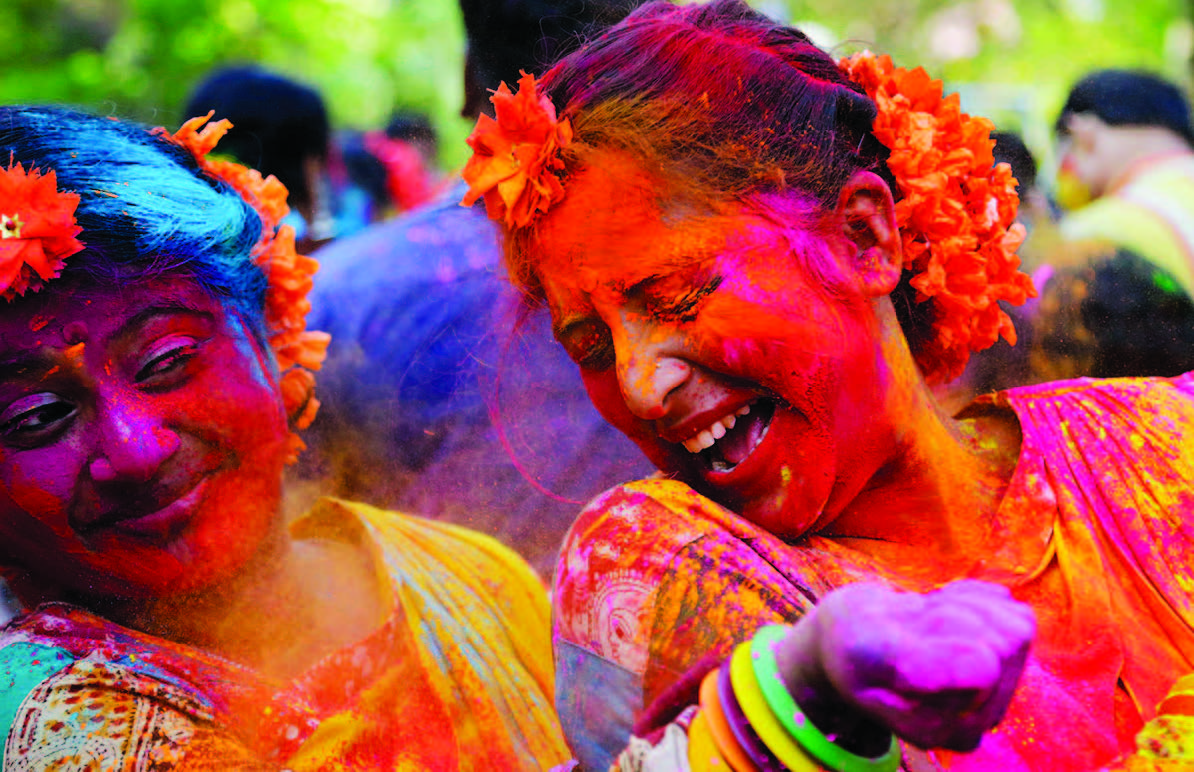
    HOLI: LET THE COLOR SHOWER JOY

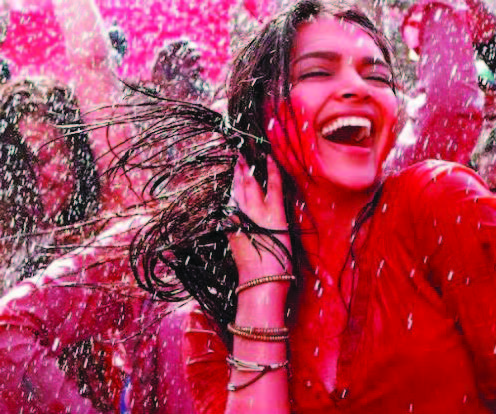
    The colorful festival of Holi is celebrated on Phalgun Purnima which comes in February end or early March. Holi festival has an ancient origin and celebrates the triumph of ‘good’ over ‘bad’. The colorful festival bridges the social gap and renew sweet relationships. On this day, people hug and wish each other ‘Happy Holi’.

    Holi celebration begins with lighting up of bonfire on the Holi eve. Numerous legends & stories associated with Holi celebration makes the festival more exuberant and vivid. People rub ‘gulal’ and ‘abeer’ on each others’ faces and cheer up saying, “bura na maano Holi hai”.

    History of Holi

    Holi is an ancient festival of India and was originally known as ‘Holika’. The festivals finds a detailed description in early religious works such as Jaimini’s Purvamimamsa-Sutras and Kathaka-Grhya-Sutras. Historians also believe that Holi was celebrated by all Aryans but more so in the Eastern part of India. It is said that Holi existed several centuries before Christ. However, the meaning of the festival is believed to have changed over the years. Earlier it was a special rite performed by married women for the happiness and well-being of their families and the full moon (Raka) was worshiped.

    Story of Behind the Celebration of Holika Dahan

    There are numerous mythological explanations that are described in the historical books regarding the death of Holika and its reference for the celebration of Holi. In accordance to those historical explanations Holika was booned by Brahma for not getting any harm from fire or never getting burnt in fire. Following the order of his Brother Hiranyakashyap (who was also the father of Prahlad) Holika sat on fire with Prahladf in order to burn him in fire and let to death. It was Prahlad’s prayers to Lord Vishnu that saved him from burning in fire. It was the protective shawl of Holika that flew to cover Prahlad’s body from Holika who was having it. This is the story behind the celebration of Holika Dahan that is still followed by the people of India.

    The Legend of Holika and Prahlad

    There was once a demon king by the name of Hiranyakashyap who won over the kingdom of earth. He was so egoistic that he commanded everybody in his kingdom to worship only him. But to his great disappointment, his son, Prahlad became an ardent devotee of Lord Naarayana and refused to worship his father.

    Hiranyakashyap tried several ways to kill his son Prahlad but Lord Vishnu saved him every time. Finally, he asked his sister, Holika to enter a blazing fire with Prahlad in her lap. For, Hiranyakashyap knew that Holika had a boon, whereby, she could enter the fire unscathed.

    Treacherously, Holika coaxed young Prahlad to sit in her lap and she herself took her seat in a blazing fire. The legend has it that Holika had to pay the price of her sinister desire by her life. Holika was not aware that the boon worked only when she entered the fire alone.

    Prahlad, who kept chanting the name of Lord Naarayana all this while, came out unharmed, as the lord blessed him for his extreme devotion. Thus, Holi derives its name from Holika. And, is celebrated as a festival of victory of good over evil.

    Holi is also celebrated as the triumph of a devotee. As the legend depicts that anybody, howsoever strong, cannot harm a true devotee. And, those who dare torture a true devotee of god shall be reduced to ashes.

    The Legend of Radha-Krishna

    Young Krishna is known to be very playful and mischievous. The story goes that as a child, Krishna was extremely jealous of Radha’s fair complexion since he himself was very dark.

    One day, Krishna complained to his mother Yashoda about the injustice of nature which made Radha so fair and he so dark. To pacify the crying young Krishna, the doting mother asked him to go and colour Radha’s face in whichever colour he wanted.

    In a mischievous mood, naughty Krishna heeded the advice of mother Yashoda and applied colour on her beloved Radha’s face; Making her one like himself.

    Well, there is also a legend to explain Krishna’s dark complexion. It so happened that once a demon attempted to kill infant Krishna by giving him poisoned milk. Because of which Krishna turned blue. But Krishna did not die and the demon shriveled up into ashes.

    The Legend of Dhundhi

    It is believed that there was once an Ogress called Dhundhi in the kingdom of Prithu (or Raghu). The female monster used to specially trouble little children who became fed- up of her.

    Dhundhi, had a boon from Lord Shiva that she would not be killed by gods, men nor suffer from arms nor from heat, cold or rain. These boons which made her almost invincible but she also had a weak point. She was also cursed by Lord Shiva that she would be in danger from boys going about crazy.

    Deeply troubled by the Ogress, the King of Raghu consulted his priest. Giving the solution, the priest said that on Phalguna 15, the season of cold vanishes and summer starts. Boys with bits of wood in their hands may go out of their house, collect a heap of wood and grass, set it on fire with mantras, clap their hands, go around the fire thrice, laugh, sing and by their noise, laughter and homa, the ogress would die.

    The legend has it that on the day of Holi, village boys displayed their united might and chased Dhundhi away by a blitzkrieg of shouts, abuses and pranks. It is for this reason that young boys are allowed to use rude words on the day of Holi without anybody taking offence. Children also take great pleasure in burning Holika.

    Lathmaar Holi

    In what is known as the hub of holi in India – Barsana, Holi is known as Lathmaar Holi. Sounds violence?? There is more violece than the name signals off. The stick is in the hands of the women on this day and the men need to work a lot to save themselves from the immensely charged up womenfolk.

    The birth place of Lord Krishna’s beloved Radha, Barsana celebrates Holi with extreme enthusiasm as Krishna was famous for playing pranks on Radha and gopis. In fact, it was Krishna who started the tradition of colours by first applying colour on Radha’s face.

    Womenfolk, of Barsana it seems, after thousands of centuries want to take a sweet revenge of that prank of Krishna. Even men have not left their mischief and are still eager to apply colour on the women of Barsana.

    Following the tradition, men of Nandgaon, the birthplace of Krishna, come to play Holi with the girls of Barsana, but instead of colours they are greeted with sticks.

    Completely aware of what welcome awaits them in Barsana, men come fully padded and try their best to escape from the spirited women. Men are not supposed to retaliate on the day. The unlucky ones are forcefully led away and get a good thrashing from the women. Further, they are made to wear a female attire and dance in public. All in the spirit of Holi.

    The next day, it is the turn of men of Barsana. They reciprocate by invading Nandgaon and drench the womenfolk of Nandgaon in colours of kesudo, naturally occurring orange-red dye and palash. This day, women of Nadagow beat the invaders from Barsana. It is a colourful site.

  • ISHVARA: THE PERSONAL ASPECT OF GOD

    ISHVARA: THE PERSONAL ASPECT OF GOD

    When Brahman is viewed as the supreme personal being (rather than as the infinite principle) Brahman is called Ishvara (“The Lord”;), bhagavan (“The Auspicious One”;), or Parameshwara (“The Supreme Lord”). Ishvara thus refers to the personal aspect of Brahman in general; it is not specific to a particular deity. Ishvara transcends gender, yet can be looked upon as father, mother, friend, child, or even as sweetheart. Some schools of Hindu philosophy do not believe in Ishvara, while others interpret Ishvara in different ways. Some schools do not distinguish between Ishvara and Brahman. The dvaita-advaita school holds that Ishvara is not incorporeal, but is infinite and a personal being.

    According to Bhagavata Purana, absolute Brahman can be realized in three ways.

    • Brahman it self ( the absolute reality)
    • Paramatma (union of all individual souls)
    • Bhagavan (as a personal God)

    Devatas: The Celestial Beings – The Hindu scriptures also speak about many celestial entities, called devas (“The shining ones”, also called devatas). The word devas may be translated into English as Gods, Deities, Celestial Spirits or Angels. The feminine of deva is devi.

    The Vedas and Puranas depict traditional stories about individual devas. The latter lauds the Trimurti of Mahadevas (“Great Gods”), which are the three aspects of God, Brahma, Vishnu and Shiva. Numerous other devas have been worshiped throughout Hinduism’s history. The devas are an integral part of Hindu culture and are depicted in art, architecture and through icons. In their personal religious practices, Hindus worship primarily one or another of these deities, known as their i??a devata, or chosen ideal. The particular form of God worshiped as one’s chosen ideal is a matter of individual preference and needs, influenced by regional and family traditions.

    Atman: The Innermost Self

    We as individuals are also a part of this changing universe. Our bodies are constantly undergoing change, while our minds, formed of thoughts and feelings, are also in a state of flux. According to Vedanta, however, our self consists of more than mind and body. At its core lies the unchanging atman, our innermost, transcendental Self, as opposed to the material self (our body, thoughts, and feelings) that is part of the universe. The atman is our True Self. But we lose sight of it because of our passionate involvement with our material self and its search for happiness in this universe. The universe can never provide perfect and permanent happiness, however, because it, like our material self, is in a state of constant flux. We attain true happiness only through an awareness of our atman and the discovery of its true relationship with Brahman.

    By achieving awareness of atman and its unity with Brahman, we attain not only happiness, but also moksha, or liberation. But liberation from what? At one level, the liberation is from unhappiness, but the answer provided by Vedanta Hinduism goes deeper: Moksha is liberation from a chain of lives called samsara.

    Samsara: The Chain of Lives

    We normally think of ourselves as coming into being when we are born of our parents and as perishing when we die. According to Hinduism, however, this current life is merely one link in a chain of lives that extends far into the past and projects far into the future. The point of origin of this chain cannot be determined. The process of our involvement in the universe—the chain of births and deaths—is called samsara.

    Samsara is caused by a lack of knowledge of atman (our Innermost Self) and our resultant desire for fulfillment outside ourselves. We continue to embody ourselves, or be reborn, in this infinite and eternal universe as a result of these unfulfilled desires. The chain of births lets us resume the pursuit. The law that governs samsara is called karma. Each birth and death we undergo is determined by the balance sheet of our karma—that is, in accordance with the actions performed and the dispositions acquired in the past.

    This cycle of action, reaction, birth, death, and rebirth is a continuum called samsara. The Bhagavad Gita states that:

    As a person puts on new clothes and discards old and torn clothes, similarly an embodied atman (our Innermost Self) enters new material bodies, leaving the old bodies.

    Karma: Action and Its Consequences

    Karma is a crucial Hindu concept. According to the doctrine of karma, our present condition in life is the consequence of the actions of our previous lives. The choices we have made in the past directly affect our condition in this life, and the choices we make today and thereafter will have consequences for our future lives in samsara. An understanding of this interconnection, according to Hindu teachings, can lead an individual toward right choices, deeds, thoughts, and desires, without the need for an external set of commandments.

    The principle of karma provides the basic framework for Hindu ethics. The word karma is sometimes translated into English as “destiny,” but karma does not imply the absence of free will or freedom of action that destiny does. Under the doctrine of karma, the ability to make choices remains with the individual.

    We are subject to the “law” of karma just as our physical movements on earth are subject to the law of gravitation. But just as the law of gravitation does not take away our freedom to move about, the doctrine of karma does not leave us unfree to act. It merely describes the moral law under which we function, just as the law of gravitation is a physical law governing our being.

    When we cause pain or injury, we add to the karmic debt we carry into our future lives. When we give to others in a genuine way, we lighten our karmic load. In the Bhagavad-Gita, an important Hindu text, Krishna states that the best way to be free of debt is by selfless action, or by dedicating every action as an offering to Krishna himself. In addition, human beings can purify themselves of karmic debt through different yogas (disciplines), kriyas (purification processes), and bhakti (devotions).

    Purusharthas: Stages or Goals of Life

    Classical Hindu thought accepts two main life-long dharmas: Grihastha Dharma and Sannyasin Dharma.

    The Grihastha Dharma recognize four goals as noble; these are known as the puru?harthas, and they are:

    1. kama: Sensual pleasure and enjoyment
    2. artha: Worldly prosperity and success
    3. dharma: Following the laws and rule that an individual lives under
    4. moksha: Liberation from the cycle of samsara

    Among these, dharma and moksha play a special role: dharma must dominate an individual’s pursuit of kama and artha while seeing moksha, at the horizon.

    The Sannyasin Dharma recognizes, but renounces kama, artha and dharma, focusing entirely on moksha. As described below, the Grihasthi eventually enters this dharma as an eventual stage of life. However, some enter this stage immediately from whichever stage they may be in.

    Moksha: Liberation from Samsara

    Moksha (Freedom or Liberation) from the cycle of birth and death is the ultimate goal of Hindu religious life. Moksha is called Mukti (freedom) by yogis.

    The atman (Innermost Self), in its liberated state, possesses divine qualities such as purity, omnipresence and omnipotence, and is beyond limitations. Within the individual, however, the atman is involved in the working of samsara (the cycle of birth and death in the phenomenal world), thereby subjecting itself to bondage by Law of Karma. Moksha is attainted when the individual becomes liberated from the cycle of birth and death and attains eventual union with the Brahman (Supreme Being).

    This union can be achieved through gyana or jnana (True Knowledge), bhakti (devotion), or karma (right work). Purity, self-control, truthfulness, non-violence, and compassion toward all forms of life are the necessary pre-requisites for any spiritual path in Hindu dharma. The Hindu dharma emphasizes the importance of a satguru (True Guru or Spiritual Master) for the attainment of True Knowledge of the atman and Brahman.

    Darshanas: Schools of Thought

    As Hinduism developed, it did not reject its parent traditions, but modified and assimilated them into newer schools of thought. For example, the ancient Vedic notion of sacrifice, and the later philosophies of Sankhya and Yoga, have all been assimilated into the more recent school of Vedanta. Even the more sectarian sampradaya do not entirely reject other doctrines, but claim that they demonstrate a less complete understanding.

    Despite a relatively inclusive approach, Hinduism has rejected those doctrines that do not accept its scriptural authority. Most notably these include Jainism, Buddhism, and the hedonistic philosophy of Charvaka. They are therefore called nastika, differentiating them from the accepted schools termed astika. There are six main astika systems, which are called darshanas (ways of seeing). The various groups and sub-groups within Hinduism usually subscribe to one or more of the six darshanas.

    The Six Darshanas

    The six darshanas are grouped as three pairs of “sisters.” Each pair consists of one darshan dealing with theory and the other explaining the corresponding practice and methodology. For example, Sankhya forms the doctrinal basis for the discipline of yoga. Each pair is further explored in this section.

    Some groups consider these schools to be hierarchical, with Vedanta the culmination of Vedic philosophy. This is somewhat supported by the fact that Vedanta means “the end of the Vedas” or, less literally, “the ultimate conclusion of knowledge.” Certainly, Vedanta today represents the more theologically developed strands of Hinduism, and forms the basis for many modern theistic traditions.

  • TAKE CARE OF YOUR HAIR THIS HOLI

    TAKE CARE OF YOUR HAIR THIS HOLI

    The festival of colours Holi is just around the corner. And even if you’re prepared with organic colours, you may get drenched in toxic colours, courtesy your friends. And this may take a toll on your hair. No matter how particular you are, let’s face it that any colour can damage your hair. So, we’ve got some tips from Celebrity Hairstylist Asgar Saboo that you would need pre-and post-Holi celebrations. And here’s what he recommends:

    What you need to do pre-Holi

    1. Prepping your hair with oil is a must! A night before Holi, massage your hair with warm coconut oil or a mix of jojoba and castor oil. By doing this, the oil will provide extra nutrition that won’t dry your hair due to colours. Later, this will also help the colour to come off easily.
    2. Also, avoid shampooing a day before Holi. This way the natural oils on your scalp can act as a barrier!
    3. And, if you have a sensitive scalp, add few drops of lemon juice. This will avoid any infection trigged by the chemicals in the colour. Here, the lemon juice will act as a protective shield against the harsh colours on your scalp.

    How to treat your hair post-Holi

    1. First things first, rinse your hair with plenty of plain water to wash off any dry colours and tiny particles of mica. And try to use a mild shampoo, working it into hair with fingers followed by a conditioner. And if still there’s any colour, don’t over wash it the same day, as this can dry out your hair. You can also apply olive oil to your hair and wash it the next day.
    2. To hydrate your hair further, you can apply oil once your hair is washed and completely dry.
    3. You can even try a DIY hair mask. Soak few fenugreek (methi) seeds in water overnight. And next morning, crush them to make a paste. Now, apply this on your hair for at least 15 minutes. Later, use a mild shampoo to wash your hair. This mask also helps in controlling dandruff.
     Source: TOI
  • Hindus concerned about fate of “Hindu Prayer Room” in Iowa’s Grinnell College

    Hindus concerned about fate of “Hindu Prayer Room” in Iowa’s Grinnell College

    IOWA (TIP): Because of significant physical changes and construction projects at Grinnell College Iowa, Hindus are worried about the fate of existing dedicated “Hindu Prayer Room” with 24-hour access.

    Hindu statesman Rajan Zed, in a statement  urged College President Dr. Raynard S. Kington and Trustees Chair Patricia Finkelman to ensure that spirituality and worship services of the Hindu students were not affected during this transition period.

    Zed, who is President of Universal Society of Hinduism, pointed out that if murti of Lord Ganesha, reportedly installed by a priest in the existing “Hindu Prayer Room”, was moved to a new “Hindu Prayer Room”; administration should provide assistance to the college Hindu students group to reinstall it with proper ancient rituals by a priest.

    Moreover, they expected the new “Hindu Prayer Room” be of the same (or bigger) size as the existing one, as it was one of the attractions for Hindu students to come to Grinnell, Rajan Zed noted. “The Scarlet & Black”, student newspaper of Grinnell, in a news posted on February 17, however, wrote: “…the new building will feature a significant reduction in size of the Hindu Cultural Suite…”.

    Zed hoped that Grinnell would continue to recognize the intersection of spirituality and education and respond to the spiritual needs of Hindu students. Dedicated Hindu prayer/meditation room for rituals, quiet reflection, festivals and spiritual exercise helped in the personal growth of Hindu students.

    Located in the “Center for Religion, Spirituality and Social Justice” (CRSSJ), which is relocating; the existing “Hindu Prayer Room” is reportedly accessible to students from eight am to 12 midnight every day when the College is in session, but by request, a student can have 24-hour access using their student ID to enter the building.

    Meanwhile, Debra Lukehart, Vice President for Communications of Grinnell College, in an email response to Rajan Zed, wrote: “…transition plans have not yet been finalized…. The Hindu Prayer Room that is currently housed in the CRSSJ facility will necessarily move this summer…, but we expect a dedicated space will be identified.”


  • Colorful Lights and Traditions abound at BAPS Diwali Celebration in Flushing

    Colorful Lights and Traditions abound at BAPS Diwali Celebration in Flushing

    FLUSHING, NY (TIP): Lights and candles are lit. Sweets are prepared and shared, and warm greetings and well wishes are exchanged as millions of Hindus around the world celebrate the festival of lights, Diwali. Diwali presents Hindus around the world with an opportunity to renew the rich traditions of their roots with great fanfare.

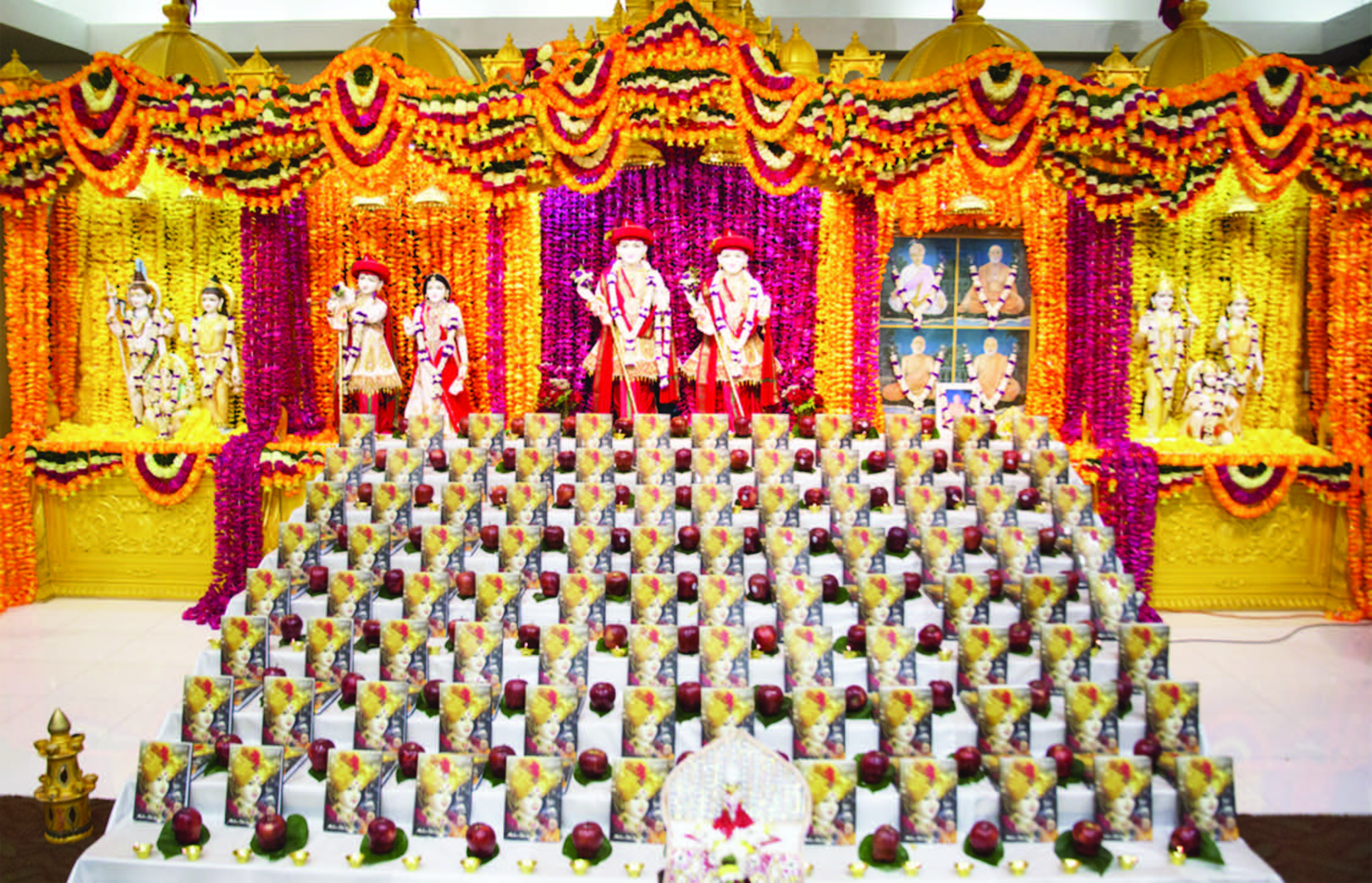
    In marking the season, volunteers of all ages came together to organize a Diwali celebration at the BAPS Shri Swaminarayan Mandir in Flushing, New Yorkon October 31st.Colorful intricate designs called rangoli, decorative oil lampsand Annakut offerings of vegetarian food before the sacred images of God filled the atmosphere with a renewed spirit of the festival.

    The large gathering at the temple listening to the sermon of Pujya Yagnavallabh Swami Ji Maharaj
    The large gathering at the temple listening to the sermon of Pujya Yagnavallabh Swami Ji Maharaj

    Diwali is an ancient Hindu festival commemorating many historical events including the return of Bhagwan Shri Ram to the kingdom of Ayodhya after fourteen years of exile. His return brought about a period of enlightenment within the kingdom and its people. The tradition of self-enlightenment continues today as Diwali presents an opportunity for self-improvement and progress through reflection within.

    Children also enjoyed the annual Diwali fare filled with games, activities and sweet treats. BAPS youths take great measures to organize and conduct this annual event for the younger participants. Over 2,000attendees throughout the day experienced the culture and traditions of the auspicious holiday as they offered prayers, well wishes, and resolved to mark the New Year with spiritual enlightenment.

    Many relished the familiar atmosphere of Diwali and reminisced their childhood days as they immersed themselves in the beautiful sights, traditional songs, and delicious cuisine of the holiday. Over 1,000 home made vegetarian delicacies were offered to the deities of the Mandir. Local Community leaders also participated in the celebrations including Assemblymen Peter Koo and David Weprin, Assemblywomen Nily Rozic, Consulate General Riva Ganguli Das, NY State Senators Toby Ann Stavisky and Tony Avella and Council Member Rory Lanceman. Also among the many esteemed guests in attendance was Queens Borough President Melinda Katz who spoke highly of the celebration to the assembly, “Diwali is the time to celebrate the light over darkness and during the festival, family members spend time together”

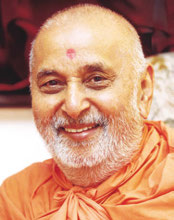
    The festivities brought devotees together to serve a common purpose, develop spiritually, and please their guruHis Holiness Mahant Swami Maharaj and inspirer, His Holiness Pramukh Swami Maharaj. Pramukh Swami Maharaj inspired the celebration of Hindu festivals at BAPS centers worldwide to keep the rich traditions and culture of India alive with emphasis on the true historic and spiritual purpose of Hindu festivals.

    About BAPS

    The BAPS Swaminarayan Sanstha (BAPS) is a worldwide spiritual and humanitarian organization that is dedicated to community service, peace and harmony. Motivated by Hindu principles, BAPS strives to care for the world by caring for societies, families and individuals. Through various spiritual and humanitarian activities, BAPS endeavors to develop better citizens of tomorrow with high esteem for their roots and culture. Its 3,300 international centers support these character-building activities. Under the guidance and leadership of His Holiness Mahant Swami Maharaj, BAPS aspires to build a community that is free of addictions as well as morally, ethically and spiritually pure. For more details, please visit www.baps.org.

    About Mahant Swami Maharaj

    His Holiness Mahant Swami Maharaj is the sixth and current spiritual successor of Bhagwan Swaminarayan. He was ordained a swami by Yogiji Maharaj in 1961 and named Sadhu Keshavjivandas. As he was appointed the head (Mahant) of the Mandir in Mumbai, he became known as Mahant Swami. His devout, humble and service-focused life earned him the innermost blessings of Yogiji Maharaj and Pramukh Swami Maharaj. Mahant Swami Maharaj travels throughout the world inspiring people through his insightful spiritual discourses and disciplined conduct. His virtuous lifestyle and profound devotion to Bhagwan Swaminarayan and gurus are ideals toward which devotees strive. Mahant Swami Maharaj became the guru and President of BAPS upon Pramukh Swami Maharaj’s passing in 2016.

    CONTACT: BAPS North American Headquarters Phone: 732-777-1414

    Email: media@na.baps.org

    SOURCE: BAPS

    (Based on a Press Release)

  • WHY LAKSHMI AND GANESHA ARE WORSHIPED TOGETHER?

    WHY LAKSHMI AND GANESHA ARE WORSHIPED TOGETHER?

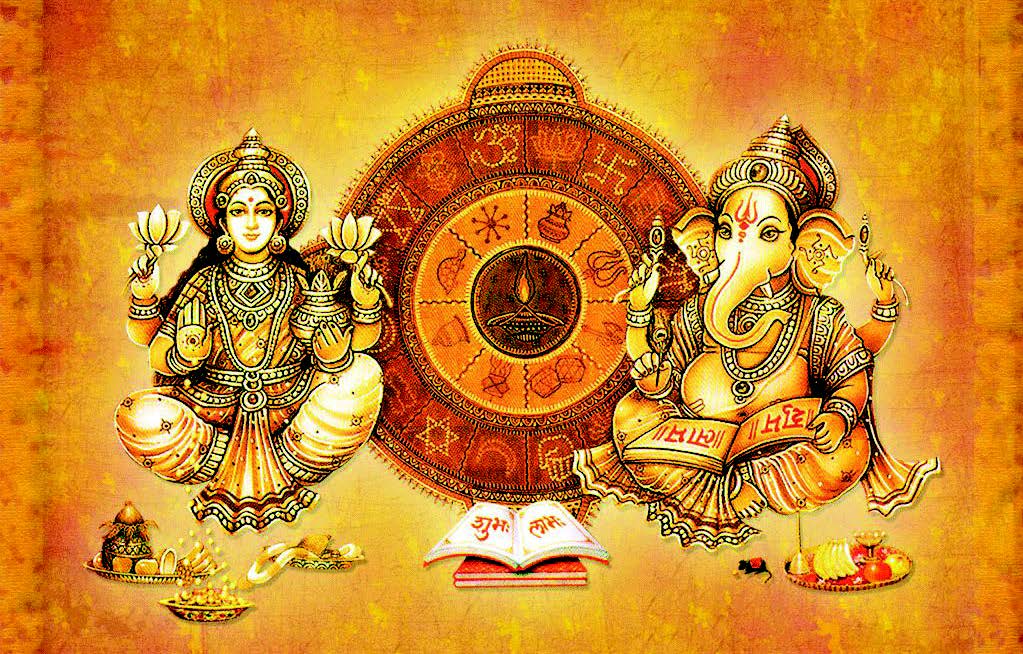
    On the day of Diwali Lord Ganesha is worshiped with Goddess Lakshmi instead Lord Vishnu. There are many questions arises, why Lord Vishnu is not worshiped with Goddess Lakshmi and what is the relation between Lakshmi and Ganesha? The answers of all these questions can be answered by one mythological story.

    Mythological Story

    Once upon a time Lord Vishnu and Goddess Lakhmi were having conversation in heaven and Goddess Lakshmi was praising herself and telling Lord Vishnu that she is the most worship worthy in the world and by her grace, a person can get all the pleasures of this world and becomes happiest person. By hearing the self praising by Goddess Laksmi, Lord Vishnu said to her for reducing her ego, “You are having all the qualities, still you did not feel the joy of motherhood till now and for a lady, the motherhood joy is the most important thing in this universe.”

    The comment from Lord Vishnu made Goddess Lakhmi become disheartened and in this pain she went to her friend Goddess Parvati. After listing the problem of Goddess Lakhmi, Parvati asked her, “How can I help you?” Goddess Lakshmi said, “You are having two sons and if you could give me your one son you will still have one son and I could get the grace of motherhood. So, in this situation you can help me out.”

    By listing her Goddess Parvati said to her, “I’m having two sons Kartikeya and Ganesha. Kartikeya is having six mouths (Faces) and because of this he needs to eat all the time. My second son Ganesha is very naughty, if I missed to keep eye on him for a bit, he ruined everything. And you cannot stay at one place for a long, so tell me how can you take care of my sons?

    By hearing this Goddess Lakshmi said to her, “I’ll keep your sons close to my heart and will shower my all love on them either Kartikeya or Ganesha. I can take care both of them. All the servants of heaven will serve them day and night so please give me one of them as my adopted child.”

    Maa Parvati knew her both the sons very well so she gave Lord Ganesha to Goddess Lakhmi as her adopted son. Goddess Lakshmi became very happy and said to Goddess Parvati, “From today onwards I’m giving my all accomplishments, luxury and prosperity to my son Ganesha. Also, Riddhi and Siddhi Lord Brahma’s daughters are alike my daughters will be married soon for which I give my word to you.

    I will fulfill all the desires of Ganesha. In all the three loks which person shall not worship Lord Ganesha and do back biting, I will be miles away from him. Whenever my worship will be performed, Lord Ganesha’a worship will be a must. Who will not worship Shri Ganesha along with me, he cannot get Shree or myself. By listening this Maa Parvati become too much happy and handed over her son Ganesh to Laxmi Ji. As such at Deepawali Poojan or Luxmi Poojan, Ganesh Poojan is a must.

    Katha of Diwali

    lakshmi-and-ganesha-1Take some flower and rice grains in hand after the worship, listen the following story(s) and sprinkle the flowers and rice on the statue of Lakshmi-Ganesha.

    Once upon a time seven brothers was living in a village. All these seven brothers were living in a poverty. One day the youngest son get married to a nice girl and he took his wife to his home. After sometime festival of Diwali was about to come. The youngest daughter in-law called up all the brothers and told them all that from now onward she is there to manage their house hold works but all of them should have go out for work and get at least one thing, what so ever they will get outside.

    By listening this they all went out for work and that Sister-in-law started cleaning the house. At evening all brothers came back and get something with them. One brother get the cow’s dung and sister-in-law asked him to keep it in a courtyard. Second brother get a dead snack sister-in-law asked him to keep it on the roof and other brothers gets some milk, vegetable, broom, paddy grains and wheat grains. The sister-in-law cooked for them and served dinner to them.

    Next day, there was a public proclamation by beat of the drum, that one eagle picked up Queen’s nine lacks necklace when she was bathing in a river so who so ever will find out the Queen’s necklace will get reward from the King of the state. At the same time eagle who picked up the Queen’s necklace was flying above the brothers’ house, dropped necklace on their roof by seeing the dead snake, picked up the dead snake and fly off.

    All the brothers were very happy and they all said that they will go to return Queen’s necklace but sister-in-law said that no one but she herself will go to return the Queen’s necklace. All brothers agreed on it. When Sister-in-law went to the palace to return the necklace, King was very happy and he said to her, “I’m very happy with you and now tell me, what would you like to get in return?” Sister-in-law replied, “I wish that on the day of Diwali whole city should be in dark and should not light a single lamp except in my home.” King granted her wish and on the day of Diwali, Sister-in-law cleaned whole house except one room and made her brothers-in-law clean.

    At night Lakshmi ji came to the city, whole city was in dark and she was looking for the little light; she found light on that Sister’s-in-law home and went there. Her door was closed so Lakshmi ji knocked her door, sister-in-law asked from inside, “who is on the door?” Lakshmi ji replied,”it is me Lakshmi, please let me come into your home, whole city is in dark and I very scared of dark.” Sister-in-law said, “No, I’ll not open my home for you, you are not staying at one place, today you are coming to my home and there is no guarantee that tomorrow you will be staying at my home.” Lakshmi ji was very scared and she promised to her that she will never go away from her home and will stay there forever.

    When Lakshmi ji promised to stay at her place, Sister-in-law opened the door for Lakshmi ji, she offered the best place of home to her with full of lights and worshiped her devotedly. After worshiping the Goddess Lakshmi. Thereafter Sister-in-law went to the dark room of the house and started beating the Daridra/Narak and kicked out him of the house; she also warned him to never return to her house.

    So as Sister-in-law filled her home with prosperity, Goddess Lakshmi must make each and every person to be happy.

  • PARTHIV LINGAM

    PARTHIV LINGAM

    Parthiva Linga is the most supreme among all the Shiva-Lingas. All the aspirtions of he deities as well as men are fulfilled by the worship of Parthiv linga. During the era of Satya, jewel was considered to be of prime importance, where as during Tretayuga and Dwaparyuga, gold and mercury had the prime importance respectively. In the present era of Kali, a Parthiva Linga hold this place of honour. The worship of Parthiva Linga begets more virtues than even penance. Just as Ganga among the rivers, Kashi among the sacred places of pilgrimages, Omkar among all the mantras are considered to be superior, In the same way Parthivalinga is considered to the supreme among all the Linga. Worshipping, a Parthiva linga with a ‘Nishkam bhava’ helps a man to attain liberation.” ~ Shiva Purana.

    Parthiva Shivlinga is a Shivlinga made from mud/sand. Parthiv means Earth and worshipping a Parthiv Shivling liberates devotees of all sins committed in birth. Lord Rama worshipped a Parthiva Shivling to seek liberation from Brahmahatyamahapatakam, the sin of killing Ravana who was a Brahman. Parthiva Shivlinga is also known as Saikata Lingam. Parthiva Shivlingas are considered as one of the most auspicious, sacred and divine amongst all Shivlingas. Worshipping of Parthiva Shivlingas leads to liberation from karma and achievement of Moksha. Worshipping a Parthiva Shivlinga also provides relief from malefic Navgraha Dosha and provides peace to soul of ancestors. After bath in the morning, a man should wear a rudraksha garland in his neck and apply bhasma on his forehead. He should then worship the Parthiva Linga. He should chant the various names of Shiva, while worshipping the Parthiva Linga, like Har, Maheshwar, Shambhu, Shoolpani, Mahadev. After worshipping the Parthiva Linga, it should be immersed in the river, Then the mantra – OM NAMAH SHIVAY should be chanted with complete devotion. This is the method which has been described in the Vedas.

    Forms of Shiva

    “In Me the universe had its origin In Me alone the whole subsists In Me it is lost” — Shiva

    The Timeless, it is I Myself Shiva in his ParamShiva state is Swayambhu, which literally means self-manifested, without birth or without origin. Shiva is not born, he manifests on his own. Hence Shiva is not result of Shaktis manifestation. Shiva is birth less, attribute less, formless and he is so because of his own nature, so he is Swayambhu , ????? ??. There is a verse in Vedas singing 3 well known names of God as SHIV, SHANKER, SHAMBHU. One of the verses in Yajurveda invokes God through 6 names including 3 highly popular names,’ Shiv Shanker & Shambhu. Millions of devotees daily chant these names while worshipping God. God has been described in 6 forms.

    1- SHAMBHAV (well being)
    2 –MAYOBHAV(manifested as the forms of delight)
    3 – SHANKER ( creator of well being)
    4 – MAYASKER (creator of delight)
    5 – SHIV (peaceful & unmanifested form of God)
    6 – SHIVTARA ( the form further beyond the Shiva form ).

    Three names of Lord Shiva are always fascinating Svayambhu, Tejaswi and Akshar.

    If you talk of Shiva as one of the Trinity, then these names may not attract you much. When we talk of Lord Shiva, as Param Siva (which is called Mahavishnu by vaishnavas), then the names have great meanings. Shiva is the origin of the universe. It is He who manifests as Ardhanariswara and then Shakti separates from him and the universe starts unfolding. It is then that the trinity is born and then other devas and asuras and all living being takes birth.!

    Achaleshwar Mahadev where Toe mark of Shiva is Worshipped

    Achleshwar Mahadev Temple, Mount Abu Sirohi , Rajasthan where the toe of Lord Shiva is worshipped and a brass Nandi is located there. The temple more than 2500 years old is the only place on earth where the great toe of Lord Shiva is worshiped, that is estimated to be going to the centre of the earth. Near the temple there are three stone buffaloes standing around a pond. It is believed that the Achleshwar temple was built in the 9th century and legend has it that it was built around a toe print of Lord Shiva. Achleshwar contains a natural Shivalinga. It is the proud possessor of the glory of rich mythology, theology, folklore and even history. Miracles happened in its hallowed precincts. Its Nandi, made of an alloy of five different metals, is credited with the marvel of repulsing the Muslim invaders by releasing millions of bumble bees to attack the Muslim marauders!

    The most remarkable fact is that the Shivling placed here changes its color thrice a day. In the morning, it is red; then it changes its color to saffron in the afternoon. And in the evening, the color changes to wheatish. It is said that no one knows how deep the roots of this Shivling are. To find out the same, devotees once dug down the surrounding area deep but even after that they could not reach the other end. And finally the devotees had to call off the excavation process. People believe that the Lord Achaleshwar Maharaj fulfils the wish of every devotee, especially when unmarried boys and girl pray for their successful marriage.

    Lingaraj Temple

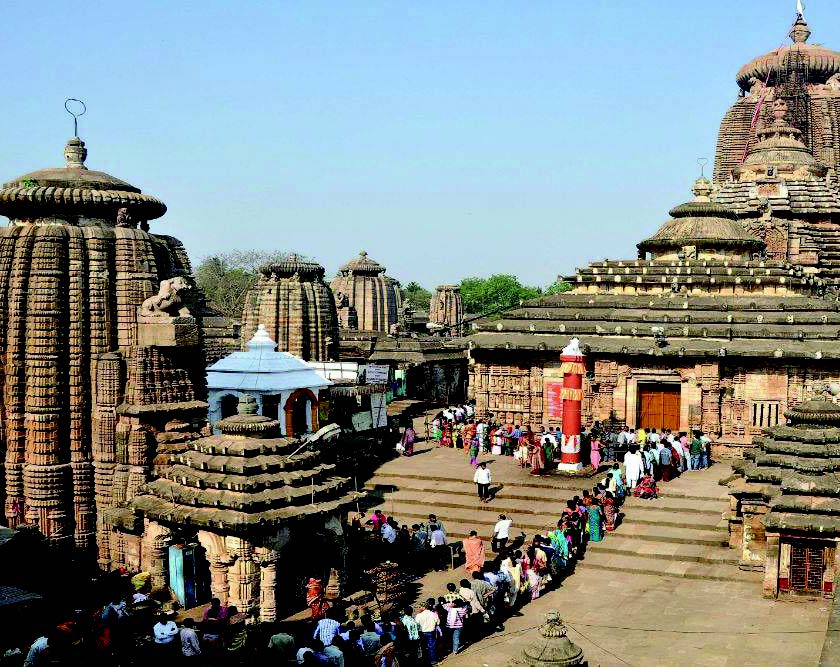
    parthiv-lingam-1The Lingaraj Temple dedicated to Lord Shiva and is said to be known as one of the oldest pilgrimage centers in the city. Located in the midsts of several ancient monuments in Bhubaneswar, the temple sees a large number of religious tourists throughout the year. The shrine’s main deity is known as Lingaraj, which literally translates to the ‘King of Lingas’ in Sanskrit. Apart from the spiritual and devotional significance that this place holds, the architecture displays a work of a genius. The tall rising ‘gopuram’ that overlooks its surrounding scenery, accompanied with intricate craftsmanship, is said to be a common feature of the Kalinga architecture. Around the vicinity of the shrine, there are different gods and goddess of Hinduism. It is supposed to reflect on the importance of each and sends out a universal message of ‘one God in different forms’. Read the article below to know more about the Lingaraj Temple.

  • AIA Deepavali at South Street Seaport on 2nd October

    AIA Deepavali at South Street Seaport on 2nd October

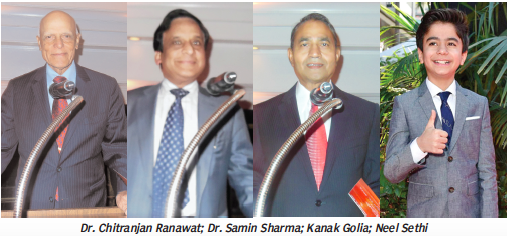
    LONG ISLAND, NY (TIP): The Annual Benefit Gala for the AIA Deepavali in Roslyn, Long Island drew a large number of supporters of the organization. The presence of heavyweight honorees seems to have made all the difference. The honorees included Padma Bhushan Dr. Chitranjan S Ranawat, an internally famous Orthopedic Surgeon with The Hospital for Special Surgery, New York; an eminent Interventional Cardiologist with The Mount Sinai Medical Center, Dr. Sami Sharma; and a philanthropist, social activist, community leader and a successful businessman dealing in branded fragrances Kanak Golia.

    The heartthrob of young kids across the world, Neel Sethi, actor, star of Disney’s “The Jungle Book” was honored with special recognition. Speaking briefly about his role in the movie, he happily replied to questions from the audience. Many in the audience had their cellphone cameras aimed at him video-recording the interaction. He will be meeting kids at the AIAA Deepavali on October 2nd at the South Street Seaport. So, kids, get ready to meet the star.

    The Association of Indians in America, NY Chapter (AIA-NY) will be celebrating its 29th Annual Deepavali Festival at the South Street Seaport in New York on October 2, a historic day being the birth anniversary of Mahatma Gandhi, the Father of the Indian Nation.

    This event is one of the largest in the tri-state area, attracting 75,000 -100,000 people from all backgrounds and walks of life. The New York Times, once placed the number of visitors to the Deepavali mela at about 200,000 residents from all across the tri-state area.

    YouTube sensation Vidya Vox will also be performing live at the mela – she sang a couple of Hindi bhajans at the fundraising gala also.

    The Oct 2 event will be a full day extravaganza celebrating tradition, culture and oneness with numerous food and clothing vendors, corporate booths, a children’s area, health kiosk, performances and activities for the whole family.

    This year, as the date coincides with the birthday of Mahatma Gandhi, there will be a special tribute paid to Gandhiji and an Essay & Drawing Competition held for the youth to showcase the importance and meaning of Peace.

    Live Fireworks from the East River illuminating the New York City skyline will serve as the Grand Finale of Diwali mela.

    Sponsors this year include CheapOAir, Qatar Airways, Toyota, New York Life, Swan Club,MoneyGram, Kotak Mahindra, New York Life, HAB Bank, Navika Capital, Star Plus, Sony Entertainment, Jus Punjabi and TV Asia.

  • Krishna Leela staged in NY

    Krishna Leela staged in NY

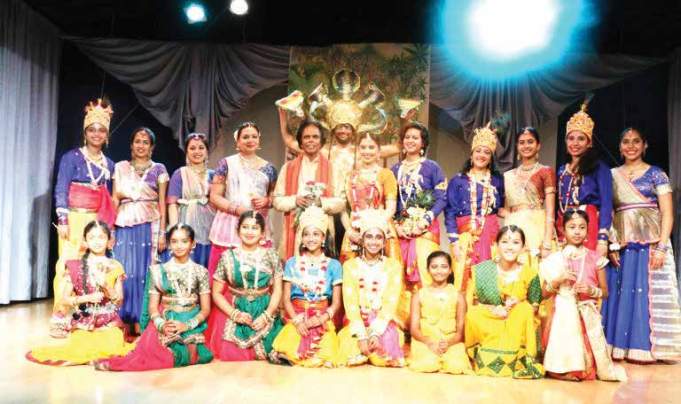
    A dance drama  on Krishna leela was presented by the East-West School of Dance in traditional Kathak style, bringing Vrindavan to the Blue Sky Center auditorium of Ananda Ashram, a yoga retreat and spiritual educational center In Monroe, New York on Sept. 3.

    Over 25 trained dancers and children of East-West dance school families got together for the two-hour event that also coincided with the Krishna Janmashtami festival period.

    The program, directed by dancer & choreographer Pt. S.N. Charka, a disciple of Pt. Shambhu Maharaj, was attended by close to 200 people, according to Charka.

    The production came alive with colorful scenes from the life of Krishna: from his mischievous childhood through miraculous early years to the culmination in Maha Raas, his cosmic dance with the gopis.

    The cast and crew included Rinil Routh, a former East-West Dance school student who made her foray into Bollywood with writer-director-producer Vivek Kumar’s upcoming film ‘Rhythm.’ Routh played the role of Radha in the dance drama while Kavita Mohini Tajeshwar, a senior dancer, played Krishna.

  • ATTRIBUTES OF MAHADEV

    ATTRIBUTES OF MAHADEV

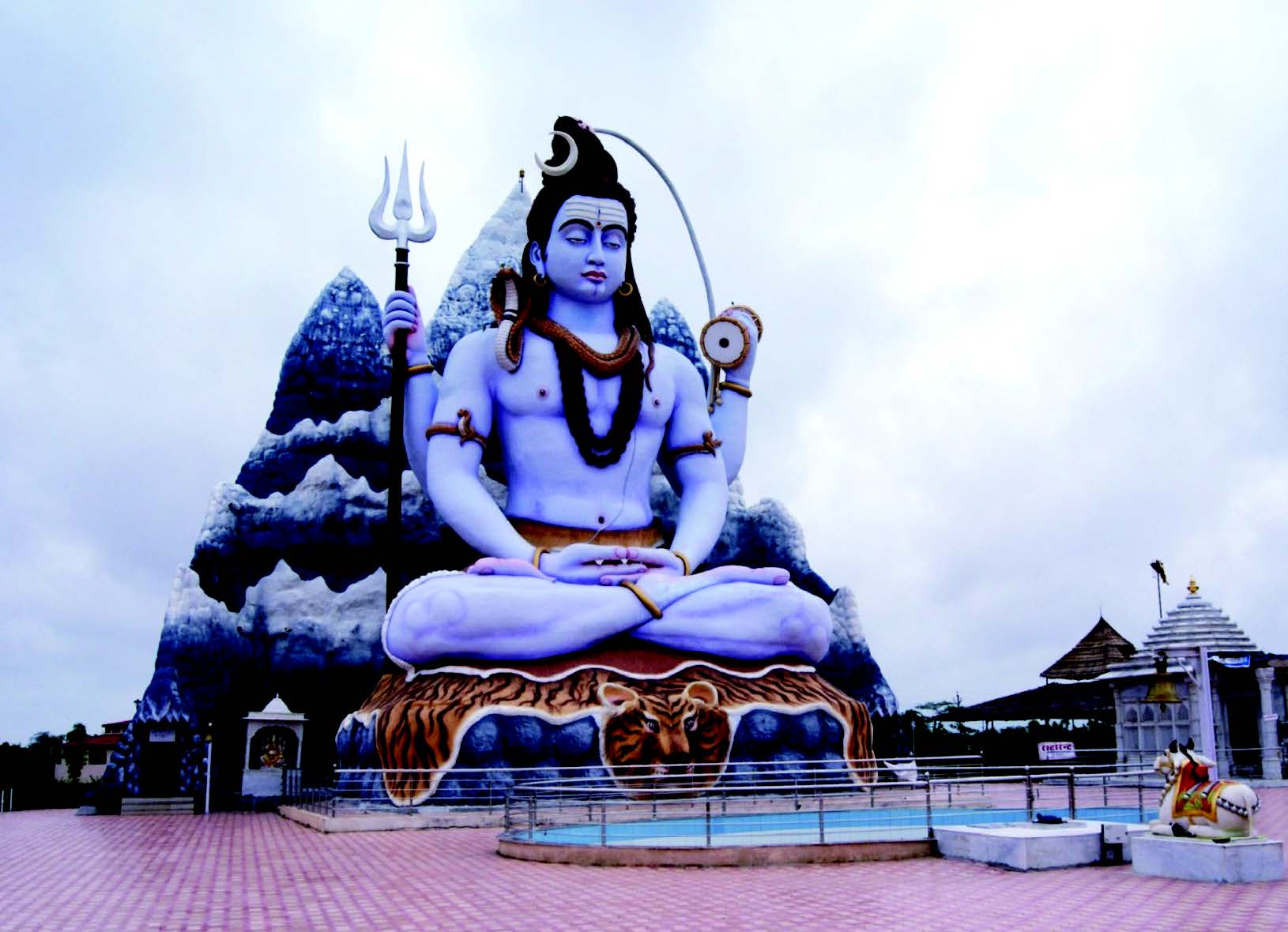
    Lord Shiva represents the aspect of the Supreme Being (Brahman of the Upanishads) that continuously dissolves to recreate in the cyclic process of creation, preservation, dissolution and recreation of the universe. As stated earlier, Lord Shiva is the third member of the Hindu Trinity, the other two being Lord Brahma and Lord Vishnu.

    Owing to His cosmic activity of dissolution and recreation, the words destroyer and destruction have been erroneously associated with Lord Shiva. This difficulty arises when people fail to grasp the true significance of His cosmic role. The creation sustains itself by a delicate balance between the opposing forces of good and evil. When this balance is disturbed and sustenance of life becomes impossible, Lord Shiva dissolves the universe for creation of the next cycle so that the unliberated souls will have another opportunity to liberate themselves from bondage with the physical world. Thus, Lord Shiva protects the souls from pain and suffering that would be caused by a dysfunctional universe. In analogous cyclic processes, winter is essential for spring to appear and the night is necessary for the morning to follow. To further illustrate, a goldsmith does not destroy gold when he melts old irreparable golden jewelry to create beautiful new ornaments. Lord Shiva is the Lord of mercy and compassion. He protects devotees from evil forces such as lust, greed, and anger. He grants boons, bestows grace and awakens wisdom in His devotees. The symbolism discussed below includes major symbols that are common to all pictures and images of Shiva venerated by Hindus. Since the tasks of Lord Shiva are numerous, He cannot be symbolized in one form. For this reason the images of Shiva vary significantly in their symbolism. The unclad body covered with ashes: the unclad body symbolizes the transcendental aspect of the Lord. Since most things reduce to ashes when burned, ashes symbolize the physical universe. The ashes on the unclad body of the Lord signify that Shiva is the source of the entire universe which emanates from Him, but He transcends the physical phenomena and is not affected by it.

    Matted locks

    Lord Shiva is the Master of yoga. The three matted locks on the head of the Lord convey the idea that integration of the physical, mental and spiritual energies is the ideal of yoga.

    Ganga

    Ganga (river Ganges) is associated with Hindu mythology and is the most sacred river of Hindus. According to tradition, one who bathes in Ganga (revered as Mother Ganga) in accordance with traditional rites and ceremonies on religious occasions in combination with certain astrological events, is freed from sin and attains knowledge, purity and peace. Ganga, symbolically represented on the head of the Lord by a female (Mother Ganga) with a jet of water emanating from her mouth and falling on the ground, signifies that the Lord destroys sin, removes ignorance, and bestows knowledge, purity and peace on the devotees.

    The crescent moon is shown on the side of the Lord’s head as an ornament, and not as an integral part of His countenance. The waxing and waning phenomenon of the moon symbolizes the time cycle through which creation evolves from the beginning to the end. Since the Lord is the Eternal Reality, He is beyond time. Thus, the crescent moon is only one of His ornaments, and not an integral part of Him.

    Three eyes

    Lord Shiva, also called Tryambaka Deva (literally, “three-eyed Lord”), is depicted as having three eyes: the sun is His right eye, the moon the left eye and fire the third eye. The two eyes on the right and left indicate His activity in the physical world. The third eye in the center of the forehead symbolizes spiritual knowledge and power, and is thus called the eye of wisdom or knowledge. Like fire, the powerful gaze of Shiva’s third eye annihilates evil, and thus the evil-doers fear His third eye.

    Half-open eyes: when the Lord opens His eyes, a new cycle of creation emerges and when He closes them, the universe dissolves for creation of the next cycle. The half-open eyes convey the idea that creation is going through cyclic process, with no beginning and no end. Lord Shiva is the Master of Yoga, as He uses His yogic power to project the universe from Himself. The half-open eyes also symbolize His yogic posture.

    Kundalas (two ear rings): two Kundalas, Alakshya (meaning “which cannot be shown by any sign”) and Niranjan (meaning “which cannot be seen by mortal eyes”) in the ears of the Lord signify that He is beyond ordinary perception. Since the kundala in the left ear of the Lord is of the type used by women and the one in His right ear is of the type used by men, these Kundalas also symbolize the Shiva and Shakti (male and female) principle of creation.

    Snake around the neck: sages have used snakes to symbolize the yogic power of Lord Shiva with which He dissolves and recreates the universe. Like a yogi, a snake hoards nothing, carries nothing, builds nothing, lives on air alone for a long time, and lives in mountains and forests. The venom of a snake, therefore, symbolizes the yogic power.

    A snake (Vasuki Naga): is shown curled three times around the neck of the Lord and is looking towards His right side. The three coils of the snake symbolize the past, present and future – time in cycles. The Lord wearing the curled snake like an ornament signifies that creation proceeds in cycles and is time dependent, but the Lord Himself transcends time. The right side of the body symbolizes the human activities based upon knowledge, reason and logic. The snake looking towards the right side of the Lord signifies that the Lord’s eternal laws of reason and justice preserve natural order in the universe.

    Rudraksha necklace: Rudra is another name of Shiva. Rudra also means “strict or uncompromising” and aksha means “eye.” Rudraksha necklace worn by the Lord illustrates that He uses His cosmic laws firmly – without compromise – to maintain law and order in the universe. The necklace has 108 beads which symbolize the elements used in the creation of the world.

    Varda Mudra: the Lord’s right hand is shown in a boon- bestowing and blessing pose. As stated earlier, Lord Shiva annihilates evil, grants boons, bestows grace, destroys ignorance, and awakens wisdom in His devotees.

    Trident (Trisula): a three-pronged trident shown adjacent to the Lord symbolizes His three fundamental powers (shakti) of will (iccha), action (kriya) and knowledge (jnana). The trident also symbolizes the Lord’s power to destroy evil and ignorance.

    Damaru (drum): a small drum with two sides separated from each other by a thin neck-like structure symbolizes the two utterly dissimilar states of existence, unmanifest and manifest. When a damaru is vibrated, it produces dissimilar sounds which are fused together by resonance to create one sound. The sound thus produced symbolizes Nada, the cosmic sound of AUM, which can be heard during deep meditation. According to Hindu scriptures, Nada is the source of creation.

    Kamandalu: a water pot (Kamandalu) made from a dry pumpkin contains nectar and is shown on the ground next to Shiva. The process of making Kamandalu has deep spiritual significance. A ripe pumpkin is plucked from a plant, its fruit is removed and the shell is cleaned for containing the nectar. In the same way, an individual must break away from attachment to the physical world and clean his inner self of egoistic desires in order to experience the bliss of the Self, symbolized by the nectar in the Kamandalu.

    Nandi: the bull is associated with Shiva and is said to be His vehicle. The bull symbolizes both power and ignorance. Lord Shiva’s use of the bull as a vehicle conveys the idea that He removes ignorance and bestows power of wisdom on His devotees. The bull is called Vrisha in Sanskrit. Vrisha also means dharma (righteousness). Thus a bull shown next to Shiva also indicates that He is the etemal companion of righteousness.

    Tiger skin: a tiger skin symbolizes potential energy. Lord Shiva, sitting on or wearing a tiger skin, illustrates the idea that He is the source of the creative energy that remains in potential form during the dissolution state of the universe. Of His own Divine Will, the Lord activates the potential form of the creative energy to project the universe in endless cycles.

    Cremation ground: Shiva sitting in the cremation ground signifies that He is the controller of death in the physical world. Since birth and death are cyclic, controlling one implies controlling the other. Thus, Lord Shiva is revered as the ultimate controller of birth and death in the phenomenal world.

  • South Australia Hindu Temple plans $600,000 expansion

    South Australia Hindu Temple plans $600,000 expansion

    ADELAIDE (TIP): Shri Ganesha Temple (SGT) in Adelaide’s southern suburb Oaklands Park in South Australia is reportedly planning a $600,000 expansion to host bigger events, weddings, classes, etc.

    This Temple, built at the site of a former Lutheran Church, has approached City of Marion regarding this project and City’s Development Assessment Panel, whose task is to assess proposed development, will consider its proposals, reports suggest.

    Expansion plans at SGT, a State Heritage Place, reportedly include building an outdoor cooking area, dining room extension, etc.

    Rajan Zed, who is President of Universal Society of Hinduism, commended efforts of Temple leaders and area community towards running this Hindu temple complex.

    Rajan Zed further said that it was important to pass on Hindu spirituality, concepts and traditions to coming generations amidst so many distractions in the consumerist society and hoped that this Temple would help in this direction. Zed stressed that instead of running after materialism; we should focus on inner search and realization of Self and work towards achieving moksh (liberation), which was the goal of Hinduism.

    SGT, reportedly conceived by the Hindu Society of South Australia in 1985 and formally opened in 2001, serves over 20,000 Hindus; including immigrants from India, Mauritius, South Africa, Fiji, Trinidad, Sri Lanka, Guyana, Surinam, Malaysia, etc.; besides students. Ganesha is the presiding deity at the Temple, where other deities include Laxmi Narayan; Durga, Laxmi and Saraswati; Muruga Valli and Deivanai; Hanuman; Bhairava; Navagraha; and Shiva Linga.

    This Temple, which opens daily; besides offering worship services and being a social gathering place; also holds various festivals, satsangs, pujas; runs a children library; undertakes various community assistance programs; organizes blood donation campaigns; helps new migrants; and offers food donations and educational scholarships. It organized over 80 festivals in 2015. Milk Abhishekam here costs $50, reports indicate.

  • Mother Teresa declared saint by Pope Francis at Vatican

    Mother Teresa declared saint by Pope Francis at Vatican

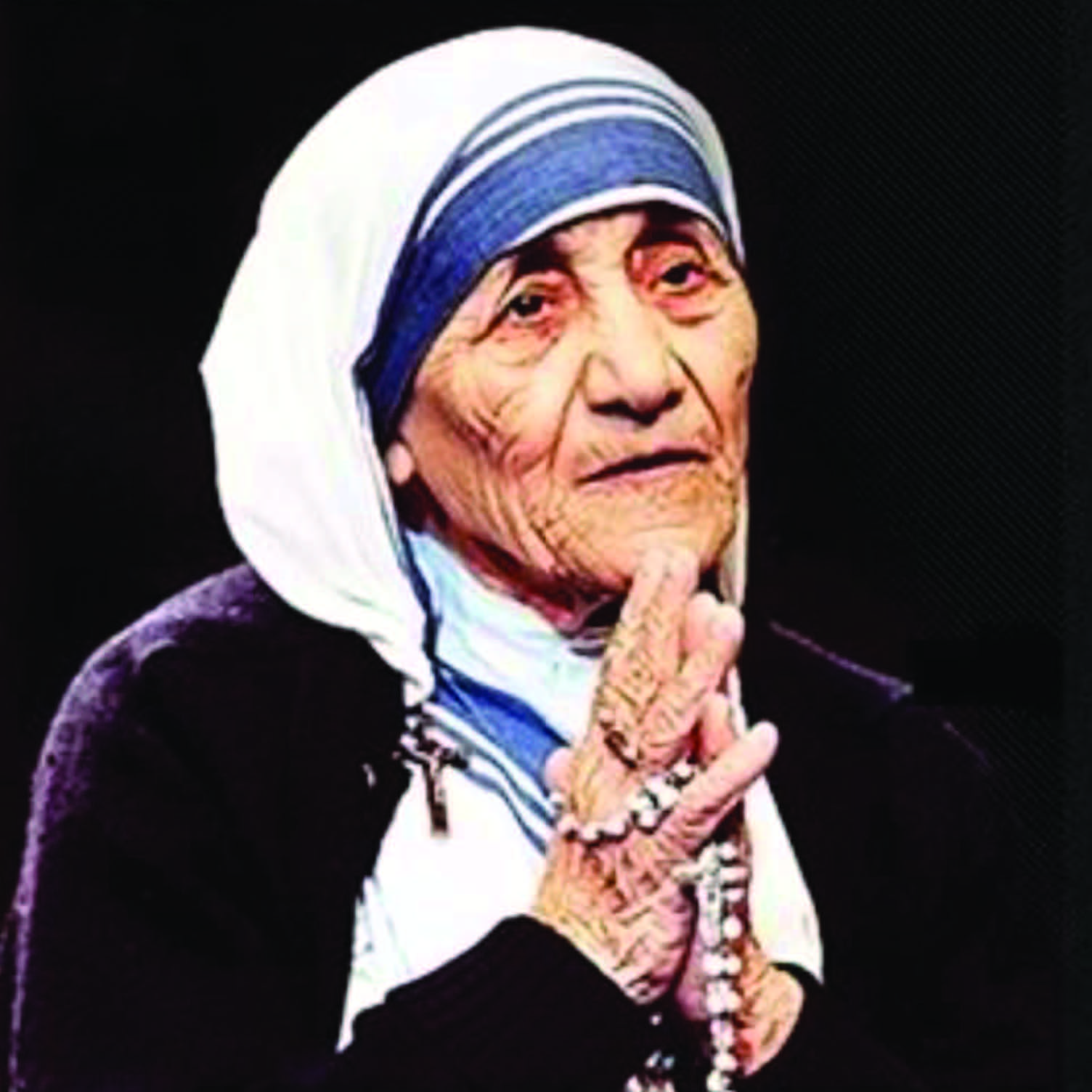
    Mother Teresa, a Catholic nun who devoted her life to help the poor and needy, revered in India, has been declared a saint in a canonization Mass held by Pope Francis in the Vatican.

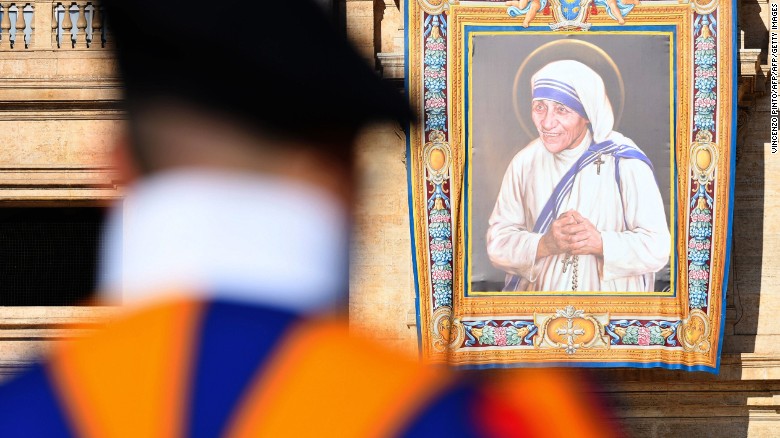
    Pope Francis praised Mother Teresa as a model of compassion to Catholics worldwide. (Image Courtesy - CNN)
    Pope Francis praised Mother Teresa as a model of compassion to Catholics worldwide. (Image Courtesy – CNN)

    Pope Francis delivered the formula for the canonization of the Albanian-born nun — known as the “saint of the gutters” — before huge crowds of pilgrims gathered in St. Peter’s Square in Vatican City on Sunday morning.

    Francis said St Teresa had defended the unborn, sick and abandoned, and had shamed world leaders for the “crimes of poverty they themselves created” in the canonization ceremony where he declared “Blessed Teresa of Calcutta to be a saint.”

    Speaking in Latin, Francis said that “after due deliberation and frequent prayer for divine assistance, and having sought the counsel of many of our brother bishops, we declare and define Blessed Teresa of Calcutta to be a saint, and we enroll her among the saints, decreeing that she is to be venerated as such by the whole church.”

    The Pope said Mother Teresa had spent her life “bowing down before those who were spent, left to die on the side of the road, seeing in them their God-given dignity”.

    He added: “She made her voice heard before the powers of the world, so that they might recognise their guilt for the crimes of poverty they themselves created.” He then repeated: “The crimes of poverty they themselves created.”

    Two apparent cures of sick people after Mother Teresa’s death in 1997 have been attributed to her intercession.

    Nuns of the Missionaries of Charity wait in St. Peter's Square. (Image Courtesy - CNN)
    Nuns of the Missionaries of Charity wait in St. Peter’s Square. (Image Courtesy – CNN)

    Catholics — including hundreds of blue- and white-robed nuns from the Missionaries of Charity sisterhood founded by Mother Teresa — had gathered from around the world to attend the canonization of the church’s newest saint, just 19 years after her death.

    A huge portrait of Mother Teresa, whom the church credits with having performed two miraculous cures of the sick, hung from St. Peter’s Basilica during the colorful ceremony.

    In India, a special Mass was celebrated at the Missionaries of Charity, the order she founded in Kolkata (Calcutta).

    Pope Francis then delivered a homily, in which he praised Mother Teresa — “this emblematic figure of womanhood and of consecrated life” — for her charitable work.

    “Mother Teresa, in all aspects of her life, was a generous dispenser of divine mercy, making herself available for everyone through her welcome and defense of human life, those unborn and those abandoned and discarded,” he said.

    “She bowed down before those who were spent, left to die on the side of the road, seeing in them their God-given dignity. She made her voice heard before the powers of this world, so that they might recognize their guilt for the crime of poverty they created.”

    For the newly-sainted Teresa, he said, “mercy was the salt which gave flavor to her work, it was the light which shone in the darkness of the many who no longer had tears to shed for their poverty and suffering.”

    She was an example to volunteers around the world, he said. “May she be your model of holiness.”

    In a departure from his scripted remarks, he noted that people “may struggle” to refer to her as “Saint Teresa.”

    “With great spontaneity, I think we will continue to call her Mother Teresa,” he said.

    Prayers were then delivered in a number of languages, including Albanian, Mother Teresa’s native tongue, and Bengali, the language of Kolkata, where a special Mass was celebrated at the Missionaries of Charity Sunday. A prayer was delivered in Chinese for persecuted Christians around the world.

    About 1,500 homeless people from across Italy were bused into the Vatican to be given seats of honor at the Mass — and be served a pizza lunch by nuns afterward.

  • GANESH CHATURTHI

    GANESH CHATURTHI

    Ganesha Chaturthi is the Hindu festival celebrated in honour of the god Ganesha, the elephant-headed. The festival, also known as Vinayaka Chaturthi, is observed in the Hindu calendar month of Bhaadrapada, starting on the shukla chaturthi (fourth day of the waxing moon period). The date usually falls between August and September. The festival usually lasts for 10 days, ending on Anant Chaturdashi (fourteenth day of the waxing moon period).

    The modern festival involves installing clay images of Ganesha in public pandals (temporary shrines), which are worshipped for ten days. These are immersed at the end of the festival in a body of water such as a lake, along with the idol. Some Hindus also install the clay images of Ganesha in their homes. The festival was celebrated as a public event since the days of Maratha King Shivaji (1630–1680). However, the public festival as celebrated in Maharashtra today, was introduced by Bhausaheb Laxman Javale in 1892 by installing first Sarvajanik (Public) Ganesh idol- Shrimant Bhausaheb Rangari Ganpati, Bhudwar Peth, in Pune. The first meeting regarding starting the Sarvajanik Ganesh utsav took place under the leadership of Bhausaheb Laxman Javale at his residence (Bhudwar Peth) now known as Bhau Rangari Bhavan. In 1893 Lokmanya Tilak praised the concept of Sarvajanik Ganesh Utsav in Kesari Newspaper. In 1894, he installed Ganesh idol in Kesari wada, Pune too and started preaching Ganesh Utsav.

    While celebrated all over India, it is grandest and most elaborate of them especially in Maharashtra, Karnataka, Telangana, Tamilnadu, Kerala, Andhra Pradesh, Goa and in other parts of Western India and Southern India. Outside India, it is celebrated widely in Terai region of Nepal and by the Hindu diaspora in the United States, Canada, Mauritius, and other places.

    Legend of Ganesha

    Traditional Hindu about Ganesha tell that Parvati, the consort of Shiva, created Ganesha out of sandalwood paste that she used for her bath and breathed life into the figure. She then set him the task of guarding her door while she bathed. Shiva, who had gone out, returned and as Ganesha didn’t know him, didn’t allow him to enter. After the combat between Ganesha and Shiva Ganas, finally angry Shiva severed the head of the child. Parvati seeing this became enraged and Shiva then promised that her son will be alive again. The devas searched for the head of dead person facing North, but they found only the head of an elephant. They brought the head of the elephant and Shiva fixed it on the child’s body and brought him back to life. Lord Shiva also declared that from this day the boy would be called Ganesha (Gana Isha : Lord of Ganas).

    According to the Linga Purana, Ganesha was created by Lord Shiva and Goddess Parvati at the request of the Devas for being a Vighnakartaa (obstacle-creator) in the path of Rakshasas, and a Vighnahartaa (obstacle-averter) to help the Devas achieve fruits of their hard work.CHATURTHI

    Celebration, rituals and tradition

    Weeks or even months before Ganesha Chaturthi, artistic clay models of Lord Ganesha are made for sale by skilled artisans. They are beautifully decorated and depict Lord Ganesha in vivid poses. The size of these statues may vary from 3/4 of an inch to over 70 feet.

    Ganesha Chaturthi starts with the installation of these Ganesha statues in colorfully decorated homes and specially erected temporary structures mandates (pandals) in every locality. The pandals are erected by collecting monetary contributions and are decorated specially for the festival, by using decorative items like flower garlands, lights, etc. and at times have theme based decorations.

    The priest then with the chanting of mantras invokes the presence of Ganesha using the statue as a channel, or body for his energy. This ritual is the Pranapratishhtha. After this the ritual called as Shhodashopachara (16 ways of paying tribute) follows. Coconut, jaggery, modaks, durva (trefoil) blades of grass and red flowers are offered. The statue is anointed with red unguent, typically made of kumkum and sandalwood paste. Throughout the ceremony, Vedic hymns from the Rig Veda, the Ganapati Atharvashirsa, Upanishad, and the Ganesha stotra from the Narada Purana are chanted.

    History

    It is not known when and how Ganesh Chaturthi was first celebrated. Ganesh festival was being celebrated as a public event in Pune since the times of Shivaji

    (1630–1680), the founder of the Maratha Empire. The Peshwas, the de facto hereditary administrators of the Empire from 1749 till its end in 1818, encouraged the celebrations in their administrative seat Pune as Ganesha was their family deity (Kuladevata). With the fall of the Peshwas, Ganesh festival lost state patronage and became a private family celebration again in Maharashtra till its revival by Indian freedom fighter and social reformer Lokmanya Tilak.

    The public festival as celebrated in Maharashtra today, was introduced by Bhausaheb Laxman Javale in 1892 by installing first Sarvajanik (Public) Ganesh idol. This followed a meeting at his residence, which was attended by, amongst others, Balasaheb Natu, and Krishnajipant Khasgiwale. Khasgiwale on his visit to the Maratha ruled princely state of Gwalior had seen the tradition of public celebration still maintained and brought it to the attention of his friends in Pune.

    In 1893 Lokmanya Tilak praised the concept of Sarvajanik Ganesh Utsav in his newspaper, Kesari, and the next year he installed a Ganesh idol in Kesari Wada too. Tilak’s efforts transformed the annual domestic festival into a large, well-organized public event. Tilak recognized the wide appeal of the deity Ganesha as “the god for everybody”, and popularized Ganesh Chaturthi as a national festival in order “to bridge the gap between Brahmins and ‘non-Brahmins’ and find a context in which to build a new grassroots unity between them”, and generate nationalistic fervour among people in Maharashtra against the British colonial rule. Tilak was the first to install large public images of Ganesh in pavilions, and also established the practice of submerging the idols in rivers, sea, or other pools of water on the tenth day after Ganesh Chaturthi.

    Under Tilak’s encouragement, the festival facilitated community participation and involvement in the form of intellectual discourses, poetry recitals, performances of plays, musical concerts, and folk dances. It served as a meeting ground for people of all castes and communities in times when, in order to exercise control over the population, the British discouraged social and political gatherings.

  • Mother Teresa sainthood on Sunday

    Mother Teresa sainthood on Sunday

    Vatican City (TIP): Affectionately called the “saint of the gutters” during her lifetime, Mother Teresa of Calcutta will be made an official saint of the Roman Catholic Church on Sunday (September 4), just 19 years after her death.

    A Nobel Peace Prize winner, Mother Teresa was one of the most influential women in the Church’s 2,000-year history, acclaimed for her work amongst the world’s poorest of the poor in the slums of Kolkata. Hundreds of thousands of faithful are expected to attend the canonization service for the tiny nun, which will be led by Pope Francis in front of St Peter’s basilica.

    The Church defines saints as those believed to have been holy enough during their lives to now be in Heaven and able to intercede with God to perform miracles. She has been credited with two miracles, both involving the healing of sick people.

    Although criticised both during her life and following her death, Mother Teresa is revered by Catholics as a model of compassion who brought relief to the sick and dying, opening branches of her Missionaries of Charity (MoC) order around the world. “Even in popular culture she’s identified with goodness, kindness, charity,” said Father Brian Kolodiejchuk, the MoC priest who campaigned for her sainthood.

    Her critics view her differently, arguing she did little to alleviate the pain of the terminally ill and nothing to stamp out the root causes of poverty.

    In 1991, the British medical journal the Lancet visited a home she ran in Kolkata for the dying and said untrained carers failed to recognise when some patients could have been cured. Kolodiejchuk said her detractors missed the point of her mission, arguing that she had created a place to comfort people in their final days rather than establish hospitals. “We don’t have to prove that saints were perfect, because no one is perfect,” he said. In her adopted India, Mother Teresa has been accused of looking to convert the destitute to Christianity, something her mission has repeatedly denied.

    The Rashtriya Swayamsevak Sangh (RSS), the umbrella right-wing Hindu organisation that helped create the ruling Bharatiya Janata Party, also accuses Mother Teresa of revelling in the misery of others.

    “As a resident of Kolkata, I feel insulted to see its poverty being glorified by the MoC. As a Hindu nationalist, I also feel that Christianity is not the only way of salvation,” said Jishnu Bose, the RSS spokesman in the city.

    But Mother Teresa still has legions of supporters in India, including Prime Minister Narendra Modi. “All her life she worked to serve poorer sections of Indian society. When such a person is conferred with sainthood, it is natural for Indians to feel proud,” Modi said on Sunday in a radio broadcast. Source: Reuters

  • Recalling Mother Teresa’s Grace

    Recalling Mother Teresa’s Grace

    Mother Teresa sainthoodMother Teresa will be canonized on September 4. The world seems to be converging at the Vatican to witness the historic occasion. President Obama has announced the presidential delegation for the ceremony. India, too, is participating. India’s Foreign Minister, Mrs. Sushma Swaraj will lead the Indian government’s delegation to the sainthood ceremony of Blessed Mother Teresa of Calcutta, on September 4 in the Vatican. The official spokesman of the foreign ministry, Vikas Swarup made the announcement at a press conference. “In view of eh importance that we attach to this very significant event – the canonization of Mother Teresa – let me tell you, the government of India’s delegation will be led by the Honorable External Affairs Minister herself,” Swarup told journalists. He noted that the composition of the delegation is being finalized and its members will be announced in due time.

    Prof. Indrajit S Saluja leaving the dais after welcoming Mother Teresa, seen sitting (third from right). Bishop Symphorian Keeprath is to her right
    Prof. Indrajit S Saluja leaving the dais after welcoming Mother Teresa, seen sitting (third from right). Bishop Symphorian Keeprath is to her right

    Ashutosh, the spokesperson of the Aam Aadmi Party (AAP) which heads the government of the National Capital Territory of Delhi said that Chief Minister Arvind Kejriwal will be travelling to the Vatican as he has accepted the invitation of Missionaries of Charity to attend the event. The Delhi chief minister met Mother Teresa in 1992, who asked him to work with the Missionaries of Charity in Calcutta, now called Kolkata. He remained there for several months, before joining the Indian Revenue Service. Earlier in May, Mamata Banerjee, chief minister of West Bengal state said she has accepted the invitation of the Missionaries of Charity in Kolkata to attend the ceremony in the Vatican.

    The whole world, as I said earlier is converging at the Vatican.

    My thoughts go back to January 27th, 1980. Mother Teresa had come to Ludhiana, Punjab where I was a college lecturer. She had visited the town to inaugurate Missionaries of Charity’s new home in Salem Tabri neighborhood on Jalandhar Byepass.

    A few days before she arrived, I received a call from Father Kurian Muttathupadam who was then Director Principal of the Sacred Heart Boys School, which was run under the Diocese of Jalandhar. Father Kurian told me about Mother Teresa’s coming visit and asked me to welcome her on behalf of the citizens of Ludhiana. I was overwhelmed with joy at the prospect of getting an opportunity to be in the gracious company of a wonderful soul. I kept counting the days. I kept rehearsing my speech which was to be brief. I was only to extend Mother a welcome and speak briefly about the noble work she and her organization -Missionaries of Charity -were doing. Even though I was trained to speak ex tempore on any subject under the Sun and for long periods, here I was framing, reframing my sentences.

    Mrs. Gurdarshan Kaur watches as her husband Prof. Saluja as he kisses the hands of Mother Teresa.
    Mrs. Gurdarshan Kaur watches as her husband Prof. Saluja as he kisses the hands of Mother Teresa.

    And then on the 27th January, 1980, Mother Teresa arrived at the venue to inaugurate the new house for Missionaries of Charity and the inmates which I faintly recall, would have been around 20. And I am told now there are a hundred inmates who include sisters, destitute women and children.

    It was a huge gathering, mainly of Catholic Christians who had come not only from Ludhiana but also from neighboring towns of Phillaur, Phagwara, Jalandhar, Nakodar, Kapurthala, Jagraon, Moga, Khanna, Chandigarh etc. to catch a glimpse of Mother Teresa.

    The Bishop of Diocese of Jalandhar Bishop Symphorian Keeprath and several priests were present, as was my dear friend Father Kurian who unfortunately died a year ago. I was invited to speak. In fact, I was the only person to speak, besides the Bishop and Mother Teresa herself. After I made a brief speech I came down from the dais and sat in the front row with my lovely wife Gurdarshan Kaur. The two of us listened to Mother’s message. She spoke of importance of compassion and love. Her message was simple and clear. God has created all in His own image and we all are His children. As such, we must love one another.

    Later, Mother went around meeting people. When Gurdarshan and I got our opportunity to be with her, I held her small, tender hands and kissed them, even as my wife looked on. I remember Mother uttering blessings and then she moved on.

    Little did I know then that Mother Teresa would one day be a Blessed one, that one day, she will be canonized. I feel so elated to think that I touched the tender, sift, loving small hands of a great soul. I feel her presence whenever I think of her. I rejoice in her canonization.

    Mother Teresa with orphans in Kolkata. She will become "St. Teresa of Calcutta" in a Sept. 4 canonization ceremony led by Pope Francis
    Mother Teresa with orphans in Kolkata. She will become “St. Teresa of Calcutta” in a Sept. 4 canonization ceremony led by Pope Francis

    Mother Teresa was widely known as a living saint as she ministered to the sick and the dying in some of the poorest neighborhoods in the world. Although some people criticized her for not also challenging the injustices that kept so many people so poor and abandoned, her simple service touched the hearts of millions of people of all faiths.

    Born to an ethnic Albanian family in Skopje, in what is now part of Macedonia, she went to India in 1929 as a Sister of Loreto and became an Indian citizen in 1947. She founded the Missionaries of Charity in 1950.

    Shortly after she died in 1997, St. John Paul II waived the usual five-year waiting period and allowed the opening of the process to declare her sainthood. She was beatified in 2003.

    After her beatification, Missionary of Charity Father Brian Kolodiejchuk, the postulator of her sainthood cause, published a book of her letters, “Mother Teresa: Come Be My Light.” The letters illustrated how, for decades, she experienced what is described as a “dark night of the soul” in Christian spirituality; she felt that God had abandoned her. While the letters shocked some people, others saw them as proof of her steadfast faith in God, which was not based on feelings or signs that he was with her.

    The date chosen for her canonization is the eve of the 19th anniversary of her death and the date previously established at the Vatican for the conclusion of the Year of Mercy pilgrimage of people like her who are engaged in works of mercy.

    Affectionately known as the “saint of the gutter” for her unconditional love for the poor, abandoned and the marginalized, she earned several international honors, including the Nobel Peace Prize in 1979.

  • Indian-Americans Hindus in California denied a Temple

    Indian-Americans Hindus in California denied a Temple

    CALIFORNIA (TIP): A Southern California city has rejected plans for a proposed Hindu cultural center (religious temple) mainly because officials say the large, domed building doesn’t fit in with its Old West-style motif.

    The decision last month by the city of Norco has riled some Indian-Americans who say the move was discriminatory.

    Local leaders celebrate that rural, equestrian lifestyle and are protective of it. Those who build must ensure their property includes Western architectural features such as a metal roof or overhang.

    But some Indian-Americans are questioning the sincerity of that standard after the City Council rejected a proposal for a Hindu cultural center on a hilltop partly on grounds that the large, domed building wouldn’t fit in. They think the decision — which came after residents urged the city to keep its culture and questioned why proponents chose the site — is discriminatory.

    Dr. Krupali Kaneyalal Tejura, a radiation oncologist who grew up in nearby Corona and works at an area hospital, got involved in the debate because she was offended by those who argued the center didn’t fit.

    “How does a community or a city decide it doesn’t fit in with their lifestyle? How far does this go?” she asked.

    “We turn down a lot of businesses. If they don’t want to have a Western theme, guess what? They don’t get built,” Mayor Kevin Bash said, adding the center also was too big for such a steep lot and there were drainage concerns.

    Norco’s 26,000 residents are tucked among the vast suburbs south and east of Los Angeles. Once overwhelmingly white, the area has seen a surge in Hispanics and, more recently, Asians.

    Southern California’s Indian population is relatively small — accounting for only 1 percent of the population in a four county-area spanning Los Angeles and its southern and eastern suburbs — and is spread out across different cities.

    But census data show the community has grown in recent years, especially in Riverside County, where Norco is located. There is a Sikh temple in Norco inside a grange hall-turned-church and a Hindu temple in the neighboring county, and Indian movies are shown at a Corona theater.

    The controversy over the proposed cultural center has focused attention on how Norco can keep its Western theme and rural lifestyle while incorporating newcomers, and how those who arrive in the city can adapt to their surroundings while retaining their culture.

    Manu Patolia, who proposed the project, said he is willing to ditch the domes and revamp the design of the 25,000-square-foot #Swaminarayan Gurukul center, which would host Indian language classes for children and yoga for the community at large.

    “I went around and took some pictures in Norco, and I showed them: Please tell us which one is the Western one that we can follow,” Patolia said.

    Patolia started laying out the changes for councilmembers but was told a revised project would need to go back to city planners for review. He said he is now weighing his options for the property, which he bought in the hopes of building the center.

    City officials said the project not only lacks Western-styled architecture but could cause drainage and parking problems. They note they’ve pressured businesses ranging from veterinarians to Bob’s Big Boy — whose mascot dons a city-funded cowboy hat — to get Western or get out.

    Maintaining that look and feel is critical to drawing visitors and investments in horse-related businesses, Bash said. Its rural vibe is what drew many residents to the Riverside County city in the first place. As the suburbs grew more crowded and urban, people sought a quieter place where they could ride horses and keep chickens in their backyards.

    What makes Norco a prime spot for any community center or hub is its proximity to freeways that cut across the region. The Indian-American community’s diverse cultures and religious traditions add to the demand for centralized locations where people can congregate, said Karthick Ramakrishnan, associate dean of University of California, Riverside’s School of Public Policy.

    Since the vote, Tejura said she has been dismayed by residents’ comments bashing Hindus in online community chat groups.

    She remembers as a child being shuttled by her father more than 20 miles each way to Indian dance classes and taking Gujarati language classes in the back of an area bowling alley. Virtually the only local restaurant options were burgers and Mexican food.

    Dave Vadodaria, who lives in nearby Orange County, said the center would help keep alive Hindu teachings and culture as the children of Indian immigrants grow up American. Born in Uganda, he said, he had to work to reconnect with his Hindu culture after attending school in England.

    “People are mingling with different parts of the world. People are seeing different cultures. You can’t just close your doors,” said Vadodaria, who owns an electronics business.

    “We are eating fusion food these days, Indian-Chinese, Indian with American. Everything is becoming fusion,” he said. “Why can’t it become a fusion community?”

  • Dr. Eboo Patel to speak on The ART of INTERFAITH LEADERSHIP

    Dr. Eboo Patel to speak on The ART of INTERFAITH LEADERSHIP

    Dr. Eboo Patel, a former member of President Barack Obama’s inaugural Advisory Council on Faith-Based Neighborhood Partnerships, for the Religion and Culture Lecture along with other spiritual leaders from the Christian, Jewish, and Muslim faith traditions with come together in an event sponsored by “Ministry Mentors”, a national not-for-profit organization, on Thursday, October 6, 1:30-4:30 p.m. at the Winnetka Covenant Church, 1200 Hibbard Road in Wilmette, Illinois.

    Patel will talk about how “Interfaith Leadership Can Save the World” and about the importance and timeliness of The Art of Interfaith Leadership.

    Spiritual Leaders have a special role to take for interfaith communication and leadership. All faiths are invited to this presentation which will be followed by a panel representing three different faiths: Imam Hazim Fazlic, Imam of the Islamic Cultural Center of Greater Chicago; Rabbi Wendi Geffen, Senior Rabbi of North Shore Congregation Israel; Rev. Peter Hawkinson, Senior Pastor of Winnetka Covenant Church; and Rev. Dr. Hal Edwards will moderate the panel.

    Dr. Eboo Patel founded the Interfaith Youth Core on the idea that religion should be a bridge of cooperation rather than a barrier of division. He is inspired to build this bridge by his identity as an American Muslim navigating a highly religious diverse social landscape.

    For over 15 years Dr. Patel has worked with governments, social sector organizations, and college and university campuses to help make interfaith cooperation a social norm. He has written for the Washington Post and is a regular contributor to Sojourner magazine. Dr. Patel was named by the US News and World Report as one of America’s Best Leaders of 2009. Dr. Patel also served on President Obama’s Inaugural Faith Council and is the author of “Acts of Faith”, “Sacred Ground” and “Interfaith Leadership: A Primer.” He holds a doctorate in the sociology of religion from Oxford University, where he studied on a Rhodes scholarship.

    Ministry Mentors is excited to present this timely event as we continue to seek ways to learn from each other and work together in our diverse communities and faith traditions.

    REGISTER ONLINE AT: www.ministrymentors.org

    Ministry Mentors is a spiritually-based, independent, cross-denominational, Christian organization that facilitates and supports mentoring relationships among clergy. For more information about Ministry Mentors, please visit our website at www.ministrymentors.org


  • EMOTIONAL CREMATION RITES OF HINDU GURU HIS HOLINESS PRAMUKH SWAMI MAHARAJ

    EMOTIONAL CREMATION RITES OF HINDU GURU HIS HOLINESS PRAMUKH SWAMI MAHARAJ

    His Holiness Pramukh Swami Maharaj JiSARANGPUR, GUJARAT, INDIA (TIP): Millions of tearful devotees gathered for the cremation rites of His Holiness Pramukh Swami Maharaj, one of India’s most commonly known Hindu ascetics revered by millions around the world. The fifth spiritual successor of Bhagwan Swaminarayan and spiritual leader of the BAPS Swaminarayan Sanstha departed his mortal body on Saturday, August 13, 2016 at the age of 95. Over 2.1 million devotees from around the world dashed to the village of Sarangpur in Gujarat, India, to pay their last respects before his final rites were performed on Wednesday, August 17, 2016.

    Thousands throng the cremation site
    Thousands throng the cremation site

    The atmosphere was filled with comforting friends and strangers sharing memories with each other of their uplifting interactions with Pramukh Swami Maharaj, reminiscing upon the heartfelt connection that cemented his influence and wisdom in their lives. Many had traveled overnight from the United States to attend the cremation.

    “Pramukh Swami Maharaj welcomed all people in search of guidance, spirituality, and self-improvement. He had a heart in which the whole world could live. Those who love him are all different, but the divinity they saw in him is the same,” said Puja Patel, 22, from Columbus, Ohio. Most remembered as a pious, selfless person, Pramukh Swami Maharaj had dedicated his life towards the service and personal development of others, establishing mandirs (Hindu temples) to preserve spirituality for current and future generations, as well as developing and overseeing schools, hospitals, and disaster relief services to provide infrastructure and support across communities of all sizes.

    Dr. Kashyap Patel, a cardiologist in Atlanta, Georgia, expressed his feelings following the passing, “I grew up building a bond with Pramukh Swami Maharaj. His travels from India would bring him to America, and he would take the time to get to know devotees in all corners of the world. He would reassure them in their faith, talk with them about their struggles, challenge them to improve their poor habits, listen to their seemingly insignificant worries – sharing the burden of life’s emotions with all who would lean on him. As he aged, his travels slowed, and face-to-face meetings with him grew fewer for all devotees. During this time, it became clear that his role as a guide, as a Guru, was not limited to his physical presence, it continues in the hearts of all those who accepted him as their teacher and friend.”

    Once the official word was released from the BAPS Shri Swaminarayan Mandir Sarangpur, Indian television networks began coverage of the memorials and tributes leading to the final rites rituals of Pramukh Swami Maharaj. Heads of state from all over the country arrived to pay a final visit to the spiritual leader who has united communities in support of serving society. Prime Minister of India, Narendra Modi, visited Sarangpur, Gujarat from Delhi and addressed saddened devotees before the funeral rites saying, “His Holiness Pramukh Swami Maharaj was a stalwart among humans who embodied compassion and humility…Today you have lost a Guru, but I have lost a father.” Senators, congressmen, and governors offered their condolences. Congressman Ed Royce of California wrote, “He touched countless lives, providing hope and guidance during his tireless travel across India and around the world. As a spiritual leader, he will indeed be sorely missed,and my prayers are with the millions around the world who mourn his passing and celebrate his remarkable life.”

    British Prime Minister Teresa May, Canadian Prime Minister Justin Trudeau, HRH Prince of Wales, and other heads of states also sent condolences and tributes. “His Holiness Pramukh Swami Maharaj exemplified the values of British Hindus whose contribution helps make the United Kingdom one of the world’s most successful multi-cultural, multi-faith democracies,” stated British Prime Minister Teresa May. Speaking of his life of service she added: “This legacy of selfless service will continue to benefit humanity for a long time to come.” Over 95 years, Pramukh Swami Maharaj’s life work and travels acquainted him with curious minds from around the globe.

    After news of his passing, many have extended their warm words on the loss of a beloved leader. Tributes are shared at http://pramukhswami.org/tributes. Born as Shantilal Patel on December 7, 1921, Pramukh Swami Maharaj, was initiated as a swami (Hindu monk) on January 10, 1940 and received the name Narayanswarupdas Swami. On May 21, 1950 he was appointed as Head of the organization and came to be known as Pramukh Swami Maharaj. Ever since he became a swami, he has counselled seekers from all walks of life through comforting discussions, compassionate letters, early hour phone calls, and visits throughout Gujarat – home to home, hut to hut – often made entirely by foot. The sheer amount of time given selflessly in working with people, listening to their pains and miseries to provide solutions rooted in unity and compromise, is the reason the entire Hindu community is experiencing an unparalleled sadness upon his passing. Pramukh Swami Maharaj served individuals as a father, teacher, mentor, friend, advisor, and ally – he was a Guru who empowered people to live morally upright lives rooted in devotion that would transform their character, attitudes, and outcomes to provide greater happiness for both themselves and their families.

    When the final rites were performed, thousands in Sarangpur were seated in prayer facing Pramukh Swami Maharaj’s funeral pyre, with hundreds of thousands watching through a live telecast streaming around the world. In accordance with Hindu final rites His Holiness Mahant Swami Maharaj, carrying a bundle of straw set ablaze by a holy flame from the site of the Akshar Deri located in Gondal, Gujarat, began the final circumambulations around Pramukh Swami Maharaj’s mortal body. With each step, Vedic chantings could be heard resounding in the background. The circumambulations were continued by senior swamis, who have shared a religious life with Pramukh Swami for decades, each bowing their head with utmost love and respect as they paid their final respects to both a guru and friend. When the flame ignited Pramukh Swami Maharaj’s body, beginning at his toe, the audience was collectively stilled and quieted. The mood on the mandir grounds was solemn and awash with the profound devotion of pained people as they watched the light of the pyre grow stronger, recalling their Guru. Heartfelt tears soaked millions of faces for whom this day was unimaginable, the day of the physical departure of their beloved Guru who has guided them through life’s peaks and valleys. Chaitali Inamdar of Edison, New Jersey said, “Although I am deeply saddened by the news, I truly believe he will always be with us through his teachings. I lost a friend but even in that loss, I have gained insight and wisdom in the reassurance that his message thrives in how I choose to live my life.” Pramukh Swami Maharaj’s life and message of spirituality has left a lasting impression on the community of Hindus who will now work to carry his work and teachings forward under the guidance and leadership of His Holiness Mahant Swami Maharaj, Keshavjivandas Swami, sixth spiritual successor of Bhagwan Swaminarayan and Guru of the BAPS Swaminarayan Sanstha. All individuals who wish to send their condolences and fond memories with His Holiness Pramukh Swami Maharaj are encouraged to send their notes to tributes@in.baps.org, or share their stories on social media using the hashtag #pramukhswami. More details on http://pramukhswami.org , www.baps.org https://www.youtube.com/user/BAPSChannel ###

    About BAPS The BAPS Swaminarayan Sanstha (BAPS), a worldwide socio-spiritual organization in Consultative Status with the Economic and Social Council of the United Nations, is dedicated to community service, peace and harmony. Motivated by Hindu principles, BAPS strives to care for the world by caring for societies, families and individuals. Through a number of social and spiritual activities, BAPS endeavors to produce better citizens of tomorrow who have a high esteem for their roots – their rich Hindu culture. Its 3,300 international centers out of which over support these activities of character-building. BAPS aspires to build a community that is morally, ethically and spiritually pure, and free of addictions.

    BAPS North America Since 1970, BAPS has been serving families and individuals across USA and Canada through various spiritual and cultural activities. Its 150 centers, including over 90 mandirs, form the hub of its various initiatives. With over 65 dedicated swamis giving spiritual guidance, the organization hosts over 630 weekly satsang assemblies for children, youth and adults. More details on http://www.baps.org/Global-Network/North-America.aspx Contact: BAPS North American Headquarters Phone: 732-777-1414 ext 140 or 732-497-2267 Email: media@na.baps.org Source: BAPS (Based on a press release)

  • KRISHNA JANMASHTAMI – THE BIRTH OF LORD KRISHNA

    KRISHNA JANMASHTAMI – THE BIRTH OF LORD KRISHNA

    The birthday of Hinduism’s favorite Lord Krishna is a special occasion for Hindus, who consider him their leader, hero, protector, philosopher, teacher and friend all rolled into one.

    LORD KRISHNA 2Krishna took birth at midnight on the ashtami or the 8th day of the Krishnapaksha or dark fortnight in the Hindu month of Shravan (August-September). This auspicious day is called Janmashtami. Indian as well as Western scholars have now accepted the period between 3200 and 3100 BC as the period in which Lord Krishna lived on earth.

    Read about the story of his birth.

    How do Hindus celebrate #Janmashtami? The devotees of Lord Krishna observe fast for the whole day and night, worshipping him and keeping vigil through the night while listening to his tales and exploits, recite hymns from the Gita, sing devotional songs, and chant the mantra Om namo Bhagavate Vasudevaya.

    Krishna’s birthplace Mathura and Vrindavan celebrate this occasion with great pomp and show. Raslilas or religious plays are performed to recreate incidents from the life of Krishna and to commemorate his love for Radha.

    Song and dance mark the celebration of this festive occasion all over northern India. At midnight, the statue of infant Krishna is bathed and placed in a cradle, which is rocked, amidst the blowing of conch shells and the ringing of bells.

    In the south western state of Maharashtra, people enact the god’s childhood attempts to steal butter and curd from earthen pots beyond his reach. A similar pot is suspended high above the ground and groups of young people form human pyramids to try and reach the pot and break it.

    The town of Dwarka in Gujarat, Krishna’s own land, comes alive with major celebrations as hordes of visitors flock to the town.

    The Most Powerful Incarnation of Vishnu

    LORD KRISHNA 3The great exponent of the Bhagavad Gita, Krishna is one of the most powerful incarnations of Vishnu, the Godhead of the Hindu Trinity of deities. Of all the Vishnu avataras he is the most popular, and perhaps of all Hindu gods the one closest to the heart of the masses. Krishna was dark and extremely handsome. The word Krishna literally means ‘black’, and black also connotes mysteriousness.

    The Importance of Being Krishna

    For generations, Krishna has been an enigma to some, but God to millions, who go ecstatic even as they hear his name.

    People consider Krishna their leader, hero, protector, philosopher, teacher and friend all rolled into one. Krishna has influenced the Indian thought, life and culture in myriad ways. He has influenced not only its religion and philosophy, but also into its mysticism and literature, painting and sculpture, dance and music, and all aspects of Indian folklore.

    The Time of the Lord

    Indian as well as Western scholars have now accepted the period between 3200 and 3100 BC as the period in which Lord Krishna lived on earth. Krishna took birth at midnight on the ashtami or the 8th day of the Krishnapaksha or dark fortnight in the Hindu month of Shravan (August-September). The birthday of Krishna is called Janmashthami, a special occasion for Hindus that is celebrated around the world. The birth of Krishna is in itself a transcendental phenomenon that generates awe among the Hindus and overwhelms one and all with its supra mundane happenings.

    The birth of Krishna is in itself a transcendental phenomenon that generates awe among the Hindus and overwhelms one and all with its supra mundane happenings.

    Mother Earth, unable to bear the burden of sins committed by evil kings and rulers, appealed to Brahma, the Creator for help. Brahma prayed to the Supreme Lord Vishnu, who assured him that he would soon be born on earth to annihilate tyrannical forces.

    One such evil force was Kamsa, the ruler of Mathura (in northern India) and his people were utterly terrified of him. On the day Kamsa’s sister Devaki was married off to Vasudeva, an akashvani or voice from the sky was heard prophesying that Devaki’s 8th son would be the destroyer of Kamsa. The frightened Kamsa immediately unsheathed his sword to kill his sister but Vasudeva intervened and implored Kamsa to spare his bride, and promised to hand over every new born child to him. Kamsa relented but imprisoned both Devaki and her husband Vasudeva.

    When Devaki gave birth to her first child, Kamsa came to the prison cell and slaughtered the newborn. In this way, he killed the first six sons of Devaki. Even before her 8th child was born, Devaki and Vasudeva started lamenting its fate and theirs. Then suddenly Lord Vishnu appeared before them and said he himself was coming to rescue them and the people of Mathura. He asked Vasudeva to carry him to the house of his friend, the cowherd chief Nanda in Gokula right after his birth, where Nanda’s wife Yashoda had given birth to a daughter.

    He was to exchange his boy and bring Yashoda’s baby daughter back to the prison. Vishnu assured them that “nothing shall bar your path”.

  • VARANASI, THE SPIRITUAL CAPITAL OF INDIA

    VARANASI, THE SPIRITUAL CAPITAL OF INDIA

    There are many legends associated with the ancient city of Varanasi or Kashi. It is believed that the Hindu god Shiva and his consort Parvati lived here on the banks of the Ganga River. It was here that the rivers Varuna and Assi originated and locked a piece of land that flourished decidedly as a Hindu pilgrimage site, specifically as the holiest cremation spot to attain salvation. Till date, Manikarnika and Harishchand ghats see as many as 200 cremations a day. Beside the association of life and death on the ghats, Varanasi has a number of temples, the Buddhist pilgrimage Sarnath and the adjacent towns of Chunar and Ramnagar as veritable sight seeing spots. Though one can spend weeks exploring the temples on the ghats, here are the places you must visit.

    SARNATH The Buddhist pilgrimage, Sarnath lies 10 km from Varanasi, and is yet another attraction that appeals to people from all around the world. This is the place where Gautum Buddha first gave his sermons on Dharma. The main deer park complex and a number of other Buddhist temples can be seen here. The Mulgandha Kuti Vihar temple, the Archaeological Museum, the Dhamek Stupa, the Chaukhandi Stupa and ruins of monasteries are the key highlights here. Other modern structures like the Japanese & Korean temples have been added to the Sarnath topography in the last few decades. Go early so you can beat the rush of tourists through the day and enjoy the tranquil ambience of these Buddhist relics.

    VARANASI 2KUSHTI AKHADAS The archaic gyms of Varanasi are still buzzing with activity in the mornings as youngsters come here to wrestle in the mid pits and work out with age-old weights. The wrestling rinks have mud that is brought from nearby villages and mixed with turmeric, curd and neem to infuse it with therapeutic properties.

    VARANASI’S GHATS The stepped banks (ghats) lie in a crescent shape along the Ganga River in Varanasi. These spring into action as early as 4 am and are buzzing with activity until late night. Hiring a boat to ride along the river is a good way to see all the action – morning ablutions, people praying the two burning ghats (photography not allowed even from the boat) and the bright umbrella dotted platforms where priests hold small ceremonies for pilgrims. Old havelis and palaces lie on the fringes of the river, ensuring a stunning landscape of unique architecture along the entire stretch. These are often used as backdrops for Bollywood movies or homes, since most of the royalty has abandoned these. The most spectacular spectacle at the ghats is the Ganga aarti that is held every evening between 6.15 and 7.15 pm on five ghats. Of these, the Dashashwamedh Ghat aarti is the oldest and the most famous one. Five to seven priests perform the daily ceremony with large fire lit lamps, bells and conchs, as hundreds converge towards the ghat in the evening.

    CHUNAR FORT Replete with legends, the Chunar Fort lies 37 km from Varanasi and is skirted by the Ganga on two sides. The fort was first constructed in 56 BC, and duly changed hands of ownership from the Afghan and Mughal rulers, to the British until 1947. The first Governor General of India, Warren Hastings also took shelter here when a rebellion broke out in 1781. His house can still be seen in the fort. The fort is often used as a backdrop for TV shows and Bollywood movies. Of these Chandrakanta, and the 2012 Bollywood movie, Gangs of Wasseypur are the most famous. Secret tunnels and hidden pathways are the highlights of this white bastion. It is not uncommon to find military presence here as this used to be a part of a training centre of the army.

    GAURI KEDARESHWAR TEMPLE One of the busiest ghats on the Ganga, the Kedar Ghat can be identified by its red and white steps from a distance. Thousands come here each year to pay homage to the Gauri Kedareshwar temple. This can be reached via boat or through the narrow lanes of Bengali Tola. The temple is famous for a replica of the Kedarnath lingam of the Himalayan temple. The irregular humped shaped lingam in stone is encased within a copper railing. People only enter the temple after taking a bath in the Gauri Kund (pond) adjoining the river.

    MAN MAHAL The original construction of the astronomical observatory of Varanasi was that of the Man Mahal palace constructed by King Amber in 1600 AD. It was later taken over by Maharaja Sawai Jai Singh, who founded the city of Jaipur and converted into this learning centre. He was a great patron of astronomy and had the famous astronomer, Sadashiva, build this for him on the ghats. The observatory is walking distance from the Dashashvamedh Ghat. The highlights of the observatory include the Samrat Yantra, Laghu Samrat Yantra, Dakshinobhiti Yantra, Chakra Yatra, Digansa Yantra and Narivalaya Dakshin and Uttar Gola.

    DURGA TEMPLE The 18th century Durga temple lies south of the main city, away from the ghats. A narrow lane flanked by flower and puja paraphernalia vendors leads up to this ancient temple. Inside, the low roofed, bright red walled temple has a small sanctum with a vivid idol of the Devi riding a tiger, armed with a trident, discus and sword. Navratras are celebrated with great vigour in this temple.

    RAMNAGAR The massive red ramparts of the Ramnagar fort can be seen across Assi Ghat on the other side of the Ganga. The Mughal-style fort was built by Raja Balwant Singh in 1750. Though the fort is not an architectural wonder, it is the main draw at the city of Ramnagar. The small city is most famous for its depiction of Ramlila in the most authentic form. The fort has a small museum, which does not require much time. The other highlight here is the Durga temple, which is the venue of the grand aarti held on the last day of the Ramlila. This is the place where Lal Bahadur Shastri was born.

    KAL BHAIRAV TEMPLE Kal Bhairav is also known as the ‘kotwal’ or the keeper of the city and commands a significant position in the story of Varanasi. The temple lies away from the main circuit near the ghats and is rather austere in architecture. The sanctum of Batuk Bhairav (child Bhairav) houses a metal idol of the deity, which is offered liquor, chocolates and meat. Infact there are a total of 8 Bhairav temples in Varanasi, which are said to be the protectors of Kashi Vishwanath.

    TULSI MANAS MANDIR The all-white Tulsi Manas Mandir is not as old as other temples, but is certainly one of the most popular ones for travellers. Built in 1964, it is dedicated to Lord Ram, and is supposedly on the same place where Tulsi Das wrote the Ramcharitamanas. The well-manicured gardens around the marble temple usher you into a labyrinth of white walls engraved with verses of the Ramcharitamanas, written in the Awadhi language.

    SANKAT MOCHAN The Sankat Mochan temple is another famous pilgrimage, dedicated to Lord Hanuman. It lies 4 km from the ghats and can be easily accessed by a rickshaw. This is the same place where the creator of Ramcharitamanas, Tulsi Das envisioned Hanuman and built a temple for him. Hundreds of monkeys liven the temple, which does not promise architectural excellence, but a strong spiritual hook. Tuesdays and Saturdays are especially crowded when parts of Ramcharitamanas are recited at the temple. Photography allowed only outside the temple.

    KASHI VISHWANATH TEMPLE Not far away from the Ganga is one of the oldest temples in Hinduism, Sri Kashi Vishwanath Temple. Deriving its name from the city Kashi, the temple was built in 1780 by the Late Maharani Ahilya Bai Holkar of Indore and is one of the twelve Jyotirlingas, the holiest of Shiva temples. The main deity housed within its premises is known by the name Vishwanatha or Vishweshwara, both translating to mean ‘ruler of the universe.’ The temple is also the starting point of the sacred Panchkoshi Yatra—a 88.5 km long barefoot walk encircling Kashi.

  • KARTIKAY — SON OF SHIVA

    KARTIKAY — SON OF SHIVA

    Kartikay is a son of Shiva and brother to Ganesha. While Ganesha symbolizes a spiritual attitude, Kartikay is the scientist of the gods. Kartikay bears 31 names, among which are Karttikeya, Kumara, Guha… Kartikay rides on a peacock, the killer of serpents.

    In Sanskrit literature, Kartikay is the son of Shiva and Sati, who immolated herself at her father Daksha’s feast. In some versions Parvati is his mother. Shiva retreated into many years of yogic meditation after the death of Sati.

    At this time the demon Taraka had been granted a boon of invulnerability to all but a son of Shiva, by Brahma, the creator god. As Shiva had retreated to a life of asceticism, Taraka assumed Shiva would never marry again, and rampaged across the Earth.

    The reincarnation of Sati, Parvati (or sometimes Uma) was persuaded to be married to Shiva. Kama, the god of love and sexual desire fired a flower at Shiva in an attempt to cause Shiva to marry Parvati. Kama was obliterated by the light of Shiva’s third eye.

    However, Shiva was later persuaded to marry Parvati and have a son with her. Shiva then offered his seed to the god of fire, Agni. Agni was unable to bear the brightness and intensity of the heat and they were given for safekeeping to Ganga. The seeds then matured into six children who were raised by the Kartika or Pleiades. Parvati was then united with the children, whom she transformed into one child.

    Kartikay was then sent out to do battle with the asura, Taraka, accompanied by the devas. He later slew Taraka after seven battles in different sites across India. After his defeat of Taraka, Kartikay is said to have become the general of the gods and to have led them to victory on various occasions. He later earned the title of war god and general of the demi-gods.

    Lord Kartikeya symbolizes a person of perfection. He is the war God and was created by all the Gods to bring an end to the demons. Lord Kartikeya is very masculine and fierce. He is also regarded as fire and is very fiery in nature. The Lord has a spear in his hand called Sakti which represents the destruction of evil and with his other hand he is found blessing his devotees. Lord Kartikeya’s vehicle or Vahana is a peacock that has the capacity of killing serpents by gripping in his feet. Thus, the peacock represents the destroyer of harmful and sensual desires of humans.

    HINDU GOD OF WAR

    Kartikeya, also known as Murugan, is the Hindu god of war or the Hindu Mars. The birth of Kartikeya has many legendary stories.

    Kartikeya is represented as god mounting on his Vahana, the Peacock and carries the weapon the Vel. He is sometimes depicted with many weapons including a sword, a spike, a scepter, a discus and a bow although more usually he is depicted wielding a sakti or spear. This signifies Kartikeya`s purification of human ills. His spike symbolizes protection; discus portrays his knowledge of the truth. The mace represents his strength and the bow is a sign of his ability to defeat all ills. His peacock mount symbolizes his destruction of the ego. The six heads of Kartikeya is represented as the six Siddhis granted upon yogis over the course of their spiritual development.

    In prehistoric ages in India, Kartikeya was regarded as the patron deity of thieves. In the Puranas it is said that Kartikeya had dug through the Krauncha Mountain to kill the demon Taraka and his brothers. Kartikeya helped Shiva fight the newborn Ganesha, other son of Shiva. In the Brahma Vaivarta Purana, he is represented as the elder son of Shiva and Ganesha as the younger. In South India, it is believed that he is the younger of the two. Kartikeya is believed to be a handsome bachelor. Other stories say that he had two wives Valli and Devayani.

  • PARJANA — THE RAIN GOD

    PARJANA — THE RAIN GOD

    Parjanya is the Hindu God who gives rainfall thereby leading to abundant food and other crops for people to consume. Parjanya dominates thunderstorms and monsoons. There are several hymns in the Rig Veda that celebrates the valour of Parjanya. Parjanya is recognized with Indra, the “Bull” of the Rig Veda. He is also related with Lord Varuna as a deity of clouds and as punishing sinners. In the Atharva Veda it is mentioned that prayers are dedicated to Parjanya, to invoke the blessings of rains. He is also responsible for vegetation and is also associated with cattle.

    Parjanya was also one of the Sapta rishi in the fifth Manvantara. According to the Vishnu Purana he is one of the twelve Adityas – the guardian of the month of Kartik. He is also a Gandharva and a Rishi in the Harivamsa. In each month of the year, it is a different manifestation of Surya who shines. Similarly Parjanya shines in the month of Shravana and Parjanya has seventy two rays.

    Parjanya is compared with the Lithuanian god Perkunas, the god of thunder. Parjanya is a god who controls over the lightning, the thunder, the rain, and the procreation of plants and living creatures. But it is by no means clear whether he is originally a god of the rain or a god of the thunder.

    Parjanya is also symbolized as the brother of Aditi, and husband of Prithvi, the Earth. He is also described as the father of Soma, and the protector of the Soma plant.

    Parjanya is also the name of a Lokapala, the regent of the north and king of clouds. Maruts that consists of several Gods is also associated with Parjanya. Thunderbolts created by Parjanya are powerful as they cause entire mountain ranges to disappear or appear immediately. He is also coined as `divine father`.

    AGNI, THE FIRE GOD

    Agni is one of the most important of the Vedic gods. He is the god of fire, the messenger of the gods, the acceptor of sacrifice. Agni is in everyone’s hearth; he is the vital spark of life, and so a part of him is in all living things; he is the fire which consumes food in peoples’ stomachs, as well as the fire which consumes the offerings to the gods. He is the fire of the sun, in the lightning bolt, and in the smoke column which holds up the heavens. The stars are sparks from his flame. He was so important to the ancient Indians that 200 hymns in the Rig Veda are addressed to him, and eight of its ten books begin with praises dedicated to him.

    Agni is closely associated with Indra, and is sometimes said to be his twin brother. Thus Dyaus Pita and Prthivi are named as two of his parents. But he has many more. Sometimes Kasyapa and Aditi are his parents; another time he is the son of a queen who keeps his birth secret from her king. He was born, like Indra, in full power and vigor. Agni is also said to be the son of ten mothers who are all sisters; these are the ten fingers of man. Another story tells that he consumed his parents when he was born, as they could not provide for him; this is symbolic of the fire born when two sticks are rubbed together which quickly are burned up by it. Dawn and Night are his sisters, his wife is Svaha, and he is the father of Karttikeya.

    When Agni is described in anthropomorphic form, he sometimes has two faces which are smeared with butter. He has seven fiery tongues and sharpened, golden teeth. He is red in color, with black eyes and wild, black hair. He has seven arms and three legs, and seven rays of light emanate from his body. He either rides on a ram, or on a chariot, pulled by goats or sometimes parrots.

    Agni loves all his worshipers equally, and so is loved in turn by all of them. He visits everyone’s hearth, no matter if they are rich or poor. He is the mediator between the gods and mankind. He is a great consumer of Soma. When people use fire, they must face it toward the proper direction for different uses. When facing East, the fire should be used for sacrifices to the gods; when facing South, the fire should be used for sacrifices to the Manes or spirits of the dead; a cooking fire should always face toward the West. The proper offering to Agni, and hence all the gods, is ghee, which is clarified butter. Agni also had the power to impart immortality on mortals, as well as remove all sins at the time of one’s death.

    In later times, Agni’s worship fell off dramatically. He became an incarnation of either Shiva or Brahma. Eventually he has come only to be called on by lovers, and by men who wish to increase their virility.

    Lord Agni is one of the supreme Gods in Rig Veda. Agni is associated with Vedic sacrifice and takes offerings to the other world in the fire. He is the chief of religious ceremonies and duties and acts as a messenger between human and gods. Agnicayana and Agnihotra are the Vedic rituals concerned with Lord Agni. Agni stands second to Lord Indra. Lord Agni is two faced and they suggest his destructive and beneficial qualities.

    Agni is one of the guardians who represent southeast direction. The light Lord Agni emits is the light of knowledge so he is also called the illuminator of knowledge who lights up the path that leads to truth. According to Rig Veda Agni have two parents. As the divine personification of the fire of sacrifice, Agni is the mouth of the gods, the carrier of the oblation and the messenger between the human and the divine orders.

    Agni has been worshipped by the Hindus since the Vedic period. Agni is one of the three supreme deities of the Rig Veda, i.e. Agni, Vayu and Surya. These three Gods preside over earth, air and sky respectively. In Rig Veda, largest numbers of hymns are addressed to Agni.

  • GORAKHNATH: A MAHAYOGI

    GORAKHNATH: A MAHAYOGI

    Gorakhnath, a mahayogi, was not a philosopher… in the sense that he did not seek Absolute Truth in the path of speculation and logical argumentation. He was not so interested in logically proving or disproving the existence of any Ultimate Noumenal Reality beyond, behind or immanent in the phenomenal world of our normal experience or intellectually ascertaining the nature of any such Reality.

    He never entangled himself seriously in controversial metaphysical discussion. He never made a display of his intellectual capacities as the upholder of any particular metaphysical theory in opposition to other rival theories. He knew that in the intellectual plane, differences of views were inevitable, especially with regard to the Supreme Truth, which was beyond the realm of the normal intellect. Gorakhnath did not attach any primary importance to philosophical speculations and controversies as a means to the realisation of the Ultimate Truth.

    But he considered them valuable as modes of intellectual discipline and helpful in the path of search for Truth, provided that they were carried on with sincerity and earnestness and humility, and without any bigotry, arrogance, prejudice or blind partiality to any particular school of thought. Unbiased pursuit of Truth in the path of philosophical reflection was, to him, a very effective way to the progressive refinement of the intellect and its elevation to higher planes, leading gradually to the emancipation of consciousness from the bondage of all intellectual theories and sentimental attachments.

    Tattva-Vicara or philosophical reflection was therefore regarded as a valuable part of yogic self-discipline…. aiming to make the individual free from all kinds of bias and prejudice, narrowness and bigotry, all sorts of pre-conceived notions and emotional clingings, and to raise it to the pure supra-mental, supraintellectual spiritual plane, in which it may be blessed with the direct experience of the Absolute Truth by becoming perfectly united with it. It was with this object in view that Yogi Guru Gorakhnath taught what might be called a system of philosophy for the guidance of truth-seekers in the path of intellectual self discipline… Yoga is a method of systematic discipline of all external and internal organs of the physical body, of all senses and vital forces, nerves and muscles, of all psychical functions, natural propensities, subtle desires and passions and of the entire intellectual ideas and judgements and reasonings with a view to the establishment of perfect control over and harmony among all of them… Gorakhnath would teach that Truth was the same, in whatever forms of language. It might be expressed and in whatever paths the intellect might approach it. The mind must seek for the Truth with sincerity and earnestness and must not be led away by undue attachment to particular forms of language or methods of thinking. The Ultimate Truth reveals itself in a plane of consciousness higher than those in which these speeches and thoughts move… linguistic forms are only means to purification and enlightenment, concentration of empirical consciousness and its elevation to higher planes. Gorakhnath himself feely made use of the terminology and nomenclature current among other schools of philosophical thinking and religious discipline as well and pointed out that their inner significance and purpose were the same. He would often make use of poetic imageries, similes, metaphors and figures of speech and analogical arguments for giving expression to his inner thoughts and experiences, which really belonged to higher planes.