Tag: Hinduism

  • GURU PURNIMA

    GURU PURNIMA

    Guru Purnima is an Indian festival dedicated to spiritual and academic teachers. This festival is traditionally celebrated by Hindus, Jains and Buddhists, to pay their respects to their teachers and express their gratitude. The festival is celebrated on the full moon day (Purnima) in the month of Ashadh (June–July) of the Shaka Samvat, which is the Indian national calendar and the Hindu calendar.

    Observances

    The celebration is marked by ritualistic respect to the guru, Guru Puja. The Guru Principle is said to be a thousand times more active on the day of Gurupurnima than on any other day. The word guru is derived from two words, gu and ru. The Sanskrit root gu means darkness or ignorance, and ru denotes the remover of that darkness. Therefore, a guru is one who removes the darkness of our ignorance. Gurus are believed by many to be the most necessary part of life. On this day, disciples offer puja (worship) or pay respect to their guru (spiritual guide). In addition to having religious importance, this festival has great importance for Indian academics and scholars. Indian academics celebrate this day by thanking their teachers as well as remembering past teachers and scholars.

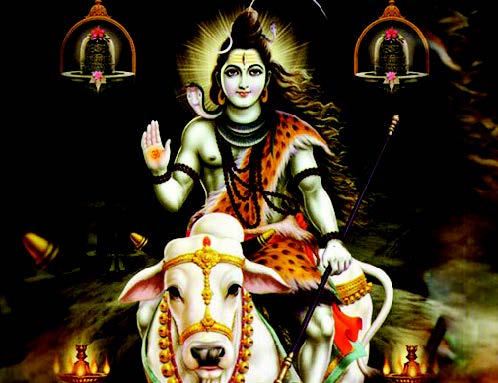
    Traditionally the festival is celebrated by Buddhists in honor of the lord Buddha who gave His first sermon on this day at Sarnath, Uttar Pradesh, India. In the yogic tradition, the day is celebrated as the occasion when Shiva became the first guru, as he began the transmission of yoga to the Saptarishis. Many Hindus celebrate the day in honor of the great sage Vyasa, who is seen as one of the greatest gurus in ancient Hindu traditions and a symbol of the Guru-shishya tradition. Vyasa was not only believed to have been born on this day, but also to have started writing the Brahma Sutras on ashadha sudha padyami, which ends on this day. Their recitations are a dedication to him, and are organised on this day, which is also known as Vyasa Purnima. The festival is common to all spiritual traditions in Hinduism, where it is an expression of gratitude toward the teacher by his/her disciple.[7] Hindu ascetics and wandering monks (sanyasis), observe this day by offering puja to their guru, during the Chaturmas, a four-month period during the rainy season, when they choose seclusion and stay at one chosen place; some also give discourses to the local public.[8] Students of Indian classical music, which also follows the Guru shishya parampara, celebrate this holy festival around the world.

    Hindu legend

    This was the day, when Krishna-Dwaipayana Vyasa – author of the Mahabharata – was born to sage Parashara and a fisherman’s daughter Satyavati, thus this day is also celebrated as Vyasa Purnima.Veda Vyasa, did yeoman service to the cause of Vedic studies by gathering all the Vedic hymns extant during his times, dividing them into four parts based on their use in the sacrificial rites, and teaching them to his four chief disciples – Paila, Vaisampayana, Jaimini and Sumantu. It was this dividing and editing that earned him the honorific “Vyasa” (vyas = to edit, to divide). “He divided the Veda into four, namely Rig, Yajur, Sama and Atharva. The histories and the Puranas are said to be the fifth Veda.”

    Yogic lore

    In yogic lore, it is said that Guru Purnima was the day that saw the birth of the Adi Guru, or the first Guru. The story goes that over 15,000 years ago, a yogi[9] appeared in the upper regions of the Himalayas. Nobody knew what his origins were. But his presence was extraordinary, and people gathered. However, he exhibited no signs of life, but for the occasional tears of ecstasy that rolled down his face. People began to drift away, but seven men stayed on. When he opened his eyes, they pleaded with him, wanting to experience whatever was happening to him. He dismissed them, but they persevered. Finally, he gave them a simple preparatory step and closed his eyes again. The seven men began to prepare. Days rolled into weeks, weeks into months, months into years, but the yogi’s attention did not fall upon them again.After 84 years of sadhana, on the summer solstice that marks the advent of Dakshinayana, the earth’s southern run, the yogi looked at them again. They had become shining receptacles, wonderfully receptive. He could not ignore them anymore. On the very next full moon day, the yogi turned south and sat as a guru to these seven men. The Adiyogi (the first yogi) thus became the Adi Guru. Adiyogi expounded these mechanics of life for many years. The seven disciples became celebrated as the Saptarishis and took this knowledge across the world.Guru Purnima is held sacred in the yogic tradition because the Adiyogi opened up the possibility for a human being to evolve consciously. The seven different aspects of yoga that were put in these seven individuals became the foundation for the seven basic forms of yoga, something that has still endured.

    Observances by Buddhists and Hindus Buddhists observe on this day uposatha i.e. to observe eight precepts. Vipassana meditators practice meditation on this day under the guidance of their teachers. Rainy season i.e. varsha vassa also starts with this day. During the rainy season lasting for three lunar months from July to October. During this time Buddhist monks remain in a single place, generally in their temples. In some monasteries, monks dedicate the Vassa to intensive meditation. During Vassa, many Buddhist lay people reinvigorate their spiritual training and adopt more ascetic practices, such as giving up meat, alcohol, or smoking.

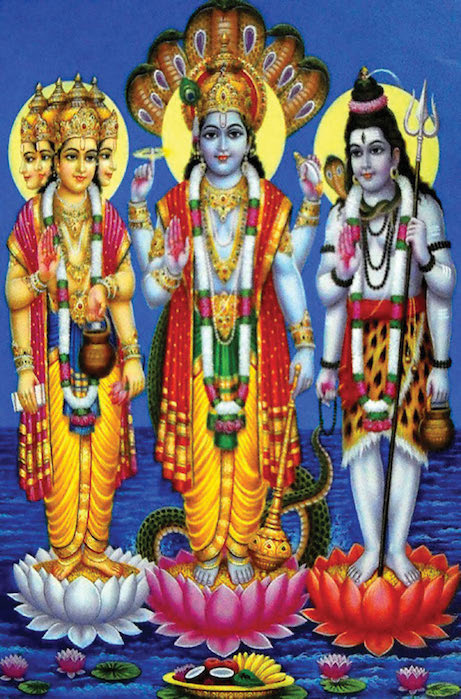
    The Hindu spiritual Gurus are revered on this day by a remembering their life and teachings. Vyasa Puja is held at various temples, where floral offerings and symbolic gifts are given away in his honour and that of the cosmic satguru. The festivities are usually followed by feast for the disciples, shishya, where the prasad and charnamrita literally nectar of the feet, the symbolic wash of Guru’s feet, which represents his grace, kripa is distributed. As a day of remembrance towards all gurus, through whom God grants the grace of knowledge (Jnana) to the disciples,[10] special recitations of the Hindu scriptures especially, the Guru Gita, a 216 verse ode to Guru, authored by the sage, Vyasa himself, are held all day; apart from singing of bhajans, hymns and organising of special kirtan session and havan at many places, where devotees from all over gather at the ashrams, matha or place where the seat of Guru, Guru Gaddi exists.This day also sees the ritual of padapuja, the worships of Guru’s sandals, which represent his holy feet and is seen a way of rededicating to all that a Guru stands for. Disciples also recommit themselves on this day, towards following their teacher’s guidance and teachings, for the coming year. A mantra that is particularly used on this day is “Gurur Brahma, Gurur Vishnu, Gurur Devo Maheshwara, Guru Sakshat Parabrahmah Tasmai Shree Guru Veh Namah”. This day is also seen as an occasion when fellow devotees, Guru Bhai (disciple-brother), express their solidarity to one another in their spiritual journey.

  • Hindus seek New York Mayor’s Apology over School Principal depicted as Goddess

    Hindus seek New York Mayor’s Apology over School Principal depicted as Goddess

    NEW YORK(TIP): Members of an Indian American Hindu activist group have reached out to New York City Mayor Bill de Blasio and the Department of Education chancellor Carmen Farina for an apology following a New York Daily News report that showed a Queens junior high school principal depicted as a Hindu deity.

    Rajan Zed, a Hindu activist in Nevada, in speaking of a mural that shows Junior High School 226 principal Rushell White as a multi-armed Hindu goddess, said that Hindu goddesses were highly revered in Hinduism and were meant to be worshiped in temples or home shrines and not to be used indecorously or thrown around loosely in reimagined versions for dramatic effects on public school premises.

    He added in the June 29 statement, “Inappropriate usage of Hinduism concepts and symbols for pushing selfish agenda was not okay.”

    Reportedly, the school White leads has a large Hindu population. Assistant principal Dave Possner was reported to have leaked the mural to the press. The situation was compounded further when Possner, 42, of Staten Island, added that White gave him bad marks as payback for exposing the school mural.

    The artwork at the South Ozone Park school also showed Possner as an outcast, tiny little man off in the distance, according to the Daily News report.

    “Mrs. White is after me for being a whistleblower,” Possner told the Daily News. “Anyone can see this is retaliation. She’s angry at me because I exposed her mural in The News.”

    The mural was ordered to be hung up by White, 40, on June 23, but came down June 27 after complaints by staffers at the school.

    Zed, the president of the Universal Society of Hinduism, indicated that the mural was unnecessary and urged the city’s Department of Education to publish a disclaimer about this on its website along with proper explanation about Hindu goddesses.

    “Hinduism is the oldest and third largest religion of the world with about one billion adherents and a rich philosophical thought and it should not be taken frivolously,” Zed stressed. “No faith, larger or smaller, should be ridiculed at.”

    Though seeking the apology from the mayor and education department chancellor, Zed noted that “Hindus understood that the purpose of school mural in this case apparently was not to denigrate Hinduism, but casual flirting like this sometimes resulted in pillaging serious spiritual doctrines and revered symbols and hurting the devotees.”

    Zed further said that Hindus welcomed educational institutions to learn more about Hinduism but take it seriously and respectfully.

    Department of Education officials said they are investigating White’s role in the creation of the mural.

  • Tulsi Gabbard Asks California Board To Describe Hinduism Accurately

    Tulsi Gabbard Asks California Board To Describe Hinduism Accurately

    Tulsi Gabbard, the first ever Hindu elected to the US House of Representatives, has asked a Californian educational board to give Hinduism its due place in school text books and not to describe it inaccurately as ‘religions of ancient India’.

    California State Board of Education is in final stages of revising and updating the K-12 History-Social Science Framework for public schools.

    In a letter ahead of their final hearing on Thursday, Ms Gabbard – who represents the Democratic Party from Hawaii – urged the board to preserve Hindu history and identity by restoring all references to “Hinduism” that were removed or replaced with the ahistorical and inaccurate phrase, like “religions of Ancient India, including but not limited to early Hinduism”.

    Just as other religions, including Christianity, Judaism, Islam, and Buddhism are given their own separate and distinct space for discussion in the Framework, so should Hinduism.

    “Replacing Hinduism with the term ‘religions of Ancient India, including but not limited to early Hinduism’ is not only inaccurate, but it will cause confusion for students and teachers alike,” she said in her letter dated July 8, a copy of which was obtained by news agency PTI.

    In the letter, Ms Gabbard also urged the board to acknowledge the positive roles played by women in Ancient Indian and Hindu society.

    “While it is important to discuss the existence of patriarchies in ancient civilisations, it is also critical to discuss the positive contributions and unique roles played by women in those societies,” she noted.

    “In the context of Ancient India, Hindu women were able to perform their own religious rites and also authored the Vedas, Hinduism’s sacred texts.

    “The framework should thus acknowledge these historical facts when describing the roles of women in ancient Indian society,” she argued.

    Ms Gabbard asked the California Board to accurately represent the caste-system in the framework by not depicting it as a defining feature or a foundational religious belief of Hinduism.

    “While caste-based discrimination is a reality that must be dealt with, it goes against the essence of Hindu teachings and scriptures, which posit that divinity is inherent in all beings,” she said.

    Ms Gabbard said as the first and only serving Hindu-American Member of Congress, she has worked actively throughout her many years of service to promote diversity, equality, and pluralism.

    “I firmly believe in the significance of creating an education system and textbooks that uphold these important American values,” she said.

    Meanwhile, in another letter to the board, some two-dozen Indian-American organisations requested “fairness and equity” in the way Hinduism and Ancient India are taught in comparison to other world religions and civilisations.

    “Hinduism and Indian history are taught to 6th and 7th graders in an outdated, inaccurate, and stereotyped manner. The teachings and histories of other religions are highlighted positively, while Hindu teachings are oversimplified and inaccurate,” the letter said.

    “Gender bias, subjugation and discrimination are only conflated with Hinduism, in spite of their presence in every religion’s history. And Hinduism’s pluralistic ethos, concept of spiritual unity of everyone and everything, and contributions of women are ignored,” these organisations said.

  • Hindu Temple Society of North America to host Inaugural Conference for Young Professionals

    Hindu Temple Society of North America to host Inaugural Conference for Young Professionals

    NEW YORK (TIP): The Hindu Temple Society of North America (HTS) will be hosting “Anubhava,” an inaugural conference for Hindu young professionals to promote the engagement of young professionals within the Temple community as volunteers, advocates and future leaders. The all-day conference has been scheduled on Saturday, July 30, 2016, and will feature keynote speakers, peer-led panels and workshops. Anubhava conference is expected to bring together over 100 Hindu young professionals in the age group of 20 to 45 in the tri-state area to discuss the evolution and relevance of Hinduism in today’s modern world.

    “This is the first time a conference of this scale geared towards this age group is being convened,” says Dr. Uma. “It’s wonderful that our young people are stepping up to organize and participate in Anubhava. Their voices are invaluable to the dialogue surrounding Hinduism and these are all individuals who will pave the way for the Temple community in the coming years.” Hindu Temples and institutions may sponsor delegates to the Anubhava conference to involve young professionals associated with the respective organizations in understanding Temple management and discuss other aspects of modern-day Hinduism. The conference takes place in the Hindu Temple Community Center located in Flushing, New York. Interested participants may contact the Temple at: (718) 460 8484 Ext. 112 for more info about the conference or may register online at: http://nextgen.chtna.org

    Temple’s website: www.NYGaneshTemple.org Temple’s Facebook page:
    www.Facebook.com/NYGaneshTemple

  • SHRAVAN MAAS

    SHRAVAN MAAS

    Avery auspicious month according to the ancient scriptures, Shravan Maas falls somewhere during July to August. Shravana Nakshatra is the birthstar of Vishnu and falls on the full moon day during this time. So, this month is called “Shravan Maas.” Each day of this month is a very auspicious time to worship many deities, including Lord Shiva, Gowri, Krishna, and Goddess Lakshmi. Special prayers and rituals are performed in Shiva temples. Mondays (Somavar) of Shravan month are specially observed times to worship the austere Lord Shiva with austerity.

    During the entire month of Shravan Maas, visiting the Shiva Temple in the evening and offering flowers and abhishekam gives a long and prosperous life.

    The whole Savan month is considered as highly auspicious, since every day of the month Savan holds a special significance. The whole month is blessed with the blessings of Lord Shiva and some other lords such as Lord Vishnu and Lord Krishna. We observe some really auspicious occasions in the month of Savan such as Raksha Bandhan, Hariyali Teej, and Nag Panchami.

    As we are talking about the month of Savan and its main deity Lord Shiva, how can we forget to talk about Savan Somvars. We know that the whole month of Savan is having a special significance for worshiping Lord Shiva. The auspicious results of worshiping Lord Shiva increases upto many times in the holy month of Savan.

    Monday or Somvar being the special day of Lord Shiva, the auspiciousness of Somvars in the month of Savan increases upto many folds. Special fast and Pujas are performed by the devotees to please Lord Shiva in the month of Savan.

    What Is Sawan Somvar?

    Savan Somvars hold a great significance because they are the special days of Lord Shiva in the special holy month. Highly auspicious results can be obtained by worshiping Lord Shiva on Savan Somvars every year.

    The starting of fasts of Solah (sixteen) Somvars is also considered as highly auspicious in the month of Savan. Reciting Solah Somvar Vrat Katha is considered highly auspicious for women. Savan Somvar Vrat is mainly categorized into three categories, these are:

    Savan Somvar : Fast of monday only in the month of Savan
    Solah Somvar : Beginning the fast of Solah (sixteen) Somvars, in the month of Savan
    Somya Pradosh : Fast observed till the evening during Pradosham

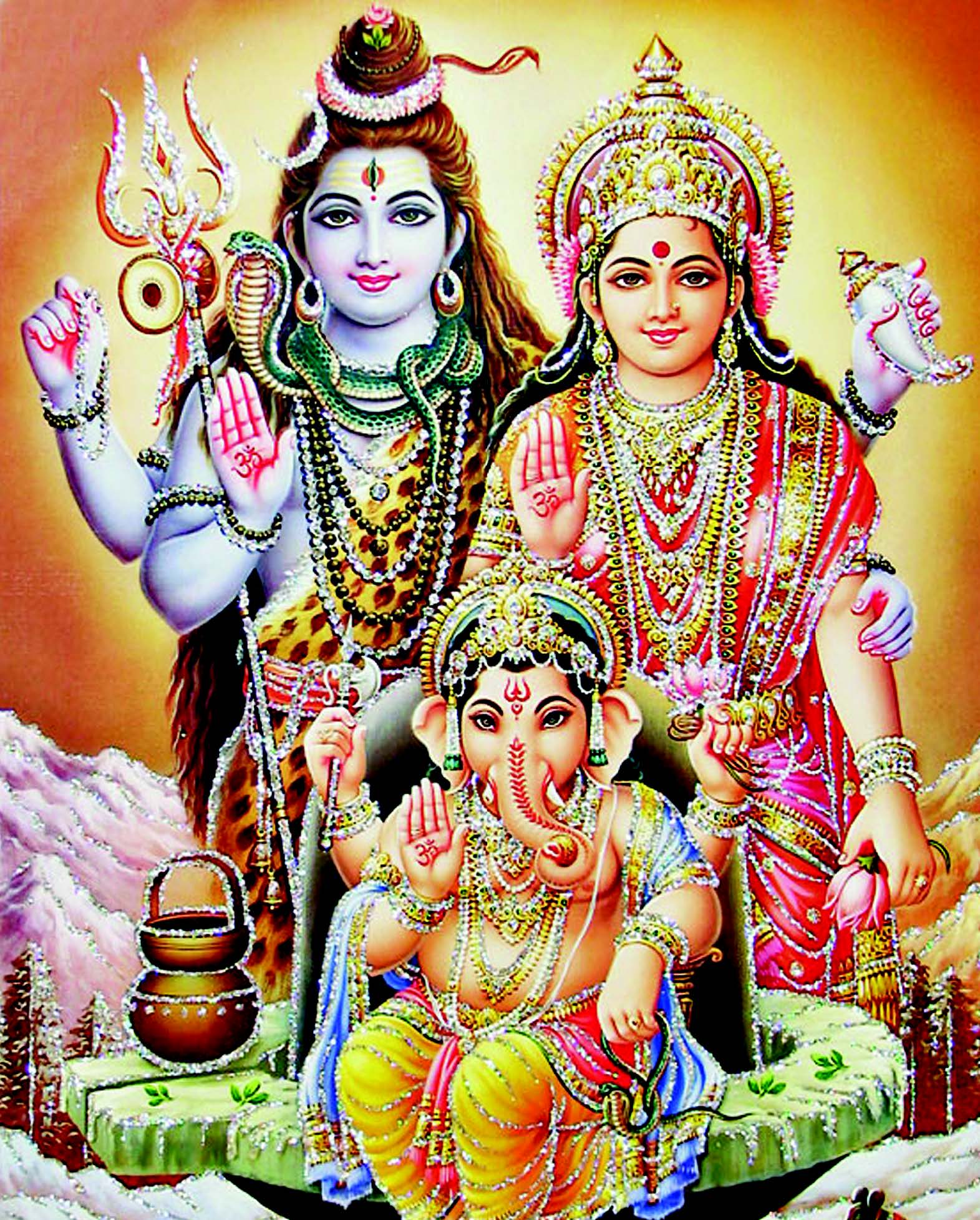
    Lord Shiva and Maa Parvati are the two main deities worshiped during the month of Savan. Devotees offer their favorite offerings to please the deities and to receive their blessings. These offerings include Bel Patra, Datura, rose or marigold flowers and much more. Worship and offer Lord Shiva his favorite offerings to receive his blessings during Sawan in 2016.

    Sawan 2016: How To Perform Sawan Somvar Vrat?

    Every devotee has to keep certain points in mind while performing the fast for Sawan Somvars. These points will prove to be beneficial in getting the maximum benefit of the Sawan Somvar Vrat.

    – Get up early in the morning and perform all the morning rituals like bathing, wearing clean clothes, etc.
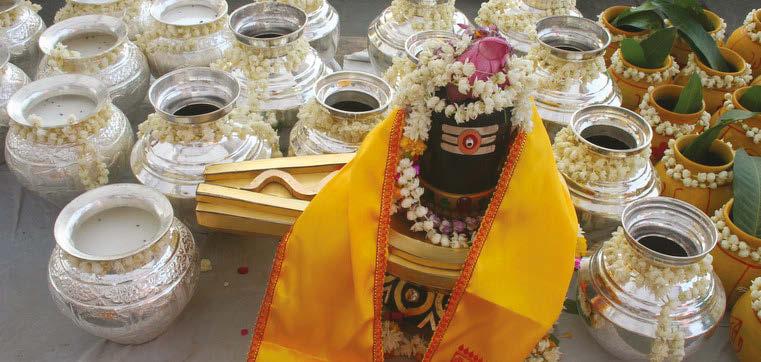
    – Go to the nearest temple and bathe the Shiva Lingam with water, milk, or the mix of both.
    – Clean the Puja Sthana (place to perform Puja) at home, establish the idol or picture of Lord Shiva and Maa Parvati.
    – Take the Sankalp (pledge) that you will perform all the Somvar Vrat with full faith and devotion.
    – Take the name of Lord Shiva and perform meditation
    – In the evening, take bath or clean your hands and feet properly for performing Puja once again.
    – Clean the Puja Sthan (place for performing Puja) and worship Lord Shiva and Maa Parvati.
    – Recite or listen to Somvar Vrat Katha, otherwise the fast is considered as incomplete.
    – Recite Aarti with other family members or devotees.
    – Distribute Prasad (sacred food) among all the devotees or family members.
    – The devotees can now consume the food for fast (Satvik Khana).

    Keep all these points in mind and perform Sawan Somvar Vrat for obtaining maximum benefits.

    Auspicious Results Of Sawan Somvar Vrat

    After discussing that how to perform Sawan Somvar Vrat, we should also not miss out the auspicious results that can be obtained by observing this very auspicious Savan Somvar Vrat every year and during Savan in 2016.

    All the difficulties and tensions of life will disappear.
    Lord Shiva blesses unmarried girls with desired husband.
    Lord Shiva blesses married ladies with long life and well being of husband and sons.
    Lord Shiva fulfills all the desires and wishes of his devotees.
    Lord Shiva blesses his devotees with wealth and prosperity.

    Lord Shiva is so kind toward his devotees that anyone can easily please him by showing love and gratitude, thus he is also known as Bholenath. Let’s now talk about another very important day of Savan that is Sawan Shivaratri

    Sawan Shivaratri

    Sawan Shivratri is also a major part of the month Savan. Its celebrations are observed by devotees with full faith and devotion, as it falls in the special month of Savan. It is the second most important Shivaratri after Maha Shivratri . It is also believed that if Sawan Shivaratri falls on the day of monday, its significance increases up to many times. Because then, the three auspicious events related to Lord Shiva fall on the same day that are the month Savan, Sawan Somvar and Shivaratri.

    Legend Of Savan

    Let’s discuss the legend of month Savan, before performing the Sawan Somvar Vrat in 2016.

    The legend of Savan is related to Lord Shiva. During the period of Samudra Manthan, lots of things came out which were equally distributed among the gods and demons. Some undesirable items also came out from the Manthan, which were not accepted by any of the god or demon, such as Halahal (poison). This poison or Vish/Halahal could have some really adverse effects on the living beings. The whole world could have finished or adversely affected by Halahal.

    For saving the world from these ill effects of Halahal, Lord Shiva consumed the whole Halahal and stored it in his throat. Due to this reason, the color of his neck turned blue and he was attributed with the name Neelkantha. This whole event took place in the month of Savan, which increased the significance of worshiping Lord Shiva in the month of Savan.

    Beautiful Month Of Savan

    The month of Sawan is considered as the most beautiful month in terms of weather changes. Every year, some really pleasant changes are encountered by nature in itself in the month of Sawan.

    The sky fills with clouds, the fields fill with green grass and beautiful flowers. Rainy season starts in the month of Sawan or Shravan and it seems like the whole universe is worshiping Lord Shiva by pouring water on him in the form of rain.

    The whole world feels relieved in the month of Sawan with the cool breezes and rains, after the hot season of summers. It seems like all the birds and insects come out to greet Lord Shiva. Water level also increases in the month of Savan. Nature regains its beauty in the month of Savan.

    Every year, the pleasant weather and divinity come along in the month of Sawan. We are going to encounter these beautiful changes of nature filled with the blessings of Lord Shiva again during Sawan in 2016.

    If you also want to gain auspiciousness, wealth, and prosperity in life, worship Lord Shiva during Sawan in 2016 and observe all the Sawan Somvar Vrats in 2016.

  • July 4th, India and the USA

    July 4th, India and the USA

    Upon declaration of our independence on July 4, 1776, the first three states in the world to recognize the sovereignty of the United States were; the Kings of Dutch Republic, Morocco and Mysore (India).

    According to Dr. Range Gowda, Tipu Sultan’s historiographer, the congratulatory letter to America is preserved in a French Library and in 1776; there is a record of celebration of America’s independence through fireworks in the capitol of Mysore; Sriranga Patna.

    It was a coincidence, that General Cornwallis who surrendered to George Washington in the battle of York Town in 1781 was a hired gun to defeat Tipu, the Sultan of Mysore through deceit in the 4th war of Mysore against colonialism.

    One of the folk stories about Tipu Sultan was that he supported the freedom struggle of America; indeed, the British were the common enemy for both the nations. Lord Cornwallis and Lord Wellesley ruled both the nations. We hope to search for the documents for authenticity, right now it is a folk tale.

    Tippu Sultan of Mysore is one of the few rare heads of the states in the world who adopted pluralistic form of governance and humbly signed the documents as citizen of the state.

    July 4th means everything to Indians and Americans, and the biggest one is the freedom. One is the oldest democracy and the other one is the largest democracy. Both the people are inherently secular in nature despite the expression of bigotry from a handful of men and women on both sides.

    Both the nations have chosen the path of separation of Church and State, even though a few fanatics on both sides want their nations to go back to the dark days of dictating others what they can eat, drink, wear or believe on the one hand, and push the others to conformity in the other land.

    Both the nations are collectively made up of Adivasis/ Native Americans, Atheists, Bahai’s, Bos, Buddhists, Christians, Dalits, Hindus, Jains, Jewish, Muslim, Sikhs, Tribals, Zoroastrians and every possible grouping.

    Both India and the United States are represented by every race, nationality, ethnicity, language, culture and religion. We see God as one, none and many; and in every form; male, female, genderless and non-existent, being and non-being, nameless and with innumerable names.

    We are proud of our heritage – a multi-faith, multicultural, multi-regional and multi-linguistic society, where we have come to accept and respect every which way people have lived their lives. For over 5000 years, India has been a beacon of pluralism – it has embraced Islam, Christianity, Judaism, Baha’i and Zoroastrianism to include in the array of the indigenous religions; Hinduism, Jainism, Buddhism and Sikhism, and America has become a beacon of freedom of faith and it has embraced all the diversity God has created.

    We may want to consciously start thinking and acting as one people, one people within a nation and a community and one people globally. It’s like home when we are conflict free. I do hope each one of us purges any bias towards the other, there is joy in being free from ill-will. Try to be free from it this day forward… free from anything that prevents you from being a part of the whole.

    Let me remind you how a Chinese man embarrassed me some 12 years ago. I volunteered to decorate one of the floats for July 4th parade in Plano, Texas. When we got it all ready and joined the parade with our truck he said, you will see my (Chinese) People along the roads and your (Indian) people will not show up. I did not like his statement, but was waiting to pounce on him. It was a three mile route and he was snubbing me all along, damn it there were no Indians. I eagerly wanted to see some Pakistanis or Bangladeshis to claim as Indians, every one disappointed, only 2 Indians and a Pakistani joined me in carrying our banner; we took turns in carrying it.

    I urge you to at least go out on July 4th and watch the parade. I will join the parade in Louisville this year with a Flag.


  • JAGANNATHA PURI RATHA YATRA

    JAGANNATHA PURI RATHA YATRA

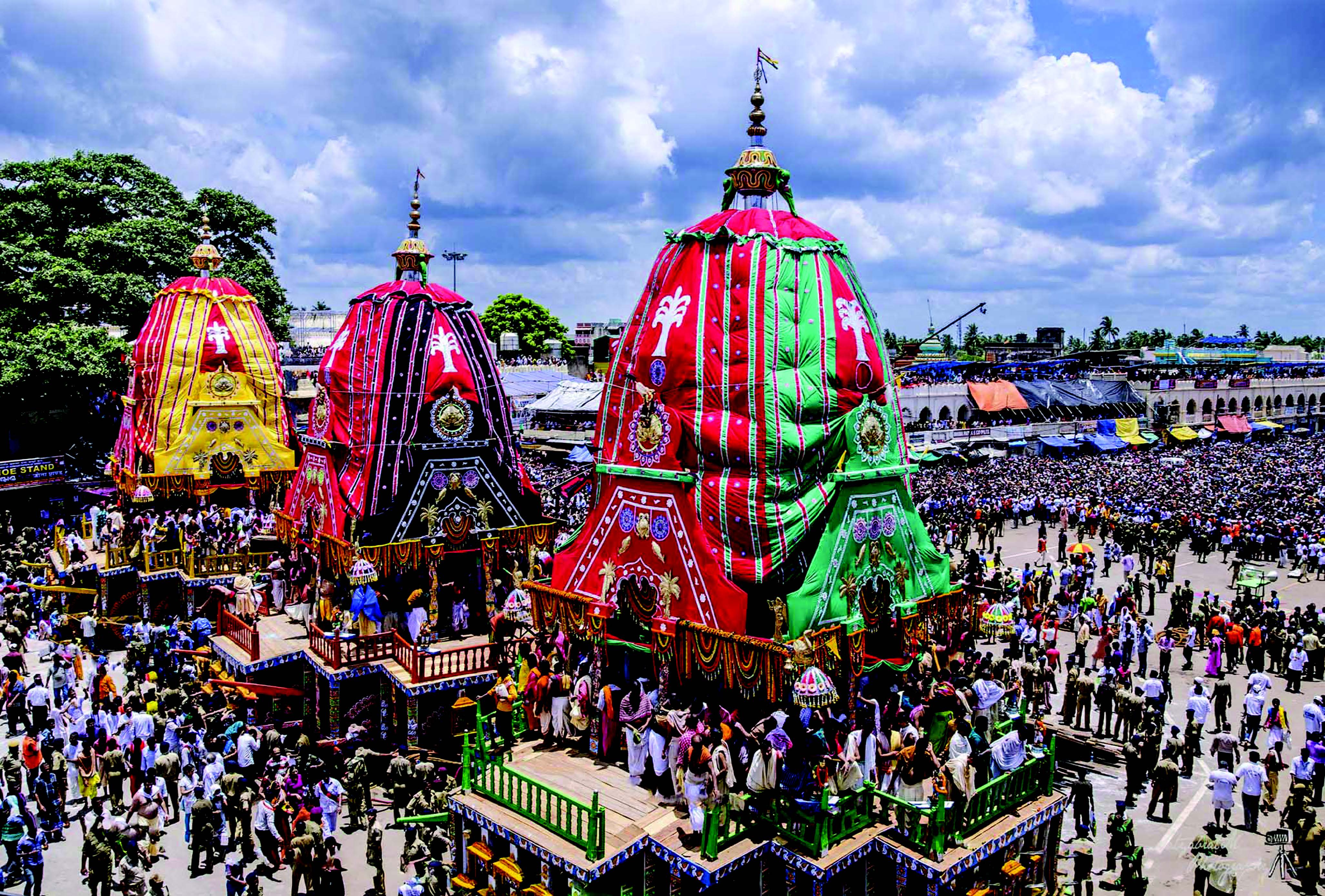
    Ratha Jatra, the Festival of Chariots of Lord Jagannatha is celebrated every year at Puri, the temple town in Orissa, on the east coast of India. The presiding deities of the main temple, Sri Mandira, Lord Jagannatha, Lord Balabhadra and Goddess Subhadra, with the celestial wheel Sudarshana are taken out from the temple precincts in an elaborate ritual procession to their respective chariots. The huge, colourfully decorated chariots, are drawn by hundreds and thousands of devotees on the bada danda, the grand avenue to the Gundicha temple, some two miles away to the North. After a stay for seven days, the deities return to their abode in Srimandira.

    Ratha Jatra is perhaps the grandest festival on earth. Everything is on a scale befitting the great Lord. Full of spectacle, drama and colour, the festival is a typical Indian fair of huge proportions. It is also the living embodiment of the synthesis of the tribal, the folk, and the autochthonous with the classical, the elaborately formal and the sophisticated elements of the socio-cultural-religious ethos of the Indian civilization.

    JAGANNATHA PURI RATHA YATRASanctity and Significance of Ratha Jatra

    The festival is also known as Gundicha Jatra, Ghosa Jatra, Navadina Jatra, Dasavatara Jatra and by a variety of other names. For the devoted and believers, it is considered the most auspicious occasion. Rathe tu vamanam drishtwa punarjanmam na vidyate A glimpse of the Vamana, the dwarf form, an incarnation of Lord Jagannatha, is sure to ensure emancipation, release from the cycle of birth and death.

    Jatra is an essential part of the ritual of the Hindu system of worship. Jatra literally means travel or journey. Normally, it is the representative deities of temples more popularly known as Utsava Murti in south and Chalanti Pratima or Bije Pratima in Orissa, partake in these journeys. It is rarely that the presiding deities come out of the sanctum for such ritual journeys. The Jatra for the Ritual Journey take two forms – one involving the short circumbulation around the temple and other involving a longer journey from the temple to some other destination.

    The Jatra is considered as an important part of festivities and ceremonies of each temple and is considered as a special and sacred occasion.

    Rath Jatra being unique among all Jatras is the grandest festival of the supreme divinity who has manifested himself in the Kali Yuga to emancipate humanity and to relieve them from their sufferings. Lord Jagannatha is identified fully with Vishnu and Krishna. In his original manifestation as Nilamadhaba, he was worshipped in a sacred Nyagrodha Briksha or banyan tree. The branches of the tree had spread for several miles and any one entering this area was instantly emancipated and was relieved of the travails of the birth and re-birth. In fact, the influence of Yama, the God of Death, is supposed to have been curtailed in the sacred city of Puri – Srikshetra on account of the presence of Lord Jagannatha and therefore it is also called the Yamanika Tirtha.

    A glimpse of Lord Jagannatha on the chariot is considered to be very auspicious and saints, poets and scriptures have repeatedly glorified the sanctity of this special festival.

    The sanctity of the festival is such that even a touch of the chariot or even the ropes with which these are pulled is considered enough to confer the results of several pious deeds or penance for ages. In fact, there is a famous Oriya song which says that on this occasion, the chariot, the wheels, the grand avenue all become one with Lord Jagannatha himself.

    Those who are fortunate to see the deities of the Srimandira in the Gundicha Temple, the final destination of the procession of the chariots, derive the benefits of a thousand horse sacrifices, an immensely pious deed. Kabi Samrat Upendra Bhanja in his famous Vaidehisa Vilasa mentions that the Lord comes out from his sanctum for participating in the Gundicha Jatra, another name of the Festival of Chariots, only for redeeming the fallen, the patita jana who get the opportunity to behold their dearest god at close quarters on this occasion. Similarly, saint poet Salabega waxes eloquent in praise of his dearest dark darling and says that the Lord swaying and moving like a wild elephant arrives at the Grand Avenue and rides his chariot and destroys in a flash all the sins of his devotees, even if these may be grave or unpardonable.

  • LEGEND OF TIRUMALA

    LEGEND OF TIRUMALA

    Tirumala Sri Venkateswara Temple at Tirupati in the Indian state of Andhra Pradesh is one of the most famous Vaishnavite temples in the world. The presiding deity of Vishnu here is referred to as Venkateswara. There are many legends regarding this temple. Sri Venkatachala Mahatyam is the most accepted legend among these, which provides the history of the temple across the various yugas. This place had also been mentioned in many puranas.

    As per Varaha Purana, during Satya Yuga, Vishnu rescued Earth which was taken over by Hiranyaksha to Patala Loka (underworld) in the form of Adi Varaha – a wild boar with tusks. He fought a fierce duel with Hiranyaksa and killed him. He then slashed the water and brought up the Earth on his tusks. Brahma, the Devas and the sages extolled Adi Varaha’s virtues, by chanting the Vedic mantras. They prayed to Him to re-establish the Earth as before. Adi Varaha obliged them, and called upon Brahma to recreate the world. He expressed his desire to reside on the Earth to protect its people. He commanded his vahana, Garuda to fetch Kridachala (an extensive natural hill with lofty peaks, embedded with gold and precious stones, and which resembled Adisesha in shape) from Vaikuntam. Garuda brought Kridachala and deposited it on a sacred spot (to the East of Swami Pushkarini) chosen by Adi Varaha. Brahma and the other holy personages requested the fearsome-looking Adi Varaha to assume a tranquil and composed look, and rest on the hill to protect men and grant boons to people unable to reach God through Dhyana Yoga (meditation) and Karma Yoga (doing one’s own duty). Adi Varaha appeared with four arms and a white face. He was adorned with jewels and accompanied by Bhudevi. He resolved to stay at Venkatadri, under a divya vimana, to grant the prayers of men.

    It is believed that the origins of the Tirumala Hills (Seshachalam Hills) lies in a contest between Vayu (the wind god) and Adisesha (the first serpent). During Dvapara Yuga, Adisesha blocked Vayu from entering Vaikuntam as Lord Vishnu was in the company of his consort, Lakshmi. An incensed Vayu challenged Adisesha to a fight to decide the stronger between them, Vayu was tasked with trying to blow off Adisesha from the holy Meru mountain while adisesha was asked to protect the peak with his hood. After a long time, Vayu appeared to yield and Adisesha lifted his hoods assuming that he had won the contest. Vayu then blew away one of the peaks. The peak landed near the Swarnamukhi river and is currently known as Seshachalam hill

    A variant to the legend is that the contest created pandemonium on earth and Brahma, Indra and other gods pleaded with Adisesha to relent. When Adisesha obliged, the peak (Ananda hill) and Adisesha were blown off Meru and landed near the banks of river Swarnamukhi. When Adisesha was dejected with his defeat, the Gods converted Adisesha into the seven hills with the hood named as Seshadri hill or Seshachalam hill or Venkatadri hill. Another variant to the story is: Adisesha, fatigued by the contest was instructed by Lord Vishnu to rest on Earth in a place that he chose for his stay in Kali Yuga.

    In the Kali Yuga, rishis performing yagna sought the advise of celestial sage Narada on which of the Trimurti should be selected for offering the fruits of the yagna. Narada suggested that the wise sage Bhrugu should be allowed to decide after he met the Trimurtis. The sage who had an extra eye in the sole of his foot visited Lord Brahma and Lord Shiva and went un-noticed in both these locations. He cursed Brahma that no temple sans one will worship Brahma and cursed Shiva that temples on Earth will worship him as Lingam.

    When Bhrigu visited Lord Vishnu who was in a private meeting with his consort Goddess Lakshmi and failed to immediately receive and honour the sage, the sage felt humiliated and angry by this act. Sage Bhrigu kicked Lord Vishnu in the chest, to which Vishnu did not react and instead apologized to the Sage by massaging his feet. During this act, he squashed the extra eye that was present in the sole of Bhrugu’s foot. The extra eye is believed to represent the sage’s false egotism. The sage then realised his grave mistake and begged forgiveness from Lord Vishnu. Lord Vishnu’s chest is significant as the abode of Goddess Lakshmi, the Goddess felt highly insulted at the sage’s misdemeanour and Lord Vishnu’s silence at the act and left Lord Vishnu’s heavenly abode (Vaikunta).

  • SHAKTI, THE MOTHER OF THE UNIVERSE

    SHAKTI, THE MOTHER OF THE UNIVERSE

    Parvati is the daughter of the king of Parvatas, Himavan and the consort of Lord Shiva. She is also called Shakti, the mother of the universe, and variously known as Loka-Mata, Brahma-Vidya, Shivajnana-Pradayini, Shivaduti, Shivaradhya, Shivamurti, and Shivankari. Her popular names include Amba, Ambika, Gauri, Durga, Kali, Rajeshwari, Sati and Tripurasundari.

    The Story of Sati as Parvati

    Parvati’s tale is told in detail in the Maheshwara Kanda of the Skanda Purana. Sati, the daughter of Daksha Prajapati, the son of Brahma, was wedded to Lord Shiva. Daksha did not like his son-in-law because of his queer form, strange manners, and peculiar habits. Daksha performed a ceremonial sacrifice but did not invite his daughter and son-in-law. Sati felt insulted and went to her father and questioned him only to get an unpleasant reply. Sati got enraged and did not want any more to be called his daughter. She preferred to offer her body to the fire and be reborn as Parvati to marry Shiva. She created fire through her Yoga power and destroyed herself in that yogagni. Lord Shiva sent his messenger Virabhadra to stop the sacrifice and drove away all the Gods who assembled there. The head of Daksha was cut off at the request of Brahma, thrown into the fire, and replaced with that of a goat.

    How Shiva Married Parvati

    Lord Shiva resorted to the Himalayas for austerities. The destructive demon Tarakasura won a boon from Lord Brahma that he should die only at the hands of the son of Shiva and Parvati. Therefore, the Gods requested Himavan to have Sati as his daughter. Himavan agreed and Sati was born as Parvati. She served Lord Shiva during his penance and worshiped him. Lord Shiva married Parvati.

    Ardhanishwara and the Reunion of Shiva & Parvati

    The celestial sage Narada proceeded to Kailash in the Himalayas and saw Shiva and Parvati with one body, half male, half female – the Ardhanarishwara. Ardhanarishwara is the androgynous form of God with Shiva (purusha) and Shakti (prakriti) conjoined in one, indicating the complementary nature of the sexes. Narada saw them playing a game of dice. Lord Shiva said he won the game. Parvati said that she was victorious. There was a quarrel. Shiva left Parvati and went to practise austerities. Parvati assumed the form of a huntress and met Shiva. Shiva fell in love with the huntress. He went with her to her father to get his consent for the marriage. Narada informed Lord Shiva that the huntress was none other than Parvati. Narada told Parvati to apologize to her Lord and they were reunited.

    How Parvati Became Kamakshi

    Parvati came from behind Lord Shiva and closed his eyes. The whole universe missed a heartbeat – lost life and light. In return, Shiva asked Parvati to practise austerities as a corrective measure. She proceeded to Kanchipuram for rigorous penance. Shiva created a flood and the Linga which Parvati was worshiping was about to be washed away. She embraced the Linga and it remained there as Ekambareshwara while Parvati stayed with it as Kamakshi and saved the world.

    How Parvati Became Gauri

    Parvati had a dark skin. One day, Lord Shiva playfully referred to her dark color and she was hurt by his remark. She went to the Himalayas to perform austerities. She attained a beautiful complexion and came to be known as Gauri, or the fair one. Gauri joined Shiva as Ardhanarishwara by the grace of Brahma.

  • SHESHNAG: THE 5-HEADED SNAKE

    SHESHNAG: THE 5-HEADED SNAKE

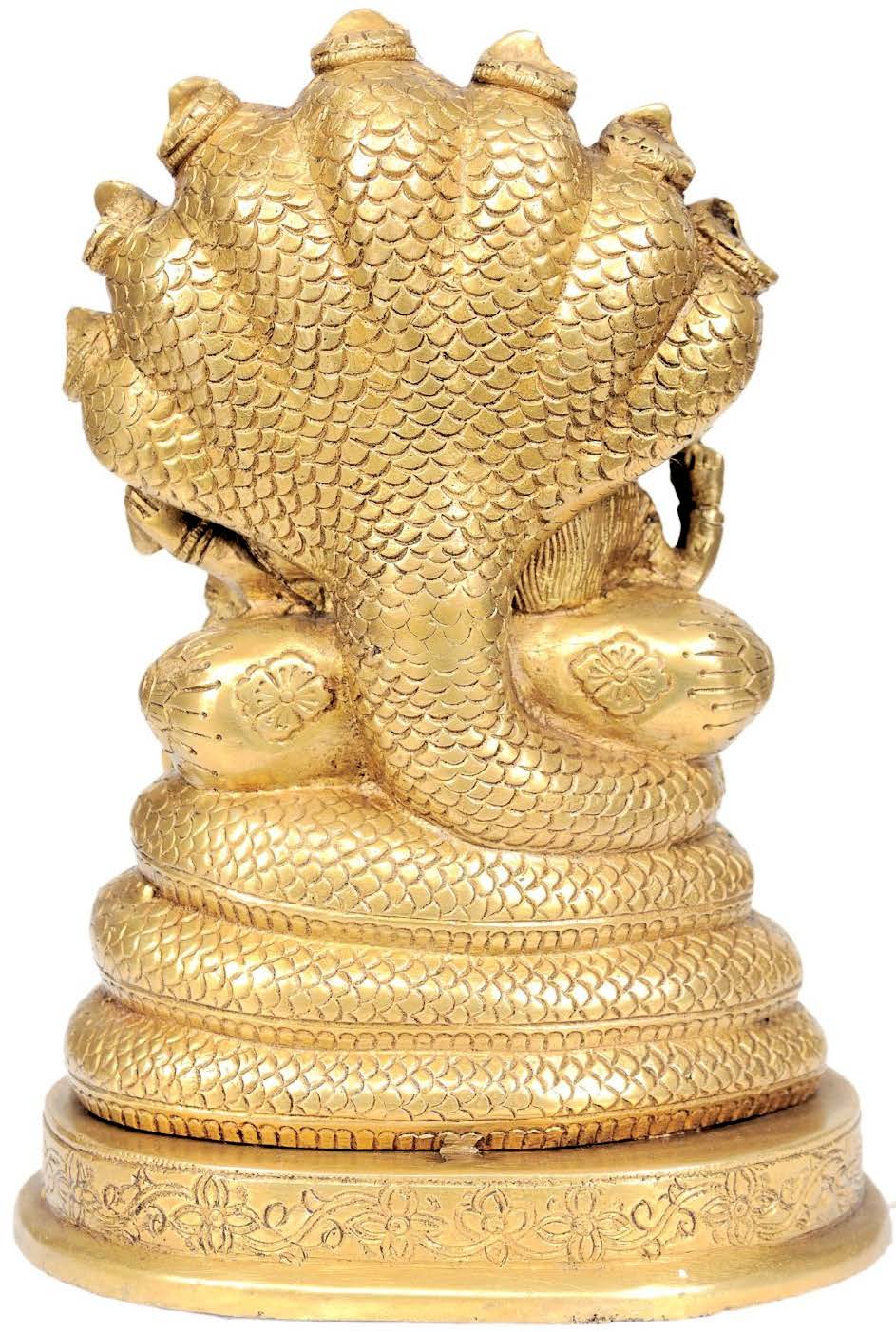
    Snakes are considered holy by Hindus. They are revered through festivals like Nag Panchami and worshipped via the Snake-goddess Manasa. The Sheshnag is basically a 5 headed snake that plays a very important role in Hindu mythology. There are various myths surrounding this snake and here are some of the most important ones.

    Mythical Importance Of Sheshnag

    SHESHNAGThis mythical 5 headed-snake stands with its fangs open over the head of Lord Vishnu. The coiled body of the snake forms the throne on which Lord Vishnu is reclining. Thus, this snake is is worshipped by Hindus as it is the seat of Lord Vishnu’s who is one of the Holy Trinity in Hinduism. Krishna, Lord Vishnu’s avatar was born to Devika and Vasudeva on a very stormy night.

    When Vasudeva was braving torrential to carry baby Krishna across the river to Gokul (to keep him safe), the Sheshnag rose from the river and shaded the father and child like an umbrella Both the Devas (Gods) and Asuras (Demons) wanted ‘amrit’ (elixir or eternal life), but to get it, they had to whip up the great seas of the world (Samudra manthan). The Sheshnag had then become the rope with which the seas were churned.

    The Sheshnag In Karnataka

    Due to all these mythical references, Hindus believe that such a snake with 5 heads actually exists and is considered holy by them. A few years back, the picture of a 5 headed snake was released over the Net and that created quite a stir among Hindus. This snake was supposedly seen in a temple called Kukke Subramanya in Karnataka.

    So, could the myths about this snake be true?

    Although it is a tempting thought to believe, it is a scientific impossible. Here are some of the scientific evidence against the existence of 5 headed snake that Hindus believe in. There has been recorded scientific evidence of snakes having up to 2 or 3 heads.

    However, there are no records of snake that has 5 heads. Snakes usually have multiple heads only due to a genetic deformity called polycephaly. Just like some human conjoined twins are rarely born with 2 heads and one body, multiple headed snakes too are born due a similar biological deformity.

    Another important point is that the photograph shows the snake with its 5 heads raised, ready to strike. But even if a snake is born with 5 heads, it can never stand up like that because its morphology would not support the weight of 5 heads.

    Truth or fiction, we don’t know if a 5 headed snake could exist in reality. But, the place that the Sheshnag has among the Hindu gods is sacred.

    Do you think that the Sheshnag actually exists on the Earth?

  • NIRJALA EKADASHI

    NIRJALA EKADASHI

    Nirjala Ekadashi is a Hindu holy day falling on the 11th lunar day (Ekadashi) of the waxing fortnight of the Hindu month of Jyestha (May/June). The ekadashi derives its name from the water-less (Nir-jala) fast observed on this day.] It is considered as the most austere and hence, most sacred of ekadashis. If observed religiously, it is said the most rewarding and granting the virtue gained by the observance of all 24 ekadshis in the year.

    LEGENDNirjala Ekadashi is also known as Pandava Bhima Ekadashi, or Pandava Nirjala Ekadashi. This name is derived from Bhima, the second and strongest of the five Pandava brothers, heroes of the Hindu epic Mahabharata. The Brahma Vaivarta Purana narrates the story behind the Nirjala Ekadashi vrata vow. Bhima, a lover of food, wanted to observe all ekadashi fasts, but could not control his hunger. He approached the sage Vyasa, author of the Mahabharata and grandfather of the Pandavas for a solution. The sage advised him to observe Nirjala Ekadashi, when for one day in the year, he should observe an absolute fast. Bhima attained the virtue of all 24 ekadashis, by observing Nirjala Ekadashi.

    PRACTICESWhile on other ekadashis abstinence of food is observed,on Nirjala Ekadashi, an absolute fast is observed, without partaking even water. The water-less fast is considered extremely difficult to follow as the day falls in the hot Indian summer and thus, it is deemed as very pious austerity. The fast is observed 24 hours from sunrise on Nirjala Ekadashi to sunrise the next day. Some observe it from sunrise to sunset. On the day before Nirjala Ekadashi, the devotee performs the evening prayer (Sandhyavandanam) and takes only one meal, without rice – as rice eating is prohibited. The devotee is however permitted to have a single tiny drop of water as part of the Achamana purification ritual. Water more than that equals breaking the vow.

    Like other ekadashis, puja is offered to the god Vishnu, for whom ekadashis are sacred, to seek his grace. An image of Vishnu or a Saligrama stone (an iconic fossil stone in the form of Vishnu) is bathed (abhisheka) with Panchamrita, a mixture of five foods: milk, curd, ghee (clarified butter), honey and sugar. It is then washed with water and then dressed in royal finery. A hand-fan is also offered. Flowers, incense, water and arati (lamps) are also offered. Devotees meditate on the image of the god. In the evening, they worship Vishnu with durva grass in their hands. Devotees remain awake the whole night and sing praises of Vishnu or meditate on his image.

    Another characteristic of ekadashis is charity to Brahmins (the priest class). Clothes, food grains, umbrellas, hand-fans, pitchers filled with water, gold etc. are prescribed to be donated on Nirjala Ekadashi.

    MERITSAccording to the Markandeya Purana and the Vishnu Purana, the day of Ekadashi is itself a form of Vishnu. The vrata observed on this day is said to wash away all sin.[5]One who completes the vrata of Nirjala Ekadashi is mentioned to gain the favour of Vishnu, who grants him happiness, prosperity and forgiveness for sins.[1] The devotee is described to receive the merit gained by the observance of all 24 ekadshis in the year. It is most popular and strictly observed by the Vaishnavas, in particular The observer gains longevity and moksha (salvation).[4] Usually, the messengers of the god of death Yama are described to fetch the person’s soul after death. Yama then judges the person’s deeds and sends him to Svarga (heaven) or Naraka (Hell). However, one who observes the Nirjala Ekadashi rituals is believed to be excused Yama’s judgement and taken by messengers of Vishnu to Vaikuntha, the abode of Vishnu, after death.

    IMPORTANCE OF NIRJALA EKADASHI

    • It is equal to going on pilgrimage.
    • ? It provides virtue of all 24 Ekadashi.
    • ? It washes away all sin.
    • ? Grants happiness, prosperity, longevity and moksha (salvation).
    • ? This Ekadasi happens before monsoon season and therefore it is also helps in cleansing the body.

    HOW TO OBSERVE NIRJALA EKADASHI VRAT

    Nirjala means without water. Hence, fast is observed without water and food. It is considered as the most strict and hence, most sacred of all Ekadashis. This fast is extremely difficult to follow as it falls in the hot Indian summer. The 24 hours long fast begins from sunrise on Nirjala Ekadashi to sunrise the next day. People fast and offer puja to Lord Vishnu on this day.

    The fast begins with Sandhyavandanam – a prayer. This prayer is performed in the evening before Nirjala Ekadashi, i.e. on 10th lunar day. After prayer devotee takes only one meal, without rice (as rice eating is prohibited). The strict fast continuous throughout Ekadashi. It gets over on next morning. Devotees offer prayer, tulsi, fruits, and sweets to Lord Vishnu and then finish their fast.

    RITUALS AND CELEBRATIONS OF NIRJALA EKADASI

    • ? Offer Puja to Lord Vishnu and seek his grace.
    • ? Bath the idol of Lord Vishnu with Panchamrit.
    • ? Wash with clean water and then dressed in new clothes.
    • ? Offer flowers, incense, water, lamps and a hand fan.
    • ? In evening, worship Vishnu with Durva grass.
    • ? Visit nearby Vishnu temple and observe Jagran at night.
    • ? Chant bhajans, Vishnu Sahasranama and other slokas dedicated to Lord Vishnu
    • ? Donate clothes, food grains, umbrellas, hand-fans, pitchers filled with water, gold etc.

    NIRJALA 1STORY OF NIRJALA EKADASHI VRAT

    Bhimsen – the second Pandava brother and big eater wanted to keep Ekadashi Vrat. All his brothers, wife Draupadi and mother Kunti observed Vrat on 24Ekadasis throughout the year and request him to do the same. But he was unable to perform the ritual due to unbearable hunger pangs. Bhima, was upset due to his weak determination. He was also sacred of dishonouring to Lord Vishnu. So, when Maharishi Vyasa visited them Bhima asked him to find a solution. Sage Vyasa advised him to observe single Nirjala Ekadasi fasting. This fast would compensate for not observing all Ekadashi fasting in a year. Bhima performed the fast with an ease but on the morning of very next day he became unconscious. Then he offered Ganga water with Tulsi to end up his day fast. Due to this legend Nirjala Ekadashi is also known as Bhimseni Ekadashi, Bhima Ekadashi or Pandava Ekadashi.

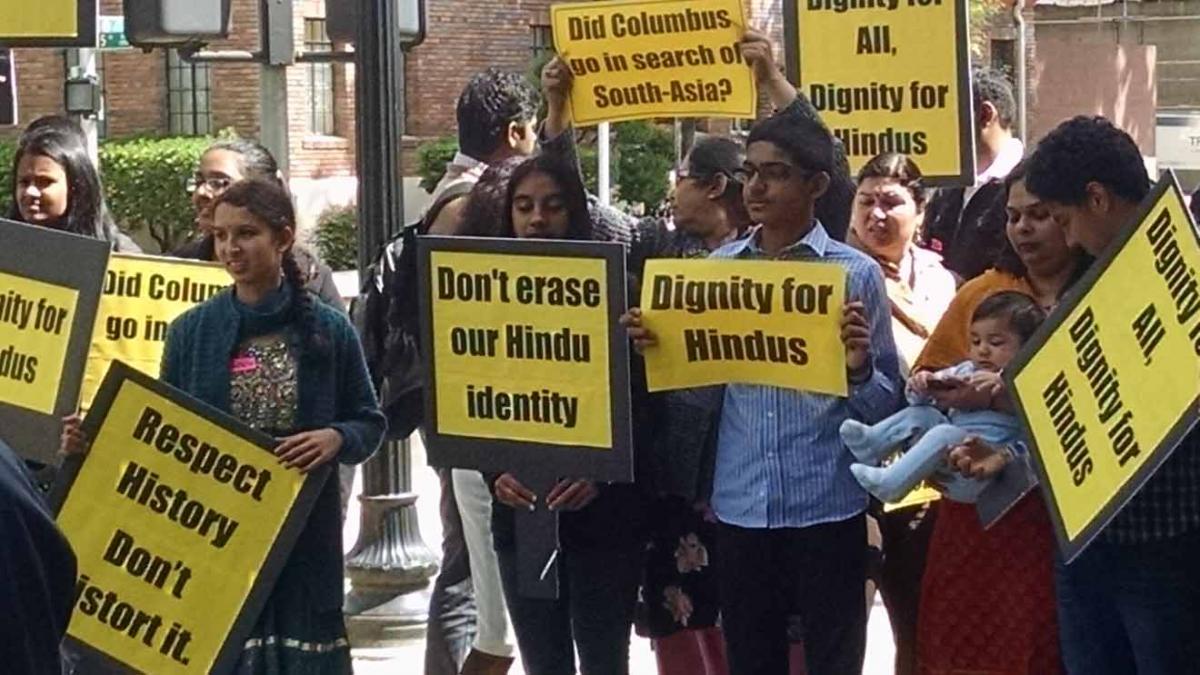
  • Malaysia University claims Hindus are Unclean

    Malaysia University claims Hindus are Unclean

    KUALA LUMPUR: A teaching module published by a leading Malaysian university which depicted Hindus in India as unclean and dirty has generated a controversy and outraged the minority community in the Muslim-majority country.

    Slides from the module of Universiti Teknologi Malaysia (UTM) caused uproar after they were posted online.

    The slides claimed that Hindus consider the dirt on the body as part of their religious practice to achieve nirvana.

    After the issue was raised by Deputy Education Minister P Kamalanathan, the university said it would review the module.

    “I have just spoken to the Vice Chancellor of UTM and he has acknowledged the mistake,” Kamalanathan, an ethnic Indian, said in a Facebook post.

    The necessary changes to the module will be carried out expeditiously. The official had “totally agreed” to his suggestion to ensure that such errors are not repeated, Malay Mail online said today.

    Muslim-majority Malaysia’s 28 million population include 60 per cent Malays who are all Muslims, 25 per cent ethnic Chinese mostly Christians and Buddhists and eight per cent ethnic Indians, a majority of whom are Hindus.

    The Minister said slides from the UTM module portraying Hindus as “dirty” could have been designed to intentionally misrepresent the religion. Commenting further, he expressed his personal disappointment over the messages in the slides that were leaked online, triggering Hindu outrage.

    Further, he said he will ask the Higher Education Ministry to ensure that all content in the Islamic and Asian Civilisation Studies module be vetted by religious experts before they are presented to students, the news portal said.

    The module also claimed that Islam had introduced civility to the lives of the Hindu community in India.

    Another slide aimed at teaching the origins of Sikhism claims that founder Guru Nanak had a poor understanding of Islam and had combined it with his surrounding Hindu lifestyle in forming the early foundation of the Sikh faith.

    The slides led to condemnation by the Malaysian Indian Progressive Association (MIPAS) which called for a retraction and apology from the university.

    “The teaching is insulting followers of Hinduism as a dirty community and a community that regard physical filth as part of its religious practice.

    “MIPAS condemns completely, the actions of UTM for publishing and allowing such a module that contains negative elements in its educational course that carries elements of insult and harassment as well as demean the purity of the Hindu faith,” MIPAS secretary-general S Barathidasan said.

    A police report was lodged by the chairman of the Hindu Dharma Association of Malaysia in Sungai Petani district against UTM, and expects more police reports to be lodged, Barathidasan added.

  • Essence of Ramadan may be traceable in your faith

    Essence of Ramadan may be traceable in your faith

    Whether you are an Atheist, Baha’i, Buddhist, Christian, Hindu, Jain, Jewish, Native American, Pagan, Shinto, Sikh, Wicca, and Zoroastrian or from any other tradition, you may feel a sense of connection with the spirit of Ramadan.

    God is a word for the cause that creates, sustains and recycles this universe, and belongs to all that exists and is not the exclusive dominion of anyone. No matter how and what name you call upon him – he (she or it) cannot be a different causer for each one of us.

    The physical aspect of human journey from the sperm and an egg stage through the death is programmed precisely. The formula is same for all of humanity. There is no such thing as a Christian, Jewish, Muslim, Hindu or other gene.

    Regardless of what is being said about origins in terms of evolution, creation or the big bang, the undeniable fact is our existence, and we have to figure out how to live with each other. When the universe came into being, two main products of the process were Matter and Life. While the matter is programmed to be in self-balance and functions precisely for which it is designed, like the Sun, Jupiter, Earth or the Moon playing its part, the (human) life on the other hand was not programmed; we were given complete freedom, guidance and intelligence to create our own balance for survival.

    A balanced society is where every one of us functions cohesively in small parcels of this big World Wide Web. It is sustained by respecting the otherness of others and accepting the God given uniqueness of each one of us. If we mess with the web, we mess with ourselves ultimately. If we mess with the environmental balance we will pay for it, just as we bear the loss of health if we mess with what we eat, drink and smoke. There is a consequence for imbalance.

    Birth of Religion We lose the balance if we don’t trust and lie to each other, rob the other, and not keep the promises we make to fellow beings. This is when religion appears; it is the love of the creator for his creation, just as a mother loves her children – someone among us will rise and restore that balance. Didn’t Moses, Krishna, Buddha, Jesus, Muhammad and other masters restore the righteousness and balance in the society? I hope you can relate with this thought in your own scriptures and legends.

    An identical spiritual wisdom emerges in different parts of the world simultaneously; the greatest example would be how mothers figure out what to do with their crying babies in the jungles of Amazon or the high society in London.

    Indeed, beauty is in the eyes of the beholder, and as a corollary I would say, faith is in the heart of the believer, and every religion is dear to its believer.

    Religion is about love for fellow beings, a majority of us in every religion get that right but for a few, who keep messing up the cohesiveness of the society. Those few are not an identifiable group, but the infraction in each one of us when we become biased towards the others. Religion is never the problem; it is the individuals who don’t get their religion right are the problem.

    Ramadan and you From the moment we are born to the last rites of our life, and every moment in between is laden with rituals, even though some of us may deny it. Whether we go to the gym, eat, sleep, wear clothes, drive or talk on the phone, we follow rituals.

    Rituals signify the milestones of our daily life. Every significant moment of the day is a ritual. It is an unwritten way of measuring our progression, a memory pattern to bring discipline to our actions.

    Discipline is necessary to do things on time, manage personal relationships, drive to a destination or keep within budget. The result of disciplined behavior is worthwhile for most people. When we are joyous, whether we are a theist or not, we have to express that sentiment, otherwise a sense of incompleteness lingers in our hearts.

    The spiritual masters have captured the human gravity towards rituals and have molded it with the art and science of self-discipline in their respective religions. The noble purpose of each one of them was to bring a balance in our lives and a balance with our environment.

    Every faith is composed of a set of unique rituals to bring discipline and peace to human life. Fasting is one of the five key rituals that Muslims around the world observe.

    Ramadan is the ninth month of the Islamic lunar calendar and is generally observed with a ritual precision; it is an annual training or a refresher. It requires one to abstain from food, drink, intimacy, ill-will, ill-talk, ill-actions and other temptations from dawn to dusk, every day for a month. One has to rise above his or her baser desires. Islam gifts this month to its followers to inculcate discipline to bring moderation to their daily lives. Twenty five hundred years ago, Buddha, the enlightened one taught that human suffering is caused by unrestrained desire to possess and had recommended a middle path, and the same recommendation was made by Prophet Muhammad fourteen hundred years ago.

    Although Ramadan is popularly known in the west for its culinary delicacies and fancy iftars (ceremonial breaking of fast at sun down), the spirit and intent of Ramadan lies in a human transformation in a month-long inner spiritual journey of finding oneself in tune with spirituality.

    Hindus can see that transformation in nine days of fasting during Navaratri, the Jains in 8-10 days of fasting during Paryushan, Christians during 40 days of lent, Jews for 7 days around Yom Kippur; likewise, you find fasting is a way of life in most traditions.

    God has no need for the hunger or thirst of someone who hurts others, violates their dignity or usurps their rights, said Prophet Muhammad (PBUH). The fasting of the stomach must be matched by the fasting of the limbs. The eyes, ears, tongue, hands and feet all have their respective fasts to undergo. The tongue’s temptations, for example -lies, backbiting, slander, vulgarity and senseless argumentation – must be challenged and curbed to maintain the integrity of the fast.

    Consciousness of behavior and vigilance over action are the most profound dimensions of fasting: the fasting of the heart focuses on the attachment to the divine. That is when Ramadan really becomes a source of peace and solace, just as Christmas or Dussehra goes beyond the rituals to bring forth kindness, charity and caring.

    True fasting is self-purification; and from this comes a rich inner life that bring about values such as justice, generosity, patience, kindness, forgiveness, mercy and empathy – values that are indispensable for the success of the community.

    Knowing about hunger is different from knowing hunger. Empathy is not an intellectual equation; it is a human experience. Our hardness of heart often springs from our distance from the human condition of others. The poor, sick, disenfranchised, oppressed – we rarely walk a mile in their shoes, not even a few steps. “Rest assured,” cautioned one teacher, “if you do not taste what it feels like to be hungry, you will not care for those who are.”

    Ramadan will come and go with such stealth that we cannot but be reminded of our mortality. What is it that we value and why? Habits, customs, even obsessive behavior like smoking can be curtailed with relative ease in the face of a higher calling.

    For fasting to be truly universal, its benefits must extend beyond the fraternal ties of Muslims and must extend to forging a common humanity with others. Fasting is meant to impart a sense of what it means to be truly human, and its universality is reflected by its observance in Baha’i, Buddhist, Christian, Hindu, and Jain, Jewish, Sikh, Zoroastrian and other faiths. More about Ramadan at www.Ramadanexclusive.com

    What can you do? Unless we connect with fellow humans, and unless they can relate with us, our faith, philosophy and traditions, we will remain disconnected with the society.

    This article is about understanding and developing a sense of shared destiny of humanity to create cohesive societies where no human has to feel alienated from others. It is based on Quran’s wisdom in 49:13.

    You may disagree with a few premises, and I invite you to counter them, so together we can develop better understanding to live and let others live.

    I hope you would like this, and if you do, please share it with your Non-Muslim and Muslim friends. We at America Together Foundation are committed to finding solutions through patience, kindness and education. Our goal is to learn about each other and work on mitigating conflicts and nurturing goodwill.

    I hope you want the good message to reach out to a maximum number of people, particularly non-Muslims, that’s who we focus on.

    Let the spirit of Ramadan develop an understanding and respect for each one of God’s creation – that is all of us. Ramadan Mubarak!


    (The author is a community consultant, social scientist, thinker, writer, news maker, Interfaith Wedding officiant, and a speaker on Pluralism, Interfaith, Islam, politics, terrorism, human rights, India, Israel-Palestine, motivation, and foreign policy. He is committed to building cohesive societies and offers pluralistic solutions on issues of the day. www.TheGhousediary.com is all about his writings)

  • FIVE ASPECTS OF SHIVA | #Hinduism #Shaivism

    FIVE ASPECTS OF SHIVA | #Hinduism #Shaivism

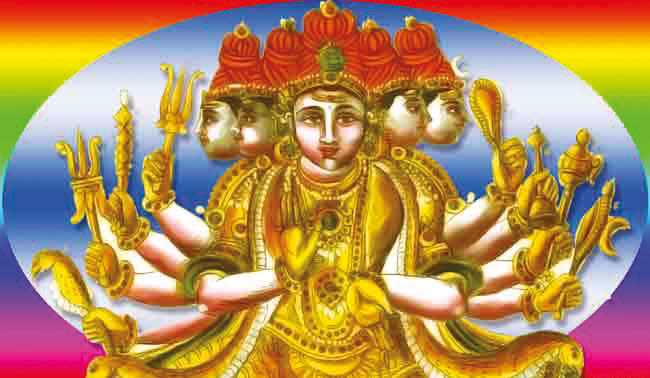
    Normally Lord Shiva is worshipped as Shiva Linga. Shivalingas with five faces are also found in some places. The Names of the five faces are:

    Sadyojat, Vamdev, Aghoraa, Tatpurush and Îshana

    These four faces of Shiva represent the four directions. The fifth face which points skywards is the universal face symbolic of purity and spiritual progress.

    This rare prayer in each stanza addresses each one of these five faces of Shiva, the 4 Vedas and Om.

    Comparable to the Vyuhas or emanations of Lord Visnu, is the Pancanana form of Lord Siva. Pancanana or the five-faced one represents the five aspects of Shiva vis-a-vis the created universe. The five faces are respectively Hana, Tatpurusa, Aghora, Vamadeva and Sadyojata. The face Hana turned towards the zenith, represents the highest aspect and is also called Sadasiva. On the physical plane, it represents the power that rules over ether or sky and on the spiritual plane, it is the deity that grants Moksa or liberation. Tatpurusa facing east, stands for the power that rules over air and represents the forces of darkness and obscuration on the spiritual plane. Aghora, facing south and ruling over the element fire, stands for the power that absorbs and renovates the universe. Vamadeva facing north, ruling over the element water, is responsible for preservation. Sadyojata, facing west represents the power that creates.

    Iconographically, all the five aspects are shown in different ways.

    There are several other aspects in which Lord Siva is depicted or worshipped. These can be broadly divided into the following categories: (1) Saumya or Anugraha Murti; (2) Ugra, Raudra or Samhara Murtis; (3) Nrtta or Tandava Murti;(4) Daksinamurti; (5) Lingodbhavamurti; (6) Bhiksatanamurti; (7) Haryardhamurti; (8) Ardhanarisvaramurti.

    Peaceful form of Siva as also the form showing mercy and grace belong to the first group. The forms showing grace or granting boons to Candesa, Nandisvara, Vighnesvara or Ravana belong to this category.

    All terrific aspects can be classed under the second group. Kankala Bhairava represents Siva who cut off the fifth head of Brahma for having reviled him and who had to wander as a beggar for twelve years to get rid of that sin. Gajasuravadhamurti represents him as killing the demon Nila (an associate of Andhakasura) who had assumed the form of an elephant. Tripurantaka-murti depicts him as destroying by his arrow, the three cities of iron, silver and gold built on the earth, in air and in heaven by the three sons of Andhakasura who had become almost invincible because of these three impregnable shelters. Sarabhesamurti pictures Siva as a Sarabha (an imaginary animal more ferocious than the lion) destroying the Narasirhha form of Visnu, a story obviously conceived by the Saivites to assert the superiority of their Lord over Visnu! Kalari-murti portrays him as vanquishing Yama, the god of death, who wanted to take away the life of Markandeya, a great devotee of Siva. Kamantakamurti illustrates him as destroying Kama, the god of lust, by the fire emitted through his third eye. Andhakasura-vadha-murti shows him as vanquishing Andhakasura and later on, on supplication, conferring on him the commandership of the Gal)as (dwarf attendants). Andhaka became Bhrngisa.

    Lord Siva is a great master of dance. All the 108 modes of dancing known to the treatises on dancing have come from him. It is said that he dances every evening in order to relieve the sufferings of creatures and entertain the gods who gather in Kailasa in full strength. (Hence he is called Sabhapati, the lord of the congregation.)

    Only nine modes of dancing are described of which the Nataraja aspect is the most well-known. The Nataraja icon shows him with four hands and two legs, in the posture of dancing. There is the Damaru (drum) in the upper right hand and fire in the left. The lower right hand is in Abhayamudra (pose of protection) and the left is pointing towards the uplifted left foot. The left foot is resting on the demon Apasmarapurusa. The whole image mayor may not be surrounded by a circle of blazing fire.

    Siva’s dance indicates a continuous process of creation, preservation and destruction. The Damaru represents the principle of Sabda (sound) and hence Akasa (ether), which proceeds immediately from the Atman and is responsible for further creation or evolution. Fire represents Pralayagni, the fire that destroys the world at the time of dissolution of the world, and hence symbolises the process of destruction. Thus damaru and fire represent the continuous cycle of creation, preservation and destruction. The other two hands indicate that he who takes refuge at the feet of the Lord will have nothing to fear. The Apasmara-purusa (Apasmara=epilepsy) symbolises ignorance which makes us lose our balance and consciousness. He is trampled upon by the Lord for the good of the devotees who take refuge.

  • Feminine Divinity, Symbolism of Shakti and Women’s Empowerment in Contemporary India

    Feminine Divinity, Symbolism of Shakti and Women’s Empowerment in Contemporary India

    Since 1947, India has been somewhat isolated globally because it stands alone and is not part of any of the usual groups or clubs. India is not a white or western country, it is not an Islamic country, it is not an Arabic country, it is not a communist country and it is certainly not a military dictatorship. It was part of non-aligned movement which did not have any natural commonality in its members. India still remains isolated because it stands alone on many international fora owing to India’s unique ancient history. India was described as a “functioning anarchy” by a former US ambassador to India John Kenneth Galbraith. Break-up or disintegration of India has been ritually predicted and invoked by so many western analysts and thinkers. Numerous international conspiracies have been hatched since 1947 to materialize support for further partition of India. Some have even refused to accept the nation-hood or statehood of India in a geo-political sense. Others have erroneously credited the British colonial empire for bestowing the sense of nationhood on India as a unique colonial contribution.

    As India changes its direction and gathers some self-confidence, there has been resurgence of talk in the mainstream media and academia for the last two years about the threats facing the so-called “Idea of India”. The terms like “Idea of India” and “Intolerance” have been utilized as code-words or proxy to pillory Hindu traditions and Indian Renaissance. There seems to be an obvious nexus between Indian mainstream media and the western mainstream media in an exercise in bashing India, Indian tradition and Indian growth trajectory. Isolated incidents have been magnified. Indeed, the naysayers and the “Nattering Nabobs of Negativism” have predicted impending doom for India. Heinous crimes against women, though very unfortunate, have been given so much prominence in the media as if they were normative occurrence in India without taking into consideration the positive aspects of Indian society and Indian traditions. The movie “India’s Daughter” by Leslee Udwin was a prime example of this India bashing exercise. The western protagonists and their Indian acolytes, owing to an inherent Hindu-phobic and anti-India bias, have failed to take into consideration the frequency of such crimes in US or UK or elsewhere in the world presenting a very sensational and distorted picture of India. Powerful international and local forces are at work to portray our Hindu tradition as sexist, anti-women, misogynist and anti-feminist. India’s leftists, liberals, card-carrying communists, caste-ists, Islamists and feminists have built up a de facto “alliance of convenience” and a political “coalition of the willing” in conjunction with the western NGOs that funnel monies to these local groups. There is a method to this madness. Alliance of Indian feminists, nay, Femi-nazis with their western sponsors poses a real national security threat to the fabric of the Indian nation. Women are the real fabric of the nation. A nation can be defeated only if its women are subjugated by fraud, deception or brute force. While pillorying Indian (read Hindu) society as patriarchal, misogynist and anti-women, these groups fail to appreciate the plurality and the extreme diversity of Indian traditions with still prevalent matriarchal subcultures in the contemporary Indian society, e.g.; the Nairs in Kerala, some sections in Kinnaur, Himachal Pradesh and the Khasis in Meghalaya. People in Kinnaur, HP follow a matriarchal system; they also practice polyandry following the historical example of the Pandavas from Mahabharata times.

    Ancient India and Concept of Devi, the Divine Femininity:

    In this article we will recapitulate the venerable place, honor and respect given to women in the ancient Hindu tradition. We will also review the historical vicissitudes of the status of women in ancient, medieval, colonial eras and in modern India. We also delineate and emphasize those foreign factors that adversely influenced the status of women in the Indian society and subjugated them in the colonial era that lasted approximately one thousand years. We also discuss the very uniquely Hindu concepts of Devi (female divinity), Shakti and the veneration of Shakti as the ultimate mother and its symbolic use in women’s empowerment in the contemporary Indian society. Female divinity is unique to Hinduism. The word Devi in Sanskrit means the illuminated or the illustrious one. Like the holy trinity of Brahma, Vishnu and Mahesh or Shiva, there is divine female trinity of Saraswati, Lakshmi and Uma, all three equally holy, divine and worthy of worship in their own right. Woman always comes first in various Hindu traditions, be they Vaishnava, Shaiva, Tantra, Vama-marga, Vedanta etc. That is why we have expressions like Sita-Ram, Radhey-Shyam and Gauri-Shankar. It is never Ram-Sita, Shyam-Radha, Narayan-Laxami or Shankar-Gauri. Shakti comes first, and Shiva comes afterwards. Hindu Males always follow, venerate and vow to protect the females, as the divine mother who gives birth, as loving daughter to be given away as kanyadanam during marriage (the ultimate danam a Hindu male can do for the perpetuation of human race), as sister to be protected or as wives to be cherished as ardhangini. The concept of mother-goddess is so deeply enshrined in Hinduism that per Bhagwat Purana there are seven mothers: the one who gives birth (biological mother), wife of your teacher (gurupatni), wife of priest (brahmani), queen (rajpatni), cow (dhenu or gaumata), one who raises you (foster-mother or dhatri) and earth (Prithavi). There is a saying: mata prithavi, putroham prithivyam!

    All Hindu rituals are conducted primarily by women, men have to sit quietly and follow the women. Woman is the leader; man is the follower and the participant. A Hindu man is incomplete without his wife during religious rituals and yajanas just as even Rama was incomplete without Sita during the ashwamedha yajana!  He had to have a statue of Sita sit by his left side while performing the yajana. During the festival of Navaratras, the Devi, the feminine divinity, the Goddess is worshipped in her nine different forms! These nine different forms are Durga, the invincible mother, Bhadrakali, the mother of fortune and wealth, Amba, the universal mother, Annapoorna that feeds the world by providing Anna, Sarvamangala that brings peace and joy to the world, Bhairavi, the divine mother that brings good to good people & evil to bad people, Chandika, the fierce one, Saraswati, the goddess of learning & beauty, Bhavani, the Goddess of mercy, and Mookambika, the Goddess of Shiva and Shakti. The symbolism that woman comes first and the man just follows her becomes apparent when one watches the contemporary Hindi TV serials be it Kum Kum Bhagya, Pavitra Rishta, Suhasini or Woh Rahane Waali Mahlon ki! The female lead character always epitomizes the Hindu woman as Shakti, as a warrior princess or Durga who fights for her rights, defeats the evil and always protects the good but in that arduous, long-drawn journey, she also sacrifices her personal needs while nurturing others in her family!

    Let us make no mistake. There are enormous cross-cultural differences in the gender roles and gender behaviors in Indian society versus western societies. However, in Hindu context the women have traditionally exercised tremendous political power through their fertility, i.e. progeny unlike the West where women exercise their power and autonomy using their sexuality and art of seduction. Indian society has historically emphasized dignity and honor of women instead of a pseudo-equality and gender role substitutability. The concept of the divine mother as the originator of the srishti is so unique to Hinduism only. Invoking divine qualities in the mother Goddess gives a unique and special status to Hindu women who have attained motherhood and in no way diminishes them for exercising their fertility unlike so in Western societies. In fact, the suffix or the title Sreemati in Sanskrit literally means the lady who possesses wealth and prosperity!

    A famous quote from Manu Smriti, that has been demonized by the leftist cabal as anti-women, states:

    यत्र नार्यस्तु पूज्यन्ते रमन्ते तत्र देवता: ।

    यत्रैतास्तु न पूज्यन्ते सर्वास्तत्राफला: क्रिया: ।।

    Yatra Naryastu Pujyante Ramante Tatra Devata


    Yatraitaastu Na Pujyante Sarvaastatrafalaah Kriyaah

    Meaning: “Where Women Are Honored, Divinity Blossoms There; And Where They Are Dishonored, All Action Remains Unfruitful.”

    That is the essence of and epitome of the exalted status given to women in ancient Indian culture and Hindu tradition.

    Concept of Shakti in Hindu Tradition:

    Shaktism is the worship of the Supreme being as the Divine mother in the form of Shakti or Devi. Etymologically, the word Shakti in Sanskrit is derived from the “shak” dhatu or root which literally means “CAN DO”! Shakti literally means one who “CAN DO”! Shakti is the eternal supreme power. Shaktiman is the one who has Shakti, who is endowed with Shakti, i.e. energy! Shakti is the one who can accomplish victory over evil by the virtue of her creative energy force. In Hindu traditions, woman is the vessel of Shakti. The identification with Shakti stipulates woman as a fountainhead of both creative and destructive power. Each Hindu God has his Shakti, Brahma has Saraswati, Vishnu has Lakshmi and Shiva has Gauri or Parvati. Each is incomplete without his Shakti. Unlike Hinduism, in Christianity the myth has been created that Jesus was celibate and his historically acknowledged wife Mary Magdalene was a fallen woman. A prostitute who had merely become his disciple! In Islam, the woman has just one-fourth the value of a man in testamentary capacity! Shakti, the supreme energy force, is the personification of God in all the Indic traditions including Hinduism, Sikhism, Jainism and Buddhism. The Tibetan New Year Losar is essentially a celebration of Shakti. Even the 10th Sikh Guru, Govind Singh worshipped goddess Durga and named his fighting sword Chandi as a symbolism of Shakti.

    There are four Adi Shaktipeethas in Shakti tradition. Fifty-one Shaktipeethas are located all over the entire Indian subcontinent. In ancient Indian history and literature (carried through oral traditions), there are honorable mentions of women as Shakti, a divine feminine energy force or Urja. Examples are Mahishasur Mardini or Kali, Chandi, Durga a warrior goddess. There are other examples of women warriors in ancient Indian history. Kekayi, the youngest wife of King Dashratha obtained those infamous three boons from him by saving his life in the battlefield. Naturally, the question arises as to what Kekayi was doing in the battlefield except for combat!

    In tantric tradition, the woman is considered of higher status than the man. Tantra stipulates that mortal women are “life-itself” and Goddess-like because they embody the principle of Shakti. The institution of Bhairavi in Tantra and Vamamarga tradition does not suggest exploitation or anti-women attitude of Indian society. Bhairavi in Tantra tradition epitomizes the powerful feminine achievement by embarking a journey of supreme spirituality, sublime sensuality and symbiotic sexuality with her Bhairava who just follows her and is by her side, every step of the way, in her raising the kundalini energy! And yes, Bhairavi is not ashamed of her symbiotic sexuality because it is the ultimate life-force and she is the protagonist, she is the leader (and not the cheer-leader), she is initiator! Bhairavi, in that particular tradition, is neither repressed nor oppressed nor exploited!

  • CHINNAMASTA: THE GODDESS WITHOUT A HEAD

    CHINNAMASTA: THE GODDESS WITHOUT A HEAD

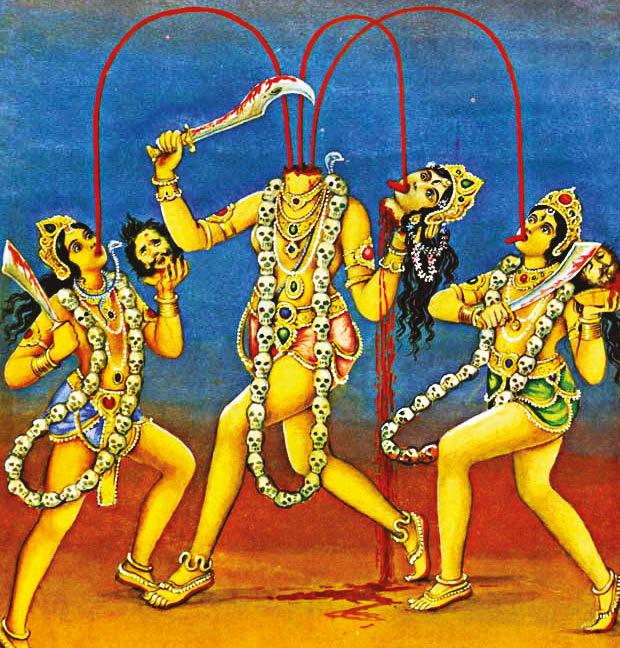
    The text of the Gupta Lalitambika desribes Goddess Chinnamasta as follows: “She who is the embodiment of virtue, love, humanness, anger, valiancy, terror, odiousness, mysticism, humor and tranquility all put together.” It is quite a neat description of the Goddess. The name by itself connotes ‘one with the severed head’. She is refered as Prasanda Chandika and comes 6th in line of the ten Mahavidyas. There is mention of the Goddess in not only Hindu texts but also Buddhist Tantric scriptures. She is also called Vajreshwari and is likened to the thunderbolt of Lord Indra. Her eyes are expressive and some devotees also call her Indrani. Those who follow her become inspired and courageous.

    Significance of Mahavidya Chinnamasta 

    She is known to help the activation of the Manipur chakra in the human body. As the chakra gets started a white odorless smoke is emitted. A triangle and a lotus emerge. It also brings forth the images of Rati and Manmata who are just above the white lotus. Manmata has his back on the white lotus and Rati is positioned just above him. The image also depicts Cinnamasta standing on the chest of Manmata. She has a head in her hand. Her neck shows three sprays of blood spouting out (symbolizing the flow of prana through Ida, Pingala and Sushumna Nadis). One spray of blood is towards her friend Dakini and the other is for Varninini. The third one, which is green and yellowish, is gaseous in nature. It assumes an ultra violet shade and comes out of her mouth. This gas is spread all across the universe. It intersperses with all living beings and touches their lives.

    The Devi is harsh on her self as she sacrifices her head. As she has immense self-control she is considered a yogi of the finest order. Since she is able to sacrifice her own head it means she is capable of spiritual advancement.

    She is called a pure Yogini. This is why she is called by names like Vajra Yogini, supreme Dakini or Para Dakini. Those who wish to get empowered with the occult worship her ardently. Her left foot is positioned in a manner that shows she is ready to move or is always ‘on the go’. In her hand she also carries a knife along with the severed head. A serpent is around her neck and she has three eyes. Despite all her fearsome features she is considered satvik and very feminine. Once she blesses the devotee he is protected for life.

    Legends

    Since there are not many available texts on her and also by way of reference quite a lot has disappeared in antiquity, nevertheless through art she is well depicted. As one of the forms of Kali many fear her. In Tantric Buddhist texts she is refered as Vajrayoni and the form of Tara. Those who follow the Tibetan tantric system believe that her ability to hold her head in sacrifice shows the highest spiritual authority. Her not being dead, and walking is also amazing as mentioned in the Tibetan Tantra scriptures. This also signifies the enlighment from risen Kundalini, and complete freedom from ego.

    We need to get rid of all kinds of false identifications and emotions. We have to go beyond the limitations and break free. She teaches us to remove fear, self pity and also forget the pain of death. Her being naked means she wants us also to be free from being bound by ego and false designations.

    As a Mahavidya she wears a garland of skulls and a necklace of bones around her neck. She ties the snake on her neck like a yajnopavita or a sacred thread. It is gruesome to see that she has cut off her head and is carrying it in her hand. While she is standing with the severed head on Rati and Manmata, the backdrop is equally terrifying. There is thunder and lighting all around. She is in a state of amansaka (not dead). She is now free of all human emotions and characteristics. She is still happy and sees it all with her three eyes. The place where the event is happening is a cremation ground. There are jackals that are around but are not interested in the event.

    There is another image of the Mahavidya where she is sitting on the chest of Shiva with her severed head. She is also called the red hibiscus and she is like the rising sun. She is usually in red and at times blue. In another image she is riding the lion with her severed head. The rest of the features of the Mahavidya remain the same. In the oldest tradition she stands naked like a Digambari. There is no illusion of the body or attachment towards it. With her in such images there is hardly any reason for her devotees to fear life or death. They are also stripped of illusion. Her acts are heroic in nature. She is in bliss and not in pain.

    Maa Chhinamastika as Chintapurni

    Another Legend states that, Devi transformed into Chandi to kill the demons. Mata killed the demons and brought victory to the Devas. But, Ajaya and Vijaya who were Mata’s aides were not satisfied as they wanted more blood. Mata cut her forehead and offered them her blood.

    Maa Chhinamastika Jayanti: Appearance day of Maa Chhinamastika is known as Chinnamastika jayanti. It is celebrated on Shukla paksha chaturdashi in Vaisakh month. This year it comes on Saturday, 25th May 2013. This day is celebrated with great passion and devotion. Special puja and arrangement are made in Mata’s oldest temple at Jharkhand.

    Maa Chinnamasta the “Kundalni Shakti”

    Maa Chinnmasta helps in awakening the kundlani shakti, the main spiritual energy in each human body. It is assured that the Kundalni Shakti moves upward very forcefully through sushumna nadi from muladhar chakra to sahastrar chakra in top of the head with such a force that it blows her head out. The blood coming out from the throat applies the upward flowing kundlani breaking all granthis i.e. Brahmgranthi, Vishnugranthi, Rudragranthi which makes a person sad, ignorant and weak. The severed head is
    “consciousness”. The three blood streams is the flow of nectar when kunlani unites with Shiva in Sahastrar Chakra, which is yogi called Maithun Kriya. Those who do the chakra dhyan sadhna can understand better.

    There are several places in India where it is said that sati’s head fell over there, that is why she is worshipped as Chinnamasta.

    1. Chintpurni temple in Himachal Pradesh 2. Temple at Bishnupur, West Bengal 3. Ramnagar near Varanasi 4. The most powerful Chinnamasta temple is in Jharkhand, in Rajrappa where devotees are not allowed after 5.30 pm in the evening because of super natural powers roaming around temple complex after evening. 5. There is also one in Kamakhya temple complex in Assam, where, on each Wednesday, there is a long que for people for worshipping and giving sacrifices of goats.

    For getting rid of “RAHU” grah (planet)’s bad effects, the puja of Chinnamasta is must. Some knowledgable pandits also recommend deity puja for KETU shanti.


  • Bharatiya Temple & Cultural Center (BTCC) of Greater Lafayette, Indiana concludes installation of murtis

    Bharatiya Temple & Cultural Center (BTCC) of Greater Lafayette, Indiana concludes installation of murtis

    Bharatiya Temple & Cultural Center (BTCC) of Greater Lafayette in West Lafayette (Indiana, USA) has completed traditional installation of statues of Hindu deities. BTCC, which formally opened in 2012, now reportedly has statues of ShivParivar, VishnuParivar, VenkateswaraParivar, RamParivar, RadhaKrishna, Ganesh, Lakshmi, Saraswati and Kartikeya; in addition to Navagrahas.

    Besides daily aarti, Bharatiya Temple & Cultural Center; whose mission includes “To promote friendship and goodwill among people of all religions”; also conducts festivals, havans, yoga, meditation, discourses on Bhagavad Gita, cultural programs, balvihar and bhangra classes, community lunches, charitable activities, etc. 

    Meanwhile, Hindu statesman Rajan Zed, in a statement in Nevada today, commended efforts of BTCC leaders and area community for realizing this Hindu temple complex.

    Rajan Zed, who is President of Universal Society of Hinduism, further said that it was important to pass on Hindu spirituality, concepts and traditions to coming generations amidst so many distractions in the consumerist society and hoped that this temple would help in this direction.

    Zed stressed that instead of running after materialism; we should focus on inner search and realization of Self and work towards achieving moksh (liberation), which was the goal of Hinduism.

    Bhavin Shah, Surya Dwadasi and Padma Subramaniam are President, General Secretary and Treasurer respectively of BTCC; whose goal includes providing “avenues for religious, humanitarian, cultural and educational resources to the community”.  Hinduism is the oldest and third largest religion of the world with about one billion adherents. There are about three million Hindus in USA.

  • A Morning of Spiritual Experience with Pandit Jasraj Ji and Gurudev Manak Muni Ji

    A Morning of Spiritual Experience with Pandit Jasraj Ji and Gurudev Manak Muni Ji

    FLUSHING, NY (TIP): The morning of May 22 brought to the auditorium of Hindu Temple Society in Flushing a large number of people, particularly from Jain community, for a rare spiritual experience. There was music. There was simple philosophy of life which often goes by the name of religion. And it all came from two great souls-Sangeet Martand Padma Vibhushan Pandit Jasraj Ji and Pujya Gurudev Shri Manak Muni Ji

    One of the organizers Anu Jain honors Pandit Jasraj Ji
    One of the organizers Anu Jain honors Pandit Jasraj Ji

    Dr. Ajay Lodha, who recently received the prestigious Ellis Island Medal of Honor which ranks with him the presidents of USA and other top dignitaries of USA and his friends who included Anil Jain, Anu Jain, K.K. Mehta, Kanak Golia, Rajendra Bafna and Dr. Raj Bhayani, organized a morning of devotional music and a religious discourse by Pujya Gurudev Shri Manak Muni Ji who is on a visit to the US these days.

    The presence of Sangeet Martand Padma Vibhushan Pandit Jasraj Ji as chief guest lent special grace to the spiritual event of which Muni ji was the star attraction.

    The highlights of the spiritual morning was a musical narrative presented by Pandit Jasraj Institute of Music. The medley of bhajans filled the audience with rare inner peace. The musical segment also included a Ganesha Vandana in dance form.

    Gurudev Shri Manak Muni Ji in his more than an hour long discourse dwelt on what makes human beings unhappy and how they can insulate themselves against the feeling of unhappiness. He said “dukh” and “sukh” are parts of life. It is the “mann” which needs to be kept under check to keep the feeling of “dukh” away.

    Gurudev Manak Muni Ji giving discourse
    Gurudev Manak Muni Ji giving discourse

    Muni ji’s recipe to prevent the feeling of unhappiness overtaking human beings is to be always cheerful, always wearing a smile, and if possible, laugh. When people do that, they will experience peace and the feeling of “dukh” will not haunt them.

    Muni Ji also spoke of the basic tenets of religion. He said love, brotherhood, compassion and peace are essentials of Dharma. These qualities keep conflicts away and bring happiness to the entire mankind.

    Both Pandit Jasraj Ji and Gurudev Manak Muni Ji were profusely praised by Dr. Ajay Lodha who welcomed them. Both were presented bouquets by one of the organizers Anu Jain and some others and honored with traditional scarfs.

    Pandit Jasraj Institute of Music students and teachers singing bhajans
    Pandit Jasraj Institute of Music students and teachers singing bhajans

    Dr. Shashi Shah emceed the program.


  • CHAR DHAM

    CHAR DHAM

    #CharDham is referred to the four Hindu religious sites in Uttarakhand state of India. These are Yamunotri, Gangotri, Badrinath and Kedarnath. Nestled in the lap of majestic Himalayas, these four sites are the epicenter of religious activity in north India. Traditionally, the Chardham yatra is undertaken from the west to the east. Thus, the yatra starts from Yamunotri, then proceeding to Gangotri and finally to Kedarnath and Badrinath.

    Amongst the four Char Dhams, Yamunotri and Gangotri are dedicated to goddesses Yamuna and Ganga respectively. On the other hand, Kedarnath is dedicated to Lord Shiva while Badrinath is dedicated to Lord Vishnu. Moreover, people also visit Hemkund Sahib in the vicinity, which is one of the highest located religious sites in the country. Thus, pilgrims visit all these places in aspiration of washing away their sins and to attain salvation, by the blessings of the Lord.

    Owing to the significance of this religious circuit, devotees from all over the world, come here to experience the eternal bliss. Char Dhams are hustling and bustling with activity during the summer months, as hundreds of devotees embark upon the holy journey. The picturesque surroundings of the mountainous region are simply enthralling, giving the visitors a perfect opportunity to unwind themselves by filling their lungs with fresh air. Moreover, these otherwise silent and tranquil locales resound with the names of the Lord as the pilgrims advance towards their destination.

    Badrinath

    Badrinath Temple is one of the holiest Hindu shrines in India. It is situated in the hill town of Badrinath in the Chamoli district of Uttarakhand state. Along the river Alaknanda, the temple is essentially a Lord Vishnu shrine. Also known by the names Badri Vishal and Badrinarayan, it is one of the Char Dham sites and the one amongst 108 Divya Desams. This has contributed to the fact that Badrinath is vital with reference to travel and tourism.

    The gates of the temple are open only for a period of six months, due to extreme weather conditions in Himalayas. There are a number of hot water pools here namely Tapt Kund, Narad Kund etc. These pools are filled with hot steaming water in the winter months also and are considered to posses medicinal properties. Many people even perform the last rites of the departed souls at Brahm Kapal.

    It is a flat platform on the banks of river Alaknanda. Sheshnetra and Chandrapaduka are other rock boulders present along the river, which are believed to have footprints of Shesh Nag and Lord Vishnu. Another important temple here is the Mata Murti Temple. These temples are also considered as evidences of the rich historical past of Badrinath. Referring the mythological facts, it is believed that Lord Vishnu was practicing penance at this place.

    In order to save him from the harmful rays of the sun, his divine consort Lakshmi took the form of a Badri plant and provided shade to him. Pleased by her fervor and devotion, the Lord told her that this place would be famous by her name. Hence, it came to be known as Badrinath. Splashed by Alaknanda, the divine site serves as an ideal location to experience the eternal bliss associated with spirituality.

    Kedarnath

    Kedarnath is a sacred town situated in the state of Uttarakhand of India. It can even be called as one of the remotest Char Dham sites as it is located amidst the snow-capped mountains of Himalayas, near the river Mandakini. Nestled in the Rudraprayag district, the main attractions here is the Kedarnath Temple, which is a popular Hindu shrine and pilgrimage, attracting devotees from all over the world. The travel and tourism scope here is strengthened by factors like natural beauty and religious zest.

    The Kedarnath Temple is dedicated to Lord Shiva and is deemed to have been built by Adi Sankaracharya. The glory of the temple can be attributed to the fact that it is one of the twelve jyotirlingas (Lord Shiva shrines), present in the country. The temple remains open only for a period of six months, due to heavy snowfall in the winter months. Testing the fervor and dedication of the pilgrims, the temple is not directly reachable by road.

    The only way being, a 14 km trek path from Gaurikund. The present temple stands adjacent to the initial temple built by the Pandavas. According to historical data, Pandavas after winning the battle of Mahabharata, felt guilty of killing their own brothers. They came here in search of Lord Shiva, who kept hiding himself. Finally Bhima, the strongest Pandava brother recognized him. Lord Shiva, who was disguised as a bull, escaped leaving behind his hind part.

    This led to the construction of the temple here. The present Kedarnath Temple has been built by huge slabs of gray stones, standing undeterred with all its glory and majesty. The divine peace and tranquility of the place leaves the devotees completely mesmerized. The haunting environment and secluded surroundings compel all the visitors to feel the inner connection with the Almighty. Thus, Kedarnath is considered a must visit place amongst pilgrims, before leaving this world.

    Gangotri

    One of the four sites amongst the holiest places, Char Dham in India, is Gangotri. This sacred city is located in the northern part of the state of Uttarakhand. It is known as the source of River Ganges and also the seat of Goddess Ganga. Ducked amidst the sprawling Garhwal hills, Gangotri is an ideal location for all those who wish to take a dip into the oceans of divinity, as well as those have a thirst for adventure. This makes Gangotri an ideal spot in terms of travel and tourism.

    Gangotri also has a strong historical past and bears the eternal feel of antiquity. According to mythological records, King Bhagirath did penance here, after which, as per Lord Shiva’s wishes, River Ganges came down on earth. However, to save the earth from the fierce force of the river, Lord Shiva held her in his locks. Thus, river Ganges is also known as Bhagirathi here. Moreover, it is also believed that Pandavas came down to this place to perform Deva Yajna.

    As a result, Gangotri is a significant place from religion point of view. Hundreds of devotees throng the place every year in order to unleash the secrets of spirituality. Some of the main attractions of Gangotri include Gangotri Temple, which was built by Gurkha monarch Amar Singh Thapa, around 3000 years back. Another pilgrim site here is Jalamagna Shivalinga, which is a natural rock Shivalinga submerged in the river.

    It is deemed to be the place where Lord Shiva held Ganga in his locks. This Shivalinga is only visible in winter months. Other worth visiting places in the vicinity are Gaumukh (source of Ganges), Gaumukh Glacier and Nandanvan. Drifting towards the adventurous aspect of Gangotri, it offers a number of sports for fun lovers such as river rafting, trekking etc. Thus, to enjoy the natural beauty and religious fervor at its best, Gangotri is a must visit place for all.

    Yamunotri

    Perched amidst sprawling Garhwal Hills, Yamunotri is another revered pilgrim spots in the state of Uttarakhand. It is one of the Char Dham in India and holds great religious importance. Yamunotri is the source of sacred river Yamuna and also the abode of goddess Yamuna. It is famous for its thermal springs, glaciers and scenic locales. In effect, it is one of the must visit places from travel and tourism point of view.

    According to Hindu mythology, this hilly spot was once the abode of an ancient sage by the name, Asit Muni. Owing to its legendary significance, thousands of devotees visit this silent yet hustling-bustling pilgrimage place. There are a many worth visiting places here, one of the most important being the Yamunotri temple. This temple was built by Maharani Gularia of Jaipur in the 19th century. The shrine is dedicated to goddess Yamuna.

    She resides here in the form of a silver idol adorned with garlands. It is believed that a holy dip in the sacred water of river Yamunotri here relieves everyone from a painful death. This is because she is the sister of Yama, the God of Death. As a result, pilgrims visit the place in order to seek the blessings of Yamuna and save themselves from the agony of death. Apart from this there is Surya Kund which is known for its thermal springs.

    The temperature of the water here is approximately 190 degree Fahrenheit. Also, there are a number of hot water pools here, which are used to cook rice and potato as Prasad (holy offerings to God). Divya Shilla is a rock pillar here, which is worshipped by the devotees before entering the Yamunotri temple. Other tourist places near Yamunatri are Janaki Chatti, Hanuman Chatti and Saptrishi Kund.

  • The Asian American and Pacific Islander Heritage Month Celebrations organized in New Britain

    The Asian American and Pacific Islander Heritage Month Celebrations organized in New Britain

    NEW BRITAIN, CT (TIP): The State of CT Judicial Branch Court Support Services Division (CSSD) Multicultural Affairs Unit hosted the Asian American and Pacific Islander Heritage Month Celebration (AAPIHMC) to raise awareness and to celebrate the contributions made by Asian Americans and Pacific Islanders to the United States.

    The event was held at the Central Connecticut State University Institute of Technology & Business Development building located at 185 Main Street New Britain, CT 06051.

    CSSD oversees pretrial services, family services, divorce and domestic violence, probation supervision of adults and juveniles as well as juvenile residential centers including Juvenile Detention. CSSD also administers a network of statewide contracted community providers that deliver treatment and other support services.

    The mission of CSSD is to provide effective support services within the Judicial Branch by working collaboratively with system stakeholders to promote compliance with court orders and instill positive change in individuals, families, and communities.

    CSSD is able to accomplish this mission by employing risk and conflict reduction strategies within each of its service areas.

    A panel from three religion Sikhism, Hinduism and Islam was invited to share knowledge and experience about their faith.

    Keynote Speaker Dr. Bill Howe addressed the audience about the Asian American culture and his experience as an educator and consultant in multicultural education.

    Dr. William (Bill) A. Howe provides training and consultation in multicultural education, culturally responsive education, diversity awareness and gender equity (Title IX). He is the former program manager for culturally responsive education, multicultural education, bullying & harassment, gender equity and civil rights at the Connecticut State Department of Education. He is a regular presenter at state and national conferences, has appeared on both radio and television on diversity issues. Over the years, he has trained over 15,000 educators.

    On this event Swaranjit Singh Khalsa from Sikh Sewak Society International USA who has recentlybeen appointed as Member in City Planning Commission for city of Norwich, said that Sikhs have been targeted for hate crime due to their articles of faith like Dastaar and beard.

    He explained the articles of Sikh faith and also spoke about the history of Sikh Religion. He said Guru Nanak who was a social reformer and a champion of Civil rights in the 15th century, five hundred years before America spoke about these liberties, founded the Sikh religion which is the youngest and the fifth largest religion of the world with  a worldwide following of 25 million.

  • BUDDHA PURNIMA

    BUDDHA PURNIMA

    Buddha Purnima is traditionally known as Vesak or Vesakha since it falls in the month of Vaishakh according to lunar calendar. It is a festival that marks the birth, enlightenment and death of Gautam Buddha. This day usually falls on the day of full moon (Purnima) in the month of May, hence it is also known as ‘Buddha Purnima’. Many of us may not know the amount of divinity that goes into celebrating this festival, therefore, lets enlighten ourselves.

    On this day devout Buddhists and followers assemble in various temples before dawn for the ceremonial and honourable hoisting of the Buddhist Flag.

    Devotees bring simple offerings of flowers, candles and joss-sticks to lay at the feet of their teacher. They come together to make a special effort to refrain from killing of any kind and are encouraged to partake in vegetarian food for this day.

    Certain temples observe the practice of displaying a small statue of Buddha in front of the altar in a basin filled with water and decorated with flowers. Devotees are allowed to pour water over the statue as a symbol of cleansing bad karma.

    Buddha Purnima also includes talks given by monks who engage in reciting verses uttered by Buddha 25 centuries ago to invoke peace and happiness.

    Celebrating this day does not involve festivities unlike other events, but works as a mean of making special efforts to bring happiness to the unfortunate, the aged, the handicapped and the sick.

    Vesak around the world

    Japan Sadly, Japan does not have public holiday on this occasion. The festival here, is based on a different legend that says, a dragon appeared in the sky on Buddha’s birthday and poured soma over him, which is a Vedic ritual drink. In the modern arena, Japan celebrates Vesak by pouring amacha, a sweet tea on statues.

    Nepal Nepal is home to Lumbini-birthplace of Buddha, and Swayambhu-the holy temple for Buddhists also known as the Monkey Temple. The main door of Swayambhu is opened only on this day; hence, people from all over Kathmandu valley are stimulated by the event. Pilgrims across the world gather in thousands to celebrate Buddha’s birthday at his birthplace.

    Sri Lanka Sri Lanka celebrates Vesak for about one week! During this time, the selling of alcohol and fresh meat is prohibited with abattoirs also being closed. The celebrations here include giving of alms and erection of pandals wherein each pandal illustrates a story from the Jataka Tales. Food stalls are set up by Buddhist devotees that provide eatables and drinks to passersby. Also birds, insects and animals are released by the thousands in what is known as a ‘symbolic act of liberation’; of giving freedom to those who are in captivity, imprisoned, or tortured against their will. Apart from these, other Asian countries like Korea, Vietnam, Malaysia, Indonesia, and Singapore also participate in processions and prayers by monks and make this day a true symbol of spirituality.

    What Do People Do? Many Buddhists visit temples on Vesak to listen to monks give talks and recite ancient verses. Devout Buddhists may spend all day in one or more temples. Some temples display a small statue of Buddha as a baby. The statue is placed in a basin filled with water and decorated with flowers. Visitors to the temple pour water over the statue. This symbolizes a pure and new beginning. Many Buddhists pay special attention to Buddha’s teachings during Vesak. They may wear white robes and only eat vegetarian food on and around Vesak. Many people also give money, food or goods to organizations that help the poor, the elderly and those who are sick. Caged animals are bought and set free to display care for all living creatures, as preached by Buddha.

    Public Life Government offices, post offices and banks are closed in India on Vesak. Stores and other businesses and organizations may be closed or have reduced opening hours. Transport is usually unaffected as many locals travel for religious celebrations.

    Background Gautama Buddha was a spiritual teacher in India. Many scholars are uncertain when he lived. It is believed that Buddha was born at some time between sixth and fourth centuries BCE. Opinions among scholars are generally divided between those who place Buddha’s death about 480 BCE and those who place it as much as a century later.

    Buddha was an influential spiritual teacher during and after his lifetime. Many Buddhists see him as the Supreme Buddha. Festivals to honor Buddha were held for many centuries. The decision to celebrate Vesak as the Buddha’s birthday was formalized at the first conference of the World Fellowship of Buddhists. This conference was held in Colombo, Sri Lanka, in May, 1950. The date was fixed as the day of the full moon in May.

    Different Buddhist communities may celebrate Vesak on different dates in years when there are two full moons in May. This is because the Buddhist lunar calendar can be interpreted in different ways.

    Symbols The dharmacakra or dharma wheel is a symbol often seen during Vesak. It is a wooden wheel with eight spokes. The wheel represents Buddha’s teaching on the path to enlightenment. The eight spokes symbolize the noble eightfold path of Buddhism.

  • VASANTA NAVARATRI | THE 9 HOLY NIGHTS OF SPRING

    VASANTA NAVARATRI | THE 9 HOLY NIGHTS OF SPRING

    Navaratri (“nava” + “ratri”) literally means “nine nights.” This ritual is observed twice a year, in spring and in autumn. “Vasanta Navaratri” or Spring Navaratri is nine days of fast and worship that Hindus undertake during spring every year. Swami Sivananda retells the legend behind this 9-day springtime ritual during which the devout Hindu seeks the blessings of the Mother Goddess.

    “The Divine Mother or Devi is worshipped during the Vasanta Navaratri.

    This occurs during the spring. She is worshipped by Her own command. You will find this in the following episode in the Devi Bhagavata.

    The Origin of Vasanta Navaratri

    In days long gone by, King Dhruvasindu was killed by a lion when he went out hunting. Preparations were made to crown the prince Sudarsana.

    But, King Yudhajit of Ujjain, the father of Queen Lilavati, and King Virasena of Kalinga, the father of Queen Manorama, were each desirous of securing the Kosala throne for their respective grandsons. They fought with each other. King Virasena was killed in the battle. Manorama fled to the forest with Prince Sudarsana and a eunuch. They took refuge in the hermitage of Rishi Bharadwaja.

    The victor, King Yudhajit, thereupon crowned his grandson, Satrujit, at Ayodhya, the capital of Kosala. He then went out in search of Manorama and her son. The Rishi said that he would not give up those who had sought protection under him. Yudhajit became furious. He wanted to attack the Rishi. But, his minister told him about the truth of the Rishi’s statement.

    Yudhajit returned to his capital

    Fortune smiled on Prince Sudarsana. A hermit’s son came one day and called the eunuch by his Sanskrit name Kleeba. The prince caught the first syllable Kli and began to pronounce it as Kleem. This syllable happened to be a powerful, sacred Mantra. It is the Bija Akshara (root syllable) of the Divine Mother.

    The Prince obtained peace of mind and the Grace of the Divine Mother by the repeated utterance of this syllable. Devi appeared to him, blessed him and granted him divine weapons and an inexhaustible quiver.

    The emissaries of the king of Benares or Varanasi passed through the Ashram of the Rishi and, when they saw the noble prince Sudarsana, they recommended him to Princess Sashikala, the daughter of the king of Benares.

    The ceremony at which the princess was to choose her spouse was arranged. Sashikala at once chose Sudarsana. They were duly wedded. King Yudhajit, who had been present at the function, began to fight with the king of Benares. Devi helped Sudarsana and his father-in-law. Yudhajit mocked Her, upon which Devi promptly reduced Yudhajit and his army to ashes.

    Thus Sudarsana, with his wife and his father-in-law, praised Devi. She was highly pleased and ordered them to perform Her worship with havan and other means during the Vasanta Navaratri. Then She disappeared.

    Prince Sudarsana and Sashikala returned to the Ashram of Rishi Bharadwaja. The great Rishi blessed them and crowned Sudarsana as the king of Kosala. Sudarsana and Sashikala and the king of Benares implicitly carried out the commands of the Divine Mother and performed worship in a splendid manner during the Vasanta Navaratri.

    Sudarsana’s descendants, namely, Sri Rama and Lakshmana, also performed worship of Devi during the Vasanta Navaratri and were blessed with Her assistance in the recovery of Sita.

    Why Celebrate Vasanta Navaratri?

    It is the duty of the devout Hindus to worship the Devi (Mother Goddess) for both material and spiritual welfare during the Vasanta Navaratri and follow the noble example set by Sudarsana and Sri Rama. He cannot achieve anything without the Divine Mother’s blessings. So, sing Her praise and repeat Her Mantra and Name. Meditate on Her form. Pray and obtain Her eternal Grace and blessings. May the Divine Mother bless you with all divine wealth!”

    What’s the Significance of Navratri?

    During Navaratri, we invoke the energy aspect of God in the form of the universal mother, commonly referred to as “Durga,” which literally means the remover of miseries of life. She is also referred to as “Devi” (goddess) or “Shakti” (energy or power).

    It is this energy, which helps God to proceed with the work of creation, preservation and destruction. In other words, you can say that God is motionless, absolutely changeless, and the Divine Mother Durga, does everything. Truly speaking, our worship of Shakti re-confirms the scientific theory that energy is imperishable.

    It cannot be created or destroyed. It is always there.

    Why Worship the Mother Goddess?

    We think this energy is only a form of the Divine Mother, who is the mother of all, and all of us are her children. “Why mother; why not father?”, you may ask. Let me just say that we believe that God’s glory, his cosmic energy, his greatness and supremacy can best be depicted as the motherhood aspect of God. Just as a child finds all these qualities in his or her mother, similarly, all of us look upon God as mother. In fact, Hinduism is the only religion in the world, which gives so much importance to the mother aspect of God because we believe that mother is the creative aspect of the absolute.

    Why Twice a Year?

    Every year the beginning of summer and the beginning of winter are two very important junctures of climatic change and solar influence These two junctions have been chosen as the sacred opportunities for the worship of the divine power because:

    (1) We believe that it is the divine power that provides energy for the earth to move around the sun, causing the changes in the outer nature and that this divine power must be thanked for maintaining the correct balance of the universe.

    (2) Due to the changes in the nature, the bodies and minds of people undergo a considerable change, and hence, we worship the divine power to bestow upon all of us enough potent powers to maintain our physical and mental balance.

    Why Nine Nights & Days?

    Navaratri is divided into sets of three days to adore different aspects of the supreme goddess. On the first three days, the Mother is invoked as powerful force called Durga in order to destroy all our impurities, vices and defects. The next three days, the Mother is adored as a giver of spiritual wealth, Lakshmi, who is considered to have the power of bestowing on her devotees the inexhaustible wealth. The final set of three days is spent in worshipping the mother as the goddess of wisdom, Saraswati. In order have all-round success in life, we need the blessings of all three aspects of the divine mother; hence, the worship for nine nights.

    Why Do You Need the Power?

    Thus, I suggest you join your parents in worshipping “Ma Durga” during the Navaratri. She will bestow on you wealth, auspiciousness, prosperity, knowledge, and other potent powers to cross every hurdle of life. Remember, everyone in this world worships power, i.e., Durga, because there is no one who does not love and long for power in some form or the other.

  • GANGAUR #Hinduism

    GANGAUR #Hinduism

    Gangaur is a festival celebrated in the Indian state of Rajasthan and some parts of Gujarat, West Bengal and Madhya Pradesh.

    Gangaur is colourful and one of the most important festivals of people of Rajasthan and is observed throughout the state with great fervour and devotion by womenfolk who worship Gauri, the consort of Lord Shiva during March–April. It is the celebration of spring, harvest and marital fidelity. Gana is a synonym for Lord Shiva and Gaur which stands for Gauri or Parvati who symbolizes Saubhagya (marital bliss). The unmarried women worship her for being blessed with a good husband, while married women do so for the welfare, health and long life of their husbands and for a happy married life. People from Rajasthan when migrated to Kolkata in West Bengal started celebrating Gangaur. This celebration is now more than 100 years old in Kolkata.

    Rites and Rituals

    The festival commences on the first day of chaitra, the day following Holi and continues for 16 days. For a newly-wedded girl, it is binding to observe the full course of 18 days of the festival that succeeds her marriage. Even unmarried girls fast for the full period of the 18 days and eat only one meal a day. Festivity consummates on 3rd day of Shukla Paksha of Chaitra Month.Fairs (Gangaur Melas) are held throughout the 18 day period. Numerous folklores are associated with Gangaur which makes this festival deeply ingrained into the hearts of Rajasthan, and parts of Madhya Pradesh, Haryana & Gujarat.

    Images and Paintings

    Images of Isar and [Parvati |Gauri]are made of clay for the festival. In some Rajput families, permanent wooden images are painted afresh every year by reputed painters called matherans on the eve of festival. A distinct difference between the idols of Teej and Gangaur is that the Idol will have a canopy during the Teej Festival while the Gangaur idol would not have a canopy.

    Mehandi

    The ladies decorate their hands and feet by drawing designs with Mehndi (myrtle paste). The figures drawn range from the Sun, Moon and the starts to simple flowers or geometrical designs. Ghudlias are earthen pots with numerous holes all around and a lamp lit inside them. On the evening of the 7th day after Holi, unmarried girls go around singing songs of ghudlia carrying the pots with a burning lamp inside, on their heads. On their way, they collect small presents of cash, sweets, jaggery, ghee, oil etc. this continues for 10 days i.e. up to the conclusion of the Gangaur festival when the girls break their pots and throw the debris into the well or a tank and enjoys a feast with the collection made.

    Gauri’s Departure

    The festival reaches its climax during the last three days. The images of Gauri and Isar are dressed in new garments especially made for the occasion. Unmarried girls and married women decorate the images and make them look like living figures.

    At an auspicious hour in the afternoon, a procession is taken out to a garden, bawdi or johad or well with the images of Isar and Gauri, placed on the heads of married women. Songs are sung about the departure of Gauri to her husband’s house. The procession comes back after offering water to the first two days. On the final day, she faces in the same direction as Isar and the procession concludes in the consignment of the all images in the waters of a tank or a well. The women bid farewell to Gauri and turn their eyes and the Gangaur festival comes to an end.

    The festival celebrates the union of Shiva and Parvati which gives young girls and boys an occasion to interact with each other. It is an elaborate occasion and there are several rituals associated with it.

    These rituals include:

    • Collecting ash from Holika Dehan and burying seeds of wheat and barley in it and protecting them by watering till the seeds germinate.
    • Songs in praise of Shiv and Parvati are sung by women who also carry pots on their heads.
    • Women make clay images of both Shiva and Parvati.
    • A procession is taken by young girls and all of them place an earthern pot with holes and lamp inside on their heads. They distribute cash and other gifts on their way.
    • The final day of the festival sees images of Gauri being taken out in a procession accompanied by camels, bullock carts, horses and elephants. The procession is symbolic of return of Gauri to her husband’s (Shiv’s) home.
    • To mark the end of the procession, the girls break their pots.
    • Apart from these rituals, newly married women fast for the whole eighteen days of the festival and even unmarried women fast and eat only one meal a day in the hope to find a good husband. During this festival in Jaipur, a popular sweet dish called ‘Ghewar’ is distributed between families, relatives and friends.


  • CHAITRA SHUKLA PRATIPADA OR GUDI PADWA

    CHAITRA SHUKLA PRATIPADA OR GUDI PADWA

    Gudi Padwa, the first Holy festival which marks the beginning of the New Year, new month and new day for the Hindus falls on Chaitra Shukla Pratipada. (8th April 2016) It is known as Gudhi Padwa (in Maharashtra), Ugadi (in Karnataka, Andhra Pradesh). [In other parts of country it is celebrated during Nau Roz (Kashmir), Baisakhi (Punjab), Cheti Chand (Sindhi), Naba Barsha (Bengal), Goru Bihu (Assam), Puthandu (Tamil Nadu), Vishu (Kerala)] On this very day Lord Brahma created the Universe. Therefore for Hindus, this day carries special importance. The day is celebrated with an auspicious bath, followed by decorating the doorway with a ‘toran’, performing ritualistic worship and hoisting the Gudhi.

    Gudhi Padwa is celebrated as Ugadi (or Yugadi) in Karnataka and Andhra Pradesh. The day, begins with ritual showers (oil bath) followed by pooja to god and Panchanga Shravana. Houses are decorated with Mango Leaves and Rangoli and everyone in the family wear new clothes and celebrate the festival by wishing each other New year greetings.

    The eating of a specific mixture called Bevu-Bella (Neem and Jaggery) in Kannada, symbolizes the fact that life is a mixture of good and bad, Happiness and Sorrow. Eating Neem and Sweet Jaggery means one need to take both Good and Bad or Happiness and Sorrow should be accepted together and with equanimity through the New Year. The special mixture consists of:

    Neem Buds/Flowers for its bitterness, signifying Sadness

    Jaggery which is sweet, signifying Happiness

    In Karnataka a special dish called Obbattu or Holige (Puran Poli), is prepared on this occasion. It consists of a filling (gram and jaggery/sugar boiled and made in to a paste) stuffed in a flat roti like bread. It is usually eaten hot/cold with ghee or milk topping or coconut milk at some places of Karnataka.

    To ensure that the beginning of the New Year begins on an auspicious note, celebrate it according to the Hindu scriptures, on Chaitra Shuddha Pratipada as per the Hindu lunar calendar. This date is glorious in all ways – as per the cycle of Nature and it also has historical and spiritual significance. All this contributes to endowing the one celebrating it, as per the Hindu scriptures, with several benefits. It is the duty of each individual to arrest the loss being caused to society due to blindly emulating Westerners.

    ‘Gudi Padwa’ is the day on which the universe was created. Since on this day Shri Brahma created the universe and the Satyayug began, it marks the commencement of the New Year.

    The Divine consciousness emanating during sunrise, absorbed at that time lasts longer. Thus the Gudi should be worshipped within 5-10 minutes after sunrise !

    On Gudi Padwa, the waves consisting of the fire principle (Tej tatva) and the creative Prajapati waves are activated on a large scale. The Divine consciousness emanating during sunrise, absorbed at that time lasts longer. This consciousness is stored in the body cells and is used as required. Hence the Gudi should be worshipped within 5-10 minutes after sunrise.


    Page sponsored by ARISH K. SAHANI | “If Hindus don’t maintain Hinduism, who shall save it? If India’s own children don’t cling to their faith, who shall guard it? Indian alone can save India, and India and Hinduism are one.”

  • Hindu-Americans Oppose Proposed Textbook Changes on Hinduism In California

    Hindu-Americans Oppose Proposed Textbook Changes on Hinduism In California

    WASHINGTON:  Hindus in the US are strongly opposing against suggestions mooted by California’s Department of Education to make changes in textbooks which they allege not only distort India’s history but ignore facts on Hinduism.

    Following protests from Hindus across the nation, the California Education Department has decided not to go ahead with some of the suggested changes like replacing ‘India’ with ‘South Asia’ in state text books.

    Bill Honig, Chair of the Subject Matter Committee of the Commission, said at a public hearing that they reject the suggestion for removal of India but agreed to add “South Asia” in parenthesis after most mentions to ancient India.

    New recommendations will be forwarded to the State Board of Education for their consideration and the final draft of the framework is to be accepted later this year.

    But Hindu-Americans continue to oppose some of the proposed edits like removing mention of Hinduism’s acceptance of religious diversity, re-linking Hinduism with caste, and removing mentions of the contributions of Hindu sages of different backgrounds such as Valmiki and Vyasa.

    “We question the move to insert a large number of adverse edits on India and Hinduism at the last minute at the instance of a few Leftist scholars,” said the Hindu Education Foundation (HEF), which has been working with commission for the past many years.

    “While some important inaccuracies have been rolled back, a large number of adverse edits these academics submitted have still found their way into the recommendations and need to be scrutinised,” it said.

    It also protested the removal of the mention of non-Brahmin sages like Valmiki and Vyasa from the textbooks at the suggestion of these academics.

    “It is strange that while claiming to represent the underprivileged, the Leftist professors of South Asian faculty group have sought the removal of the mention that these sages came from lower castes which had specifically been added at the suggestion of Hindu groups to give fair representation to all communities,” the statement said.

    A large number of students and parents testified at the public hearing of the commission held in Sacramento on March 24 seeking the rejection of these changes.

    “India is not just a landmass but a living civilization. By removing the mention of India as a civilization, my identity as an Indian-American is sought to be erased,” Vidhima Shetty, a student studying in 9th grade in San Ramon, said during her testimony at the Department of Education.

    Narrating different incidents of stereotypes they encounter, the students demanded that Hinduism and India be portrayed in proper light. The students also demanded that the suggestions that Vedas belong to “ancient Indian religions” and not to Hinduism amounted to stripping them of their Hindu identity.

    The community’s efforts was also supported by a coalition of 20 government leaders and elected officials, including Congresswoman Tulsi Gabbard (D-HI), CA State Senator Steven M. Glazer (District 7), and several local leaders.

    California is home to the country’s largest Hindu population, with roughly one million of diverse cultural, racial, and national backgrounds.