Tag: Hinduism

  • MAHA SHIVRATRI

    MAHA SHIVRATRI

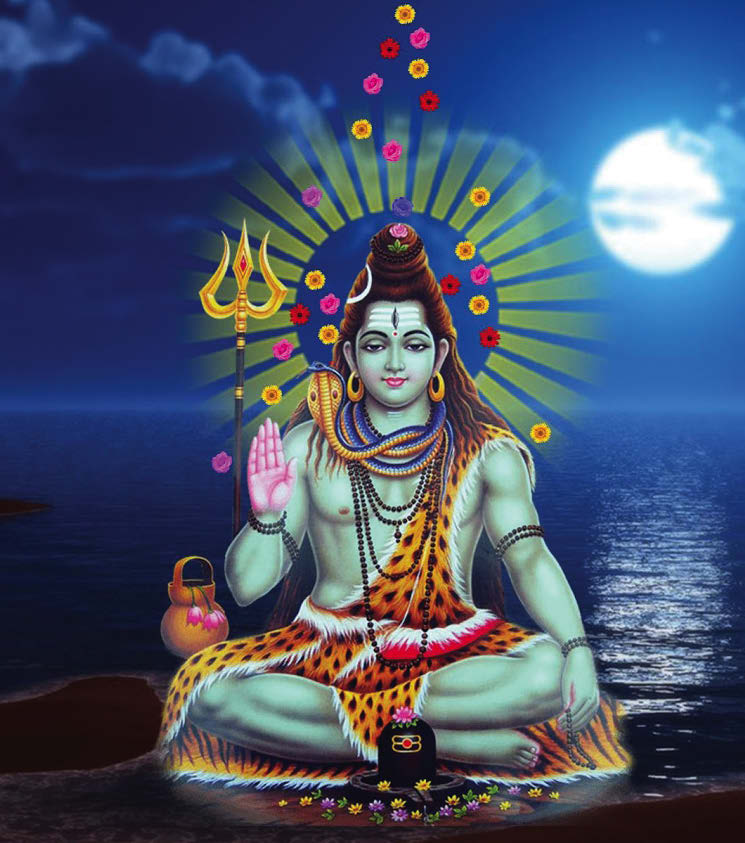
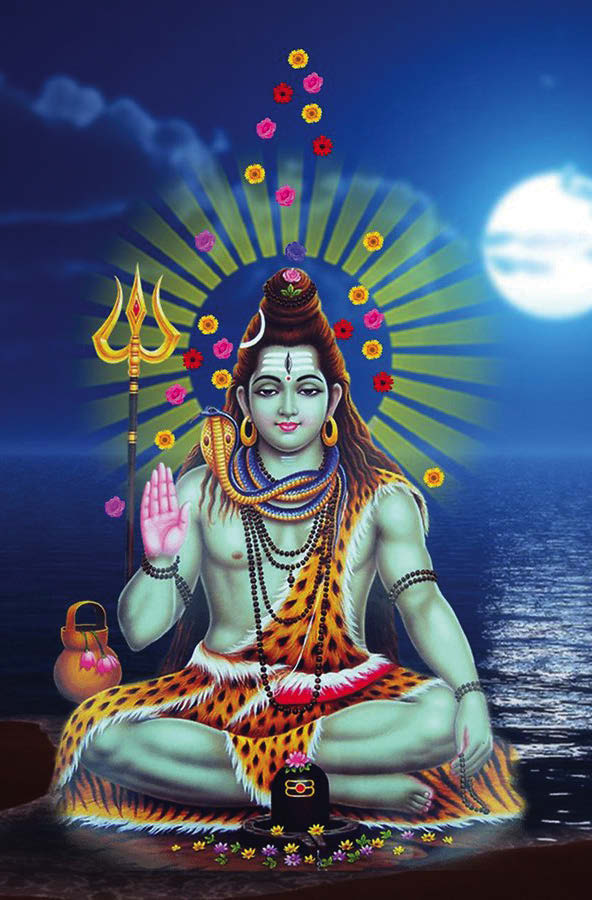
    Maha Shivaratri or Maha Sivaratri / padmarajarathri is a great festival in Hinduism, celebrated annually with the devotion and religious enthusiasm in the honor of the Lord Shiva, deities of Hindu Trinity. The literal meaning of Shivaratri is “The Great Night of Lord Shiva”. According to the Hindu calendar, it is celebrated in the Varanasi in the dark fortnight or Krishna Paksha at the 13th night or 14th day of the month Maagha or Phalguna (month of February or March according to the English calendar) to worship Shiva Lingam to make happy the Lord Shiva.

    Maha Shivaratri 2016 would be celebrated all over India as well as abroad by the devotees of Lord Shiva on 7th of March, at Monday.

    History

    This festival is celebrated to respect Lord Shiva by offering leaves of Bael or
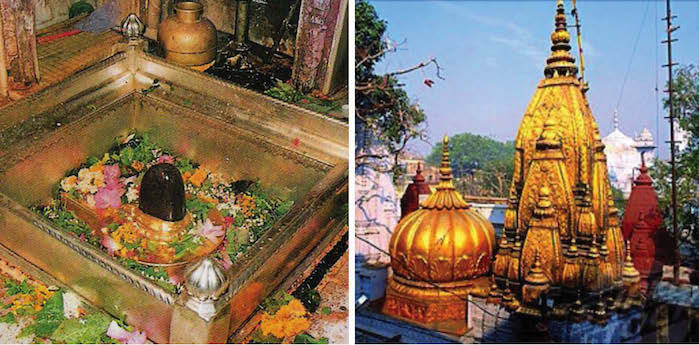
    Bilva/Vilvam, Bhang, Dhatura, flowers, coconut, fruits, water, cow milk and other things. Devotees keep fast of full-day and full-night and pray to Lord Shiva for their beautiful life partner with healthy and prosperous life. According to the ritual belief and traditions, penances are performed to get benefited in the practice of Yoga and meditation. Kashi Vishwanath Temple in Varanasi is one of the most important places for tourist attractions in the UP state where a big fair is held on at Maha Shivratri in front of the Virla temple and Vishwanath Gali of the old Vishwanath temple.

    Another myth of celebrating Maha Shivaratri in Hinduism is that, whole world was facing destruction and more near to the pralaya, and then the Goddess Parvati had worshiped her husband the Lord Shiva to save the world. Finally her prayer was approved by the Lord Shiva and then Goddess Parvati named that night, the Maha-Shivaratri, or the great night of Shiva.

    Favorite Day of the Lord Shiva

    It is believed that after completion of the creation of world, Goddess Parvati asked to Lord Shiva that which devotees and rituals satisfied him the most, and then Lord Shiva replied to Goddess Parvti that the 13th night of the Maagha month is his most favorite day. After that, she repeated the words of Lord Shiva to her friends, and then the words were spread all over world.

    Rituals 

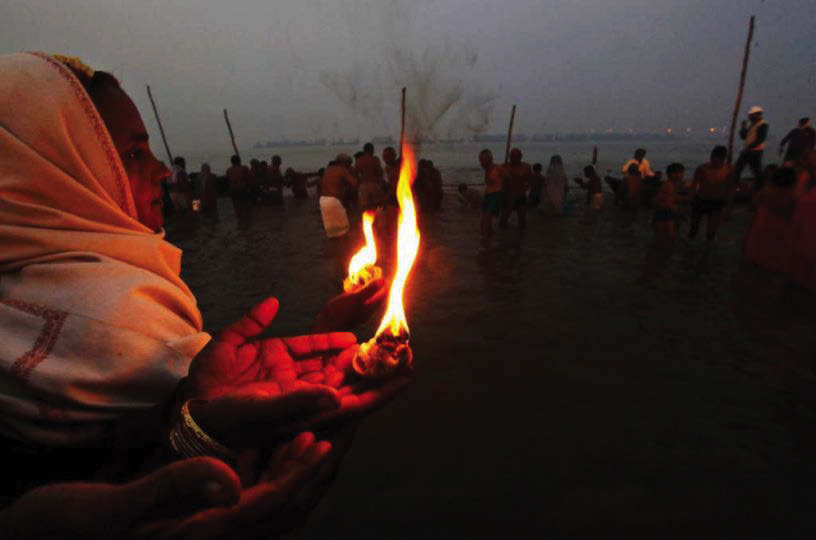
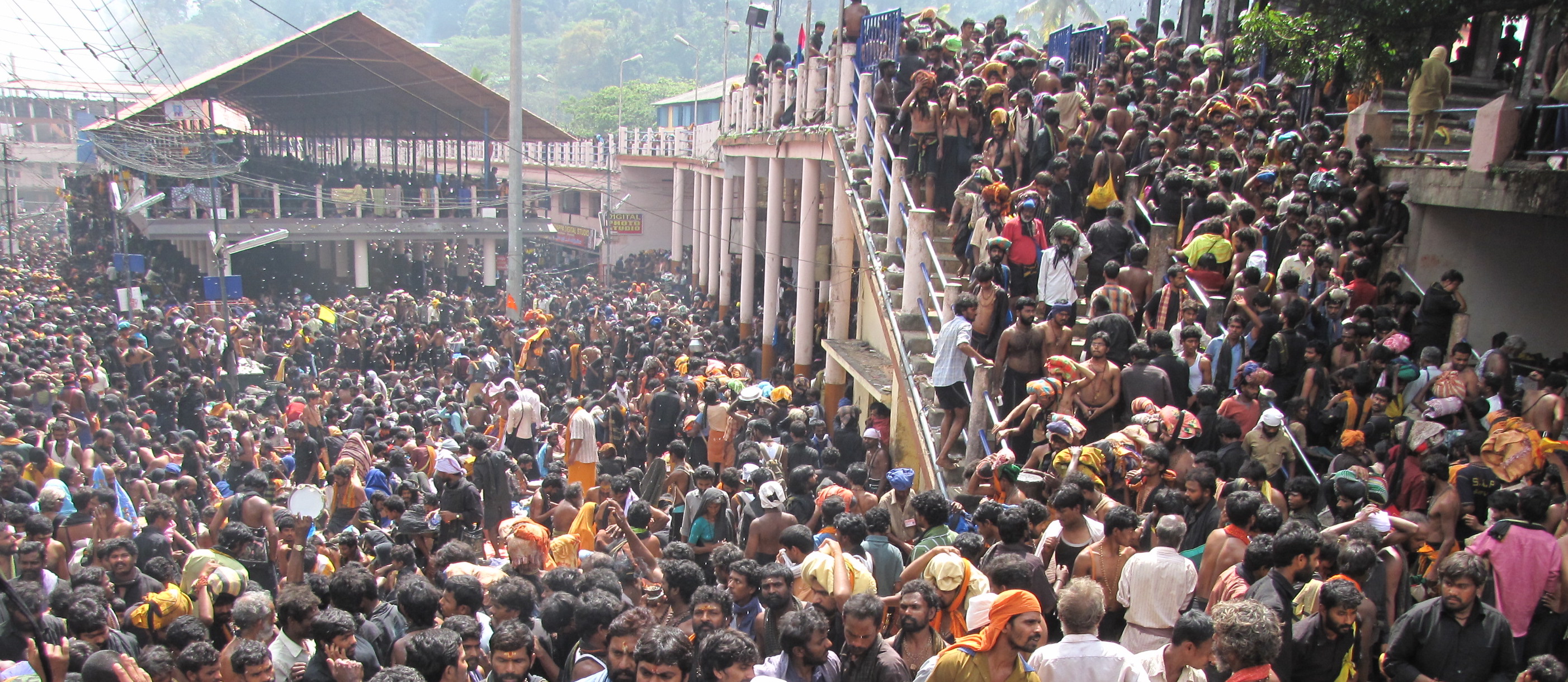
    On Maha Shivratri, people keep fast of whole day and night and Kashi Vishwanath temple gets congregated by the young and old devotees from the very early morning. They come to the temple to perform the puja of traditional Shivalingam and hope to get what they have prayed to the god. They take bath in the holy water of the Ganga (Symbol of the purity) early in the morning before sunrise and wear a clean clothe after the sacred bath.

    Every worshiper brings a pot full of holy Gange water to the temple to offer the Shivalingam. Women pray to God for her well-being of their husbands and sons, an unmarried woman pray to get their desired husband like Shiva (the ideal husband) in future; boys pray to get beautiful wife and successful life in future. The temple full of sound of bells and people shouts of “Shankerji ki Jai” or “Mahadevji ki Jai”. Devotees take 5 round of the Shivalingam and pour water on the Shivalingam. Some also pour cow milk on the Shivalingam.

    MAHA SHIVRATRI1According to the Shiva Purana, the Mahashivaratri puja involves six steps which are:

    • Taking bath in the Gange for purification of soul, mind and body. Bathing of the Shiv Linga with the holy water of Gange, then bathing with milk and honey. God Shiva loves bel patra (three leaves stalked in one) so every rituals added it to the puja.
    • After bathing of the Shiv Linga, vermilion paste applied on it which represents
      the virtue.
    • Offer fruits, flowers which are given to get long live and satisfaction of desires.
    • Burning enrage yields wealth.
    • The lighting with diya represents achieving more knowledge.
    • Offering betel leaves provide satisfaction full of great pleasures.
    • Worshipers also apply three horizontal lines of holy ash on their forehead just like the Lord Shiva which represents spiritual knowledge, cleanliness and penance. They wear garland made up of the Rudraksha (seed of Rudraksha tree) while worshiping the Lord Shiva. It is believed that Rudraksha tree was originated from the tears of Lord Shiva. Shivaratri is also considered as the wedding day of the Lord Shiva and Mata Parvati.

    What makes the Lord Shiva please more?

    It is written in the Shiva Purana that doing abhisheka of the Lord Shiva Linga with six dravyas such as cow milk, yoghurt, sugar, honey, ghee and Gange water while reading Sri Rudram, Chamakam and Dasa Shanthi pleases more the Lord Shiva. Milk is for the approval of cleanliness and faithfulness, yogurt for wealth and offspring, honey for sweet tongue, ghee for success, sugar for pleasure, and water for purity.

    Significance of Mahashivaratri

    Mahashivaratri Festival is of great and tremendous significance for the millions of Hindu devotee’s all over India as well as abroad. It falls every year on fourteenth day of the Phalgun month in the dark fortnight at the end of winter season. This festival is the big festival during which devotees can please the Lord Shiva in order to fulfill their desires. It has another great significance for the Women. Both married and unmarried women keep strict fast for whole day and do Shiva Linga Puja with very honesty to please the Goddess Parvati or Gaura Mata in order to get the marital bliss as well as long, wealthy and prosperous married life. At Mahashivaratri, the marriage of Lord Shiva with Mata Parvati took place in the ancient time, so the Hindu people celebrate this festival by performing the same ceremony every year. People in Varanasi start this ceremony from Mahamrityunjaya temple of Daranagar to the Kashi Vishwanath Temple in Varanasi.

    This festival is especially auspicious for the women. At this day, married women pray to God for the wellness and well being of their Suhaag however; unmarried women pray to God to get good husband in future just like the Lord Shiva means an ideal husband. Devotees of the Lord Shiva wake up in the early morning and take a ritual bath especially in the holy water of river Ganga. They wear fresh or new clothes and go to nearest Shiva temple to offer the Milk Abhishek to the Shiva Lingum and then with honey and water. They also offer some fruits, peach, dhatura, bael patra, bhang leaves, sweets, Ganga jal, etc. They pray to the God to fulfill their long list of wishes. People also sing ritual songs, do arti, drink bhang and dance at music.

    The process of worshiping, offering and praying continues whole day long from early morning till night. First of all in the early morning a ritual puja of the Shiva Lingam is performed by the temple’s priests. First they give bath to the Shiva Lingam with milk, yoghurt, honey, ghee, sugar (also called panchagavya) and then with water by chanting the mantra of “Om Namah Shivaya”. Somewhere people give bath to the Shiva Linga with milk, yoghurt, honey, sandalwood paste and rose water. They apply vermilion paste on the Shiva Linga and keep Bilwa leaves (especially three joined leaves in one stalk) on the top in the believe that Goddess Lakshmi resides in Bilwa leaves and it has cooling effects to the hot-tempered deity so it would help devotees in pleasing the Lord Shiva.

    Devotees ring temple bells in full sound. Then they allow devotees to come inside the temple and do their ritual. In some cities, a nightlong jaagran is organized at Shiva temples where a big crowd of large number of devotees stay whole night to sing holy hymns and devotional songs praising Lord Shiva and Mata Parwati. And in the early morning, devotees again perform all the ritual like bathing, offering Jal to Shiva Linga, etc and break their fast by taking Prasad offered by priests of the temple.


    Page sponsored by ARISH K. SAHANI | “If Hindus don’t maintain Hinduism, who shall save it? If India’s own children don’t cling to their faith, who shall guard it? Indian alone can save India, and India and Hinduism are one.”

  • Tulsi Gabbard, the first Hindu in the US Congress, on Modi, Hinduism, and linking Islam to terror

    Tulsi Gabbard, the first Hindu in the US Congress, on Modi, Hinduism, and linking Islam to terror

    Washington has no shortage of politicians struggling to be seen as a maverick. But Tulsi Gabbard isn’t one of them.

    As one of the first two female combat veterans elected to US Congress and also its first Hindu and first American Samoan representative, she wears the label quite easily. And this week, the 34-year-old congresswoman from Hawaii reminded everyone of it, as she broke ranks with the Democratic party establishment and relinquished her post as vice chair of the Democratic National Committee on Feb. 29 to endorse Bernie Sanders for president. (Her role with the DNC, the party’s governing body, would have required to stay neutral in the election.)

    Described last October by the Washington Post as “the Democrat that Republicans love and the DNC can’t control,” Gabbard offered a sample of her independent streak a year ago, when she spoke out of sync with her fellow Democrats and criticized US president Barack Obama’s handling of Islamic extremism—specifically over his unwillingness to brand ISIL an “Islamic” group. “[Obama] is completely missing the point of this radical Islamic ideology that’s fueling these people,” Gabbard told Fox News last February.

    Her viewpoint on this subject is all the more notable given her military experience in the Middle East, where she served in a field medical unit in Iraq and was a trainer for the Kuwait National Guard.

    But it also aligns nicely with the stance toward Islam held by India’s right-wing Bharatiya Janata Party (BJP) and its Hindu nationalist leader, Narendra Modi, with whom Gabbard shares a great rapport.

    Gabbard was among the few to criticize the US government’s decision to deny a visa to Modi before he was prime minister, in the wake of accusations that his government in the state of Gujarat did not do enough to save Muslims during the horrific communal violence carried out there in 2002. The Gujarat riots claimed more than 1,000 people, including close to 800 Muslims. Gabbard had called the no-visa decision a “great blunder.”

    And in November 2013, five months before Modi would win election as prime minister, Gabbard opposed a House resolution that called for “religious freedom and related human rights to be included in the United States-India Strategic Dialogue and for such issues to be raised directly with federal and state Indian government officials,” saying it would weaken the friendship between India and US.

    Critiques of her stance, like this one published on the American social-justice site Alternet.org, accused her of putting politics before policy:

    Rather than review the litany of abuses that have occurred in the country, Gabbard mused she did “not believe that the timing of this hearing is a coincidence….I am concerned that the goal of this hearing is to influence the outcome of India’s national elections.” She went on to state that even holding a hearing on the issue was “an attempt to foment fear and loathing purely for political purposes.” In other words, her concern was that Modi’s electoral chances would be hurt by an honest look at religious persecution in India.

    Speaking at a fundraising event for the BJP in August 2014, where she articulated the plight of Hindus around the world who have suffered persecution, Gabbard said that Modi’s election victory was only possible because “people stood up, one by one by one by one, and said we will demand that this change occurs.”

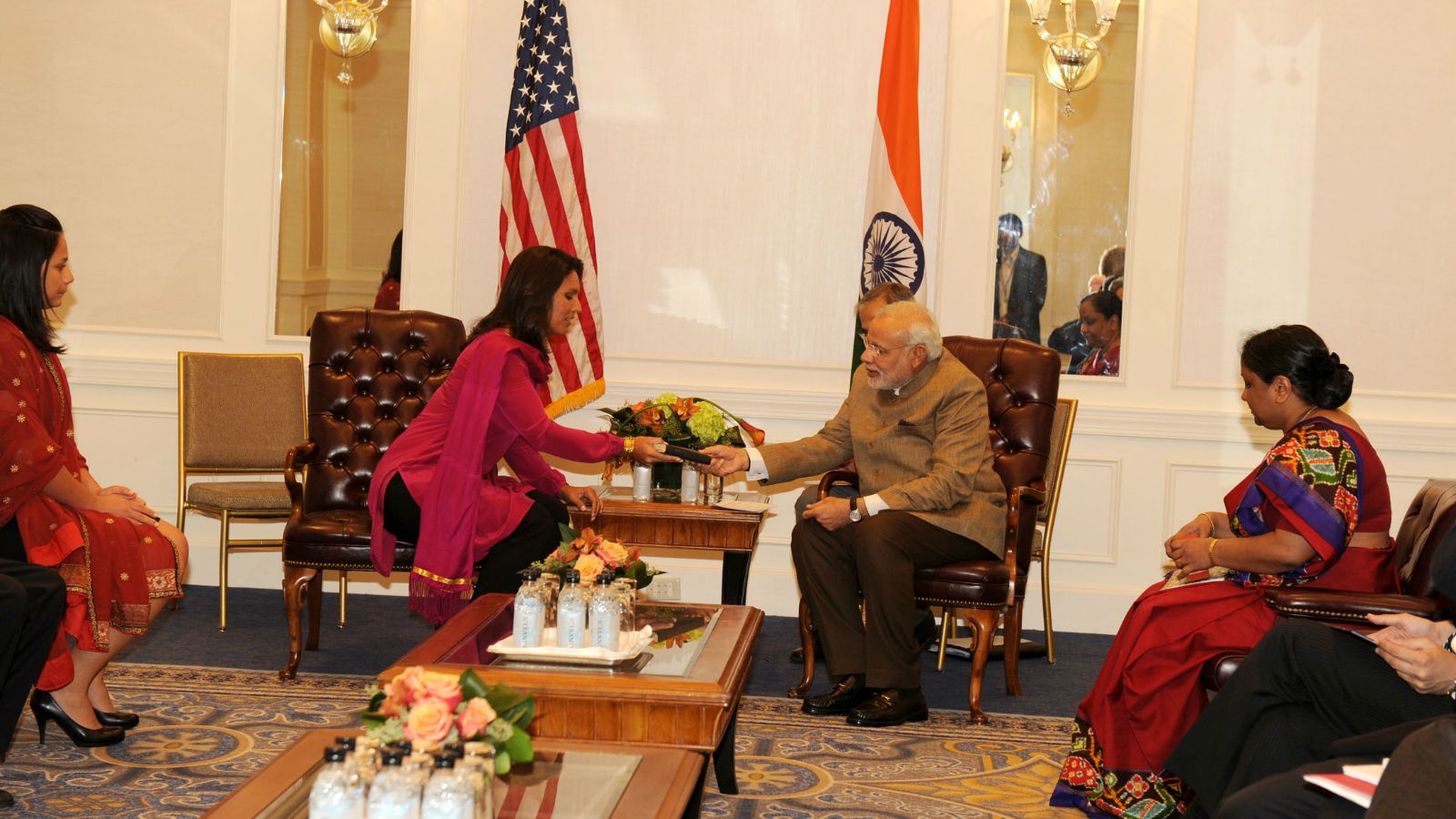
    In September 2014, the new Indian prime minister made it a point to meet Gabbard following his historic post-election speech at New York’s Madison Square Garden. And the congresswoman gave Modi a gift—a copy of the Bhagwad Gita that she swore by when elected to office—and assured him of her support for a Modi pet project of declaring an International Yoga day.

    “We had a wide-ranging discussion on several issues our countries have in common, including how America and India can work together to help combat the global threat posed by Islamic extremism,” Gabbard said after the meeting.

    For all that and more, Gabbard was treated as royalty on her visit to India last year. As she hobnobbed with the Indian prime minister and foreign minister among others, The Telegraph, a Kolkata-based newspaper, called her “the Sangh’s mascot” in the US. The Sangh, a moniker for the Rashtriya Swayamsevak Sangh (RSS), is a right-wing hindutva organisation and the ideological guardian of the BJP party that rules India now.

    With Modi set to stay in power until 2019, and Sanders doing better than expected in the Democratic primaries (or at least was up until March 1, when Democratic frontrunner Hillary Clinton handily won key states like Texas and Virginia in the “Super Tuesday” state contests), it can’t hurt the BJP and India to have a friend like Gabbard in the US.

    On March 2, Gabbard answered questions from Quartz via email about her support of Modi, her approach to Hinduism, and the connection she draws between Islam and terrorism. The transcript below has been condensed and lightly edited:

    Quartz: Could you tell us about your reasons for supporting the BJP and Narendra Modi, and why you referred to him being denied a visa as a “great blunder”?

    Tulsi Gabbard: There are many different areas and sectors where the United States and India’s growing friendship can cover mutually beneficial ground such as defense, renewable energy, bilateral trade, and global environmental concerns such as climate change. Modi impressed me as a person who cares deeply about these issues and as a leader whose example and dedication to the people he serves should be an inspiration to elected officials everywhere.

    It is very important that the US and India have a strong relationship of mutual respect. The denial of a visa to prime minister Modi could have undermined that relationship had he used it as an excuse to reject having a strong bilateral relationships with America. This would have been bad for both of our countries. For many reasons—not the least of which is the war against terrorists—the relationship between India and America is very important.

    QZ: You took on the US president for his reluctance to name ISIS as an Islamic extremist group. Do you still stand by this criticism?

    TG: In order to defeat the terrorists who have declared war on the United States and the rest of the world, we need to understand their ideology. In other words, the war can’t be won just militarily. We must defeat them in the ideological war, not just on the battlefield. In order to defeat their ideology, we need to recognize what their ideology is.

    The ideology of these terrorists is “Islamism.” It is a radical political ideology of violent jihad aimed at bringing about an establishment of a totalitarian society governed by a particular interpretation of Islam as state law. Referring to terrorists as “Islamist extremists” is simply an accurate way to identify ISIS and other Islamist extremist organizations whose ideology is rooted in one form of Islamism or another.

    The majority of Muslims are practicing the spiritual path of Islam within their own lives in a pluralistic, peaceful way. So by calling organizations like ISIS Islamic or Islamist extremists [emphasis hers], we are making a distinction between the vast majority of Muslims who are not extremists and a handful of those who are.

    QZ: How much of that sentiment is influenced by your experience serving in the military in the Middle East, versus your interest in Hindu/Muslim conflicts in India?

    TG: My experience serving in the Middle East has shaped many of my views. This has nothing to do with any “Hindus/Muslim” conflict in India or anywhere else. It comes from the understanding that in order to defeat the terrorists who have declared war on the United States and the rest of the world, we need to understand their ideology.

    My two deployments in the Middle East reinforced the fundamental military wisdom that you can’t defeat an enemy if you don’t understand him. We cannot win this war if we do not understand our enemy’s goals, [or the] ideology that inspires them and fuels their recruitment propaganda. And the first step to understanding an enemy is correctly identifying him in a way that makes clear his ideology.

    QZ: You referred to the suffering of Hindu minorities across the world, in a speech you gave during a fundraiser attended by some of the top leaders of the BJP. Do you think that in India there exists a similar situation?

    TG: Throughout the world, Hindus are victims of discrimination. Recently, a Hindu priest in Bangladesh was brutally hacked to death by ISIS terrorists and two others were injured trying to help him. Unfortunately, even in the United States, as well as different pockets of India, such discrimination exists.

    While there is no doubt there is some discrimination directed toward different “religious minorities” in India, throughout India you will find Muslims, Christians, and people of all kinds of religions free to practice their faith. However, you will not find this degree of tolerance or openness in countries like Pakistan, Saudi Arabia, Iran, or other Muslim countries. In fact, if you are not a member of the government-approved religion in those countries, it is government policy that you will be punished and discriminated against. To my knowledge, this does not exist in India. However, if India were to enact government policies that punish their citizens simply for being of a “minority religion,” I would condemn that action.

    The essence of the Hinduism that I practice is karma yoga and bhakti yoga, which means to love God and all [emphasis hers] of His children, regardless of their race, religion, etc., and to use my life working for the well-being of everyone.

    QZ: A report in The Telegraph, an Indian newspaper, referred to you as the mascot for the right-wing RSS in India. How do you respond to that? Do you think that is true and would you like to be associated with the RSS?

    TG: Both in India and here in the US, I have held meetings with members of both the BJP and the Congress Party. As a member of the US Congress, my interest is in helping produce a closer relationship between the United States and India, not just between the United States and one political party of India.

    I have no affiliation with the RSS. Sometimes people on both sides, for their own purposes, try to say I somehow favor, or am part, of the BJP or take photos of me at Indian events and circulate them for their own promotional reasons. But the fact is, I’m not partial to BJP, the Congress Party, or any other particular political party in India.

    QZ: Some media reports suggest that you seem to be supporting the Indian diaspora, mostly because they are huge contributors to your campaign, especially with your Hindu identity. How do you respond?

    TG: Through my election to Congress and my swearing in on Bhagavad-gita, those in the national media, my colleagues in Congress, and regular Americans across the country have all been very respectful, and even proud of America’s diversity. I assume the reason Hindus all across the country have been so supportive of me, is because when they see me, they see the potential for themselves and their sons and daughters.

    There are many Hindus in America who feel they need to convert to Christianity or take “Christian” names if they or their children are to succeed in this country. I have found that simply being the first Hindu elected in Congress has been liberating to so many because it shows that every American, regardless of their background, race, or religion, has the opportunity serve our community in any capacity he or she may choose.

  • THE AUSPICIOUS SWASTIKA

    THE AUSPICIOUS SWASTIKA

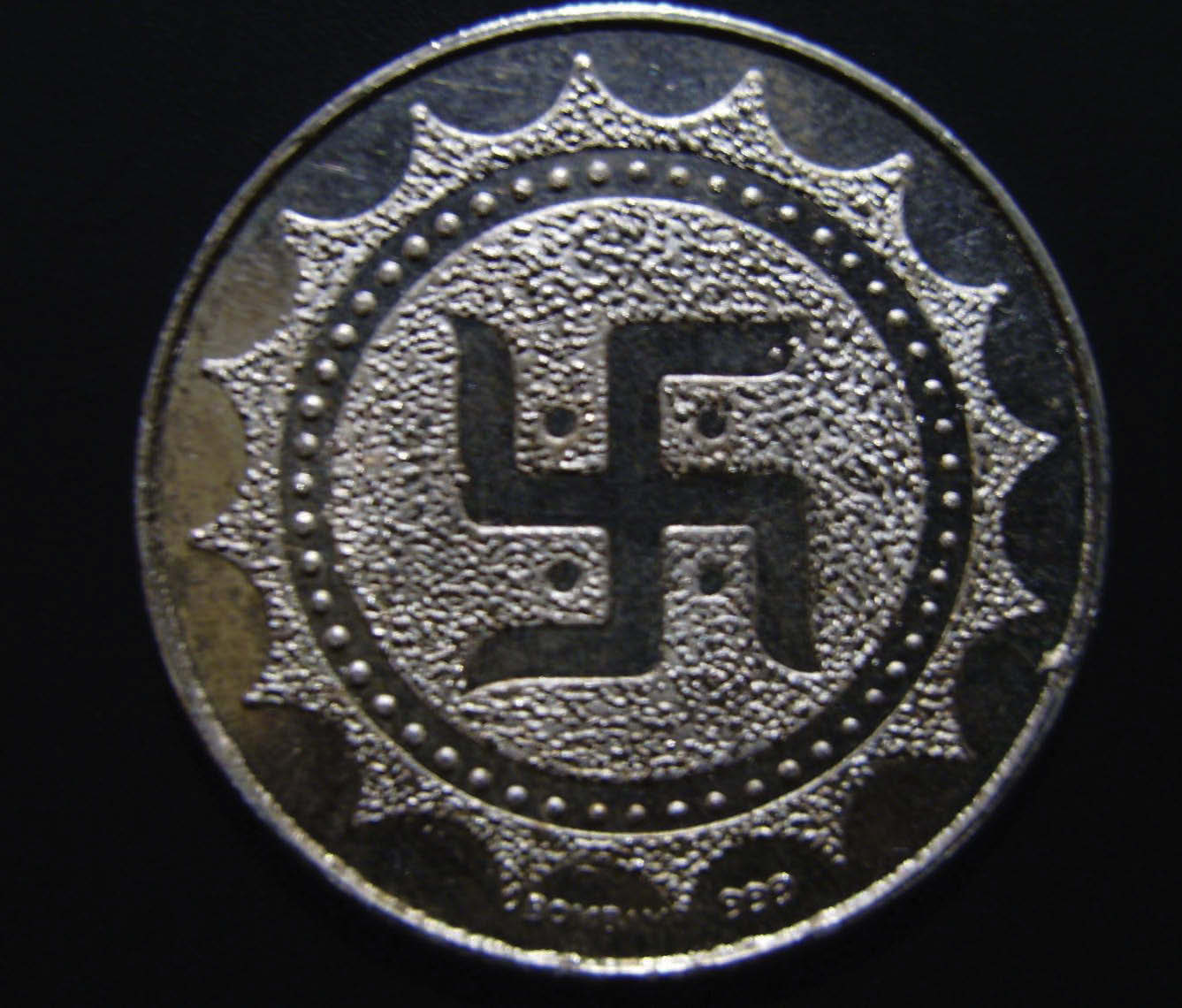
    Swastik (or Swastika) means different things in different cultures and religions and because it’s so incredibly popular and spreads across cultural boundaries it can be a symbol of both good and bad depending on the context. In Hinduism though, Swastik is a symbol of good though and stands out because of the incredibly insightful philosophical depth involved in the idea behind it!

    Archaeological origin and history of Swastika (Swastik) – Hinduism Symbols Swastik Swastika Meaning PhilosophyBefore delving into the religious perspective, I’d like to explain how Swastik (Swastika) could’ve originated. Indus Valley (Harappa) is one of the earliest places where Swastik (Swastika) is found and these civilizations were mainly basket weaving ones and if you notice, the symbol of Swastik (Swastika) resembles the basket weave design (basket weave pattern picture on the left). So, that gives us some indication as to how Swastik (Swastika) might have originated in history. I should also note that Swastia (unlike many other ancient symbols) has its origins at reasonably advanced stages of the ancient societies. Also, we may observe that Swastik (Swastika) is a symbol of good rather then bad from a strictly archaeological point of view.

    Swastik (Swastika) has been a symbol of good luck from time immemorial in Indian (Hindu) homes. Swastik (Swastika) can be seen drawn at doors, walls and many auspicious places in Hindu homes to signify good luck and well being. Swastik (Swastika) is also found even more prominently around many festivals and coming from a hindu family. As a kid, I’ve drawn Swastik (Swastika) myself on the walls in my home around Diwali for a long time.

    Associated with Lord Vishnu 

    108 diffrent symbols are associated with Lord Vishnu and Swastik is one of them. Swastik (Swastika) can be seen drawn on the right palm of Lord Vishnu or sometimes held in hand or held or drawn in Hinduism Symbols Swastik Swastika Meaning Philosophysome other form around Lord Vishnu.

    Symbol of Brahma 

    One interesting thing about Swastika is that if it’s viewed from above then it looks as if its pointing in all directions simultaneously! This coincides with the four “all seeing” faces of Brahma and therefore at times Swastik might be associated with the symbolism for Brahma.

    Symbol for Surya

    This sort of follows from the previous points in many ways. Sun is sometimes associated with various symbolisms used for Lord Vishnu and Swastik can be sometimes used as a symbolism for Surya (sun god) too!

    Also, since the top-down Swastik (Swastika) has this peculiar multi-directional (or direction-less depending on how you look at it) characteristic, it’s again associated with the mid-day Sun’s rays falling in all directions simultaneously. So, as you may observe, this association is pretty strong from both religious and nature worship point of view and even more so in the ancient times when nature worship was indeed at it’s pinnacle.

    Symbol of life and preservation

    This sort of follows from Hinduism Symbols Swastik Swastika Meaning Philosophythe above points. Swastika is one of the symbols of Lord Vishnu and Lord Vishnu in turn is associated with the preservation of life (as in one of the Trinity in Hinduism) so Swastika is seen as a symbol of life and preservation. Further, Sun’s rays are directly associated with good crops and more enough food for the winter season so the overall association of Swastik (Swastika) with life, preservation and well being, as a symbol of the Lord Vishnu (preserver of life), Surya god and Sun’s rays (good crops, food production) is reinforced. So we observe that even from a strictly pagan religion and basic sustainability point of view Swastika (Swastik) becomes a very important symbol of good luck and well being.

    Symbol of stability

    This is kinda part of the whole overall well being thing but there is one more thing I should note about the structural aspect of Swastika. Swastika, as (might be) originated from the Basket weave design, also signifies stability because this basic structural component, of the big structure (let’s say a basket), ensures that the big structure (based on Swastik design) will hold. This basic idea adds to the well being aspect as can be noticed and makes Swastik (Swastika) even more important.

    As part of Ashtamangala

    Ashtamangala (or Ashta-Mangala) is part of a tradition in Hinduism (and Hinduism’s offshoots) that refers to eight sacred symbols as an offering to God (gods) on various auspicious occasions. These symbols might differ from region to region and sects to sects but Swastika has been seen to occur quite prominently in various combinations along with other symbols like Conch/Shell, Sinh (Lion), Bull, Lotus, Wheel, Mirror, Matsya / Meen (fish), Elephant, Dhwaja (Flag/Banner), Kalasha (vase) etc. It’s even more prominent in Ashtamangalas in Shwetamber Jainism but in other Ashtamangalas sometimes Swastik is replaced by related symbols like Endless Knot and such.

  • LOVE OF A RADHA FOR KRISHNA

    LOVE OF A RADHA FOR KRISHNA

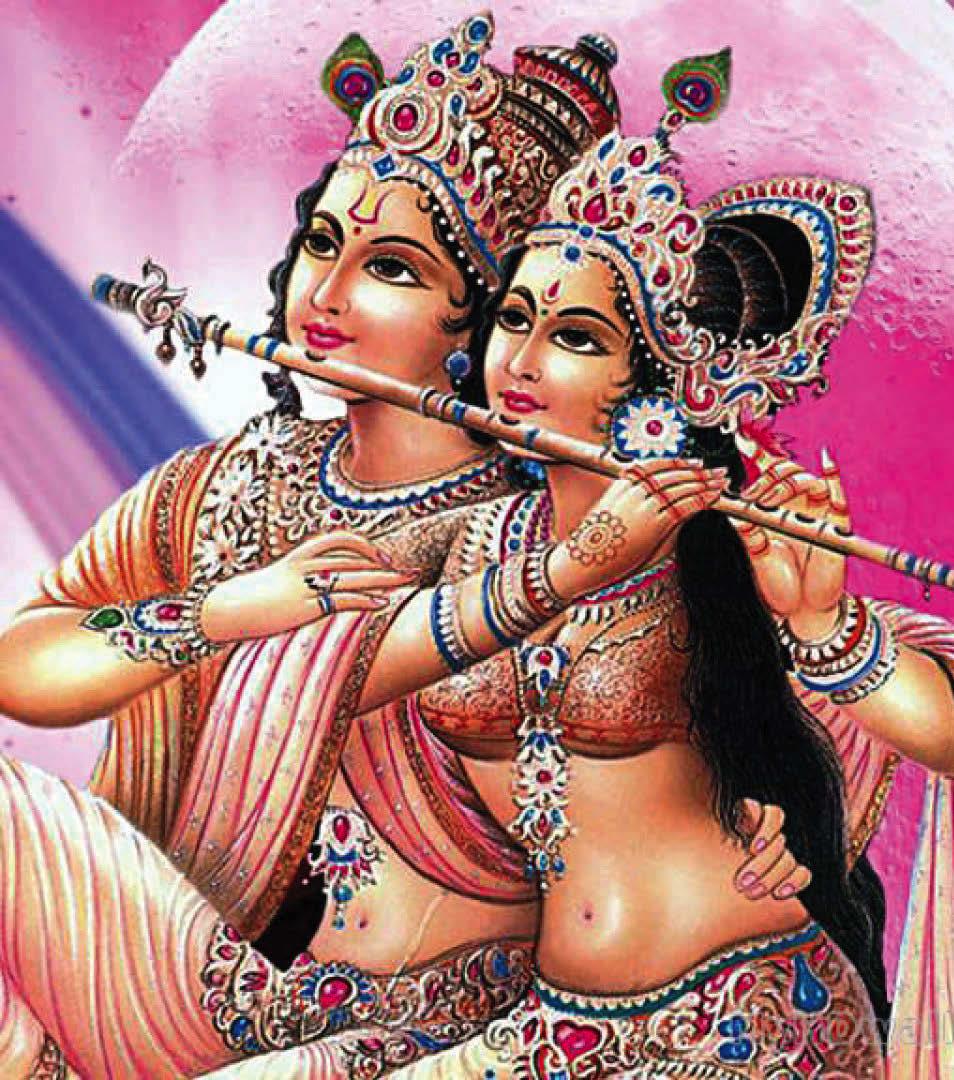
    A story of Krishna and Radha told by Paramahansa Yogananda, printed in the book ‘The Divine Romance’, his collection of lectures. An excerpt published here as it is (as it is wiser to present the original, so that the readers understand it as meant by the great Guru)

    Lord Krishna expressed in his life pure love in its highest form. He has shown to the world that a love without any impurity can exist between man and woman. It is impossible to describe adequately his life for general public, because it was unique and transcended mundane laws and standards. Someday I hope to put in print the true significance of Krishna’s life, for it has been much misunderstood and misinterpreted. His expression of divine love was unique in this world.

    Krishna had many women disciples, but one favourite, Radha. Each disciple said to herself, “Krishna loves me more than anyone else.” Still, because Krishna often talked to Radha, the others were envious of her. Noticing their jealousy, he wanted to teach them a lesson. So one day Krishna feigned a terrible headache. The anxious desciples expressed their great concern over the master’s distress.

    At last Krishna said, “The headache will go away if one of you will stand on my head and massage it with your feet.” The horrified devoteed exclaimed, “We can not do this. You are god, the Lord of the Universe. It would be highest sacrilege to dare to descrete your form by touching your sacred head with our feet.”

    The master was pretending an increase in his pain when Radha came on the scene. She ran to her Lord, saying, “What can I do for you?” Krishna made the same request of her that he made of the other devotees. Radha immediately stood on his head; the master’s “pain” disappeared, and he fell asleep. The other disciples angrily dragged Radha away from the sleeping Lord.

    “We will kill you” , they threatened.
    “But why?”
    “You dare to step on the head of the master?”
    “What of it?”, Radha protested. “Did it not free him from his pain?”

    “For such a sacrilegious act you will go to the lowest stratum of hades.”

    “Oh, is that what you are worrying about?” Radha smiled. “I would gladly live there forever if it would make him happy for a second”

    Then they all bowed to Radha. They understood why Krishna favoured her; for Radha alone had no thought for herself, but only for her Lord’s comfort.


    Page sponsored by ARISH K. SAHANI | “If Hindus don’t maintain Hinduism, who shall save it? If India’s own children don’t cling to their faith, who shall guard it? Indian alone can save India, and India and Hinduism are one.”

  • Hindu gods at Santa Barbara Museum

    Hindu gods at Santa Barbara Museum

    SANTA BARBARA, CA (TIP): The Santa Barbara Museum of Art (SBMA) in California is showcasing images of Hindu deities in an upcoming exhibition “Puja and Piety”, which will run from April 17 to August 28.

    It includes 12th century volcanic stone sculpture of Shiva, 11th century sandstone sculpture of Balarama, 19th century paintings of Kali and Devi, cart of Vishnu, etc.

    It presents over 160 objects of diverse media created over the past two millennia and is one of the major presentations of the SBMA’s 75th-anniversary year in 2016.

    Commending SBMA for exhibiting Hindu artifacts, Hindu statesman Rajan Zed, in a statement in Nevada today, said that art had a long and rich tradition in Hinduism and ancient Sanskrit literature talked about religious paintings of deities on wood or cloth.

    Rajan Zed, who is President of Universal Society of Hinduism, urged major art museums of the world, including Musee du Louvre and Musee d’Orsay of Paris, Metropolitan Museum of Art in New York, Los Angeles Getty Center, Uffizi Gallery of Florence (Italy), Art Institute of Chicago, Tate Modern of London, Prado Museum of Madrid, National Gallery of Art in Washington DC, etc., to frequently organize Hindu art focused exhibitions, thus sharing the rich Hindu art heritage with the rest of the world.

    SBMA, whose Guiding Principles include “stimulate thought”; comprises of 27,000 works of art spanning over 5,000 years of human creativity, including classical antiquities and Monet paintings; serves about 150,000 visitors annually. Larry J. Feinberg is the Director, while John C. Bishop Junior is the Trustees Chair.

  • SANT RAVIDAS

    SANT RAVIDAS

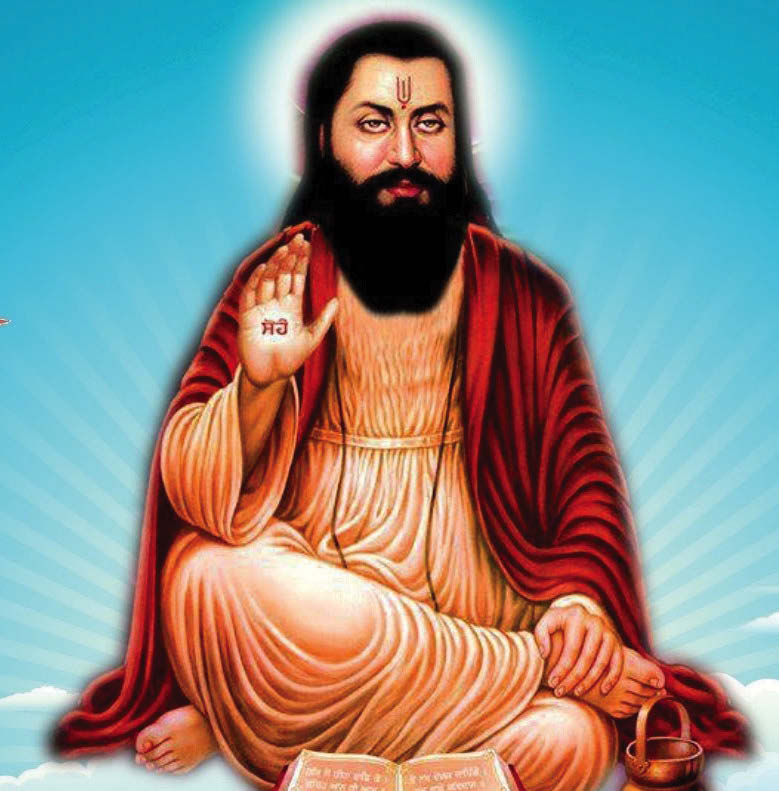
    Guru Sant Ravidas was a great Saint, philosopher, poet, social reformer and follower of the God in India during 15th century. He was one of the most famous and leading star of the nirguna sampradaya means sant parampara and lead the North Indian Bhakti movement. He has given variety of spiritual and social messages through his great writings of poetry to his lovers, followers, community people, society people to reform their mind and show their boundless love towards God.

    He was the vision of people as a messiah in order to complete the social and spiritual needs. He was the spiritually rich person worshipped by the people. People are used to of hearing or reciting his great songs, pad and etc at every morning and night, at his birthday anniversary celebration or any religious events celebration. He is loved and respected all over the world however the most respected regions are Uttar Pradesh, Punjab, and Maharashtra for his bhakti movement and devotional songs.

    Sant Ravidas Jayanti

    Sant Ravidas Jayanti or birthday anniversary is celebrated every year on Magh Purnima at full moon day of Magh month with great enthusiasm and happiness all over India however; people in Varanasi celebrate this occasion like a memorable event and festival.

    Early Life

    Guru, Sant Ravidas Ji was born in Harijan caste in the Varanasi to the Mata Kalsa Devi Ji and Baba Santokh Dass Ji in the Seer Goverdhanpur village, Varanasi, U.P., India in the 15th century. However, his real birth date is still controversial some estimates it was 1376, 1377 and even 1399 CE. According to the data by some scholars it has been estimated that his lifespan was from 1450-1520 in 15th to 16th century CE.

    His father was working as a Sarpanch at Raja Nagar Mal’s Kingdom and has his own business of shoes making and repairing. His birthday anniversary is celebrated at every Puran Mashi (Magh Purnima) of the Magh month by the people. He was very brave and highly devoted to the God from his early childhood later he struggled with lots of problems created by upper caste people which he faced and let people to realize about facts of life through his writings. He taught people that always love your neighbors without any discrimination.

    His birth anniversary is still celebrated by his great followers to remember his great teachings as well as renew the establishment of peace and brotherhood all over the world. During early days of his teachings, his popularity was prohibited by the conservative Brahmins living in Kashi as he was also an untouchable guru. He was complaint by them in front of the king as a deformer of the social order. He was prohibited to talk about God and as well as advising or teaching the people following him.

    His Involvement in Social Issues

    He was sent by the God on the earth when required him to save the real Dharma as at that time social and religious patterns were distressing because of the lots of manmade discriminations over social beliefs, caste, color and etc. He bravely faced all the discriminations and answered people about the real definition of beliefs and castes. He taught people that one is not known by his caste, religion or believes for God, he known only for his great actions (or karma). He also worked against the system of untouchability in the society by the higher caste people for lower caste people.

    During his time, low caste people were neglected and not allowed to do some common works in the society of higher caste people such as inhibited to go to the temples for God prayer, inhibited to go to schools for study, restricted to visit village during daytime, they were allowed to live in huts instead of proper house in the village and many more. After seeing such social situations, Guru ji started giving spiritual messages to everybody in order to permanently tackle with the bad situations of low caste people.

    He spread a message that “God created man and not man created God” means everyone is created by the God and has equal rights on this earth. Regarding this social situation, Sant Guru Ravidas Ji has given various teachings to the people about the universal brotherhood and tolerance. The King and Queen of the Chittoor kingdom became his great disciples after being influenced by his teachings.

    His Contribution to the Sikhism

    His padas, devotional songs, and other writings (around 41 verses) are mentioned in the Sikh Scriptures, Guru Granth Sahib which was compiled by the 5th Sikh’s Guru, Arjan Dev. The followers of Guru Ravidas Ji’s teachings are commonly called as Ravidassia and collection of teachings called Ravidassia Panth.

    The 41 holy writings of him which is included in the Guru Granth Sahib are mentioned in the following ways: “Raga –Siri(1), Gauri(5), Asa(6), Gujari(1), Sorath(7), Dhanasari(3), Jaitsari(1), Suhi(3), Bilaval(2), Gaund(2), Ramkali(1), Maru(2), Kedara(1), Bhairau(1), Basant(1), and Malhar(3).

  • MAGHI PURNIMA

    MAGHI PURNIMA

    Magh Purnima or Magha Pournami, also known as Maha Maghi, is one of the auspicious Purnima days according to the Hindu calendar. This is the full moon day in the month of Magh (mid-January to Mid-February of the Gregorian calendar). Full moons (Purnimas) and new moons (Amavasyas) have special significance in #Hindu religion. The month of Magh is considered to be sacred because at the commencement of this month the sun sets on its northern path. Magh Purnima also marks the conclusion of Magha month in North India. So the day of the full-moon falling in this month is highly revered by devotees.

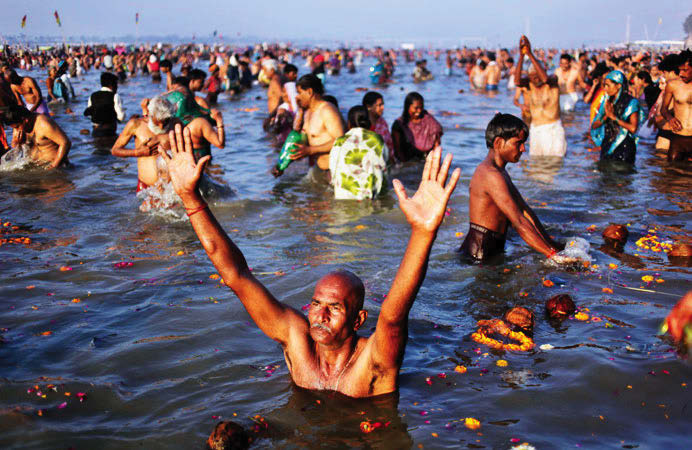
    This day is venerated in different ways across the country. This is a very auspicious bathing day and is of the same significance as that of karthik purnima. Maghi Purnima is revered as a ‘bathing festival’ across the country.

    Many people observe fast and do charity on this day. People offer food, clothes, money to the poor. Libations are offered to ancestors on this day after taking a dip in the rivers. Then Brahmans are fed and given “Daan-Dakshina” according to one’s capacity. Lord Vishnu is worshipped on this day after bath. Like all other purnima days, Satyanarayana Vratham is observed on this day. In some places Goddess Parvati Devi and Bruhaspati (Guru) are worshipped on Maha Maghi day.

    It is believed a holy dip in scared Ganga is highly meritorious on this day. It is believed that bathing in the holy river Ganges frees oneself from sins and thus paves the way towards salvation. Thousands of pilgrims visit Prayag (Allahabad) to take a dip at the holy Triveni Sangam -the confluence of the sacred rivers Ganges, Yamuna and the legendary river Saraswati. Every year Magh mela is organized at Sangam in Allahabad during this time.

    Grand festivals take place along the banks of the holy rivers like Ganga, Yamuna, Sarayu, Narmada, Tapti, Kaveri, Krishna, Godavari etc. Taking a holy dip on this day in Kumbakonam, Kannyakumari and Rameswaram in Tamil Nadu and Pushkar Lake in Rajasthan is also considered to be very meritorious.

    This day also has special significance for the Buddhists. It is on this day that Gautama Buddha announced his impending death. Many religious ceremonies are held at the viharas, where prayers are said to the Buddha. The day’s programme began with hoisting of the religious flags atop all monasteries at dawn and chanting of the sacred verses from the Tripitaka.

    On the full moon day of Magh, the float festival is celebrated at Madurai in Tamilnadu which is famous for the Meenakshi Temple. A sacred tank, the Mariamman Teppakulam Sarovar is located near Madurai. On this day the highly decorated the images of Meenakshi and Lord Sundareshwara are mounted on floats and are taken to this Sarovar or tank accompaniment by music and devotional songs. Magh Purnima happens to be the birthday of King Tirumala Nayak who built Mariamman Teppakulam which is a few kms to the east of Madurai.


    Page sponsored by ARISH K. SAHANI | “If Hindus don’t maintain Hinduism, who shall save it? If India’s own children don’t cling to their faith, who shall guard it? Indian alone can save India, and India and Hinduism are one.”

  • History made as Catholic Pope Francis and Russian Orthodox Patriarch Kirill embrace to bridge the ‘Great Schism’

    History made as Catholic Pope Francis and Russian Orthodox Patriarch Kirill embrace to bridge the ‘Great Schism’

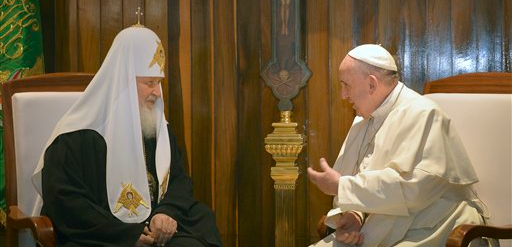
    With a hug and an exclamation of “Finally,” Pope Francis met Friday with Patriarch Kirill in the first ever meeting between a pontiff and the head of the Russian Orthodox Church, a historic development in the 1,000-year schism that has divided Christianity.

    “We are brothers,” Francis said as he embraced Kirill in the small, wood-paneled VIP room of Havana’s airport, where the three-hour encounter took place.

    “Now things are easier,” Kirill agreed as he and the pope exchanged three kisses on the cheek. “This is the will of God,” the pope said.

    Francis was having the brief talks in Cuba before heading off on a five-day visit to Mexico, where the pontiff will bring a message of solidarity with the victims of drug violence, human trafficking and discrimination to some of that country’s most violent and poverty-stricken regions.

    The meeting and signing of a joint declaration was decades in the making and cemented Francis’ reputation as a risk-taking statesman who values dialogue, bridge-building and rapprochement at almost any cost.

    Pope Francis, left, head of the Russian Orthodox Church Patriarch Kirill, center, and Cuba's President Raul Castro stand together during a ceremony where the two religious leaders signed a joint declaration on religious unity at the Jose Marti International airport in Havana, Cuba, Friday, Feb. 12, 2016. The two religious leaders met for the first-ever papal meeting, a historic development in the 1,000-year schism within Christianity.  (Alejandro Ernesto/Pool via AP)
    Pope Francis, left, head of the Russian Orthodox Church Patriarch Kirill, center, and Cuba’s President Raul Castro stand together during a ceremony where the two religious leaders signed a joint declaration on religious unity at the Jose Marti International airport in Havana, Cuba, Friday, Feb. 12, 2016. The two religious leaders met for the first-ever papal meeting, a historic development in the 1,000-year schism within Christianity. (Alejandro Ernesto/Pool via AP)

    In the 30-point statement, the two leaders declared themselves ready to take all necessary measures to overcome their historical differences, saying “we are not competitors, but brothers.”

    Francis and Kirill also called for political leaders to act on the single most important issue of shared concern between the Catholic and Orthodox churches today: the plight of Christians in Iraq and Syria who are being killed and driven from their homes by the Islamic State group.

    “In many countries of the Middle East and North Africa, entire families of our brothers and sisters in Christ are being exterminated, entire villages and cities,” the declaration said.

    While the meeting has been hailed by many as an important ecumenical breakthrough, Francis has also come under criticism for essentially allowing himself to be used by a Russia eager to assert itself among Orthodox Christians and on the world stage at a time when the country is increasingly isolated from the West.

    The declaration was signed in the uniquely ideal location of Cuba: far removed from the Catholic-Orthodox turf battles in Europe, a country that is Catholic and familiar to Latin America’s first pope, but equally familiar to the Russian church given its anti-American and Soviet legacy. The pope helped mediate the declaration of detente between the U.S. and Cuba in 2014.

    “If this continues, Cuba will become the capital of unity,” the pope said.

    Calling the talks “very substantive,” Kirill said: “The results make it possible to say that today the two churches can actively work together to protect Christians around the world.”

    The Vatican is hoping the meeting will improve relations with other Orthodox churches and spur progress in dialogue over theological differences that have divided East from West ever since the Great Schism of 1054 split Christianity.

    – AP

  • VASANT PANCHAMI

    VASANT PANCHAMI

    Vasant Panchami, also known as Shri Panchami, is a Hindu festival dedicated to goddess Saraswati. This popular festival is observed on the fifth day of the Hindu month of Magh.

    Being an important festival, all Hindus celebrate this day with much enthusiasm and religious activities. Also known as Saraswati Puja, it is considered to be the birthday of goddess Saraswati. She is the deity of wisdom and learning. Along with goddess Parvati and Laxmi, she is one of the three most important deities in Hindu culture. She represents all kinds of knowledge including science, arts, crafts and other skills. Known for her calmness and serenity, she is often shown seated on a white lotus with four hands and wearing a pure silk white sari.

    VASANT PANCHAMI1The four hands of the deity symbolize the different sides of human personality in learning. When seated on a peacock, she signifies that wisdom suppresses ego. On this day people observe various kinds of religious activities and large numbers of Hindus visit temples. Goddess Saraswati is dressed in yellow garments, yellow being the symbol of spiritual knowledge. People also dress up in yellow clothes and offer yellow flowers to deities in the temples. At homes people prepare yellow sweets and dishes such as Kesar Halwa and distribute among relatives and friends. Being an auspicious occasion, children are taught their first words, hence, marking the beginning of their learning period. Schools and colleges organize special pujas to worship goddess Saraswati. Students place their books at the deity’s feet and seek her blessing for better learning. Other religious activities of the day include feeding Brahmans and performing the traditional ritual of ancestral worshipping known as Pitr-Tarpan. On this day, people also perform pujas to worship the God of Love, Kamadeva. Children fly kites on this day and a famous kite festival is observed in Ferozepur, Punjab. Basant Panchami symbolizes the beginning of spring, denoted by flowering and blooming of trees and crops. Signs of new and fresh life on trees and crops indicate the end of winter and beginning of happiness and joy.

    The festival of Basant Panchami is a widely celebrated festival which marks the end of the winter season and the beginning of spring. Goddess Saraswati, the goddess of arts and knowledge, is the presiding deity of the festival. The festival falls on the fifth day of the Indian month of Magh and in the months of January-February according to the Gregorian calendar. The color which denotes the celebration of this festival is yellow and during the entire season, the whole atmosphere is filled with this vibrant color. People wear yellow clothes and prepare yellow sweets which are distributed among their loved ones. The goddess of knowledge is worshipped especially by students and academicians. Though it is celebrated primarily by the Hindus, Jains and Buddhists worship her too as she is the benefactor of all written and performed arts.

    Rituals & Tradition

    The festival is celebrated with great pomp and show in all parts of India. On this auspicious day, the Hindus get up early in the morning and worship the Sun God after taking bath, if possible, in the sacred river Ganges. Then they clad themselves in yellow, as it signifies spirituality and prosperity. The color yellow also signifies the color of the ripened spring crop. Festive sweets are prepared at home using saffron, as it helps in deriving the color yellow. The goddess is dressed in yellow and the deity is worshipped by the worshippers who are dressed in yellow too. Later, swings are tied to the trees and women have fun singing traditional folk songs to greet the beautiful season of spring. After these rituals, sweets are distributed among the loved ones. The traditional sweet which goes along with the spirit of the festival is ‘Kesar Halwa’ and ‘Sweet Rice’ which are prepared with saffron to add yellow color to the preparation.

    Schools and other teaching institutions organize cultural programs on this day, including the worshipping of goddess Saraswati. Along with these rituals, another important part of this festival is introducing children to the world of knowledge, hence marking a beginning to their learning phase. Floral designs are made in front porch of houses to signify the arrival of spring. Colorful kites are arranged by children and the sky gets filled with numerous kites on this auspicious day.

    Kite Festival

    The festival of Vasant Panchami is celebrated to welcome the season of spring, a season when the earth replenishes itself. Spring also denotes pleasant weather, during which calm wind whistles in your ear and caresses your face with its light cool touch. It is the season when the weather is neither hot nor cold, when the wind has a cooling effect but not the kind to chill your bones. This kind of weather reminds you of a number of things including Basant Panchami, the primary festival of this season. It is one of the most colorful and wonderful festivals of this effervescent nation. The festival brings in a number of colors in the form of colorful attires. Being the color of spring, yellow gets into vogue as it also denotes prosperity, happiness, intellect and energy.

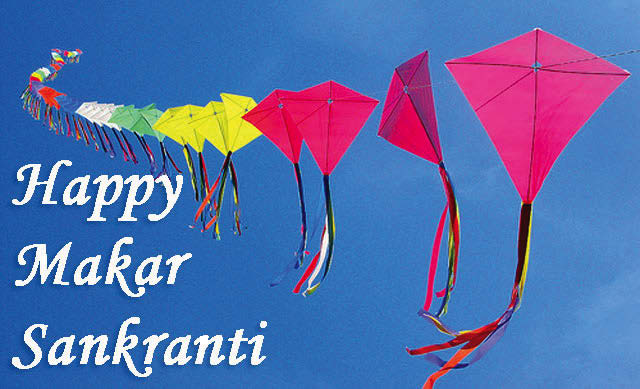
    Flying kites is a sport much popular in India. In a clear and pleasant weather, you will see plenty of kites in the sky. Being a part of Vasant Panchami, kite flying competitions take place during this festival. Fighter kites were designed in India and Pakistan for decades. Ferozepur, a small town in Punjab, is famous for this sport and a number of children including both girls and boys purchase kites and fly them. Popular among adults too, they get on to their building’s terrace along with the children, play songs at high volume and dance with the rhythm while flying kites.

    The event of kite flying is filled with a lot of enthusiasm and thrill. Both skilled and unskilled participants bring in their fancy colorful kites and the joy they receive when they cut their opponent’s kite is a sight to cherish. With pomp and show the kites are flown and interesting kite fights take place thereafter. Children learn to fly kites from their elders, who themselves like flying them a lot. Kite fighting being the main attraction, people from around the world come to this place to experience the fun involved with this colorful festival. The kites are flown with the help of a string called ‘Manjha’. There are a number of such competitions which are organized during the festival. The competition is always there to rule the sky and one has to keep his kite flying till the end to be the winner. There are judges too, some of whom decides which the most beautiful kite is while others decide which is the biggest. The festival brings with it colors in form of greenery and colorful kites.


    Page sponsored by ARISH K. SAHANI | “If Hindus don’t maintain Hinduism, who shall save it? If India’s own children don’t cling to their faith, who shall guard it? Indian alone can save India, and India and Hinduism are one.”

  • VEDAS ARE INFINITE

    VEDAS ARE INFINITE

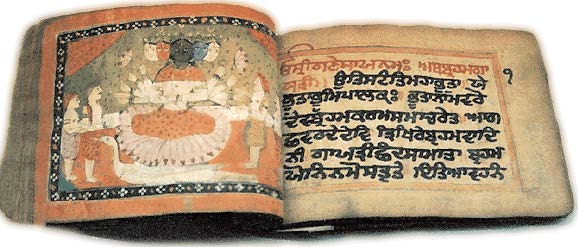
    If the cosmos of sound (sabda-prapanca) enfolds all creation and what is beyond it, it must naturally be immensely vast. However voluminous the Vedas are, one might wonder whether it would be right to claim that they embrace all activities of the universe. “Anantah vai Vedah”, the Vedas themselves proclaim so (the Vedas are endless). We cannot claim that all the Vedas have been revealed to the seers.

    Only about a thousand sakhas or recensions belonging to the four Vedas have been revealed to them. Brahma, the Creator, alone knows the Vedas in their entirety. Before the present Brahma there was a great deluge and, preceding it, there was another Brahma. And, similarly, before him too there must have been another Brahma. But through all these vast vistas of time, through successive deluges, the vibrations caused by the Paramatman’s breath have existed in space, the vibrations that urged the first Brahma to do the work of creation.

    These vibrations are indestructible. The Brahma who appears after each great deluge performs his function of creation with them. The sounds we produce are never destroyed. I remember reading that what Jesus Christ spoke 2, 000 years ago could still be recaptured in his own voice and that efforts are being made for the same. I don’t know how far these efforts have succeeded. But I do know that there does exist such a possibility (of receiving a voice or sound from the past). We know that a sound, once it is produced, remains in space without ever being destroyed.

    Brahma created this world with the sound of the Vedas and this sound is not destroyed even during a great deluge. We build a village or town with stone, earth, timber, iron, etc. All these materials are derived from the will of the Paramatman, from his thought, from the vibrations that are his will or thought. Brahma saw the sounds corresponding to these vibrations as the Vedas and the chanted them and brought all the world into existence.

    We often see reports in the newspapers of trees flowering or fruiting in abundance in response to the vibrations of certain sounds. Some vibrations have also the effect of stunting the growth of plants. Here is proof of the fact that sound can create, sustain and destroy. Brahma could create the universe with the sound of the Vedas because of his power of concentration.

    A siddha can cure a sick man if he intones the Pancakasara mantra – the mantra that we mutter every day -and applies holy ashes to the patient’s body. He is able to do it because he has greater power of concentration than we have. If the mantra is to be efficacious it has to be chanted without any tonal error whatsoever. Only then will it bring the desired result.

    Brahma had the power of concentration to the full since he came into being as an “instrument” for creation. Much could be accomplished from the void of space through electricity. From the spiritual reality called the Nirguna Brahman (the unconditioned Brahman without attributes) emanates everything. During the deluge, this spiritual reality goes to sleep.

    Take the case of a sandow. When he is asleep his strength is not evident. But when we see him wrestling with an opponent we realise how strong he is. Similarly, during the time of creation, the spiritual reality is revealed to perform manifold functions. From the Nirguna Brahman comes a flow of energy to perform such functions. Brahma came into being as a part of this flow. Since he was all tapas all concentration, he could grasp all the Vedas with his extraordinary power. He created the world with their sound. The Vedas are infinite and so too creation takes forms that are countless.

    The great sage Bharadvaja kept chanting the Vedas over three lifetimes. Paramesvra appeared before him and said to him: “I will grant you a fourth life. What will you do during it? “The sage replied: “I will keep chanting the Vedas again.” It is not possible to learn the Vedas in the entirety even over many, many lifetimes. Paramesvra took pity on Bharadvaja for all his efforts to accomplish a task that was impossible to accomplish. Wanting to change his mind, Paramesvara caused three great mountains to appear, took a handful of earth and said to the sage: “The Vedas you have learned all these years are like this handful of earth. What you have yet to learn is vast, like these mountains. “It is believed that Vedagiri or Tirukkazhukkunram is the place where the Vedas appeared in the form of these mountains. When I was circumambulating the hill there, people accompanying me intoned instead, “Veda, Veda, Mahaveda”. The story of Bharadvaja occurs in the Kathaka of the Vedas. We learn from it that the Vedas are so infinite. The classification into the four Vedas and the one thousand or so recensions was a later development. Brahma came into being, his heart was filled with all Vedic sound.

    The Vedas showed him the way to perform his function of creation. He recognized that the sound of the Vedas pervaded everywhere. To him occur all Vedas. Only some mantras have revealed themselves to the sages and these constitute the Vedas that are our heritage. At the time of chanting a mantra we usually mention the rsi associated with it, its chandas or metre and the name of the deity invoked. In the Telegu country they mention the three for all mantras. The sages learned the mantras with the power of concentration acquired through austerities.

    They were bestowed with celestial ears, so they could hear the mantras in space. It is said in the science of yoga that if our heartspace becomes one with the transcendent outward space we will be able to listen to the sounds in it. Only those who have attained the state of undifferentiated oneness of all can perceive them. It is in this way that the seers became aware of the mantras and made them known to the world. It must be remembered that they did not create them. They brought us immeasurable blessings by making the mantras known too us. If someone offers us water form the Ganga (Ganga-tirtha, Gangajal) we receive it, prostrating ourselves before him.

    The man did not of course create the Ganga, but all the same reverence him in recognition of the fact that the must have travelled a thousand miles to bring us the few drops of the holy water. We cannot adore the seers sufficiently for their having made us the gift of the mantras which are beyond the grasp of our ears. That is why before canting a mantra we hold the sacred feet of the rsi concerned with our head.


    Page sponsored by ARISH K. SAHANI | “If Hindus don’t maintain Hinduism, who shall save it? If India’s own children don’t cling to their faith, who shall guard it? Indian alone can save India, and India and Hinduism are one.”

  • Om: Symbol of the Absolute

    Om: Symbol of the Absolute

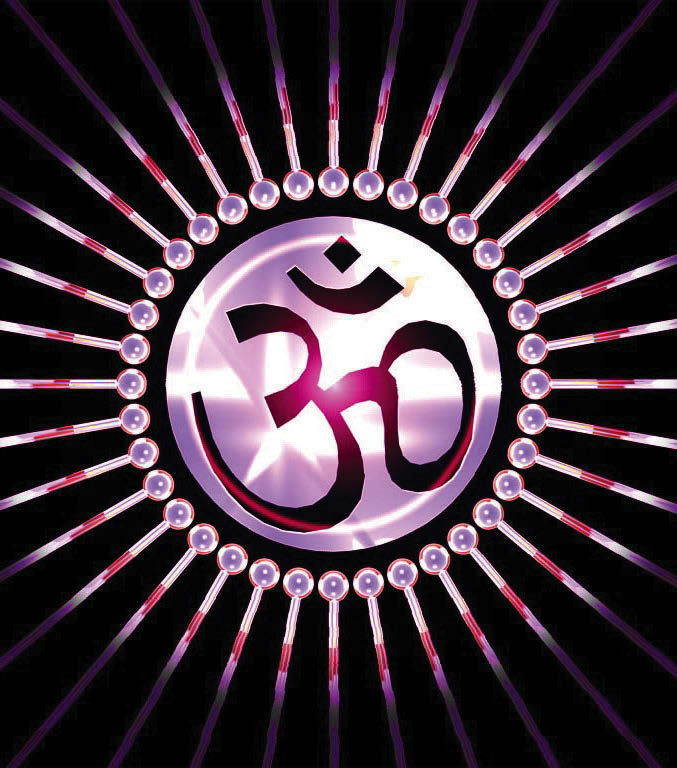
    OM

    or Aum is of paramount importance in Hinduism. This symbol (as seen in the image on the right) is a sacred syllable representing Brahman, the impersonal Absolute of Hinduism —omnipotent, omnipresent, and the source of all manifest existence. Brahman, in itself, is incomprehensible; so a symbol becomes mandatory to help us realize the Unknowable. Om, therefore, represents both the unmanifest (nirguna) and manifest
    (saguna) aspects of God. That is why it is called pranava, to mean that it pervades life and runs through our prana or breath.

    Om in Daily Life

    Although Om symbolizes the most profound concepts of Hindu belief, it is in use daily.

    The Hindus begin their day or any work or a journey by uttering Om. The sacred symbol is often found at the head of letters, at the beginning of examination papers and so on. Many Hindus, as an expression of spiritual perfection, wear the sign of Om as a pendant. This symbol is enshrined in every Hindu temple premise or in some form or another on family shrines.

    It is interesting to note that a newly born child is ushered into the world with this holy sign.

    After birth, the child is ritually cleansed and the sacred syllable Om is written on its tongue with honey. Thus right at the time of birth the syllable Om is initiated into the life of a Hindu and ever remains with him as the symbol of piety. Om is also a popular symbol used in contemporary body art and tattoos.

    The Eternal Syllable  

    According to the Mandukya Upanishad, “Om is the one eternal syllable of which all that exists is but the development. The past, the present, and the future are all included in this one sound, and all that exists beyond the three forms of time is also implied in it”.

    The Music of Om

    Om is not a word but rather an intonation, which, like music, transcends the barriers of age, race, culture and even species. It is made up of three Sanskrit letters, aa, au and ma which, when combined together, make the sound Aum or Om. It is believed to be the basic sound of the world and to contain all other sounds. It is a mantra or prayer in itself. If repeated with the correct intonation, it can resonate throughout the body so that the sound penetrates to the centre of one’s being, the atman or soul. There is harmony, peace and bliss in this simple but deeply philosophical sound. By vibrating the sacred syllable Om, the supreme combination of letters, if one thinks of the Ultimate Personality of Godhead and quits his body, he will certainly reach the highest state of “stateless” eternity, states the Bhagavad Gita.

    The Vision of Om

    Om provides a dualistic viewpoint. On one hand, it projects the mind beyond the immediate to what is abstract and inexpressible. On the other hand, it makes the absolute more tangible and comprehensive. It encompasses all potentialities and possibilities; it is everything that was, is, or can yet be. It is omnipotent and likewise remains undefined.

    The Power of Om

    During meditation, when we chant Om, we create within ourselves a vibration that attunes sympathy with the cosmic vibration and we start thinking universally. The momentary silence between each chant becomes palpable. Mind moves between the opposites of sound and silence until, at last, it ceases the sound. In the silence, the single thought—Om—is quenched; there is no thought. This is the state of trance, where the mind and the intellect are transcended as the individual self merges with the Infinite Self in the pious moment of realization. It is a moment when the petty worldly affairs are lost in the desire for the universal.


    Spirituality & Religion


  • BRIJ BHOOMI VRINDAVAN

    BRIJ BHOOMI VRINDAVAN

    Vrindavan is one of the most widely-visited pilgrimage spots for Hindus in the country. It is situated in the state of Uttar Pradesh on the banks of the River Yamuna. The holy town of Vrindavan has a very rich and ancient history associated with the Hindu god, Lord Krishna. It is said to be the place where Lord Krishna spent his childhood and adolescence in the forests and there are many popular myths and folklore that revolve around Vrindavan and the ancient town itself.

    Vrindavan is also one of the most prominent sites for the international Krishna devotees’ association ISKCON. Vrindavan is situated right next to Mathura, its twin holy city, associated with Lord Krishna’s kingdom. Vrindavan is peppered with many a beautiful temple devoted to the religion of Lord Krishna.

    Places to See in Vrindavan

    Govind Dev temple

    The Govind Dev Temple in Vrindavan, built in the 16th century by Raja Man Singh is an excellent example of medieval Indian architecture. The building of this temple is closely associated with the famous Vaishnavite preacher and poet, Rupa Goswami. It is an astonishingly beautiful seven storey temple dedicated to Govind Dev, another name for Lord Krishna. The temple has an imposing facade, looking like a European cathedral because of the pillars and colonnades. It is made of red sandstone and is currently in a state of considerable decay, with the main puja related activities having shifted to a smaller temple behind the main structure.

    Krishna Balaram Temple (ISKCON)

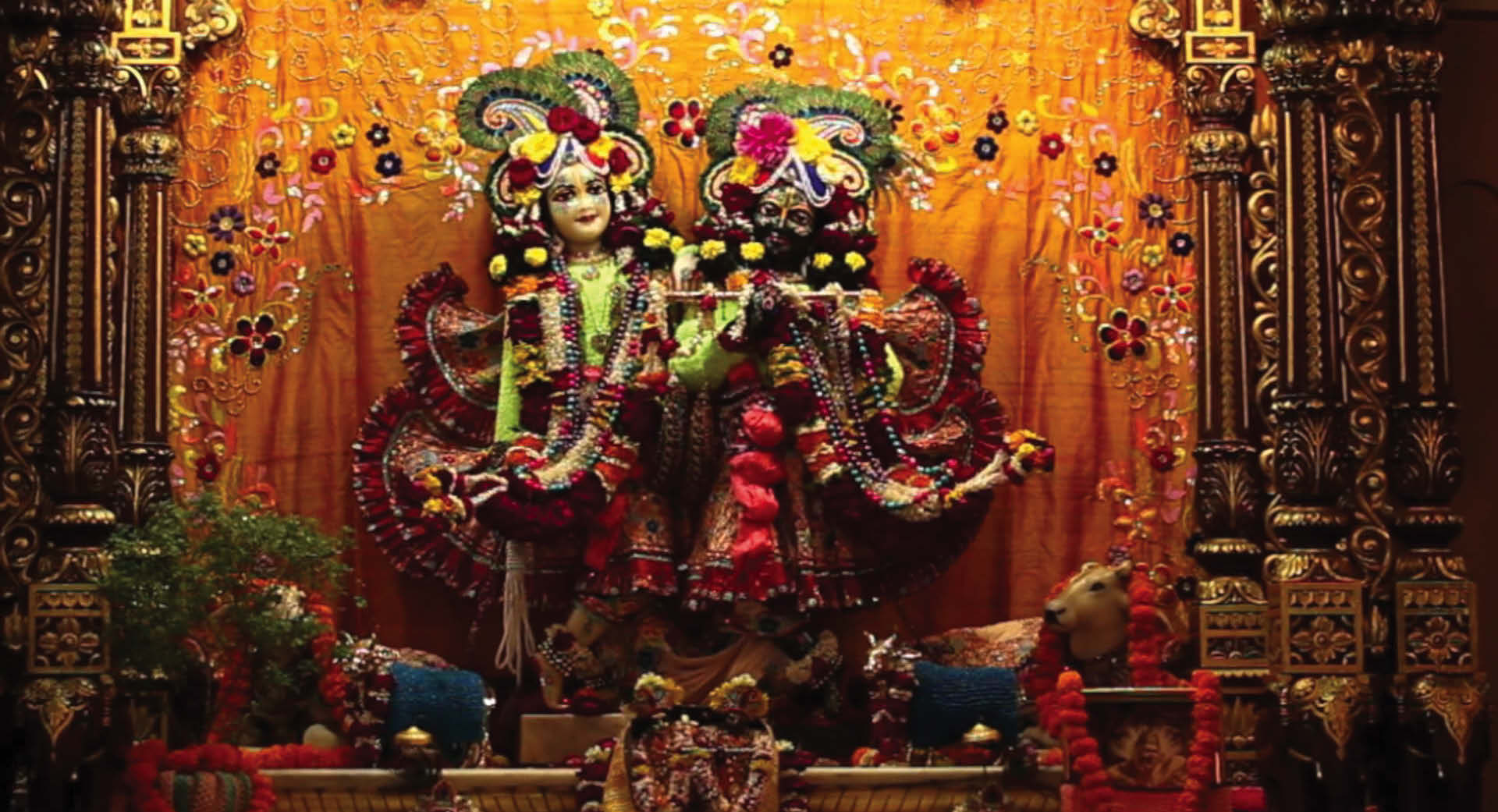
    The Krishna Balaram Temple was established in 1975 under the aegis of ISKCON, an international Krishna Consciousness religious group. The Krishna Balaram Temple is one of the most beautiful temple complexes in the city of Vrindavan and is seen as the spiritual and religious center of the worldwide Hare Krishna movement. It has three temples within the complex, one belonging to Sri Gaura Nitai, one to Lord Krishna and Balaram and the third to Sri Radha and her milkmaids, Vishaka and Lalita. The temple is alive through the year with its many celebrations commemorating every aspect and step of Lord Krishna’s life.

    Bankey Bihari Temple

    The Bankey Bihari Temple of Vrindavan is one of the most auspicious temples in the town, established in the Mughal times by Swami Haridas, the guru of Tansen, the famed court singer of the Mughal emperor Akbar. The temple earns its name from the bent posture of the Krishna idol within the main chamber, an idol with a history. This idol is supposed to have been made according to the image of Lord Krishna that Swami Haridas saw in a dream. The temple is one of the most thronged sites in town and during the Jhulan Utsav, the temple administration brings out many gold and silver swings for the jhulan rituals with a lot of pomp.

    Madan Mohan Temple

    The Madan Mohan Temple is one of the oldest temples in the town of Vrindavan and it sees many pilgrims visiting all through the year. It is a site that is closely linked to the life of Sri Chaitanya Mahaprabhu, one of the most important personalities within the Vaishnavite thought. Situated near the Kali Ghat, the Madan Mohan Temple is said to have been built by one Kapur Ram Das from Multan on the advice of Sanatan Goswami, a saint and follower of Chaitanya Mahaprabhu. The original idol of Madan Mohan had been shifted to Karoli, Rajasthan, under the rule of the Mughal king, Aurangzeb and now a replica of the original image is worshipped at the temple.

    Shahji Temple

    The Shahji Temple, built in the mid-nineteenth century by the two brothers from Oudh, Shah Kundan Lal and Shah Phundan Lal, is another important and prominent temple in the town of Vrindavan. The temple is dedicated to the deity Sri Thakur Radha Raman Ji and receives a steady flow of pilgrims all across the year. One of the main attractions of this temple is one of the richly carved verandahs, which has the portraits of the two founders and their families beautifully carved into the floor – an unusual characteristic of a Hindu temple. The temple also has many rich carvings over the walls and ceilings inside.

    Rangaji Temple

    Built in 1851, the Rangaji Temple is one of the more unusual temples of Vrindavan because of its South Indian style architecture with an impressive gopuram. The deity in the temple is called Sri Ranganatha and is represented as sleeping on the Shesh Nag. The imposing Dhwajastambha within the temple premises is very famous. The temple sees a great influx of tourists during the Brahmotsav in spring, where devotees pull the ropes of the chariot of the god. The annual Jalvihar festival is also another main attraction of the Rangaji Temple, when devotees from all over the country participate in the ritual bathing of the idol.

    Tourist Destinations

    The important towns in Brij Bhoomi, all closely associated with Krishna’s life are worth a visit. Most fall on or near the Yamuna River.

    Mathura

    Mathura is just 15 kilometers away from Vrindavan. The town is prominent as the birthplace of Krishna. The Keshava Deo temple is built on the Krishna Janamsthan.

    Govardhan

    Govardhan is 25 Kilometers from Mathura, off the state highway. The Giriraj hill, a narrow sandstone hill, is famously associated with Lord Krishna who is said to have held it on the tip of his finger for seven days.

    Barsana

    Nineteen Kilometers north of Govardhan, the town of Barsana, said to be the village of Lord Krishna’s beloved consort Radha is a popular destination.

    The town on the foot of a hill has a number of temples dedicated to Radha and Krishna.

    Radhakund

    Radhakund is a large lake, five kilometers north of Govardhan. A large fair is held here on Ahoi Ashtami.

    Gokul

    Across the Yamuna, a few kilometers from Mathura, this town was the place where Lord Krishna was brought by Vasudeva.

    Nandgaon

    The home of Krishna’s foster father Nand, this town is eight kilometers from Barsana. The temple of Nand Rai atop a hill is one of many others here.

    Mahavan

    The town is famous for the large shrine of Mathuranath. Mahavan is 14 kilometers from Mathura, on the bank of the river Yamuna.

  • SAKAT CHAUTH

    SAKAT CHAUTH

    Sakat Chauth Vrat is observed on the fourth day of Krishna paksha, (the fading phase of moon) in the month of Magha according to Hindu lunar calendar. This year Sakat Chauth will fall on January 27, Thursday in 2016.

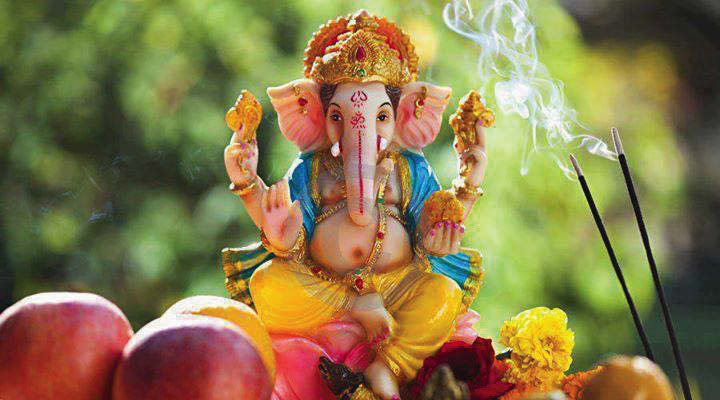
    Sakat Chauth is also called Ganesh Chauth or Tilkuta Chauth. Lord Ganesha and the Moon God are worshiped on Sakat Chauth. This vrat is mainly observed in North India and this day is celebrated as Tilkut Chauth.

    A full day fast is observed on this day. It is believed that fasting on Sakat Chauth removes all obstacles from life and Ganesha blesses his devotees with health, fortune and good children.

    Sakat Chauth Vrat Method

    On this day, married women who are observing the fast wake up early and take a bath, after which they wear new clothes, clean up the place of worship and chant “Om Ganeshaaya Namah” mantra 108 times. During the day devotees observe a fast. However milk, tea and fruits are allowed.

    In the evening a Mandap is decorated in which Ganesha idol is placed. The idol is decorated with flowers and Doorva (grass) and desserts prepared with sesame seeds (til) and jaggery are offered to Ganesha. These special sweets are called “Naivaidya”. At the end of this puja, the Ganesha arti is sung. Some people keep the Prasad of this puja in front of the Ganesha idol for all night and share it with family members next morning.

    The Moon god is also worshiped on this day. At night, after the moonrise, Arghya is given to the moon and after hearing the Sakat Chauth katha, the fast is broken. If the moon is not visible due to rain and clouds, the puja is performed according to the moon rise time.

    Tilkut is a traditional Indian sweet made with sesame seeds and jaggery. After offering some tilkut and modak to Ganesha, devotees distribute it as prasad (holy offering) to their friends and family members.

    Married women pray for health, wealth and well-being of their children. Fasting on Sakat Chauth is considered very auspicious. Mothers observe fast on this day so the hurdles from the life of their kids are removed.

    Significance of Tilkut on Sakat Chauth

    Sesame seeds are a great source of many valuable elements such as protein, calcium, phosphorous and magnesium. The black sesame seeds are very beneficial as well and jaggery is a great source of iron and calcium .The mixture of both produce body heat, increase our immunity and prevents us from the bad effects of the cold climate.

    Similarly Doorva (grass) is also considered good for detoxification of body. A healthy mind resides in a healthy body. With a healthy mind one can overcome all the hurdles and obstacles in life. This is the real meaning of offering Tilkut and Doorva to Lord Ganesha.

    Legend of Sakat Chauth

    According to the belief, there was a family in which 2 brothers and their wives lived together. The elder one was rich and younger one was poor. Elder brother’s wife was greedy and very cruel, but the wife of the younger brother was a devotee of Ganesha .On the day of Sakat Chauth, she performed puja but she had nothing to offer to Ganesha, so she asked the elder brother’s wife for some food, but that cruel lady insulted her and didn’t give her anything. The younger wife was very sad and tired so she went to sleep.

    At night Lord Ganesha visited her home and blessed her with a lot of gold and diamond jewellery. When the greedy wife of the rich brother saw this, she also repeated the same procedure and invited Ganesha. But the angry Ganesha did not please and cursed her lot. The greedy lady realized her mistake, she could gain good fortune only after worshiping Ganesha with full devotion on Sakat Chauth. Ever since then people started worshiping Lord Ganesha on Sakat Chauth to get blessings from him.

  • MAUNI AMAVASYA

    MAUNI AMAVASYA

    In the year 2016, Mauni Amavasya will be celebrated on 8 February. On this day, Sun and Moon enter into Capricorn sign because of the transit. This day is also celebrated as the birthday of Manu Rishi. Hence, this day is known as Mauni Amavasya.

    The significance of this amavasya increases when the yoga for Capricorn, Sun and Moon is formed. Taking bath in holy rivers on this day is believed to give fruitful results.

    Significance of Maun Fast on Mauni Amavasya

    According to some scholar, Maun Vrat should be observed on this day. Maun (silent) Vrat means to control all our senses. People take the resolution of Maun Vrat for a day, or a month, or for one year. It depends on a person for how long he wants to observe silence. Taking bath in holy rivers, along with fasting is considered very auspicious. Hence, a person should observe Maun Vrat and then have a bath. After completing the bath etc. A person observing Maun fast should go to a peaceful place and perform mediation. This purifies the mind of an individual. The soul gets connected with Lord. On the day of Mauni Amavasya, a person can perform homas, donations etc. after bathing and meditations. By doing so the sins are removed and people get relief from enemies. On Mauni Amavasya, bathing in holy rivers give virtues that are obtained by performing hundred thousand Rajasuya Yagna. Its benefits are equal to Ashwamedha Yagya.

    The Amavasya and Purnima of Magh Masaare celebrated as a festival on this day. The places where Amrit was dropped, during Samudra Manthan between Gods and demons are considered sacred for having bath.

    Significance of Mauni Amavasya

    On the day of Mauni Amavasya, a person should person mediation and donate things as per his capacity. Those who are not able to take bath in holy rivers or any other pilgrim, should wake up early in the morning, complete his routine work and have a bath at home itself. He can even take bath in a nearby river. As per the scriptures, the water of rivers become as pure as Ganga Jal on this day. Silence should be observed while bathing and meditation. On this day a person should avoid performing  wrong works and try to make his mind strong. He should focus on activities that can help him to keep his mind peaceful and make the body strong.

    After this, person should worship Brahma Dev and perform the Gayatri Japa. Donations should be done with faith and chanting of mantra. The donations include giving of cow, gold, clothes, bed and other useful things.

    Rituals during Mauni Amavasya

    The devotees get up early on the day of Mauni Amavasya to take holy dip in the Ganges at sunrise. If a person cannot visit any pilgrimage destination on this day, he/she must add little Ganga ‘jal’ to the bathing water. It is widespread belief that while taking bath, one must remain quiet. On this day devotees also worship Lord Brahma and recite the ‘Gayatri mantra’.

    After finishing the bathing ritual, devotees then sit down for meditation. Meditation is a practice that helps to concentrate and attain inner peace. On the day of Mauni Amavasya any wrong actions must be avoided.

    Some of the devotees observe complete ‘mauna’ or silence on the day of Mauni Amavasya. They abstain from speaking all day long and only meditate to attain the state of oneness with self. This practice is known as ‘Mauna Vrat’. If a person cannot keep, mauna vrat, for the complete day, he/she must maintain silence until finishing the puja rituals.

    On the day of Mauni Amavasya, thousand of Hindu devotees along with the ‘kalpavasis’ take a holy dip in ‘Sangam’ at Prayag and spend the rest of the day in meditation.

    In the Hindu religion, the day of Mauni Amavasya is also appropriate for relieving pirtu dosh. People offer ‘tarpan’ to their ‘pitrs’ or ancestors to seek forgiveness and attain their blessings. On this day people offer food to dog, crow, cow and kusht rogi.

    Offering charity is another important ritual for the day. ‘Magha’ is an important month in the Hindu calendar. On this day people donate food, clothes and other essentials to the poor and needy people. There is also a ritual of offering sesame (til) oil to Shani Dev.

  • SYMBOLISM BEHIND THE FORM OF #SHIVA

    SYMBOLISM BEHIND THE FORM OF #SHIVA

    Significance of Crescent Moon on Lord Shiva’s Head

    Shiva Tattva is where there is no mind and the moon signifies the mind. When there is no mind then how can this ‘no mindedness’ be expressed and how can anybody understand it? You need a little bit of the mind to understand, experience and to express.

    The no-mind, infinite consciousness requires that little bit of mind to express itself in the manifest world. So, to express that inexpressible, that little mind (crescent moon) is on the head.

    Wisdom is beyond the mind, but it needs to be expressed with a tinge of mind and this is symbolized by the crescent moon.

    Significance of Lord Shiva’s Damru

    Damru symbolizes the Universe which is always expanding and collapsing. From an expansion it collapses and then it re-expands, this is the process of creation.

    If you see your heartbeat, it is not just one straight line but it is a rhythm that goes up and down. The whole world is nothing but rhythms; energy rising and collapsing to rise again. So the damru signifies that. Look at the shape of the damru, from expansion it collapses and again expands.

    The darmru is also a symbol of sound. Sound is rhythm and sound is energy. The whole universe is nothing but a wave function, it is nothing but rhythms. What does quantum physics say? It says the same thing – the whole universe is nothing but rhythms. It is just one wave (Adviata). So the damru signifies the non-dual nature of the universe.

    Significance of Serpent around Lord Shiva’s Neck

    A state of samadhi where there is nothing, just the inner sky of consciousness, is Shiva; where there is alertness and no action. To describe this alertness they put a snake around Shiva’s neck. So the serpent is a symbol of alertness.

    In the state of meditation when the eyes are closed, it gives the impression that the person is sleeping, but he is not asleep, he is alert. To express this state of consciousness, a snake is shown around Lord Shiva’s neck.

    Significance of Lord Shiva’s Trishul (Trident)

    Trishul represents the three aspects of consciousness – waking, dreaming and sleeping, and it represents the three gunas –satva, rajas and tamas. Holding a trishul (Trident) signifies that Shiva (the divinity) is above all the three states – waking, dreaming and sleeping, yet is the upholder of these three states.

    The divinity is beyond the three gunas, but it holds the three gunas together. The divinity is beyond the three gunas, but it holds the three gunas together.

    Shul means problems or suffering. Trishul means that which destroys all kind of suffering.

    THREE TYPES OF PAIN THAT ARISE IN LIFE:

    1. Aadibhautik (physical)
    2. Aadhyaatmik (spiritual) and
    3. Aadidaivik (ethereal)

    What relieves you from all the problems and suffering is the trishul. And it is in the hand of Shiva.

    Significance of Ganga flowing from Lord Shiva’s Head

    Ganga means knowledge; knowledge that purifies your soul. Head is always the symbol of knowledge. Heart is the symbol of love.

    If Ganga were to be love, it should have come out of the heart of Lord Shiva. It is coming out of the head, because it simply means knowledge.

    Knowledge is liberating, knowledge brings freedom, knowledge is purifying. All these are the characteristics of knowledge. Knowledge is also movement; motion. So Ganga (knowledge) has to come out of Lord Shiva’s (the divinity’s) head.

    Significance of Lord Shiva’s Third Eye

    The third eye is associated with alertness and awareness.

    Significance of Shiva’s Blue Body

    Blue means like the Sky. Blue signifies all pervading, infinity which has no limits. It has no shape. Shiva does not have a body. Shiva was never a person at all. To symbolize the unfathomable, the infinite Divinity and to make that Divinity comprehensible to people, the ancient Rishis made a form.

    Knowledge has no shape but it infiltrates each and every particle of the universe.

    The whole world is filled with Shiva –whose body is in the whole universe.

    Significance of Shiva Linga

    Lingam means identification, a symbol through which you can identify what the truth is, what the reality is. What is not visible but yet can be identified by one thing, that is lingam.

    When a baby is born, how do you know whether the baby is a male or female? Only through one part of the body can you identify whether this baby is a boy or a girl. That is the reason the genital is also called lingam.

    Similarly, how do you identify the Lord of this Creation? He has no form! So then they said that there should be a sign to identify Him. So the sign, by which you identify both the male and female forms, combining them both to form one single symbol to identify the Lord who has no form or identity; who is all pervading in this entire Brahmanda (Creation), is Shiva Lingam.

    Shiva Linga is very ancient, in fact most ancient. From the form, you go to the formless, through the Shiva Linga. It is a symbol that is the representation of the cosmos and the creator of the cosmos, as one.

    It is the Shiva and the Shakti, the two principles in the creation. The silent un-manifest and the dynamic manifestation together are represented as Shiva Linga. Shiva Linga is not just Shiva, but the completion of the total Supreme Consciousness.

    Significance of Nandi (Bull) – Vehicle of Lord Shiva

    Bull has been used as a symbol of dharma (righteousness) from a long time, throughout the world. Lord Shiva riding on the bull simply means that when you are righteous and truthful, the infinite consciousness, the innocent consciousness is with you.

    Significance of Shiva Tandav

    The whole creation is the dance of one consciousness (Shiva). The one consciousness danced and manifested into a million species in the world. So this infinite creation is the dance of Lord Shiva or Shiva Tandav. The whole world is a place of Shiva.

    Significance of Kailasa – The Abode of Shiva

    The abode of Shiva is in Mount Kailasa, and the smashana (the cremation ground).

    Kailasa means ‘where there is only celebration’, and smashana is where there is only void. The Divinity dwells in the void as well as in celebration. And in you there is void, in you there is celebration.

    Significance of Chanting ‘Om Namah Shivaya’

    Om Namah Shivaya is one of the very powerful mantras. It builds the energy in your system and clears the environment. Mantras are those energizing sounds which help to uplift the consciousness.

    Om Namah Shivaya, these words are very important because ‘Na’, ‘Ma’, ‘Shi’, ‘Va’, ‘Ya’, these five letters indicate the five elements –Earth, Water, Fire, Air and Ether.

    Om is the sound of the universe. Om means peace and love.

    So when there is peace, love and harmony in all the five elements then there is bliss and there is joy! Mantras are greater than the power of the horoscope. Whatever be the effects of the planets, you can remove them by chanting Om Namah Shivaya.

  • A Pluralist’s Republic Day Message to Indian Americans

    A Pluralist’s Republic Day Message to Indian Americans

    I am proud of the pluralistic ethos of my motherland, India and my homeland, America. It is a pleasure to call both the nations, “God’s own countries.” Let me explain why, and make a few suggestions that you can act upon as an individual to sustain the pluralistic ethos of India. Let’s do our bit in restoring dharma, the righteous living.

    Our nations, Democratic Republic of India and the United States of America are microcosmic representations of the universe we inhabit. We are blessed geographically with a range of topography from deserts to fertile lands, from mountains to the shining sea and the flat lands to valleys. Seasons wise, we enjoy all the four full seasons – winter, spring, summer and the fall. Indeed, we are blessed to be represented by every race, ethnicity and religion.

    Pluralistic ethos

    My interest as a social scientist is in sustaining the pluralistic ethos of India and America, which are threatened by a few short-sighted, but powerful rabble rousers among us.

    Pluralistic ethos simply means, living our life and letting others live theirs. It is accepting the God given uniqueness to each one of us. No matter what language we speak, how we look, what we eat, drink, wear, or how we worship the creator, we will accept each other’s uniqueness as legitimate, and then respect the otherness of others. You are who you are, and I am who I am.

    Hinduism talks about Vasudhaiva Kutumbukum, an idea that we are all part of one family despite our differences. Islam, Judaism and Christianity talk about having a common father and mother; Adam and Eve and we are an extended family. Sikhism blends us all under Wahe Guru and the Baha’i faith wraps all of us as many paths but one source, similarly Jainism, Buddhism, Tribalism and other traditions have richly contributed to the idea of cohesive societies.

    Cohesive Societies are communities where people mind their own business, live their own lives and let others live theirs, but yet, work together as one composite unit.

    As an example of cohesiveness, look at our own bodies, we are made up of several items like heart, brain, kidneys, lungs, liver, anus, mouth, nose, ears etc. No part can claim that his role is the most important one. Indeed, there was a battle once when the organs were arguing about their role in normal functioning of human body. The Anus claimed that he was the most important organ in the body, the other organs laughed and ridiculed him, and to show them, he decided to assert his claim and shuts down for two days causing unbelievable misery and havoc! Frustrated with the pain, the other organs acknowledged his importance, and rightfully called him an ass hole but begged him to start functioning, so others can function normally. A cohesive society is when all of us function together for common good.

    Every Indian and American has a need to feel that he or she is a part of the society, rejection will certainly create problems.

    Prime Minister Modi had surprised the nation with his inclusionary statement made on November 1, 2014. As a Pluralist, I whole heartedly welcomed that statement and congratulated him for taking that step. He said, “The BJP should be like a bouquet so that every Indian felt there was a flower in it that he or she could identify with. “And, “A poor and illiterate person living in a slum should think, ‘Yes, there is a flower for me in this bouquet’.

    At this precise juncture in our history, the Dalits do not feel like a flower in the bouquet. I do invoke the Prime Minister to act on his talk, and create an environment of inclusion. Unless he gets his party men to believe in what he has said, his leadership will remain a mere talk. A few rogue elements from his party are hell bent on throwing his bouquet into gutter; and his legacy is on the line.

    Modi can finish his term as another promiser and talker, or become the doer. The choice is clearly his, and he alone is the driver of his legacy. All he has to do is give a 3-minute speech on each major incident like Rape, farmers Suicide, Dalit Suicide, homicide of writers, and witch-hunting for beef and murder of Akhlaq, to assure the people that he does believe in the principle of Vasudhaiva Kutumbukum, and that he will not tolerate any Indian making the life of another Indian miserable. That is all it takes for Ram’s sake. We are losing the ideal of live and let live, and PM Modi can restore it far more effectively than any one in India at this time.

    As Indian Americans, most of us have cherished the values of America and have become Americanized. Being American is respecting and believing in the rights of others, and being American is to value others life liberty and pursuit of their happiness; being American is letting each faith member practice his or her faith, and build his or her place of worship; and being American is NOT drawing sadistic pleasure by denying others rights. Unfortunately, we have a few in both nations who have not imbued the great values of these nations, and it is our duty, and responsibility of each one of us to the be pracharaks of American values.

    The idea of Liberty is I don’t agree with you, but I’ll fight for your rights. Yes, if we the Indian Americans can truly call ourselves Americans, we have to speak up.

    Suggested actions for the organizations and individuals

    We have to have the following actions in building a cohesive India, where no Indian has to live in apprehension or fear of the other, and feel included in every sphere of life.

    1. Today, on this Republic Day, let India’s flag be hoisted together with fellow Indians who are Adivasis, Atheists, Bahá’ís, Bos, Buddhists, Christians, Dalits, Hindus, Jains, Jewish, Muslim, Sikhs, Tribal, Zoroastrians and every Indian representation. Let no Indian representation be left out. Reach out and bring them together at the Red Fort, and let them all proudly hoist our Tiranga, then go ahead and give them a hug, it will speak million words of our good intentions. It will generate the spirit of sab ka saath on a social basis.

    2. The Indian American Organizations can do the same, invite Indians of all hues to come together, and celebrate the Republic Day in the spirit of India. If your heart is dirty and a sewer runs through it, the people can see through you, and not come, clean it up, they will come. I will be happy to make the calls to those who are unwilling for the sake of India.

    3. Acknowledge that we see God as one, none and many; and in every form; male, female, genderless and non-existent, being and non-being, nameless and with innumerable names, and as Indians, we should not be biased towards any one.

    4. Today, proclaim that India is God’s own country, and is represented by every race, nationality, ethnicity, language, culture and religion. Announce that we are Adivasis, Native Americans, Atheists, Baha’is, Bos, Buddhists, Christians, Dalits, Hindus, and Jains, Jewish, Muslim, Pagans, Shinto, Sikhs, , Wicca, Zoroastrians and every possible grouping out there on God’s earth. We are Brown, Black, White, and Yellow and come in all the colors nature has produced us.

    5. Aspire for an India that the world can emulate; and not the other way around. India is a pluralistic democracy where everyone can eat, drink, wear or believe whatever he or she wants to in his or her pursuit of happiness.

    6. Announce that from this day forward, every Indian will have equal access to education, employment, housing, business loans, and entrepreneurial opportunities and if anyone is denied that opportunity, you will step up and stand up against the violators.

    7. Every Indian wants justice and demands a fair treatment of every one of the 1.31 billion Indians; rich or poor, connected or not, we must come to grips with the social and community life to create an exemplary India that will become a model nation in the world. Create an Equal Opportunity Commission based on US Model. Ask not what others will do, ask yourselves, are you capable of being a good Samaritan?

    Pledge to One India

    You can institute a pledge that every public office holder from the Peon to the President of India and everyone in between must take and live by it. Violation should disqualify him or her from holding the public office. Let it be monitored publicly.

    As Indians we can that pledge to both India and America on the Republic Day:

    1. I pledge allegiance to India, one nation that stands for liberty and justice for all.
    2. I pledge that I honor and treat every Indian with “full” dignity.
    3. I pledge that all individuals would be treated on par.
    4. I pledge that I will treat all religions with equal respect, equal access and equal treatment.
    5. I pledge that I will oppose any act that treats any Indian less than me.
    6. I Pledge that I will work for an India, where every individual can live with security and aspire for prosperity.
    7. I pledge that I will protect, preserve and value every inch of India and every human soul in India

    This would be the first step towards ensuring a just, peaceful and prosperous India that can sustain its progress and peace. If you can do it, then you can expect others to do it.

    I love my India.

    Jai Hind.
    Mike GhouseMike Ghouse – The author is a community consultant, social scientist, thinker, writer, news maker, and a speaker on Pluralism, Interfaith, Islam, politics, terrorism, human rights, India, Israel-Palestine and foreign policy.

  • Fortune Magazine apologizes to Hindus for cover depicting Bezos as Lord Vishnu

    Fortune Magazine apologizes to Hindus for cover depicting Bezos as Lord Vishnu

    NEW YORK (TIP): American business magazine Fortune has apologized for juxtaposing image of Amazon.com President Jeff Bezos as the likeness of Lord Vishnu over the cover of its January one international edition, which upset the Hindus.

    Hindu statesman Rajan Zed, who spearheaded the protest campaign on this issue saying that it trivialized their venerated deity, has thanked the Fortune and its editor Alan Murray for showing maturity and responsibility and understanding the feelings of the community.

    Statement from Murray, titled “Apology for Fortune’s January international edition cover” and posted at Fortune.com, says: “The cover of Fortune’s January 2016 international edition featured an illustration of Amazon CEO Jeff Bezos as a Hindu deity. Neither the artist nor the editors of Fortune had any intention of parodying a particular deity or of offending members of the Hindu faith. It is clear that we erred and for that, we apologize.”

    Zed, who is President of Universal Society of Hinduism, calling it an unnecessary dragging of a Hindu deity to prove their point of view, had urged Fortune to issue a formal apology.

    In a statement in Nevada today, Rajan Zed suggested Fortune and other media companies worldwide to send their senior executives and editors for training in religious and cultural sensitivity so that they had an understanding of the feelings of the customers and communities.

    Zed pointed out that Hindus understood that the purpose of Fortune in this case apparently was not to denigrate Hinduism, but casual flirting like this sometimes resulted in pillaging serious spiritual doctrines and revered symbols and hurting the devotees. Humor was a part and parcel of Hindu society, but there were certain convictions in every tradition, which were venerable and not meant to be taken lightly.

    Rajan Zed said that Lord Vishnu was a highly revered major deity in Hinduism meant to be worshipped in temples or home shrines and not to be used indecorously or thrown around loosely in reimagined versions for dramatic effects.

    How a mortal could be depicted as Lord Vishnu, who is the director of our destinies, Zed asked and added that inappropriate usage of Hinduism concepts and symbols for pushing selfish agenda or mercantile greed was not okay.

    Rajan Zed stressed that Hinduism was the oldest and third largest religion of the world with about one billion adherents and a rich philosophical thought and it should not be taken frivolously. No faith, larger or smaller, should be ridiculed at.

    Zed stated that Hindus welcomed media companies to immerse in Hinduism but taking it seriously and respectfully and not just for improper showing of Hindu symbols and concepts to advance their commercial or other agenda. Hindus were for free speech as much as anybody else if not more. But faith was something sacred and attempts at misusing it hurt the devotees. Media companies should be more sensitive while handling faith related subjects and sacred symbols.

    This Fortune cover page is headlined as “Amazon INVADES INDIA” (How JEFF BEZOS is conquering the next ‘trillion-dollar market’) and created by Sydney (Australia) based illustrator Nigel Buchanan; whose clients include The Wall Street Journal, MTV, The New York Times, etc. Interestingly, a Fortune article was headlined “Sacrilege”, when The Economist ran a cover in 2010 with an image of Steve Jobs with a halo.

    Lord Vishnu is “preserver” in the Hindu triad with Lord Brahma and Lord Shiva as the aspect of the Supreme. He has ten incarnations to establish dharma (divine law). Moksh (liberation) is the ultimate goal of Hinduism. There are about three million Hindus in USA.

  • Supreme Court questions the Sabarimala Temple Entry Ban for Women

    Supreme Court questions the Sabarimala Temple Entry Ban for Women

    NEW DELHI (TIP): Supreme Court of India has said that the Sabarimala temple in Kerala has no “constitutional basis” to ban the entry of women.

    The Kerala government clarified that it would not interfere in the customs and traditions of Lord Ayyappa temple at Sabarimala where entry of women in the age group of 10-50 years is banned. “Government has a declared stand on matters like this. It will not interfere on issues of customs and beliefs,” Chief Minister Oommen Chandy said after a Cabinet meeting. “This is the state government stand and it will be conveyed to the Supreme Court,” Chandy added.

    “The temple cannot prohibit entry, except on the basis of religion. Unless you have a constitutional right, you cannot prohibit entry. Anyway, we will examine it on February 8,” a bench of Justices Dipak Misra and N V Ramana said.

    Hinduism regards menstruating women as unclean and many temples impose restrictions on women’s entry during the cycle.

    In November, a group of women students started a campaign to protest against the practice which led to the Supreme Court questioning the state government and Sabarimala temple officials on the ban.

    The Sabarimala temple chief told reporters that he would allow women to enter the shrine only after a machine was invented to detect if they were “pure” – meaning that they weren’t menstruating.

    “A time will come when people will ask if all women should be disallowed from entering the temple throughout the year,” Prayar Gopalakrishnan said.

    “These days there are machines that can scan bodies and check for weapons. There will be a day when a machine is invented to scan if it is the ‘right time’ for a woman to enter the temple. When that machine is invented, we will talk about letting women inside,” he added.

    Meanwhile, the lawyers involved have started getting life threatening calls from within India and countries in the Middle East.

    Advocate Naushad Ahmed Khan, president of the Indian Young Lawyers Association that filed the PIL, and advocate Ravi Prakash Gupta, who is fighting the legal battle for the petitioners, were taken aback when they started receiving calls from cities like Chennai and Kerala apart from Kuwait, Bahrain, Saudi Arabia and other countries.

    Comment by our Guest Writer Karan Beri: First the beef ban and now this!!!! – A chutzpah of epic proportions

    Prayar Gopalakrishnan’s shallow thinking provoked me to think about the direction this Hindutva ideology is taking; and I ask you what is going wrong with our country?

    Will this RSS ideology or diktat cause the ruling party going to take a deaf and dumb stand on everything which is not related to the Gandhis.

    I have no love for the Gandhis and when I voted for Modi, I said to myself – finally a man with guts is at the helm; but he has become Manmohan part 2 (no offense meant) with govt. remote controlled by RSS.

    How can a lead priest suggest that women can only enter the temple after the invention of a machine which can scan and judge the purity of women?

    Purity becomes a biological issue instead of morality, how bizarre is this logic?

    As twinkle Khanna a.k.a Mrs. Funny Bones puts it – if rules have to be followed strictly, then it should be both ways. To get to Sabarimala, men are meant to prepare themselves with 41 days of rigorous fasting and celibacy.

    So along with a machine that scans women, poet and activist Ravi Shankar rightly points out, there should also be a machine that checks if the men entering have adhered to their 41-day regime as well.

    If such a device is invented, perhaps even Mr. Gopalakrishnan and his band of merry men may then be barred entry.

  • LOHRI: THE BONFIRE FESTIVAL

    LOHRI: THE BONFIRE FESTIVAL

    Amidst the freezing cold weather, with the temperature wobbling between 0-5 degrees Celsius and the dense fog outside, everything seems stagnant in the northern part of India. However, below the apparently frozen surface, you would be amazed to find a palpable wave of activity going on. People, especially in the northern Indian states of Punjab, Haryana and parts of Himachal Pradesh, are busy making preparations for Lohri — the long-awaited bonfire festival —when they can come out of their homes and celebrate the harvesting of the Rabi (winter) crops and give in to relaxing and enjoying the traditional folk songs and dances.

    Significance

    In Punjab, the breadbasket of India, wheat is the main winter crop, which is sown in October and harvested in March or April. In January, the fields come up with the promise of a golden harvest, and farmers celebrate Lohri during this rest period before the cutting and gathering of crops.

    According to the Hindu calendar, Lohri falls in mid-January. The earth, farthest from the sun at this point of time, starts its journey towards the sun, thus ending the coldest month of the year, Paush, and announcing the start of the month of Magh and the auspicious period of Uttarayan. According to the Bhagawad Gita, Lord Krishna manifests himself in his full magnificence during this time.

    The Hindus ‘nullify’ their sins by bathing in the Ganges.

    Customs & Legends 

    In the morning on Lohri day, children go from door to door singing and demanding the Lohri ‘loot’ in the form of money and eatables like til (sesame) seeds, peanuts, jaggery, or sweets like gajak, rewri, etc. They sing in praise of Dulha Bhatti, a Punjabi avatar of Robin Hood who robbed the rich to help the poor, and once helped a miserable village girl out of her misery by getting her married off like his own sister.

    The Bonfire Ritual 

    In the evening, with the setting of the sun, huge bonfires are lit in the harvested fields and in the front yards of houses and people gather around the rising flames, circle around
    (parikrama) the bonfire and throw puffed rice, popcorn and other munchies into the fire, shouting “Aadar aye dilather jaye” (May honor come and poverty vanish!), and sing popular folk songs. This is a sort of prayer to Agni, the fire god, to bless the land with abundance and prosperity. After the parikrama, people meet friends and relatives, exchange greetings and gifts, and distribute prasad (offerings made to god).

    The prasad comprises five main items: til, gajak, jaggery, peanuts, and popcorn. Winter savories are served around the bonfire with the traditional dinner of makki-di-roti (multi-millet hand-rolled bread) and sarson-da-saag (cooked mustard herbs).

    Song & Dance

    Bhangra dance by men begins after the offering to the bonfire. Dancing continues till late night with new groups joining in amid the beat of drums. Traditionally, women do not join Bhangra. They hold a separate bonfire in their courtyard orbiting it with the graceful gidda dance.

    The ‘Maghi’ Day

    The day following Lohri is called ‘Maghi’, signifying the beginning of the month of Magh. According to Hindu beliefs, this is an auspicious day to take a holy dip in the river and give away charity. Sweet dishes (usually kheer) are prepared with sugar cane juice to mark the day.


    Sponsored by ARISH K. SAHANI | arish.sahani@gmail.com

    “If Hindus don’t maintain Hinduism, who shall save it? If India’s own children don’t cling to their faith, who shall guard it? Indians alone can save India, and India and Hinduism are one.”

  • MAKAR SANKRANTI

    MAKAR SANKRANTI

    Makar Sankranti is celebrated as a very important festival in India. Sankranti literally means “movement.” Everything that we recognize as life is movement.

    Fortunately, people who came before us have moved on, and people who come after us are waiting for us to move on – don’t have any doubts about this. The planet is moving and that is why it churns up life. If it were still, it wouldn’t be capable of life. So there is something called movement in which every creature is involved, but if there has to be movement, this movement has to be housed –this movement can only happen in the lap of stillness. One who does not touch the stillness of his life, one who does not touch the stillness of his being, one who does not know or has not tasted the stillness within and without, will invariably get lost in the movement.

    Significance

    The significance of the Makar Sankranti festival is that it marks the day where there is a significant movement in the zodiac – the arrangement of the earth’s dial around the sun – and this movement brings about a new change in the way we experience the planet itself. There are many sankrantis through the year; the two significant ones being Makar Sankranti, and right opposite, after summer solstice is Karka Sankranti. In between, there are many Sankrantis – every time the zodiac sign changes, it is called a Sankranti to suggest the movement of the planet, to understand that our life is sustained and nourished by this movement. If this movement ceases, everything about us will cease. On the 22nd of December, the solstice happened, that means in relation to the sun, the movement or the tilt of the planet reaches its maximum. Now, from this day onwards, the northern movement is strong. Things really start changing upon the earth. From Makar Sankranti onwards, winter is being relieved step by step.

    This movement is also a significant aspect in the way we reap from this planet. There was a time when human beings could eat only what the earth offered. Then we learned how to get what we wanted from the earth; this is called agriculture. When we were hunting and gathering, we only picked up what was there. It is like when you were an infant, you ate or swallowed whatever your mother gave you. When you became a child, you asked for what you wanted. So we grew up a bit and started demanding and getting what we wanted, but still, you can only get what you want to a point that She is willing. If you stretch it beyond that, you will not only not get it, you will get something else. That is called industrialization. Agriculture is coaxing the Mother to give what you want. Industrialization is ripping her apart. I am not speaking against something. I want you to understand the way our minds are transiting, the way human activity is transiting from one level to another.

    So this is a day when we remind ourselves that everything that we are is what we take from this planet. I see everywhere in the world, people are talking about giving. I don’t know from where they give. You can only take – either you take gently or you grab. Did you come with your own property from somewhere? What is there to give? You can only take. Everything is offered. Take sensibly, that is all there is.

    The harvest festival

    The Makar Sankranti festival is also known and referred to as the harvest festival because this is the time when harvesting is complete and there are big celebrations. This is the day we acknowledge all those who assisted in making the harvest. The farm animals play a huge role in harvesting, so the following day is for them and is called Mattu Pongal. The first day is for the earth, the second is for us and the third is for the animals and livestock. See, they are placed a little higher than us because we exist because of them, they do not exist because of us. If we were not here, they would all be free and happy. But if they were not here, we couldn’t live.


    Sponsored by ARISH K. SAHANI | arish.sahani@gmail.com

    “If Hindus don’t maintain Hinduism, who shall save it? If India’s own children don’t cling to their faith, who shall guard it? Indians alone can save India, and India and Hinduism are one.”

  • Pramukh Swami Maharaj: Celebrating 95 years of Spiritual Service – #BAPS

    Pramukh Swami Maharaj: Celebrating 95 years of Spiritual Service – #BAPS

    The BAPS Shri Swaminarayan Mandir in Parsippany,NJ celebrated the 95th birthday of their guru, His Holiness Pramukh Swami Maharaj on December 19, 2015. Devotees came together to commemorate the many years Pramukh Swami Maharaj has dedicated to guiding the lives of individuals all over the world. Their heartfelt prayers were exemplified through the theme of this year’s program, “Shatam Jiva Sharadaha (May you live long)”.

    Devotees of all ages came together to prepare this program. Youths rehearsed for weeks before the festival, practicing devotional songs and traditional dances to share their enthusiasm and love for their guru with the program attendees. They also prepared skits and speeches reminiscing on the influence that Pramukh Swami Maharaj has had on individuals.

    “Swamishri’s life is filled with countless incidents of selfless love for individuals and dedication to cultivating spirituality in communities around the world”, said Shyam Bhorania, a participant in the program.  “Today, through this celebration, we tried to relive some of those moments to provide a better appreciation of his continuous spiritual service.”

    The celebration united the participants of the program with the audience through celebrating and learning from the exemplary life of Pramukh Swami Maharaj. Throughout his life, he has traveled to all corners of the world and positively impacted the lives of countless individuals.  Even to this day, at the age of 95 and leader of BAPS Swaminarayan Sanstha, he continues to inspire and advocate for the betterment of individuals, families, and communities.

  • KASHI SHRI VISHWESHWAR

    KASHI SHRI VISHWESHWAR

    Where the Varana and Asi rivers join the Ganges, a beautiful city was built there in the ancient times. It was named Varanasi. Varanasi, a prime place of pilgrimage, a tribe called kasha used to live. Therefore, Varanasi was also known as Kashi. Near Kashi, Ganga flows in the shape of a bow. Hence it acquired special importance. A king called Deivodas expanded this area.

    Varanasi is located in Uttarpradesh, in the Gangetic plains.

    KASHI SHRI1

    Purana of kashi vishwanath jyotirlinga

    Nirvikar cahitanya and Sanatan Brahma have assumed the form of Saguna Vishwarupa from the initial Nirgun Roopa or form. The Shiva Shakti roopa became the Purusha (man) and Stree (the woman) again. Prakriti and Purusha (Nature and man) (Shiva-Shakti) were once ordained by Shiva to do tapas in the universe in order to create the best being. He specified the best place for this purpose. When a prayer was held, Nirgun Shiva, with His own powers and aura, created a wonderful city called Panchakoshi. Vishnu, who resided there, spent a lot of time praying to Shiva after which several watersprings originated there. Vishnu was amazed at this wonderous event, and even as he tilled his head, a gemstone fell from his ear. Because of this place, it was also called Manikarnika. The entire Panch Koshi area of Manikarnika waters were then gathered into the Trident by Shiva. Then from the navel of Vishnu was born a lotus flower with Brahma in it. Brahma was ordained by Shiva to create a world, at which Brahma created this wonderful world. It had fifty crore Yojanas of area and fourteen lokas. In order to save the lives of these who are bound by their own actions or karma. Shiva kept panchakoshi city away from the entire universe. In this city, Shiva Himself established the saviour Muktidayak JyotirLinga, which He can never leave. Shiva removed this very Kashi from His Trident and set it in this mortal world. It was not to be destroyed when Brahma’s day ends, but during Pralay i.e., final destruction of the world, Shiva saved it by keeping it safe in his trident. So the kashi is called avimukta kshetra. In Kashi, the Avimukteshwar Linga is there forever. Those who can never hope for salvation, attain Moksha here. Kasi Viswanathar – Varanasi

    This holiest city of Panchakoshi, with its capacity to destroy every conceivable sin, is the vehicle of a special Moksha by the name “Samyugha”. That is the reason why this city which is ruled by Brahma, Vishnu and Mahesha, is the place, where even divines want to die. Sarwaguna from inside and Tamoguna from outside, are the qualities of Rudra here. When prayed to, Vishwanatha Bahagavan Sri Shankar made this abode and resided there with Parvati.

    Glory of Kashi

    Kashi city is the place for Moksha and Ganga. Those who live here attain Mukti or Salvation, even without having to travel to any place of pilgrimage. Any one, be it a man, woman, young, old, Sahava, pure or impure, Prasuta, Aprasuta, Swadesh, Andaja, Udibhaja, of whatever caste, all attain Moksha. There is not an iota of doubt in this. Whatever a person may be doing, eat, sleep or anything else, if he departs from this world from Avimukteshwar, he definitely attains Moksha. Any small act of goodness or Punyakarya, takes away all the sins. Good as well as bad people are born on this earth. But by living in Kashi, both attain Moksha. Later, several people came forward to build this temple. A king by the name Banar developed this city of pilgrimage. About one and half thousand beautiful temples were built here. The tower of the Vishweshwara temple is a hundred feet high.

    Kashi nagar is so great that even if the universe is to be destroyed in Pralaya, it would remain intact. Dandapani and Kalabhairav guard this city. They stay there forever. On the Ganga banks eighty four bathing ghats are located. There are also several teerthkundas. They have been there right from the times of Vedas.

    History of the Kashi Vishwanath Temple

    Varanasi, which was a pious place of pilgrimage for the hindus, soon became an eyesore and source of jealousy for the Muslims. From 1033 to 1669 AD Kashi came under several destructive attacks. Temples were demolished and Masjids built there instead. But due to the dedication of the Hindu devotees, the JyotirLinag pilgrimage place continued to develop. During the reign of the British and the Marathas, this place really developed well. Even the Jaina and Boudha monks helped to keep the place of the city intact.

    The Kashi Vishweshwar temple as we see it now was built by Ahalya Devi Holkar in 1777 AD. In 1785 AD, the then King of Kashi, Mansaram and his son Belvant Singh built many more temples near Varanasi. In 1755 AD, the Avadh pantof pratinidhi (representative) got the old temple of Bindumadhava repaired and renovated it beautifully. The kalabhairava temple was built by Srimant Baji Rao Peshwa in 1852 AD.

    King Ranjit Singh had the Kashi Vishwanath temple towers covered in gold. A huge bell hangs in the temple. It was donated by the King of Nepal. Surrounding Saranath, there are many Budhhist stupas, Viharas and Chaitra grihas. In 1931 AD the mahabodhi society had built a very beautiful Buddha temple in Saranath.

    The Hindu devotees visit Kashi to make offering. Here they perform many rituals and consider themselves blessed. Along side, several foreign tourists visit this place regularly. Places worth seeing include Ghats, temples, tapobhoomi and the scenic beauty of the surroundings. Kashi Kshetra and Sri Vishweswara JyotirLinga are connected as the holiest shrines in the world. The Ganga water here is considered as the nectar of the earth. Dying in Kashi or performing the final rites is considered as the way to the Heavens. Kashi – Rameshwar(1) yatra is the prime pilgrimage for the Hindus.

    The temple structure

    The temple complex consists of a series of smaller shrines, located in a small lane called the Vishwanatha Galli, near the river. The linga of the main deity at the shrine is 60 cm tall and 90 cm in circumference housed in a silver altar.

    The main temple is quadrangle and is surrounded by shrines of other gods. There are small temples for Kaalbhairav, Dhandapani, Avimukteshwara, Vishnu, Vinayaka, Sanishwara, Virupaksha and Virupaksh Gauri in the complex. There is a small well in the temple called the Jnana Vapi also spelled as Gyaan vapi (the wisdom well). The Jnana Vapi well sites to the north of the main temple and it is believed that the Jytorlinga was hidden in the well to protect it at the time of invasion. It is said that the main priest of the temple jumped in the well with the Shiv Ling in order to protect the Jyotirlinga from invaders.

    According to the structure of the temple, there is a sabha gurh or congregation hall leading to the inner garbha, gurh or sanctum. The venerable linga is made up of black colored stone, and is enshrined in the sanctum, placed on a silver platform. Structure of the temple is composed of three parts. The first compromises a spire on the temple of Lord Vishwanath or Mahadeva. The second is gold dome and the third is the gold spire atop the Vishwanath carrying a flag and a trident.

    The Kashi Vishwanath temple receives around 3,000 visitors every day. On certain occasions the numbers reach 1,000,000 and more. Noteworthy about the temple is 15.5 metre high gold spire and gold dome. There are three domes each made up of pure gold.

  • U.S. Army allows Sikh soldier to keep beard | Religious Freedom

    U.S. Army allows Sikh soldier to keep beard | Religious Freedom

    In a rare accommodation, the U.S. Army has allowed a Sikh soldier to temporarily keep his beard and wear his turban while serving in an active combat position.

    This is an important exception and the right move by the U.S. Army. The move sends a strong message to the world that United States supports religious freedom of an individual or community, in public or private, to manifest religion or belief in teaching, practice, worship, and observance.

    Captain Simratpal Singh, 27, had to cut his hair on his first day at the United States Military Academy at West Point nearly 10 years ago since the Army would not allow a soldier with long hair or a beard, a report in the New York Times said.

    Last week, however, the Army finally granted Singh, who led a platoon of combat engineers who cleared roadside bombs in Afghanistan and was awarded the Bronze Star, a religious accommodation under which he is allowed to grow his beard and wrap his hair in a turban.

    “It is wonderful. I had been living a double life, wearing a turban only at home,” he told the Times. “My two worlds have finally come back together. A true Sikh is supposed to stand out, so he can defend those who cannot defend themselves,” he said, adding that he was prepared to sue if the accommodation was not made permanent.

    Currently, three Sikh-Americans are serving the US military — Major Kamaljeet Singh, Captain Tejdeep Singh Rattan and Corporal Simranpreet Singh Lamba.

  • Maine College institute’s Hindu shrine

    Maine College institute’s Hindu shrine

    Bates College in Lewiston (Maine, USA), a highly selective residential college, founded by Freewill Baptists in 1855, has instituted a Hindu shrine.

    Applauding Bates for provision of the shrine located in its Chase Hall, Rajan Zed, described it as a step in the positive direction.

    Zed, is president of Universal Society of Hinduism, urged all USA universities, colleges and residential schools; both public and private; to respond to the spiritual needs of diverse student body and provide permanent and dedicated Hindu prayer/meditation room for rituals, quiet reflection, festivals and spiritual exercise.

    It would help in the personal growth of Hindu students who were present in substantial numbers on various campuses. It was important to meet the spiritual needs of these students, Zed added.

    Rajan Zed suggested that these Hindu prayer rooms should have an altar containing murtis (statues) of popular Hindu deities and other temple objects such as metallic bells and dholak (hand drum. He or other Hindu scholars would be glad to help, if asked, regarding the structure of Hindu prayer room, Zed said.

    “One of the first US institutions of higher learning to admit women and people of color“, Bates claims to be “a college for coming times“. It has about 2,000 students and offers 33 majors and 20 minors. Ava Clayton Spencer is the President, while Michael W. Bonney is Trustees Chair.

  • VIVAH PANCHAMI

    VIVAH PANCHAMI

    Vivah Panchami is a sacred Hindu festival that celebrates the divine marriage between Lord Sri Ram and Goddess Sita. It is observed on the fifth day of the Shukla paksha or waxing phase of moon in the Margashirsha month according to the Hindu calendar.

    VIVAH PANCHAMIAs per the Gregorian calendar the festival falls on late November or early December. Upcoming Vivah Panchami is on 16 December 2015 (Wednesday).

    The festival is mainly observed in the Northern parts of India, Mithilanchal region and Nepal.

    According to the epic Ramayana it was on this day that the prince of Ayodhya, Lord Sri Ram who is the incarnation of God Vishnu visited the kingdom of Janaka (presently situated on the border of Nepal) and won the hand of goddess Sita in marriage by breaking the bow. Janakpur is regarded as the birth place of Sita Devi. Since then, people have been celebrating the day with great religious fervour to immortalize the marriage ceremony of the eldest son of King of Ayodhya Dasharath, Lord Ram, and King Janak’s daughter Sita that took place in the Treta Yug.

    How is Vivah Panchami Celebrated?

    This day is celebrated with great grandeur in Sri Ram’s birth place, Ayodhya. The many centuries-old temples light up on Sri Ram Vivah Panchmi. The celebrations usually involve enactment of the wedding ceremony. A grand wedding procession is held that passes from one temple to another during the day and culminates with the wedding ceremony in the evening. The event is also referred as Ram Vivah Utsav. On this day devotional songs from Ramayana are sung by the devotees.

    The festival is also celebrated with great fanfare in Janakpur which is regarded as the birth place of Goddess Sita. Special poojas and rituals are held at temples across Janakpur including renowned Janaki, Ram and Dashrath temples. Devotees also throng the famous lakes of Mithilanchal like Gangasagar, Dhanushsagar and Argaza pond to perform the Vivaha Panchami rituals.

    On this day in Janakpur idols of idols of Ram and Sita dressed as the bridegroom and bride are brought out in bright processions and their wedding ceremony is enacted at Janaki temple in the evening as per the Hindu customs. A week long religious fair is also held at Janakpur to celebrate the wedding ceremony.

    Thousands and thousands of pilgrimage visit Janakpur during Vivah Panchami festival. Not only the Nepalese but also pilgrims from India take part in the festival in large number.