Tag: Hinduism

  • Intolerance Fuels Radicalisation

    Intolerance Fuels Radicalisation

    India is awash with Islamophobia and there could not be a more dangerous time for this pernicious slant in our national politics.

    Hateful vitriol was spewed upon actor Aamir Khan recently, for expressing concern over the rising anti-minority attitude, just as black ink was literally spilled on the Observer Research Foundation’s Sudheendra Kulkarni last month for organising a book release event for a former Pakistani foreign Minister.

    Even more violent and disquieting were September’s mob lynching of Mohammad Akhlaq in Dadri, Uttar Pradesh, over rumours that he had stored beef in his home, and August’s murder of notable rationalist M.M. Kalburgi, who was shot dead after being threatened for his criticism of idolatry in Hinduism.

    There will no doubt be more such displays of bigotry in the months ahead, as fringe elements of the Hindutva brigade, emboldened by Prime Minister Narendra Modi’s description of the Dadri lynching as “unfortunate” and “undesirable”, go on the rampage to correct what they perceive to be injuries to the sentiments of the majority.

    The most compelling reasons for Mr. Modi to decisively stymie this rising tide of hatred are quite obvious: respect for India’s constitutionally protected secular credentials, and the maintenance of broader societal peace and harmony between communities.

    Yet there is a third feature of the Indian political firmament that makes it urgent, nay imperative, that the country’s leadership effectively tamp down on the flames of extremism – the alarming proliferation of support for Islamic State (IS), the jihadist terror outfit that controls parts of Syria and Iraq.

    The discovery of these IS-sympathisers has had a creeping quality, starting late last year with a handful of youth travelling to West Asia from Kalyan, near Mumbai, but more recently has been gathering momentum with a much larger cohort being pulled into the net by intelligence operations.

    The fact that this trend has been coterminous with the surge in anti-minority violence ought to be a red flag for the Modi government, for there is a risk that the two developments may begin to feed off one another, leading to a perfect storm linking an ongoing foreign policy crisis to a community under siege on Indian soil.

    Consider the speed and pattern of IS proliferation on Indian soil over the past year.

    Back in January The Hindu received a response on a Freedom of Information Act request to the U.S. Department of Defence asking what information it had on Indian nationals discovered to be fighting for IS in Syria and Iraq.

    Their answer was simple: none. Clearly the few Indians that had made it into the ranks of IS at that point were either relegated to menial tasks or used as cannon fodder on the frontlines as they have generally been considered “inferior” fighters.

    Yet, as outlined in a series of reports in The Hindu (“The IS Files”), the last past year has witnessed a slew of intelligence operations that have flushed out a number of potential IS recruits, and they hail from across the breadth of India.

    For example, Haja Fakkrudeen and Gul Mohamed Maracachi Maraicar both grew up in Cuddalore district in Tamil Nadu, and while Maraicar is now lodged in an Indian prison, Fakkrudeen, who may have been radicalised by Maraicar, is likely to be fighting alongside IS in Syria.

    The case of Muhammed Abdul Ahad, a U.S.-educated computer professional from Bengaluru, reflects the diversity of backgrounds from which IS has managed to woo supporters in India. Ahad was intercepted by Turkish authorities last year on the Syrian border and deported earlier this year after authorities suspected him of seeking to enter the Syrian battlefield.

    At the opposite end of the nation, in the Kashmir Valley, Kamil Wada spoke to The Hindu about how his older brother Adil had travelled to Syria, with authorities noting that he may have got radicalised by an Australian Islamic group after a visit to that country.

    As Indian intelligence agencies continue to grapple with the “foreign fighter” question, an issue that has long been front and centre for the U.S., Canada and Western Europe, it behoves the government of Mr. Modi to more effectively address societal forces that make the isolation, demonisation and ultimate radicalisation of minority communities more likely.

    Unless there is a concerted effort to neutralise the impunity of extremist elements that regularly engage in anti-Muslim violence, there may be little to halt the drift of a few members of an overwhelmingly moderate community into the arms of IS radicals.

    In the present climate of hostility, a vicious cycle is likely, as there are groups that would happily seize upon the insidious presence of the IS in India to paint the entire Muslim community with the broad brush of negative propaganda or worse.

    To have any hope of success in this context, anti-radicalisation strategies of the government must foster a sense of physical security, democratic space and cultural sensitivity towards traditions of minority communities while adopting a no-nonsense, intelligence-based crackdown on the shadowy menace of the IS.

  • Hindus worldwide laud Singapore for allowing Thaipusam live music

    Hindus worldwide laud Singapore for allowing Thaipusam live music

    NEVADA (TIP): Worldwide Hindus have commended Singapore government for reportedly allowing live music at colorful Thaipusam Hindu street procession in January, for the first time in over four decades.

    Distinguished Hindu statesman Rajan Zed, in a statement in Nevada (USA) called it a step in the positive direction.

    The instruments reportedly allowed on this about three kilometers route; which begins at the Sri Srinivasa Perumal Temple and ends at the Sri Thendayuthapani Temple on January 24; are the nadhaswaram clarinet, a barrel-shaped drum called the tavil, and the urumi melam or Indian drum. Ban has been reportedly in place since 1973.

    Zed, who is President of Universal Society of Hinduism, indicated that traditions of music and dance were important in Hinduism and these go back in history. Elements of musical theory were first found in ancient Sama-Veda, and by tradition, the dance was invented by Lord Shiva who first danced the cosmic tandava.

    Rajan Zed further said that Hindu community had made lot of contributions to the nation and society in Singapore and it was a nice gesture on the part of the government to allow live music in their religious procession. Zed also commended Singapore Hindu Endowments Board for their efforts in this regard.

  • Construction continuing on Hindu Hanuman Temple of Greater Chicago

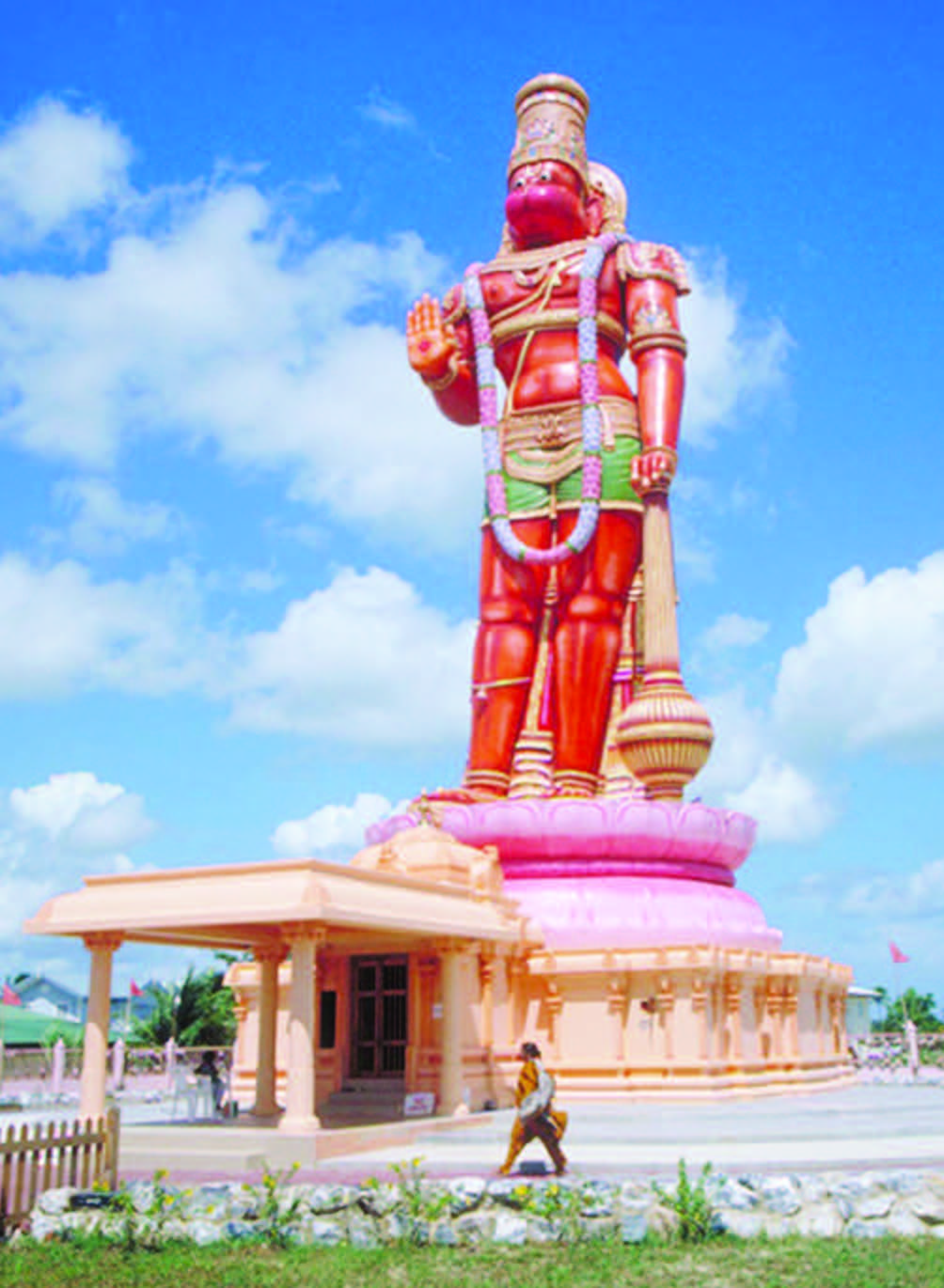
    CHICAGO (TIP): Construction is reportedly continuing on large two-storey Hanuman Mandir of Greater Chicago in Glenview (Illinois).

    According to reports, construction is expected to wind-up in 2016 on this 37,200 square feet white-marble and glass temple on a 3.98 acres lot; which is said to include fountains, tall glass dome and tall sikhras. Besides sanctuary, it will also include a community center for various cultural, educational, social and spiritual programs. Meanwhile, distinguished Hindu statesman Rajan Zed has  commended efforts of temple leaders and area community for realizing this Hindu temple complex.

    Rajan Zed, who is President of Universal Society of Hinduism, further said that it was important to pass on Hindu spirituality, concepts and traditions to coming generations amidst so many distractions in the consumerist society and hoped that this new temple would help in this direction. Zed stressed that instead of running after materialism; we should focus on inner search and realization of Self and work towards achieving moksh (liberation), which was the goal of Hinduism.

    Mandir has announced various Sunday School programs, including Indian languages, Bhagavad-Gita, yoga, religion and culture, etc.

    Lord Hanuman, greatly revered and worshipped in Hinduism, is known for incredible strength and was a perfect grammarian. Hinduism, oldest and third largest religion of the world, has about one billion adherents. There are about three million Hindus in USA.

  • 41 WRITERS RETURN INDIAN AWARD IN PROTEST

    41 WRITERS RETURN INDIAN AWARD IN PROTEST

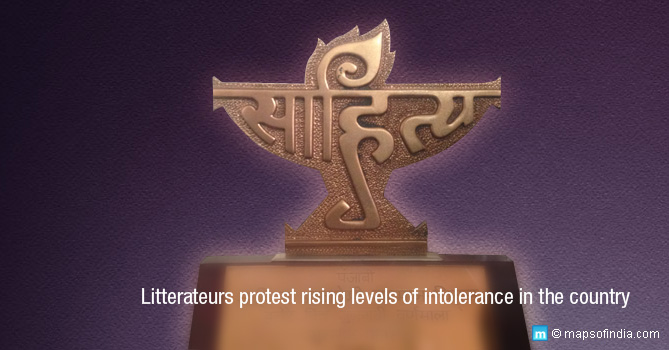
    NEW DELHI (TIP): Many in India’s literary community are disgusted. Dozens of writers say every day brings more evidence of intolerance and bigotry going mainstream — a man lynched allegedly for eating beef, an atheist critic of Hindu idol worship gunned down — all met by a deafening silence from the government.

    As of October 14, 41 novelists, essayists, playwrights and poets had returned the awards they received from India’s prestigious literary academy to protest what they call a growing climate of intolerance under Prime Minister Narendra Modi’s government.

    The writers are also angry that India’s Sahitya Akademi, or National Academy of Letters, has said little about the murder of the well-known rationalist Malleshappa Kalburgi, an award-winning Kannada-language writer, gunned down in August for his writings against superstition and false beliefs.

    The government has dismissed the writers’ protests, questioning their motives and accusing them of being politically motivated.

    “If they say they are unable to write, let them stop writing,” culture minister Mahesh Sharma told reporters.

    The writers say they cannot remain mute spectators to numerous incidents of communal violence, attacks on intellectuals and increasing curbs on free speech.

    “It’s become a question of an individual’s right to speak, to think, to write, to eat, to dress, to debate,” said Maya Krishna Rao, a playwright and theater actress, who returned her award to the academy this week.

    When Modi won a landslide victory in May 2014, many voiced fears of right-wing Hindu nationalism leading to communal violence and religious intolerance. Modi, who had spent years dodging allegations of failing to stop riots in Gujarat state in which around 1,000 Muslims died, assured the nation that he was prime minister for all and would work for everyone.

    But the last year has seen a rising crescendo of violence by Hindu fringe groups, trying to force a regressive Hindu nationalism on all, causing fear among India’s minority communities. State governments ruled by the BJP have cracked down on cow slaughter, and even buffalo meat, a key source of protein for poor Muslims and lower caste Hindus, has become scarce. The ban on cow slaughter has given rise to Hindu vigilante groups and mob violence has risen. Last month a Muslim man was lynched in northern India over false rumors that his family had eaten beef for dinner.

    On Wednesday, in response to persistent demands that the prime minister break his silence on the lynching, Modi said the mob killing was “sad and undesirable,” but added that his government could not be blamed as the local administration was responsible for the state.

    Last week, well-known writer Nayantara Sahgal returned her academy award, triggering the return of awards by other writers. Sahgal, a niece of India’s first prime minister, Jawaharlal Nehru, is known as a fiercely independent political writer who had crossed swords with her cousin and another former prime minister, Indira Gandhi, when she imposed a state of emergency in India in the mid-70s.

    Referring to recent violence by Hindu groups, Sahgal said in an interview to The Indian Express newspaper that there was “an attempt to blow up the idea of India and to put in its place a kind of travesty of Hinduism, a kind of monoculture, which has nothing to do with Hinduism.”

    Sahgal’s views are echoed across the literary spectrum.

    Ghulam Nabi Khayal, a Kashmiri language writer, said earlier governments would try to restore peace in situations of communal conflict.

    “But that’s no more the case with the rise of Hindu rightwing BJP,” Khayal said in Srinagar. “For the past one year, the Indian state has become suffocating and extremely intolerant.”

    The government was “now brazenly and institutionally backing this communal hatred,” he said, justifying his decision to return his award.

  • SHRADH | Pitr Paksh | Hinduism

    SHRADH | Pitr Paksh | Hinduism

    As per Hindu belief, the body is destructible but soul is eternal. It can neither be created nor can be destroyed. Lord Krishna in Bhagwat Gita clearly states, “The soul is unborn, eternal, ever existing and primeval.” it is believed that Pitra Paksha rites liberate a soul from the vicious circle of life and death and helps it in attaining salvation. The Shraddha during Pitra Paksha involves oblations to three preceding generations by taking their names and also by taking name of the family tree or Gotra.

    These rites are performed by current generation to repay the debts of ancestors. It is said that ancestors (Pitrs), gods (Devas) and ghosts (Pretas) when propitiated- bestow health, wealth, wisdom, longevity and eventually salvation to the native.

    Legends associated with Pitr Paksh 

    As per Hindu mythology, a zone called Pitr loka exists between earth and heaven. All the departed souls or Pitrs dwell at this place. This zone is governed by Lord Yamraj or god of death. In this zone the soul serves out its karmic correction sentences. Here Pitras are not able to get relief from the sensory demands and conditions of the body such as hunger, thirst, heat, cold, fatigue, pain etc. They are waiting to be liberated from their condition so that they can once again get a material body through which they may create positive karma to progress towards their freedom from the karma syndrome.

    In search of relief, they are attracted to living entities on the earth planet that are their descendants from previous and current lifetimes and are karmic debtors to them. The ancestors are fed once a day (once in 24 hours) according to their time zone. This is equivalent to every 12 months on the earth plane. This once-a-year period is recognized as the ‘Shradh’ period.

    The Pitra Paksh starts with Sun entering the zodiac sign Virgo. At advent of this Paksh the departed souls or forefathers leave the Yamaloka and descend to earth to acknowledge the rites performed by their descendants and remain here till Sun-Moon conjunction happens in Sign Virgo.

    It is believed, that during this period Lord Ganesha’s withdraw certain energies from the planetary surface transferring it to the core of the earth thus permitting the Pitras to approach their descendants very closely. In this context taking note of Symbolic representation of Lord Ganesha, his belly represents the whole cosmos, the seven realms above and below. Further seven oceans are inside Ganesha’s cosmic belly. These are held together by the cosmic energy (kundalini) symbolized by the huge snake around him. The snake that runs round his waist represents energy in all forms.

    The ‘Ganesha-Visarjan’ Ananta Chaturdashi is an acknowledgment of this event.

    As per another legend, Daanveer Karn (supposedly brother-akin to Pandavas) did numerous charity of jewels, currency, land etc during his life span. When he died and ascended to Pitra loka, he received all that he gave in form of charity in multiples.

    But, he didn’t obtain meal in view of the reality that he did not give food-charity. He starved for days and eventually requested “Yamraj” to find an opportunity to create for this deficiency. Yamraj granted him 14 days return to earth and do the needful charity. These 14 days had been used by Karn to provide numerous meal-charities. When he again returned again, there was plenty of meal obtainable to him.

    Difficulties one May face –if Shradh is not performed 

    As per classics if Shradh is performed with whole devotion, the ancestors bless the native with comforts of life. It is imperative for person to perform Shradh to safeguard oneself and preceding generations from Pitr Dosha. If Pitra dosha is present in chart native himself and his family members may encounter various problems like-Inability to get married, Marital concerns, infertility, problems in begetting child, loss of Job and finances, critical health concerns etc.

    Rituals of Shradh 

    The rituals of Shraddha are generally performed by an eldest son or an eldest male member of the family.

    While performing Shradh, one should pay special attention to three things – piety, control over anger and avoiding hastiness. Meditation, mantra repetition and prayer are done for the peace and attainment of salvation by departed soul.

    Bhramins are offered food, new clothes, sweets, fruits and dakshina, for it is believed that whatever is given to the Brahmins reaches the departed souls.

    In addition one can also do Mahadaan. The Mahadaan offerings give relief to the ancestor, person get freed from curse of Pitra Dosha or did not face hardships on account of cursed by pitras. In additional this bestows positive luck to descendants. The Blessings by Pitra’s can greatly help the individual to progress in life and his/her problems are reduced to a Great extent. The items of Mahadaan consists of Ganga Jal , Mustard Oil , Ghee , Rice ,Wheat , Salt , Sugar, Chana, Kali Urad Dal, Umbrella, Shoes/socks or chappals, Steel utensils-5 (glass,plate,spoon,katori,lota), Blanket, White cloth-dhoti+gamcha, Towel, Fruits, Mithai, Coconut, Banana, Cooked food-mathi/sag/poori halwa, Dals (dry-5), Vegetables- 5, Milk , Yogurt , Bangles/suhaag things or janau , Comb, Mehndi ,Nav Ratan , Gold, Silver , Jaun , Kale Til, Supari/Paan , Lavang, Ilaichi , Dhoop/aggarbatti (incense stick)

    Things to be avoided during Pitr Paksh 

    During the period of Shraadh, usually people avoid buying or wearing new clothes, hair-cut shall also be avoided.

    Auspicious activities like marriage, settling marriage, any kind of birth ceremony etc. are prohibited during this period

    Abstain from Non Veg food, Hard Drinks and Products containing Tobacco.

    Avoid eating as Guests at others place. it is said that during the shradh while eating at another’s home the host’s Pitr get transferred to the guest, and then the guest takes on an unwanted Pitr with him/her and eventually fall in ‘salt-debt’. this is only removed by an balancing act or Remedial Puja’s

    It is believed that if shraadh is performed with whole devotion, ancestors feel satiated and they bless the person with wealth, children, knowledge, joys, pleasures and a total life.

    Objectives of performing Shraddha

    Providing momentum to the deceased ancestors present in the Pitru region so that they can progress to a higher sub-plane of existence, through the means of Shraddha.

    Satisfying wishes and desires of the souls of the deceased ancestors from ones’ family who are trapped in the negative regions due to unfulfilled desires and providing momentum for their further progress.

    Importance and need of performing Shraddha

    Repaying the debt to ancestors is as important as repaying the debt to God, Sages and the society. It is the duty of descendants to respect their ancestors, make donations in their name and to undertake activities that will please them. Performing Shraddha is a part of obeying Dharma, as per science of Dharma.

    Ancestors’ soul becomes satisfied only after receiving pinda and water from their son. In relation to this, following is a verse in the holy text Mahabharat that describes ‘who qualifies to be called as son’ :

    Benefits of performing Shraddha

    The ritual of Shraddha is sacrificial fire performed for deceased ancestors and it is sacred, beneficial bestows blessings for conceiving a baby boy. The benefits derived after performing the ritual of Shraddha are mentioned in Smrutichandrika and other holy texts.

    If the ritual of Shraddha is performed on the day of an eclipse, the host derives benefit similar to the one obtained after donating a piece of land to someone.


    This page is sponsored by ARISH SAHNI – New York Life Insurance Agent

    sahani108@gmail.com


  • Hindus criticize ban on yoga in Los Angeles parks & beaches

    LOS ANGELES (TIP): Hindus are critical of Los Angeles City Council’s recent reported decision of banning yoga, among other things, at public beaches and parks.

    A Hindu leader Rajan Zed, who strongly criticized the attempts to regulate yoga in the past by various states in USA said that it seemed like an unnecessary obtrusion and burdensome on yoga in Los Angeles. Zed, who

    is President of Universal Society of Hinduism, urged Los Angeles City Council to reconsider and exclude yoga from the vending ban in city parks and beaches, which appeared to be criminalizing of yoga.

    Zed noted that yoga was a mental and physical discipline by means of which the human-soul (jivatman) united with universal-soul (parmatman). For Patanjali, author of the basic text, the Yoga Sutra, yoga was a methodical effort to attain perfection, through the control of the different elements of human nature, physical and psychical.

    Rajan Zed further said that yoga, referred as “a living fossil”, was the repository of something basic in the human soul and psyche; and regulating it was kind of a religious infringement. Although introduced and nourished by Hinduism, yoga was a world heritage and liberation powerhouse to be utilized by all, Zed added.

    According to US National Institutes of Health, yoga may help one to feel more relaxed, be more flexible, improve posture, breathe deeply, and get rid of stress. According to an estimate, about 21 million Americans, including many celebrities, now practice yoga.

  • World’s largest children’s museum displays Hindu Lord Ganesh

    INDIANAPOLIS (TIP): The Children’s Museum of Indianapolis (CMI), said to be world’s largest children’s museum, in partnership with National Geographic, is displaying a statue of Hindu Lord Ganesh in its current Sacred Journeys exhibition.

    This Lord Ganesh statue was custom made for the Museum and shipped from India recently.

    Other areas of the “National Geographic Sacred Journeys” exhibition that focus on Hinduism, include Ganges River where they talk about Kumbh Mela, which includes a Ganga Jumna Lota pot and shows some contemporary items that people who go to the Kumbh Mela might purchase; Ganesh Chaturthi Festival; and Diwali Festival, which contains many Diwali hanging lanterns and diyas.

    Rajan Zed, a Hindu priest, in a statement, commended CMI for exhibiting Lord Ganesh statue and Hinduism focused displays.

    Rajan Zed, who is President of Universal Society of Hinduism, urged major art museums of the world, including Musee du Louvre and Musee d’Orsay of Paris, Metropolitan Museum of Art in New York, Los Angeles Getty Center, Uffizi Gallery of Florence (Italy), Tate Modern of London, Prado Museum of Madrid, National Gallery of Art in Washington DC, etc., to frequently organize Hinduism focused exhibitions, thus sharing the rich Hindu heritage with the rest of the world.

    This 7,000-square-foot exhibition will continue till February 21 and is funded through a $1.25 million grant from Lilly Endowment Inc.

    It also includes displays of Western Wall in Jerusalem, the Great Mosque in Mecca, Bodh Gaya in India, Tepeyac Hill and the Basilica of Our Lady of Guadalupe in Mexico City, Dome of the Rock mosque, Church of the Holy Sepulchre, Bodhi Tree, Caves in the bluffs along the Dead Sea; fragments of the Dead Sea scrolls, Jewish ritual objects, a piece of the Kiswah, throne built for the Dalai Lama, stone from the Western Wall, the trunk Brigham Young carried from New York to Utah, a replica of the Shroud of Turin, a sand mandala; etc. It “reflects this diversity of religious and spiritual pilgrimage through immersive environments created with photography from National Geographic”.The National Geographic Society claims to be “inspiring people to care about the planet since 1888” and reaches over 700 million people a month.

  • Thailand to hold rites of five religions for blast victims

    BANGKOK (TIP): Thailand on August 20 said it will hold religious rites from five different faiths, including Hinduism and Sikhism, in memory of the 20 people who were killed in the devastating bombing at the popular Lord Brahma temple here.

    Bangkok Metropolitan Administration (BMA) will hold Buddhist, Christian, Islamic, Sikh and Hindu rites at the Ratchaprasong Intersection where the open air shrine is located early tomorrow, said Supranee Satayaprakorb, director of the BMA’s Culture, Sports and Tourism Department.

    Meanwhile, repairs to Brahma statue which was slightly damaged in Monday’s bomb blast will begin soon.

    Department inspectors from the Office of the Traditional Arts examined the damage to the shrine and statue this week and estimated repairs would take about two weeks.

    The explosion that killed 20 people and wounded 123 caused minor damage to the Brahma statute, said Bovornvet Rungrujee, director-general Fine Arts Department.

    The inspection has found the blast impacted the figure in 12 places. Only the chin was broken and a glass window at the shrine was damaged, Rungrujee said.

    It is not necessary to move the statue from the shrine. Craftsmen will start repairs on Monday, he added.

    Plaster will be used to patch the statue’s face and other damaged parts.

    Brahma temple, one of the most popular tourist attractions in Bangkok, was reopened yesterday for worshipers and tourists three days after the blast rocked the shrine.

  • FORMATION OF INDIAN NATIONAL CONGRESS

    FORMATION OF INDIAN NATIONAL CONGRESS

    inc-india-1947The foundations of the Indian National Movement were laid by Surendranath Banerjee with the formation of Indian Association at Calcutta in 1876. The aim of the Association was to represent the views of the educated middle class, inspire the Indian community to take the value of united action. The Indian Association was, in a way, the forerunner of the Indian National Congress, which was founded, with the help of A.O. Hume, a retired British official. The birth of Indian National Congress (INC) in 1885 marked the entry of new educated middle-class into politics and transformed the Indian political horizon. The first session of the Indian National Congress was held in Bombay in December 1885 under the president ship of Womesh Chandra Banerjee and was attended among others by and Badr-uddin-Tyabji.

    At the turn of the century, the freedom movement reached out to the common unlettered man through the launching of the “Swadeshi Movement” by leaders such as Bal Gangadhar Tilak and Aurobindo Ghose. The Congress session at Calcutta in 1906, presided by Dadabhai Naoroji, gave a call for attainment of ‘Swaraj’ a type of self-government elected by the people within the British Dominion, as it prevailed in Canada and Australia, which were also the parts of the British Empire.

    Meanwhile, in 1909, the British Government announced certain reforms in the structure of Government in India which are known as Morley-Minto Reforms. But these reforms came as a disappointment as they did not mark any advance towards the establishment of a representative Government. The provision of special representation of the Muslim was seen as a threat to the Hindu-Muslim unity on which the strength of the National Movement rested. So, these reforms were vehemently opposed by all the leaders, including the Muslim leader Muhammad Ali Jinnah. Subsequently, King George V made two announcements in Delhi: firstly, the partition of Bengal, which had been effected in 1905, was annulled and, secondly, it was announced that the capital of India was to be shifted from Calcutta to  Delhi.

    The disgust with the reforms announced in 1909 led to the intensification of the struggle for Swaraj. While, on one side, the activists led by the great leaders like Bal Gangadhar Tilak, Lala Lajpat Rai and Bipin Chandra Pal waged a virtual war against the British, on the other side, the revolutionaries stepped up their violent activities There was a widespread unrest in the country. To add to the already growing discontent among the people, Rowlatt Act was passed in 1919, which empowered the Government to put people in jail without trial.

    This caused widespread indignation, led to massive demonstration and hartals, which the Government repressed with brutal measures like the Jaliawalla Bagh massacre, where thousand of unarmed peaceful people were gunned down on the order of General Dyer.

    Reformers as guides of Freedom Movement

    The leadership of the freedom movement passed into the hands of reformists like Raja Rammohan Roy, Bankim Chandra and Ishwar Chandra Vidyasagar. During this time, the binding psychological concept of National Unity was also forged in the fire of the struggle against a common foreign oppressor.

    Raja Rammohan Roy (1772-1833) founded the Brahmo Samaj in 1828 which aimed at purging the society of all its evil practices. He worked for eradicating evils like sati, child marriage and purdah system, championed widow marriage and women’s education and favoured English system of education in India. It was through his effort that sati was declared a legal offence by the British.

    Swami Vivekananda (1863-1902) the disciple of Ramakrishna Paramahamsa, established the Ramkrishna Mission at Belur in 1897. He championed the supremacy of Vedantic philosophy. His talk at the Chicago (USA) Conference of World Religions in 1893 made the westerners realize the greatness of Hinduism for the first time.

    Jallianwala Bagh Massacre

    Jalianwala Bagh massacre of April 13, 1919 was one of the most inhuman acts of the British rulers in India. The people of Punjab gathered on the auspicious day of Baisakhi at Jalianwala Bagh, adjacent to Golden Temple (Amritsar), to lodge their protest peacefully against persecution by the British Indian Government. General Dyer appeared suddenly with his armed police force and fired indiscriminately at innocent empty handed people leaving hundreds of people dead, including women and children.

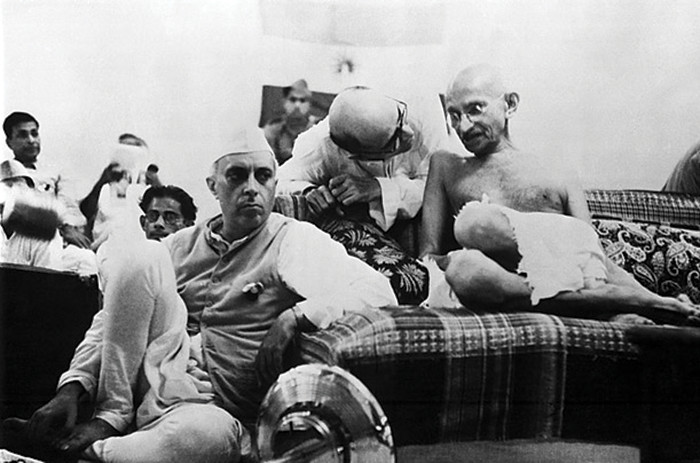
    After the First World War (1914-1918), Mohandas Karamchand Gandhi became the undisputed leader of the Congress. During this struggle, Mahatma Gandhi had developed the novel technique of non-violent agitation, which he called ‘Satyagraha’, loosely translated as ‘moral domination’. Gandhi, himself a devout Hindu, also espoused a total moral philosophy of tolerance, brotherhood of all religions, non-violence (ahimsa) and of simple living. With this, new leaders like Jawaharlal Nehru and Subhash Chandra Bose also emerged on the scene and advocated the adoption of complete independence as the goal of the National Movement.

  • Boston museum displays art formed of Hindu bindis

    Boston museum displays art formed of Hindu bindis

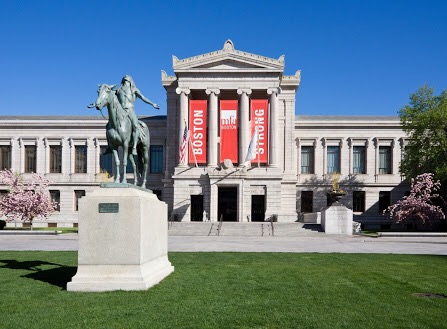
    Isabella Stewart Gardner Museum (ISGM) in Boston is currently exhibiting artwork titled “Not All Who Wander Are Lost”, which uses Hindu bindis as a signature element.
     

    Created by artist-in-residence England-born Bharti Kher for the Museum’s façade, it reflects on maritime travel, and uses bindis as a central motif “to map demographic movement in an abstract way”; and shall be displayed till January next.


    Commending ISGM for exhibiting art centered around a Hindu symbol, distinguished Hindu statesman Rajan Zed, in a statement in Nevada today, said that art had a long and rich tradition in Hinduism and ancient Sanskrit literature talked about religious paintings of deities on wood or cloth.


    Rajan Zed, who is President of Universal Society of Hinduism, urged major art museums of the world, including Musee du Louvre and Musee d’Orsay of Paris, Metropolitan Museum of Art in New York, Los Angeles Getty Center, Uffizi Gallery of Florence (Italy), Art Institute of Chicago, Tate Modern of London, Prado Museum of Madrid, National Gallery of Art in Washington DC, etc., to frequently organize Hindu art focused exhibitions, thus sharing the rich Hindu art heritage with the rest of the world.


    Bindi (also known by tika, tilak, pundra and other names), also sometimes referred as “third eye” and flame, is an auspicious Hindu symbol, and is also used for meditative purposes.


    ISGM, designed as a work of art in totality, provides an unusual backdrop for the viewing of art. It contains works by Titian, Rembrandt, Michelangelo, Raphael, Botticelli, Manet, Degas, Whistler and Sargent. Anne Hawley is the Director. 

  • Unique $11 million Hindu Hanuman Temple opens in Texas

    Unique $11 million Hindu Hanuman Temple opens in Texas

    FRISCO, TEXAS (TIP): Frisco (Texas) now has a 34,000 square-foot Marakata Karya Siddhi Hanuman Temple, reportedly costing over $11 million.

    This Temple, which opens daily, besides Hanuman as the main deity, also carries the murtis of Hindu deities Ganapati, Shiva, Rajeshwari, Ram Parivar, Venkateshwara, Dattatreya, Subramanyam, Ayyappa and Nagendra. Its history goes back to 2007 and it conducts aarti twice daily and offers free lunch on Saturdays. It already has a Cultural Center and intends to build a library and a museum, reports suggest.

    Meanwhile, distinguished Hindu statesman Rajan Zed, in a statement in Nevada today, commended efforts of Temple leaders and area community for realizing this unique Hindu temple complex.Rajan Zed, who is President of Universal Society of Hinduism, further said that it was important to pass on Hindu spirituality, concepts and traditions to coming generations amidst so many distractions in the consumerist society and hoped that this new Temple would help in this direction. Zed stressed that instead of running after materialism; we should focus on inner search and realization of Self and work towards achieving moksh (liberation), which was the goal of Hinduism.

    Besides regular worship services, this Temple also offers classes on yoga; art; Carnatic music; bhajans; Hindi, Telugu, Marathi, Tamil, Kannada and Gujarati languages; Bhagavad-Gita chanting; Kuchipudi dance; and Sri Vishnu Sahasranama. It also conducts Datta Kriya Yoga workshops, youth activities and religious instruction for children and youth under Bala Datta program, etc. It also performs Vaahana Puja (vehicle prayer) for divine blessing for the new vehicle; and requires five lemons, one coconut, few flowers and few fruits for this prayer ceremony.

    Built under the guidance of Sri Ganapathy Sachchidananda Swamiji of Avadhoota Datta Peetham of Mysuru (India), it also has a multi-purpose hall, homa-kund, yoga center and six classrooms. Temple Chairman is Prakasa Rao Velagapudiand; while Priests include Narasimhamurthy Garudadri, Vishwaksena Chandrasekhara, Shardul Pandya, Ganapati Rama Aiyer Kalyana Krishnan and Harihara Sastry. Food with onion and garlic is not allowed inside.

    Lord Hanuman, who is greatly revered and worshipped in Hinduism, is known for incredible strength and was a perfect grammarian. Hinduism is oldest and third largest religion of the world with about one billion adherents. There are about three million Hindus in USA. Frisco, formed in 1902 and an affluent city part of Dallas-Fort Worth metroplex, is one of the fastest-growing cities in USA and has been ranked as one of the “best places to live” in the nation.

  • ‘Champion of Change’ – Indian American Sunita Viswanath honored at White House

    ‘Champion of Change’ – Indian American Sunita Viswanath honored at White House

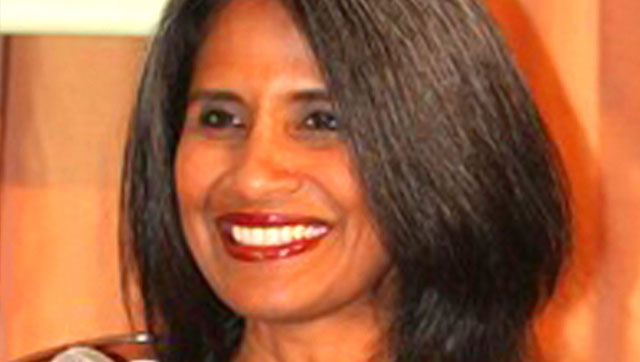
    The White House honoured an Indian-American woman Sunita Viswanath as one of the 12 ‘Champions of Change’ for her effort in protecting environment and communities from the effect of climate change.

    Viswanath was the only Indian American to figure in the list, and was selected for her work in encouraging Hindus to take care of the environment.

    Working with women’s and human rights organisations for almost three decades, Sunita is co-founder and active board member of the 14-year-old front-line women’s human rights organisation, Women for Afghan Women.

    “Sunita is also co-founder and board member of Sadhana: Coalition of Progressive Hindus, living and building a Hinduism that prioritises social justice, and upholding the Hindu principles of ekatva (oneness), ahimsa (non-violence) and sadhana (faith in action),” the White House said.

    “Sunita is being honoured for her work with Sadhana to encourage Hindus to live out these principles by taking care of the environment,” it added.

    Born in Chennai, Viswanath says her childhood was steeped in ritualistic practice of Hinduism.

    “I have always been secure in my identity as a Hindu. Growing up, I thought a lot about faith and religion, but I also had a very strong sense of social justice — what was fair,” Sunita said.

    “I imbibed profound lessons of love and justice from my religious upbringing, from the stories we were told, the prayers we learned, the texts we read. I went on as an adult to devote my life to advancing social justice causes, particularly women’s human rights,” she said.

    “If Hinduism cares deeply about all people and all living beings, then there must be an active, vocal Hindu movement for social justice and human rights today,” she said, adding that a small group of like-minded individuals got together to explore this question and Sadhana was born.

    One Sadhana’s initiatives is Project Prithvi – a grassroots green project, which mobilises Hindus, especially the youth, to live out the principle of ahimsa by taking care of the environment.

    Currently, they are working on a project to clean up specific beaches in Jamaica Bay where Hindus worship and litter the place.

  • ‘Indian- American’ Louisiana Republican Gov. Bobby Jindal throws his hat in Presidential Ring

    ‘Indian- American’ Louisiana Republican Gov. Bobby Jindal throws his hat in Presidential Ring

    KENNER, LOUISIANA (TIP): Louisiana ‘American’ Governor Bobby Jindal became the 13th Republican to announce that he is running for president in 2016.

    Jindal, 44, an Indian-American (who hates to be called an Indian American and prefers to be called only an American), joins the crowded field of Republican contenders in what even his supporters call a long-shot candidacy.

    Standing before a giant American flag at an event center in this New Orleans suburb, June 24, Jindal presented himself as a policy writer whose resume – as a two-term governor and a former congressman who once led the state health agency and the University of Louisiana system – sets him apart. Jindal said that Louisiana cut the number of “government bureaucrats” by more than 30,000 positions, and that the state now had the highest population in its history, with more people moving to Louisiana than leaving it. He invoked the success story of his immigrant parents but once again distanced himself from his Indian roots by asserting that “we are all Americans” and not hyphenated Americans.

    In his speech, Piyush “Bobby” Jindal said, “I’m sick and tired of people dividing Americans. And I’m done with all this talk about hyphenated Americans. We are not Indian-Americans, Irish – Americans, African-Americans, rich Americans, or poor Americans – we are all Americans.” He further accused Obama of racism; and said Obama has “been trying to divide us…by gender, by race, by geography, and by religion.”

    Mr. Jindal was born in America to parents who emigrated from India. As a teen he converted from Hinduism to Christianity.

  • Sikh Group Sues Facebook for Banning Website in India

    Sikh Group Sues Facebook for Banning Website in India

    NEW YORK (TIP): A U.S.-based Sikh advocacy group has filed suit against Facebook, accusing the social media giant of blocking access to its Facebook page in India and raising concerns over the company’s censorship policies.

    Sikhs for Justice (SFJ), a non-profit organization with offices in New York City that advocates for issues important to members of the Sikh religious tradition, filed suit in California federal court this week requesting that a judge force Facebook to stop blocking its website in India and release all its communications with national Indian officials. The complaint alleges that the company illegally restricted access to SFJ’s page, presumably at the request of the Indian government, who disagrees with the group’s controversial activism. Among other things, the website criticized Indian Prime Minister Narendra Modi and campaigned against “forced conversions of Christians and Muslims to Hinduism,” an unsettling practice that has been reported to occur throughout India at the hands of Hindu nationalists.

    “In or around the first week of May 1, 2015, the plaintiff learnt the contents of the Plaintiff’s Facebook Page … were blocked completely in India without notice, reason, explanation, or proper and lawful cause,” the complaint, which was provided to Think Progress, read. The group’s lawyer reportedly sent Facebook a cease and desist letter asking for access to the be restored, but only received an automated response.

    “Blocking of SFJ’s page for exposing India with regard to the plight of religious minorities and advocating Sikh referendum in Punjab, Facebook Inc. violates section 2000a of 42 U.S. Code which prohibits discrimination on the grounds of religion, race or national origin,” the complaint argued.

    The lawsuit, which also sought compensatory and punitive damages, is unusual in that it challenges Facebook here in the United States, where free speech laws are well protected. But the digital juggernaut has long endured harsh criticism for helping foreign governments silence free expression. Free speech advocates have blasted Facebook for banning the pages of political rock bands in Pakistan at the urging of government censors, and opposition leaders in Russia lashed out at the company after it removed a website dedicated to organizing a protest against President Vladimir V. Putin in December of last year.

    Facebook has seen a rapid increase in requests to limit content all over the world, but India appears to be the worst offender: the company’s own Global Government Requests Report listed it as the top country asking for webpage takedowns from July to December 2014, with Facebook ultimately restricting 5,832 “pieces of content” on behalf of the Indian government. Although the report did not detail the reasoning for each request, Facebook hinted that many of the inquiries were related to religious issues.

    “We restricted access in India to content reported primarily by law enforcement agencies and the India Computer Emergency Response Team within the Ministry of Communications and Information Technology including anti-religious content and hate speech that could cause unrest and disharmony,” Facebook’s report reads.

    Indeed, while India’s Supreme Court recently struck down a law that allowed the government to jail citizens for posting “controversial” comments on social media, faith remains an especially inflammatory subject in the subcontinent. Hindu, Muslim, Sikh, and Christian groups have long clashed with each other and local authorities in various parts of the country, but the arrival of new political leadership may be escalating tensions: Prime Minister Modi, a hardline Hindu nationalist elected last year, has been accused by various groups — including SFJ — of doing little to stop sectarian riots that led to the deaths of more than a thousand Muslims in 2002.

    “Since the election of Narendra Modi as Prime Minister of India in May 2014, religious minorities especially Christians, Muslims and Sikhs are under increased attacks from the Hindu supremacist groups closely aligned with the ruling party of India,” SFJ’s complaint read.

  • $5 million Hindu Ram Temple opening in New Zealand

    $5 million Hindu Ram Temple opening in New Zealand

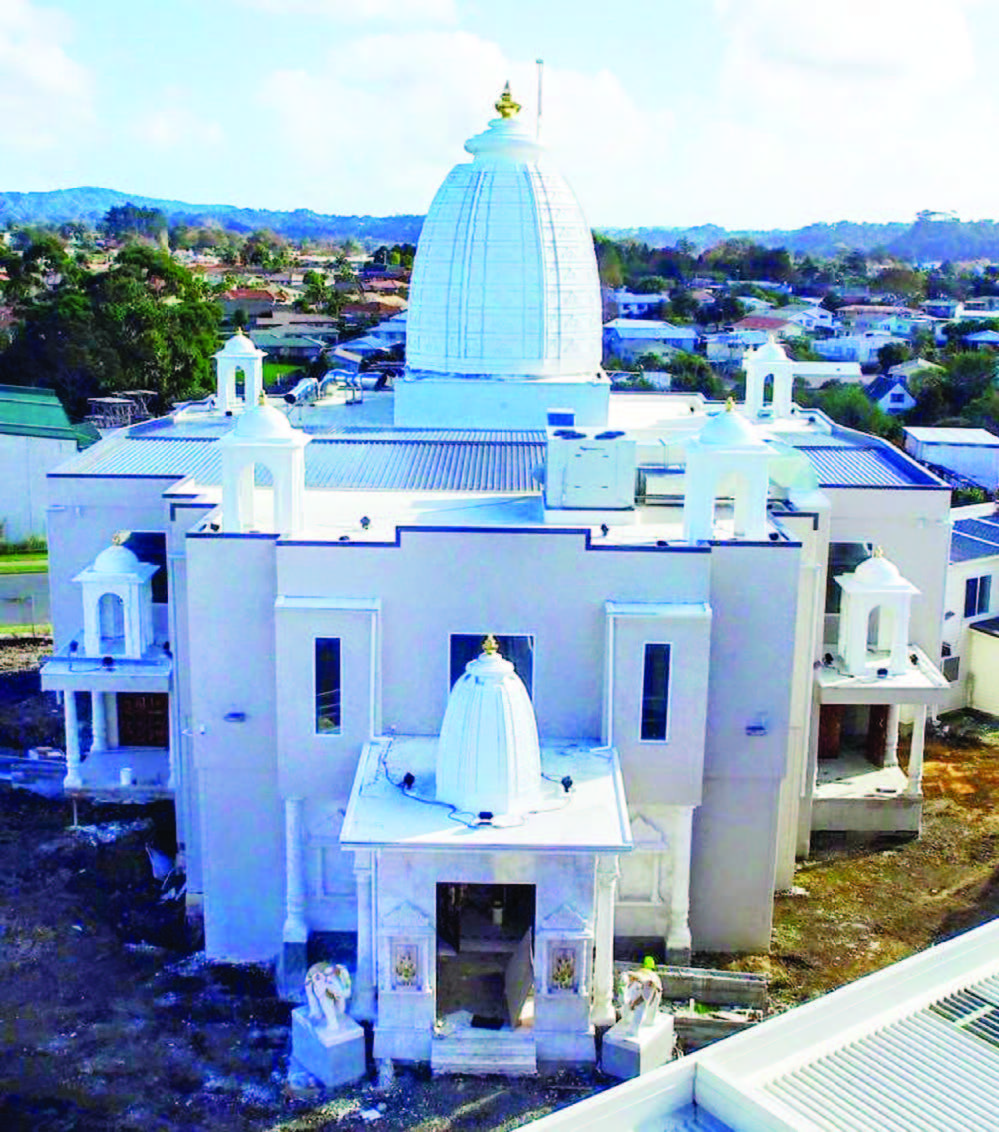
    AUCKLAND (TIP): A $5 million Shri Ram Mandir, a Hindu temple and community complex in Henderson, about 13 kilometers from Auckland (New Zealand) city center, will formally do Grand Opening on June 13, concluding eight days of ceremonies starting June 6.

    A project of Shri Ram Mandir Charitable Trust, a registered charity established in 2011, whose objectives include enhancing “cross-cultural understanding”; this three-level complex with a reported capacity of about 1,000 persons aims to address the spiritual, social, and cultural needs of the community.

    Besides a sanctuary on the top floor, it will also include a community center and place for youth activities. In addition to being involved in community/social service and advancing Hinduism, it also aims to promote harmony among diverse communities.

    Meanwhile, Hindu statesman Rajan Zed, in a statement in Nevada (USA) , applauded efforts of temple trustees and area community for realizing this Hindu temple complex.

    Opening ceremonies include prayashchit, cultural programs, shradh, poojans, yag, homs, nagar & jal yatras, 108 kalash and other poojans, artis, vasses, devta jaagran, praan pratisthapnam, pushpanjali, various prayers and a hawan fire ritual.

    In addition to offering worship services; Shri Ram Mandir also reportedly plans to organize cultural activities, festivals, events, community gatherings, educational projects, services for seniors, social welfare and community service programs, camps and spiritual-philosophical-recreational-cultural activities for youth, classes/seminars/discourses /lectures on Hinduism, and establish library.

    Its Bhoomi Pooja was held on July 21, 2012, although the idea of the temple was initially launched much earlier. Marble and Hindu artifacts have reportedly been imported from India for this temple, which is claimed to be the biggest temple in New Zealand when completed.

    Pravin Kumar, a businessman and community activist, is President of the Trust; Salendra Kumar is the Treasurer; while other trustees include Giyannendra Prasad and Shiu Charan.

    Hinduism, oldest and third largest religion of the world, has about one billion adherents.

    Henderson is a major suburb of Auckland, the most populous and largest urban area in New Zealand.

  • Mother’s Day – FEATURE Special – Mother is the Ultimate Definition of Selflessness

    [vc_row][vc_column width=”2/3″][vc_column_text]Every religious tradition has elevated mother to nearly the status of God, because she possess many a qualities of God; kind, merciful, beneficent and caring among thousand other qualities. Mother is the reason for our existence; sustenance, nurturance and shaping who we are. I dedicate this write-up to my Mother, and all the Mothers out there. There is a beautiful song in Urdu/Hindi language.

    [quote_center]

    Us ko nahin dekha hum ne kabhi, per us ki zaroorat kya hogi

    Ai maa teri soorat say alag bhagwan ki soorat kya hogi.

    [/quote_center]

    I have not seen him (God) ever, but what is the need for it?

    Dear Mother, your face cannot be different than God’s own face

    Video Link on Youtube Full translation by Rajiv Chakravarti at www.Urduhindi.net

    Mother is the ultimate definition of selflessness! No matter what happens to the world or even her, she is there for you in your need; she recognizes your need much before you know it. Of course every day is Mother’s day, and each one of us honors her in a variety of ways. From simple caring to doing things for her that makes her happy.

    Mothers don’t need a whole lot; they just need to know that you care. Remember you were showered by her attention when you needed it.

    Thanks to this beautiful tradition of America, a day to honor Mother. No mother should be alone today; some one or the other must give her a call.

    I appreciate all the mothers who have raised their kids well, particularly the single mothers, and it is not easy! Getting them ready, taking them to school, playground, tuition, and taking care of them, and going to work. There is a lot of sacrifice made by mothers and no amount of appreciation will be enough. Whatever you are today, it is because of your mother. If you have tensions with her, seek her forgiveness today, if she is not around, spend half an hour meditating about her and see the sense of completeness you feel within you.

    A majority of us are fortunate to have the love and affection of the mother to bless our lives. However, there are some mothers who have not been good to their kids and I feel your anguish if you are the one, but I assure you that, you are a blessed one to have made it in life without mothers love and it is time for you to give that love to others.

    It’s time to express gratitude to her; it restores the spiritual balance in each one of us. Life is about transactions, each time we received a “good” we become indebted to the giver, but when we give back to the giver or find alternate ways of giving back, then we regain our spiritual balance, bringing us nirvana, salvation, mukti, moksha, nijaat and freedom.[/vc_column_text][vc_column_text]Cont. After Messages below[/vc_column_text][/vc_column][vc_column width=”1/3″][vc_single_image border_color=”grey” img_link_target=”_self” image=”35314″ img_size=”medium” img_link_large=””][vc_column_text]Photo Caption : Prof. Indrajit S  Saluja’s mother Mohinder Kaur who passed away in 2009 at the age of  91, was  a  saintly person , created in God’s own Image.

    [quote_center]Remembering my mother on Mother’s Day, 2015[/quote_center]

    That’s my mother who gave me birth,
    Breastfed me to grow in to a healthy child,
    Trained me to walk , taught me to talk;
    I am her creation and gift to the world;
    Whoever and whatever I am , it’s because of her. I miss her and wish she were around
    To chide me for the mistakes I make ,
    And hug , pat and kiss me for the good I do;
    But she’s gone and left behind memories to haunt; I love you Mata Ji, I miss you, Mata Ji.

    I know she looks at me from her heavenly abode,

    She watches all my actions and doings;
    She guides my steps even now from afar,
    And exhorts me to justly and honestly play my part
    In the theatre of the world to which I am assigned.
    When I am done with my part that God has assigned me,

    I only long to go to my mother in heavens above, And be the child that I was , learning at her feet, And  be folded in to her protective arms for ever.

    – Prof. Indrajit S saluja


    [/vc_column_text][/vc_column][/vc_row][vc_row][vc_column width=”1/2″][vc_single_image image=”35311″ border_color=”grey” img_link_large=”” img_link_target=”_self” img_size=”medium”][vc_column_text][quote_center]My mother is the anchor of my life[/quote_center]

    This morning when you asked, “What does my Mother mean to me?”  I realized that this was one relationship that I have taken for granted since my childhood years. I wondered why I had not reflected on this statement and the answer was apparent. The selfless, untiring love that I have received from my Mom was the culprit. She never allowed me and my siblings to feel that she was giving us anything. We took her warmth, affection and love for granted !

    As I step back and reflect, I see my mother as a warm, generous, ever caring pious lady, someone who has stood by us through all our trials and tribulations, kept her needs away in front of the wants of the family. A gracious host to neighbors and visitors, ever ready to help. An excellent cook and a good seamstress. The best grandmother to her grandchildren… always ready to wipe that tear, always ready to pray for the success of her family. She joined to share others’ grief as willingly. Her indomitable spirit to Never Give up. All these and many more made her the anchor of my life and indeed of the whole family growing up, shaping our formative years. A mother is super special and a symbol of selfless love like none other.

    Happy Mother’s Day to all the Mamas of the world !!!

    – Rishikant Singh


    [/vc_column_text][vc_single_image image=”35310″ border_color=”grey” img_link_large=”” img_link_target=”_self” img_size=”medium”][vc_column_text]

    Photo Caption: Two and a half year old Ashishpal Saluja (now 37) with mom Gurdarshan Kaur who passed away in 2007.

    I realize that everything important that I know, I either learned from my mother, or my father probably before I was 15. Every child considers his or her mom and dad as the best parent in the world. And I believe that every child is right in doing so. Growing up as a child, I always looked up to my parents, especially to my mother. She was my greatest teacher and the source of inspiration for my many interests. Generous, kind, loving, sweet, caring, honest, elegant, brave, strong, bubbly, energetic, resilient, thoughtful, hopeful, selfless. My mother possessed all of these qualities for sure. Right now I’d probably have a million reasons to thank my mother for. Because she brought me to this world, because she made me all I am, for knowing me inside and out, for believing in me. But I do not need a reason. It matters the least. Whether she knew it or not, she was always, and forever will be the queen of my heart and my guiding light of life. Love you always MOM.

    – Ashishpal Saluja


    [/vc_column_text][vc_single_image image=”35304″ border_color=”grey” img_link_large=”” img_link_target=”_self” img_size=”medium”][vc_column_text]

    [quote_center]I just miss you![/quote_center]

    Growing up in a remote village in Kerala, I have fond memories of my mother who has nurtured, inspired and influenced my life through thick and thin. My only regret is that I couldn’t spend more time with her as I have come away from ‘God’s own country’ as Kerala is described, looking for better opportunities!

    This tribute by an unknown author summarizes my sentiment in its entirety:

    ‘Death changes everything! Time Changes nothing. I still miss the sound of your voice and wisdom of your advice and stories of your life and being in your presence. So No, time changes nothing, I miss you as much today as I did the day you died. I just miss you!’

    – George Abraham


    [/vc_column_text][vc_single_image image=”35305″ border_color=”grey” img_link_large=”” img_link_target=”_self” img_size=”medium”][vc_column_text][quote_center]A mother is the truest friend we have[/quote_center]

    Mom, Nani, Gail Mommy, Cathy Chachi & Sunil Aunty. “A mother is the truest friend we have.” Lucky for us, we have more than one individual whom we love and consider as our mother. Without the love and care from such selfless mothers and aunts, we would not be where  we are today.

    -Bobby, Jessica, Pavneet, Amy, Matthew & Rohan


    [/vc_column_text][vc_single_image image=”35306″ border_color=”grey” img_link_large=”” img_link_target=”_self” img_size=”medium”][vc_column_text]“Yaad na jaye beete dinon kee. Jaskiran (center) now 35,  with mom Gurdarshan Kaur and  brother Ashishpal (left), now 37.”

    [quote_center]You are the words inside my song[/quote_center]

    Dear mom, how do I explain the most sacred relationship on this earth in a few words. here are a few lines that can help let all know what you meant to me and how I survive without you. You are my friend, my heart, and my soul You are the greatest friend I know.
    You are the words inside my song,
    You are my love, my life, my Mom.
    You are the tree I lean upon,
    You make the troubles be gone.
    You are the one who taught me life,

    How not to fight, and what is right. You are the words inside my song, You are my love, my life, my mom. You are the one who cares for me, You are the eyes that help me see.

    You are the one who knows me best,
    When it’s time to have fun and time to rest.
    You are the one who has helped me to dream,
    You hear my heart and you hear my screams.
    Afraid of life but looking for love,
    I’m blessed for God sent you from above.
    Though you may be far but this heart has missed you all the time.

    – Jaskiran Saluja Beri


    [/vc_column_text][vc_column_text]Cont. From Top

    [quote_center]RELIGIONS ON MOTHERS: [/quote_center]

    In the native traditions, be it American, European, African, or Asian, Mother is creator in the form of mother Earth.

    Christianity and Judaism: “Honor your father and mother. Then you will live a long, full life in the land the LORD your God will give you.In Jewish tradition, your heritage is determined by your Mother, you are a Jew because of your mother.

    “Diverse images of what are believed to be Mother Goddesses also have been discovered that date from the Neolithic period, the New Stone Age, which ranges from approximately 10,000 BCE when the use of wild cereals led to the beginning of farming, and eventually, to agriculture.” Wikipedia

    The Baha’i faith, “For mothers are the first educators, the first mentors; and truly it is the mothers who determine the happiness, the future greatness, the courteous ways and learning and judgment, the understanding and the faith of their little ones.”

    In the Hindu tradition Mother is worshiped and is represented in many attributes like Ma Saraswati (source of knowledge), Ma Lakshmi (source of income) and the likes… Mother’s face is equated with God’s face, a song celebrates Mother by saying, if I have seen your face mother, and I have seen God.

    Sikh’s consider God as a parent, a mother and a father. Guru Granth Sahib advises “Always remember the boundless, limitless God, remembering whom all our sins are destroyed. My son, this is a mother’s prayer for you.”[/vc_column_text][vc_column_text]Prophet Muhammad was asked by his associates, who is the most important person in one’s life – he says, “Mother”; they ask again, the answer was “Mother again” and same response was given for the third time, such is the importance given to mother. He said, your heaven, your paradise and your peace of mind comes to you by serving your mother.

    You will find mother is placed at the highest spiritual level in all religions or non-religious traditions and life forms. Those who have a mother to see, you are the blessed one, those who don’t, you have her blessings.

    “Paradise is under the feet of your mother” is the mantra probably every Muslim recites and it is part of Hindu, Sikh, Jain and South Asian culture as well. The idea is of gratitude, if you are grateful to you mother, then you would be grateful to the creator and other benefactors around you.

    2001, my Mother passed away in one of the most beautiful manners one could embark on the eternal journey; a clean slate with no loose ends. She was incredible; she tied all the loose ends before she took her last breath, she called every one and cleared the air and said goodbye that was the biggest lesson of my life; to tie the loose ends. The Jain tradition calls it Michami Dukadam.

    I guess, all of us kids and her grand kids turned out that way; boundless. No barriers between us and another soul and our relationships have always been multi-cultural and multi-religious. Thanks Mom for pounding those values in our hearts and minds.[/vc_column_text][/vc_column][vc_column width=”1/2″][vc_single_image border_color=”grey” img_link_target=”_self” image=”35313″ img_link_large=”” img_size=”full”][vc_column_text]Photo caption: Reliving the  hapy moments. Ambassador Dnyaneshwar M Mulay with  his mother Akkatai Mulay (left) and her best friend Shara Kaku

    [quote_center] Happy Mother’s Day![/quote_center]

    It is obvious that on this day, I remember my mother. She stays in my village near Kolhapur. While I have been flying the flag of India all over the world, it is she who has sacrificed the most. right from my early education till now, she continues to work hard so that all of us lead a happy life. For me she is the source of inspiration.

    In modern times, mother’s role has undergone a huge change. She is a teacher too who actively shapes her children’s future. Unlike yester year mothers, she is educated, aware and helps in decision-making. the core of mother’s role vis-a-vis a child has not changed. Her caring, her attention and her love remain unchanged and civilization grows on those qualities!

    My mother did not go to school, worked from 4am to 10pm everyday and ingrained in us qualities like hardwork and dedication. I salute her on this day – likewise salute all mothers – past, future and present – for their gift to humanity.

    – Ambassador Dnyaneshwar M Mulay


    [/vc_column_text][vc_single_image border_color=”grey” img_link_target=”_self” image=”35312″ img_size=”medium” img_link_large=””][vc_column_text]Photo Caption: Ravi Batra’s mother Raj K Batra with husband Hon. Sada Nand Batra in a 1954 photograph

    [quote_center]I continue to adore my mother, and am proud to be her son too[/quote_center]

    While my late great Dad is known to be my greatest hero, it is my mother – who is the unsung hero I took and took from her well of unqualified love – and miss her always. A mother with ideal attributes of a giving love that never runs dry.

    Like every child, I was dependent upon my mother even before birth and without knowing so. Such remained throughout her life. She was born in what’s now Pakistan, got married at an early age – as was then the custom – started having kids and the country partitioned. Uprooted and on a refugee train, she was shot in her foot and lay bleeding until the 7th Calvary arrived – in the form of the Indian Forces -and saved the stopped-train from a certain massacre in the hot sectarian violence that engulfed the subcontinent in 1947.

    Taken to a refugee camp, she functioned as a mother would, with a bullet for 3 months, until her foot was gangrene and amputation was possible. My dad found in the Camp a general practitioner, not a surgeon, who operated upon her without any anesthesia with a barber’s straight edge razor and stitched her up with regular needle and thread. Miraculously, my mom healed. She went on to have 4 more babies, I being one of them.

    She went on to be the wife of an unusual man, driven to unusual achievements, and started to achieve in her own right. By 1960, she was a mother when the kids were home and a businesswoman employing dozens of mother-employees when kids were in school. The duality of a woman we now take for granted – was nearly unheard of then. And, then there was much more…

    I continue to adore my mother, and am proud to be her son too.

    Happy Mother’s Day to all.

    – Attorney Ravi Batra


    [/vc_column_text][vc_single_image image=”35309″ border_color=”grey” img_link_large=”” img_link_target=”_self” img_size=”medium”][vc_column_text]Photo Caption: Good old days! Bidisha with mom Tripti Roy, who passed away in 2014

    [quote_center]My mother is the epitome of humanity[/quote_center]

    My mother Tripti Roy was my best friend ever. I’ve never seen a simple, honest, affectionate person like her who dedicated her life for others. She was a renowned teacher and used to teach poor students. She used to help so many needy families without any publicity. For me she is the epitome of humanity. Miss you Maa!

    – Bidisha Roy


    [/vc_column_text][vc_single_image image=”35307″ border_color=”grey” img_link_large=”” img_link_target=”_self” img_size=”medium”][vc_column_text][quote_center]AYE MAA TERI SURAT SE ALAG BHAGWAN KI SURAT KYA HOGI[/quote_center]

    Mother’s love. Unconditional. Forever. Mother-child relationship is like no other. Mother’s love is a fuel that enables a normal human being to do the impossible. A mother is the truest friend we have

    We are always so grateful for the love you have  always shown  and guided us in each phase of our lives.

    Even if you are  far away, your blessings and love have always been unconditional

    USKO NAHIN DEKHA JISNE ABHI, AB ISKI JAROORAT KYA HOGI

    AYE MAA TERI SURAT SE ALAG BHAGWAN KI SURAT KYA HOGI

    HAPPY MOTHERS DAY TO ALL OUR FRIENDS AND FAMILY

    – Indu Jaiswal


    [/vc_column_text][vc_single_image image=”35308″ border_color=”grey” img_link_large=”” img_link_target=”_self” img_size=”medium”][vc_column_text]

    [quote_center]Everyday is Mother’s Day[/quote_center]

    Being born a Hindu is a privilege”. I was told this by a Christian who converted to Hinduism. This opened my mind and made me think about my life on earth. The only reason you and I and every one else on this planet have an existence is because of the great mothers who bear us. From the second we’re made till the time of our departure, the amount of attention and focus that is put on us is unbelievable. From the time of the mothers 9-10 month pregnancy, nourishing us while we’re in their bodies, from being born and helping us grow and develop as small individuals. From schooling, to kids, to adults, teaching us from right and wrong, preparing food and making us strong, day in and day out, every day of their of lives. Without any thought of a mother’s own, their vision is only on us.

    A selfless mother is a blessing and because of them we are enjoying good health and enjoying life.

    Hindu culture is a way of life, it’s a great culture with developed ideas and so many research and experiments that have been performed over so many years.

    There is no life without wife. Just like that, there is no child without mother. Hindus see females in everything. We see the beauty in everything. Mother earth. Goddess of wealth, Sri Laxmi Mata. Goddess of Knowledge, Shri Saraswati Mata. Goddess of Power, Shri Durga Mata. My mother. And your mother. These are the powerful women who make us.

    Everyday is Mother’s Day. Lets start the day by touching the feet of our mother and accepting her blessing. Lets care for her and protect her when she’s old, after all we are here because of her.

    Hindus are taught to treat all women as their own sister, aunt or mother. To respect them and help them when in need without any reservation.

    Our existence is because of our mothers. We exist because of their love and respect. I guarantee you, you’ll have a better and great life – just love and be there for your mom!

    -Arish Sahani


    [/vc_column_text][/vc_column][/vc_row][vc_row][vc_column width=”1/1″][/vc_column][/vc_row][vc_row][vc_column width=”1/2″][vc_column_text]Here is how Mom is called in different languages, please add yours….

    I called my mother, ” Amma” and at times “Ammi” while addressing her it was Ma. Languages Spoken in South Asia

    ● Arabic – umm

    ● Assamese – Aayi, mA, mAtri Aayi, mA,

    ● Baluchi – Ma

    ● Bengali – Mata or jononi,

    ● Bhojpuri – Mayee

    ● English- Mother, Mama, Mom

    ● French- Mère, Maman

    ● German – Mutter

    ● Gujurati – Ma

    ● Hindi – Ma, Maji, Mata

    ● Kannada -Amma

    ● Konkani – Amma

    ● Kashmiri – Muoj

    ● Latin – Mater

    ● Marathi – Aayi

    ● Malyalam – Amma

    ● Nepali – Aamaa

    ● Oriya – Bou

    ● Pashtu- Mor

    ● Persian- Madr, Maman

    ● Portugese- Mae

    ● Punjabi – Mai, Mataji, Pabo

    ● Sanskrit – Mata

    ● Sindhi – Mau

    ● Sinhalese- Amma

    ● Tamil – Amma

    ● Telegu- Amma

    ● Urdu -Ammee, Maa, Amma[/vc_column_text][/vc_column][vc_column width=”1/2″][vc_column_text]There are more languages out there…

    It’s time to express gratitude to her; it restores the spiritual balance in each one of us. Life is about transactions, each time we received a “good” we become indebted to the giver, but when we give back to the giver or find alternate ways of giving back, then we regain our spiritual balance, bringing us nirvana, salvation, mukti, moksha, nijaat and freedom.[/vc_column_text][vc_single_image image=”32953″ alignment=”center” border_color=”grey” img_link_large=”” img_link_target=”_self” img_size=”large”][vc_column_text]

    Main Article  – By Mike Ghouse

    [/vc_column_text][vc_column_text]

    (The author is a public speaker, thinker, writer and a commentator on Pluralism, Islam, India, Israel-Palestine, Politics and other issues of the day. He is committed to building cohesive societies and offers pluralistic solutions on issues of the day.

    [/vc_column_text][/vc_column][/vc_row]

  • Hindu chariot processions planned in 3 Florida cities

    Hindu chariot processions planned in 3 Florida cities

    NEVADA (TIP): Ratha Yatras (Hindu Festival of Chariots) have reportedly been planned in the three cities of Florida (USA).

    Starting with Clearwater Beach on May 10, this annual parade will reportedly be held on the Daytona Beach on May 23 and Jacksonville Beach on August 15. It is like getting a taste of India and Hinduism without leaving Florida.

    According to reports, Clearwater Mayor George N. Cretekos will be attending the Clearwater Beach festival and it will include “Free 5 Course Feast”, kirtan, cultural program and parade.

    Meanwhile, Hindu statesman Rajan Zed applauded efforts of the organizers and Florida community to realize these wonderful festivals, exhibiting the richness of Hinduism.

    Rajan Zed, who is President of Universal Society of Hinduism, further said that it was important to pass on Hindu spirituality, concepts and traditions to coming generations amidst so many distractions in the consumerist society. Zed stressed that instead of running after materialism; we should focus on inner search and realization of self and work towards achieving moksh (liberation), which was the goal of Hinduism.

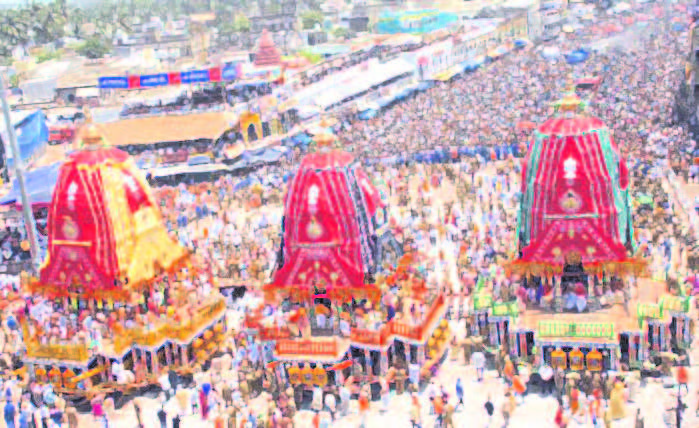
    Rath Yatra is said to be the oldest known parade in the world and it is believed that pullers of this Lord Jagannatha’s chariot receive immense spiritual benefit. Popularized outside India by International Society for Krishna Consciousness founder A.C. Bhaktivedanta Swami Prabhupada, this annual parade festival has reportedly been held annually in over 50 major cities in USA, Canada, Europe, etc., since 1960s.

    The original Ratha Jatra is held on a grand scale in Puri (Odisha, India), where the presiding deities of Sri Mandira-Jagannatha, Balabhadra and Subhadra-with celestial wheel Sudarshana are driven on the chariots to about two miles north Gundicha temple in an elaborate ritual procession, where the huge colorfully decorated chariots are drawn by thousands of devotees. After a stay for seven days, the deities return to their abode in Sri Mandira. A glimpse of Lord Jagannatha on the chariot is considered to be highly auspicious and even a touch of the chariot is believed to yield benefits equivalent to several pious deeds. Many poets have written its glories. This year, it will be held on July 18.

    Rajan Zed points out that ancient Hindu scripture Katha Upanishad talks about the concept of chariot, where soul is the deity, body is the chariot, and intellect the charioteer. Skanda Purana glorifies Rath Jatra’s sanctity.

  • Time to articulate Hindu point of View : Vibhuti Jha

    Time to articulate Hindu point of View : Vibhuti Jha

    My thoughts are that it is time , actually high time, that we Hindus began to market , teach and articulate the Hindu Point of View and the circumstances today give us the best opportunity. The general dislike, distaste and disgust with Islam is well established. The reason why we see some talk sympathetically about the “innocents amongst Muslims” is because nobody wants a general flare up. We must look at ourselves and what we must do to propagate , if not proselytize, about Hinduism.

    This sketch of Muhammed is a brilliant piece of art and it does not seem to be a cartoon. The question to establish is the reciprocity and equivalence between various beliefs. If non Muslims cannot give a face to Muhammad , I am ok with that, then They must also respect and not insult our Godess Lakshmi, Saraswati or Durga as Hussain did in the name of freedom of expression. !! There is a need to establish reciprocity – if Muslim countries do not allow us to have a temple or even congregate to do a religious ceremony , then permitting the same on our land creates an imbalance in respect and reciprocity. While they destroy our temples , they build mosques on our land ! What kind of equivalence is that ? If they convert that’s part of their faith , when we brand it as ” Ghar Wapasi” why is it a blasphemy ?

    We must not surrender our freedom to have a dialogue and that’s how we evolve.

    Every religious group have their own spokesperson and they get to represent their faith. We Hindus have none to write home about.. . For example , when Dr. Swamy and Rajeev Malhotra were not permitted to speak at Oxford , other than a few mentions in Indian papers no international coverage was seen and no conversation took place even here. Yet the same Oxford invited a Pakistani general who virtually abused the West and it was ok !!

    We Hindus have presence but have no clout in the societies we live in. I am proud of Sikhs because they are sincerely establishing their own identity, building a clout , wherever they are even if for some it might mean denying their Hindu roots.
    Gentlemen all – we must continue this dialogue in the spirit of respect , freedom, reciprocity and equality for all. From Abu Dhabi to Zurich , the union of a man and a woman conceives a child and we all die because of myocardial infraction – so what matters is not WHO we pray to but WHAT we do that defines us.

    Cheers
    Vibhuti Jha

  • US panel: Minorities under attack in India

    US panel: Minorities under attack in India

    NEW DELHI (TIP): A US government panel tracking international religious freedom has said in its latest report that religious minorities in India were exposed to “derogatory” comments by leaders of the ruling BJP as well as “violent attacks and forced conversions by the RSS and VHP” since the Modi government took over last year.

    It also slammed the “ghar wapsi” campaign and accused “Hindu nationalist groups” of offering monetary inducements to Muslims and Christians for converting to Hinduism but also to Hindus who carried out such
    “forced” conversions.

    Even as the United States Commission on International Religious Freedom (USCIRF), a federal government panel that makes policy recommendations to the US President and the Congress, welcomed Prime Minister Narendra Modi’s February 17 statement assuring protection to the minorities as a “positive development”, it added a sting to the compliment.

    The panel said his assurance was notable “given the long-standing allegations that, as chief minister of Gujarat in 2002, Modi was complicit in anti-Muslim riots in that state”. Recalling how Modi’s tourist visa was revoked by the US for “severe violations of religious freedom”, the USCIRF underlined that the Indian PM “remains the only person known to have been denied a visa based on this provision”.

    The findings in the USCIRF annual report- 2015, largely based on the accounts of minority leaders and NGOs based in India, have led it to place India on its Tier 2 list of countries for the seventh year in a row.

    Alleging that incidents of “religiously-motivated and communal violence” had reportedly increased for “three consecutive years”, the USCIRF report said religious minorities in India frequently accused RSS, VHP and other Hindu nationalist groups and individuals of intolerance, discrimination and violence against them. It even alleged that the local police seldom provided protection to the minorities, refusing to file complaints and rarely investigating them.

    Slamming the “ghar wapsi” campaign, the USCIRF noted that Hindu nationalist groups were not only paying off Christians and Muslims to convert to Hinduism but also reportedly offering money to Hindus to convert Christians and Muslims to Hinduism.

    “In December 2014, Hindu nationalist groups announced plans to forcibly reconvert at least 4,000 Christian families and 1,000 Muslim families to Hinduism in UP on Christmas Day… the Hindu groups sought to raise money… noting that it cost nearly Rs 2 lakh (nearly $3,200) per Christian and Rs 5 lakh ($8,000) per Muslim,” the report said. However, it added that domestic and international criticism led “Mohan Bhagwat, a RSS leader” to postpone the programme.

    The report also referred to the alleged mass ceremony held in Agra in December last year to forcibly reconvert Muslims to Hinduism.While noting that nearly half-a-dozen states in India had laws against forced conversions, the US panel alleged these were “one-sided, only concerned about conversions away from Hinduism but not towards Hinduism”.

    Also faulting India on protection of Muslims, the USCIRF report said the community had to face significant hate campaigns by Hindu nationalist groups and local and state politicians, “that includes widespread media propaganda accusing Muslims of being terrorists, spying for Pakistan, forcibly kidnapping, converting and marrying Hindu women, and disrespecting Hinduism by slaughtering cows”. The panel noted that the minority community also complained about some Indian states violating their religious freedom by banning cow slaughter, “which is required for Eid-al-Adha”. This, however, may not be true as the animal traditionally sacrificed for Eid-al-Adha in India is the goat.

    Regarding the religious freedom of Sikhs, the USCIRF report claimed that Sikhs were being denied benefit of reservation available to other religious minorities and Scheduled Castes. It also alleged that Sikhs were harassed and pressured to reject religious practices such as unshorn hair and carrying of kirpan. Indian commentators, however, refute these allegations saying the Scheduled Castes among Sikhs are eligible for reservation benefit and free to follow their religious preferences.

    The panel noted that prosecution and trial of communal cases was slow in India. “The Indian courts are still adjudicating cases stemming from large-scale Hindu-Muslim communal violence in Uttar Pradesh in 2013 and in Gujarat in 2002,” it said.

  • Idaho Governor issues proclamation mentioning Senate’s 1st Hindu invocation

    Idaho Governor issues proclamation mentioning Senate’s 1st Hindu invocation

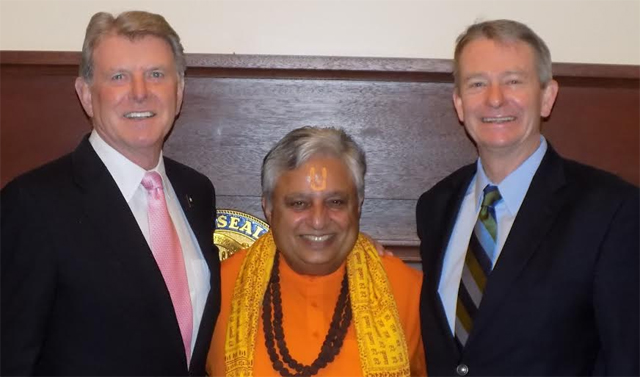
    Idaho Governor C. L. “Butch” Otter has issued a proclamation declaring April one as “Rajan Zed day” after Hindu statesman Zed and mentioning “historical first Hindu invocation in the Idaho State Senate” of March three.

    Three Idaho state senators reportedly refused to attend this Hindu invocation and one of them reportedly stated in a media interview: “Hindu is a false faith with false gods”.
     
    The proclamation, issued in Lenore, Idaho, and carrying the Seal of the State of Idaho and signatures of Governor C. L. “Butch” Otter and Secretary of State Lawrence Denney, says: “…on March 3, 2015 the historical first Hindu invocation in the Idaho State Senate was read by Rajan Zed, President of the Universal Society of Hinduism,…”
     
    It further states: “…Zed’s initiatives to bring various religious communities together throughout the world so that they can live in peace and mutual trust and enrich themselves through dialogue should be honored…”
     
    Proclamation also points out: “…it is important to honor Zed’s leadership role in attempting to help the helpless…”
     
    It adds: “…Zed works tirelessly to uplift about 15 million Roma (Gypsies) people of Europe who live in apartheid conditions by frequently speaking about their maltreatment, issues and concerns; and urging other religious leaders to do the same…”


  • Rally in demand of Hindu Holidays on Friday 10 April

    In demand for Hindu Holidays in NYC schools, multiple Hindu groups in NYC will hold a ‘Grand Rally’ in front of City Hall on Friday, 10th April 2015 at 12 noon. The organizers are mostly Bangladeshi groups and had requested all other groups from any country to join.

    Organizers are expecting a huge crowd from at least 2 dozens organizations and requested everybody to join with their banner. The organizers planned to handover a memorandum to the Mayor on the same day.  

    Organizer Sitangshu Guha informed that they had sent memorandams to almost all city council members which stated that, NYC is home to about 1 million Hindus who are the immigrants  from India, Bangladesh, NepalSri LankaBhutan, Indonesia, Thailand, Malaysia, Afghanistan, the Caribbean (TrinidadGuyanaSuriname), Fiji, South Africa and African continent,  and other countries; and their descendants, followed by the thousands of American adherents of the ISKCON movement (the Hare Krishna group). It added, Hindu holidays are traditionally marked by various cultural festivities and spiritual retreats that promote and celebrate human excellence. Moreover, Hinduism propagates self-awareness and fosters tolerance, healing, and peaceful coexistence. The memorandum also pointed out that, when the city schools are closed on holidays of other faiths, not doing so on the Hindu holidays is akin to discrimination. 

    For more info: Sitangshu Guha  guhasb@gmail.com; & 646-696-5569; Shyamal Chakraborty 917-415-9261; Sushil Saha 646-454-1882; Suvo Roy 646-463-9282 & Pradip das 718-674-4545. Pradip Malaker 646-479-5275

  • As I See IT – A Chinese-American game plan

    As I See IT – A Chinese-American game plan

    Describing Hinduism in India as “anti-human rights” and accusing former Afghan President Hamid Karzai of helping “India stab Pakistan in the back,” General Musharraf acknowledged on February 13 that “Pakistan had its own proxies” in Afghanistan and that his intelligence agencies had been “in contact with Taliban groups”. A reputed Pakistani journalist noted that the very next day. Afghanistan’s former Intelligence Tsar, Amrollah Saleh, hit back at Pakistanis piously disavowing any links with terrorism in Afghanistan. Saleh asserted: “Pakistan is the source of all ills in Afghanistan. Your own President has made the confession of having cultivated and supported the Taliban”. Saleh also lashed out at China for “pushing us to talk to Taliban terrorists”. He noted that while China was cracking down on the “Chinese Taliban,” associated with the East Turkistan Islamic Movement in Xinjiang, it had placed no sanctions on a “a state that abets terrorism (Pakistan)”.

    Responding to Saleh, a senior Chinese official observed that his government was only trying to “facilitate intra-Afghan reconciliation,” urging Saleh not to call the Chinese effort a “surrender to terrorists”. Obviously irritated, the Chinese official asserted: “The Taliban are your people and your President Ashraf Ghani has been asking for help in reaching out to the insurgent group. We will do as much as we can, as long as the Afghans want us to”. It is interesting that both the Chinese and Americans now refer to the Taliban as “insurgents” and not “terrorists”. This, after the Talban have killed over 2,000 American soldiers in Afghanistan. President Obama has evidently converted what President Bush called the “War of Terror” into a mere 14-year-old “counter-insurgency” operation! It is no secret that the American and Chinese efforts for “reconciliation” with the Taliban are being run in a carefully crafted and coordinated manner.

    Both the US and China are jointly attempting to mid-wife an ISI-led effort to legitimize Pakistani aims to give the Taliban a major say in the future governance of Afghanistan. There are reliable reports suggesting that in the talks in Qatar, the US has offered the Taliban the Governorship of the Uruzgan, Helmand and Kandahar Provinces and ministerial slots in Kabul in the Ministries of Frontier and Rural Development and Religious Affairs. Two hot American favorites from the Taliban leadership are reported to be Wakil Ahmed Muttawakil, who unloaded the luggage of the hijackers of IC 814 in Kandahar into his car, and Mullah Akhtar Muhammad Mansour, who allegedly provided the hijackers with explosives and assault weapons.

    China’s policies in Afghanistan are largely mercantilist. Beijing has offered very little economic aid to Afghanistan over the past one and half decades. It has, however, set its eyes on access to Afghanistan’s natural resources
    (estimated at $1 trillion) ranging from iron ore to coal, cooper, lithium and natural gas. China is, however, yet to spend a cent on developing the Aynak copper mines to which it has been granted access in northeast Afghanistan. It is using the
    “reconciliation” with the Taliban to protect its commercial interests by keeping the Taliban away from Muslim separatists of the ETIM based in Afghanistan, while being on the same page as its “all-weather friend” Pakistan. China has barred all Islamic religious practices and prayer meetings in government buildings, schools, business premises in Xinjiang. A recent Australian television documentary described details of a Chinese crackdown on Muslims in Xinjiang. Muslim women wearing veils or head scarves cannot travel in public transport. Muslim men sporting beards, attired in Muslim dress, or displaying an Islamic Crescent, receive similar treatment.

    Persecuted Muslims in Xinjiang sought refuge in the Taliban-ruled Afghanistan in the 1990s and associated themselves with Osama bin Laden’s International Islamic Front formed in Kandahar in February 1998. China’s links with the Taliban go back to 1998. While offering economic aid for the development of communications networks in Kabul and elsewhere, China asked Mullah Omar to end support for the ETIM separatists. While the Taliban did not hand over Uighur separatists, they allowed them space in camps for Chechens and Central Asian Jihadis from the Islamic Movement of Uzbekistan. It is well known that over the past five years, the ISI has facilitated China’s links with the Mullah Omar-led Quetta Shura of the Taliban. This has ensured that while the Taliban and the ISI-backed Haqqani network target Indian nationals in Afghanistan at the behest of the ISI, Chinese nationals roam around the country freely, having secured ISI insurance. At the same time, China has sought to remain in the good books of the Afghan Government, having signed a strategic partnership agreement with Kabul and expressed its readiness to provide security assistance.

    These developments have led to a congruence of Chinese and American interests and policies in Afghanistan. But there are several complications which lie ahead in this Chinese-American game plan. Both Washington and Beijing are going on the assumption that once they entered the portals power, the Taliban would play by the rules they set. They seem to forget that Mullah Omar regards himself as the ‘Amir ul Momineen’
    (Leader of the Faithful) and his cadres have no faith in any form of pluralism. Any attempt by President Ashraf Ghani to acquiesce in the sort of power sharing with the Taliban that the ISI wants will not only meet fierce resistance from Tajiks, Uzbeks, Turkmens and Hazara Shias, but also from substantial sections of the Pashtuns, who have no desire to return to an era of Taliban medievalism. Ever since Ashton Carter took over as the American Defense Secretary, the Obama Administration has become more cautious about the speed of their troop withdrawal schedule.

    India’s imaginatively crafted economic assistance over the past 14 years has won it vast political goodwill across the ethnic divide in Afghanistan. New Delhi is thus not without its own political leverage. This leverage, combined with imaginative diplomacy, is required to see that Afghanistan does not again become a hotbed for ISI-backed terrorist groups, or a destination for hijacking Indian Airlines’ aircraft.

  • Kent: Another hindu temple attack in US – Indians Concerned

    Kent: Another hindu temple attack in US – Indians Concerned

    A Sanatan Dharam temple was vandalised in Washington state with windows broken and the word “Fear” painted on it, less than a fortnight after another temple was attacked.

    Members of the the Sanatan Dharma Temple in Kent, about 30 km from Seattle, who came for worship Friday “were greeted by shards of broken glass after vandals targeted the building,” KING5-TV, a Seattle NBC affiliate, reported. According to the temple web site, “Amalaki Ekadashi” was to be observed Saturday.


    Bricks were used to smash every window of the building and parts of the structure were ripped apart, said KOMO-TV, an ABC affiliate in Seattle. “The crime is small-minded with big intentions, shattering calm with hate,” the station’s reporter, John Humbert, said. “Silence isn’t the answer.”

    Universal Society of Hinduism President Rajan Zed, said: “Hindus nationwide are highly concerned” by the second attack on a temple in recent days.

    “It was shocking for the hard-working, harmonious and peaceful US Hindu community numbering about three million, who had made (a) lot of contribution to the nation and society, to receive such signals of hatred and anger.”

    On February 15, the Hindu Temple Cultural Centre in Bothell city, about 35 km from Seattle, found a swastika painted on it and “Get Out” scrawled in large letters with spray paint. In the US, white supremacists have adopted the Nazi swastika as an ideological symbol.

    The two temple attacks came after President Barack Obama’s criticism of India at an inter-religious prayer meeting earlier in February where he said intolerance there “would have shocked Gandhiji”.

    Both temples do not have security cameras “and info on the vandals remains elusive,” KOMO-TV said. The incidents are under police investigation.

    Several attacks on Hindu temples have taken place across the US in the last few months. In August a murti (idol) of Shiva at the Vishwa Bhavan Hindu Mandir in Monroe in the state of Georgia was desecrated with black paint. The local sheriff’s office arrested two people in connection with the attack.

    Between July and October in Loudon county in Virginia, police have documented 17 separate incidents of anti-Hindu vandalism, the Hindu American Foundation said.

    In a twist to the Kent incident, an Islamic organisation tried to deflect attention away from Hinduism, claiming that the attack was directed against Muslims, even though the building had a large sign, “Kent Hindu Temple.”

    According to KOMO-TV, Arsalan Bukahari of the Washington Council on American-Islamic Relations said many of these acts of aggression target smaller religious groups that some bigots think are Muslim.

    Leading US Christian fundamentalists have attacked Hinduism. Pat Robertson, who has called Hinduism “demonic,” criticised the practice of yoga this week.

    While doing yoga, he said on the 700 Club TV programme, “you don’t know what the Hindu says, but actually it’s a prayer to a Hindu deity and so it sounds like gibberish.” Robertson is a pastor who was once a candidate for the Republican Party’s presidential nomination and has a following of millions.

    Another Christian pastor, Franklin Graham, has denounced Hinduism as a “false religion” and said that “none of their 9,000 gods is going to lead me to salvation. We are fooling ourselves”.

  • FROM ALABAMA TO AMERICAN HINDUPHOBIA

    FROM ALABAMA TO AMERICAN HINDUPHOBIA

    This week, two terrible acts of violence took place in the US. First, three young Muslim-American students were killed in cold blood in North Carolina by a neighbor. The cause, it was said, was an argument about parking spaces. It was also noted that the killer was an atheist and broadly anti-religious and, therefore, it was suggested that perhaps the attack could not be described as a religious hate crime.

    That suggestion was instantly, perhaps naturally, met with a barrage of opposition. Al Jazeera published a learned summary of years of media research on Muslim stereotyping. Internet memes pointed out how the American media differentiated between white and Muslim criminals. The argument was made, effectively, for continuing concern about Islamophobia.

    The other terrible act of violence, of course, was the one that took place in Alabama.

    An elderly Indian grandfather travels to America to see his grandson for the first time, goes out for a walk, and gets smashed into the hard concrete footpath by policemen leaving him broken and paralyzed.

    There is outrage in the media, and rightly so. The Indian-American community and many American friends (though not the one who visited India recently and told us Gandhi would be shocked), have spoken out against the ignorance, prejudice and brutality that took place here. In the wake of recent atrocities like what happened in Ferguson, the idea of the dangers of “walking while brown” obviously did the rounds.

    But there was one notable difference in the reactions to North Carolina and Alabama.

    When a Muslim is harmed, it is Islamophobia. When a Hindu is brutally assaulted, there is not one word uttered about Hinduphobia.

    One might argue, not unlike the parking dispute angle in North Carolina, that there was no Hinduphobia in the atrocity that took place in Alabama. Maybe the cops did not know he was Hindu and brutalize him for that reason. Maybe it was just racism in the black and white sense. After all, we have been told for years now by concerned south Asian activists and commentators that the Indian-American community, by virtue of its elitism, fails to recognize racial solidarity. Once again, that trope surfaced about the Alabama attacks. We are getting attacked because of racism. True enough!

    But how can we be so sure that the racism that Indian-Americans sometimes face has nothing to do with prejudices about the major religion they are identified with? How can we be sure that one kind of racism is independent of another?

    We cannot. And yet, for several years, every single time we have talked about the brazen misrepresentation of Hinduism in American media, pop culture, and most all in academia, we have been shouted down by the same concerned south Asian activists and commentators. We could not even talk about Hinduphobia without being rudely told that no such thing exists, or that it is a figment of Hindu extremist paranoid fantasy. We could not even do the one thing every religious minority community in America did: get old colonial-era racist nonsense about them written out of their children’s history textbooks. We were shouted down by the same general group of concerned observers who want us to fight racism but just not this racism apparently. This racism is actually not racism in their view: the California textbooks according to them contain only the true facts about Hinduism, and questioning it is tantamount to saffronisation and fundamentalism.

    To this day, children in America get just one basic kind of message about Hinduism and Hindus in their school lessons: that we are the last irredeemable racist-casteists and sexists in the world. When some of them get to college or grad school, they will read even more about how we dumbly worship body organs, and how we were not just racist-casteists but actually the original Nazis, the forerunners of Hitlerian genocide no less (no exaggeration, just look at what is written on page 111 and page 144 of Doniger’s The Hindus: An Alternative History)!

    And all this is still only in the genteel, ‘educated’ side. What about the insanity that bubbles in less scholarly corners?What about the ravings of supposed men of God in their sermons who rant about our gods as nothing more than animal-headed devils and beasts? And what about Hollywood, and big media and popular culture, which, under the guise of being fair to Muslims or feeling guilty for Guantanamo, goes Slumdog on Hinduism?

    All this is around us. It is real. Whether it directly contributes to specific acts of brutality against people or not, it is there, a toxin in the culture. Just think of the attacks in Australia a few years ago on Indian students where the assailants reportedly used “slumdog” as an insult at their victims.

    Prejudice is not something that plays out in microscopic precision inside the heads of people about to do something nasty. It is a big ugly cloud of falsehood, envy, self-hatred, and spitefulness lurking around a society, just waiting to burst into real life. It did, this week, in Alabama. We cannot be sure what exactly squirmed about in the brains of the man who called the police on an elderly neighbor walking around the block, or in that of a policeman who had to prove himself to be tougher than a meek old man not being remotely aggressive to anyone. Was it color, envy, boredom, overzealousness, fear…? We cannot say for sure. But the fact is that the culture in which they grew up, the culture in which millions of people, Hindu, Muslim, brown, black, are all growing up, still has a thriving place in it for the ugliest and pettiest kind of falsehood and maliciousness.

    Who can say for sure that the men involved in brutalizing Sureshbhai Patel did not at some point in their lives, maybe in school, maybe elsewhere, pick up on anti-Hindu myths and prejudice?

    The truth is that if Hinduphobia is not named, shamed and eradicated from the halls of media and academia, its consequences might end up being even worse, and not just for Hindus. I hope the enlightened and concerned observers of south Asia who deny that Hinduphobia exists quickly come to realize that bigots are not usually well informed in their actions. After all, Islamophobes have attacked not only Muslims but also Sikhs in America. It would be appalling to keep pretending Hinduphobia doesn’t exist until one day some poor person, Hindu or not, finds himself or herself at the wrong end of a maniac believing he is stopping a casteist idol-worshipper from doing Satan’s work or some such.

    There used to be a popular poster on idealistic college campuses. It had these inspiring lines which Hinduphobia-deniers might want to look at again:

    They came for the Jews, and I didn’t speak for them;

    They came for the Communists, and they didn’t speak for them… 

    And then when they came for me, there was no one left to speak for me.

  • Rights  Group Sues Secretary of State John Kerry

    Rights Group Sues Secretary of State John Kerry

    Rights  Group Sues Secretary of State John Kerry: Wants Hindu group RSS declared Terrorists


    MANHATTAN , NY (TIP): Sikhs For Justice, a Sikh rights group, has sued Secretary of State John Kerry, asking him to declare the Hindu nationalist group Rashtriya Swayamsevak Sangh a terrorist organization, for its efforts to forcibly convert all Indians to Hinduism.


    Comparing the Hindu group to Nigerian terrorists Boko Haram, Sikhs for Justice sued the Secretary of State on Wednesday, January 21 in Federal Court.


    It asked the court to declare “India’s Hindu supremacist group known as ‘Rashtriya Swayamsevak Sangh’ (RSS) as a ‘foreign terrorist organization,’ for believing in and practicing a fascist ideology and for running a passionate, vicious and violent campaign to turn India into a ‘Hindu’ nation with a homogeneous religious and cultural identify.”


    The RSS name in Hindi means “National Volunteer Organization.” It was founded to unite the Hindu community against British colonialism in India. A former RSS member, who left to join a more militant organization, assassinated Mahatma Gandhi for his support of Indian Muslims.


    Sikhs for Justice claims the RSS instigated the June 1984 Indian military attack known as Operation Blue Star, which raided Sikh shrine the Golden Temple, targeted Sikhs in the countryside, and burned down the Sikh Reference Library. The Indian government claims about 500 civilians died in the operations, but other estimates run much higher.


    Prime Minister Indira Gandhi was assassinated months later by two of her Sikh bodyguards in revenge, launching the ensuing anti-Sikh riots in which more than 3,000 Sikhs lost their lives.


    The 83-page lawsuit also accuses RSS of the “1992 demolition of historical Babri Mosque, the burning churches and rape of Christian nuns in Orissa and elsewhere in 2008, the 2002 massacre of Muslims in Gujarat; attacks on several other places of worship belonging to different religious minorities; [and the] bombing of public places such as trains and buses.”


    Sikhs for Justice claims RSS has gained more influence since RSS member Narendra Modi became prime minister of India last year.


    “On August 22, 2014, RSS Chief Mohan Bhagwat unequivocally announced his party’s agenda by stating that, ‘The entire world recognizes Indians as Hindus, therefore India is a Hindu state.’ In December 2014, RSS launched a nationwide campaign called ‘The Home Coming’ to forcibly convert Christians and Muslims to Hindus, resulting into engulfing of thousands of members of religious minorities into the ‘Hindu fold,’” the complaint states.


    The Daily Mail reported on Dec. 20, 2014 that Bhagwat told supporters: “We are not out to convert anybody or change anybody’s religion, but if Hindus do not bring about change, then Hinduism will never undergo change. We stand firm on this issue. We will save people from those who behead people. … When the thief is being caught and my property has been recovered, when I am taking back my own property, what is new in it?”


    The complaint compares RSS to the Nigerian terrorist organization Boko Haram, which Sikhs for Justice claims “lives by the motto ‘convert or die’ in its actions against religious minorities specifically the conversion of Christians.”


    Sikhs for Justice wants the Department of State to declare RSS a foreign terrorist organization, which will eliminate, or at least complicate, its fund-raising sources in the United States.


    Sikhs for Justice is represented by Babak Pourtavoosi with Pannun The Firm in Jackson Heights.