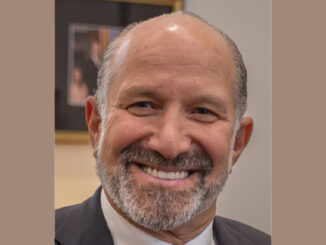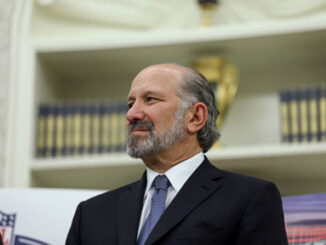
Tag: Howard Lutnick

  • India-US trade deal didn’t happen because Modi did not call Trump: Commerce Secretary Lutnick

    India-US trade deal didn’t happen because Modi did not call Trump: Commerce Secretary Lutnick

    Lutnick’s remarks come a few days after Trump said that Modi knew he was unhappy with India’s purchases of Russian oil and that Washington could raise tariffs on New Delhi ‘very quickly’

    WASHINGTON, D.C. (TIP): US Commerce Secretary Howard Lutnick has said the trade deal with India did not happen because Prime Minister Narendra Modi did not call US President Donald Trump.

    In an interview with the ‘All-in Podcast’ on Thursday, January 8, Lutnick detailed how the India-US trade deal has not happened till now.

    “I’ll tell you a story about India. I did the first deal with the UK, and we told the UK that they had to get it done by two Fridays from now. That the train was going to leave the station by two Fridays, because I have a lot of other countries doing things, and you know, if someone else is first, they’re first. President Trump does deals like a staircase,” Lutnick said.

    “(The) first stair gets the best deal. You can’t get the best deal after the first guy,” he said.

    Lutnick said Trump does things that way “because that way it incents you to come to the table”.

    He recalled that after the UK deal, everyone asked Trump which country will be next and while the president talked about a variety of countries, “but he named India a couple of times publicly”.

    “And we were talking (with) India, and we told India, ‘you have three Fridays’. Well, they have to get it done,” he said.

    Lutnick said that while he would negotiate the contracts with the countries and set the whole deal up, “But let’s be clear, it’s his (Trump) deal. He is the closer. He does the deal. So I said ‘You got to have Modi, it’s all set up, you have to have Modi call the President. They (India) were uncomfortable doing it, so Modi didn’t call.”

    Lutnick said that after that Friday, the US announced trade deals with Indonesia, the Philippines and Vietnam.

    He added that Washington was negotiating with other countries and “assumed India was going to be done before them”.

    “I have negotiated them at a higher rate. So now the problem is the deals came out at a higher rate. And then India calls back and says, ‘Oh, okay, we are ready’. I said, ‘ready for what, it was like three weeks later’,” he said.

    “I go, ‘Are you ready for the train that left the station three weeks ago?’ So what happened is they just…there’s sometimes there’s that seesaw, and people are just on the wrong side of the seesaw,” the trade secretary said.

    “So what happened is India just was on the wrong side of the seesaw, and it was just they couldn’t get it done,” Lutnick said, imitating a seesaw with his hands.

    “And so what happened is all these other countries kept doing deals, and they’re (India) just further in the back of the line,” he said. Lutnick said he wanted the trade deal with India to happen “in between the UK and Vietnam because that’s what I negotiate”.

    “And they remember, and I remember, and they say, ‘but you agreed’. And I said, ‘then, not now, then’. So that’s the problem. India will work it out, but there’s a lot of countries and they each have their own deep internal politics, and to get something approved by their parliament… these are deeply complex things,” he added.

    Lutnick’s remarks came a few days after Trump said that Modi knew he was unhappy with India’s purchases of Russian oil and that Washington could raise tariffs on New Delhi “very quickly”.

    The threat by the US president came at a time when the two countries were negotiating a bilateral trade agreement.

    So far, six rounds of negotiations have been held. The pact includes a framework deal to resolve the 50 per cent tariffs on Indian goods entering the US.

  • US pushes for grand trade pact with India, wants access to agri market

    US pushes for grand trade pact with India, wants access to agri market

    WASHINGTON, D.C. (TIP): The US on Friday, March 7, pitched for a macro, large and grand trade agreement with India, and not ‘product-by-product’ arrangement, to boost bilateral ties between the two countries. US Commerce Secretary Howard Lutnick said India needed to open its agriculture market, emphasizing it could not be “off the table” when the country was negotiating with its largest trading partner.

    “Because India is so gigantic, and the US is so gigantic, the right way to do it (trade pact) is a macro, and that’s why we think we can get it done. The US is interested in doing a macro, large-scale, broad-based trade agreement with India that takes everything into account, and that I think it can be done… it’s time to do something big, something grand, something that connects India and the US together, but does it on a broad scale, not product-by-product, but rather the whole thing. Let’s bring India’s tariff policy towards America down,” he said at a media conclave here.

    In the agriculture sector, he said the Indian agriculture market had to open up, and it could not just stay closed.

    “Now, how do you do that? And the scale by which you do that? Maybe you do quarters. Maybe do limits. You can be smarter when you have your most important trading partner on the other side of the table. You can’t just say…it’s off the table. That’s just not an attractive way of doing business,” US Commerce Secretary Lutnick said.

    The right way to do business is to put everything on the table, but do it smartly and do it thoughtfully, he said. Lutnick also said that countries like India have one of the highest tariffs in the world, and that is why US President Trump is talking about imposing reciprocal tariffs.

    US Commerce Secretary Howard Lutnick has asked India to shift defense equipment purchases from Russia to the US. “India has historically bought significant amounts of its military equipment from Russia, and we think that is something that needs to end,” he said. India is looking to reduce tariff and non-tariff barriers with the US and strengthen trade in the goods and services sector through the multi-sector bilateral trade agreement that is in the works, the MEA said.