Tag: IMF

  • Viksit Bharat needs more than GDP growth

    Viksit Bharat needs more than GDP growth

    Without investing in education, health, and jobs, the 2047 dream will remain a slogan

    “A superpower is not built on abstract (and massaged) GDP numbers alone. It needs a foundation that guarantees high-quality education, health, and jobs. It needs a scaffolding of administrative efficiency and judicial responsibility. It needs a vision that believes in equality and inclusive growth. None of these prerequisites are in sight yet.”

    By Vaishna Roy

    In his August 2023 Independence Day speech, Prime Minister Narendra Modi said: “In 2047, when the country celebrates 100 years of independence, my country will be a developed India.”

    In July 2024, Martin Wolf of Financial Times referred to Modi’s quote and wrote: “Is [this] aspiration a feasible one? Yes. Is it a plausible one? No.”

    Wolf went on to compare India with Greece, which is the poorest country that the IMF ranks as “advanced”: “If [India’s] GDP per head were to match that of Greece by 2047, the rate of growth would need to rise to 7.5 per cent a year.” But, as the economist Ashoka Mody writes in our Cover Story, once statistical irregularities are stripped away, many economists estimate India’s real GDP to be hovering around 4-5 per cent only.

    More importantly, even if India were to match the US itself in economic output (GDP) and purchasing power parity, numbers achievable by India’s sheer size, it would still lag in overall productivity, technology, and human development. This is the blind spot the government deliberately refuses to acknowledge. Or address. Thus, what makes the superpower dream feasible is India’s human capital, its vast sea of people. What makes it implausible is India’s continuing neglect of its human capital.

    As the economist Dani Rodrik argued, India fell behind countries like China, Vietnam, and South Korea not because of a lack of ambition, but because sustained growth requires structural transformation, including jobs moving from agriculture to manufacturing. In India, manufacturing accounts for just 12 per cent of employment while agricultural employment is, worryingly, rising.

    A Harvard Kennedy School paper shows South Korea’s manufacturing jobs falling in 1989, when its per capita income was almost $8,000, while India’s manufacturing jobs began to drop in 2002, when its per capita income was less than $900. Thus, alarmingly, India had begun to de-industrialize long before per capita incomes were anywhere close to global standards. And nothing was created to replace those manufacturing jobs. In his interview to Frontline, former RBI Governor Raghuram Rajan speaks of multilevel responses: “We can create many more jobs, but for that we need skill building.”

    And that is the point Mody makes too, when he writes that without mass education leading to more jobs and higher productivity, and a focus on more women in the workforce leading to generational continuity, sustained economic growth (to push India into the “developed” category) is just not possible. Ironically, it took a comment by the pesky Donald Trump characterizing India as a “dead economy” to initiate sudden parliamentary attention on the subject.

    The Prime Minister’s ambition of India becoming a global superpower by 2047 is laudable, but it will need his government to rapidly upgrade the country’s education and health levels to global standards. This is unlikely to happen because of the Hindutva vision that necessarily drives his policy decisions. Ideological compulsions make the BJP a reactionary force, more interested in romanticizing the past than in crafting a new future. Look at the sharp rise in the country of an unscientific temper, the eagerness to replace history with mythology, science with mysticism, knowledge with piety. Allowing ideology to creep into the very essentials that ensure the enhancement of human capital can only push India backwards.

    A superpower is not built on abstract (and massaged) GDP numbers alone. It needs a foundation that guarantees high-quality education, health, and jobs. It needs a scaffolding of administrative efficiency and judicial responsibility. It needs a vision that believes in equality and inclusive growth. None of these prerequisites are in sight yet.

    (Vaishna Roy is the Editor of Frontline)

  • Why G7 needs allies like India

    Why G7 needs allies like India

    New Delhi occupies a unique place as an oasis of political and economic stability

    The G7 meeting has brought out just how fragile the world order is these days. India occupies a unique position here as an oasis of political and economic stability, but it cannot but take into account the turbulent waters that are washing its shores.

    By Manoj Joshi

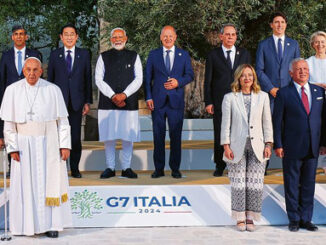
    Prime Minister Narendra Modi’s presence as an outreach guest at the G7 summit in Italy is a useful backdrop for the launch of the new government’s foreign and security policy.

    India is not yet the world power it wants to be. What we need to guard against are hubris and overreach. The G7 meeting has brought out just how fragile the world order is these days. India occupies a unique position here as an oasis of political and economic stability, but it cannot but take into account the turbulent waters that are washing its shores.

    The political situation in four of the G7 nations appears brittle — the US and the UK are going to the polls amid uncertainty, while Germany and France are witnessing the rise of right-wing forces. Two of the big world powers are, of course, entirely out of the G7 process, which purports to promote democracy. But those two, China and Russia, are making major efforts separately and collectively to challenge the G7’s purported global hegemony.

    The presence of India, Turkey, Brazil and some other countries is an acknowledgement that the G7 needs allies to manage issues relating to migration, climate change, economic competition with China and the wars in Ukraine and Gaza. In turn, these countries are seeking to persuade the G7 nations, which are increasingly economically and demographically challenged, on the need for more equity and balance in global decision-making.

    In all this, Modi’s central challenge and opportunities are in India’s neighborhoods and beyond. While continuity has been the central message that the BJP-led NDA government has sent out, there will be inevitable changes arising from the very fact that the General Election has shifted the national political paradigm.

    The presence of leaders from Bangladesh, Bhutan, Nepal, Sri Lanka, Maldives, Mauritius and Seychelles at the swearing-in of the new government speaks for itself, as does the fact that the leaders of Myanmar, Pakistan and Afghanistan were not invited. India’s relations with those invited are fairly even, even though we face challenges in Nepal, Sri Lanka and the Maldives. The participation of Maldives President Mohamed Muizzu was significant because of our strained relations with the island republic.

    The Indian strategy of riding out the Chinese challenge in the neighborhood was most visible last year when Sri Lanka faced a financial crisis. China played hard to get, but New Delhi immediately provided humanitarian and financial assistance of $4 billion, surpassing even the International Monetary Fund’s (IMF’s) 48-month bailout package of $3 billion. By providing financial assurances, New Delhi also shored up Sri Lanka’s IMF process.

    The absence of Pakistan, whose then Prime Minister Nawaz Sharif had attended PM Modi’s 2014 swearing-in, has its own story of just how sharply India-Pakistan relations have deteriorated, even though the government in power is that of the Pakistan Muslim League (Nawaz), albeit in a coalition.

    India says it emphasizes its Neighborhood First policy as well as SAGAR (Security and Growth for all in the Region) for the Indian Ocean Region (IOR). It has China very much on its mind. Whatever may be the military challenge India confronts along the disputed border, the one it faces from China in South Asia and the IOR is equally significant and has implications for the geopolitical future of the region.

    China, too, is a neighbor and, it too, was not present. In an interview to Newsweek on the eve of the General Election, Prime Minister Modi had noted that there was a need to “urgently address the prolonged situation on our borders so that the abnormality in our bilateral interactions can be put behind us.” Last week, speaking in Mumbai after taking charge of the Ministry of External Affairs for a second term, S Jaishankar said India would focus on finding solutions to the border issues that had bedeviled their relationship.

    American ties with New Delhi are on a high after Modi’s Washington visit last June. While US elections could disrupt some of the bonhomie, they are unlikely to lead to any major change. But managing ties in a potential Trump presidency will definitely be a strain, though the Gurpatwant Singh Pannun issue is unlikely to create major problems. The American focus, regardless of who wins, is likely to be China, though there is a danger that another US-China tariff war could affect us in the form of collateral damage.

    India’s ties with Russia are definitely being tested by the Ukraine war. India may be gaining from its oil purchases, but it is alienating its Western allies. As the situation in Ukraine remains serious, pressure on the West to step up its support to Ukraine brings pressure on India indirectly. Having told Putin that this was not the era of war in 2022, Modi is now hard put to come up with some initiative which will lend credibility to India’s proposition that the issue could be settled through dialogue and diplomacy. In the meantime, New Delhi continues to walk a tightrope — it attended the Swiss peace conference, but not at the Prime Ministerial level.

    Another area which may require attention is West Asia, where Modi deserves credit for building solid ties with the UAE, Israel, Saudi Arabia, Qatar and Egypt. These were not just about the nine million-strong diaspora or energy security but also aimed at tapping the region for investment and buying into their plans for a post-oil future. At present, however, new initiatives like the Israel-India-US-UAE grouping and the India-Middle East-Europe Economic Corridor (IMEC) have sought to link Indian ports to Europe via the Israeli port of Haifa. Significantly, the G-7 communique pledged support to the IMEC.

    India is not yet the world power it wants to be. As a leading power, however, there are opportunities for taking initiatives and shaping policies both in the neighborhood and beyond. What we need to guard against are hubris and overreach.

    (The author is a Distinguished Fellow, Observer Research Foundation, New Delhi)

  • IMF approves much-awaited USD 3 billion bailout for Pakistan, saving it from defaulting on debt

    IMF approves much-awaited USD 3 billion bailout for Pakistan, saving it from defaulting on debt

    ISLAMABAD (TIP): The International Monetary Fund on July 12 approved a much-awaited $3 billion bailout for Pakistan, the global lender said, a move that’s likely to save the nation from defaulting on its debt repayments.
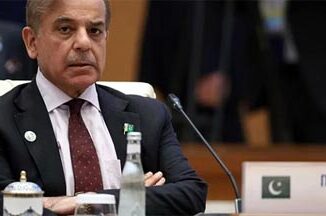
    The IMF said its executive board approved an agreement to release the funds over nine months to support Pakistan’s economic stabilization program. The announcement comes less than two weeks after Pakistan and the IMF agreed to the plan following meetings with Prime Minister Shehbaz Sharif, Finance Minister Ishaq Dar and other officials.
    “The arrangement comes at a challenging economic juncture for Pakistan. A difficult external environment, devastating floods, and policy missteps have led to large fiscal and external deficits, rising inflation, and eroded reserve buffers” in the fiscal year 2023, the IMF said in a statement. Sharif quickly welcomed the IMF decision, saying it was a major step forward in the government’s efforts to stabilize the economy and achieve macroeconomic stability.
    “It bolsters Pakistan’s economic position to overcome immediate to medium-term economic challenges, giving the next government the fiscal space to chart the way forward,” he said in a tweet. “This milestone, which was achieved against the heaviest of odds & against a seemingly impossible deadline, could not have been possible without an excellent team effort.”
    The bailout had been on hold since December when the IMF refused to release a critical $1.1 billion part of the loan because of the country’s lack of compliance with a 2019 agreement signed between the IMF and former Prime Minister Imran Khan.
    A breakthrough was announced recently after Sharif met with IMF head Kristalina Georgieva in Paris at the Summit for a New Global Financing Pact to discuss the revival of the $6 billion bailout package amid shrinking foreign exchange reserves and increasing inflation, which resulted in an increase in food costs.
    Sharif has been trying to overcome the economic crisis since he came into power after Khan was ousted in a no-confidence vote in parliament in April 2022. Pakistan’s economy witnessed a major shock last summer when devastating floods killed 1,739 people, destroyed 2 million homes and caused $30 billion in damage.
    “Things are now moving in the right direction,” said Dar, the finance minister Wednesday.
    According to analysts, Pakistan needs at least $20 billion in the next two years to pay back foreign loans with interest. However, earlier this year, foreign exchange reserves fell to less than $4 billion. This money was only enough for the import bill of four weeks, although Pakistan banned some of the imports to save dollars.
    The approval for the IMF loan came a day after Saudi Arabia deposited $2 billion into Pakistan’s central bank. On Wednesday, the United Arab Emirates also deposited $1 billion to the central bank of Pakistan, according to the finance minister, Dar, who said the country’s economy was now again on the path of growth.
    According to analysts, the approval of the IMF bailout will help Pakistan because it could encourage other international financial institutions to help Islamabad overcome economic challenges. Pakistan, China, Saudi Arabia and the United Arab Emirates have provided financial assistance in the past five months to avoid a default on debt payments.
    Dar said Pakistan’s economy will be in a much better position when the government of the ruling Pakistan Muslim League party completes its tenure next month. The next parliamentary elections are expected to take place in October or November, Sharif said in his televised speech earlier in the day, saying he hopes Pakistan will avoid any further loans from the IMF by generating funds domestically. (AP)

  • Financially battered Pakistan reaches $3 billion stand-by deal with IMF

    Financially battered Pakistan reaches $3 billion stand-by deal with IMF

    ISLAMABAD (TIP): Pakistan could get temporary relief for its ballooning foreign debt with a new stand-by arrangement worth $3 billion announced by the IMF in Washington late June 29.
    The economy has been stricken by a balance-of-payments crisis as it attempts to service crippling external debt, while months of political chaos have scared off potential foreign investment.
    Inflation has rocketed, the rupee has reached a record low against the dollar, and the country can no longer afford imports, causing a severe decline in industrial output.
    “I am pleased to announce that the IMF team has reached a staff-level agreement with the Pakistani authorities on a nine-month standby arrangement in the amount of SDR 2,250 million (about $3 billion),” said IMF official Nathan Porter in a statement.
    The deal will need to be approved by the IMF’s executive board and will be considered by mid-July, Porter said.
    The figure represents 111 percent of Pakistan’s IMF quota.
    Pakistan’s negotiations with the IMF for the last tranche of a $6.5 billion bailout package agreed in 2019 stalled in November, with the government making last-minute changes to the national budget to meet the deal’s requirements.
    That package expires on Friday, and the new agreement builds on the IMF’s efforts under the previous deal, Porter said.
    Economy in crisis
    Pakistan’s Finance Minister Ishaq Dar celebrated the new potential deal by tweeting “AlhamdoLilah!”, meaning “praise be to God!”.
    But Michael Kugelman, director of the South Asia Institute at the Wilson Center, criticised Pakistan’s slow progress on meeting IMF requirements for a deal. “Islamabad waited until the very final hour to take the (politically risky) fiscal policy steps that the IMF had been hoping to see for months,” he tweeted.
    Years of financial mismanagement have pushed Pakistan’s economy to the limit, exacerbated by the Covid pandemic, a global energy crisis since Russia’s invasion of Ukraine, and record monsoon floods that submerged a third of the country in 2022.
    The grim data gave the government little room to introduce vote-attracting budget measures ahead of an election due in October.
    The IMF had told Pakistan it needed to secure additional external financing, scrap a swathe of populist subsidies, and allow the rupee to float freely against the dollar, before unlocking more funds.
    Mohammed Sohail, chief of Topline Securities, told AFP the IMF’s additional loan would restore some investor confidence.
    “This new programme is far better than our expectations. There were a lot of uncertainties on what will happen after June 2023 as there will be new government coming to power,” he said. Pakistan needs billions of dollars in financing to service staggering levels of external debt, and foreign exchange reserves have dwindled to just $3.5 billion, roughly enough for three weeks of imports.
    History of bailouts
    The crisis prompted the government to temporarily impose a months-long broad import ban, stalling multiple industries. Pakistan failed to meet any economic growth targets for the fiscal year 2022-23, with GDP growth at 0.3 percent, while the country’s standing on the global economic rank fell from 24th in 2017 to 47th.
    Inflation reached a record 38 percent in May, after more than a decade of declining real wages for working-class Pakistanis. The IMF acknowledged the external shocks to the economic system, “as well as some policy missteps”, in its deal.
    The stand-by deal would support government’s economic stability efforts and “provide a framework for financing from multilateral and bilateral partners”, the IMF said. (AFP)

  • IMF raises Asia’s economic forecast on China recovery, warns of risks

    IMF raises Asia’s economic forecast on China recovery, warns of risks

    The International Monetary Fund (IMF) raised Asia’s economic forecast on Tuesday as China’s recovery underpinned growth, but warned of risks from persistent inflation and global market volatility driven by Western banking sector woes. The reopening of China’s economy will be pivotal for the region with the spillover to Asia seen focused on consumption and service sector demand rather than investment, the IMF said.
    “Asia and Pacific will be the most dynamic of the world’s major regions in 2023, predominantly driven by the buoyant outlook for China and India,” the IMF said its regional economic outlook report.
    “As in the rest of the world, domestic demand is expected to remain the largest growth driver across Asia in 2023.”
    Asia’s economy is expected to expand 4.6% this year after a 3.8% increase in 2022, contributing around 70% of global growth, the IMF said, upgrading its forecast by 0.3 of a percentage point from October.
    China and India will be key drivers with an expansion of 5.2% and 5.9%, respectively, though growth in the rest of Asia is also expected to bottom out this year, the report said.
    But the IMF cut next year’s Asian growth forecast by 0.2 of a point to 4.4%, and warned of risks to the outlook such as stickier-than-expected inflation, slowing global demand as well as the impact of US and European banking-sector stress. “While spillovers to the region from stress in US and European financial sectors have been relatively contained thus far, Asia remains vulnerable to tightening financial conditions and to sudden and disorderly repricing of assets,” the IMF said.
    Source: Reuters

  • IMF cuts FY24 India growth forecast to 5.9% as global banking crisis weighs

    IMF cuts FY24 India growth forecast to 5.9% as global banking crisis weighs

    The International Monetary Fund (IMF) has slashed its economic growth forecast for India by 20 basis points (bps) to 5.9 per cent for 2023-24 (FY24), citing lesser scope for pent-up demand due to historical revisions to data. This is the lowest growth forecast for India by any multilateral development bank, with the World Bank and the Asian Development Bank forecasting gross domestic product (GDP) growth at 6.3 per cent and 6.4 per cent respectively. In its latest bi-annual World Economic Outlook, the IMF projected India’s retail inflation to ease to 4.9 per cent in FY24 from 6.7 per cent in FY23, and the current account deficit to come down to 2.2 per cent of GDP from an estimated 2.6 per cent a year ago. In purchasing power parity terms, India’s growth in per capita output is set to decelerate to 4.9 per cent in FY24 from 5.8 per cent in FY23. Maintaining that India remains one of the bright spots in the global economy right now, Daniel Leigh, division chief, research department at the IMF, said the cut in India’s growth forecast was due to “a set of historical revisions”.
    “We realised that 2020 and 2021 have actually been a lot better than we thought. So actually there is less room for catching up, and that pent-up demand from consumption, which was informing our previous forecast, is therefore going to be less because they have already had more catching up before,” Leigh said.
    “That’s why there is the downward revision this year (FY24) and then we go up to 6.3 per cent next year (FY25) — again very strong economic growth, which is necessary to allow India to continue to converge towards higher living standards and create those jobs that are necessary,” he added.
    In February, the National Statistical Office revised upward its growth estimates for FY21 and FY22 to -5.8 per cent and 9.1 per cent respectively from -6.6 per cent and 8.8 per cent estimated earlier, signifying that the Covid-19 pandemic had lesser debilitating impact on India’s economic growth trajectory.
    The IMF has projected that global growth will bottom out at 2.8 per cent in 2023 — a tad lower than earlier estimate — before rising modestly to 3 per cent next year.
    IMF Chief Economist Pierre-Olivier Gourinchas said while the global economy’s gradual recovery from both the pandemic and Russia’s invasion of Ukraine remained on track, the situation was fragile, highlighted by the recent banking instability. “China’s reopened economy is rebounding strongly. Supply chain disruptions are unwinding, while dislocations to energy and food markets caused by the war are receding,” he said.
    However, Gourinchas said stronger-than-expected demand might require monetary policy to tighten further or to stay tighter for longer. “Monetary policy needs to stay focussed on price stability. If at this point, central banks were to pivot away from price stability, then there is a chance that the fight against inflation would not succeed. Inflation expectation would start rising, inflation would be even more persistent, that in itself is a source of macro-economic instability, that would feed even potentially further into financial instability as well. So we would not be gaining on any front,” he cautioned.

  • Sri Lanka’s economy shrank by record 7.8 per cent last year

    COLOMBO (TIP): Sri Lanka’s crisis-hit economy shrank a record 7.8 percent last year as long blackouts and critical fuel shortages put a chokehold on local commerce, official data showed March 16. An unprecedented economic crisis sparked huge protests in the island nation, culminating last July when a mob stormed the home of then president Gotabaya Rajapaksa, forcing him to flee the country and resign.
    Since then a new government has worked to repair Sri Lanka’s battered public finances and secure a sorely needed International Monetary Fund (IMF) bailout.
    Last year’s contraction — the biggest in the country’s 75 years of independence — compared with 3.5 percent growth in 2021 and a 4.6 percent contraction in 2020 as the coronavirus pandemic hit.
    It was “caused by the deepening of the economic crisis… frequent power disruptions, shortages in fuel, raw materials, (and) foreign currency”, Sri Lanka’s census and statistics department said in a statement.
    The data showed some improvement in Sri Lanka’s fiscal position with inflation moderating to about 50 percent in February, down from a record high of 69.8 percent in September.
    President Ranil Wickremesinghe has raised taxes and ended generous subsidies on fuel and electricity to boost government revenue after his predecessor defaulted on Sri Lanka’s $46 billion foreign debt last year. The reforms are a precondition of a $2.9 billion rescue package from the IMF, which Sri Lanka expects to finalise next week.
    But the tax and price hikes have been roundly unpopular, triggering protests and industrial stoppages around the country. About 40 trade unions warned Thursday that they planned a general strike next week if their demands for concessions on the austerity programme were not met.
    Wickremesinghe has said Sri Lanka can expect to remain bankrupt until at least 2026 and insisted his government has no option but to implement the reforms demanded by the IMF. (AFP)

  • Sri Lanka banks on long-awaited IMF deal to tap frozen billions

    COLOMBO (TIP): Sri Lanka voiced hope on March 8 that a long-awaited IMF bailout would be finalised soon and help unfreeze billions of dollars in foreign aid for projects suspended since last year.

    Government spokesman Bandula Gunawardana told reporters that the International Monetary Fund was expected to give its board approval for a $2.9 billion bailout agreed at a staff level in September.

    “We are confident that the IMF board will give its approval,” the minister said a day after the Washington-based lender confirmed Sri Lanka would be taken up at its March 20 board meeting.

    IMF managing director Kristalina Georgieva said in a statement that she welcomed the progress by Sri Lankan authorities in grappling with an unprecedented economic crisis.

    “I look forward to presenting for approval Sri Lanka’s IMF-supported program to our Executive Board on March 20,” she added. Gunawardana said that after approval was secured, Colombo expected the immediate release of billions of dollars in bilateral aid and loans that have been frozen since the South Asian nation defaulted on its $46 billion external debt in April.

    “Our problems can’t be solved with this $2.9 billion, but what is really important for us is the endorsement of the IMF that our economy is now on the right path,” he said.

    “An amount more than the IMF bailout can be unlocked after we get the IMF certificate.”

    Japan suspended funding a $540 million airport expansion, while millions of dollars’ worth of foreign-funded road construction was also halted after Colombo declared bankruptcy in April.

    Sri Lanka’s largest single bilateral creditor, China, announced that it had on Monday provided financial assurances required by the IMF to ensure the island’s foreign debt was sustainable. Gunawardana said it was still unclear how official creditors, including China, Japan and India, would restructure their loans, but it would be in line with IMF’s debt sustainability analysis. “Some may agree to a hair cut, others could give a debt moratorium, reduce interest rates or have a combination of these,” Gunawardana said. “This is yet to be worked out.”

    Sri Lankan President Ranil Wickremesinghe, announcing in parliament on Tuesday that China had agreed to restructure its debt, warned that he had no option but to seek the IMF bailout.

    Suffering continues

    An unprecedented economic crisis has seen Sri Lanka’s 22 million people suffer acute food, fuel and medicine shortages, along with extended blackouts and runaway inflation.

    Angry protests over economic mismanagement led to the toppling of then-president Gotabaya Rajapaksa, who fled the country and later resigned in July.

    Wickremesinghe, who succeeded Rajapaksa, began cracking down on anti-government protests and pushed through sharp tax and tariff increases demanded by the IMF as a precondition for the bailout.

    “We took many extremely difficult economic measures to stabilise the economy,” he said Tuesday. “The suffering caused by this continues for everyone in our society.”

    Fuel is still rationed and essential medicines are in short supply as the country maintains strict controls on imports to save foreign exchange. Inflation is down from its highs of 70 percent in September, but is still around 50 percent.

    Wickremesinghe said the country needed $6-7 billion annually until 2029 to repay its loans, but was unable to honour the debts. (AFP)

  • IMF flags debt restructuring hurdles, says banning crypto should be an option

    IMF flags debt restructuring hurdles, says banning crypto should be an option

    Group of 20 (G20) nations have some disagreements over restructuring debt for distressed economies, the chief of the International Monetary Fund (IMF) said on Saturday, adding that banning private cryptocurrencies should be an option. India’s G20 presidency comes as its South Asian neighbours Sri Lanka, Bangladesh and Pakistan are seeking urgent IMF funds due to an economic slowdown caused by the Covid-19 pandemic and the Russia-Ukraine war. China, the world’s largest bilateral creditor, urged the group of big economies on Friday to conduct a fair, objective and in-depth analysis of the causes of global debt issues as clamour grows for lenders to take a large haircut, or accept losses, on loans.

    “On debt restructuring, while there are still some disagreements, we now have the global sovereign debt roundtable with consideration of all public and private creditors,” IMF Managing Director Kristalina Georgieva told reporters after chairing the roundtable with Indian Finance Minister Nirmala Sitharaman.

    “We just finished a session in which it was clear that there is a commitment to bridge differences for the benefit of countries.” US Treasury Secretary Janet Yellen said there were no “deliverables” from the meeting, which was mostly organisational.

    Further discussions of the panel, which includes major bilateral creditors including China, India and the G7 countries, several debtor countries, are planned around the time of the IMF and World Bank spring meetings in April. “We certainly had that agreement that this is a useful forum,” Yellen told Reuters in an interview. “We look forward to participating in it.”

    CRYPTO RESTRICTIONS

    Apart from restructuring debt, regulating cryptocurrencies is another priority area for India, which Georgieva agreed with.

    “We have to differentiate between central bank digital currencies that are backed by the state and stable coins, and crypto assets that are privately issued,” Georgieva said.

    “There has to be a very strong push for regulation… if regulation fails, if you’re slow to do it, then we should not take off the table banning those assets, because they may create financial stability risks.”

    Yellen said she had not suggested the “outright banning of crypto activities, but it was critical to put in place a strong regulatory framework.”

                    Source: Reuters

    IMF urges central banks to ‘stay the course’ till prices tamed

    Central banks globally must remain vigilant until inflation is firmly under control, according to International Monetary Fund Managing Director Kristalina Georgieva.

    “I want to be clear we are not yet seeing inflation going down to target fast enough,” Georgieva told Bloomberg Television’s Haslinda Amin on the sidelines of the Group of 20 finance chiefs’ meetings in Bengaluru, India. “Central banks need to stay the course until we are comfortable that price stability is returning.”

    As many central bankers begin to slow their policy tightening, inflation prints across the world remain sticky. With China reopening at a pace that’s exceeded expectations, Georgieva remained hopeful that domestic consumption there remains a growth driver for the world with little risk for an additional inflation flare-up.

    In the US, the personal consumption expenditures price index rose 5.4% in January from a year earlier and the core metric was up 4.7%, both marking pickups after several months of declines. In Europe, underlying inflation is forecast to stay at a record 5.3% and in many parts of Asia, including India and Australia, core inflation has remained sticky.

                    Source: Bloomberg

  • Pakistan govt drops petrol bomb on inflation-hit masses to appease IMF for unlocking critical loan tranche

    ISLAMABAD (TIP): People in Pakistan woke up on February 16 to the shock of a historic price hike in the prices of petrol and gas as the government tried to appease the IMF for unlocking the critical loan tranche for the cash-strapped country. The “petrol bomb” as the price hike is termed these days, was dropped around Wednesday midnight, hours after the government unveiled a tax-loaded ‘mini-budget’ in the Parliament to extract Rs 170 billion from the people through new taxes and increase in electricity and gas prices.
    The price of petrol was hiked to Rs 272 per litre after an increase of Rs 22.20, a press release from the Finance Division read Wednesday night, noting that the surge has taken place due to the rupee’s devaluation against the dollar.The price of the high-speed diesel (HSD) hiked by Rs 17.20, kerosene by Rs 12.90 and light diesel oil (LDO) by Rs 9.68. The new price of HSD will cost Rs 280 per litre. Kerosene will be available at Rs 202.73 whereas LDO will be sold at Rs 196.68 per litre. “Increase in price is due to Pakistani rupee devaluation applicable for the calculation of current pricing period,” the press release said, adding that the prices would be effective from February 16.
    The increase came as finance minister Ishaq Dar presented the money bill in the parliament to fulfil the International Monetary Fund’s (IMF) demand to increase revenue before it releases USD 1.1 billion out of the USD 7 billion loans. The increase in the price of petroleum products was one of the preconditions of the Washington-based lender, which will lead to a hike in the already record-high inflation, coupled with the new fiscal measures undertaken through the ‘mini-budget’. (PTI)

  • China may play spoilsport

    China may play spoilsport

    • India prepares to host G20, SCO summits amidst regional rivalries

     “The G20 Summit will be bringing together leaders of countries which constitute two-thirds of the world’s population, while providing 90% of global GDP and 80% of global trade. The year 2023 is set to become the most complex and busy period in India’s diplomatic history. It is also going to be a period when the country’s logistical and organizational strengths will be tested. The forthcoming summits will test our ability in bringing countries together in a constructive and harmonious cooperation at the highest level. The summits are coming in the wake of tensions arising from the military standoff in Arunachal Pradesh.

    The issue of special interest will be whether Xi Jinping will participate in the forthcoming summits in the background of the current state of Sino-Indian ties.”

    By G Parthasarathy

    India’s foreign policy and national security establishments are going to be deeply tied up this year in meetings with members of the Shanghai Cooperation Organisation (SCO) and the G20 grouping. They will have to meticulously prepare for the summit meetings which India will be hosting later this year. The SCO includes eight members, six ‘Dialogue Partners’, and four ‘Observer States’. The G20 Summit will be bringing together leaders of countries which constitute two-thirds of the world’s population, while providing 90% of global GDP and 80% of global trade. The year 2023 is set to become the most complex and busy period in India’s diplomatic history. It is also going to be a period when the country’s logistical and organizational strengths will be tested. The forthcoming summits will test our ability in bringing countries together in a constructive and harmonious cooperation at the highest level. The summits are coming in the wake of tensions arising from the military standoff in Arunachal Pradesh.

    The issue of special interest will be whether Xi Jinping will participate in the forthcoming summits in the background of the current state of Sino-Indian ties.

    There are a few points that New Delhi should bear in mind. It will enjoy unstinted support in the conferences from virtually all members of the G20 and Quad. Both Pakistan and China will be present in the SCO. Pakistan is now engrossed in dealing with its collapsing economy. It also has serious problems with Taliban-ruled Afghanistan, and its own jihadis, the Tehreek-e-Taliban, across its 2,600 km border with Afghanistan and Iran. Given Afghanistan’s strategic location abutting Central Asia, China is keen to secure access to its mineral resources and keep in touch with its radical Islamist Taliban regime, especially in the light of its own tensions with its disaffected Uighur Muslims.

    Chinese President Xi Jinping has displayed continuing hostility towards India. China is focusing attention on the joint production of its much-touted JF-17 fighter aircraft in Pakistan and in strengthening the Pakistan navy. The Gwadar Port in Balochistan has a growing Chinese presence, but Pakistan has more serious problems to deal with, with its dwindling foreign exchange resources. In the meantime, the IMF is insisting on stringent conditions before international assistance can flow in. Even Saudi Arabia and the UAE, which have always been more than generous in bailing out Pakistan, are now making it clear that they will open their purse strings only after Pakistan fully meets IMF conditionalities. Across the world, many governments are recognizing that the economic mess that Pakistan is now in flows from its own blunders.

    There has, meanwhile, been a growing feeling in India that much of the tensions with China flow from deliberate actions of the Xi Jinping government, despite India having rolled out the red carpet during his India visit. It has been interesting to see a comprehensive assessment of India’s policies by Liu Zongyi of the Shanghai Institute of International Studies. Liu is one of China’s most prominent experts on South Asian studies. He has visited both India and Pakistan. In a recent article, which has received due attention in academic circles in our eastern neighborhood, he has bluntly spelt out what China thinks about India and its policies. Senior scholars in China do not speak out of turn. They are a convenient medium to convey the thinking of the country’s Communist Party and government.

    His study, titled ‘India’s Rising Great Power Strategy’, is multifaceted. On India’s domestic political issues, it alludes to the ascendancy of ‘Hindu nationalism’. On economic issues, he describes the ‘Make in India’ strategy as an effort to take over China’s place in the global supply chain. India’s strategy, according to him, will be to target China by building bases in Indian Ocean states, advancing the integration of India’s armed forces and improving border infrastructure, including in the Andaman and Nicobar Islands. It also includes building military bases by India in small Indian Ocean islands.

    In his conclusion, he notes: ‘Thus, the biggest divide between India and China is no longer related to border issues. In fact, border issues have now been instrumentalized. For the Indians, the biggest issue between India and China is the battle for the regional and global order. It is a geopolitical conflict, because India is a country that places a lot of emphasis on the idea of spheres of influence.’ Regarding India hosting the G20 and Quad summits, he notes: ‘Ultimately, the G20 Summit cannot be a success without China’s active participation. Even though the West lavishes praise on India, and even though India presents itself as the so-called poster child of developing countries, and the leader of the South, it will most certainly not succeed without China’s support.’ One cannot think of this as anything but a warning, bordering on threat.

    Liu betrays an obsession with the growth of India-US relations. He avers that it is India’s strategy to work with the US to undermine and counter China’s Belt and Road Initiative to prevent the emergence of a ‘China led’ regional order. This is accompanied by his strong justification of recent Chinese military intrusions in Ladakh and Arunachal Pradesh. Liu expresses serious concerns about India’s relations with the US and its involvement in groupings like Quad and I2U2. He conveniently forgets how China has been deliberately seeking to undermine India’s relations with neighbors across South Asia, notably with Sri Lanka, Bangladesh, Nepal and the Maldives. He even forgets the impact of China’s continuing and growing military relations with Rawalpindi, including its transfer of nuclear weapons and missile capabilities to Pakistan.

    Under these circumstances, the issue of special interest in the coming months will be whether Xi Jinping will participate in the forthcoming summits in the background of the current state of Sino-Indian relations, and the widespread concerns in India about his assertive policies.

    (The author is Chancellor, Jammu Central University & Former High Commissioner to Pakistan)

  • Scientists find clues that could help predict next violent explosion on the Sun

    Scientists find clues that could help predict next violent explosion on the Sun

    The Sun exploded with a partial halo Coronal Mass Ejection (CME) on January 14 and it hit Earth on January 17, causing an abrupt shift in the Interplanetary Magnetic Field (IMF) near Earth. While it only sparked auroras, stronger eruptions on the Sun have the tendency to damage electronic grids and satellites, and even cause power outages. Scientists are now a step closer to predicting when and where the next eruption of the Sun will happen. They have found new clues in the blazing upper atmosphere of the Sun that could help solve the riddle. They have identified small signals in the upper layers of the solar atmosphere, the corona. These signals can help identify which regions of the Sun are more likely to produce energetic bursts of light and particles known as solar flares. The team from NorthWest Research Associates found the corona produced small-scale flashes above the regions about to flare. These were like small sparklers before the big explosion.

    “We can get some very different information in the corona than we get from the photosphere, or ‘surface’ of the Sun. Our results may give us a new marker to distinguish which active regions are likely to flare soon and which will stay quiet over an upcoming period of time” KD Leka, lead author on the new study who is also a designated foreign professor at Nagoya University in Japan, said in a statement.

  • We count a lot on India’s G-20 leadership: IMF MD Kristalina Georgieva

    We count a lot on India’s G-20 leadership: IMF MD Kristalina Georgieva

    WASHINGTON, D.C. (TIP): At a time when the world is faced with continued economic slowdown and social distress, the international community counts a lot on India’s leadership of G-20, the Managing Director of the International Monetary Fund Kristalina Georgieva said on Thursday, January 12.

    “India, which is the president of G-20 countries, remains among the countries that perform better than global average and by a good percentage,” IMF Managing Director told reporters during a media roundtable.

    India formally assumed the G20 (Group of 20) Presidency on December 1. The next G20 Leaders’ Summit at the level of Heads of State/Government is scheduled to be held on September 9 and 10 in New Delhi.

    “We count a lot on India’s leadership of the G-20. Because it is such a critical time for the world to protect its own wellbeing by protecting the integrated global economy. I hope that India will do that huge global service keeping us together,” she said.

    Georgieva lauded India for embracing digitization. “What we see as working extremely well for India is how the country has taken digitization that was accelerated by covid-19 to be a strong comparative advantage, both for public policy and for private sector growth,” the IMF Managing Director said in response to a question.

    (Source: PTI)

  • IMF says it fully supports India’s G20 agenda

    The IMF “fully supports” the G20 agenda of India, which is planning to use the ongoing global crises as an opportunity to seek consensus on issues that require urgent attention, a senior official from the international financial body has said. India formally assumed the G20 Presidency on Thursday, December 1. “They (India) are putting together a collective agenda for a much more prosperous future,” Ceyla Pazarbasioglu, Director of the Strategy and Policy Review department at the International Monetary Fund (IMF), told a group of reporters ahead of her trip to China and India next week. “They (India) plan to use the ongoing (global) crises as an opportunity to seek consensus on issues that really require urgent attention,” she said on Thursday. Pazarbasioglu was apparently referring to the food and energy crises due to the ongoing Russia-Ukraine war. The IMF “fully supports” the G20 agenda of India, she said.

  • IMF cuts Asia’s economic forecasts as China’s slowdown bites

    IMF cuts Asia’s economic forecasts as China’s slowdown bites

    The International Monetary Fund (IMF) has downgraded its economic outlook for Asia as global monetary tightening, rising inflation blamed on the war in Ukraine, and China’s sharp slowdown dampen the region’s recovery prospects. While inflation in Asia remains subdued compared with other regions, most central banks must continue raising interest rates to ensure inflation expectations do not become de-anchored, the IMF said in its Asia-Pacific regional economic outlook report released on Friday.

    “Asia’s strong economic rebound early this year is losing momentum, with a weaker-than-expected second quarter,” said Krishna Srinivasan, director of the IMF’s Asia and Pacific Department. “Further tightening of monetary policy will be required to ensure that inflation returns to target and inflation expectations remain well anchored.”

    The IMF cut Asia’s growth forecast to 4 percent this year and 4.3 percent next year, down 0.9 percent points and 0.8 points from April respectively. The slowdown follows a 6.5 percent expansion in 2021.

    “As the effects of the pandemic wane, the region faces new headwinds from global financial tightening and an expected slowdown of external demand,” the report said.

    Among the biggest headwinds is China’s rapid and broad-based economic slowdown blamed on strict COVID-19 lockdowns and its worsening property woes, the IMF said. “With a growing number of property developers defaulting on their debt over the past year, the sector’s access to market financing has become increasingly challenging,” the report said. “Risks to the banking system from the real estate sector are rising because of substantial exposure.”

    The IMF expects China’s growth to slow to 3.2 percent this year, a 1.2-point downgrade from its April projection, after an 8.1 percent rise in 2021. The world’s second-largest economy is seen growing 4.4 percent next year and 4.5 percent in 2024, the IMF said.      Source: Reuters

  • Recession avoidable with right fiscal policies: IMF

    Global recession can be avoided if governments’ fiscal policies were consistent with monetary policy tightening, but likely there would be countries falling into recession next year, the International Monetary Fund’s managing director Kristalina Georgieva said. In the context of monetary policy tightening, fiscal policy cannot stay idle because the cost of living crisis is hitting parts of society dramatically, Georgieva said. She said fiscal policies that indiscriminately support everybody by suppressing energy prices and providing subsidies are working against monetary policies’ purposes. “So you have monetary policy putting a foot on the brakes and fiscal policy putting a foot on the accelerator,” she said, after taking part in a conference on food security in the Saudi capital Riyadh.

    Governments across the globe have stepped in to support their populations amid high food inflation and shortages by following the US Federal Reserve’s interest rate hikes, sending shockwaves through financial markets and the economy.

    Earlier, a United Nations agency warned of the serious consequences of a monetary policy-induced global recession for developing countries. It called for a new strategy, including corporate windfall taxes, supply-side efforts and regulation on commodity speculation.

  • Advanced economies to be back on track by 2024: IMF

    Advanced economies to be back on track by 2024: IMF

    DAVOS (TIP): Advanced economies will be back on track by 2024 but developing economies will be 5% below where they would have been otherwise, IMF’s Gita Gopinath said on Wednesday, May 25. Economies worldwide have been adversely impacted by the coronavirus pandemic and are slowly coming back into the recovery path.

    The First Deputy Managing Director of the International Monetary Fund said the war in Ukraine has been a major setback to the global recovery. “We had a serious downgrade to the global growth rate and the world continues to face headwinds because we have a cost of living crisis. Prices of commodities, including fuel and food, are going up around the world,” she said. Gopinath said central banks are trying to tackle this high level of inflation and are raising interest rates sharply, which they need to do, but that will also have consequences for global finance and trade.

    She was speaking at a special session on ‘What next for global growth?’ during the World Economic Forum Annual Meeting 2022. Gopinath said there are very divergent recoveries around the world.

    “While advanced economies, as per our estimates, will basically get back to where they would have been in the absence of pandemic in 2024, but emerging and developing economies would be 5% below where they would have been in the absence of the pandemic,” she said. The panelists discussed that the recovery from the Covid crisis has been deeply uneven within and between countries, depending on their access to fiscal resources and vaccines. As food, fuel and resource crises now risk further derailing an equitable recovery, they discussed how a broader set of foundations for growth can ensure long-term economic prosperity and a return to international convergence.

    (Source: PTI)

  • IMF pegs ‘fairly robust’ 8.2 percent India growth in 2022

    Washington (TIP)- The International Monetary Fund on April 19 projected a “fairly robust” growth of 8.2 per cent for India in 2022, making it the fastest-growing major economy in the world, almost twice faster than China’s 4.4 per cent. The global growth has been projected at 3.6 per cent in 2022, down from 6.1 per cent in 2021, the IMF said in its annual World Economic Outlook report released here. It has also lowered India’s growth projection by 0.8 percentage points for 2022 from its previous forecast for the same period last year. In 2021, India registered a growth rate of 8.9 per cent. By 2023, India is estimated to grow at 6.9 per cent, the IMF said.

    The downgrade in the 2023 growth projection for India is partly reflective of the war in Ukraine that has resulted in high energy and food prices, slowing down the growth momentum. Notable downgrades to the 2022 forecast for Asia include Japan (0.9 percentage point) and India (0.8 percentage point), “reflecting in part weaker domestic demand—as higher oil prices are expected to weigh on private consumption and investment—and a drag from lower net exports,” the report said. In its report, the IMF has projected global growth at 3.6 per cent in 2022 and 2023, 0.8 and 0.2 per cent lower than in the January forecast, respectively. “The downgrade largely reflects the war’s direct impacts on Russia and Ukraine and global spillovers,” it said. China, which registered a growth rate of 8.1 per cent in 2021, has been projected to grow at 4.4 per cent in 2022 and by 5.1 per cent in 2023.

    Source: PTI

  • IMF approves USD 1 billion loan tranche for Pakistan

    IMF approves USD 1 billion loan tranche for Pakistan

    Islamabad (TIP): The International Monetary Fund has approved the completion of the sixth review of its stalled USD 6 billion programme for Pakistan, paving the way for an immediate disbursement of about USD 1 billion loan tranche for the cash-strapped country. The IMF’s Executive Board held a meeting in Washington DC on February 2 to consider Pakistan’s request for completion of the sixth review and release of a USD 1 billion tranche under the Extended Fund Facility (EFF). The completion of this review allows for an immediate disbursement of 750 million in Special Drawing Rights (SDR) (about USD 1 billion) to Pakistan, bringing total disbursements under the arrangement to SDR 2,144 million (about USD 3 billion) or 106 per cent of the country’s quota, the Dawn newspaper reported on Thursday. Finance Minister ShaukatTarin also confirmed the approval in a tweet. “I am pleased to announce that the IMF Board has approved the 6th tranche of their programme for Pakistan,” he wrote. In July 2019, Pakistan and the IMF reached a staff-level agreement on economic policies for a three-year Extended Fund Facility (EFF). Under the agreement, Pakistan was to receive about USD 6 billion for a period of 39 months. The IMF had pledged to provide support under the EFF programme when Pakistan’s economy was in a critical stage and badly needed assistance to meet the balance of payments challenge. (PTI)

  • IMF upgrades outlook for rich nations, slashes India forecast

    IMF upgrades outlook for rich nations, slashes India forecast

    Washington (TIP): The International Monetary Fund (IMF) has maintained its 6% global growth forecast for 2021, upgrading its outlook for the US and other wealthy economies but cutting estimates for a number of developing countries struggling with surging Covid infections.

    The divergence is based largely on better access to Covid vaccines and continued fiscal support in advanced economies, while emerging markets face difficulties on both fronts, the IMF said in an update to its World Economic Outlook.

    “Close to 40% of the population in advanced economies has been fully vaccinated, compared with 11% in emerging market economies, and a tiny fraction in low-income developing countries,” IMF’s chief economist Gita Gopinath said.

    The IMF significantly raised its forecasts for the US, which it now expects to grow at 7% in 2021 and 4.9% in 2022 — up 0.6 and 1.4 percentage points, respectively, from the forecasts in April. The projections assume the US Congress will approve President Joe Biden’s roughly $4 trillion in proposed infrastructure, education and family support spending largely as envisioned by the White House.

    Positive spillovers from the US spending plans, along with expected progress in Covid vaccination rates, are boosting the IMF’s 2022 global growth forecast to 4.9%, up 0.5 percentage point from April.

    The IMF cut its 2021 growth forecast for India, which has struggled with a massive wave of infections this year, by three percentage points to 9.5%. It also reduced its 2021 forecast for China by 0.3 percentage point, citing a scaling back of public investment and overall fiscal support.    Source: Reuters

  • Innovative India must capture all segments of financial market to fuel growth: IMF

    Innovative India must capture all segments of financial market to fuel growth: IMF

    Washington (TIP): India is on the right track and is innovating on the policy side, including on digital identity and payments, but it also needs to capture all the segments of the financial market and institutions to make sure that every piece fits together like a puzzle to fuel growth in the country, according to a top IMF official.

    “The goal is to have an economy and a financial system that can absorb shocks. ..Balance sheets can be better managed, Non-Performing Loans (NPLs) can be better managed,” Tobias Adrian, Director of the Monetary and Capital Markets Department of the International Monetary Fund (IMF) told PTI in an interview.

    The non-bank financial system can be better seen, and capital markets have to be deepened and made more robust, he said during the last week’s annual Spring meeting of the IMF and the World Bank. Of course, there is the whole fintech agenda as well, which is important in India as it is everywhere else in the world.

    “We are in the technological revolution in payment space. And I think India has been path-breaking in many of these technologies and payment systems. Now there is lending that is done in India that is not done anywhere else because the infrastructure is quite strong in this area. But of course, more can be done,” Adrian said in response to a question.

    The IMF official underscored the significance of investments into financial institutions, into oversight, and into infrastructures to ensure that the “financial system can absorb shocks and that is sustaining growth” in a long-term way.

    India, he said, is on the right track and is innovating on the policy side.

    “It has been quite innovative on digital identity, for example. I think no country is laying like India in that respect,” he said, noting that the country needs to capture all the segments of the financial market and financial institutions to make sure that every piece fits together like a puzzle to fuel growth in India.

    The general lesson from the COVID-19 crisis, he said, is that when the terrible adverse shock hits one need to aggressively supply liquidity.

    Secondly, the fiscal support was very important in this particular crisis and that of course dependent on how much fiscal space each country had. Thirdly, of course financial sector policies have been very successful. Debt moratoria, interest rate payments for that debt in particular are fully compatible with regulatory and accounting flexibility, he said.

    “So, we have been very keen on measures that were used in building flexibility to stretch out what banks could do and what other lenders could do in order to support the borrowers to get them through the pandemic so that they can resume interest payments and principal payments once the crisis is over,” he said.

  • India’s economy on path of gradual recovery: IMF

    India’s economy is on the path of gradual recovery, the International Monetary Fund has said ahead of its next month’s spring meeting with the World Bank. “India’s economy is on the path of gradual recovery, real GDP growth, return to positive territory in fourth quarter of 2020. And that’s for the first time actually since the start of the pandemic and it’s supported by a pickup in gross, fixed capital formation,” IMF’s spokesperson Gerry Rice told reporters at a news conference here on Thursday. “Beyond that, I can say that high frequency indicators including PMIs trade and mobility suggests a continued recovery in the first quarter of this year, ’21; however, the recent emergence of the variants and localised lockdowns could pose risks to a sustained recovery,” Rice said. The IMF is scheduled to release its World Economic Outlook on April 6.

  • India took ‘very decisive’ steps to deal with corona virus: IMF chief

    Washington (TIP): IMF chief Kristalina Georgieva has praised India for taking “very decisive” steps to deal with the coronavirus pandemic and its economic consequences and asked the country to do more this year to support an accelerated transformation of the economy. The IMF Managing Director during a global media roundtable on Thursday predicted a less bad outlook for India in the upcoming World Economic Update due to the steps taken by it. “When I called on everybody to stay tuned for January 26, that applies very much to India. You would see a picture in our update that is less bad. Why? Because the country actually has taken very decisive action, very decisive steps to deal with the pandemic and to deal with the economic consequences of it,” Ms Georgieva said. The International Monetary Fund is scheduled to release its World Economic Update on January 26.

    Talking about India, she said it was a very dramatic lockdown for a country of this size of the population with people clustered so closely together. “Then India moved to more targeted restrictions and lockdowns. What we see is that that transition, combined with policy support, seems to have worked well. Why? Because if you look at mobility indicators, we are almost where we were before COVID in India, meaning that economic activities have been revitalised quite significantly,” she said.