Category: Immigration

  • Indian-origin UK minister Priti Patel unveils US-style digital visas to count migrants

    Indian-origin UK minister Priti Patel unveils US-style digital visas to count migrants

    LONDON (TIP); UK Home Secretary Priti Patel unveiled a new US-style digital visa regime at the country’s borders to measure immigration levels in and out of the country, according to UK media reports on Monday, May 24.

    The senior Indian-origin Cabinet minister confirmed the so-called “sweeping changes” to the UK’s immigration policy to “streamline” how people come into the country on Monday, May 24.

    The post-Brexit changes included the border being managed digitally, which the government says will be easier to navigate for businesses and allow for the first time to accurately count people in and out of the UK.

    “Our new fully digital border willprovide the ability to count people in and out of the country, giving us control over who comes to the UK,” Patel was quoted as saying in the ‘Observer’.

    “Our new approach will make it easier to identify potential threats before they reach the border. The British people will have confidence that the strongest controls are in place to keep them safe,” she said. The UK Home Office hopes to make entry to the UK fully digital by the end of 2025.

    It means people wanting to come into the UK without a visa or immigration status will have to apply for an Electronic Travel Authorization (ETA), similar to the US system, with 30 million applications expected to be processed every year.

    The British government has said that in the past 10 days, more than 140 foreign criminals have been removed from the UK, totaling more than 700 so far this year. 

  • Biden sends immigration Bill to Congress on the First Day of his Presidency

    Biden sends immigration Bill to Congress on the First Day of his Presidency

    Thousands of Indian IT professionals to benefit

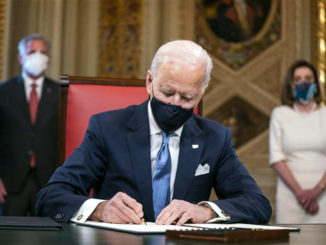
    WASHINGTON (TIP): Keeping his campaign trail promise, US President Joe Biden on the first day of his presidency, January 20, sent a comprehensive immigration Bill to Congress. The Bill proposes a major overhaul in the immigration system, including granting legal status and a path to citizenship to tens of thousands of undocumented immigrants and other groups and reduce the time that family members must wait outside the US for the green card. Called the US Citizenship Act of 2021, the legislation modernizes the immigration system and proposes to eliminate the per country cap for the employment-based green card, a move that would benefit thousands of Indian IT professionals, whose current wait period for legal permanent residency runs into several decades. “Today, President Biden sent an immigration Bill to Congress. The US Citizenship Act modernizes our immigration system. It provides hard-working people who have enriched our communities and lived here for decades an opportunity to earn citizenship,” White House Press Secretary Jen Psaki told reporters at a news conference.“The President’s priority reflected in the Bill are to responsibly manage the border, keep families together, grow our economy, address the root causes of migration from Central America and ensure that America can remain a refuge for those fleeing prosecution,” Psaki said. The Bill would stimulate America’s economy while ensuring that every worker is protected. The Bill creates an earned path to citizenship for immigrant neighbors, colleagues, parishioners, community leaders, friends, and loved ones, including “Dreamers” and the essential workers who have risked their lives to serve and protect American communities, the White House said.According to the White House, the Bill clears employment-based visa backlogs, recaptures unused visas, reduces lengthy wait times, and eliminates per-country visa caps. It makes it easier for graduates of US universities with advanced degrees in science, technology, engineering and mathematics (STEM) stay in the US, improves access to the green card for workers in lower-wage sectors, and eliminates other unnecessary hurdles for employment-based green card.

    (With inputs from agencies)

  • USCIS took steps to prevent abuse, fraud in employment-based visa programs, Congressmen told

    USCIS took steps to prevent abuse, fraud in employment-based visa programs, Congressmen told

    WASHINGTON (TIP): The Trump administration has taken a series of steps to prevent abuse and fraud in the employment-based visa programs, including H-1B, a top official from the US Citizenship and Immigration Services (USCIS) told lawmakers on Thursday.

    The USCIS has implemented rules, policy memoranda and operational changes that protect the economic interests of US workers and businesses and prevent abuse and fraud in employment-based visa programs, Joseph Edlow, Deputy Director of Policy, USCIS told lawmakers during a Congressional hearing.

    Prominent among these include ensuring the fees that certain H-1B petitioners must now pay ultimately help to train US workers, clarifying calculation guidelines for the one-year foreign employment requirement for L-1 petitions in order to “ensure consistent adjudication.

    Among other steps are changing the H-1B cap selection process in order to increase the chances of selection for beneficiaries who have earned a master’s degree or higher from a US institution and expanding collaboration with the Department of Justice (DOJ) to better detect and eliminate fraud by employers.

    The Trump administration has also created a USCIS H-1B and H-2B fraud reporting online tip form along with creating an H-1B Employer Data Hub to provide information to the public on employers petitioning for H-1B workers, Edlow said.

    H-2B visa is for short-term seasonal workers while L-1 is for internal company transfers.

    The USCIS has issued the first report of its kind estimating the number of H-1B non-immigrants authorized to work in the United States and has instituted electronic filing for multiple forms and, for the first time ever, using an electronic registration process for the purpose of H-1B cap selection, he told members of the House Judiciary Subcommittee Hearing Citizenship and Immigration.

    Sharvari Dalal-Dheini, Director of Government Relations, American Immigration Lawyers of America, told Congressmen that USCIS data reveals the percentage of completed cases with request for evidences (RFEs) increased from 22.3 in FY2015 to 40.2 in FY2019.

    “The RFE rate reached 60 per cent during the first quarter of FY2019 and was 47.2 per cent during the first quarter of FY2020. Frequently, RFEs and NOIDs are issued seeking evidence that has already been provided or that is unnecessary to establish eligibility or contrary to the plain language of the law,” she said.

    Even when the RFEs and NOIDs ultimately result in approvals, the unnecessary delay caused by their issuance effectively means that USCIS reviews each application or petition twice – once upon initial review and again in response to what is often a needless RFE or NOID – thus leading to twice the amount of resources actually needed to complete the adjudication, she said.

    According to Dalal-Dheini when these RFEs and NOIDs result in improper denials, US employers and individuals are forced to turn to the federal courts to seek relief.

    Frequently, when a legal challenge is brought, the agency is forced to reopen and approve the case because the decision is contrary to law.

    Most recently, litigation resulted in USCIS being forced to overturn H-1B policy memoranda that were deemed to contravene the Immigration and Nationality Act. Issuing improper denials, resulting in the time and money spent fending unlawful decisions unnecessarily, drain agency resources that could be better used in eliminating case backlogs.

    (Source: PTI)

  • Green Card waitlist for Indians is more than 195 years: US senator

    Green Card waitlist for Indians is more than 195 years: US senator

    WASHINGTON (TIP): The backlog for an Indian national to get permanent residency or Green Card is more than 195 years, a top Republican senator has said, urging his Senate colleagues to come out with a legislative resolution to address this problem.

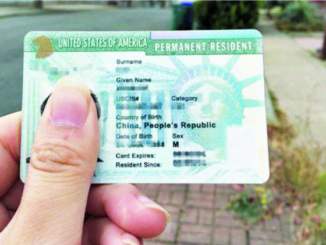
    A Green Card, known officially as a Permanent Resident Card, is a document issued to immigrants to the US as evidence that the bearer has been granted the privilege of residing permanently.

    Senator Mike Lee said on Wednesday that the current Green Card policy did nothing for the child of an immigrant whose dead parent’s Green Card application was ultimately denied because his or her job was no longer available.

    “Someone from India entering the backlog today would have to wait 195 years to receive an EB-3 green card. Even if we give their children this limbo status, none of them will have a prayer of becoming a US citizen,” Lee said on the Senator floor.

    In fiscal year 2019, Indian nationals received 9,008 category 1 (EB1), 2,908 category 2 (EB2), and 5,083 category 3 (EB3) Green Cards. EB1-3 are different categories of employment-based Green Cards.

    Lee, the senator from Utah, was speaking on the legislation moved by Senator Dick Durbin that seeks to protect immigrant workers and their children who are stuck in the green card backlog.

    “Green cards are critical in the lives of so many who are here on temporary work visas. The backlog puts families at risk of losing their immigration status as they wait year after weary year to finally make it through this green card backlog,” Durbin said.

    “Our bipartisan agreement would add critical protections that were not in the original bill for immigrant workers and their immediate family members who are stuck in the backlog. They would be able to switch jobs and travel without losing immigration status. And children of immigrant workers would be protected from aging out so they will not face deportation,” he said.

    The Lee-Durbin agreement would make three changes to the Fairness for High-Skilled Immigrants Act. First, it would immediately protect immigrants and their families who are stuck in the backlog by allowing them to “early file” for Green Cards.

    This would allow workers to switch jobs and travel without losing immigration status and prevent the children of immigrant workers from “aging out” of Green-Card eligibility so they will not face deportation while they are waiting for a Green Card.

    Second, the amendment would create a green card set aside for immigrant workers who are unable to “early file” because they are stuck in the backlog overseas.

    Finally, the amendment would crack down on abuse of H-1B temporary worker visas by outsourcing companies by prohibiting a company from hiring additional H-1B workers if the company’s workforce is more than 50 employees and more than 50 per cent temporary workers.

    The H-1B visa is a non-immigrant visa that allows US companies to employ foreign workers in specialty occupations that require theoretical or technical expertise. Companies depend on it to hire tens of thousands of employees each year from countries like India and China.

    “While we continue to debate the best way to fix the Green Card backlog, let’s make sure that no children of the affected families are harmed or deported. Just that simple. I offered a new bill, very simply stated, to protect children of immigrant workers act. This brief three-page bill would ensure that children do not age out while waiting for a Green Card,” Durbin said.

    “Imagine if you brought your children to the United States, worked on an H-1B visa and your children are waiting for you for the Green Card, you are paying for them to go to college because they don’t qualify as American Citizens for any type of federal financial aid. You’re making great sacrifices for them and then the day comes when they reach the age of 21 and they can be deported and your family divided,” he said.

    “Why would we want to let that happen?” Durbin asked.

    Noting that he has met many of these young people, the senator said it breaks his heart to hear their story that they may reach a point where they age out and be deported.

    “That’s why I wanted to offer this specific single provision. There is no reason these children should be punished for a broken immigration system. It’s not beyond our control to help them,” he added.

    (Source:  PTI)

  • 174 Indian nationals file lawsuit against presidential proclamation on H-1B

    174 Indian nationals file lawsuit against presidential proclamation on H-1B

    WASHINGTON (TIP): A lawsuit has been filed by a group of 174 Indians, including seven minors, against the recent presidential proclamation on H-1B that would prevent them from entering the US due to the suspension of issuing of foreign work visas for the rest of the year.

    In his presidential proclamation on June 22, President Donald Trump temporarily suspended issuing of H-1B work visas till the end of the year.

    The H-1B visa is a non-immigrant visa that allows US companies to employ foreign workers in specialty occupations that require theoretical or technical expertise. The technology companies depend on it to hire tens of thousands of employees each year from countries namely India and China.

    The lawsuit was filed by the Indians in the US District Court in the District of Columbia on Tuesday, July 14.

    Judge Ketanji Brown Jackson at the US District Court for the District of Columbia issued summonses on Wednesday to Secretary of State Mike Pompeo and acting Secretary of Homeland Security Chad F Wolf, along with Labor Secretary Eugene Scalia.

    “The proclamation 10052’s H-1B/H-4 visa ban hurts the United States’ economy, separates families and defies the Congress. While the two former points render it unseemly, the latter point renders it unlawful,” said the lawsuit filed by lawyer Wasden Banias on behalf of the 174 Indian nationals.

    The lawsuit seeks an order declaring the presidential proclamation restriction on issuing new H-1B or H-4 visas or admitting new H-1B or H-4 visa holders as unlawful.

    An H-4 visa is a visa issued by the US Citizenship and Immigration Services (USCIS) to immediate family members of the H-1B visa holders.

    The lawsuit also urges the court to compel the Department of State to issue decisions on pending requests for H-1B and H-4 visas.

    “In the administration of our nation’s immigration system, we must remain mindful of the impact of foreign workers on the United States labor market, particularly in the current extraordinary environment of high domestic unemployment and depressed demand for labor,” said the proclamation issued by Trump.

    Trump said the overall unemployment rate in the US nearly quadrupled between February and May of 2020, producing some of the most extreme unemployment ever recorded by the Bureau of Labor Statistics.

    While the May rate of 13.3 per cent reflects a marked decline from April, millions of Americans remain out of work.

    The proclamation also extends till year-end his previous executive order that had banned issuance of new green cards of lawful permanent residency.

    Green Card holders, once admitted pursuant to immigrant visas, are granted “open-market” employment authorization documents, allowing them immediate eligibility to compete for almost any job in any sector of the economy, Trump said.

    Forbes, which first reported the lawsuit filed by the Indian nationals, said the complaint points out that the Congress specified the rules under which H-1B visa holders could work in the US and balanced the interests of US workers and employers.

    “The complaint seeks to protect H-1B professionals, including those who have passed the labor certification process and possess approved immigrant petitions. Such individuals are waiting for their priority date to obtain permanent residence, a wait that can take many years for Indian nationals,” Forbes reported.

    Meanwhile, several lawmakers urged Scalia on Tuesday to reverse the work visa ban.

    “Throughout this administration, the president has continued to lament the alleged abuses of the immigration system while failing to address the systemic problems that have persisted and allowed businesses and employers to exploit and underpay immigrant workers, guest workers and American workers,” the lawmakers wrote.

    “This misguided attempt by the president to scapegoat immigrants for policy failures during the pandemic not only serves to hurt immigrants but dismisses the true problem of a broken work visa programme that is in desperate need of reform,” said the letter.

    The letter among others was signed by congressmen Joaquin Castro, Chair of the Congressional Hispanic Caucus; Bobby Scott, Chair of the Education and Labor Committee; Karen Bass, Chair of the Congressional Black Caucus; Judy Chu, Raul Grijalva, Vicente Gonzalez, Yvette Clarke and Linda Sánchez.

    (Source: PTI)

  • Visa, OCI card suspension prevents several Indians in US from flying back home

    Visa, OCI card suspension prevents several Indians in US from flying back home

    NEW YORK (TIP): Several Indians in the US, either on the H-1B work visa or Green Card having children who are American citizens by birth, are being prevented from travelling to India aboard the special repatriation flights being run by Air India amidst the coronavirus-linked global travel restrictions.

    According to the regulations issued by the Indian government last month and updated last week, visas of foreign nationals and OCI cards, that provide visa-free travel privileges to the people of Indian-origin, have been suspended as part of the new international travel restrictions.

    For some of the Indian citizens like the Pandey couple in New Jersey (name and place changed at request), it’s a double whammy. Having lost their H-1B job, they have to go back to India within the stipulated 60 days as required by law. The couple has two kids aged one and six, who are American citizens.

    In the wee hours of Monday, they had to return from Newark airport as Air India refused to give their kids a ticket to fly to India along with them, despite them having a valid Indian visa. The young mother and father are Indian citizens.

    They said that the officials from Air India and (Indian) Consulate (in New York) were very cooperative.

    But they could not do anything as their hands were tied by the latest regulation issued by the Indian government, a shocked Ratna Pandey told PTI.

    “I would like to urge the Indian government to reconsider their decision on humanitarian basis,” said the Indian national who has lost her job but could not leave the US within the stipulated 60 days to avoid any future visa complications.

    She now plans to make an appeal to the US Citizenship and Immigration Services (USCIS) to extend their stay.

    Last month, H-1B visa holders, mostly Indians, launched a White House petition urging US President Donald Trump to extend their permissible stay from 60 to 180 days after job loss. However, there has been no decision from the White House so far.

    While there is no official statistics of how many Indian H-1B visa holders have lost their jobs, it is believed to be substantial.

    The US, due to the coronavirus pandemic, is experiencing an unprecedented unemployment rate and more than 33 million Americans have lost their jobs in the last two months. Given this massive job loss, Indians, who have lost their jobs, are unlikely to get one and thus many would have no other option but to travel back home.

    In the case of single mother Mamta (name changed), the situation is graver as her son is just three-month old. Only she was given the ticket and the infant was not allowed to fly along with her because he carried an American passport.

    “I would like to request the Indian government to let us fly back home. I don’t want to stay in the US any longer,” she told PTI hours after being prevented from boarding her hometown Ahmedabad-bound flight from Newark on Sunday.

    “I am alone here. I don’t have a relative here. It’s a difficult situation,” she said.

    “Vande Bharat Mission is a humanitarian mission. But this is certainly inhuman,” said Rakesh Gupta (name changed) from Washington DC.

    An H-1B professional, Gupta has lost his job and needs to return to India within the stipulated 60 days. He and his wife, Geeta (name changed) being Indian citizens, received the confirmation of their seats in the flight but have been told that their two-year-old daughter cannot travel with them as she carried an OCI card.

    “I don’t believe this,” he said.

    Unlike the Pandey couple and Mamta, who had made the payment of USD 1,361 per ticket for their flight back home, Rakesh has not made the payment. Air India has said that the money would be refunded.

    All three Indian citizens requested the Indian government to help them travel back home by making necessary changes in the current regulations.

    As per a recent government notification, all existing Indian visa holders, and visa-free travel facility, granted to OCI card holders who are not in India, have been suspended till restrictions on international air travel remains.

    New York-based community leader Prem Bhandari said the May 5 travel advisory had created multiple painful issues for the OCI card holders in the US and also to Indian citizens who are either on Green Card or H-1B visas and want to travel back home, but cannot leave their kids who are Americans by birth.

    “We would like to express our disappointment with the discrimination between OCIs and citizens in respect of entering India at this critical stage when many OCIs have lawfully built their homes, families and businesses in India,” Bhandari said in a letter to Union Home Secretary Ajay Kumar Bhalla on Monday.

    (Source: PTI)


  • Trump Suspends Immigration into U.S. for 60 Days

    Trump Suspends Immigration into U.S. for 60 Days

    I.S. Saluja

    WASHINGTON (TIP): U.S. President Donald Trump, April 22,  signed an executive order pausing immigration for 60 days to protect the jobs of Americans laid off due to the COVID-19 pandemic.

    The temporary suspension of immigration will affect those who are legally seeking entry into the United States for employment purposes but not the ones who are already living in the country, the order said.

    The order is effectively a restriction on entry that applies to people outside the U.S. seeking lawful permanent residency, which grants people the right to live and work in the U.S. and is a mandatory steppingstone to citizenship for all types of immigrants.

    It affects people applying for green cards through employment, family or other means, with some significant exceptions.

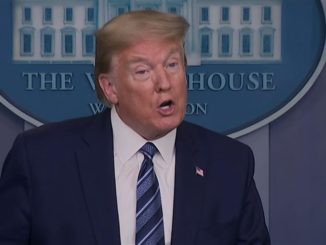
    Describing it as a very powerful order Trump told reporters during his daily news briefing at the White House on Wednesday, April 22, that he signed the order before coming for the press briefing.

    “By pausing immigration, we’ll help put unemployed Americans first in line for jobs as America reopens. It would be wrong and unjust for Americans laid off by the virus to be replaced with new immigrant labor flown in from abroad,” he said.

    He also said it will “preserve our healthcare resources for American patients” afflicted by the coronavirus.

    The executive order, a copy of which was released by the White House, said the new provisions apply to foreign nationals outside the U.S. who do not have an immigrant visa that is valid on the effective date of proclamation.

    It also applies to those foreign nationals who do not have an official travel document other than a visa that is valid on the effective date of proclamation or issued on any date thereafter that permits him or her to travel to the U.S. and seek entry or admission.

    The suspension, the executive order said, does not apply to those foreign nationals already inside the country on a green card. It provides exemptions to healthcare workers, and those seeking to enter the U.S. as a legal permanent resident under investment category. Spouses of a U.S. citizen, 21 years and younger kids of American nationals, or those who are under the process of being adopted are also exempted from this temporary suspension of immigration.

    Trump said he was determined that, without this measure, the U.S. faces a potentially protracted economic recovery with persistently high unemployment if labor supply outpaces labor demand.

    Excess labor supply affects all workers and potential workers, but it is particularly harmful to workers at the margin between employment and unemployment, who are typically ‘last in’ during an economic expansion and ‘first out’ during an economic contraction, he said in his executive order.

    In recent years, these workers have been disproportionately represented by historically disadvantaged groups, including African Americans and other minorities, those without a college degree, and the disabled, he said. These are the workers who, at the margin between employment and unemployment, are likely to bear the burden of excess labor supply disproportionately, he added.

    The White House in a statement said that this is a temporary pause demanded by the crisis being faced as a nation. The pause will be in effect for 60 days, and the administration will continue to monitor the labor market to amend or extend the proclamation if needed, it said.

    Trump is also asking his administration to review guest worker programs to assess whether additional measures should be taken to protect American workers. The White House further said that mass migration of low-skilled labor into the U.S. disproportionately harms historically disadvantaged Americans.

    Trump said this week he would impose a more sweeping order, saying he intended to close the United States to people trying to immigrate to the country to live and work. But under intense pressure from business groups, he backed off barring guest workers for technology companies, farms as well as other employers. Still, some business groups said they were frustrated by the move.

    Some critics see Republican Trump’s announcement as a move to take advantage of the coronavirus crisis to implement a long-sought policy goal of barring more immigrants ahead of the November 3 election

    Trump won the White House in 2016 in part on a promise to crack down on immigration and has made the issue central to his presidency. But many of his major moves trying to curb immigration have been challenged in court and legal experts said this executive order could also face lawsuits.

    One U.S. Department of Homeland Security official who requested anonymity said the order would only apply to people applying for permanent residence from outside the United States, not those already in the country seeking to adjust their status.

    A person familiar with the internal debate at the White House said  Trump and his advisers had discussed the executive order over the weekend and that the move was directed at his electoral base.

    White House lawyers worked all day to craft the language for the order, prompting some officials to say the signing might have to wait for April 23. But aides described Trump as eager to sign the document.

    “He’s wanted this all along,” the person said. “But now under this pandemic he can absolutely do it.”

    (With input from agencies)