Tag: Imran Khan

  • Pakistan court extends interim bail of Imran Khan, his wife in second Toshakhana case until January 7

    Lahore (TIP): A Pakistani court on December 17 extended the interim bail of jailed former prime minister Imran Khan and his wife Bushra Bibi in the second Toshakhana case until January 7.
    While the 72-year-old former cricketer-turned-politician remains behind bars due to other ongoing cases, Bibi was released in October after the Islamabad High Court approved her post-arrest bail plea. Additional Sessions Judge Muhammad Afzal Mujoka of Islamabad-based District and Sessions Court conducted the hearing of bail petitions in the case, also called the Toshakhana 2.0. After hearing the lawyers, the court extended the interim bails of Khan and Bibi until January 7 next year and adjourned the hearing.
    The case is related to the alleged violation of the state gift repository Toshakhana rules during Khan’s term as the prime minister to acquire a precious jewellery set.
    Pakistani police issues charges against Imran Khan, his wife Bushra Bibi for inciting violence The two were indicted in the case earlier last week by a trial court, where Special Judge Central Shahrukh Arjumand read out the charge sheet against them. The court, after the indictment, adjourned the hearing until December 18 when the prosecution the Federal Investigation Agency (FIA) will present the first four of its 28 witnesses.
    The Toshakhana 2.0 case involves allegations against the former premier and his wife for illegally retaining a Bulgari jewellery set gifted to them during a visit to Saudi Arabia in May 2021. The set included a ring, a bracelet, a necklace, and a pair of earrings and was valued at approximately Pakistani Rs 75.7 million. (PTI)

  • Pakistan government to ban jailed ex-PM Imran Khan’s party, says information minister

    ISLAMABAD (TIP): The Pakistan government will ban jailed former prime minister Imran Khan’s Pakistan Tehreek-e-Insaf party for its alleged involvement in anti-state activities, it was announced on July 17.
    Information Minister Attaullah Tarar announced that the federal government has decided to ban the Pakistan Tehreek-e-Insaf (PTI), alleging that the former ruling party was involved in anti-state activities, The News International reported. Khan, 71, has been lodged at the Adiala Jail in Rawalpindi on account of multiple cases against him. Tarar said that clear evidence was available to impose restrictions on the Pakistan Tehreek-e-Insaf (PTI), and the government would initiate proceedings against the party.
    The government’s decision comes on the heels of relief given to the PTI by the Supreme Court in the reserved seats case as well as to Khan in the illegal marriage case. (PTI)

  • Pakistan court acquits former Pak PM Imran Khan in two cases related to May 9 riots

    Pakistan court acquits former Pak PM Imran Khan in two cases related to May 9 riots

    ISLAMABAD (TIP): A court in Pakistan on Thursday, May 30, acquitted jailed former prime minister Imran Khan in two cases related to May 9 violence, citing “insufficient evidence” against him.

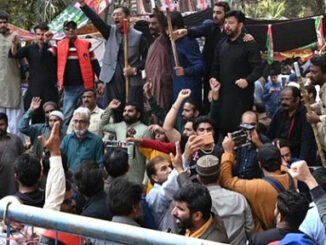
    The supporters of Khan, the founder of the Pakistan Tehreek-e-Insaf party, vandalized public property, including sensitive army installations last year following his arrest in an alleged corruption case.

    The petition challenging the two cases lodged at Shehzad Town police station against the PTI founder was approved by Judicial Magistrate Umar Shabbir of the District and Sessions Court of Islamabad.

    While acquitting Khan, 71, the founder of the Pakistan Tehreek-e-Insaf (PTI) party, the court said in its verdict: “Because of insufficient evidence presented by the prosecution, the PTI founder has been acquitted.”

    On May 15, Khan was acquitted in two cases linked to the May 9 vandalism.

    His acquittal orders were issued by Judicial Magistrate Sahib Bilal, who approved the former prime minister’s plea challenging the cases. Both those cases against Khan were filed in Khanna police station in Islamabad.

    The cases were registered against the PTI founder for the long march and violation of Article 144.

    Khan, who remains behind bars in the high-security Adiala Jail in Rawalpindi, and several others including some PTI leaders are facing various allegations in the cases related to the violence following his arrest on May 9.

    After Khan was arrested, hundreds and thousands of his followers and party workers vandalized a dozen military installations, including the Jinnah House (Lahore Corps Commander House), Mianwali Airbase and the ISI building in Faisalabad. The Army headquarters (GHQ) in Rawalpindi too was attacked by the mob for the first time.
    (Source: PTI)

  • Pakistan polls : Candidates backed by Imran’s party make gains

    Independent candidates backed by jailed former Prime Minister Imran Khan’s Pakistan Tehreek-e-Insaf (PTI) sprung a surprise in the general election, upstaging three-time premier Nawaz Sharif’s Pakistan Muslim League-Nawaz (PML-N). Even as the counting of votes and declaration of winners were marked by chaos and delays, Nawaz suffered a shock defeat to PTI-supported Shahzada Khan from the Mansehra seat. He, however, defeated another independent candidate, Yasmin Rashid, to clinch the Lahore seat.

    Members of the PTI contested as independents after they were not allowed to use the party symbol (cricket bat) in the February 8 polls, which were held amid a controversial countrywide mobile phone shutdown. The provisional results show that cricketer-turned-politician Imran, the founding chairman of the PTI, has made his presence felt despite being barred from contesting the elections due to his conviction and sentencing in multiple cases. Imran, who was ousted as PM in 2022, continues to be a popular leader. His arrest in May last year had sparked violence in many parts of the country; protesters had even targeted military installations, including the army headquarters in Rawalpindi.

    The PTI’s success is a setback to the Pakistani military, which had thrown its weight behind the Sharifs and gone all out to keep Imran out of the electoral contest. Confident of forming the government at the Centre, Imran’s party has ruled out forging an alliance with its main rivals — the PML-N and Bilawal Bhutto Zardari’s Pakistan People’s Party. Meanwhile, PML-N leader Ishaq Dar has claimed that some victorious independent candidates have contacted his party. An intriguing power tussle has begun in the beleaguered country, which is hoping for a stable and strong government that would pull it out of a prolonged economic crisis.
    (Tribune, India )

  • Imran Khan’s participation in elections uncertain as Pakistan court dismisses his plea in Toshakhana case

    Imran Khan’s participation in elections uncertain as Pakistan court dismisses his plea in Toshakhana case

    Islamabad (TIP): A high court in Pakistan on December 21 dismissed Imran Khan’s plea seeking suspension of the trial court’s verdict in the Toshakhana corruption case, in a fresh setback to the jailed former prime minister whose participation in the February 8 general elections is now uncertain. On August 5, the 71-year-old former cricketer-turned-politician was convicted by the Islamabad-based trial court in the Toshakhana case which was about the concealment of details of state gifts. The verdict meant the founding chairman of the Pakistan Tehreek-e-Insaf (PTI) party was disqualified from contesting elections for five years.
    Khan challenged his conviction in the Islamabad High Court (IHC) which on August 28 suspended his three-year sentence and granted him bail. However, his conviction has not been set aside so far, making him ineligible for any public office.
    The ex-premier subsequently filed a plea in the IHC seeking suspension of the trial court verdict in the case. On Thursday, the Islamabad High Court (IHC) dismissed his plea seeking suspension of the trial court’s verdict in the Toshakhana case.
    In a nine-page detailed verdict, IHC Chief Justice Amir Farooq and Justice Tariq Mahmour Jahangiri ruled that the instant application is not maintainable and is accordingly dismissed. “In the instant case, no specific plea was raised and subsequent application has been made to cover up the omission. Even no extraordinary or exceptional circumstances were mentioned in the earlier application though they existed in the form of the notification dated 08.08.2023 when the application for suspension of the sentence was filed,” the verdict said.
    “Bare reading of the application for suspension filed by the appellant shows that it was for suspension of the sentence only,” it said.
    It said Khan had invoked a specific provision in his petition but did not “specifically pray in the same for suspension of the conviction”.
    The dismissal of the plea comes at a crucial juncture as Khan’s party announced that he would contest election from three constituencies, which may not be possible until his conviction by the trial court is either suspended or overturned by the high court.
    Separately, the IHC issued a notice to the Federal Investigation Agency on Khan’s plea against an in-camera trial in the cipher case. The case pertains to a diplomatic document that was allegedly mishandled, constituting a violation of the secret laws of the country.
    After issuing notices and hearing arguments by Khan’s lawyer, the court adjourned the hearing till Friday. Apart from Khan, former foreign minister Shah Mehmood Qureshi is also accused in the case. Both leaders are in the Adiala Jail where they were indicted for a second time on December 13. Khan, who served as prime minister of Pakistan from August 2018 to April 2022, was removed through a vote of no-confidence in April 2022. More than 150 cases have been filed against Khan since his ouster from power. (PTI)

  • Crisis-hit Pakistan unveils $51 billion budget, with half to service debt

    Crisis-hit Pakistan unveils $51 billion budget, with half to service debt

    KARACHI (TIP): Pakistan’s cash-strapped government unveiled a 14.5 trillion rupee (around $50.5 billion) budget on June 9, with over half set aside to service 7.3 trillion rupees of debt.
    Pakistan’s economy has been stricken by a balance-of-payments crisis as it attempts to service crippling external debt, while months of political chaos have scared off potential foreign investment.
    Inflation has rocketed, the rupee has plummeted and the country can no longer afford imports, causing a severe decline in industrial output.
    About 950 billion rupees was earmarked for vote-winning development projects ahead of a general election later this year, while other populist measures include civil service pay rises of up to 35 per cent and a 17.5 per cent increase for state pensions. Presenting the budget to the National Assembly on Friday, Finance Minister Ishaq Dar insisted targets had been prudent.
    “There are general elections in the country soon, but despite that the next fiscal-year budget is prepared as a responsible budget instead of an election budget,” he said.
    Prime Minister Shehbaz Sharif blamed his predecessor Imran Khan – ousted by a vote of no-confidence in April last year — for the morass. “Our preceding government has battered the economy,” he said.
    Poor being ‘humiliated’. Akhtar Khan Nawaz, a labourer at a fruit and vegetable market in the capital Islamabad, said “the poor were being humiliated.”
    “(The budget) will be of no use unless inflation is reduced, the poor will only get relief if inflation is eased,” he told AFP.
    Sharif said he was optimistic for an extension later this month on an International Monetary Fund (IMF) loan facility crucial to keeping the economy afloat. “The IMF chief has given his verbal commitment… there is no hindrance,” he said.The IMF has told Pakistan it needs to secure additional external financing, scrap a swathe of populist subsidies, and allow the rupee to float freely against the dollar before unlocking another tranche of the $6.5 billion facility. Still, the latest budget sets aside 1.07 trillion rupees for subsidies.
    “The government definitely has to take such popular decisions as it is the election year,” said Nasir Iqbal, an economist at the Pakistan Institute of Development Economics (PIDE).
    The country failed to meet any economic growth targets for the fiscal year 2022-23, according to a key government report released Thursday, with GDP growth a miserly 0.3 per cent.
    Dar said Friday that the latest budget was based on GDP growth of 3.5 per cent, although the World Bank projected a less-ambitious two per cent growth in a report issued earlier this week. It also had an annual inflation forecast of 21 per cent, against a current year-on-year rate of 37.97 per cent.
    The economy has also been ravaged by record monsoon floods last year that left almost a third of the country underwater, laying waste to vast swathes of farmland and leaving tens of millions homeless.
    But the political crisis remains the biggest risk factor in the months ahead.
    Former premier Khan’s hugely popular campaign to return to office spilled into street violence after his brief arrest last month, prompting a massive crackdown on his party including mass arrests and trials scheduled for military courts. (AFP)

  • Stop giving coverage to ex-PM Imran Khan, Pakistan govt tells media houses

    Stop giving coverage to ex-PM Imran Khan, Pakistan govt tells media houses

    LAHORE (TIP): The Pakistan government on June 2 urged the country’s media houses to refrain from publishing or broadcasting speeches, statements, tweets or pictures of former prime minister Imran Khan.
    The government said it was making sure that the 70-year-old Pakistan Tehreek-e-Insaf (PTI) chief’s social media activities are also blocked.
    According to a government official, both print and electronic media have been directed not to publish or broadcast Khan’s speeches, statements, tweets or display his pictures.
    ““We will make sure that media blackout of Imran Khan is completely enforced,”” the official said.
    An informed source told PTI that the Pakistani media houses have been categorically told by the ‘powerful circles’ to give no coverage to Khan.
    He said Khan’s media blackout was enforced from Friday.
    The government order comes a day after the Pakistan Electronic Media Regulatory Authority (PEMRA) directed all satellite TV channels not to promote the perpetrators of the May 9 violence.
    It also directed them to ensure that coherence and national harmony are promoted and “hate mongers, rioters, their facilitators and perpetrators” are completely blacked out from the media.
    Without naming Khan, PEMRA said: “Refrain from providing airtime to those who propagate hate speech and provoke public sentiments against the federation and state institutions”.
    It said the hate mongers, representing political outfits, are abusing their power against Pakistan and state institutions by instigating the public. “All such anti-state activities were orchestrated by the politically charged-up zealots of a political party behaving largely as hate mongers to instigate political activists,” it said.
    There has been a crackdown on the PTI leaders and workers after their alleged involvement in attacking army installations in the country following the arrest of Khan.
    Violence erupted across Pakistan on May 9 when cricketer-turned-politician Khan was arrested from the premises of the Islamabad High Court in a corruption case.
    Khan was released on bail two days later.
    Over 20 military installations and government buildings including military headquarters in Rawalpindi were damaged in the unrest that ensued. Over 100 vehicles of police and other security agencies were also set on fire in the violence that left more than 10 persons dead. Khan has said over 25 PTI workers were killed in the violence and that law enforcement agencies arrested over 10,000 PTI workers across Pakistan.
    As many as 4,000 of them are from Punjab. (PTI)

  • Imran Khan, wife barred from leaving the country: Pak media

    Islamabad (TIP) : Pakistan’s government has barred former prime minister Imran Khan and his wife along with at least 80 people from leaving the country, a media report said on May 25. Khan and several top leaders of the Pakistan Tehreek-e-Insaf party are facing cases following the violence after he was arrested on May 9 in a corruption case. “The federal government has decided to add the names of 80 people, including PTI Chairman Imran Khan and his wife Bushra Bibi, to the no-fly list,” the Samaa News channel reported.
    However, there was no official confirmation on the development from Khan’s party. In addition to Khan and Bushra, those included in the no-fly list and barred from travelling abroad include PTI leaders Murad Saeed, Maleeka Bukhari, Fawad Chaudhry and Hammad Azhar, Qasim Suri, Asad Qaiser, Yasmin Rashid and Mian Aslam, the channel said. Fawad Chaudhry has already quit the party but his name has been listed among those who cannot fly out of Pakistan.
    The names of all the PTI leaders were put in the list on the recommendation of the “institutions concerned”, the news channel reported. It said that the police department, National Accountability Bureau and the anti-corruption department had requested the Ministry of Interior to include these names to the no-fly list. (Reuters)

  • Pakistan Supreme Court declares Imran Khan’s arrest ‘illegal’, orders his immediate release

    Pakistan Supreme Court declares Imran Khan’s arrest ‘illegal’, orders his immediate release

    ISLAMABAD (TIP): In a major relief for Imran Khan, Pakistan’s Supreme Court on Thursday declared the former prime minister’s arrest “illegal” and ordered his immediate release after he was produced before a bench on its orders. The order to produce 70-year-old Khan was issued by a three-member bench, comprising Chief Justice of Pakistan Umar Ata Bandial, Justice Muhammad Ali Mazhar and Justice Athar Minallah.

    The bench, which heard Pakistan Tehreek-e-Insaf chairman’s plea against his arrest in the Al-Qadir Trust case, expressed anger at the way Khan was taken into custody from the premises of the Islamabad High Court.

    The bench had directed the National Accountability Bureau (NAB) to produce Khan by 4:30 pm (local time) when the court would reconvene. Khan was produced before the court amid tight security. As he entered the courtroom, it was closed, and subsequently, the bench resumed the hearing of the case. “It is good to see you,” Chief Justice Bandial told Khan. “We believe that Imran Khan’s arrest was illegal,” the top judge said. He said that the Islamabad High Court should hear the case on Friday. “You will have to accept whatever the high court decides,” the judge added. Bandial also said that it is every politician’s responsibility to ensure law and order.

    Earlier in the day, Bandial asked how an individual could be arrested from the court premises. Justice Minallah observed that Khan had indeed entered court premises. “How can anyone be denied the right to justice?” he asked.

    The court also observed that no one could be arrested from the court without permission of the court’s registrar. It observed that the arrest tantamounted to denying access to justice without fear and intimation, which was the right of every citizen. It also said that by entering the premises of a court means surrendering to the court and how a person could be arrested after surrender. “If an individual surrendered to the court, then what does arresting them mean?” the chief justice said. Khan’s counsel Hamid Khan informed the court that his client had approached the Islamabad High Court (IHC) seeking a pre-arrest bail but was arrested by paramilitary Rangers.

    “Rangers misbehaved with Imran Khan and arrested him,” the lawyer said.

    The court also took note of about 90 to 100 Rangers personnel entering the court to arrest Khan. “What dignity remains of the court if 90 people entered its premises? How can any individual be arrested from court premises?” the chief Justice asked.

    Chief Justice Bandial also at one point observed that the National Accountability Bureau had committed “contempt of court.” “They should have taken permission from the court’s registrar before the arrest. Court staffers were also subjected to abuse,” he said.

    Khan was arrested on Tuesday, May 9 from the Islamabad High Court and an accountability court on Wednesday, May 10 handed him over to the National Accountability Bureau for eight days in connection with the Al-Qadir Trust case. The former premier on Wednesday, May 10 approached the apex court to set aside the warrants of NAB of May 1 for his arrest and to challenge the Islamabad High Court’s decision to declare the arrest “unlawful”.

    Earlier, the IHC, expressing anger at the way Khan was nabbed, upheld his arrest hours after he was whisked away.
    (Source: PTI)

  • No talks with Imran Khan unless he apologises: Pakistan PM Shehbaz

    No talks with Imran Khan unless he apologises: Pakistan PM Shehbaz

    ISLAMABAD (TIP): Prime Minister Shehbaz Sharif has ruled out any talks between the government and Pakistan Tehreek-e-Insaf (PTI) chief Imran Khan unless the former premier admits his wrongdoings and issues a public apology. While addressing the National Assembly on March 28, prime minister Sharif criticised Khan by calling him a “fraud” and said it is impossible to talk to someone who “looted the country, attacked the judiciary and did not believe in the Constitution and justice”, Geo News reported. The joint session of parliament was summoned last week to discuss the key issues confronting Pakistan and provide guidelines to deal with those issues. “I believe no discussions can be held with a person who consistently and condescendingly rejects invitations for talks on everything – be it COVID-19, the state of terrorism in the country, the apex committee meeting, or the Kashmir conference,” Sharif was quoted as saying.
    Referring to the recent fiasco witnessed during the court proceeding of the PTI chief, Sharif said that a certain “favourite” does not appear before any court, no matter how many notices have been issued to him, it said.
    “He gets an extension in different courts in the dark of the night and makes a mockery of the judiciary,” Sharif said, criticising Khan for his remarks against a sitting woman judge and the fact that no action has been taken in this case so far. “Khan made false cases against the opposition when he was in government and signed an agreement with the IMF [International Monetary Fund] and violated it,” the premier said while listing the wrongdoings of the former PTI government.
    Calling out Khan for pushing the country towards bankruptcy, the prime minister reiterated that the current coalition headed by the Pakistan Muslim League- Nawaz (PML-N) government “saved the country.”
    “Today, the IMF is taking guarantees from us at every step. We have fulfilled all the conditions of the IMF. Congratulations to the finance minister who finalised the terms of the deal with the Fund,” Sharif said.
    Cash-strapped Pakistan is awaiting a much-needed USD 1.1 billion tranche of funding from the Washington-based global money lender, which was originally due to be disbursed in November last year. (PTI)

  • Lahore HC prohibits Imran Khan’s party from holding rally at Minar-e-Pakistan

    Lahore HC prohibits Imran Khan’s party from holding rally at Minar-e-Pakistan

    LAHORE (TIP): Observing that the recent pitched battles between the security personnel and defiant supporters of former prime minister Imran Khan in Lahore have “tarnished the image of Pakistan across the world”, a top court on March 16 prohibited the Pakistan Tehreek-e-Insaf party from holding a rally at the historic Minar-e-Pakistan here.
    On Tuesday, Khan, the chief of the Pakistan Tehreek-e-Insaf (PTI) party, announced that he would stage a public gathering at the Minar-e-Pakistan — considered the national emblem of the country and an expression of post-colonial identity– on March 19 as part of his party’s ongoing election campaign in Punjab province.
    Justice Tariq Saleem Sheikh of the Lahore High Court (LHC) presided over the hearing and said the current situation in the provincial capital “tarnished the image of Pakistan across the world.”
    Justice Sheikh ordered that authorities should be informed about a rally at least 15 days in advance so that necessary security arrangements can be made, The Express Tribune newspaper reported.
    Justice Sheikh also directed the PTI leadership to hold a meeting with Inspector General Police Punjab and the additional chief secretary to reach a consensus on their concerns that include “implementation of Imran Khan’s non-bailable arrest warrant, security plan and imposition of Section 144”, it added.
    Lahore’s upscale Zaman Park area, where Khan, 70, resides, turned into a battleground after his defiant supporters engaged in pitched battles with policemen on Tuesday to stop them from arresting their leader in the Toshakhana case, resulting in injuries to more than 60 people.
    Following the LHC order, police and other law enforcers withdrew from Khan’s residence on Wednesday, putting a halt to clashes.
    Khan, the former Pakistan Prime Minister has been in the crosshairs for buying gifts, including an expensive Graff wristwatch he had received as the premier at a discounted price from the state depository called Toshakhana and selling them for profit.
    Meanwhile, a district court judge in Pakistan said on Thursday that he would halt attempts by the Islamabad police to arrest Khan in a corruption case if the ousted premier surrendered before the court.
    Khan, a cricketer-turned-politician, was ousted from power in April last year after losing a no-confidence vote, which he alleged was part of a US-led conspiracy targeting him because of his independent foreign policy decisions on Russia, China and Afghanistan.
    Since his ouster, Khan has been asking for early elections to oust what he termed an “imported government” led by prime minister Shehbaz Sharif.
    Sharif has maintained that elections will be held later this year once the parliament completes its five-year tenure. (PTI)

  • Ex-Pakistan PM Imran Khan appears before court, avoids arrest

    Islamabad (TIP): Former Pakistan prime minister Imran Khan on February 20 thwarted the government’s plan to arrest him by personally appearing before the Lahore High Court, which granted him protective bail till March 3 in a case linked to violent protests by his supporters following his disqualification by the election commission.
    Justice Tariq Saleem Sheikh had directed 70-year-old Khan to appear before the court for a hearing of his protective bail petition in the case. His court appearance came amid high drama as hundreds of supporters thronged the court premises to show their support for the Pakistan Tehreek-e-Insaf (PTI) leader. Imran overshot the deadline of reaching the court by 5 pm as he could reach only at 7.30 pm as a massive crowd of PTI supporters prevented him from entering. During the hearing, Imran said he respected the courts and added his doctors had advised him against walking due to his leg injury. “My party’s name is Tehreek-e-Insaf (movement for justice) and I expect the same from courts,” he said.
    Earlier, Imran’s counsel had requested the court to verify his client’s presence through the court staff as the PTI chief was facing difficulty in entering the court due to security reasons. However, the court rejected the request and ordered the security in charge to present the politician before the bench. (PTI)

  • Pakistan in dire straits

    Pakistan in dire straits

    Faces political uncertainty, economic bankruptcy and Taliban violence

    “Pakistan is presently fully engrossed in avoiding bankruptcy and focusing on talks with the IMF. Islamabad has been forced to accept some very tough conditions before international financial institutions like the World Bank, Asian Development Bank, and the oil-rich Arab countries step in again to bail it out. Pakistan will hopefully realize that a rapidly progressing India has the potential to further strengthen relations with both the US and Russia. It has lost the proposed Russian economic assistance on oil supplies by inexplicably supplying military hardware to Ukraine. Rawalpindi will also have to remember that terrorism and meaningful talks with India cannot go hand in hand.”

    By G Parthasarathy

    Pakistan finds itself today in an unenviable position as its economic situation worsens and its foreign exchange reserves fall below $2 billion. Desperate, it has sought assistance from the IMF, international banks and donors to escape total bankruptcy. In the meantime, verbal warfare continues between Imran Khan and the Shehbaz Sharif government. Pro-US General Bajwa has arranged for one of his proteges, Lt Gen Syed Asim Munir, to succeed him. The army will continue to court the US. Even as the country was engrossed in a bid to avoid bankruptcy, the Islamabad High Court ordered an investigation into corruption charges against the former President, Gen Pervez Musharraf, for allotting military lands arbitrarily. Musharraf, who had been ailing, died amidst the political turmoil, at a hospital in the UAE. His burial in Karachi, with full military honors, was not attended by a single prominent political leader.

    In the meantime, Imran Khan, who shows little interest on addressing the country’s serious economic crisis, has asked President Alvi to order an inquiry against his bête noire, Gen Qamar Javed Bajwa. He accused Bajwa of conspiring to oust him from office. Pakistan’s politicians have, however, never showed the inclination or ability to get together in dealing with radical Islamic groups, including the Taliban. Pakistan is paying the price for the support it rendered to radical Islamic groups in Afghanistan, and even within its own borders. Moreover, even after it was known that Pakistan was working hand in glove with the Taliban, the US looked the other way, and ultimately left Afghanistan ignominiously. Imran Khan is popularly known in Pakistan as ‘Taliban Khan’.

    The Afghan Taliban has for long worked in concert with its Pakistani counterpart, Tehreek-e-Taliban-e-Pakistan, which now aspires to seize control of north-western Pakistan. In keeping with its long-term policy of helping the people of Afghanistan, India has moved to provide its people with wheat and medicines. Pakistan, on the other hand, is waging a war on its territory against the Tehreek-e-Taliban, which enjoys the support of its Pashtun brethren in Pakistan’s Khyber Pakhtunkhwa province. Many in the US and Russia will be amused to observe the Pakistan army engrossed in fighting its erstwhile Taliban proteges that the ISI had used for over two decades in their battles against Russian and US forces in Afghanistan. The ISI even used Taliban assistance during the hijacking of IC 814 to Kabul.

    The sustained economic and educational assistance that India provided to Afghanistan before the Taliban takeover is widely appreciated across all sections of its people. However, now India has to route essential supplies to Afghanistan by air or through the Iranian port of Chabahar. India’s Afghan friends are, however, said to be disappointed that even elderly Afghans requiring visas for life-saving medical treatment in India are denied visas. This should be addressed positively. In the meantime, differences are clearly growing between Taliban’s supreme leader Haibatullah Akhundzada and ISI’s favorite Taliban leader, Sirajuddin Haqqani. There are indications that disputes between Pakistan and the Taliban could flare up across the Durand Line.

    The recent demise of Musharraf has revived interest in what transpired in his days as President. He collaborated closely with the Taliban during the hijacking of IC 814. But his attitude towards India changed with the passage of time, especially after his visit to India in 2005. What followed was serious ‘back channel’ negotiations between Special Envoys of the two countries on the issue of J&K. The Indian delegation was led by the late Satinder Lambah, who was earlier India’s High Commissioner to Pakistan. India rejected any process that did not guarantee an end to terrorism, with both sides respecting the sanctity of existing borders. The then PM, Manmohan Singh, had asserted: ‘Borders cannot be redrawn.’

    While there have been statements by eminent Pakistanis like former foreign minister Khurshid Kasuri, supporting the broad agreement that the two sides reached on J&K, there have been no comments on the contents of that dialogue by India. There have, however, been reports that the understanding reached was premised on an end to support for terrorism by Pakistan. The visit of PM Modi to Lahore in December 2015 to attend a family wedding hosted by PM Nawaz Sharif raised optimism about progress on bilateral issues and an end to terrorism. These hopes were shattered by the Pathankot airbase terror attack a week later; subsequently, terrorists from the ISI-backed Jaish-e-Mohammed (JeM) attacked a convoy of CRPF personnel in 2019, killing 40 Indian security personnel. While the perpetrator of the suicide attack was also killed, India-Pakistan standoff followed. On February 26, 2020, India retaliated with an air strike on a training camp of the JeM in Balakot, across the LOC.

    There is little prospect of any meaningful dialogue with Pakistan anytime soon. Whether Pakistan will abide by what was agreed to in the back-channel talks remains to be seen. Moreover, Pakistan is presently fully engrossed in avoiding bankruptcy and focusing on talks with the IMF. Islamabad has been forced to accept some very tough conditions before international financial institutions like the World Bank, Asian Development Bank, and the oil-rich Arab countries step in again to bail it out. Pakistan will hopefully realize that a rapidly progressing India has the potential to further strengthen relations with both the US and Russia. It has lost the proposed Russian economic assistance on oil supplies by inexplicably supplying military hardware to Ukraine. Rawalpindi will also have to remember that terrorism and meaningful talks with India cannot go hand in hand.

    (The author is Chancellor, Jammu Central University & former High Commissioner to Pakistan)

  • Terrorists planning to assassinate Imran Khan, Pakistan’s counter-terrorism department warns

    Terrorists planning to assassinate Imran Khan, Pakistan’s counter-terrorism department warns

    Peshawar (TIP): Terrorists are planning to assassinate Pakistan’s former Prime Minister Imran Khan and they have sought assistance from an assassin in Afghanistan to target him, the Counter-Terrorism Department’s (CTD) Khyber Pakhtunkhwa wing has warned, according to a media report on June 22. The CTD has directed all concerned agencies to take all possible measures for the security of the former prime minister and Pakistan Tehreek-e-Insaaf (PTI) Chairman in the wake of the threat alert, Urdu language newspaper ‘Jang’ reported.

    It said that the threat alert issued by CTD’s Khyber Pakhtunkhwa wing stated that “terrorists are planning to assassinate Imran Khan, for which they have sought assistance from an assassin in Afghanistan”.

    The paper said that the text of the threat alert has been shared with various forums, according to which an Afghan assassin has been given the responsibility to target Khan. Citing a senior police official, the paper said that the CTD issued the alert on June 18. However, there were orders to keep the threat a secret and prevent it from being leaked on social media, he said. PTI leaders have recently expressed concerns about the threat to Khan’s life and have claimed that a target killer has been hired to assassinate him.

    On Saturday, PTI leader FayyazChohan said that “some people” have tasked a terrorist with assassinating Khan.

    “I have details that some people have ordered a terrorist named ‘Cochi’ in Afghanistan to assassinate PTI Chairman Imran Khan,” the former provincial minister said in a tweet.

    Khan, who was ousted from power in April through a no-trust vote, has been claiming that the no-trust motion against him was the result of a “foreign conspiracy” because his independent foreign policy and funds were being channelled from abroad to oust him from power. He has named the US as the country behind the conspiracy, a charge denied by Washington.

    Last month, Khan claimed that there was a threat to his life, following which he recorded a video of the characters behind the “conspiracy” against his government, and if something happens to him, it will be released.

    Prime Minister Shehbaz Sharif had directed the Interior Ministry last month to provide foolproof security to Khan at his home in Islamabad and during political rallies.

    Former Prime Minister Benazir Bhutto was assassinated in December 2007 in a gun and grenade attack while campaigning for upcoming parliamentary elections in Rawalpindi. (PTI)

  • India Condemns US Congresswoman Ilhan Omar’s Visit To Pak-Occupied Kashmir

    India Condemns US Congresswoman Ilhan Omar’s Visit To Pak-Occupied Kashmir

    New Delhi (TIP)- India has  condemned US Congresswoman Ilhan Omar’s visit to Pakistan-Occupied Kashmir. The Congresswoman is on a four-day visit to Pakistan starting April 20, where she has also met former Prime Minister Imran Khan and his successor Shahbaz Sharif. Answering a question about her visit to Pakistan-Occupied Kashmir, the foreign ministry spokesperson said it is condemnable.

    “If such a politician wishes to practice her narrow-minded politics at home that may be her business, but violating our territorial integrity in its pursuit makes this ours. Condemnable,” the ministry said.

    The Congresswoman is on a four-day visit to Pakistan – April 20-24 – where apart from having meetings with the political leadership in Islamabad, she was to visit parts of Pakistan Occupied Kashmir. The Prime Minister’s Office had said that she will visit Lahore and “Azad Jammu and Kashmir” to have a greater understanding of Pakistan’s cultural, social, political, and economic potential. Kashmir always figures largely in Pakistan’s interactions with the US and it was also discussed between Prime Minister Sharif and Ms Omar.

    Sharif told reporters that he had raised Kashmir with the 39-year-old lawmaker, known for her anti-India stance, and stressed the importance of peaceful resolution of the Jammu and Kashmir issue, enabling the region to realise its economic potential and promote social progress, reported news agency Press Trust of India.

    Omar’s visit is largely directed at a reboot of the US-Pakistan relations after deposed Prime Minister Imran Khan’s allegations of conspiracy. The opposition, Mr Khan had alleged, has conspired with the US to see him out of office through a no-trust vote in the national assembly.

     Visit not sponsored by US govt: Official

    Democratic Congresswoman Ilhan Omar’s travel to Pakistan this week is not sponsored by the United States government, an official said on Thursday, April 21.

  • Pakistan PM Imran Khan’s step-son among three booked on charges of possession of liquor

    Pakistan PM Imran Khan’s step-son among three booked on charges of possession of liquor

    Lahore (TIP): Prime Minister Imran Khan’s step-son was among the three booked on charges of possession of liquor, only to be released after orders from “higher authorities,” police said on February 23.

    According to the FIR, Musa Maneka, the First Lady BushraBibi’s son from her previous marriage, and two of his friends were arrested near Gaddafi Stadium on Monday after police found alcohol in the car they were travelling in.

    “The three youths, including the First Lady’s son, were released the same day after orders from the top. Some legal formalities like personal guarantee from the families of the suspects were met,” a police official told PTI on Tuesday.

    He added that when Maneka was picked up for possessing liquor, he threatened security officials with dire consequences as he was the son of Pakistan’s First Lady, the official said. “The Punjab police chief started receiving calls from the top soon after a case was registered against them. However, the police made no further legal action and released them after a few hours in custody,” he added.

    The sale and consumption of alcohol is illegal in Pakistan, a Muslim-majority country. Last week, reports began to circulate on social media about differences between Prime Minister Khan and his wife. Farah Khan, a close friend of Bibi took to Twitter to announce that the First Lady was living with her husband at the Bani Gala residence. “Fake propaganda was being spread through Whatsapp messages about the first couple,” she said. “The First Lady is not living in my house but at Bani Gala in Islamabad,” she added. Earlier this month, Pakistan’s Federal Investigation Agency arrested five people as part of the nationwide crackdown against those involved in running a “malicious campaign” against Khan, his wife Bibi and the Army on social media. (PTI)

  • Will Pakistan’s nuclear stockpile be the region’s Achilles heel?

    “Some non-nuclear States have historically opposed the resolution in response to India testing nuclear weapons and becoming a nuclear-armed State in 1998. India can and needs to do more to get countries to reconsider their opposition, especially in light of Taliban’s takeover of Afghanistan that has already led to rise in India-Pakistan tensions.

    “While there are enough pundits predicting that Taliban and Pakistan will make for the most volatile bedfellows, there is no denying that the region’s power dynamics have been dramatically and drastically altered. A change that has taken everyone by surprise only goes to show that nothing can be ruled out. So, speaking of Pakistan’s nuclear stockpile falling in the hands of Taliban is not as far-fetched as one would imagine.”

     By Priyanka Khanna

    The predictable India-Pakistan rhetoric during the United Nations General Assembly (UNGA) in New York and accusations flying right and left at the ongoing 48th session of the Human Rights Council (UNHRC) in Geneva are shadowing the simmering worry as to what will happen to Pakistan’s growing nuclear arsenal.

    Indian Prime Minister Narendra Modi has repeatedly raised doubts about Pakistan’s intentions
    (Photograph / Jay Mandal- on assignment)
    Pakistan Prime Minister Imran Khan is unmoved (Photograph / Jay Mandal- on assignment)

    The 140-150 nuclear warheads that are currently stockpiled in Pakistan’s central storage facilities in its southern parts remain outside both the Treaty on the Non-Proliferation of nuclear weapons (NPT) and the Comprehensive Nuclear Test Ban Treaty (CTBT).

    With the Afghanistan takeover by Taliban and given their bon homie with Pakistan, especially its intelligence, it is singularly worrying that Pakistan is the sole country that is blocking negotiations of the Fissile Material Cut-Off Treaty (FMCT).

    While there are enough pundits predicting that Taliban and Pakistan will make for the most volatile bedfellows, there is no denying that the region’s power dynamics have been dramatically and drastically altered. A change that has taken everyone by surprise only goes to show that nothing can be ruled out. So, speaking of Pakistan’s nuclear stockpile falling in the hands of Taliban is not as far-fetched as one would imagine.

    The UN is not doing enough to push Pakistan to undertake disarmament. (Photograph / Jay Mandal- on assignment)

    Which brings us to the question of why the UN is not doing enough to push Pakistan to undertake disarmament. In fact, according to the advocacy group – Unfold Zero – the UNGA was not even able to come together on nuclear disarmament resolutions. In the last nuclear disarmament UN meeting, nuclear risk-reduction was perhaps the only measure countries could come together for.

    A resolution reducing nuclear danger submitted by India received 127 votes in favor (mostly non-aligned countries). It failed to get support of nuclear-armed or European countries, primarily because it only calls for nuclear risk reduction measures by China, France, Russia, UK and USA – leaving out the other nuclear armed States – India, Pakistan, DPRK and Israel, according to unfoldzero.org.

    A resolution on decreasing the operational readiness of nuclear weapons systems submitted by a group of non-nuclear countries, was much more successful receiving 173 votes in favor, including from most of the NATO countries and from four nuclear armed States (China, DPRK, India, Pakistan).

    A resolution on the Treaty on the Prohibition nuclear weapons (TPNW) was supported by 122 countries. This is more than the number who have signed the Treaty, which is 68 (with 19 of these countries having now ratified). The vote indicates that more signatures are likely. However, the resolution was not supported by any of the nuclear-armed countries, nor any of the countries under nuclear deterrence relationships, i.e., NATO, Australia, Japan, South Korea. The opposition of nuclear-armed and allied States to the resolution is another indication that they do not intend to join the new treaty. In general, this means that they will not be bound by the treaty’s obligations. However, the customary law against the use of nuclear weapons which is re-affirmed by the treaty will apply to all States regardless of whether or not they join.

    India’s External Affairs Minister has voiced India’s concern about Pakistan’s stockpile of nuclear weapons to the world, including the Secretary General of the United Nations, António Guterres. (Photograph / Jay Mandal- on assignment)

    A resolution on the prohibition of the use of nuclear weapons submitted by India received 120 votes in favor, including from themselves and another three nuclear-armed States (China, DPRK and Pakistan). Some non-nuclear States have historically opposed the resolution in response to India testing nuclear weapons and becoming a nuclear-armed State in 1998. India can and needs to do more to get countries to reconsider their opposition, especially in light ofTaliban’s takeover of Afghanistan that has already led to rise in India-Pakistan tensions.

  • Pakistani flag to fly at half mast to mourn Geelani’s death

    Pakistani flag to fly at half mast to mourn Geelani’s death

    Islamabad (TIP): Pakistan will mourn the passing away of the separatist leader Syed Ali Shah Geelani by flying the flag at half mast and will also observe a day of official mourning.

    “Deeply saddened to learn of the passing of Kashmiri freedom fighter Syed Ali Geelani who struggled all his life for his people & their right to self determination. He suffered incarceration & torture by the occupying Indian state but remained resolute,” Prime Minister Imran Khan said in a tweet.

    “We in Pakistan salute his courageous struggle & remember his words: ‘Hum Pakistani hain aur Pakistan Humara hai’. The Pakistan flag will fly at half mast and we will observe a day of official mourning,”  Khan said in another tweet.

  • Imran Khan’s PTI wins most seats in PoK election marred by irregularities, violence

    Islamabad (TIP): Prime Minister Imran Khan’s Pakistan Tehreek-e-Insaf party is set to form the next government in Pakistan-occupied Kashmir (PoK) as it emerged as the largest political party in the legislative assembly election in the region which was marred by allegations of irregularities and violence, local media reported, citing unofficial results.

    The Pakistan Tehreek-e-Insaf party (PTI) has won 23 seats while Pakistan People’s Party (PPP) was second with eight seats and the incumbent Pakistan Muslim League-Nawaz (PML-N) secured just six seats, the state-run Radio Pakistan reported. Muslim Conference (MC) and Jammu and Kashmir Peoples Party (JKPP) were successful on one seat each.

    However, Geo TV reported that PTI won 25 seats, followed by PPP with nine and PML-N six. One seat each was won by Muslim Conference and Jammu and Kashmir Peoples Party.

    Thus, PTI got a simple majority to form the government without support of any other party. It is for the first time that it will form a government in PoK.

    Traditionally, the ruling party in the country wins the elections in PoK.

    The assembly has a total of 53 members but only 45 are directly elected, while five seats are reserved for women and three are meant for technocrats.

    The 45 members directly elected include 33 residents of PoK and 12 refugees who came over the years from Kashmir and settled in various cities of Pakistan. (PTI)

  • Pakistan PM names ‘common friend’ who offered Rs 1K crore bribe to withdraw case against Nawaz Sharif

    Pakistan PM names ‘common friend’ who offered Rs 1K crore bribe to withdraw case against Nawaz Sharif

    Lahore (TIP): Pakistan Prime Minister Imran Khan has finally filed a reply in a defamation case and identified a “common friend” who allegedly offered him Rs 1,000 crore on behalf of Shahbaz Sharif to withdraw the Panama Papers case in the Supreme Court against then prime minister Nawaz Sharif.

    Khan in 2017 had alleged that Pakistan Muslim League-Nawaz (PML-N) president Shabaz offered him Rs 1,000 crore through a “common friend” to withdraw the Panama Papers case in the Supreme Court against then prime minister Nawaz Sharif.

    Khan at that time did not disclose the identity of the person who offered him the bribe on behalf of Shahbaz.

    Shahbaz, 69, is the younger brother of 71-year-old Nawaz Sharif.

    Following Khan’s allegation, Shahbaz filed a defamation case against the cricketer-turned-politician.

    In a written reply to Lahore session court on Tuesday in response to the defamation suit, Prime Minister Khan disclosed the name of the person who offered him Rs 1,000 crore to withdraw the Panama Papers case against Sharif as Omar Farooq.

    “Omar Farooq—a common friend—made this offer to Imran Khan,” the prime minister’s counsel told the court.

    The counsel said the incident was disclosed for the consumption of the public at large and in the interest of the public good which does not constitute any defamation.

    He said the plaintiff and the defendant are political rivals and have been facing each other in the political arena for more than two decades.

    Shahbaz himself made numerous “defaming and malicious” statements against Khan and other leaders of the ruling Pakistan Tehreek-i-Insaf (PTI) as well as other political parties in the past, the counsel said, requesting the court to dismiss the suit as the PML-N leader is not entitled to any damages.

    Additional District and Sessions Judge Mudassir Farid adjourned the hearing till August 4.

    In the four years, Khan’s legal team sought adjournments on at least 50 hearings.

    In his petition, Shahbaz requested the court to issue a decree for recovery of Rs 1,000 crore as compensation for the “defamatory” comment, which caused great damage to his reputation in the public. In a statement on Wednesday, PML-N spokesperson Marriyum Auranzeb demanded an apology from Prime Minister Khan for levelling baseless allegations against the Opposition leader. (PTI)

  • Sparks fly between Imran Khan, Ashraf Ghani at Tashkent meet

    Sparks fly between Imran Khan, Ashraf Ghani at Tashkent meet

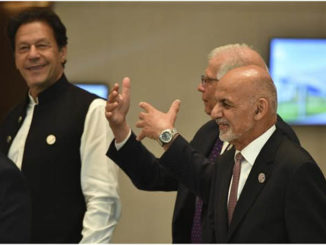
    Islamabad (TIP):  The connectivity conference in Tashkent attended by almost all foreign ministers from Central and South Asia saw sparks fly between Pakistan and Afghanistan before both sides cooled the tensions with a meeting between their leaders Imran Khan and Ashraf Ghani.

    Khan and Jaishankar also crossed swords, though indirectly.

    In an indirect reference to the Pakistan Army’s obdurate stance on trade and connectivity with India, Jaishankar said the real issue is of mindsets not of disputes.

    Khan in his speech cited Kashmir issue as a major hindrance in connectivity projects.

    With the Pak PM on stage, Afghan President Ghani criticised Pakistan indirectly for not stopping terrorists from crossing over into Afghanistan and for failing to convince Taliban to move for meaningful talks.

    Imran, in turn, pointed out that the Taliban was not ready for a deal when there were 1.5 lakh NATO troops in Afghanistan.

    “Why would they compromise now? Why would they listen to us when they are feeling victory?” he posed while stating that over 70,000 Pakistanis have also been victims of terrorism.

    Although the Tashkent meet was primarily meant for foreign ministers, top leaders of both Pakistan and Afghanistan had landed there since the gathering was expected to carry on the discussions they had held over the previous two days in Dushanbe.

    The immediate casualty of the clash between Khan and Ghani was the proposed weekend peace conference in Pakistan that was to be attended by elements close to the Kabul regime.

    The Taliban had recused itself as it had held discussions several times with the Pakistanis.

    Better sense prevailed after the ministers had delivered their speeches. Khan and Ghani held a meeting at which the DG Inter-Services Intelligence (ISI) Lt. Gen. Faiz Hameed was also present.

    Speaking at the meeting, Jaishankar wanted the Chabahar port to be included in the North-South Corridor which was the main topic of discussions. He also said for reliable connectivity within and through Afghanistan, world must have confidence in its governance.

    Describing connectivity efforts as an act of trust, he felt they must conform to international law, respect nations’ sovereignty and be based on economic viability. The inclusion of Chabahar port in the INSTC (International North–South Transport Corridor) framework would ensure a secure and unhindered access to sea for Central Asian countries, he said while welcoming the India-Iran-Afghanistan-Uzbekistan Working Group on joint use of Chabahar port. (TNS)

  • Pak PM Imran Khan receives anti-COVID vaccination; urges nation to implement norms against deadly virus

    Pak PM Imran Khan receives anti-COVID vaccination; urges nation to implement norms against deadly virus

    Islamabad (TIP): Pakistan Prime Minister Imran Khan on Friday received the first shot of vaccination against COVID-19 and urged the citizens of his country to ensure the full implementation of norms to prevent the surge in cases of coronavirus. Khan, 67, was vaccinated as part of the nationwide anti-coronavirus vaccination campaign which is underway in its first phase. “Prime Minister Imran Khan was vaccinated today. On the occasion, the he appealed to the nation to ensure full implementation of SOPs in view of the third wave of the pandemic,” according to a tweet by his office. The COVID-19 vaccine is being provided to people 60 years of age and above and to front-line health workers.

    Pakistan on Thursday also imposed smart lockdowns in areas worst hit by the coronavirus as the country recorded a sharp increase in the positive cases.

    All markets, shopping malls, offices, and restaurants will remain closed in the areas of smart lockdown. However, grocery stores, hospitals, pharmacies, bakeries, meat and milk shops will be allowed to remain open.

    Punjab province Health Minister Yasmin Rashid said that smart lockdowns are imposed in Gujrat, Sialkot, and Hafizabad, which will remain in effect till March 30 in Gujrat, March 24 in Sialkot and March 26 in Hafizabad. “We have to save more people from the danger of being infected. The coronavirus is spreading rapidly because of not taking precautions,” Rashid said.

    Minister for Planning Asad Umar, who is also head of National Command and Control Centre that deals with the pandemic, warned that stricter restrictions on activities might be enforced if the compliance of standard operating procedures (SOPs) did not improve.

    “Sharp spike in covid positivity. Hospital daily admissions & people in critical care rising fast. If sop compliance does not improve, we will be forced to place stronger restrictions on activities. Please be very very careful,” he tweeted.

    He also urged the people to remain careful as the new (UK) “strain spreads faster and is more deadly” as compared to the Wuhan variant of the COVID-19 virus.

    The fresh measures were taken as Pakistan recorded the highest 3,495 new coronavirus cases in a single-day after three months as the national tally of infections reached 615,810 on Thursday, according to the official data.

    It is the highest number of new cases in a day since December 6 last year when 3,795 cases were recorded, according to the ministry of National Health Services reported.

    The ministry data shows that 61 people died in the last 24 hours, taking the COVID-19 death toll to 13,717. Another 2,062 patients were in critical conditions. Meanwhile, 1,634 patients recovered from the deadly disease during the day, taking the total number of recoveries to 577,501. The sharp rise in the coronavirus cases came as the second batch of 500,000 Sinopharm vaccines sent by China reached Pakistan on Wednesday. Pakistan officials last week said that the country was hit by the third wave of the pandemic. PTI

  • Pakistan’s former premier accuses Imran Khan of receiving PKR 700 million for Senate seat

    Pakistan’s former premier accuses Imran Khan of receiving PKR 700 million for Senate seat

    Lahore (TIP): Pakistan’s former premier and senior Opposition leader Shahid Khaqan Abbasi has accused Prime Minister Imran Khan of receiving PKR 700 million from a business tycoon of Balochistan to make him a Senator. “Mohammad Abdul Qadir contested the Senate poll as an independent candidate on March 3 and secured votes from the ruling Pakistan Tehreek-e-Insaf and other parties. The PTI lawmakers voted for Qadir on Khan’s direction who had received PKR 700 million from him,” said Abbasi, the senior vice president of main Opposition Pakistan Muslim League-Nawaz (PML-N). Khan will have to be answerable for selling the Senate ticket, Abbasi said on Wednesday, adding that even the ruling party’s members are saying that this man was made a senator after he paid money to Khan. Abbasi has requested the election commission to take notice of this selling of the senate seat by the prime minister to the business tycoon. Interestingly, after Qadir won the seat as independent candidate Khan welcomed him into the Pakistan Tehreek-e-Insaf despite strong Opposition from the party’s Balochistan leadership and zonal heads, who had earlier compelled the central leadership to withdraw a party ticket awarded to him. The former prime minister said that there had been no comparison of the corruption committed by the Khan government with that of its predecessors, but the courts and the anti-corruption establishment were silent over it. “The court should take a suo motu notice in such cases. Suo motu was taken against an elected premier (Nawaz Sharif) and he was removed from his office. People know what is happening today,” he said. Abbasi also asked the military establishment to stay away from politics. “We want to believe what the DG ISPR (inter-services public relations) had said that the army has no involvement in politics. It should be like this. But what happened in the Senate polls and Prime Minister Khan’s vote of confidence, it negated that statement of the DG ISPR,” he said. Recently, ISPR Director General Major General Babar Iftikhar categorically denied that the army was involved in politics. Meanwhile, PML-N vice president Maryam Nawaz warned the military establishment against interfering in the Senate chairman election scheduled to be held on Friday. Indirectly accusing the intelligence agencies, she said that her party’s senators are receiving calls not to vote for the Opposition’s candidate Yousuf Raza Gilani for the slot of Senate chairman. PTI

  • Pakistan offers Lanka $15-mn credit line for defence coop

    Pakistan offers Lanka $15-mn credit line for defence coop

    Islamabad (TIP): Pakistan has sought to replicate India’s offer for security and development cooperation with Sri Lanka during its PM Imran Khan’s two-day visit to Colombo.

    Pakistan offered Sri Lanka a defence line of credit of $15 million and pitched for the extension of the China-Pakistan Economic Corridor (CPEC). Khan made the offer after being received by his counterpart Mahinda Rajapaksa at the airport and given a red-carpet welcome accompanied by a 19-gun salute India too has been offering defence line of credit and activating different types of connectivity projects with neighbouring countries. However, New Delhi’s bid to start a container project in Sri Lanka has not borne fruit so far despite an in-person visit by External Affairs Minister S Jaishankar to wrap up its loose ends. Though Pakistan has supplied arms to Sri Lanka, India has far substantial footprints of security and defence cooperation as well as much greater economic and developmental involvement. “Pakistan is part of the One Belt and Road initiative of China, and CPEC is one of its flagship programmes. And it means connectivity,” said Imran Khan. — TNS