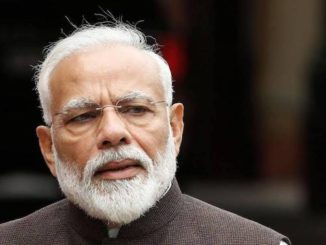
Tag: India PM Narendra Modi

  • Balancing act: On India’s stand in Israel-Palestine conflict

    Balancing act: On India’s stand in Israel-Palestine conflict

    India should oppose indiscriminate attacks on Israel and disproportionate bombing on Gaza

    At the open UN Security Council session on Sunday, May 16, on the Gaza conflict, India, a non-permanent member, attempted a delicate balancing act by reaffirming its traditional support for the Palestine cause without abandoning its new friend Israel. T.S. Tirumurti, India’s Permanent Representative at the UN, expressed concern over the violence in Jerusalem and the “possible eviction process” of Palestinian families in Sheikh Jarrah and warned against “attempts to unilaterally change the status quo” in Jerusalem. He also reiterated India’s “strong support for the just Palestinian cause and its unwavering commitment to the two-state solution”. But India was careful not to upset Israel’s sensitivities. There is a direct condemnation of the rocket attacks from Gaza but no direct reference to the disproportionate bombing Israel has been carrying out on the impoverished Gaza Strip since May 10. India also did not make any reference to the status of Jerusalem or the future borders of the two states, in line with a recent change in its policy. Until 2017, the Indian position was that it supported the creation of an independent, sovereign Palestine state based on the 1967 border and with East Jerusalem as its capital that lives alongside Israel. The balancing did not appear to have gone down well with the Israeli side. When Prime Minister Benjamin Netanyahu, who has a good rapport with Narendra Modi, thanked 25 countries that he said stood with Israel, there was no reference to India.

    For India, which voted against the creation of Israel in historic Palestine in 1947 in the UN General Assembly, ties with Israel have transformed since the early 1990s. In 2017, Mr. Modi became the first Indian PM to visit Israel and Mr. Netanyahu travelled to India in 2018. While Israel ties are on a strong footing, India cannot ignore the Palestinians for historic, moral, legal and realist reasons. Historically, India, which went through the horrors of 1947, opposed the partition of Palestine. Throughout the Cold War, it remained a strong supporter of Palestinian freedom, taking a moral and legal position against the Israeli occupation, in line with international laws and norms. It established full diplomatic relations with Israel in 1992, in the context of improving Israel-Palestine ties after the Madrid Conference and the changes in the global order following the disintegration of the Soviet Union, but never abandoned the Palestinians. India’s Palestine policy had realist underpinnings too. India has been energy dependent on the Arab world. It cannot alienate the Arab voices or be isolated in the General Assembly, where most member-countries oppose the occupation. These factors should have driven India to take a more emphatic position against both the indiscriminate rocket attacks into Israel, in which 12 people were killed, and the disproportionate bombing of Gaza, which has claimed at least 230 lives, including over 60 children.

    (The Hindu)

  • India is a constructive, dependable actor globally

    India is a constructive, dependable actor globally

    Through the pandemic, it has not only met its domestic requirements but taken a range of steps for global good

    By Harsh Vardhan Shringla
    We reaffirmed our position as first responder to humanitarian crises in the region by deploying medical teams to help Maldives, Mauritius, Comoros and Kuwait deal with the pandemic. India also dispatched naval assets to Maldives, Mauritius, Madagascar, Comoros and Seychelles to deliver assistance. This demonstrated our strong commitment to the PM’s vision of Security and Growth for All in the Region (SAGAR).

    At the virtual Global Vaccine Summit, the PM highlighted how India’s contribution to the global response in terms of sharing medicines was guided by our philosophy of Vasudhaiva Kutumbkum.

    Covid-19 continues to exact a heavy toll worldwide. In India too, positive cases are rising. However, India’s effective response has led to a significant improvement in its recovery rate, which is now 68.78%. The case fatality rate at 2.01% remains one of the lowest in the world.

    High recovery and low-fatality outcomes can be attributed to proactive measures taken to deal with the outbreak from its early stages. In comparative terms, India started screening Covid-19 cases a full 13 days before the first case was detected in the country.  India implemented full lockdown on the 55th day of the outbreak when it had only around 600 cases. Its public health response has been appreciated by the World Health Organization (WHO). The government took rapid steps to augment health infrastructure. As Prime Minister Narendra Modi noted, “India now has over 11,000 Covid-19 facilities and 1.1 million isolation beds. We have ramped up testing to over half-a-million tests a day, to be scaled up to a million”.

    India’s response has not been confined to meeting its domestic requirements. India has been significantly engaged with the international community in providing the leadership that the global situation demanded. As a responsible stakeholder in global health supply chains, India ensured  timely access to essential drugs and medical items for over 150 countries while meeting our own domestic requirements.

    We reaffirmed our position as first responder to humanitarian crises in the region by deploying medical teams to help Maldives, Mauritius, Comoros and Kuwait deal with the pandemic. India also dispatched naval assets to Maldives, Mauritius, Madagascar, Comoros and Seychelles to deliver assistance. This demonstrated our strong commitment to the PM’s vision of Security and Growth for All in the Region (SAGAR).

    From being a net importer of Covid-19-related medical items, India has emerged as a net exporter. Today, India manufactures over 500,000 personal protective equipment (PPE) kits and over 300,000 N-95 masks every day. Our system has shown the necessary adaptability and agility to significantly ramp up production to go beyond our domestic requirements.

    The repatriation of Indian nationals stranded abroad and the evacuation of foreigners from India to their home countries have been among the most successful aspects of our response. In the initial days, the ministry of external affairs had promptly set up a Covid cell and a 24×7 control room to assist Indian citizens abroad. The PM had also personally directed our heads of missions to extend all possible assistance to our nationals stranded abroad. Subsequently, the Vande Bharat mission, launched to repatriate our nationals stranded overseas, has been the largest exercise of its kind ever undertaken by the government and has demonstrated our capacity to effectively carry out complex humanitarian missions. Over a million Indians have returned under the ‘Vande Bharat’ mission so far through flights, across land borders and on naval ships.

    We have not only been able to bring home Indian nationals from distant locations but also facilitated the return of Bhutanese, Nepalese and other nationals stranded in third countries to their homes on these repatriation flights. In recognition of the immense contribution played by the Indian American community in building bridges between India and USA, India has allowed all holders of Overseas Citizenship of India cards to travel freely between the two countries. The institution of ‘travel bubbles’ between India and USA and a few other countries has further facilitated such travel.

    Rigorous screening of returnees by our diplomatic missions has ensured that the proportion of positive cases remains extremely small (less than 0.2%). Testing on arrival by the health ministry and state governments has helped detect these cases. The mission just doesn’t end with the return  of Indian nationals. Recognizing that a lot of expatriate Indians would have lost their jobs particularly in the Gulf area, the Govt is mapping the skills of Indians on arrival to reskill and  link them with companies for job opportunities.

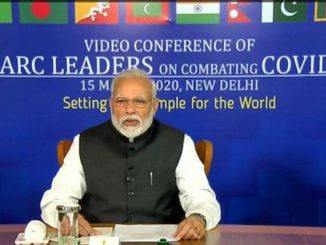
    There has also been no let-up in India’s diplomatic outreach during the pandemic. We have initiated and been part of several important conversations globally. Our ‘Neighborhood First’ policy was on full display when the PM hosted a video conference of the South Asian Association for Regional Cooperation (Saarc) leaders early in the crisis — our first such engagement on Covid-19. He announced a series of measures to deal with the pandemic, including the creation of a Covid-19 emergency fund with a commitment of $10 million from India.

    We have also called for a better multilateral response to global crises in the future. The PM has, on several occasions, including in the G-20 and Non-aligned Movement virtual summits, proposed the reform of multilateral cooperation by bringing people to the center of our efforts. Our own initiatives such as the International Solar Alliance and the Coalition for Disaster Resilient Infrastructure are prime examples of this approach. The decision of the G-20 on debt service suspension for developing countries, which India fully supported, reflects this people-centric approach.

    At the virtual Global Vaccine Summit, the PM highlighted how India’s contribution to the global response in terms of sharing medicines was guided by our philosophy of Vasudhaiva Kutumbkum.

    The PM also hosted the first virtual bilateral summit with Australia, which was followed by the India-European Union summit. In addition, the PM has spoken to his counterparts from 61 countries during this period. The external affairs minister has spoken to foreign ministers from 77 countries. I have been part of several dialogues with several of our partners countries, notably the Indo Pacific Group that convenes every other week to coordinate health, travel, immigration and related issues during COVID times,  We have kept open channels of virtual communication to strengthen partnerships and deal with situations that require diplomatic engagement.

    We have been constantly adjusting, adapting and innovating to deal with the changed reality, particularly in our engagement with the world. And in the process, we have been successful in elevating India’s profile as a constructive and dependable actor on the global stage.

    (The author  is foreign secretary, Government of India. The views expressed are personal)

  • The BJP’s  hegemonic narrative

    The BJP’s hegemonic narrative

    By Zoya Hasan

    Since 2014, the BJP’s stated objective of a Congress-free India has seen attempts to unsettle and unseat Congress governments in several States. One of Prime Minister Narendra Modi’s first statements after taking over as the chairman of the BJP’s election campaign committee in 2013 was the declaration that getting rid of the Congress would be “the solution to all problems facing the country”. “The Congress party is a burden on this nation,” he said. Since coming to power in 2014, the BJP has been using various means, notably money power and the coercive power of state agencies, to achieve this goal by bringing down elected Congress governments in State after State.

    Ever since the colossal defeat of the Congress in the 2019 general election, there has been a ceaseless debate in the media and in political circles about the future of the Congress party. The defection of Jyotiraditya Scindia to the Bharatiya Janata Party (BJP) and the replication of a similar script by Congress leader Sachin Pilot has intensified this debate which centers around the leadership, organizational and ideological challenges confronting the Congress. After Rahul Gandhi’s resignation as Congress President in July 2019, the party has witnessed disintegration in States including Karnataka, Madhya Pradesh and Rajasthan. Several prominent leaders have quit the party and joined the BJP. Defections, splits and electoral decline are not new phenomena in the party’s long history, but the crisis the Congress faces in the wake of two massive defeats in the last two Lok Sabha elections is unprecedented and has clearly been aggravated by its inability to resolve the leadership issue.

    A clutch of young(ish) leaders close to Mr. Gandhi have resigned. These leaders have caught the media’s attention more than many others who have quit in the last one year. The narrative in sections of the media built around these rebellions is that the Congress mishandled the crisis and the concerns of these leaders regarding the party’s functioning. The dominant argument is that the Congress lacks inner party democracy and hence cannot keep young leaders in its fold. Sections of the mainstream media blame Mr. Gandhi for the crisis and want him to vacate space to make way for other leaders.

    Two important dimensions

    Big-ticket leaders leaving the Congress should be a matter of concern for the party. But to view Mr. Pilot’s rebellion in Rajasthan as only the result of failure of leadership and organizational politics misses two important dimensions of this crisis. Mr. Pilot was willing to sacrifice the government, of which he was the Deputy Chief Minister until a few days ago, because he has differences with Chief Minister Ashok Gehlot. Even though he says he is not joining the BJP, Mr. Pilot does not put much distance between himself and the party. Mr. Pilot made it clear that he was unwilling to settle for anything less than the chief ministership even though he has the support of just 18 MLAs. Mr. Pilot is heading a minority faction but making claims to the top job is a sign of the neoliberal times we live in where ambition trumps commitment to party and ideology.

    The narrative in sections of the media that younger leaders are not allowed to grow in the Congress is not evident from the career graphs of some of these leaders. They had been given top posts by the Congress. That they still chose to rebel is an aspect disregarded in the narrative built up around them. Many of them are exiting the Congress with alacrity because the party is out of power and is not in a position to offer the loaves and fishes of office to leaders waiting in the departure lounge. When the party was in power it could adjust and accommodate conflicting interests and ambitions in multiple ways but it is much harder to do so in Opposition. The BJP, on the other hand, is routinely able to attract disgruntled leaders to its side. Arguably, it has given in to Mr. Scindia’s huge demands in Madhya Pradesh to attract Mr. Pilot in Rajasthan. The bottom line is this: Mr. Pilot’s escapade into Haryana couldn’t have taken off without the BJP’s support. His jaunt to ITC’s Best Western can’t be passed off as a struggle for inner party democracy in the Congress.

    The second and more important dimension of the Rajasthan crisis is the concerted effort mounted by the ruling party to topple the Congress government in the State. The pursuit of this single-minded objective amid the pandemic has been given short shrift in the loud narrative of sections of the media. Since 2014, the BJP’s stated objective of a Congress-free India has seen attempts to unsettle and unseat Congress governments in several States. One of Prime Minister Narendra Modi’s first statements after taking over as the chairman of the BJP’s election campaign committee in 2013 was the declaration that getting rid of the Congress would be “the solution to all problems facing the country”. “The Congress party is a burden on this nation,” he said. Since coming to power in 2014, the BJP has been using various means, notably money power and the coercive power of state agencies, to achieve this goal by bringing down elected Congress governments in State after State.

    Hunt for power

    We have seen many States witnessing a change of guard. In 2016, in Arunachal Pradesh, the BJP backed the rebel Congress faction when deep cracks surfaced within the ruling party. The BJP lost the election but managed to replace the Congress government with its own in Karnataka (in 2019) and in Madhya Pradesh (in 2020). In 2019, the Congress emerged the single largest party in Goa, but the BJP was quick to cobble together a coalition and form a government. Now Rajasthan is on the cusp of change though the game is not over yet.

    In Goa, Karnataka and Madhya Pradesh, scores of Congress legislators were allegedly lured into deserting the Congress which enabled the BJP to gain power after losing in elections. These reports are in the realm of speculation but one thing is clear: the BJP is not short on resources for financing defections given its absolute power at the Centre. The Association of Democratic Reforms estimates that a whopping 95% of all electoral bond money before the 2019 election went to the BJP. The Congress received less than 10% of bond money. The loss of so many State governments further reduces the party’s financial power and the opportunity to generate funds.

    Although the BJP disclaims authorship of this long-running drama, Rajasthan’s political crisis has underlined once again its unscrupulous hunt for power. Given its enviable record in forming governments through political defections, the perception that a government with a clear majority is being deposed may not really matter to the party. However, it should matter to the media. But the media spotlight is not on the BJP’s dubious methods of destabilizing elected governments, but on the disarray in the Congress, which allows the BJP to get away even with constitutional transgressions. Thus far, the Congress has managed to save its government in Rajasthan. Regardless of the final outcome, an obvious conclusion to draw from this crisis would be that the Congress party has to put its house in order to stop further desertions and breakup. It has to bring an end to the unmitigated drift and elect a new president and begin the process of rebuilding the party.

    That so many in the media have seen Mr. Pilot’s unhappiness with the Congress as an example of a talented politician being forced to jump ship to the BJP shows that the BJP’s narrative is completely hegemonic. That so many in the political class (including Congress politicians) and the media are echoing the same line (as though it’s a party line), and are willing to overlook the majoritarian might of the BJP, the illegitimacy of the power grab, and the wholly unjustified attempt to dislodge an elected government betokens a debasement of politics and a disregard for democratic norms that should concern us all.

    (The author  is Professor Emerita, Centre for Political Studies, JNU)

  • India to Play Leading Role in Global Revival: PM Modi

    India to Play Leading Role in Global Revival: PM Modi

    Bidisha Roy

    LONDON (TIP): In his first major speech to a global audience since the Covid-19 pandemic, Prime Minister Narendra Modi, July 9,  assured the world that India will play a leading role in global revival in this crucial time with a spirit of reform and rejuvenation.

    At his much-anticipated inaugural address of India Global Week, biggest international event on India’s globalization, the Prime Minister said that India is ready to do whatever it can to further global good and prosperity.

    “In these times, it is natural to talk about revival. It is equally natural to link global revival and India. There is faith that the story of global revival will have India playing a leading role. I see this closely linked with two factors.   The first is- Indian talent.  World over, you have seen the contribution of India’s talent-force. This includes Indian professionals, doctors, nurses, bankers, lawyers, scientists, professors, our hard-working laborers. Who can forget the Indian tech industry and tech professionals? They have been showing the way for decades.  India is a power-house of talent, that is eager to contribute, ever ready to learn. There is two-way synergy that is greatly beneficial”, he said.

    “The second factor is India’s ability to reform and rejuvenate. Indians are natural reformers!  History has shown   that India has overcome every challenge, be it social or economic. India has done so with a spirit of reform and rejuvenation. The same sprit continues now”, he affirmed.

    India Inc. Group – the UK-headquartered media house behind flagship publications ‘India Global Business’ and the recently-launched diaspora news network ‘iGlobal’ – brought together some of the best strategic minds and experts in their respective fields.

    With +75 sessions, +250 speakers and +5000 participants from 49 countries, India Global Week cements itself as the event where ‘India Meets the World, and the World Meets India.

    Prime Minister Modi tops a stellar list of speakers in packed program across three days between July 9 and 11, including External Affairs Minister Dr S. Jaishankar, Commerce Minister Piyush Goyal, IT & Law Minister Ravi Shankar Prasad and Skills Minister Mahendra Nath Pandey, from India.

    The line-up covers a special address by HRH The Prince of Wales and several UK Cabinet Ministers, including Foreign Secretary Dominic Raab, Home Secretary Priti Patel, Health Secretary Matt Hancock, and International Trade Secretary Lizz Truss – all underlining the centrality of India to a post-Covid, post-Brexit Britain.

    Other international speakers on a diverse range of topics, from geopolitics and business to culture and diaspora, and across four country streams of Australia, Singapore, the UK and the US include Steve Waugh, Former Australian Cricketer; Dr Mukesh Aghi, President and CEO, US-India Strategic Partnership Forum; Chng Kai Fong, Managing Director, Economic Development Board, Singapore; and William Russell, Lord Mayor of the City of London. Other big highlights include Kunal Nayyar, of ‘The Big Bang Theory’ fame, in conversation with Sadhguru, Founder, Isha Foundation; a conversation with Spiritual Leader Sri Sri Ravi Shankar; and an exclusive never-seen performance by Madhu Nataraj and her team.

  • PM Modi receives Global Goalkeeper award for Swachh Bharat Abhiyan, says people in India behind its success

    PM Modi receives Global Goalkeeper award for Swachh Bharat Abhiyan, says people in India behind its success

    PM Modi dedicated the honor to crores of Indians who made the initiative a part of their daily lives.

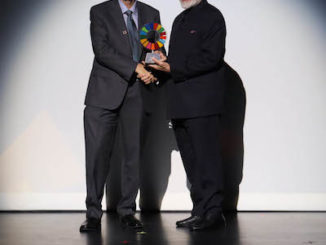
    NEW YORK(TIP): Prime Minister Narendra Modi has been conferred the ‘Global Goalkeeper Award’ for the Swachh Bharat Abhiyan launched by the government.

    The award from the Bill and Melinda Gates Foundation was presented to PM Modi by Bill Gates in New York on Wednesday, Sept 25  morning. Swachh Bharat Abhiyan, or the Clean India Mission, was one of the first few ambitious projects that PM Modi launched in his first term at the Centre in 2014.

    Prime Minister Narendra Modi received the Global Goalkeeper Award at tonight’s Goalkeepers Global Goals Awards. This award recognizes the progress India has made in providing safe sanitation under his leadership.

    Getting the award in the year of Mahatma Gandhi’s 150th birth anniversary is personally significant for me. When 130 crore people take a pledge, any challenge can be overcome,” PM Modi said in a series of tweets.

    The Prime Minister said he shared the honor with his countrymen and dedicated the award to those Indians who transformed the Swachh Bharat campaign into a “people’s movement”.

    “No such campaign was seen or heard about in any other country in the recent past. It might have been launched by our government, but people took control of it,” Modi said.

    Stressing that the success of the campaign could not be measured in numbers, the prime minister said the poor people and the women of India were benefitted the most by it.

    Due to lack of toilets, a number of girls had to drop out of schools. Our daughters want to study, but because of lack of toilets, they had to abandon their education mid-way and sit at home,” PM Modi added.

    Modi said he was told that the Bill and Melinda Gates Foundation had also reported that as rural sanitation had improved in India, it had led to a decline in heart problems among children and improvement in the Body Mass Index (BMI) among women.

    Gandhiji used to say a village could only become a model when it was completely clean. Today we are heading towards making the entire country a model, the PM said.

    “The campaign has not only improved the lives of crores of Indians, but it has also played a significant role in achieving the goals set by the UN,” Modi said.

    The cleanliness campaign was launched by the Modi government during its first term on October 2, 2014.

  • “Howdy Modi” brings together Indian Americans, Hindu Americans: Tulsi Gabbard

    “Howdy Modi” brings together Indian Americans, Hindu Americans: Tulsi Gabbard

    WASHINGTON (TIP): “Howdy Modi” is bringing together Indian Americans and Hindu Americans from across the U.S., Democratic presidential aspirant and the first Hindu woman in the U.S. Congress Tulsi Gabbard said.

    Ms. Gabbard, 38, on September 19 extended a warm welcome to Prime Minister Narendra Modi for his upcoming U.S. visit beginning on Saturday, September 21.

    “I’m very happy to see that Howdy Modi is bringing together Indian-Americans and Hindu Americans from across our country, including many of my colleagues in the U.S. Congress,” Ms. Gabbard said.

    Prime Minister Modi will attend a large gathering with an audience of over 50,000 at the NRG Stadium in Houston on Sunday, September 22.

    U.S. President Donald Trump along with a number of high-ranking US government officials, including Governors, Members of Congress and Mayors will attend the “Howdy Modi!” event.

    “India is the world’s oldest and largest democracy, and one of the United States most important allies,” Ms. Gabbard said.

    “The Unites States and India must work closely together if we are to address the pressing issues that impact our nations, our countries, and the entire world such as combating climate change, preventing nuclear war and nuclear proliferation, and improving the economic well-being of our people,” she said.

    Ms. Gabbard described the wonderful opportunity the U.S. and India has for “…a strong and lasting partnership between our two great nations, a partnership based on shared values and objectives“.

    “Let us work together to usher in a 21st century of aloha — respect and love for others, no matter our race, religion, ethnicity, caste, economic status or political affiliations,” Ms. Gabbard said.

    The fourth-term lawmaker is a former Co-Chair of the Congressional Caucus on India and Indian Americans.

    She was part of a select group of Members of Congress to greet and escort Mr. Modi to the podium when he addressed a Joint Session of Congress in June 2016 and has welcomed him to events promoting greater U.S.-India relations.

    A long-time advocate for greater ties between the U.S. and India, she also congratulated Mr. Modi when he was first elected as Prime Minister following the 2014 elections.

    Ms. Gabbard, highly popular among Indian American, converted to Hinduism early in her life and has become the first-ever Hindu to be running for the presidency in the U.S.

    She supported Senator Bernie Sanders against former Secretary of State Hillary Clinton in the 2016 Democratic primary.

    (Source: PTI)

  • Prime Minister Modi’s Engagements in New York

    Prime Minister Modi’s Engagements in New York

    NEW YORK(TIP): On his first visit to the US after returning as PM for the second term in May this year,  Prime Minister Narendra Modi will come to New York to attend the United Nations General Assembly or UNGA session after “Howdy Modi!” event in Houston on Sunday, Sept 22. He will conclude his US visit with a special address at the UNGA on September 27.

    Here is a look at Modi’s Engagements during the UNGA Sept 23-27.

    Sept 23

    Climate Action Summit 2019

    Time: 1045 – 1100 Hrs

    Venue: UN General Assembly

    PM in first cohort of Speakers

    At Number Three among National

    Statements

    UN High-Level Meeting on universal health coverage

    Time: 1130 – 1200 Hrs

    Venue: Trusteeship Council Chamber

    Leaders’ Dialogue on strategic responses to terrorist and violent extremist narratives

    Time: 1630 – 1800 Hrs

    Venue: Conference Room 1, UNHQ

    Sept 24

     INDIA – PACIFIC ISLANDS LEADERS’ MEETING

    Time: 1530 – 1700 Hrs

    Venue: Lotte New York Palace

    Leaders of Fiji, Kiribati, Marshall Islands, Micronesia, Nauru, Palau, Papua New Guinea, Samoa, Solomon Islands, Tonga, Tuvalu and Vanuatu to attend

    LEADERSHIP MATTERS: “Relevance of Mahatma Gandhi in the Contemporary World”

    Time: 1830 – 1930 hrs

    Venue: ECOSOC Chamber, UNHQ

    LEADERSHIP MATTERS:

    “Relevance of Mahatma Gandhi in the Contemporary World”

    Release of Special UN Postage Stamp Commemorating

    150th Birth Anniversary of Mahatma Gandhi

    Remote Inauguration of “Gandhi Solar Park” at UN

    Headquarters and “Gandhi Peace Garden”

    Global goalkeeper Awards 2019

    PM Narendra Modi to receive Global Goalkeeper Award and speak at the  Third Annual Goalkeepers event

    Time: 2010 – 2100 hrs

    Sept 25

    Bloomberg Global Business Forum

    PM Narendra Modi to give the Keynote address

    Time: 0845 – 0905 hrs

    India-CARICOM Leaders’ Meeting

    Time: 1500 – 1700 Hrs

    Venue: Lotte New York Palace

    First Summit between India and CARICOM Member States

    Leaders from Antigua & Barbuda, Bahamas, Barbados, Belize, Dominica, Grenada,

    Guyana, Haiti, Jamaica, Saint Kitts and Nevis, Saint Lucia, Saint Vincent & the Grenadines, Suriname, Trinidad and Tobago to attend

    Sept 26

    Several bilateral Meetings

    Sept 27

    74th UNGA GENERAL DEBATE

     Prime Minister will address the UN General Assembly between 1000 Hrs – 1100 Hrs

  • The right call: Modi-Trump conversation can reduce tension

    The right call: Modi-Trump conversation can reduce tension

    Good diplomacy is extreme flexibility. Prime Minister Narendra Modi, after smarting from US President Donald Trump’s offer of mediation, took a big step forward by talking to the White House. This was his first interaction with Trump after the abrogation of Article 370. China’s move at the United Nation’s Security Council last Friday had cornered India. After over 50 years, the two countries that had carved up a disputed territory were using the United Nations forum to embarrass India over an internal legislative and administrative measure. The new status of Jammu and Kashmir does not alter the Line of Control or the Line of Actual Control, yet Pakistan and China have decided to internationalize it, virtually making a claim for Pakistan as a spokesperson for J&K, simply because of the state’s religious composition. The United Kingdom still has not officially denied the allegation that it had helped China call for the UN consultative meeting.

    It was in this context that Modi spoke to Trump about ‘the extreme rhetoric and incitement to anti-India violence’ being done by Pakistan Prime Minister Imran Khan, who has been labelling India ‘fascist and racist’ and using terms like ‘ethnic cleansing, genocide and Nazi ideology’. In fact, this sort of incitement is the prime reason for the lockdown in J&K. Soon after talking to Modi, Trump asked Khan to moderate the rhetoric. And tweeted later: ‘A tough situation, but good conversations!’ For a change, it sounded truly Presidential and has the potential to normalize the situation.

    This crisis is an opportunity for India to have a relook at the way it has been conducting business and diplomacy. After India’s liberalization we had thrown open our economy for foreign companies — private and state-run — to make billions, without getting any R&D or manufacturing facilities in return. Now, a beneficiary nation has dragged us to the UNSC for repealing our own laws through Parliament — democratically. India needs to leverage its domestic market and external buying power to safeguard its national interests. A closed-door, consultative meeting of the UNSC does not cause irreparable damage if it ends with just that. But it has definitely dented our relationship with China.

    (Tribune, India)