Tag: India- Russia Relations

  • Julian Assange has been charged, prosecutors reveal in inadvertent court filing

    Julian Assange has been charged, prosecutors reveal in inadvertent court filing

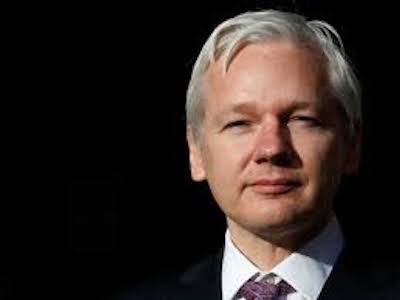
    WASHINGTON(TIP): A November 15 Washington Post report says WikiLeaks’ founder Julian Assange has been charged under seal, prosecutors inadvertently revealed in a recently unsealed court filing — a development that could significantly advance the probe into Russian interference in the 2016 election and have major implications for those who publish government secrets.

    The disclosure came in a filing in a case unrelated to Assange. Assistant U.S. Attorney Kellen S. Dwyer, urging a judge to keep the matter sealed, wrote “due to the sophistication of the defendant and the publicity surrounding the case, no other procedure is likely to keep confidential the fact that Assange has been charged.” Later, Dwyer wrote the charges would “need to remain sealed until Assange is arrested.”

    Dwyer is also assigned to the WikiLeaks case. People familiar with the matter said what Dwyer was disclosing was true, but unintentional.

    Joshua Stueve, a spokesman for the U.S. Attorney’s Office in the Eastern District of Virginia said, “The court filing was made in error. That was not the intended name for this filing.”

    An FBI spokeswoman declined to comment.

    Federal prosecutors in the Eastern District of Virginia have long been investigating Assange, and in the Trump administration had begun taking a second look at whether to charge members of the WikiLeaks organization for the 2010 leak of diplomatic cables and military documents which the anti-secrecy group published. Investigators also had explored whether WikiLeaks could face criminal liability for the more recent revelation of sensitive CIA cyber-tools.

    Special Counsel Robert S. Mueller III has also exploring the publication by WikiLeaks of emails from the Democratic National Committee and the account of Hillary Clinton campaign chairman John D. Podesta. Officials have alleged the emails were hacked by Russian spies and transferred to WikiLeaks.

    Mueller has also been exploring, among other things, communications between the group and associates of President Trump, including political operative Roger Stone and commentator and conspiracy theorist Jerome Corsi.

    In July, his office charged 12 Russian military spies with conspiring to hack DNC computers, steal the organization’s data and publish the files in an effort to disrupt the election and referred in an indictment to WikiLeaks, described only as “Organization 1,” as the platform the Russians used to release the stolen emails.

    A spokesman for the special counsel’s office declined to comment.

    It was not immediately clear what charges Assange would face. In the past, prosecutors had contemplated pursuing a case involving conspiracy, theft of government property or violating the Espionage Act. But whether to charge the WikiLeaks founder was hardly a foregone conclusion. In the Obama administration, the Justice Department had concluded that pursuing Assange would be akin to prosecuting a news organization. Former Attorney General Jeff Sessions, though, had taken a more aggressive stance and vowed to crack down on all government leaks.

    Barry J. Pollack, one of Assange’s attorneys, said, “The only thing more irresponsible than charging a person for publishing truthful information would be to put in a public filing information that clearly was not intended for the public and without any notice to Mr. Assange. Obviously, I have no idea if he has actually been charged or for what, but the notion that the federal criminal charges could be brought based on the publication of truthful information is an incredibly dangerous precedent to set.”

    The filing in the Eastern District of Virginia came on August 22, in a case that combines national security and sex trafficking. Seitu Sulayman Kokayi, 29, was charged with enticing a 15-year-old girl to have sex with him and send him pornographic images of herself. But he was detained in part, according to the court filing, because he “has a substantial interest in terrorist acts.”

    His father-in-law, according to the filing, has been convicted of terrorist acts. The case involves previously classified information, according to government filings, and prosecutors plan to use information obtained under the Foreign Intelligence Surveillance Act. Kokayi was indicted last week and is set to be arraigned Friday morning.

    The case had been sealed until early September, though by itself it attracted little notice. On Thursday, November 15 evening, Seamus Hughes, the deputy director of the Program on Extremism at George Washington University who is known for scrubbing court filings, joked about the apparent error on Twitter — which first brought it to the attention of reporters.

    Even if he is charged, Assange’s coming to the United States to face trial is no sure thing. Since June 2012, Assange has been living in the Ecuadorian embassy, afraid that if he steps outside he will be arrested.

    When he first sought asylum in the embassy, he was facing possible extradition to Sweden in a sex crimes case. He has argued that case was a pretext for what he predicted would be his arrest and extradition to the United States.

    In the years since, the Swedish case has been closed, but Assange has said he cannot risk leaving the embassy because the U.S. would attempt to have him arrested and extradited for disclosures of U.S. government secrets. Throughout that time, the U.S. has refused to say whether there are any sealed charges against Assange.

    If Assange were to leave the embassy and be arrested by British authorities, he would likely still fight extradition in the British courts.

  • India, Russia set to sign three major deals, ignoring U.S. threats

    India, Russia set to sign three major deals, ignoring U.S. threats

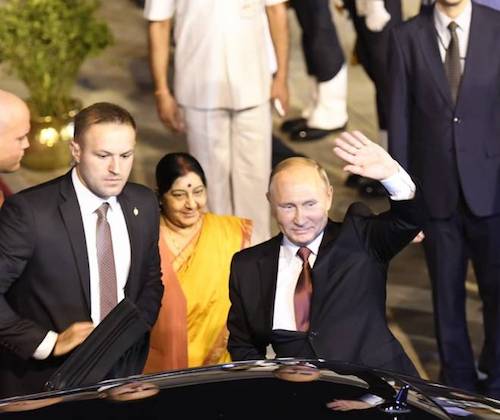
    NEW DELHI(TIP): Russian President Vladimir Putin landed in Delhi on Thursday, October 4, for the annual India-Russia summit which could see the signing of military deals totaling close to $10 billion; a 24-hour visit that could have lasting implications for the India-U.S. relationship as well.

    On Friday, India and Russia are expected to conclude three major military deals: for five S-400 missile systems estimated to cost about ₹39,000 crore (more than $5 billion), four stealth frigates and a deal for Ak-103 assault rifles to be manufactured in India. The U.S. has warned that the deals could attract sanctions under the Countering America’s Adversaries Through Sanctions Act (CAATSA) law that restricts defense purchases from Russia, Iran and North Korea.

    India has been in negotiations with the U.S. administration for a “sanctions waiver”, but American officials have given no clear signal they will provide one. Last month, President Donald Trump’s administration-imposed sanctions on China as it started taking delivery of Su-35 fighter jets and S-400 systems.

    The breadth of agreements, including the S-400 deal, during Mr. Putin’s visit is seen as a reiteration of India’s desire for “strategic autonomy” that was highlighted by Prime Minister Narendra Modi in a speech this year. It comes a month after the inaugural 2+2 dialogue with the U.S., in which India signed the third foundational agreement — Communications Compatibility and Security Agreement (COMCASA) — in addition to announcing several measures to operationalize the Major Defense Partner status, indicative of the difficult balance India hopes to maintain amid deepening U.S.-Russia tensions.

    On Wednesday Air Chief Marshal B.S. Dhanoa said that once the Defence Ministry signs the contract, deliveries of the S-400 systems would begin in 24 months. In October 2016, the two countries concluded Inter-Governmental Agreements (IGA) for S-400 systems and four stealth frigates after which the negotiations began to conclude a commercial contract.

    Mr. Putin and Mr. Modi will meet on Friday for a “working breakfast” followed by delegation-level talks. They are expected to witness the signing of at least 23 agreements, an official said, including Memoranda of Understanding for investment deals, a major agreement on space cooperation where Russia will assist India with its ‘Gaganyaan’ program to put a human in space, an MoU for Road Transport and the Road Industry, as well as one for cooperation on Micro, Small and Medium Enterprises.

    Officials say that nuclear power cooperation, one of the cornerstones of India-Russia ties, will be discussed, but the announcement of new sites for the next phase of Kudankulam reactors is yet to be finalized due to “land acquisition issues.”

    Both leaders will also meet with young Indian and Russian student “geniuses” who have excelled in studies, as part of an educational exchange program.

    Officials said a discussion on the way forward in Afghanistan, including Moscow’s push for talks with the Taliban is likely to come up for discussions as well. Mr. Putin and Mr. Modi will address a business summit in the capital before the Russian President departs on Friday evening.

    (Source: PTI)